News From Space: Gaia Lifts Off!

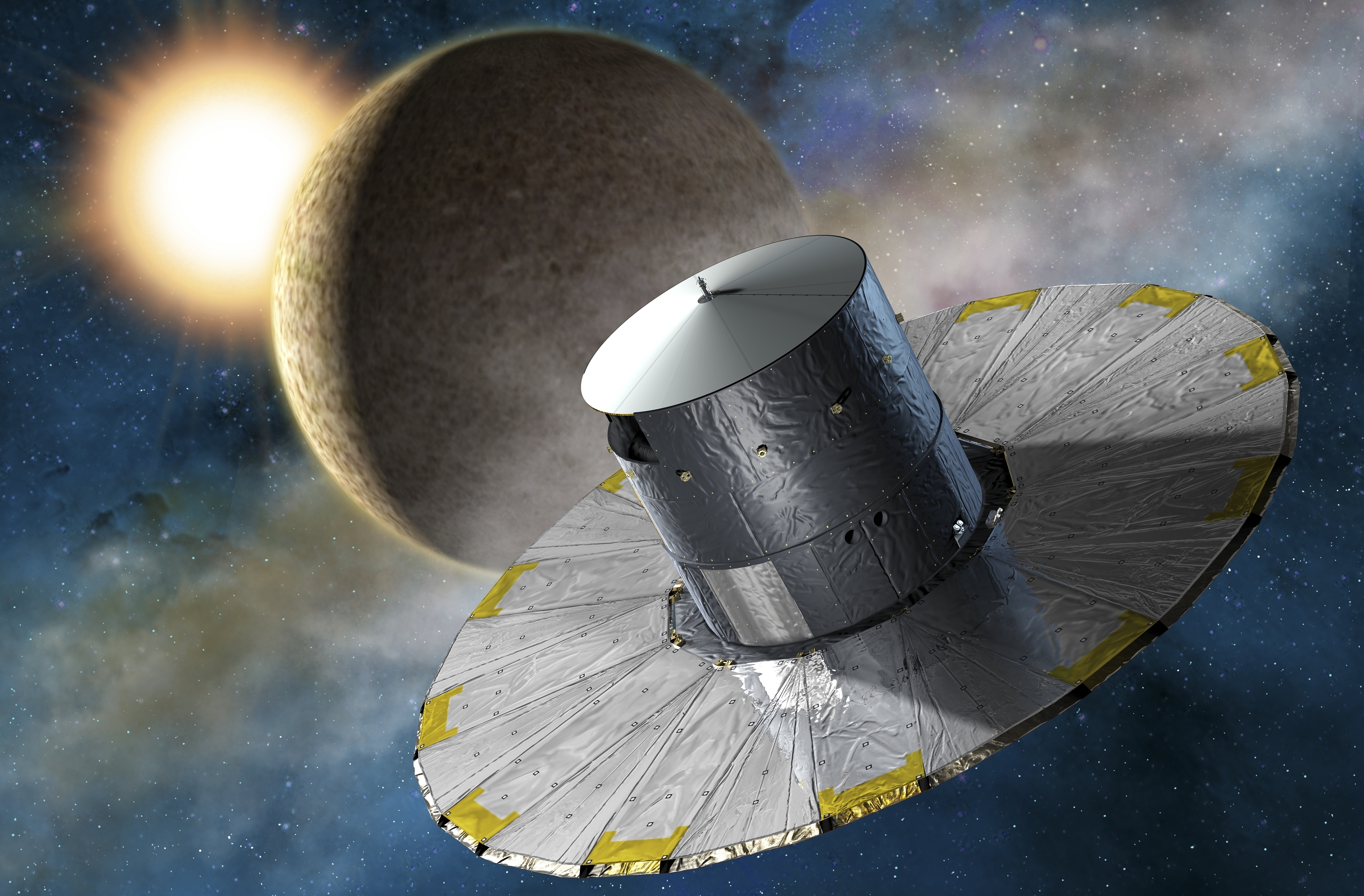
gaia_liftoffThis morning, the European Space Agency’s Gaia mission blasted off from Europe’s Spaceport in Kourou, French Guiana, on the head of a Soyuz rocket. This space observatory aims to study approximately 1 billion stars, roughly 1% of the Milky Way Galaxy, and create the most accurate map yet of the Milky Way. In so doing, it will also answer questions about the origin and evolution of our home Galaxy.

As the successor to the Hipparcos mission – an ESA astrometry satellite that was launched in 1989 and operated until 1993 – it is part of ESA’s Horizon 2000 Plus long-term scientific program. Repeatedly scanning the sky, Gaia will observe each of the billion stars an average of 70 times each over the five years and measure the position and key physical properties of each star, including its brightness, temperature and chemical composition.

The Milky Way Shines on ParanalThe Soyuz VS06 launcher, operated by Arianespace, lifted off at 09:12 GMT (10:12 CET). About ten minutes later, after separation of the first three stages, the Fregat upper stage ignited, delivering Gaia into a temporary parking orbit at an altitude of 175 km. A second firing of the Fregat 11 minutes later took Gaia into its transfer orbit, followed by separation from the upper stage 42 minutes after liftoff.

Gaia is now en route towards an orbit around a gravitationally-stable virtual point in space called L2 Lagrange Point, some 1.5 million kilometres beyond Earth.  Tomorrow, engineers will command Gaia to perform the first of two critical thruster firings to ensure it is on the right trajectory towards its L2 home orbit. About 20 days after launch, the second critical burn will take place, inserting it into its operational orbit around L2.

Gaia_spacecraftJean-Jacques Dordain, ESA’s Director General, had this to say about the launch:

Gaia promises to build on the legacy of ESA’s first star-mapping mission, Hipparcos, launched in 1989, to reveal the history of the galaxy in which we live.

ESA’s Gaia project scientist Timo Prusti expressed similar sentiments, highlighting how the Gaia mission’s ultimate purpose is to advance our understanding of the cosmos:

Along with tens of thousands of other celestial and planetary objects, this vast treasure trove will give us a new view of our cosmic neighbourhood and its history, allowing us to explore the fundamental properties of our Solar System and the Milky Way, and our place in the wider Universe.

By taking advantage of the slight change in perspective that occurs as Gaia orbits the Sun during a year, it will measure the stars’ distances and their motions across the sky. This motions will later be put into “rewind” to learn more about where they came from and how the Milky Way was assembled over billions of years from the merging of smaller galaxies, and into “fast forward” to learn more about its ultimate fate.

Gaia_galaxyThis is an especially ambitious mission when you consider that of the one billion stars Gaia will observe, 99% have never had their distances measured accurately. The mission will also study 500,000 distant quasars and will conduct tests of Einstein’s General Theory of Relativity. So as the mission continues and more data comes in, scientists and astronomers will be able to construct more detailed models of how the universe was created, and perhaps how it will end…

The current consensus is that the universe began with a creation event known as The Big Bang. However, the question of how it will end, either through a “Big Crunch” event – where the expansion of the universe will eventually cease and all matter will collapse back in on itself – or simply continue to expand until all stars and galaxies consume their fuel and burn out, remains something of a mystery.
Gaia_spacecraft2Personally, I call Big Crunch, mainly because I like to the think that our universe is one of many. Not just in the parallel dimension sense, but in the temporal sense as well. Like the city of Ilium (aka. Troy), existence as we know it is built upon the foundations of countless others, stretching backwards and forwards into infinity…

Deep stuff, man! In the meantime, enjoy this video of the Gaia’s mission’s liftoff, courtesy of the ESA:


Sources: universetoday.com, esa.int
Alien Spotting by 2020?

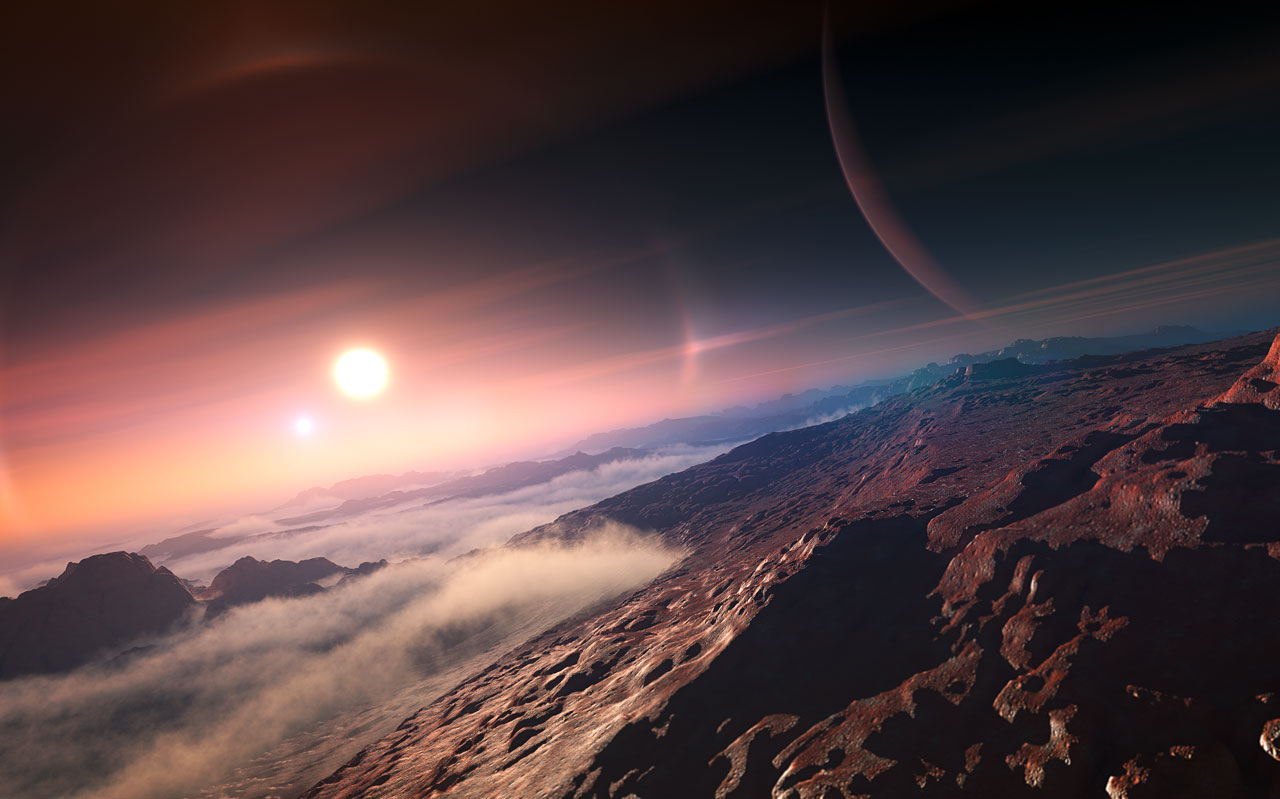
alien-worldWith recent observations made possible by the Kepler space telescope, numerous planets have been discovered orbiting distant stars. Whereas previous observations and techniques could detect exoplanets, scientists are now able to observe and classify them, with the ultimate aim of determining how Earth-like they are and whether or not they can support life.

Combined with advanced astronomical techniques, the latest estimates claim that there may be are up to 50 sextillion potentially habitable planets in the universe. With their eyes on the next step, the scientific community is now preparing to launch a bevy of new space telescopes that can peer across the universe and tell us how many of those planets actually harbor life.

TESSOne such telescope is NASA’s Transiting Exoplanet Survey Satellite (TESS), which will launch in 2017. While Kepler was focused on a single patch of sky with around 145,000 stars, TESS will be equipped with four telescopes that keep track of around 500,000 stars, including the 1,000 nearest red dwarfs. TESS is expected to find thousands of orbiting, Earth-sized-or-larger planets around these stars.

But to find out whether or not any of those planets actually house life, another sophisticated telescope needs to be employed – the James Webb Space Telescope.Whereas TESS is Kepler’s successor, the James Webb Space Telescope – a joint NASA/ESA/CSA venture – is the planned successor for the Hubble Telescope and is due to launch in 2018.

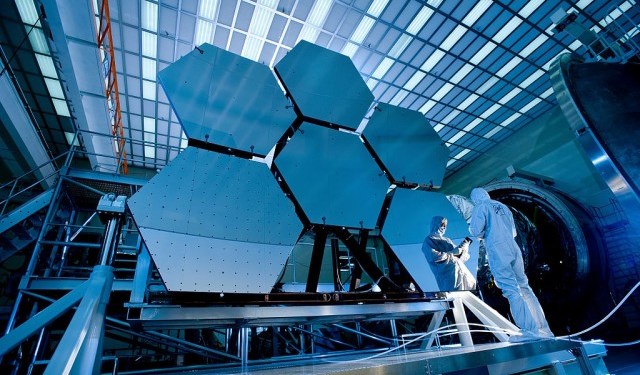
TESS_Space_Telescope_Mirror37-640x425The JWST has a primary mirror that’s about five times larger than Hubble’s (pictured above), which means it can resolve much fainter signals, locating stars and other objects that have never been seen before. Because it primarily operates in the infrared band (whereas Hubble was tuned towards visible light), the JWST will also be able to see through dust clouds into hidden areas of space.

The JWST’s scientific payload includes a spectrometer that’s sensitive enough to analyze the atmosphere of distant planets. By measuring light from the parent stars, and how its reflected in the planets atmospheres, it will be able to determine if there are life-supporting elements and evidence of biological life – such as oxygen and methane.

TESS_comparisonBecause these planets are light years away, and because the reflected light is incredibly dim, the James Webb Space Telescope will only be able to do this for large planets that orbit red and white dwarfs. Still, that leaves thousands or even millions of candidates that it will be able to observe, and determine whether or not they are already inhabited by extra-terrestrial life.

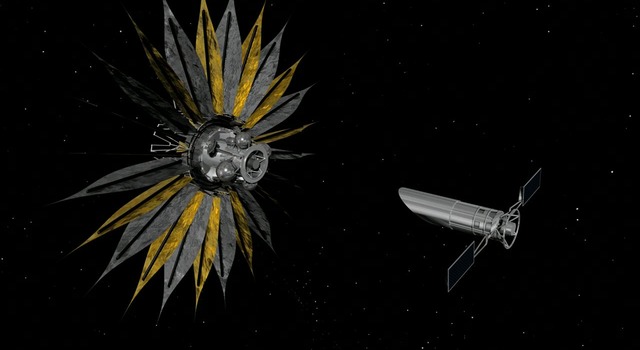
And last, but not least, there’s the New Worlds Mission, which aims to put a Starshade – which is essentially a big flying space umbrella – into space. This disc would then fly between the James Webb Space Telescope and the star its observing, blocking out large amounts of light and the result “noise pollution” from nearby bright stars that the JWST isn’t observing.

Starshade_1280x720_H264With the Starshade in place, the JWST would be able to probe thousands of nearby planets for signs of life and return data to Earth that is of far greater accuracy. The New Worlds Mission is currently in the prototyping stage, but NASA hopes to procure the necessary funding by 2015 and and launch it within the JWST’s own lifetime.

Because of all this, it is now believed that by 2020 (give or take a few years) we will have the ability to directly image a distant planet and analyze its atmosphere. And if we find methane or another biological marker on just one planet, it will completely redefine our understanding of the universe and the lifeforms that inhabit it.

The answer to the question – “are we alone in the universe?” – may finally be answered, and within our own lifetime. And in the meantime, be sure to enjoy this video of the Starshade space umbrella, courtesy of New Scientist.


Sources: extremetech.com, wired.co.uk, newscientist.com

In Remembrance of Columbia

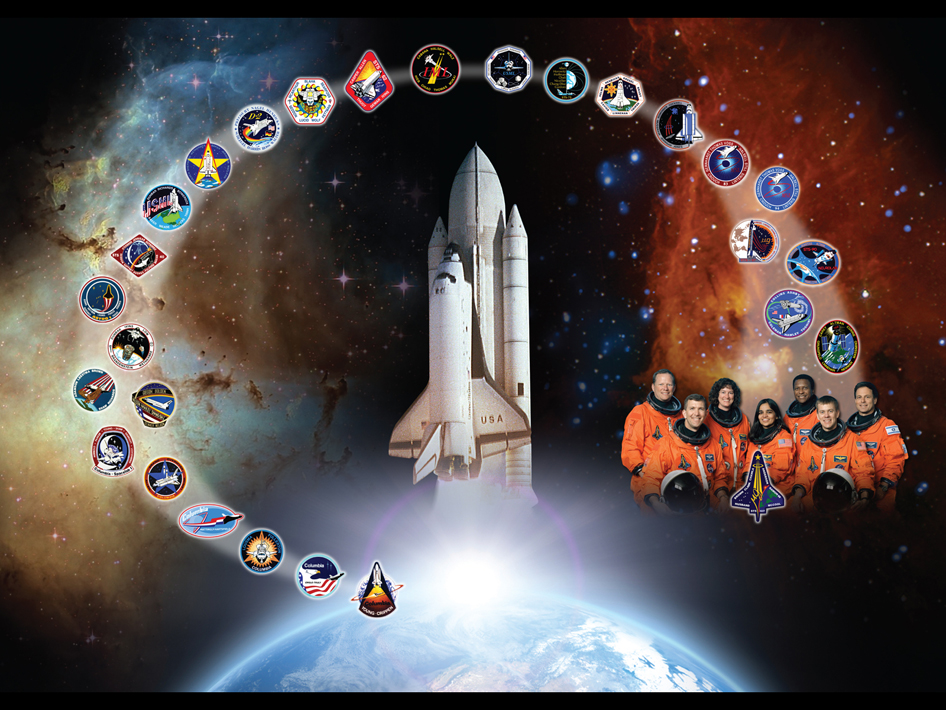
The STS-107 crew includes, from the left, Mission Specialist David Brown, Commander Rick Husband, Mission Specialists Laurel Clark, Kalpana Chawla and Michael Anderson, Pilot William McCool and Payload Specialist Ilan Ramon. (NASA photo)

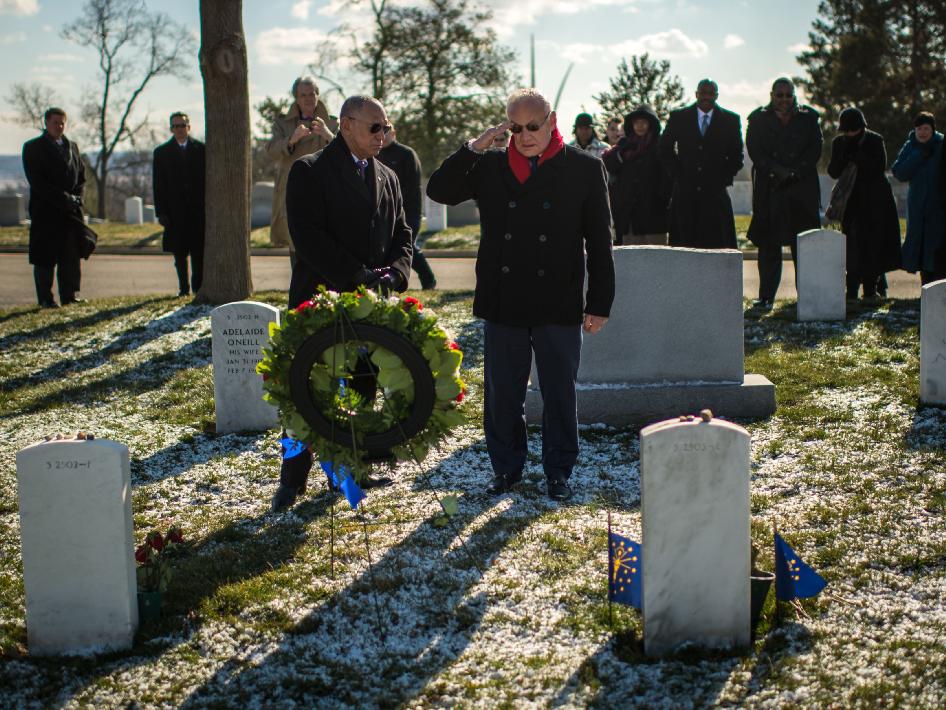
Just two days ago, the tenth anniversary of the shuttle Columbia disaster came to pass. On that day, the pilots who lost their lives, as well as those who died on the Challenger and Apollo 1 missions, were commemorated at a special wreath-laying ceremony at the Arlington National Cemetery in Virginia. It is a somber day, when people all over the world come together to commemorate those brave souls who died in the name of advancing exploration.

The disaster took place on Feb. 1st 2003, roughly sixteen days after the shuttle departed from Earth to conduct microgravity experiments. During re-entry, contact was lost with the shuttle as the orbiter suffered a catastrophic failure due to a breach that had opened in one of the shuttle’s wings. This had occurred during launch when a piece of foam fell from the external tank during launch.

columbia_arlingtonThe seven person crew of the STS-107 Columbia, which included Rick D. Husband, William C. McCool, David Brown, Laurel Blair Salton Clark, Michael P. Anderson, Ilan Ramon, and Kalpana Chawla, died just 15 minutes before they were meant to touch down at Kennedy Space Center. Addressing the nation, then-President Bush said, “mankind is led into the darkness beyond our world by the inspiration of discovery and the longing to understand. Our journey into space will go on.”

On Feb. 1st, President Obama and Charles Bolden, Administrator for NASA, also marked the occasion with somber words of remembrance. The former emphasized the ongoing important of space exploration and its inherent risks:

“The exploration of space represents one of the most challenging endeavors we undertake as a Nation. Whether it’s landing a 1-ton rover on Mars, building a space telescope 100 times more powerful than the Hubble, or preparing to send humans beyond the Moon, it’s imperative America continues to lead the world in reaching for the stars while giving us a better understanding of our home planet.”

Bolden expressed similar sentiments, calling to mind other tragedies and drawing attention to the lessons learned from the disaster:

“After the tragedy of Columbia, we not only returned to flight, we established policies and procedures to make our human spaceflight program safer than ever. Exploration will never be without risk, but we continue to work to ensure that when humans travel to space, nothing has been left undone to make them as safe as possible.”

Naturally, I hope he’s right about that. As we embark on an era of renewed exploration – to the Moon, to Mars, and even beyond – there will plenty of risk incurred and only a few people bold and intrepid enough to risk their lives to see it done. Much like veterans who died in the name of peace, we should never forget those explorers who died in the name of advancing humanity’s knowledge, awareness, and understanding of the universe.

Rest In Peace you brave souls!

columbia_memorial

Sources: Universetoday.com, history.nasa.gov, nasa.gov

Universe Today

Hey all. Just wanted to take a minute to publicize a very cool website that deals in all things science, especially astronomy, physics, and the planets. Not only is it a very cool place to pick up some additional knowledge, its also my part-time employer. If you’ve any interest in reading a brief but educational article on a wide range of subjects, just enter my name “Matt Williams” or click around. You’re sure to find something that tickles your fancy!

Universe Today