Climate Crisis: The Ongoing Case of Big Subsidies

Pollution over Mexico CityOne of the most recurring talking points in the Climate Change debate is the issue of renewable energy. Particularly, those who take issue with proposed changes for dealing with the problem continue to cite how solar, wind and tidal power are not viable replacements at this juncture. While this talking point is a convenient way of dismissing needing reforms, it neglects two self-evident realities.

For one, it ignores the immense amount of progress being made in the fields of renewable energy. Whereas inefficiency and high costs remained as stumbling blocks in previous decades, an exponential drop in costs and a rise in efficiency has made solar increasingly attractive for power companies in recent years. Wind and tidal are in similar situations, with countries like Scotland and the United Arab Emirates leading the way in making them profitable.

airpollutionSecond, it ignores the fact that developed nations continue to stymie growth in renewables by the continued way in which they commit billions to subsidizing oil and coal. According to a new report from the Overseas Development Institute, public subsidies for fossil fuels totaled $523 billion in 2011. That’s six times the level of support for the renewable energy industry, despite those technologies being less mature than oil and coal.

Among richer countries, the top 11 heaviest carbon emitters spent $74 billion in subsidies in 2011, with Russia, the United States, Australia, Germany, and the United Kingdom leading the way. In the U.S., these included a $1 billion fuel tax exemption for farmers, $1 billion for the Strategic Petroleum Reserve, and $500 million for fossil fuel R&D.

oil_slickIn so doing, these governments are:

…shooting themselves in both feet [by subsidizing] the very activities that are pushing the world towards dangerous climate change… [and] creating barriers to investment in low-carbon development.

According to the British think-tank, this works out a spending of $112 per adult in these nations. But of course, the richest nations are not the only offenders, which nations like Pakistan, Egypt, and Indonesia spending more than twice as much on fossil fuel subsidies as on health. The ODI says the poorest 20% of households typically receive just 7% of overall handouts.

pollution_powerplantBut the ODI may be underestimating the true size of the subsidies in the U.S., depending on how you look at it. Earlier this year, the International Monetary Fund calculated subsidies at $502 billion, a figure which includes the true cost of carbon emissions calculated at a price of $25 a ton. By that measure, global subsidies equal $1.9 trillion.

The report also advises that governments should cut handouts to oil and coal as soon as they can and begin looking after the genuinely poor:

Phasing out fossil fuel subsidies would create a win-win scenario. It would eliminate the perverse incentives that drive up carbon emissions, create price signals for investment in a low-carbon transition and reduce pressure on public finances.

solar_cell1A timely and sound recommendation, and one which cuts to the heart of the matter. In order to address the problem of Climate Change, we must not only adopt better methods for meeting our needs, we must acknowledge the truth of the issue. At the same time, we must acknowledge how ending these subsidies, or redistributing them, would alter the current balance of power on the whole issue of energy.

It’s one thing to claim that alternative methods are unviable when the playing field is level, but since it is not, the argument is essentially hypocrisy. By continuing to finance fossil fuels and coal, we are ensuring that clean energy will remain underdeveloped as an alternative, and hence undermining any chance it has at becoming a true alternative.

So the next time someone tells you that solar or other means of renewable energy are at least 50 years away, or that gas and coal are the only economical means of meeting our energy needs, be sure to ask them why we need to spend half a trillion dollars on them annually.

Sources: fastcoexist.com, odi.org.uk

Powered by the Sun: Bringing Solar to the Developing World

Magnificent CME Erupts on the Sun - August 31All over the world, the goal of bringing development to impoverished communities and nations – but in ways that won’t cause additional harm to the natural environment – remains problematic. As the cases of China and India demonstrate, the world’s fastest growing economies in the 21st century, rapid industrialization may bring economic development, but it comes with a slew of consequences.

These include urban sprawl, more emissions from cars and public transit, and the poisoning of waterways through toxic runoff, chemicals and fertilizers. With seven billion people living in the world today, the majority of which live in major cities and are dependent on fossil fuels, it is important to find ways to encourage growth that won’t make a bad situation worse.

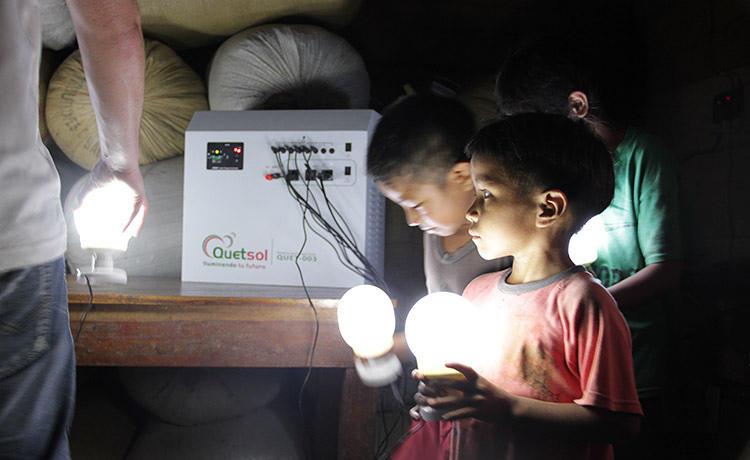
solar_quetsolBut to paraphrase an old saying, crisis is the mother of creative solutions. And amongst forward-looking economist and developers, a possible solution is take the latest advancements in solar, wind, tidal power and biofuels, and tailor them to meet the needs of local communities. In so doing, it is hoped that the developing world could skip over the industrial phase, reaping the benefits of modernization without all the dirty, unhealthy consequences.

Two such men are Juan Rodriguez – a young man who was studying for his business administration at the Universidad Francisco Marroquin in and cut his teeth working for major multinationals like Pampers, Pepto Bismol and Pantene – and his childhood friend Manuel Aguilar, a Harvard graduate with a degree in astrophysics who had gone on to manage a global hedge fund.

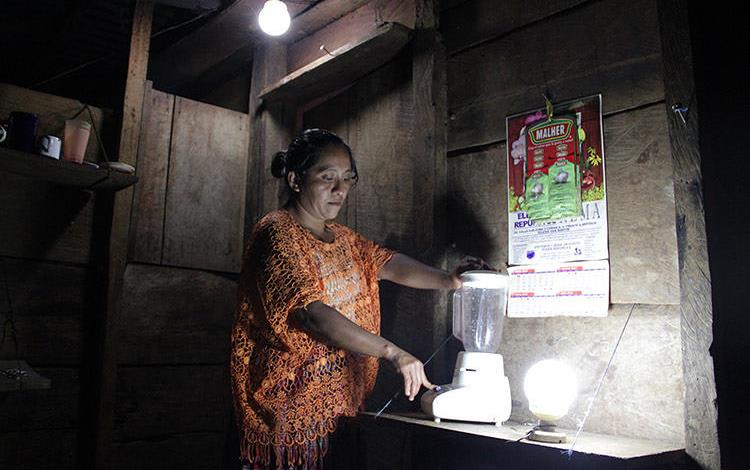
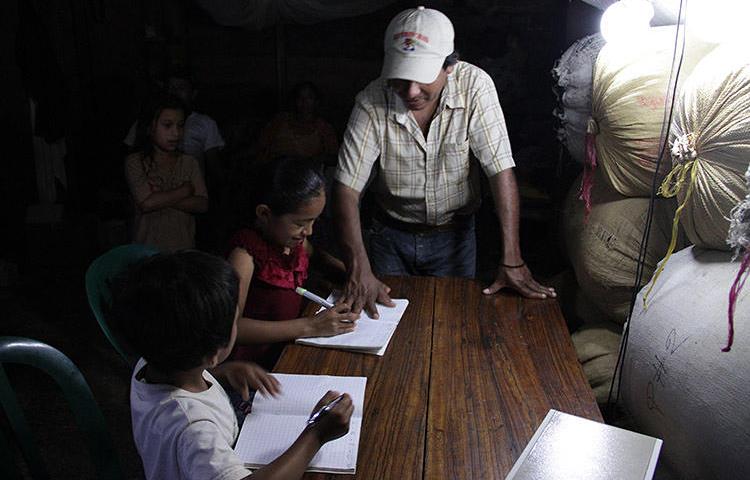
solar_quetsol1Three years ago, the two agreed that they were looking for something else and began investigating renewable energy. The result was Quetsol, a company that uses solar energy to improve the quality of life of poor communities living off the electrical grid. In Rodriguez’s and Aguilar’s native Guatemala, such poverty is widespread, with close to 20% of the population living without electricity and relying primarily on candles for light.

This picture of poverty is not exactly news. But after spending a year visiting close to 100 such communities, Rodriguez and Aguilar began to get a clear picture of why solar hadn’t yet succeeded. As Rodriguez put it:

Going to a community and talking about solar power isn’t like going into a community and talking about space travel. It is something that people have already seen, because NGOs have donated solar systems to these communities for decades. In many cases, the systems worked perfectly, but eventually the batteries died, and nobody was there to service them.

solar_quetsol2There solution was to start from the bottom up, using the free-market principle of adapting their approach to meet local needs. This would involve identifying communities before visiting them, taking into account how many people were living without electricity, and what the housing situation was like. When they then visited these communities, they sought out community leaders and held public meetings to learn about them and present their ideas.

Buildings relationships with local communities was a challenge, but so was creating a product for a market whose needs ranged from basic lighting and cell phone charging to powering a refrigerator all day. What they found was that unelectrified communities were relying on terribly inefficient means, ranging from diesel generators to walking to the nearest electrified community to plug in a phone.

solar_quetsol3What was resulted was a Solar Kit, consisting of a 10W Solar Panel, a control box with 7 Amp Battery, 2  LED Bulbs  (and a third optional bulb), and a universal cell phone charger. This kit has the ability to provide five hours of electricity to a house made up of two rooms that measure roughly 25 square meters (225 square feet) each. This is the typical design of homes in rural Guatemala, with one room serving as the bedroom and the other as the kitchen.

With that done, they began working on their sales strategy. Initially, this consisted of working with microfinance credit institutions to help families and communities purchase their solar kits. But after watching too many credit applications get rejected, they took a page from the telecom companies that have made cell phones ubiquitous in Guatemala, Basically, they switched to a pay-as-you-go plan.

solar_quetsol4Today, Quetsol employs a staff of 20 people and boasts board members like Google’s Tom Chi. There product line has also expanded, with the Q1 Solar Kit being supplemented by the Q3, a heavier model that boasts a 75W solar panel, an 85 Amp Battery, and five LED bulbs. The Q2 Kit – a middle of the road model with a 30W panel, 34 amp battery and 3 bulbs – is soon to be released.

But most importantly of all, they have electrified more than 3,500 homes in Guatemala thus far. But that is just a drop in the bucket compared to their long-term goal. Basically, the organization is viewing Guatemala as a stepping stone to all of Latin America as well as Africa by 2015. By 2016, they’d like to tackle the nearly 700 million off-the-grid homes in Asia.

Might sound ambitious, but Rodriguez and Marroquin feel they have the business acumen and social entrepreneurial savvy to pull it off. And given their background and business model, I’d say they are about right. Combined with other technologies that merge local needs with clean, efficient, and renewable means, development in the developing world might actually be an eco-friendly possibility.

Sources: fastcoexist.com, quetsol.com


Timeline of the Future…

hyperspace4I love to study this thing we call “the future”, and began to do so as a hobby the day I made the decision to become a sci-fi writer. And if there’s anything I’ve learned, its that the future is an intangible thing, a slippery beast we try to catch by the tail at any given moment that is constantly receding before us. And when predict it, we are saying more about the time in which we are living than anything that has yet to occur.

As William Gibson famously said: “…science fiction was always about the period in which it was written.” At every juncture in our history, what we perceive as being the future changes based on what’s going on at the time. And always, people love to bring up what has been predicted in the past and either fault or reward the authors for either “getting it right” or missing the mark.

BrightFutureThis would probably leave many people wondering what the point of it all is. Why not just wait and let the future tend to itself? Because it’s fun, that’s why! And as a science fiction writer, its an indispensable exercise. Hell, I’d argue its absolutely essential to society as a whole. As a friend of one once said, “science fiction is more of a vehicle than a genre.” The point is to make observations about society, life, history, and the rest.

And sometimes, just sometimes, predictive writers get it right. And lately, I’ve been inspired by sources like Future Timeline to take a look at the kinds of predictions I began making when I started writing and revising them. Not only have times changed and forced me to revise my own predictions, but my research into what makes humanity tick and what we’re up to has come a long way.

So here’s my own prediction tree, looking at the next few centuries and whats likely to happen…

21st Century:

2013-2050:

  • Ongoing recession in world economy, the United States ceases to be the greatest economic power
  • China, India, Russia and Brazil boast highest rates of growth despite continued rates of poverty
  • Oil prices spike due to disappearance of peak oil and costs of extracting tar sands
  • Solar power, wind, tidal power growing in use, slowly replacing fossil fuel and coal
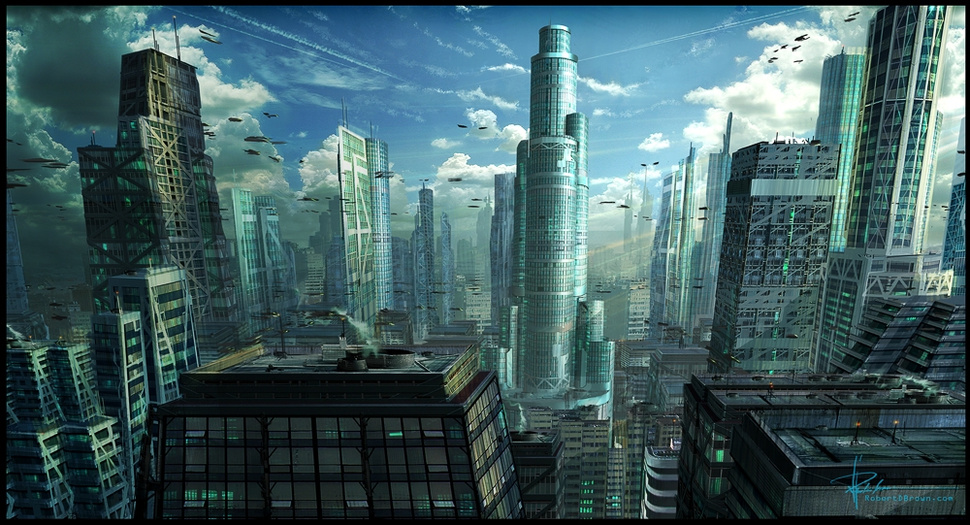
  • First arcologies finished in China, Japan, Russia, India and the United States

arcology_lillypad

  • Humanity begins colonizing the Moon and mounts manned mission to Mars
  • Settlements constructed using native soil and 3D printing/sintering technology
  • NASA tows asteroid to near Earth and begins studies, leading to plans for asteroid mining
  • Population grows to 9 billion, with over 6 living in major cities across the all five continents
  • Climate Change leading to extensive drought and famine, as well as coastal storms, flooding and fires
  • Cybernetics, nanotech and biotech leading to the elimination of disabilities
  • 3D Construction and Computer-Assisted Design create inexpensive housing in developing world

europa_report

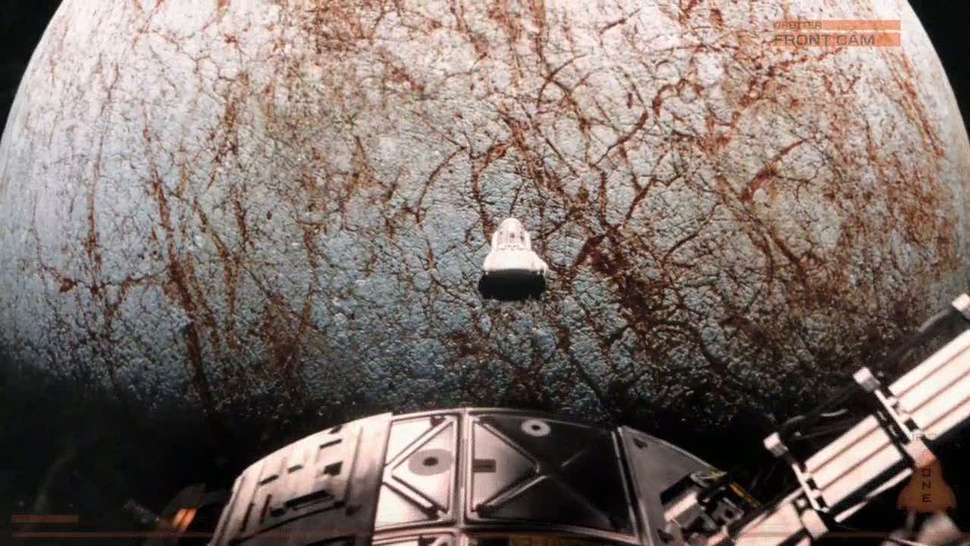
  • First exploratory mission to Europa mounted, discovers proof of basic life forms under the surface ice
  • Rome ordains first openly homosexual priests, an extremely controversial move that splits the church
  • First semi-sentient, Turing compatible AI’s are produced and put into service
  • Thin, transparent, flexible medical patches leading to age of “digital medicine”
  • Religious orders formed opposed to “augmentation”, “transhumanism” and androids
  • First true quantum computers roll off the assembly line

quantum-teleportation-star-trails-canary-islands-1-640x353

  • Creation of the worldwide quantum internet underway
  • Quantum cryptography leads to increased security, spamming and hacking begins to drop
  • Flexible, transparent smartphones, PDAs and tablets become the norm
  • Fully immersive VR environments now available for recreational, commercial and educational use
  • Carbon dioxide in the upper atmosphere passes 600 ppm, efforts to curb emissions are redoubled
  • ISS is retired, replaced by multiple space stations servicing space shuttles and commercial firms
  • World’s first orbital colony created with a population of 400 people

2050-2100:

  • Global economy enters “Second Renaissance” as AI, nanomachinery, quantum computing, and clean energy lead to explosion in construction and development
  • Commercial space travel become a major growth industry with regular trips to the Moon
  • Implant technology removes the need for digital devices, technology now embeddable
  • Medical implants leading to elimination of neurological disorders and injuries
  • Synthetic food becoming the rage, 3D printers offering balanced nutrition with sustainability

3dfood2

  • Canada, Russia, Argentina, and Brazil become leading exporters of foodstuffs, fresh water and natural gas
  • Colonies on the Moon and Mars expand, new settlement missions plotted to Ganymede, Europa, Oberon and Titan
  • Quantum internet expanding into space with quantum satellites, allowing off-world connectivity to worldwide web
  • Self-sufficient buildings with water recycling, carbon capture and clean energy becomes the norm in all major cities
  • Second and third generation “Martians” and “Loonies” are born, giving rise to colonial identity

asteroid_foundry

  • Asteroid Belt becomes greatest source of minerals, robotic foundries use sintering to create manufactured products
  • Europe experiences record number of cold winters due to disruption of the Gulf Stream
  • Missions mounted to extra-Solar systems using telexploration probes and space penetrators
  • Average life expectancy now exceeds 100, healthy children expected to live to 120 years of age
  • NASA, ESA, CNSA, RFSA, and ISRO begin mounting missions to exoplanets using robot ships and antimatter engines
  • Private missions to exoplanets with cryogenically frozen volunteers and crowdfunded spaceships

daedalus_starship_630px

  • Severe refugee crises take place in South America, Southern Europe and South-East Asia
  • Militarized borders and sea lanes trigger multiple humanitarian crises
  • India and Pakistan go to war over Indus River as food shortages mount
  • China clamps down on separatists in western provinces of Xinjian and Tibet to protect source of the Yangtze and Yellow River
  • Biotechnology begins to grow, firms using bacteria to assemble structural materials

geminoid

  • Fully sentient AIs created and integrated into all aspects of life
  • Traditionalist communities form, people seeking to disconnect from modern world and eschew enhancement
  • Digital constructs become available, making neurological downloads available
  • Nanotech research leading to machinery and materials assembled at the atomic level
  • Traditional classrooms giving way to “virtual classrooms”, on-demand education by AI instructors
  • Medical science, augmentation, pharmaceuticals and uploads lead to the first generation of human “Immortals”

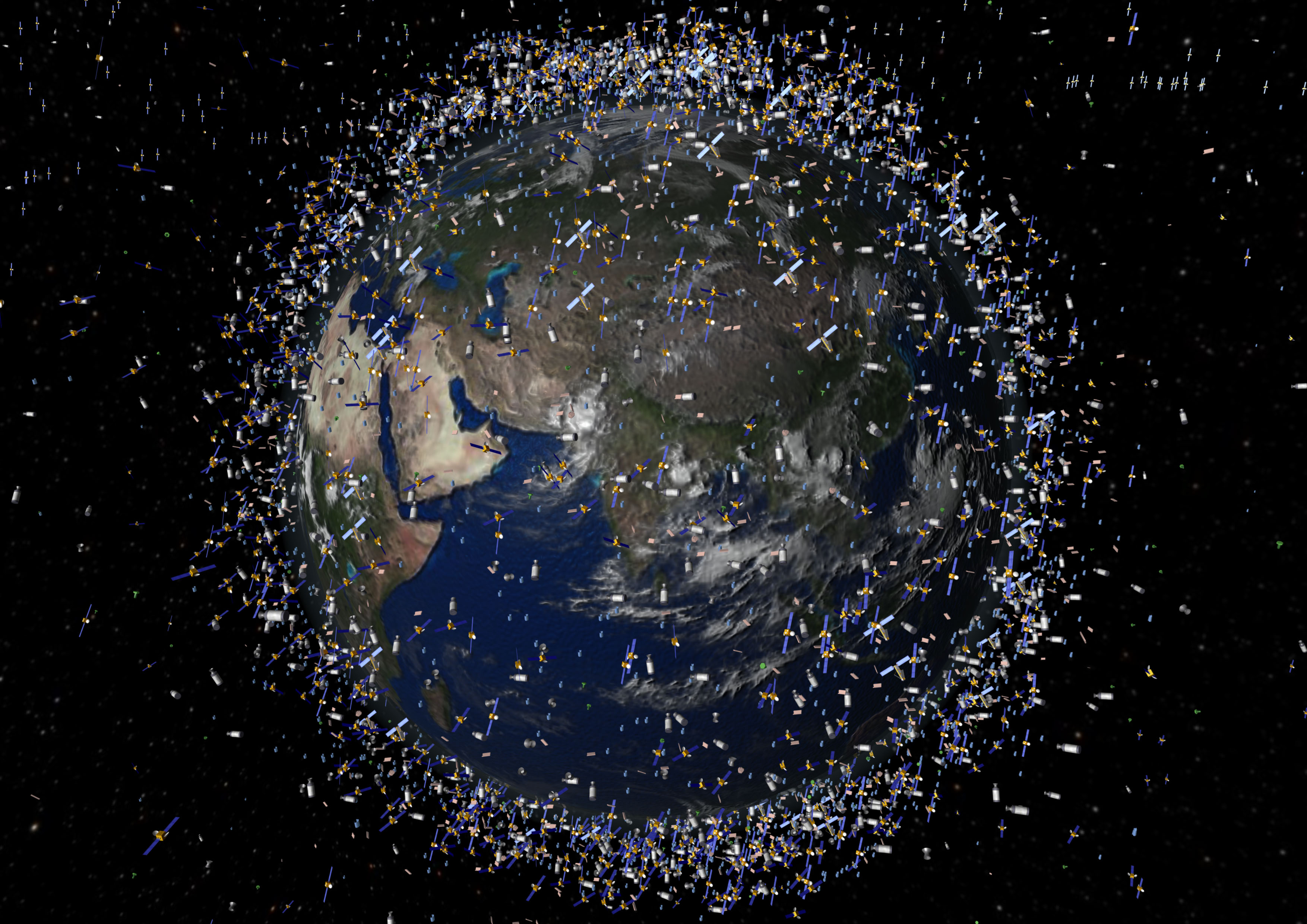
space_debris

  • Orbital colonies gives way to Orbital Nexus, with hundreds of habitats being established
  • Global population surpasses 12 billion despite widespread famine and displacement
  • Solar, wind, tidal, and fusion power replace oil and coal as the dominant power source worldwide
  • Census data shows half of world residents now have implants or augmentation of some kind
  • Research into the Alcubierre Drive begins to bear experimental results

alcubierre-warp-drive-overview22nd Century:

2100-2150:

  • Climate Change and global population begin to level off
  • First “Neural Collective” created, volunteers upload their thought patterns into matrix with others
  • Transhumanism becomes established religion, espousing the concept of transcendence
  • Widespread use of implants and augmentation leads to creation of new underclass called “organics”
  • Solar power industry in the Middle East and North Africa leading to growth in local economies
  • Biotech leads to growth of “glucose economy”, South American and Sub-Saharan economies leading in manufacture of biomaterials
  • Population in Solar Colonies and Orbital Nexus reaches 100,000 and continues to grow

asteroid_belt1

  • Off-world industry continues to grow as Asteroid Belt and colonies provide the majority of Earth’s mineral needs
  • Famine now widespread on all five continents, internalized food production in urban spaces continues
  • UN gives way to UNE, United Nations of Earth, which has near-universal representation
  • First test of Alcubierre FTL Drive successful, missions to neighboring systems planned
  • Tensions begin to mount in Solar Colonies as pressure mounts to produce more agricultural goods
  • Extinction rate of wild animals begins to drop off, efforts at ecological restoration continue
  • First attempts to creating world religion are mounted, met with limited success

networked_minds

  • Governments in most developed countries transitioning to “democratic anarchy”
  • Political process and involvement becoming digitized as representation becomes obsolete
  • “Super-sentience” emerges as people merge their neural patterns with each other or AIs
  • Law reformed to recognize neural constructs and AIs as individuals, entitled to legal rights
  • Biotech research merges with AI and nanotech to create first organic buildings with integrated intelligence

2150-2200:

  • Majority of the world’s population live in arcologies and self-sufficient environments
  • Census reveals over three quarters of world lives with implants or augmentation of some kind
  • Population of Orbital Nexus, off-world settlements surpasses 1 million
  • First traditionalist mission goes into space, seeking world insulated from rapid change and development
  • Labor tensions and off-world riots lead to creation of Solar policing force with mandate to “keep the peace”

Vladivostok-class_Frigate

  • First mission to extra=Solar planets arrive, robots begin surveying surface of Gliese 581 g, Gliese 667C c, HD 85512 b, HD 40307 g, Gliese 163 c, Tau Ceti e, Tau Ceti f
  • Deep space missions planned and executed with Alcubierre Drive to distant worlds
  • 1st Wave using relativistic engines and 2nd Wave using Alcubierre Drives meet up and begin colonizing exoplanets
  • Neighboring star systems within 25 light years begin to be explored
  • Terraforming begins on Mars, Venus and Europa using programmed strains of bacteria, nanobots, robots and satellites
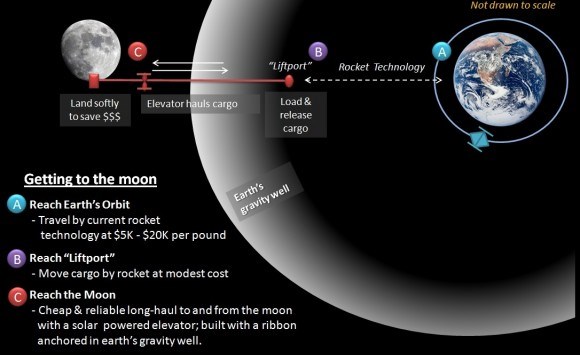
  • Space Elevator and Slingatron built on the Moon, used to transport people to space and send goods to the surface

space_elevator_lunar1

  • Earth’s ecology begins to recover
  • Natural species are reintroduced through cloning and habitat recovery
  • Last reported famine on record, food production begins to move beyond urban farms
  • Colonies within 50 light years are established on Gliese 163 c, Gliese 581 g, Gliese 667C c, HD 85512 b, HD 40307 g, Tau Ceti e, Tau Ceti f
  • Off-world population reaches 5 million and continues to grow
  • Tensions between Earth and Solar Colonies continue, lead to demands for interplanetary governing body
  • Living, breathing cities become the norm on all settled worlds, entire communities build of integrated organic materials run by AIs and maintained by programmed DNA and machinery

self-aware-colony

23rd Century and Beyond:

Who the hell knows?

*Note: Predictions and dates are subject to revision based on ongoing developments and the author’s imagination. Not to be taken literally, and definitely open to input and suggestions.

Towards a Cleaner Future: The Strawscaper and The Windstalk

strawscaperAs the world’s population continues to grow and climate change becomes a greater and greater problem, urban planners and engineers are forced to come up with increasingly creative solutions. On the one hand, the population is expected to rise to an estimated 8.25 billion people by 2030 and 9.25 by 2050, and they will need places to live. On the other, these people will require energy and basic services, and these must be provided in a way that is clean and sustainable.

One such solution is known as the Strawscaper. The brainchild of designer Rahel Belatchew Lerdel, this building would be able to provide its own electricity using only wind and a series of piezoelectric fronds that rustle in the wind. Thanks to this method, the building would get all the power it needs from wind passing through its exterior, and would therefore not need to be attached to the city grid.

strawscaper2In a press release by Belatchew labs, Rahel claimed that the inspiration “came from fields of wheat swaying in the wind”. He also described the building he envisions as one that would give “the impression of a body that is breathing”. Details as to how it would generate its own electricity were also described:

By using piezoelectric technology, a large number of thin straws can produce electricity merely through small movements generated by the wind. The result is a new kind of wind power plant that opens up possibilities of how buildings can produce energy.

strawscaper1The full plan calls for the completion of the Söder Torn, a building in Stockholm that began construction in 1997 but was forcibly scaled down after its architect, Henning Larsen, lost control of the project. Completing it at this point would involve adding an additional 14 stories, thus bringing it from 26 to 40, and adding the piezoelectric fronds to make it electrically self-sufficient.

Though piezoelectricity has never been used in this way, the concept is well understood and backed by a number of research reports. In addition, Belatchew is not the only one considering it as a possible means of generating clean energy. Over in Masdar City, a planned community in Abu Dhabi, something very similar is being proposed to suit their energy needs.

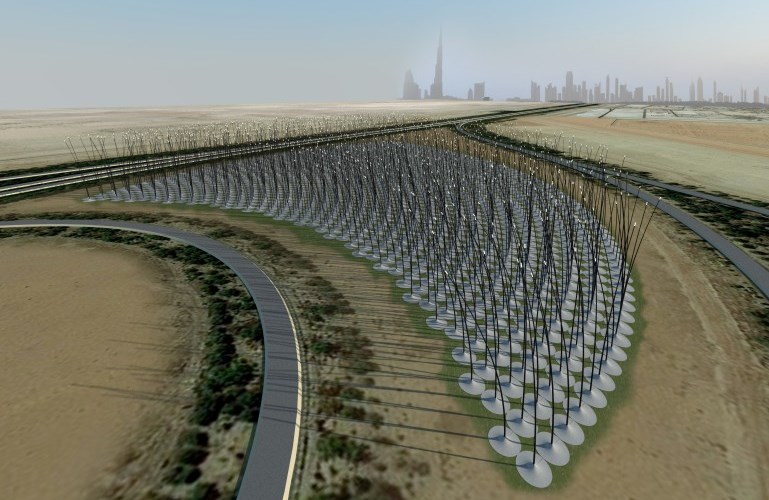
windstalkIt’s known as the Windstalk, another means of generating electricity from wind without the needs for turbines. Though wind farms have long been considered an effective means of generating sustainable energy, resident living near large-scale operations have voiced concerns about the aesthetics and low-frequency vibrations they claim are generated by them. Thus, the concept of the Windstalk, created by New York design firm Atelier DNA.

The concept consists of 1,203 carbon fiber reinforced resin poles which stand 55 meters (180 feet) high and are anchored to the ground in concrete bases. The poles measure 30cm (12 in.) in diameter at the base and taper up to a diameter of 5cm (2 in.) at the top. Each pole is packed with piezoelectric ceramic discs, between which are electrodes that are connected by cables that run the length of each pole.

windstalk-2Thus, instead of relying on turbines to move magnets and create electrical current, each pole merely sways in the wind, compressing the stack of piezoelectric discs and generating a current through the electrodes. And just to let people know how much – if any – power the poles are generating, the top 50cm (20 in.) of each pole is fitted with an LED lamp that glows and dims relative to the amount of electrical power being generated.

As a way to maximize the amount of electricity the Windstalk farm would generate, the concept also places a torque generator within the concrete base of each pole. As the poles sway, fluid is forced through the cylinders of an array of current generating shock absorbers to convert the kinetic energy of the swaying poles into additional electrical energy. But of course, storage is also an issue, since wind power (like solar) is dependent on weather conditions.

windstalk-3Luckily, the designers at Atelier DNA have that covered too. Beneath a field of poles, two large chambers are located, one on top of the other. When the wind is blowing, part of the electricity generated is used to power a set of pumps that moves water from the lower chamber to the upper one. Then, when the wind dies down, the water flows from the upper chamber down to the lower chamber, turning the pumps into generators.

At the moment, the Windstalk concept, much like the Strawscaper, is still in the design phase. However, the design team estimates that the overall electricity output of the concept would be comparable to that of a conventional wind turbine array because, even though a single wind turbine that is limited to the same height as the poles may produce more energy than a single Windstalk, the Windstalks can be packed in much denser arrays.

Though by all accounts, the situation with our environment is likely to get worse before it gets better, it is encouraging to know that the means exist to build a cleaner, more sustainable future. Between now and 2050, when the worst aspects of Climate Change are expected to hit, the implementation of a better and more sustainable means of living is absolutely crucial. Otherwise, the situation will continue to get worse indefinitely, and the prospects of our survival will become bleak indeed!

Sources: fastcoexist.com, gizmag.com

Towards a Cleaner Future: Generating Electricity with Steps

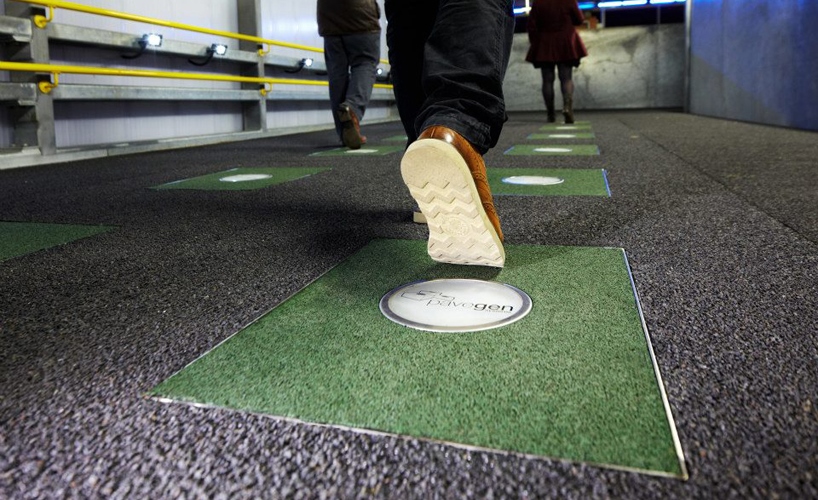
pavegen1

This years Boston Marathon was the site of a terrible tragedy, as runners reaching the finish line were met with the worst terrorist attack on American soil since September 11th took place. Not only was this gruesome attack an injustice of immense proportions, it also overshadowed an important story that took place overseas, one which also involved a marathon and a potential breakthrough for renewable energy.

Here, the runners and spectators who waited at the finish line were also privy to something unexpected. But in this case, it involved a series of rubber panels which turned the runners steps into actual electricity. Known as Pavegen, a material invented by 27 year-old Laurence Kemball Cook and composed of recycled tires, this demonstration was the largest test to date of the experimental technology. And though the results were modest, they do present a frightening amount of potential for clean, renewable energy.

pavegen4

Essentially, a single step on a Pavegen pad is said to generate up to 8 watts of electricity per second. Based on that, and at a speed of one step a second, it would take a single pedestrian 40 minutes to charge a smartphone. However, a small army of pedestrians could generate considerably more – say for example, 50,000+ people taking part in a marathon.

Here too, the results fell short of their intended goal. Schneider Electric – who commissioned the project – held a contest on Facebook and said if they generated over 7 kilowatt-hours of energy, they would make a donation to Habitat for Humanity. As it turned out, all those runners generated more like two-thirds of that: 4.7 kilowatt-hours. Still, the potential is there.

pavegen5

Already the Simon Langton Grammar School for Boys in Kent, England, has contracted with Pavegen to become the site of the first permanent installation of the material. And as the video below demonstrates, it has the ability to at least generate enough power to keep the lights on in a building where hundreds of people take thousands of steps daily.

Given time and some improvement in the yield of the pads, this technology could very well take its place alongside solar, wind, and other renewable sources of power that will bring electricity to the cities of the future. Imagine it if you will, entire sidewalks composed of electricity-generating material, turning every step its pedestrians take into clean energy. I for one think that’s the stuff of bona fide science fiction story (it’s mine, you can’t have it!).

And be sure to check out this promotional video from Pavegen who filmed their floor at work in Simon Langton:


Source:
fastcoexist.com

Towards a Cleaner Future: Fuel Cell Breakthrough!

hydrogen-fuel-cellOne of the greatest challenges facing renewable energy is making it affordable and cost effective, to the point where it will naturally offset such sources as fossil fuels and coal. And when it comes to hydrogen fuel cells, a recent development may have accomplished just that. Quite surprising when you consider that it came from Alberta, home of the Athabasca Oil Sands and an output of roughly 4 million barrels of crude a day.

It all happened late last month, when researchers at the University of Calgary published a paper in the Journal of Science that they had come up with a much cheaper and easier way to build an electrolyzer. This is the device that uses electricity to break up water into hydrogen and oxygen, which are then used to power hydrogen fuel cells.

Picture shows the refuelling hydrogen syFor some time now, these fuel cells have been considered the most promising means of powering automobiles with a clean, renewable energy source. By recombining the two basic elements of hydrogen and oxygen, energy is generated and the only waste product is water. The only difficulty is the means of production, as electrolyzers often depend on expensive and sometimes toxic metals.

The most common of current methods involves the use of expensive rare earth metals in precise crystalline arrangements to catalyze, or speed up, the reaction. But with the new process developed by Chris Berlinguette and Simon Trudel comes into play, which involves catalyzers built out of common metals without the need for the crystal structure, the process will not only be vastly simplified but extremely cheaper.

solar_arrayBased on the estimates presented in their paper, Trudel and Berlinguette estimate that their new eletrolyzer will deliver results comparable to current techniques but at a cost of about one-one-thousandth the norm. The implications for clean, renewable energy,  such as wind or solar generators, could be enormous. Not only would it be far cheaper and more efficient, there would be far less toxic waste materials produced.

Not only that, but another major stumbling block for clean energy could be overcome. As is the case with just about any type of renewable power source – wind, solar, tidal – is that it is dependent on conditions which limit when power can be generated. But stored hydrogen energy can be used at anytime and could easily replace gas and coal, just as long as the production process is cost-effective.

hydrogencarAs Berlinguette himself pointed out, making and electrolyzer cost-effective means being able to produce power on demand and to scale:

If you think of a wind turbine producing electricity at two o’clock in the morning, there’s no one around to actually use that electricity, so it just gets dumped. If you could set that up with an electrolyzer, you could convert that electricity into hydrogen, then the next day, when there is demand, you can sell that electricity at a premium during periods of high demand.

In anticipation of the inevitable investment this will attract, Berlinguette and Trudel have already formed a company called FireWater Fuel Corp. to market their work and expect to have a commercially available electrolyzer by next year. So for those of you with money to invest and a socially-responsible, environmental outlook, get out your check books out and be prepared to invest!

Source: huffingtonpost.ca