Remembering Vimy Ridge

The_Battle_of_Vimy_RidgeHello all! Today has been rather a busy one, and show’s no signs of slowing down just yet! In spite of that, I would be remiss if I did not take the time to acknowledge the rather special anniversary which falls on this day, of which some people may not be aware. You see, today is the 96th anniversary of the Battle of Vimy Ridge, a major event in my nation’s history and a defining moment for all Canadians.

Though many people outside of Canada may not know much about it, the Battle of Vimy Ridge was one of the most significant battles of World War I and a key moment in Canada’s history. Taking place between April 9th and 14th of 1917, it was not only a Canadian-led offensive, it was also the only Allied offensive victory in the war to date. And just as importantly, we in Canada consider it a defining moment in our history, when our country ceased being a colony and became a nation.
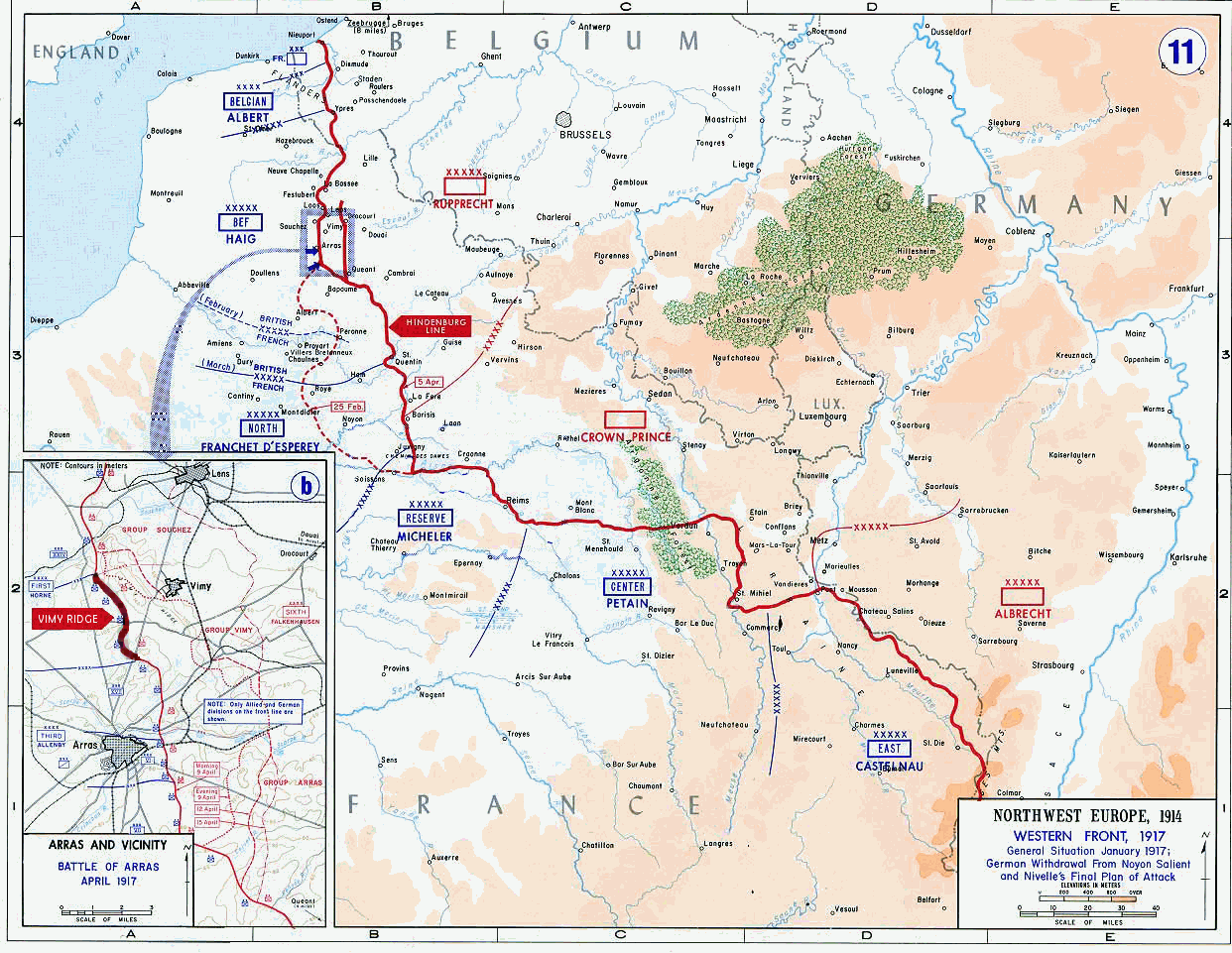
Battle_of_Arras_-_Vimy_Ridge_mapSurprising then that it is often considered a footnote to the larger campaign known as the Battle of Arras or the Nivelle Offensive, one of many disastrous offensives fought by the Allied armies during the war. Like all offensives of its kind, the purpose of the assault in the north-eastern region of France was to break the stalemate that had existened between the Allied and German lines since 1915.

It was believed that if this could be achieved, the numerically inferior German forces would finally be beaten and the war ended. And after so many bloody battles and worsening situations on home front – with shortages setting in and morale running short – the allies were desperate for their big breakthrough. Relying on armies fielded by the French, British, and all her dominions – Newfoundland, New Zealand, and Canada – the attack would take place in several key sectors along the Western Front.

vimy-ridge-875While the French struck at German positions along the Chemin des Dames ridge, and the British and most of the Dominion armies struck at positions around the town of Arras, the Canadian Corps – led by General Arthur Currie – was to take the highground known as Vimy Ridge. Despite promises of a speedy battle after a massive bombardment, the French made little gains against the dug-in defenders and lost almost 200,000 men. The British fared slightly better, achieving some gains but at the high cost of 158,000 men.

Only the Canadians achieved their objectives completely and promptly, taking the Ridge in just three days and with acceptable losses. Of the five divisions totaling nearly 170,000 men, only 3,598 were killed with another 7000 wounded. On the other side, the Germans – who were well dug-in and defending an elevated position – suffered at least as many killed and wounded, plus an additional four thousand captured. This was made ever more impressive considering that the French and British, during a previous attempt to take the Ridge, had lost a good 150,000 men.

vimy2

This was unprecedented for a World War I battle, and earned the Canadian Corps the status of elite “Shock Troops”. For the remainder of the war, Arthur Currie and the soldiers under his command would be the ones who were seen as being able to “get things done”. During the battle of Passchendale, a brutal, bloody, muddy offensive, the Canadians were called in to accomplish the offensive after the British efforts faltered. During the final 100 days of the war, when the German lines were collapsing, the Canadians led the way for every single push.

And yet, all of this was made possible due to one simple thing: sound planning. As the first offensive action that Canadian commanders were able to plan on their own, they took advantage of some rather novel ideas and technologies to overcome the problems of trench warfare. These included the rather revolutionary concept of using triangulation and wind measurements to determine the position of enemy artillery, and destroy them ahead of time.

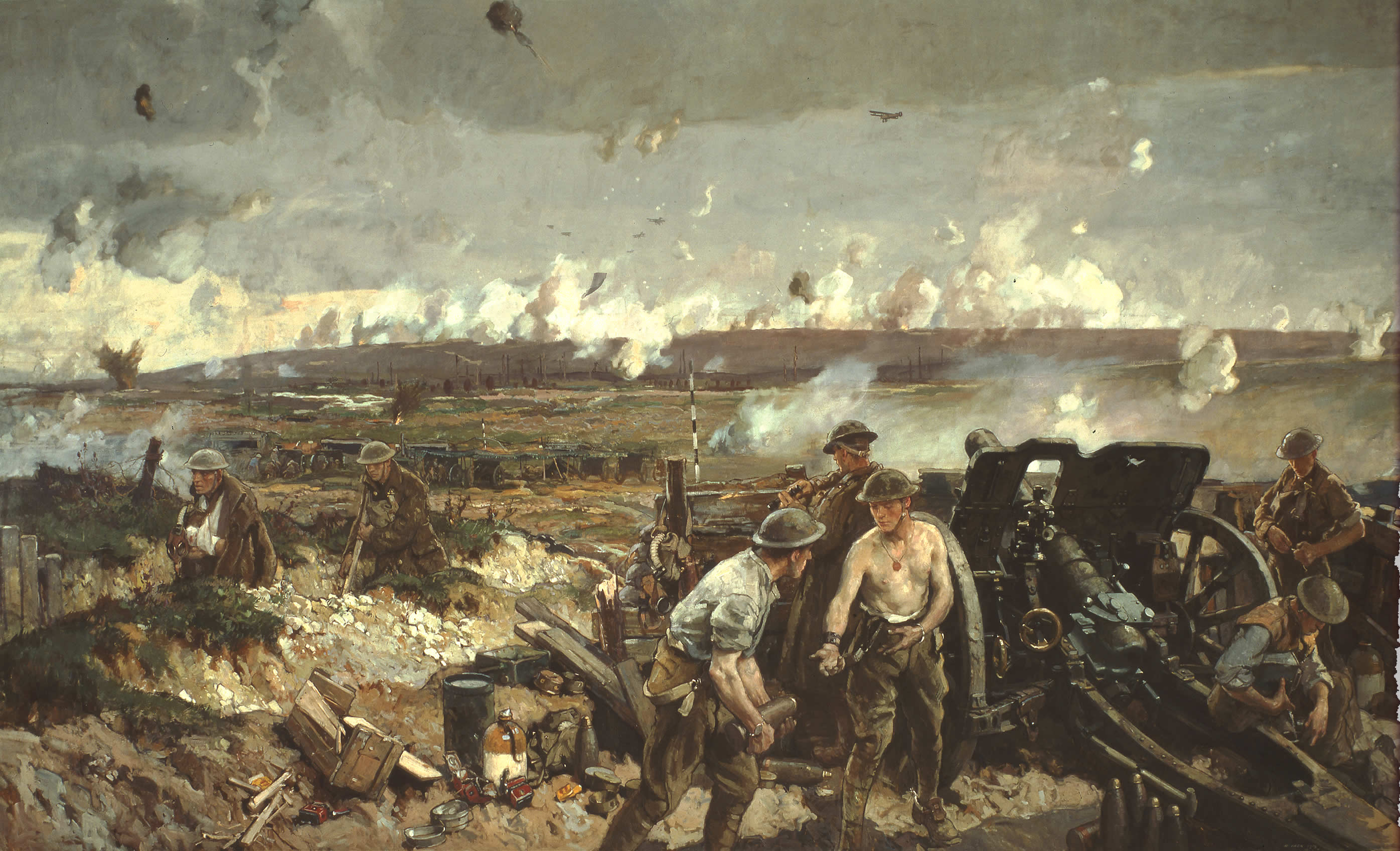
battle_of_vimy_ridge_field_gun_firingCreeping barrages were also planned to give the advancing troops continuous fire support, rather than simply laying down a barrage and then stopping it before the infantry began to march. This tactic had already been proven ineffective, as the Germans simply dug in deeper to avoid preemptive barrages and also had time to emerge from their dugouts once the shells stopped falling to shoot at the advancing troops. By timing the artillery with the advance, any Germans brave enough to fire on the Canadian Corp risked being blown to pieces.

But most importantly, the planned offensive had been meticulously planned for month. Spotters mapped out 80 percent of the Ridge in advance, full-scale replicas of the terrain were built to rehearse unit tactics, and individual officers were assigned maps and time tables. All of this was a break from conventional philosophy, which held that troops did not need to be familiar with the grand strategy and should march as one.

Model_reproduction_of_German_linesThough many a military “expert” of the time found much of this suspect, they admitted dubiously that the Canadians’ plan couldn’t be any worse than the British tactics at the Somme, which cost the lives of 623,907 troops, 24,000 of which were Canadian. As such, the Canadian Corps got the go ahead. For weeks, Canadian and British artillery began pounding the German positions in preparation for the assault. Then on April 9th, an Easter Monday morning amidst rain and freezing cold, the Canadian Corps struck.

By the end of the first day, they had accomplished most of their objectives, but fighting and consolidation would continue for another four days and Canadians mopped up the German positions and took prisoners. When the dust had settled, the valour of the troops, the originality of the plan, and the success where larger, more established armies had failed all contributed to a new nation’s pride. The battle was hailed as the first allied success of the long war, achieved mostly due to the innovation of using a creeping, continuous massive artillery barrage to protect squads of advancing troops. Both sides used the tactic in future battles.

Vimy RidgeToday, the Canadian National Vimy Memorial stands as a proud reminder of what Canadians accomplished at Vimy and throughout the war. As a young nation, nominally independent but still very much tied to the British Crown, we had done what others could not and earned a reputation as stalwart soldiers and faithful allies that is still acknowledged to this day. The monument, as well as many of the wartime features of the Ridge, are maintained by an army of committed volunteers and government assistance.

And I for one very much look forward to visiting it in the spring of 2014, when the centennial of World War I is being marked all over Europe, and legions of Canadians and other nationals descend on Flanders and Northern France in order to pay their respects. In addition to the many monuments which mark the landscape, it is a testament to the futility of war, but also a symbol of a nation born in fire.

Today, it is especially important that we remember what happened not only at Vimy, but all over Europe and the world at large during those fateful years. Since the last living veteran of World War I, a British man named Florence Green, died on February 4th 2012 at the aged of 110, there is no one left who experienced that terrible war directly. And as we near the 100 year marker of the Great War and the battle that defined Canada as a nation, I hope and pray the lessons will not be forgotten! They simply cannot afford to be repeated…

The Future is Here: The Smart Bandage!

electronic_skin_patchWith recent advances being made in flexible electronics, researchers are finding more and more ways to adapt medical devices to the human body. These include smart tattoos, stretchable patches for organs, and even implants. But what of band-aids? Aren’t they about due for an upgrade? Well as it happens, a team of chemical engineering at Northeastern University are working towards just that.

Led by associate professor Ed Goluch, the team is working towards the development of a “smart bandage” that will not only dress wounds, but can monitor infections and alert patients to their existence. Based around an electrochemical sensor that is capable of detecting Pseudomonas aerug­i­nosa – a common bacteria that can kill if untreated – this bandage could very prove to be the next big step in first aid.

smart_bandaidAccording to Goluch, the idea came to him while he was studying how different bacterial cells behave individually and he and his colleagues began speaking about building other types of sensors:

I was designing sensors to be able to track individual cells, measure how they produce different toxins and compounds at the single-cell level and see how they change from one cell to another and what makes one cell more resistant to an antibiotic.

Naturally, addition research is still needed so that smart band-aids of this kind would be able to detect other forms of infections. And Goluch and his colleagues are quite confident, claiming that they are adapting their device to be able to detect the specific molecules emitted by Staphylococcal – the bacteria responsible for staph infections.

???????????????????????????????So far, Goluch and his team have tested the system with bacteria cultures and sensors. The next step, which he hopes to begin fairly soon, will involve humans and animals testing. The professor isn’t sure exactly how much the sensor would cost when commercialized, but he believes “it’s simple enough that you’d be able to integrate it in a large volume fairly cheap.”

At this rate, I can foresee a future where all first-aid devices are small patches that are capable of gathering data on your wounds, checking your vitals, and communicating all this information directly to your PDA or tablet, your doctor, or possibly your stretchable brain implant. I tell ya, it’s coming, so keep your apps up to date!

Source: factcoexist.com


Game of Thrones – Season Three Episode 2

game_of_thrones_s3Welcome back to another episode of Game of Thrones. I think I speak for everyone when I say that last week’s episode was the whirlwind intro, a big high after waiting almost an entire year for the new season to air. And as expected, things were visually appealing, exciting, and eye-popping from time to time. At the same time, in what is fast becoming the trend for this show, differences from the source material are becoming all the more apparent and obvious.

This is largely due to the fact that changes in the last season have required the writers to make further changes this season. These include rewrites, additions, things left out, and late introductions. And with this second episode now aired, I feel like I’m beginning to sense how these will play out. At least I think so, but I’ll keep them to myself to avoid any potential spoilers, especially for those who haven’t read the books yet.

Needless to say, the central theme of this episode was the bad news that becomes so manifest in book three. Between the shifting fortunes for Robb and the Stark family, the chaos that grips the Seven Kingdoms, the ongoing battles of Daenerys, and the fate of lesser players (Theon and Jaime being foremost amongst them), everyone seems to be suffering from setbacks, debacles and ill omens. Here’s how it all went down this week:

Dark Wings, Dark Words:
got3_jojenreedThe episode opens with Bran having more dreams about the three eyed crow. This time, a young boy appears telling him that the raven is him. He wakes up to the company of Hodor, Osha, and the direwolf Summer, his companions as they continue to make their way north. On the way, they encounter Jojen and Meera Reed, who claims that they have come a long way to find him. They inform him that he is a Warg, and can control animals and experience “greendreams”.

North of the Wall, John and his Wildling companions move towards the Wall and learn from one of Mance’s wargs that the Fist of the First Men has fallen and is littered with bodies of the Night’s Watch. Sam and the others are still retreating south, battling cold and starvation, and Sam seems ready to die. However, Lord Commander Mormont refuses to let him yield and orders his brothers to help him along.

GOT3_brienne_jaimeRobb meanwhile is summoned back to Riverrun when word of his grandfather’s death reaches them. His mother is perturbed by the news, but not nearly as much as by word that Winterfell was burned to the ground and that Brandon and Rickard are missing. They begin the march back to Riverrun to attend the funeral, during which time Catelyn and Talisa (John’s new wife) get a chance to bond.

In the Riverlands, Brienne and Jaime continue south, and it is hard going as the two find each other’s company quite difficult to endure. While attempting to cross a river, Jaime grabs a sword from her and they fight. Unfortunately, this gives their position away and the two of them are fallen upon by the Brave Companions (aka. Bloody Mummers), another free company that currently owes service to House Bolton.

got3_joffrey_margaeryIn King’s Landing, everything is being dedicated towards the preparations for Joffrey’s wedding to Lady Margaery Tyrell. Cersei is naturally suspicious of his newly betrothed, but Joffrey refused to listen to his mother’s counsel. Sansa, meanwhile is introduced to Margaery and her grandmother, Lady Olenna Redwyne – the Queen of Thorns. She asks Sansa for the truth about Joffrey, and after some convincing that she is safe, she confides that is he is an absolute bloody monster.

She gets a taste of this when Joffrey summons her to him and interrogates her about her marriage to Renly and why it didn’t produce an heir. However, Lady Margaery manages to skillfully manipulate him, hinting at Renly’s interest in men and lying about their night together. In the end, Margaery plays to his weaknesses, tapping into his endless appetite for cruelty, and clearly has him wrapped around her finger.

got3_aryaElsewhere in the Riverlands, Arya and her companions, Hot Pie and Gendry, wander freely now that they have escaped Harrenhal. While seeking out the way to Riverrun, they come upon Thoros of Myr and the Brotherhood without Banners who take them into their company. Over food and ale, they see the Hound brought in shackled, and Arya tries to sneak out unseen. However, the Clegane recognizes her and identifies her as Stark’s daughter.

In between all of this, we see Theon being tortured in an unidentified dungeon, which includes his finger being flayed and his foot being mangled by a screw. His tormenters are unknown to him, and he is asked only one question. “Why did you take Winterfell?” He finally answers truthfully, and is left alone for the night. A young man comes to him and claims he was sent by his sister and will free him in the night.

Summary:
Overall, this episode was not bad. In fact, they did a few things here which I thought were pretty interesting, which included using material taken from the latest book (A Dance with Dragons) to fill in some areas that were not mentioned in the third book, but which happened during the course of it and were not covered. This includes what became of Theon after he was betrayed at Winterfell, though it was by the Bastard of Bolton, and not his own men.

However, that small technicality they seem to have glossed over quite well by simply saying the Northmen torched the city before the Bolton’s army arrived. The rest is true to the text, Theon being taken captive and tortured mercilessly as part of Ramsay Bolton’s predilection for cruelty and villainous schemes. And, having read the fifth book, I know what lies in store for Theon, and I pity the poor bastard! I approve of the way they are parceling it out though, not revealing just yet who his tormenter is or what he has planned…

Other changes which I didn’t like much included Robb’s return to Riverrun. Here, the show is once again working with changes that were forced on it by previous changes. Robb did not take his mother or Jaime Lannister with him as he fought his way to Casterly Rock. They were left behind in Riverrun, hence he did not see him until he returned for his grandfather’s funeral and to confront his mother about her treason (letting Jaime go). And it was for this reason that she didn’t meet his new bride until he came back.

Which reminds me, Robb’s return to Riverrun had little to do with his grandfather’s death. It had more to do with his mother letting Jaime go and his uncle, Lord Emdure Tully, deviating from the orders he had left him with. While Robb was campaigning in the west, Edmure chose to engage the Lannister forces in the Riverlands, forcing them to attempt to ford the rivers and causing them many losses, which included wounding Ser Sandor Clegane (“The Mountain”).

While this seemed like a good idea to Edmure, it had the effect of making Tywin refocus his troops to defend the south and not pursue Robb’s forces as they neared Casterly Rock. This deprived Robb of a chance to commit an outflanking maneuver and deal Tywin and his forces another stinging defeat. Because of this, Robb was not only facing troubles for breaking his betrothal to the Frey daughter and the loss of his hostage, but also because he was no longer in a dominant tactical position.

In addition, Bran’s introduction to the Reeds was quite different than it was in the book. There, the Reeds had come to Winterfell to pay homage to the King and meet Bran. They did not come to him in the wilderness. But since they were not introduced last season, it was necessitated that they be dropped in at this point in season three.

All of these represent changes that are now being forced on the show because they chose to omit or alter things last season, most likely due to budgets. I get it, but it still can be annoying, since they do seem to have a cumulative effect. However, in just about everything else, they managed to get things right. Aside from the fact the Ser Thoros was supposed to be missing part of his face, due to his earlier death and resurrection, the storylines appear to be faithful.

All I can say is that I wish the episode got into things a little bit more. Much like the first episode, this one felt kind of whirlwind-esque, with plenty of nuggets being left for later. But of course, that seems necessary since the story is branching out, with three main threads turning into half a dozen or so. Since they feel obliged to show how all characters are faring at this point, it only seems logical and natural that they parcel things out and try to cover all their bases.

Needless to say, I am looking forward to the reveals and I believe others should be too. If you haven’t read the books yet, you’re in the perfect position to witness some rather big surprises, and I envy you that. As for the Thrones geeks out there, you know what’s coming and I’m pretty sure you’re anticipating it as much as I am. So stay tuned. Things get pretty interesting from here on in, and pretty bloody!

News From Space: The NASA-Funded Fusion Rocket

fusion-rocket-university-of-washington-640x353NASA scientists have been saying for some time that they plan to send a manned mission to Mars by 2030. At the same time, space adventurist Dennis Tito and his company Inspiration Mars want to send a couple on a flyby of the Red Planet in 2018. With such ambitions fueling investment and technological innovation, its little wonder why people feel we are embarking on the new era of space exploration.

However, there is one sizable problem when it comes to make the Mars transit, which is the wait time. In terms of Tito’s proposed flyby, a trip to Mars when it is in alignment with Earth would take a total 501 days. As for NASA’s round-trip excursions for the future, using current technology it would take just over four years. That’s quite the long haul, and as you can imagine, that longer transit time has an exponential effect on the budgets involved!

Mars_landerBut what if it were possible to cut that one-way trip down to just 30 days. That’s the question behind the new fusion rocket design being developed at the University of Washington and being funded by NASA. Led by John Slough, this team have spent the last few years developing and testing each of the various stages of the concept and is now bringing the isolated tests together to produce an actual fusion rocket.

The challenge here is to create a fusion process that generates more power than it requires to get the fusion reaction started, a problem which, despite billions of dollars of research, has eluded some of the world’s finest scientists for more than 60 years. However, researchers continue to bang their head on this proverbial wall since fusion alone – with its immense energy density – appears to be the way of overcoming the biggest barrier to space travel, which is fuel weight and expense.

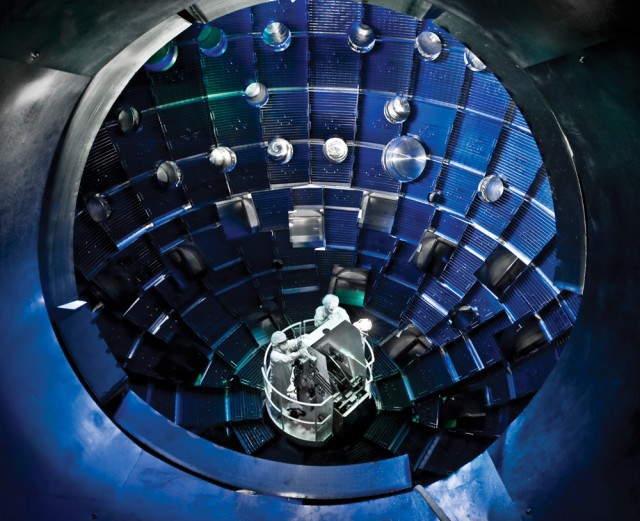
spacecraft_marsUltimately, the UW fusion rocket design relies on some rather simple but ingenious features to accomplish its ends. In essence, it involves a combustion chamber containing rings made of lithium and a pellet of deuterium-tritium – a hydrogen isotope that is usually used as the fuel in fusion reactions. When the pellet is in the right place, flowing through the combustion chamber towards the exhaust, a huge magnetic field is triggered, causing the metal rings to slam closed around the pellet of fuel.

These rings then implode with such pressure that the fuel compresses into fusion, causing a massive explosion that ejects the metal rings out of the rocket and at 108,000 km/h (67,000 mph) and generating thrust. This reaction would be repeated every 10 seconds, eventually accelerating the rocket to somewhere around 320,000 km/h (200,000 mph) — about 10 times the speed of Curiosity as it hurtled through space from Earth to Mars.

NASA_fusionchamberHowever, things still remain very much in the R&D phase for the fusion rocket. While the team has tested out the imploding metal rings, they have yet to insert the deuterium-tritium fuel and propel a super-heated ionized lump of metal out the back at over 100,000 kilometers and hour. That is the next – and obviously a very, very – big step.

But in the end, success will be measured when it comes to two basic criteria: It must work reliably and, most importantly, it must be capable of generating more thermal energy than the electrical energy required to start the fusion reaction. And as already mentioned, this is the biggest challenge facing the team as it is something that’s never been done before.

However, most scientific minds agree that within 20 years at least, fusion power will be possible, and the frontiers it will open will be vast and wonderful. Not only will we be able to fully and completely lick the problem of clean energy and emissions, we will have rockets capable of taking us to Mars and beyond in record time. Deep space flight will finally become a possibility, and we may even begin considering sending ships to Alpha Centauri, Bernard’s Star and (fingers crossed!) Gliese 581!

daedalus_starship_630pxSource: Extreme.tech

Movie Trailer Monday: Riddick!

riddick_vin_dieselGuess what? In this new age of reboots, relaunches and reimaginings, it seems that not a single cult classic is immune. Case in point, the eponymously named sequel Riddick, which is set for release in early September of 2013. Though there are minimal hints provided concerning the plot of this third installment, it seems clear at this point that Riddick is once again on the run from mercenaries and ends up on a planet teeming with hostile life.

Going back to their origins, I take it? Personally, I would prefer seeing what happened after Riddick took control of the entire Necromonger army. And if some tells me this is what followed, i.e. he chose to ditch all that and go back on the run, I’ll totally write this movie off! You can’t tell me he likes being hunted by mercs and living hand to mouth THAT much! I mean there’s recidivism and then there’s just plain dumb!

Enjoy the clip!

The Future is Here: Web-Based “Brain” for Robots

AI_robotMy gratitude once again to Nicola Higgins for beating me to the punch yet again! I hope she doesn’t mind that I’m totally posting a separate article, but something like this is just too good to reblog! In what is sure to excite Singularitarians and Futurists and scare the holy bejeezus out of technophobes and those fearing the Robopocalypse, a new web-based artificial brain went online recently, allowing robots to share information and seek help whenever they need it.

It’s called Rapyuta (or the The RoboEarth Cloud Engine), a part of the European Robo Earth project that began in 2011 with the hope of standardizing the way robots perceive the human world. Basically, it is an online database that robots can consult in order to get information about their world and help them make sense of their experiences, post-activation.

robot_internetThe name Rapyuta is taken from the Japanese film by Hayao Miyazaki known as Castle in the Sky, and refers to a place where all the robots live. The project, which involves researchers at five separate European research labs, has produced the database as well as software that robot owners can upload to their machines so that they can connect to the system at any time.

You might say the “brain” is an expression of sympathy for robots, who are no doubt likely to find the world intimidating and confusing once they come online. Now, instead of every robot building up their own idiosyncratic catalog of how to deal with the objects and situations it encounters, Rapyuta would be the place they ask for help when confronted with a novel situation, place or thing.

googlecarIn addition, the web-based service is able to do complicated computation on behalf of a robot. For example, if it needs to work out how to navigate a room, fold an item of clothing or understand human speech, it can simply do an online consultation rather than try to figure it out on its own. In addition, it is believed that robots will be cheaper thanks to this system since it will mean they won’t need to carry all their processing power on board.

Looking ahead, Mohanarajah Gajamohan, technical head of the project at the Swiss Federal Institute of Technology in Zurich, says that the designers believe the system could be particularly useful for drones, self-driving cars or other mobile robots who have to do a lot of number crunching just to get round.

internetDr Heico Sandee, Robo Earth program manager at the Dutch University of Technology in Eindhoven, also highlighted the economic benefits of this new concept. “On-board computation reduces mobility and increases cost,” he said, adding that as wireless data speeds increase, more and more robotic thinking could be offloaded to the web.

But above all, the aim here is about integration. As robots become more and more common and we human beings are forced to live with them amongst us, there could be difficulties. Without access to such a database, those involved in the project and roboticists at large fear that machines will remain on production lines and never live easily alongside humans.

robots_earthAs for those who support and await the Technological Singularity, this could be one such means through which it is achieved. The idea of machines that are capable of network and constantly upgrade their software is a step in the direction of machines that are capable of self-assembling, evolving and upgrading themselves constantly, which will basically result in a rate of progress that we can currently predict.

But on the other side of the debate, there are those who say this smacks of a Skynet-like supercomputer that could provide machines with the means to network, grow smarter, and think of ways of overthrowing their human masters. While I don’t consider myself the technophobic sort, I can certainly see how this invention could be perceived that way.

robots_ideaCreating a means for robots to communicate and contribute to a growing sense of knowledge, effectively letting them take ownership of their own world, does seem kinda like the first step in creating a world where robots no longer need human handlers. Then again, if we’re going to be creating AI, we might want to consider treating them like sentient, dignified beings beforehand, and avoiding any “controversy” when they begin to demand them later.

Gotta admit, when it comes to technophobes and paranoiacs, this kind of stuff is certainly fertile territory! For more information on the Rapyuta Engine, simply click here. And may God help us all!

terminator_judgement_daySource: bbc.co.uk

The Walking Dead Season 4: A Look Ahead

The-Walking-Dead-Season-4-RenewalIt’s no secret that fans were a little surprised with the season finale of The Walking Dead. What with from the rather abortive assault on the prison, the way the Governor just up and disappeared, and the way the people of Woodbury were then incorporated into the prison community, there appeared to be a lot of unanswered questions, unfinished business and untied loose ends.

Perhaps in response to this, Robert Kirkman, the cast and producers of AMC’s The Walking Dead have released a preview video of what lies in store for season four. Through the course of clips, snippets, and interviews, it is revealed that the new season will have plenty of surprises and promises that the various threads that were left open in season three would ultimately be tied. Given my disappointment with how season three ended, I certainly hope they are telling the truth!

[Spoilers Ahead! Cease reading if you haven’t seen the finale or don’t want to know what’s coming!]

First and foremost on people’s minds is the issue of the Governor. After snapping and shooting his own people, he kind of just took off into the sunset, didn’t he? And then there’s the matter of Carl Grimes, the budding psychopath who’s latest exploits include shooting a man in cold blood. Where is he heading? Toward redemption, or straight to the loony bin? Co-executive producer Denise Huth had this to say on those subjects:

The Governor is still out there. The war is not over. Rick and our group here won the first round and scared him off… Carl’s changing. It’s a huge wake-up call for Rick. And it’s a big fear for him moving into the next season. Is Carl going to be Rick, or is Carl going to be the Governor? And right now Carl could go either way.

In addition, Hurd was sure to indicate that there would be plenty of problems on the home front as well, not the least of which would arise from the way Woodbury and the prison had integrated at the end of season three:

What’s going to happen as these two groups who literally were at war with each other moments before, how are they going to integrate?

In an interview with IGN, Kirkman also had much to say, claiming that the prison will remain a major part of season four, but that there would also be some major changes. For starters, Rick will be facing some of the same issues the Governor dealt with since he now has to lead a larger group that needs more food and supplies than their tight-knit team. And of course, he let viewers know that the Governor would remain a threat.

A bigger group brings with it bigger problems. They are certainly going to need a lot more resources, and they already have a lot of rebuilding to do, just from the things that happened in this battle between Woodbury and the prison. I don’t think there’s going to be a shortage of conflict and danger coming into the fourth season, despite the fact that they are still in the prison…

I’ll say that there are a lot of familiar elements that are remaining. Michonne is still around, Rick and his group are still in the prison, the Governor’s still out there… so there are a lot of things that are carrying over from Season 3 to Season 4, but I can’t stress how different things are going to be.

There are going to be some radical changes to those elements that are going to bring in a lot of new storytelling. While [Season 4] does seem somewhat familiar, it’s going to be vastly different from Season 3.

In addition, Kirkman indicated that in the next season, the world will be expanded well beyond that of the familiar settings established in season three:

We will be getting into more world building, more civilization being brought back. A little bit more of a bigger sense of community.

Well, for those of disappointed in the ending of season three, but generally impressed with the direction the show has been taking since season two, I think it’s fair to say the intrigue level has gone up. Rest assured, there’s plenty of material to be adapted from the original comic, and even without the source material, the zombie apocalypse is some pretty fertile territory! Just seven months to go before the October 2013 premiere, people!

Sources: insidetv.ew.com, blastr.com

Powered by the Sun: Nanotech Solar Cells

???????????????????????????????????????????????????????????????????????????????????????????????????????????????????????????????????????????????????????????????????????????????????????????????????????????????????????????????????????????????????????????????????????????????????????????????????????????????????????????????????????????????????????????????????????????????????????????????????????????????????????????????????????????With every passing year, interest in solar power has been growing by leaps and bounds. Given the impacts of Climate Change, widespread droughts, tropical storms, wildfires and increasing global temperatures, this should not come as a surprise. But an equally important factor in the adoption of clean energy alternatives has to do with improvements that are being made which will make it more efficient, accessible, and appealing to power companies and consumers.

Three such recent developments come to us from Standford, MIT, and the Neils Bohr Institute, respectively; where researchers have announced new ways using nanoprocesses to boost the yield of individual solar cells. In addition to cutting costs associated with production, installation, and storage, increasing the overall electrical yield of solar cells is a major step towards their full-scale implementation.

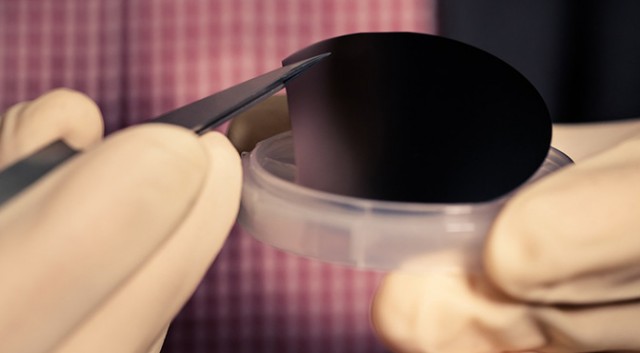
solar_nanoFirst, there’s MIT’s new concept for a solar cell, which uses nanowires to massively boost the efficiency of quantum dot photovoltaic cells. Quantum dots – which are basically nano-sized crystals of a semiconducting material – are already being considered as an alternative to conventional silicon cells, since they are cheaper and easier to produce.

However, until recently they have been a letdown in the efficiency department, lagging significantly behind their silicon counterparts. By merging zinc oxide nanowires into the design of their quantum dot photovoltaic cells, the MIT researchers were able to boost the current produced by 50%, and overall efficiency by 5%.  Ultimately, their goal is to get that up to 10%, since that is considered to be the threshold for commercial adoption.

gallium-arsenide-nanowire-solar-cellMeanwhile, researchers at the Niels Bohr Institute in Denmark and EPFL in Switzerland announced that they have built solar cells out of single nanowires. In this case, the process involved growing gallium-arsenide (GaAs) wires on a silicon substrate, and then completing the circuit with a transparent indium tin oxide electrode, which are currently employed in the creation of photovoltaic cells and LEDs on the market today.

Prior to these development, nanowires were being researched mainly in conjunction with computer chips as a possible replacement for silicon. But thanks to the combined work of these researchers, we may very well be looking at solar cells which are not only hair-thin (as with the kind being developed by Penn State University) but microscopically thin. And much like the research at the University of Oslo involving the use of microbeads, this too will mean the creation of ultra-thin solar cells that have a massive energy density – 180 mA/cm2, versus ~40 mA/cm2 for crystalline silicon PVs.

solar_boosterAnd last, but not least, there was the announcement from Stanford University of a revolutionary new type of solar cell that has doubled the efficiency of traditional photovoltaic cells. This new device uses a process called photon-enhanced thermionic emission (PETE) that allows for the absorption of not only light, but heat. This combination makes this new type of cell the equivalent of a turbocharged solar panel!

pete-photovoltaic-thermionic-diagram-stanfordIn conventional cells, photons strike a semiconductor (usually silicon), creating electricity by knocking electrons loose from their parent atoms. The PETE process, on the other hand, uses the gallium arsenide wafer on top gather as much sunlight as possible, creating a lot of excited electrons using the photovoltaic effect. The underside, which is composed of nanoantennae, emits these photoexcited electrons across a vacuum to the anode with gathers them and turns them into an electrical current.

Beneath the anode is a of heat pipe that collects any leftover heat which could be used elsewhere. One of the easiest applications of PETE would be in concentrating solar power plants, where thousands of mirrors concentrate light on a central vat of boiling water, which drives a steam turbine. By concentrating the light on PETE devices instead, Stanford estimates that their power output could increase by 50%, bringing the cost of solar power generation down into the range of fossil fuels.

Though there are still kinks in their design – the cell has a very low 2% rate of energy efficient thus far – the researchers at Stanford are making improvements which are increasing its efficiency exponentially. And although their planned upgrades should lead to a solar cell capable of operating in extremely hot environments, they stress that the goal here is to build one that is capable of gathering power in non-desert environments, such as Spaced-Based solar arrays.

Combined with improved production methods, storage capacities, and plans to mount solar arrays in a variety of new places (such as on artificial islands), we could be looking at the wholesale adoption of solar power within a few years time. Every day, it seems, new methods are being unveiled that will allow Solar to supplant fossil fuels as the best, cheapest and most efficient means of energy production. If all goes as planned, all this could be coming just in time to save the planet, fingers crossed!

Sources: Extremetech.com, (2)

Dealing with Mixed Reviews

thumbs upEvery writer knows that bad reviews are a part of the trade. But what do you do when the bad is mixed in with the good? Aren’t mixed messages kind of worse than consistently bad ones? Well, that’s what I’m wondering as I peruse some collected reviews of my books, as posted on Amazon. Some of them only came to my attention by accident, as I happened to be cruising by not long ago, and I must have turned my prompts off.

In any case, here are some of the reviews, good and bad, that came in with regards to Source, my first indie-published work. As you can see, the first one wasn’t so good, ranking the book at a mediocre three out five stars. The second is from Katy “Obsessive bibliophile” Sozaeva, a pro reader/reviewer who specializes in evaluating indie works, which was posted over a year ago. Compare if you will:

Source_2

Inventive and Imaginative, but Scientifically Flawed. I read this with some enjoyment, I admit. But that pleasure was diminished somewhat by the nagging voice that kept saying, “That wasn’t necessary/easiest/realistic.” It happened in just too many places for it to be assuaged by simply pushing the “I believe” button.

Entertaining and enlightening sci-fi story. The Earth and its colonies are running out of water. The government, left with no options, decides to hedge its bets by creating a colony ship and sending off the best and brightest to colonize the stars, while at home strict rationing and a lottery system to decide who should live and who should die will be instituted. Millions will die, either of thirst or through…

Not exactly consistent is it? And consider this: the first review seemed to have far more of an impact than the second. When Katy reviewed my work and looked on it kindly, I honestly filed it in the “Oh, she’s nice” category. On the other hand, the semi-negative review hit me where I live. It actually made me consider pulling it from the shelf and putting a stop on its sequels.

Eyes

And then consider this review from one of the short stories in my Legacies series, otherwise known as Eyes in the Dark. This story I began years back and completed for NaNoWriMo 2011. Some initial opinions I got on it were quite good, all from my writer’s group, but I was happy to see a positive review posted on a professional site:

I liked the story. It had a convincing science fiction scenario and an intriguing dilemma at the core of the plot. I liked the characters, which always helps. I’d recommend this book and read any others Matthew’s written.

I liked that review, especially the last line since it might actually lead to a rise in sales! But I have to admit, I was surprised by it seeing as how I felt the entire thing was a bit rushed and hurriedly written. As it’s writer, I am abundantly aware of its flaws and I keep waiting for someone to say the same bad things that I fear they will notice.

LiabilityOh, and I should also mention the one review which haunts me to this day. It had to do with this oldie, a short known as Liability which I wrote back in 2005. Since I merged it with another short, I can no longer find the review on Amazon anymore. However, I do seem to remember the general nature of it, which ought to tell you something!

The story is nothing special. The ending is a fairy tale of course and is totally unrealistic, but if you’re looking for a cheap read, it’s worth the price.

I’m paraphrasing, but that’s the gist of it. Harsh huh? And the worst part of it is, I took it seriously. And even though that review was one of five that were quite favorable, I still seem to put more stock in it than the others. Here’s what these other people said, just to be inclusive:

Grabs your attention immediately. Is well written IMHO.

It’s a well conceived and beautifully delivered novel. I wish it has more pages for a more lasting reading.

Good story. Gets you wrapped up in the action right away and doesn’t stop till the end.

Don’t look behind you when you read this novel, they may be watching you. thoroughly enjoyable reading.

And I can imagine what seem people would say, since I’ve said it enough time myself to know it word for word. “Hey, [insert your name here], you can’t please everybody. And there’s always going to be idiots and haters. You can’t take what they say seriously.” Yeah, but when it’s me, I say the words, but I don’t feel it. Somehow, the bad reviews always see to make more sense and leave the lasting mark.

So I put it to all the other indie writers, artists and authors out there. What is it about negative feedback that we find just so believable? Why do we treat positive reviews (I’m assuming it’s not just me) as if they are obligatory or motivated by the desire to not hurt our feelings? Are good reviews only meaningful if they come from people who are usually cruel and hard to impress?

I don’t know… All I know is, I want to get better. And the appearance of a single bad review makes me want to work harder and convince them of my worth as a writer. Funny, considering that if it were a friend of mine being poorly reviewed, I’d be telling them they rock, and telling the haters: “Screw you, with some sexual harassment on top!”

Anybody else got mixed reviews to share? This experience feels somehow cathartic and I recommend it highly. Don’t worry, it won’t hurt your bottom line. Hardly anybody reads this site anyway 😉

Towards a Cleaner Future: Fuel Cell Breakthrough!

hydrogen-fuel-cellOne of the greatest challenges facing renewable energy is making it affordable and cost effective, to the point where it will naturally offset such sources as fossil fuels and coal. And when it comes to hydrogen fuel cells, a recent development may have accomplished just that. Quite surprising when you consider that it came from Alberta, home of the Athabasca Oil Sands and an output of roughly 4 million barrels of crude a day.

It all happened late last month, when researchers at the University of Calgary published a paper in the Journal of Science that they had come up with a much cheaper and easier way to build an electrolyzer. This is the device that uses electricity to break up water into hydrogen and oxygen, which are then used to power hydrogen fuel cells.

Picture shows the refuelling hydrogen syFor some time now, these fuel cells have been considered the most promising means of powering automobiles with a clean, renewable energy source. By recombining the two basic elements of hydrogen and oxygen, energy is generated and the only waste product is water. The only difficulty is the means of production, as electrolyzers often depend on expensive and sometimes toxic metals.

The most common of current methods involves the use of expensive rare earth metals in precise crystalline arrangements to catalyze, or speed up, the reaction. But with the new process developed by Chris Berlinguette and Simon Trudel comes into play, which involves catalyzers built out of common metals without the need for the crystal structure, the process will not only be vastly simplified but extremely cheaper.

solar_arrayBased on the estimates presented in their paper, Trudel and Berlinguette estimate that their new eletrolyzer will deliver results comparable to current techniques but at a cost of about one-one-thousandth the norm. The implications for clean, renewable energy,  such as wind or solar generators, could be enormous. Not only would it be far cheaper and more efficient, there would be far less toxic waste materials produced.

Not only that, but another major stumbling block for clean energy could be overcome. As is the case with just about any type of renewable power source – wind, solar, tidal – is that it is dependent on conditions which limit when power can be generated. But stored hydrogen energy can be used at anytime and could easily replace gas and coal, just as long as the production process is cost-effective.

hydrogencarAs Berlinguette himself pointed out, making and electrolyzer cost-effective means being able to produce power on demand and to scale:

If you think of a wind turbine producing electricity at two o’clock in the morning, there’s no one around to actually use that electricity, so it just gets dumped. If you could set that up with an electrolyzer, you could convert that electricity into hydrogen, then the next day, when there is demand, you can sell that electricity at a premium during periods of high demand.

In anticipation of the inevitable investment this will attract, Berlinguette and Trudel have already formed a company called FireWater Fuel Corp. to market their work and expect to have a commercially available electrolyzer by next year. So for those of you with money to invest and a socially-responsible, environmental outlook, get out your check books out and be prepared to invest!

Source: huffingtonpost.ca