NASA Designing World’s First FTL

alcubierre-warp-drive-overviewA few months ago, physicist Harold White shocked and stunned the world when he announced that he and his team at NASA were beginning work on the world’s first faster-than-light warp drive. Naturally, this produced a whole slew of questions, not the least of which was what model his team would be considering. After all, there have been countless theories put forth over the years as to how humanity could one day break the “light barrier”. Which theory White and his team would pursue was naturally the first on everybody’s mind.

Apparently, White’s proposed design will be a re-imagining of the Alcubierre Drive, a concept which has already been extensively popularized in science fiction and pop culture. Proposed by Miguel Alcubierre in 1994 in his seminal paper: “The Warp Drive: Hyper-Fast Travel Within General Relativity,” Alcubierre suggested a mechanism by which space-time could be “warped” both in front of and behind a spacecraft. After going over the equations in detail, White believed he found a way to make the theory work.

All of this began in October of last year, where White was preparing for a talk he was to give as part of the kickoff of the 100 Year Starship project in Orlando, Florida. While putting together his presentation on warp, he began toying with Alcubierre’s field equations, mainly out of curiosity. After making some adjustments, he came to the conclusion that something truly workable was there, and presented his findings this past October in Atlanta, where the 100 Year Starship project was meeting once again.
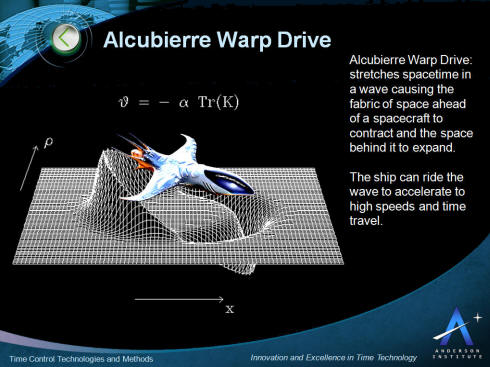
alcubierre-warp-drive-overviewThe equations and theory postulates that since space-time can be contracted and expanded, empty space behind a starship could be made to expand rapidly, pushing the craft in a forward direction. Passengers would perceive it as movement despite the complete lack of acceleration, and vast distances (i.e. light years) could be passed in a matter of days and weeks instead of decades. What’s more, this “warp drive” would allow for FTL while at the same time remaining consistent with Einstein’s theory of Relativity.

This has been a major hurdle for physicists looking for ways around the speed of light, since all previous theories required a cosmic model where Relativity – fundamental to our understanding of the universe – would not apply. At the same time, the physics described in the Alcubierre process sound like something directly out of Star Trek, something all sci-fi geeks are sure to notice! It begins with a spheroid object being placed between two regions of space-time (one expanding and one contracting), which in turn generates a “warp bubble” that moves space-time around the object, effectively repositioning it.

The end result is faster-than-light travel without the spheroid having to move with respect to its local frame of reference. In short, those aboard the object would notice the repositioning of their spacecraft, but would experience no “time dilation”, where their perception of time differs greatly from those in a different frame of reference. Or to put it another way, the Alcubierre drive could transport people from Earth to Mars and back again, and for all concerned (the passengers and people Earthside) there would be little difference in the amount of time experienced. None of this, “I’m a year older, but everybody I knew is dead!” stuff. You have to admit, that’s a real perk!

But of course, there are a lot of challenges ahead for White and his team. For example, in an interview with IO9, White said: “Remember, nothing locally exceeds the speed of light, but space can expand and contract at any speed. However, space-time is really stiff, so to create the expansion and contraction effect in a useful manner in order for us to reach interstellar destinations in reasonable time periods would require a lot of energy.” Luckily, his reworking of the equations has brought that requirement done somewhat, but the amounts required mean that a great deal of research and development is still needed.

Perhaps if we can find a way to work cold fusion in the mix, or build an anti-matter reactor. Maybe some hydrogen ramscoops and a Heisenberg compensator, then we’d be in business! Might we need some dilithium crystals too? I’ll call Jordie LaForge and tell him to get on it! 😉


warp_drive

Skylon: The Future of Commercial Aerospace Flight?

skylonBehold the Skylon! The Mach 5 hypersonic aerospace ship that is the future of commercial flight. Well, that’s the hope anyway, and if a British company known as Reaction Engines Limited get’s its way, it very well could be…

For some time now, hypersonic commercial flight has been batted around as an idea. And with billionaire Richard Branson promising commercial space flight to the world, it seemed like only a matter of time before aerospace flights became the norm. As it turns out, we may be closer than anyone previously thought, thanks to a heralded breakthrough by Reaction Engines.

In a recent statement, the British company claimed they have made “the biggest breakthrough in aerospace propulsion technology since the invention of the jet engine.” In the past, hypersonic flight has been hampered by the problem of propulsion, since at speeds beyond Mach 2, a jet engine has trouble getting the oxygen needed for combustion. Attempts to remedy this have already been made, such as with the SR-71 Blackbird which managed to reach speeds in excess of Mach 3. But for high-altitude and aerospace craft, where Mach 5 and above are essential, the problem remains, as does the issue of the amount of heat generated.

Reaction Engines claims it has solved the problem with a design that could allow a vehicle to take off, reach orbit using a combination of an air-breathing engine and rocket, then return to Earth. The secret is cooling the air as it enters the hypersonic SABRE engine. The air-breathing engine will accelerate a vehicle to about Mach 5.5, according to the company, after which a liquid oxygen tank will supply a rocket engine for the portion of the flight in space. But unlike current space vehicles, there will only be one stage involved for the entire flight thanks to the boost from the SABRE design.

In the same press release, RE claims the “pre-cooler technology is designed to cool the incoming airstream from over 1,000 Celsius to minus 150 Celsius in less than 1/100th of a second, without blocking with frost.” The company further claims to have conducting 100 test runs of the new engine’s cooling system and believes they can begin production of a prototype by 2015. The European Space Agency also says it has evaluated the design and is in negotiations to support further development.

To put it in terms every jetsetter and international traveler can understand, their proposed aerospace craft – known as the Skylon – will allow a passenger to enjoy breakfast in New York City and then lunch in Tokyo. And with a few years and plenty of investment, not just from the ESA, but NASA and the RSA as well, Skylons could be ferrying people all over the world in a matter of hours.

Source: Wired.com

The Hobbit Spoof

Hope you’re all having a great and relaxing Sunday. And just to liven things up, here’s a bunch of rapping dwarves entering Bilbo Baggin’s home! Courtesy of The Hillywood Show, Lil’ John, LMFAO, and Peter Jackson’s forgiving lawyers 😉

Curiosity Rover’s First X-Ray Analysis of Martian Soil

Curiosity_cheminanalysisA bit of retro news from the Curiosity front here. Roughly one month ago, before the big announcement about “earthshaking news” was made, there was some other news regarding Curiosity’s ongoing soil analyses. And given all the attention that was dedicated to the possibility of organic molecules, this is one news story that might have been overlooked.

Put simply, Curiosity performed tests that were previously impossible on Mars, using an x-ray scanner that was roughly the size of shoebox in order to conduct detailed analyses of Martian soil. The purpose, of course, was to determine what kinds of minerals it contains and how its soils first came into being.

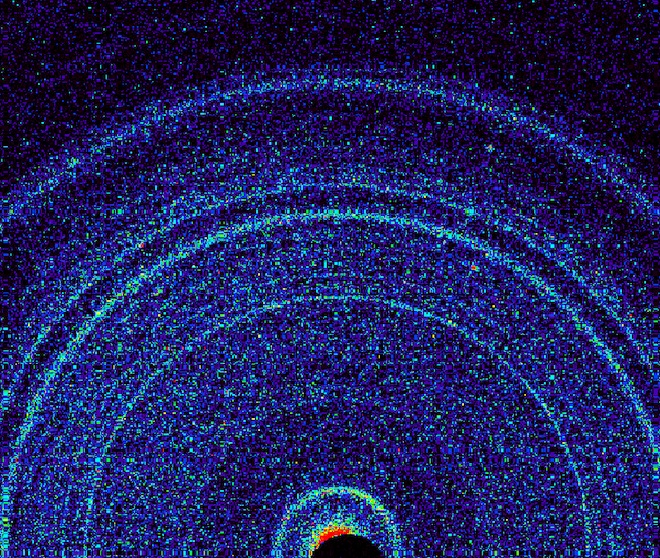
The device in question, called CheMin, takes a sample of sand – just a thimbleful – and shakes it 2,000 times a second, all the while bombarding it with x-rays. The rays then penetrate the grains, and the way in which they diffract can tell scientists about their constituent atoms. The results are then scanned to see just what kind of mineral composition it has (take a look up top to see the results rendered in stunning technicolor!)

Up until now, this technique has been impossible simply because the equipment needed to carry out such operations were far too large and clunky to fit on a rover. But thanks to NASA engineers, the device in question was shrunk down exponentially in size and even boasts improved electronics, ensuring it is both portable and energy-efficient.

As a result, the Curiosity rover has made some very interesting discoveries. For starters, Curiosity has determined that the soils in the area are extremely similar to those found around the Mauna Kea shield volcano in Hawaii. In fact, it’s identified crystalline feldspar, pyroxenes, and olivine – all of which are common to the soil here on Earth.

Yes, not exactly earthshaking news is it? But it’s interesting nonetheless, and let’s us know once again that Mars and Earth have plenty in common.

Source: Wired.com

NaNoWriMo 2012: A Requiem

tome-of-undeadNovember is finally coming to an end and December is now upon us, which means the following things. It’s time to get the snow gear out, people who have grown mustaches for Movember can finally shave, and NaNoWriMo is officially over. For those who took part in it this year, my congratulations. For those who finished on time, my profound congratulations and respect. As for me, I started, stopped, and then started again. It seems this November I had a bout of temperamental inspiration which led to a weird outcome.

Originally, I wasn’t going to participate, seeing as how I had just finished work on my zombie apocalypse story known as Whiskey Delta. That took me at least a week into the month of November and I kind of felt burnt. Yet at the same time, I was rearing to go on production of the sequel and even got some encouragement to do so. Didn’t seem like a good time to take on another writing assignment. But then I was struck by an idea about the lives of future people who lived in an Arcology, a concept I’d been wanting to tackle for some time.

After coming up with a name – Etemenanki, the name of the Ziggarut that is believed to have inspired the Babel myth – I set to work. However, my passion soon faltered as I realized the idea was not well thought out, and the burden of having to write 2000 words a day sapped my inspiration further. I realized what I wanted to be writing was the sequel to Whiskey Delta – aka. Pappa Zulu – so I shut down Etemenanki and got to work on that instead.

But then I noticed that at NaNo website, you can easily change which story you’re working on by simply changing the title on your entry and resubmitting its basic data. Nowhere, except on the word count feature, does it keep track of the story itself. So I figured, what the hey? I changed the entry name to Pappa Zulu, and began submitting my chapter for it instead of chapters for Etemenanki, and the month of November proceeded. Granted, I lost a lot of time thanks to my starting and stopping, but at least I enjoyed it this way.

As of today, my final word count on Pappa Zulu is 27265 words in length, roughly half of what it needed to be to complete the challenge in time. Ah well, so sad. Better luck next year. By that time, I hope to have my act together on what I plan to write, to start on time, and not change my mind partway through. This is why they say not to change paddles in midstream, you know 😉

Ice and Organics Found on Another Planet!

mercury_messengerYes, the announcement from the Curiosity team yesterday that no organics have been found on Mars (yet) certainly came as a big disappointment. However, people may be interested to hear that organic molecules were discovered on a different planet in our Solar System, along with water and ice. Would you believe it, the planet is Mercury? Yes, the world famous for lakes of molten metal and extreme heat may actually boast the building blocks of life.

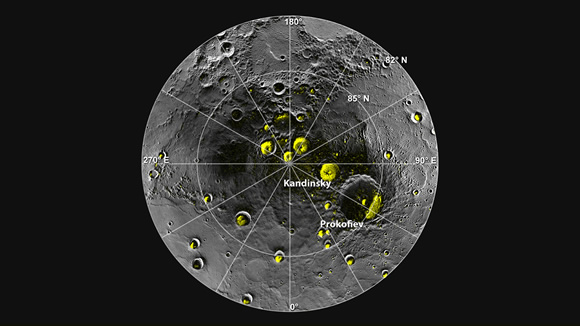
This information is the latest to come from NASA’s MESSENGER spacecraft, which is now orbiting the closest planet to our Sun. It confirms what was postulated 20 years ago, after images were taken of the polar region and detected radar-bright materials which were beleived to be water and ice. And where water and ice occur, organic molecules are often sure to follow. Though Mercury boasts the hottest environment of any planet in the Solar System, the area in question lies within a permanent shadowed series of craters on the northern pole.

Scientists today said that Mercury could hold between 100 billion to 1 trillion tons of water ice at both poles, and the ice could be up to 20 meters deep in places. Additionally, intriguing dark material which covers the ice could hold other volatiles such as organics. Unfortunately, all of this water comes in the form of ice, as surface temperatures in the poles are too cold to allow for a thaw. In addition, the total lack of atmosphere on Mercury would mean that any liquid would evaporate and be sucked into space very quickly.

At a briefing which was held yesterday, Sean Solomon – MESSENGER Principal Investigator – has this to say about the news: “These findings reveal a very important chapter of the story of how water ice has been delivered to the inner planets by comets and water rich asteroids over time.” In short, it is believed that these ice deposits and organic molecules were delivered to the planet through a series of meteor impacts, and which have survived thanks to the existence of Mercury’s permanently shadowed polar regions.

Granted, no settlers are ever likely to be making a home on Mercury – not without some serious technological innovations! – but the discovery is a very interesting find and does help scientists to understand how life may have begun here on Earth. What’s more, this news may help Curiosity and other science teams to determine where and how organic molecules and ice could be found on Mars. The challenges there are similar to those on Mars, since she too is an inner planet that has virtually no atmosphere and a great deal of surface radiation, not to mention that she too would have been the recipient of water ice and organics through meteoric impacts.

So c’mon Mars! Show us what you got. You don’t want to be outdone by your Hermian cousin do ya?

Real Life Myst Book

Myst-library_and_shipRemember the graphic adventure game Myst from the early 90’s? Wasn’t that just an awesome gaming experience? Sure, there were no alien, no explosions, no guns and no gore; but hell, that was half the appeal wasn’t it? If we wanted Doom, we’d play Doom. In the meantime, when we wanted a game that made us think, perform logic games, and think strategically and mathematically, this game filled the void quite well.

From a gaming standpoint, Myst was a ground-breaking point-and-click adventure game that contained hundreds of beautifully rendered environments and animations. It was also a game so big that it needed a CD-ROM to play, back when many computers still didn’t have them. It spawned four sequels, along with novels, music, and even inspired a MMO experience that remains in operation to this day, thanks entirely to the support and donations of its fan community.

Well according to a recent article from Wired magazine online, a fan of this old game created their very own Living Book.Using a small display, a hard drive and a hollowed out book, creator Mike Ando was able to create a beautiful replica of the very book which is used to navigate from realm to realm (called Ages) in the game.

According to Ando: “Ever since I first played the game, I always wanted my own linking book. Of course, there was no way my old bulky 486 would fit within a book, but as time marched on technology advanced and computers became smaller. Eventually technology caught up and it was possible to shrink everything down to fit inside the book.”

Who knows? Given time and further miniaturization, not to mention flexible, paper thin displays, this might very well be the look of books in the future. Just don’t expect them to pull you into different worlds, a la the Myst game –  at least not real ones. No, that won’t happen until the technology becomes really advanced 😉

“Earthshaking” News From Mars!

Curiosity-RocknestCancel the champagne! Turns out what we have here is a tentative conclusion made by some overzealous scientists. According to an update made earlier today, scientists working for NASA indicated that no organic molecules were found in the sample of Martian soil taken by Curiosity nine days ago. The news first appeared on NASA’s Twitter feed as follows:

“Everybody, chill. After careful analysis, there are no Martian organics in recent samples.”

This was followed shortly thereafter with:

“Why the wait? We’re moving at the speed of science. My team needed time to analyze the data.”

Uh, yeah. Because that’s what we were concerned with; the wait, not the getting of our hopes up! But last but not least, there some words of reassurance:

“Turn that frown upside down: We’re fewer than four months into a multi-year mission. We’ve only just begun!”

To be fair, this announcement doesn’t rule out the possibility of organic molecules on the Martian surface. It’s just that no organic molecules have been found yet. Unfortunately, having thought that they had detected some traces in their samples, Grotzinger conveyed the team’s excitement about the possibility of a discovery and triggered a bit of a media frenzy. Understandable, but frankly, I have a bit of a bone to pick with Grotzinger himself.

Dude, you had to know we’d all get excited and start hanging on your every update with baited breath. But in the end, we were like a bunch children on Christmas morning, desperately waiting to rip into our presents, only to find that Santa had stuck us with an IOU! Or worse, a note saying: “There are plenty more Christmas’s coming! Be happy!” Turn my frown upside down, Grotzinger? You owe me restitution!

Okay, now that I’m ranted out, I sincerely hope the mission meets with the results they are looking for soon. Granted, Curiosity still has many more years before her mission is complete, but I don’t think I can stand this kind of suspense! And frankly, I’d like to hear about some definitive proof that terraforming is possible on a planetary scale. Get on it, NASA! You got a planet to prep for colonization!

New Vaccine Could Wipe Out The Flu

For some time now, researchers and scientists have been trying to develop a way to immunize people against the common flu. Traditional vaccines are available, but for most people, the need to get a shot once a year seems like a bit of a bother. For others, potential side effects are reason enough not to get one, especially when getting one doesn’t guarantee they’ll stay healthy. However, that all may be coming to an end, thanks to research being conducted at the Friedrich-Loeffler Institute in Riems Island, Germany.

The key, apparently, is to use an RNA-based vaccine. Traditional vaccines work by teaching our immune systems to recognize a pair of key proteins, known as HA and NA, found on viruses. But those proteins constantly change due to mutation, and at a rate that requires that new vaccines be produced every year. However, the proposed new kind of vaccine would work by targeting the underlying RNA-driven processes that create the NA and HA proteins, regardless of their precise form.

According to an interview conduct by New Scientist with Lothar Stitz, “the mRNA that controls the production of HA and NA in a flu virus can be mass-produced in a few weeks. An injection of mRNA is picked up by immune cells, which translate it into protein… These proteins are then recognized by the body as foreign, generating an immune response. The immune system will then recognize the proteins if it encounters the virus subsequently, allowing it to fight off that strain of flu.”

What’s more, this new type of vaccine could be produced in the form of a powder, which would eliminate the need for refrigeration. And an RNA vaccine is more appealing to researchers than proposed DNA vaccines because there’s no chance of them getting spliced into the human genome and disrupting normal genetic behavior. In addition, the German research team has also discovered a protein known as protamine, which protects the RNA vaccines from being ripped apart in the bloodstream.

Naturally, there is plenty of testing to be done, and human trials to be conducted to make sure the entire sequence works within the human immune system, sans harmful side effects. But the early results are encouraging and researchers are optimistic. Between this news and the possibility of an HIV vaccine, we could be looking at the end of infectious diseases sometime in the not-too-distant future. But I wouldn’t say that definitively though, since don’t I want to jinx it 😉

Now if only we could find a cure for the common cold…

Source: IO9.com

Big Bang Theory Flash Mob!

My thanks to Rami for bringing this one to my attention. Man, I can be so out of it when it comes to pop culture sometimes! But I think you’ll agree, this is not something any fan of Big Bang Theory, or flash mobs for that matter, could afford to miss. Downright awesome in terms of its sheer suddeness, choreography and presentation. One has to wonder how you organize something like this considering all the people and coordinating dancing involved.

Be sure to watch to the end too. Not only do they cover many different songs, but the finish caps it off with hilarity! And the cast themselves, they got some sweet-ass dance moves. Mainly I just watching Penny – God, is she hot! – but Howard, Raj, Leonard and Bernadette bust a few too. Man, that’s a good show. Enjoy the clip!