
 In what is sure to be a barn-burner of a debate, the former head of the National Security Agency – General Keith Alexander – will be participating tomorrow in a with ACLU Executive Director Anthony Romero. The televised, surveillance-themed debate, will take place tomorrow – June 30th, 10:30am Eastern Time – on MSNBC. The subject: whether or not the NSA’s vast surveillance and data mining programs are making American’s safer.
While many would prefer that the current head of the NSA be involved in the debate, General Alexander is a far better spokesperson for the controversial programs that have been the subject of so much controversy. After all, “Emperor Alexander” – as his subordinates called him – is the man most directly responsible for the current disposition of the NSA’s cyber surveillance and warfare program.Who better to debate their merit with the head of the ACLU – an organization dedicated to the preservation of personal freedom?
 And according to classified documents leaked by Edward Snowden, General Alexander’s influence and power within the halls of government knew no bounds during his tenure. A four-star Army general with active units under his command, he was also the head of the National Security Agency, chief of the Central Security Service, and the commander of the US Cyber Command. It is this last position and the power it wields that has raised the greatest consternation amongst civil-libertarians and privacy advocates.
Keith Alexander is responsible for building this place up between 2005 and 2013, insisting that the US’s inherent vulnerability to digital attacks required that he and those like him assume more authority over the data zipping around the globe. According to Alexander, this threat is so paramount that it only makes sense that all power to control the flow of information should be concentrated in as few hands as possible, namely his.
 In a recent security conference held in Canada before the Canadian Security Intelligence Service (CSIS), Alexander expressed the threat in the following, cryptic way:
What we see is an increasing level of activity on the networks. I am concerned that this is going to break a threshold where the private sector can no longer handle it and the government is going to have to step in.
If this alone were not reason enough to put people on edge, there are also voices within the NSA who view Alexander as a quintessential larger-than-life personality. One former senior CIA official who agreed to speak on condition of anonymity, claimed:
We jokingly referred to him as Emperor Alexander—with good cause, because whatever Keith wants, Keith gets. We would sit back literally in awe of what he was able to get from Congress, from the White House, and at the expense of everybody else.
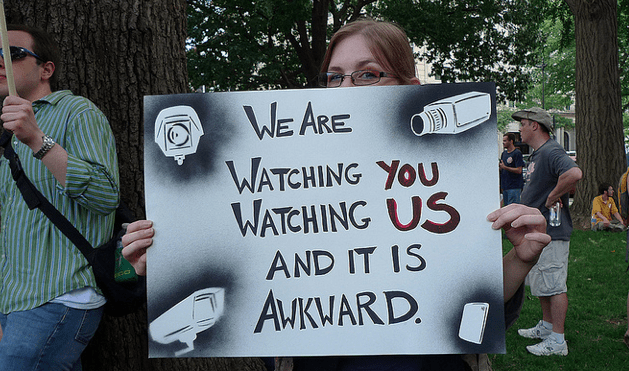
And it is because of such freedom to monitor people’s daily activities that movements like the February 11th “The Day We Fight Back” movement – an international cause that embraced 360 organizations in 70 countries that were dedicated to ending mass surveillance – have been mounted, demanding reform.
 In addition, a series of recent ruling from the US Supreme Court have begun to put the kibosh on the surveillance programs that Alexander spent eight years building up. With everything from cell phone tracking to cell phone taps, a precedent is being set that is likely to outlaw all of the NSA domestic surveillance. But no matter what, the role of Snowden’s testimony in securing this landmark event cannot be underestimated.
In fact, in a recent interview, the ACLU’s Anthony Romero acknowledged a great debt to Snowden and claimed that the debate would not be happening without him. As he put it:
I think Edward Snowden has done this country a service… regardless of whether or not what he did was legal or illegal, whether or not we think the sedition laws or the espionage laws that are being used to possibly prosecute Snowden are too broad, the fact is that he has kick-started a debate that we did not have. This debate was anemic. Everyone was asleep at the switch.
One can only imagine what outcome this debate will have. But we can rest assured that some of the more predictable talking points will include the necessities emerging out of the War on Terror, the rise of the information revolution, and the dangers of Big Brother Government, as well as the NSA’s failure to prevent such attacks as the Boston Marathon Bombing, the Benghazi Embassy bombing, and a slew of other terrorist incidents that took place during Alexander’s tenure.
Do I sound biased? Well perhaps that’s because I am. Go ACLU, stick to Emperor Alexander!
Sources: engadget.com, democracynow.org

 The findings were presented at the Royal Astronomical Society’s National Astronomy Meeting in Portsmouth on Thursday, June 26. The work was funded by the UK’s Science and Technology Facilities Council (STFC) and the European Research Council. Professor Frenk, who received the Royal Astronomical Society’s top award, the Gold Medal for Astronomy, added:
 Ordinary neutrinos are very low-mass particles that interact only rarely with matter via the so-called weak nuclear force as well as via gravity. Sterile neutrinos are thought to interact with ordinary matter through gravity alone, making them a possible candidate as dark matter. As Dr Esra Bulbul – from the Harvard-Smithsonian Center for Astrophysics in Cambridge, Massachusetts, USA, and lead author of the paper discussing the results – put it:


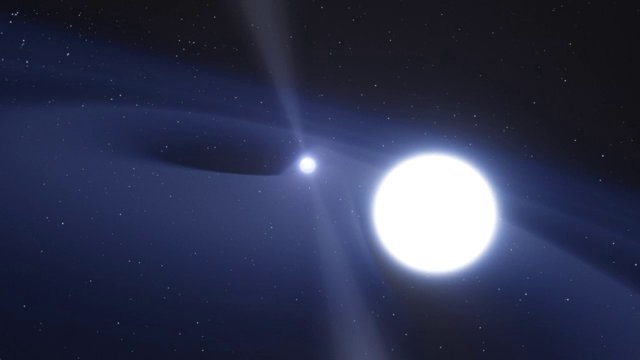 By definition, a pulsar is what is left over when a neutron star when a slightly larger sun also runs its course. Those that spin are given the name of “pulsar” because their magnetic fields force radio waves out in tight beams that give the illusion of pulsations as they whir around, effectively strobing the universe like lighthouse. The pulsar that sits next to the diamond-encrusted white dwarf is known as PSR J2222-0137, and is 1.2 times the mass of our sun, but even smaller than the white dwarf.
 Yep that one! Like I said, such discoveries are demonstrating that the universe is a much more interesting, awesome, and complex place than previously thought. Between diamond worlds, diamond planets, lakes of methane and atmospheres of plastic, it seems that just about anything is possible. Good to know, seeing as how so much of our plans for the future depend upon on getting out there!





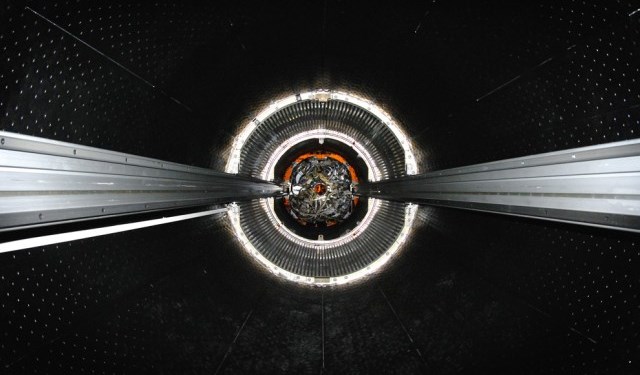
 This model, which is explained through quantum field theory – itself an amalgam of quantum mechanics and Einstein’s special theory of relativity – claims that deep mathematical symmetries rule the interactions among all elementary particles. Until now, the decay modes discovered at CERN have been of a Higgs particle giving rise to two high-energy photons, or a Higgs going into two Z bosons or two W bosons.
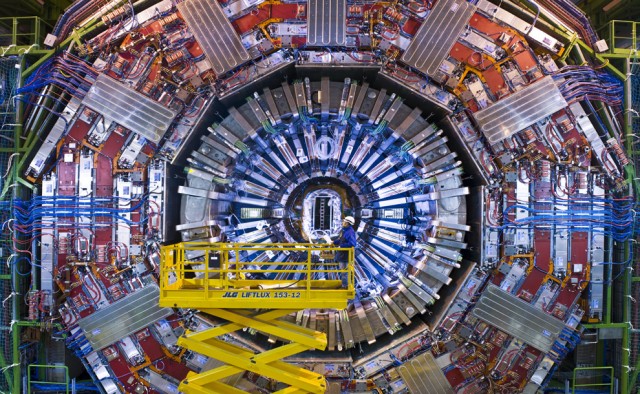
 It is certainly is big news for scientists, who can say with absolute certainty that our current conception for how particles interact and behave is not theoretical. But on the flip side, it also means we’re no closer to pushing beyond the Standard Model and into the realm of the unknown. One of the big shortfalls of the Standard Model is that it doesn’t account for gravity, dark energy and dark matter, and some other quirks that are essential to our understanding of the universe.
 If that doesn’t work, supersymmetry will probably have to wait for LHC’s planned successor. Known as the “Very Large Hadron Collider” (VHLC), this particle accelerator will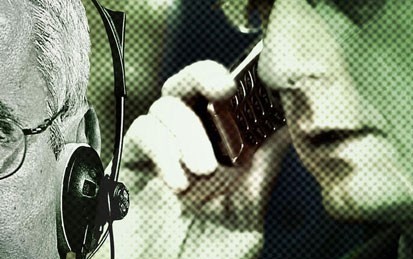


 In its ruling, the court also rejected prosecutors’ notion that the ability to remotely wipe or lock a phone required police to search the devices immediately upon arrest before evidence could be destroyed. The court responded that police can easily prevent evidence from being remotely destroyed by turning the phone off or removing its battery, or putting it into a Faraday cage that blocks radio waves until a search warrant can be obtained.
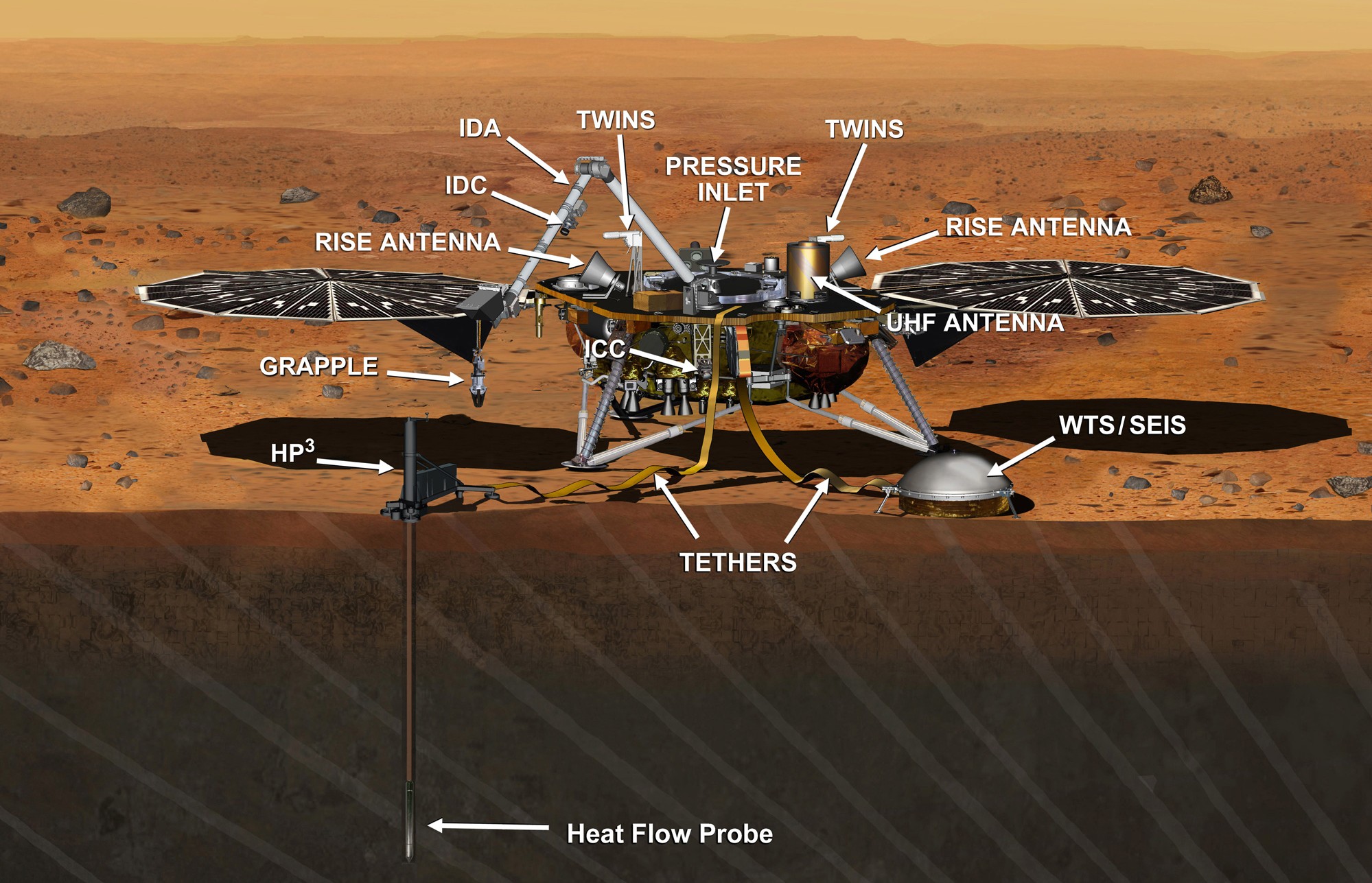
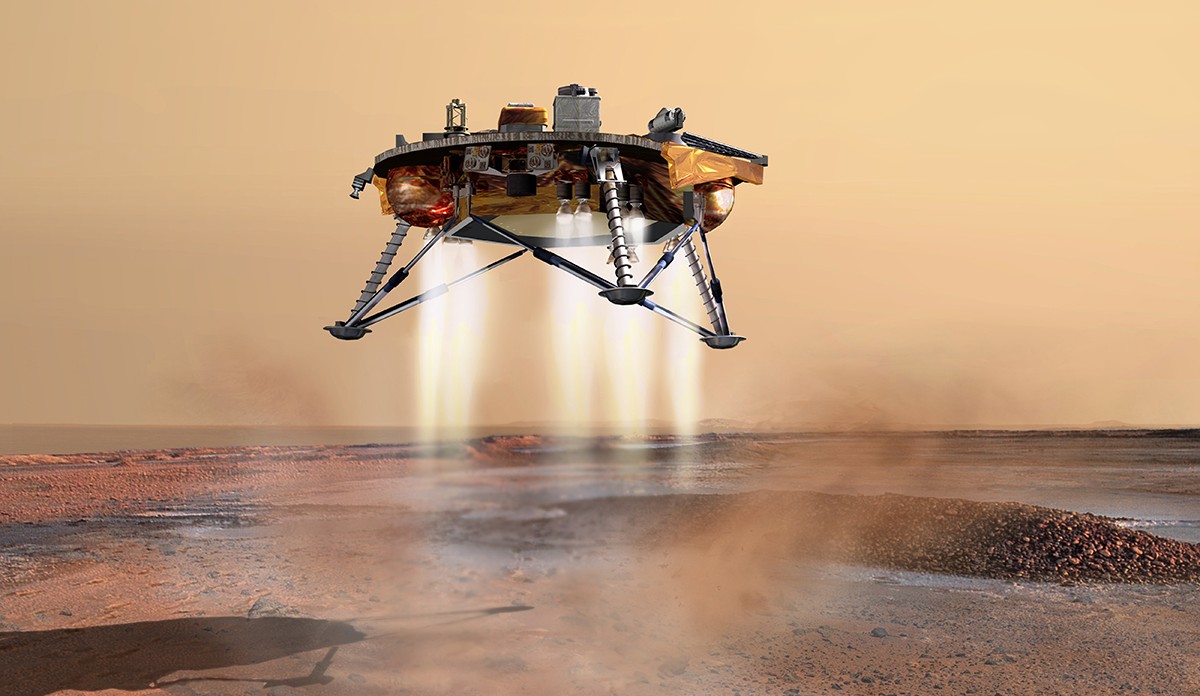

 After the daring new type of landing that was performed with the Curiosity rover, NASA went back to the drawing table to come up with something even better. Their solution: the “Low-Density Supersonic Decelerator”, a saucer-shaped vehicle consisting of an inflating buffer that goes around the ship’s heat shield. It is hopes that this will help future spacecrafts to put on the brakes as they enter Mar’s atmosphere so they can make a soft, controlled landing.


 Jack Andraka is at it again! For those who follow this blog (or subscribe to Forbes or watch TED Talks), this young man probably needs no introduction. But if not, then you might not known that Andraka is than the young man who – at 15 years of age – invented an inexpensive litmus test for detecting pancreatic cancer. This invention won him first prize at the 2012 Intel International Science and Engineering Fair (ISEF), and was followed up less than a year later with a handheld device that could detect cancer and even explosives.

 As part of the project, Diggs and Andraka also developed an inexpensive water filter made out of plastic bottles. Next, they hope to do large-scale testing for their sensor in Maryland, where they live. They also want to develop a cell-phone-based sensor reader that lets users quickly evaluate water quality and post the test results online. Basically, its all part of what is fast becoming the digitization of health and medicine, where the sensors are portable and the information can be uploaded and shared.


 Stories by Williams