World-changing scientific discoveries are emerging all the time; from drugs and vaccines that are making incurable diseases curable, to inventions that are making renewable energies cheaper and more efficient. But how will these develops truly shape the world of tomorrow? How will the combination of advancements being made in the fields of medical, digital and industrial technology come together to change things by 2025?
Well, according to the Thomson Reuters IP & Science unit – a leading intellectual property and collaboration platform – has made a list of the top 10 breakthroughs likely to change the world. To make these predictions, they looked at two sorts of data – current scientific journal literature and patent applications. Counting citations and other measures of buzz, they identified 10 major fields of development, then made specific forecasts for each.
As Basil Moftah, president of the IP & Science business (which sells scientific database products) said:
A powerful outcome of studying scientific literature and patent data is that it gives you a window into the future–insight that isn’t always found in the public domain. We estimate that these will be in effect in another 11 years.
In short, they predict that people living in 2025 will have access to far more in the way of medical treatments and cures, food will be more plentiful (surprisingly enough), renewable energy sources and applications will be more available, the internet of things will become a reality, and quantum and medical science will be doing some very interesting thins.
1. Dementia Declines:
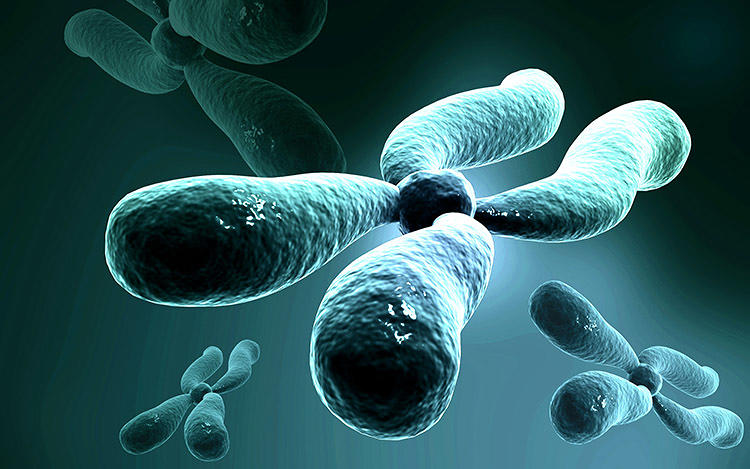
 Prevailing opinion says dementia could be one of our most serious future health challenges, thanks in no small part to increased life expectancy. In fact, the World Health Organization expects the number of cases to triple by 2050. The Thomson Reuters report is far more optimistic though, claiming that a focus on the pathogenic chromosomes that cause neuro-degenerative disease will result in more timely diagnosis, and earlier, more effective treatment:
In 2025, the studies of genetic mutations causing dementia, coupled with improved detection and onset-prevention methods, will result in far fewer people suffering from this disease.
2. Solar Power Everywhere:
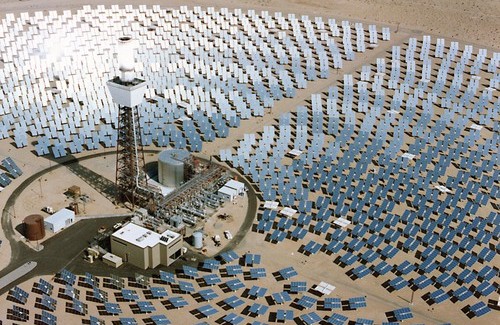 With the conjunction of increased efficiencies, dropping prices and improved storage methods, solar power will be the world’s largest single source of energy by 2025. And while issues such as weather-dependence will not yet be fully resolved, the expansion in panel use and the incorporation of thin photovoltaic cells into just about every surface imaginable (from buildings to roadways to clothing) will means that solar will finally outstrip fossil fuels as coal as the predominant means of getting power.
As the authors of the report write:
Solar thermal and solar photovoltaic energy (from new dye-sensitized and thin-film materials) will heat buildings, water, and provide energy for devices in the home and office, as well as in retail buildings and manufacturing facilities.
3. Type 1 Diabetes Prevention:
 Type 1 diabetes strikes at an early age and isn’t as prevalent as Type 2 diabetes, which comes on in middle age. But cases have been rising fast nonetheless, and explanations range from nutritional causes to contaminants and fungi. But the report gives hope that kids of the future won’t have to give themselves daily insulin shots, thanks to “genomic-editing-and-repairing” that it expects will fix the problem before it sets in. As it specifies:
The human genome engineering platform will pave the way for the modification of disease-causing genes in humans, leading to the prevention of type I diabetes, among other ailments.
4. No More Food Shortages:
 Contrary to what many speculative reports and futurists anticipate, the report indicates that by the year 2025, there will be no more food shortages in the world. Thanks to a combination of lighting and genetically-modified crops, it will be possible to grow food quickly and easily in a plethora of different environments. As it says in the report:
In 2025, genetically modified crops will be grown rapidly and safely indoors, with round-the-clock light, using low energy LEDs that emit specific wavelengths to enhance growth by matching the crop to growth receptors added to the food’s DNA. Crops will also be bred to be disease resistant. And, they will be bred for high yield at specified wavelengths.
5. Simple Electric Flight:
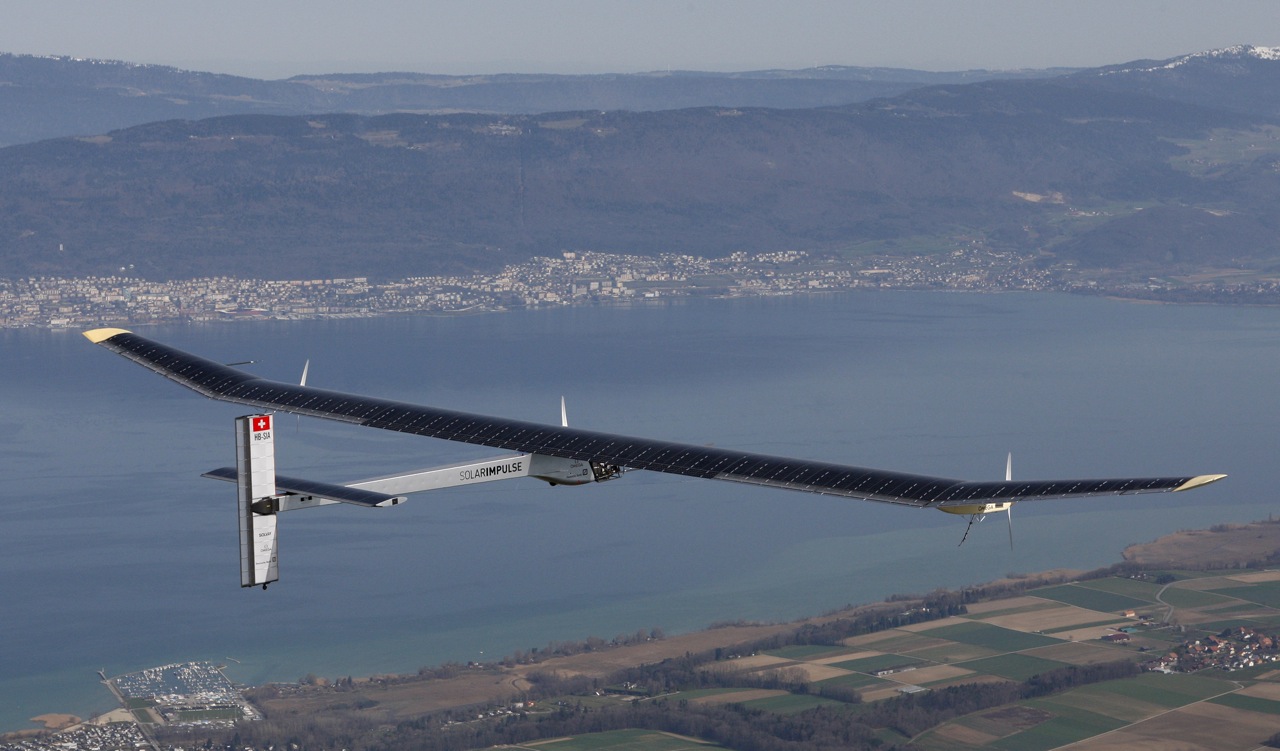
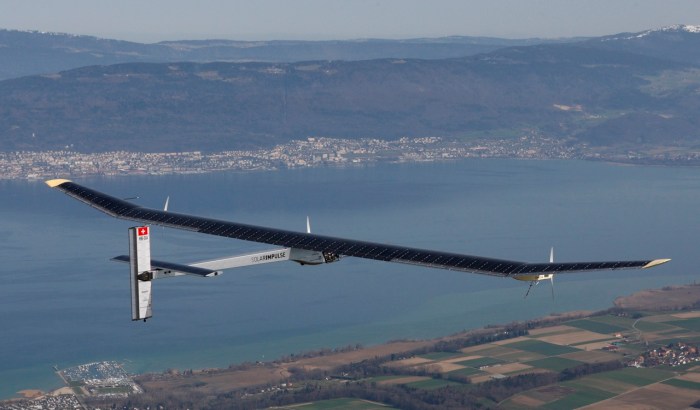 The explosion in the use of electric aircraft (be they solar-powered or hydrogen fueled) in the past few decades has led to predictions that by 2025, small electric aircraft will offset commercial flight using gas-powered, heavy jets. The report says advances in lithium-ion batteries and hydrogen storage will make electric transport a reality:
These aircraft will also utilize new materials that bring down the weight of the vehicle and have motors with superconducting technology. Micro-commercial aircraft will fly the skies for short-hop journeys.
6. The Internet of Things:
 By 2025, the internet is likely to expand into every corner of life, with growing wifi networks connecting more people all across the world. At the same time, more and more in the way of devices and personal possessions are likely to become “smart” – meaning that they will can be accessed digitally and networked to other things. In short, the internet of things will become a reality. And the speed at which things move will vastly increase due to proposed solutions to the computing bottleneck.
Here’s how the report puts it:
Thanks to the prevalence of improved semiconductors, graphene-carbon nanotube capacitators, cell-free networks of service antenna, and 5G technology, wireless communications will dominate everything, everywhere.
7. No More Plastic Garbage:
 Ever heard of the Great Pacific Garbage Patch (aka. the Pacific Trash Vortex), the mass of plastic debris in the Pacific Ocean that measures somewhere between 700,000 and 15,000,000 square kilometres (270,000 – 5,800,000 sq mi)? Well, according to the report, such things will become a thing of the past. By 2025, it claims, the “glucose economy” will lead to the predominance of packaging made from plant-derived cellulose (aka. bioplastics).
Because of this influx of biodegradable plastics, there will be no more permanent deposits of plastic garbage filling our oceans, landfills, and streets. As it says:
Toxic plastic-petroleum packaging that litters cities, fields, beaches, and oceans, and which isn’t biodegradable, will be nearing extinction in another decade. Thanks to advancements in the technology related to and use of these bio-nano materials, petroleum-based packaging products will be history.
8. More Precise Drugs:
 By 2025, we’ll have sophisticated, personalized medicine, thanks to improved production methods, biomedical research, and the growth of up-to-the-minute health data being provided by wearable medical sensors and patches. The report also offers specific examples:
Drugs in development are becoming so targeted that they can bind to specific proteins and use antibodies to give precise mechanisms of action. Knowledge of specific gene mutations will be so much more advanced that scientists and physicians can treat those specific mutations. Examples of this include HER2 (breast cancer), BRAF V600 (melanoma), and ROS1 (lung cancer), among many others.
9. DNA Mapping Formalized:
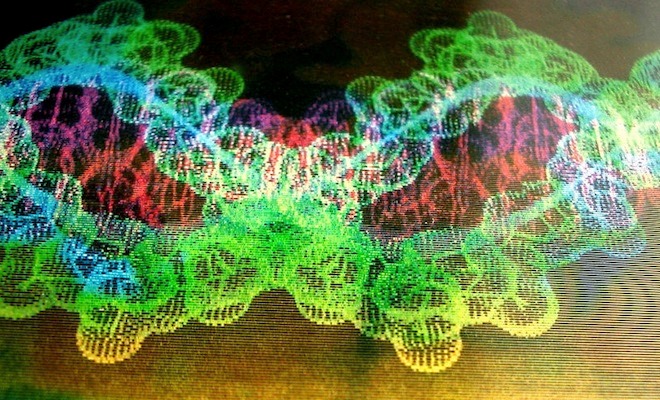 Recent explosions in genetic research – which include the Genome Project and ENCODE – are leading to a world where personal genetic information will become the norm. As a result, kids born in 2025 will be tested at the DNA level, and not just once or twice, but continually using nano-probes inserted in the body. The result will be a boon for anticipating genetic diseases, but could also raise various privacy-related issues. As it states:
In 2025, humans will have their DNA mapped at birth and checked annually to identify any changes that could point to the onset of autoimmune diseases.
10. Teleportation Tested:
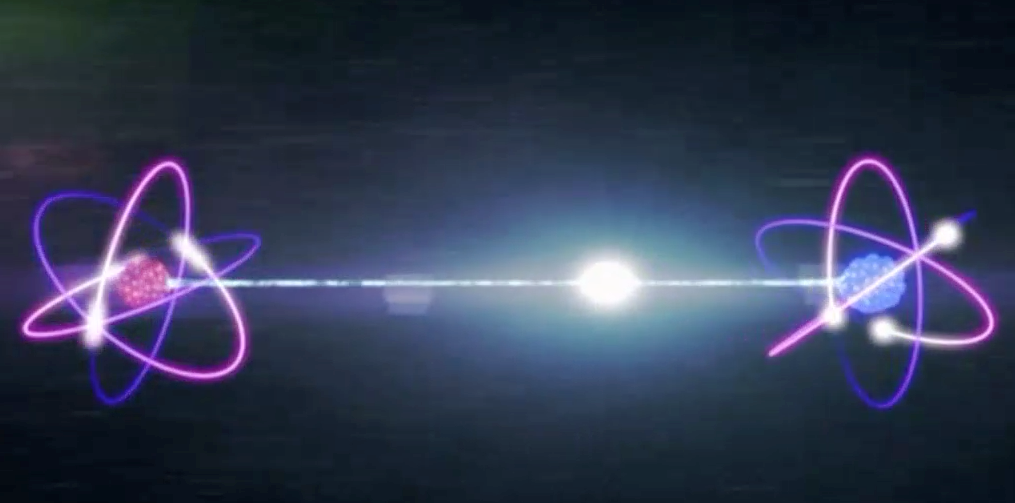
 Last, but certainly not least, the report says research into teleportation will be underway. Between the confirmation of the Higgs Boson (and by extension, the Standard Model of particle physics), recent revelations about quantum entanglements and wormholes, and the discovery of the Amplituhedron, the field of teleportation is likely to produce some serious breakthroughs. No telling what these will be – be it the ability to teleport simple photons or something larger – but the fact that the research will be happening seems a foregone conclusion:
We are on the precipice of this field’s explosion; it is truly an emerging research front. Early indicators point to a rapid acceleration of research leading to the testing of quantum teleportation in 2025.
Summary:
Will all of these changes come to pass? Who knows? If history has taught us anything, it’s that predictions are often wrong and much in the way of exciting research doesn’t always make it to the market. And as always, various factors – such as politics, money, public resistance, private interests – have a way of complicating things. However, there is reason to believe that the aforementioned 10 things will become a viable reality. And Moftah believes we should be positive about the future:
[The predictions] are positive in nature because they are solutions researchers and scientists are working on to address challenges we face in the world today. There will always be obstacles and issues to overcome, but science and innovation give us hope for how we will address them.
I, for one, am happy and intrigued to see certain items making this list. The explosion in solar usage, bioplastics, and the elimination of food scarcity are all very encouraging. If there was one thing I was anticipating by 2025, it was increased drought and food shortages. But as the saying goes, “necessity is the mother of invention”. And as someone who has had two grandmothers who lived into their nineties and have both suffered from the scourges of dementia, it is good to know that this disease will be on the wane for future generations.
It is also encouraging to know that there will be better treatments for diseases like cancer, HIV, and diabetes. While the idea of a world in which all diseases are preventable and/or treatable worries some (on a count of how it might stoke overpopulation), no one who has ever lived with this disease, or known someone who has, would think twice if presented with a cure. And hardship, hunger, a lack of education, resources and health services are some of the main reasons for population explosions.
And, let’s face it, its good to live in an age where the future looks bright for a change. After a good century of total war, totalitarianism, atomic diplomacy, terrorism, and oh so much existential angst and dystopian fiction, it’s nice to think that the coming age will turn out alright after all.
Sources: fastcoexist.com, ip-science.thomsonreuters.com

 Though it is already home to the world’s largest building – in the form of the New Century Global Center in Chendu – China is seeking to create the world’s tallest structure as well. Designed by UK-based Chetwoods Architects and known as the Phoenix Towers, this tower concept is slated to be built in Wuhan, Central China. But equally impressive is the fact that this building will be suck pollution out of the air and water and will host more than the usual building features.
 The designers hope the building will serve as a catalyst for more sustainable design in the industrial city. Laurie Chetwood, chairman of U.K.-based Chetwoods, the architects on the project explained how the building’s water-cleaning features work:
 Inspired by the Chinese symbols of the phoenix, and the concept of yin and yang, one tower feeds the other with renewable power in a symbiotic relationship. Spheres hanging between the two towers will also hold restaurants with views of the lake. Pending approval by the city’s mayor, construction may begin by the end of the year and could be completed by 2017 or 2018, a pace that the architects say would be unlikely in other countries.
 For instance, there’s China’s Shanghai Tower, which finished construction in August of last year. This building is currently the tallest tower in China, is one-third green space and a transparent second skin that surrounds the city in a protective air envelope that controls its internal temperature. In addition, vertical-axis wind turbines located near the top of the tower and geothermal vents located at the bottom will generate 350,000 kWh of supplementary electricity per year.


 And in addition to building computer brains, Google itself is also in the business of extending human life. This project, called Calico, hopes to slow the process of natural aging, a related though different goal than extending life expectancy with treatment for disease. Though of course, the term “immortality” is perhaps a bit of misnomer, hence why it is amended with the word “clinical”. While the natural effects of aging are something that can be addressed, there will still be countless ways to die.

 The
The  On occasion, the map is likely to show a big burst of coordinated attacks coming from China and directed towards the US. And while it is difficult to blame these attacks directly on the Chinese government (as they are adept at routing their attacks through other servers) government and independent researchers are confident the majority of these attacks are being directed by the People’s Liberation Army’s Unit 61398 – aka. the PLA’s cyberwarfare division.
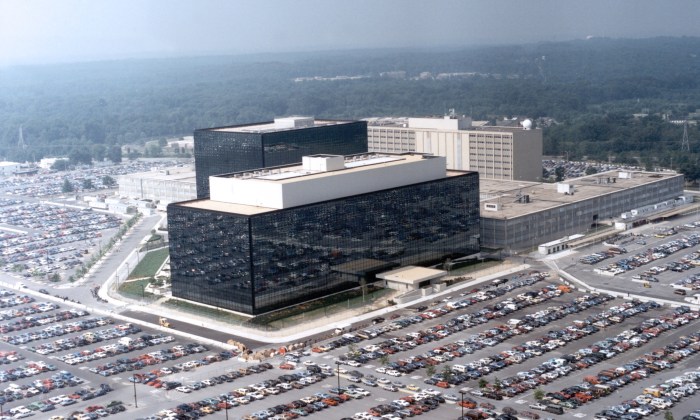 But a general picture of the size and shape of global hacking and cyberwarfare can be divined by looking at the stats. Back in 2012, the US DOD reported that it was the target of 10 million cyber attacks per day. Likewise, the National Nuclear Security Administration says it saw 10 million attacks per day in 2012. In 2013, BP’s CEO said it sees 50,000 cyber attacks per day, and the UK reported around 120,000 attacks per day back in 2011.
 As Hernan explained on his website: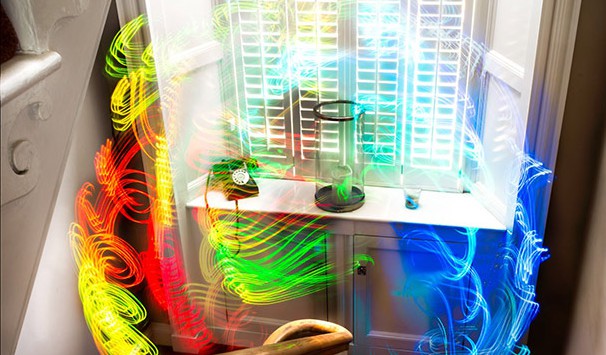


 In the teaser video, things open up on historic route 66. A Harley drives by, only it doesn’t sound like a Harley. It’s quieter, more like the jet engine of a very small plane. Over the summer, Harley-Davidson will take the new LiveWire bike on a 30-city tour of the U.S. to get customer feedback. Richlen has extended an invite to anyone who doubts the power of the bike to come on out try the bike for themselves. The real test, he says, is in the twist of the throttle:
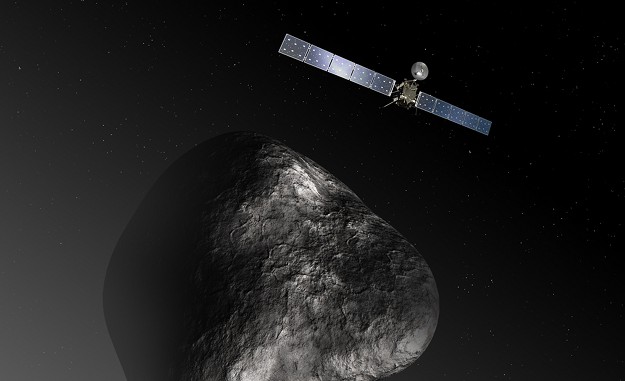 Space exploration is a booming industry these days. Between NASA, the ESA, Roscosmos, the CSA, and the federal space agencies of India and China, there’s just no shortage of exciting missions aimed at improving our understanding of our Solar System or the universe at large. In recent months, two such missions have been making the news; one of which (led by the ESA) is now underway, while the other (belonging to NASA) is fast-approaching.

 Named in honor of the Rosetta Stone – the a basalt slab that helped linguists crack ancient Egyptian – Rosetta is expected to provide the most detailed information about what comets look like up close (as well as inside and out). Similarly, the lander, Philae, is named after the island in the Nile where the stone was discovered. Together, they will help scientists shed light on the early history of our Solar System by examining one of its oldest inhabitants.
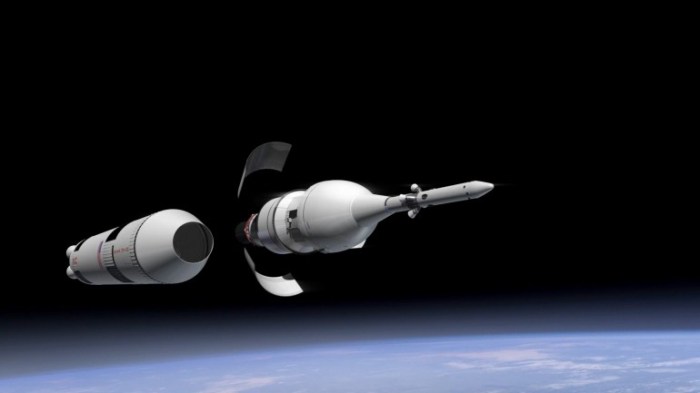
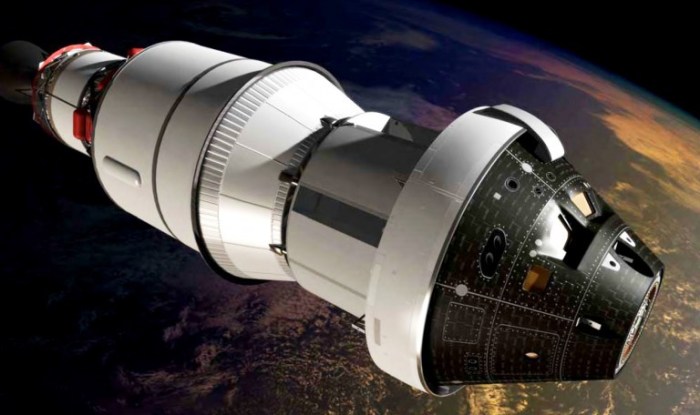 EFT-1 will take the form of an unmanned test flight, with the Orion spacecraft being controlled entirely by a flight control team from NASA’s Kennedy Space Center located in Florida. One vital component to be tested is the Launch Abort System (LAS), which in essence is a fail-safe required to protect astronauts should anything go wrong during the initial launch phase. Designed to encapsulate the crew module in the event of a failure on the launch pad, the LAS thrusters will fire and carry the Orion away from danger.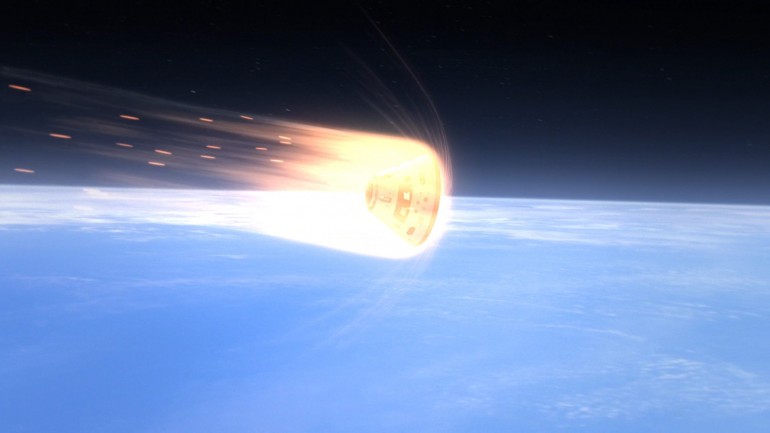
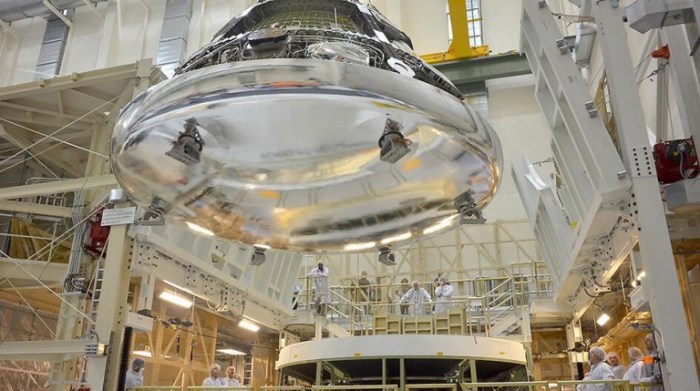 The final aspect of EFT-1 will be the observation of the parachute deployment system. Assuming the LAS has successfully jettisoned from the crew module following launch, the majority of Orion’s stopping power will be provided by the deploying of two drogue parachutes, followed shortly thereafter by three enormous primary parachutes, with the combined effect of slowing the spacecraft to 1/1000th of its initial re-entry speed.
 NASA staff on the ground will be nervously monitoring several key aspects of the proving mission, with the help of 1,200 additional sensors geared towards detecting vibration and temperature stress, while taking detailed measurements of event timing. Furthermore, cameras are set to be mounted aboard Orion to capture the action at key separation points, as well as views out of the windows of the capsule, and a live shot of the parachutes as they deploy (hopefully).


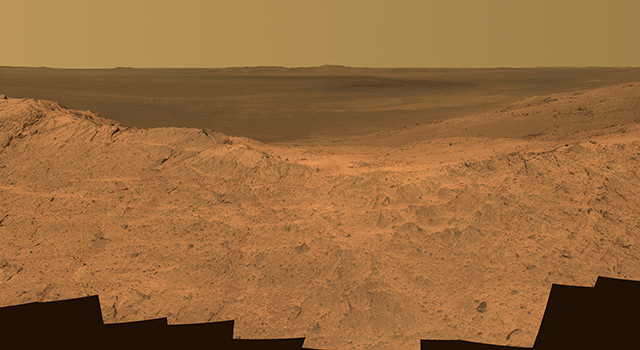 Initial measurements at this site with the element-identifying alpha particle X-ray spectrometer at the end of Opportunity’s arm indicate that bright-toned veins in the rock contain calcium sulfate. Scientists deduce this mineral was deposited as water moved through fractures on Endeavour’s rim. The rover found similar veins of calcium sulfate farther north along the rim while investigating there earlier last month.





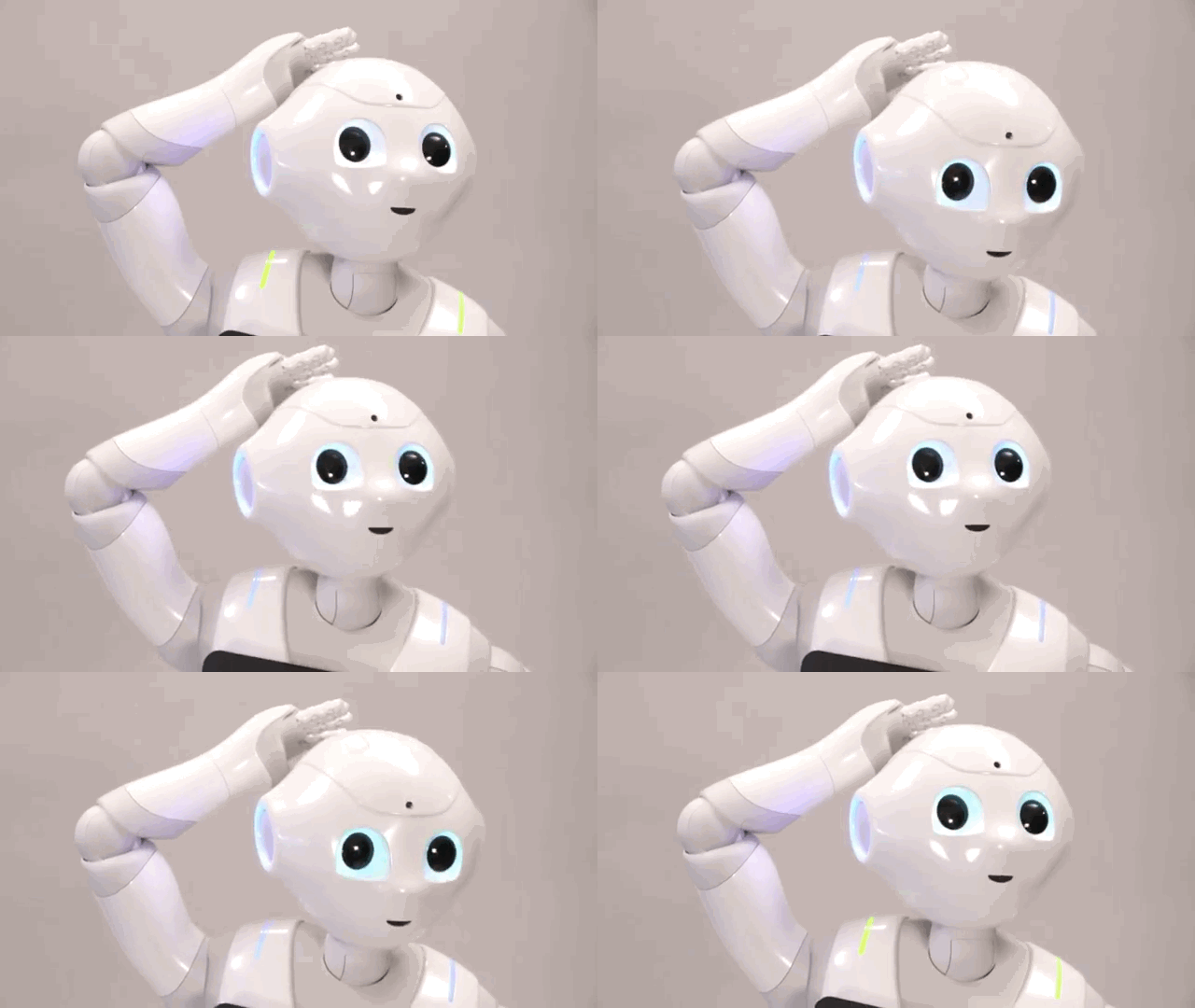 Aldebaran CEO Bruno Maisonnier claims that robots that can recognize human emotion will change the way we live and communicate. And this is certainly a big step towards getting robots into our daily lives, at least if you live in Japan (the only place Pepper will be available for the time being). He also believes this is the start of a “robotic revolution” where robotic household companions that can understand and interact with their human owners will become the norm.