Drone Wars: New Leaks Reveal Human Cost of Drone Strikes

drone-strikeIt would be an understatement to say that drones and UAVs are hot button issue right now. As an ongoing part of the “war on terror”, the use of remotely piloted vehicles to target terrorism suspects remain a popular one within the US, with 56% of respondents indicating that they supported it (as of Feb. 2013). However, when the matter of civilian casualties and collateral damage is introduced, the issue becomes a much stickier one.

What’s more, it is becoming increasingly evident that how the drone program is being presented is subject to spin and skewing. Much like the NSA’s domestic surveillance programs, it is in the Obama administration’s and the Pentagon’s best interest to present the issue in terms of “hunting terrorists” while categorically avoiding any mention of the real costs involved. And thanks to recent revelations, these efforts may prove to be more difficult in the future.
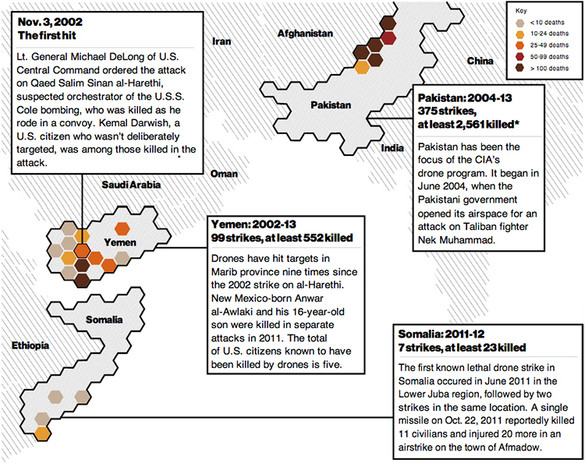
drone_mapIt was just over weeks ago, on July 22nd, that London’s Bureau of Investigative Journalism released a leaked Pakistani report that detailed numerous civilian casualties by drone strikes in the country’s Federally Administered Tribal Areas (FATA). For years now, obtaining information about civilian casualties caused by US and NATO strikes in this region has been incredibly difficult – information which these documents have now provided.

The 12-page dossier was compiled for the the authorities in the tribal areas, the Bureau notes, and investigates 75 CIA drone strikes and five attacks by NATO in the region conducted between 2006 and 2009. According to the document, 746 people were killed in the strategic attacks. At least 147 of the victims were civilians, and 94 were children.

on April 3, 2009 in Now Zad in Helmand province, Afghanistan.This directly contradicts inquired made by the United Nations, which began investigating the legality of the drone program and strikes last year. According to the U.N.’s special rapporteur on counterterrorism and human rights (Ben Emmerson) Pakistan then claimed at least 400 civilians had been killed in U.S. strikes in the country since 2006. Quite the discrepancy.

And while a majority of other tallies relied on media reports of drone strikes, the FATA list was compiled by government officials who were sent out to investigate damage firsthand in the wake of attacks. According to the Bureau, on several occasions officials registered different casualty rates than the media outlets reported.

Drone-strike-damageThe Bureau went on record to say that there were gaps in the information provided, like why none of the names of the casualties were provided, or why civilian casualties were not provided for 2009, the last year covered in the report. It is possible that logistical factors played a role, such as the lack of accurate census data in the FATA region, and that casualty figures for the year 2009 were difficult to obtain due to the acceleration of drone strikes during that year.

It is this last aspect which is likely to give many pause, since it was the decision of the outgoing Bush administration to intensify drone strikes during the last few months of his presidency, a decision which the Obama administration adopted and maintained. And the list provided only shows a gap between the official numbers and those obtained on the ground during the years of 2006 and 2009, when the strikes began.

drone_loadoutWhat are we to make then of the years running from 2009 to 2013, where drone strikes in the western region of Pakistan became a much more common occurrence and the body count – civilian or otherwise – can only be expected to have escalated? This could another reason that figures were omitted from 2009, which is that the Pakistani government was concerned that they might spark outrage if they were to ever be made public.

However, that is all speculation at this point, and more time and investigation are certainly needed to determine what the cost in human terms has been. One thing is for sure though, the use of drones in Pakistan, Yemen and Somalia are likely to become increasingly controversial as more information emerges and an accurate picture of the death toll is presented.

drone_map1For years now, the US government has denied that large civilian casualty counts exist, but it continues to withhold the numbers. But some claim those numbers will not shed any real light even if they are released, since it is still not clear how the US forces distinguish between civilians and “militants” or “combatants”.

In a major speech on national security in May 2013, Obama strongly defended the drone program but said the administration would codify the process it goes through before ordering attacks and would work with Congress to create more oversight. However, no promises were made about the number of deaths leading up to this declaration, whether or not those facts and figured would be made public, and strikes continue to take place which violate this new mandate.

obama_dronesAs the saying goes, “the first casualty of war is the truth”. And without much effort, one can easily draw parallels between this latest phase in the “war on terror” to the vagaries of Iraq, Abu Ghraib and Guantanamo Bay, where information was withheld, numbers debated and legalities issued in order to justify highly questionable acts.

And for those old enough to remember, the specter of Vietnam is also apparent here. Then, as now, the public is forced to rely on leaked information and confidential informants simply because the official stories being issued by their government are full of discrepancies, denials, and apparent fabrications. One would think we had learned something in the last five decades, but apparently not!

Sources: huffingtonpost.com, thebureauinvestigates.com

The Future is Weird: Human Urine used to grow Teeth?!

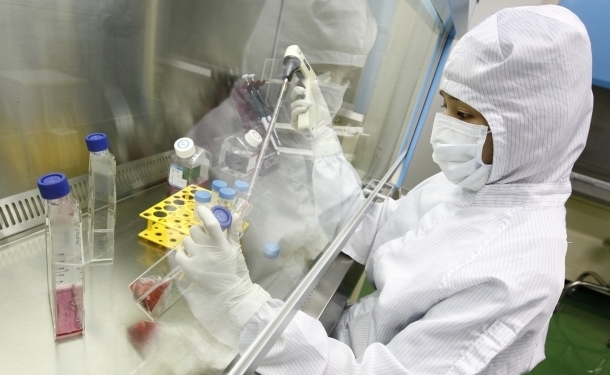
3dstemcellsStem cell research has been expanding impressively in recent years, and the range of applications has been growing accordingly. And while all are impressive and useful, some are – admittedly – odd and even a tad gross. One such application is the one that was recently unveiled in China, where a team of biologists are using stem cells harvested from human urine to grow structures in mice that resemble teeth.

The team, led by Duanqing Pei and Jinglei Cai from the Guangzhou Institute of Biomedicine and Health, had announced back in 2011 that it had successfully reprogrammed skin-like cells from the kidneys, found in urine, to turn into pluripotent stem (iPS) cells. As researchers have known for some time, these iPS cells can be tweaked to become pretty much any human cell in the body.

tooth-from-urine-cell-regenerationIn a paper produced by the Guangzhou biomedical team – which appeared in the peer-reviewed, open access journal Cell Regeneration last week – they claim the ability to “regenerate teeth with patients’ own cells” is an “ideal solution” to the loss of teeth through accidents or disease. As just one of many applications of stem cell research, the aim is to create synthetic biological tissues that can replace artificial implants.

Once the cell sheets formed into epithelial tissue – the kind of cells found in human skin and teeth – they implanted them with tissue from the jaw of a mouse embryo (to encourage it to grow into a tooth) in the kidney of a mouse. Three weeks later, they noted that the human tissue had turned into cells called ameloblasts that secrete enamel, the hard, bone-like substance on the outside of the tooth.

urine_stemcells_teethThe result was a series of tooth-like structures which possessed the hardness “found in the regular human tooth”, which were then harvested. Assuming that this approach could be scaled to involve dozens of mice across thousands of labs, artificial teeth could be mass produced and then be made available to dental clinics all over the world.

However, the real innovation came with the new method that the research team devised to get around some flaws in the traditional method. This method, which involves inserting the stem cells into blanket cells via a genetically engineered retrovirus, can lead to a destabilization of the cell genome, rendering the tissue unpredictable, susceptible to mutations and thus a liability.

stem_cells1Hence why Pei and his team opted for another route, one which they claim presents a safer, faster alternative. Having extracted kidney epithelial cells from the urine of three donors, the team used vectors — a type of DNA molecule useful in transporting genetic information from cell to cell. This allowed them to transport the genetic information without having to integrate the new genes into the chromosome of the kidney cell.

According to their paper, this process may be partly responsible for the aforementioned mutations in the first place. And once they tested out their new process, it took only 12 days for the pluripotent stem cells to form in a petri dish – roughly half the time it takes using the traditional approach.

URINE-STEM-CELLS-TEETH-570William Stanford – a University of Ottawa researcher who holds a Canada Research Chair in integrative stem cell biology – indicated that their approach is not entirely now. Growing various kinds of human tissues inside a mouse kidney is a common technique used by stem cell biologists, Stanford said. In the course of doing so, researchers will occasionally grow what looks like teeth by accident.

However, the Guangzhou team have modified the technique to grow teeth intentionally. And their approach is an improvement in that it does not require skin samples to be harvested by the human subject (a common practice at the moment). Using urine-harvested stem cells only requires that they pee into a cup, and the turnaround time is a matter of weeks instead of months.

Good news for anyone who is missing some chomper, or feels self-conscious about crooked or chipped teeth and can’t afford those expensive, porcelain implants. What’s more, teeth are really just the tip of the iceberg. In time, other organic tissues could be grown as well, allowing for further developments in the already exciting field artificial organ generation.

Sources: cbc.ca, wired.com

Epic Rap Battles of History – Science Edition

epic_rap_battlesIt occurs to me that I really haven’t given the ERB site its due over the years. They’ve provided me with endless hours of enjoyment and all I ever did was post about one of their videos. Granted, I have nowhere near the kind of following that would needed to actually give their traffic a shot in the arm, but it’s the thought that counts!

And so I thought I’d a little compilation here of some of their funniest, and educational, videos. Whether it was the match ups between Steve Jobs and Bill Gates (made shortly after Jobs death as a tribute to his life), Einstein and Stephen Hawking, or Thomas Edison and Nikola Tesla, these guys have shown a real commitment to their art and are clearly willing to do their homework!

Enjoy!

Steve Jobs vs. Bill Gates:


Einstein vs. Stephen Hawking:


Thomas Edison vs. Nikola Tesla:


Note: Though I am well aware of their existence, I have assiduously avoided posting the videos of Darth Vader vs. Adolph Hitler. Though I found them hilarious, such material is bound to offensive to some. Although, if people were willing to give me permission… 😉 😉

Cyberwars: U.S. Lawmakers Credit NSA for Uncovering Al-Qaeda Threat

bahrain-embassy-04818864In a statement made this past Sunday, the US State Department indicated that it will be extending its embassy and consulate closures until the end of the week. Offices were reopened in Iraq, Afghanistan and Algeria just yesterday, but another 19 will remain closed until Aug. 10 – including locations in Egypt, Yemen, Libya, Saudi Arabia and Kuwait.

These closures were made in response to an unspecified Al-Qaeda threat that indicated that an attack might be coming sometime in August, particularly in the Middle East and North Africa. According to the State Department, the decision to keep the embassies and consulates closed was “not an indication of a new threat,” but simply out of concern for the lives and safety of staff.

embassy-closure-mapAnd according to another State Department source, the credit for uncovering this supposed threat goes to the NSA and the PRISM program – i.e. the extensive new data mining operation that has garnered a great deal of controversy of late. Specifically, it was the agency’s ability to monitor communications on cellphones and emails that was is credited with making the difference.

Senator Saxby Chambliss, he top Republican on the Senate Intelligence Committee, claimed in an interview that “There is an awful lot of chatter out there”. This “chatter” apparently took the form of communications among terrorism suspects about the planning of a possible attack, which he claimed was “very reminiscent of what we saw pre-9/11.”

US embassy in Tel AvivNo indication was given as to the nature of the threat or whether or not an actual attack might take place. But Chambliss was very quick to draw the connection between the NSA’s ability to gather information and the warnings his department received.

[Those programs] allow us to have the ability to gather this chatter. If we did not have these programs then we simply wouldn’t be able to listen in on the bad guys. This is the most serious threat that I’ve seen in the last several years.

This information-gathering program was one of many aspects of the NSA’s broad surveillance identified by former spy agency contractor Edward Snowden in his testimony to major media outlets. So it comes as no surprise that the State Department would be coming to its defense at a time like this.

US-embassy-closures_010And Chambliss and the State Department are hardly the only ones singing the NSA’s praises right now. This past Sunday, several prominent Republicans and Democrats expressed their support for the NSA surveillance program. One such individual was Dutch Ruppersberger, the senior Democrat on the House Intelligence Committee, who told ABC’s This Week:

The good news is that we picked up intelligence. And that’s what we do. That’s what NSA does. We’ve received information that high-level people from al Qaeda in the Arabian Peninsula are talking about a major attack.

U.S. Representative Adam Schiff, another Democrat on the House Intelligence Committee, characterized the security threat as being based on specific intelligence rather than generalized anti-U.S. threats. While on CNN’s State of the Union program, he said:

This is not the usual type of chatter. It had to be corroborated or come from very reliable sources to take this kind of action.

Mideast Bahrain US Embassy ClosingsNaturally, there are those critics who would claim that the unspecified nature of the threat and the lack of oversight where PRISM is involved means that there is no way to tell if the “chatter” story is in fact real. Citing such examples as the “Orange Alert” controversy of 2004 – when Homeland Security Secretary Tom Ridge was pressured to raise the alert status leading up to the election – such critics would remind people that the US government has a history of issuing alerts based on factors other than hard data.

At the same time, it is important to note that the threat information also came ahead of the Eid celebration at the end of the Muslim holy month of Ramadan, which will be occurring later this week and just over a month before the anniversary of Al-Qaeda’s Sept. 11, 2001, attacks on a US ambassador and the American Embassy in Benghazi, Libya. In this sense, the alert may have been motivated by legitimate concern, even if hard data was lacking,

us_embassy_closings_yemenAnd the US is hardly the only nation responding to the warning seriously. The threat also has prompted some European countries to close their embassies in Yemen, where one of the most dangerous al-Qaeda affiliates is based. Interpol, the France-based international police agency, also issued a global security alert advising member states to increase vigilance against attacks after a series of prison breaks in Iraq, Libya and Pakistan.

The advisory prompted Canada’s Foreign Affairs Department to release its own warning this past Saturday for travelers and diplomats in the Middle East and North Africa region. In addition, the Canadian high commission office in Bangladesh was closed on Sunday, since Pakistan was one of several nations outside of the Middle East and North Africa to be named in the advisory.

A few things are certain at this point though: neither the threat of terrorism nor all that’s done in response to it are even close to being resolved. In addition, the controversy surrounding the response and whether or not it constitutes an overreaction or a calculated curtailment of people’s civil rights and liberties, is not over either. Not by a long shot.

Sources: cbc.ca, (2), washingtonpost.com, theguardian.com


The Future is Here: Lab-Grown Burger Gets a Taste Test

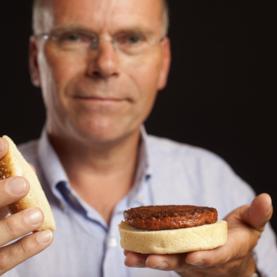
labmeat0Yesterday, the world’s first lab-grown hamburger was cooked, served, and eaten. And according to an article from The Week, it passed the taste test. The taste test took place in London, where Mark Post, the man who had grown the patty in his lab at Maastricht University in the Netherlands, allowed two independent tasters to sample one of his hamburger patties.

The samplers were food writer and journalist Josh Schonwald and Austrian food trends researcher Hanni Rützler. After biting into a piece of the cooked meat in front of reporters, Schonwald claimed that “It had a familiar mouthfeel. [The difference] is the absence of fat.” Naturally, both tasters were careful not to comment on whether the burger was “good” or not, as any such judgements might seem premature and could hurt its chances for sales at this point.

lab-grown-burgerThis lab-grown patty took two years and $325,000 to produce. And as sources revealed, the money came from Google co-founder and TED speaker Sergey Brin. Worth an estimated $20 billion, Brin has a history of investing in cooky projects – everything from driverless cars to trips to the moon. And as he told The Guardian, he was moved to invest in the technology for animal welfare reasons and believes it has “the capability to transform how we view the world”.

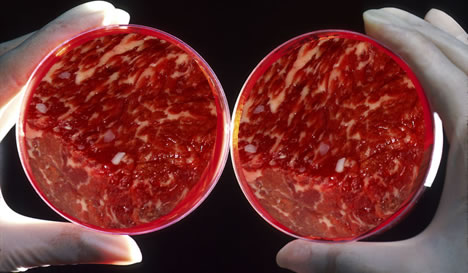
lab-grown-burger_postThe hamburger was grown in Post’s lab using bovine skeletal muscle stem cells that were collected from a piece of fresh beef. The cells were grown by “feeding” them calf serum and commercially available growth medium to initiate multiplication and prompt them to develop into muscle cells over time. Once they differentiated into muscle cells, they were given simple nutrient sources and exercised in a bioreactor, helping the muscle to “bulk up.”

The resulting five-ounce burger, cooked by chef Richard McGeown for Schonwald and Rützler, was made using 20,000 strips of cultured meat – about 40 billion cow cells – and took about three months to produce. As Post joked, this is significantly less time than it takes to raise a cow. And while the arrival of in-vitro meat has been predicted and heralded for decades, but now that it’s finally here, people are not sure how to respond.

labmeat1On the one hand, it offers a range of possibilities for producing sustainable, cheap meat that could help meet global needs using only a laboratory. On the other, there’s no telling how long it will be before consumers will be comfortable eating something grown in a petri dish from stem cells. Between the absence of fat and the stigma that is sure to remain in place for some time, getting people to buy “lab-grown” might be difficult.

But then again, the same issues apply to 3D printed food and other forms of synthesized food. Designed and developed as a means of meeting world hunger and future population growth, and with sustainability and nutritional balance in mind, some degree of hesitation and resistance is to be expected. However, attitudes are likely to shift as time goes on and increased demand forces people to rethink the concept of “what’s for dinner”.

And while you’re thinking the issue over, be sure to check out this video of Mark Post speaking about his lab-grown burger at TEDx Haarlem:


Sources:
scientificamerican.com, theweek.co.uk, theguardian.com
, blog.ted.com,

The Future is Here: Augmented Reality Storybooks

ar_storybookDisney has always been on the forefront of technological innovation whenever and wherever their animation is concerned. Augmented reality has been a part of their operations for quite some time, usually in the form of displays put on at Epcot Center or their Haunted Mansion. But now, they are bringing their efforts in AR to the kind of standard storybook that you would read to your children before bedtime.

Thanks to innovations provided by Nintendo DS, the PSP, tablets and smartphones, books have become alive and interactive in ways that were simply not possible ten or twenty years ago. However, one cannot deny that ebooks simply do not have the same kind of old world charm and magic that paperbacks do. Call it nostalgic appeal or tradition, but reading to a child from a bounded tome just seems somehow more meaningful to most people.

disneyhideout-640x353And that’s where Disney’s HideOut project comes into play, a mobile projector is used to create an augmented reality storybook. How it works is simple enough, and in a way, involves merging the best of electronic and paper media. Within the book, certain parts will be printed using special infrared-absorbing ink, so that sentences and images can be tracked.

The mobile projector, in turn, uses a built-in camera to sense the ink, then projects digital images onto the page’s surface that are animated to interact with the markers. In this way, it knows to show certain images when parts of the book call for them to be displayed, and can turn normal pictures into 3D animated segments.

disney_argameAnd storybooks aren’t the only application being investigated by Disney. In addition, they have been experimenting with game concepts, where a user would moves a mobile projector around a board, causing a character to avoid enemies. In another scenario, a characters projected onto a surface interacts with tangible objects placed around them. This would not be entertaining to a child, but could be educational as well.

The applications also extend to the world of work, as the demo below shows. in this case, HideOut projects a file system onto the top of a desk, allowing the user to choose folders by aiming the projector, not unlike how a person selects channels or options using a Wii remote by aiming it at a sensor bar. And the technology could even be used on smartphones and mobile devices, allowing people the ability to interact with their phone, Facetime, or Skype on larger surfaces.

disneyhideoutAnd of course, Disney is not the only company developing this kind of AR interactive technology, nor are they the first. Products like ColAR, an app that brings your coloring book images to life, and Eye of Judgment, an early PS3 game that accessed CCG cards and animated the characters on-screen, are already on the market. And while there does not appear to be a release date for Disney’s HideOut device just yet, its likely to be making the rounds within a few years tops.

For anyone familiar with the world of Augmented Reality and computing, this is likely to call to mind what Pranav Mistry demonstrated with his Sixth Sense technology, something which is being adopted by numerous developers for mobile computing. Since he first unveiled his concept back in 2009, the technology has been improving and the potential for commercial applications has been keeping pace.

In just a few years time, every storybook is likely to come equipped with its own projector. And I wouldn’t be surprised if it quickly becomes the norm to see people out on the streets interacting with images and worlds that only they can see. And those of us who are old enough will think back to a time when only crazy people did this!

In the meantime, check out this demo of the Disney’s HideOut device in action:


Source: extremetech.com

Police and 3D Printed Weapons

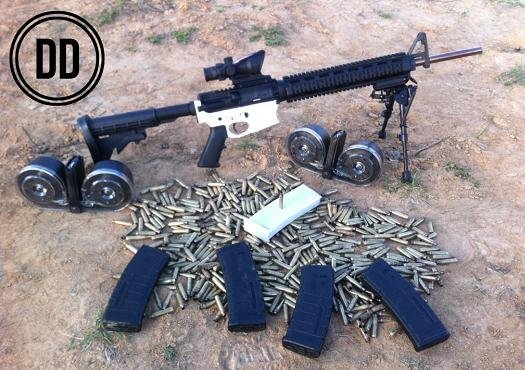
Defense Distributed new magazinesEver since Cody Wilson and Distributed Defense produced the Liberator – the world’s first working firearm made completely from 3D printed parts – there has been palatable fear about the technology and the impact it might have. But as predicted, the Liberator was not the last of its kind, as other groups around the world are rallying to see what is possible with additive manufacturing.

Recently, German federal police began producing their own printed guns, mainly to see just how dangerous they can be, but also for the potential purpose of using them. According to GigaOM, German police agencies admitted to buying a 3-D printer “in order to see whether homemade 3-D printed guns are really a threat,” and more specifically, if those plastic guns could be sneaked onto a plane.

defense-distributed-liberator,Z-M-383602-13However, the Bundespolizei (BPOL) also indicated that they are interested in determining whether or not 3-D printed guns might be a useful addition to the force’s arsenal. Apparently, this was the result of their agency liaising with with Australian police about the matter, who as it turns out, have also been conducted tests on 3-D printed weapons.

In their case, they conducted extensive tests on the $35 plastic Liberator firearm, the pride and joy of Wilson and his libertarian organization. But what they found was the firearm exploded when they test fired it. Not an encouraging end to the weapon that garnered so much controversy around the world, but it hardly means the issue is settled.

liberatorAs the designs of individual firearms and printers improve, and given the difficulty of censuring design plans on the internet, 3-D printed guns are likely to proliferate. So it makes sense for police to adopt a investigative and experimental attitude so they can see how useful the weapons are and just how far the technology goes.

Much in the same way police agencies around the world were forced to adopt cyber divisions to contend with the digital revolution, it seems only natural that they would adopt an Additive Manufacturing Division (AMD) or a 3D Printer Division (3DPD) to address the revolution being spearheaded by 3D printing technology.

I can see it now! Amongst their responsibilities would be tracking designs on the internet, liaising with cyber divisions to see who downloaded specs, and reverse engineering weapons to come up with a design signature for different printing operations. Could make for a good police drama…

Sources: fastcoexist.com, gigaom.com

Zombie Hunters!

apoc_soldiersHello fellow zombie smashers! As you may recall, a few weeks back I hosted a zombie hunters get-together. People were asked to take part by designers their own warriors, specifying weapons, apparel, and a bit of a back story. And of course, those who took part would have the honor of seeing their character featured in the next installment of my Whiskey Delta series – Oscar Mike!

So far, only three people have fashioned characters, but this is more than I need to work into the story. Still, if anyone’s interesting in seeing their creation presented in literary form, there is still time. All you need do is consult the pages on Apparel and Melee Weapons, then pick a primary weapon, a secondary, and create a little backstory to go along with it.

And in the meantime, allow me to present the first three zombie hunters that have been created for this challenge, arranged in alphabetical order:

Khaalidah Muhammed-Ali:
Alias: The Hurting Healer (Jamilah Al Mo’alej)
Apparel: Hooded Cloak, denim clothes, leather gloves, hijab
Primary Weapon: Composite Bow
Secondary Weapon: Desert Eagle .357
Melee Weapon: Truncheon
Backstory:  When the zombie apocalypse happened, Jamilah I put her three children (aged 22, 20 and 11) into her truck and hauled out of the Houston metropolitan area. Her husband was one of the many casualties when the biters first came, and the people in her area proved worse when chaos followed in their wake. Once they reached the countryside, they decided to take up residence in an old farm house where she grew herbs for medicine and vegetables while her oldest son, 22 years old, hunted rabbits, birds and fishes in the local stream. Her 20 year old daughter, the nervous ninny that she was, served as their lookout and security adviser and her 11 year old daughter, taciturn yet brilliant, created devious little traps to snare food, and the undead!

Rami Ungar:
Alias: Ghost
Apparel: Trench coat, glasses
Primary Weapon: MP5
Secondary Weapon:
MP5K
Melee Weapon: Katana sword
Backstory: Originally from Ohio, when the zombies began to roam, Rami packed up his gear and what weapons he could get his hands on and hit the open road. Realizing quickly that the only way to stay alive was to move fast and remain unnoticed, he adopted the name “Ghost”. After losing everything to the undead hordes, he lost his old name and has maintained the alias ever since. Though nominally skilled in firearms, his weapon of choice is the naked blade.

Rhys C. Ethan:
Alias: Tromos
Apparel: Kevlar vest
Primary Weapon: Crossbow
Secondary Weapon: .357 Magnum
Melee Weapon: Baseball bat
Backstory: Tromos  was an honourably discharged police officer when the zombie apocalypse first hit. And when the law failed to act in the midst of the crisis, he took matters into his own hands and became the terror of the living dead. His life now is spent traveling to wherever zombies endanger safe shelters, and slaughtering as many of the living dead as humanly possible!

And as promised, these characters will have the honor of appearing in the upcoming Oscar Mike. The re-released Prologue is coming soon, which will offer a sneak peak at these badasses as well as the larger plot of the third book in my Whiskey Delta series. Stay tuned!

The Hobbit Deleted Scene

the_hobbit_an_unexpected_journey_movie-HDNo kidding! Despite the fact that Peter Jackson took a relatively compact book, cut it into three, and filled the edges with enough chaff and filler from the appendixes to turn it into three movies, it seems that are still some scenes that didn’t make beyond the cutting room floor. And this is one such clip that is making the rounds on the internet lately.

The clip comes from The Hobbit: An Unexpected Journey DVD release, which apparently has all kinds of behind-the-scenes stuff (no surprises there). If there’s one thing Peter Jackson likes to talk about, whether its on his website or with DVD extras, its all the time he spent behind the camera and the things he did.

In any case, this scene involved Bilbo and Elrond speaking in Rivendell. Not a lot goes on, but then again, that’s probably why it didn’t make it into the final cut. And its still enjoyable. Check it out!


Source:
IO9.com

News From Space: MAVEN’s “Time-Machine” for Mars

marsYes, the name is a bit of a attention-getter, but when you come to understand the purpose behind Lockheed Martin’s new spacecraft, the description does appear to be quite apt. It’s known as MAVEN, which stands for Mars Atmosphere and Volatile EvolutioN, and it is currently being produced in Lockheed Martin’s Martin Space Systems facility in Denver, Colorado.

People may recall how earlier this year, MAVEN was mentioned as part of the “Going to Mars” campaign. A project that is being organized by the University of Colorado at Boulder’s Laboratory for Atmospheric and Space Physics (CU/LASP), the Martian orbiter will be carrying a DVD featuring the names of everyone who applies, as well as three specially-selected haikus.

However, it is MAVEN’s larger mission which is now the focus of much interest. Later this year, NASA will be launching the orbiter to Mars for the sake of examine the atmosphere and answering some burning questions that remain about the planet. Thanks to evidence provided by Curiosity, Opportunity, and other missions, scientists now know that the Martian surface once boasted conditions suitable for life, including liquid water.

maven_orbitHence, Maven’s ultimate purpose, which will be will to orbit the planet and examine whether the atmosphere could also have provided life support. Scientists working on the Maven mission want to understand what this atmosphere was like, and the processes that led to its destruction. As Guy Beutelschies, Maven Programme Manager at Lockheed Martin, put it:

What we know from our missions looking at the surface of Mars is that there used to be water there. We can see the outlines of ancient rivers, the shorelines of ancient oceans. But water can’t exist there now – the atmosphere is too thin and too dry, any water would just evaporate or freeze. 

So the big question is what happened to Mars’ atmosphere? Short of being able to travel back in time into the Martian past, how would anyone go about tackling these questions with a mission today? Beutelshcies explained it as follows:

[The atmosphere] used to be thicker, warmer, wetter, now it’s thin and dry. How did we get there? In a sense we are building a little bit of a time machine. What we’re doing is understanding the processes.

maven_atmosphereJust last week, evidence provided by the Curiosity rover supports the theory that Mars may have lost most of its atmosphere billions of years ago. Still, scientists remain skeptical that Mars once had an atmosphere comparable to that of Earth. Today, that atmosphere is roughly one-hundredth the thickness of Earth’s, made up mostly of carbon dioxide and a tiny fraction of water vapor. What little remains is being stripped away by the solar wind.

And unlike Earth, Mars does not have a magnetosphere to protect its atmosphere from being blown away – at least not anymore. Such a fragile, thin band around is now unlikely to support any sort of life, as far as we know. But the atmosphere in the past must have been more substantial to allow the formation of rivers, lakes and oceans.

mars_sunsetBruce Jakosky, the Principal Investigator for Maven who is based at the University of Colorado’s CU/LASP lab in Boulder, claims:

We think that Mars used to have a magnetic field. We see places on the surface that retain some remnant magnetism, they were imprinted when they formed with whatever magnetism was there. We think that some four billion years ago, when the magnetic field turned off, that turn-off of the magnetic field allowed [for the] turn-on of the stripping by the solar wind.

To investigate the processes taking place today, Maven will dip into the Martian upper atmosphere with each orbit, measuring the particles, sampling gases, monitoring the magnetic field and solar wind. Whereas the rovers have looked at the atmosphere from the ground up, MAVEN will look at it from the top down. At this point, both are needed to put together a picture of what’s controlling the Mars environment.

maven_atmo1As well as filling in the blanks about Mars’ depleted atmosphere, Maven will also provide clues to the habitability of other planets beyond the solar system. As Jakosky said, the research conducted will have far-reaching implication for our understanding:

In trying to understand the distribution of life throughout the Universe, this is a really important indicator. Understanding the environmental conditions that allow [life] to exist, or don’t allow it to exist, is key to being able to extrapolate elsewhere.

What’s more, understanding what happened to Mars will provide some key insight into the history of our Solar System, and how it went from being a star with two planets that had oceans and atmospheres to just one. Knowing why things continued to operate on Earth, while on Mars they went horribly wrong, is likely to be quite the eye-opener, and make us all thankful we evolved here on Earth.

Source: bbc.com