The Future is Here: The Smog-Eating Building

pollution_eatingbuildingFor many years now, urban planners and architects have been looking for ways to merge the concept of carbon capture and building designs to combat airborne pollutions in cities. With global temperatures climbing, CO2 levels reaching 400 parts per million in the upper atmosphere, urban air quality indexes as high as 700, and the ensuing health problems that come with it, its clear something must be done.

Mexico City is no stranger to air pollution, being one of the most heavily and densely populated cities in the world. According to researchers from the University of Salzburg, Mexico City has high concentrations of nearly every major harmful airborne pollutant – including sulfur dioxide, nitrogen oxides and carbon monoxide – but by far the worst problem is the massive cloud of smog that hangs over it almost every day.

pollution_eating2Little wonder then why the Berlin-based design firm Elegant Embellishments was hired to create the cities first pollution-eating edifice. Known as the Torre de Especialidades, a tower which surrounds an existing hospital, the building is shielded with a facade of Prosolve370e, a new type of tile whose special shape and chemical coating can help neutralize the chemicals that compose smog.

Impressively, the 100m facade removes enough smog to compensate for the emissions of 8,750 cars driving a day. And the process is both simple and twofold: the paint applied to the tiles is made from titanium dioxide, a pigment used to make things like sunscreen white that happens to double as a catalyst in certain chemical reactions. When UV light cuts through smoggy air and hits the titanium dioxide on the tiles, a chemical reaction occurs between the tiles and chemicals in the smog – like mono-nitrogen oxides.
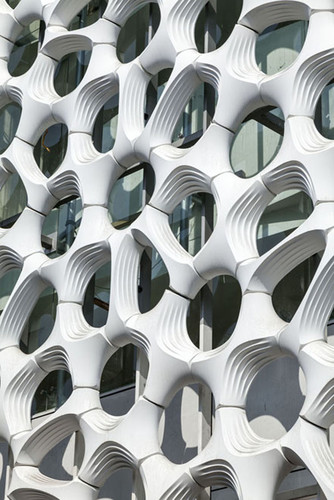
pollution_eating1The end result of the reaction is that the smog is broken down into small amounts of less noxious chemicals, including calcium nitrate (a salt used in fertilizers), carbon dioxide, and water. The titanium dioxide itself remains unaffected, so it can keep making reactions happen. But beyond the chemical process is the design itself, which is especially important.

As Elegant Embellishments co-founder Allison Dring explains:

The shapes slow wind speeds and create turbulence, for better distribution of pollutants across the active surfaces. The omni-directionality of the quasicrystalline geometry is especially suitable to catch things from all directions.

So, the shape of the tile scatters more light and collects more pollutants, which means more chemical reactions. But they’re also beautiful, a strategic decision by Elegant Embellishments to attach the technology the an aesthetic that is immediately evident and accessible to the public. In addition to doing something about the problem, explains Dring, the design acts as a beacon for change.

Source: fastcoexist.com, prosolve.elegantembellishments.net

Building the Future: 3D Printing and Silkworms

arcology_crystalWhen it comes to building the homes, apartment blocks and businesses headquarters of the future,  designers and urban planners are forced to contend with a few undeniable realities. No only are these buildings going to be need to be greener and more sustainable, they will need to be built in such a way that doesn’t unnecessarily burden the environment.

Currently, the methods for erecting a large city building are criminally inefficient. Between producing the building materials – concrete, steel, wood, granite – and putting it all together, a considerable amount of energy is expended in the form of emissions and electricity, and several tons of waste are produced.

anti-grav3d2Luckily, there are many concepts currently on the table that will alter this trend. Between using smarter materials, more energy-efficient design concepts, and environmentally-friendly processes, the future of construction and urban planning may someday become sustainable and clean.

At the moment, many such concepts involve advances made in 3-D printing, a technology that has been growing by leaps and bounds in recent years. Between anti-gravity printers and sintering, there seems to be incredible potential for building everything from settlements on the moon to bridges and even buildings here on Earth.

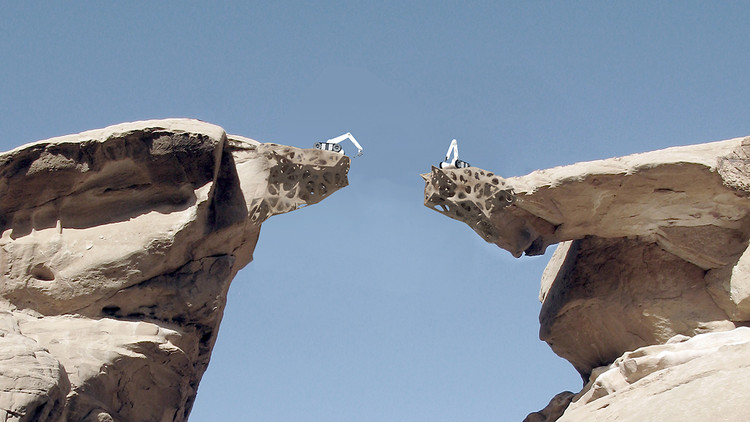
bridge_3One case in particular comes to us from Spain, where four students from the Institute for Advanced Architecture of Catalonia have created a revolutionary 3-D printing robot. It’s known as Stone Spray, a machine that can turn dirt and sand into finished objects such as chairs, walls, and even full-blown bridges.

The brainchild of Anna Kulik, Inder Prakash, Singh Shergill, and Petr Novikov, the robot takes sand or soil, adds a special binding agent, then spews out a fully formed architectural object of the designers’ choosing. As Novikov said in an interview with Co.Design:

The shape of the resulting object is created in 3-D CAD software and then transferred to the robot, defining its movements. So the designer has the full control of the shape.

robot-on-site_0So far, all the prototypes – which include miniature stools and sculptures – are just 20 inches long, about the size of a newborn. But the team is actively planning on increasing the sizes of the objects this robot can produce to architectural size. And they are currently working on their first full-scale engineering model: a bridge (pictured above).

If successful, the robot could represent a big leap forward in the field of sustainable design. Growing a structure from the earth at your feet circumvents one of the most resource-intensive aspects of architecture, which is the construction process.

And speaking of process, check out this video of the Stone Spray in action:


At the same time, however, there are plans to use biohacking to engineer tiny life forms and even bacteria that would be capable of assembling complex structures. In a field that closely resembles “swarm robotics” – where thousands of tiny drones are programmed to build thing – “swarm biologics” seeks to use thousands of little creatures for the same purpose.

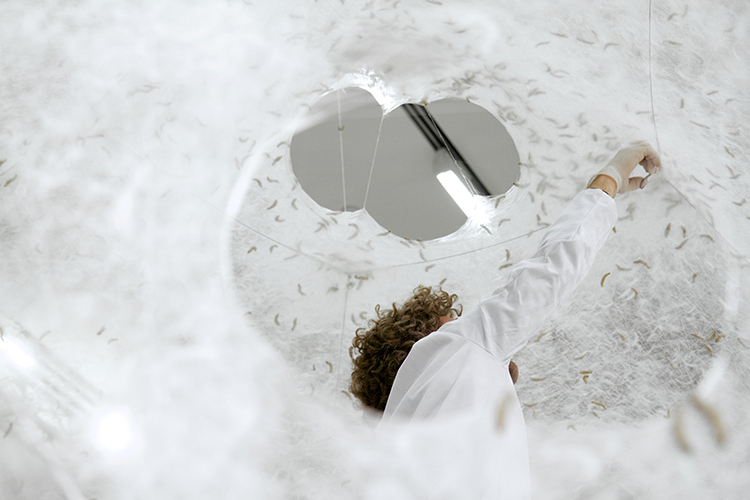
silkpavilionMIT has taken a bold step in this arena, thanks to their creation by the Mediated Matter Group that has rebooted the entire concept of “printed structures”. It’s called the Silk Pavilion, a beautiful structures whose hexagonal framework was laid by a robot, but whose walls were shell was created by a swarm of 6,500 live silkworms.

It’s what researchers call a “biological swarm approach to 3-D printing”, but could also be the most innovate example of biohacking to date. While silkworms have been used for millennia to give us silk, that process has always required a level of harvesting. MIT has discovered how to manipulate the worms to shape silk for us natively.

silkpavilion-2The most immediate implications may be in the potential for a “templated swarm” approach, which could involve a factory making clothes just by releasing silkworms across a series of worm-hacking mannequins. But the silkworms’ greater potential may be in sheer scale.

As Mediated Matter’s director Neri Oxman told Co.Design, the real bonus to their silkworm swarm its that it embodies everything an additive fabrication system currently lacks. 

It’s small in size and mobile in movement, it produces natural material of variable mechanical properties, and it spins a non-homogeneous, non-woven textile-like structure.

What’s more, the sheer scale is something that could come in very handy down the road. By bringing 3-D printing together with artificial intelligence to generate printing swarms operating in architectural scales, we could break beyond the bounds of any 3-D printing device or robot, and build structures in their actual environments.

silkpavilion-1In addition, consider the fact that the 6,500 silkworms were still viable after they built the pavilion. Eventually, the silkworms could all pupate into moths on the structure, and those moths can produce 1.5 million eggs. That’s enough to theoretically supply what the worms need to create another 250 pavilions.

So on top of everything else, this silkworm fabrication process is self-propagating, but unlike plans that would involve nanorobots, no new resources need to be consumed to make this happen. Once again, it seems that when it comes to the future of technology, the line between organic and synthetic is once more blurred!

And of course, MIT Media Lab was sure to produce a video of their silkworms creating the Silk Pavilion. Check it out:


Sources:
fastcodesign.com, (2)

Climate Crisis: Population Growth in Coming Years

trafficWhen it comes to populations and environmental problems, cities are at the very heart of the issue. Not only are they where the majority of humanity lives, a reality which will only get worse as time goes on, they are also the source of most of our pollution, waste, and land use. People require space to live and work, as well as food, water and

Last year, the world’s population increased to 7 billion, which represents a seven-fold increase in the space of the last two centuries. What’s more, the proportion of people living in urban centers (as opposed to rural) shot up from 3% to almost half of the world’s people. This rate of population growth and redistribution is unprecedented, and is not likely to slow down anytime soon.

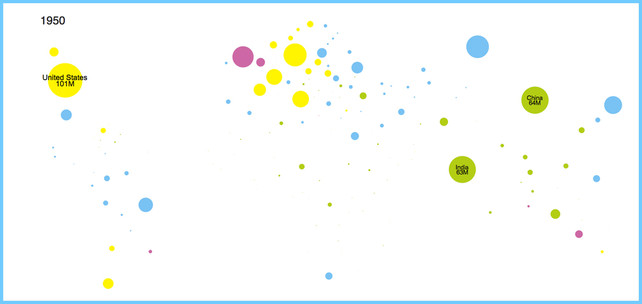
urbanworld_50Consider the following series of infographics which were released by Unicef with the help of the design studio Periscopic. Titled “An Urban World”, they illustrate the issues of population growth and distribution. This interactive, HTML5 visualization of the world covers the years of 1950-2050. But rather than showing our geographic boundaries, every country* is depicted only by their population living in urban environments.

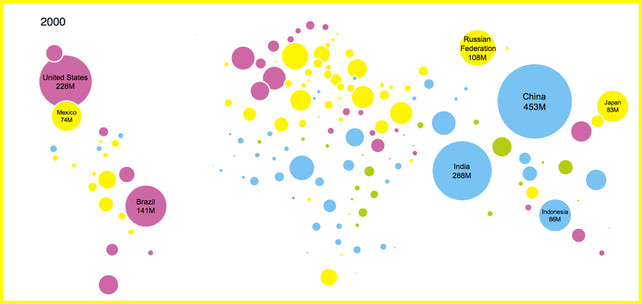
As you can see, each country is represented by a circle that depicts the number of people living in urban environments. As these populations grow, the circles get bigger. And as urban populations get more dense, the circles shift from green to blue to yellow to fuchsia. Immediately, a glaring fact is made clear: the problem is getting worse and at an alarming rate.

urbanworld_2000In addition, there are several nuggets of info which are staggering and particularly worrisome. For example, by 2050, both China and India will have about a billion people living in cities alone. In addition, since the 1990s, more than 75% of the U.S. population has lived in cities. At one time, the US was an outlier in this regard, but found ourselves joined over the next two decades by France, Spain, the U.K., Mexico, Korea, Australia, and Brazil.

But of course, this growth need not be a bad thing. When all is said and done, humanity has a choice. One the one hand, these megacities can take the form of smartly scaled communities of loosely populated expanses and efficient agriculture. On the other, they could easily take the form of urban slums and underdeveloped countrysides that are stricken by poverty and filthy.

urbanworld_2050It’s a complex issue, no doubt about it, especially when you consider the flip side to the whole equation. As the saying goes, every new life means a new mouth to feed, but also a pair of working hands. What’s more, studies have shown that people living in cities tend to be far more energy efficient, and that energy surplus is usually directed toward more and more technological growth and innovation.

Seen in this light, the massive cities of the future could be hubs for the ongoing development of new energies and creative living solutions. And with more people living in large, connected, interdependent environments, the more business startups, ideas, and contributions were likely to get. Part of the reason we have seen so much progress in solar, piezoelectric motors, and bio-electricity is because of this trend. More growth will conversely mean more clean energy.

overpopulation Quite the paradox, really. Who knew people could be both the cause and solution to the world’s worst problem! In the meantime, feel free to head on over to the Unicef site and watch this interactive infographic. Just press play, and watch the cities of the world swell at the edges, competing for room on the page as they compete for room on this planet.

Also, be sure to take a gander at this infographic from BBC Future that demonstrates the current population of the world’s major cities per square meter, the projected population per square meter by 2050, and the livability rating of the city in question. They even provide some context at the bottom by showing the size of relative spaces – from prison cells to Olympic swimming pools, and comparing that to the average space an urban dweller enjoys.

city_spaces
Sources:
bbc.com, fastcodesign.com
, unicef.org

Climate Crisis: Living, Breathing Cities of the Future

future-city2The human race has been thinking the way it lives in the past few decades, due mainly to a number of challenges posed by climate change and resource development. This is not only an environmentally and socially responsible idea, its an absolute necessity given the sheer number of people that live in urban sprawl, and the many more that will need homes, sanitation, food and energy in the near future.

And a number of interesting concepts are being proposed. Using striking technological breakthroughs across multiple fields of study, designers are moving closer to making lightweight buildings that can move, and perhaps even think and feel. Instead of hard, polished building faces, emerging prototypes from some of the world’s research centers suggest future cities that would resemble living, breathing environments.

masdar_city1To break it down succinctly, urban environments of the future will be built of “smarter” materials, will most likely be constructed using advanced techniques – possibly involving robots or bacteria – and will be powered by greener, more sustainable means. Sanitation and irrigation will also be provided and involve a fair degree of recycling, and food will be grown in-house.

And while much of this will be accomplished with good old-fashioned plumbing, air vents, and electrical circuits, a good deal more could come in the form of structures that are made to resemble and even behave like living organisms. Might sound like a distant prospect or purely theoretical, but in fact many of these ideas are already being implemented in existing and planned cities around the world.

Scale_model_Masdar_cityFor example, the planned community of Masdar City in Abu Dhabi, designer Alexander Rieck has helped create a vast central cluster of opening and closing solar powered “sunflower” umbrellas that capture the sun’s rays during the day and fold at night, releasing stored heat in a continual cycle. In addition, the concept of the Wind Stalk is being pursued to generate wind-farms which don’t rely on turbines, and look just like standing fields of grass.

Another project comes from the American designer Mitchell Joachim of Terreform ONE (Open Network Ecology), who’s plans for a vast site covering Brooklyn’s Navy Yard call for the engineering of living tissues into viable buildings. This would involve concepts like his “living tree house” which involves building a human habitat by merging the construction process with the surrounding environment.


Such a project not only presents a way of building structures in a way that is far more energy-efficient, but also fully-integrated into the ecology. In addition, they would even be able to provide a measure of food for their inhabitants and be able to clean the local air thanks to the fact that they are made from carbon-capturing trees and plants.

And there was this project by Near-Living Architecture which was recently shown at the London Building Centre Gallery. Here we see a floating canopy of aluminum meshwork fitted with dense masses of interconnected glass and polymer filters that houses a carbon-capture system that works in much the same way that limestone is deposited by living marine environments.


Within each cell of the suspended filter array, valves draw humid air through chemical chambers where chalk-like precipitate forms, an incremental process of carbon fixing. This is not only an example of how futures of the city will help remove pollution from the air, but how buildings themselves will merge biological with artificial, creating a sort of “biomimetic building”.

What it all comes down to is breaking with the conventional paradigm of architecture which emphasizes clean, linear structures that utilize idealized geometric shapes, highly processed materials, and which create sanitary artificial environments. The new paradigm calls for a much more holistic approach, where materials are more natural (built of local materials, carbon, or biomimetic compounds) forms are interwoven, and the structures function like organics.

future_city1All of this cannot come soon enough. According to a recent UN report, three-quarters of humanity will live in our swelling cities by 2050.The massive influx to our planet’s urban populations could create a whole host of problems – from overcrowding to air pollution, extra stress on natural resources and loss of habitats to grow more food. The most obvious solution to this problem is to make sure that these future cities are part of the solution, and not more of the same dirty living spaces that generate megatons of waste and pollution year after year.

Hope you’re enjoying this “Climate Crisis” segment, and that its not getting anybody down. Granted, its a heavy subject, but crises have a way of bringing the best and brightest people and ideas to the fore, which is what I hope to present here. By addressing our present and future needs with innovative concepts, we stand to avert disaster and create a better world for future generations.

Up next, I plan to take a look at some of the air-cleaning building designs that are currently being produced and considered. Stay tuned!

Sources: bbc.com, (2)

Latest in 3D Printing: Invisibility Cloaks and Mind-Controlled Printers

anti-grav3d3-D printing continues to grow by leaps and bounds, being used to generate anything from components and models to complex machines and living tissues. And as the technology improves, the applications continue to grow and coalesce with developments made in other fields of scientific research. And in the last month alone, there have been a number of announcements that have both scared and impressed.

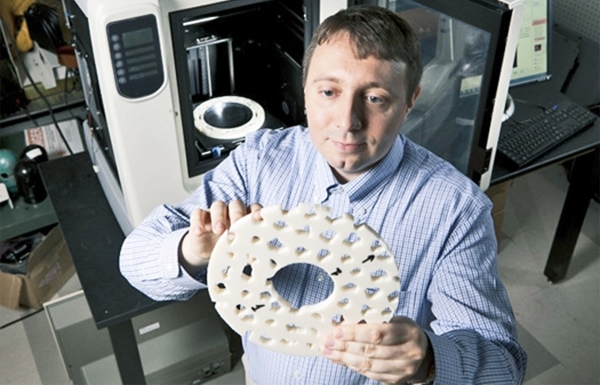
The first came from Duke University, where engineers have made yet another breakthrough. Seven years ago, they demonstrated their first “invisibility cloak” in a laboratory. Now, thanks to 3D printing, the fabrication process is a lot more accessible. And while invisibility might be a bit of a misnomer, that’s precisely what this object does as far as microwave radiation is concerned.

3dprinted_invisibilityThe object, which resembles a frisbee, has a large hole in the center, with seemingly random holes in the disc. The size, shape, and placement of these holes have actually been determined to disguise any object placed in the center hole from microwave beams, making it appear as though the object isn’t there. At present, the invention is limited in terms of practical use, but the design team believes this object has great potential.

According to Yaroslav Urzhumov, an assistant research professor in electrical and computer engineering at Duke, the technology could be used to create a polymer-based cloaking layer just 1 inch thick, wrapped around a much larger object. From this, they hope to eventually be able to create a material that will operate in higher wavelengths, including the visible light spectrum.

INVISIBILITY-CLOAKMeanwhile, the team’s creation of the disc using a 3-D printer means the technology is now much more accessible. Urzhumov went as far to say the he believes that anyone with access to a 3D printer will have the ability to create something similar at home. In time, this could mean anyone would have the ability to create a full-spectrum invisibility cloak at home too. Good news for anyone looking to hide from surveillance drones or cameras!

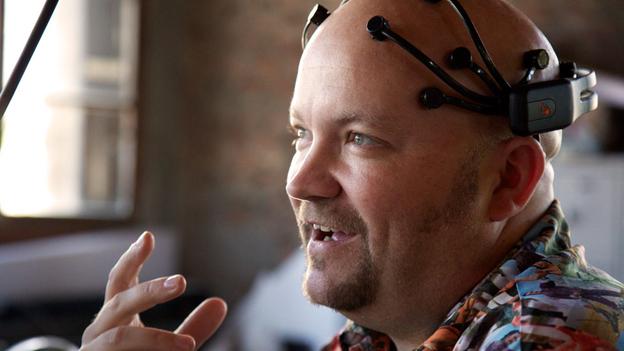
The second bit of news is even more impressive, and potentially frightening. It comes to us from Santiago Makerspace, a technology and design studio located in the heart of the Chilean capital where a designer created a 3D printed object using only their thoughts. The designer in question was George Laskowsky, Chief Technical Officer of Thinker Thing, a Chilean start-up that is developing a mind-controlled 3D printing system.

3dprinted_thought1The purpose behind Laskowsky’s work is simplification: while 3D printing has been growing and making design and fabrication easier and more accessible. However, mastering the design software is still a difficult challenge, especially for young children. That’s where Tinker Thing comes in, which seeks to develop the means to help children unleash their inner creativity.

Bryan Salt, CEO of Thinker Thing, expands on this, stating that there has not been enough work done on adapting the software for popular use. His company is looking to make it open and accessible so that it can be used to create items for one the largest markets for consumer products – children’s toys:

What is the point of these printers if my son cannot design his own toy? I realised that while there were a lot of people talking about the hardware of the printer no-one really seemed to be talking about how to actually use it.

3dprinted_toys1The software that makes this possible – Emotional Evolutionary Design (EED) – works by interpreting its users’ thoughts to make fantastical designs for toys and other objects. As part of the Monster Dreamer Project, Chilean children will get the first opportunity to try it out during tour of schools in the country at the end of this month.

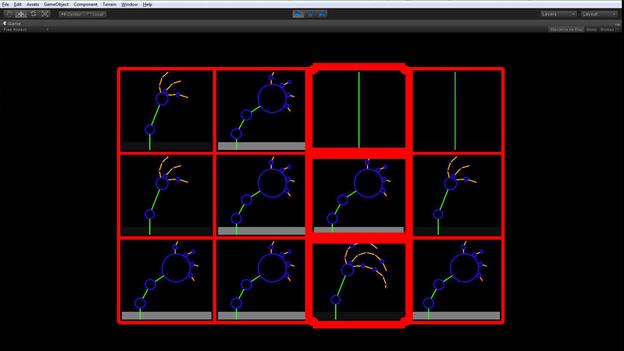
Combined with Emotiv EPOCH (an EEG headset), a computer and a 3D printer, the children running Monster Dreamer will be presented with a series of different body shapes in bubbles. These will mutate randomly, with built-in rules preventing them from becoming too abstract. As different brain states such as excitement or boredom generate specific patterns of brain activity, the computer can identify the shapes associated with positive emotional responses.

3dprinted_toysThe favored shapes will grow bigger on the screen, while the others shrink. The biggest shapes are combined to generate a body part, and the process is repeated for different body parts until the monster is complete. The final result should be a unique 3D model that is ready for printing as a solid object. In essence, a child will create a tailor-made toy based solely on their emotional reactions to what they see.

Amazing the direction things are taking, isn’t it? One of the greatest appeals of 3D printing is the way which it is making technology and industry far more accessible and open to people.What began with items that would only interest engineers and design firms is now expanding to include just about any type of consumer product we can imagine, and comes with the ability to tailor make them at home, giving the average consumer immense control over the process.

future-city3Though an individual printer may still cost more than the average person is willing to spend, in time, they will likely come down in price and become like any other computer accessory – i.e. printers, faxes, modems, wireless routers. What’s more, we are likely to see a situation where communal labs, such as those found in a university or internet cafe, come equipped with one in the next few years.

In a way, it would not be a fevered dream to imagine that this could very well be the curtain raiser for a new age, an age when the means of production is literally in the hands of every person. If we are capable of printing food and buildings as well as toys and components, we would also be looking at an age when scarcity is a thing of the past and society is truly democratic and open. And all without the need for violence and forcible redistribution…

I can’t tell you how preferable it is to think about this stuff and not the current pace and effects of Climate Change. Sometimes, the only way to have hope for the future is to keep things positive and contemplate the happier possibilities. Here’s hoping smarter heads and brighter prospects prevail!

Sources: cnet.news.com, bbc.com

News 2050: Towers, Hypersonic Jets, Digital Eyes

BrightFuture Came across these in a recent research stint. It’s from BBC Future’s “What if?” section and is segment that deals with the coming decades, entitled News 2050. In a series of mock newscasts, they address likely scenarios from the future, looking at everything from emerging technology to environmental, social and political issues.

Here’s a sampling of what they’ve covered so far:

The world’s first 10,000 meter tower:

Hypersonic flights take-off:

Digital Eye Unveiled:


Pretty cool huh? And fun and educational. I’ll be looking for more of these segments from now on…

Climate Crisis: Rising Tides and Sinking Cities

climate_changetideWith all the population, urban sprawl, and consumption that we as a species are imposing on the planet, there are those who argue that we’ve entered a new geological era – known as the Anthropocene. It’s an age we’ve lived in since the neolithic revolution and the advent of farming, one where the human race is the dominant force shaping our planet. Since the industrial revolution, this era has been accelerating and escalating, and things are not likely to get better anytime soon.

It is because of this that we need to contemplate what the near future will look like. Consider the recent floods in the Canadian Prairies, or last year’s wildfires which raged across the American midwest. Consider the famines and shortages that led to a world food price crisis in 2007-8 which had serious political consequences, especially in the Middle East (i.e. the Arab Spring).

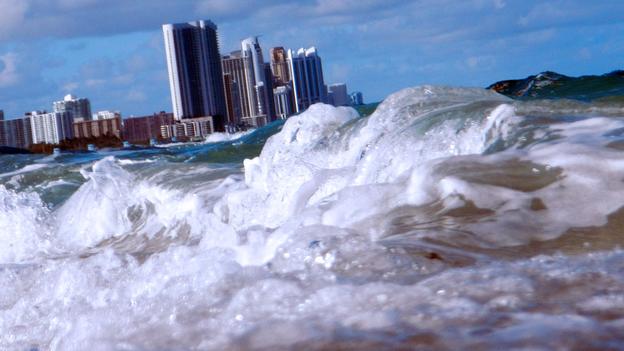
climate_changesandyWhen you add to this the fact that rising tides and the increased risk of storms are already effecting coastal communities in severe ways, you begin to understand just how turbulent the next few decades are likely to be. Already, incidents like Hurricane Katrina and Sandy, which rocked the Gulf of Mexico and the Eastern Seaboard in just the past decade, have shown just how extensive the damage can be.

Historically speaking, cities have been built in fertile river valleys and at river mouths to take advantage of fertile conditions, maritime resources and trade. Agricultural run-offs of sediment, water and nutrients created rich coastal deltas that could support greater food production. This and the good maritime and river connections for trade and transport made these ideal places to live.

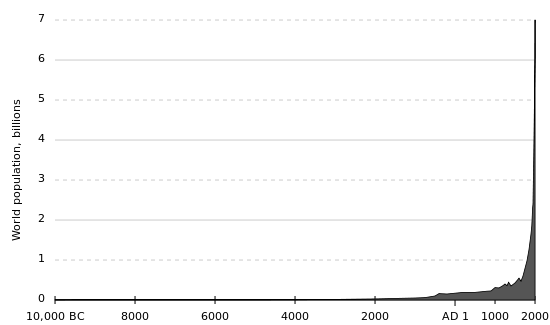
Population_curve.svgBut as populations grew, rivers were tapped and diverted for irrigation, industry and canal transport. They were also trapped behind dams and reservoirs for energy and water storage, and depleted by droughts and other extractions. Meanwhile groundwater is increasingly being extracted from beneath cities, and sea levels are rising because of the run-off from the melting of glaciers and thermal expansion of the oceans.

As a result of these changes, many major cities are slowly sinking into the oceans. Our rapid industrialization over the past century has sped these processes, so that now, many urban centers face inundation by storm surges, and we stand to lose many of the most economically important parts of our planet. The loss of these cities will mean a terrible loss of life, economic fallout, and a massive refugee crisis.

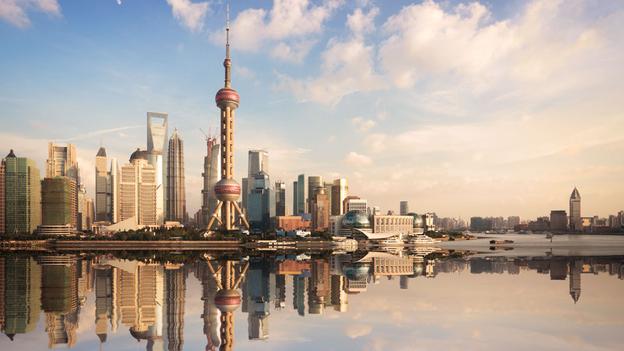
Population_densityCities from Bangkok to New York have already experienced emergency flood conditions, and many more are to follow. Those most at risk include Mumbai, Guangzhou, Shanghai, Miami, Ho Chi Minh City, Calcutta, New York City, Osaka-Kibe, Alexandria and New Orleans. More than 3 billion people currently live in coastal areas at risk of global warming impacts such as rising sea levels – a number expected to rise to 6 billion by 2025.

And as was recently learned, the carbon levels in the upper atmosphere have surpassed 400 ppm (parts per million). The last time the atmosphere boasted this concentration of greenhouse gases was the Pliocene Era, a time when sea levels were as much as 60 to 80 feet higher than they current are. If sea levels rise to that level again, we can say goodbye to all these major cities, as well as any that sit on major waterways.

climate_changeshanghaiIt’s not just a matter of water rising up to swallow the coastlines, you see. As the flooding in southern Alberta and the Canadian Prairies demonstrated this week, there’s also the threat of flooding due to increased precipitation and of sewage systems backing up from increased storms and rainfall. These threats make shoring up river deltas and waterways effectively useless, since its not simply a matter of blocking the tides and rivers.

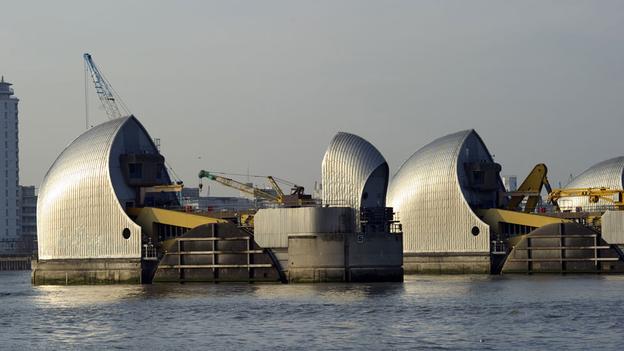
In terms of solutions, a number of major cities are investing in new sea walls, dykes and polders, or high-tide gates – like London’s Thames Barrier – to hold back high waters. In poorer places, people simply endure the problem until they are forced to abandon their homes. As the problem gets worse though, coordinated efforts to rescue people caught in flood zones will need to be mounted.

climate_changedykesAnd there are those who speculate that underwriting the damage will be a waste of time, since no government will be able to afford to compensate its citizens for the untold billions in property damage. In reality, many of these place will simply have to be abandoned as they become unlivable, and those forced out resettled to higher ground or protected communities.

At this point in any lecture on the fate of our planet, people are about ready to abandon hope and hang themselves. Hence, I should take this opportunity to point out that plans for dealing with the problem at the root – cutting our carbon footprint – are well underway. In addition to clean energy becoming more and more feasible commercially, there are also some very viable concepts for carbon capture.

These include inventions like artificial trees and ecoengineering, which will no doubt become absolutely essential in coming years. At the same time though, urban planning and architecture are beginning to embrace a number of alternative and clean technology concepts as part of their design. Not only will future buildings be designed to provide for the needs of their residents – food, water, electricity – in sustainable ways, they will also incorporate devices that can trap smog and turn it into biofuels and other useful products.

Of this, I will be saying more in the next post “Thinking, Breathing Cities of the Future”. Stay tuned!

Source: bbc.com

3D Printing to Turn Aircraft Carriers Into Mobile Factories

nimitz-class-carrier-640x424It’s no secret that NASA has turned to 3D printing as a way of opening up new frontiers of space exploration and resolving potential problems – like building moon bases or feeding astronauts. And now, it seems that the only other organization that can rival the space agency in terms of funding and scale – the US Navy- has something similar in mind.

The US Navy already boasts most of the world’s largest moveable structures – the Nimitz-class aircraft carrier taking the cake. Whats more, modern aircraft carriers are basically floating cities already, complete with conventional manufacturing facilities to provide a good portion of what the crew might need while at sea. It therefore makes perfect sense to incorporate a high-quality 3D printer into the mix.

F_35_navyWhile the ultimate goal may be the ability to print actual replacement fighters and ordinance, the current plan is to incorporate printers that can print off replacement parts and possibly even small drones. With the technology already in place, it is not difficult to imagine a carrier, or perhaps even a large land vehicle, outfitted with a high-quality 3D printer, several tons of raw materials, and a few pre-fabricated cameras and circuit boards.

What’s more, this could also make transport of basic supplies more efficient, holding powder and casing materials separately and combining them to make bullets and munitions as needed, rather than storing them in a way that takes up vast amounts of space. Researchers at Virginia Tech even told the Armed Forces Journal that they believe 3D printing could produce high-quality propellants themselves – meaning an aircraft carrier could produce its own supplies of fuel and missiles.

cyber-war-1024x843This idea drives home a number of things that are likely to become the mainstay with military technology. One is the increasing gap between the military haves and have-nots, and the increasing importance of cyber warfare in the modern world. No army or insurgent militia is likely to be able to withstand a mobile drone factory, nor is a nation that does not possess the technology be able to compete with one that does.

At the same time, simple defects, caused by cybernetic intrusion, could render such a mobile factory useless and counterproductive. In any future arms race between nations where 3D manufacturing is part of the arsenal, hacking will certainly be a factor. And last, but certainly not least, the ability to independently produce components, weapons and tools also opens up the possibility to create fully-autonomous ships and bases, complete with recycling programs that can turn waste into reusable raw material.

Cuban-Missile-CrisisSuch are the concerns of today’s military and all those who need to plan for the future. And as always, the prospects are frightening for all – not only because they make the nature of future conflicts uncertain, but because any serious advancement on one side is likely to cause others to scramble to get their hands on it as well. As any student of history knows, arms races lead to escalation and increased tension, and those rarely end well!

Source: extremetech.com

The Future is Here: The Cybernetic “Third Eye”

neil_harbissonAchromatopsia is a rare form of color blindness that effects one in thirty-five thousand people. One such individual is Neil Harbisson, who was born with the genetic mutation that rob him of the ability to see the world in anything other than black and white. But since 2004, he has been able to “hear” color, thanks to a body modification that has provided with him with a cybernetic third eye.

EyeborgThis device is known as the “eyeborg”, and given that it constitutes a cybernetic enhancement, some have taken to calling Harbisson a genuine cyborg. For others, he’s an example of a posthuman era where cybernetic enhancements will be the norm. In either case, the function of the eyeborg works was described in the following way in an article by Nautilus entitled “Encounters with the Posthuman”:

It transposes color into a continuous electronic beep, exploiting the fact that both light and sound are made up of waves of various frequencies. Red, at the bottom of the visual spectrum and with the lowest frequency, sounds the lowest, and violet, at the top, sounds highest. A chip at the back of Harbisson’s head performs the necessary computations, and a pressure-pad allows color-related sound to be conducted to Harbisson’s inner ear through the vibration of his skull, leaving his outer ears free for normal noise. Harbisson, who has perfect pitch, has learned to link these notes back to the colors that produced them.

Harbisson’s brain doesn’t convert those sounds back into visual information, so he still doesn’t know exactly what the color blue looks like. But he knows what it sounds like. As he explained to an audience at a TED Talks segment, he used to dress based on appearances. Now, he dresses in a way that sounds good. For example, the pink blazer, blue shirt and yellow pants he was wearing for the talk formed a C Major chord.

neil_harbisson1This may sound like an abstract replacement for actual color perception, but in many ways, the eyeborg surpasses human chromatic perception. For example, the device is capable of distinguishing 360 different hues, he can hear ultraviolet and infrared. So basically, you don’t need a UV index when you have the cybernetic third eye. All you need to do is take a look outside and instantly know if you need sunblock or not.

These and other extension of human abilities are what led Harbisson to found the Cyborg Foundation, a society that is working to create cybernetic devices that compensate for and augment human senses. These include the “fingerborg” that replaces a finger with a camera, a “speedborg” that conveys how fast an object is moving with earlobe vibrations and–according to a promotional film–a “cybernetic nose” that allows people to perceive smells through electromagnetic signals.

steve-mann1In addition to helping people become cyborgs, the foundation claims to fight for cyborg rights. While this might sounds like something out of science fiction, the recent backlash against wearers of Google glasses and the assault on Steve Mann are indications that such a society is increasingly necessary. In addition, Harbisson wants to find ways to fix devices like his eyeborg permanently to his skull, and recharge it with his blood.

For more information on the eyeborg and Project Cyborg, check out Harbisson’s website here. Neil Harbisson’s Project Cyborg promotional video is also available on Vimeo. And be sure to watch the video of Neil Harbisson at the TED Talks lecture:


Sources:
fastcoexist.com, nautil.us, eyeborgproject.com

NASA’s Vision: Robots to Help Mine Asteroids

asteroid_mining_robotIn a recent study, NASA shared a vision that sounds like something out of a science fiction novel. Basically, the plan calls for the creation of robots that could be sent to a nearby asteroid, assemble itself, and then begin mining the asteroid itself. The scientists behind this study say that not only will this be possible within a few generations of robotics, but will also pay for itself – a major concern when it comes to space travel.

A couple of factors are pointing to this, according to the researchers. One, private industry is willing and able to get involved, as attested to by Golden Spike, SpaceX and Planetary Resources. Second, advances in technologies such as 3-D printing are making off-world work more feasible, which can be seen with plans to manufacture a Moon base and “sintering”.

asteroidsBut also, humanity’s surveys of space resources – namely those located in the asteroid belt – have revealed that the elements needed to make rubber, plastic and alloys needed for machinery are there in abundance. NASA proposes that a robotic flotilla could mine these nearby space rocks, process the goods, and then ship them back to Earth.

Best of all, the pods being sent out would save on weight (and hence costs) by procuring all the resources and constructing the robots there. They caution the technology won’t be ready tomorrow, and more surveys will need to be done of nearby asteroids to figure out where to go next. There is, however, enough progress to see building blocks. As the agency stated in their research report:

Advances in robotics and additive manufacturing have become game-changing for the prospects of space industry. It has become feasible to bootstrap a self-sustaining, self-expanding industry at reasonably low cost…

asteroid_belt1Phil Metzger, a senior research physicist at NASA’s Kennedy Space Center, who led the study, went on to explain how the process is multi-tiered and would encompass several generations of progress:

Robots and machines would just make the metal and propellants for starters… The first generation of robots makes the second generation of hardware, except the comparatively lightweight electronics and motors that have to be sent up from Earth. It doesn’t matter how much the large structures weigh because you didn’t have to launch it.

A computer model in the study showed that in six generations of robotics, these machines will be able to construct themselves and operate without any need of materials from Earth.

asteroid_foundryAt least two startups are likely to be on board with this optimistic appraisal. For example, Deep Space Industries and Planetary, both commercial space companies, have proposed asteroid mining ideas within the past year. And since then, Planetary Resources has also unveiled other projects such as a public space telescope, in part for surveying work and the sake of prospecting asteroids.

And this latest research report just takes thing a step farther. In addition to setting up autonomous 3D manufacturing operations on asteroids, these operations would be capable of setting themselves up and potentially upgrading themselves as time went on. And in the meantime, we could look forward to a growing and increasingly complex supply of manufactured products here on Earth.

Source: universetoday.com