Climate Crisis: Illustrative Video of Impending Disaster

IPCC2012_vid3Recently, the United Nation’s Intergovernmental Panel on Climate Change released its 2012 report, which contained some rather stark observations and conclusions. In addition to reconfirming what the 2007 report said about the anthropogenic effects of CO2 emissions, the report also tackled speculation about the role of Solar Forcing and Cosmic Rays in Global Warming, as well as why warming has been proceeding slower than previously expected.

In the end, the report concluded that certain natural factors, such as the influence of the Sun and Cosmic Rays in “seeding clouds”, were diminishing, and thus have a negative effect on the overall warming situation. In spite of that, global temperatures continue to increase, due to the fact that humanity’s output of greenhouse gases (particularly CO2) has not slowed down one bit in recent years.

IPCC2012_vidThe report also goes on to explain detailed scenarios of what we can expect in the coming decades, in extreme and extensive detail. However, for those who have neither the time, patience, or technical knowledge that wade through the report, a helpful video has been provided. Courtesy of Globaia,this four minute video sums up the facts about Climate Change and how it is likely to impact Earth’s many inhabitants, human and otherwise.

Needless to say, the facts are grim. By 2050, if humans remain on their current path, global temperatures will rise more than two degrees Celsius above what it’s been for most of human history. By 2100, it might even climb four degrees. The IPCC report, and this video, confirm what we’ve been hearing everywhere. Arctic sea ice is disappearing, sea levels are rising, storms are getting more destructive, and the full extent of change is not even fully known.
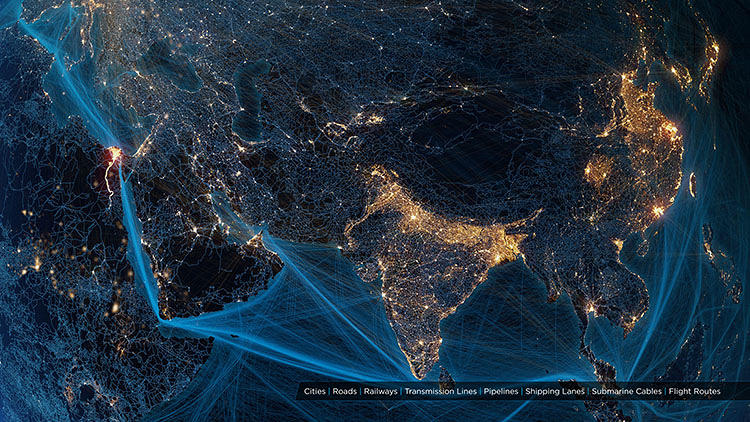
IPCC2012_vid6As the organization that put together this data visualization along with other scientists, Globaia says that it created this video as a call to action for policymakers. Felix Pharand-Deschenes, who founded the Canadian nonprofit company and animated the video, claims that:

If we are convinced of the seriousness of the situation, then political actions and technological fixes will result,” says  “But we have to change our minds first. This is the reason why we try to translate our terrestrial presence and impacts into images–along with the physical limits of our collective actions.

But of course, there’s still hope. As Pharand-Deschenes went on to say, if we can summon up a “war effort,” and work together the way World War II-era citizens did, we could still manage to the social systems that are largely responsible for the problem. This includes everything from transportation and energy to how we grow our food, enough to stay below a two degree rise.
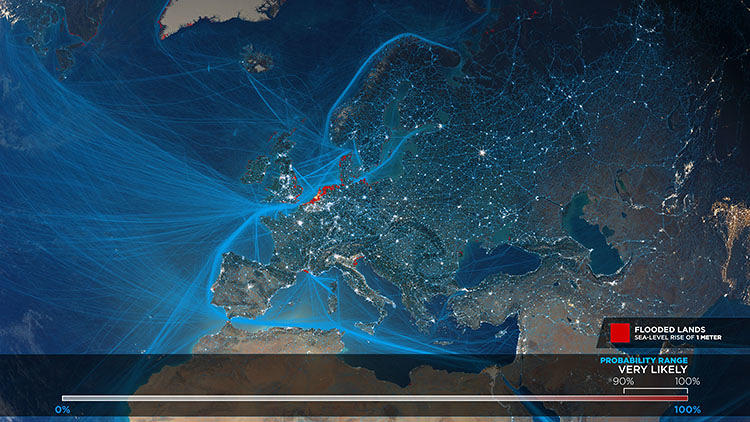
IPCC2012_vid5Of course, this is no small task. But as I love to remind all my readers, research and efforts are happening every day that is making this a reality. Not only is solar, wind and tidal power moving along by leaps and bounds, becoming profitable as well as affordable, we are making great strides in terms of Carbon Capture technology, alternative fuels, and eco-friendly living that are expected to play a huge role in the coming decades.

And though it is often not considered, the progress being made in space flight and exploration also play a role in saving the planet. By looking to make the process of sending ships and satellites into space cheaper, concepts like Space-Based Solar Power (SBSP) can become a reality, one which will meet humanity’s immense power demands in a way that is never marred by weather or locality.

IPCC2012_vid4Combined with sintering and 3-D printing, asteroid prospecting and mining could become a reality too in a few decades time. Currently, it is estimated that just a few of the larger rocks beyond the orbit of Mars would be enough to meet Earth’s mineral needs indefinitely. By shifting our manufacturing and mining efforts offworld with the help of automated robot spacecraft and factories, we would be generating far less in the way of a carbon footprint here on Earth.

But of course, the question of “will it be enough” is a burning one. Some scientists say that an increase of even two degrees Celsius is more than Earth’s creatures can actually handle. But most agree that we need to act immediately to prepare for the future, and that one of the things standing in the way of action is the fact that the problem seems so abstract. Luckily, informational videos like this one present the problem is clear and concise terms.
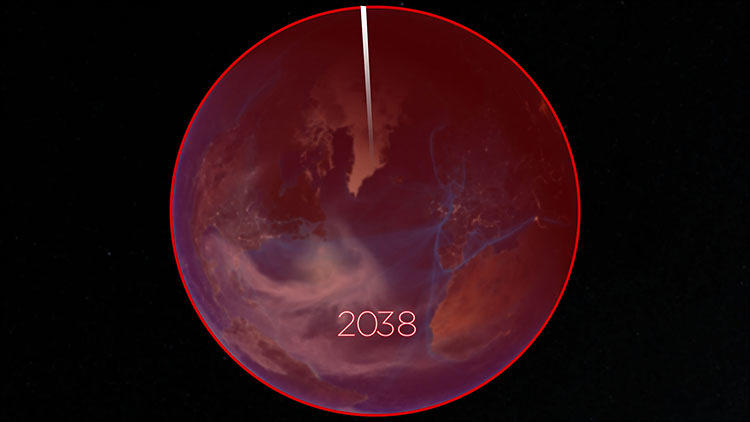
ipcc2012_vid1The IPCC reports that we only have 125 billion tons of CO2 left to burn before reaching the tipping point, and at current rates, that could happen in just over two decades. Will we have a fully renewable-powered, zero-carbon world by then? Who knows? The point is, if we can get such a task underway by then, things may get worse before they get better, but they will improve in the end. Compared to the prospect of extinction, that seems like a bargain!

In the meantime, check out the video – courtesy of Globaia and the International Geosphere-Biosphere Programme (IGBP) – and try to enjoy it despite its gloomy predictions. I assure you, it is well worth it!


Source:
fastcoexist.com


The Future is Here: The DARPA/BD Wildcat!

BD_atlasrobotThe robotics company of Boston Dynamics has been doing some pretty impressive things with robots lately. Just last year, they unveiled the Cheetah, the robotics company set a new land speed record with their four-footed robot named Cheetah. As part of DARPA’s Maximum Mobility and Manipulation program, the robotic feline demonstrated the ability to run at a speed of 45.06 km/h (28 mph).

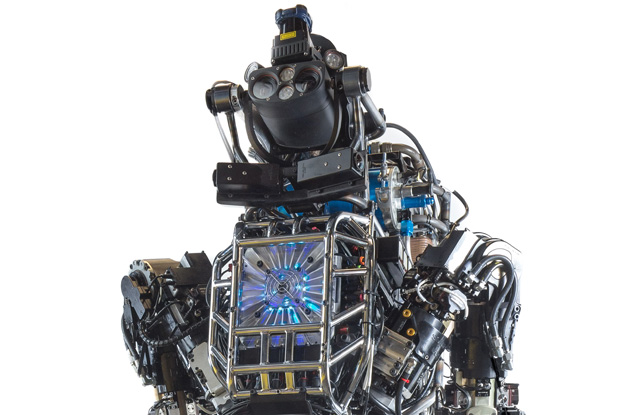
And in July of this year, they impressed and frightened the world again with the unveiling of their ATLAS robot – a anthropomorphic machine. This robot took part in the DARPA Robotics Challenge program. capable of walking across multiple terrains, and demonstrated its ability to walk across multiple types of terrain, use tools, and survey its environment with a series of head-mounted sensors.

Atlas_robotAnd now, they’ve unveiled an entirely new breed of robot, one that is capable of running fast on any kind of terrain. It’s known as the WildCat, a four-legged machine that builds on the world of the Legged Squad Support System (LS3) that seeks to create a robot that can support military units in the field, carrying their heavy equipment and supplies over rugged terrain and be operated by remote.

So far, not much is known about the robot’s full capabilities and or when it is expected to be delivered. However, in a video that was released in early October, Boston Dynamics showed the most recent field test of the robot to give people a taste of what it looks like in action. In the video, the robot demonstrated a top speed of about 25 km/h (16 mph) on flat terrain using both bounding and galloping gaits.

Cheetah-robotFollowing in the footsteps of its four-legged and two-legged progeny, the WildCat represents a coming era of biomimetic machinery that seeks to accomplish impressive physical feats by imitating biology. Whereas the Atlas is designed to be capable of doing anything the human form can – traversing difficult terrain, surveying and inspecting, and using complex tools – the Cheetah, LS3, and WildCat draw their inspiration from nature’s best hunters and speed runners.

Just think of it: a race of machines that can climb rocky outcroppings with the sure-footedness of a mountain goat, run as fast as a cheetah, stalk like a lion, bound like an antelope, and swing like a monkey. When it comes right down to it, the human form is inferior in most, if not all, of these respects to our mammalian brethren. Far better that we imitate them instead of ourselves when seeking to create the perfect helpers.

LS3-AlphaDog6reducedIn the end, it demonstrates that anthropomorphism isn’t the only source of drive when it comes to developing scary and potential doomsday-bating robots! And in the meantime, be sure to enjoy these videos of these various impressive, scary, and very cool robots in action:

WildCat:


Cheetah:


Atlas:


Source:
universetoday.com, bostondynamics.com

News From Space: China’s Jade Rabbit Moon Rover

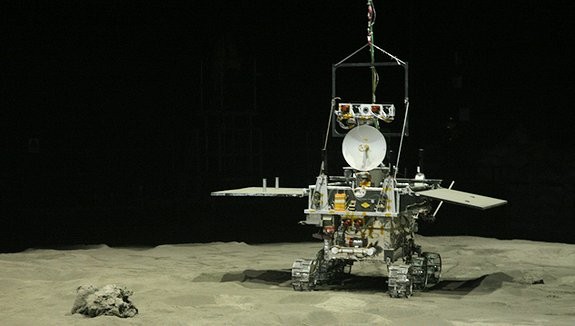
change'e3Earlier this week, China took another step towards becoming a major power in space with the launch of the Chang’e-3 lunar probe. On board this vehicle is the Yu Tu (Jade Rabbit) lunar rover, a vehicle that is designed to deploy from the vehicle once it reaches lunar orbit and explore the surface independently. If all continues to go to plan, the Chang’e-3 will reach the Moon by December 14th, and its arrival will certainly be historic.

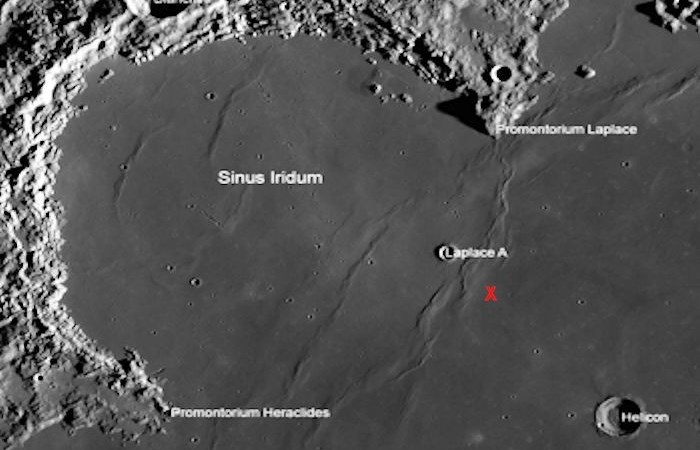
For starters, the probe’s landing in Sinus Iridum, a basaltic lava plane in the Moon’s northern hemisphere, will be the first spacecraft to make a soft landing on the Moon in 37 years. In addition, it will the be the first time China has landed a spacecraft and a rover on the Moon. This is the latest in the Chang’e program, a series of robotic and human missions that ultimately seeks to put Chinese cosmonauts on the Moon.

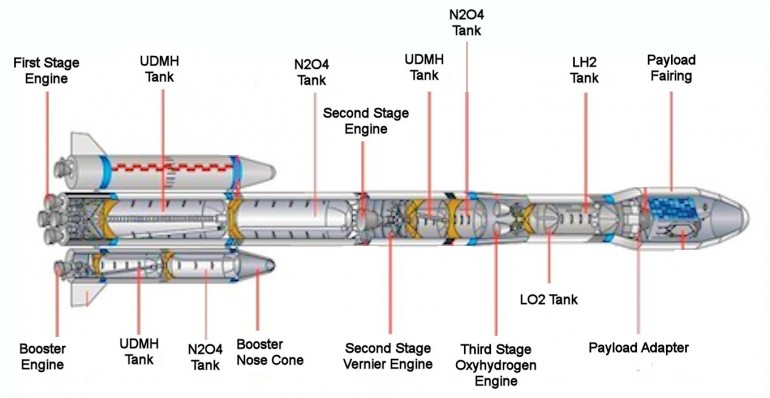
change'e3_2The Chang’e-3 mission incorporates two major components – the Lander and the Jade Rabbit rover, which is named after the companion of the Moon goddess Chang’e in Chinese mythology. The three-stage Chang Zheng 3B (Long March 3B) launch vehicle that is being used to send the Chang’e-3 probe to the Moon is roughly a functional equivalent of SpaceX’s Falcon 9 rocket, the heaviest rocket in their fleet.

After launching on Monday from the Xichang Satellite Launch Centre, the rocket was placed into an Earth-Moon transfer orbit and conducted its first separation. Shortly thereafter, its second stage engines were engaged to effect course corrections and bring the lander and rover into lunar orbit. Then came two crucial burns from the third stage engines, which put the Chang’e-3 probe into a parking and then highly elliptical translunar orbit.

change'e3_3Throughout all this, the probe slept, and will continue to do so until it burns its own engines to enter lunar orbit tomorrow.Then will come the tricky bit, landing safely without any input from controllers on Earth. This requires a combination of inertial guidance, extremely precise range and velocity measurements, image recognition, and a pretty fast computer – not to mention a certain amount of luck.

Once landed, the six-wheeled rover will begin exploring the surface and collecting soil samples for analysis. As with other rovers, energy will be provided by a series of solar panels and information obtained during its mission will be sent back to Earth for further analysis. In addition, real-time video and pictures will be captured by the rover’s arsenal of cameras, all of which will be sent back to Earth and shared via Chinese media outlets.

change'e3_1In addition to being a first for China’s space program, the Jade Rabbit also has the added distinction of being outfitted with what is arguably the most sophisticated scientific equipment of any previous rover. Most notable is a powerful ground-penetrating radar capable of penetrating up to 30 meters (100 ft) of lunar soil or about 100 m (330 ft) of lunar crustal material, and analyzing the underlying structure.

The rover is also equipped with an Alpha Particle X-ray Spectrometer (APXS) that uses particle-induced X-ray emission and X-ray fluorescence to determine the abundance of elements within rock and soil samples. The instrument can also find hidden materials, such as water of crystallization, which is otherwise difficult to detect remotely. Finding water on the Moon is an ongoing objective for space agencies, and crucial to plans for future settlement.

change'e3_4Then there is the Lunar Ultraviolet Telescope (LUT), which is designed to act as the first long-term astronomical observatory to ever be placed on the Moon’s surface. The vacuum environment and slow rotation of the lunar environment make an ideal location for near-UV observations that cannot be carried out from beneath the Earth’s obscuring atmosphere.

Another optical instrument is the Extreme Ultraviolet Camera intended to monitor the Earth’s plasmasphere, which is a magnetically active region within the magnetosphere but above the ionosphere. It works by viewing light with a wavelength of 30.5 nm which is scattered from helium ions in the plasmasphere. The lander is also hosting several other cameras and a lunar soil probe.

china-lunar-lander-rover-launch-jade-rabbit-13As already stated, the landing site for Chang’e-3 is in the general area of Sinus Iridum, a northwestern extension to the Mare Imbrium basaltic plane which is surrounded from the northeast to the southwest by the Montes Jura mountain range. A precise location has not yet been announced by Chinese authorities, but it has been widely speculated that it will take place within the vicinity of crater Laplace A – a crater that is about 9 km in diameter.

This is certainly an exciting time, as we are likely to learn plenty of new things about the Moon in the next few weeks! And in the meantime, be sure to check out this animation of the Change’e-3 entire mission- from launch to touchdown and deployment on the Moon, courtesy of RyukyuSARs:


Sources: gizmag.com, nasaspaceflight.com

The Future of Money

future_money4The good people over at Envisioning Technology – the independent research organization based on Brazil – have produced yet another intriguing infographic. As some of you may recall, whenever ET has released a new inforgraphic, I’ve been right there to post about it. So far, they have produced graphics addressing the future of Technology, Education, Health, and Finance.

There latest graphic is similarly significant and addresses the future of something that concerns and effects us all: money. Entitled “The Past, Present and Future of Money”, this graph looks at the trends affecting the buying, selling and investment patterns of people over time, contrasting three trends that are interwoven and have moved between centralized, decentralized, and distributed monetary systems.

future_money1In this scenario, centralized tendencies refer to networks where the nodes are connected through dense centers (aka. urban environments), which rely on hierarchically structures institutions (i.e. banks) and require legal tender (physical money). This sort of system relies on an ordered distribution of power, one that generally favor the connected few, and which emerged with the advent of modern industrial civilization.

Decentralized tendencies are those which are based on networks where nodes connect in clusters, that have irregular distributions of power, and favor the selected individual. As the graph shows, these types of networks predate centralized networks, taking the form of bartering and commodities in earliest times, but which have emerged yet again in the modern era and are predicted to continue to grow.

PrintExamples of current and future trends here include crowdsourcing, crowdfunding, banking APIs (Application Programming Interfaces), microfinance, and collaborative consumptions – where access is developed so that consumers can lend, swap, barter, share, and gift products. Whereas this model predates centralized tendencies, it is once again emerging with decentralizing potential of digital technology and open-source databases.

In the third and final method, one which is emerging, is the distributed network of money. These are networks where nodes connect independently, where power is distributed horizontally, and which favor the entire network. This trend began as a result of global real-time communications (i.e. the internet, satellite communications, etc.), and which are expected to expand.

future_money2Combining the concepts of attention economies, digital currencies, peer-to-peer communications, and digital wallets, the essence of this final stage is a network economy that is controlled by individuals, not financial institutions or corporations. In addition, currencies are based shared belief in their value, transactions occur between individuals, and physical currencies are replaced by digital ones.

Other trends that are incorporated and cross-referenced into this infographic include global population versus the number of people per capita who have online access. As it stands, less than half the world’s 7 billion people currently have access to the internet, and are hence able to take part in the decentralizing and distributed trends affecting money. However, the infographic predicts that by 2063, nearly 90% of the world’s 10 billion people will be online.

future_money_bitcoinLike many predictions that I’ve come to know and respect, this latest infographic from ET gives us a glimpse of a future where a Distributed model of politics, economics and technological development – otherwise known as Democratic Anarchy – will be the norm. It’s an exciting possibility, and places history in a new and interesting light. In short, it makes one reconsider the possibility that true socialism might exist.

While this was crudely predicted by Karl Marx, the basic concept is quite intriguing when considered in the context of current trends. What’s more, subsequent thinkers – Max Weber, Proudhon, Gramsci and George Orwell – refined and expressed the principle more eloquently. Nowhere was this more apparent than in the Goldstein Manifesto in 1984, where Orwell addressed how the process of industrial civilization was making class distinction virtually unnecessary.

the_future_of_money_timelineSource: envisioning.io/money/

The Future is Here: 4-D Printing

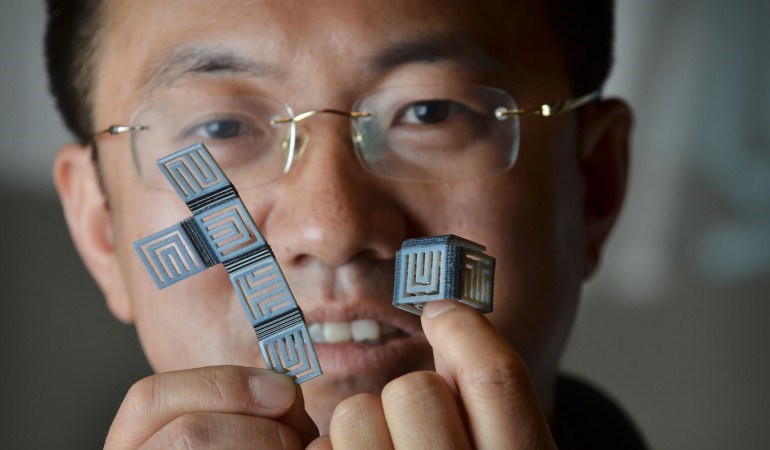
4dprintingmaterial3-D printing has already triggered a revolution in manufacturing by allowing people to determine the length, width and depth of an object that they want to create. But thanks to research being conducted at the University of Colorado, Boulder, a fourth dimension can now be included – time. Might sounds like science fiction, until you realize that the new manufacturing process will make it possible to print objects that change their shape at a given time.

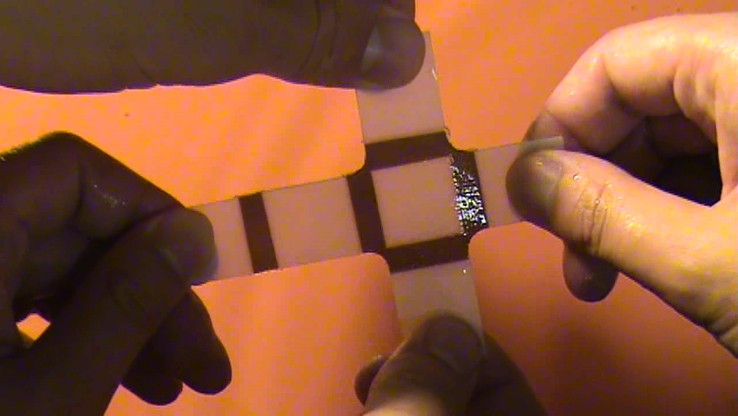
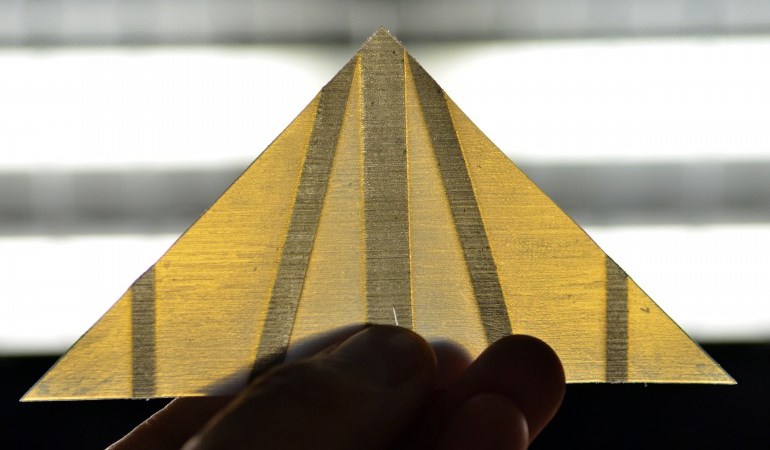
Led by Prof. H. Jerry Qi, the scientific team have developed a “4D printing” process in which shape-memory polymer fibers are deposited in key areas of a composite material item as it’s being printed. By carefully controlling factors such as the location and orientation of the fibers, those areas of the item will fold, stretch, curl or twist in a predictable fashion when exposed to a stimulus such as water, heat or mechanical pressure.

4dprintingmaterial1The concept was proposed earlier this year by MIT’s Skylar Tibbits, who used his own 4D printing process to create a variety of small self-assembling objects. Martin L. Dunn of the Singapore University of Technology and Design, who collaborated with Qi on the latest research, explained the process:

We advanced this concept by creating composite materials that can morph into several different, complicated shapes based on a different physical mechanism.

This means that one 4D-printed object could change shape in different ways, depending on the type of stimulus to which it was exposed. That functionality could make it possible to print a photovoltaic panel in a flat shape, expose it to water to cause it to fold up for shipping, and then expose it to heat to make it fold out to yet another shape that’s optimal for catching sunlight.

4dprintingmaterial2This principle may sound familiar, as it is the basis of such sci-fi concepts as polymorphic alloys or objects. It’s also the idea behind the Milli-Motein, the shape-shifting machine invented by MITs Media Labs late last year. But ultimately, it all comes back to organic biology, using structural biochemistry and the protein cell as a blueprint to create machinery made of “smart” materials.

The building block of all life, proteins can assume an untold number of shapes to fulfill an organism’s various functions, and are the universal workforce to all of life. By combining that concept with the world of robotics and manufactured products, we could be embarking upon an era of matter and products that can assume different shapes as needed and on command.

papertab-touchAnd if these materials can be scaled to the microscopic level, and equipped with tiny computers, the range of functions they will be able to do will truly stagger the mind. Imagine furniture made from materials that can automatically respond to changes in pressure and weight distribution. Or paper that is capable of absorbing your pencil scratches and then storing it in its memory, or calling up image displays like a laptop computer?

And let’s not forget how intrinsic this is to the field of nanotechnology. Smarter, more independent materials that can change shape and respond to changes in their environment, mainly so they can handle different tasks, is all part of the Fabrication Revolution that is expected to explode this century. Here’s hoping I’m alive to see it all. Sheldon Cooper isn’t the only one waiting on the Technological Singularity!

Source: gizmag.com

The Future is Here: The Space-Age Wheelchair

sugie_wheelchairFor people suffering from full or partial paralysis, interacting with the physical world can be constant source of frustration. Not only is said world designed by and for people who do not suffer from the same physical limitations, the devices used to restore mobility are so often limited themselves. Luckily, the technology is improving, thanks to input from people who have mobility issues themselves.

That’s what Satoshi Sugie, a former Japanese car designer, decided to do when he became interested in the mobility industry. After meeting a frustrated wheelchair user in Japan in 2010, he became inspired to come up with something that would address the wheelchair’s limitations and the stigma people who used them continue to suffer with.

sugie_wheelchair_oldAs Sugie describes the encounter:

He said he gave up going even two blocks away. One reason was he didn’t want to be seen. There is a negative stigma attached to the wheelchair. The second one is the functional limitation. If there is a bump, he has to avoid it. He was really scared to go outside.

Sugie was working for Nissan at the time, designing futuristic models for motor shows, but this encounter inspired him to try his hand at futuristic wheelchair design as well. His first prototype – known as the WHILL – was released in 2011. This was a sort of turbo-charger for existing wheelchairs, and was described as a pair of enormous “headphones” given its appearance.

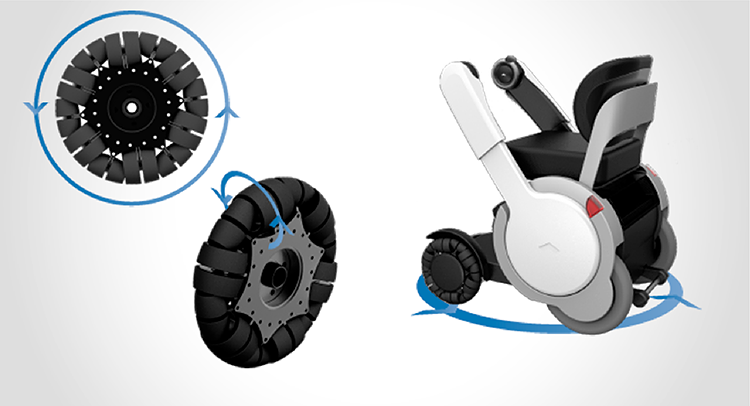
sugie_wheelchair1The latest version, known as the Whill Type-A, is a standalone chair aimed not just at wheelchair users, but power chair and mobility scooters riders as well. The new model is different from normal wheelchairs in several key ways. First of all, people can naturally lean forward in this chair, as they would riding a bike. This eliminates slouching and therefore makes for a more comfortable ride.

Second, the front wheel is composed of 24 separate tires, giving the vehicle very tight turning ability. And three, it looks “modern and sleek,” like something you would expect from a Japanese car designer. Riders control the Whill with a right-hand joystick while the left-hand has a simple fast- and slow-mode switch. It can also handle obstacles up to three inches high with easy, and seat rolls forwards and backwards, making getting in and out easy.


sugie_wheelchair2Sugie, who recently relocated to Menlo Park, California, is still working out pricing, but he hopes it won’t be too expensive. The wheelchair will be officially unveiled this February, and is likely to be cost a premium penny. Still, the advantages it offers are sure to go over well with wheelchair users and become something of the norm for the next-generation of such vehicles.

In addition to ease of use and the mobility it provides, it also lend users a certain high-tech chic, which may go a long way towards combatting the sense of social stigma many users feel.

Sources: fastcoexist.com, gizmag.com


Climate Crisis: The Ongoing Case of Big Subsidies

Pollution over Mexico CityOne of the most recurring talking points in the Climate Change debate is the issue of renewable energy. Particularly, those who take issue with proposed changes for dealing with the problem continue to cite how solar, wind and tidal power are not viable replacements at this juncture. While this talking point is a convenient way of dismissing needing reforms, it neglects two self-evident realities.

For one, it ignores the immense amount of progress being made in the fields of renewable energy. Whereas inefficiency and high costs remained as stumbling blocks in previous decades, an exponential drop in costs and a rise in efficiency has made solar increasingly attractive for power companies in recent years. Wind and tidal are in similar situations, with countries like Scotland and the United Arab Emirates leading the way in making them profitable.

airpollutionSecond, it ignores the fact that developed nations continue to stymie growth in renewables by the continued way in which they commit billions to subsidizing oil and coal. According to a new report from the Overseas Development Institute, public subsidies for fossil fuels totaled $523 billion in 2011. That’s six times the level of support for the renewable energy industry, despite those technologies being less mature than oil and coal.

Among richer countries, the top 11 heaviest carbon emitters spent $74 billion in subsidies in 2011, with Russia, the United States, Australia, Germany, and the United Kingdom leading the way. In the U.S., these included a $1 billion fuel tax exemption for farmers, $1 billion for the Strategic Petroleum Reserve, and $500 million for fossil fuel R&D.

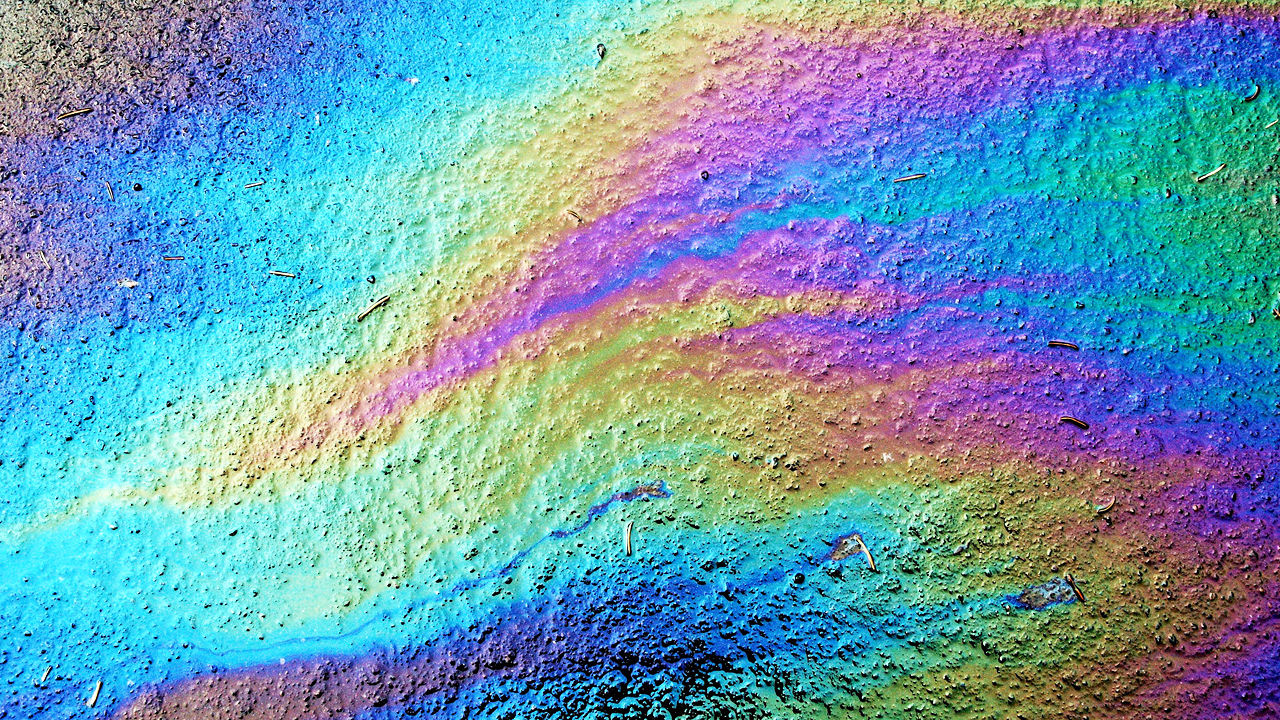
oil_slickIn so doing, these governments are:

…shooting themselves in both feet [by subsidizing] the very activities that are pushing the world towards dangerous climate change… [and] creating barriers to investment in low-carbon development.

According to the British think-tank, this works out a spending of $112 per adult in these nations. But of course, the richest nations are not the only offenders, which nations like Pakistan, Egypt, and Indonesia spending more than twice as much on fossil fuel subsidies as on health. The ODI says the poorest 20% of households typically receive just 7% of overall handouts.

pollution_powerplantBut the ODI may be underestimating the true size of the subsidies in the U.S., depending on how you look at it. Earlier this year, the International Monetary Fund calculated subsidies at $502 billion, a figure which includes the true cost of carbon emissions calculated at a price of $25 a ton. By that measure, global subsidies equal $1.9 trillion.

The report also advises that governments should cut handouts to oil and coal as soon as they can and begin looking after the genuinely poor:

Phasing out fossil fuel subsidies would create a win-win scenario. It would eliminate the perverse incentives that drive up carbon emissions, create price signals for investment in a low-carbon transition and reduce pressure on public finances.

solar_cell1A timely and sound recommendation, and one which cuts to the heart of the matter. In order to address the problem of Climate Change, we must not only adopt better methods for meeting our needs, we must acknowledge the truth of the issue. At the same time, we must acknowledge how ending these subsidies, or redistributing them, would alter the current balance of power on the whole issue of energy.

It’s one thing to claim that alternative methods are unviable when the playing field is level, but since it is not, the argument is essentially hypocrisy. By continuing to finance fossil fuels and coal, we are ensuring that clean energy will remain underdeveloped as an alternative, and hence undermining any chance it has at becoming a true alternative.

So the next time someone tells you that solar or other means of renewable energy are at least 50 years away, or that gas and coal are the only economical means of meeting our energy needs, be sure to ask them why we need to spend half a trillion dollars on them annually.

Sources: fastcoexist.com, odi.org.uk

Cyberwars: Stuxnet and Cryptolocker

cyber_security1It’s been quite the year for cybercops, cybercriminals, and all those of us who are caught in between. Between viruses which continue to involve and viruses that target sensitive information in new ways, it seems clear that the information age is fraught with peril. In addition to cyberwars raging between nations, there is also the danger of guerrilla warfare and the digital weapons running amok.

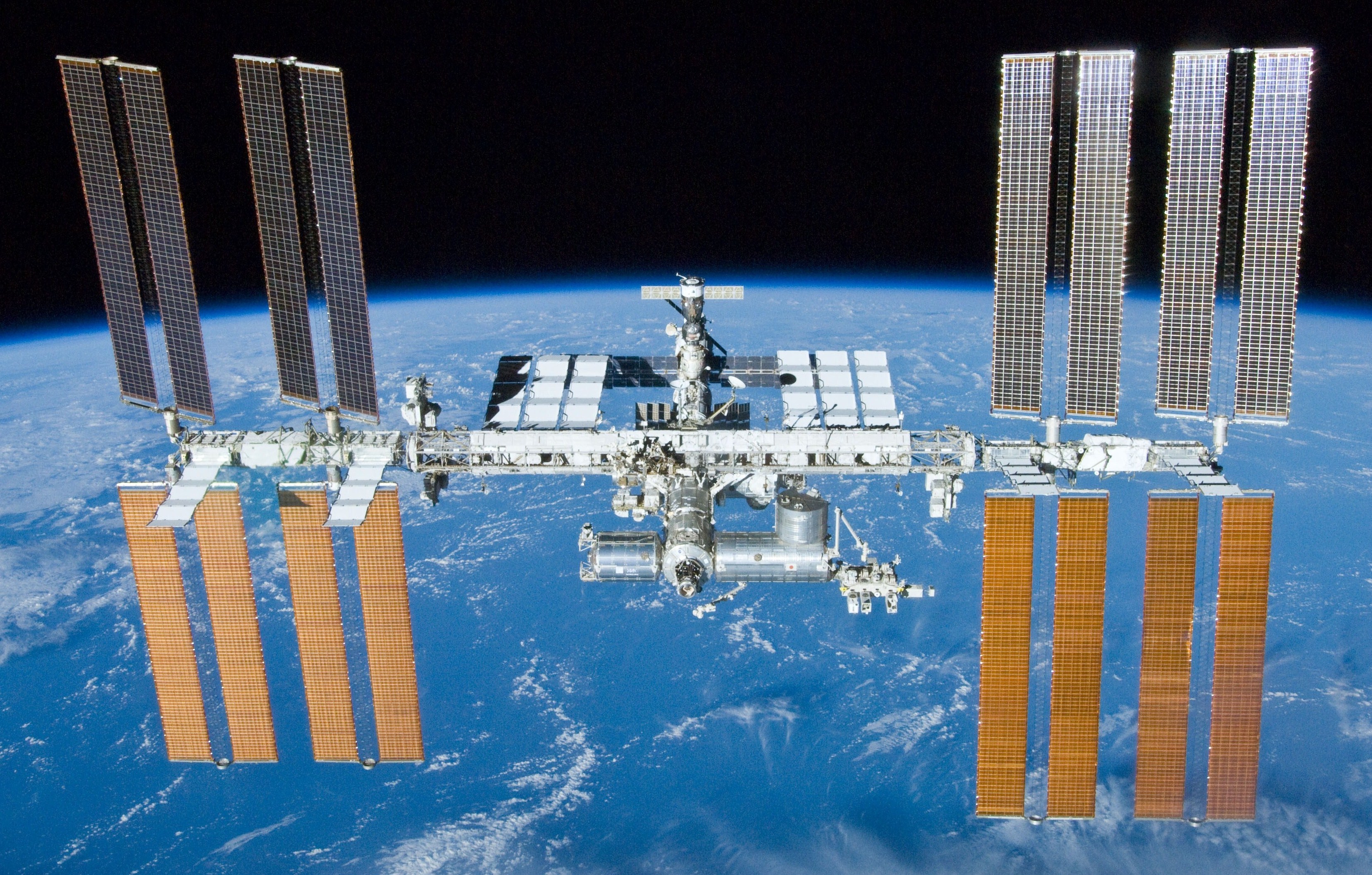
Consider the Stuxnet virus, a piece of programming that made headlines last year by sabotaging the Iranian nuclear enrichment program. At the time, the target – not to mention its source (within the US) – seemed all too convenient to have been unintentional. However, this year, Stuxnet is once again garnering attention thanks to its latest target: the International Space Station.

ISSApparently, this has been the result of the virus having gone rogue, or at least become too big for its creators to control. In addition to the ISS, the latest reports state that Stuxnet is hitting nuclear plants in countries for which the virus was not originally intended. In one case, the virus even managed to infect an internal network at a Russian power planet that wasn’t even connected to the internet.

According to Eugene Kaspersky, famed head of IT security at Kaspersky Labs, the virus can travel through methods other than internet connectivity, such as via optical media or a USB drive. Kaspersky claims that this is apparently how it made its way aboard the ISS, and that it was brought aboard on more than one occasion through infected USB drives.

computer-virus.istockFor the moment, it is unclear how this virus will be taken care of, or whether or not it will continue to grow beyond any single organization’s ability to control it. All that is clear at this point is that this particular virus has returned to its original handlers. For the time being, various nations and multinational corporations are looking to harden their databases and infrastructure against cyber attack, with Stuxnet in mind.

And they are not the only ones who need to be on their guard about protecting against intrusion. Average consumers are only at risk of having their databases being accessed by an unwanted digital visitor, one that goes by the name of Cryptolocker. Designed with aggressive salesmanship – and blackmail – in mind, this virus is bringing fears about personal information being accessed to new heights.

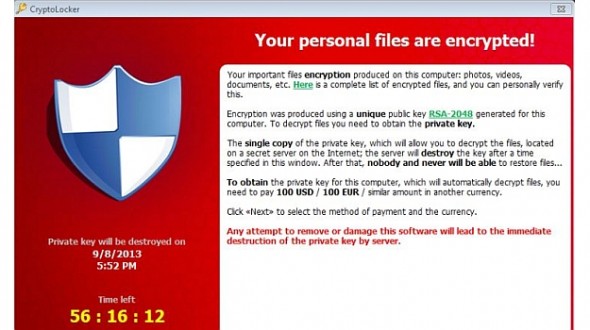
cryptolockerBasically, the Cryptolocker works by finding people’s most important and sensitive files and selling it back to them. After obtaining the files its needs, it then contacts a remote server to create a 2048-bit key pair to encrypt them so they cannot be recovered, and then contacts the owner with an ultimatum. People are told to pay up, or the virus will begin deleting the info.

When the virus first emerged in October of this year, victims were given three days to cough up roughly $200 via BitCoin or MoneyPak currency transfer. If the virus’ authors did not receive payment within 72 hours, they said, a single line would be deleted from a text file on some hidden foreign server, forever erasing the only string of numbers that could ever bring the affected files back from the dead.

cyber_virusSome users responded by simply setting their system’s internal clock back. A temporary measure, to be sure, but one which worked by tricking the virus into thinking the deadline had not expired. In addition, the three-day deadline worked against the viruses makers, since it’s proven restrictive to the types of people who mostly contract a virus like this – i.e. senior citizens and people working on corporate networks.

Such people are more vulnerable to such scams, but seldom have the computer-savvy skills to to set up BitCoin or other such accounts and transfer the money in time. Meanwhile, infecting a corporate server means that a bloated corporate bureaucracies will be responsible for making the decision of whether or not to pay, not an individual who can decide quickly.

virus-detected-640x353So basically, the designers of Cryptolocker were facing a catch-22. They could not extend the deadline on the virus without diminishing the sense of panic that makes many people pay, but would continue to lose money as long as people couldn’t pay. Their solution: If a victim does not pay up in time, the hackers simply raise the ransom – by a factor of 10!

This allows people more time to mull over the loss of sensitive data and make a decision, but by that time – should they decide to pay up – the price tag has gone up to a bloated $2000. Luckily, this has revealed a crucial bluff in the virus’s workings by showing that all the keys to the encrypted files are in fact not deleted after the three day time limit.

???????????????As such, the security industry is encouraging people to hold on to the useless, encrypted files and waiting for the criminal server to be someday seized by the authorities. Since any ransom paid is a de-facto encouragement to hackers to write a similar virus again — or indeed to re-infect the same companies twice – people are currently being told to simply hold out and not pay up.

What’s more, regular backups are the key to protecting your database from viruses like Cryptolocker. Regular backups to off-network machines that do not auto-sync will minimize the virus’ potential for damage. The best defense is even simpler: Cryptolocker infects computers via a bogus email attachment disguised as a PDF file, so simple email safety should keep you immune.

Alas, its a world of digital warfare, and there there are no discernible sides. Just millions of perpetrators, dozens of authorities, and billions of people fearing for the safety and integrity of their data. One can only wonder what an age of quantum computers, graphene and nanotube processors will bring. But more on that later!

Sources: extremetech.com, (2), fastcoexist.com

Papa Zulu Proof Ordered!

papa_zuluStep two semi-complete! After finishing my edits on Papa Zulu, I have gone ahead and ordered a proof copy so that my darling wife (i.e. chief editor) can give it a second pass. I’ve also sent the PDF off to my beta readers/other editors, so they too can tell me exactly what’s wrong with it and why I should stick to writing and avoid proofreading.

And while I was working on that, I fashioned a cover for the third book. All this work on book II, as expected, has gotten the ball rolling on book III. And as always, I feel the need to visualize the end product, even before I’ve committed to writing the manuscript. Once again, I’ve gone with a cover image from Shutterstock, which now provides the bulk of my cover art.

Oscar Mike_2What do you think? Too much green going on here? I really like this cover template because of the solid front cover, the watermarked back, and the balance created by the text boxes, images, and quote section. Can’t wait to get moving on that one too! I hope to augment as time goes on with more favorable reviews, which is what I did with the jacket for book II.

Good luck to all us indie writers! May the sales be plentiful, the reviews favorable, and the inspiration unending!