Reconstructing the Earliest Languages

prometheus_engineer1Remember that scene in Prometheus when David, the ship’s AI, was studying ancient languages in the hopes of being able to speak to the Engineers? The logic here was that since the Engineers were believed to have visited Earth many millennia ago to tamper with human evolution, that they were also responsible for our earliest known languages. In David’s case, this meant reconstructing the ancient tongue known as Proto-Indo-European.

Given the fact that my wife is linguistics major, and that I love all things ancient and historical, I found the concept pretty intriguing – even if it was a little Ancient Astronauts-y. To think that we could trace words and meaning back through endless iterations to determine what the earliest language recognized by linguists sounded like. Given how many tongues it has “parented”, it would be cool to meet the common ancestor.

prometheus-lingua2And now there is a piece of software that can do just that. Thanks to a group of linguists and computer scientists in the US and Canada, this program has shown the ability to analyze enormous groups of languages to reconstruct the earliest human languages, long before there was writing. By using this program and others like it, linguists may one day know how people sounded when they talked 20,000 years ago.

Alexandre Bouchard-Côté, a University of British Columbia statistician, began working on the program when he was a graduate student at UC Berkeley. By using algorithms to compare sounds and cognates across hundreds of different modern languages, he found he could predict which language groups were most related to each other. Basically, a sound that remained the same across distantly-related languages most likely existed early in our linguistic evolutionary tree.

Primary_Human_Language_Families_MapModern linguists speculate that the earliest languages that led to today’s tongues include Proto-Indo-European, Proto-Afroasiatic and Proto-Austronesian. These are the ancestral language families that gave rise to languages like Celtic, Germanic, Italic and Slavic; Arabic, Hebrew, Cushite and Somali; and Samoan, Tahitian, and Maori. Though by no means the only language family trees (they do not account of Sub-Saharan Africa or the pre-Columbian Americas, for example), they do encompass the majority of spoken languages today.

For their purposes, Bouchard-Côté and his colleagues focused on Proto-Austronesia, the family which led to today’s Polynesian languages as well as languages in Southeast Asia and parts of continental Asia. Using the software they developed, they were able to reconstruct over 600 ancient Proto-Austronesian languages and published their findings in the December issue of Proceedings of the National Academy of Sciences.
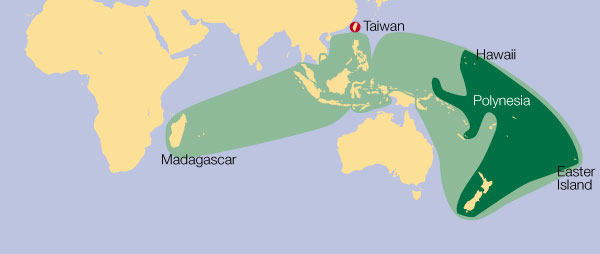
proto=austronesianIn their paper, Bouchard-Côté and his researchers said this of their new program:

“The analysis of the properties of hundreds of ancient languages performed by this system goes far beyond the capabilities of any previous automated system and would require significant amounts of manual effort by linguists.”

Ultimately, this program could allow linguists to hear languages that haven’t been spoken in millennia, reconstructing a lost world where those languages spread across the world, evolving as they went. In addition, it could be used for linguistic futurism, anticipating how languages may evolve over time and surmising what people will speak and sound like hundreds or even thousands of years from now.

Personally, I think the ability to look back and know what our ancestors sounded like is the real prize, but I’d be a poor sci-fi nerd if I didn’t at least fantasize about what our language patterns will sound like down the road. Lord knows its been speculated about plenty of times thus far, with thoughts ranging from Galego (a Slavic-English hybrid from Dune), the Chinese-English smattering used in Firefly, and City Speak from Blade Runner.

Hey, remember this little gem? Bonus points to anyone who can translate it for me (without consulting Google Translate!):

Monsieur, azonnal kövessen engem, bitte! Lófaszt! Nehogy már! Te vagy a Blade, Blade Runner! Captain Bryant toka. Meni-o mae-yo.


Sources: IO9, pnas.org

Reducing Energy Use Through AI

hal9000Interesting fact: household energy consumption accounts for about a third of an individuals carbon footprint. You know that energy that powers your water-heater, lighting, thermostat, stove, refrigerator, A/C, television, personal devices, computer… Yes, all that. As long as our current methods of generating energy cause carbon emissions, environmental problems with persist.

But of course, there are plenty of things we could be doing to curb our use of power at the same time. Turning off the lights, shutting down unused devices, turning down the heat; all good energy-saving habits. And if we forget, perhaps a kindly voice could remind us. Say… an artificial intelligence with an eerily polite voice that monitors our energy usage and tells us how to do better.

AI'sThat’s the idea being explored by Nigel Goddard, a professor at the University of Edinburgh’s School of Informatics who is trying to solve consumption problems by using cutting-edge AI techniques. In the multi-year IDEAL project that will be launching in 2013, Goddard and his colleagues will outfit hundreds of British homes with sensors that monitor temperature, humidity, and light levels, as well as gas and electricity use, and wirelessly report their readings.

The concept used here is known as “machine learning”, a branch of AI that involves the development of systems that can learn from data and anticipate behaviors. Once Goddard and his team have used this technique to process all the data returned by their sensors, they will rely on another cutting-edge technology – known as natural language synthesis – to generate automatic text messages that give people feedback about their energy use.

Green-TechnologyThe goal is not just to reduce people’s carbon footprint, but save them money as well. At least that’s the approach Goddard and his team are taking when it comes to their automated texts. Naturally, the amount of money saved will be based on household size and income, among other factors. But Goddard and his team anticipate that the inclusion of these sensors in people’s homes will save them 20 % off their utility costs across the board.

Taken in conjunction with numerous developments in the fields of clean energy, touchscreen displays and and solar power, a utility-monitoring computer program could be just what the doctor ordered for every futuristic home. Provided of course, you don’t mind taking instruction from a friendly AI…

Maybe now would be a good time to institute the Three Laws of Robotics!

Source: fastcoexist.com

Hacker Wars: The Invasion Continues!

cyber-war-1024x843State-sponsored hacking has been a major concern lately. From Russia’s “Red October” virus, which spied on embassies and diplomats in multiple countries, to China’s ongoing intrusion into government and corporate databases in the US, it seems as though private hackers are no longer the only ones we need to worry about.

The latest incident in this invasion of privacy and airing of personal information comes again from Russia, where a mysterious website has been posting personal information about some rather high-profile American figures. These include First Lady Michelle Obama, Vice-President Joe Biden, Jay-Z, Britney Spears, U.S. Attorney General Eric Holder, Sarah Palin, Arnold Schwarzenegger, and the head of the FBI.

michelle-obama_fullIn addition to taunting messages and unflattering pictures, the site includes Social Security numbers, credit reports, addresses and phone numbers. No reasons are listed on the site as to why these particular people were selected, but it seems clear at this point that they were chosen due to their high-profile nature and/or positions of importance within the US government. As of last Tuesday, both the FBI and Secret Service announced that they were investigating the website.

Though it is not definitively clear where the hackers are operating from, all indications point to Russia. The first clue came when it was revealed that site bore the internet suffix originally assigned to the Soviet Union (.su), a practice which is not uncommon with Russian hackers these days. In addition, it is also connected to a Twitter account, which carried an an anti-police message posted in Russian.

hackers_securityAt the moment, neither the White House or the Secret Service is offering assessments or comments on the matter. But some thoughts have been offered by Los Angeles Police Commander Andrew Smith, who spoke on behalf of Chief Charlie Beck, who’s information was also posted. According to Beck, this is not the first time that top police officials have had their private information posted online:

“People get mad at us, go on the Internet and try to find information about us, and post it all on one site. The best word I can use to describe it is creepy. It’s a creepy thing to do.”

Frank Preciado, assistant officer in charge of the LAPDs online division, added that the information on the police chief was likely taken from what is supposed to be a secure database of city employees. And it might just offer some insight into this latest, sweeping act of inforpiracy. When all is said and done, it appears that this may simply be a case of a small but qualified group of misfits engaging in public mischief.

internetHowever, of greater concern is the fact that with this latest act of high-profile hacking, a trend that citizens were forewarned might be coming true. In December of 2012, internet security company McAfee warned of an impending attack by Russian hackers against American banks. Dubbed “Project Blitzkrieg”, the threat of the attack surfaced on a Russian hacking forum in the previous September, and McAfee was quick to advised that it was a credible one.

As of December 2012, Russian hackers had effectively infected 500 databases in the US with the promise of more to come. The cybercriminal known as vorVzakone – whose name means ‘thief in law’ – was identified as the head of the operation, whose plans called for the release of a Trojan horse virus that would allow him and his accomplices to seize control of banks’ computers to steal information and money.

cold_war

Clearly, all of these incidents amount to a major public concern. But of greater concern to me is the fact the lines being drawn in this new era of cyber-warfare are eerily familiar. Not long ago, China and Russia were locked in an ongoing feud with the US and its allies, a war fueled by ideology but based on the cultivation of technology and espionage networks.

Granted, only China’s case of cyberwarfare against the US appears to be government-backed. But between the “Red October” virus,  “Project Blitzkrieg”, and the fact that Russian hackers are in the habit of using a Soviet-era suffix to designate their activities, it seems that Russia is fertile ground for a renewed standoff with the West as well. And given that the targets have been western governments and financial institutions, would it be so farfetched to assume the government might be marginally involved?

The means may have changed, but the overall purpose remains the same. Infiltrate, destabilize, and steal information from the enemy. Are we looking at a renewed Cold War, or just the last gasps of an ideological confrontation that was supposed to have died years ago? Only time will tell…

Sources: cbc.ca, dailymail.co.uk

Wanted: Married Couple to go to Mars

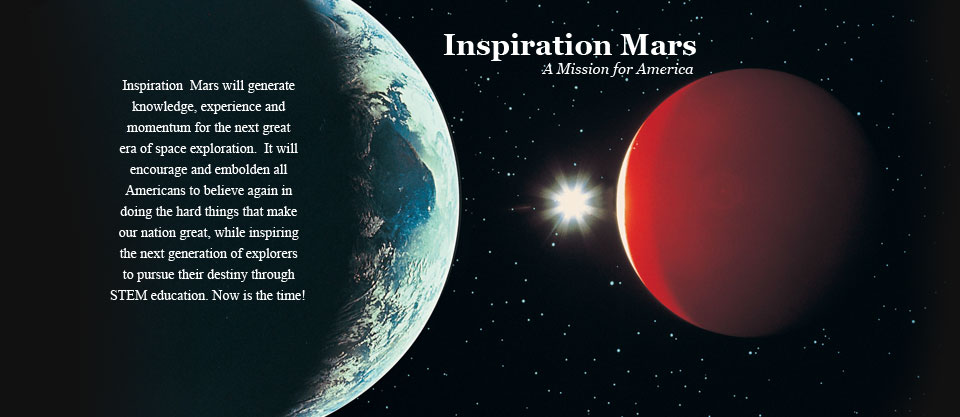
tito-mars-mission-conceptSounds like the setup for a sci-fi romantic comedy doesn’t it? But in fact, it’s the basis for a planned Mars mission which is being hosted by space adventurist Dennis Tito. As the head of the non-profit organization known as Inspiration Mars, Tito has long believed that humanity must seize on the opportunity being provided by a new generation of space exploration, with the intention of becoming a truly “multi-planet species”.

The mission will consist of sending two professional crew members –  who will likely be a married couple – on a “fast, free-return” mission, passing within 160 kilometers of Mars before swinging back and safely returning to Earth. The spacecraft will likely be tinier than a small Winnebago recreational vehicle, and will be launched on Jan. 5, 2018 when planet Earth and Mars will be in alignment.

inspiration_marsTo make it happen, Inspiration Mars has signed a Space Act Agreement with NASA – specifically the Ames Research Center (Ames) – to conduct thermal protection system and technology testing and evaluation, as well as tapping into NASA’s knowledge, experience and technologies. Tito emphasized during their initial meeting that his organization was not looking for money, but a partner to help them develop the required technologies.

The mission system will consist of a modified capsule launched out of Earth orbit using a single propulsive maneuver to achieve the Mars trajectory. An inflatable habitat module will be deployed after launch and detached prior to re-entry. Closed-loop life support and operational components will be located inside the vehicle, designed for simplicity and “hands-on” maintenance and repair.

Mars_A1_Latest_2014As already stated, the mission is a non-profit venture that is designed to inspire. As Tito himself put it:

“[the mission will engage] the best minds in industry, government and academia to develop and integrate the space flight systems and to design innovative research, education and outreach programs for the mission. This low-cost, collaborative, philanthropic approach to tackling this dynamic challenge will showcase U.S. innovation at its best and benefit all Americans in a variety of ways.”

What’s more, Tito believes that the time is right for this mission, and not only because of the orbital window of opportunity. “Investments in human space exploration technologies and operations by NASA and the space industry are converging at the right time to make this mission achievable,” he said.

The mission will last 501 days, and Tito has emphasized that it will be an American adventure, not an international one. Tito himself plans to fund the next two years of the mission, beyond that it will be funded primarily through private, charitable donations, as well as government partners that can provide expertise, access to infrastructure and other technical assistance. He also believes media rights will be a major part of things, since the mission will be an historic first and ought to be caught on tape!

mars_lifeAnd the reason they wanted a married couple to do the deed is quite simple. Jane Poyter, a member of Inspiration Mars explains:

“Imagine, it’s a really long road trip and you’re jammed into an RV and you can’t get out,” Poynter said. “There’s no microgravity … all you have to eat for over 500 days are 3,000 lbs of dehydrated food that they rehydrate with the same water over and over that will be recycled,” adding that the two crew will need the proven ability to be with each other for the long term.

Makes sense. After all, who but a couple already intimately familiar with each others foibles and used to spending an inordinate amount of time together could make it 501 days without killing each other? And as we all know, taking a trip together is the true test of a relationship’s mettle, especially when its a capsule smaller than an RV with no chance of escape!

And for Tito’s sake, I hope things work out. One thing is for sure, his dream of a public-private relationship to make space travel happen is already taking shape.

In the meantime, be sure to check out the promotional animation, showing the mission and the mechanics of the free return trajectory:

Source: www.universetoday.com, inspirationmars.com

Bee Venom: A Cure for HIV?

HIV_beevenomSince it was first clinically observed in 1981, HIV/AIDS has been responsible for an estimated 25 million people worldwide. Since 2010, an estimated 34 million people were diagnosed with HIV, most of whom live within the developing world. In spite of anti-viral medicines which makes HIV manageable, countless people still die as a result of improper treatment or a lack of access.

As such, its little wonder then why medical researchers have been working for decades to find a cure. If it were possible to inoculate against the spread of HIV, the disease would all but disappear within a few generations. In addition, if it were possible to cure those already infected, and worldwide access were assured, HIV and AIDS could very well be eliminated in a decade or less.

HIV-budding-ColorNot too long ago, researchers at Caltech experimented with HIV antibodies which could very well lead to a vaccine in the near future. But even more exciting than this was the announcement from the Washington University School of Medicine in St. Louis earlier this month, where a research team demonstrated that nanoparticles infused with a toxic bee venom were capable of killing HIV. With this latest breakthrough, it seems that the days of one of the greatest plagues in history may truly be numbered.

The key to this discovery, which was made by Samuel A. Wickline and his team at the Washington University, involves what is known as cytolyic melittin peptides. Melittin is found in bee venom, and it has the fortuitous trait of being able to degrade the protective envelope that surrounds HIV. When delivered in both large and free concentrations, they observed that HIV was unable to withstand the assault and died.

HIVnano_primaryMoreover, these melittin-loaded nanoparticles left the surrounding cells unharmed, which incidentally was no accident. The nanoparticles Wickline and his team developed were endowed with a kind of filter that prevents healthy cells from coming into contact with the toxin. But HIV, since its a viral strain, is small enough to sift right through these filters, thus exposing it to the toxin.

Currently, all known forms of HIV treatment involve preventing the virus from replicating to the point that it will morph into AIDS. By contrast, this new process targets the virus where it lives, focusing on killing on it rather than limiting its ability to reproduce. Adding to the general sense of excitement is speculation that this same concept could be used to combat other infectious STDs, including hepatitis B and C.

As a topical gel, suggestions are already circling that melittin-loaded nanoparticles could be combined with spermicidal cream to create the ultimate contraceptive that can also protect against STDs. Not only would this ensure truly safe sex, combined with melittin-treatment treatments for the infected and preventative vaccinations, it would also open up another front on the “war on HIV”.

My thanks to Rami for bringing this article to my attention. Since he pointed it out, its been making quite a few waves in the medical community and general public! Stories like these give me hope for the future…

Source: hivplusmag.com, IO9

Asteriod Prospecting by 2015

asteroid_beltDeep Space Industries, a private aerospace company, has been making a big splash in the news lately. Alongside SpaceX, they have been pioneering a new age in space exploration, where costs are reduced and private companies are picking up the slack. And in their latest bid to claim a share of space, the company announced plans late in January to begin asteroid prospecting operations by 2015.

For some time, the concept of sending spaceships to mine asteroids and haul ore has been explored as a serious option. Within the asteroid belt that lies between Mars and Jupiter, countless tons of precious metals, carbon, silicates, and basaltic minerals. If humanity could tap a fraction of a fraction of that mineral wealth, it would be able to supply Earth’s manufacturing needs indefinitely, without all the harmful pollutants or run off caused by mining.

asteroid_miningSo to tap this potential goldmine (literally!) known as the Asteroid Belt, DSI plans to launch a fleet of mini spacecraft into solar orbit to identify potential targets near to Earth that would be suitable to mine. Lacking the resources of some of the bigger players in the space rush, DSI’s probes will ride-share on the launch of larger communications satellites and get a discounted delivery to space.

Initially, a group of 25kg (55 pounds) cubesats with the awesome designation “Firefly” will be launched on a journey lasting from two to six months in 2015. Then, in 2016, the 32 kilograms (70 pound) DragonFly spacecraft will begin their two-to-four-year expeditions and return with up to 68 kilograms (150 pounds) of bounty each. Beyond this, DSI has some truly ambitious plans to establish a foundry amongst the asteroids.

asteroid_foundryThat’s another thing about the Belt. Not only is it an incredibly rich source of minerals, its asteroids would make an ideal place for relocating much of Earth’s heavy industry. Automated facilities, anchored to the surface and processing metals and other materials on site would also reduce the burden on Earth’s environment. Not only would there be no air to befoul with emissions, but the processes used would generate no harmful pollutants.

In DSI’s plan, the foundry would use a patent-pending nickel gas process developed by one of DSI’s co-founders, Stephen Covey, known as “sintering”. This is the same process that is being considered by NASA to build a Moon Base in the Shackleton Crater near the Moon’s south pole. Relying on this same technology, automated foundries could turn ore into finished products with little more than microwave radiation and a 3D printer, which could then be shipped back to Earth.

deepspaceindustries-640x353Naturally, DSI will have plenty of competition down the road. The biggest comes from Google-backed Planetary Resources which staked it claim to an asteroid last April. Much like DSI, they hope to be able to mine everything from water to fuel as well as minerals and rare earths. And of course, SpaceX, which has the most impressive track record thus far, is likely to be looking to the Asteroid Belt before long.

And Golden Spike, the company that is promising commercial flight to the Moon by 2020 is sure to not be left behind. And as for Virgin Galactic, well… Richard Branson didn’t get crazy, stinking rich by letting opportunities pass him by. And given the size and scope of the Belt itself, there’s likely to be no shortage of companies trying to stake a claim, and more than enough for everyone.

So get on board ye capitalist prospectors! A new frontier awaits beyond the rim of Mars…

Source: Extremetech.com

Powered by the Sun: Solar-Powered Reactors

solar2Welcome back to another installment in PBTS! Today’s news item is a rather interesting one, and it comes to us from the University of Delaware where researcher Erik Koepf has come up with an interest twist on solar power. In most cases, scientists think to use cells that can absorb photons and use them to generate a flow of electrons. But in Koepf’s case, sunlight is used in a different way; namely, as a means of creating alternative fuels.

Basically, the concept for Koepft’s new solar-powered reactor revolves around the idea of getting directly to the hydrogen that is found in conventional fuels, i.e. coal and fossil fuels. While they are decent enough energy sources, they do not burn clean, due to the extensive impurities they carry and by-products they create. If it were possible to remove the essential hydrogen from them, we would have a clean burning and efficient energy supply without the hassle of pollution.

Nuclear MOX plant : recycling nuclear waste : Submerged Spent Fuel Elements with Blue GlowAnd that’s where the solar reactor comes in. As the name suggests, the reactor relies on the Sun’s energy, which it then uses to split water molecules to get at their hydrogen atoms. This is done by exposing a zinc oxide powder on a ceramic surface to massive amounts of focused sunlight. From there, a thermochemical reaction happens that splits water apart into oxygen and hydrogen.

Though it may sound complicated, the sheer beauty of this concept lies in that fact that it uses the Sun’s infinite energy to do the heavy lifting and accomplish atom smashing. No particle accelerators, no nuclear fusion or fission; and best of all, no pollution! Since the process creates no emissions or Greenhouse gases, this is perhaps one of the most environmentally friendly energy concepts to date.

But of course, the project has some additional requirement which fall under the heading, “additional parts sold separately”. For one, the reactor needs to get seriously hot – between 1750° to 1950° Celsius (3182° to 3542° Fahrenheit) – before it can get to the work of splitting water molecules. For this, a focusing mirror that is roughly 13 square meters, flawlessly flat and 98% reflective is needed.

solarpowergeNo much mirror existed when Koepf and Michael Giuliano (his research associate) got started, so they had to develop their own. In addition, that mirror needs to focus the solar energy it collects onto a tiny six centimeter circle that has to be precisely aimed. If the light is just a millimeter or two off to one side, the entire reactor could be damaged. In essence, the system is simple and ingenious, but also temperamental and very fragile.

What’s more, just how efficient it is remains to be seen. While the first tests were successful in creating small amounts of hydrogen, the  the real test will take place next month when the duo present their reactor in Zurich, Switzerland, where it will be running at full power for the very first time. Naturally, expectations are high, but it is too soon to tell if this represents the future or a failed attempt at viable alternative power.

Source: Extremetech.com

Powered by the Sun: Solar Powered Clothing

solar1Imagine threads that would turn the wearer into a walking power source. That’s the concept behind a new type of fiber-optic solar cell developed by John Badding of Penn State University. Announced back in December of 2012, this development could very well lead to the creation of full-body solar cells that you wear, providing you with an ample amount of renewable electricity that you could could carry with you everywhere you go.

Similar in appearance to most fiber-optic cables made from flexible glass fibers, these new solar cells are thinner than the average human hair and could conceivably be woven into clothing. Whereas you conventional solar cell exists only in two-dimensions and can only absorb energy when facing the sun, this 3D cross-section of silicon infused fiber are capable of absorbing light from any direction.

flexible-solar-cell-625x418Already, John Badding and his research team have received interest from the United States military about creating clothing that can act as a wearable power source for soldiers while they’re in the field. In addition, like peel and stick solar panels, we can expect commercial applications for satchels, like the kind used to house laptops. Forget the power cable, now you can charge your battery pack just by setting it in the sun.

And given the upsurge in wearable tattoos and implantable medical devices, these fibers could also prove useful in clothing to ensure a steady supply of power that they could draw from. Hell, I can picture “solar shirts” that have a special recharging pocket where you can place your MP3 player, smartphone, tablet, or any other electronic device once the battery runs down.

Solar-Panels-625x418Naturally, all of this is still in the research and development stage of things. John Badding and his team have yet to aggregate the single strands into a piece of woven material, meaning it is still speculative as to whether or not they will be able to withstand the stress faced by regular clothing without breaking down. Nevertheless, the material is still a significant advancement for solar energy, with the new cells presenting many possibilities for remote energy use and accessibility.

And I for one am still excited about the emergence of fabric that generates electricity. Not only is it a surefire and sophisticated way of reducing our carbon footprint, it’s science fiction gold!

Source: psfk.com

Life-Giving Elements Found on Mars!

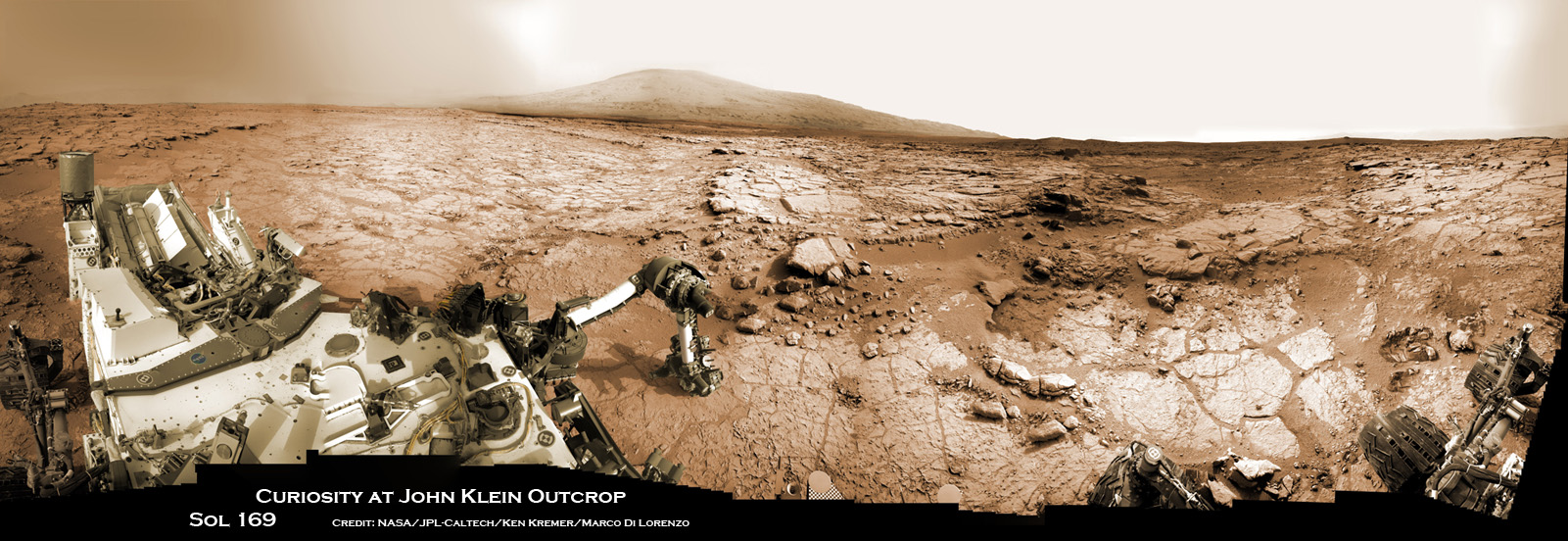
Curiosity_drillingsCuriosity has just finished analyzing the samples collected from its first drilling operation at the John Klein rock formation in Yellowknife Bay. And what it found confirms what scientists have suspected about the Red Planet for some time. Contained within grey the dust collected from the rock’s interior, the rover discovered some of the key chemical ingredients necessary for life to have thrived on early Mars billions of years ago.

After running the two aspirin-sized samples through its two analytical chemistry labs (SAM and CheMin), the Mars Science Laboratory was able to identify the presence of carbon, hydrogen, oxygen, nitrogen, sulfur and phosphorus in the sample – all of which are essential constituents for life as we know it based on organic molecules.

Curiosity_chemWhat’s more, according to David Blake – the principal investigator for the CheMin instrument – a large portion of the sample was made up of clay minerals, which in itself is telling. The combined presence of these basic elements and abundant phyllosilicate clay minerals indicate that the area was once home to a fresh water environment, one where Martian microbes could once have thrived in the distant past.

By confirming this, the Curiosity Rover has officially met one of its most important research goals – proving that all the elements necessary for life to flourish were once present on Mars. And when you consider that the Curiosity team was not expecting to find evidence of phyllosilicate minerals in the Gale Crater, the find was an especial delight. Based on spectral observations conducted from orbit, phyllosilicates were only expected to be found in the lower reaches of Mount Sharp, which is Curiosity’s ultimate destination.

Curiosity-Sol-169_5C1b_Ken-KremerSo what’s next for Curiosity? According to John Grotzinger, the Principal Investigator for the Mars Science Laboratory, Curiosity will remain in the Yellowknife Bay area for several additional weeks or months to fully characterize the area. The rover will also conduct at least one more drilling campaign to try and replicate the results, check for organic molecules and search for new discoveries.

Source: universetoday.com

NASA’s 3D Printed Moon Base

ESA_moonbaseSounds like the title of a funky children’s story, doesn’t it? But in fact, it’s actually part of NASA’s plan for building a Lunar base that could one day support inhabitants and make humanity a truly interplanetary species. My thanks to Raven Lunatick for once again beating me to the punch! While I don’t consider myself the jealous type, knowing that my friends and colleagues are in the know before I am on stuff like this always gets me!

In any case, people may recall that back in January of 2013, the European Space Agency announced that it could be possible to build a Lunar Base using 3D printing technology and moon dust. Teaming up with the architecture firm Foster + Partners, they were able to demonstrate that one could fashion entire structures cheaply and quite easily using only regolith, inflatable frames, and 3D printing technology.

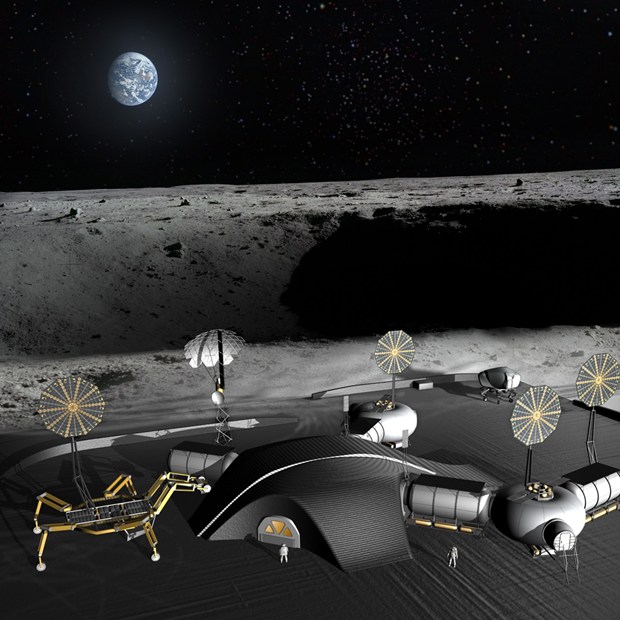
sinterhab2_1And now, it seems that NASA is on board with the idea and is coming up with its own plans for a Lunar base. Much like the ESA’s planned habitat, NASA’s would be located in the Shackleton Crater near the Moon’s south pole, where sunlight (and thus solar energy) is nearly constant due to the Moon’s inclination on the crater’s rim. What’s more, NASA”s plan would also rely on the combination of lunar dust and 3D printing for the sake of construction.

However, the two plans differ in some key respects. For one, NASA’s plan – which goes by the name of SisterHab – is far more ambitious. As a joint research project between space architects Tomas Rousek, Katarina Eriksson and Ondrej Doule and scientists from Nasa’s Jet Propulsion Laboratory (JPL), SinterHab is so-named because it involves sintering lunar dust: heating it up with microwaves to the point where the dust fuses to become a solid, ceramic-like block.

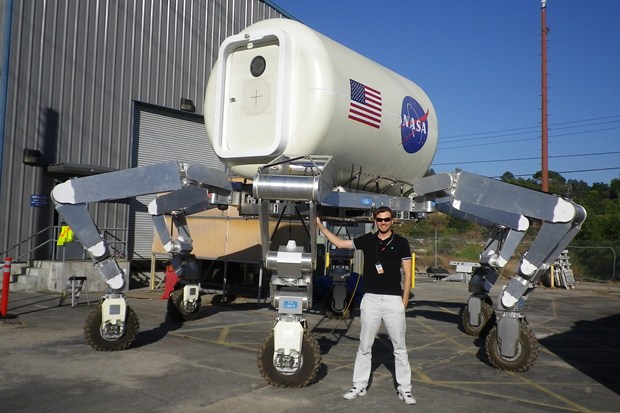
This would mean that bonding agents would not have to be flown to the Moon, which is called for in the ESA’s plan. What’s more, the NASA base would be constructed by a series of giant spider robots designed by JPL Robotics. The prototype version of this mechanical spider is known as the Athlete rover, which despite being a half-size variant of the real thing has already been successfully tested on Earth.

athlete_robotEach one of these robots is human-controlled, has six 8.2m legs with wheels at the end, and comes with a detachable habitable capsule mounted at the top. Each limb has a different function, depending on what the controller is looking to do. For example, it has tools for digging and scooping up soil samples, manipulators for poking around in the soil, and will have a microwave 3D printer mounted on one of the legs for the sake of building the base. It also has 48 3D cameras that stream video to its operator or a remote controlling station.

The immediate advantages to NASA’s plan are pretty clear. Sintering is quite cheap, in terms of power as well as materials, and current estimates claim that an Athlete rover should be able to construct a habitation “bubble” in only two weeks. Another benefit of the process is that astronauts could use it on the surface of the Moon surrounding their base, binding dust and stopping it from clogging their equipment. Moon dust is extremely abrasive, made up of tiny, jagged morcels rather than finely eroded spheres.

sinterhab3Since it was first proposed in 2010 at the International Aeronautical Congress, the concept of SinterHab has been continually refined and updated. In the end, a base built on its specifications will look like a rocky mass of bubbles connected together, with cladding added later. The equilibrium and symmetry afforded in this design not only ensures that grouping will be easy, but will also guarantee the structural integrity and longevity of the structures.

As engineers have known for quite some time, there’s just something about domes and bubble-like structures that were made to last. Ever been to St. Peter’s Basilica in Rome, or the Blue Mosque in Istanbul? Ever looked at a centuries old building with Onion Dome and felt awed by their natural beauty? Well, there’s a  reason they’re still standing! Knowing that we can expect similar beauty and engineering brilliance down the road gives me comfort.

In the meantime, have a gander at the gallery for the proposed SinterHab base, and be sure to check out this video of the Athlete rover in action:

Source: Wired.co.uk, robotics.jpl.nasa.gov