Remembering Douglas Adams

the-hitchhiker-s-guide-to-the-galaxy-original2Yesterday was the birthday of the late, great science fiction writer and luminary known as Douglas Adams. Had he not passed away in 2001, at the age of forty-one, he  would have been celebrating his sixty-first birthday. Best remembered for his series The Hitchhikers Guide to the Galaxy, Adams greatest accomplishment was arguably his ability to weave comedy and science fiction into one!

And that’s not the easiest thing to do in a genre like science fiction, which is noted for being often bleak, dystopian, or highly technical. Sure, there was plenty that was unintentionally funny, especially in Douglas’ time, but Adams demonstrated that science fiction writing could be both high-minded – incorporating real science and galactic exploration – and irreverent.

So I hope people will join me in wishing the man a belated happy birthday! Though I learned about it too late to acknowledge it on time, I’m sure he wouldn’t mind. The man did have a rich sense of humor, after all!

Biography:
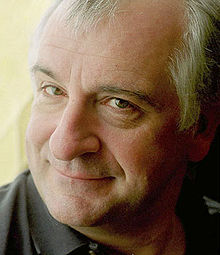
Douglas_adams_portrait_croppedBorn in Cambridge, England in 1952, Adams parents moved to London when he was still a toddler. They divorced five years later, and Adams spent his formative years with his mother in Brentwood, east of London. Receiving his education from the privately run Brentwood School, he was noted for being unusually tall, he also stood out because of his exceptional ability at creative writing.

Some of his earliest writing was published at the school, in the town publication The Brentwoodian, or the school magazine Broadsheet. He also designed the cover of one issue of the latter, and had a letter and short story published nationally in The Eagle, the boys’ comic, in 1965. On the strength of a bravura essay on religious poetry that discussed the Beatles and William Blake, he was awarded a place at St John’s College, Cambridge to read English in 1971 and graduated two years later.

While there, he also attempted to ply his comedic skills and applied to join the Footlights, an invitation-only student comedy club. While he waited to join, he began writing and performing in revues with Will Adams (no relation) and Martin Smith, forming a group called “Adams-Smith-Adams”. By 1973, he managed to become a member of the Footlights until he graduated and moved back to London.

At this point of his life, he was determined to break into television and radio as a writer. This resulted in a brief collaboration between him and Monty Python’s Graham Chapman, and a series of appearances by Adam’s on Flying Circus. At the time though, his writing style did not seem suited to radio or TV comedy, and he was forced to work odd jobs to make ends meet. However, Adams never stopped writing and continued to work towards his masterpiece.

The Hitchhikers Guide to the Galaxy:
HitchHikers-Guide-to-the-Galaxy,-The_8Hitchhiker began in 1977 as a pitch to the BBC radio as a concept for a science-fiction comedy radio series. According to Adams, the idea for the title occurred to him while he lay drunk in a field in Innsbruck, Austria, gazing at the stars. He was carrying a copy of The Hitchhiker’s Guide to Europe, and it occurred to him that “somebody ought to write a Hitchhiker’s Guide to the Galaxy“.

At the same time, Douglas worked on novelizations of his concept, which made producing the series all the more difficult. Not a prodigious writer, Adams was apparently the kind of man who had to be forced to meet deadlines and complete what he started. Despite the difficulties he had, Adams wrote five novels in the series, published in 1979, 1980, 1982, 1984, and 1992.

For the rest of his life, Adams made several attempts to get Hitchhiker adapted into a movie. He did not succeed in his lifetime, but in 1981, the radio series became the basis for a BBC television mini-series and Disney bought the rights in 1998. It was not until 2005, four years after his death, that the screenplay finally got a posthumous re-write by Karey Kirkpatrick, and the resulting movie was released.

hitchhikers_movieOther Works:
Despite Hitchhikers immense popularity, it was by no means Adam’s only literary creation. During the 1980’s, Adams and Mark Carwardine, a noted zoologist, collaborated on a series of BBC broadcasts known as Last Chance to See where they would travel to foreign countries and speak of endangered species.

Dirk_Gently_UK_front_coverIn between all this, he wrote the novel Dirk Gently’s Holistic Detective Agency, a humorous detective story which was relesead in 1987. Adams himself described the book as “a kind of ghost-horror-detective-time-travel-romantic-comedy-epic, mainly concerned with mud, music and quantum mechanics.” A sequel, entitled The Long Dark Tea-Time of the Soul, was published a year later. These were entirely original works, Adams’s first since So Long, and Thanks for All the Fish.

In between all of this, Adams also worked with the BBC as a writer on Doctor Who. Altogether, he wrote three Doctor Who serials starring Tom Baker as the Doctor. These included the episodes “The Pirate Planet” (Season 16), “City of Death” (with producer Graham Williams, from an original storyline by writer David Fisher), and Shada (only partially filmed and never filmed).

Legacy:
Adams died in 2001 as a result of a degenerative heart condition and was buried in Highgate Cemetery, North London. After eighteen years of writing, publishing, and broadcasting, he left an indelible mark on science fiction and popular culture. The holiday known as Towel Day – in honor of the sage advice contained in the Guide – takes place every May 25th.
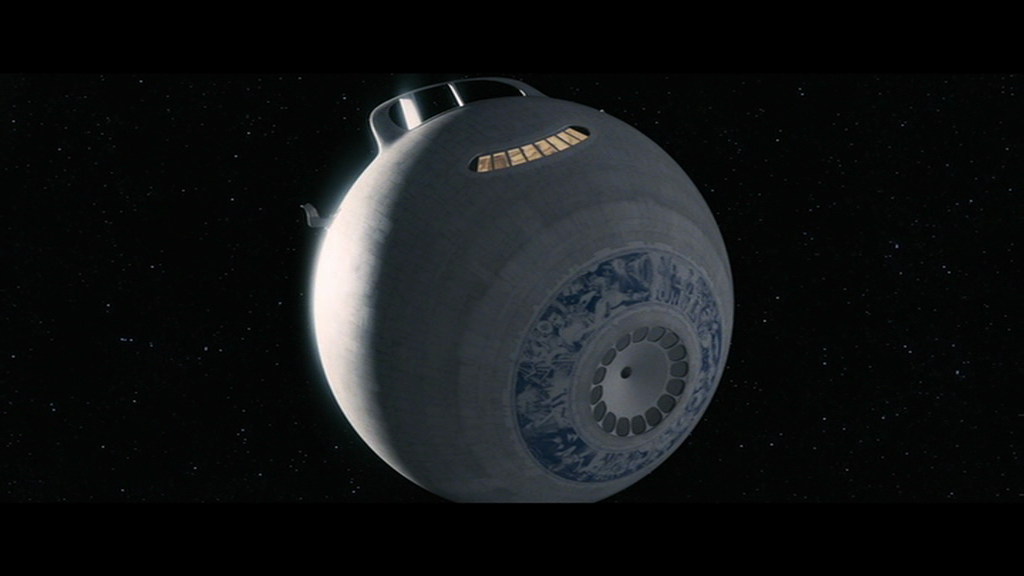
heartofgold_ext2And despite his irreverence and characteristic wit, Adams is also remembered for exploring scientifically plausible ideas. For example, the Heart of Gold – the ship featured in Hitchhiker – is powered by the “Infinite Improbability Drive”. This is an FTL drive system which is based in a particular aspect of quantum theory. Chaos theory also plays an important role in Dirk Gently’s Holistic Detective Agency, where everything, even elements which seem superfluous, turn out to be interconnected with the plot.

towel_dayThe words “Don’t Panic”, also advice contained within the Guide, and the significance thereof are known by any self-respecting geek. Concepts like the “Babel Fish”, the living translation device one inserts in their ear, are also commemorated with programs like Yahoo’s translation program of the same name. Also, in 2011, over 3000 people took part in a public vote to choose the subjects of People’s Plaques in Islington. Adams received 489 votes, and a plaque is due to be erected in his honour.

And just yesterday, to mark his 61st birthday, Google celebrated with an interactive “Google Doodle” which featured a stylized version of the Heart of Gold’s computer console. In addition, the BBC has the text-based Hitchhiker’s Guide to the Galaxy game available to play on their website here. So if you’ve got time and feel like doing something fun to commemorate Adams, just click on the links provided and enjoy!

RIP Douglas Adams. You were a rich soul and a witty, funny, and brilliant man. Like so many before you, you were snatched up too soon and didn’t live long enough to get your proper due!

Powered by the Sun: The Future of Solar Energy

Magnificent CME Erupts on the Sun - August 31Researchers continue to work steadily to make the dream of abundant solar energy a reality. And in recent years, a number of ideas and projects have begun to bear fruit. Earlier this year, their was the announcement of a new kind of “peel and stick” solar panel which was quite impressive. Little did I know, this was just the tip of the iceberg.

Since that time, I have come across four very interesting stories that talk about the future of solar power, and I feel the need to share them all! But, not wanting to fill your page with a massive post, I’ve decided to break them down and do a week long segment dedicated to emerging solar technology and its wicked-cool applications. So welcome to the first installment of Powered By The Sun!

spaceX_solararrayThe first story comes to us by way of SpaceX, Deep Space Industries, and other commercial space agencies that are looking to make space-based solar power (SBSP) a reality. For those not familiar with the concept, this involves placing a solar farm in orbit that would then harvest energy from the sun and then beam the resulting electricity back to Earth using microwave- or laser-based wireless power transmission.

Originally described by Isaac Asimov in his short story “Reason”, the concept of an actual space-based solar array was first adopted by NASA in 1974. Since that time, they have been investigating the concept alongside the US Department of Energy as a solution to the problem of meeting Earth’s energy demands, and the cost of establishing a reliable network of arrays here on Earth.

Constructing large arrays on the surface is a prohibitively expensive and inefficient way of gathering power, due largely to weather patterns, seasons, and the day-night cycle which would interfere with reliable solar collection. What’s more, the sunniest parts of the world are quite far from the major centers of demand – i.e. Western Europe, North America, India and East Asia – and at the present time, transmitting energy over that long a distance is virtually impossible.

NASA "Suntower" concept
NASA “Suntower” concept

Compared to that, an orbiting installation like the SBSP would have numerous advantages. Orbiting outside of the Earth’s atmosphere, it would be able to receive about 30% more power from the Sun, would be operational for almost 24 hours per day, and if placed directly above the equator, it wouldn’t be affected by the seasons either. But the biggest benefit of all would be the ability to beam the power directly to whoever needed it.

But of course, cost remains an issue, which is the only reason why NASA hasn’t undertaken to do this already. Over the years, many concepts have been considered over at NASA and other space agencies. But due to the high cost of putting anything in orbit, moving up all the materials required to build a large scale installation was simply not cost effective.

spacex-dragon-capsule-grabbed-by-iss-canadarm-640x424However, that is all set to change. Companies like SpaceX, who have already taken part in commercial space flight (such as the first commercial resupply to the ISS in May of 2012, picture above) are working on finding ways to lower the cost of putting materials and supplies into orbit. Currently, it costs about $20,000 to place a kilogram (2.2lbs) into geostationary orbit (GSO), and about half that for low-Earth orbit (LEO). But SpaceX’s CEO, Elon Musk, has said that he wants to bring the price down to $500 per pound, at which point, things become much more feasible.

And when that happens, there will be no shortage of clients looking to put an SBSP array into orbit. In the wake of the Fukushima accident, the Japanese government announced plans to launch a two-kilometer-wide 1-gigawatt SBSP plant into space. The Russian Space Agency already has a a working 100-kilowatt SBSP prototype, but has not yet announced a launch date. And China, the Earth’s fastest-growing consumer of electricity, plans to put a 100kW SBSP into Low-Earth Orbit by 2025.

space-based-solarpowerMost notably, however, is John Mankins, the CTO of Deep Space Industries and a 25-year NASA vet, who has produced an updated report on the viability of SBSP. His conclusion, in short, is that it should be possible to build a small-scale, pilot solar farm dubbed SPS-ALPHA for $5 billion and a large-scale, multi-kilometer wide power plant for $20 billion. NASA’s funding for SPS-ALPHA dried up last year, but presumably Mankins’ work continues at Deep Space Industries.

Cost and the long-term hazards of having an array in space remain, but considering its long-term importance and the shot in the arm space exploration has received in recent years – i.e. the Curiosity Rover, the proposed L2 Moon outpost, manned missions to Mars by 2030 – we could be looking at the full-scale construction of orbital power plants sometime early in the next decade.

And it won’t be a moment too soon! Considering Earth’s growing population, its escalating impact on the surface, the limits of many proposed alternative fuels, and the fact that we are nowhere near to resolving the problem of Climate Change, space-based solar power may be just what the doctor ordered!

Thanks for reading and stay tuned for the next installment in the Powered By The Sun series!

Source: Extremetech.com

Happy 2nd Anniversary, Stories by Williams!

happy-anniversaryI got a friendly little notification this morning. As it turns out, it was two years, twenty four months, and one-hundred and four weeks ago that I started this blog and began sharing my writing and inane thoughts to the general public. My apologies public, but we’ll get to your grievances later. Right now, I want to put those two years into a perspective using a few numbers I gathered.

As the song from Rent says “Five hundred, twenty-five thousand, six hundred minutes… how do you measure, measure a year?” Well, up that to two years and you’ve got one-million, fifty-one thousand, two-hundred minutes, and the following numbers, according to my latest stats check. In the past two years I’ve managed to gather:

  • 238,972 hits
  • 8,778 likes
  • 4,461 comments
  • 977 posts
  • And most importantly of all, 1,945 followers!

I have to say, those are some nice numbers and they make me smile! And so does the prospect of doing this for the foreseeable future. There’s still a moment that I feel I’m building towards, some kind of climax this site and what I want to accomplish with it hasn’t quite met yet. Don’t know what that is yet, but I’ll keep you posted!

In the meantime, I’m pretty happy with how this site has worked out for me. People always start writing with a purpose, and they take all that public once they’ve decided they want to share it. As for me, I guess I just wanted to say something relevant that mattered to people, and to know that the message was received. Thanks for being on the receiving end folks!  And please feel free to keep tuning in! The show’s just getting started…

fireworks2

Lobby Congress to Illegalize the use of Surveillance Drones

X-47BCall me concerned, but some recent news items have made more than a few people frightened that unmanned drones could be peaking in their windows and watching them as they go to work very soon. The first came back in September when US Congress passed the Modernization and Reform Act of 2012 which, among other things, required the Federal Aviation Administration (FAA) to accelerate drone flights in U.S. airspace.

A number of US law enforcement agencies have also adopted the use of drones for the sake of police work. Amongst them are the Miami-Dade Police Department, the Texas Department of Public Safety, and the Alameda Sheriff’s Department is likely to follow. The Seattle Police Department also maintained a small fleet as well, but grounded them due to public outcry and concerns over privacy.

As it stands, the Obama Administration has already adopted legislation that prevents drones from being armed and would demand that law enforcement agencies register drones, adopt privacy polices, and only use them in criminal matters for which warrants would be required.

https://petitions.whitehouse.gov/petition/make-illegal-use-unmanned-aerial-vehicles-sake-surveillance-within-us/Fqq2C9Wb

Fears of a Police-Drone State

UAVsIn a decision which has been decried by countless community activists and civil rights leaders, the Alameda  County Sheriff’s Department announced plans last month to deploy up to two small, lightweight drones to assist in police surveillance. Despite resistance from the community, the town seems poised to join many other cities in using UAV’s for domestic security, effectively steam-rolling over concerns over privacy and “Big Brother” government.

As it stands, several police agencies across the US are currently using drones, including the Miami-Dade Police Department and the Texas Department of Public Safety. Until recently, the Seattle Police Department also employed a two-drone fleet, but grounded them amidst growing concerns over privacy and a recent government report, which warned that drone use could become even more commonplace.

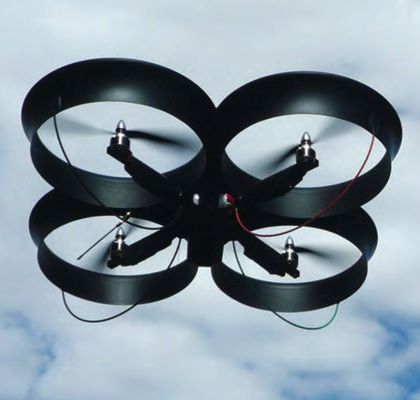
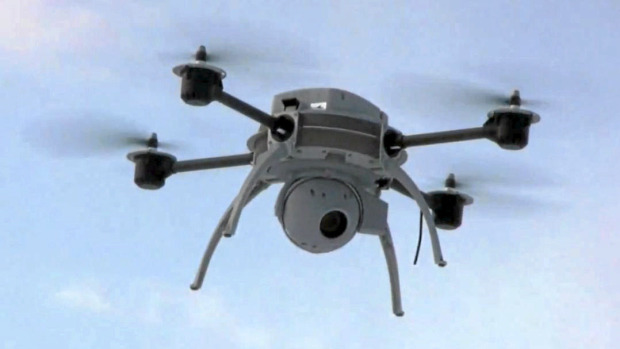
california_dronesBefore anyone gets too worried, rest assured that the drones in question are a far cry from the UAV’s currently conducting armed missions overseas. Unlike the Predator and Reaper drones that carry multiple Hellfire missiles and can level entire villages, these drones are relatively benign, weighing only a few pounds and relying on a series of propellers to keep them aloft. But of course, the potential for harm resides in their ability to monitor, not to kill…

UAV_scoutConcerns over domestic drone surveillance reached a sort of climax  last February after federal lawmakers signed the Modernization and Reform Act of 2012 into law. Among other things, the act required the Federal Aviation Administration (FAA) to accelerate drone flights in U.S. airspace. In response, the Government Accountability Office (GAO) warned that the act would allow drone use to become commonplace in the US.

In accordance with that law, drones, known in the report as “unmanned aerial systems,” are currently limited in the United States to law enforcement activities, search and rescue, forensic photography, monitoring or fighting forest fires, border security, weather research, scientific data collection and even hobbies. However, the law calls for expansion so drones can be used for commercial, utility and public  uses.

UAV_dom1Naturally, the FAA feels that the new law doesn’t take into account several key problems – notably concerns surrounding privacy, security and even GPS jamming and spoofing. In short, they pointed out that despite drone’s on-board navigation and detection system that allow them to avoid crashes, said systems could cause complications if and when drones share airspace with private aircraft.

Among other things, the FAA recommended that drone GPS systems undergo encryption so they would be resistant to jamming and hacking, which is apparently a danger in non-military unencrypted drones. They also advised that the government set up secure operation centers for unmanned drones, and recommended that the government formulate privacy protections to head off potential “abuses”.

UAV_domObviously, the FAA’s report and public concern struck a note. Just last month, federal lawmakers introduced legislation regulating state and federal government use of unmanned drones in the United States. This legislation prohibits drones from being armed, and would demand that agencies register drones and adopt privacy polices. What’s more, the proposal would allow drones to be used only in criminal matters, in which warrants would be required.

Once again, it appears that the Obama administration is willing to step in where public concerns over developing technology are concerned. Recall the instruction signed by Defense Secretary Ashton Carter back in December of last year designed to limit the development of autonomous aerial drones? Well here too, instructions have been given, but the general sense of worry is far from alleviated.

X-47BIt puts me in mind of a prediction Arthur C. Clarke made shortly before he died in 2008. He predicted that despite concerns over “Big Brother”-type monitoring, that digital surveillance would be adopted by every city within the civilized world, until such time that crime was virtually eliminated. Much like many predictions he made, this one proved a little optimistic and futurist for some of his fans (including this one!).

As it stands, the use of remote machines to monitor our world is an ongoing and growing concern, and the debate will hardly be decided so easily. In the end, we all just have to ask if we really want to live in a post-privacy state, what the costs of living in that kind of world will be, and whether or not it will truly mean the emergence of dystopian scenarios, as envisioned by George Orwell and others.

Source: Wired.com, (2)

Global Warming Slowed by Volcanoes

Klyuchevskaya Volcano. NASA Goddard Space Flight Center

Global mean temperatures have been rising in recent years, consistent with every projection provided by Climate Change specialists and planetary ecologists. However, it now seems as though the rate of increase is not as bad as it should have been, thanks to a series of small-to-moderate-sized volcanic eruptions that have spewed sunlight-blocking particles high into the atmosphere.

Between 2000 and 2010, the average atmospheric concentration of carbon dioxide rose more from about 370 parts per million to nearly 390. According to Ryan Neely III, an atmospheric scientist at the University of Colorado, Boulder, if that uptick were the only factor driving climate change, the average global temperature would have risen about 0.2°C. But a surge in the concentration of light-scattering particles in the stratosphere countered as much as 25% of that potential temperature increase.

Sanpedropable Volcano as seen from the ISS
San Pedro Volcano, as seen from the ISS

In addition, Neely and his colleagues ran a series of simulations that indicated that human the human contribution of aerosols to the stratosphere – which would have had a counteractive effect to the carbon – was minimal between 2000 and 2010. William Randel, an atmospheric scientist at the National Center for Atmospheric Research in Boulder claimed that the pattern of stratospheric particulate variations during the past decade “shows the fingerprint of volcanoes, with the right episodes showing up at the right time.”

For some time now, researchers and ecologists have known that sulfur dioxide, a major biproduct of volcanic eruptions, has a global cooling effect. Once introduced into the upper atmosphere, this particulate matter blocks out solar radiation and prevents it from being absorbed by the Earth’s soil, water, and plant life. In fact, it was a massive series of eruptions which took place during the Cretaceous–Paleogene Era that is believed to be linked to the extinction of the dinosaurs.

converted PNM fileFor many years, geoengineers have considered releasing sulfur dioxide into the upper atmosphere in order to slow down the process of Climate Change, a measure intended to give Earth’s scientists more time to develop alternative fuels and its people more time to get their act together. However, at this juncture it seems that the planet has obliged us and given us a bit of window, and completely unheeded.

It’s good to know that human agency alone does not determine the course this planet will take. At the same time however, one should not get too enthused and think this means we’re in for a big reprieve. Based on the most recent data, humanity still only has a few decades before the worst begins to happen and our world slowly becomes uninhabitable.

Source: sciencemag.org, Wired.com


ISS Astronaut Chris Hadfield sings with the Barenaked Ladies!

ISS_Hadfield_BNLFans of The Big Bang Theory, or anyone who has lived in Canada for the last 20 years, ought to be instantly familiar with the Barenaked Ladies. However, what is not common knowledge is that Chris Hadfield, an astronaut aboard the International Space Station, is himself Canadian and apparently, quite the musician! Not only can he sing, he can play the guitar in zero-gravity and even execute some sweet moves. Quite the ensemble!

And in this rare treat, which took place back in February, Hadfield, the Barenaked Ladies, and the Wexford Gleeks children’s choir all collaborated to create the world’s first space-to-earth musical collaboration. The song they sang was an original creation, entitled “I.S.S. (Is Somebody Singing)”, which was commissioned by CBCMusic.ca and The Coalition for Music Education with the Canadian Space Agency to celebrate music education in schools across Canada.

So if you have a few minutes, I recommend you cue up this video, turn the volume up, and enjoy a truly heartwarming and breathtaking song that celebrates Canada, music, planet Earth, and the wonder of looking down at it all from space. It’ll give you goose bumps, I swear!

The Future is Here: MMI Electronic Tattoos!

patchIt’s known as Mind-Machine-Interface, the ability to interface and control machines using only your mind. And thanks to a number of dedicated researchers in various fields, it’s no longer the stuff of science fiction. With mind-controlled prosthetics, bionic limbs, and the growing field of machine-enabled telepathy, the day may soon come when people can interface, access and control machinery with just a few thoughts.

But of course, that raises all kinds of concerns about invasive procedures, whether surgery will be needed in order to implant devices into the human brain that can translate brainwaves into commands. Alternately, where non-invasive means are involved, it can take some time to calibrate the machinery to respond to the user’s nerve impulses. As those awful infomercials say, “there has be a better way!”

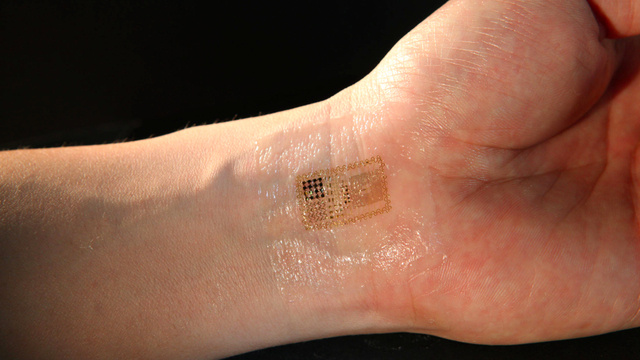
patch_headAs it turns out, electrical engineer Todd Coleman and his team at the University of California at San Diego has been working on a way to use wireless flexible electronics that one can apply on the forehead just like temporary tattoos. Building on the emerging field of biomedical electronics, these tattoos will be able to read brainwaves and allow a person to control electronic devices without the need for surgery or permanent implants.

The devices are less than 100 microns thick, the average diameter of a human hair, and consist of circuitry embedded in a layer or rubbery polyester that allow them to stretch, bend and wrinkle. The devices can detect electrical signals linked with brain waves and incorporate solar cells for power and antennas that allow them to communicate wirelessly or receive energy.

patch_breakdownOf course, other elements can be added as well, like thermal sensors to monitor skin temperature and light detectors to analyze blood oxygen levels, making it both a health monitoring patch and a fully-integrated control device. Combined with health patches that are being developed for use internally, an entire health network can be created that allows for every aspect of a patients health to monitored in real-time, anticipating and predicting health problems before they flare up.

Currently, Coleman and his colleagues are pursuing the application of using these patches to monitor premature babies to detect the onset of seizures that can lead to epilepsy or brain development problems. The devices are also being commercialized for use as consumer, digital health, and medical device. But the potential for their use is staggering, even alarming.

droneFor example, these devices can also be put on other parts of the body, such as the throat. When people think about talking, their throat muscles move even if they do not speak, a phenomenon known as subvocalization. Electronic tattoos placed on the throat could therefore behave as subvocal microphones through which people could communicate silently and wirelessly to each other.

However, a more alarming application is in the industrial and defense field, which is being pursued by the startup MC10 in Cambridge, Mass. In the course of their research, Coleman and his colleagues found that individuals who were hooked up to a computer through large caps studded with electrodes were able to remotely control airplanes and a UAV over cornfields in Illinois. Such is not possible with these tattoos at present, but Coleman admits that he and his colleagues are “working on it”.

telepathyBut even more alarming than this is the long term implications of what this could mean for us as a species, which is that electronics could one-day enable wireless peer-to-peer brain communication – aka. machine-enabled telepathy. With devices that can read and transmit brainwaves and vocal information, it would no longer be necessary for people to use radios, phones, email, or any other means of communication to talk to one another.

Simply tune in, subvocalize or think what you want to convey – and boom! instant messaging and perfected! Lord knows the art of diplomacy might suffer, and we can forget about sarcasm, tact, or shades of meaning. Society may very well breakdown or people will just have to grow thicker skin as everyone is forced to communicate what they really think to each other!

Source: txchnologist.com

NASA’s Cold Fusion Technology

cold_fusionIn 1989, two scientific researchers – Martin Fleischmann and Stanley Pons – announced the achievement of cold fusion. In a press release that garnered massive amounts of publicity, they stating that their experiment, involving a electrified palladium rod placed in a solution of heavy water, had succeeded in absorbing hydrogen and compressing it within the rod to the point that individual atoms began to fuse and helium was formed.

Naturally, other labs began to test their method and found that the same did not happen for them. With time, the experiment was revealed to be the result of a false positive as more and more labs claimed they unable to replicate the results. In the end, their announcement appeared premature and their claims unscientific. Still, the men never retracted their claim and moved their labs overseas.

NASA_coldfusionAnd interestingly enough, the declaration that they had achieved the dream of clean, abundant, cheap energy fueled the public’s imagination. Henceforth, the concept of cold fusion, as they had preached it, was featured in numerous movies and stories, even though it was now believed to be something of a pipe dream. And for some, the idea of the technology never died. Cold fusion remained a scientific dream similar to a Grand Unifying Theory or the elusive Higgs Boson.

One such organization is NASA, who continues work on this science through the development of their low-energy nuclear reaction (LENR) technology. It is their hope that one day the technology will be sophisticated enough to become commercially viable, making cold fusion reactors that could power everything  – from homes, to cars, to planes – a reality.

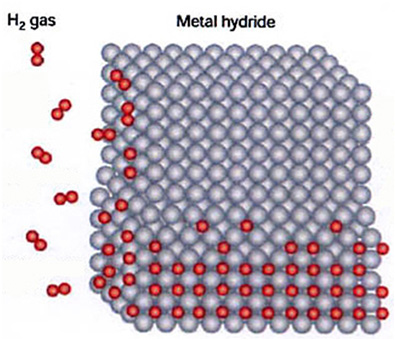
lner-nickel-hydrogen-latticeAnd unlike previous attempts that sought to harness basic fusion, the technology behind the LENR is really quite revolutionary. Rather than rely on strong nuclear forces to meld atoms and produce energy, LENR harnesses the power of weak nuclear force.

This is done by using an oscillating nickel lattice that takes in hydrogen atoms and then exchanges electrons with them. This has the effect of forming slow-moving neutrons which are absorbed, making the nickel unstable. To regain its stability, the nickel strips a neutron of its electron so that it becomes a proton — a reaction that turns the nickel into copper and creates a lot of energy in the process.

The big upside to this process is the fact that it produces zero ionizing radiation and zero radioactive waste, making it the safest and cleanest nuclear process to date. In addition, NASA claims that relying on reactors like these, it would only take 1% of the world’s nickle production to meet the world’s current energy needs, and at a quarter of the cost of dirtier fuels like coal. On top of that, they’ve also indicated that the same process can be done using a carbon lattice instead of nickel, making it even more versatile.

???????????????????????????????So the question remains, why isn’t every household running on a LENR reactor already? Well, two problems. For one, the amount of energy needed to get the ball rolling is quite high. Initially, the LENR requires a 5-30THz frequency burst of energy to make the nickel lattice begin oscillating, which is difficult to efficiently produce.

Second, other labs have experienced a few… uh, accidents… trying to reproduce the process, which included a few explosions and some melted windows. No deaths were reported, mind you, but it does demonstrate that the process can generate a LOT of power if not properly controlled.

Still, other means of generating electricity, such as nuclear fission, have experienced some bumps along the way (i.e. Chernobyl and Three Mile Island) and we still rely on them. And oil and coal are what we’ve come to think of as “dirty means” of generating power, meaning they cause tremendous amounts of pollution or can lead to environmental debacles, such as oil spills. And natural gas can only last so long. So realistically, there may be hope for LENR and cold fusion yet.

Fingers so very crossed! And be sure to check out NASA’s video explaining the process:


Source:
Extremetech.com

The Future is Here: The 3D Scanner!

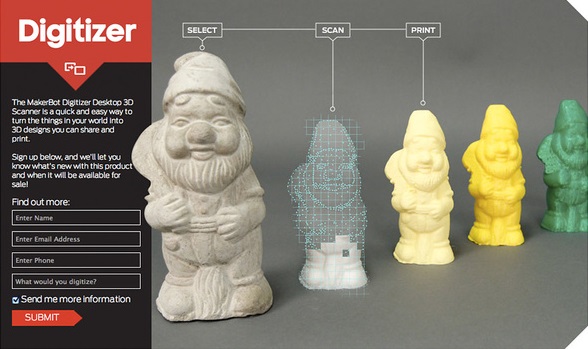
makerbot3dOkay, that title might be a bit of a mislead, but after years of developing the technology, it seems that we might have something which is essentially the next best thing. Until recently, 3D printers were designed for use exclusively by trained technicians. And despite the ease with which modern 3D printers can be used, it is still difficult to design and prep the requisite models, which still requires expertise in modelling software.

But that too could be changing, thanks to the new MakerBot’s Digitizer Desktop 3D Scanner. Designed to supplement their printer (the Replicator 2) this device is capable of scanning any object, creating a three-dimensional model, and then uploading it to your printer where it will then be molded into solid form, bit by bit. In effect, people can now create objects as easily as they could print off an inkjet document.

makerbot-replicator2The Digitizer was revealed for the first time at the South by South West (SXSW) Conference in Austin, Texas earlier today, where emerging technologies are being showcased alongside the latest in entertainment and music. And while the device was merely a prototype, one which is still undergoing testing and refining, MakerBot announced that they plan to begin commercial production very soon.

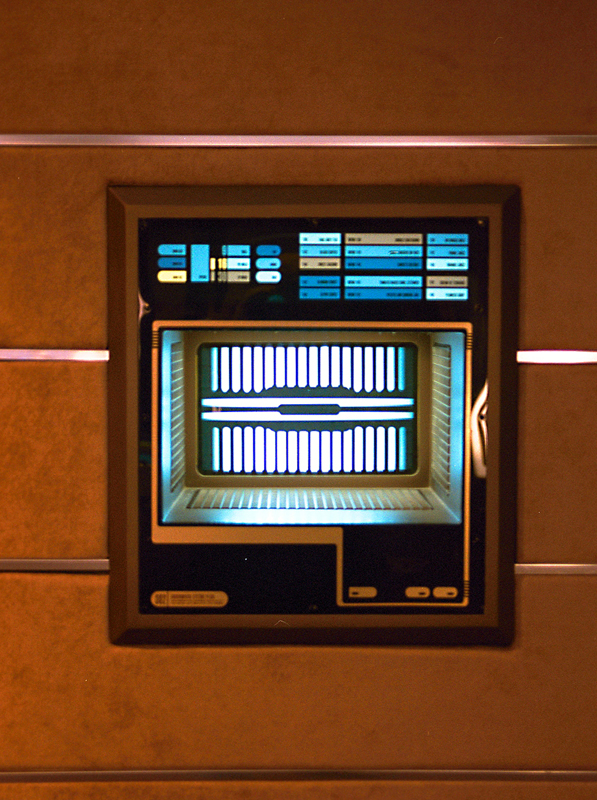
Which makes it official. Human beings now have access to Replicator technology and is one step closer to living in a Star Trek universe! Granted, were not quite to the point where we can generate anything, including food and precious metals, but this latest development has revealed to us a future where DIY can encompass just about anything. If a an appliance breaks in your home, just scan the faulty component and download it into your printer. No need to contact the manufacturer and activate that troublesome warranty!

Foods comes out here
Foods comes out here, waste goes in the recycling unit!

Naturally, there are concerns about the controversy this will create as well. While the Digitizer Desktop 3D Scanner will certainly be another big step towards making 3D printing more accessible, it’s also sure to add fuel the debate over the legality and copyright issues of duplicating real world objects. What’s more, the cost of each unit (most likely a few thousand dollars each) is pretty prohibitive for most households, raising the question of real access.

Nevertheless, this is still pretty exciting news. Since the beginning of recorded history, our collective economic models have been based on the idea of resource scarcity. But with further refinements and the ability to generate objects out of more materials (including the organic), all our economic models are likely to change and we could very well be embarking on a future where scarcity has effectively become obsolete.

Yes, with a little more time, research and cool gadgets, we could be witnessing the collapse of financial history. Where all units of value will be made useless and as a species, we’ll be one step closer to economic equilibrium! And I have to admit, this is one area of change that I find exciting, as opposed to scary!

Source: Gizmodo.com