Going to Seattle!

Space_Needle002Hi folks. Just a heads up from your humble blogger to say that I will be out of town for the next few days, and therefore quite AFK! In fact, it seems I’ve been away-from-keyboard quite a bit these past few weeks. But it’s been that kind of month. Plenty of drama, tragedies involving old friends, injuries and illnesses, and lots of lots of tiring work.

Naturally, this weekend is expected be a reprieve from most of that. The family, which includes my mother, father, sister and brother-in-law, are all getting together in Seattle to celebrate the birthdays of my darling wife, mother and myself. Ah, perhaps I should explain that better. You see, our three birthdays all fall within a few days of each other. And as my sister lives down in Oregon, we find it is difficult for large-scale family gatherings.

As such, we do our best to convene the six of us whenever we can as close to the days of January 21st to 26th as possible. As usual, there is to be shopping, visits to local places of color and culture, and hopefully a good long walk in the Pike Place Market. Always a good time down there, and this year I wonder if I will run into half as many crazies as last year. I tell ya, within the space of a block, there was a man yelling “I didn’t do it!” at me, a woman handing out pamphlets of how RFID chips were the “Mark of the Devil”, and a Church of Scientology offering free IQ tests. I’ll leave it to you to guess which I found the nuttiest!

Pike Place Market SeattleAnd, assuming I get my way, we shall also be taking a tour of the Pike Place Brewery this year, one of North America’s oldest and most venerated craft breweries! As a beer snob with his own website (check it out here), I always enjoy sampling new and exciting beers and this place has been a very good source of Pacific Northwest brews over the last few years. It, like much else about the Northwestern US, makes me think that a Cascadian Republic could really work. Or failing that, that the great states of Washington and Oregon should be invited to become part of Canada. It’s not so crazy, many people say they are practically the 11th and 12 provinces anyway! 😉

In any case, I look forward to seeing my sister again, as we get so few chances to get together anymore. Hoping to score some decent swag and give my sister the presents she’s been waiting on for the past few birthdays and Christmases as well. I shall be back on Sunday, so whatever editing, writing, and articling I have promised or committed to shall resume by then. Hope you all have a great weekend too, cuz I know we’ve all earned one! I look forward to us all being well-rested, relaxed and alert come Monday!

The Future is Here: The AirMule!

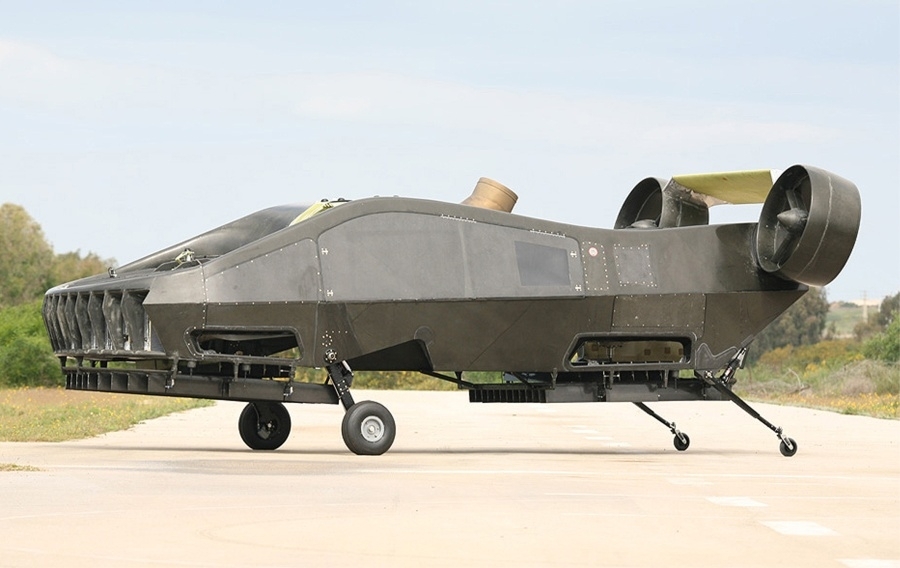
urbanaero_muleMilitary necessity has been an engine for creation since the beginnings of recorded history. With soldiers constantly looking for new ways to kill each other, as well as save the lives of their own, one can always expect to see new and exciting technologies taking the field. And often as not, these developments have a way of trickling down and impacting society as a whole.

Take the AirMule, a compact, unmanned, single-engine vehicle that is being developed by Urban Aeronautics. Based in Israel, this company is dedicated to the creation of Vertical-Takeoff-and-Landing (VTOL) craft that utilize internal lift rotors to get in and out of tight areas, ostensibly for the purpose of supporting military personnel,  evacuating the wounded, and conducting remote reconnaissance missions.

airmuleIn an age where military forces are relying increasingly on unmanned aerial vehicles, the AirMule is designed to be used in operations that fit the 3 D’s: Dirty, Dangerous or Dull. In addition, it is controlled through remote operation and Tele-Presence, meaning the pilots who operate it do so from the safety of a base behind the front lines. The addition of this technology allows remote operators to stay safe while still feeling like they are physically on the scene.

The immediate benefits of this vehicle lie in the fact that it is able to fly at extremely low altitudes, allowing it to pass beneath enemy fields of fire and radar. At the same time, it is capable of taking off and landing in regions that are not accessible by conventional CasEvac craft, such as helicopters. This represents another concern for military planners, who are forced to contend with the fact that wars are increasingly fought against insurgents in places like cities, villages and other inaccessible environments.

The vehicle is capable of airlifting a 500 kg load, which can take the form of wounded personnel or 500 kilos of supplies. In this way, the AirMule is able to provide point to point logistic support as well as life-saving evac missions for wounded soldiers. However, it also has a number of applications for non-military use, such as assisting EMTs in rescuing injured people, delivering supplies to disaster-stricken areas, and offering assessment capabilities to companies who need to conduct inspections in potentially hazardous zones.

No telling when the AirMule will be taking the field, but in all likelihood, it won’t be more than a few years. What’s more, with the nature of military engagements changing and unmanned technology on the rise, just about every advanced military on the planet is likely to be following suit. And as always, we can expect the technology to trickle down to society as a whole, with robotic hovercraft replacing ambulances and medevac choppers within a decade’s time.

Check out the video of the AirMule concept and its field tests. It’s a few minutes long, but quite interesting:

The Future is Here: The Chevy EN-V

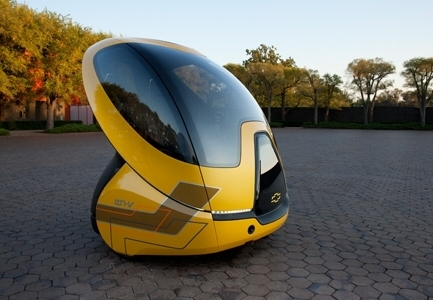
chevy_envImagine a future where cars never crash, never break down, can be dispatched automatically to pick people up, and emit no carbon whatsoever. Well, that’s the idea behind the Chevy EN-V, an “Electric Networked Vehicle” that represents GM’s concept for a next-generation automobile that combines green technology and wireless networking.

Currently under development by General Motors, the vehicle combines four major features, all of which have been in the works for some time. These include autonomous driving, an electric engine, hydrogen fuel cells and mobile applications. Whereas most hybrid vehicles today rely on a combination of gas and electric power cells, this vehicle intends to do away with petroleum altogether.

What’s more, systems such as adaptive cruise control, side blind zone warning and automatic park assist are combined with a new advanced communication technology that allows for the first, fully-autonomous drive in history. Not only is this machine able to drive itself with the passenger in the vehicle, it is capable of being dispatched to an address and driving itself. In short, no driver necessary!

And finally, there’s networking features such as OnStar’s RemoteLink, Chevrolet MyLink, Buick and GMC IntelliLink and Cadillac CUE, all of which comes standard on the vehicle. These allow the driver to obtain directions, remotely lock the doors, and get up to date maintenance and fuel specifications, either through the dashboard display or through their smartphone. These effectively allow the driver to interface with the vehicle through their smartphone.

And it’s a timely creation, given mounting concerns over climate change and the proliferation of wireless technology and applications. And might I say, it’s about freaking time! It seems like only yesterday that GM was doing all it could to bury this kind of technology, buying up the patents and making sure they were staying on the shelf, or electing people who would make sure it wouldn’t see the life of day for another few years. Guess their finally seeing the writing on the wall!

Source: GM.com

Iran Launches Monkey Into Space (Apparently)

iran_rocketIn spite of years being under a trade embargo, Iran claims to be making some rather interesting breakthroughs. In addition to drones, long range missiles and stealth aircraft, they now claim to have sent a primate into space. According to the state news network, the successful flight involved a relatively small rocket that went straight up and down, and is a “prelude to sending humans.” Oh, and the monkey arrived safe and sound.

Whereas some defense analysts in the US and other nations worry that this was a demonstration of potential military might, others see it in different terms. For example, Jonathan McDowell – a Harvard astronomer who tracks rocket launches and space activity – claims that the exercise was merely a step towards Iran’s stated goal of developing rockets that could send human astronauts into space, a goal Tehran has repeated publicly for more than a year.

Alive, but not comfortable!

“It doesn’t demonstrate any militarily significant technology,” he said. “This is a tiny old rocket, and what’s on top is useful only for doing astronaut stuff.” Charles P. Vick, an expert on Iranian rockets at GlobalSecurity.org, went farther, stating that the report may have been a fabrication, seeing as how Iran tried and failed to perform the same launch operation back in 2011.
Naturally, there was also the propaganda value of the feet. James E. Oberg, a former NASA engineer and author of a dozen books on human spaceflight, claim that “to a large degree, it’s a fig leaf.” Apparently, such peaceful flights could take global attention off the nation’s military feats and ambitions, comparable to what North Korea does with much of its research and development programs.

In any case, the reportedly successful launch of the Kavoshgar-class rocket – which went by the name of Pishgam (trans: Pioneer) –  came amidst announcements by Iranian sources that stated they were developing a space capsule meant to hold human astronauts. “It’s based on Chinese technology,” Mr. Vick said, adding that Iran had nearly completed a large new launching pad big enough for powerful rockets that could loft warheads, satellites or people into space.

In short, we can expect little in the way of clarity and plenty in the way of worrying from western analysts over this latest development. And of course, as usual, the monkey always get forgotten in the mix! One thing that was not reported on was the brave little astronauts name. After all we’ve put them through for the sake of advances space travel, don’t the space monkeys deserve the same kind credit as human astronauts? Hell, even Russia put Laika on a commemorative stamp!

laika-stampSee? Guess you got to die if you’re an animal and want some recognition around here! Rest in peace Laika! Click on the links below to read more:

Source: The New York Times.com, Universtoday.com

The Future is Here: Paper Thin, Flexible Batteries

flexbatteryAs Yogi Berra would say, “It’s like deja vu, all over again.” Designed to be paper thin, flexible, and printable using a 3D printer device, this latest advancement combines several technological breakthroughs into one package. But instead of being a display device, a PDA, a smartphone, or some high-tech component, this latest piece of future tech is a simple battery. And in a world where technology is becoming increasingly smart, thin and ergonomic, it just may be the way of the future for electrical devices.

Well, simple might be a bit of a stretch. Developed by Imprint Energy, the key piece of technology here is a polymer electrolyte that allows the zinc-based battery to be recharged. In typical batteries, liquid electrolytes are used, which tend to experience the formation of “fingers” which bridge across the lithium interior of the battery and make charging impossible. But in this case, the flexible and customizable zinc anode, electrolyte, and metal oxide cathode of the battery are printed in the form of electrochemical inks.

This is turn leads to the creation of a battery that is not only flexible and printable, but also rechargeable, safer, cheaper, and more powerful than anything currently on the market. The printing process is similar to old-fashioned silk-screening where material is deposited in a pattern by squeezing it through a mesh over a template. While this screen printing is different from what we tend to think of nowadays as 3D printing, it is in keeping with the concept of printing where manufacturing is done on the micro-level, leading to the creation of all kinds of consumer products.

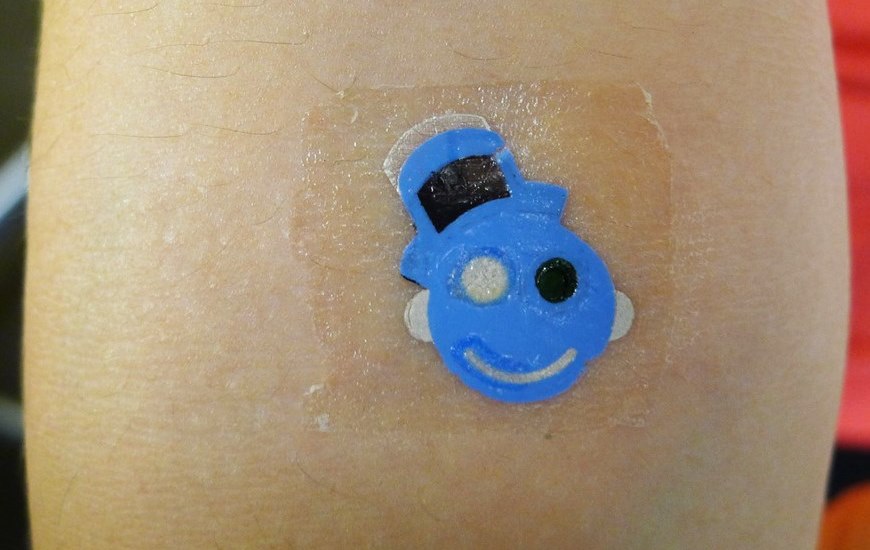
smart-tattooAnd like all technological advancements, this one occurred not in a vacuum but amidst a backdrop of cool and interesting breakthroughs. For example, numerous tech c0mpanies and start-ups are using screen printing to fabricate electronic components that will address the need for cheap and disposable electronics in the next few years.

Norway-based Thin Film Electronics is one such group, which has created a prototype all-printed devices that includes temperature sensors, memory, logic, and uses Imprint Energy’s new battery. In addition, smart tattoos are being created to monitor patient vitals, blood pressure, pulse rate, and blood glucose levels. Printable “smart stickers” for time-sensitive food or medicines are being contemplated as well, patches that would be able to store details of  a products temperature, chemical exposure, freshness, and history of shock and vibe during handling.

All of this, coupled with ultra-thin devices, could led to a future where all devices and electronics are the size of a business card, as thin as a sheet of construction paper, and can be worn on a person’s body. Hey, there’s a reason they call it “smart technology” 😉

Source: Extremetech.com


IBM Creates First Photonic Microchip

optical_computer1For many years, optical computing has been a subject of great interest for engineers and researchers. As opposed to the current crop of computers which rely on the movement of electrons in and out of transistors to do logic, an optical computer relies on the movement of photons. Such a computer would confer obvious advantages, mainly in the realm of computing speed since photons travel much faster than electrical current.

While the concept and technology is relatively straightforward, no one has been able to develop photonic components that were commercially viable. All that changed this past December as IBM became the first company to integrate electrical and optical components on the same chip. As expected, when tested, this new chip was able to transmit data significantly faster than current state-of-the-art copper and optical networks.

ibm-silicon-nanophotonic-chip-copper-and-waveguidesBut what was surprising was just how fast the difference really was. Whereas current interconnects are generally measured in gigabits per second, IBM’s new chip is already capable of shuttling data around at terabits per second. In other words, over a thousand times faster than what we’re currently used to. And since it will be no big task or expense to replace the current generation of electrical components with photonic ones, we could be seeing this chip taking the place of our standard CPUs really soon!

This comes after a decade of research and an announcement made back in 2010, specifically that IBM Research was tackling the concept of silicon nanophotonics. And since they’ve proven they can create the chips commercially, they could be on the market within just a couple of years. This is certainly big news for supercomputing and the cloud, where limited bandwidth between servers is a major bottleneck for those with a need for speed!

internetCool as this is, there are actually two key breakthroughs to boast about here. First, IBM has managed to build a monolithic silicon chip that integrates both electrical (transistors, capacitors, resistors) and optical (modulators, photodetectors, waveguides) components. Monolithic means that the entire chip is fabricated from a single crystal of silicon on a single production line, and the optical and electrical components are mixed up together to form an integrated circuit.

Second, and perhaps more importantly, IBM was able to manufacture these chips using the same process they use to produce the CPUs for the Xbox 360, PS3, and Wii. This was not easy, according to internal sources, but in so doing, they can produce this new chip using their standard manufacturing process, which will not only save them money in the long run, but make the conversion process that much cheaper and easier. From all outward indications, it seems that IBM spent most of the last two years trying to ensure that this aspect of the process would work.

Woman-Smashing-ComputerExcited yet? Or perhaps concerned that this boost in speed will mean even more competition and the need to constantly upgrade? Well, given the history of computing and technological progress, both of these sentiments would be right on the money. On the one hand, this development may herald all kinds of changes and possibilities for research and development, with breakthroughs coming within days and weeks instead of years.

At the same time, it could mean that rest of us will be even more hard pressed to keep our software and hardware current, which can be frustrating as hell. As it stands, Moore’s Law states that it takes between 18 months and two years for CPUs to double in speed. Now imagine that dwindling to just a few weeks, and you’ve got a whole new ballgame!

Source: Extremetech.com

Movie News: Upcoming Sequels and Remakes!

With 2013 now in full swing and summer not that far off, it’s once again time to announce all the remakes, relaunches and sequels that Hollywood has in the works. And much like last year, it seems the majority of the industry’s money is being placed on some safe bets. In other words, instead of investing in new and exciting projects, they are banking on previous successes and old favorites that are sure to cash in.

Oh Hollywood! Do you remember when it was exactly that you lost your passion for cinema and became a tired, old hack? I guess it’s not your fault, what with all the money that goes into generating these movies and all the money that comes out. Money! Screws up everything. And we the public are probably to blame too. If we didn’t lap your shit up, you’d stop slopping it us wouldn’t you?

But this isn’t a thought essay on the merits of marketing to the lowest common denominator or the ethics of mass consumption. Here’s some of what Hollywood and their affiliates have in store for us for the year of 2013. Surprisingly, not all of it sucks!

Carrie:
carrieThe original movie adaptation of Stephen King’s classic tale of alienation, teen judgement and psychotic, telekinetic revenge was… well, a classic! So why do we need a remake? Is there any possible reason other than wanting to cash in on the fame of the original? Or could it be they simply want to take advantage of updated special effects for the sake of the bloody prom night scene? Originally due to come out in March, the movie has been pushed back to October to coincide with Halloween. Good call there!

Catching Fire:
IFor fans of the Hunger Games, this return to the popular Suzanne Collins series promises to be big, bold and profitable. In this installment, Katniss Everdeen (once again played by Jennifer Lawrence) is on a Victory Tour of Panem and realizes that her win with Peeta has triggered a series of rebellions. Photos from the shoot have begun to leak, and the movie is slated for release in November. Probably won’t suck and I am interesting in seeing it, just as soon as I actually read the second book.

Fantastic Four:
Fantastic-Four-reboot-Josh-TrankOnce again, Hollywood is making a reboot just a few short years after a previous adaptation was already launched. They did the same with Spider Man last year and this time around, its Fantastic Four. Josh Trank, director of Chronicle, is rumored to be man who will be directing, and there are hints that the remake will look and feel somewhat like Alien. No news yet on who is being contemplated to play the lead roles, but rest assured, the remake will be splashy and a likely draw.

GI Joe: Retaliation:
g-i-joe-2
After seeing its release pushed back a year in order to incorporate 3D, the sequel to the first G.I. Joe movie is slated to be released this May. In addition to starring Dwayne “The Rock” Johnson, Bruce Willis is also making an appearance as a character that seems no different than John McClain or Church from The Expendables. No telling why the studio felt it was necessary for the movie to be shot in 3D considering all the action and big names, but I would imagine it’s because they didn’t have a lot of faith in these things alone.

Man of Steel:
man-of-steel-logoNews of the Superman remake has already been making waves, and considering the writing team, cast, and the trailers that have been released, it seems that this movie might actually be firing on all cylinders. Still, one has to wonder why the franchise needed to be repitched so soon after the last repitch, which took place back in the summer of 2007 with Superman Returns. Wasn’t that movie decent enough, and didn’t it drop all kinds of hints that there was more to come? But of course, some projects run out of steam and you have to start over fresh. And this is one relaunch that I will actually be seeing and (fingers crossed) enjoying thoroughly!

Smurfs 2:
the-smurfs-2-535x401
Yeah, you read that right. It seems we can all look forward to a sequel to the original adaptation of that children’s cartoon that for some reason aired in summer of 2011. I mean there’s nostalgic appeal and then there’s this! What going on, Hollywood. Did some call for a retro free-for-all? Neil Patrick Harris will be reprising his role from the first, no doubt because he’s contractually obligated to! Oh, and its being shot in 3D, which of course means the studio has a lot of faith in it 😉

Thor: The Dark World:
Thor2Building on the success of the first movie, as well as the Avengers and all the other Marvel comics adaptations of late, this sequel sees Thor facing off against some “Dark Elves”, led by Christopher Eccleston (Doctor Who, 28 Days Later, Shallow Grave, The Others). Rumor has it that this movie will be directed by Game of Thrones veteran Alan Taylor, who’s apparently bringing some of the same realism he brought to that series to Asgard. Will that include blood, guts, and plentiful nudity? Guess things got a little darker and dirtier since the first one!

The Wolverine:
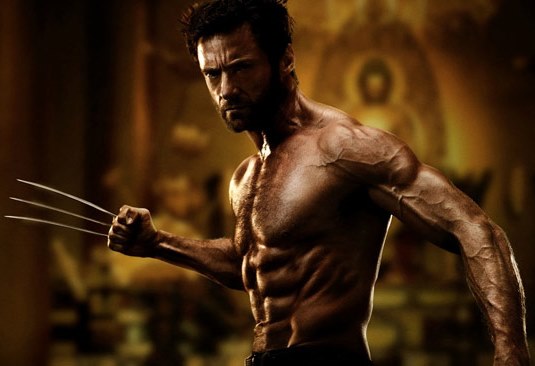
wolverine_prequelThe third prequel in the X-Men franchise, this one once again focuses on Wolverine. Going with a storyline which is big with the fans of the original comic, this movie tells the story of how Wolverine went to Japan to learn the ways of the Samurai. Hugh Jackman will be reprising his role as the title character, and seems to have undergone some kind of surgical procedure to remove every ounce of fat for the role! Seriously, Hugh, I hope that’s photoshop because you don’t so much look buff as scary!

And that’s some of what the great filmakers of LA LA land plan to subject us to. Do you ever sit back and wonder just how many starving children could be fed with all the money that goes into financing these projects? Of course, I can’t criticize too much since I’ve already admitted that I’m planning to attend more than one. And what’s more, there are a few projects coming out which do seem exciting, original, or just plain overdue. But that’s another post!

Source: IO9.com

More Star Wars News!

Star_WarsIt’s been confirmed. Contrary to what Abrams said earlier when asked about the likelihood of him directing Episode VII, it now seems that the director of Star Trek and creator of Alias, Lost, and Fringe will be attached to the project after all. The news came just yesterday in a statement issued by Disney Co., putting an end to days worth of rumors that Abram’s involvement might be in the bag.

Kathleen Kennedy, the movie’s producer and president of Lucasfilm, had this to say in the release:

“It’s very exciting to have J.J. aboard leading the charge as we set off to make a new Star Wars movie. J.J. is the perfect director to helm this. Beyond having such great instincts as a filmmaker, he has an intuitive understanding of this franchise. He understands the essence of the Star Wars experience, and will bring that talent to create an unforgettable motion picture.”

Personally, I still think they should have gone with Joss Whedon, but what do I know? Pitching movies is none of my business!

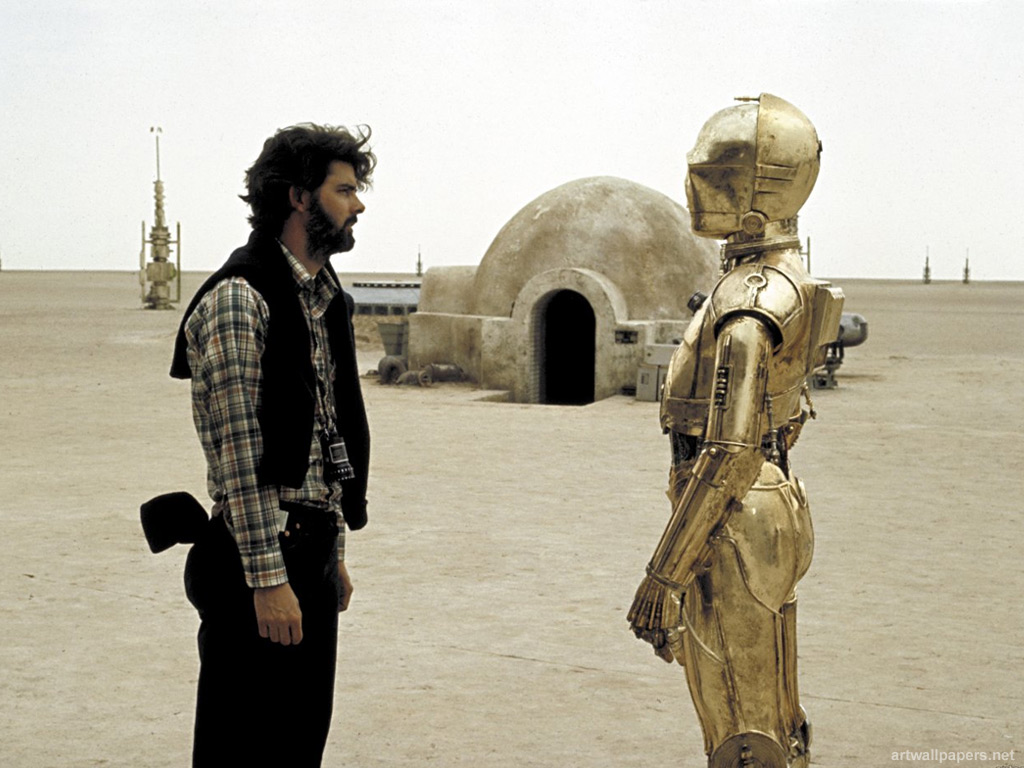
george_lucas02Another person who expressed approval was George Lucas himself, who said in a statement “”I’ve consistently been impressed with J.J. as a filmmaker and storyteller. He’s an ideal choice to direct the new Star Wars film and the legacy couldn’t be in better hands.” And last, but not least, was the man J.J. himself, who expressed excitement about being able to work on a franchise he loved growing up:

“To be a part of the next chapter of the Star Wars saga, to collaborate with Kathy Kennedy and this remarkable group of people, is an absolute honor. I may be even more grateful to George Lucas now than I was as a kid.”

In addition, Michael Arndt, the writer of Toy Story 3, is slated to write the script, and will be getting some help from some rather qualified sources. Simon Kinberg, the screenwriter from Sherlock Holmes and Mr. and Mrs. Smith, is one such person. The second, and undoubtedly most qualified, is Lawrence Kasdan, the man who wrote The Empire Strikes Back and Return of the Jedi in the original trilogy.

Between these four people and the multi-billion dollar check Disney shelled out for the rights to this movie, its apparent that they’re pulling out all the stops! All that remains is casting… who will be the next generation of Star Wars actors who will take us back to the “Galaxy Far, Far Away…”? Mark Hamil is certainly expected to make an appearance, but who else are we yearning to see? And most importantly, are big bucks and big names going to translate into big quality with his next movie?

Source: IO9.com, Huffingtonpost.com

Should We Be Afraid? A List for 2013

emerg_techIn a recent study, the John J. Reilly Center at University of Notre Dame published a rather list of possible threats that could be seen in the new year. The study, which was called “Emerging Ethical Dilemmas and Policy Issues in Science and Technology” sought to address all the likely threats people might face as a result of all developments and changes made of late, particularly in the fields of medical research, autonomous machines, 3D printing, Climate Change and enhancements.

The list contained eleven articles, presented in random order so people can assess what they think is the most important and vote accordingly. And of course, each one was detailed and sourced so as to ensure people understood the nature of the issue and where the information was obtained. They included:

1. Personalized Medicine:
dna_selfassemblyWithin the last ten years, the creation of fast, low-cost genetic sequencing has given the public direct access to genome sequencing and analysis, with little or no guidance from physicians or genetic counselors on how to process the information. Genetic testing may result in prevention and early detection of diseases and conditions, but may also create a new set of moral, legal, ethical, and policy issues surrounding the use of these tests. These include equal access, privacy, terms of use, accuracy, and the possibility of an age of eugenics.

2. Hacking medical devices:
pacemakerThough no reported incidents have taken place (yet), there is concern that wireless medical devices could prove vulnerable to hacking. The US Government Accountability Office recently released a report warning of this while Barnaby Jack – a hacker and director of embedded device security at IOActive Inc. – demonstrated the vulnerability of a pacemaker by breaching the security of the wireless device from his laptop and reprogramming it to deliver an 830-volt shock. Because many devices are programmed to allow doctors easy access in case reprogramming is necessary in an emergency, the design of many of these devices is not geared toward security.

3. Driverless zipcars:
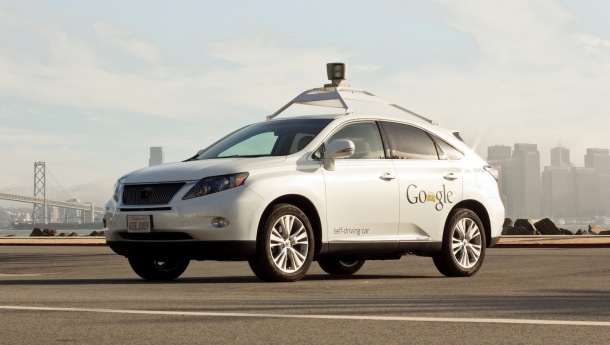
googlecarIn three states – Nevada, Florida, and California – it is now legal for Google to operate its driverless cars. A human in the vehicle is still required, but not at the controls. Google also plans to marry this idea to the zipcar, fleets of automobiles shared by a group of users on an as-needed basis and sharing in costs. These fully automated zipcars will change the way people travel but also the entire urban/suburban landscape. And once it gets going, ethical questions surrounding access, oversight, legality and safety are naturally likely to emerge.

4. 3-D Printing:
AR-153D printing has astounded many scientists and researchers thanks to the sheer number of possibilities it has created for manufacturing. At the same time, there is concern that some usages might be unethical, illegal, and just plain dangerous. Take for example, recent effort by groups such as Distributed Defense, a group intent on using 3D printers to create “Wiki-weapons”, or the possibility that DNA assembling and bioprinting could yield infectious or dangerous agents.

5. Adaptation to Climate Change:
climatewarsThe effects of climate change are likely to be felt differently by different people’s around the world. Geography plays a role in susceptibility, but a nation’s respective level of development is also intrinsic to how its citizens are likely to adapt. What’s more, we need to address how we intend to manage and manipulate wild species and nature in order to preserve biodiversity.This warrants an ethical discussion, not to mention suggestions of how we will address it when it comes.

6. Counterfeit Pharmaceuticals:
Syringe___Spritze___by_F4U_DraconiXIn developing nations, where life saving drugs are most needed, low-quality and counterfeit pharmaceuticals are extremely common. Detecting such drugs requires the use of expensive equipment which is often unavailable, and expanding trade in pharmaceuticals is giving rise to the need to establish legal measures to combat foreign markets being flooded with cheap or ineffective knock-offs.

7. Autonomous Systems:
X-47BWar machines and other robotic systems are evolving to the point that they can do away with human controllers or oversight. In the coming decades, machines that can perform surgery, carry out airstrikes, diffuse bombs and even conduct research and development are likely to be created, giving rise to a myriad of ethical, safety and existential issues. Debate needs to be fostered on how this will effect us and what steps should be taken to ensure that the outcome is foreseeable and controllable.

8. Human-animal hybrids:
human animal hybrid
Is interspecies research the next frontier in understanding humanity and curing disease, or a slippery slope, rife with ethical dilemmas, toward creating new species? So far, scientists have kept experimentation with human-animal hybrids on the cellular level and have recieved support for their research goals. But to some, even modest experiments involving animal embryos and human stem cells are ethical violation. An examination of the long-term goals and potential consequences is arguably needed.

9. Wireless technology:
vortex-radio-waves-348x196Mobile devices, PDAs and wireless connectivity are having a profound effect in developed nations, with the rate of data usage doubling on an annual basis. As a result, telecommunications and government agencies are under intense pressure to regulate the radio frequency spectrum. The very way government and society does business, communicates, and conducts its most critical missions is changing rapidly. As such, a policy conversation is needed about how to make the most effective use of the precious radio spectrum, and to close the digital access divide for underdeveloped populations.

10. Data collection/privacy:
privacy1With all the data that is being transmitted on a daily basis, the issue of privacy is a major concern that is growing all the time. Considering the amount of personal information a person gives simply to participate in a social network, establish an email account, or install software to their computer, it is no surprise that hacking and identity theft are also major conerns. And now that data storage, microprocessors and cloud computing have become inexpensive and so widespread, a discussion on what kinds of information gathering and how quickly a person should be willing to surrender details about their life needs to be had.

11. Human enhancements:
transhumanismA tremendous amount of progress has been made in recent decades when it comes to prosthetic, neurological, pharmaceutical and therapeutic devices and methods. Naturally, there is warranted concern that progress in these fields will reach past addressing disabilities and restorative measures and venture into the realm of pure enhancement. With the line between biological and artificial being blurred, many are concerned that we may very well be entering into an era where the two are indistinguishable, and where cybernetic, biotechnological and other enhancements lead to a new form of competition where people must alter their bodies in order to maintain their jobs or avoid behind left behind.

Feel scared yet? Well you shouldn’t. The issue here is about remaining informed about possible threats, likely scenarios, and how we as people can address and deal with them now and later. If there’s one thing we should always keep in mind, it is that the future is always in the process of formation. What we do at any given time controls the shape of it and together we are always deciding what kind of world we want to live in. Things only change because all of us, either through action or inaction, allow them to. And if we want things to go a certain way, we need to be prepared to learn all we can about the causes, consequences, and likely outcomes of every scenario.

To view the whole report, follow the link below. And to vote on which issue you think is the most important, click here.

Source: reilly.nd.edu

U.N. Launches Drone Investigation

Predator_drone_2In a move which will surely strike some as predictable and others overdue, the U.N. announced that it would begin an investigation into the legality of the US’s drone program. For years now, unmanned aerial vehicles have been the mainstay of the United States anti-terrorism efforts overseas, sparking controversy and leading to demands for more oversight and transparency. And as of this past Thursday, it will be the subject of a major international investigation.

Led by special rapporteur on counterterrorism and human rights Ben Emmerson, the investigation is expected to focus on the legal justification for America’s expansive drone program, which has largely remained secretive and unexamined. What’s more, Emmerson and his team are expected to examine exactly how much collateral damage and civilian deaths the use of drones has caused, which is a major point for those opposed to their use.

In a statement released from Emmerson’s office, he outlines the parameters of the issue and the investigation to be mounted as follows:

“The exponential rise in the use of drone technology in a variety of military and non-military contexts represents a real challenge to the framework of established international law. It is therefore imperative that appropriate legal and operational structures are urgently put in place to regulate its use in a manner that complies with the requirements of international law, including international human rights law, international humanitarian law (or the law of war as it used to be called), and international refugee law.”

Other groups were quick to chime in on the decision to launch an investigation, not the least of which were Americans themselves. For example, Dennis Blair, the former director of national intelligence under President Barack Obama and the current chairman of the Council on Foreign Relations, has urged the administration to make more of its drone policies public. “There’s been far too little debate [about the tactics of drone use] said Blair. “The United States is a democracy, we want our people to know how we use military force and that we use it in ways the United States is proud of.”

The American Civil Liberties Union, which has been waging a years-long effort to compel the Obama administration to release its internal legal considerations, also welcomed the U.N. investigation, and urged the U.S. to participate in it. Hina Shamsi, the director of the Union’s National Security Project, released a statement encompassing the ACLU’s position:

“Virtually no other country agrees with the U.S.’s claimed authority to secretly declare people enemies of the state and kill them and civilian bystanders far from any recognized battlefield. To date, there has been an abysmal lack of transparency and no accountability for the U.S. government’s ever-expanding targeted killing program.”

Naturally, the US is not the only nation under scrutiny in this investigation. And neither is the issue of civilian deaths the only focus. The use of drones has increased exponentially in recent years, thanks in no small part to extensive development of UAV technology in a number of countries. And with countries like China and Iran following suit, drone use is only expected to grow and expand. By Investigating the legality and implications of their use now, the potential exists to establish a framework before they become widespread.

Source: Huffingtonpost.com