News from Space: Dream Chaser Airframe Unveiled

dream-chaser-dockedWith the cancellation of the Space Shuttle program, and the termination of NASA’s operations with the Russian Federal Space Agency (Roscosmos), NASA has been pushing ahead with several programs designed to restore their access to low Earth orbit and the International Space Station (ISS). One such program is the Dream Chaser, a joint venture between the Sierra Nevada Corporation and Lockheed Martin that aims to create a winged mini-shuttle.

Earlier this month, the program reached an important milestone when the composite airframe structure was unveiled at a joint press conference by Sierra Nevada Corporation and Lockheed Martin at the Fort Worth facility. The assembly of the airframe took place at NASA’s Michoud Assembly Facility (MAF) in New Orleans, where Lockheed Martin is busy fabricating the structural components for the composite structure.
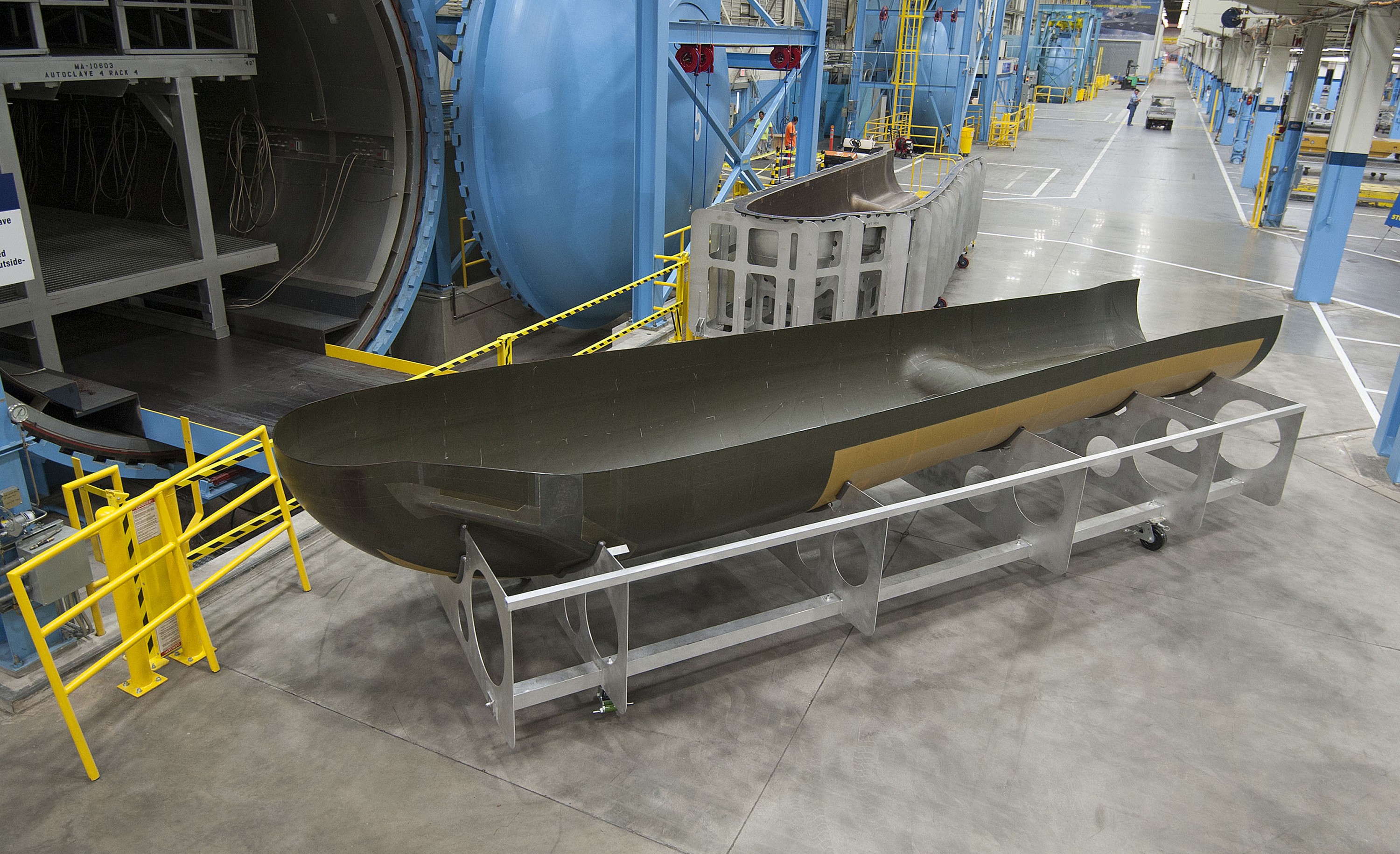
Dream Chaser at autoclave FP141497 07_31_14From here, the completed components are shipped to Lockheed Martin’s Aeronautics facility in Fort Worth, Texas for integration into the airframe and assembly. Designed to be launched into orbit atop a United Launch Alliance (ULA) Atlas V rocket and then fly back and land on its power, the Dream Chaser will carry a mix of cargo and up to a seven crewmembers to the ISS before landing on commercial runways anywhere in the world.

According to Mark N. Sirangelo, corporate vice president of Sierra Nevada’s Space Systems, the company chose to partner with Lockheed Martin because of its long history in the development of commercial aerospace technology:

As a valued strategic partner on SNC’s Dream Chaser Dream Team, Lockheed Martin is under contract to manufacture Dream Chaser orbital structure airframes… We competitively chose Lockheed Martin because they are a world leader in composite manufacturing, have the infrastructure, resources and quality control needed to support the needs of an orbital vehicle and have a proven track record of leading our nation’s top aviation and aerospace programs. Lockheed Martin’s diverse heritage coupled with their current work on the Orion program adds an extra element of depth and expertise to our program. SNC and Lockheed Martin continue to expand and develop a strong multi-faceted relationship.
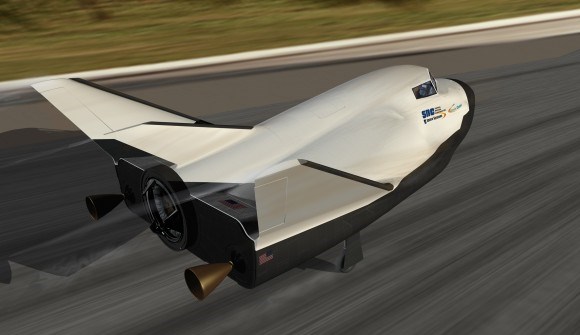
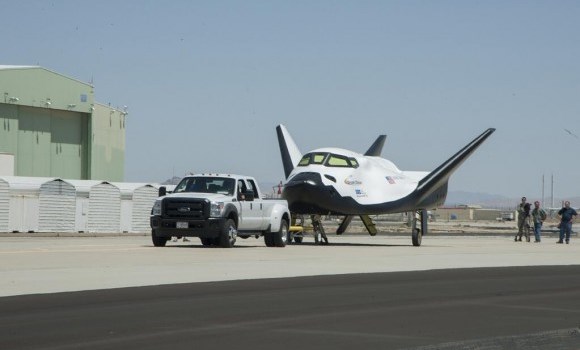
dream-chaser-test1Dream Chaser measures about 9 meters (29 feet) long with a 7 meter (23 foot) wide wing span, and is about one third the size of the Space Shuttle Endeavor and all other NASA orbiters – which were retired beginning in 2011. Upon completion of the airframe manufacturing at Ft Worth, it will be transported to SNC’s Louisville, Colorado, facility for final integration and assembly.

SNC announced in July that they successfully completed and passed a series of risk reduction milestone tests on key flight hardware systems that brought the private reusable spacecraft closer to its critical design review (CDR) and first flight. The Sierra Nevada Corporation is now moving ahead with plans for the Dream Chaser’s first launch and unmanned orbital test flight in November of 2016, which will take place atop an Atlas V rocket from Cape Canaveral, Florida.
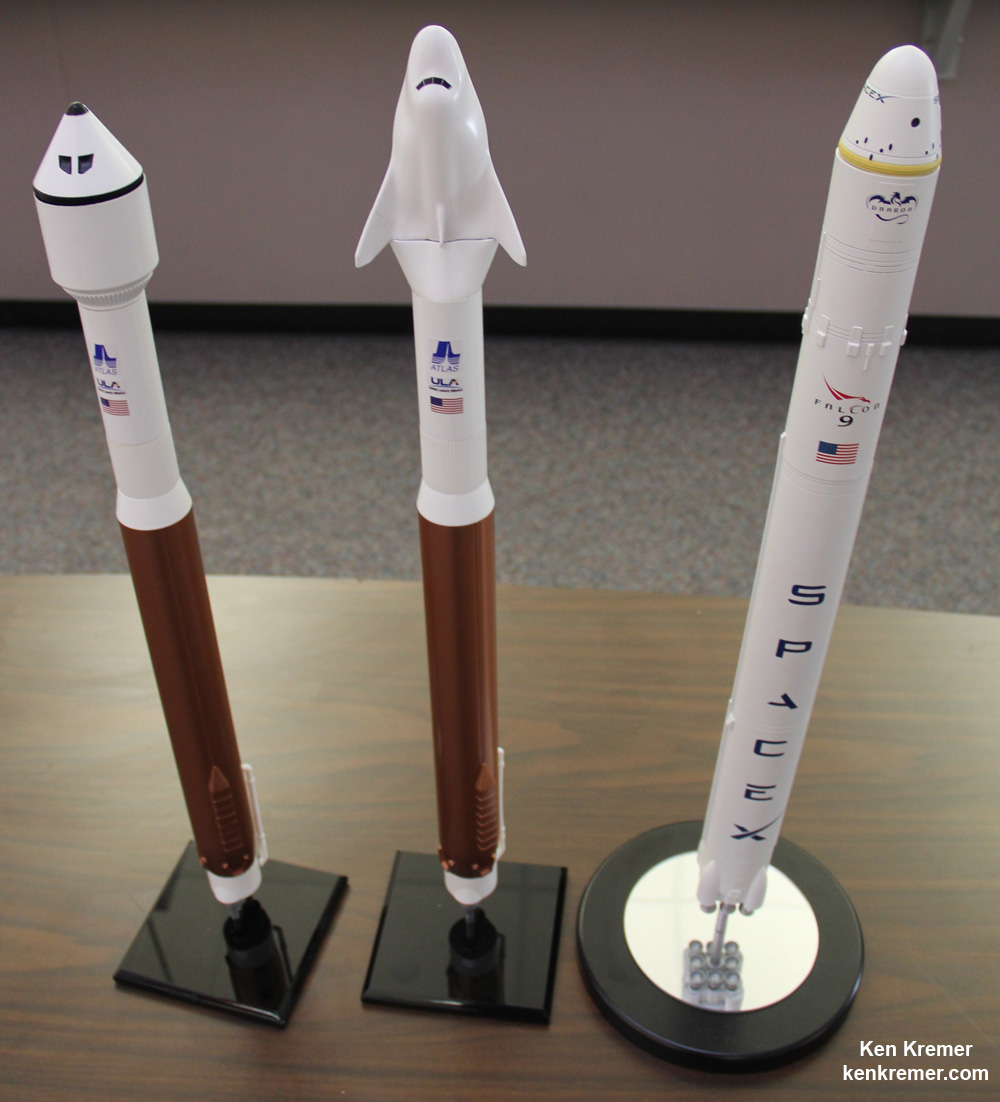
dream_chaserDream Chaser is among a trio of US private sector manned spaceships being developed with seed money from NASA’s Commercial Crew Program in a public/private partnership to develop a next-generation crew transportation vehicle to ferry astronauts to and from the International Space Station by 2017 – a capability totally lost following the space shuttle’s forced retirement in 2011.

These include the SpaceX Dragon and Boeing CST-100 ‘space taxis’, which are also vying for funding in the next round of contracts to be awarded by NASA around September 2014. Between a reusable mini-shuttle, a reusable space capsule, and reusable rockets, NASA not only hopes to restore indigenous space capability, but to drastically cut costs on future space missions.
Commercial-Crew-vehicles_Ken-Kremer-

Source: universetoday.com

More Yuva Artwork!

gliese-581.jpgMore news on the collaborative writing front! A few weeks back, I found myself tinkering with some of the ideas for the upcoming anthology known as Yuva – the one that deals with space exploration and colonization in the not-too-distant future. As a result of this tinkering, I began to look at some of our concept art and began to ponder making some changes…

Basically, in the anthology me and my writer’s group are crafting, there would be multiple waves of settlers arriving at the planet known as Gliese 581 g (aka. Yuva). Whereas the First Wave would be arriving in ships that relied on relativistic engines (slower than the speed of light), subsequent “waves” would be using something a little more advanced.

Second WaveHence the design you see above. Here, the ship is one of three that would be bringing the Second Wave to Yuva. Note the torus ring that encloses the ship. This indicates that the vessel comes equipped with an Alcubierre Drive, a proposed FTL system that is currently being investigated by NASA’s Engineering Directorate.

Based on the field equations of theoretical physicist Miquel Alcubierre, the drive does not  exceeding the speed of light within its local frame of reference, but allows a spacecraft to contract space in front of it and expand space behind it, resulting in effective faster-than-light travel.

ixs-enterpriseThe design was inspired in large part by the IXS Enterprise designs by Mark Rademaker, an artist who sought to visualize what a spaceship that relied on the Alcubierre Drive might look like. As you can see, he too pictured a ship that would have a ring-shaped torus, but is more suited to our near-future aspirations of exploration.

For the sake of Yuva, the Second Wave ships need to be especially exotic. Which would mean that the vessels have hulls composed of nanofabricated materials that are completely seamless. And whereas the First Wave ships would rely on antimatter engines that would spew energy out the back, the new ships would have no thruster nozzles to speak of.

space-colony-art-670It’s all in keeping with the idea of rapidly advancing technology, and how the effects of space travel exacerbate the gap between new and obsolete. Whereas the First Wave of colonists would take 100+ plus years to get to a star within our stellar neighborhood, subsequent waves would only need a few years.

This would mean that those who came next would be at least a century ahead in terms of development. And by the 22nd/23rd centuries, when the story is taking place, the leaps and bounds taking place in that amount of time would be immense. New waves of settlers would overwhelm the old with a sense of future shock…

space_elevator2But I’m venturing into spoiler territory here! Rest assured, when the anthology is complete, there’s going to be plenty of these kinds of technological, social and predictive issues being explored. And throughout all that, a sense of high adventure as well. After all, we started this project wanting to capture the awe and wonder that comes from space exploration.

Come hell or high water, that is what we intend to do! Stay tuned for more on this book as it develops…

News from Space: NASA Showcases New Rover Tools

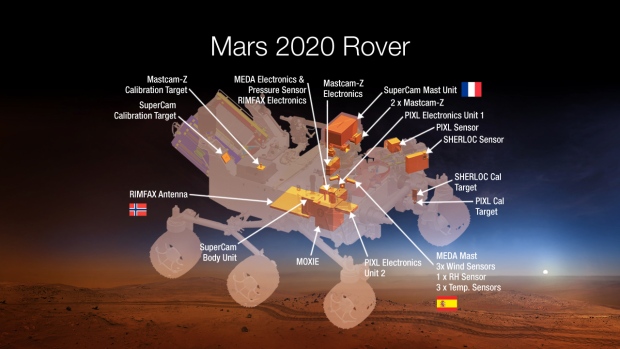
NASA_2020rover1Last Thursday at the agency’s headquarters in Washington, NASA unveiled more information about its Mars 2020 rover, which is scheduled to join Opportunity and Curiosity on the Red Planet by the end of the decade. The subject of this latest press release was the rover’s payload, which will consist of seven carefully-selected instruments that will conduct unprecedented science and exploratory investigations, and cost about $130 million to develop.

These instruments were selected from 58 proposals that were submitted back in January by researchers and engineers from all around the world. This is twice the usual number of proposals that NASA has received during instrument competitions in the recent past, and is a strong indicator of the extraordinary level of interest the scientific community is taking in the exploration of the Mars.

NASA_2020roverThese seven new instruments include:

  • Mars Oxygen ISRU Experiment (MOXIE): this technology package will process the Martian atmosphere into oxygen. ISRU stands for In Situ Resource Utilization.
  • Planetary Instrument for X-ray Lithochemistry (PIXL): this spectrometer will use a high-resolution imager and X-ray fluorescence for detailed elemental analysis to a finer degree than possible with any prior equipment.
  • Scanning Habitable Environments with Raman & Luminescence for Organics and Chemicals (SHERLOC): this sensor suite will use an ultraviolet laser for fine-scale mineralogy, detecting organic compounds, and high-resolution imaging.
  • Mastcam-Z: an advanced camera system that will send home panoramic and stereoscopic images and assist with rover operations and help determine surface mineralogy.
  • SuperCam: an imaging device with super capacities to perform chemical composition analysis and more mineralogy. This tool will allow the rover to peer around hunting for organic compounds within rocks or weathered soils from a distance, helping identify interesting locations to sample in greater detail.
  • Mars Environmental Dynamics Analyzer (MEDA): This sensor suite to measure temperature, wind speed and direction, pressure, and relative humidity. As dust is such a defining characteristic of weather on the red planet, it’s also going to measure dust size and shape, helping characterize how big of a hassle it will make housekeeping.
  • Radar Imager for Mars’ Subsurface Exploration (RIMFAX): a ground-penetrating radar to imagine the subsurface to centimeter-scale resolution.

These instruments will be used to determine how future human explorers could exploit natural resources to live on Mars, pinning down limits to how much we could rely on using local materials. In addition, demonstration technology will test out processing atmospheric carbon dioxide to produce oxygen, a key step towards using local resources for manufacturing oxidizers for rocket fuel and suitable for humans.

NASA_2020rover5This is perhaps the most exciting aspect of the proposed mission, which is looking ahead to the possibility of manned Martian exploration and even settlement. To quote William Gerstenmaier, the associate administrator for the Human Exploration and Operations Mission Directorate at NASA Headquarters in Washington:

Mars has resources needed to help sustain life, which can reduce the amount of supplies that human missions will need to carry. Better understanding the Martian dust and weather will be valuable data for planning human Mars missions. Testing ways to extract these resources and understand the environment will help make the pioneering of Mars feasible.

At the same time, and in keeping with plans for a manned mission, it will carry on in NASA’s long-term goal of unlocking Mars’ past and determining if life ever existed there. As John Grunsfeld, astronaut and associate administrator of NASA’s Science Mission Directorate in Washington, explained:

The Mars 2020 rover, with these new advanced scientific instruments, including those from our international partners, holds the promise to unlock more mysteries of Mars’ past as revealed in the geological record. This mission will further our search for life in the universe and also offer opportunities to advance new capabilities in exploration technology.

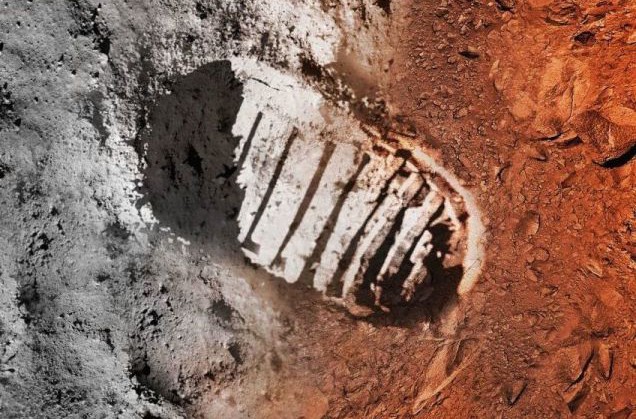
Mars_footprintNASA addressed these goals and more two weeks ago with their mission to Mars panel at the 2014 Comic-Con. This event, which featured retired astronaut and living legend Buzz Aldrin, spoke at length to a packed room about how Apollo 11 represented the “the first Giant Leap”. According to Aldrin, the Next Giant Leap could be “Apollo 45 landing humans on Mars.”

The panel discussion also included enthusiastic support of Orion and the Space Launch System which are currently under development and will be used when it finally comes time to send human explorers to join the rovers on Mars. The Mars 2020 mission will be based on the design of the highly successful Mars Science Laboratory rover, Curiosity, which landed almost two years ago.

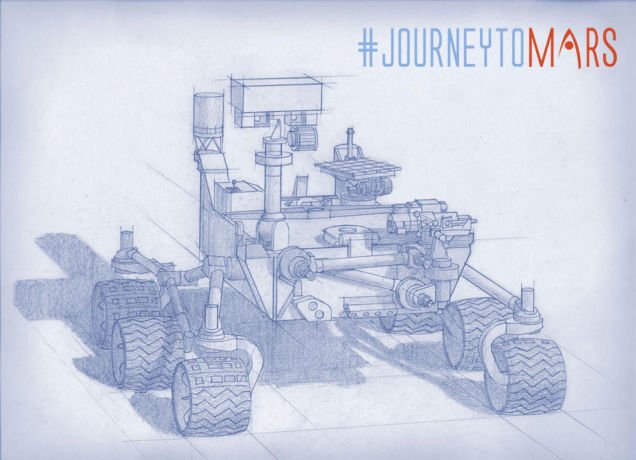
NASA_2020rover2Not only does it look virtually identical to Curiosity – from its six-wheeled chassis, on-board laboratory, and instrument-studded retractable arms – and will even be partly built using Curiosity’s spare parts.It will also land on Mars using the same lowered-to-the-surface-by-a-giant-sky-crane method. NASA als0 plans to use the rover to identify and select a collection of rock and soil samples that will be stored for potential return to Earth by a future mission.

These rock samples will likely have to wait until the proposed manned mission of 2030 to be picked up, but NASA seems hopeful that such a mission is in the cards. In the meantime, NASA is waiting for their MAVEN orbiter to reach Mars and begin exploring it’s atmosphere (it is expected to arrive by September), while the InSight Lander – which will examine Mars’ interior geology – is slated for launch by March 2016.

terraformingSo we can expect a lot more news and revelations about the Red Planet in the coming months and years. Who knows? Maybe we may finally find evidence of organic molecules or microbial life there soon, a find which will prove once and for all that life exists on other planets within our Solar System. And if we’re really lucky, we might just find that it could feasibly support life once again…

Sources: cbc.ca, fastcompany.com, nasa.gov, space.io9.com, (2), extremetech.com

News from Space: Coming Comet Flyby of Mars

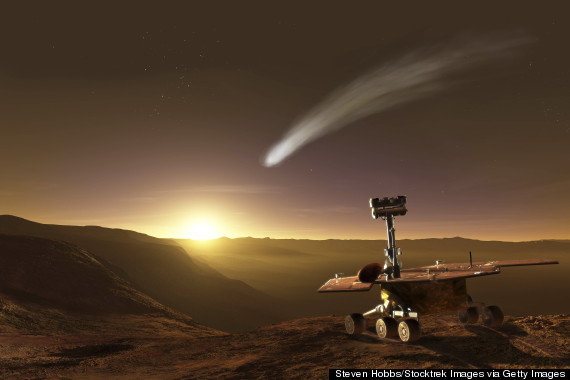
Mars_comet_flybyEarth’s neighbor is once again making the news, but not for the usual reasons. Rather than groundbreaking discoveries or updates being provided by the small army of rovers or satellites, the NASA has now got its eyes firmly fixed on the Red Planet because of an incoming comet. And in the coming months, NASA is taking every precaution to make sure its orbiting spacecraft are out of the way.

Known as C/2013 A1 Siding Spring, the comet’s icy nucleus is predicted to flyby Mars on Oct. 19th, and will miss the planet by just 132,000 km (82,000 miles). That’s 17 times closer than the closest recorded Earth-approaching comet, Lexell’s Comet, which skittered by our world in 1770. And while this is certainly a record-breaking event, no one is concerned about it damaging anything on the Martian surface.

Mars_comet_sidingspringIn fact, it the dust particles embedded in the comet’s vaporizing ice that concerns NASA planners. As dust spreads into a broad tail that could potentially brush Mars’ upper atmosphere, it could also play havoc with or even strike an orbiter. While tiny particles are hardly a hazard on their own, when they are traveling at 56 km (35 miles) per second relative to a spacecraft, a single impact could spell disaster.

Rich Zurek, chief scientist for the Mars Exploration Program at NASA’s Jet Propulsion Laboratory in Pasadena, California, explains:

Three expert teams have modeled this comet for NASA and provided forecasts for its flyby of Mars. The hazard is not an impact of the comet nucleus, but the trail of debris coming from it. Using constraints provided by Earth-based observations, the modeling results indicate that the hazard is not as great as first anticipated. Mars will be right at the edge of the debris cloud, so it might encounter some of the particles — or it might not.

mars-comet-NASAHence why NASA is looking to get its hardware out of the way. The agency currently operates the Mars Reconnaissance Orbiter (MRO) and Mars Odyssey spacecraft with a third orbiter, MAVEN, currently on its way to the planet and expected to settle into orbit a month before the comet flyby. Teams operating the orbiters plan to have all spacecraft positioned on the opposite side of Mars when the comet is most likely to pass by.

Already, mission planners tweaked MRO’s orbit on July 2 to move it toward a safe position with a second maneuver to follow on August 27. A similar adjustment is planned for Mars Odyssey on August 5 and October 9 for the Mars Atmosphere and Volatile Evolution (MAVEN) probe. The time of greatest risk to the spacecraft is brief – about 20 minutes – when the widest part of the comet’s tail passes closest to the planet.

MARS-COMET-surfaceAs for the rovers on the surface, there really isn’t much to worry about there. Similar to what happens with meteor showers here on Earth, Mars’ atmosphere is thick enough that cometary dust particles will incinerate before they reach the surface. And its expected that rover cameras may be used to photograph the comet before the flyby and to capture meteors during the comet’s closest approach.
Despite concerns about dust, NASA knows a good opportunity when it sees one. In the days before and after the flyby, all three orbiters will conduct studies on the comet. According to a recent NASA press release, instruments on MRO and Odyssey will examine the nucleus, coma and tail and possible effects on the Martian atmosphere:

Odyssey will study thermal and spectral properties of the comet’s coma and tail. MRO will monitor Mars’ atmosphere for possible temperature increases and cloud formation, as well as changes in electron density at high altitudes and MAVEN will study gases coming off the comet’s nucleus as it’s warmed by the sun. The team anticipates this event will yield detailed views of the comet’s nucleus and potentially reveal its rotation rate and surface features.

This is Comet Siding Spring’s first trip to the inner solar system, so we can expect plenty of news and updates as it passes Mars. And the icy vapor and dust it leaves behind, which has been in a state of deep freeze since the time the planets were formed, will make for some pretty interest research as well! And be sure to check out this Solar System Scope simulation of the comet’s path as it makes it way through our Solar System past Mars.

Source: universetoday.com, solarsystemscope.com

News From Space: Astronaut Robots

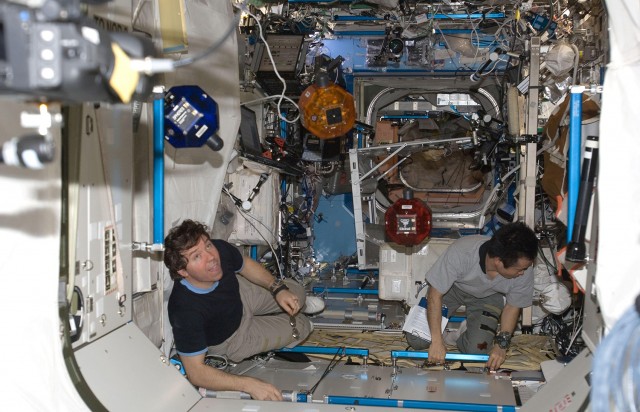
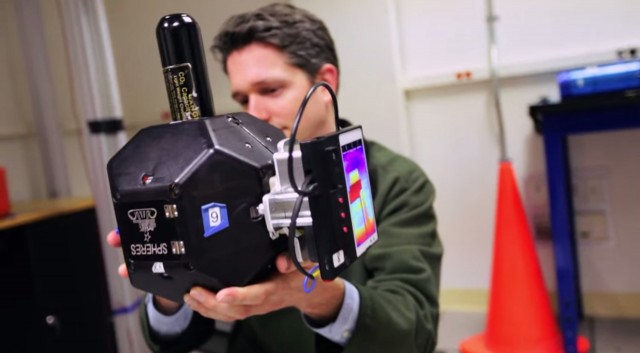
spheres_1As if it weren’t bad enough that they are replacing workers here on Earth, now they are being designed to replace us in space! At least, that’s the general idea behind Google and NASA’s collaborative effort to make SPHERES (Synchronized Position Hold, Engage, Reorient, Experimental Satellites). As the name suggests, these robots are spherical, floating machines that use small CO2 thrusters to move about and performing chores usually done by astronauts.

Earlier this month, NASA announced it’s plan to launch some SPHERES aboard an unmanned Cygnus spacecraft to the International Space Station to begin testing. That launch took place on July 11th, and the testing has since begun. Powered by Tango, Google’s prototype smartphone that comes with 3D sensors that map the environment around them, the three satellites were used to perform routine tasks.

nasa-antares-launch-photoNASA has sent SPHERES to the ISS before, but all they could really do was move around using their small CO2 thruster. With the addition of a Tango “brain” though, the hope is that the robots will actually be able to assist astronauts on some tasks, or even completely carry out some mundane chores. In addition, the mission is to prepare the robots for long-term use and harmonized them to the ISS’ environment.

This will consist of the ISS astronauts testing SPHERES ability to fly around and dock themselves to recharge (since their batteries only last 90 minutes), and use the Tango phones to map the Space Station three-dimensionally. This data will be fed into the robots so they have a baseline for their flight patterns. The smartphones will be attached to the robots for future imaging tasks, and they will help with mathematical calculations and transmitting a Wi-Fi signal.

spheres_0In true science fiction fashion, the SPHERES project began in 2000 after MIT professor David W. Miller was inspired by the “Star Wars” scene where Luke Skywalker is being trained in handling a lightsaber by a small flying robot. Miller asked his students to create a similar robot for the aerospace Industry. Their creations were then sent to the ISS in 2006, where they have been ever since.
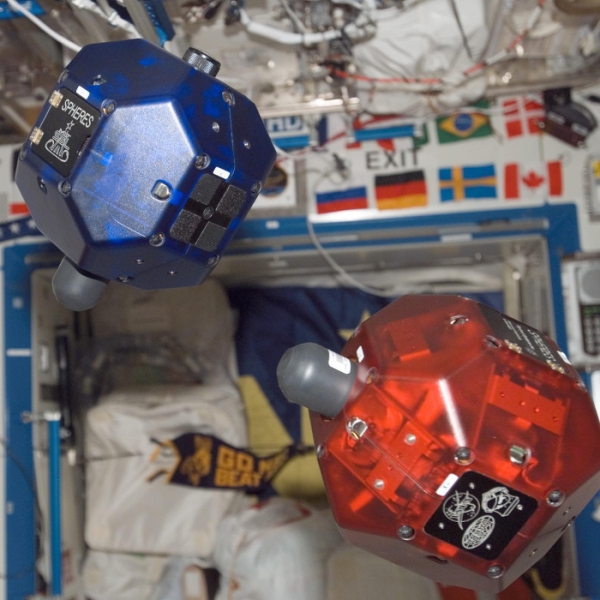
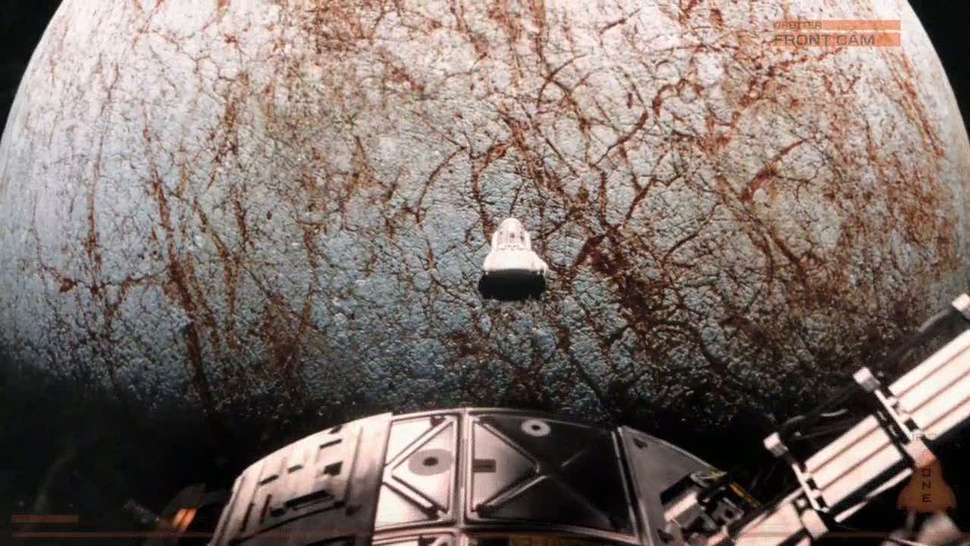
As these early SPHERES aren’t equipped with tools, they will mostly just fly around the ISS, testing out their software. The eventual goal is to have a fleet of these robots flying around in formation, fixing things, docking with and moving things about, and autonomously looking for misplaced items. If SPHERES can also perform EVAs (extra-vehicular activity, space walks), then the risk of being an astronaut would be significantly reduced.

spheresIn recent years there has been a marked shift towards the use of off-the-shelf hardware in space (and military) applications. This is partly due to tighter budgets, and partly because modern technology has become pretty damn sophisticated. As Chris Provencher, SPHERES project manager, said in an interview with Reuters:

We wanted to add communication, a camera, increase the processing capability, accelerometers and other sensors [to the SPHERES]. As we were scratching our heads thinking about what to do, we realized the answer was in our hands. Let’s just use smartphones.

The SPHERES system is currently planned to be in use on the ISS until at least 2017. Combined with NASA’s Robonaut, there are some fears that this is the beginning of a trend where astronauts are replaced entirely by robots. But considering how long it would take to visit a nearby star, maybe that’s not such a bad thing. At least until all of the necessary terraforming have been carried out in advance of the settlers.

So perhaps robots will only be used to do the heavy lifting, or the work that is too dull, dangerous or dirty for regular astronauts – just like drones. Hopefully, they won’t be militarized though. We all saw how that went! And be sure to check out this video of SPHERES being upgraded with Project Tango, courtesy of Google’s Advanced Technology and Projects group (ATAP):


Sources:
nasa.gov, extremetech.com, techtimes.com

News from Space: NASA taking Suggestions on Europa

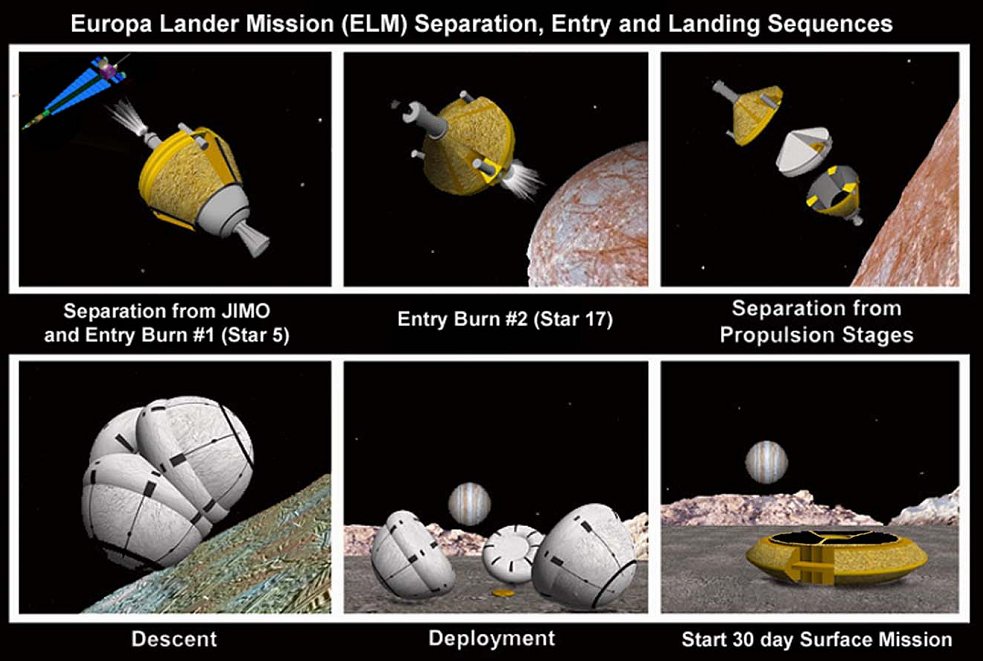
europa_image_0The Jovian moon of Europa remains a mystery that is just dying to be cracked. Although covered in ice, scientists have long understood that tidal forces caused by its proximity to Jupiter have created a warm interior, one which can sustain warm oceans beneath the surface. In the coming years, NASA wants to fly a mission to this planet so we can finally get a look at what, if anything, is lurking beneath that icy crust.

Perhaps emboldened by the success of the Curiosity Rover and the plans for a manned mission to Mars in 2030, NASA has several possible plans for what a Europa mission might look like. If the budget environment proves hospital, then NASA will likely send a satellite that will perform several orbits of the moon, a series of flybys on it, and scout the surface for science and potential landing sites.

europa_reportTowards this end, they are looking for proposals for science instruments specifically tailored to the task. And within a year’s time, they plan to select 20 from a list of those proposed for the mission. At which point, the selectees will have $25 million to do a more advanced concept study. As John Grunsfeld, associate administrator for NASA’s science mission directorate, stated:

The possibility of life on Europa is a motivating force for scientists and engineers around the world. This solicitation will select instruments which may provide a big leap in our search to answer the question: are we alone in the universe?

The Europa mission is not a guarantee, and it’s unclear just how much money will be allocated to it in the long run. NASA has requested $15 million in fiscal 2015 for the mission, but the mission will naturally be subject to budgetary approvals by Congress. If it passes all obstacles, it would fly sometime in the 2020s, according to information released with the budget earlier this year.

europa-lander-2In April, NASA sent out a request for information to interested potential participants on the mission itself, which it plans to cost less than $1 billion (excluding launch costs). Besides its desire to look for landing sites, NASA said the instruments should also be targeted to meet the National Resource Council’s (NRC) Planetary Decadal Survey’s desires for science on Europa.

In NASA’s words, these are what those objectives are:

  • Characterize the extent of the ocean and its relation to the deeper interior;
  • Characterize the ice shell and any subsurface water, including their heterogeneity, and the nature of surface-ice-ocean exchange;
  • Determine global surface, compositions and chemistry, especially as related to habitability;
  • Understand the formation of surface features, including sites of recent or current activity, identify and characterize candidate sites for future detailed exploration;
  • Understand Europa’s space environment and interaction with the magnetosphere.

JIMO_Europa_Lander_MissionAccording to the agency, any instrument proposal must meet NASA’s landing scout goal or the NRC goals. The instruments must also be highly protected against the harsh radiation, and meet planetary protection requirements to ensure no extraterrestrial life is contaminated with our own. In essence, this means than any instruments must be safeguarded against carrying bacteria that could play havoc with Europan microbes or (do we dare to dream!) more complex organisms.

Solicitations are due by Oct. 17, so if you’ve got an idea and think it might make the cut, consult the following solicitation page and have a look at what NASA is looking for. Personally, I got nothing. But that’s why they don’t pay me the big bucks! No, like most of humanity, I will simply be sitting back and hoping that a mission to Europa happens within my lifetime, and that it uncovers – to quote Arthur C. Clarke’s 201o: Odyssey Two – “something wonderful”…

Source: universetoday.com, nspires.nasaprs.com

Buzz Aldrin: Let’s Go to Mars!

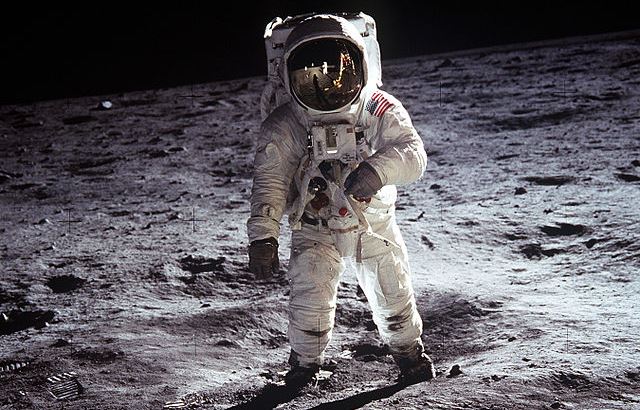
Apollo11_Aldrin1This past weekend was the 45th anniversary of the Moon Landing. To mark that occasion, NASA mounted the @ReliveApollo11 twitter campaign, where it recreated every moment of the historic mission by broadcasting updates in “real-time”. In addition to commemorating the greatest moment in space exploration, and one of the greatest moments in history, it also served to draw attention to new efforts that are underway.

Perhaps the greatest of these is one being led by Buzz Aldrin, a living-legend and an ambassador for current and future space missions. For decades now, Aldrin has been acting as a sort of elder statesman lobbying for the exploration of the cosmos. And most recently, he has come out in favor of a mission that is even grander and bolder than the one that saw him set foot on the Moon: putting people on Mars.

mars_spaceXmissionIt’s no secret that NASA has a manned mission planned for 2030. But with space exploration once again garnering the spotlight – thanks in no small part to commercial space companies like SpaceX and Virgin Galactic – Aldrin is pushing for something even more ambitious. Echoing ideas like Mars One, his plan calls for the colonization of Mars by astronauts who would never return to Earth.

To be sure, the spry 84 year-old has been rather busy in the past few years. After going through a very public divorce with his wife 0f 23 years in January of last year, he spent the past few months conducting a publicity blitz on behalf of the 45th anniversary of Apollo 11. In between all that, he has also made several appearances and done interviews in which he stressed the importance of the Martian colonization project.

Mars_OneA few months ago, Aldrin wrote an op-ed piece for Fast Company about innovation and the need for cooperation to make a new generation of space exploration a reality. During a more recent interview, which took place amidst the ongoing crisis in the Ukraine, he once again stressed the importance of cooperation between the United States, Russia, China, and their respective space programs.

As he told Fast Company in the interview:

I think that any historical migration of human beings to establish a permanent presence on another planet requires cooperation from the world together. That can’t be done by America competing with China… Just getting our people back up there is really expensive! We don’t compete but we can do other things close by with robots, which have improved tremendously over the past 45 years (since Apollo 11). You and I haven’t improved all that much, but robots have. We can work together with other nations in design, construction, and making habitats on both the near side and far side of Mars. Then when we eventually have designs, we’ll have the capacity to actually build them.

SLS_launchSimilarly, Aldrin took part in live Google Hangout with Space.com’s managing editor Tariq Malik and executive producer Dave Brody. This took place just eight days before the 25th anniversary of the Landing. During the broadcast, he discussed his experiences as an astronaut, the future of lunar exploration, future missions to Mars and beyond, and even took questions via chatwindow on Google+’s webpage.

At this juncture, its not clear how a colonization mission to Mars would be mounted. While Mars One is certainly interested in the concept, they (much like Inspiration Mars) do not have the necessary funding or all the technical know-how to make things a reality just yet. A possible solution to this could be a partnership program between NASA, the ESA, China, Russia, and other space agencies.

terraformingSuch ideas did inform Kim Stanley Robinson’s seminal novel Red Mars, where an international crew flew to the Red Planet and established the first human settlement that begins the terraforming process. But if international cooperation proves too difficult, perhaps a collaboration between commercial space agencies and federal ones could work. I can see it now: the Elon Musk Martian Dome; the Richard Branson Habitat; or the Gates colony…

With that in mind, I think we should all issue a prayer for international peace and cooperation! And in the meantime, be sure to check out the video of the Google Hangout below. And if you’re interested in reading up on Aldrin’s ideas for a mission to Mars, check out his book, Mission to Mars: My Vision for Space Exploration, which is was published by National Geographic and is available at Amazon or through his website.


Sources:
fastcompany.com, buzzaldrin.com, space.com

News from Space: Latest Tests and New Players

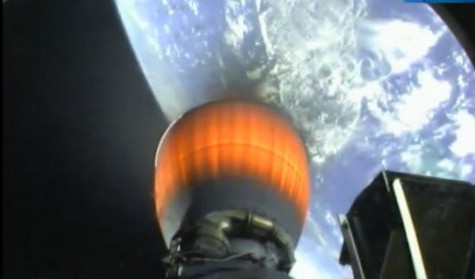
Apollo11_earthIn the new age of space travel and exploration, commercial space companies are not only boasting immense growth and innovation, but are reaching out to fill niche markets as well. In addition to launchers that can send orbiters and payloads into space, there are also new breeds of commercial satellites, new engines, and a slew of other concepts that promise to make the industry more promising and cost effective.

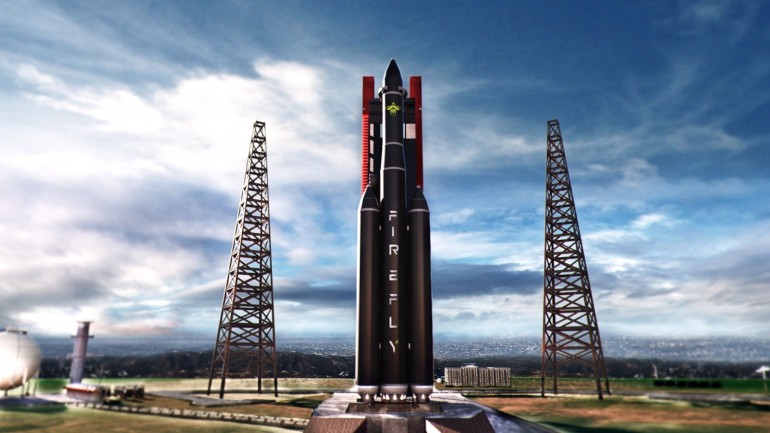
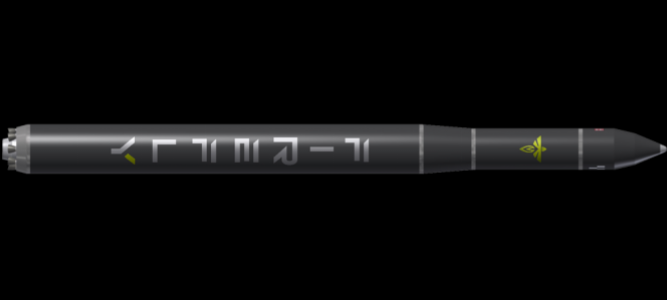
A case in point is the small satellite launch company Firefly Space Systems, which recently unveiled its planned Alpha launcher. Aimed at the small satellite launch market, it’s designed to launch satellites into low-Earth orbit (LEO) and Sun-synchronous orbits for broadband communication using an unconventional aerospike engine, it is also the first orbital launcher to use methane as fuel.

firefly-alphaThe Firefly Alpha is a specialized design to launch light satellites at low cost into low Earth Designed to carry payloads of up to 400 kg (880 lb), the Alpha features carbon composite construction and uses the same basic design for both of its two stages to keep down costs and simplify assembly. Methane was chosen because it’s cheap, plentiful, clean-burning and (unlike more conventional fuels) self-pressurizing, so it doesn’t require a second pressurization system.

But the really interesting thing about the two-stage rocket assembly is that the base of the engine is ringed with rocket burners rather than the usual cluster of rocket engines. That’s because, while the second stage uses conventional rocket engines, the first stage uses a more exotic plug-cluster aerospike engine that puts out some 400.3 kN (or 40,800 kg/90,000 lb)  of thrust.

firefly-alpha-4Aerospike engines have been under development since the 1960s, but until now they’ve never gotten past the design phase. The idea behind them is that rockets with conventional bell-shaped nozzles are extremely efficient, but only at a particular altitude. Since rockets are generally used to make things go up, this means that an engine that works best at sea level will become less and less efficient as it rises.

The plug aerospike is basically a bell-shaped rocket nozzle that’s been cut in half, then stretched to form a ring with the half-nozzle forming the profile of a plug. This means that the open side of the rocket engine is replaced with the air around it. As the rocket fires, the air pressure keeps the hot gases confined on that side, and as the craft rises, the change in air pressure alters the shape of the “nozzle;” keeping the engine working efficiently.

firefly-alpha-2The result of this arrangement is a lighter rocket engine that works well across a range of altitudes. Because the second stage operates in a near vacuum, it uses conventional rocket nozzles. As Firefly CEO Thomas Markusic put it:

What used to cost hundreds of millions of dollars is rapidly becoming available in the single digit millions. We are offering small satellite customers the launch they need for a fraction of that, around US$8 or 9 million – the lowest cost in the world. It’s far cheaper than the alternatives, without the headaches of a multi manifest launch.

Meanwhile, SpaceX has been making headlines with its latest rounds of launches and tests. About a week ago, the company successfully launched six ORBCOMM advanced telecommunications satellites into orbit to upgrade the speed and capacity of their existing data relay network. The launch from Cape Canaveral Air Force Station in Florida had been delayed or scrubbed several times since the original launch date in May due to varying problems.

spacex_rocketHowever, the launch went off without a hitch on Monday, July 14th, and ORBCOMM reports that all six satellites have been successfully deployed in orbit. SpaceX also used this launch opportunity to try and test the reusability of the Falcon 9′s first stage and its landing system while splashing down in the ocean. However, the booster did not survive the splashdown.

SpaceX CEO Elon Musk tweeted about the event, saying that the:

Rocket booster reentry, landing burn & leg deploy were good, but lost hull integrity right after splashdown (aka kaboom)… Detailed review of rocket telemetry needed to tell if due to initial splashdown or subsequent tip over and body slam.

SpaceX wanted to test the “flyback” ability to the rocket, slowing down the descent of the rocket with thrusters and deploying the landing legs for future launches so the first stage can be re-used. These tests have the booster “landing” in the ocean. The previous test of the landing system was successful, but the choppy seas destroyed the stage and prevented recovery. Today’s “kaboom” makes recovery of even pieces of this booster unlikely.

sceenshot-falcon9-580x281This is certainly not good news for a company who’s proposal for a reusable rocket system promises to cut costs exponentially and make a whole range of things possible. However, the company is extremely close to making this a full-fledged reality. The take-off, descent, and landing have all been done successfully; but at present, recovery still remains elusive.

But such is the nature of space flight. What begins with conceptions, planning, research and development inevitably ends with trial and error. And much like with the Mercury and Apollo program, those involved have to keep on trying until they get it right. Speaking of which, today marks the 45th anniversary of Apollo 11 reaching the Moon. You can keep track of the updates that recreate the mission in “real-time” over @ReliveApollo11.

As of the writing of this article, the Lunar module is beginning it’s descent to the Moon’s surface. Stay tuned for the historic spacewalk!

apollo11_descent

Sources: universetoday.com, gizmag.com

Forty-Fifth Anniversary of Apollo 11

Apollo11_launch1Today, July 20th, marks the 45th anniversary of the first step being taken on the Moon. And even though the coming decades may involve astronauts setting foot on Mars or a nearby asteroid, the Moon landing will forever remain one of humanity’s greatest accomplishments. And the many speeches, footage and images associated with the mission remain firmly rooted in public consciousness.

Born during the closing months of the Eisenhower administration as a follow-up to Project Mercury – which successfully put astronauts into orbit – Project Apollo was conceived when spaceflight was still very much in its infancy. However, it was under President Kennedy that the goal of “landing a man on the Moon and returning him safely to the Earth” by the end of the decade truly began.

kennedy_moonspeechAnd though some within NASA were already doing some preliminary planning for a manned mission to the Moon in the late 1950s, there was no hardware that could see the mission fly, no rockets large enough to launch a manned spacecraft all the way to the Moon, and no provisions for managing a program of that magnitude. The men and women who brought the lunar landing to fruition were forced to invent almost everything as they went along.

And in the nine years between President Kennedy promising America the Moon and Neil Armstrong’s small step, NASA developed an unprecedented amount of technology and know-how that continues to shape the way NASA and other space agencies plan and implement missions today. These include the Saturn V multistage rockets, which are currently being refurbished for a manned mission to Mars by 2030.

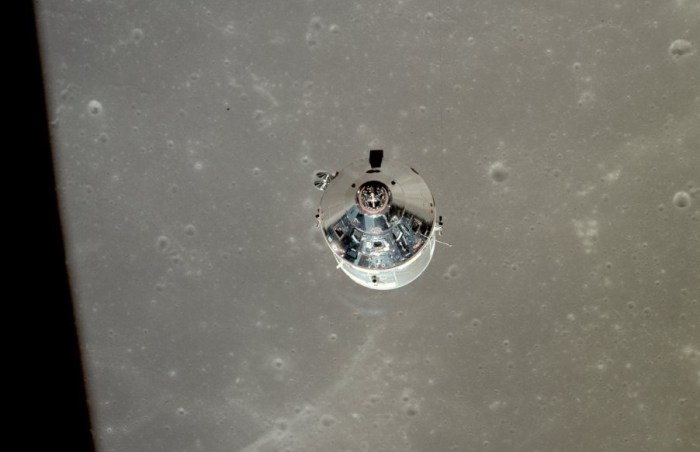
Apollo_11Launching on from Cape Kennedy on the morning of July 16th, 1969, the mission sent Commander Neil Armstrong, Command Module Pilot Michael Collins and Lunar Module Pilot Edwin “Buzz” Aldrin into an initial Earth-orbit. Then, just two hours and 44 minutes after launch, another engines burn put Apollo 11 into a translunar orbit. Four days later, the Lunar Module touched down and the three men – with Armstrong in the lead – stepped onto the Lunar surface.

And for those looking to participate in the anniversary, there are several ways you can participate. On Twitter, @ReliveApollo11 from the Smithsonian National Air and Space Museum is reliving the highlights from Apollo 11 mission to the Moon in “real time”. Also, @NASAHistory is tweeting images and events from the mission, and journalist Amy Shira Teitel (@astVintageSpace) is tweeting pictures, facts and quotes from the mission, again in “real time”.

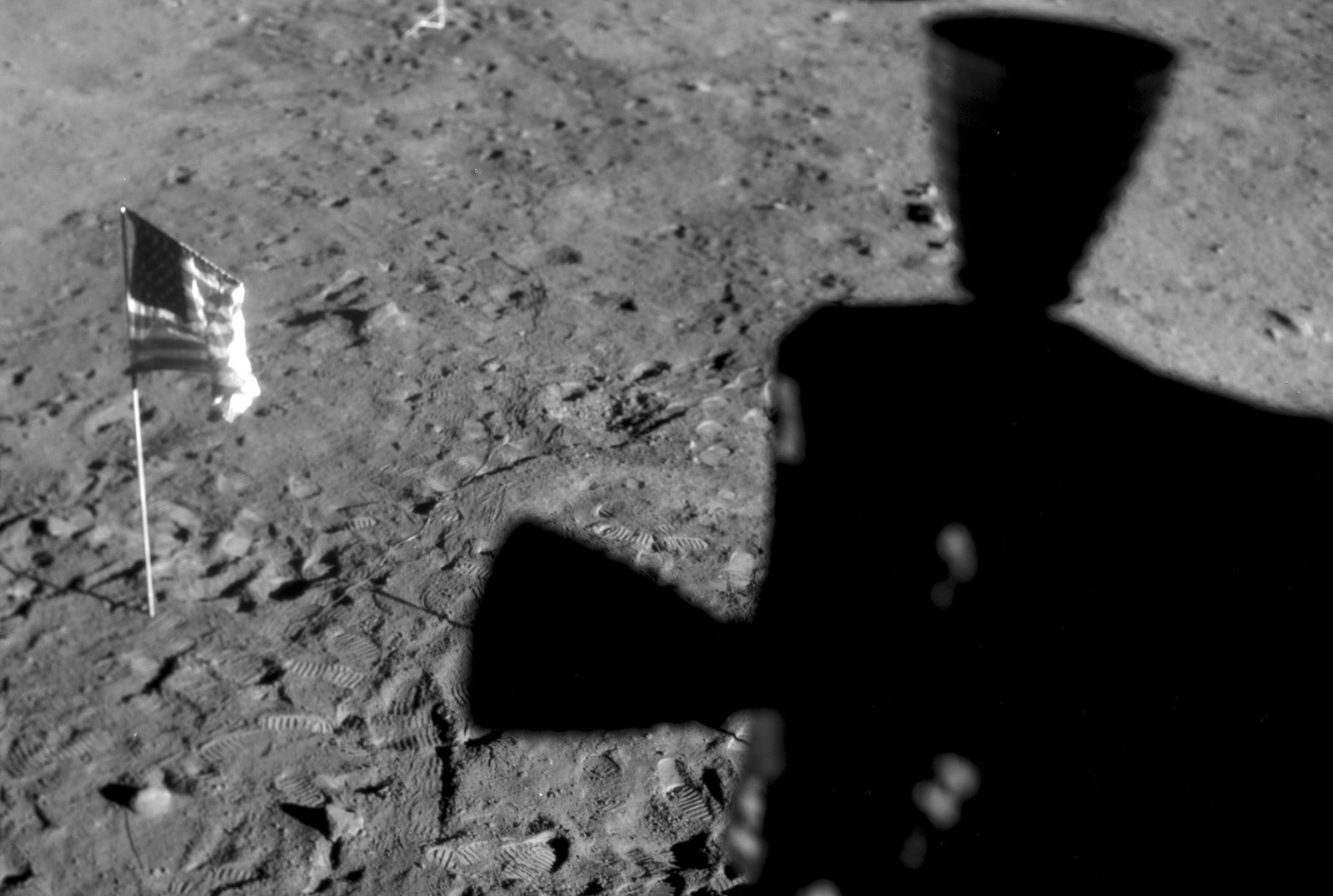
apollo11_flag2At 7:39 p.m. PDT (10:39 p.m. EDT), when Armstrong opened began the first spacewalk on the Moon, NASA TV will replay the restored footage of Armstrong and Aldrin’s historic steps on the lunar surface. On Monday, July 21 at 7 a.m. PDT (10 a.m. EDT) NASA TV will be broadcasting live from Kennedy Space Center in Florida, where they will be renaming the center’s Operations and Checkout Building in honor of Armstrong, who passed away in 2012.

The renaming ceremony will include NASA Administrator Charles Bolden, Kennedy Center Director Robert Cabana, Apollo 11′s Collins, Aldrin and astronaut Jim Lovell, who was the mission’s back-up commander. International Space Station NASA astronauts Wiseman and Steve Swanson, who is the current station commander, also will take part in the ceremony from their orbiting laboratory 260 miles above Earth.

Apollo_11_bootprintOn Thursday, July 24 at 3 p.m. PDT (6 p.m. EDT), which is the 45th anniversary of Apollo 11′s return to Earth, the agency will host a panel discussion – called NASA’s Next Giant Leap – from Comic-Con International in San Diego. Moderated by actor Seth Green, the panel includes Aldrin, NASA Planetary Science Division Director Jim Green, JPL systems engineer Bobak Ferdowsi, and NASA astronaut Mike Fincke.

In addition to Aldrin recounting his experiences, Fincke and the other NASA staff are slated to talk about the new Orion space capsule and the Space Launch System rocket – both of which will carry humans on America’s next great adventure in space – and what the future holds for space exploration. These will no doubt include talk of the planned missions to an asteroid, Mars, and quite possibly the construction of a settlement on the Moon.

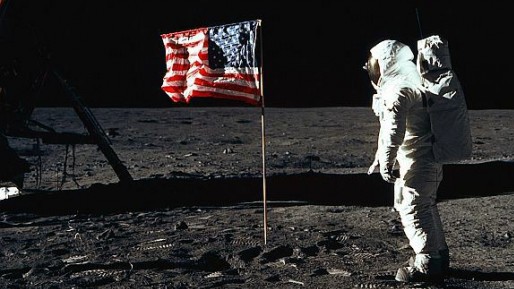
apollo11_flag1The NASA.gov website will host features, videos, and historic images and audio clips that highlight the Apollo 11 anniversary, as well as the future of human spaceflight. You can find it all by clicking here. And if you don’t have NASA TV on your cable or satellite feeds, you can catch it all online here. Plenty has been happening already, marking the anniversary of the launch and recapturing the mission in “real-time”.
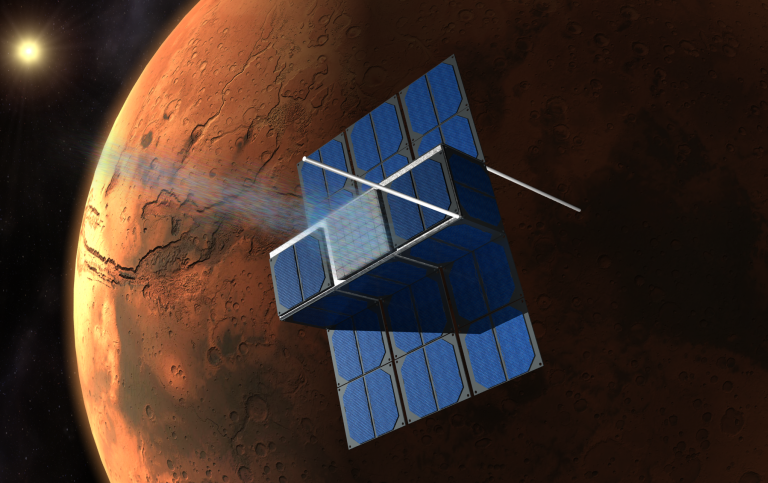
Forty five years later, and Apollo 11 still holds a special place in our collective hears, minds, and culture. One can only hope that the next generation of astronauts prove as equal to the task as those who made the Moon Landing were. And I’m sure that when they do make history, Neil Armstrong (may he rest in peace) will be watching approvingly.

And be sure to check out this video from Spacecraft Films, showing the entire Apollo 11 mission in 100 seconds:


Sources: universetoday.com, motherboard.vice.com, nasa.gov, spacecraftfilms.com

News from Space: Time Capsule to Mars

Time_capsule_to_mars1The selfie is an apparent obsession amongst today’s youth, snapping pictures of themselves and posting them to social media. But for just 99 cents, people can send a picture of themselves to the Red Planet as part of the Time Capsule to Mars (TC2M) – a student-led, crowdfunded project that aims to send three CubeSat microsatellites to the planet containing digital messages from tens of millions of people from all around around the world.

The objective of the TC2M – a project of Explore Mars – mission is to inspire people throughout the globe and allow them a personal connection with space exploration in the same spirit of the Apollo missions. The non-profit organization also aims to educate and inspire children by enabling them to upload their media content, track their spacecraft and lander, and participate in the mission via a personalized Mission Control portal over the internet.

Mars_exploreWith the help and support of NASA, MIT, Stanford University and Deep Space Industries (among others), the student-led team will design, launch, fly and land three CubeSat-based spacecraft on the surface of Mars. The projected cost of the mission, covering everything from design to launch, is $25 million, which TC2M will attempt to raise by way of crowdfunding.

In terms of sending media content, people currently have the option of uploading only images up to 10 MB in size. However, in the coming months, TC2M claims that participants will also be able to upload other types of media such as videos, audio clips and text files. In order to reach as many people as possible, uploads in the developing world will be free of charge for smaller files, underwritten by corporate sponsors.

Time_capsule_to_mars2Emily Briere, a mechanical engineering student who is heading the project, explained their aim thusly:

We hope to inspire and educate young people worldwide by enabling them to personally engage and be part of the mission. The distributed approach to funding and personal engagement will ultimately guarantee our success.

The data will be carried by three identical 13-kg (27-lb) CubeSat spacecraft, each 30 x 40 x 10 cm (12 x 16 x 4 inches) in size. This will be the first time that such spacecraft are used for interplanetary travel, as well as the first time that many of the new technologies are being tested. The data will be stored in a quartz crystal, which is extremely dense and could last for millions of years, hence making it ideal for surviving the hostile conditions on Mars.

Time_capsule_to_mars_thrusterThe technologies being tested on the three spacecraft include delay-tolerant networking for the Deep Space Internet, inflatable antennae, and new interplanetary radiation sensors that will pave the way for future human trips to Mars. But out of all the new technologies being tested, the most exciting is certainly the propulsion system. But the most interesting technology of all will be in the form of its engines.
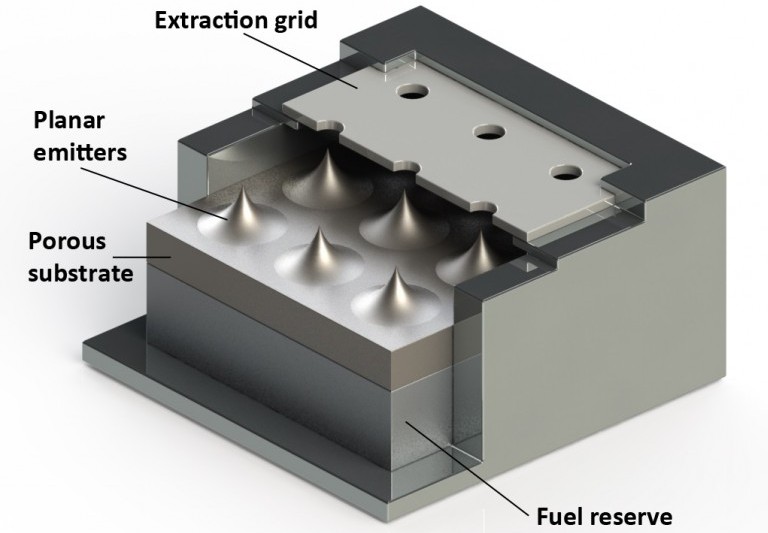
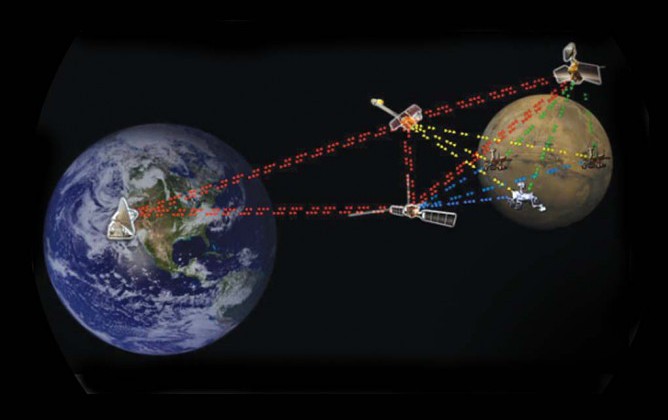
The three spacecraft will be propelled by an ion electrospray system (iEPS), a microthruster developed at MIT that is essentially size of a penny (pictured above). Each spacecraft will be powered by 40 thruster pairs, which will generate thrust using an electric field to extract and accelerate ions. The ionic liquid propellant is much more efficient than rocket fuel, and MIT scientists believe a scaled-up version may one day bring humans to Mars.

Time_capsule_to_mars_thruster1The choice of employing three separate but identical spacecraft for the mission may be due in part to the fact that so many new technologies are being tested at the same time. To triple the chances of success, Briere has previously said that crowdfunders who want to send their media to Mars will have the option of having the data uploaded on all three spacecraft, for an additional price.

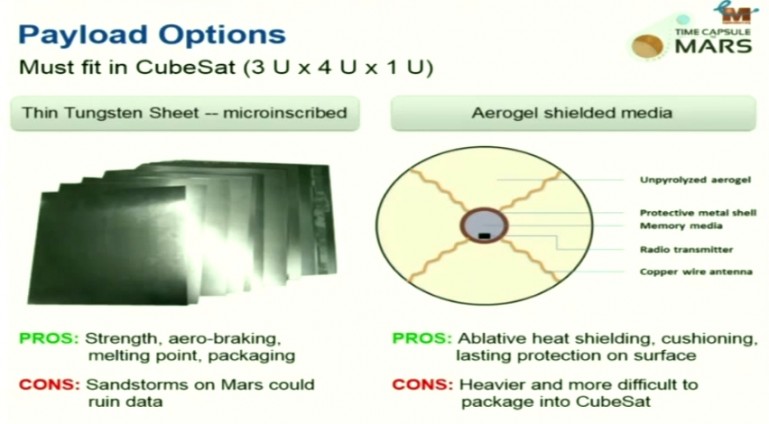
The spacecraft themselves will disintegrate as they traverse the Martian atmosphere. However, the payloads are being designed to aerobrake and land on the surface of Mars while keeping the data intact and preserved uncorrupted on the surface of the planet for a long, long time. As for how they intend to keep it stored until the day that manned missions can retrieve it, there are a few options on the table.

Time_capsule_to_marsOne option that is being considered is to use a microinscribed thin tungsten sheet, which has the advantage of being thin, light and strong, with a high melting point – meaning it won’t disintegrate upon entry – and good aerobraking properties because of its large surface area. However, there are concerns that sandstorms on Mars might damage the data once it has landed.

A second option would be an aerogel-shielded media. A metal ball could encase the data which would be stored in a very light medium, such as a quartz memory. The metal ball would be surrounded with an aerogel that will act as an ablative shield as it enters the atmosphere. And as it gets closer to the surface, the metal ball will act as a cushion for the data as it lands on Mars.

Time_capsule_to_mars3The organizers have only just announced their crowdfunding plans, and expect to reach the very ambitious goal of $25 million before the launch, which is planned for 2017. You can contribute to the mission and upload your own picture by visiting the mission website. And for those interested in possibly contributing, stay tuned to find out how and where you can donate once the crowdfunding campaign is up and running.

So in addition to showcasing new spacecraft, new media technologies, this project is also an attempt to stimulate interest in the new age of space exploration – an age characterized by public access and involvement. It’s also an opportunity to make your mark on the Red Planet, a mark which will someday (if all goes to plan) be uncovered by a new generation of explorers and settlers.

In the meantime, be sure to watch the short promotional video below which describes the mission and its goals:


Sources:
gizmag.com, timecapsuletomars.com, web.mit.edu