The Future is Here: AirMule’s Autonomous Demo Flight

airmule1Vertical Take-Off and Landing craft have been the subject of military developers for some time. In addition to being able to deploy from landing strips that are damaged or small for conventional aircraft, they are also able to navigate terrain and land where other craft cannot. Add to that the ability to hover and fly close to the ground, and you have a craft that can also provide support while avoiding IEDs and landmines.

One concept that incorporates all of these features is the AirMule, a compact, unmanned, single-engine vehicle that is being developed by Tactical Robotics in Israel. In January of 2013, the company unveiled the prototype which they claimed was created for the sake of supporting military personnel,  evacuating the wounded, and conducting remote reconnaissance missions.

airmule-1Now, less than a year later, the company conducted a demonstration with their prototype aircraft recently demonstrated its ability to fly autonomously, bringing it one step closer to carrying out a full mission demo. During the test, which took place in December, the craft autonomously performed a vertical take-off, flew to the end of a runway, then turned around on the spot and flew back to its starting point.

All the while, it maintained altitude using two laser altimeters, while maintaining positioning via a combination of GPS, an inertial navigation system, and optical reference to markers on the ground. These autonomous systems, which allow it to fly on its own, can also be countermanded in favor of remote control, in case a mission seems particularly harry and requires a human controller.

airmule-0In its current form, the AirMule possesses many advantages over other VTOL craft, such as helicopters. For starters, it weighs only 770 kg (1,700 lb) – as opposed to a Bell UH-1 empty weights of 2,365 kg (5,215 lbs) – can carry a payload of up to 640 kg (1,400 lb), has a top speed of 180 km/h (112 mph), and can reach a maximum altitude of 12,000 ft (3,658 m).

In short, it has a better mass to carrying capacity ratio than a helicopter, comparable performance, and can land and take-off within an area of 40 square meters (430.5 sq ft), which is significantly smaller than what a manned helicopter requires for a safe landing. The internal rotor blades are reportedly also much quieter than those of a helicopter, giving the matte-black AirMule some added stealth.

BD_atlasrobotPlans now call for “full mission demonstrations” next year, utilizing a second prototype that is currently under construction. And when complete, this vehicle and those like it can expected to be deployed to many areas of the world, assisting Coalition and other forces in dirty, dangerous environments where landmines, IEDs and other man-made and natural hazards are common.

Alongside machines like the Alpha Dog, LS3 or Wildcat, machines that were built by Boston Dynamics (recently acquired by Google) to offer transport and support to infantry in difficult terrain, efforts to “unman the front lines” through the use of autonomous drones or remote-controlled robots continue. Clearly, the future battlefield is a place where robots where will be offering a rather big hand!


And be sure to check this video of the AirMule demonstration, showing the vehicle take-off, hover, fly around, and then come in for a landing:


Sources: gizmag.com, tactical-robotics.com

Judgement Day Update: Super-Strong Robotic Muscle

robot-arm-wrestling-03-20-09In their quest to build better, smarter and faster machines, researchers are looking to human biology for inspiration. As has been clear for some time, anthropomorphic robot designs cannot be expected to do the work of a person or replace human rescue workers if they are composed of gears, pullies, and hydraulics. Not only would they be too slow, but they would be prone to breakage.

Because of this, researchers have been working looking to create artificial muscles, synthetics tissues that respond to electrical stimuli, are flexible, and able to carry several times their own weight – just like the real thing. Such muscles will not only give robots the ability to move and perform tasks with the same ambulatory range as a human, they are likely to be far stronger than the flesh and blood variety.

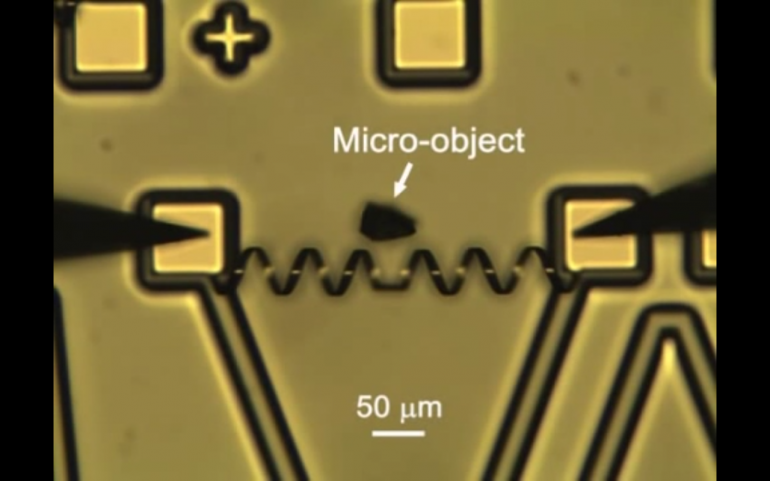
micro_robot_muscleAnd of late, there have been two key developments on this front which may make this vision come true. The first comes from the US Department of Energy ’s Lawrence Berkeley National Laboratory, where a team of researchers have demonstrated a new type of robotic muscle that is 1,000 times more powerful than that of a human’s, and has the ability to catapult an item 50 times its own weight.

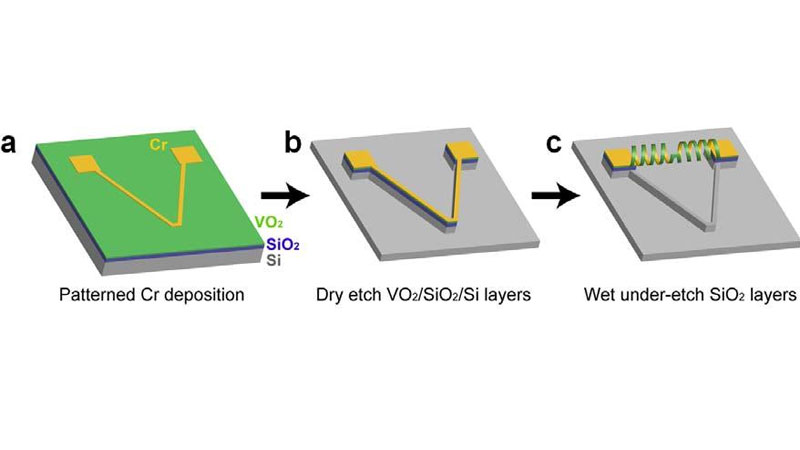
The artificial muscle was constructed using vanadium dioxide, a material known for its ability to rapidly change size and shape. Combined with chromium and fashioned with a silicone substrate, the team formed a V-shaped ribbon which formed a coil when released from the substrate. The coil when heated turned into a micro-catapult with the ability to hurl objects – in this case, a proximity sensor.

micro_robot_muscle2pngVanadium dioxide boasts several useful qualities for creating miniaturized artificial muscles and motors. An insulator at low temperatures, it abruptly becomes a conductor at 67° Celsius (152.6° F), a quality which makes it an energy efficient option for electronic devices. In addition, the vanadium dioxide crystals undergo a change in their physical form when warmed, contracting along one dimension while expanding along the other two.

Junqiao Wu, the team’s project leader, had this to say about their invention in a press statement:

Using a simple design and inorganic materials, we achieve superior performance in power density and speed over the motors and actuators now used in integrated micro-systems… With its combination of power and multi-functionality, our micro-muscle shows great potential for applications that require a high level of functionality integration in a small space.

In short, the concept is a big improvement over existing gears and motors that are currently employed in electronic systems. However, since it is on the scale of nanometers, it’s not exactly Terminator-compliant. However, it does provide some very interesting possibilities for machines of the future, especially where the functionality of micro-systems are concerned.

graphene_flexibleAnother development with the potential to create robotic muscles comes from Duke University, where a team of engineers have found a possible way to turn graphene into a stretchable, retractable material. For years now, the miracle properties of graphene have made it an attractive option for batteries, circuits, capacitors, and transistors.

However, graphene’s tendency to stick together once crumpled has had a somewhat limiting effect on its applications. But by attacking the material to a stretchy polymer film, the Duke researchers were able to crumple and then unfold the material, resulting in a properties that lend it to a broader range of applications- including artificial muscles.

robot_muscle1Before adhering the graphene to the rubber film, the researchers first pre-stretched the film to multiple times its original size. The graphene was then attached and, as the rubber film relaxed, the graphene layer compressed and crumpled, forming a pattern where tiny sections were detached. It was this pattern that allowed the graphene to “unfold” when the rubber layer was stretched out again.

The researchers say that by crumpling and stretching, it is possible to tune the graphene from being opaque to transparent, and different polymer films can result in different properties. These include a “soft” material that acts like an artificial muscle. When electricity is applied, the material expands, and when the electricity is cut off, it contracts; the degree of which depends on the amount of voltage used.

robot_muscle2Xuanhe Zhao, an Assistant Professor at the Pratt School of Engineering, explained the implications of this discovery:

New artificial muscles are enabling diverse technologies ranging from robotics and drug delivery to energy harvesting and storage. In particular, they promise to greatly improve the quality of life for millions of disabled people by providing affordable devices such as lightweight prostheses and full-page Braille displays.

Currently, artificial muscles in robots are mostly of the pneumatic variety, relying on pressurized air to function. However, few robots use them because they can’t be controlled as precisely as electric motors. It’s possible then, that future robots may use this new rubberized graphene and other carbon-based alternatives as a kind of muscle tissue that would more closely replicate their biological counterparts.

artificial-muscle-1This would not only would this be a boon for robotics, but (as Zhao notes) for amputees and prosthetics as well. Already, bionic devices are restoring ability and even sensation to accident victims, veterans and people who suffer from physical disabilities. By incorporating carbon-based, piezoelectric muscles, these prosthetics could function just like the real thing, but with greater strength and carrying capacity.

And of course, there is the potential for cybernetic enhancement, at least in the long-term. As soon as such technology becomes commercially available, even affordable, people will have the option of swapping out their regular flesh and blood muscles for something a little more “sophisticated” and high-performance. So in addition to killer robots, we might want to keep an eye out for deranged cyborg people!

And be sure to check out this video from the Berkley Lab showing the vanadium dioxide muscle in action:


Source:
gizmag.com, (2)
, extremetech.com, pratt.duke.edu

Tech News: Google Seeking “Conscious Homes”

nest_therm1In Google’s drive for world supremacy, a good number of start-ups and developers have been bought up. Between their acquisition of eight robotics companies in the space of sixth months back in 2013 to their ongoing  buyout of anyone in the business of aerospace, voice and facial recognition, and artificial intelligence, Google seems determined to have a controlling interest in all fields of innovation.

And in what is their second-largest acquisition to date, Google announced earlier this month that they intend get in on the business of smart homes. The company in question is known as Nest Labs, a home automation company that was founded by former Apple engineers Tony Fadell and Matt Rogers in 2010 and is behind the creation of The Learning Thermostat and the Protect smoke and carbon monoxide detector.

nest-thermostatThe Learning Thermostat, the company’s flagship product, works by learning a home’s heating and cooling preferences over time, removing the need for manual adjustments or programming. Wi-Fi networking and a series of apps also let users control and monitor the unit Nest from afar, consistent with one of the biggest tenets of smart home technology, which is connectivity.

Similarly, the Nest Protect, a combination smoke and carbon monoxide detector, works by differentiating between burnt toast and real fires. Whenever it detects smoke, one alarm goes off, which can be quieted by simply waving your hand in front of it. But in a real fire, or where deadly carbon monoxide is detected, a much louder alarm sounds to alert its owners.

nest_smoke_detector_(1_of_9)_1_610x407In addition, the device sends a daily battery status report to the Nest mobile app, which is the same one that controls the thermostats, and is capable of connecting with other units in the home. And, since Nest is building a platform for all its devices, if a Nest thermostat is installed in the same home, the Protect and automatically shut it down in the event that carbon monoxide is detected.

According to a statement released by co-f0under Tony Fadell, Nest will continue to be run in-house, but will be partnered with Google in their drive to create a conscious home. On his blog, Fadell explained his company’s decision to join forces with the tech giant:

Google will help us fully realize our vision of the conscious home and allow us to change the world faster than we ever could if we continued to go it alone. We’ve had great momentum, but this is a rocket ship. Google has the business resources, global scale, and platform reach to accelerate Nest growth across hardware, software, and services for the home globally.

smarthomeYes, and I’m guessing that the $3.2 billion price tag added a little push as well! Needless to say, some wondered why Apple didn’t try to snatch up this burgeoning company, seeing as how its being run by two of its former employees. But according to Fadell, Google founder Sergey Brin “instantly got what we were doing and so did the rest of the Google team” when they got a Nest demo at the 2011 TED conference.

In a press release, Google CEO Larry Page had this to say about bringing Nest into their fold:

They’re already delivering amazing products you can buy right now – thermostats that save energy and smoke/[carbon monoxide] alarms that can help keep your family safe. We are excited to bring great experiences to more homes in more countries and fulfill their dreams!

machine_learningBut according to some, this latest act by Google goes way beyond wanting to develop devices. Sara Watson at Harvard University’s Berkman Center for Internet and Society is one such person, who believes Google is now a company obsessed with viewing everyday activities as “information problems” to be solved by machine learning and algorithms.

Consider Google’s fleet of self-driving vehicles as an example, not to mention their many forays into smartphone and deep learning technology. The home is no different, and a Google-enabled smart home of the future, using a platform such as the Google Now app – which already gathers data on users’ travel habits – could adapt energy usage to your life in even more sophisticated ways.

Larry_PageSeen in these terms, Google’s long terms plans of being at the forefront of the new technological paradigm  – where smart technology knows and anticipates and everything is at our fingertips – certainly becomes more clear. I imagine that their next goal will be to facilitate the creation of household AIs, machine minds that monitor everything within our household, provide maintenance, and ensure energy efficiency.

However, another theory has it that this is in keeping with Google’s push into robotics, led by the former head of Android, Andy Rubin. According to Alexis C. Madrigal of the Atlantic, Nest always thought of itself as a robotics company, as evidence by the fact that their VP of technology is none other than Yoky Matsuoka – a roboticist and artificial intelligence expert from the University of Washington.

yokymatsuoka1During an interview with Madrigal back in 2012, she explained why this was. Apparently, Matsuoka saw Nest as being positioned right in a place where it could help machine and human intelligence work together:

The intersection of neuroscience and robotics is about how the human brain learns to do things and how machine learning comes in to augment that.

In short, Nest is a cryptorobotics company that deals in sensing, automation, and control. It may not make a personable, humanoid robot, but it is producing machine intelligences that can do things in the physical world. Seen in this respect, the acquisition was not so much part of Google’s drive to possess all our personal information, but a mere step along the way towards the creation of a working artificial intelligence.

It’s a Brave New World, and it seems that people like Musk, Page, and a slew of futurists that are determined to make it happen, are at the center of it.

Sources: cnet.news.com, (2), newscientist.com, nest.com, theatlantic.com

The Future is Here: 3-D Printed Candy

chefjet_candyRemember the Easy Bake Oven, that little toy appliance that came equipped with an especially hot light-bulb and allowed kids to bake (a limited array of) edible goods? Well, it just may be that 3-D food printers will give the children of tomorrow that same ability, except with a much wider array of options; not to mention little risk of burning themselves.

Already, pizza, pancakes, and desserts are all options for food printers, and even Google’s cafeteria has a 3-D printer for pasta. And at this years Consumer Electronics Show (CES 2014), 3D Systems unveiled two of their latest designs – the ChefJet and the ChefJet Pro – showcasing printers that use sugar and water to crystallize frosting in real time.

chefjet-sugar-2-hires3D Systems is no stranger to printer technology. At last years CES, they won Best Emerging Tech award for their Cubify printer – a low cost device geared towards kids, artists, and other consumers inexperienced with the technology. And though the reviews coming out of CES are mixed on the nature of the flavor, the colors and shapes it can render into candy form are quite impressive.

The ChefJet only prints sugar or chocolate-colored confections while the Pro takes it up a notch with an inkjet filled with food coloring allowing for a plethora of colorful, and edible, results. These range from spirals and squares to 3-D pentagons and spheres, to incredibly elaborate designs that resemble chorals or casings for cakes. And of course, the candy can come in the form of pure sugar, or as white or dark chocolate.

chef-jet-pro1Other developments in the 3-D printing of food – such as NASA’s research on printing food in space (including pizza!), or printing food with personalized nutritional content – aren’t yet fully formed. ChefJet could be a little easier to integrate into small industries right away, since it has the ability to tailor make frosting in shapes that could easily be added to high-end desserts (like wedding cakes).

Even more exciting is the potential for home applications. Parents could rent a ChefJet Pro for a kids’ birthday party to create cakes or candy in the shape of their child’s favorite characters, or let children customize the Halloween candy that they would hand out. And just like the Easy Bake Oven of old, the result may not be totally tasty, but the process is still fun and gives people a chance to be creative.

The ChefJet and ChefJet Pro will likely be available in the second half of 2014, for an estimated $5,000 and $10,000 apiece. And while you’re waiting on one to become commercially available (and affordable), check out this video of the ChefJet in action at CES 2014:

Source: fastcodesign.com, nasa.gov

The Future of Computing: Brain-Like Computers

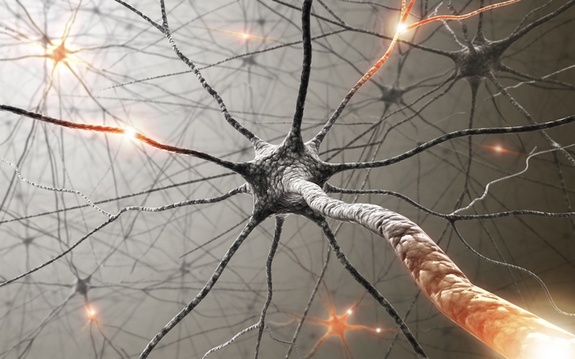
neuronsIt’s no secret that computer scientists and engineers are looking to the human brain as means of achieving the next great leap in computer evolution. Already, machines are being developed that rely on machine blood, can continue working despite being damaged, and recognize images and speech. And soon, a computer chip that is capable of learning from its mistakes will also be available.

The new computing approach, already in use by some large technology companies, is based on the biological nervous system – specifically on how neurons react to stimuli and connect with other neurons to interpret information. It allows computers to absorb new information while carrying out a task, and adjust what they do based on the changing signals.

brain_chip2The first commercial version of the new kind of computer chip is scheduled to be released in 2014, and was the result of a collaborative effort between I.B.M. and Qualcomm, as well as a Stanford research team. This “neuromorphic processor” can not only automate tasks that once required painstaking programming, but can also sidestep and even tolerate errors, potentially making the term “computer crash” obsolete.

In coming years, the approach will make possible a new generation of artificial intelligence systems that will perform some functions that humans do with ease: see, speak, listen, navigate, manipulate and control. That can hold enormous consequences for tasks like facial and speech recognition, navigation and planning, which are still in elementary stages and rely heavily on human programming.
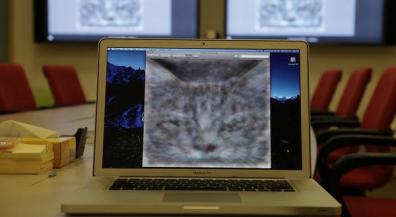
googleneuralnetworkFor example, computer vision systems only “recognize” objects that can be identified by the statistics-oriented algorithms programmed into them. An algorithm is like a recipe, a set of step-by-step instructions to perform a calculation. But last year, Google researchers were able to get a machine-learning algorithm, known as a “Google Neural Network”, to perform an identification task (involving cats) without supervision.

And this past June, the company said it had used those neural network techniques to develop a new search service to help customers find specific photos more accurately. And this past November, researchers at Standford University came up with a new algorithm that could give computers the power to more reliably interpret language. It’s known as the Neural Analysis of Sentiment (NaSent).
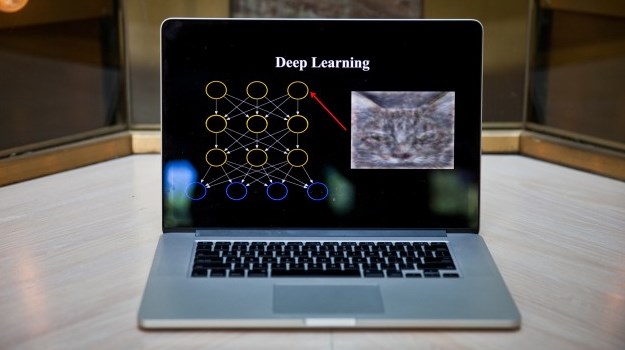
deep_learning_laptopA similar concept known as Deep Leaning is also looking to endow software with a measure of common sense. Google is using this technique with their voice recognition technology to aid in performing searches. In addition, the social media giant Facebook is looking to use deep learning to help them improve Graph Search, an engine that allows users to search activity on their network.

Until now, the design of computers was dictated by ideas originated by the mathematician John von Neumann about 65 years ago. Microprocessors perform operations at lightning speed, following instructions programmed using long strings of binary code (0s and 1s). The information is stored separately in what is known as memory, either in the processor itself, in adjacent storage chips or in higher capacity magnetic disk drives.

neural-networksBy contrast, the new processors consist of electronic components that can be connected by wires that mimic biological synapses. Because they are based on large groups of neuron-like elements, they are known as neuromorphic processors, a term credited to the California Institute of Technology physicist Carver Mead, who pioneered the concept in the late 1980s.

These processors are not “programmed”, in the conventional sense. Instead, the connections between the circuits are “weighted” according to correlations in data that the processor has already “learned.” Those weights are then altered as data flows in to the chip, causing them to change their values and to “spike.” This, in turn, strengthens some connections and weakens others, reacting much the same way the human brain does.

Neuromorphic-chip-640x353In the words of Dharmendra Modha, an I.B.M. computer scientist who leads the company’s cognitive computing research effort:

Instead of bringing data to computation as we do today, we can now bring computation to data. Sensors become the computer, and it opens up a new way to use computer chips that can be everywhere.

One great advantage of the new approach is its ability to tolerate glitches, whereas traditional computers are cannot work around the failure of even a single transistor. With the biological designs, the algorithms are ever changing, allowing the system to continuously adapt and work around failures to complete tasks. Another benefit is energy efficiency, another inspiration drawn from the human brain.

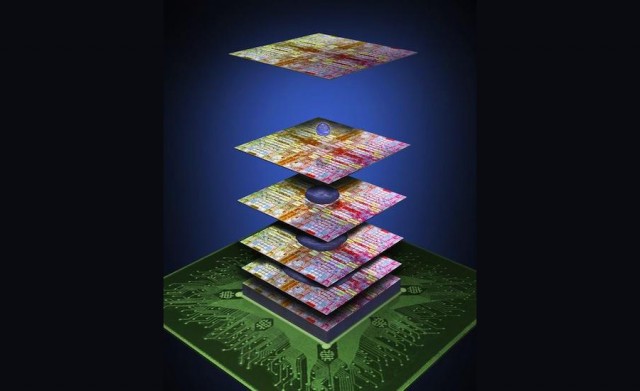
IBM_stacked3dchipsThe new computers, which are still based on silicon chips, will not replace today’s computers, but augment them; at least for the foreseeable future. Many computer designers see them as coprocessors, meaning they can work in tandem with other circuits that can be embedded in smartphones and the centralized computers that run computing clouds.

However, the new approach is still limited, thanks to the fact that scientists still do not fully understand how the human brain functions. As Kwabena Boahen, a computer scientist who leads Stanford’s Brains in Silicon research program, put it:

We have no clue. I’m an engineer, and I build things. There are these highfalutin theories, but give me one that will let me build something.
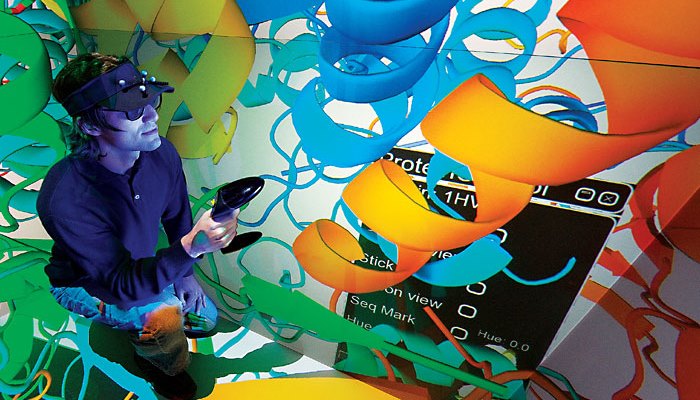
calit2PhotoLuckily, there are efforts underway that are designed to remedy this, with the specific intention of directing that knowledge towards the creation of better computers and AIs. One such effort comes from the National Science Foundation financed the Center for Brains, Minds and Machines, a new research center based at the Massachusetts Institute of Technology, with Harvard and Cornell.

Another is the California Institute for Telecommunications and Information Technology (aka. Calit2) – a center dedicated to innovation in nanotechnology, life sciences, information technology, and telecommunications. As
Larry Smarr, an astrophysicist and director of Institute, put it:

We’re moving from engineering computing systems to something that has many of the characteristics of biological computing.

Human-Brain-project-Alp-ICTAnd last, but certainly not least, is the Human Brain Project, an international group of 200 scientists from 80 different research institutions and based in Lausanne, Switzerland. Having secured the $1.6 billion they need to fund their efforts, these researchers will spend the next ten years conducting research that cuts across multiple disciplines.

This initiative, which has been compared to the Large Hadron Collider, will attempt to reconstruct the human brain piece-by-piece and gradually bring these cognitive components into an overarching supercomputer. The expected result of this research will be new platforms for “neuromorphic computing” and “neurorobotics,” allowing for the creation of computing and robotic architectures that mimic the functions of the human brain.

neuromorphic_revolutionWhen future generations look back on this decade, no doubt they will refer to it as the birth of the neuromophic computing revolution. Or maybe just Neuromorphic Revolution for short, but that sort of depends on the outcome. With so many technological revolutions well underway, it is difficult to imagine how the future will look back and characterize this time.

Perhaps, as Charles Stross suggest, it will simply be known as “the teens”, that time in pre-Singularity history where it was all starting to come together, but was yet to explode and violently change everything we know. I for one am looking forward to being around to witness it all!

Sources: nytimes.com, technologyreview.com, calit2.net, humanbrainproject.eu

The Future is Here: 3-D Printed Eye Cells

printed_eyecells3In the past few years, medical researchers have been able to replicate real, living tissues samples using 3-D printing technology – ranging from replacement ears and printed cartilage to miniature kidneys and even liver cells. Well now, thanks to a team of researchers from the University of Cambridge, eye cells have been added to that list.

Using a standard ink-jet printer to form layers of two types of cells,  the research team managed to print two types of central nervous system cells from the retinas of adult rats – ganglion cells (which transmit information from the eye to the brain), and glial cells (which provide protection and support for neurons). The resulting cells were able to grow normally and remain healthy in culture.

printed_eyecells2Ink-jet printing has been used to deposit cells before, but this is the first time cells from an adult animal’s central nervous system have been printed. The research team published its research in the IOP Publishing’s open-access journal Biofabrication and plans to extend this study to print other cells of the retina and light-sensitive photoreceptors.

In the report, Keith Martin and Barbara Lorber – the co-authors of the paper who work at the John van Geest Centre for Brain Repair at the University of Cambridge – explained the experiment in detail:

Our study has shown, for the first time, that cells derived from the mature central nervous system, the eye, can be printed using a piezoelectric inkjet printer. Although our results are preliminary and much more work is still required, the aim is to develop this technology for use in retinal repair in the future.

printed_eyecellsThis is especially good news for people with impaired visual acuity, or those who fear losing their sight, as it could lead to new therapies for retinal disorders such as blindness and macular degeneration. Naturally, more tests are needed before human trials can begin. But the research and its conclusions are quite reassuring that eye cells can not only be produced synthetically, but will remain healthy after they are produced.

Clara Eaglen, a spokesperson for the Royal National Institute of Blind People (RNIB), had this to say about the breakthrough:

The key to this research, once the technology has moved on, will be how much useful vision is restored. Even a small bit of sight can make a real difference, for some people it could be the difference between leaving the house on their own or not. It could help boost people’s confidence and in turn their independence.

printed_eyecells1Combined with bionic eyes that are now approved for distribution in the US, and stem cell treatments that have restores sight in mice, this could be the beginning of the end of blindness. And with all the strides being made in bioprinting and biofabrication, it could also be another step on the long road to replacement organs and print-on-demand body parts.

Sources: news.cnet.com, singularityhub.com, cam.ca.uk, bbc.co.uk

The Future is Weird: Cyborg Sperm!

cyborg_sperm1Finding ways to merge the biological and the technological, thus creating the best of both worlds, is one of the hallmarks of our new age. Already, we have seen how bionic appendages that connect and calibrate to people’s nerve signals can restore mobility and sensation to injured patients. And EEG devices that can read and interpret brainwaves are allowing man-machine interface like never before.

But cyborg sperm? That is something that might require an explanation. You see, sperm cells have an awesome swimming ability. And wanting to take advantage of this, Oliver Schmidt and a team researchers at the Institute for Integrative Nanosciences in Dresden, Germany, combined individual sperm cells with tiny magnetic metal tubes to create the first sperm-based biobots.

Cyborg_Sperm3This means we now have a way to control a cell’s direction inside the body, a breakthrough that could lead to efficient microscopic robots – one which are not entirely mechanical. To make the “biohybrid micro-robot,” Schmidt and his colleagues captured and trapped bull sperm inside magnetic microtubes, leaving the tail outside.

To create the spermbots, the team made microtubes 50 microns long, by 5 to 8 microns in diameter from iron and titanium nanoparticles. They added the tubes to a fluid containing thawed bull sperm. Because one end of each tube was slightly narrower than the other, sperm that swam into the wider end become trapped, headfirst, with their flagella still free.

cyborg_sperm2With mobility taken care of, the team moved on to the matter of how to control and direct the microtubes. For this, they chose to rely on a system of external magnetic fields which work the same way as a compass needle does, by aligning with the Earth’s magnetic field. This enabled the team to control the direction in which the sperm swam, adjusting their speed through the application of heat.

According to the researchers, the option of using sperm as the basis for a biohybrid micro-robot is attractive because they are harmless to the human body, they provide their own power, and they can swim through viscous liquids – such as blood and other bodily fluids. As the researchers said in their paper:

The combination of a biological power source and a microdevice is a compelling approach to the development of new microrobotic devices with fascinating future application.

cyborg_spermGranted, the idea of cybernetic sperm swimming through our systems might not seem too appealing. But think of the benefits for fertility treatments and inter-uteran health. In the future, tiny biohybrid robots like these could be used to shepherd individual sperm to eggs, making for more effective artificial insemination. They could also  deliver targeted doses of drugs to uteran tissue that is either infected or cancerous.

And if nothing else, it helps to demonstrate the leaps and bounds that are being made in the field of  biotechnology and nanotechnology of late. At its current rate of development, we could be seeing advanced medimachines and DNA-based nanobots becoming a part of regular medical procedures in just a few years time.

And while we’re waiting, check out this video of the “cyborg sperm” in action, courtesy of New Scientist:


Sources:
IO9, newscientist.com

The Future of Currency: Bitcoin Hitting the Streets

bitcoinFor those familiar with digital currencies, the name Bitcoin ought to ring a bell. Developed back in 2009, this “cryptocurrency” – i.e. it uses cryptography to control the creation and transfer of money – was created as a form of online payment for products and services. Since that time, it has become the subject of scrutiny, legislative bans, volatile pricing, and a hailed as a hardinger of the coming age of “distributed currency”.

Unlike precious metals or more traditional forms of currency, which hold value because they are backed by a country or are used to manufacture goods, Bitcoin is only buoyed by market demand. There are only 12.3 million virtual Bitcoins in circulation and those “coins” are traded through a Peer-to-Peer computer network, much as people used to share music files.

bitcoin1What’s especially interesting is the fact that the creator of this new form of currency remains unknown. It is assumed that it originated with a programer from Japan, due to the fact that its first mention came in a 2008 paper published under the pseudonym “Satoshi Nakamoto”. It became operational roughly a year later with the release of the first open source Bitcoin client and the issuance of the first physical bitcoin.

And in an interesting and personally-relevant development, it now seems that a Bitcoin ATM is coming to my old hometown of Ottawa. In this respect, the nation’s capitol is joining other major cities around the globe as municipalities that dispense the crypto currency, in spite of the fact that it is still not recognized by any national banking institutions, or financial regulating bodies.

future_money_bitcoinWhat’s more, the publicly-traded cryptocurrency has seen its stock go through repeated highs and lows over the past few years, being subject to both bubbles and price drops as countries like India and China prohibited its use. But with these machines hitting the streets, a trend which began back in November with the distribution of Robocoin ATMs, there is speculation that the digital currency might just be here to stay.

Part of the appeal of cryptocurrencies is that they allow for anonymity, hence why bitcoin has been linked to a number of illegal activities, such as on the shuttered drug marketplace Silk Road. And because its value is strictly tied to speculators, and not backed by any tangible measure or authority, speculators are able to ratchet up demand and push the stock value higher.

future_money2But Bitcoin is also starting to be accepted as a mainstream form of payment for U.S.-centric sites like OkCupid and WordPress. And back in October of 2013, China’s web giant Baidu accounced that it would start accepting Bitcoin payments for a firewall security service it sells. And though the Chinese government put the brakes on Bitcoin exchanges by December, the number of mainstream institutions opening up its coffers to it is growing.

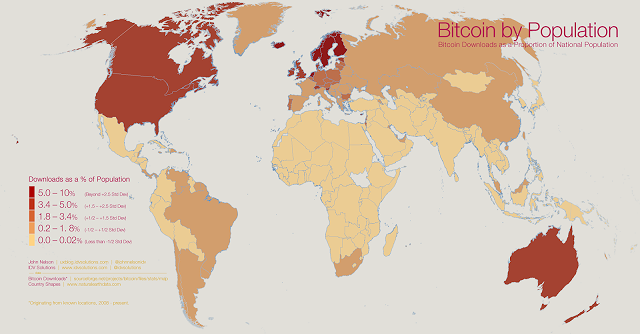
These include Richard Branson’s private space tourism company Virgin Galactic, the Sacramento Kings, the e-commerce giant Paypal, and Overstock.com, a major online retailer. And popular use is also growing, as evidenced by the visualization below which shows downloads of bitcoin client software since 2008, broken down by different operating systems.

bitcoin_globalWhat the graphic shows is quite indicative. All over the world, particularly in developed countries and areas of economic growth – the Eastern US, Europe, Brazil, Argentina, Russia, Sub-Saharan Africa, India, China, Australia and Southeast Asia – the Bitcoin software is being downloaded and used to oversee online exchanges in good and services.

And ultimately, those who believe in the service and choose to invest in it are doing so based on the promise that it will someday streamline monetary transactions and free the world from the financial manipulation of big government and big banks, breakdown the financial walls between nations, and remake the worldwide economy. In short, it will breakdown centralized economies and allow a “distributed economy” to takes its place.

bitcoin_popmapAdmittedly, the service is still flawed in a number of respects. For example, people who chose to collect bitcoins in the past were dissuaded from spending them since their value kept going up. The problem is, if economic incentives encourage people to hoard their bitcoins rather than spend them, the currency will never fulfill its role as the future of money.

Another problem is the one arising from the currency’s “deflationary nature”. Because the system was designed to allow the creation of only a finite number of bitcoins, there will come a point where, as demand rises, the value of the currency will only go up (making the price of goods and services fall, hence the term deflation). And that could lead to hoarding on an even larger scale.

bitcoin-atm-flagshipBut according to many economists who have closely followed the progress of the digital money, Bitcoin’s recent ups and downs are to be expected from a currency so young, and one that is just now attracting major attention from the mainstream population. The bottom could fall out of the market, but the currency could just as easily stabilize and reach a point where its value is consistent enough that people no longer hoard the stuff.

So at this point, its difficult to say what the future will hold for the new miracle money known as Bitcoin. But when it comes to cryptocurrencies in general, time seems to be on their side. Ever since the Internet Revolution took off, the possibilities for creating a new, de-centralized world order – research, development, politics and business are open and inclusive in ways like never before – has been emerging.

Sources: ottawacitizen.com, wired.com, fastcoexist.com, bbc.co.uk, uxblog.idvsolutions.com

The Future is Here: Brain Scanning for Pets!

Up_Doug_talkingdogRemember that scene in the Disney Pixar’s Up, where the old man and the little boy discover a dog who, thanks to a special collar, is able to talk to them? As it stands, that movie may have proven to be more prophetic than anyone would have thought. Thanks to improvements in wearable tech and affordable EEG monitors, it may finally be possible to read your dog’s mind and translate it into speech.

This is not the first case of commercial technology being used to monitor an animal’s habits. In recent years, wearable devices have been made available that an track the exercise, sleeping and eating patterns of a dog. But now, thanks to EEG devices like the “No More Woof”, it might be possible to track their thoughts, learning exactly what they think of that new couch, their new dry food, or the neighbors cat.

Woof_no_more1Tomas Mazzetti, the devices inventor, came up with the idea after he got as to what would happen if he strapped an off-the-shelf EEG machine to his mother’s Australian terrier. The observations that followed inspired the launch of a new project for Mazzetti and his team of fellow creatives at the Nordic Society for Invention and Discovery.

This society – which represents a collaboration between the ad agency Studio Total and Swedish retailer MiCasa – has spawned a number of quirky products in the past. These include a rocking chair that charges your iPad, a weather forecasting lamp, and a levitating carpet for small-ish pets. No More Woof is the society’s latest work, and the team recently launched an Indiegogo campaign to raise more funding for research.

Woof_no_moreSo far, Mazzetti and his team have been able to determine three baseline dog emotions to translate into speech: sleepiness, agitation, and curiosity. In time, they hope to be able to decipher hunger pangs as processed by a dog’s brain, and come up with appropriate verbalizations for all:

When the dog is sleepy, we translate to ‘I’m tired.’ And if they are really agitated, we can translate to ‘I’m excited!’ And the most active brainwave is when the dog sees a human face and tries to recognize that face. Then the brain is working overtime.

Mazzetti and the NSID are also working on finding cheaper EEG machines, after which they can fine-tune the software. They’ve done tests on roughly 20 dogs, of which they found that short-haired pets were able to communicate with the EEG machine better. If NSID receives more funding, its researchers hope to have something for sale by March or April of next year.

Brainwave-Frequency-ChartBut while Mazzetti’s primary goal is to produce something commercially viable for use with dogs, he’s also hopeful that other research institutions or retailers will pick up where NSID leaves off. For example, what thoughts could be translated if someone were to put a more sophisticated version of No More Woof on the head of a primate, or another highly intelligent mammal?

Looking even further afield, Mazzetti has suggested that such a device could work both ways, translating human speech into concepts that a dog (or other animal) could understand. As we all know, dogs are very good at learning verbal commands, but again, the idea of two-way communication offers possibilities to convey complex messages with other, more highly-intelligent animals.

humpbackCould it be possible someday to communicate with simians without the need for sign language, to commune openly with dolphins and Orcas, or warn Humpbacks about the impending dangers of whalers and deep sea fishers? Perhaps, and it would certainly be to the benefit of all. Not only would we be able to get our mammalian brethren to better understand us, we might just learn something ourselves!

After all, the line that separates humanity from all other species is a rather fine one, and tends to blur to closer we inspect it. By being able to commune with other species in a way that can circumvent “language barriers”, we might just learn that we have more in common than we think, and aren’t such a big, screaming deal after all.

And in the meantime, enjoy this video of the No More Woof in action:


And be sure to check out this clip from Up where Doug (the talking dog) is introduced, with hilarious results!

News From Space: Luna Rings and Spidersuits!

space_cameraSpace is becoming a very interesting place, thanks to numerous innovations that are looking ahead to the next great leap in exploration. With the Moon and Mars firmly fixed as the intended targets for future manned missions, everything from proposed settlements and construction projects are being plotted, and the requisite tools are being fashioned.

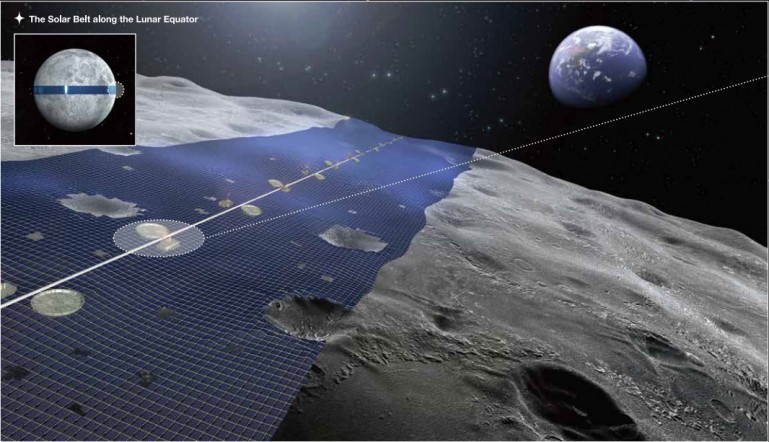
For instance, the Shimizu Corporation (the designers of the Shimizu Mega-City Pyramid), a Japanese construction firm, has proposed a radical idea for bringing solar energy to the world. Taking the concept of space-based solar power a step further, Shimizu has proposed the creation of a “Luna Ring” – an array of solar cells around the Moon’s 11000 km (6800 mile) equator to harvest solar energy and beam it back to Earth.

lunaringThe plan involves using materials derived from lunar soil itself, and then using them to build an array that will measure some 400 km (250 miles) thick. Since the Moon’s equator receives a steady amount of exposure to the Sun, the photovoltaic ring would be able to generate a continuous amount of electricity, which it would then beam down to Earth from the near side of the Moon.

It’s an ambitious idea that calls for assembling machinery transported from Earth and using tele-operated robots to do the actual construction on the Moon’s surface, once it all arrives. The project would involve multiple phases, to be spread out over a period of about thirty years, and which relies on multiple strategies to make it happen.

lunaring-1For example, the firm claims that water – a necessary prerequisite for construction – could be produced by reducing lunar soil with hydrogen imported from Earth. The company also proposes extracting local regolith to fashion “lunar concrete”, and utilizing solar-heat treatment processes to fashion it into bricks, ceramics, and glass fibers.

The remotely-controlled robots would also be responsible for other construction tasks, such as excavating the surrounding landscape, leveling the ground, laying out solar panel-studded concrete, and laying embedded cables that would run from the ring to a series of transmission stations located on the Earth-facing side of the Moon.

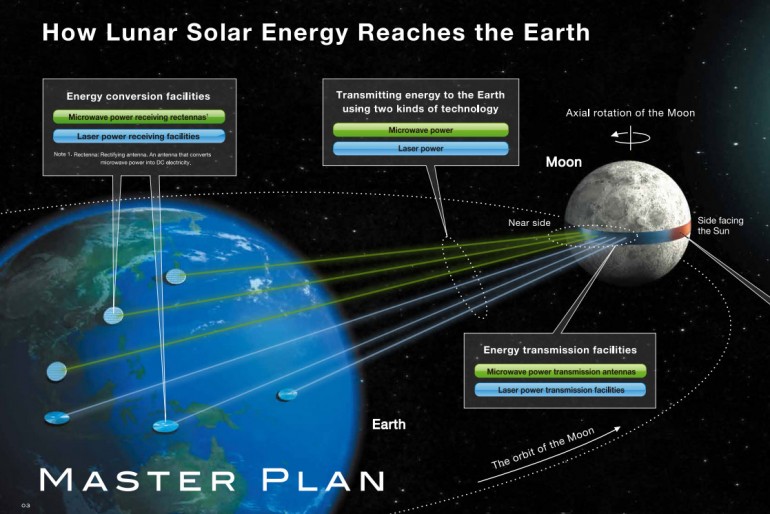
space-based-solarpowerPower could be beamed to the Earth through microwave power transmission antennas, about 20 m (65 ft) in diameter, and a series of high density lasers, both of which would be guided by radio beacons. Microwave power receiving antennas on Earth, located offshore or in areas with little cloud cover, could convert the received microwave power into DC electricity and send it to where it was needed.

The company claims that it’s system could beam up to 13,000 terawatts of power around-the-clock, which is roughly two-thirds of what is used by the world on average per year. With such an array looming in space, and a few satellites circling the planet to pick up the slack, Earth’s energy needs could be met for the foreseable future, and all without a single drop of oil or brick of coal.

The proposed timeline has actual construction beginning as soon as 2035.

biosuitAnd naturally, when manned missions are again mounted into space, the crews will need the proper equipment to live, thrive and survive. And since much of the space suit technology is several decades old, space agencies and private companies are partnering to find new and innovative gear with which to equip the men and women who will brave the dangers of space and planetary exploration.

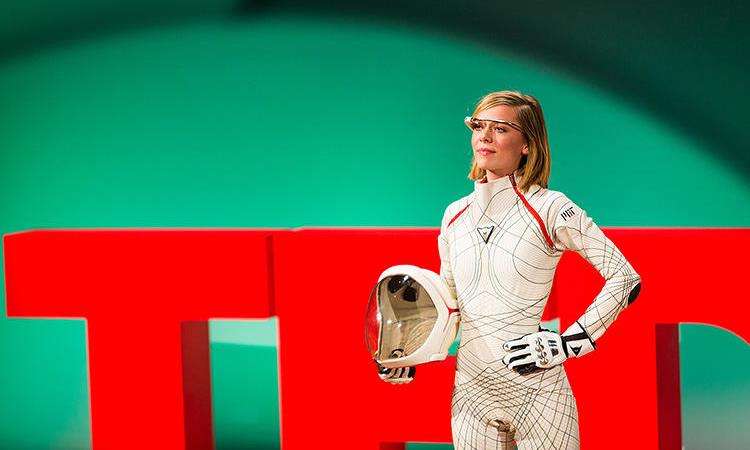
Consider the Biosuit, which is a prime example of a next-generation technology designed to tackle the challenges of manned missions to Mars. Created by Dava Newman, an MIT aerospace engineering professor, this Spiderman-like suit is a sleeker, lighter alternative to the standard EVA suits that weigh approximately 135 kilograms (300 pounds).

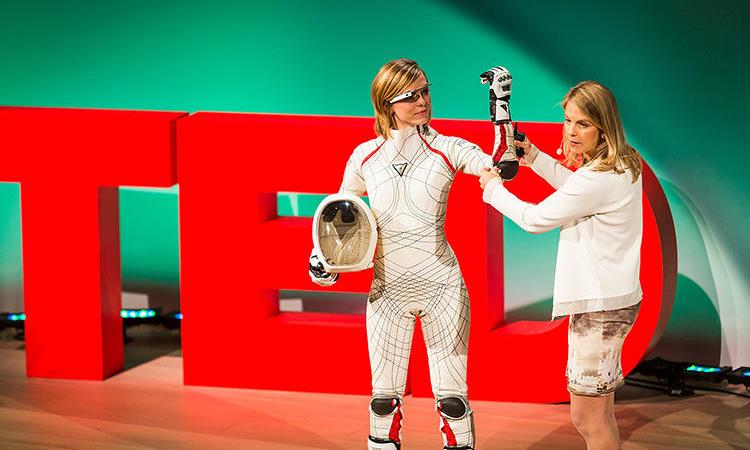
biosuit_dava_newmanFor over a decade now, Newman has been working on a suit that is specifically designed for Mars exploration. At this year’s TEDWomen event in San Francisco, she showcased her concept and demonstrated how its ergonomic design will allow astronauts to explore the difficult terrain of the Red Planet without tripping over the bulk they carry with the current EVA suits.

The reason the suit is sleek is because it’s pressurized close to the skin, which is possible thanks to tension lines in the suit. These are coincidentally what give it it’s Spiderman-like appearance, contributing to its aesthetic appeal as well. These lines are specifically designed to flex as the astronauts ends their arms or knees, thus replacing hard panels with soft, tensile fabric.

biosuit1Active materials, such as nickel-titanium shape-memory alloys, allow the nylon and spandex suit to be shrink-wrapped around the skin even tighter. This is especially important, in that it gets closer Newman to her goal of designing a suit that can contain 30% of the atmosphere’s pressure – the level necessary to keep someone alive in space.

Another benefit of the BioSuit is its resiliency. If it gets punctured, an astronaut can fix it with a new type of space-grade Ace Bandage. And perhaps most importantly, traditional suits can only be fitted to people 5′ 5″ and taller, essentially eliminating short women and men from the astronaut program. The BioSuit, on the other hand, can be built for smaller people, making things more inclusive in the future.

Mars_simulationNewman is designing the suit for space, but she also has some Earth-bound uses in mind . Thanks to evidence that showcases the benefits of compression to the muscles and cardiovascular system, the technology behind the Biosuit could be used to increase athletic performance or even help boost mobility for people with cerebral palsy. As Newman herself put it:

We’ll probably send a dozen or so people to Mars in my lifetime. I hope I see it. But imagine if we could help kids with CP just move around a little bit better.

With proper funding, Newman believes she could complete the suit design in two to three years. It would be a boon to NASA, as it appears to be significantly cheaper to make than traditional spacesuits. Funding isn’t in place yet, but Newman still hopeful that the BioSuit will be ready for the first human mission to Mars, which are slated for sometime in 2030.

In the meantime, enjoy this video of the TEDWomen talk featuring Newman and her Biosuit demonstration:

Sources: gizmag, fastcoexist, blog.ted