
Check out this video trailer for the upcoming sequel to Whiskey Delta, the much-anticipated Papa Zulu! Well, anticipated by some, but they certainly seem dedicated enough. And after schooling myself in the uses of Youtube video creation and the miracles or Shutterstock, I think this one is a big improvement over the first. Check it out, and be sure to comment!
Category: Video
Visions of the Future: Life in the 2030’s
 Gauging what life will be like down the road based on the emerging trends of today is something that scientists and speculative minds have been doing since the beginning of time. But given the rapid pace of change in the last century – and the way that it continues to accelerate – predicting future trends has become something of a virtual necessity today.
And the possibilities that are expected for the next generation are both awe-inspiring and cause for concern. On the one hand, several keen innovations are expected to become the norm in terms of transportation, education, health care and consumer trends. On the other, the growing problems of overpopulation, urbanization and Climate Change are likely to force some serious changes.
 Having read through quite a bit of material lately that comes from design firms, laboratories, and grant funds that seek to award innovation, I decided to do a post that would take a look at how life is expected to change in the coming decades, based on what we are seeing at work today. So here we go, enjoy the ride, and remember to tip the driver!
Housing:
When it comes to designing the cities of the future – where roughly 5 of the worlds 8.25 billion people are going to live – meeting the basic needs of all these folks is complicated by the need to meet them in a sustainable way. Luckily, people all across the world are coming together to propose solutions to this problem, ranging from the small and crafty to the big and audacious.
 Consider that buildings of the future could be coated with Smart Paint, a form of pigment that allows people to change the color of their domicile simply by pushing a button. Utilizing nano-particles that rearrange themselves to absorb a different part of the spectrum, the paint is able to reflect whatever wavelength of visible light the user desires, becoming that color and removing the need for new coats of paint.
And consider that apartments and houses in this day could be lighted by units that convert waste light energy from their light bulbs back into functional ambient light. This is the idea behind the Trap Light, a lamp that comes equipped with photoluminescent pigments embedded directly into the glass body. Through this process, 30 minutes of light from an incandescent or LED light bulb provides a few hours of ambient lighting.
 And in this kind of city, the use of space and resources has come to be very efficient, mainly because it has had to. In terms of low-rent housing, designs like the Warsaw-inspired Keret House are very popular, a narrow, 14-sqaure meter home that still manages to fit a bathroom, kitchen and bedroom. Being so narrow, city planners are able to squeeze these into the gaps between older buildings, its walls and floors snapping together like Lego.
When it comes to other, larger domiciles (like houses and apartment blocks), construction is likely to become a much more speedy and efficient process – relying on the tools of Computer-Assisted Design (CAD) and digital fabrication (aka. the D-process). Basically, the entire fabrication process is plotted in advance on computer, and then the pieces are tailor made in the factory and snapped together on site.
And lets not forget anti-gravity 3-D printing as a means of urban assembly, as proposed by architecture students from the Joris Laarman Lab in Amsterdam. Using quick-hardening materials and dispensed by robot-driven printers, entire apartment blocks – from electronic components to entire sections of wall – within a few days time. Speedier, safer and more efficient than traditional construction.
Within these buildings, water is recycled and treated, with grey water used to fertilize crops that are grown in house. Using all available spaces – dedicated green spaces, vertical agriculture, and “victory gardens” on balconies – residents are able to grow their own fruits and vegetables. And household 3-D food printers will dispense tailor-made treats, from protein-rich snacks and carb crackers to chocolate and cakes.
 And of course, with advances in smart home technology, you can expect that your appliances, thermostat, and display devices will all be predictive and able to anticipate your needs for the day. What’s more, they will all be networked and connected to you via a smartphone or some other such device, which by 2030, is likely to take the form of a smartwatch, smartring or smartbracelet.
Speaking of which…
Smart Devices and Appliances:
When it comes to living in the coming decades, the devices we use to manage our everyday lives and needs will have evolved somewhat. 3-D printing is likely to be an intrinsic part of this, manufacturing everything from food to consumer products. And when it comes to scanning things for the sake of printing them, generating goods on demand, handheld scanners are likely to become all the rage.
 That’s where devices like the Mo.Mo. (pictured above) will come into play. According to Futurist Forum, this molecular scanning device scans objects around your house, tells you what materials they’re made from, and whether they can be re-created with a 3-D printer. Personal, household printers are also likely to be the norm, with subscriptions to open-source software sites leading to on-demand household manufacturing.
And, as already mentioned, everything in the home and workplace is likely to be connected to your person through a smart device or embedded chips. Consistent with the concept of the “Internet of Things”, all devices are likely to be able to communicate with you and let you know where they are in real time. To put that in perspective, imagine SIRI speaking to you in the form of your car keys, telling you they are under the couch.
 Telepresence, teleconferencing and touchscreens made out of every surface are also likely to have a profound effect. When a person wakes in the morning, the mirror on the wall will have displays telling them the date, time, temperature, and any messages and emails they received during the night. When they are in the shower, the wall could comforting images while music plays. This video from Corning Glass illustrates quite well:
And the current range of tablets, phablets and smartphones are likely to be giving way to flexible, transparent, and ultralight/ultrathin handhelds and wearables that use projection and holographic technology. These will allow a person to type, watch video, or just interface with cyberspace using augmented reality instead of physical objects (like a mouse or keyboard).
And devices which can convert, changing from a smartphone to a tablet to a smartwatch (and maybe even glasses) are another predicted convenience. Relying on nanofabrication technology, Active-Matrix Organic Light-Emitting Diode (AMOLED) technology, and touch-sensitive surfaces, these devices are sure to corner the market of electronics. A good example is Nokia’s Morph concept, shown here:
Energy Needs:
In the cities of the near-future, how we generate electricity for all our household appliances, devices and possibly robots will be a going concern. And in keeping with the goal of sustainability, those needs are likely to be met by solar, wind, piezoelectric, geothermal and tidal power wherever possible. By 2030, buildings are even expected to have arrays built in to them to ensure that they can meet their own energy needs independently.
 This could look a lot like the Strawscraper (picture above), where thousands of fronds utilize wind currents to generate electricity all day long; or fields filled with Windstalks – where standing carbon-fiber reinforced poles generate electricity by simply swaying with the wind. Wind farms, or wind tunnels and turbines (as envisioned with the Pertamina Energy Tower in Jakarta) could also be used by buildings to do the same job.
In addition, solar panels mounted on the exterior would convert daylight into energy. Assuming these buildings are situated in low-lying areas, superheated subterranean steam could easily be turned into sources of power through underground pipes connected to turbines. And for buildings located near the sea, turbines placed in the harbor could do the same job by capturing the energy of the tides.
 Furthermore, piezoelectric devices could be used to turn everyday activity into electricity. Take the Pavegen as an example, a material composed of recycled tires and piezoelectric motors that turns steps into energy. Equipping every hallway, stairwell and touch surface with tensile material and motors, just about everything residents do in a building could become a source of added power.
On top of that, piezoelectric systems could be embedded in roads and on and off ramps, turning automobile traffic into electrical power. In developed countries, this is likely to take the form of advanced materials that create electrical charges when compressed. But for developing nations, a simple system of air cushions and motors could also be effective, as demonstrated by Macías Hernández’ proposed system for Mexico City.
And this would seem like a good segue into the issue of…
Mass Transit:
 According to UN surveys, roughly 60% of the world’s population will live in cities by the year 2030. Hopefully, the 5.1 billion of us negotiating tight urban spaces by then will have figured out a better way to get around. With so many people packed into dense urban environments, it is simply not practical for all these individuals to rely on smog-emitting automobiles.
For the most part, this can be tackled by the use of mass transit that is particularly fast and efficient, which are the very hallmarks of maglev trains. And while most current designs are already speedy and produce a smaller carbon footprint than armies of cars, next-generation designs like the Hyperloop, The Northeast Maglev (TNEM), and the Nagoya-Tokyo connector are even more impressive.
 Dubbed by Elon Musk as the “fifth form” of transportation, these systems would rely on linear electric motors, solar panels, and air cushions to achieve speeds of up to 1290 kilometers per hour (800 mph). In short, they would be able to transport people from Los Angeles and San Francisco in 30 minutes, from New York to Washington D.C. in 60 minutes, and from Nagoya to Tokyo in just 41.
When it comes to highways, future designs are likely to take into account keeping electric cars charged over long distances. Consider the example that comes to us from Sweden, where Volvo is also working to create an electric highway that has embedded electrical lines that keep cars charged over long distances. And on top of that, highways in the future are likely to be “smart”.
 For example, the Netherlands-based Studio Roosegaarde has created a concept which relies on motion sensors to detect oncoming vehicles and light the way for them, then shuts down to reduce energy consumption. Lane markings will use glow-in-the-dark paint to minimize the need for lighting, and another temperature-sensitive paint will be used to show ice warnings when the surface is unusually cold.
In addition, the road markings are expected to have longer-term applications, such as being integrated into a robot vehicle’s intelligent monitoring systems. As automated systems and internal computers become more common, smart highways and smart cars are likely to become integrated through their shared systems, taking people from A to B with only minimal assistance from the driver.
 And then there’s the concept being used for the future of the Pearl River Delta. This 39,380 square-km (15,200 square-mile) area in southeastern China encompasses a network of rapidly booming cities like Shenzhen, which is one of the most densely populated areas in the world. It’s also one of the most polluted, thanks to the urban growth bringing with it tons of commuters, cars, and vehicle exhaust.
That’s why NODE Architecture & Urbanism – a Chinese design firm – has come up with a city plan for 2030 that plans put transportation below ground, freeing up a whole city above for more housing and public space. Yes, in addition to mass transit – like subways – even major highways will be relegated to the earth, with noxious fumes piped and tunneled elsewhere, leaving the cityscape far less polluted and safer to breathe.
Personal cars will not be gone, however. Which brings us to…
Personal Transit:
 In the future, the majority of transport is likely to still consist of automobiles, albeit ones that overwhelmingly rely on electric, hydrogen, biofuel or hybrid engines to get around. And keeping these vehicles fueled is going to be one of the more interesting aspects of future cities. For instance, electric cars will need to stay charged when in use in the city, and charge stations are not always available.
That’s where companies like HEVO Power come into play, with its concept of parking chargers that can offer top-ups for electric cars. Having teamed up with NYU Polytechnic Institute to study the possibility of charging parked vehicles on the street, they have devised a manhole c0ver-like device that can be installed in a parking space, hooked up to the city grid, and recharge batteries while commuters do their shopping.
 And when looking at individual vehicles, one cannot underestimate the role by played by robot cars. Already, many proposals are being made by companies like Google and Chevrolet for autonomous vehicles that people will be able to summon using their smartphone. In addition, the vehicles will use GPS navigation to automatically make their way to a destination and store locations in its memory for future use.
And then there’s the role that will be played by robotaxis and podcars, a concept which is already being put to work in Masdar Eco City in the United Arab Emirates, San Diego and (coming soon) the UK town of Milton Keynes. In the case of Masdar, the 2GetThere company has built a series of rails that can accommodate 25,000 people a month and are consistent with the city’s plans to create clean, self-sustaining options for transit.
 In the case of San Diego, this consists of a network known as the Personal Rapid Transit System – a series of on-call, point to point transit cars which move about on main lines and intermediate stations to find the quickest route to a destination. In Britian, similar plans are being considered for the town of Milton Keynes – a system of 21 on-call podcars similar to what is currently being employed by Heathrow Airport.
But of course, not all future transportation needs will be solved by MagLev trains or armies of podcars. Some existing technologies – such as the bicycle – work pretty well, and just need to be augmented. Lightlane is a perfect example of this, a set of lasers and LED lights that bikers use to project their own personal bike lane from under the seat as they ride.
 And let’s not forget the Copenhagen Wheel, a device invented by MIT SENSEable City Lab back in 2009 to electrify the bicycle. Much like other powered-bicycle devices being unveiled today, this electric wheel has a power assist feature to aid the rider, a regenerative braking system that stores energy, and is controlled by sensors in the peddles and comes with smart features can be controlled via a smartphone app.
On top of all that, some research actually suggests that separating modes of transportation – bike lanes, car lanes, bus lanes, etc. – actually does more harm than good to the people using them. In Europe, the traffic concept known as “shared spaces” actually strips paths of traffic markings and lights, and allow walkers and drivers to negotiate their routes on their own.
 Shared spaces create more consideration and consciousness for other people using them, which is why the Boston architecture firm Höweler + Yoon designed the “Tripanel” as part of their larger vision for the Boston-Washington corridor (aka. “Boswash”). The Tripanel features a surface that switches among grass, asphalt, and photovoltaic cells, offering a route for pedestrians, bikers, and electric cars.
Education:
When it comes to schooling ourselves and our children, the near future is likely to see some serious changes, leading to a virtual reinventing of educational models. For some time now, educators have been predicting how the plurality of perspectives and the rise of a globalized mentality would cause the traditional mode of learning (i.e. centralized schools, transmission learning) to break down.
 And according to other speculative thinkers, such as Salim Ismail – the director of Singularity University – education will cease being centralized at all and become an “on-demand service”. In this model, people will simply “pull down a module of learning”, and schooldays and classrooms will be replaced by self-directed lessons and “microlearning moments”.
In this new learning environment, teleconferencing, telepresence, and internet resources are likely to be the main driving force. And while the size and shape of future classrooms is difficult to predict, it is likely that classroom sizes will be smaller by 2030, with just a handful of students using portable devices and display glasses to access information while under the guidance of a teacher.
 At the same time, classrooms are likely to be springing up everywhere, in the forms of learning annexes in apartment buildings, or home-school environments. Already, this is an option for distance education, where students and teachers are connected through the internet. With the addition of more sophisticated technology, and VR environments, students will be able to enter “virtual classrooms” and connect across vast distances.
According to Eze Vidra, the head of Google Entrepreneurs Europe: “School kids will learn from short bite-sized modules, and gamification practices will be incorporated in schools to incentivize children to progress on their own.” In short, education will become a self-directed, or (in the case of virtual environments) disembodied experienced that are less standardized, more fun, and more suited to individual needs.
Health:
 Many experts believe that medicine in the future is likely to shift away from addressing illness to prevention. Using thin, flexible, skin-mounted, embedded, and handheld sensors, people will be able to monitor their health on a daily basis, receiving up-to-date information on their blood pressure, cholesterol, kidney and liver values, and the likelihood that they might contract diseases in their lifetime.
All of these devices are likely to be bundled in one way or another, connected via smartphone or other such device to a person’s home computer or account. Or, as Ariel Schwatz of CoExist anticipates, they could come in the form of a “Bathroom GP”, where a series of devices like a Dr.Loo and Dr. Sink measure everything from kidney function to glucose levels during a routine trip.
 Basically, these smart toilets and sinks screen for illnesses by examining your spittle, feces, urine and other bodily fluids, and then send that data to a microchip embedded inside you or on a wristband. This info is analyzed and compared to your DNA patterns and medical records to make sure everything is within the normal range. The chip also measures vital signs, and Dr Mirror displays all the results.
However, hospitals will still exist to deal with serious cases, such as injuries or the sudden onset of illnesses. But we can also expect them to be augmented thanks to the incorporation of new biotech, nanotech and bionic advances. With the development of bionic replacement limbs and mind-controlled prosthetics proceeding apace, every hospital in the future is likely to have a cybernetics or bioenhancement ward.
 What’s more, the invention of bioprinting, where 3-D printers are able to turn out replacement organic parts on demand, is also likely to seriously alter the field of medical science. If people are suffering from a failing heart, liver, kidney, or have ruined their knees or other joints, they can simply put in at the bioprinting lab and get some printed replacement parts prepared.
And as a final, encouraging point, diseases like cancer and HIV are likely to be entirely curable. With many vaccines that show the ability to not only block, but even kill, the HIV virus in production, this one-time epidemic is likely to be a thing of the past by 2030. And with a cure for cancer expected in coming years, people in 2030 are likely to view it the same way people view polio or tetanus today. In short, dangerous, but curable!
Buying/Selling:
 When it comes to living in 2030, several trends are expected to contribute to people’s economic behavior. These include slow economic growth, collaborative consumption, 3-D printing, rising costs, resource scarcity, an aging population, and powerful emerging economies. Some of these trends are specific, but all of them will effect the behavior of future generations, mainly because the world of the future will be even more integrated.
As already noted, 3-D printers and scanners in the home are likely to have a profound effect on the consumer economy, mainly by giving rise to an on-demand manufacturing ethos. This, combined with online shopping, is likely to spell doom for the department store, a process that is already well underway in most developed nations (thanks to one-stop shopping).
 However, the emergence of the digital economy is also creating far more in the way of opportunities for micro-entrepreneurship and what is often referred to as the “sharing economy”. This represents a convergence between online reviews, online advertising of goods and services, and direct peer-to-peer buying and selling that circumvents major distributors.
This trend, which is not only reaching back in time to reestablish a bartering economy, but is also creating a “trust metric”, whereby companies, brand names, and even individuals are being measured by to their reputation, which in turn is based on their digital presence and what it says about them. Between a “sharing economy” and a “trust economy”, the economy of the future appears highly decentralized.
 Further to this is the development of cryptocurrencies, a digital medium of exchange that relies solely on consumer demand to establish its value – not gold standards, speculators or centralized banks. The first such currency was Bitcoin, which emerged in 2009, but which has since been joined by numerous others like Litecoin, Namecoin, Peercoin, Ripple, Worldcoin, Dogecoin, and Primecoin.
In this especially, the world of 2030 is appearing to be a very fluid place, where wealth depends on spending habits and user faith alone, rather than the power of governments, financial organizations, or centralized bureaucracies. And with this movement into “democratic anarchy” underway, one can expect the social dynamics of nations and the world to change dramatically.
Space Travel!:
 This last section is of such significance that it simply must end with an exclamation mark. And this is simply because by 2030, many missions and projects that will pave the way towards a renewed space age will be happening… or not. It all comes down to whether or not the funding is made available, public interest remains high, and the design and engineering concepts involved hold true.
However, other things are likely to become the norm, such as space tourism. Thanks to visionaries like World View and Richard Branson (the pioneer of space tourism with Virgin Galactic), trips to the lower atmosphere are likely to become a semi-regular occurrence, paving the way not only for off-world space tourism, but aerospace transit across the globe as well.
 Private space exploration will also be in full-swing, thanks to companies like Google’s Space X and people like Elon Musk. This year, Space X is preparing for the first launch of it’s Falcon Heavy rocket, a move which will bring affordable space flight that much closer. And by 2030, affordability will be the hallmarks of private ventures into space, which will likely include asteroid mining and maybe the construction of space habitats.
2030 is also the year that NASA plans to send people to Mars, using the Orion Multi-Purpose Crew Vehicle and a redesigned Saturn V rocket. Once there, the crew will conduct surface studies and build upon the vast legacy of the Spirit, Opportunity and Curiosity Rovers to determine what Mars once looked like. This will surely be a media event, the likes of which has not been seen since the Moon Landing.
 Speaking of media events, by 2030, NASA may not even be the first space agency or organization to set foot on Mars. Not if Mars One, a nonprofit organization based in the Netherlands, get’s its way and manages to land a group of colonists there by 2023. And they are hardly alone, as Elon Musk has already expressed an interest in establishing a colony of 80,000 people on the Red Planet sometime in the future.
And Inspiration Mars, another non-profit organization hosted by space adventurist Dennis Tito, will have already sent an astronaut couple on a round-trip to Mars and back (again, if all goes as planned). The mission, which is currently slated for 2018 when the planets are in alignment, will therefore be a distant memory, but will serve as an example to all the private space ventures that will have followed.
In addition to Mars, one-way trips are likely to be taking place to other celestial bodies as well. For instance, Objective Europa – a non-profit made up of scientists, conceptual artists, and social-media experts – plans to send a group of volunteers to the Jovian moon of Europa as well. And while 2030 seems a bit soon for a mission, it is likely that (if it hasn’t been scrapped) the program will be in the advanced stages by then.
NASA and other space agencies are also likely to be eying Europa at this time and perhaps even sending ships there to investigate the possibility of life beneath it’s icy surface. Relying on recent revelations about the planet’s ice sheet being thinnest at the equator, a lander or space penetrator is sure to find its way through the ice and determine once and for all if the warm waters below are home to native life forms.
 By 2030, NASA’s MAVEN and India’s MOM satellites will also have studied the Martian atmosphere, no doubt providing a much fuller picture of its disappearance. At the same time, NASA will have already towed an asteroid to within the Moon’s orbit to study it, and begun constructing an outpost at the L2 Lagrange Point on the far side of the Moon, should all go as planned.
And last, but certainly not least, by 2030, astronauts from NASA, the ESA, and possibly China are likely to be well on their way towards the creation of a permanent outpost on the Moon. Using a combination of 3-D printing, robots, and sintering technology, future waves of astronauts and settlers will have permanent domes made directly out of regolith with which to conduct research on the Lunar surface.
 All of these adventures will help pave the way to a future where space tourism to other planets, habitation on the Moon and Mars, and ventures to the asteroid belt (which will solve humanity’s resource problem indefinitely), will all be the order of the day.
Summary:
To break it all down succinctly, the world of 2030 is likely to be rather different than the one we are living in right now. At the same time though, virtually all the developments that characterize it – growing populations, bigger cities, Climate Change, alternative fuels and energy, 3-D printing, cryptocurrencies, and digital devices and communications – are already apparent now.
Still, as these trends and technologies continue to expand and are distributed to more areas of the world – not to mention more people, as they come down in price – humanity is likely to start taking them for granted. The opportunities they open, and the dependency they create, will have a very deterministic effect on how people live and how the next generation will be shaped.
All in all, 2030 will be a very interesting time because it will be here that so many developments – the greatest of which will be Climate Change and the accelerating pace of technological change – will be on the verge of reaching the tipping point. By 2050, both of these factors are likely to come to a head, taking humanity in entirely different directions and vying for control of our future.
Basically, as the natural environment reels from the effects of rising temperatures and an estimated CO2 concentration of 600 ppm in the upper atmosphere, the world will come to be characterized by famine, scarcity, shortages, and high mortality. At the same time, the accelerating pace of technology promises to lead to a new age where abundance, post-scarcity and post-mortality are the norm.
So in the end, 2030 will be a sort of curtain raiser for the halfway point of the 21st century, during which time, humanity’s fate will have become largely evident. I’m sure I’m not alone in hoping things turn out okay, because our children are surely expecting to have children of their own, and I know they would like to leave behind a world the latter could also live in!
Sources: fastcoexist.com, (2), (3), cnn.com, designtoimprovelife.dk, un.org
Food From Space: NASA’s 3-D Pizza Printer (Cont’d)
 Last Spring, NASA made headlines when it announced that its was granting a developer $125,000 to build a prototype 3-D food printer that would be able to create pizzas and other tasty food items. This is part of NASA’s larger effort to bring 3-D printing into space so that astronauts could meet their nutritional and supply needs on site.
And according to this most recent video, courtesy of Anjan Contractor, it seems that the project had begun to bear fruit. Contractor is the lead engineer behind the printer design, and was employed by NASA’s Systems & Materials Research Corporation to complete a printer that could provide astronauts a nutritious, comforting alternative to the canned and freeze-dried prepackaged foods they’re currently stuck with.
 As you can see from the video, the machine does a pretty good job of creating a rectangular, margherita pizza – albeit with some minor spillage. And, according to Contractor, the device takes about 70 seconds to cook the pizza after the printer nozzles were finished laying down the liquid crust-precursor, followed by the tomato sauce and liquid cheese.
If NASA decides it wants to move ahead with the printer, it will still be many, many years before astronauts are eating 3-D printed pizza and other such delectables in space. But this proof of concept is a major step in that direction, and NASA is likely to see its project through to completion before attempting any long-range missions (such as to Mars).
After all, astronauts being in space for extended periods of time is the very reason alternatives are being contemplated in the first place. And in the meantime, check out this video of Contractor’s printer as it generates a pizza:
Source: fastcoexist.com
News From Space: Mars Needs Money!
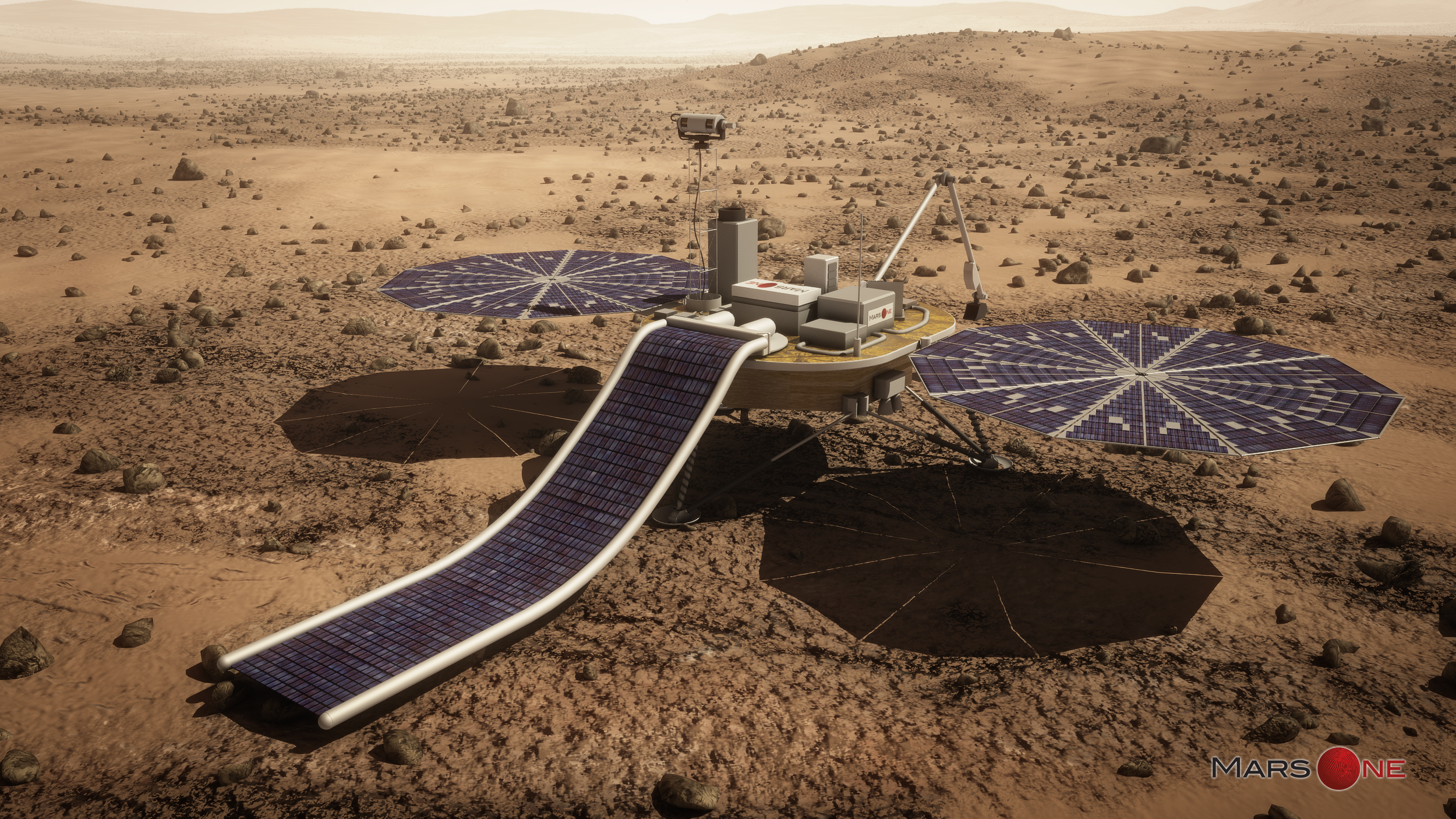
Remember Mars One, the Netherlands-based nonprofit that began seeking recruits for a one-way trip to the Red Planet during the summer of 2012? Well, it turns out the company is looking to take the next step towards its goal of establishing a human settlement on Mars by 2023. Basically, they are looking to raise the funds to get the ball rolling on the eventual manned mission.
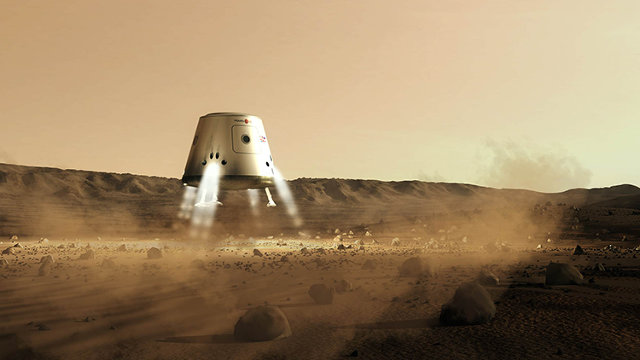
Towards this end, they have started a crowdfunding campaign through Indiegogo – and in partnership with Lockheed Martin – to raise the money for some concept studies, which will test the lander and a satellite that will conduct a demonstration mission in just four years time. The lander is based on Lockheed’s design for the NASA lander successfully used on Mars in 2007 (pictured below).
 Their campaign is seeking to raise $400,000, which will cover the costs of the concept studies, and is a mere drop in the bucket compared to the $6 billion the team estimates will be necessary to get humans to Mars. However, most of that money is expected to come from media broadcasting rights as citizen astronauts are selected and, if all goes as planned, start living on the Martian surface.
As has been stated many times over, Mars One is an evolving idea that seeks to make something historic happen. A future, larger crowdfunding campaign will allow universities to compete to send a full experiment to Mars on the 2018 mission, which will be unmanned. Mars One hopes to send four human colonists to the planet by 2025, selected from a pool of more than 200,000 people who have already applied.
 And as Hans Lansdorp, CEO of Mars One recently said, this crowdfunding campaign is important to the team to get more people involved. Not only does the project require public interest and participation in order for it to become a reality, Lansdorp and his colleagues also want it to be as international and inclusive as possible:
We really see this as a break with the history of space exploration, and especially Mars exploration, because in this mission anyone can participate in some way… For the U.S., Mars exploration is pretty common. But all of Asia has never sent an experiment to Mars. Now, suddenly we allow anyone, everywhere in the world, to send something to Mars. That’s a complete break with Mars exploration in the past.
Naturally, there are plenty of issues that need to be worked out before anything real can happen, and plenty of naysayers who emphasize the stumbling blocks in sending a manned mission to Mars. These include, but are not restricted to, radiation, microgravity, technological limitations, and the sheer amount of time involved.
 Despite all that, Lansdorp and the Mars One team remain committed and dedicated to their goal, and have been taking on all challengers with their usual combination of optimism and entrepreneurial spirit. And they firmly believe that given time, all of these hurdles will be negotiable. What’s more, they’ve convinced more than a few critics of the validity of the mission:
If we have some time to talk to people and explain the details of our plan, and as long as they’re commenting on their own field of expertise, I’ve never met someone who could not be convinced that this is possible. It will be very difficult of course–there are thousands of hurdles on the road between now and landing on Mars–but there are no hurdles that we can identify that we cannot take.
As of the penning of this article, the Mars One campaign has been open since December 10th and has raised $209,677 of its $400,000 goal, with 18 more days to go. And there are certainly no shortage of volunteers, as the company is currently processing applications from 150,000 people. So even if it can’t happen by the proposed date, it is clear that they have grabbed the world’s attention.
And in the meantime, enjoy these videos of the proposed Mars One lander design (which will take place in the 2018 demo mission) and the company’s latest promotional video:
Mars One 2018 Lander:
Mars One 2018 Mission:
Sources: fastcoexist.com, theguardian.com, mars-one.com, indiegogo.com
Judgement Day Update: Super-Strong Robotic Muscle
 In their quest to build better, smarter and faster machines, researchers are looking to human biology for inspiration. As has been clear for some time, anthropomorphic robot designs cannot be expected to do the work of a person or replace human rescue workers if they are composed of gears, pullies, and hydraulics. Not only would they be too slow, but they would be prone to breakage.
Because of this, researchers have been working looking to create artificial muscles, synthetics tissues that respond to electrical stimuli, are flexible, and able to carry several times their own weight – just like the real thing. Such muscles will not only give robots the ability to move and perform tasks with the same ambulatory range as a human, they are likely to be far stronger than the flesh and blood variety.
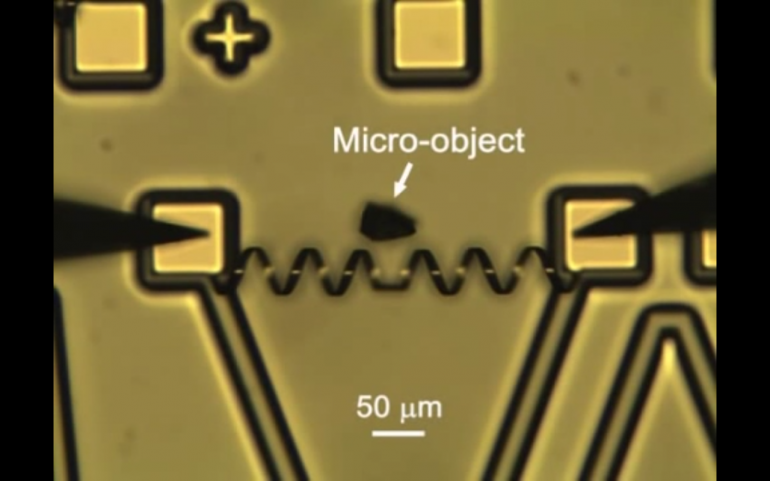 And of late, there have been two key developments on this front which may make this vision come true. The first comes from the US Department of Energy ’s Lawrence Berkeley National Laboratory, where a team of researchers have demonstrated a new type of robotic muscle that is 1,000 times more powerful than that of a human’s, and has the ability to catapult an item 50 times its own weight.
The artificial muscle was constructed using vanadium dioxide, a material known for its ability to rapidly change size and shape. Combined with chromium and fashioned with a silicone substrate, the team formed a V-shaped ribbon which formed a coil when released from the substrate. The coil when heated turned into a micro-catapult with the ability to hurl objects – in this case, a proximity sensor.
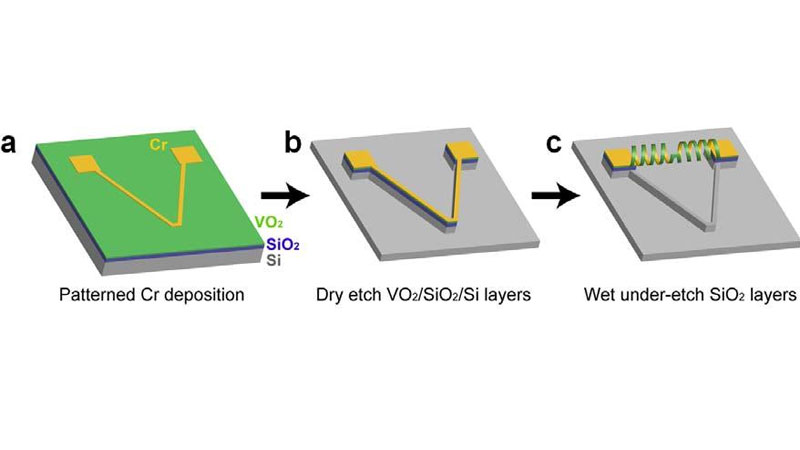 Vanadium dioxide boasts several useful qualities for creating miniaturized artificial muscles and motors. An insulator at low temperatures, it abruptly becomes a conductor at 67° Celsius (152.6° F), a quality which makes it an energy efficient option for electronic devices. In addition, the vanadium dioxide crystals undergo a change in their physical form when warmed, contracting along one dimension while expanding along the other two.
Junqiao Wu, the team’s project leader, had this to say about their invention in a press statement:
Using a simple design and inorganic materials, we achieve superior performance in power density and speed over the motors and actuators now used in integrated micro-systems… With its combination of power and multi-functionality, our micro-muscle shows great potential for applications that require a high level of functionality integration in a small space.
In short, the concept is a big improvement over existing gears and motors that are currently employed in electronic systems. However, since it is on the scale of nanometers, it’s not exactly Terminator-compliant. However, it does provide some very interesting possibilities for machines of the future, especially where the functionality of micro-systems are concerned.
 Another development with the potential to create robotic muscles comes from Duke University, where a team of engineers have found a possible way to turn graphene into a stretchable, retractable material. For years now, the miracle properties of graphene have made it an attractive option for batteries, circuits, capacitors, and transistors.
However, graphene’s tendency to stick together once crumpled has had a somewhat limiting effect on its applications. But by attacking the material to a stretchy polymer film, the Duke researchers were able to crumple and then unfold the material, resulting in a properties that lend it to a broader range of applications- including artificial muscles.
 Before adhering the graphene to the rubber film, the researchers first pre-stretched the film to multiple times its original size. The graphene was then attached and, as the rubber film relaxed, the graphene layer compressed and crumpled, forming a pattern where tiny sections were detached. It was this pattern that allowed the graphene to “unfold” when the rubber layer was stretched out again.
The researchers say that by crumpling and stretching, it is possible to tune the graphene from being opaque to transparent, and different polymer films can result in different properties. These include a “soft” material that acts like an artificial muscle. When electricity is applied, the material expands, and when the electricity is cut off, it contracts; the degree of which depends on the amount of voltage used.
 Xuanhe Zhao, an Assistant Professor at the Pratt School of Engineering, explained the implications of this discovery:
New artificial muscles are enabling diverse technologies ranging from robotics and drug delivery to energy harvesting and storage. In particular, they promise to greatly improve the quality of life for millions of disabled people by providing affordable devices such as lightweight prostheses and full-page Braille displays.
Currently, artificial muscles in robots are mostly of the pneumatic variety, relying on pressurized air to function. However, few robots use them because they can’t be controlled as precisely as electric motors. It’s possible then, that future robots may use this new rubberized graphene and other carbon-based alternatives as a kind of muscle tissue that would more closely replicate their biological counterparts.
 This would not only would this be a boon for robotics, but (as Zhao notes) for amputees and prosthetics as well. Already, bionic devices are restoring ability and even sensation to accident victims, veterans and people who suffer from physical disabilities. By incorporating carbon-based, piezoelectric muscles, these prosthetics could function just like the real thing, but with greater strength and carrying capacity.
And of course, there is the potential for cybernetic enhancement, at least in the long-term. As soon as such technology becomes commercially available, even affordable, people will have the option of swapping out their regular flesh and blood muscles for something a little more “sophisticated” and high-performance. So in addition to killer robots, we might want to keep an eye out for deranged cyborg people!
And be sure to check out this video from the Berkley Lab showing the vanadium dioxide muscle in action:
Source: gizmag.com, (2), extremetech.com, pratt.duke.edu
The Future is Here: 3-D Printed Candy
 Remember the Easy Bake Oven, that little toy appliance that came equipped with an especially hot light-bulb and allowed kids to bake (a limited array of) edible goods? Well, it just may be that 3-D food printers will give the children of tomorrow that same ability, except with a much wider array of options; not to mention little risk of burning themselves.
Already, pizza, pancakes, and desserts are all options for food printers, and even Google’s cafeteria has a 3-D printer for pasta. And at this years Consumer Electronics Show (CES 2014), 3D Systems unveiled two of their latest designs – the ChefJet and the ChefJet Pro – showcasing printers that use sugar and water to crystallize frosting in real time.
 3D Systems is no stranger to printer technology. At last years CES, they won Best Emerging Tech award for their Cubify printer – a low cost device geared towards kids, artists, and other consumers inexperienced with the technology. And though the reviews coming out of CES are mixed on the nature of the flavor, the colors and shapes it can render into candy form are quite impressive.
The ChefJet only prints sugar or chocolate-colored confections while the Pro takes it up a notch with an inkjet filled with food coloring allowing for a plethora of colorful, and edible, results. These range from spirals and squares to 3-D pentagons and spheres, to incredibly elaborate designs that resemble chorals or casings for cakes. And of course, the candy can come in the form of pure sugar, or as white or dark chocolate.
 Other developments in the 3-D printing of food – such as NASA’s research on printing food in space (including pizza!), or printing food with personalized nutritional content – aren’t yet fully formed. ChefJet could be a little easier to integrate into small industries right away, since it has the ability to tailor make frosting in shapes that could easily be added to high-end desserts (like wedding cakes).
Even more exciting is the potential for home applications. Parents could rent a ChefJet Pro for a kids’ birthday party to create cakes or candy in the shape of their child’s favorite characters, or let children customize the Halloween candy that they would hand out. And just like the Easy Bake Oven of old, the result may not be totally tasty, but the process is still fun and gives people a chance to be creative.
The ChefJet and ChefJet Pro will likely be available in the second half of 2014, for an estimated $5,000 and $10,000 apiece. And while you’re waiting on one to become commercially available (and affordable), check out this video of the ChefJet in action at CES 2014:
Source: fastcodesign.com, nasa.gov
The Future is Here: Brain Scanning for Pets!
 Remember that scene in the Disney Pixar’s Up, where the old man and the little boy discover a dog who, thanks to a special collar, is able to talk to them? As it stands, that movie may have proven to be more prophetic than anyone would have thought. Thanks to improvements in wearable tech and affordable EEG monitors, it may finally be possible to read your dog’s mind and translate it into speech.
This is not the first case of commercial technology being used to monitor an animal’s habits. In recent years, wearable devices have been made available that an track the exercise, sleeping and eating patterns of a dog. But now, thanks to EEG devices like the “No More Woof”, it might be possible to track their thoughts, learning exactly what they think of that new couch, their new dry food, or the neighbors cat.
 Tomas Mazzetti, the devices inventor, came up with the idea after he got as to what would happen if he strapped an off-the-shelf EEG machine to his mother’s Australian terrier. The observations that followed inspired the launch of a new project for Mazzetti and his team of fellow creatives at the Nordic Society for Invention and Discovery.
This society – which represents a collaboration between the ad agency Studio Total and Swedish retailer MiCasa – has spawned a number of quirky products in the past. These include a rocking chair that charges your iPad, a weather forecasting lamp, and a levitating carpet for small-ish pets. No More Woof is the society’s latest work, and the team recently launched an Indiegogo campaign to raise more funding for research.
 So far, Mazzetti and his team have been able to determine three baseline dog emotions to translate into speech: sleepiness, agitation, and curiosity. In time, they hope to be able to decipher hunger pangs as processed by a dog’s brain, and come up with appropriate verbalizations for all:
When the dog is sleepy, we translate to ‘I’m tired.’ And if they are really agitated, we can translate to ‘I’m excited!’ And the most active brainwave is when the dog sees a human face and tries to recognize that face. Then the brain is working overtime.
Mazzetti and the NSID are also working on finding cheaper EEG machines, after which they can fine-tune the software. They’ve done tests on roughly 20 dogs, of which they found that short-haired pets were able to communicate with the EEG machine better. If NSID receives more funding, its researchers hope to have something for sale by March or April of next year.
 But while Mazzetti’s primary goal is to produce something commercially viable for use with dogs, he’s also hopeful that other research institutions or retailers will pick up where NSID leaves off. For example, what thoughts could be translated if someone were to put a more sophisticated version of No More Woof on the head of a primate, or another highly intelligent mammal?
Looking even further afield, Mazzetti has suggested that such a device could work both ways, translating human speech into concepts that a dog (or other animal) could understand. As we all know, dogs are very good at learning verbal commands, but again, the idea of two-way communication offers possibilities to convey complex messages with other, more highly-intelligent animals.
 Could it be possible someday to communicate with simians without the need for sign language, to commune openly with dolphins and Orcas, or warn Humpbacks about the impending dangers of whalers and deep sea fishers? Perhaps, and it would certainly be to the benefit of all. Not only would we be able to get our mammalian brethren to better understand us, we might just learn something ourselves!
After all, the line that separates humanity from all other species is a rather fine one, and tends to blur to closer we inspect it. By being able to commune with other species in a way that can circumvent “language barriers”, we might just learn that we have more in common than we think, and aren’t such a big, screaming deal after all.
And in the meantime, enjoy this video of the No More Woof in action:
And be sure to check out this clip from Up where Doug (the talking dog) is introduced, with hilarious results!
Life on Mars: What it Once Looked Like
 Billions of years ago when the Red Planet was young, it appears to have had a thick atmosphere that was warm enough to support oceans of liquid water, and perhaps even life. Thanks to past and ongoing research conducted by the Spirit, Opportunity and Curiosity rovers, NASA scientists are certain that Mars once boasted conditions that would have supported life.
To dramatize these discoveries, NASA’s Goddard Space Flight Center has created a video representation of what the environment might have looked like billions of years ago. The artist’s concept opens with Mars appearing as a warm, wet place, and then transitioning to the climate that we know today. As the atmosphere gradually disappears, it changes from the Earthlike blue to the dusty pink and tan hues of Mars today.
As the description reads on NASA Goddard’s Youtube page:
The animation shows how the surface of Mars might have appeared during this ancient clement period, beginning with a flyover of a Martian lake. The artist’s concept is based on evidence that Mars was once very different. Rapidly moving clouds suggest the passage of time, and the shift from a warm and wet to a cold and dry climate is shown as the animation progresses.
By the end, Mars has transformed to the acrid environment of 2013 – all “dusty pink and tan hues”. One day, NASA believes it may be possible to bring the environment back from this fate. Though its a mere theory at this point, terraforming could transform Mars back into a warm, wet, and life-sustaining planet once more. Enjoy the clip!
Source: fastcoexist, svs.gsfc.nasa.gov
The Starving Games
 Just learned this little gem is available for watching online. It’s called the The Starving Games, a not-so-subtly named satirical take on The Hunger Games. In addition to spoofing that sci-fi, dystopian YA hit, they also tackled franchises like The Avengers, Harry Potter and Oz the Great and Powerful to pop culture characters and celebrities like Taylor Swift, PSY, LMFAO and Honey Boo Boo.
Directed by Jason Friedberg and Aaron Seltzer, the people who brought us Spy Hard, Scary Movie, Date Movie, Epic Movie, Meet the Spartans, Disaster Movie, and Vampires Suck, this movie promises to be entertaining for people who don’t mind seeing popular franchises being slammed, and don’t care much about good writing, acting, or coherent story lines.
Enjoy the trailer, and then check out the full movie (if you’re so inclined) over at Youtube:
The Future is… Worms: Life Extension and Computer-Simulations
 Post-mortality is considered by most to be an intrinsic part of the so-called Technological Singularity. For centuries, improvements in medicine, nutrition and health have led to improved life expectancy. And in an age where so much more is possible – thanks to cybernetics, bio, nano, and medical advances – it stands to reason that people will alter their physique in order slow the onset of age and extend their lives even more.
And as research continues, new and exciting finds are being made that would seem to indicate that this future may be just around the corner. And at the heart of it may be a series of experiments involving worms. At the Buck Institute for Research and Aging in California, researchers have been tweaking longevity-related genes in nematode worms in order to amplify their lifespans.
 And the latest results caught even the researchers by surprise. By triggering mutations in two pathways known for lifespan extension – mutations that inhibit key molecules involved in insulin signaling (IIS) and the nutrient signaling pathway Target of Rapamycin (TOR) – they created an unexpected feedback effect that amplified the lifespan of the worms by a factor of five.
Ordinarily, a tweak to the TOR pathway results in a 30% lifespan extension in C. Elegans worms, while mutations in IIS (Daf-2) results in a doubling of lifespan. By combining the mutations, the researchers were expecting something around a 130% extension to lifespan. Instead, the worms lived the equivalent of about 400 to 500 human years.
 As Doctor Pankaj Kapahi said in an official statement:
Instead, what we have here is a synergistic five-fold increase in lifespan. The two mutations set off a positive feedback loop in specific tissues that amplified lifespan. These results now show that combining mutants can lead to radical lifespan extension — at least in simple organisms like the nematode worm.
The positive feedback loop, say the researchers, originates in the germline tissue of worms – a sequence of reproductive cells that may be passed onto successive generations. This may be where the interactions between the two mutations are integrated; and if correct, might apply to the pathways of more complex organisms. Towards that end, Kapahi and his team are looking to perform similar experiments in mice.
 But long-term, Kapahi says that a similar technique could be used to produce therapies for aging in humans. It’s unlikely that it would result in the dramatic increase to lifespan seen in worms, but it could be significant nonetheless. For example, the research could help explain why scientists are having a difficult time identifying single genes responsible for the long lives experienced by human centenarians:
In the early years, cancer researchers focused on mutations in single genes, but then it became apparent that different mutations in a class of genes were driving the disease process. The same thing is likely happening in aging. It’s quite probable that interactions between genes are critical in those fortunate enough to live very long, healthy lives.
A second worm-related story comes from the OpenWorm project, an international open source project dedicated to the creation of a bottom-up computer model of a millimeter-sized nemotode. As one of the simplest known multicellular life forms on Earth, it is considered a natural starting point for creating computer-simulated models of organic beings.
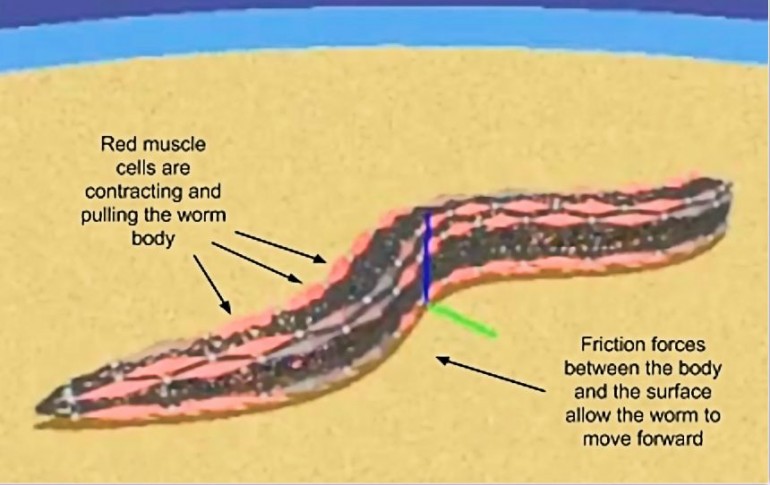 In an important step forward, OpenWorm researchers have completed the simulation of the nematode’s 959 cells, 302 neurons, and 95 muscle cells and their worm is wriggling around in fine form. However, despite this basic simplicity, the nematode is not without without its share of complex behaviors, such as feeding, reproducing, and avoiding being eaten.
To model the complex behavior of this organism, the OpenWorm collaboration (which began in May 2013) is developing a bottom-up description. This involves making models of the individual worm cells and their interactions, based on their observed functionality in the real-world nematodes. Their hope is that realistic behavior will emerge if the individual cells act on each other as they do in the real organism.
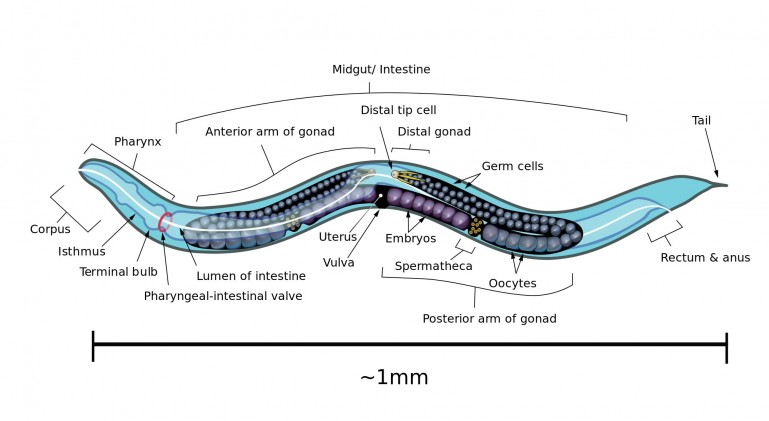 Fortunately, we know a lot about these nematodes. The complete cellular structure is known, as well as rather comprehensive information concerning the behavior of the thing in reaction to its environment. Included in our knowledge is the complete connectome, a comprehensive map of neural connections (synapses) in the worm’s nervous system.
The big question is, assuming that the behavior of the simulated worms continues to agree with the real thing, at what stage might it be reasonable to call it a living organism? The usual definition of living organisms is behavioral, that they extract usable energy from their environment, maintain homeostasis, possess a capacity to grow, respond to stimuli, reproduce, and adapt to their environment in successive generations.
 If the simulation exhibits these behaviors, combined with realistic responses to its external environment, should we consider it to be alive? And just as importantly, what tests would be considered to test such a hypothesis? One possibility is an altered version of the Turing test – Alan Turing’s proposed idea for testing whether or not a computer could be called sentient.
In the Turing test, a computer is considered sentient and sapient if it can simulate the responses of a conscious sentient being so that an auditor can’t tell the difference. A modified Turing test might say that a simulated organism is alive if a skeptical biologist cannot, after thorough study of the simulation, identify a behavior that argues against the organism being alive.
 And of course, this raises an even larger questions. For one, is humanity on the verge of creating “artificial life”? And what, if anything, does that really look like? Could it just as easily be in the form of computer simulations as anthropomorphic robots and biomachinery? And if the answer to any of these questions is yes, then what exactly does that say about our preconceived notions about what life is?
If humanity is indeed moving into an age of “artificial life”, and from several different directions, it is probably time that we figure out what differentiates the living from the nonliving. Structure? Behavior? DNA? Local reduction of entropy? The good news is that we don’t have to answer that question right away. Chances are, we wouldn’t be able to at any rate.
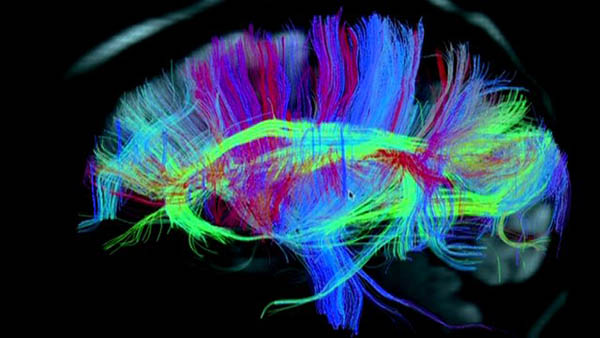 And though it might not seem apparent, there is a connection between the former and latter story here. In addition to being able to prolong life through genetic engineering, the ability to simulate consciousness through computer-generated constructs might just prove a way to cheat death in the future. If complex life forms and connectomes (like that involved in the human brain) can be simulated, then people may be able to transfer their neural patterns before death and live on in simulated form indefinitely.
So… anti-aging, artificial life forms, and the potential for living indefinitely. And to think that it all begins with the simplest multicellular life form on Earth – the nemotode worm. But then again, all life – nay, all of existence – depends upon the most simple of interactions, which in turn give rise to more complex behaviors and organisms. Where else would we expect the next leap in biotechnological evolution to come from?
And in the meantime, be sure to enjoy this video of the OpenWorm’s simulated nemotode in action
 Stories by Williams