Space Tourism: The World View Balloon

near-space_balloonWhen the Space Age began, some five decades ago, there were many who predicted that commercial space flight would follow shortly thereafter. This included everything from passenger flights into space, orbital space stations, and even space tourism. Naturally, these hopes seem quite naive in hindsight, but recent events are making them seem feasible once more.

Consider Virgin Galactic, a commercial aerospace carrier that will begin taking passengers into Low-Earth Orbit (LEO) beginning next year. And there’s Inspiration Mars, a private company that wants to send a couple on a round trip to visit the Red Planet. And now, there’s World View Enterprises, a company that plans to send to start sending passengers on a near-space balloon ride beginning in 2016.

near-space_balloon1Based in Tucson, Arizona, World View is a start-up that is looking to entice people into the budding field of space tourism by offering people a chance to get a taste of space without actually going there. Going into space is defined as traveling 100 km (62 miles) from the Earth’s surface, whereas their balloon ride will take passengers to a height of 30 km (18.6 miles), where they will be treated to a spectacular view of the Earth

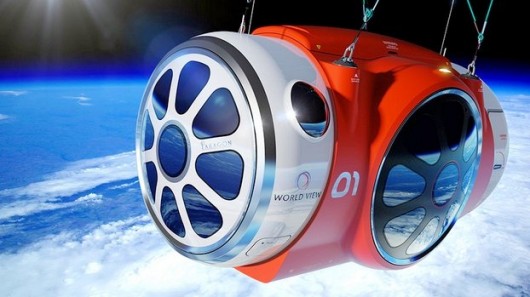
World View Enterprises recently obtained approval from the US Federal Aviation Administration for its proposed balloon experiences, which will cost US $75,000 a ride, and are projected to begin in 2016. Each flight will consist of two balloon pilots and up to six passengers, which will be contained within a cylindrical capsule that comes equipped with heating and its own air-supply.

near-space_balloon2According to the company’s plan, the capsule – which measures 6 meters in length and 3 in width (approx. 20 x 10 feet) – will be deployed below a parasail (used for recovery) and tethered to a 400,000 cubic meter (14 million cubic ft) helium balloon, which will provide the lift needed to bring the capsule and its occupants to 30 km in altitude or Low-Earth Orbit.

Might sound a little dangerous to some, but the FAA has determined that World View’s design meets the engineering and environmental challenges posed by Low-Earth Orbit. They stressed that the capsule be designed and tested as if it were going to have long-term exposure in space, even though it will not exceed altitudes much above 30 km, and assigned it a safety factor of 1.4 – the same as that required of manned space systems.
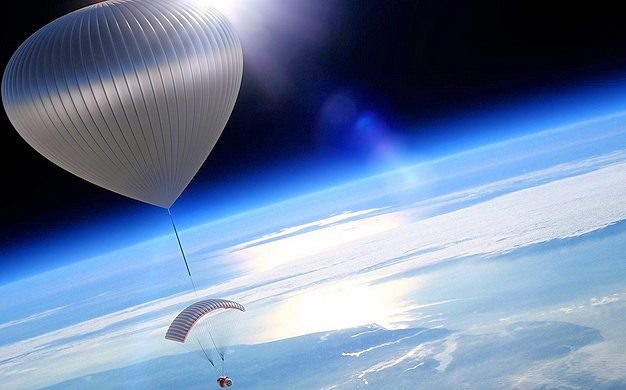
near-space_balloon5The flight itself is projected to last about four hours, with the ascent taking 1.5-2 hours. The capsule will then remain at an altitude of 30 km for about two hours, during which time the semi-space tourists will be free to move about the cabin and take in the view. Unfortunately, they will not experience weightlessness during this period.

That’s comes after, when the capsule is cut off from the balloon and begins to fall towards Earth. Once it gains enough speed, the parafoil will provide sufficient lift to slow the descent and bring the passengers in for a safe, controlled landing. Before touching down, the capsule will deploy a set of skids and lands much the same way a paraglider does.

near-space_balloon4All in all, the balloon ride being suggested by World View does appear to hit many of the key points on the space tourism agenda. These include seeing black sky and the curvature of the Earth, and having a view of the planet that only astronauts are ever treated to. That may very well add up to an experience that is as good as being in space without technically getting there.

The only question is, will enough passengers line up for an amazing day’s flight that costs a startling $75K? Only time will tell. One thing is fore sure though. The dream of space tourism appears to finally be upon us, though it is a few decades late in coming. Today’s dreams do tend to become tomorrow’s reality, though they sometimes take longer than expected.

And be sure to enjoy this promotional video from World View Enterprises showing their concept in action:


Sources: gizmag.com, fastcodesign.com,

South Park Spoofs the NSA

south-park_NSAI just finished watching the Season 17 premiere of South Park, and came away both impressed and confused. Now is it just me, or this show really socially and politically relevant? Half the time I think its an example of how far we’ve declined as a culture. Other times I think it’s modern day satire at its best. Well, not exactly finest, but you get the idea…

Basically, in this episode Cartman joins the NSA hoping to blow the whistle on their government surveillance program from the inside. And despite exposing the truth – the weird, whacky truth which I shall I not mention for fear of spoilers – no one seems to care. Cartman goes home thinking he needs to move to Russia since he’s now a whistle blower and this is what they do.

Here are the highlights, as obtained from Youtube:


And interestingly enough, in a separate thread, the naive but loveable doormat Butters hears from Cartman that the government is watching them all the time and interprets it in rather… religious terms. That night, he chooses to pray to the government, thanking it for watching over him and letting it know what he wants for Christmas.

south-park_DMVAs if that wasn’t enough, when he sins, he goes to the DMV to confess and says the Pledge of Allegiance as if it is a Hail Mary. He also recruits a bunch of Jehova’s Witnesses come to his door and begins going door to door, telling others about how the Government wants to forgive them and be let into their hearts. Thanks to Butters and his followers, the DMV becomes a church in its own right, with prayer services and sing-alongs.

The DMV is then inspired by this and decides to become an actual church, and is then promtply shut down for having sex with little boys(!) Apparently, they seemed to think this “came with the territory”. Those looking to confess were told to go to the Post Office, which shortly thereafter was also closed down for having sex with little boys! Here’s the highlights from that thread:


Terrible no? And yet, somehow very spot on!

Star Wars News: Vader WASN’T Luke’s Father Originally

SW7You know, it’s been awhile since I spoke about anything related to one of the greatest science fiction franchises in history. I am of course referring to Star Wars. Lucky for me, a series of stories have popped up on the news lately, so I thought now would be the perfect time to remedy all that. And this story is quite interesting, as it has to do with Lucas’ original plan for a major plot element in the series.

In short, Lucas’ original draft for The Empire Strikes Back, which was recently leaked to the public, and in that version, Darth Vader was NOT intended to be Luke’s father. That major plot twist, which proved intrinsic to the series’ story arc, was introduced by another writer, Leigh Brackett. As a veteran Hollywood writer, and given the success of the first movie, Lucas wanted her help in making sure the script for the sequel was up to par.

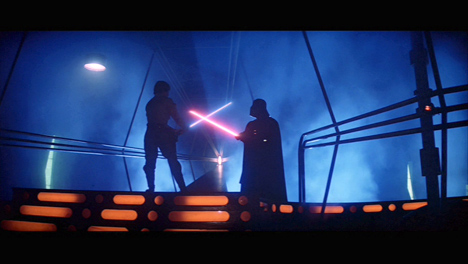
starwarstheempirestrikesback2Working from Lucas’ original plan, Brackett turned in an initial draft where Luke travels to Dagobah to receive instruction from Yoda, the ghosts of Obi-Wan AND his father. As for the major confrontation between Vader and Luke aboard Cloud City, the entire scene has no major twist, and instead consists of Vader offering Luke the chance to rule the Galaxy with him. Not “as father and son” mind you, just as two bad guys!

Sounds pretty weak doesn’t it? Well, turns out it gets better. In addition to there being no major twist, the original draft also had Han Solo showing Luke the basics of how to use a lightsaber (what WHAT?), featured a boatload of Wampas with the ability to freeze people, and had Han Solo spending part of the movie trying to recruit his stepfather into the Rebel Alliance.

Empire strikes back_338858Tragically, Brackett died shortly after sending in this first draft which was worked from Lucas’ notes, so she never got a chance to rework it. That task fell to Lawrence Kasdan and Lucas, who eventually worked from Brackett’s draft to create the film we all know and love. Alas, it was a good thing Lucas brought in some outside talent to help him with his script, or he would have had a Phantom Menace situation on his hands two decades too soon!

Going from the original story, as Lucas had it, the story not only loses most of its intrigue, but it’s also becomes bogged down in superfluousness and one-dimensionality. Part of what made Luke’s character so interesting was the inner turmoil he faced – being torn between stopping his father and wanting to help him, but also knowing that by killing him, he would risk becoming him.

empire strikes back_duelWhat’s more, in this version Vader loses all depth and becomes a cardboard-cutout bad guy. By learning that he was in fact a once-great man who “fell from grace”, his character became far more interesting and involved. And of course, knowing that he was once good presented Luke with a third option and a resolution to his quandary – redeem his father rather than kill him, thus ending the war in a way that would not damn his own soul.

And sure, Obi-Wan did tell Luke point blank in the original movie that Vader betrayed and murdered his father, but that was what was so cool about it looking back. In that film, Alec Guinness’ abilities as an actor really made it seem like he was holding something back with Luke. Knowing that his tale was meant symbolically rather than literally just made sense. I mean, he is a warrior-mystic after all. He’s supposed to be all meta!

empire_strike_back_endshotAnd really, this twist was what made the Star Wars trilogy work on so many levels. The idea of a son having to face his father, a fallen angel, in a titanic struggle of good and evil with immense personal implications and the fate of the universe hinging on the whole thing. It’s like Judea-Christian and classical mythology, Jung, Freud, and Existentialism all rolled into one!

To know that Lucas never intended it to be such, well that kind of puts a damper on the whole thing doesn’t it? But then again, it also answers a lot of nagging questions: like how the man who created the original saga could have created such fluff just twenty years later. Good thing he knew how to accept help back then, otherwise we’d have all missed out on a massive sci-fi pop cultural phenomena!

And in the meantime, enjoy some of these outtakes from the original movie which also recently emerged. Apparently, these come from the movie archives of the original film, which strangely, Lucas claimed had been destroyed. Wasn’t that the reason he couldn’t release the originals alongside the heavily CGI’d versions on DVD? Ah, who cares! Enjoy the clip:


Sources: blastr.com, uproxx.com

Bad Lip Reading: Game Of Thrones

game-of-thrones-air-guitar_510At long last, the people at Bad Lip Reading have tackled the first season of A Game of Thrones. And wouldn’t you know it? They even provided a theme this time around! It’s called “Medieval Land Fun-Time World”, and chronicles the attempts of Eddie (Eddard Stark) and a gang of misfits as they try to save their medieval-themed fun park.

Yeah, if that sounds like the plot of a really cheesy comedy, that’s because this is what they were going for. The whole thing is pitched like an extended preview for a film jam-packed with bawdy fart humor and cheap jokes, with hilarious results. And they even managed to squeeze in some CGI and special effects to make the illusion complete.

Seriously, this has to be their most elaborate video to date. Check it out:

Video Promo for Whiskey Delta

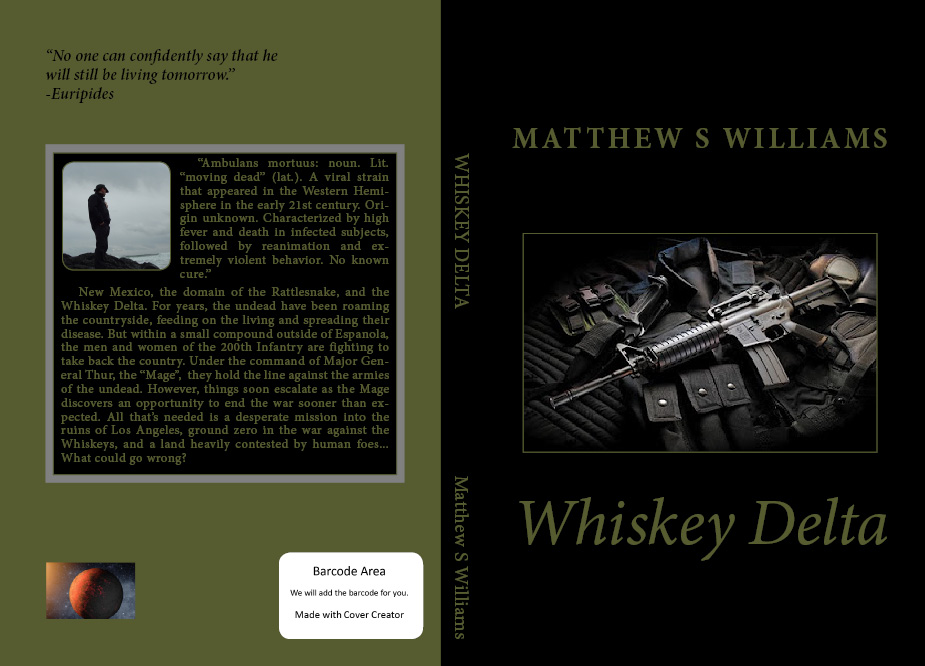
Whiskey_DeltaFor awhile now, I’ve been toying with the idea of doing a promotional video for Whiskey Delta and its upcoming sequels. As someone who has never done this before, I found the idea very appealing, though admittedly a bit daunting. For example, what could I – a humble indie – really do other than string a few images and some words together with some background music?

And of course, I was concerned rights and such. I didn’t want to get sued after all. Not before I’ve actually had a chance to become famous! But today, with not much else to do, I went over to Youtube and just dived right in. And after a few hours of tinkering and some stock photos which I bought straight up, I managed to put the following 41 second video together.

Please check it out and let me know what you think:

The Future is Here: “Ironman” Spec-Ops Suit


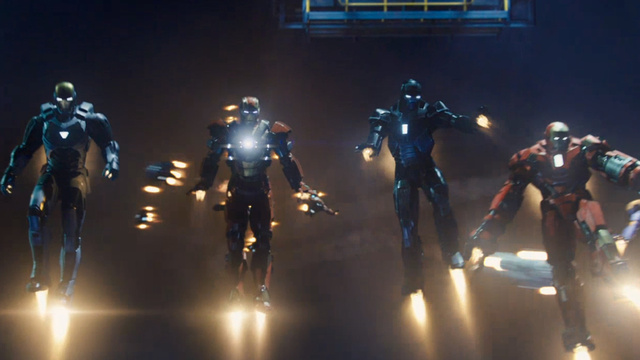
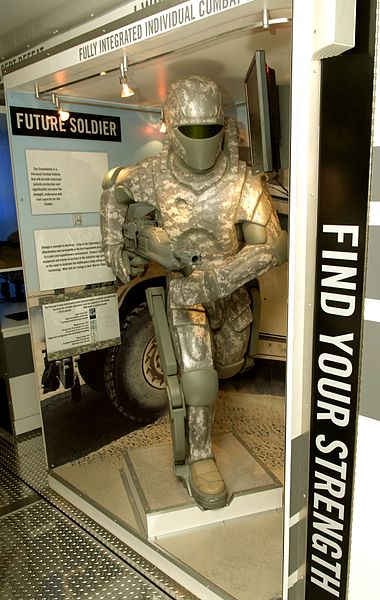
ironman3Army researchers have been working for years to incorporate powered armor, exoskeletons, and high-tech weaponry into the arsenal of next-generation soldiers. And this latest development from DARPA – the Defense Advanced Research Projects Agency, the research wing of the US Army – is being hailed as the closest thing there is to a real-life “Iron Man” suit to date.

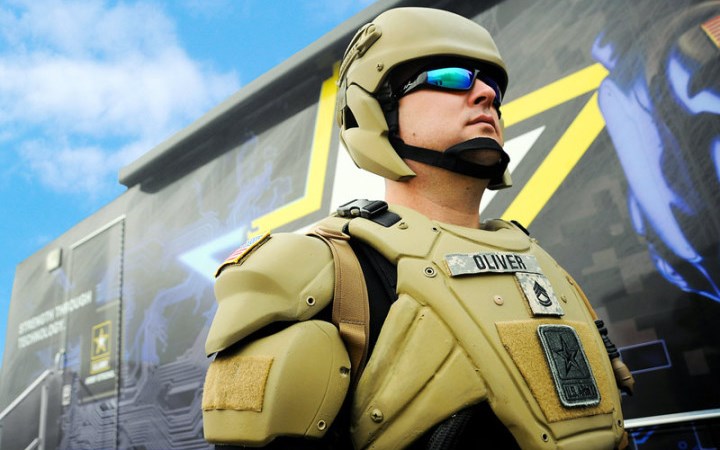
Its known as the Tactical Assault Light Operator Suit (TALOS) and is designed to deliver “superhuman strength with greater ballistic protection”. Named in honor of the Greek automaton made of bronze that Zeus assigned to protect his lover Europa, this suit incorporates a powered exoskeleton, liquid armor, built-in computers and night vision, and the ability to monitor vital signs and apply wound-sealing foam.

DARPA-Warrior-Web-660x495Put together, the capabilities would make the already elite Special Operation Forces nearly invincible in the field, according to the Army. As Lt. Col. Karl Borjes, a U.S. Army Research, Development and Engineering Command (RDECOM) science adviser, said in a statement:

[The] requirement is a comprehensive family of systems in a combat armor suit where we bring together an exoskeleton with innovative armor, displays for power monitoring, health monitoring, and integrating a weapon into that — a whole bunch of stuff that RDECOM is playing heavily in.

For the sake of the suit’s design and high-tech features, DARPA reached out to engineers from MIT, who are currently working to produce the liquid body armor that is perhaps the most advanced feature of the suit. Composed of magnetorheological fluids, this armor will “transform from liquid to solid in milliseconds when a magnetic field or electrical current is applied.”

TALOS_Future_Army_Soldier_WideThe suit is expected to make a first-generation appearance some time next year. Because of the high number of highly integrated technical challenges with advanced specifications, the Army is also drawing on a broad range of collaborators from multiple fields to complete the design in time. And as Jim Geurts, USSOCOM acquisition executive, in a statement:

USSOCOM is interested in receiving white papers from a wide variety of sources, not just traditional military industry but also from academia, entrepreneurs, and laboratories capable of providing the design, construction, and testing of TALOS related technologies. The intent is to accelerate the delivery of innovative TALOS capabilities to the SOF operator.

US_Army_powered_armorFor some time now, the concept of advanced powered suits of armor has been a feature of science fiction. Examples abound from literary references, such as E.E. Smith’s Lensman series and Heinlein’s Starship Troopers, to RPGs like BattleTech and Warhammer 40k, and to the gaming world with the HALO and Fallout series’. And much like lightsabers, there has scarcely been a geek alive who didn’t want one!

Now it seems that something very close might be realizable within a year’s time. I don’t know about you, but I feel both inspired and more than a little jealous. Damn SOCOM, always getting the coolest gear first! And of course, there’s a video:


Sources:
wired.com, dailytech.com
,

New Trailer: Captain America The Winter Soldier

Marvel's CAPTAIN AMERICA: THE WINTER SOLIDER - Teaser PosterJust yesterday, the first trailer for the upcoming Captain America sequel was released. Entitled Captain America: The Winter Soldier, this movie appears to pick up where the Avengers left off. And from the look of things, they chose to go with a “the enemy within” story arc, where Shield is forced to contend with a threat that comes from within the US government itself.

The cast includes Chris Evans, Scarlett Johansson and Samuel L. Jackson – reprising their roles as Steve Rogers (Capt. America), Natasha Romanoff (Black Widow) and Nick Fury – and also includes Anthony Mackie as “The Falcon”, Sebastian Stan as “The Winter Soldier” and Robert Redford as Alexander Pierce. The movie is set to be released on April 4th, 2014.

The Future is Here: The Factory in a Box

factory_box3-D Printing has proven itself quite useful when it comes to creating components, toys, and models. But when it comes to assembling complicated parts, or full-on products, other machines are often necessary. That’s where the Microfactory comes in, a veritable “multi-tool” machine that merges the best of 3-D printing and machining.

Being touted as “a machine shop in a box”, the creators of the device (the Mebotics company) were inspired to create this multi-tool kit after collaborating at the Boston-area Artisans Asylum. Artisans Asylum is a non-profit organization dedicated to promoting hobbyists, artisans, fabricators and entrepreneurs through a series of open maker space presentations.

factory_box2In addition, the team was also inspired by the fact that most manufacturing systems suffer from two major downfalls: noise and mess. By “closing the system”, as they put it, they eliminated both hassles while still ensuring that their device is capable of both producing tailor-made objects and altering them to order.

The Microfactory dramatically expands the range of products a person with no other equipment could make. It is basically able to 3-D print in four colors, out of multiple materials, and also etch, and mill the final products. This process, which combines machining and printing, is what the makers refer to as “hybrid manufacturing.”

3D-printing-in-spaceAs Co-founder of Mebotics, Jeremy Fryer-Biggs, explains:

I wanted to have a machine that was capable of making parts for all the crazy stuff people people would ask me [to make]. I wanted a tool that would allow me to do a whole wide range of things.

As Fryer-Biggs and the team envision it, the Microfactory could also offer users the ability to create devices and components where they are needed, regardless of the location. With a fully-functional computer incorporated to provide the blueprints, they foresee some extreme scenarios where objects could be created and finished where no stores are available:

You’re at base camp in the Himalayas, you’re in the middle of Afghanistan and you wanna make a part. So you connect this thing to a Wi-Fi hotspot–if you have a Wi-Fi card in the machine that you put in. You can then download from the server whatever the replacement part is you need, and in the middle of nowhere, get your replacement.

3d_ISSThis vision is in keeping with what many scientific organizations – such as NASA, the ESA, and other space agencies – are foreseeing. Already, such devices are being considered for use on the International Space Station and on future space missions, where astronauts will always be in need of specialized tools and may not have the ability to have them shipped out to them.

The team currently has several working prototypes but is planning to bring the project to market by raising $1 million through Kickstarter. MicroFactory units are being pre-sold for between $4,000 and $10,000 in several models. Though the team admits that the price is high, the science fiction appeal alone is well worth it! As Marie Staver, a project manager on the team, put it: “The science fiction future is officially here.”

Couldn’t agree more. And in the meantime, check out this video of the Microfactory in action:

Sources: fastcoexist.com, mebotics.com, artisansasylum.com

Ending World Hunger: Insect-Based “Power Flour”

insect_flourIt has long been understood that if we, as a species, are going to deal with overpopulation and hunger, we need take a serious look at our current methods of food production. Not only are a good many of our practices unsustainable – monoculture, ranching, and overuse of chemical fertilizers being foremost amongst them – it is fast becoming clear that alternatives exist that are more environmentally friendly and more nutritious.

However, embracing a lot of these alternatives means rethinking our attitudes to what constitutes food. All told, there are millions of available sources of protein and carbohydrates that aren’t being considered simply because they seem unappetizing or unconventional. Luckily, researchers are working hard to find ways to tackle this problem and utilize these new sources of nutrition.

HULT-PRIZE-large570One such group is a team of McGill University MBA students who started the Aspire Food Group, an organization that will produce nutritious insect-based food products that will be accessible year-round to some of the world’s poorest city dwellers. Recently, this group won the $1 million Hult Prize for the development of an insect-infused flour that offers all the benefits of red meat – high protein and iron – but at a fraction of the cost.

The team – which consists of Mohammed Ashour, Shobhita Soor, Jesse Pearlstein, Zev Thompson and Gabe Mott – were presented with the social entrepreneurship award and $1 million in seed capital back in late September. The presentation was made by former U.S. president Bill Clinton in New York City at the Clinton Global Initiative’s annual meeting.

world_hungerThe Hult Prize Foundation runs an annual contest open to teams of four or five students from colleges and universities from around the world. Their task is to develop ideas for social enterprises – organizations that use market-based strategies to tackle social or environmental problems. This year’s challenge, selected by Clinton, was to tackle world hunger.

Over 10,000 students entered, and the McGill team was one of six which reached the final stage, where they pitched their idea Monday to judges that included Clinton, Nobel Peace Prize laureate Muhammad Yunus and Erathrin Cousin, CEO of the World Food Program. The $1 million was provided by the family of the Swedish billionaire Bertil Hult, who made his fortune with the venerable EF Education First company.

insect_flour1Mohammed Ashour explained the process behind the insect flour in an interview to CBC News:

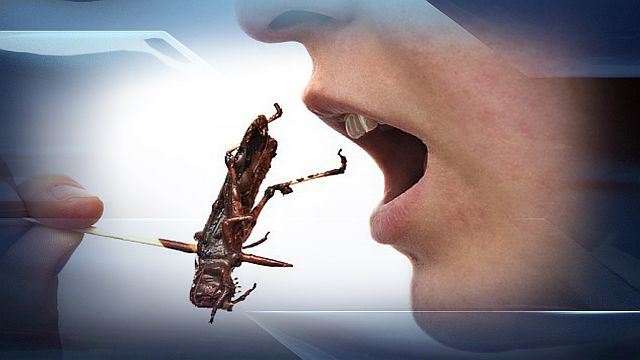
We are farming insects and we’re grinding them into a fine powder and then we’re mixing it with locally appropriate flour to create what we call power flour. It is essentially flour that is fortified with protein and iron obtained from locally appropriate insects.

What is especially noteworthy about the product, aside from its sustainability, is the fact that it delivers plenty of protein and iron in an inexpensive package. These nutrients, the team noted, are in short supply in the diets of many people in developing nations, but can be found in high amounts in insects. For example, they note, crickets have a higher protein content per weight than beef.

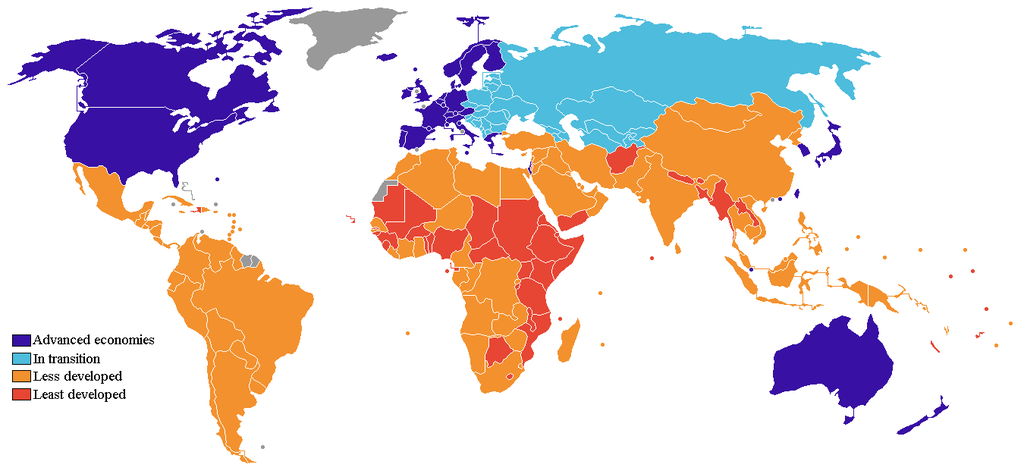
???????????????????????????????And while the idea of eating insects might seem unappealing to many people living in the developed world, Soor pointed out that people in many of the countries they are targeting already eat insects. In addition, the type of insect used to produce the flour for a local market would be chosen based on local culinary preferences. As she put it:

There really isn’t a ‘yuck’ factor. For example, in Mexico, we’d go with the grasshopper. In Ghana, we’d go with the palm weevil.

The insects would also be mixed with the most common type of local flour, whether it be made from corn, cassava, wheat or something else. Thus, the product would not only provide nutrition, but would be locally sourced to ensure that it is accessible and beneficial to the local market.

Developed-and-developing-countriesIn addition, the team has already held taste tests in some markets. In one test, they offered people tortillas made from regular corn flour, corn flour containing 10 per cent cricket flour and corn flour containing 30 per cent cricket flour. As Ashour indicated, the reviews were met with approval:

Amazingly enough, we got raving reviews for the latter two… so it turns out that people either find it to be tasting neutral or even better than products that are made with traditional corn flour.

The team hopes to use the prize money to help them expand the reach of their organization to the over 20 million people living in urban slums around the world by 2018. And I can easily foresee how flours like this one could become a viable item when teamed up with 3D food printers, tailoring edible products that meet our nutritional needs without putting undue strain on the local environment.

And be sure to enjoy this video of the McGill students and their prize-winning flour, courtesy of CBC news:


Source: cbc.ca

Winning Ideas: The Bodyheat Powered Flashlight!

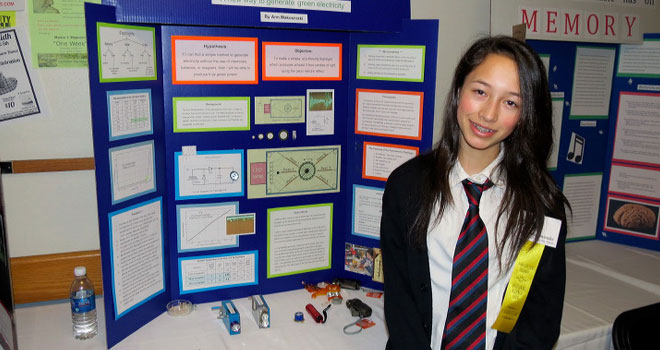
body_heat_flashlightEvery year, IT giant Google holds an online competition open to students aged 13-18 from around the globe to come up with new and challenging scientific ideas. And this year, one the winners just happens to hail from my hometown of Victoria, British Columbia. Her name is Ann Makosinki, a 15 year old high school student who invented a way to power a flashlight using only the warmth of your hand.

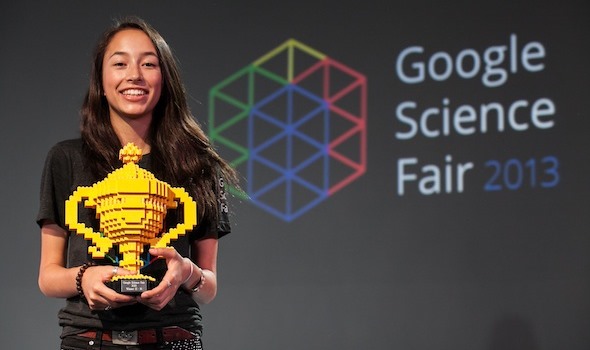
She claimed a trophy made of Lego for the 15-16 age category at an awards gala that was held on Monday, Sept. 23rd. Her prizes were a $25,000 scholarship and a “once-in-a-lifetime experience” from either CERN (the European Organization for Nuclear Research), LEGO or Google. Quite the impressive accomplishment for a 11th grader, but then again, Makosinki has been a scientist at heart ever since she was a little kid.

google-science-fair-winners-2013For starters, when other children were playing with toy cars and dolls, she busied herself with transistors and microcircuits. What’s more, by Grade 6, she began submitting projects to science fairs and began showing an interest in alternative energy. Still, Makosinki was surprised to be getting an award, given her competition. As she said:

I’m in shock, I’m in shock. It’s actually kind of embarrassing because I didn’t even change [before the awards ceremony]. I didn’t even comb my hair or anything. I must have looked like an absolute mess on stage because I didn’t expect to go up at all.

As for the invention itself, it is easy to see why she won. Basically, it is an LED flashlight that relies on the thermoelectric effect to generate electricity when held. This is done through a series of devices that are known as Peltier tiles, which produce electricity when heated on one side and cooled on the other. The tiles are fixed to the outside of the flashlight while the tube itself is hollow.

peltier-figure-9When held one side of the Peltier tiles are heated by the warmth of the person’s hand, air flowing through the hollow tube helps keep the other side cool. This combination of body heat and air cooling allows enough power to be generated to maintain a steady beam of light for 20 minutes. And all without the need for batteries and the resulting ewaste when they go dead.

Makosinki came up with the idea while researching different forms of alternative energy a few years ago. Already, she had experimented with Peltier tiles for her Grade 7 science fair project. While researching her project, she thought of them again as a way to potentially capture the thermal energy produced by the human body. After doing some calculations, she found that the amount of energy produced by a person’s hand was theoretically sufficient to power an LED light.

ann_makosinksiHowever, putting it into practice proved somewhat more difficult. After buying some Peltier tiles on eBay, she tested them and found that while they generated more than enough power, the voltage produced was only a fraction of what she needed. She rectified this problem after doing some further research, where she discovered that the addition of transformers could be used to boost the voltage.

She spent months doing research on the internet, experimenting with different circuits and even building her own transformers, which still didn’t provide enough voltage. In the end, she came across an article on the web about energy harvesting that suggested an affordable circuit that would provide the voltage she needed when used with a recommended transformer. Finally, the circuit worked.

ann_makosinksi1Makosinski admitted there were points in the experiment when she thought it would never work. But as she said:

You just kind of have to keep going. This took quite awhile ’cause I had to do it during the school year as well and I had homework, plays, whatever that I was also doing.

After making it to the Google Science Fair, she and her colleagues spent the day presenting at Google’s headquarters in Mountain View, California. Here, the 15 judges – which included scientists from a variety of fields, science journalists, an astronaut, and a former Google Science Fair winner – witnessed their creations and tried to determine which held the most promise.

The other winners included Viney Kumar, an Australia student who captured the 13-14 age category for an Android app that warns drivers of an approaching emergency vehicle more than a minute in advance, in order to help clear a path for it. And then there was Elif Bilgin of Turkey, a 16-year old who took home the Scientific American Science in Action Prize and the Voter’s Choice Award for inventing a way to make plastic from banana peels.

Ann-Makosinski-Google-Science-Fair-2The Grand Prize for the 17-18 age category went to Eric Chen, a 17 year old student from San Diego who is researching a new kind of anti-flu medicine using a combination of computer modelling and biological studies. He received the top prize of a $50,000 scholarship and a 10-day trip to the Galapagos Islands.

Alas, Makosinki felt the best part of the competition was getting to meet the other finalists in person at last.

It’s just so inspiring to see other people who are kind of like me and kind of want to make a difference in the community not just by talking about it but by actually doing stuff.

What’s next for the young inventor? Personally, I hope Makosinki and her fellow prize winners will be forming their own research group and looking for new and exciting ways to come up with renewable energy, recycling, vaccinations, and electronics. What do you think Makonsinky, Kumar, Bilgin, Chen? That’s what Andraka and his fellow finalists did after winning ISEF 2012, and they seem to be doing pretty good. So… hintedy, hint hint!

And be sure to enjoy this video of Ann Makosinki showing off her invention, courtesy of Technexo:


Sources:
cbc.ca, (2), gizmag.com, technexo.com, huffingtonpost.ca