Round two for Epic Rap Battles! This time around, I figured I should do a compilation of all their best sci-fi battles, arranged in alphabetical order. These include Batman vs. Sherlock Holmes, Darth Vader vs. Hitler (1 and 2), Doc Brown vs. Doctor Who, and finishes off with the classic Master Chief vs. Leonidas.
It occurs to me that I really haven’t given the ERB site its due over the years. They’ve provided me with endless hours of enjoyment and all I ever did was post about one of their videos. Granted, I have nowhere near the kind of following that would needed to actually give their traffic a shot in the arm, but it’s the thought that counts!
And so I thought I’d a little compilation here of some of their funniest, and educational, videos. Whether it was the match ups between Steve Jobs and Bill Gates (made shortly after Jobs death as a tribute to his life), Einstein and Stephen Hawking, or Thomas Edison and Nikola Tesla, these guys have shown a real commitment to their art and are clearly willing to do their homework!
Enjoy!
Steve Jobs vs. Bill Gates:
Einstein vs. Stephen Hawking:
Thomas Edison vs. Nikola Tesla:
Note:Though I am well aware of their existence, I have assiduously avoided posting the videos of Darth Vader vs. Adolph Hitler. Though I found them hilarious, such material is bound to offensive to some. Although, if people were willing to give me permission… 😉 😉
Disney has always been on the forefront of technological innovation whenever and wherever their animation is concerned. Augmented reality has been a part of their operations for quite some time, usually in the form of displays put on at Epcot Center or their Haunted Mansion. But now, they are bringing their efforts in AR to the kind of standard storybook that you would read to your children before bedtime.
Thanks to innovations provided by Nintendo DS, the PSP, tablets and smartphones, books have become alive and interactive in ways that were simply not possible ten or twenty years ago. However, one cannot deny that ebooks simply do not have the same kind of old world charm and magic that paperbacks do. Call it nostalgic appeal or tradition, but reading to a child from a bounded tome just seems somehow more meaningful to most people.
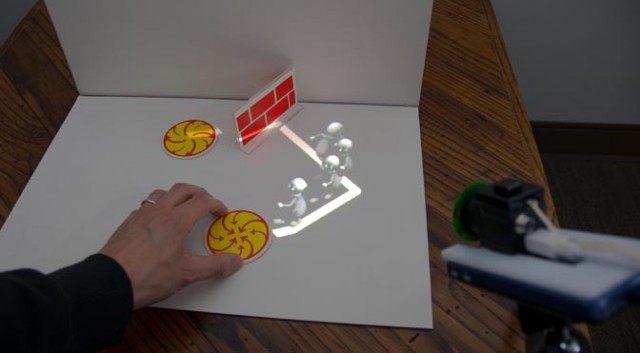
And that’s where Disney’s HideOut project comes into play, a mobile projector is used to create an augmented reality storybook. How it works is simple enough, and in a way, involves merging the best of electronic and paper media. Within the book, certain parts will be printed using special infrared-absorbing ink, so that sentences and images can be tracked.
The mobile projector, in turn, uses a built-in camera to sense the ink, then projects digital images onto the page’s surface that are animated to interact with the markers. In this way, it knows to show certain images when parts of the book call for them to be displayed, and can turn normal pictures into 3D animated segments.
And storybooks aren’t the only application being investigated by Disney. In addition, they have been experimenting with game concepts, where a user would moves a mobile projector around a board, causing a character to avoid enemies. In another scenario, a characters projected onto a surface interacts with tangible objects placed around them. This would not be entertaining to a child, but could be educational as well.
The applications also extend to the world of work, as the demo below shows. in this case, HideOut projects a file system onto the top of a desk, allowing the user to choose folders by aiming the projector, not unlike how a person selects channels or options using a Wii remote by aiming it at a sensor bar. And the technology could even be used on smartphones and mobile devices, allowing people the ability to interact with their phone, Facetime, or Skype on larger surfaces.
And of course, Disney is not the only company developing this kind of AR interactive technology, nor are they the first. Products like ColAR, an app that brings your coloring book images to life, and Eye of Judgment, an early PS3 game that accessed CCG cards and animated the characters on-screen, are already on the market. And while there does not appear to be a release date for Disney’s HideOut device just yet, its likely to be making the rounds within a few years tops.
For anyone familiar with the world of Augmented Reality and computing, this is likely to call to mind what Pranav Mistry demonstrated with his Sixth Sense technology, something which is being adopted by numerous developers for mobile computing. Since he first unveiled his concept back in 2009, the technology has been improving and the potential for commercial applications has been keeping pace.
In just a few years time, every storybook is likely to come equipped with its own projector. And I wouldn’t be surprised if it quickly becomes the norm to see people out on the streets interacting with images and worlds that only they can see. And those of us who are old enough will think back to a time when only crazy people did this!
In the meantime, check out this demo of the Disney’s HideOut device in action:
No kidding! Despite the fact that Peter Jackson took a relatively compact book, cut it into three, and filled the edges with enough chaff and filler from the appendixes to turn it into three movies, it seems that are still some scenes that didn’t make beyond the cutting room floor. And this is one such clip that is making the rounds on the internet lately.
The clip comes from The Hobbit: An Unexpected Journey DVD release, which apparently has all kinds of behind-the-scenes stuff (no surprises there). If there’s one thing Peter Jackson likes to talk about, whether its on his website or with DVD extras, its all the time he spent behind the camera and the things he did.
In any case, this scene involved Bilbo and Elrond speaking in Rivendell. Not a lot goes on, but then again, that’s probably why it didn’t make it into the final cut. And its still enjoyable. Check it out!
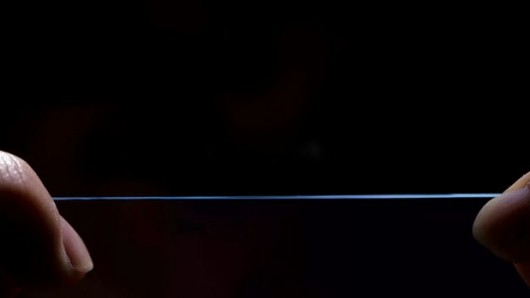
For years, scientists and researchers have been looking for a way to reproduce the strength of spider silk in the form of a synthetic material. As an organic material, spider silk is tougher than kevlar, strong as steel, lighter than carbon fiber, and can be stretched 40 percent beyond its original length without breaking. Any material that can boast the same characteristics and be massed produced would be worth its weight in gold!
Recently, a Japanese startup named Spiber has announced that it has found a way to produce the silk synthetically. Over the next two years, they intend to step up mass production and created everything from surgical materials and auto arts to bulletproof vests. And thanks to recent developments in nanoelectronics, its usages could also include soluble electronic implants, artificial blood levels and ligaments, and even antibacterial sutures.
Spider silk’s amazing properties are due to a protein named fibroin. In nature, proteins act as natural catalyst for most chemical reactions inside a cell and help bind cells together into tissues. Naturally, the process for creating a complex sequence of aminoacids that make up fibroin are very hard to reproduce inside a lab. Hence why scientists have been turning to genetic engineering in recent years to make it happen.
In Spiber’s case, this consisted of decoding the gene responsible for the production of fibroin in spiders and then bioengineering bacteria with recombinant DNA to produce the protein, which they then spin into their artificial silk. Using their new process, they claim to be able to engineer a new type of silk in as little as 10 days, and have already created 250 prototypes with characteristics to suit specific applications.
They begin this process by tweaking the aminoacid sequences and gene arrangements using computer models to create artificial proteins that seek to maximize strength, flexibility and thermal stability in the final product. Then, they synthesize a fibroin-producing gene modified to produce that specific molecule.
Microbe cultures are then modified with the fibroin gene to produce the candidate molecule, which is turned into a fine powder and then spun. These bacteria feed on sugar, salt and other micronutrients and can reproduce in just 20 minutes. In fact, a single gram of the protein produces about 5.6 miles (9 km) of artificial silk.
As part of the patent process, Spiber has named the artificial protein derived from fibroin QMONOS, from the Japanese word for spider. The substance can be turned into fiber, film, gel, sponge, powder, and nanofiber form, giving it the ability to suit a number of different applications – everything from clothing and manufacturing to nanomedicine.
Spibers says it is building a trial manufacturing research plant, aiming to produce 100 kg (220 lb) of QMONOS fiber per month by November. The pilot plant will be ready by 2015, by which time the company aims to produce 10 metric tons (22,000 lb) of silk per year.
At the recent TedX talk in Tokyo, company founder Kazuhide Sekiyama unveiled Spiber’s new process by showcasing a dress made of their synthetic silk. It’s shiny blue sheen was quite dazzling and looks admittedly futuristic. Still, company spokesperson Shinya Murata admitted that it was made strictly for show and nobody tried it on.
Murata also suggested that their specialized slik could be valuable in moving toward a post-fossil-fuel future:
We use no petroleum in the production process of Qmonos. But, we know that we need to think about the use of petroleum to produce nutrient source for bacteria, electric power, etc…
Overall, Sekyama lauded the material’s strength and flexibility before the TedX audience, and claimed it could revolutionize everything from wind turbines to medical devices. All that’s needed is some more time to further manipulate the amino acid sequence to create an even lighter, stronger product. Given the expanding use for silks and its impeccable applicability, I’d say he’s correct in that belief.
In the meantime, check out the video from the TedX talk:
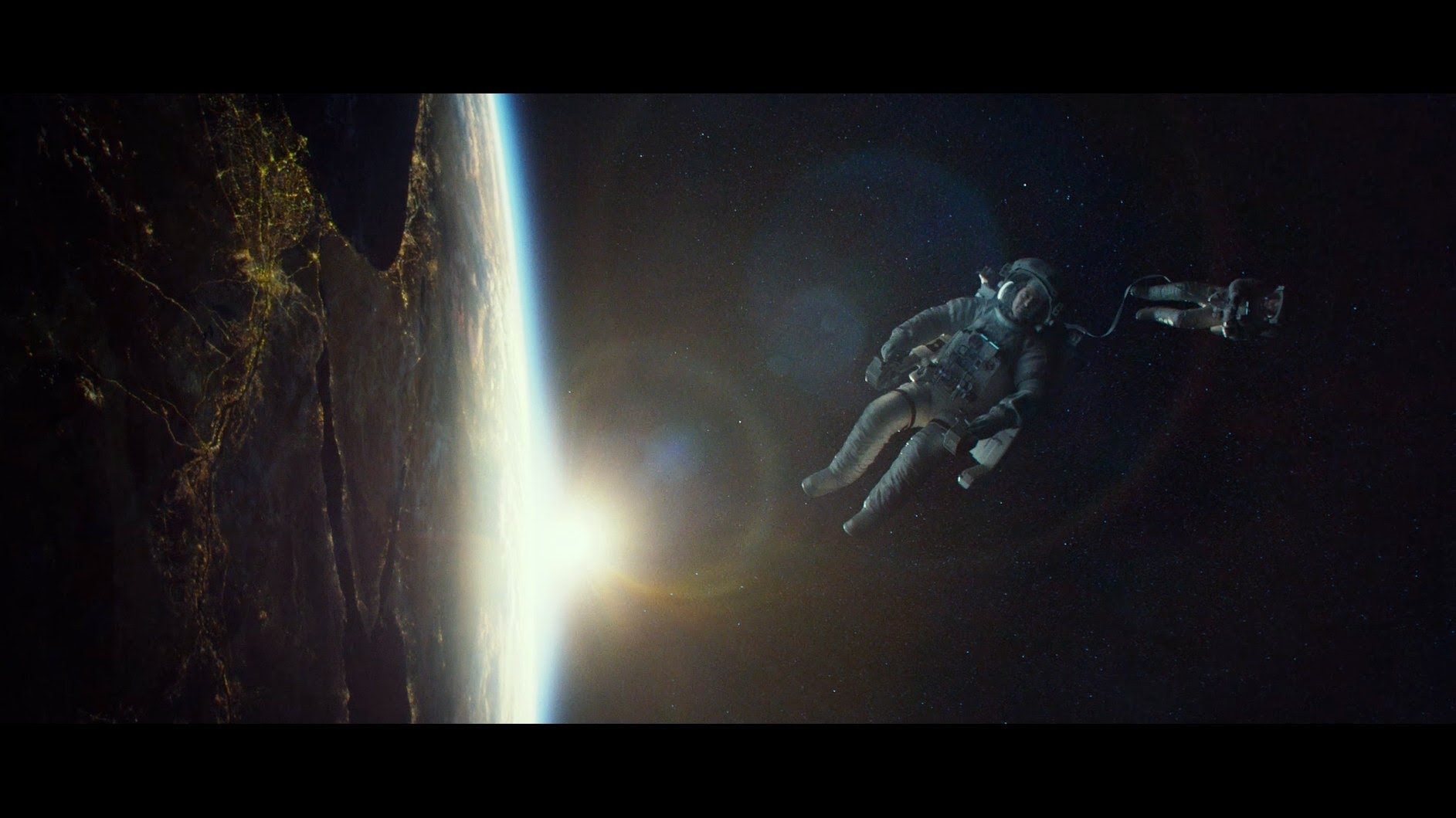
Being lost in space has to be one of the most frightening scenarios imaginable. Simply floating away, too fast to stop and with nothing hang onto, knowing that you’re doomed to drift inevitably until you run out of air. It’s the stuff of nightmares, really. That’s the kind of feel director Alfonso Cuarón was clearly going for with this movie clip that was featured at this year’s Comic Con.
Starring Sandra Bullock and George Clooney, the story focuses on two astronauts who are trying to return to the Explorer space shuttle after encountering a massive satellite debris field. As always, Cuarón’s brought his talent for wonderful long-take shots, but also utilized technology he developed specifically for the film, but was reticent to discuss. Apparently, this had to do with the patents that were “still pending”.
In any case, the end result is quite dazzling and frightening, examining what would happen if two people were lost in space without a ship. I for one would probably crap in my spacesuit, which would make for a very long and uncomfortable death as I floated off into space! The movie is set for release on October 4th. Enjoy!
A Vancouver-based company recently announced that it would be streaming images from the ISS to Earth, giving people a rare glimpse of what astronauts in orbit see on a daily basis. In an age where space travel is becoming increasingly public, thanks in part to social media, it now appears that at least one company want to get in on the ground floor of making space more accessible.
Scott Larson, CEO of Urthecast (get it?), said in a recent interview with CBC’s Curt Petrovich how his company is making this happen. This past Sunday, Urthecast launched a platform to the space station aboard the unmanned Russian Progress M-20M spacecraft as part of a delivery of 2.4 tonnes of supplies – including food, water, fuel and scientific equipment.
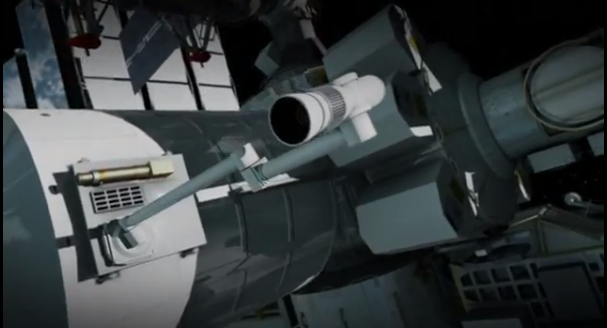
This platform will soon be attached to the outside of the station and augmented with two HD cameras that will allow people to see things on Earth as small as one meter wide. One will be fixed will take a continuous video panorama of Earth 50 kilometers wide as the space station orbits Earth while the other will be a pointable one that customers will be able to aim at a particular spot on Earth, for a price.
These cameras will be launched aboard a different Progress flight on Nov. 20 and attached to the platform upon arrival. Though Urthecast has not specified what kind of fees will be involved for those looking to download pics of Earth, it has claimed that it intends to sell the video to corporations, governments and non-governmental organizations such as the United Nations for a wide range of need.
However, these customers will not include the military since the apparatus will be on the International Space Station, which by law can only be used for “peaceful purposes”. Canadian law also requires the company to shut off the cameras as they pass over sensitive targets, if requested to do so by the federal government. Nevertheless, at least some investors are confident the company will make money of this idea. Since it first went public last month, Urthecast has raised some $46 million.
As part of what the company calls the “world’s first near-live HD video feed of Earth”, their cameras are expected to cover the planet between the latitudes of 51 degrees north (covering northern Canada, Russia and Scandinavia) and 51 degrees south (the southern tip of Chile and Argentina, South Africa and Australia). Once captured, the images will be downloaded to ground stations on Earth and be made available just a few hours later.
So, between the accuracy of the cameras and the range they have to survey the planet, people will be able to capture images of their homes, neighborhoods, and even people that are accurate to a single meter. My advice? Get a portable device, lie down in your driveway, and then punch in your coordinates. And be sure to wave for a long time, so that when you download your images, you can see you waving back at yourself!
In the meantime, check out this video produced by Urthecast, and be sure to check out the company’s website to see how you can get in on this.
I just came across this very interesting video over at Future Timeline, where the subject in question was how by the 22nd century, androids would one day be indistinguishable from humans. To illustrate the point, the writer’s used a video produced by Quantic Dream, a motion capture and animation studio that produces 3D sequences for video games as well as their own video shorts and proprietary technologies.
The video below is entitled “Kara”, a video short that was developed for the PS3 and presented during the 2012 Game Developers Conference in San Francisco. A stunning visual feet and the winner of the Best Experimental Film award at the International LA Shorts Film Fest 2012, Kara tells the story of an AX 400 third generation android getting assembled and initiated.
Naturally, things go wrong during the process when a “bug” is encountered. I shan’t say more seeing as how I don’t want to spoil the movie, but trust me when I say it’s quite poignant and manages to capture the issue of emerging intelligence quite effectively. As the good folks at Future Timeline used this video to illustrate, the 22nd century is likely to see a new type of civil rights movement, one which has nothing to do with “human rights”.
Given the many, many uses that smartphones have these days, and the many technologies being adapted to work with them, I guess it was only a matter of time before someone found a way to militarize it. And that’s exactly what inventor Jason Giddings and his new company, Inteliscope, LLC, decided to do when they combined guns with smart devices to launch the Inteliscope Tactical Rifle Adapter.
Along with an iOS app and a mount that can be affixed to tactical rails, the adapter allows gun owners to mount their iPhone or iPod Touch to a firearm and use it as a sight with a heads-up display showing real-time data on their surroundings. The app also works in portrait mode, so the adapter can be affixed to the side of a firearm if needed.
Some might ask how an iPhone could be expected to improve upon a standard scope, but that’s where things get particularly interesting. By offering a range of visual enhancements and features, the user is essentially able to convert their smartphone into an integrated ballistic computer system, but at a fraction of the cost of a military variant.
Added features include a 5x digital zoom, an adjustable mount that lets users peek around corners, a choice of different cross hairs, data on local prevailing winds, a GPS locator, a compass, ballistics info, and a shot timer. The attached device can even act as a mounted flashlight or strobe, but probably the most useful feature is the ability to record and play back video of each shot.
Naturally, there are some drawbacks to the Inteliscope. For example, the iPhone/iPod Touch’s camera optics only offer support for short range targets, and using calibers larger than .223 or 5.56 mm could damage your smart device. The developers have also advised potential customers to make sure hunting with electronic-enhanced devices is legal in their region.
Still, it does provide a fairly cost-effective means for giving any gun that Future Warrior look, and for the relatively cheap price of $69.99. Inteliscope is currently accepting pre-orders through its website, with adapters available for the iPhone 4, iPhone 4S, iPhone 5 and iPod Touch, and plan to ship to begin shipping in June.
And of course, there’s a video of the system in action:
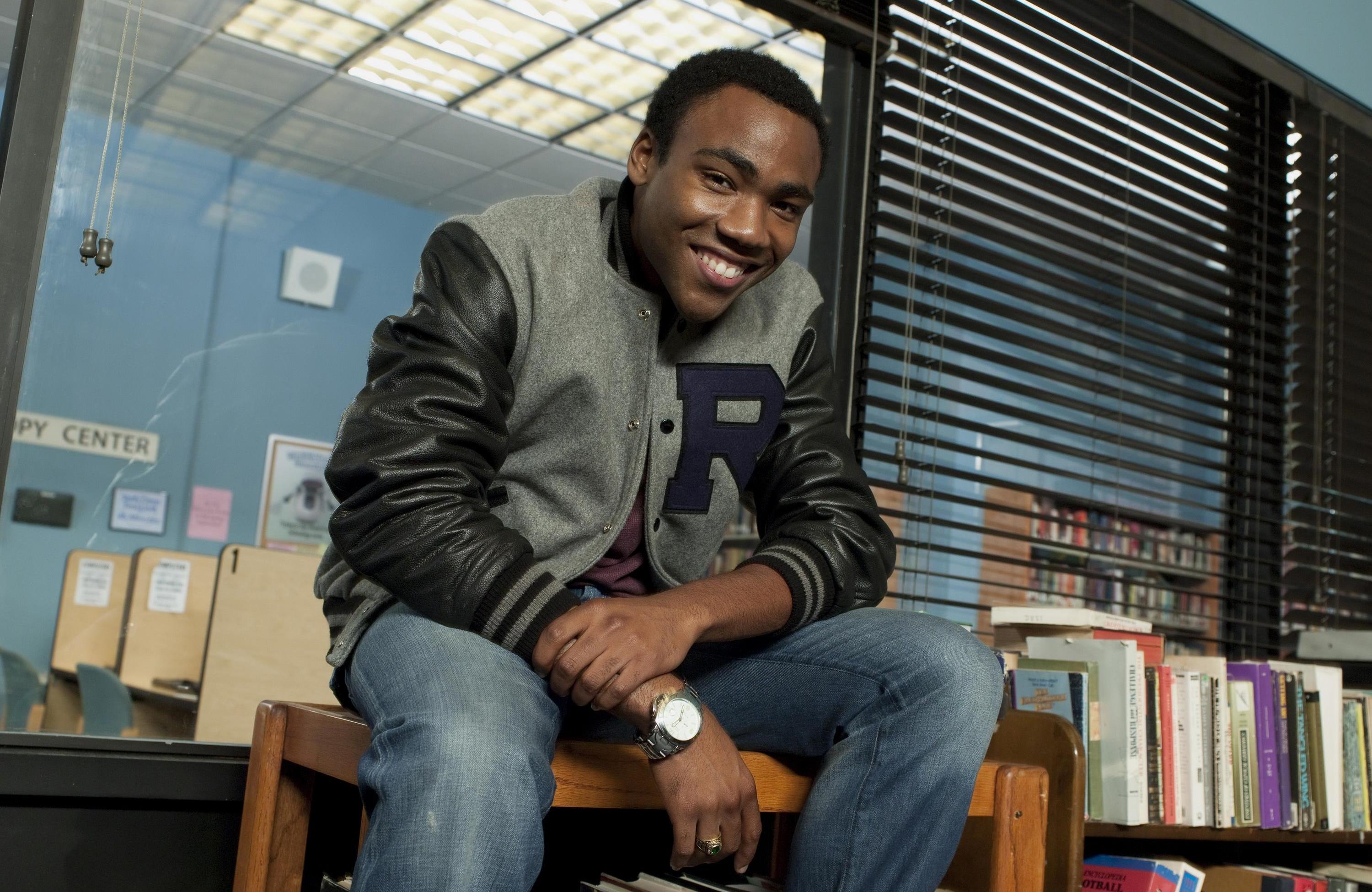
News about Community returning for a fifth season has got the shows die-hard fans in a pretty good mood. I should know, I’m one of them! But some of the details about what will taking place are a little less enthusing. For example, news that the show was coming back was followed by Dan Harmonn – the show’s forerunner – claiming that he’d be coming back to produce the fifth next season after dropping off for the fourth.
But on the darker side, regular cast member Donald Glover, who plays the hilarious Troy Barnes, said he’d be only appearing in five of the the thirteen episodes the show is slated for. This might have something to do with his commitment to his standup or his hip hop band that goes by the name of “Childish Gambino”, which recently released such hits as the offbeat “Centipede.”
But for me, Glover’s best musical contributions occurred on the show, when he and Abed (Danny Pudi) would produce their own hip hop anthems. This included their tribute to Spanish 101, Anthropology 101 (featuring Betty White), and their Christmas rap mashup. Check em out below!

 Round two for Epic Rap Battles! This time around, I figured I should do a compilation of all their best sci-fi battles, arranged in alphabetical order. These include Batman vs. Sherlock Holmes, Darth Vader vs. Hitler (1 and 2), Doc Brown vs. Doctor Who, and finishes off with the classic Master Chief vs. Leonidas.












 Stories by Williams