News from SpaceX: the Dragon V2 and SuperDraco

spaceX_elonmuskSpaceX has been providing a seemingly endless stream of publicity lately. After months of rocket testing and sending payloads to the International Space Station, they are now unveiling the latest in some pretty impressive designs. This included the SuperDraco, a new attitude-control thruster; and the new Dragon V2 – a larger, more powerful, and manned version of the reusable Dragon capsule. These unveilings came within a short space of each other, largely because these two developments will be working together.

The first unveiling began back in February, when SpaceX announced the successful qualification testing of its SuperDraco rocket engine. Designed to replace the Draco engines used for attitude control on the Dragon orbital spacecraft, the SuperDraco will act as the Dragon’s launch emergency escape system, as well as giving it the ability to make a powered landings. Since that time, the company has announced that it will be added to the new Dragon capsule, which was unveiled just days ago.

superdraco-testThe SuperDraco differs from most rocket engines in that its combustion chamber is 3D printed by direct metal laser sintering (DMLS), where complex metal structures are printed by using a laser to build the object out of metal powders one thin layer at a time. The regeneratively-cooled combustion chamber is made of inconel; a family of nickel-chromium alloy that’s notable for its high strength and toughness, and is also used in the Falcon 9’s Merlin engine.

Elon Musk, SpaceX’s Chief Designer and CEO, had this say about the innovation behind the new rocket:

Through 3D printing, robust and high-performing engine parts can be created at a fraction of the cost and time of traditional manufacturing methods. SpaceX is pushing the boundaries of what additive manufacturing can do in the 21st century, ultimately making our vehicles more efficient, reliable and robust than ever before.
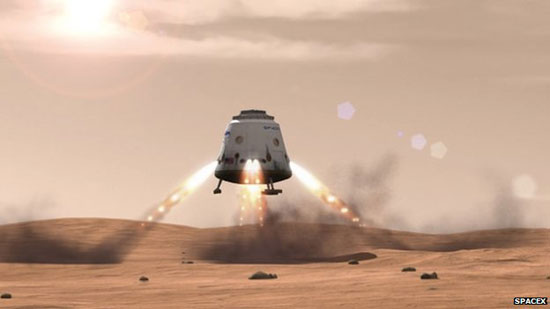
MarsOneOther notable features include the propellent, which is a pair of non-cryogenic liquids – monomethyl hydrazine for the fuel and nitrogen tetroxide for the oxidizer. These are hypergolic, meaning that they ignite on contact with one another, which helps the SuperDraco to restart multiple times. It’s also built to be deep throttled, and can go from ignition to full throttle in 100 ms. But what really sets the SuperDraco apart is that is has 200 times the power of the Draco engine, which works out to  7,440 kg (16,400 lbs) of thrust.

The SuperDraco’s main purpose is to provide attitude control for the Dragon capsule in orbit and during reentry, as well as acting as the craft’s launch escape system. Unlike previous US manned space capsules of the 1960s and ‘70s, the next version of the Dragon won’t use a tower equipped with rocket motors to carry the capsule away in case of a launch accident. The SuperDraco can be used at any point in the launch from pad to orbit, not just during the first minutes of launch, as the towers were.
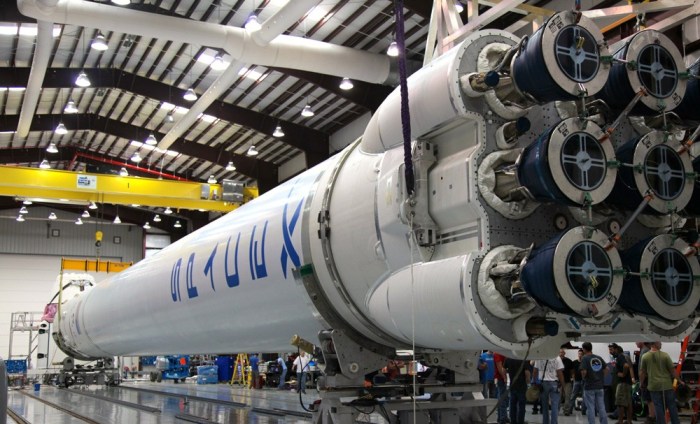
spacex-falcon-9-rocket-largeEight engines firing for five seconds are enough to carry the capsule safely away from the booster with 120,000 lb of axial thrust. In addition, the eight engines also provide a high degree of redundancy should one or more engines fail. But what’s really ambitious about the SuperDraco is that, like the Falcon 9 booster, the Dragon is designed to ultimately return to its spaceport under its own power and land with the precision of a helicopter, and it’s the power and control of the SuperDraco that makes this possible.

SpaceX is even looking beyond that by planning to use the SuperDraco engine for its Red Dragon Mars lander; an unmanned modification of the Dragon designed for exploring the Red Planet. The SuperDraco will make its first flight on a pad abort test later this year as part of NASA’s Commercial Crew Integrated Capabilities (CCiCap) initiative. Using 3D printing to cut the cost of production is in keeping with Musk’s vision of reducing the associated costs of spaceflight and putting rockets into orbit.

spaceX_dragon_v2But equally impressive was the unveiling of the Dragon V2 manned space capsule, which took place at a brief media event at SpaceX’s Hawthorne, California headquarters at the end of May. This larger, more powerful version of the reusable Dragon capsule will one day carry astronauts to the International Space Station (ISS) and return to Earth to land under its own power. This latest development brings the company one step closer towards its ultimate goal of a fully reusable manned capsule capable of making a powered landing.

Billed as a “step-change in spacecraft technology,” the Dragon V2 that Musk unveiled is larger and more streamlined than the first Dragon, with a cabin large enough to accommodate up to seven astronauts for several days in orbit comfortably. The interior is outfitted with touchscreen control panels and a more sophisticated piloting system, so it can dock with the space station autonomously or under the control of the pilot instead of relying on one of the ISS’s robotic arms.
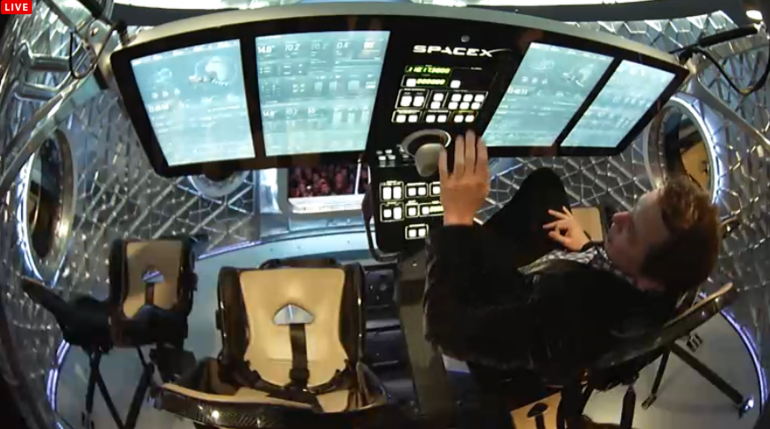
spaceX_dragon_v2_1For returning to Earth, the Dragon V2 has the third version of the PICA-X heatshield, which is SpaceX’s improvement on NASA’s Phenolic Impregnated Carbon Ablator (PICA) heat shield. Another nod to reusability,  this shield is about to carry out more flights before needing a refit since it ablates less than previous versions. And of course, the capsule will be outfitted with eight SuperDraco engines, which give it a combined thrust of almost 60,000 kgs (131,200 lbs).

However, Musk points out that Dragon V2 still carries a parachute, but that’s only a backup system, similar to the analog joystick and manual controls that are available in the cockpit. Like these, the parachute is only meant for use in the event of a malfunction of the SuperDraco engines, which can still make a landing if two of the eight engines fail. If the landing is successful, Musk says that all the Dragon V2 needs to fly again is refueling.

And the arrival of these new machines couldn’t have been more timely, given the termination of NASA’s cooperation with Roscosmos – Russia’s federal space agency. With reusable craft that are produced by the US and that can be launched from US soil, Russia’s aging Soyuz rockets will no longer be necessary. So much for the trampoline idea!

And of course, there are videos of the rocket test and the unveiling. Enjoy!

SuperDraco Test Firing:


SpaceX Dragon V2 Unveiling:


Sources: gizmag.com, (2), fool.com

Climate Crisis: (More) Smog-Eating Buildings

pollution_eating2Air pollution is now one of the greatest health concerns in the world, exceeding cigarettes as the number one killer of people worldwide. With an estimated 7 million deaths in 2012 alone, the WHO now ranks it as the biggest global environmental killer. In fact, of the 1,600 major cities surveyed from around the world, over half are now above the safe limits of Particulate Matter (PM), with the highest cost borne by the poorer regions of South-East Asia and the Western Pacific.

Because of this, Carbon Capture technology is being seriously considered as an integral part of the future of urban planning and architecture. So in addition to addressing the issues if housing needs, urban sprawl and energy usage, major buildings in the future may also come equipped with air-cleaning features. Already, several major cities are taking advantage, and some innovative and futuristic designs have emerged as a result. Consider the following examples:

aircleaning_skyscraperCO2ngress Gateway Towers: Conceived by architects Danny Mui and Benjamin Sahagun while studying at the Illinois Institute of Technology, this concept for an air-cleaning skyscraper earned them an honorable mention in the 2012 CTBUH student competition. And while there are no currents plans to build it, it remains a fitting example of innovative architecture and merging carbon capture technology with urban planning and design.

The concept involves two crooked buildings that are outfitted with a filtration system that feeds captured CO2 to algae grown in the building’s interior, which then converts it into biofuels. Aside from the scrubbers, the buildings boast some other impressive features to cut down on urban annoyances. These include the “double skin facade”- two layers of windows – that can cut down on outside traffic noise. In addition, the spaces on either side of the buildings’ central elevator core can be used as outdoor terraces for residents.

CC_catalytic_clothingCatalytic Clothing: A collaborative effort between Helen Storey and Tony Ryan, the goal of this experiment is to incorporate the same pollution-eating titanium dioxide nanoparticles used in carbon capture façade into laundry detergent to coat clothing. According to Ryan, one person wearing the nanoparticle-washed clothes could remove 5 to 6 grams of nitrogen dioxide from the air a day; two pairs of jeans could clean up the nitrogen dioxide from one car.

If enough people in downtown New York, Beijing, Mumbai, Mexico City – or any other major city of the world renowned for urban density, high concentrations of fossil-fuel burning cars, and air pollution – would wear clothing coating with these nanoparticles, air pollution could be severely reduced in a few years time. And all at a cost of a few added cents a wash cycle!

CC_in_praise_of_airIn Praise of Air: Located in Sheffield, England, this 10×20 meter poster shows Simon Armitage’s poem “In Praise of Air”. Appropriately, the poster doubles as a pollution-eating façade that uses titanium dioxide nanoparticles. The full poem reads as follow:

I write in praise of air.  I was six or five
when a conjurer opened my knotted fist
and I held in my palm the whole of the sky.
I’ve carried it with me ever since.

Let air be a major god, its being
and touch, its breast-milk always tilted
to the lips.  Both dragonfly and Boeing
dangle in its see-through nothingness…

Among the jumbled bric-a-brac I keep
a padlocked treasure-chest of empty space,
and on days when thoughts are fuddled with smog
or civilization crosses the street

with a white handkerchief over its mouth
and cars blow kisses to our lips from theirs
I turn the key, throw back the lid, breathe deep.
My first word, everyone’s  first word, was air.

According to Tony Ryan of University of Sheffield, who created it with his colleagues, the poster can absorb about 20 cars’ worth of nitrogen oxide a day and would add less than $200 to the cost of a giant advertisement. While it is a creative tool for promoting a local poetry festival, it also serves as proof of concept that the technology can be incorporated into practically any textile, and will be reproduced on several more banners and posters in the coming months.

hyper_filter1Hyper Filter Skyscraper: Designed by Umarov Alexey of Russia, the Hyper Filter Skyscraper recognizes the threat of environmental pollution and seeks to merge carbon capture technology with the building’s design. Under today’s levels of pollution, harmful substances spread over hundreds of kilometers and a whole region and even a country could represent a single pollution source. Hence the plan to place a air-scrubbing building at the heart of the problem – an urban core.

Consistent with CC technology and the principle of photosynthesis, the Hyper Filter Skyscraper is designed to inhale carbon dioxide and other harmful gases and exhale concentrated oxygen. The skin of the project is made out of long pipe filters that ensure the cleaning process. While clean air is released to the atmosphere, all the harmful substances are stored for use in the chemical industry for later use. These can include chemicals products, biofuels, and even manufactured goods.

CC_mexico-hospital-facade-horizontal-galleryManuel Gea González Hospital: Located in Mexico City, this hospital was unveiled last year. The building features a “smog-eating” façade that covers 2,500 square meters and has titanium dioxide coating that reacts with ambient ultraviolet light to neutralize elements of air pollution, breaking them down to less noxious compounds like water. This was Berlin-based Elegant Embellishment’s first full-scale installation, and its designers claim the façade negates the effects of 1,000 vehicles each day.

Funded by Mexico’s Ministry of Health, the project is part of a three-year, $20 billion investment into the country’s health infrastructure, an effort which earned Mexico the Air Quality Prize at the 2013 City Climate Leadership Awards in London. Considering the fact that Mexico City is <i>the</i> most densely-populated cities in the world – with a population of 21 million people and a concentration of 6,000/km2 (15,000/sq mi) – this should come as no surprise.

CC-pollution-palazzo-italia-horizontal-galleryPalazzo Italia: Located in Milan, this building is designed by the architectural firm Nemesi & Partners, and comes equipped with a jungle-inspired façade that is built from air-purifying, “biodynamic” cement. This shell will cover 13,000 square meters across six floors, and will remove pollutants from the air and turns them into inert salts. Apparently, the material from Italcementi only adds 4-5 percent to the construction costs.

Scientists in the Netherlands have also adapted the photocatalytic material to roads, claiming it can reduce nitrous oxide concentrations by 45 percent. The building is set to launch next year at the 2015 Milan Expo.

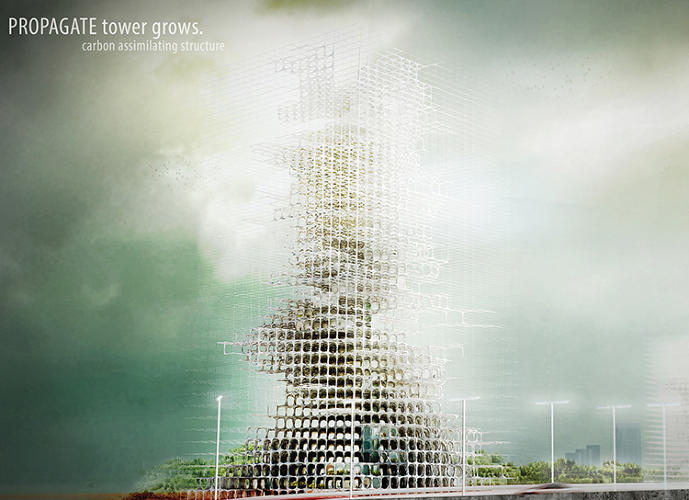
Propogate Skyscraper: This pollution skyscraper was designed by Canadian architects YuHao Liu and Rui Wu, and won third place at this year’s eVolo’s Skyscraper Competition. Basically, it envisions a building that would turn air pollution into construction materials and use it to gradually create the building. Relying on an alternative carbon-capture technique that employs philic resins and material processes to transform carbon dioxide into solid construction material, their uses carbon dioxide as a means to self-propagate.

3028400-slide-propagateA simple vertical grid scaffold forms the framework and takes all the ingredients it needs for material propagation from the surrounding environment. Individual living spaces are built within this gridwork, which creates open square spaces between lattices that can then be filled by tenements. Its pattern of growth is defined by environmental factors such as wind, weather, and the saturation of carbon dioxide within the immediate atmosphere.

Thus each building is a direct reflection of its environment, growing and adapting according to local conditions and cleaning as the air as it does so. Unlike conventional skyscrapers, which rely on steel frame and concrete casting, the proposed skyscraper suggests a more environmental conscious construction method, an alternative mode of occupation and ownership, and possibly a distinct organization of social relationships.

Synthesized Spider Web: Another innovative solution comes from Oxford’s Fritz Vollrath, who was inspired by the behavior of spider silk fibers. With the addition of a glue-like coating, the thinness and electrical charge of spider silk allows them to capture any airborne particles that pass through them. These synthesized silk webs could be used like a mesh to capture pollutants – including airborne particulates, chemicals, pesticides, or heavy metals – coming out of chimneys or even disaster zones.

Spiderweb_towersSpiderweb Tower: Considering that London has some of the worst air quality in Europe, and the fact that air pollution is thought to be the second biggest risk to public health in the UK after smoking, solutions that can bring carbon capture and pollution-eating technology to downtown areas are in serious demand. And one solution comes from graduate architect Chang-Yeob Lee, who has come up with a radical design that would turn London’s BT Tower into a pollution harvesting ‘spiderweb’ that turned smog into bio-fuel.

Lee’s plan envisions the skyscraper being covered in a ‘giant eco-catalytic converter’ that traps pollutants from the capital’s air. At the same time, nano-tubes of titanium would turn carbon-dioxide into methanol and water using only the power of the sun. As Lee put it:

The project is about a new infrastructure gathering resources from pollutants in the city atmosphere, which could be another valuable commodity in the age of depleting resources.

Quite a bit of potential, and just in the nick of time too! And be sure to watch this video


Sources: iflscience.com, wired.co.uk, cnn.com, evolo.com, latintimes.com, catalyticpoetry.org

The Future, Coming Soon!: Aeroflex Hoverbike by 2017

aerofex-hover-bike-prototypeThe Aerofex’s hoverbike made a pretty big splash when the Californian company showed off its working prototype back in 2012. But since that time, tech enthusiasts and futurists (not to mention fans of Stars Wars and sci-fi in general) heard nary a peep from the company for almost two years. Luckily, Aerofex has finally broken its silence and announced a launch date and a price for its hovering vehicle. According to its website, it will be ready to ship by 2017, and cost a robust $85,000 a vehicle.

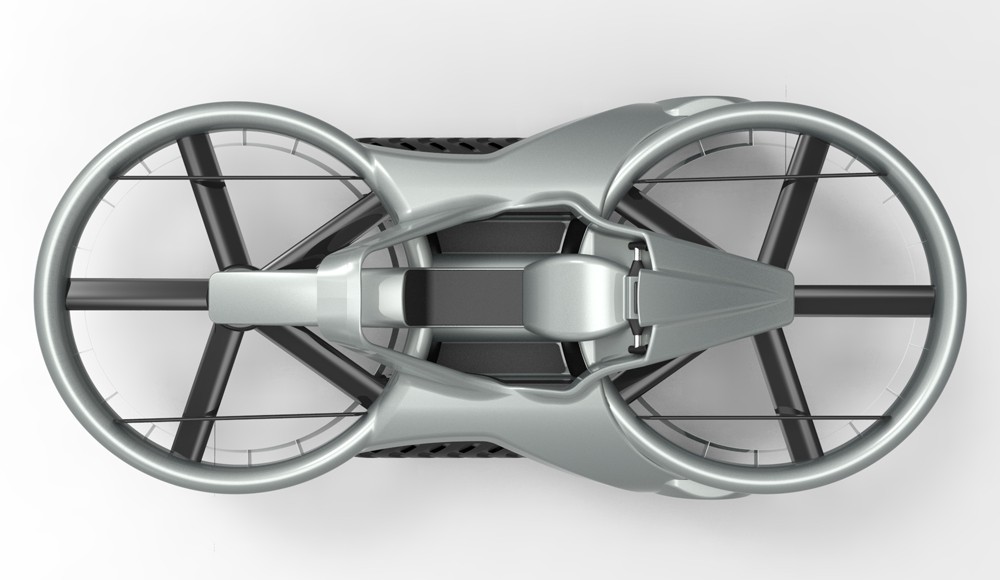
In its current form, the Aero-X is capable of carrying a load of up to 140kg (310 pounds), has seating for two, and can run for 1 hour 15 minutes on a full tank of petrol. Its two wheels are ducted rotors with carbon fibre blades, which operate in a similar manner to the open rotor of a helicopter with tighter control. And in addition to land, it can also fly over water. So while it is not a practical replacement for everyday vehicles, it can certainly occupy the same area profile as a small car.

aeroflex_topAnd – do I even need to say it? – it’s a freaking hoverbike! In the last two years, the company has been working on improving the vehicle’s stability and coupling – a phenomenon whereby rotor vehicles may pitch in the direction of the rotors’ spin. It has filed several patents for its solutions and looked towards quadcopters to solve the problem of wind, using gyroscopes and accelerometers communicating with an on-board computer to compensate for windy conditions.

User-friendliness has also figured very heavily into the design, with handlebar controls for intuitive steering and safety features that keep the driver from flying too high or too fast. Both of these features would drain its fuel more quickly, but they ensure a greater degree of user-safety. This also helps it comply with the US Federal Aviation Administration’s guidelines, which require a pilot’s license for anyone operating a vehicle above an altitude of 3.7 metres (12.1 feet).

aeroflex_sideSo if you have that $85,000 kicking around (and a pilots license), you can reserve yours now for a refundable deposit of $5,000. A product statement and some basic specs have also been made available on the website. According to the commercial description:

Where you’re going, there are no roads. That’s why you need the Aero-X, a vehicle that makes low-altitude flight realistic and affordable. Flying up to 3 metres (10 feet) off the ground at 45mph (72kph), the Aero-X is unlike any vehicle you’ve seen. It’s a hovercraft that rides like a motorcycle — an off road vehicle that gets you off the ground.

I can certainly see the potential for this technology, and I imagine DARPA or some other military contractor is going to be knocking on Aeroflex’s door real soon, looking for a militarized version that they can send into dirty and dangerous areas, either to pick up wounded, transport gear, or diffuse landmines. We’re talking hoverbikes, people. Only a matter of time before the armed forces decide they want these latest toys!

Click here to go to the company website and get the full run down on the bike. And be sure to check out these videos from the company website, where we see the Aeroflex going through field tests:


Sources: cnet.com, cbc.ca, aerofex.com

The Akira Project

Akira_explosionKatsuhiro Otomo’s Akira is hailed by manga and comics fans alike as being one of the best graphic novels of all time. Similarly, the film adaptation, which was also written and directed by Otomo, is considered a premier example of anime and the cyberpunk genre – one that has remained a cult classic to this day. In spite of that, no one has been able to create a live-action version in the almost three decades since it was released.

That’s where the Akira Project comes in. This non-profit, crowdsourced group launched their Indiegogo campaign in July 2012 with the intention of financing a live-action version of the film that was as true to the original material as possible. After spending three days shooting on location in Montreal, Quebec (go Habs!) and a year and a half in post production, and with the help of some 40 artists in 12 countries, they have finally released their version of a live-action trailer (seen below).

In addition to wanting to see a film adaptation that does Akira justice, this project is also a response to Hollywood’s abortive attempts to create their own adaptation of Akira. These began in 2002, when Warner Bros. declared that they had acquired the rights to the franchise. However, since that time, there has been a constant stream of news that indicate that the people meant to write, direct, produce and even star in the film keep changing.

akira_club03For example, from 2008 to 2011, it was rumored that the leading roles would be filled by either Leonardo DiCaprio, Zac Efron, James Franco, Keanu Reeves, Garrett Hedlund, Michael Fassbender, Justin Timberlake, Joaquin Phoenix, and Chris Pine have all been said to be the front runners for the lead role of Kaneda at one time or another, while Andrew Garfield and James McAvoy and Joseph Gordon-Levitt were all said to be considered for the role of Tetsuo Shima.
The names of those meant to director this film have also changed repeatedly. Initially, it was said that Stephen Norrington was on deck to direct, but in 2008, Ruairí Robinson was said to be the new front runner. In 2010, Warner Bros. was said to be in talks with Allen and Albert Hughes, but Lazar announced that summer that just Albert would directing. Most recently, Jaume Collet-Serra was said to be committed to the movie.

268170-akira06_superThe only name to stick to this project since 2008 is Andrew Lazar, who is committed to producing it. On top of all that, fans of the franchise have also been frustrated by apparent indications that the live-action Hollywood remake will be set in New York rather than Neo-Tokyo. This, combined with Collet-Serra’s apparent dislike for the original characters, has led to concerns that the movie that might result will be a bastardized, Americanized-version of the story that bears little resemblance to the kick-ass original.

Hence the Akira Project’s stated goal of being true to the original, as well as dedicated to making it happen. I tell ya, its a cool time to be alive when fans don’t have to wait for the major studios to get their heads out of their asses, and can make things happen on their own. For more information on this group and its progress, just head on over to the Akira Project website. And in the meantime, enjoy the kick-ass trailer:

T

News From Space: Robotnaut Gets a Pair of Legs!

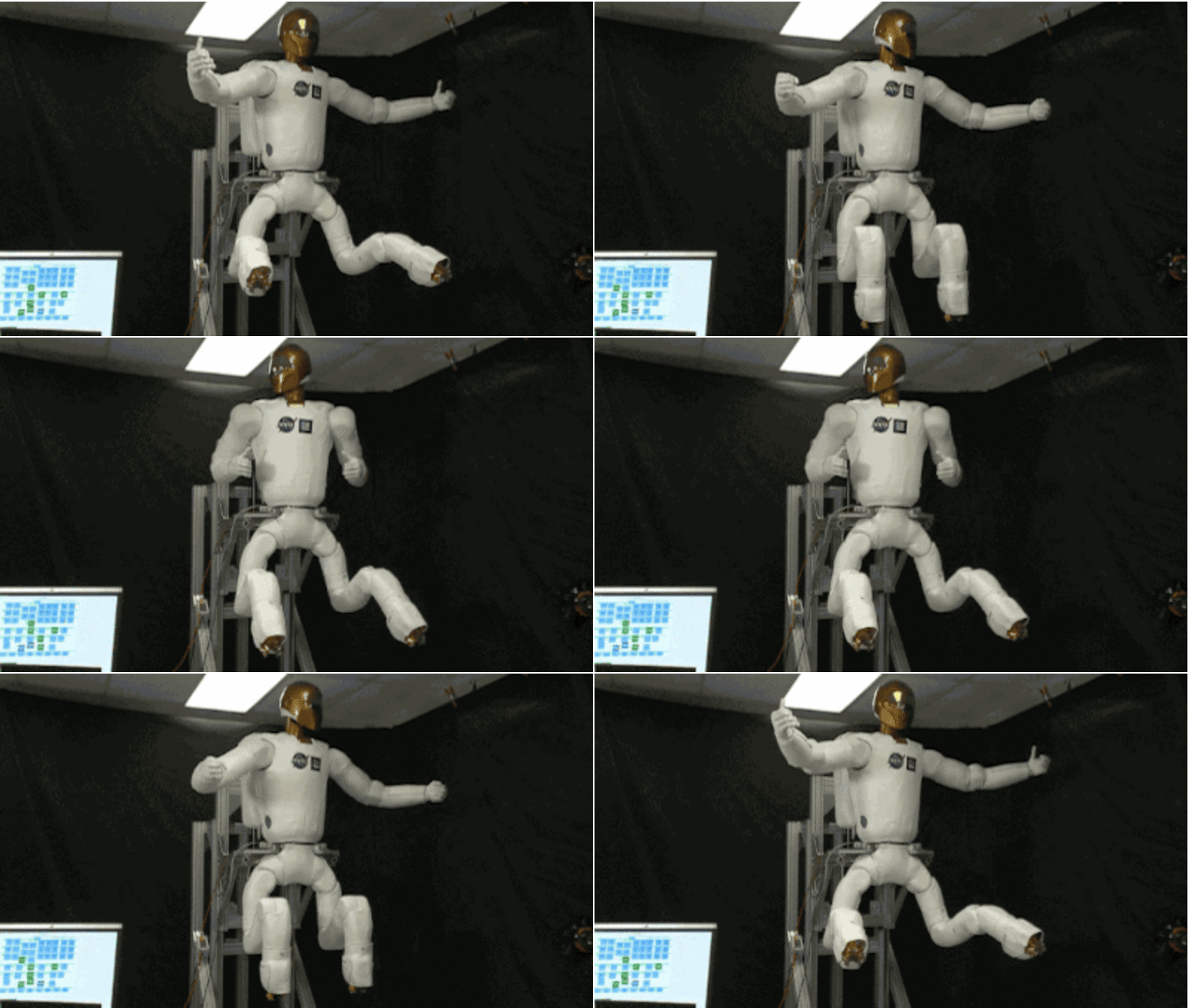
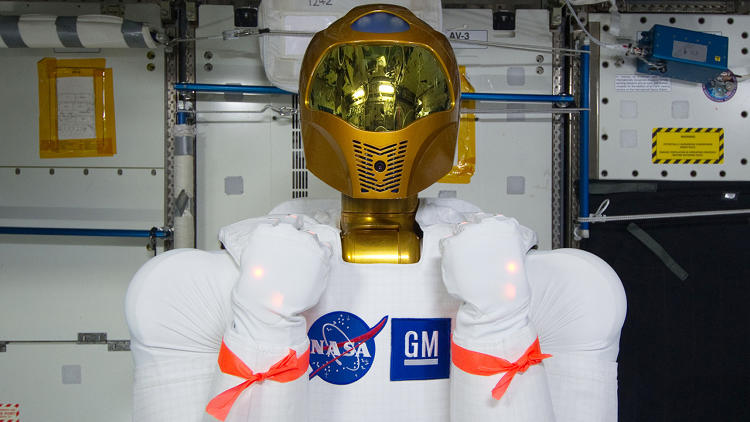
robotnaut_movementSpaceX’s latest delivery to the International Space Station – which was itself pretty newsworthy – contained some rather interesting cargo: the legs for NASA’s robot space station helper. Robotics enthusiasts know this being as Robonaut 2 (R2), a humanoid robot NASA placed on the space station to automate tasks such as cleaning and routine maintenance. Since its arrival at the station in February 2011, R2 has performed a series of tasks to demonstrate its functionality in microgravity.

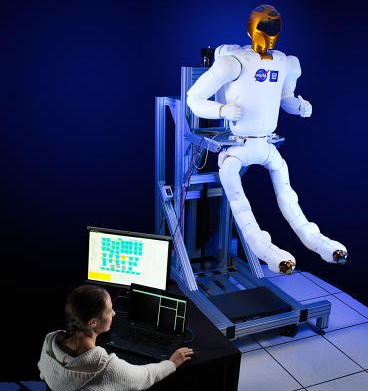
Until now, Robonaut navigated around the ISS on wheels. But thanks to a brand-new pair of springy, bendy legs, the space station’s helper robot will now be able to walk, climb, and perform a variety of new chores. These new legs, funded by NASA’s Human Exploration and Operations and Space Technology mission directorates, will provide R2 the mobility it needs to help with regular and repetitive tasks inside and outside the space station. The goal is to free up the crew for more critical work, including scientific research.

robonaut1NASA says that the new seven-jointed legs are designed for climbing in zero gravity and offer a considerable nine-foot leg span. Michael Gazarik, NASA’s associate administrator for space technology in Washington, explained:

NASA has explored with robots for more than a decade, from the stalwart rovers on Mars to R2 on the station. Our investment in robotic technology development is helping us to bolster productivity by applying robotics technology and devices to fortify and enhance individual human capabilities, performance and safety in space.

Taking their design inspiration from the tethers astronauts use while spacewalking, the legs feature a series of “end effectors” – each f which has a built-in vision system designed to eventually automate each limb’s approaching and grasping – rather than feet. These allow the legs to grapple onto handrails and sockets located both inside the space station and, eventually, on the ISS’s exterior. Naturally, these legs don’t come cheap -costing $6 million to develop and an additional $8 million to construct and test for spaceflight.

robonaut_legsRobonaut was developed by NASA’s Johnson Space Center in collaboration with General Motors and off-shore oil field robotics firm Oceaneering. All that corporate involvement isn’t accidental; Robonaut isn’t designed to simply do chores around the space station. NASA is also using R2 to showcase a range of patented technologies that private companies can license from Johnson Space Center.
The humanoid, task-performing robot is also a NASA technology showcase. In a webcast, the space agency advertised its potential uses in logistics warehouses, medical and industrial robotics, and in toxic or hazardous environments. As NASA dryly puts it:

R2 shares senses similar to humans: the ability to touch and see. These senses allow it to perform in ways that are not typical for robots today.

robonaut_legs2In addition to these legs, this latest supply drop – performed by a SpaceX Dragon capsule – included a laser communication system for astronauts and an outer space farming system designed to grow lettuce and other salad crops in orbit. We can expect that the Robotnaut 2 will be assisting in their use and upkeep in the coming months and years. So expect to hear more about this automated astronaut in the near future!

And in the meantime, be sure to check out this cool video of the R2 robotic legs in action:


Sources:
fastcompany.com, nasa.gov

News from Space: Universe’s Evolution Mapped in Detail

universe_expansionScientists have come up with the best computer model to date of the universe, one which maps the evolution of the cosmos in unprecedented detail. Known as Illustris, this virtual cosmos – which was created by U.S., English and German researchers using a network of supercomputers – includes details never before achieved in a simulation. All told, the numerical-based model covers the 13-billion-year evolution of the universe, beginning just 12 million years after the Big Bang took place.

While cosmologists have been developing and employing computer models of the universe for several decades, the outcome is usually a rough approximation of the universe that scientists observe in reality.  Illustris, however, has produced a universe that looks uncannily like the real on.  Among other things, it models how the universe expands, how galaxies are formed, their composition and distribution, and the mechanics of how stars and black holes are formed.

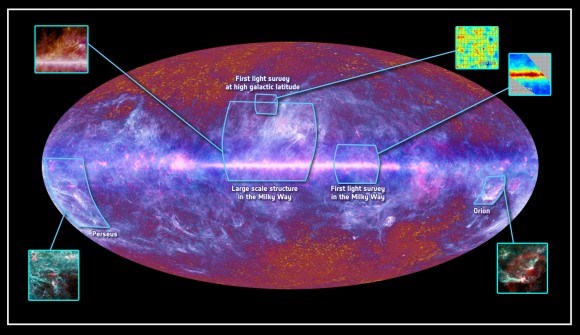
planck-attnotated-580x372Given all the recent breakthroughs in physics and cosmology, this ultra-detailed virtual model should come as no surprise. For example, this past April, scientists made not only made the first-ever observation of gravitational waves, they also processed data that is believed to be the first real indication of the existence of Dark Matter. In addition, the ESA’s Planck mission released the most detailed thermal imaging map of the universe last year that placed an accurate date on the universe’s age and confirmed the validity of the Big Bang Theory.

The Illustris creators say it represents “a significant step forward in modelling galaxy formation”, and provides a good visual representation of our ever-expanding (no pun!) understanding of the universe. A recent article that appeared last Wednesday in the journal Nature describes Illustris, and several videos (like those below) have been released that show the simulation in action. Check them out below:


Sources:
cbc.ca, IO9.com

Batman: Assault on Arkham

Assault_on_Arkham_-_BatmanDC Animated Original Movies has put out some fairly decent flicks in recent years, especially when it comes to the Batman universe. These include Batman: Gotham KnightBatman: Under the Red Hood, Batman: Year One, and Batman: The Dark Knight Returns. And in this latest installment, which is based on the popular Batman: Arkham video game franchise, we see Batman and the Suicide Squad team up to take down the Joker and stop him from blowing up the asylum and Gotham City.

In anticipation of its upcoming release, which is scheduled for August 12, 2014, DC Entertainment released the following teaser trailer a few weeks ago. I just stumbled onto it myself, and so I pass it on to all those fellow fans who – if they are like me – would not dare miss this! Enjoy!

O

Epic Rap Battles of History – Rick Grimes vs. Walter White

frank-grimes-walter-white-epic-rap-battleDuring my usual morning consultation of my email and internet subscriptions, I came across a new video by ERP. In this latest showdown, which is once again pop-culture gold, we get cable TVs most popular fathers – Rick Grimes of The Walking Dead and Walter White of Breaking Bad. What better way to generate comedy than to match up a post-apocalyptic dad who was forced to kill his wife’s reanimated corpse, and a chemist who began cooking meth to ensure his family’s future and then became a ruthless kingpin?

And as usual, Nice Peter and EpicLLOYD are just awesome in their roles! Seriously, they just BECOME whoever they’re imitating. Enjoy!

News from Space: Planet Hunting Flower-Shaped Starshade

nasa-starshadeWith over 1800 extra-solar planets discovered in the past 30 years, the search for life beyond our Solar System has begun anew. Astronomers believe that every star in the galaxy has a planet, and that one fifth of these might harbor life. The greatest challenge, though, is in being able to spot these “Earth-like” exoplanets. Due to the fact that they emit very little light compared to their parent stars (usually less than one-millionth the level of radiance), direct imaging is extremely rare and difficult.

As such, astronomers rely predominantly on is what is known as Transit Detection – spotting the planet’s as they cross in front of the star’s disc. This too presents difficulties, because the transit method requires that part of the planet’s orbit intersect a line-of-sight between the host star and Earth. The probability that an exoplanet will be in a randomly oriented orbit that can allow for it be observed in front of its star is therefore somewhat small.

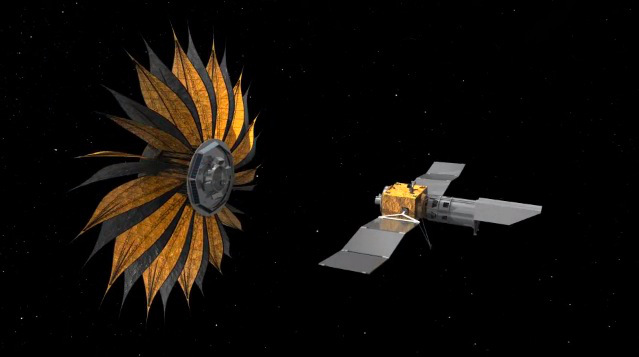
starshade-8Luckily, engineers and astronomers at NASA and other federal space agencies are considering the possibility of evening these odds with new technology and equipment. Once such effort comes from Princeton’s High Contrast Imaging Laboratory, where Jeremy Kasdin and his team are working on a revolutionary space-based observatory known as a “starshade” – a flower petal-shaped device that allows a telescope to photograph planets from 50,000 kilometers away.

Essentially, the starshade blocks light from distant stars that ordinarily outshine their dim planets, making a clear view impossible. When paired with a space telescope, the starshade adds a new and powerful instrument to NASA’s cosmic detection toolkit. The flower-shaped petals are part of what makes the starshade so effective. The starshade is also unique in that, unlike most space-based instruments, it’s one part of a two-spacecraft observation system.

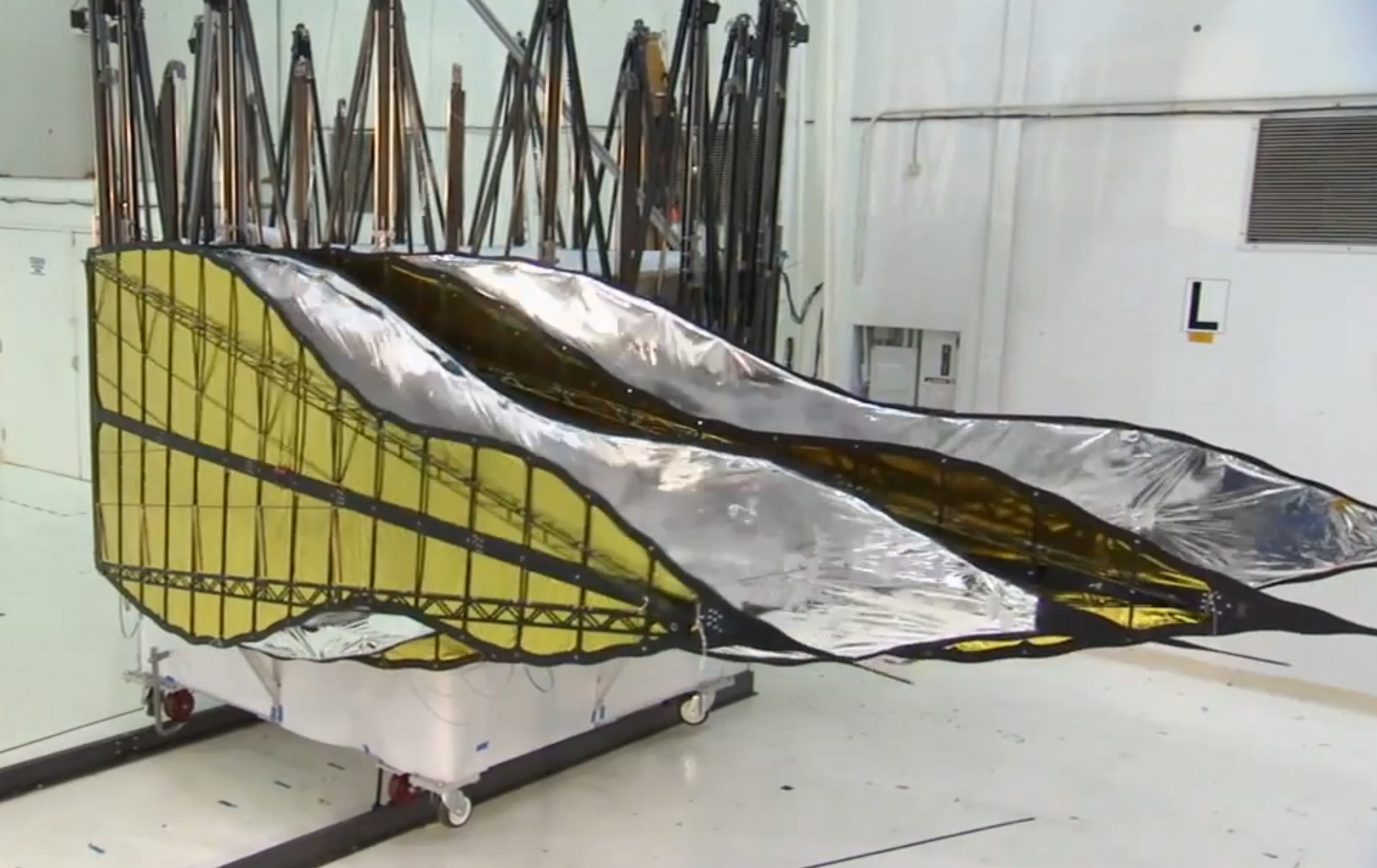
starshade-foldedAs Dr. Stuasrt Shaklan, NASA Jet Propulsion Labratory’s lead engineer on the starshade project, explaned:

The shape of the petals, when seen from far away, creates a softer edge that causes less bending of light waves. Less light bending means that the starshade shadow is very dark, so the telescope can take images of the planets without being overwhelmed by starlight… We can use a pre-existing space telescope to take the pictures. The starshade has thrusters that will allow it to move around in order to block the light from different stars.

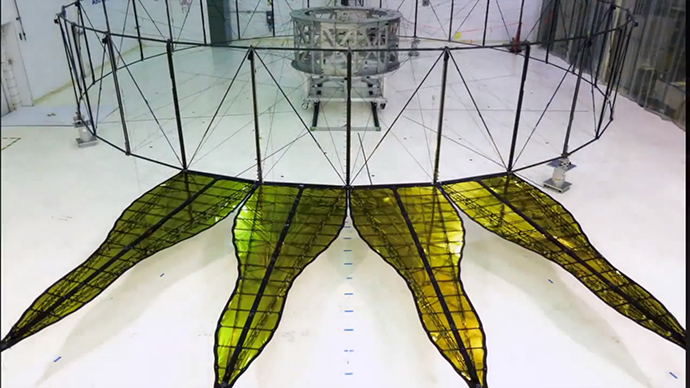
This process presents a number of engineering challenges that Shaklan and his team are working hard to unravel, from positioning the starshade precisely in space, to ensuring that it can be deployed accurately. To address these, his research group will create a smaller scale starshade at Princeton to verify that the design blocks the light as predicted by the computer simulations. Concurrently, the JPL team will test the deployment of a near-full scale starshade system in the lab to measure its accuracy.

starshade_petalsDespite these challenges, the starshade approach could offer planet-hunters many advantages, thanks in no small part to its simplicity. Light from the star never reaches the telescope because it’s blocked by the starshade, which allows the telescope system to be simpler. Another advantage of the starshade approach is that it can be used with a multi-purpose space telescope designed to make observations that could be useful to astronomers working in fields other than exoplanets.

As part of NASA’s New World’s Mission, the starshade engineers are optimistic that refining their technology could be the key to major exoplanet discoveries in the near future. And given that over 800 planets have been detected so far in 2014 – that’s almost half of the 1800 that have been detected in total – anything that can assist in their detection process at this point is likely to lead to an explosion in planetary discoveries.

And with one-fifth of these planets being a possible candidate for life… well, you don’t have to do the math to know that the outcome will be might exciting! In the meantime, enjoy this video from TED Talks, where Professor Jeremy Kasdin speaks about the starshade project:


Source:
ted.com, planetquest.jpl.nasa.gov, princeton.edu

Happy Birthday Hubble!

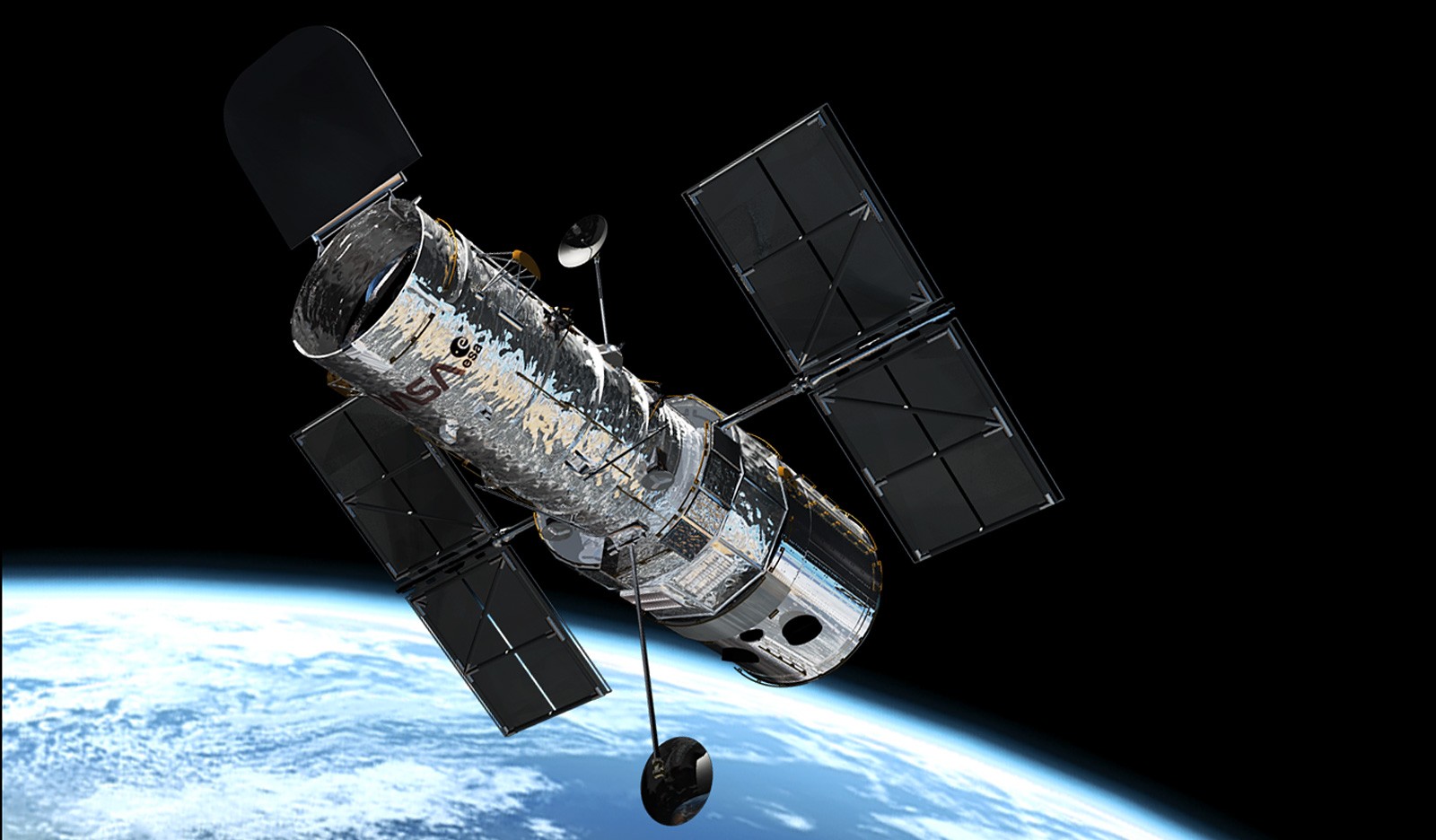
hubble_in_orbit1Last month, the Hubble Space Telescope celebrated its 24th birthday. And in honor of this occasion, NASA has released a video entitled “Evaporating Peaks – Pillars in the Monkey Head Nebula”. This video, which showcases visible and infrared light views of a collection of pillars along one edge of the Monkey Head Nebula (also known as NGC 2174) is just the latest in series of simulations that attempt to recreate what it would be like to step into a major stellar body.

Like all nebulas, NGC 2174 is a star-forming region in which bright, newborn stars near the center of the nebula illuminate the surrounding gas, creating the brilliant images we see in the video. The radiation from these stars, combined with strong stellar winds, also erode areas of lower density gases, which in turn causes pockets of higher density gas to turn into visible formations. This is what leads to the creation of the pillars and peaks of gas that run along the inner edge of this roughly circular cloud.

The sequence begins with a view of the night sky near the constellation of Gemini and Orion and then zooms through observations from the Digitized Sky Survey 2 to reveal a Hubble Space Telescope visible light view of the top of this region of pillars.


Sources:
universetoday.com, hubblesite.org