Chris Hadfield: What I Learned from Going Blind In Space

hadfield_TEDWhat is the scariest thing you’ve ever done? This is the question Chris Hadfield, retired astronaut and inspirational figure, asks in this latest speech from TED Talks. As he relates his rather unique experiences of going into space, commanding a mission aboard the International Space Station, and going blind while on a spacewalk, he addressed the key issue of how to distinguish between fear and danger while doing both great things, or just living our daily lives.

In relating the dangers of going into space, he encapsulates it all with an old astronaut saying: “there is no problem so bad that you can’t make it worse.” That is what fear is, according to Hadfield: an irrational reaction that makes a bad situation worse rather than better. In any situation, knowing the difference between fear of danger and actual danger is key, and can lead to a fundamental shift in one’s thinking that will also have life-changing implications and make some amazing things possible.

Using his characteristic combination of wit, showmanship, and a multimedia presentation, Hadfield demonstrates some of those amazing things. As a fundamentally dangerous profession, many wonder why anyone would risk going into space. According to Chris, the answer is that fear should not prevent us from doing amazing things, witnessing amazing things, and taking part in something that has immense importance and life-changing implications.

And of course, he finishes things off by performing part of his own rousing version of David Bowie’s “Space Oddity” and some sage advice:”Fear not!” Enjoy the video!


Source: ted.com

The Walking Dead – Season 4, Episode 15

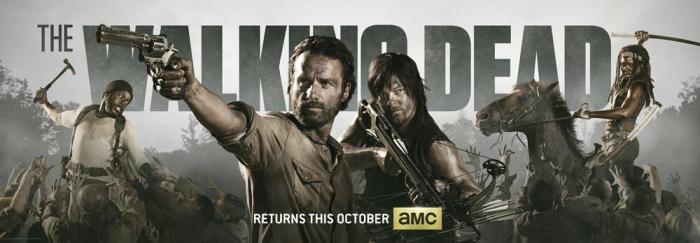
The Walking Dead SDCC Season 4The penultimate episode of season four has aired! The climax is approaching, and after last week’s exploration of brutality and corrupted innocence, this week’s was rather soft and cushy by comparison. A good thing too, I don’t know if anyone came away from that one unscarred! In addition, this week also began bringing season 4.5’s various plot threads together – and by that I mean the different bands of characters who, up until now, have been separated and looking for each other.

At the same time, it answered a few burning questions, and left some others for next week. For example, we finally get a glimpse of that big ol’ MacGuffin that the latter half of the season has been revolving around – aka. Terminus. But of course, the bigger question of what it represents – salvation, or false hope – remains to be seen. Next week, it all comes together. But in the meantime, here’s what happened this week…

Us:
wd4_15_0The episode opens with Glenn, Tara, Abraham, Rosita and Eugene carrying on down the railroad tracks and getting to know each other. Along the way, they find another road map with Maggie’s writing on it, telling Glenn to go to Terminus. After running some distance, Abraham tells Glenn they need to stop and rest in a water tower. However, a Walkers emerges from it and nearly lands on them, which sends Tara to the ground, hurting her knee.

Tara says she’s okay to walk, and Glenn insists that they keep going. To make it happen, he promises to hand his riot gear over to Eugene to ensure his safety. They come to another message painted on the side of a tunnel, but hear Walkers inside and debate going around. Glenn decides to proceed through with Tara and avoid a day-long detour, but Abraham and his group choose to take the detour route and promise to meet them on the other side.
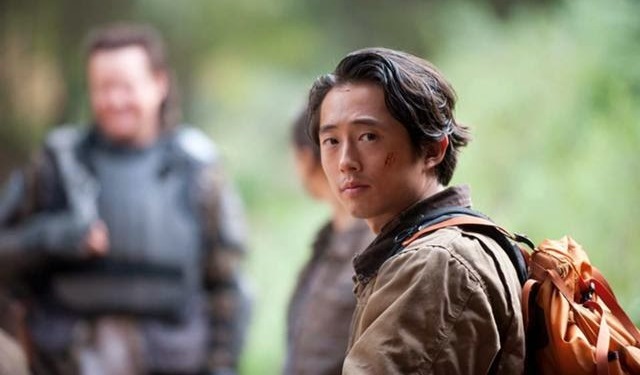
WD4_15_1When they get deeper into the tunnel, they find a slew of Walkers pinned under a fallen section of the ceiling. Glenn worries that this would have prevented Maggie and the others from getting through, but Tara concludes that it had to have happened today. Glenn proceeds through it and inspects the Walkers to make sure none are Maggie or the others, and they begin killing them. Once they make it over, they find a dozen or more Walkers on the other side, which begin to approach them.

Outside, Abraham, Rosita and Eugene double back to the last intersection and find a vehicle, which they plan to start driving for Washington DC again. However, Eugene insists on navigating and tells Abraham to sleep, then misdirects Rosita so that they end up back on the railroad on the other side of the tunnel, where Glenn and Tara are expected to emerge. Abraham wakes up and they begin to argue, until Eugene warns them of something that’s approaching them from the tunnel.

wd4_15_3Back in the tunnel, Glenn once again is scanning the faces of the Walkers, making sure Maggie isn’t one of them and finding no traces of bodies on the ground. Tara says they don’t have enough ammo to make it through and insists they turn around, but Glenn demands that they push through. Tara’s leg gets caught by a piece of concrete and she tells Glenn to leave her, which draws the Walkers closer. Glenn tries to fight it out, and they are both saved when a group arrives from the opposite end in a vehicle and opens fire on the Walkers.

After shooting them all dead, Maggie runs forward and embraces Glenn. Her group had met up with Abraham, Rosita and Eugene on the road and came in to help them through. They make camp in the cave and introductions are made. Abraham tells them that Eugene knows what caused the walker outbreak and once again says they should head to Washington. But Eugene insists they continue to Terminus first and a consensus is struck. Maggie takes the picture Glenn was keeping of her and burns it, saying he will never need it again.

???????????????????????????????????????????????????????????????????????????????????????????????????????????????????Elsewhere, we catch up with Daryl’s new found companions, the group of armed men led by Joe. Daryl heads out to hunt and is joined by Harley, and the two begin to fight over a wild rabbit they both have claim to. Joe intervenes and tells Daryl that they live by a strict rules to ensure that things don’t get chaotic. By the rules of their band, everyone is forced to lay “claim” to something and respect it, and he then splits the rabbit between them.

As they continue on, Joe insists that Daryl join them since no one can make it alone anymore, despite Daryl’s insistence that he’s better off by himself. He also fills Daryl in on the rules – you claim; if you steal, you kill; and don’t lie – and the punishment for breaking any of them, which is a beating. They take shelter in a rail station for the night, find a bunch of cars inside, and begin claiming them for the night. Daryl, having made no claim, sleeps on the floor.

wd4_15_4During the night, Harley confronts Daryl and accuses him of stealing his half of the rabbit they killed. Joe inspects Daryl’s bag and finds the missing half, and Daryl accuses him of planting it there. Joe orders that Harley be beaten and tells Daryl that he saw do it. In the morning, Daryl finds Harley’s body outside with an arrow in his head and covers him up. On the road, they see a sign to Terminus, and Joe reveals that this is where they are headed, mainly because they are tracking the guy who murdered one of their own (Rick!).

At the end of the line at last, Maggie, Glenn and the others see a building with the name TERMINUS painted on it in large letters. They enter through a gate and find a series of small gardens and come to a large barbeque being tended by a woman. She identifies herself as Mary (though Trekkies and geeks will probably recognize her as Tasha Yar), and welcomes them to Terminus.

Summary:
Straight off the bat, let me say that I enjoyed this episode. It had just enough twists and turns to be interesting, and revealed enough that it was enjoyable. At this point in the season, that is to be expected since they can no longer afford to drag things out or confound viewers with 11th hour complications. I was glad for that much. I was also pretty pleased with the way they answered some important questions and brought key members of the cast back together finally.

Naturally, the big focus of this episode was the reunion of Maggie and Glenn, something which we’ve been waiting for since season 4.5 started. And I liked how they went about doing this, showing one group retracing the others’ steps and then meeting up in the middle. But another thing I enjoyed just as much was the way they revealed Joe and his group’s story. For some time now, we’ve been seeing them pop up and wondering what their angle in all this is.

Obviously, they are a bunch of marauding survivalists that no one in their right mind would turn their back on. And Daryl’s involvement with them represents a conflict which is sure to be resolved next week (echoes of Merle’s involvement with the Governor here…) But I also wondered if they were related to Terminus at all, if it was their base camp or a trap they were leaving out for unsuspecting wanderers. I also wondered if they played any role in Beth’s disappearance.

Now, it would seem that they are just an armed group of survivalists looking to make their way and take from others. The reason they are heading towards Terminus has everything to do with their last encounter with Rick, and apparently nothing to do with the town itself. And Beth’s disappearance? Well, that wasn’t revealed, but I’d bet dollars to doughnuts this Terminus community is a cooky social experiment and she was kidnapped by them because they are looking for women of child-bearing age. Seriously, anyone want to take that bet?

Ah yes, and at last, we got a glimpse of the place itself and now know that it does in fact exist. We did not find that the place was overrun and the promise of salvation it once offered had expired long ago. Nor was it an obvious trap where men with guns jump out and murder anyone willing to accept the invite. If anything – and this is a key part of that bet I’m making – it’s Woodbury 2.0, a seemingly nice community who’s happy exterior hides a dark and sinister interior.

In any case, that and other things will be answered next week. And as the sneak peak shows, we will be hearing from Rick, Michonne and Carl; who I imagine will have some ‘splaining to do once the marauders catch up with them. And of course, it won’t end well, mainly because things never do on The Walking Dead. Actually, they never really end at all. They just keep going and going, despite themselves. But in a post-post-apocalyptic landscape beset by rotting zombies and evil people, what else can you do?

Ann Makosinski and I Have a Chat!

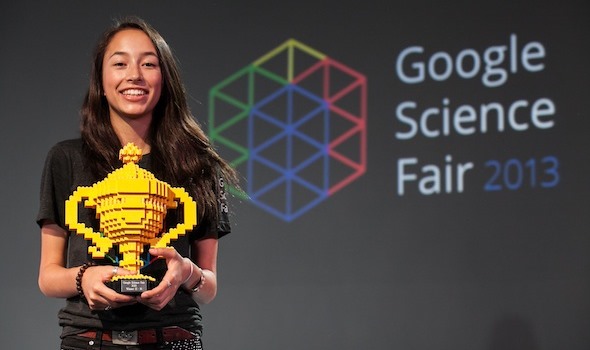
Ann-Makosinski-Google-Science-Fair-2It’s a rare thing when a humble blogger like yours truly gets the chance to speak to someone who has truly made a difference in the world. And this time around, that person is Ann Makosinki, inventor of the body heat-powered flashlight and winner of last year’s Google Science Fair. In addition to being a young inventor, she also happens to hail from my neck of the woods here in Victoria, British Columbia. So you can imagine the enthusiasm I felt when she agreed to this interview!

As many of you may already know  – since you all faithfully read this blog 😉 – Ann Makosinki is winner of the 2013 Google Science Fair Award for her invention that uses the warmth of a person’s own hand to power an LED flashlight. Using Peltier tiles, which produce electricity when heated on one side and cooled on the other, she developed a flashlight which she believes will be of use in the developing world where electrical outlets and batteries are not always available.

body_heat_flashlightAnn’s inspiration comes from her commitment to science, renewable energy, the environment, and her roots in the Philippines. Ultimately, her goal is to bring light and energy to those who live without it all over the world. After winning the gold medal at the 2013 Canada-Wide Science Fair Gold Medal, her flashlight won at the Google Science Fair’s top prize of a $25,000 scholarship and the choice of a “once-in-a-lifetime experience” from CERN, LEGO or Google.

In addition, she has been a keynote speaker at TEDx in three different cities (Vancouver, Redmond and Edmonton), at Techtoria here in Victoria, earned a spot on Jimmy Fallon Live, and will be representing Canada at the 2014 International Science and Engineering Fair this coming May. The following is a transcript of our interview, which occurred via email in spite of her (very) busy schedule:

1. When did you first discover your love for science? What are some of your earliest memories of doing something science-related?

My love for science started when I was very young. My first toy was actually a box of transistors! I was always also interested in insects, and used to collect them and keep them in jars. I would feed them and spray them each morning before I would head out to school. My parents were very supportive of my interests, even if I was looking through the garbage, hot gluing disposed objects together and creating “inventions” (of course nothing ever worked). My dad also always took me to the local island science fair, and I was very shy to ask the other kids questions, but I always thought it was so cool that they had chosen their own topic in science and now were presenting on it.

2. When did you take part in your first science fair? What was your project?

I started participating in the local science fair, the Vancouver Island Regional Science Fair, when I was in grade 6. My science project was one from that I had done in class, comparing two laundry detergents.

3. How did you come to be interested in renewable energy?

I realized early on that energy is a key issue in today’s world, because of our increased reliance on energy and its effect on global warming. It is a challenging problem, and I wished to explore alternative energy sources and find solutions. I focused on the problem of battery elimination, because that’s something I understand and can think around.

4. You’re invention of the body-heat powered flashlight was a big hit at the 2013 Google Science Fair. What was it like competing with people your age who have such a passion for science?

For me, it wasn’t about competing with the other people, but more of getting know them and seeing how we were all alike in some ways. It inspired me to see how passionate they were about science, and while we could have conversations about technical aspects that I usually wouldn’t get to talk about with my friends, they were all still like normal teenagers.

5. This past December you were named one of Time Magazines Top 30 under 30. What other accolades have you earned since winning at the Google Fair?

Hmm, well I have given three TEDx talks since then and many other speeches locally. I have had numerous interviews/film crew from US and Europe making short documentaries. I also appeared on the Tonight Show with Jimmy Fallon’s during the show’s premiere week, and I have a few more things lined up. However, I think what matters most to me is the fact that my project has brought so much awareness to the problem of people without electricity, and to the potential that thermoelectricity has.

6. Since winning at Google Fair, you’ve presented at TEDx RenfrewCollingwood, the Techtoria conference in Victoria, and got a spot on Jimmy Fallon Live. Is it fair to say your life has changed since debuting your invention? Do you feel like a celebrity?

I definitely do not feel like a celebrity. Sure, I get recognized once in a blue moon, or people want to have their picture with me, but I know that will soon end. I think something that has changed is the fact that I really value the time when I can wind down and relax, because with so much going on I’m always on the go and worrying about my next due date.

7. What is the future hold for renewable energy, in your opinion?

I think we are already seeing a huge increase in the interest in renewable energy and alternative energy sources. As global warming and the greenhouse effect closes in on us, we will be obliged to look around to harvest natural energy, whether it be from heat, sun, water, wind etc. It holds a lot of potential, but our technologies for harvesting the energy efficiently are still developing. If my flashlight can eliminate even a fraction of batteries from the city dumps, I will have achieved my aim.

8. What does the future hold for Ann Makosinki?

I hope to commercialize the flashlight and make it available to children in the world who need light the most. Beyond that, I hope to get into college and make my little contribution towards a cleaner and better world to come.

She hopes to commercialize the flashlight? I for one can’t believe that she hasn’t been approached by every company from GE to Applied Solar. But it is great to know that young minds are coming up with breakthroughs that could be making a very real difference in the world of tomorrow. I, for one, consider to be right up there with the Darfur Stove and Quetsol solar-powered lights.

And be sure to check out the video of Ann’s speech at TEDx RenfewCollingwood which took place in October 2013, entitled “Be the Source”:


And here is her guest spot on Jimmy Fallon Live, as part of GE’s “Fallonventions”, from this past February:

News from SETI: We’re Going to Find Aliens This Century

aliens“We are going to find life in space in this century.” This was the bold prediction made by Dr. Seth Shostak, Senior Astronomer at the Search for Extra-Terrestrial Intelligence Institute (SETI) at this year’s European Commission Innovation Convention. As part of the European Union’s strategy to create an innovation-friendly environment, the ECIC brings together the best scientific minds from around the world to discuss what the future holds and how we can make it happen.

And this year, Dr. Shostak and other representatives from SETI were quite emphatic about what they saw as humanity’s greatest discovery, and when it would be taking place. Sometime this century, they claim, the people of Earth will finally find the answer to the question “Are we alone in the universe?” Like many eminent scientists from around the world, Dr. Shostak believes its not a question of if, but when.

ECIC_2014As he went on to explain, given the sheer size of the universe and the statistical probabilities, the odds that humanity is far more unlikely than the reverse:

There are 150 billion galaxies other than our own, each with a few tens of billions of earth-like planets. If this is the only place in the universe where anything interesting happening then this is a miracle. And 500 years of astronomy has taught us that whenever you believe in a miracle, you’re probably wrong.

As for how we’ll find that life, Dr Shostak sees it as a ‘three-horse race’ which will probably be won over the next 25 years. Either we will find it nearby, in microbial form, on Mars or one of the moons of Jupiter; or we’ll find evidence for gases produced by living processes (for example photosynthesis) in the atmospheres of planets around other stars; or Dr Shostak and his team at SETI will pick up signals from intelligent life via huge antennas.

exoplanet_searchDr. Suzanne Aigrain – a lecturer in Astrophysics at Oxford University and who studies exoplanets – represents horse number two in the race. Dr. Aigrain and her research group have been using electromagnetic radiation (i.e. light) as their primary tool to look for planets around other stars. The life ‘biomarkers’ that she and her colleagues look for are trace gases in the atmospheres of the exoplanets that they think can only be there if they are being produced by a biological source like photosynthesis.

Speaking at the Convention, Dr Aigrain noted that, based on her studies, she would also bet that we are not alone:

We are very close to being able to say with a good degree of certainty that planets like the Earth, what we call habitable planets, are quite common [in the universe] … That’s why when asked if I believe there’s life on other planets, I raise my hand and I do so as a scientist because the balance of probability is overwhelmingly high.

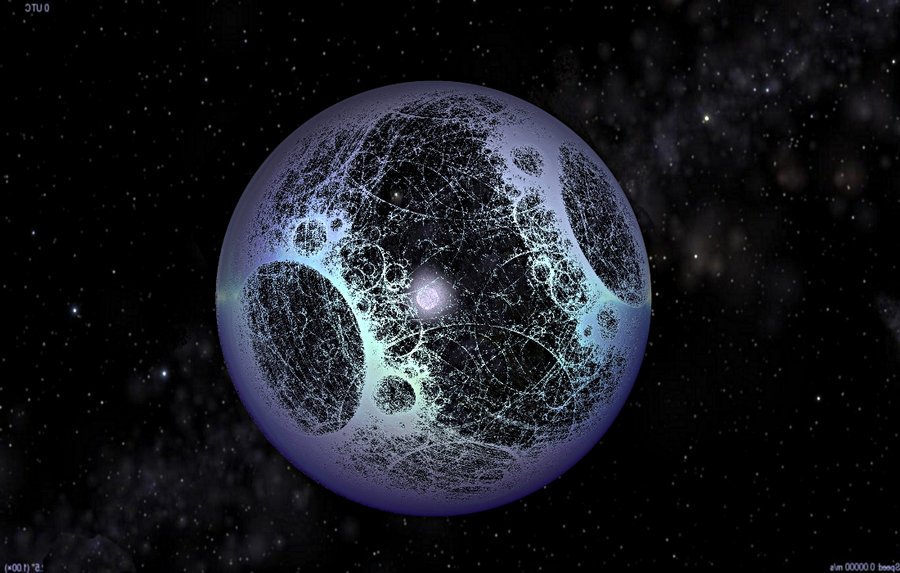
fractal_dyson_sphere_by_eburacum45-d2yum16Dr. Shostak and SETI, meanwhile, seek evidence of life in the universe by looking for some signature of its technology. If his team does discover radio transmissions from space, Dr. Shostak is quite certain that they will be coming from a civilization more advanced than our own. This is part and parcel of searching for life that is capable of sending out transmissions, and assures that they will have a level of technology that is at least comparable to our own.

At the same time, it is entirely possible that an advanced species will have existed longer than our own. As the Kardashev Scale shows, the level of a race’s technical development can be measured in terms of the energy they utilize. Beginning with Type 0’s, which draw their energy, information, raw-materials from crude organic-based sources, the scale goes on to include levels of development that draw energy of fusion and anti-matter to our host star, or even stellar clusters and even galaxies.

halosphereConsidering that size of the universe, the realm of possibility – and the fact humanity itself is still making the transitions from Type 0 to Type I – the odds of us meeting an extra-terrestrial that is more advanced than us are quite good. As Shostak put it:

Why do I insist that if we find ET, he/she/it will be more advanced than we are? The answer is that you’re not going to hear the Neanderthals. The Neanderthal Klingons are not building radio transmitters that will allow you to get in touch.

“Neanderthal Klingons”… now that’s something I’d like to see! Of course, scientists have there reasons for making such bold predictions, namely that they have a vested interest in seeing their theories proven correct. But not surprisingly, they are hardly alone in holding up the numbers and insisting that its a numbers game, and that the numbers are stacked. Another such person is William Shatner, who in a recent interview with the Daily Mail offered his thoughts on the possibility of alien life.

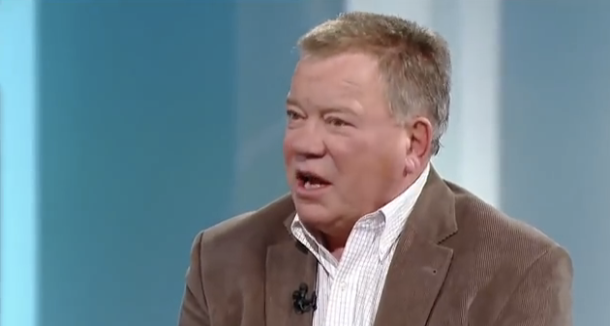
william_shatnerAs he explained it, it all comes down to numbers, and the sheer amount of discoveries made in such a short space of time:

I don’t think there is any doubt there is life in the universe, yes. I don’t think there is any question. The mathematics involved — what have they just discovered, 730,000 new planets the other day? — mathematically it has to be.

He was a bit off on the number of planets, but he does have a point. Earlier this month, NASA announced the discovery of 715 new exoplanets thanks to a new statistical technique known as “verification by multiplicity”. By observing hundreds of stars and applying this basic technique, the Kepler space probe was able to discover more planets so far this year than in the past few combined. In fact, this one batch of discovered increased the total number of exoplanet candidates from 1000 to over 1700.

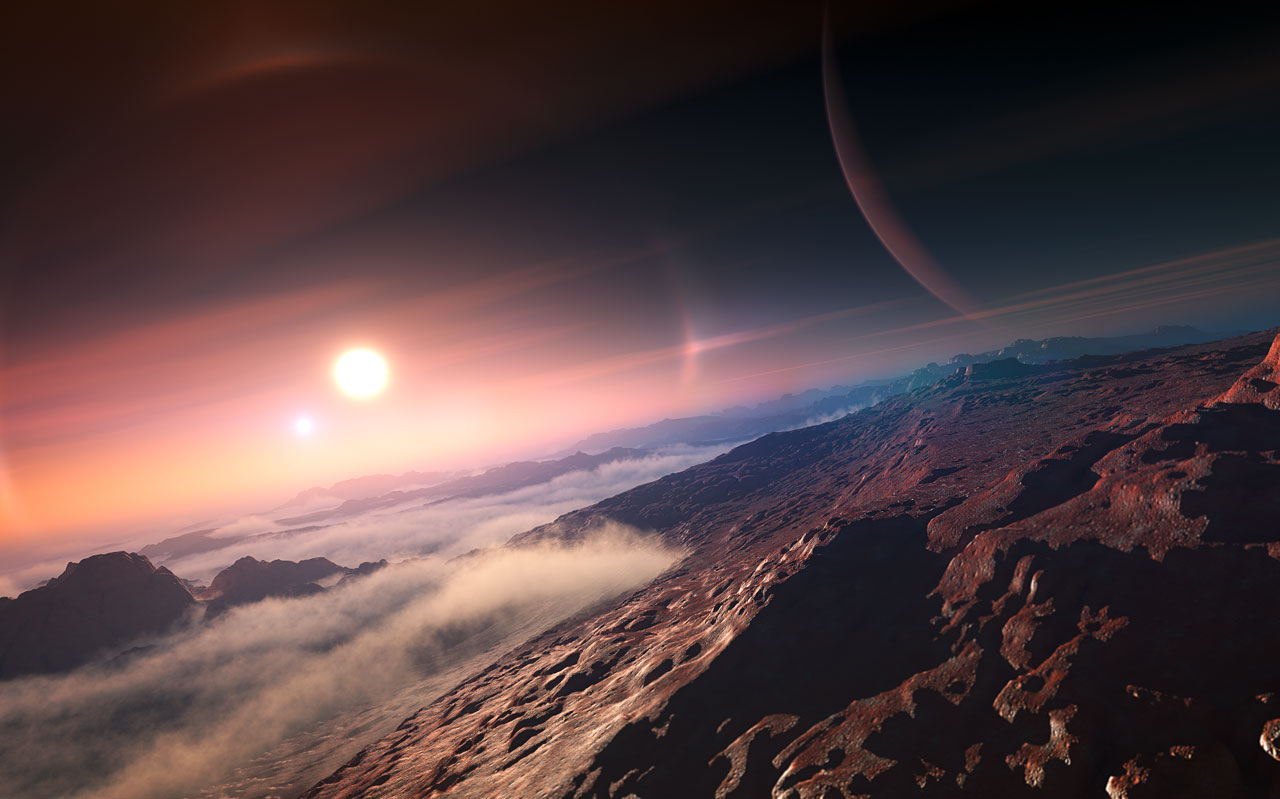
alien-worldAnd while the discovery of only four potentially habitable planets amongst those 715 (a mere 0.0056% of the total) may seem discouraging, each new discovery potentially represents hundreds more. And given how little of our galaxy we have mapped so far, and the fact that we’ve really only begun to explore deep space, we can expect that list to grow by leaps and bounds in the coming years and decades.

Naturally, there are some fundamental questions that arise out of these predictions. For example, if we do find life on other planets or intercept a radio signal, what are the consequences? Finding a microbe that isn’t an earthly microbe will tell us a lot about biology, but there will also be huge philosophical consequences. Even more so if we are to meet a species that has developed advanced technology, space flight, and the means to come find us, rather than us finding them.

In Dr Shostak’s words, ‘It literally changes everything’. But that is the nature of

Sources: dvice.com, news.cnet.com, cordis.europa.eu

Work Begins on Successor to Large Hadron Collider

CERN_upgradeIn 2012, scientists working for the CERN laboratory in Switzerland announced the discovery of the Higgs Boson. After confirming this momentous discovery, CERN scientists indicated in April of 2013 that the Large Hadron Collider was being taken offline in order to upgrade its instruments for the next great project in its ongoing goal of studying the universe. And this past February, work began in earnest on planning for the LHC’s successor.

This massive new marvel of scientific instrumentation, which has been dubbed the “Very Large Hadron Collider”, will measure some 96 km (60 mile) in length – four times as long as its predecessor – and smash protons together with a collision energy of 100 teraelectronvolts (which is 14 times the LHC’s current energy). All of this will be dedicated to answering the questions that the first-time detection of the Higgs Boson raised.

Peter Higgs (who proposed the Higgs boson), hanging out at LHC’s CMS detector

While this discovery was a watershed moment, its existence poses more questions than it answers; and those answers probably can’t be answered by the LHC. Thus, to keep high-energy physics moving forward, the international team of scientists at CERN knew they needed something more accurate and powerful. And while the LHC is slated to remain in operation until 2035, it is the VLHC that will addressing the question of how the Higgs get’s its mass.

Basically, while the discovery of the Higgs Boson did prove that the Standard Model of particle physics is correct, it raised some interesting possibilities. For one, it suggests that particles do indeed gain their mass by interacting with a pervasive, ubiquitous Higgs field. Another possibility is that the Higgs boson gains its heaviness through supersymmetry — a theory that proposes that there’s a second, “superpartner” particle coupled to each and every Higgs boson.

CERN_LHCScientists have not yet observed any of these superpartners, and to discover them, a stronger collider will be necessary. It is hoped that, when the LHC powers up to 14 TeV by the end of 2014, its scientists will discover some signs of supersymmetry. This will, in turn, inform the creation of the LHC’s successor, which still remains a work in progress. And at this point, there are two groups presenting options for what the future of the VLHC will be.

One group consists of Michael Peskin and a research group from the SLAC accelerator in California, who presented an early VLHC concept to the US government back in November. This past February, CERN itself convened the Future Circular Collider study at the University of Geneva. In both cases, the plan calls for a 80-100km (50-62mi) circular accelerator with a collision energy of around 100 TeV.

large_hadron_colliderAs the name “Very Large Hadron Collider” implies, the plans are essentially talking about the same basic build and functionality as the LHC — just with longer tunnels and stronger magnets. The expected cost for either collider is around $10 billion. No telling which candidate will be built, but CERN has said that if it builds the successor, excavation will probably begin in the 2020s, so that it’s completed before the LHC is retired in 2035.

In the shorter term, the International Linear Collider, a 31-kilometer-long (19.2 mile) particle accelerator, is already set for construction and is expected to be completed in or around 2026. The purpose of this device will be to conduct further tests involving the Higgs Boson, as well as to smash electrons together instead of protons in order to investigate the existence of dark energy and multiple dimensions.

center_universe2The future of high-energy physics is bright indeed, and with all this research into the deeper mysteries of the universe, we can expect it to become a much more interesting place, rather than less of one. After all, investigating theories does not dispel the mystery of it all, it only lets you know where and how they fell short. And in most cases, it only confirms that this thing we know of as reality is beyond what we previously imagined.

Sources: extremetech.com, indico.cern.ch

The Future is Here: Pure LiFi Wireless Internet

lifi_internet1It’s known as “Light Fidelity”, a new form of wireless data transmission that does away with radio signals in favor of optics. And much like the concept of an optic computer – which uses photons to transfer and store information rather than electrons – it’s long been considered as the next possible leap in internet technology. Hence why it was being demonstrated at this year’s Mobile World Congress – the world’s largest exhibition for members of the mobile phone, internet and IT industry.

Despite its monumental growth in the last decade, Wi-Fi remains somewhat hindered by the fact that it relies on microwaves in the 2.4 GHz and 5 GHz bands, a radio spectrum which is limited. LiFi, however, relies on the transmission of light and could be deployed in everyday LED bulbs, covering the entire interior of a home or office. These LED bulbs would send information out in what appears to be a constant stream of light, but which is actually made up of millions of micropulses a second.

Mobile-World-Congress-MWC-PreviewA system based on this would be capable of transferring far larger bundles of data than one based on microwaves. The system that was on display at MWC this year ran at 150 Mbps. But with a more powerful LED light, it could conceivably reach a rate of transfer equal to 3.5 gigabytes per second. That’s 210 gigabytes a minute, and 12.6 terabytes (that 12 and a half trillion bytes, people!) every hour, far in advance of what current WiFi offers (which maxes out at 450 mbps).

To put that in perspective, as of March 2014, the US Library of Congress estimated that their web had cataloged 525 terabytes of web archive data, with an addition 5 terabytes added every month. This means that a LiFi connection running at full capacity transfers in one hour what the Library of Congress processes in over two months! In short, the widespread use of LiFi would mean an explosion in information the likes of which has not been seen since the internet first went online.

Pure_LiFi_MWC2014Granted, there are still some limitations, like how any computer running off of LiFi needs a special adapted, and interrupting the light source will cause information transfers to cease. And I can’t help but wonder what micropulsing lights will do for people with epilepsy, not to mention the rest of us. However, such concerns are likely to be addressed long before LiFi sees any adoption on a grand scale, which is likely still a decade away at this point.

This year, the MWC conference took place in Barcelona, a place committed to the concept of the Internet of Everything (IoE) and the building of the world’s first truly “smart city”. In the coming months and years, I anticipate that this Spanish haven for technological innovation and integration will feature plenty of LiFi. So if you’re traveling there, you might want to look into getting an adapter for your laptop.

And in the meantime, enjoy this video – courtest of CNET First Look – that takes a look at this year’s LiFi demonstration at MWC 2014:


Sources:
news.cnet.com, loc.gov

New Anthology Sample: Arrivals!

dome_cityI told you it’s been a busy time for the Yuva anthology, and not just for my venerable colleagues. In my case as well, I’ve made some headway on the short story Arrivals and thought it was time to share! For the last few samples, the story was focused on the goings-on of the Planetary Council once they had learned that a new convoy of ships was approaching the planet. As always, there were hard questions, fears and agendas at play.

For this part, I have chosen to shift the focus back to the person who noticed the new convoy of colonists (aka. the Second Wave) coming in the first place – Marcellin Strauss, a simple technician who toiled in anonymity prior to the detection of the approaching convoy that set everything on the planet in motion. Now, he finds himself being sought out by the Planetary Council, and told to report to strange location for reasons that are not shared. Hope you like the sampling, and stay tuned for more!

_____

Asteria Research Facility
Zarmina, Vogt

It was like looking at a still frame in some futuristic SenSim. The building had the appearance of a mushroom, an off-white, ground-hugging thing with just the slightest overhanging edges. And yet, its dimensions seemed unnaturally large for the setting, far bigger than anything he’d seen in an auxiliary dome, which this place certainly appeared to be.

As he disembarked from the transit car, Strauss consulted his Tab to make sure he was in the right place. The Council’s message had been somewhat short on explanations, but the directions had been quite precise. The private line he had taken to get here had deposited him at a stop just over a hundred meters away, and every building and laneway that sat between him and the mushroom cap seemed awfully quiet. As he looked around the expanse of the small dome, he got the strange feeling that he was very much alone… and being watched.

“Welcome resident! How may I assist you?”

Strauss almost jumped. He turned quickly to the right and noticed the transit chest sitting there. As always, this consisted of a squat red box with a tall display stand at the side. On the display screen, the words it had just uttered were displayed prominently; the happy, iconic face of Magid Mukhtari smiling as it repeated them.

“Welcome resident! How may I assist you?”

“I, uh…” he replied dumbfoundedly, and looked back in the direction of the far building.

“Will you be requiring personal transit on this trip?” the voice asked, suggesting the most obvious option. He considered the distance between him and his destination and judged that it was not an unreasonable suggestion.

“I guess so,” he said, and placed his Tab on his chest.

“Very good, sir. Please return the vehicle to one of several designated transit boxes on your journey when you are finished with it.”

The door on the box opened and a ground car presented itself to him. Stepping onto the foot rest, he placed his hands on the control ring and felt the car power up. The terminal in the middle came online and the face of Muhktari was there as well, giving him a quick tutorial.

“Just place your feet on the acceleration pads located at the front of the footrest to-”

Strauss didn’t bother to wait for it to finish. He had had enough experience driving himself around to know how the capitol cars worked. The face of the screen laughed as he took off, putting distance between himself and the stop.

“Whoa! I see you’ve done this before! Please exercise caution when driving amongst pedestrians and other vehicles. And remember to return the car to a designated transit chest when you are finished with it. Have a nice day!”

What pedestrians? he wondered, as he drove towards his destination. Several minutes passed as he closed the distance between the transit line and the far building. And at no point did he see anyone, nor any indication of people working inside the other structures. The feeling of isolation intermixed with the sense that he was being watched yet again, and it did not make for a happy state of mind.

He was just glad he wasn’t hungover as well, though a shot of liquid courage would certainly have been welcome! He did his best to focus on where he was headed and tried not to think of the eerie, empty buildings that were passing him by, or the distinct impression that they weren’t so much empty as containing spies who watched him from every window.

But on that front, things weren’t much better. At his current distance, the building seemed to loom much higher than before, forcing him to look up towards the dome’s roof to take it all in. This meant that the ceiling, with all it’s rigid struts and panels were now it’s backdrop. The strange, webbed pattern only served to make it all look somehow more… spooky.

As he got closer, he came to realize something else about the building. All along the façade, there were lines of various colors, but none of them seemed to correspond to a segment in the structure. As far as one could tell, the building was a single piece, no joints or seams to speak of. Such seemed unlikely, but the illusion was not dispelled with any decrease of distance.

That’s when every single device on his body began to signal to him. The sound was unmistakable, indicating that they were going into offline mode since there was no longer any bandwidth in this area. He came to a stop and pulled his Tab from his chest to confirm this. Sure enough, the Tab presented a topographical representation of the area that showed a large, circular dead zone emanating out from the mushroom-shaped building. Rather than having ventured beyond the range of the QIN’s wireless network, he was now entering an area where it was actively being denied.

He took a deep breath and let it out slowly. Between his observations of the structure and this latest revelation, it seemed clear that whoever was inside was taking great pains to keep what they were doing in there a secret.

What am I stepping into here? he wondered. He scanned the outer edge of the building again, trying to see if he could spot any telltale signs of cameras or spy drones. There were none that he could see, but he sensed they were there… somehow, somewhere.

And yet, he found himself pressing the accelerator pedal again and driving closer. Whatever this summons was, whatever was going on inside that odd-looking building, he wanted to know. Besides, at this point, he was just about there. Might as well go all the way and see what all the hubbub was about.

“You have reached your destination,” the happy face of Mukhtari said once he came to  stop. “I am not picking up any transit chests at this location. If you would like to park this vehicle for later use, please say so now. If not, please tell this car to –”

“Return,” he ordered, stepping free of the footrest. The voice stopped in midsentence, having recieved the requisite order to head back to it’s last storage location. It did manage to issue a kind farewell as it zipped away along the street, moving in a perfect rectilinear fashion.

“We hope that you enjoyed your ride!”

Strauss chuckled to himself and looked towards the mushroom, which now had the appearance of being a big, white giant. He was tempted to walk up and touch it, thinking at this point that it had to be composed of some kind of ceramic or composite material.

However, in one spot there was an irregularity –  a sort of circular hole that was two meters high and less than a single meter deep. Inside, the same seamless ceramic material sat, solid and impenetrable. But this was the only thing that even resembled a door. Taking another deep breath, Strauss took a few steps towards it and steeled himself for a surprise, one way or another.

That’s when he heard a loud hiss and a high pitched squeal. Strauss’ gate came to an immediate halt and his heart began to beat overtime. He stood motionless for several seconds, worried that he had set something off, afraid to move lest he make it worse.

But the noticed, the circular opening was opening further. Inside, several small lines appeared on the circular surface, bisecting the door at cross-angles, and then began pulling it open. When they finally opened all the way, he saw a woman standing there, wearing a grey jumpsuit with the same strange color patterns he noticed on the building’s façade.

“You Marcellin Strauss?” she asked, sticking her head through the open doorway. He found himself scanning her suit still, wondering just what the hell section it represented. She wasn’t with Planetary, or Defense, for that matter. Neither the color nor the insignia patches matched. He then realized she had asked him a question and simply nodded, unable to form words at the moment.

“Good,” she said. “Get inside, we have a lot to cover and we’re running late.”

She turned back inside and clearly meant for him to follow. Strauss managed to find his voice and clumsily uttered the obvious question. “I- I’m sorry. Who are you?”

She turned back to him and raised an eyebrow, a reaction that let him know exactly how little she thought of the question. “Madeleine Hartberg, Yuva Cosmonautic Corps.”

“Cosmonau-” he stuttered. “I- I wasn’t aware there was one.”

She smiled sideways. “There is now. And there are people inside who would very much like to talk to you. Are you going to come see them, or stand there like an idiot all day?”

Strauss once again fell mute and couldn’t move. And whoever this woman was, she was clearly getting annoyed because of it.

“Look, Strauss, I don’t have time to explain everything right now. Bottom line is, you’ve been asked to participate in something bigger than anyone on this planet has known since we made ‘Fall. Now are you coming, or are you going to miss out on that opportunity?”

Marcellin’s voice didn’t respond, but his feet seemed to be in working order. He knew this, because he began to follow her inside.

“Good!” she said, ushering him in. “Now please move it. Thirty seconds of this and I’m already sick of you!”

News in Bionics: Restoring Sensation and Mobility!

TED_adrianne1It seems like I’ve writing endlessly about bionic prosthetics lately, thanks to the many breakthroughs that have been happening almost back to back. But I would be remiss if I didn’t share these latest two. In addition to showcasing some of the latest technological innovations, these stories are inspiring and show the immense potential bionic prosthetics have to change lives and help people recover from terrible tragedies.

For instance, on the TED stage this week in Vancouver, which included presentations from astronaut Chris Hadfield, NSA whistle blower Edward Snowden, and anti-corruption activist Charmiah Gooch, there was one presentation that really stole the stage. It Adrianne Haslet-Davis, a former dance instructor and a survivor of the Boston Marathon bombing, dancing again for the first time. And it was all thanks to a bionic limb developed by noted bionics researcher Hugh Herr. 

TED_hugh_herrAs the director of the Biomechatronics Group at the MIT Media Lab, Herr is known for his work on high-tech bionic limbs and for demonstrating new prosthetic technologies on himself. At 17, he lost both his legs in a climbing accident. After discussing the science of bionic limbs, Herr brought out Adrianne, who for the first time since her leg amputation, performed a short ballroom dancing routine.

This was made possible thanks to the help of a special kind of bionic limb that designed by Herr and his colleagues at MIT specifically for dancing. The design process took over 200 days, where the researchers studied dance, brought in dancers with biological limbs, studied how they moved, and examined the forces they applied on the dance floor. What resulted was a “dance limb” with 12 sensors, a synthetic motor system that can move the joint, and microprocessors that run the limb’s controllers.

TED_adrianne2The system is programmed so that the motor moves the limb in a way that’s appropriate for dance. As Herr explained in a briefing after his talk:

It was so new. We had never looked at something like dance. I understand her dream and emotionally related to her dream to return to dance. It’s similar to what I went through.” Herr says he’s now able to climb at a more advanced level than when he had biological legs.

Haslet-Davis’s new limb is only intended for dancing; she switches to a different bionic limb for regular walking. And while this might seem like a limitation, it in fact represents a major step in the direction of bionics that can emulate a much wider range of human motion. Eventually, Herr envisions a day when bionic limbs can switch modes for different activities, allowing a person to perform a range of different tasks – walking, running, dancing, athletic activity – without having to change prosthetics.

TED_adrianneIn the past, Herr’s work has been criticized by advocates who argue that bionic limbs are a waste of time when many people don’t even have access to basic wheelchairs. He argues, however, that bionic limbs–which can cost as much as a nice car–ultimately reduce health care costs. For starters, they allow people to return to their jobs quickly, Herr said, thus avoiding workers’ compensation costs.

They can also prevent injuries resulting from prosthetics that don’t emulate normal function as effectively as high-tech limbs. And given the fact that the technology is becoming more widespread and additive manufacturing is leading to lower production costs, there may yet come a day when a bionic prosthetic is not beyond the means of the average person. Needless to say, both Adrianne and the crowd were moved to tears by the moving and inspiring display!

bionic_hand_MIT1Next, there’s the inspiring story of Igor Spectic, a man who lost his right arm three years ago in a workplace accident. Like most people forced to live with the loss of a limb, he quickly came to understand the limitations of prosthetics. While they do restore some degree of ability, the fact that they cannot convey sensation means that the wearers are often unaware when they have dropped or crushed something.

Now, Spectic is one of several people taking part in early trials at Cleveland Veterans Affairs Medical Center, where researchers from Case Western Reserve University are working on prosthetics that offer sensation as well as ability. In a basement lab, the trials consist of connecting his limb to a prosthetic hand, one that is rigged with force sensors that are plugged into 20 wires protruding from his upper right arm.

bionic_hand_MITThese wires lead to three surgically implanted interfaces, seven millimeters long, with as many as eight electrodes apiece encased in a polymer, that surround three major nerves in Spetic’s forearm. Meanwhile, a nondescript white box of custom electronics does the job of translating information from the sensors on Spetic’s prosthesis into a series of electrical pulses that the interfaces can translate into sensations.

According to the trial’s leader, Dustin Tyler – a professor of biomedical engineering at Case Western Reserve University and an expert in neural interfaces – this technology is “20 years in the making”. As of this past February, the implants had been in place and performing well in tests for more than a year and a half. Tyler’s group, drawing on years of neuroscience research on the signaling mechanisms that underlie sensation, has developed a library of patterns of electrical pulses to send to the arm nerves, varied in strength and timing.

bionic_hand_MIT2Spetic says that these different stimulus patterns produce distinct and realistic feelings in 20 spots on his prosthetic hand and fingers. The sensations include pressing on a ball bearing, pressing on the tip of a pen, brushing against a cotton ball, and touching sandpaper. During the first day of tests, Spetic noticed a surprising side effect: his phantom fist felt open, and after several months the phantom pain was “95 percent gone”.

To test the hand’s ability to provide sensory feedback, and hence aid the user in performing complex tasks, Spetic and other trial candidates were tasked with picking up small blocks that were attached to a table with magnets, as well as handling and removing the stems from a bowl of cherries. With sensation restored, he was able to pick up cherries and remove stems 93 percent of the time without crushing them, even blindfolded.

bionic_hand_MIT_demoWhile impressive, Tyler estimates that completing the pilot study, refining stimulation methods, and launching full clinical trials is likely to take 10 years. He is also finishing development of an implantable electronic device to deliver stimuli so that the technology can make it beyond the lab and into a household setting. Last, he is working with manufacturers of prostheses to integrate force sensors and force processing technology directly into future versions of the devices.

As for Spetic, he has drawn quite a bit of inspiration from the trials and claims that they have left him thinking wistfully about what the future might bring. As he put it, he feels:

…blessed to know these people and be a part of this. It would be nice to know I can pick up an object without having to look at it, or I can hold my wife’s hand and walk down the street, knowing I have a hold of her. Maybe all of this will help the next person.

bionic-handThis represents merely one of several successful attempts to merge the technology of nerve stimulation in with nerve control, leading to bionic limbs that not only obey user’s commands, but provide sensory feedback at the same time. Given a few more decades of testing and development, we will most certainly be looking at an age where bionic limbs that are virtually indistiguishable from the real thing exist and are readily available.

And in the meantime, enjoy this news story of Adrianne Haslet-Davis performing her ballroom dance routine at TED. I’m sure you’ll find it inspiring!


Sources: fastcoexist.com, technologyreview.com, blog.ted.com

The Future of Medicine: Tiny Bladder and Flashlight Sensors

heart_patchesThere’s seems to be no shortage of medical breakthroughs these days! Whether it’s bionic limbs, 3-D printed prosthetic devices, bioprinting, new vaccines and medicines, nanoparticles, or embedded microsensors, researchers and medical scientists are bringing innovation and technological advancement together to create new possibilities. And in recent months, two breakthrough in particular have bbecome the focus of attention, offering the possibility of smarter surgery and health monitoring.

First up, there’s the tiny bladder sensor that is being developed by the Norwegian research group SINTEF. When it comes to patients suffering from paralysis, the fact that they cannot feel when their bladders are full, para and quadriplegics often suffer from pressure build-up that can cause damage to the bladder and kidneys. This sensor would offer a less invasive means of monitoring their condition, to see if surgery is required or if medication will suffice.

pressuresensorPresently, doctors insert a catheter into the patient’s urethra and fill their bladder with saline solution, a process which is not only uncomfortable but is claimed to provide an inaccurate picture of what’s going on. By contrast, this sensor can be injected directly into the patients directly through the skin, and could conceivably stay in place for months or even years, providing readings without any discomfort, and without requiring the bladder to be filled mechanically.

Patients would also able to move around normally, plus the risk of infection would reportedly be reduced. Currently readings are transmitted from the prototypes via a thin wire that extents from the senor out through the skin, although it is hoped that subsequent versions could transmit wirelessly – most likely to the patient’s smartphone. And given that SINTEF’s resume includes making sensors for the CERN particle collider, you can be confident these sensors will work!

senor_cern_600Next month, a clinical trial involving three spinal injury patients is scheduled to begin at Norway’s Sunnaas Hospital. Down the road, the group plans to conduct trials involving 20 to 30 test subjects. Although they’re currently about to be tested in the bladder, the sensors could conceivably be used to measure pressure almost anywhere in the body. Conceivably, sensors that monitor blood pressure and warn of aneurisms or stroke could be developed.

Equally impressive is the tiny, doughnut-shaped sensor being developed by Prof. F. Levent Degertekin and his research group at the George W. Woodruff School of Mechanical Engineering at Georgia Tech. Designed to assist doctors as they perform surgery on the heart or blood vessels, this device could provide some much needed (ahem) illumination. Currently, doctors and scientists rely on images provided by cross-sectional ultrasounds, which are limited in terms of the information they provide.

tiny_flashlightAs Degertekin explains:

If you’re a doctor, you want to see what is going on inside the arteries and inside the heart, but most of the devices being used for this today provide only cross-sectional images. If you have an artery that is totally blocked, for example, you need a system that tells you what’s in front of you. You need to see the front, back, and sidewalls altogether.

That’s where their new chip comes into play. Described as a “flashlight” for looking inside the human body, it’s basically a tiny doughnut-shaped sensor measuring 1.5 millimeters (less than a tenth of an inch) across, with the hole set up to take a wire that would guide it through cardiac catheterization procedures. In that tiny space, the researchers were able to cram 56 ultrasound transmitting elements and 48 receiving elements.

georgia-tech-flashlight-vessels-arteries-designboom03So that the mini monitor doesn’t boil patients’ blood by generating too much heat, it’s designed to shut its sensors down when they’re not in use. In a statement released from the university, Degertekin explained how the sensor will help doctors to better perform life-saving operations:

Our device will allow doctors to see the whole volume that is in front of them within a blood vessel. This will give cardiologists the equivalent of a flashlight so they can see blockages ahead of them in occluded arteries. It has the potential for reducing the amount of surgery that must be done to clear these vessels.

Next up are the usual animal studies and clinical trials, which Degertekin hopes will be conducted by licensing the technology to a medical diagnostic firm. The researchers are also going to see if they can make their device even smaller- small enough to fit on a 400-micron-diameter guide wire, which is roughly four times the diameter of a human hair. At that size, this sensor will be able to provide detailed, on-the-spot information about any part of the body, and go wherever doctors can guide it.

Such is the nature of the new age of medicine: smaller, smarter, and less invasive, providing better information to both save lives and improve quality of life. Now if we can just find a cure for the common cold, we’d be in business!

Sources: gizmag.com, news.cnet.com

Latest Anthology Sample: Ember Storm!

exoplanet_hotThe past few months have been a busy and productive time for the people behind the Yuva anthology. Not only did we take on a host of new writers who adventurously volunteered to join us and share their passion for science fiction, they even managed to produce some solid first and even second drafts. In addition, several members that have been with the project from the beginning have managed to do some final drafts which merit sharing right now!

And this time, it’s Amber Iver’s and Goran Zidar’s Ember Storm, which they just put the final touches on. In this story, we see are given front row seats to a crisis in progress – as told from the points of view of two down and out maintenance workers, and a small family unit caught in the thick of things. Here’s a sample from the beginning, hope you all enjoy! And remember, there’s more where this came from once the book is published:

_____

“Hey, Charlie, do you hear that?”

“Leave me alone, Rhina,” Charlie grunted and pulled his cap down over his face. “I’m trying to sleep here.”

“The environmental alarm’s going off.” Rhina moved over to the console and brought up the display.

“So?”

Rhina studied the screen for a moment. “So it looks like there’s a storm coming.”

“Good.”

“Good?”

“Yeah, it means I’ve got nothing else to do but kick back and study the inside of my eyelids.”

“Wake up idiot,” Rhina tossed a PAD at her colleague’s supine form.

“Hey! What was that for?”

“Strap in. I’m taking us back.”

Charlie let out a huge sigh as he got to his feet and stumbled across to Rhina. She could smell the alcohol on his breath as he loomed over her and tried to get his eyes to focus on the screen.

“You won’t make it.”

“What do you mean?”

Charlie stabbed a finger at a coloured line on the screen. “Front’s coming in fast, it’ll hit before we reach the colony. We might as well just wait it out here.”

“Well I’m gonna try anyway.” Rhina reached forward and touched the ignition. “I don’t relish the idea of spending the next few hours with just your drunk arse for company.”

“That’s harsh.” Charlie’s face twisted in mock disappointment. “I’ll just be asleep on the floor. You won’t even notice I’m here.”

“Even asleep you’re crap company. Now strap yourself in, we’re leaving.”

*                    *                     *

“Good morning, Miss Siera. It’s time to wake up.”

“Just ten more minutes, please,” Siera said, sleep making her words run into each other.

The room was suddenly bathed in sunlight.

“Hey!” Siera was forced to shield her eyes from the bright light.

“Your mother’s instructions were quite clear, miss.”

Siera squinted as she threw the covers aside and strode across the room, snatching the PAD from David’s loose grasp. “Leave my PAD alone.” Her fingers danced over the screen and soon the light in the room dimmed to a more manageable level. “Why do I need to be up? It’s the weekend.”

“Isn’t this the day you’re to make lunch for your father?”

Siera sucked a breath, her drowsiness banished.

“Oh, no. I forgot.”

“That’s why I am here, miss.”

Siera smiled and leaned forward to kiss David lightly on the cheek. “What would I do without you?”

David raised a hand to his face, the latex skin of his cheek still warm where Siera’s lips touched him. “You’re appreciation is welcome but not necessary, miss. I am simply doing what I have been programmed to do.”

“If you’re going to look like a human being, I’m going to treat you like one.” She said as she scooped a bundle of clothes from the floor then ran to the bathroom.

“I am not responsible for my appearance. It was your father who constructed me. I had no say in the matter at all.”

Siera called from the bathroom. “None of us do, David. You’ve got more in common with humans than you realise.”

David shrugged. “I must say I don’t really think about it.”

Siera emerged from the bathroom. “Well you should. You’re part of this family, you know. You’re like the big brother I never had.”

“Well this big brother needs you to go to the kitchen.”

“Hang on a minute, I need my wrist com.”

Siera looked around the room quickly but couldn’t see the wearable communication device anywhere. She moved to the bedside table and rummaged through the drawer to no avail.

“Don’t just stand there. Help me find it,” she said, as she started tearing the sheets off her bed.

“When was the last time you saw it?”

Siera raised an eyebrow as she looked at David. “Are you kidding me?”

“You asked me to help.”

“How is that helping? Just look for it.”

David walked to the bathroom and returned a few seconds later holding the wrist com. “Here you go, miss.”

Siera ran up to him and enveloped him in a firm embrace. “Thank you, David. You’re a life saver.”

“As I said before, your thanks are not necessary.”

Siera clipped the device onto her wrist then looked at the mess she’d created in her room. “Oops … Mum’s going to kill me.”

“Don’t worry, miss. You go to the kitchen; I’ll stay and clean this up for you.”

Siera opened her mouth to say thank you, but David placed a finger on her lips. “Go. Your mother is waiting for you.”

Siera gave her untidy room one last glance then sped down the hall to the kitchen. The sound of pots and pans clanking told her that her mum and sister had started without her, and she hoped that she hadn’t missed too much of the preparation. Cooking with fresh ingredients, on an actual stove, like they did on Earth in the old days was a real treat, and one that didn’t happen very often.

Her mum, Tara, looked up as Siera entered the kitchen. “Good, you’re finally up. You can start by cleaning up Meghan’s mess.”

Her four year old sister, Meghan, sat with a broad grin as she stirred a bowl of dark coloured sauce. With each turn of the spoon, more of the sticky substance spilled on the bench and dripped onto the floor.

“Give the bowl to Siera, sweetie,” Tara said. “Then go wash your hands before we start on the next part.”

Meghan did as she was told, and Siera was left standing with a sticky mess to clean up. “I probably should have gotten up earlier, eh?”

Her mum glanced up. “I didn’t say a word.”

Siera set to cleaning the mess her sister created. “What’re we making?”

“It’s called Mongolian barbeque. The protein sequencer has replicated a few different kinds of meat, and I was able to pick up some garlic and onions from the market as well as something that tastes a bit like plum.”

“The sauce smells good.”

“Try some,” her mother suggested.

Siera dipped a finger in the sauce and placed it in her mouth. The sweet, spicy flavour of the fruit combined with the garlic and other ingredients exploded in her mouth.

“Oh my god, that’s amazing.”

Tara smiled. “Much better than synth food isn’t it?”

“I’ll say. Pity we can’t eat like this all the time.”

“It wouldn’t be special if we did it every day.”

“I suppose.” Siera took another taste.

“Enough of that, we’ve got a lot to do before your father and Joey get here.”

Siera placed the bowl of delicious sauce down on the bench and finished wiping the floor while her mother used a knife to cut the replicated meat into strips. When Tara was done she took the meat and placed it into the bowl of sauce using her fingers to knead the mixture together.

“What can I do now?” Siera asked.

“Can you ground some pepper in here while I do this? There should be some in the pantry.”

Siera opened the pantry door and hunted around for the pepper grinder. She picked it up and shook it. “I think we’re out of pepper, mum.”

“You’re sure?”

Siera rolled her eyes. “Yes, mum, I’m sure. Can we do without it?”

“It won’t be the same without pepper. I need you to run up to the market and get some.”

“Can’t David do it?”

Tara gave Siera a serious look. “I thought you wanted to help.”

“I do but–”

“Well this is helping. Take my chit and go to the market. Don’t worry; there’ll still be lots to do when you get back.”

Siera left their home, and walked along the open streets of the colony to the market. It was a clear day, and Yuva’s orange sun bathed the habitat with light and warmth, but this close to the light side of the planet, warmth was rarely an issue.

Their colony was built in the new style; a new style for Yuva.

The market and other amenities were located at the center of the colony, with the residential population surrounding it. It was a civic model that dated back to ancient times. No matter how far humanity had come, some things would never change.

People here lived and worked in detached buildings, with streets and walkways linking them together beneath a massive plasteel dome that shielded them from radiation and the elements. The terraformers had been able to make the air of Yuva breathable, but the planet’s ozone layer remained weak.

It was possible for a person to go outside the dome, but unless they wore a suit their skin would suffer from dangerous levels of ultra violet radiation.

Siera’s wrist com buzzed as she crested a rise in the street.

“Now what’s she forgotten?” she muttered as she checked the device.

LEVEL 5 STORM WARNING

Environment hazard protocols in place

Her heart raced and she lifted her gaze to look out past the colony’s dome. A thin line of grey marked the horizon. The storm was still a long way off, but she’d lived here long enough to know that it would be here in no time at all.