3-D Printed Prosthetics: The Open Hand Project

Open_Hand3-D Printing has been a boon for a number of industries, offering a cheaper method of production and sending those savings onto the consumer. One such industry is prosthetics, which is taking advantage of the new technology to cheaply generate all the components needed to create robotic replacement limbs. And with the proliferation of models, amputees and accident victims have a range of options that was previously unimaginable.

The latest comes to us from Bristol in the UK, where the robotics company known as The Open Hand Project has developed a robot limb that is cheaply produced and can be purchased for under £650 (or roughly $1000 US). At this price, their prosthetic device – known as the Dextrus robot hand = is significantly cheaper than existing robotics technology.

Open_hand3Inventor Joel Gibbard first came up with the idea for the Dextrus robotic hand while studying Robotics at the University of Plymouth in 2011. He developed a prototype for his final-year project before leaving to work for National Instruments. After two years in the workplace, he left his job in March 2013 to launch the Open Hand Project, an open-source venture that aims to make robotic prosthetic hands accessible for people in the developing world.

Gibbard’s hand relies entirely on off-the-shelf DC motors with a spool on the end that connects to a steel “tendon” that can be tightened and loosened when the user wants to move their fingers. The outer casing is composed of 3D-printed plastic parts that act like bones while a rubber coating acts as the skin. The user can control the fingers using electomyographical signals picked up from the muscle in their arm using stick-on electrodes.

open_hand2As Gibbard explained in an interview with Wired magazine:

Each finger is individually actuated so you can grasp funny shaped objects. It’s not all that complicated. I’ve put a little tensioner in between each one so you have a bit of mechanical compliance. Even if an amputee has lost their hand, all of the muscles are still in the forearm and they can still flex them, so you can use that signal.

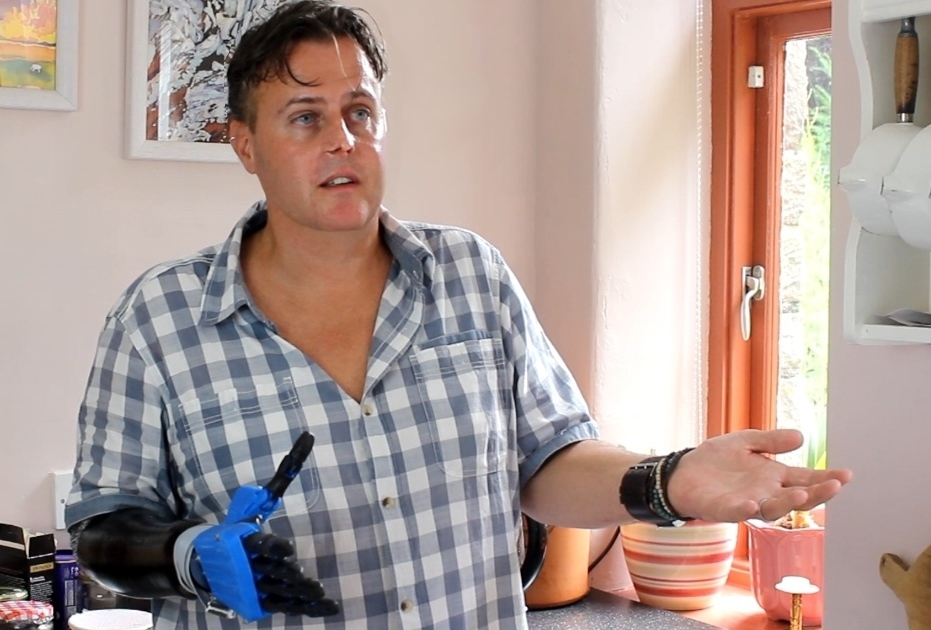
Already, the prosthesis was tested out by a chef named Liam Corbett, who lost his hand to meningitis two years ago and contacted Gibbard via Facebook when he heard about the Open Hand Project. According to Corbett, he was very impressed with the device and said that:

I think it’s certainly going to enable me to do the finer things in life which I certainly haven’t been able to do with a hook… I would be proud to wear this, it would make me feel more confident.

open_hand1Gibbard hopes to refine the design to cut down on the electrical noise it produces, and to develop specialized software to configure the electrodes to simplify the calibration process. Back in September, he opened up a crowdfunding campaign with Indiegogo to raise the necessary money. As of writing this article, he has surpassed his goal of £39,000 and raised a total of £41,065.

However, there is still four days left before the campaign closes. So if you want to donate, thus enabling GIbbard and his colleagues to refine the design further, simply click here and follow the prompts. And be sure to check out the Indiegogo video to see how the hand works:


Sources: wired.co.uk, indiegogo.com

The Future is Here: Carbon Nanotube Computers

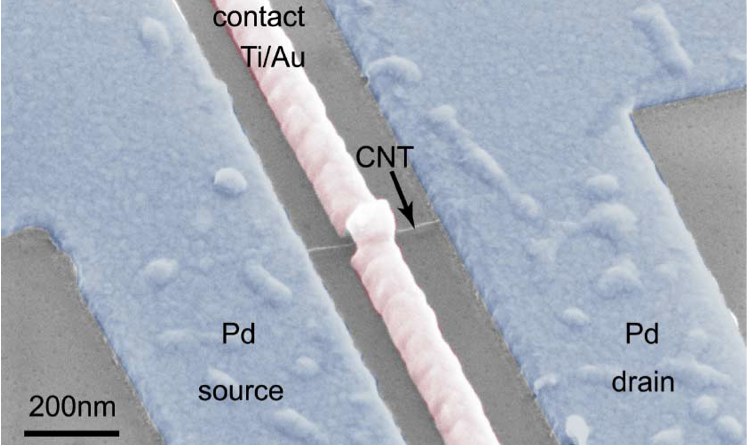
carbon-nanotubeSilicon Valley is undergoing a major shift, one which may require it to rethink its name. This is thanks in no small part to the efforts of a team based at Stanford that is seeking to create the first basic computer built around carbon nanotubes rather than silicon chips. In addition to changing how computers are built, this is likely to extend the efficiency and performance.

What’s more, this change may deal a serious blow to the law of computing known as Moore’s Law. For decades now, the exponential acceleration of technology – which has taken us from room-size computers run by punched paper cards to handheld devices with far more computing power – has depended the ability to place more and more transistors onto an individual chip.

PPTMooresLawaiThe result of this ongoing trend in miniaturization has been devices that are becoming smaller, more powerful, and cheaper. The law used to describe this – though “basic rule” would be a more apt description – states that the number of transistors on a chip has been doubling every 18 months or so since the dawn of the information age. This is what is known as “Moore’s Law.”

However, this trend could be coming to an end, mainly because its becoming increasingly difficult, expensive and inefficient to keep jamming more tiny transistors on a chip. In addition, there are the inevitable physical limitations involved, as miniaturization can only go on for so long before its becomes unfeasible.

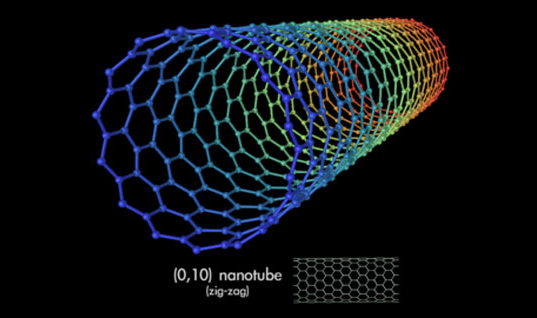
carbon_nanotubecomputerCarbon nanotubes, which are long chains of carbon atoms thousands of times thinner than a human hair, have the potential to be more energy-efficient and outperform computers made with silicon components. Using a technique that involved “burning” off and weeding out imperfections with an algorithm from the nanotube matrix, the team built a very basic computer with 178 transistors that can do tasks like counting and number sorting.

In a recent release from the university, Stanford professor Subhasish Mitra said:

People have been talking about a new era of carbon nanotube electronics moving beyond silicon. But there have been few demonstrations of complete digital systems using this exciting technology. Here is the proof.

Naturally, this computer is more of a proof of concept than a working prototype. There are still a number of problems with the idea, such as the fact that nanotubes don’t always grow in straight lines and cannot always “switch off” like a regular transistor. The Stanford team’s computer’s also has limited power due to the limited facilities they had to work with, which did not have access to industrial fabrication tools.

carbon_nanotube2All told, their computer is only about as powerful as an Intel 4004, the first single-chip silicon microprocessor that was released in 1971. But given time, we can expect more sophisticated designs to emerge, especially if design teams have access to top of the line facilities to build prototypes.

And this research team is hardly alone in this regard. Last year, Silicon Valley giant IBM managed to create their own transistors using carbon nanotubes and also found that they outperformed the transistors made of silicon. What’s more, these transistors measured less than ten nanometers across, and were able to operated using very low voltage.

carbon_nanotube_transistorSimilarly, a research team from Northwestern University in Evanston, Illinois managed to create something very similar. In their case, this consisted of a logic gate – the fundamental circuit that all integrated circuits are based on – using carbon nanotubes to create transistors that operate in a CMOS-like architecture. And much like IBM and the Standford team’s transistors, it functioned at very low power levels.

What this demonstrated is that carbon nanotube transistors and other computer components are not only feasible, but are able to outperform transistors many times their size while using a fraction of the power. Hence, it is probably only a matter of time before a fully-functional computer is built – using carbon nanotube components – that will supersede silicon systems and throw Moore’s Law out the window.

Sources: news.cnet.com, (2), fastcolabs.com

The Future of Medicine: Anti-Bleeding Clamps

itclamp2For centuries, medics have been forced to deal with cuts and lacerations by simply binding up wounds with bandages and wraps. Time has led to refinements in this process, replacing cloth with sterile bandages. But the basic process has remained the same. But now, severe cuts and bleeding have a new enemy, thanks to a new breed of clamping devices.

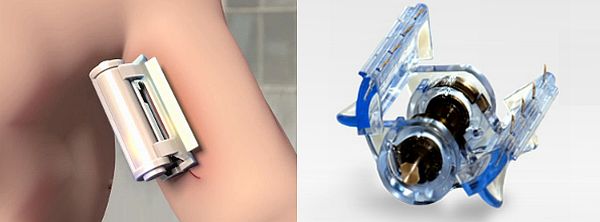
One such device is the iTClamp Hemmorage Control System, which won an award for top innovation in 2012 and was recently approved by the FDA. Basically, this clamp is placed over an open wound and then controls bleeding by sealing the edges shut to temporarily create a pool of blood under pressure and thereby form a clot that helps reduce more blood loss until surgery.

itclampThis past summer, the clamp got its first field test on a man who fell prey to a chainsaw wound on his upper arm just outside of Olive Branch, Mississippi. The hospital air crew who arrived on scene quickly determined that a tourniquet would not work, but were able to stop the bleeding and stabilize the patient within minutes, at which point they transported him to the Regional Medical Center of Memphis.

The clamp was invented by Dennis Filips, who served three tours in Afghanistan as a trauma surgeon for the Canadian Navy. With the saving of a life in the US, he has watched what began as an idea turn into a dream come true:

To have our first human use in the US turn out so well is thrilling, and we look forward to getting the iTClamp into the hands of first responders across the country and around the world.

ITClamp3The clamp is currently being sold for around $100 via various distributors across the US, and it’s available in Canada and Europe as well. At that price it could very well end up being adopted not only by first responders, but climbers and other adventurers looking to beef up their first-aid kits — and maybe the cautious chainsaw wielders among us as well.

And be sure to check out this video simulation of the iTClamp in action:


Sources: news.cnet.com, theepochtimes.com

Dead in Space: Government Shutdown, NASA and Mars

marsAs the government shutdown goes into its second week, there is growing concern over how it is affecting crucial programs and services. And its certainly no secret that a number of federally-funded organizations are worried about how it will affect their long term goals. One such organization is NASA, who has seen much of its operations frozen while the US government attempts to work out its differences.

In addition to 97% of NASA’s 18,000 employees being off the job, its social media accounts and website going dark, and its television channel being shut down, activities ranging from commercial crew payouts, conferences, and awards and scholarship approvals are all being delayed as well. Luckily, certain exemptions are being made when it comes to crucial work on Mars.

NASA_mavenThese include the Mars Atmosphere and Volatile EvolutioN (MAVEN) orbiter. Following two days of complete work stoppage, technicians working on the orbiter were granted an exemption and permitted to continue prepping it for launch. And not a moment too soon, seeing as how a continued shutdown would have caused the orbiter to miss its crucial launch window.

Designed to survey the Martian atmosphere while orbiting the planet, NASA hopes that MAVEN will provide some clues as to what became of the planet’s onetime atmosphere. MAVEN was been scheduled to blast off for the Red Planet on Nov.18 atop an Atlas V rocket from the Florida Space Coast until those plans were derailed by the start of the government shutdown that began at midnight, Oct. 1.

But as Prof. Bruce Jakosky, MAVEN’s chief scientist, stated in an interview just two days later:

We have already restarted spacecraft processing at the Kennedy Space Center (KSC) today. [Today, we] determined that MAVEN meets the requirements allowing an emergency exception relative to the Anti-Deficiency Act.

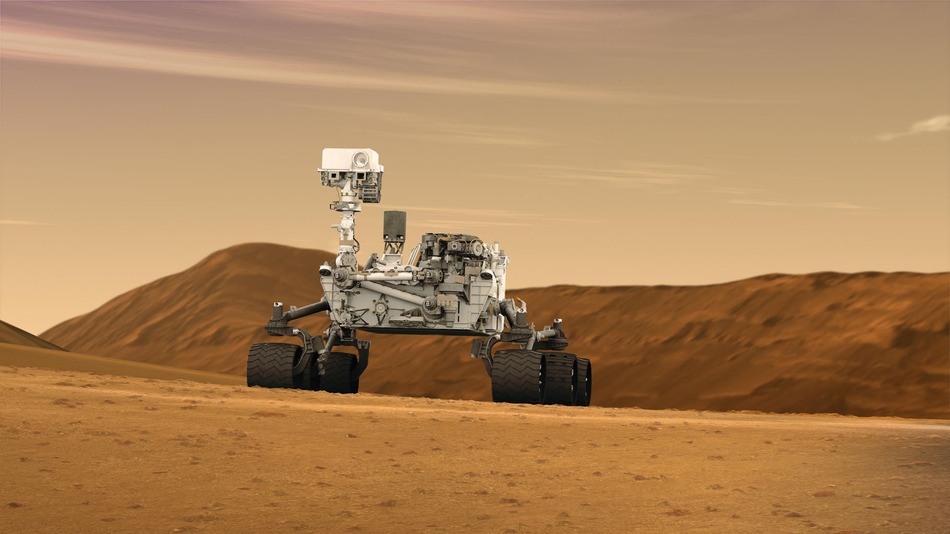
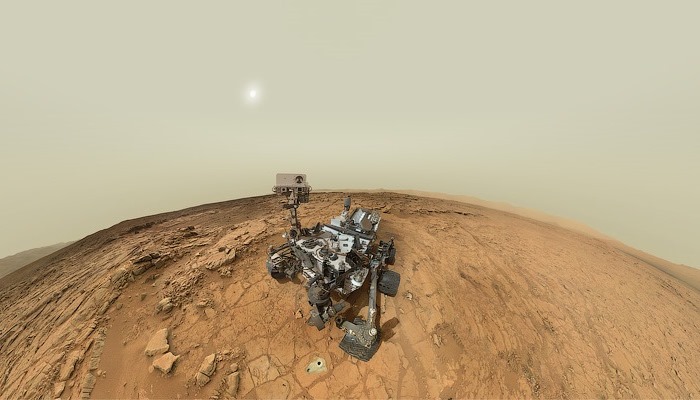
Curiosity-roverAnother merciful exception to the shutdown has been the Curiosity Rover. Since contract workers at NASA’s Jet Propulsion Laboratory (JPL) oversee the rover’s mission, the Curiosity team is not subject to the same furloughs as other NASA employees. At JPL, the technicians and workers at the lab are employed by the California Institute of Technology, and are therefore able to keep the mission going.

However, the management at JPL and Cal Tech will continue to assess the situation on a weekly basis, and it’s possible the team may not remain completely intact in the event of a prolonged shutdown. This would be particularly detrimental for Curiosity since the Mars rover requires daily maintenance by scientists, engineers and programmers and cannot run on autopilot.

curiosity_sol-177-1As Veronica McGregor, a media relations manager at JPL, said in a recent interview:

Right now, things continue on as normal. Curiosity is one where they literally look at the data each day, sit down, create a plan, decide what science instrument is going to be used tomorrow, they write software for it and upload it. [It’s] is kind of a unique mission in that way.

Other programs running out JPL will also continue. These include the Opportunity and Odyssey rovers, the Mars Reconnaissance Orbiter, the HiRISE camera, Dawn, Juno, and Spitzer space probes, and the Voyager satellites, APL, MESSENGER, and New Horizons.  In addition, operations aboard the International Space Station will continue, but with the bare minimum of ground crew support.

cassini_spaceprobeRobotic missions that are already in operation – such as the Cassini spacecraft circling Saturn, or the Lunar Atmosphere and Dust Environment Explorer (LADEE) winging its way to the moon – will have small crews making sure that they are functioning properly. However, no scientific analysis will be conducted during the shutdown period.

As the shutdown continues, updates on which programs are still in operation, which ones will need to be discontinued, and how they will be affected will continue to be made available. One can only hope the politically-inspired deadlock will not become a prolonged affair. It’s not just current programs that are being affected after all.

Consider the proposed 2030 manned mission to Mars, or the plans to tow an asteroid closer to Earth. I can’t imagine how awful it would be if they were delayed or mothballed due to budget constraints. Politics… bah!

Sources: universetoday.com, (2), mashable.com

News From Space: XS-1 Reusable Spacecraft

sx-1_spaceplaneWhen it comes to the future of space exploration, the ongoing challenge has been to find a way to bring down the costs associated with getting things into orbit. In recent years, a number of solutions have been presented, many of which have been proposed by private companies like SpaceX and Reaction Engines. Not to be outdone, the US government has its own proposal, known as the XS-1.

Developed by DARPA, the XS-1 is the latest in a string of designs for a reusable spacecraft that would be capable of taking off and landing from an airfield. But unlike its predecessors, this craft would be a two-stage craft that has no pilot and is controlled much like a drone. By combining these two innovations, DARPA foresees an age where a “one day turnaround,” or daily launches into space, would be possible.

skylon-orbit-reaction-enginesBasically, the XS-1 will work as a two-stage flyer, beginning as a regular high-altitude drone meant to fly as high as possible and reach hypersonic speed. Once this has been achieved, the payload will separate along with an expendable launch system with a small tank of rocket fuel which will then be automatically delivered to its final destination. The plane, meanwhile, will automatically return to base and begin prep for the next day’s mission.

In addition to being cheaper than rockets and space shuttles, an XS-1 space plane would also be much faster than NASA’s now-retired STS shuttles. Much like Reaction Engines Skylon concept, the ship is designed for hypersonic speeds, in this case up to Mach 10. While this might sound incredibly ambitious, NASA has already managed to achieve a top speed of Mach 9.8 with their X-43A experimental craft back in 2004 (albeit only for ten seconds).

x-43a The XS-1′s payload capacity should be around 2300 kilograms (5000 pounds) per mission, and DARPA estimates that a single launch would cost under $5 million. Currently, it costs about $20,000 to place a single kilo (2.2lbs) into geostationary orbit (GSO), and about half that for low-Earth orbit (LEO). So while DARPA’s requirements are certainly stringent, they would cut costs by a factor of ten and is within the realm of possibility.

As it stands, all ideas being forth are centered around reinventing the rocket to make launches cheaper. When it comes to long-term solutions, grander concepts like the space elevator, the slingatron, or space penetrators may become the norm. Regardless, many of the world’s greatest intellectual collectives have set their sights on finding a more affordable path into space. These advanced launch jets are just the first step of many.

Sources: extremetech.com, news.cnet.com

News From Space: 3-D Printed Spacecraft

3D_spaceprinting13D-Printing has led to many breakthroughs in the manufacturing industry in recent years. From its humble beginnings assembling models out of ABS plastic, the technology has been growing by leaps and bounds, with everything from construction and food printing to bioprinting becoming available. And as it happens, another major application is being developed by a private company that wants to bring the technology into orbit.

It’s called SpiderFab, a system of technologies that incorporates 3-D printing and robotic assembly to create  “on-orbit” structures and spaceship components (such as apertures, solar arrays, and shrouds). Developed by tech firm Tethers Unlimited, Inc. (TUI), the project is now in its second phase and recently landed a $500,000 development contract from NASA.

spiderfabOne of the greatest challenges of space exploration is the fact that all the technology must first be manufactured on Earth and then shuttled into orbit aboard a rocket or a shroud. The heavier the cargo, the larger the rocket needs to be. Hence, any major undertaking is likely to have a massive price tag attached to it. But by relocating the manufacturing process to a place on-site, aka. in orbit, the entire process will be much cheaper.

Towards this end, the SpiderFab, incorporates two major innovations in terms of transportation and manufacture. The first makes it possible to pack and launch raw materials, like spools of printable polymer, in a cost-effective way using smaller rockets. The second uses patented robotic fabrication systems that will process that material and aggregate it into structural arrangements.

3D_spaceprintingDr. Rob Hoyt, CEO of TUI, had this to say of his company’s brainchild in a recent interview with Co.Design:

SpiderFab is certainly an unconventional approach to creating space systems, and it will enable significant improvements for a wide range of missions.

The unorthodox system is also a solution to the problem that Hoyt began working on two decades ago when he first began working with NASA. While there, he experimented with on-orbit fabrication as a concept, but was limited due to the fact that there were no means available to make it reality. However, once 3-D printing became mainstream, he seized the opportunity presented. As he explains:

I didn’t strike on anything dramatically better than [previous investigations] until about six years ago, when additive manufacturing was really starting to take off. I realized that those techniques could be evolved to enable some dramatic improvements in what we can build in space.

spiderfab3At present, TUI is working on several different models of what the SpiderFab will eventually look like. The first of these is known as the Trusselator, one of many building blocks that will form the factory responsible for producing spacecraft components. The Trusselator is designed to print high-performance truss elements, while another, the Spinneret, will use 3-D printing-like techniques to connect and fuse together clusters of trusses.

Hoyt says that the TUI team will be further testing these processes in the next couple of months, first in the lab and then in a thermal-vacuum chamber. He hopes, however, that they will be able to conduct an on-orbit demonstration of SpiderFab a few years down the line. And with any luck, and more funding, NASA and other agencies may just convert their production process over to orbital 3-D printing facilities.

Alongside concepts like the SpaceX Grasshopper reusable rocket and reusable space craft, 3-D space printing is yet another revolutionary idea that is likely to bring the astronomical (no pun!) costs of space exploration down considerably. With affordability will come growth; and with growth, greater exploration will follow…

Star-Trek-universe

Sources: fastcodesign.com, tethers.com

Ending World Hunger: Insect-Based “Power Flour”

insect_flourIt has long been understood that if we, as a species, are going to deal with overpopulation and hunger, we need take a serious look at our current methods of food production. Not only are a good many of our practices unsustainable – monoculture, ranching, and overuse of chemical fertilizers being foremost amongst them – it is fast becoming clear that alternatives exist that are more environmentally friendly and more nutritious.

However, embracing a lot of these alternatives means rethinking our attitudes to what constitutes food. All told, there are millions of available sources of protein and carbohydrates that aren’t being considered simply because they seem unappetizing or unconventional. Luckily, researchers are working hard to find ways to tackle this problem and utilize these new sources of nutrition.

HULT-PRIZE-large570One such group is a team of McGill University MBA students who started the Aspire Food Group, an organization that will produce nutritious insect-based food products that will be accessible year-round to some of the world’s poorest city dwellers. Recently, this group won the $1 million Hult Prize for the development of an insect-infused flour that offers all the benefits of red meat – high protein and iron – but at a fraction of the cost.

The team – which consists of Mohammed Ashour, Shobhita Soor, Jesse Pearlstein, Zev Thompson and Gabe Mott – were presented with the social entrepreneurship award and $1 million in seed capital back in late September. The presentation was made by former U.S. president Bill Clinton in New York City at the Clinton Global Initiative’s annual meeting.

world_hungerThe Hult Prize Foundation runs an annual contest open to teams of four or five students from colleges and universities from around the world. Their task is to develop ideas for social enterprises – organizations that use market-based strategies to tackle social or environmental problems. This year’s challenge, selected by Clinton, was to tackle world hunger.

Over 10,000 students entered, and the McGill team was one of six which reached the final stage, where they pitched their idea Monday to judges that included Clinton, Nobel Peace Prize laureate Muhammad Yunus and Erathrin Cousin, CEO of the World Food Program. The $1 million was provided by the family of the Swedish billionaire Bertil Hult, who made his fortune with the venerable EF Education First company.

insect_flour1Mohammed Ashour explained the process behind the insect flour in an interview to CBC News:

We are farming insects and we’re grinding them into a fine powder and then we’re mixing it with locally appropriate flour to create what we call power flour. It is essentially flour that is fortified with protein and iron obtained from locally appropriate insects.

What is especially noteworthy about the product, aside from its sustainability, is the fact that it delivers plenty of protein and iron in an inexpensive package. These nutrients, the team noted, are in short supply in the diets of many people in developing nations, but can be found in high amounts in insects. For example, they note, crickets have a higher protein content per weight than beef.

???????????????????????????????And while the idea of eating insects might seem unappealing to many people living in the developed world, Soor pointed out that people in many of the countries they are targeting already eat insects. In addition, the type of insect used to produce the flour for a local market would be chosen based on local culinary preferences. As she put it:

There really isn’t a ‘yuck’ factor. For example, in Mexico, we’d go with the grasshopper. In Ghana, we’d go with the palm weevil.

The insects would also be mixed with the most common type of local flour, whether it be made from corn, cassava, wheat or something else. Thus, the product would not only provide nutrition, but would be locally sourced to ensure that it is accessible and beneficial to the local market.

Developed-and-developing-countriesIn addition, the team has already held taste tests in some markets. In one test, they offered people tortillas made from regular corn flour, corn flour containing 10 per cent cricket flour and corn flour containing 30 per cent cricket flour. As Ashour indicated, the reviews were met with approval:

Amazingly enough, we got raving reviews for the latter two… so it turns out that people either find it to be tasting neutral or even better than products that are made with traditional corn flour.

The team hopes to use the prize money to help them expand the reach of their organization to the over 20 million people living in urban slums around the world by 2018. And I can easily foresee how flours like this one could become a viable item when teamed up with 3D food printers, tailoring edible products that meet our nutritional needs without putting undue strain on the local environment.

And be sure to enjoy this video of the McGill students and their prize-winning flour, courtesy of CBC news:


Source: cbc.ca

Papa Zulu’s Cover Selection…

zombies-city-and-the-crowdHey all! Its been a busy season thus far, and after many months of slow progress, the editing process for Papa Zulu is just about over. Which means its time for me to start picking out cover designs! Recently, I tinkered with the write-up and then added some of the more recent reviews (these would be the five star ones I’ve been going on and one about lately!). Here’s how it reads:

“Men rise from one ambition to another: first, they seek to secure themselves against attack, and then they attack others.”

Niccolo Machiavelli

In the barren deserts of New Mexico, the war against the Whiskey Delta continues. After years of fighting, the “Mage” and his Rattlesnakes have managed to get the upper hand on the undead, while back at their base, “Doc” Ross Cooper and his team are getting close to producing a vaccine from the Patient Zero strain. But things quickly change when a new opponent enters the arena. Ever since their encounter with rogue forces in LA, the Mage has worried that there are military forces back East, people who owe allegiance to another master and want the Patient Zero strain for themselves…

Praise for Whiskey Delta:
“This was an excellent book from start to finish.” -K.C. Williams

“Great story about soldiers doing solider business.” -John

“This was an absolutely fantastic read. Highly recommend for any fan of the zombie genre.” -Britanny

“This is a badass Zombie book.” -Kellie H.

“I could not put Whiskey Delta down till the end.” – W.M. Morgan

“This book is for all those zombie fans out there!” -The Pragmatic Procrastinator

As for the design itself, I’m a little torn between two contenders. For awhile now, I’ve been working with one that boasts olive borders, orange font, black background, and the photo of a soldier firing tracers into the night. That would be this one:

Pappa_Zulu2But recently I came upon another cool photo and began designing a new cover around it. Much like the other one, it’s an army stock photo, but this one shows a group of soldiers conducting live fire drills during the night. Using high-speed photo, it looks like an eye=popping laser show. Now here’s what that design looks like:

Pappa_Zulu3

What I also like about this one is the way the photo is watermarked into the background. The red tracers are really quite impressive, and the orange font still seems to work since there are traces of orange here too. But dangit if that black and olive pattern from the first one doesn’t still seem totally appropriate, not to mention the way the orange font and black background just blend with the photo!

So I’ve decided to crowdsource this one with a poll. Which shall it be? Cast your vote and help me determine what the sequel to Whiskey Delta is going to look like.

Winning Ideas: The Bodyheat Powered Flashlight!

body_heat_flashlightEvery year, IT giant Google holds an online competition open to students aged 13-18 from around the globe to come up with new and challenging scientific ideas. And this year, one the winners just happens to hail from my hometown of Victoria, British Columbia. Her name is Ann Makosinki, a 15 year old high school student who invented a way to power a flashlight using only the warmth of your hand.

She claimed a trophy made of Lego for the 15-16 age category at an awards gala that was held on Monday, Sept. 23rd. Her prizes were a $25,000 scholarship and a “once-in-a-lifetime experience” from either CERN (the European Organization for Nuclear Research), LEGO or Google. Quite the impressive accomplishment for a 11th grader, but then again, Makosinki has been a scientist at heart ever since she was a little kid.

google-science-fair-winners-2013For starters, when other children were playing with toy cars and dolls, she busied herself with transistors and microcircuits. What’s more, by Grade 6, she began submitting projects to science fairs and began showing an interest in alternative energy. Still, Makosinki was surprised to be getting an award, given her competition. As she said:

I’m in shock, I’m in shock. It’s actually kind of embarrassing because I didn’t even change [before the awards ceremony]. I didn’t even comb my hair or anything. I must have looked like an absolute mess on stage because I didn’t expect to go up at all.

As for the invention itself, it is easy to see why she won. Basically, it is an LED flashlight that relies on the thermoelectric effect to generate electricity when held. This is done through a series of devices that are known as Peltier tiles, which produce electricity when heated on one side and cooled on the other. The tiles are fixed to the outside of the flashlight while the tube itself is hollow.

peltier-figure-9When held one side of the Peltier tiles are heated by the warmth of the person’s hand, air flowing through the hollow tube helps keep the other side cool. This combination of body heat and air cooling allows enough power to be generated to maintain a steady beam of light for 20 minutes. And all without the need for batteries and the resulting ewaste when they go dead.

Makosinki came up with the idea while researching different forms of alternative energy a few years ago. Already, she had experimented with Peltier tiles for her Grade 7 science fair project. While researching her project, she thought of them again as a way to potentially capture the thermal energy produced by the human body. After doing some calculations, she found that the amount of energy produced by a person’s hand was theoretically sufficient to power an LED light.

ann_makosinksiHowever, putting it into practice proved somewhat more difficult. After buying some Peltier tiles on eBay, she tested them and found that while they generated more than enough power, the voltage produced was only a fraction of what she needed. She rectified this problem after doing some further research, where she discovered that the addition of transformers could be used to boost the voltage.

She spent months doing research on the internet, experimenting with different circuits and even building her own transformers, which still didn’t provide enough voltage. In the end, she came across an article on the web about energy harvesting that suggested an affordable circuit that would provide the voltage she needed when used with a recommended transformer. Finally, the circuit worked.

ann_makosinksi1Makosinski admitted there were points in the experiment when she thought it would never work. But as she said:

You just kind of have to keep going. This took quite awhile ’cause I had to do it during the school year as well and I had homework, plays, whatever that I was also doing.

After making it to the Google Science Fair, she and her colleagues spent the day presenting at Google’s headquarters in Mountain View, California. Here, the 15 judges – which included scientists from a variety of fields, science journalists, an astronaut, and a former Google Science Fair winner – witnessed their creations and tried to determine which held the most promise.

The other winners included Viney Kumar, an Australia student who captured the 13-14 age category for an Android app that warns drivers of an approaching emergency vehicle more than a minute in advance, in order to help clear a path for it. And then there was Elif Bilgin of Turkey, a 16-year old who took home the Scientific American Science in Action Prize and the Voter’s Choice Award for inventing a way to make plastic from banana peels.

Ann-Makosinski-Google-Science-Fair-2The Grand Prize for the 17-18 age category went to Eric Chen, a 17 year old student from San Diego who is researching a new kind of anti-flu medicine using a combination of computer modelling and biological studies. He received the top prize of a $50,000 scholarship and a 10-day trip to the Galapagos Islands.

Alas, Makosinki felt the best part of the competition was getting to meet the other finalists in person at last.

It’s just so inspiring to see other people who are kind of like me and kind of want to make a difference in the community not just by talking about it but by actually doing stuff.

What’s next for the young inventor? Personally, I hope Makosinki and her fellow prize winners will be forming their own research group and looking for new and exciting ways to come up with renewable energy, recycling, vaccinations, and electronics. What do you think Makonsinky, Kumar, Bilgin, Chen? That’s what Andraka and his fellow finalists did after winning ISEF 2012, and they seem to be doing pretty good. So… hintedy, hint hint!

And be sure to enjoy this video of Ann Makosinki showing off her invention, courtesy of Technexo:


Sources:
cbc.ca, (2), gizmag.com, technexo.com, huffingtonpost.ca

Powered by the Sun: New Film Increases Solar Efficiency

sun_magneticfieldWith every passing year, solar power is getting cheaper and more efficient. And with every development that brings costs down and increases electrical yields, the day that it comes to replace fossil fuels and coal as the primary means of meeting our power needs gets that much closer. And with this latest development, this changeover may be coming sooner than expected.

It comes from North Carolina State University where researchers have developed a new system for strengthening the connections between stacked solar cells which could allow cells to operate at concentrations of up to 70,000 suns while minimizing wasted energy. This is especially good news seeing as how stacked cells are already an improvement over conventional solar cells.solar_panelStacked solar cells are made up of several cells that are placed one on top of the other, an arrangement that allows up to 45 percent of the absorbed solar energy to be converted into electricity. This is a significant improvement over single-junction solar cells which have a theoretical maximum conversion rate of 33.7 percent, and is made possible by the fact a stack formation prevents heat from being lost between panels.

The team at NCSU discovered that by inserting a very thin film layer of gallium arsenide into the connecting junction of stacked cells, they can eliminate energy loss ever further. The idea was inspired by the fact that cells typically start to break down at the connection junctions once they reach concentrations of 700 suns. With the addition of gallium arsenide in these spots, the connections become stronger, and all without sacrificing absorption.

solar_cell1Dr. Salah Bedair, a professor of electrical engineering at NCSU and senior author of the paper on this research:

Now we have created a connecting junction that loses almost no voltage, even when the stacked solar cell is exposed to 70,000 suns of solar energy. And that is more than sufficient for practical purposes, since concentrating lenses are unlikely to create more than 4,000 or 5,000 suns worth of energy.

At the moment, this technology is geared towards large scale solar power operations. Stacked cells are usually used in conjunction with optical concentration devices, such as Fresnel lenses, and mounted on a dual-axis solar trackers that keep the cell facing the Sun’s rays during daylight. So basically, we’re not likely to be seeing this technology available for local use. But it would be surprising if domestic consumers weren’t likely to benefit from it all the same.

solar_cell_galliumAs Dr. Bedair explained, the adoption of the technology will mean lower costs for the energy industry, and smaller arrays which will mean less land that needs to be set aside for use:

This [system] should reduce overall costs for the energy industry because, rather than creating large, expensive solar cells, you can use much smaller cells that produce just as much electricity by absorbing intensified solar energy from concentrating lenses. And concentrating lenses are relatively inexpensive.

What’s more, gallium arsenide is not exactly cheap to produce at the time. However, with constant refinements being made in industrial production processes, we can expect the cost of these to come down as well. As with everything else with solar power and renewable energy, its only a matter of time…

Source: gizmag.com