The Worlds First Brain to Brain Interface!

Brain-ScanIt finally happened! It seems like only yesterday, I was talking about the limitations of Brain to Brain Interfacing (BBI), and how it was still limited to taking place between rats and between a human and a rat. Actually, it was two days ago, but the point remains. In spite of that, after only a few months of ongoing research, scientists have finally performed the first human-to-human interface.

Using a Skype connection, Rajesh Rao, who studies computational neuroscience at the University of Washington, successfully used his mind to control the hand of his colleague, Andrea Stucco. The experiment was conducted on Aug. 12th, less than month after researchers at Harvard used a non-invasive technique and a though to control the movement of a rat’s tail.

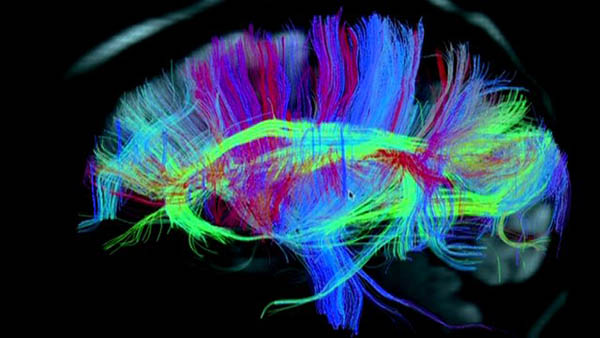
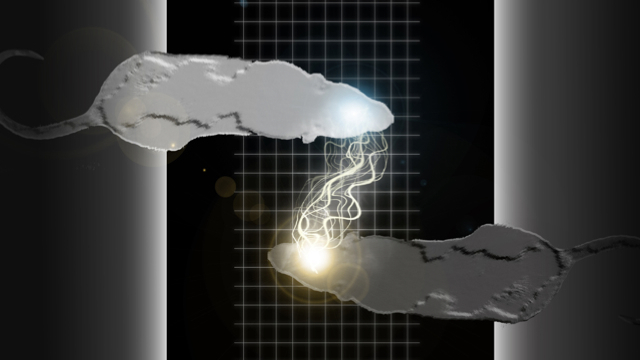
brain-to-brain-interfacingThis operation was quite simple: In his laboratory, Rao put on a skull cap containing electrodes which was connected to an electroencephalography (EEG) machine. These electrodes read his brainwaves and transmitted them across campus to Stocco who, seated in a separate lab, was equipped with a cap that was hooked up to a transcranial magnetic stimulation (TMS) machine.

This machine activating a magnetic stimulation coil that was integrated into the cap directly above Stocco’s left motor cortex, the part of the brain that controls movements of the hands. Back in Rao’s lab, he watched a screen displaying a video game, in which the player must tap the spacebar in order to shoot down a rocket; while  in Stocco’s lab. the computer was linked to that same game.

braininterfacing-0Instead of tapping the bar, however, Rao merely visualized himself doing so. The EEG detected the electrical impulse associated with that imagined movement, and proceeded to send a signal – via the Skype connection – to the TMS in Stocco’s lab. This caused the coil in Stocco’s cap to stimulate his left motor cortex, which in turn made his right hand move.

Given that his finger was already resting over the spacebar on his computer, this caused a cannon to fire in the game, successfully shooting down the rocket. He compared the feeling to that of a nervous tic. And to ensure that there was no chance of any outside influence, the Skype feeds were not visible to each other, and Stucco wore noise cancelling headphones and ear buds.

brain-activityIn the course of being interviewed, Rao was also quick to state that the technology couldn’t be used to read another person’s mind, or to make them do things without their willing participation. The researchers now hope to establish two-way communications between participants’ brains, as the video game experiment just utilized one-way communication.

Additionally, they would like to transmit more complex packets of information between brains, things beyond simple gestures. Ultimately, they hope that the technology could be used for things like allowing non-pilots to land planes in emergency situations, or letting disabled people transmit their needs to caregivers. And in time, the technology might even be upgraded to involve wireless implants.

brainpainting-brain-computer-interfaces-2One thing that should be emphasized here is the issue of consent. In this study, both men were willing participants, and it is certain that any future experimentation will involve people willingly accepting information back and forth. The same goes for commands, which theoretically could only occur between people willing to be linked to one another.

However, that doesn’t preclude that such links couldn’t one day be hacked, which would necessitate that anyone who chose to equip themselves with neural implants and uplinks also get their hands on protection and anti-hacking software. But that’s an issue for another age, and no doubt some future crime drama! Dick Wolf, you should be paying me for all the suggestions I’m giving you!

And of course, there’s a video of the experiment, courtesy of the University of Washington. Behold and be impressed, and maybe even a little afraid for the future:


Source:
gizmag.com

Cities of the Future: Building with Bacteria

bio-building1Since the beginning of civilization, building hasn’t evolved much. In fact, archaeological digs show that between the Early Paleolithic and today, construction has moved at a snail’s pace. And while change has certainly sped up within the past few centuries – with mud and stone giving way to bricks and cement and thatch and wood giving way to steel and shingles –  the fundamental techniques and concepts remain largely unchanged.

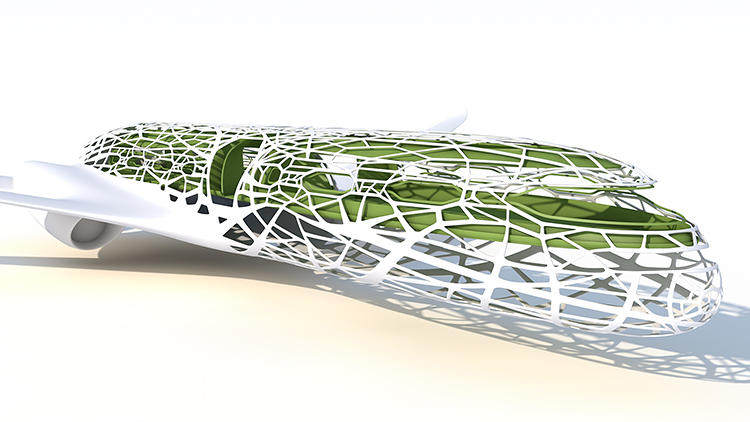
However, a radical shift may soon be underway where traditional factories will give way to biological ones, and the processing of raw materials using hands and tools will be replaced by an active collaboration between human architects and cells specifically programmed to create building materials. In this new age, biology, rather than machining, will be the determining factor and buildings will be grown, not assembled.

the-livingAlready, biological processes have been used to manufacture medicine and biofuels. But the more robust materials for everyday life – like roofs, beams, floor panels, etc – are still the domain of factories. However, thanks to researchers like David Benjamin – a computational architect, professor at Columbia University, and the principal of the The Living (a New York architectural practice).

The purpose of The Living’s research is to redirect and engineer biological processes and then capture them using computational models. The end result is what is known as “human-cell collaboration”, where humans specify the shape and properties of a desired material and computers translate them into biological models. Patterned “sheets” of bacterial cells are then grown in the lab, determining the final design based on what was encoded in the DNA.

bio-buildingEmerging software, says Benjamin, will soon allow architects to create multi-material objects in a computer, translate these into biological models, and let biology finish the job. This will be done in laboratories, growing them under carefully engineered conditions, or tweaking the DNA to achieve precisely the right result before deploying them to build.

At the moment, Benjamin and his colleagues are working with plant cells known as xylem – the long hollow tubes that transport water in plants. These are being designed as computer models and grown in a Cambridge University lab in conjunction with various species of engineered bacteria. In addition, they are working with sheets of calcium and cellulose, seeking to create structures that will be strong, flexible, and filigreed.

And of course, Benjamin and The Living are hardly alone in their endeavors. Living Foundries Program, for example, is a a Department of Defense initiative that is hoping to hasten the developmental process and create an emergent bio-industry that would create “on-demand” production and shave decades and millions of dollars off the development process.bio-building2Naturally, the process is far from perfect, and could take another decade to become commercially viable. But this is a relatively short time frame given the revolutionary implications. This, in turn, may open up what the former U.S. energy secretary Stephen Chu has called the “glucose economy,” an economic system powered largely by plant-derived sugars grown in tropical countries and shipped around the world, much as we do with petroleum today.

Once factories switch to sugar as a primary energy source, and precisely engineered bacteria become the means of manufacture, the model of human civilization may flip from one powered by fossil fuels to one running largely on biologically captured sunlight. It’s one of the hallmarks of the future, where programmed biology is used to merge the synthetic with the biological and create a “best of both worlds scenario”.

In the meantime, check out this conceptual video by one of Benjamin’s collaborators about the future of bio-building. And be sure to check out some of the The Living’s other projects by clicking here.


Sources: fastcoexist.com, thelivingnewyork.com

The Future is Here: The Electric Highway!

electric_carCharging electronic vehicles while they on the move is not a new idea. In fact, in Vancouver, BC, the entire public transit system runs on a series of electronic lines that power the buses. And in French cities, the entire tram system runs on a wireless system, one which is six million kilometers in length. In the former case, the buses are kept in contact with power lines overhead, while the latter uses metal bars running underneath.

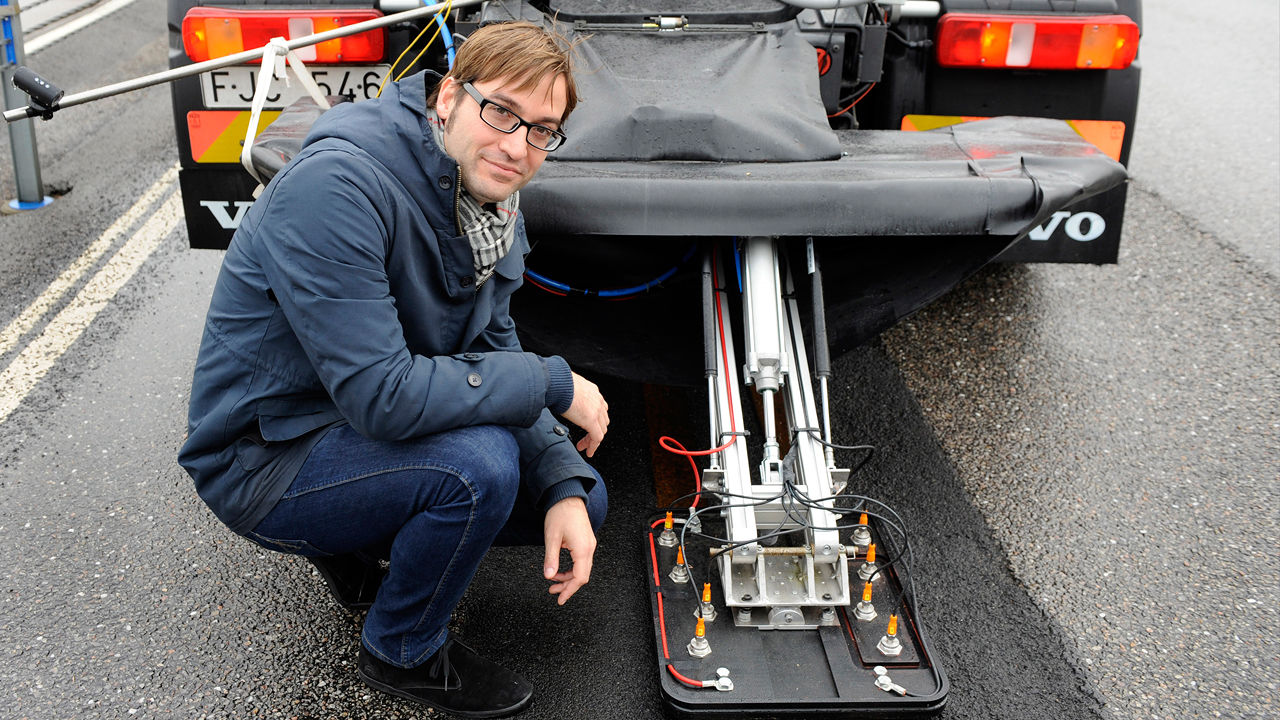
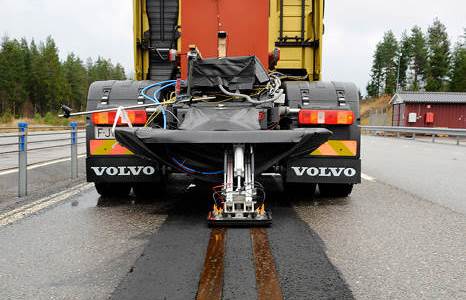
Applying the same concept, Volvo has designed a new highway system in Sweden that will keep electric cars running on long-distance trips. Led by Mats Alaküla, researchers are looking at these types of “conductive charging,” both where vehicles would stay in continuous contact with the power supply. Both methods are being tested on the new system, which consists of a 400-meter track near Gothenburg.

volvo_highwayBehind the research is the assumption that an electric car’s batteries will not provide the required range for long-distance driving, especially where long-haul trucks are concerned. City driving is one thing, but in order for electric vehicles to expand beyond urban centers, bigger and better methods need to be devised.

Alaküla says the important part of the second system is “the pick-up” – i.e. the connector between the vehicle and the ground. Unlike trams that stay in a fixed position, this line needs to be able to compensate for cars and trucks changing lanes. He describes the set-up as an “industrial robot sitting upside down”, though it more akin to a robotic arm.

volvo_highway1The arm moves a meter each way to compensate for movement within the lane, and retracts when the driver changes lanes, redeploying once they’ve back on the track. As Alaküla describes it:

If you imagine two lanes, the power system would be in the right lane. The pick-up keeps in contact with the supply, until you keep moving sideways. Then, the truck will go to the battery. When you go back, it automatically identifies the track, and reconnects.

And for those who worry that electric tracks are going to make highways unsafe for pedestrians, Alaküla insisted that the system only electrifies sections of the track when vehicles pass at a certain speed. To electrocute yourself, a pedestrian would need to step out in front of a fast-moving vehicle, which would kind of render the whole thing moot!

electric-highwaySo far, trucks have been able to get up to speeds of 80 km/h (50 mph) on the Volvo stretch, and Alaküla expects the work to continue for another year before his team takes the concept to a full road. Eventually, he thinks the concept could be used for anything bigger than a motor-bike – from cars and buses to different types of trucks.

And they not alone in their research efforts. Volvo’s rival Scania are themselves testing technology based on inductive charging where the charge is transferred via an electromagnetic field and does not require physical contact. Between these three methods and other emerging technologies that seek to make highway driving “smart”, the future of long-distant driving is likely to become a much cleaner, more efficient affair.

Source: fastcoexist.com

The Future is Here: Painting with Thought

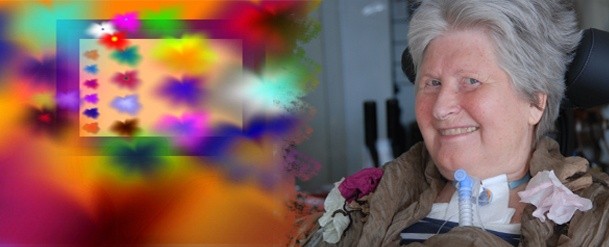
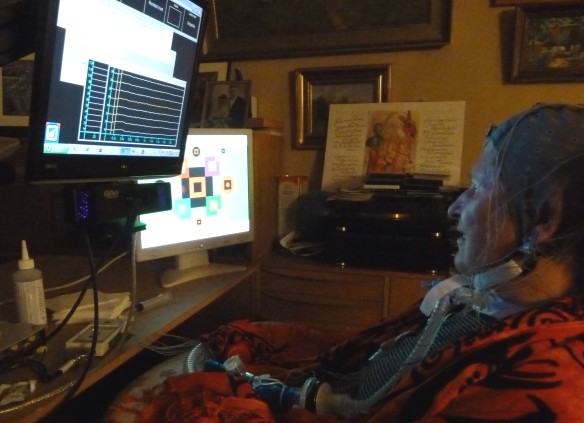
Heide-PfutznerIn 2007, when artist Heide Pfüetzner was diagnosed with Amyotrophic Lateral Sclerosis (Lou Gehrig’s disease), she considered it a “personal catastrophe”. Given the effects of ALS, which include widespread muscle atrophy that affects mobility, speaking, swallowing, and breathing, this is hardly surprising. And yet, just six years later, an exhibit of her paintings made their debut; all created by her mind and a computer.

Known as “Brain on Fire,” the exhibit took place on Easdale, a small island off the west coast of Scotland, this past July. Those who visited the exhibit were treated to a vibrant display of colorful digital paintings that she made using a computer program that lets her control digital brushes, shapes, and colors by concentrating on specific points on the screen.

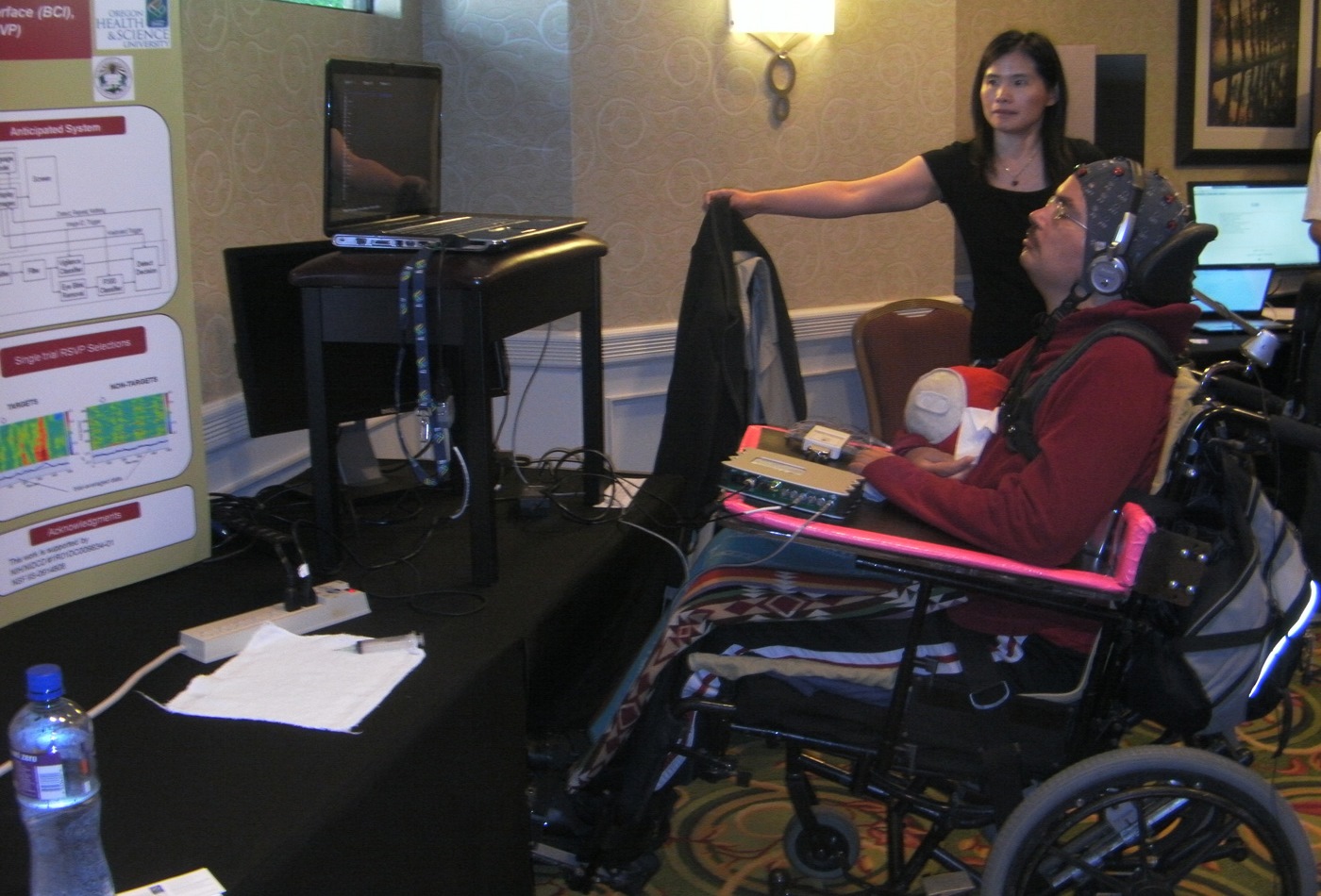
bmi_paintingPfüetzner, a former English teacher from Leipzig, Germany, “brain paints” using software developed by the University of Wurzburg and German artist Adi Hösle, along with equipment from biomedical engineering firm Gtec. Thanks to the equipment and software, Pfüetzner is able to paint using two monitors and an electrode-laden electroencephalogram (EEG) cap without having to move her hands or leave her chair.

While one screen displays the program’s matrix of tools, another functions like a canvas, showing the picture as it evolves. Images of the various tools flash at different times, and Pfüetzner focuses on the tool she wants to select, causing her brain activity to spike. The computer determines which option she’s focusing on by comparing the timing of the brainwaves to the timing of the desired flashing tool.

brainpainting_indexRelying on a Startnext crowdfunding campaign, Pfüetzner was able to raise the $6,500 she needed to hold the exhibit in Easdale. The money she raised through the campaign went toward printing and framing her work, as well as transporting her and her nursing team, as well as the medical equipment she needs, to Easdale, where the exhibit ran until July 25th.

Pfüetzner admits that prior to becoming ill, she was not too fond of technical equipment and did not like working with computers. But since she became acquainted with the new technology, an EEG cap and brain computer interface have become her everyday companions. Much like a canvas, brush and paint palate, “brain painting” has become second nature to her.

Heide-Pfutzner_paintingBetween her Startnext page and interviews since her exhibit went public, Pfüetzner had the following to say about her work and the software that makes it possible:

For the first time, this project gives me the opportunity to show the world that the ALS has not been the end of my life… BCI is a pioneer-making technology which allows me to create art and therefore, reconnect to my old life.

For some time now, Brain to Computer Interface (BCI) research has been pushing the realm of the possible, giving a man with locked-in syndrome the ability to tweet using eye movement, or a paraplegic woman the ability to control a robotic arm. And thanks to research team like that working at the University of Wurzburg’s labs,  the range of BCI applications for the paralyzed are quickly beyond text input and into the realm of visual art.

brainpainting-brain-computer-interfaces-3Though the life expectancy of an ALS patient averages about two to five years from the time of diagnosis, according to the ALS Association, some ALS patients, including physicist and cosmologist Stephen Hawking, have far outlived that prognosis. given her obvious inspiration and passion, not to mention talent, I sincerely hope Pfüetzner has a long and productive career!

And be sure to enjoy this video from Heide Pfüetzner’s Startnext page. It contains a personal address in German (sadly, I couldn’t find an English translation), followed by members of the University of Wurzburg team explaining how “brain painting” works:


Source: cnet.news.com, neurogadget.com, startnext.com

,

The Future is Here: Brain to Brain Interfaces (Cont’d)

telepathyThis year is shaping up to be an exciting time for technology that enables people to communicate their thoughts via an electronic link. For the most part, this has involved the use of machinery to communicate a person’s thoughts to a machine – such as a prosthetic device. However, some researchers have gone beyond the field of brain-computer interfaces (BCIs) and have been making strides with brain-to-brain interfacing (BBI) instead.

Back in February, a research team in Natal Brazil, led by Miguel Nicolelis of Duke University, managed to create a link between the brains of two laboratory rats. In the experiment, an “encoder” rat in Natal was placed inside a “Skinner Box” where it would press a lever with an expectation of getting a treat in return.

BMIThe brain activity was then recorded and sent via electrical signal which was delivered to a second “decoder” rat which, though it was thousands of kilometers away, interpreted the signal and pressed a similar lever with a similar a expectation of reward. This developmental milestone was certainly big news, and has led to some even more impressive experiments since.

One of these comes from Harvard University, where scientists have developed a new, non-invasive interface that allowed a similar thought transfer to take place. Led by Seung-Schik Yoo, an assistant professor of radiology, the research team created a brain-to-brain interface (BBI) that allows a human controller to move a portion of a rat’s body just by thinking about it, all without invasive surgical implants.

BBIThe new technique takes advantage of a few advances being made in the field. These include focused ultrasound (FUS) technology, which delivers focused acoustic energy to a specific point. Ordinarily, this technology has used heat to destroy tumors and other diseased tissue in the deeper reaches of the brain.  Yoo’s team, however, has found that a lower-intensity blast can be used to stimulate brain tissue without damaging it.

In terms of the interface, a human controller was hooked up to an EEG-based BCI while the rat is hooked up to an FUS-based computer-to-brain interface (CBI). The human subject then viewed an image of a circle flashing in a specific pattern which generated electrical brain activity in the same frequency. When the BCI detected this activity, it sent a command to the CBI, which in turn sends FUS into the region of the rat’s brain that controls its tail, causing it to move.

MMIUsing six different human subjects and six different rat subjects, the team achieved a success rate of 94 percent, with a time delay of 1.59 ± 1.07 seconds between user intention and the rat’s response. Granted, it might not be quite the pinnacle of machine-powered telepathy, and the range of control over the animal test subject was quite limited. Still, the fact that two brains could be interfaced, and without the need for electrodes, is still a very impressive feat.

And of course, it raises quite a few possibilities. If brain-to-brain interfaces between humans and animals are possible, just what could it mean for the helper animal industry? Could seeing eye dogs be telepathically linked to their animals, thus able to send and receive signals from them instantaneously? What about butler monkeys? Could a single thought send them scurrying to the kitchen to fetch a fresh drink?

Who knows? But the fact that it could one day be possible is both inspiring and frightening!

Source: news.cnet.com

The Grand Old Word Count

sb10067155f-001A little while ago, I saw a challenge – not sure where, could have been Goodreads or Facebook – where indie authors were challenged to take all the stories they had written and tabulate a total word count for them. Like a lot of writing exercises, it was clearly designed to put things in perspective.

All too often, writers can get hung up on sales numbers or the total number of books they’ve managed to get out there. Especially for indies, these numbers can seem underwhelming or discouraging at times. So naturally, its fun to take a look at some bigger numbers and see just how much we’ve really shared, because that is what writing is all about right?

So I did my grand total. And just for some added perspective, here’s some other big numbers for comparison. The average person has a vocabulary of between 35,000 – 75,000 words*, depending on their age, level of education, and life experience. And in the course of a day, people speak between 7,000 and 20,000 words, depending on their gender (apparently, women speak more than men)**.

ar_storybookBetween Data Miners, Whiskey Delta, Papa Zulu (yet to be published, but is complete), my Legacies short stories, Source, my Yuva shorts, and other assorted tales I’ve put up on this site, my grand total of words is:

531,944 words published so far!

And that doesn’t include the countless words that are sitting in my Stories folder that haven’t been published yet. I’m telling you, there has to be at least 250,000 words between all those unfinished stories, novellas, and shorts. So I really can’t count those… yet!

word_cloudBut I would be remiss if I didn’t include the roughly 1250 articles I’ve published on this site. God only knows how many words I’ve spewed in those! Obviously, I’m not about to add them all up, but a random sampling of five articles put the average at about 2000 words each. Multiply that by 1250 articles and you’ve got… oh my God… 2.5 million words!

Okay, let’s upgrade that then to roughly 3.000.000 words published so far. So basically, in the two and half years that I’ve been running this blog, I’ve written the equivalent of what an average man speaks in the course 428 days straight, or the average woman does in 150 days. Is it me, or is that nuts?

And now I put it to you indie writers… between your indie published stories, blog, articles, short stories, novellas, full-length novels, and flash fiction, just how many words have you generated and shared with the world?

*bbc.co.uk

**dailymail.co.uk

Climate Crisis: Climate Bomb in the Arctic?

icecapThe northern polar regions are considered by many to be the main battle grounds when it comes to Climate Change. The slow melting of the planet’s ice caps are rapidly melting, which in turn leads to increasing sea levels, and an increase in the amount of solar radiation our oceans absorb. However, according to a new theory, the disappearance of the ice sheet might also release a “time bomb” of greenhouse gas.

The theory appeared in recent paper submitted to the journal Nature. which argued that warming temperatures could release 50 billion tons of methane currently frozen in the Arctic seabed. Because methane is a potent greenhouse gas, such a huge release could drastically speed up the rate at which the sea ice retreats, the amount of solar energy that the ocean absorbs, and exacerbate the ongoing melt.

NASA_global_warming_predIt could also mean global temperatures rising more quickly, moving the world’s climate past generally-agreed-upon “tipping point” limits. Using the same methodology as the Stern Review, a landmark study from 2006. the papers authors  – Gail Whiteman, Peter Wadhams, and Chris Hope of Cambridge University – put a price tag on the potential damage:

The release of methane from thawing permafrost beneath the East Siberian Sea, off northern Russia, alone comes with an average global price tag of $60 trillion in the absence of mitigating action–a figure comparable to the size of the world economy in 2012 (about $70 trillion). The total cost of Arctic change will be much higher.

Using various scenarios, they say the methane could take from 10 to 50 years to emerge. But they’re clear about who’ll be hit hardest:

The economic consequences will be distributed around the globe, but the modeling shows that about 80% of them will occur in the poorer economies of Africa, Asia and South America. The extra methane magnifies flooding of low-lying areas, extreme heat stress, droughts and storms.

This is certainly consistent with existing Climate Change scenarios that predict the presence of severe drought in Central and South America, sub-Saharan Africa, and South and East Asia – the most populous regions of the Earth accounting for roughly 3 billion people.

Pollution over Mexico CityHowever, there are those who dispute this theory beyond the usual crop of Climate Change deniers. According to these dissenting views, the methane is unlikely to escape to the atmosphere as quickly as the paper predicts, and that some of it could be broken down in the ocean.

But Nafeez Ahmed, director of the Institute for Policy Research and Development, says these skeptics are relying on outdated models. The reality on the ground, as captured by scientists with the International Arctic Research Center, is that temperatures are rising faster than elsewhere and that current ice melt is consistent with the methane effect.

Global_Warming_Predictions_MapTo make matters worse, even if the methane emerges slowly, it would still be catastrophic. The research performed by Whiteman, Wadham, and Hope shows that the effects will be the same, regardless of whether or the methane is released over a 50 year period or a 10 year period. The key is mitigating factors, which call for immediate and ongoing intervention to ensure that worst doesn’t happen.

Bad news indeed, and it further demonstrates the dangers of what is referred to as a the “feedback mechanism” of Climate Change. As things get worse, we can expect the rate at which they get worse to increase at every step. And considering the likely social, political and economic impact of these changes, the ramifications of these new predictions are dire indeed.

Source: fastcoexist.com

Russian Hovercraft Crashes Into Beach

hover_crashThe Russian Zubr-class hovercraft is the largest military hovercraft in the world. Measuring roughly 67 meters long, weighing 550 tons fully loaded, and capable of running at 112 km/hour (70 mph), this machine of war is capable of delivering three battle tanks and up to 400 soldiers into a theater of war.

So what the hell was one doing landing on a crowded beach in Mechnikovo, a peninsula that sits on the Baltic Sea near Kaliningrad? Interestingly enough, no one seems to know. According to the Russian Defense Ministry, which released a statement after the incident, the entire thing was part of a normal military maneuver:

Docking at the beach… is a normal event. What people were doing at the beach on the territory of a military [base] is unclear.

So apparently, the beach is part of a military facility? If so, someone forgot to inform the thousands of beach goers who assembled there. No additional information, like if anyone was injured or killed, or even if Russia’s Defense Ministry is full of crap, has been released just yet. But I’m betting good money that the military hierarchy screw the pooch on this one!

Check it out:


Source:
gizmodo.com

China’s Shanghai Tower: A massive urban green space

My latest article at China Daily Mail. Shanghai is building the world’s first arcology, complete with a warming/cooling membrane, office spaces, apartments, and city parks.

News from Mars: Another (Planned) Mission!

mars-mission1When it comes to generational milestones, those of born since the late 70’s often feel like we’re lagging behind previous generations. Unlike the “Greatest Generation” or the “Baby Boomers”, we weren’t around to witness Two World Wars, the Great Depression, the Cuban Missile Crisis, the death of JFK, Neil Armstrong, or the FLQ Crisis. For us, the highlights were things like the development of the PC, the birth of the internet, Kurt Cobain, and of course, 9/11.

But looking ahead, those us of belonging to Generation X, Y, and Millennials might just be around to witness the greatest event in human history to date – a manned mission to Mars! And while NASA is busy planning a mission for 2030, a number of private sources are looking to make a mission happen sooner. One such group is a team of UK scientists working from Imperial College London that are working to mount a a three person mission to Mars.

mission-to-marsThe planned mission consists of two spacecraft, the first of which is a Martian lander equipped with a heat shield that will send the crew off into Earth’s orbit. The second craft would be a habitat vehicle, which is the craft that the crew would live in during the voyage. The habitat vehicle would consist of three floors, and measure in at around 30 feet (10m) tall and 13 feet (4m) in diameter.

The astronauts would be situated in the lander during takeoff, and would move to the habitat when the dual-craft reaches Earth orbit. Once the astronauts are safely within the habitat, a rocket would shoot the dual-craft off on its journey to Mars, which would take nine months to arrive, less than the approximately 300 days that most projections say it will take.

Mars_landerOnce In space, the dual-craft would then split apart but remain connected by a 60 meter (200 foot) tether. Thrusters from both vehicles would then spin them around a central point, creating artificial gravity similar to Earth’s in the habitat. Not only would this help the astronauts feel at home for the better part of a lonely year, but it would also reduce the bone and muscle atrophy that are associated with weightlessness.

The craft would be well-stocked with medicine to ensure that the crew remained in fine health for the nine month transit. Superconducting magnets, as well as water flowing through the shell of the craft, would be employed to help reduce both cosmic and solar radiation. And once the dual-craft reaches Mars, it would tether back together, the crew would move back into the lander, and then detach from the habitat descend to the Martian surface.

Mars-mission-2This mission would also involve sending a habitat and return vehicle to Mars before the astronauts arrived, so the crew would have shelter upon landing as well as a way to get home. The crew would spend anywhere from two months to two years on Mars, depending on the goals of the mission and the distance between Mars and Earth. On the way back home, the mission would dock with the ISS, then take a craft back to Earth from there.

What’s especially interesting about this proposed mission is that each stage of it has been proven to work in an individual capacity. What’s more, the concept of using water as a form radiation shielding is far more attractive than Inspiration Mars’, which calls for using the astronauts own fecal matter!

Unfortunately, no real timetable or price tags have been proposed for this mission yet. However, considering that every individual step of the mission has been proven to work on its own, the proposed overall journey could work. In the meantime, all us post-Baby Boomers can do is wait and hope we live to see it! I for one am going sick of hearing Boomers talk about where they were when Apollo 11 happened and having nothing comparable to say!

And be sure to enjoy this video of the University College London team discussing the possibilities of a Mars mission in our lifetime:


Sources:
bbc.co.uk, extremetech.com