NYC’s Futuristic Pool: Cleans Water Before You Swim

exorcisepool-perspective-poolWater pollution is one of the most serious environmental concerns facing the planet, and as with most things environmental, the culprit is urban sprawl. Take Newtown Creek in the Brooklyn neighborhood of East Williamsburg, which is one of the smelliest and dirtiest watersheds in the world. In addition to oil and industrial contaminants, the watershed is heavily burdened by the worst byproduct of urban living there is: sewage.

At present, storm water combines with the local sewage in a pipe-overloading combination that sends over a billion gallons of wastewater into the creek each year. Unlike industrial chemicals, which can be captured and treated to render it harmless, urban sewage is created in volumes that are extremely difficult to manage. And for most cities, the option of simply dumping it in the ocean is too attractive to pass up.

exorcisepool-treatmentHowever, architect Rahul Shah has a bold solution for dealing with this problem: Build a swimming pool. The Exorcise Pool – which Shah proposed for his master’s thesis at Parsons The New School For Design – wouldn’t use water directly from the Newtown Creek, its water supply would be the same, and its purpose would be both to mitigate and reveal the woeful state of local water pollution.

Instead, Shah’s project would divert an estimated 76,000 cubic feet per year of run-off into “bioswales”: ravines full of cattails, bulrush, and algae that would both absorb and carry water downhill. These bioswales would replace sidewalks on eight blocks of East Williamsburg, covered by grates where there are garages or doors to warehouse apartments.

exorcisepool-exteriorWater not absorbed by the plants would be carried to a series of water treatment technologies, using everything from algae to UV light to a bed full of reeds that will help trap solids. Ultimately, the water would not be clean to the point of drinkability, but would be safe as anything found in a pond. And in addition to drawing attention to the state of the river, the purpose, according to Shah, would also be to “showcase of different methods of water treatment.”

But of course, the main attraction, once all this water is treated, would be a series of patio misters and a public pool. The misters, according to Shah, will act as a sort of “test of faith”, where people decide to take a leap by letting treated water touch their skin. After that tentative step, they will have the option of swimming in it.

exorcisepool-showerAnd though the project is not being realized just yet, it stands as a suggestion of how to repurpose and redesign urban structures that were once sources of pollution into something healthier and more natural. In many ways, it calls to mind the work of the design firm Terreform ONE – which is seeking to convert Brooklyn’s Naval Yard into a vast greenspace through living architecture – or New York’s real estate firm Macro Sea, which began converting old dumpsters into mobile swimming pools back in 2011.

In the end, its all about converting the problem into a solution. Repurposing and redesigning the older, dirtier habitats of the past and turning them into something that actively cleans up the despoiled environment is much cheaper and easier than bulldozing and redeveloping them, after all.

And it also serves to remind us of how large urban environments are a part of the solution as well. With many people crammed close together amidst such sprawling infrastructure, the challenge of meeting future demands for space and clean living is visible and direct. As such, it has a hand in leading to innovative solutions and bright ideas.

Sources: fastcoexist.com, terreform.org, macro-sea.com

News from SpaceX: More Tests and the Coming Launch

spaceX_elonmuskElon Musk just can’t get enough of the spotlight lately! But that’s the price you pay for being a billionaire, innovator, genius-type person! And barely a week after announcing his idea for the Hyperloop high-speed train, it now seems that SpaceX is once again making the news, thanks to its latest test of the Grasshopper reusable rocket system as well as their planned launch of the Falcon Heavy rocket.

For those unfamiliar with the Grasshopper, this is a proposed reusable rocket system that Musk and SpaceX created with the hopes of bringing the costs associated with space launches down considerably. Since September 2012, the rocket has been put through successive tests, reaching higher and higher altitudes and safely making it back to the ground.

grasshopper_lateraldivertIn this latest test, the rocket successfully performed a “lateral divert test”. In all previous tests, the rocket lifted off vertically from a launch pad and then used its Merlin-1D engine to ease itself back down to the pad. However, in actual launch situations, the rocket wont simply be traveling up and down. When it comes time to land, a considerable amount of lateral steering will be necessary to line it back up with the launch site.

This is what the test, which took place on Tuesday, August 13th, amounted to. It began with the Grasshopper reaching its previously-achieved altitude of 250 meters, but then continued with the rocket moving an additional 100 m (328 ft) to one side. It was subsequently still able to land safely back at the center of the launch pad, compensating for its lateral diversion.

According to SpaceX: “The test demonstrated the vehicle’s ability to perform more aggressive steering maneuvers than have been attempted in previous flights.” What’s more, it places the company that much closer to the realization of a truly reusable rocket system, something which will drastically cut costs for future space missions.

And of course, they were sure to catch the entire test on video:


But equally important for this rising company that seeks to privatize space travel was the announcement that they have are moving ahead with plans to launch their Falcon Heavy rocket system by late 2013 or early 2014. At present, the Falcon is the most power rocket system in the world, overshadowed only by the now retired – but soon to be reserviced – Saturn V booster that put the Apollo astronauts into space and on the Moon.

spaceX-falcon9As Musk himself said of the rocket:

Falcon Heavy will carry more payload to orbit or escape velocity than any vehicle in history, apart from the Saturn V moon rocket, which was decommissioned after the Apollo program. This opens a new world of capability for both government and commercial space missions.

Fully loaded, the Falcon Heavy will be able to carry payloads of 53 metric tons (117,000 pounds or 53,070 kg) into orbit, and is made up of two engine stages. The first stage consists of a Falcon 9 rocket, with a nine-engine cores, followed by two additional nine-engine cores attached to either side. In addition, the Merlin engines have been upgraded to handle the additional weight, and are being tested at SpaceX’s facility in McGregor, Texas.

flacon-heavy-3At liftoff the 69.2m (227 ft) long Falcon Heavy will generate 3.8 million pounds of thrust, which is equivalent to the thrust of fifteen Boeing 747’s taking off at the same time. SpaceX claims that this gives the Falcon Heavy more than twice the performance of the next most powerful vehicle – the Delta IV Heavy operated by the Boeing-Lockheed Martin joint venture United Launch Alliance.

SpaceX also says that with more than twice the payload of the Delta IV but at one third the cost, the Falcon Heavy sets a new world record in terms of economy at approximately US$1,000 per pound to orbit. This is in keeping with Musk’s promise to bring the associated costs of space travel and exploration down, hopefully one day to his goal of $500 per pound.


spaceX_solararrayWith the ability to carry satellites or interplanetary spacecraft to orbit, SpaceX is offering the Falcon Heavy on the commercial market for US$80–$125 million, which compares to the $435 million per launch the U.S. Air Force has budgeted for four launches in 2012. So in effect, Musk’s company is offering a money-saving alternative to both the public and private sector.

For those fascinated by the long-term potential of space travel, this is certainly exciting news. By cutting the costs of placing satellites, supplies and people in orbit, many things are being made feasible that were previously impossible. This includes conducting more research in orbit, the ability to create space-based solar arrays (a very cool solution to our current power problems and the limitations of Earth-based solar power) and perhaps even begin work on a Moon settlement.

solar_system1Beyond that, there are the growing possibilities of commercial space travel, space tourism, and even setting our sights father afield with manned missions to the Moon, prospecting missions to the asteroid belt, and surveying probes to Jupiter’s Moons and to the very edge of the Solar System. Possibly even beyond…

Exciting times we live in, when the impossible is slowly becoming possible!

Sources: gizmag.com, (2), spacex.com


Powered by the Sun: Sun-Made Hydrogen Fuel

solar2It’s been known for some time that our future may hinge on the successful development of solar power. Despite it being a clean, renewable alternative to traditional, dirtier methods, the costs associated with it have remained prohibitive.  Which is why, in recent years, researchers and developers have been working to make it more efficient and bring down the costs of producing and installing panels.

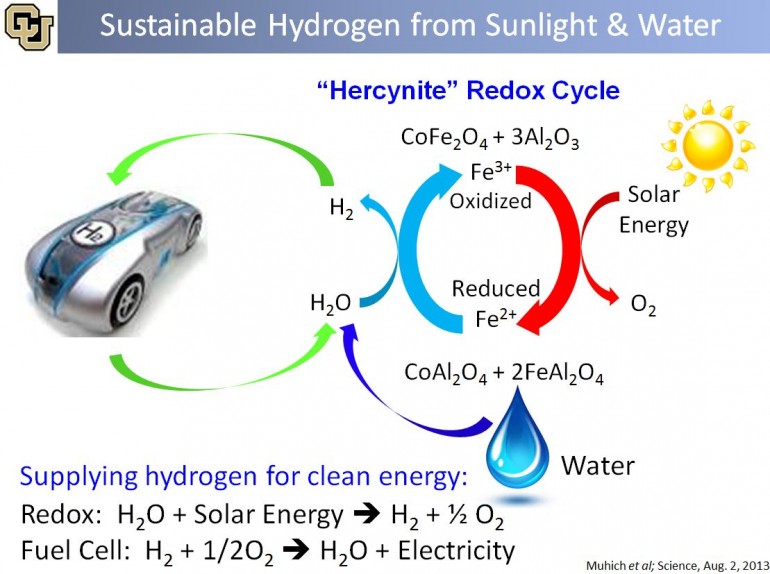
But a new technique developed by the University of Colorado Boulder may have just upped the ante on solar-powered clean energy. Using concentrated sunlight in a solar tower to achieve temperatures high enough to drive chemical reactions that split water into its constituent oxygen and hydrogen molecules, the team claims that solar energy may now be used to cheaply produce massive amounts of hydrogen fuel.

hydrogenfuelThe team’s solar thermal system concentrates sunlight off a vast array of mirrors into a single point at the top of a tall tower to produce very high temperatures. When this heat is delivered into a reactor full of metal oxides, the oxides heat up and release oxygen. This leaves the reduced metal oxides in a different state and ready to bind with new oxygen atoms.

Steam is then introduced into the reactor, which can also be produced by heating water with sunlight. This vaporized water then interacts with oxides, which draw oxygen atoms out of the water molecules leaving behind hydrogen molecules. These molecules can then be collected and harvested as hydrogen gas, and placed in storage containers for export.

solar_beadsGranted, the concept of using solar energy and heat to create hydrogen fuel is not new. Earlier this year, teams from the University of Delaware and Harvard already proposed using solar arrays and small panels (artificial leaves) to separate hydrogen from water. And solar thermal tower power plants have been in use in some parts of the world for years now.

But there are several key difference that set the University team’s concept apart. In a standard solar power tower, sunlight is concentrated about 500 to 800 times to reach temperatures around 500º C (932 º F) to produce steam that drives a turbine to generate electricity. However, splitting water requires temperatures of around 1,350º C (2,500º F), which is hot enough to melt steel.

hydrogenfuel-2To get those kinds of temperatures, the team added additional mirrors within the tower to further concentrate the sunlight onto the reactor and the active material. But the big breakthrough came about when the team discovered certain active materials that allowed both these chemical reactions (reducing the metal oxide and re-oxidizing it with steam) to occur at the same temperature.

As Charles Musgrave, Professor of Chemical and Biological engineering at CU-Boulder, explains it:

You need this high temperature both to give you the driving force to drive the chemical reactions and also the kinetics to make the reactions go fast enough to make the process practical. We determined that both reactions could be driven at the same temperature of about 2,500° F (1,371° C). Even though we run at a constant and lower temperature we still generate more hydrogen than competing processes.

Though they have yet to produce a working model, the concept has a big advantage over other methods. By eliminating the time and energy required for temperature swings, more hydrogen fuel can be created in any given amount of time. Another advantage it has over other renewable technologies, such as wind and photovoltaics, is that it uses sunlight directly to produce fuel rather first converting sunlight into electricity, which reduces overall efficiency.

solar_array1The team believes that a site with five 223 m (732 ft) tall towers and about two million sq m (21.5 million sq ft) of heliostats on 485 ha (1,200 acres) of land could generate 100,000 kg (222,460 lb) of hydrogen per day, which is enough to run over 5,000 hydrogen-fuel cell buses daily. Or as Alan Weimer, the research group leader, put it:

Our objective is to produce hydrogen (H2) at $2/kg H2. This is equivalent to about US$2/gallon (3.7 L) of gasoline based on mileage in a fuel cell car versus a combustion engine today.

Not a bad substitute for gasoline then, is it? And considering that the production process relies on only the sun – once the multi-million dollar infrastructure has been built of course – it will be much more cost effective for power companies than offshore drilling, frakking and pipelines currently are. Add to that the fact that its far more environmentally friendly, and you’ve an all around winning alternative to modern day fuels.

Source: gizmag.com

News from Space: The Slingatron

slingatronPlacing things into orbit is something humanity has been doing since the 1940’s, beginning with Germany’s V2 Rockets, then giving way to artificial satellites like Sputnik in the 1950’s. These efforts really came into their own during the 1960’s and since, when manned missions reached high orbit and even the Moon. But despite all these  milestones, little has been done to address the problems of cost.

Ever since space travel began in earnest, the only way to send satellites, supplies and shuttle craft into orbit has been with rockets. Even at its cheapest, a space launch can still cost an estimated $2000 per pound per mission, due to the fact that the rockets employed are either destroyed or rendered unusable once they’ve completed their mission.

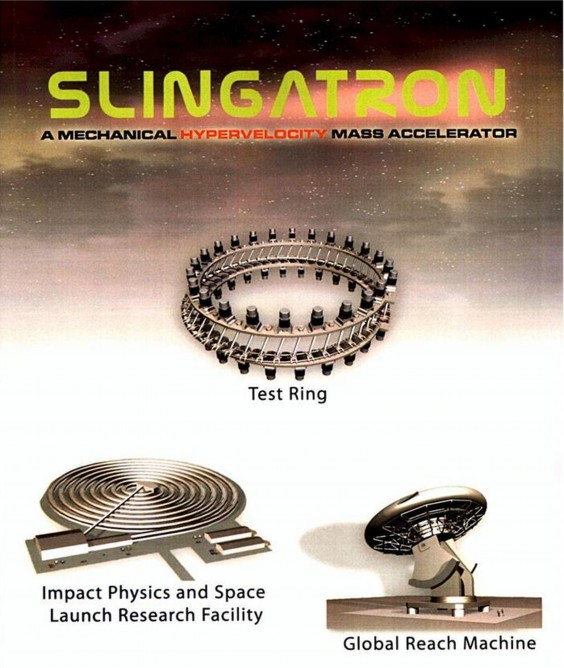
slingatron-20Attempts to create reusable launch systems, like the SpaceX Grasshopper, is one solution. But another involves “slinging” payloads into orbit, rather than launching them. That’s what HyperV Technologies Corp. of Chantilly, Virginia is hoping to achieve with their design for a “mechanical hypervelocity mass accelerator”, otherwise known as a “slingatron”.

Invented by Derek Tidman in the 1990s, the slingatron replaces rockets with a more sophisticated version of the sling. However, the principle differs somewhat in that the device uses something far more sophisticated than circumferential force. In the end, the name cyclotron might be more apt, which is a very simple particle accelerator.


slingatron-11Utilizing a vacuum tube and a series of magnetic/electostatic plates of opposing charges, an atomic particle (such as a proton) is introduced and sent back and forth as the polarity of the plates are flipped. As the frequency of the flipping is increased, the proton moved faster and faster in a series of spirals until it reaches the rim and shoots out a window at extremely high velocity.

The slingatron achieves the same result, but instead uses a spiral tube which gyrate on a series of flywheels along its length. As the slingatron gyrates, a projectile is introduced and the centripetal force pulls the projectile along. As the projectile slides through larger and larger turns of the spiral, the centripetal forces increase until the projectile shoots out the muzzle, traveling at several kilometers per second.

slingatron-13Ultimately, the goal here is to build a slingatron big enough to fire a projectile at velocities exceeding 7 km/s (25,000 km/h, 15,600 mph) to put it into orbit. With rapid turnarounds and thousands of launches per year while all of the launch system remains on Earth, the developers claim that the slingatron will offer lower costs for getting payloads into orbit.

However, there are weaknesses to this idea as well. For starters, any projectile going into space will also need to be fitted a small set of rockets for final orbit insertion and corrections. In addition, the G-forces involved in such launches would be tremendous – up to 60,000 times the force of gravity – which means it would be useless for sending up manned missions.

slingatron-15In the end, only the most solid state and hardened of satellites would have a chance of survival. The developers say that a larger slingatron would reduce the forces, but even with a reduction by a factor of 10,000, it would still be restricted to very robust cargoes. This makes it an attractive options for sending supplies into space, but not much else.

Still, given the costs associated with keeping the ISS supplied, and ensuring that future settlements in space have all the goods and equipment they need, a series of slingatrons may be a very viable solution in the not-to-distant future. Combined with concepts like the space penetrator, which fired bullet-like spaceships into space, the cost associated with space travel may be dropping substantially in coming decades.

All of this could add up to a great deal more space traffic coming to and from Earth in the not-too-distant future as well. I hope we have the foresight to construct some “space lanes” and keep them open! And in the meantime, enjoy this video interview of Dr. F. Douglas Witherspoon explaining the concept of the slingatron:

Source: gizmag.com

Five Technologies for the Developing World

Developed-and-developing-countriesWhen it comes to providing energy in the “developed world”, the challenge is in finding ways to generate electricity, heat, and cooling in a way that will not burden our environment. Whereas providing these things in the past has never been much of a challenge, finding ways to meet future demand in a way that is sustainable and renewable often is. Lucky for us, we have the means to meet this challenge head on.

But in the “developing world”, where the infrastructure does not readily exist, populations continue to grow exponentially, and the concerns about the natural environment are quite grave already, the challenge of providing for people’s basic needs presents a significant challenge. At the same time however, it presents an opportunity for creative solutions.

What follows is just a few examples of what engineers and designers have come up with in recent years. These devices are especially innovative because they are capable of increasing the supply of safe, cheap energy on a user-by-user basis, bypassing the years it takes to extend a power grid to remote places, the resources needed to increase a country’s energy production capacity, or the environmental damage involved.

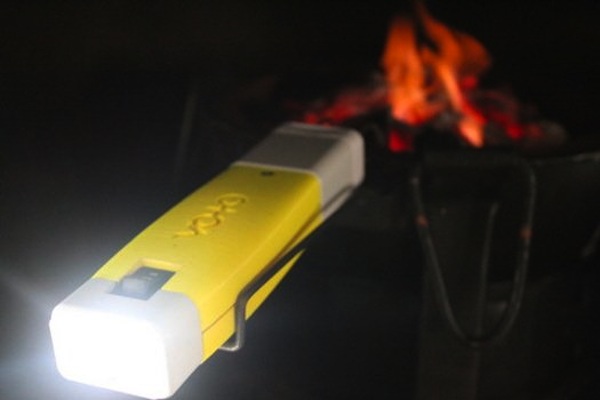
Voto-Stove1. The Voto: Millions of people around the world use coal or wood-fired stoves to provide for their cooking and heating needs. Developed by the company Point Source Power, the VOTO converts the energy these fires release as heat into electricity, which can power a handheld light, charge a phone or even charge a spare battery. Initially designed for backpackers and campers, the company is also trying to find a way to make it accessible to residents of the developing world, where it will be much more useful.

2. Window Socket: Here we have what is perhaps the simplest solar charger in existence. Simply attach the suction cup to a window or any sun-exposed surface, let sit for 5 to 8 hours, and the solar panels will store enough electricity to power a device for up to ten hours. Created by Kyuho Song and Boa Oh of Yanko Design to resemble a normal wall outlet as closely as possible, the charger can be taken and used anywhere, making it truly versatile.

window_socket33. The Berkeley-Darfur Stove: In recent years, health researchers have come to the conclusion that open-fire stoves lead to millions of deaths in the developing world. Hence this design by Potential Energy, a nonprofit dedicated to adapting and scaling technologies to help improve lives in the developing world. Featuring a tapered wind collar, a small fire box opening, nonaligned air vents that reduce the amount of wind allowed to stoke or snuff the fire, and ridges that ensure the optimal distance between the fire and pot, this stove is safe, fuel-efficient, and requires less wood to power. Over 25,000 units have been distributed to the Darfur region and Ethiopia so far.


gravitylight4. Gravity Light: Along with wood-burning stoves, kerosene-burning lamps are also a major health concern because of the fumes they create. Hence the simple and elegant solution known as the Gravity Light. Developed by the research initiative deciwatt.org, the device is powered by attaching a 20 lbs bag or rocks or dirt to a cord and then lifting it into place. The potential energy stored in that lifting motion is then gradually converted to electricity as the the bag descends over the course of about 30 minutes, powering a light or other electrical device in that time.

5. SOCCKET: Soccer is easily the most popular sport in the world, with millions of people playing daily. And in an attempt to turn this daily activity into an efficient form of energy that would replace kerosene lamps, Uncharted Play, a for-profit social enterprise, has created a ball that uses a kinetically-powered pendulum to generate and store electricity. After about 30 minutes of play, the ball stores enough energy to power an attachable LED lamp for 3 hours. Development of the product was funded via Kickstarter, and the first ones will ship in the next few weeks. A percentage of all retail sales will go to providing SOCCKETs to schools in the developing world.

two_SOCCKETsWhen it comes right down to it, these devices are especially innovative because of the way they marry  new technology to basic utility. In the end, what people get are things that are simple to use, effective, clean, and safe. And if history and sociological research have taught us anything, it’s that little things that make life healthier and easier have a profound impact on the lives of people.

Combined with large-scale concept (like 3D-printed structures) simple solutions like these are likely to make a big difference in the lives of millions of people. By ensuring that people have access to lighting and heating that does not compromise their health, is better for their environment, and less-labor intensive and expensive, the daily grind that characterizes far too many people’s existence is sure to get easier and allow for new opportunities.

Though they might seem like minor improvements, incremental changes have a way of adding up and can lead to serious and positive social change. And I for one am eager to see it happen!

Source: blogs.smithsonianmag.com

Judgement Day Update: The Human Brain Project

brain_chip2Biomimetics are one of the fastest growing areas of technology today, which seek to develop technology that is capable of imitating biology. The purpose of this, in addition to creating machinery that can be merged with our physiology, is to arrive at a computing architecture that is as complex and sophisticated as the human brain.

While this might sound the slightest bit anthropocentric, it is important to remember that despite their processing power, supercomputers like the D-Wave Two, IBM’s Blue Gene/Q Sequoia, or MIT’s ConceptNet 4, have all shown themselves to be lacking when it comes to common sense and abstract reasoning. Simply pouring raw computing power into the mix does not make for autonomous intelligence.

IBM_Blue_Gene_P_supercomputerAs a result of this, new steps are being taken to crate a computer that can mimic the very organ that gives humanity these abilities – the human brain. In what is surely the most ambitious step towards this goal to date, an international group of researchers recently announced the formation of the Human Brain Project. Having secured the $1.6 billion they need to fund their efforts, these researchers will spend the next ten years conducting research that cuts across multiple disciplines.

This will involve mapping out the vast network known as the human brain – a network composed of over a hundred billion neuronal connections that are the source of emotions, abstract thought, and this thing we know as consciousness. And to do so, the researchers will be using a progressively scaled-up multilayered simulation running on a supercomputer.

Human-Brain-project-Alp-ICTConcordant with this bold plan, the team itself is made up of over 200 scientists from 80 different research institutions from around the world. Based in Lausanne, Switzerland, this initiative is being put forth by the European Commission, and has even been compared to the Large Hadron Collider in terms of scope and ambition. In fact, some have taken to calling it the “Cern for the brain.”

According to scientists working on the project, the HBP will attempt to reconstruct the human brain piece-by-piece and gradually bring these cognitive components into the overarching supercomputer. The expected result of this research will be new platforms for “neuromorphic computing” and “neurorobotics,” allowing for the creation of computing and robotic architectures that mimick the functions of the human brain.

^According to a statement released by the HBP, Swedish Nobel Laureate Torsten Wiesel had this to say about the project:

The support of the HBP is a critical step taken by the EC to make possible major advances in our understanding of how the brain works. HBP will be a driving force to develop new and still more powerful computers to handle the massive accumulation of new information about the brain, while the neuroscientists are ready to use these new tools in their laboratories. This cooperation should lead to new concepts and a deeper understanding of the brain, the most complex and intricate creation on earth.

Other distinguished individuals who were quoted in the release include President Shimon Peres of Israel, Paul G. Allen, the founder of the Allen Institute for Brain Science; Patrick Aebischer, the President of EPFL in Switzerland; Harald Kainz, Rector of Graz University of Technology, Graz, Austria; as well as a slew of other politicians and academics.

Combined with other research institutions that are producing computer chips and processors that are modelled on the human brain, and our growing understanding of the human connectome, I think it would be safe to say that by the time the HBP wraps up, we are likely to see processors that are capable of demonstrating intelligence, not just in terms of processing speed and memory, but in terms of basic reasoning as well.

At that point, we really out to consider instituting Asimov’s Three Laws of Robotics! Otherwise, things could get apocalyptic on our asses! 😉


Sources:
io9.com, humanbrainproject.eu
, documents.epfl.ch

The Future is Here: Jetpack Rentals!

jetlevIt’s official, commercial jetpacks are here! And while they might not use rockets, or be available for general purchase, they are still a pretty amazing joyride from the looks of it. Basically, the packs use pumped water from a backpack through a hose connected to a small, unmanned boat. Users are then hurled into the air, and with the adjustment of attitude controls, are able to fly around in circles.

So far, there are two models that are showing up in major vacation destinations like San Diego, Key West, Florida, Myrtle Beach, and Cancun, Mexico. There’s the Jetlev, which can lift a person 9 metres in the air, and the Flyboard, which looks like a small snowboard attached to a hose and can propel riders 14 metres in the air. To give you some perspective, that’s about the height of a three and four storey building, respectively.

jetlev2Promotional videos have been turning up by the hundreds on Youtube, Hulu, Dailymotion, and other video-sharing websites, and the hits are reaching into the millions. Clearly, these jetpacks are the newest thing when it comes to water sports and adventure reaction, but they are raising their fair share of environmental concerns as well.

In Hawaii for example, where the jetpacks are expected to make an appearance very soon, the concerns of fishermen and ocean enthusiasts prompted the state Department of Land and Natural Resources to call a public meeting about the devices last month. The department’s top enforcement officer, Randy Awo, expressed alarm about unsafe maneuvers, such as riders diving into the water next to moving boats.

????????In addition, fishermen are concerned that the noise will disrupt their livelihood. In this, they are joined by University of Hawaii coral scientist Bob Richmond, who told officials that the noise the devices make could cause fish to avoid areas that are too loud. He’s also worried that fish and coral larvae could get pumped through some of the equipment and die.

But of course, solutions and regulations are being proposed, such as setting aside areas for recreational use that are far removed from fishing waters and coral habitats. The same is likely to be the case in other parts of the world where conservation and fishing are major concerns, but tourist dollars are heavily sought after.

hawaii-coral-reef-600x404In the meantime though, adventure enthusiasts and futurists can draw some encouragement from this, since it demonstrates that we are clearly living in a time when devices that seem like they are right out of the annals of science fiction are becoming a reality!

And be sure to check out the video of Myrtle Beach jetpack adventures, showing a Jetlev R200 in action:


Sources:
cbc.ca, myrtlebeachjetpackadventures.com

New Movie Trailer – 300: Rise of an Empire

300-rise-of-an-empire-thumbIt seems that Zack Snider and Frank Miller are back for another round of comic book adaptations! After bringing us 300, Watchmen, Sucker Punch, and Man of Steel, Snider has signed on for a sequel named 300: Rise of an Empire. This time around, the movie will adapting material from Frank Miller’s own comic sequel to 300, which was entitled “Xerxes”.

As you can see from the trailer, Lena Headey is back to reprise her role as Queen Gorgo of Sparta, while Roderigo Santoro is back as well, reprising the role of the ridiculously tall and pierced man-god Xerxes. David Wehnam is reprising the role of the narrating Dilios. Meanwhile, the beautiful Eva Green plays Artemisia, Xerxes’ ally and naval commander, and Sullivan Stapleton plays General Themosticles – commander of the Greek navy.

300-Rise-of-an-Empire1As you can also see, the movie picks up where events in the first movie left off, after the Battle of Thermopylae where King Leonidas and his 300 were eventually wiped out. In adapting real history to an over-the-top format yet again, Snider and Miller give us a souped-up version of the Battle of Salamis, the war at sea that followed shortly thereafter.

This confrontation between the Greek and Persian navies occurred off the tip of the Greek mainland, just 20 km away from Athens which had been abandoned to the Persians. It was a desperate fight, but in the end, the Greeks proved victorious, using the home field advantage to trap and defeat the larger Persian forces.

300-Rise-of-An-Empire3In many ways, this battle would prove to be the beginning of the end for the Persian army, since defeat at sea now meant they could no longer launch offensives into the Peloponnese (home of Sparta and where the Greek Allies were now based) by both land and sea. Marching across the thin and fortified isthmus of Corinth would prove slow and difficult, and Thermopylae had demonstrated that frontal assaults against fortified phalanxes were not effective.

In addition, Xerxes now feared the Greeks could mount a naval offensive on the Hellespont (the land bridge between modern day Turkey and Greece) and cut off his forces from their overland supply routes. On top of that, he was dealing with rebellions within the conquered territories and had to tend to those as well.

300: BATTLE OF ARTEMESIUMAs a result, the war would consist of sieges against rebelling states until the decisive land battle of Plataea, north of Athens, (shown at the end of 300) and the naval battle at Mycale off the coast of Turkey would take place a year later and drive the Persians out of Greece and the Aegean for good.

Honestly, not sure if I’ll catch this one. Sure, the last one was cinematic action porn, and fun if you ignored the historical inaccuracies and alleged attempts to draw a connection between the past and the “war on terror”. But I think its fair to say this is Snider and Miller’s attempt to cash in again and really doesn’t have much magic to it. And without Gerard Butler screaming martial slogans, it just seems flat.

“THIS IS SPARTAAAA!” No, this is a sequel. And oftentimes, they suck! But then again, I do love the history and there have been cases where the sequel was even better than the original… we shall see! And of course, we can all enjoy the trailers in the meantime!

Walking Dead Issue 113 Is Out!

walking-dead-113After many months of waiting, and doing as many comparative reviews between the comic and show to pass the time, the latest issue of the Walking Dead is finally out! And I’m looking forward to this and the next issue, as they provide the thrilling conclusion to yet another action-packed volume! This volume is entitled March to War, the 19th in the ongoing series, and it will be interesting to see just how much father he goes with it…

Without giving too much away, I would like to share with people what happens after the story involving the prison and the Governor ended. In terms of the comics, this would mean everything that took place after Volume 8 – Made to Suffer. In terms of the show, this covers all the material that is to come after season three, though there are likely to be some big time departures. So perhaps the spoiler alert is premature…

the_walking_dead_48In any case, after the prison fell in the comic book and Lori and their baby was killed, Rick and Carl stumbled around the wilderness for some time. They eventually made their way back to Hershel’s farm, where they found the members of their crew that had left after the Governor’s first assault. Andrea and Dale were there too, which brought every surviving member of their crew back together.

After being joined by some wanderers, they began working their way to the East Coast (for reasons that shall remain a secret). After realizing the journey was not going to work out (secret!), they eventually found there way to another settlement and began to make a life for themselves again. Naturally, complication ensue, but all seems relatively good until they meet a new enemy, one that (as Khaalidah said) made “the Guv look like a little girl in a tutu.”

the-walking-dead-112-coverBoy was she right! People died, main character people, and all hope seemed lost. But of course, Rick had a plan and they began putting it into action. And after many issues of  trying to buy time and get ready, the stage is finally set for a big showdown. No telling how it will go, and as of the last issue, Rick found himself in some serious hot water with their newfound enemy.

This is also important to me because I’m thinking that as of issue 114, the conclusion to Volume 19, I might hang up reading the series for awhile. It’s been a blast, but its like watching an entire series on DVD and then being forced to wait a full year for a new season to air. It’s frustrating! Far better to get into something else and come back to it later, am I right?

The Future is Here: Memory Implants Now Possible!

?????????????????????The concept of implanting a person with false memories has been featured in many a science fiction franchise. Between Philip K. Dick’s “We Can Remember it for you Wholesale” (which was the basis for Total Recall), the cult-hit Dark City, and the more recent Inception, the idea that memories could be tampered with – thus showing how reality and experience are subjective – has a long history.

And now it seems that once again, science fiction has proven to be the basis of science fact. As a result ongoing collaboration between the Japanese Riken Brain Science Institute and MIT’s Picower Institute for Learning and Memory, a process has been devised for planting specific false memories into the brains of mice.

memory_implantsThis breakthrough, in addition to being mind-blowing and kind of scary, is also likely to seriously extend our understanding of memory. The ability to learn and remember is a vital part of any animal’s ability to survive, but with human beings, it also plays a major role in our perception of what it is to be human. What’s more, disorders effecting the human brain and memory have been growing considerably in recent decades.

These range from Alzheimer’s disease, where the abilities to make new memories and to place one’s self in time are seriously disrupted, to Post-Traumatic Stress Disorder, in which a memory of a particularly unpleasant experience cannot be suppressed. Such disorders are a powerful force driving research into discovering how healthy memory functions so that we can diagnose and treat problems before they become too serious.

Mouse-Hippocampus1In their previous work, researchers from the Picower Center for Neural Circuit Genetics were able to identify an assembly of neurons in the brain’s hippocampus that held a memory engram – a cell containing data about a sequence of events. In recalling a memory, the brain uses this data to reconstruct the associated events, but this reconstruction often varies from what actually occurred.

Working from this, the researchers were able to locate and identify the neurons encoding a particular engram (a specific set of memories) through the use of optogenetics. This technique is a relatively new neuromodulation process that uses a combination of genetic modification and optical stimulation to control the activity of individual neurons.ChR_memoryAfterward, they were able to genetically engineer the hippocampal cells of a new strain of mouse so that the cells would form a light-sensitive protein called a channelrhodopsin (ChR). These proteins activate neurons when stimulated by light, thus ensuring that specific memories could be triggered by exposing someone implanted with them to a light source.

Next, the researchers conducted a series of behavioral experiments in order to identify the set of brain cells that were active only when a mouse was learning about a new environment. The genes activated in those cells were then coupled with the light-sensitive ChR and monitored during the next phase of the experiment, where the mice were placed in a series of boxes.

memory_implants1In the first box, the mice were exposed to a safe environment, during which time the neurons that were actively forming memories were labelled with ChR, so they could later be triggered by light pulses. In the second box, mice were treated to a series of mild foot shocks, which created a negative association, while at the same time, a pulsing light was used to trigger their memories of being in the first box.

When the mice were returned to the first box, in which they had only pleasant experiences, they clearly displayed fear/anxiety behaviors. In short, the fear that they had learned in a separate environment was now falsely associated with the safe environment. Whats more, the false fear memory could be reactivated at will in any environment by triggering the neurons associated with that false memory.

brain-activityWhat this demonstrated was that the recall of this false memory drove an active fear response that was indistinguishable from a real memory. And according to Steve Ramirez, a graduate student in the Tonegawa lab and the lead author of the paper, the experiment provided some real insight into the nature of memory:

These kinds of experiments show us just how reconstructive the process of memory actually is. Memory is not a carbon copy, but rather a reconstruction of the world we’ve experienced. Our hope is that, by proposing a neural explanation for how false memories may be generated, down the line we can use this kind of knowledge to inform, say, a courtroom about just how unreliable things like eyewitness testimony can actually be.

Granted, it might not sound like Total Recall or Inception, but the basic premise is the same. And note how in those movies, no explanation was given as to how these false memories were fashioned – nor could they be, since no means yet existed. But now, using this technique, memories could be fashioned in one person, and then implanted in another.

total-recall-originalFrightened yet? Well, you should be! If memory is one of the very things that define us as human beings, and we can’t be sure if the memories we have are real, our own, or someone else’s, then how can we be sure of anything? How do we even know who we are? Man, I’d be writing this into a story outline right now if it hadn’t already been done to death!

Until next time, guard your experiences and memories jealously! You never know when someone might try to come along and steal them…

Sources: gizmag.com, io9.com