
 Life on Mars can’t become a reality without some serious design concepts and engineering. And that’s why Thingiverse, in cooperation with NASA’s Jet Propulsion Laboratory, conduct the Makerbot Mars Base Challenge every year. Taking Mars’ extreme conditions into consideration, people are tasked with designing a utilitarian Mars base that can withstand the elements and make settlers feel at home.
The competition opened on May 30th and received some 227 submissions. The challenge brief asked entrants to take into account the extreme weather, radiation levels, lack of oxygen and dust storms when designing their Martian shelters. And the winning entries will each be awarded a MakerBot Replicator 2 Desktop 3D Printer in order to help them fully explore their designs for Martian abodes.
And although the applicants did not always nail the science, their designs have a novelty that has not been seen in some time. This can especially be seen in with this years finalists, which included a design for a Martian pyramid, a modular beehive and a three-tiered Acropolis.
 The Thingiverse community appears to have been hugely supportive, printing out the designs themselves and offering handy hints in the comment section beneath each entry. Some were dismissed for being impractical; for example, those that would be immediately flattened or kill all of its inhabitants if it were installed on the Martian surface. But one designer, Noah Hornberger, points out:
A toy car does not need fuel because it runs on the imagination of the child who drives it around. So it seems to me that I’m driving my toy car at full speed and you are here telling me what kind of fuel and oil it needs to run. I would rather leave the physics to the right people.
Luckily, that’s what NASA is on hand for – to ensure that it’s not just the mathematicians and engineers that have an interest or a say in our Martian future, but to make sure those designs and dreams that come from the public meet the basic scientific and engineering requirements. Bringing together inspired ideas and realistic needs, here’s how this year’s finalists measured up.
 This Mars structure is designed with resource consumption and allocation in mind, and also takes into account that the majority of activity would be taking place inside the structure rather than outside. As its creator, Valcrow. explained:
High traffic rooms all have ample natural Martian light to help with the crews extended isolation and confinement… This design focuses on looping essential systems into as many multi-functional roles as possible to ensure that the very limited resources are used and reused as much as possible.
This includes food created through a sustainable aquaponics system which would sit at the top of the pyramid, where it can get some light. A mirror-based series of solar panels will be responsible for collecting energy, with a nuclear generator for backup, and water would be stored near the main power center so that it heats up. The whole thing is inspired by the Pyramid of Giza, but unlike that beauty it can be reconfigured for science or engineering tasks and experiments.
 This second design, known as the Queen B because of its modular beehive configuration, comes with all the mod cons and home comforts you might expect on Earth – a kitchen, two bathrooms, a garden, and a 3D print lab and decompression room. Its creator, Noah Hornberger, chose a flat-panelled, low-level design that would be cheap and easy to build and allow for less heat energy to be lost. The hexagon shape was chosen for its durability and ability to form modular designs.
Depleted uranium would be used to create laminated panels that would shield out the elements, but would need to be sandwiched between other materials to make it safe for the occupants. An exothermic chemical reactor would meanwhile be used to heat an underground water container, which will provide heat for the basecamp. Excess steam could also power generators to supplement solar power.
Speaking on behalf of his creation, Hornberger said:
I have extrapolated on the idea of a fully functional apartment on Mars with all the modern amenities fitted inside 16-foot-diameter hexagons. I think that to present Mars life to people and actually make it appealing to the public it needs to feel like home and reflect the lifestyle trends of Earth living.
 And last, but not least, there’s the Mars Acropolis – a design that blends materials used here on Earth to create a classic futurist design that looks like it would be at home in the classic Fritz Lang film. Concrete, steel and Martian soil help form the outer wall that protects the population, while carbon fibre, stainless steel, aluminium and titanium would be used to build the main body.
Three greenhouses contain the vegetation and help filter the air and produce oxygen, and there are decompression chambers at the entrance. On level two, residents can park their shuttles before entering the living quarters and labs, while level three acts as the nerve center – with flight operators and observation posts. It’s joined by a huge water reservoir that flows to the first level for purification.
Designer Chris Starr describes the layout as follows:
The structure serves as a mass research facility, to explore and develop means for additional colonization of the planet. Due to the water vapour contained in the Martian atmosphere, that vapour can be harnessed into usable liquid water, where the condensation is collected from the water vapour, which is filtered back into the reservoir.
 In all cases, the designs draw attention to the fact that any structures intended for life on Mars will have to achieve a balance between resource management, comfort and entertainment, and security against the elements. At this point, there’s no telling exactly what a Martian settlement will look like; but as always, the truth will likely be stranger than fiction. To see more designs that made it to the Mars Base Challenge this year, check out Thingiverse’s website.
Sources: wired.co.uk, thingiverse.com


 In addition, Bertassoni claims that the ultimate aim of the research is for patients to be able to walk into a hospital and have a full organ printed with all the cells, proteins and blood vessels in the right place:
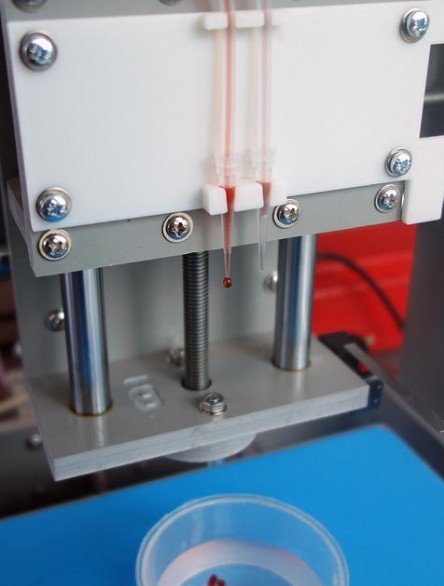
 The study was published online late last month in Lab on a Chip. The study’s senior author, Ali Khademhosseini – PhD, biomedical engineer, and director of the BWH Biomaterials Innovation Research Center – explained the challenge and their goal as follows:
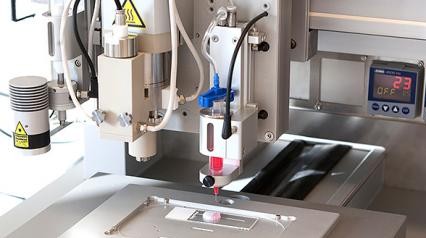 They were also able to successfully embed these functional and perfusable microchannels inside a wide range of commonly used hydrogels, such as methacrylated gelatin or polyethylene glycol-based hydrogels. In the former case, the cell-laden gelatin was used to show how their fabricated vascular networks functioned to improve mass transport, cellular viability and cellular differentiation. Moreover, successful formation of endothelial monolayers within the fabricated channels was achieved.

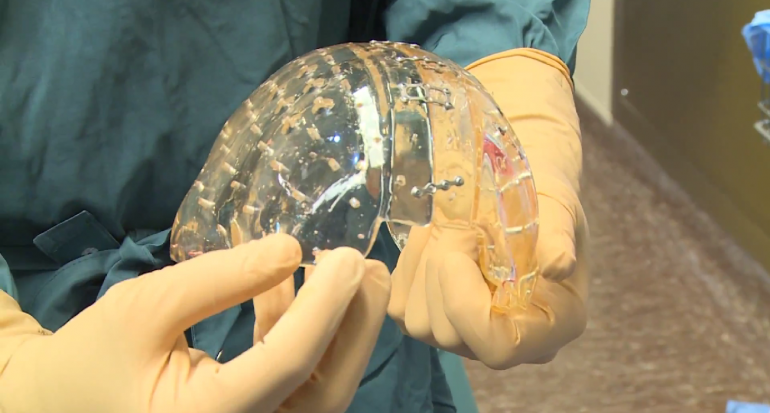
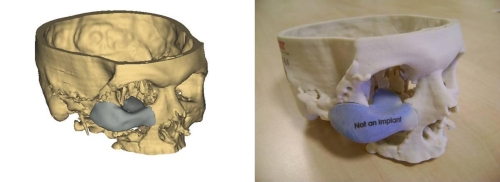
 The ability to tailor-make synthetic bones, which are exact duplicates to the original, offers exciting possibilities for reconstructive and replacement surgery. It also does away with some rather invasive and unsatisfactory procedures that involve putting shattered bones back together and joining them with pins, bars and screws. And considering that such procedures often require multiple operations, the combination of 3D scanning and 3D printed replacements is also far more cost effective.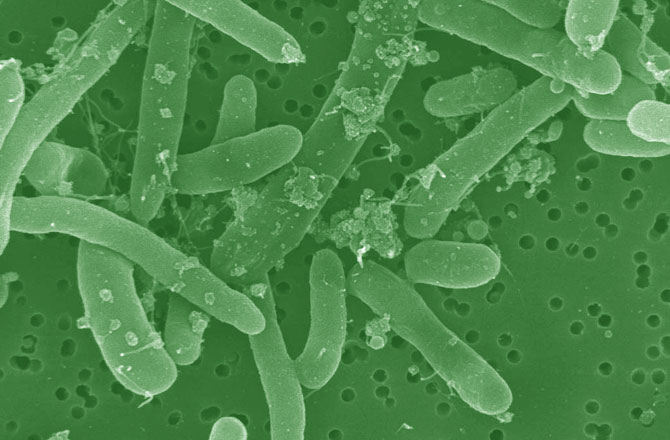
 Chu conceived of the idea while working as a professor of physics and molecular and cellular biology at the University of California, Berkeley. In short, the plan calls for fast-growing crops to be planted in the tropics – where sunlight is abundant – converted into glucose (of which cellulose, which makes up much of the dry weight of a plant, is a polymer). The resulting glucose and cellulose would then be shipped around much as oil is today, for eventual conversion into biofuels and bioplastics.
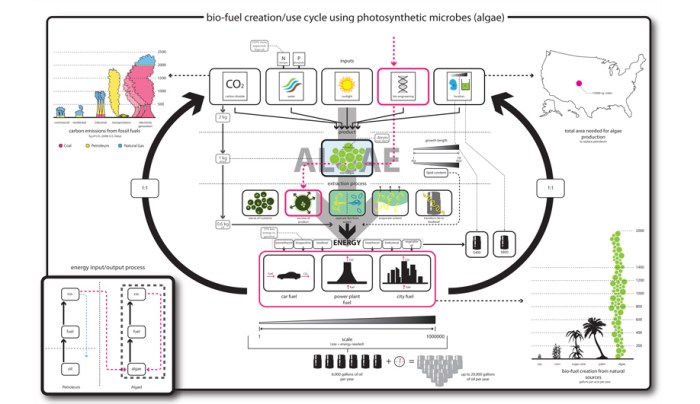 Another benefit of the this new model is the economic development it will bring to the tropical regions of the world. As far as production is concerned, those regions that stand to benefit the most are Sub-Saharan Africa, Central and South America, and South-East Asia. These regions are already seeing significant economic growth, and a shift like this would ensure their continued growth and development (not to mention improved quality of life) for many generations to come.
 Not only would this shave decades off the development process, but also hundreds of millions of dollars. What’s more, Benjamin claims it could take only 8 to 10 years to see this type of biotechnology enter commercial production. Naturally, there are those who oppose the development of a “glucose economy” as advocated by Chu. Beyond the proponents of fossil fuel energy, there are also those advocate nationally self-sufficient resources bases, rather than foreign dependence.











 Stories by Williams