The Future is Here: “Ironman” Spec-Ops Suit


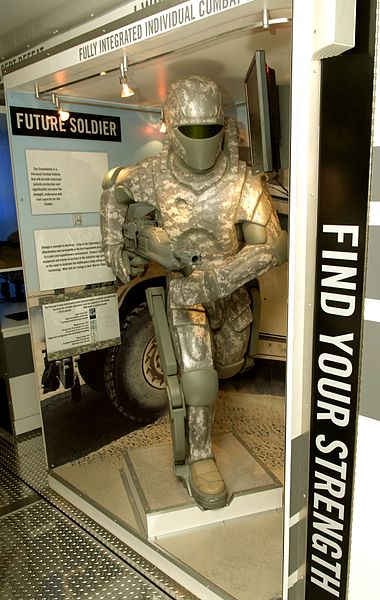
ironman3Army researchers have been working for years to incorporate powered armor, exoskeletons, and high-tech weaponry into the arsenal of next-generation soldiers. And this latest development from DARPA – the Defense Advanced Research Projects Agency, the research wing of the US Army – is being hailed as the closest thing there is to a real-life “Iron Man” suit to date.

Its known as the Tactical Assault Light Operator Suit (TALOS) and is designed to deliver “superhuman strength with greater ballistic protection”. Named in honor of the Greek automaton made of bronze that Zeus assigned to protect his lover Europa, this suit incorporates a powered exoskeleton, liquid armor, built-in computers and night vision, and the ability to monitor vital signs and apply wound-sealing foam.

DARPA-Warrior-Web-660x495Put together, the capabilities would make the already elite Special Operation Forces nearly invincible in the field, according to the Army. As Lt. Col. Karl Borjes, a U.S. Army Research, Development and Engineering Command (RDECOM) science adviser, said in a statement:

[The] requirement is a comprehensive family of systems in a combat armor suit where we bring together an exoskeleton with innovative armor, displays for power monitoring, health monitoring, and integrating a weapon into that — a whole bunch of stuff that RDECOM is playing heavily in.

For the sake of the suit’s design and high-tech features, DARPA reached out to engineers from MIT, who are currently working to produce the liquid body armor that is perhaps the most advanced feature of the suit. Composed of magnetorheological fluids, this armor will “transform from liquid to solid in milliseconds when a magnetic field or electrical current is applied.”

TALOS_Future_Army_Soldier_WideThe suit is expected to make a first-generation appearance some time next year. Because of the high number of highly integrated technical challenges with advanced specifications, the Army is also drawing on a broad range of collaborators from multiple fields to complete the design in time. And as Jim Geurts, USSOCOM acquisition executive, in a statement:

USSOCOM is interested in receiving white papers from a wide variety of sources, not just traditional military industry but also from academia, entrepreneurs, and laboratories capable of providing the design, construction, and testing of TALOS related technologies. The intent is to accelerate the delivery of innovative TALOS capabilities to the SOF operator.

US_Army_powered_armorFor some time now, the concept of advanced powered suits of armor has been a feature of science fiction. Examples abound from literary references, such as E.E. Smith’s Lensman series and Heinlein’s Starship Troopers, to RPGs like BattleTech and Warhammer 40k, and to the gaming world with the HALO and Fallout series’. And much like lightsabers, there has scarcely been a geek alive who didn’t want one!

Now it seems that something very close might be realizable within a year’s time. I don’t know about you, but I feel both inspired and more than a little jealous. Damn SOCOM, always getting the coolest gear first! And of course, there’s a video:


Sources:
wired.com, dailytech.com
,

The Future is Here: Self-Healing Metal

self-healing_metalYou’ve heard of self-healing concrete, you’ve heard of self-healing polymers. And now, it seems that researchers at MIT have found a way to make metals heal themselves after tiny cracks form. As the latest in a series of materials that is capable of maintaining itself, this discovery could very well help pioneer the revolution in manufacturing everyone has been waiting for.

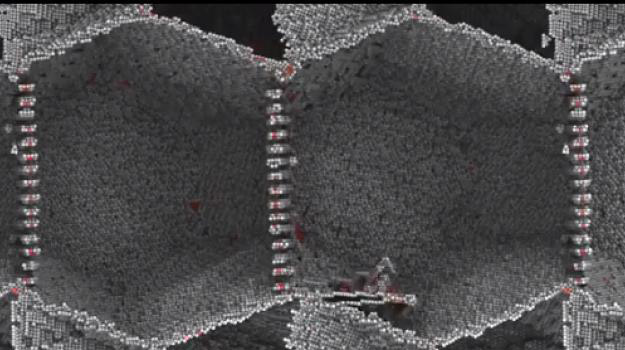
Led by graduate student Guoqiang Xu and professor Michael Demkowicz, the process of getting metals to heal themselves was made almost entirely by accident. The discovery first came when they were modelling a sheet of nickle and tiny microscopic cracks were applied. Once tension was applied, the cracks became smaller and then disappeared as the edges fused together.

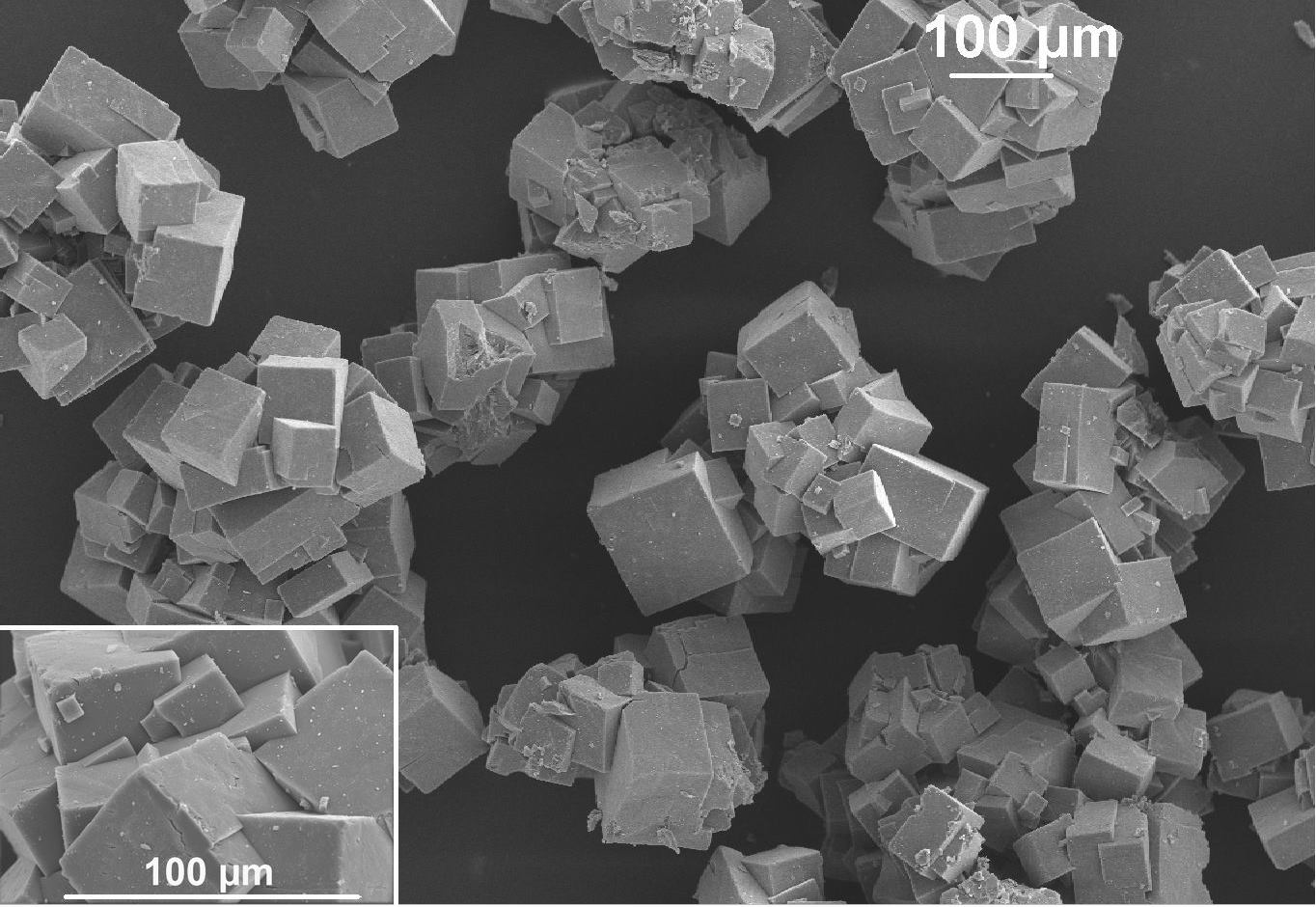
crystallineApparently, the key has to do with the fact that most metals are composed of microscopic crystalline grains, the size and orientation of which affect the overall strength and characteristics of the material. Nickel has always been of interest because of its use in so many superalloys, many of which are used in harsh environments – jet turbines, deep sea oil rigs, heavy industry joints.

It turns out that the grains making these materials so strong are not as static as scientists thought. As the metal is pulled outward, the edge of the crystalline grains begins to migrate and can eventually fill in the crack completely. The migration of this crystalline boundary is what heals the gaps in the material. And while it is not exactly polymorphic alloy (see pic below), its certainly big news.

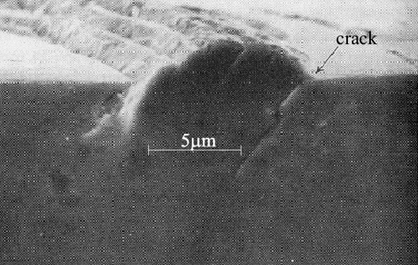
metal_fatigueAnd while researchers have only been able to reproduce this healing behavior with cracks at the microstructural level (known as disclination), these micro-defects are the source of much larger and sometimes catastrophic cracks and metal fatigue. The geometry of disclinations can actually reverse an applied force locally, which is how the tension leads to the metal pulling itself back together.

The team believes this newfound knowledge can be used to prevent superalloys from accumulating structural cracks that could lead to real damage with time. Materials could also be designed to direct damage into disclination-type structures, areas that could absorb damage and then heal themselves. Given time, it could even lead to metals that don’t weaken with age.

t1000Still, you shouldn’t be expecting something like this guy anytime soon! And be sure to enjoy this brief but poignant video of the self-healing effect in action:


Source:
extremetech.com

The Future is Here: Nanofibre Heart Patches

heart_patchesFor years, medical researchers have been trying to find a solution to the problem of post-cardiac event health. You see, when a heart attack occurs, the damaged tissue doesn’t grow back, but instead forms non-beating scar tissue. This in turn permanently weakens the heart, making another cardiac event that much more probable.

However, researchers at Tel Aviv University are getting promising results from a possible solution using patches that contain cardiac cells and gold nanofibers. As with other experimental heart patches, the idea behind these ones is that they could be surgically placed on damaged areas of the heart, where they would cause normal, beating heart tissue to grow back.

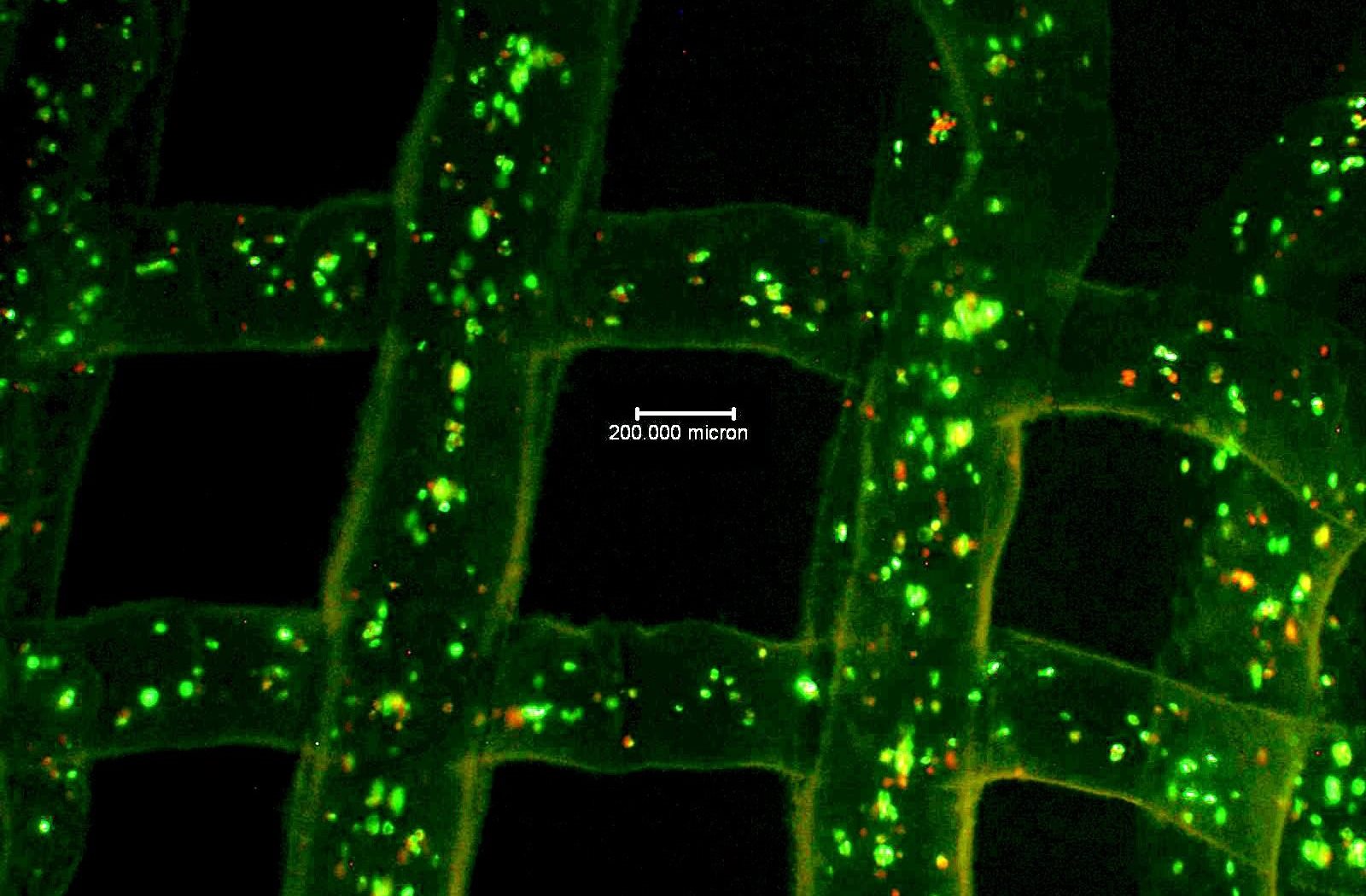
gold_nanoparticlesTo create them, a team led by Dr. Tal Dvir started by integrating nanofibers made of gold nanoparticles into a three-dimensional scaffolding made of biomaterials. That scaffolding was then “seeded” with heart muscle cells. The high conductivity of the gold allowed those cells to communicate with one another by sending electrical signals through the network of nanofibers.

When viewed with an electron microscope, the cells were observed to be contracting in unison, which is essential to the proper beating of the heart. By contrast, cells that were placed on scaffolding without the embedded gold nanofibers displayed much weaker contractions. In other experiments, gold nanofibers have proven useful to enhancing heart heath. But in this case, may prove useful to replacing damaged heart tissue.

heart_healthNaturally, more work is needed before this new heart patch can be made available to patients. This includes human trials, which Dr. Dvir and his colleagues are hoping to conduct soon. Similar research is also being conducted at MIT, where scientists have created electrically conductive tissue scaffolds that include cardiac cells and gold nanowires.

This research is not only a boon for cardiac health, but is also a major step forward in terms of cybernetics, biomimetics, and nanotechnology. By merging the organic and synthetic at the nano level, and in a way that merges with our bodies natural architecture, a new breed of medical solutions are being made available that could make “permanent conditions” a thing of the past.

Source: gizmag.com, aftau.org

The Future is Here: Memory Implants Now Possible!

?????????????????????The concept of implanting a person with false memories has been featured in many a science fiction franchise. Between Philip K. Dick’s “We Can Remember it for you Wholesale” (which was the basis for Total Recall), the cult-hit Dark City, and the more recent Inception, the idea that memories could be tampered with – thus showing how reality and experience are subjective – has a long history.

And now it seems that once again, science fiction has proven to be the basis of science fact. As a result ongoing collaboration between the Japanese Riken Brain Science Institute and MIT’s Picower Institute for Learning and Memory, a process has been devised for planting specific false memories into the brains of mice.

memory_implantsThis breakthrough, in addition to being mind-blowing and kind of scary, is also likely to seriously extend our understanding of memory. The ability to learn and remember is a vital part of any animal’s ability to survive, but with human beings, it also plays a major role in our perception of what it is to be human. What’s more, disorders effecting the human brain and memory have been growing considerably in recent decades.

These range from Alzheimer’s disease, where the abilities to make new memories and to place one’s self in time are seriously disrupted, to Post-Traumatic Stress Disorder, in which a memory of a particularly unpleasant experience cannot be suppressed. Such disorders are a powerful force driving research into discovering how healthy memory functions so that we can diagnose and treat problems before they become too serious.

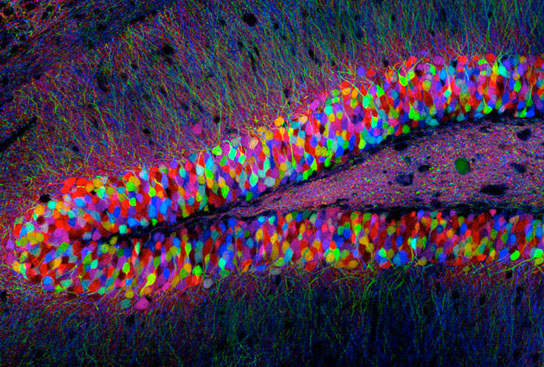
Mouse-Hippocampus1In their previous work, researchers from the Picower Center for Neural Circuit Genetics were able to identify an assembly of neurons in the brain’s hippocampus that held a memory engram – a cell containing data about a sequence of events. In recalling a memory, the brain uses this data to reconstruct the associated events, but this reconstruction often varies from what actually occurred.

Working from this, the researchers were able to locate and identify the neurons encoding a particular engram (a specific set of memories) through the use of optogenetics. This technique is a relatively new neuromodulation process that uses a combination of genetic modification and optical stimulation to control the activity of individual neurons.ChR_memoryAfterward, they were able to genetically engineer the hippocampal cells of a new strain of mouse so that the cells would form a light-sensitive protein called a channelrhodopsin (ChR). These proteins activate neurons when stimulated by light, thus ensuring that specific memories could be triggered by exposing someone implanted with them to a light source.

Next, the researchers conducted a series of behavioral experiments in order to identify the set of brain cells that were active only when a mouse was learning about a new environment. The genes activated in those cells were then coupled with the light-sensitive ChR and monitored during the next phase of the experiment, where the mice were placed in a series of boxes.

memory_implants1In the first box, the mice were exposed to a safe environment, during which time the neurons that were actively forming memories were labelled with ChR, so they could later be triggered by light pulses. In the second box, mice were treated to a series of mild foot shocks, which created a negative association, while at the same time, a pulsing light was used to trigger their memories of being in the first box.

When the mice were returned to the first box, in which they had only pleasant experiences, they clearly displayed fear/anxiety behaviors. In short, the fear that they had learned in a separate environment was now falsely associated with the safe environment. Whats more, the false fear memory could be reactivated at will in any environment by triggering the neurons associated with that false memory.

brain-activityWhat this demonstrated was that the recall of this false memory drove an active fear response that was indistinguishable from a real memory. And according to Steve Ramirez, a graduate student in the Tonegawa lab and the lead author of the paper, the experiment provided some real insight into the nature of memory:

These kinds of experiments show us just how reconstructive the process of memory actually is. Memory is not a carbon copy, but rather a reconstruction of the world we’ve experienced. Our hope is that, by proposing a neural explanation for how false memories may be generated, down the line we can use this kind of knowledge to inform, say, a courtroom about just how unreliable things like eyewitness testimony can actually be.

Granted, it might not sound like Total Recall or Inception, but the basic premise is the same. And note how in those movies, no explanation was given as to how these false memories were fashioned – nor could they be, since no means yet existed. But now, using this technique, memories could be fashioned in one person, and then implanted in another.

total-recall-originalFrightened yet? Well, you should be! If memory is one of the very things that define us as human beings, and we can’t be sure if the memories we have are real, our own, or someone else’s, then how can we be sure of anything? How do we even know who we are? Man, I’d be writing this into a story outline right now if it hadn’t already been done to death!

Until next time, guard your experiences and memories jealously! You never know when someone might try to come along and steal them…

Sources: gizmag.com, io9.com

Judgement Day Update: A.I. Equivalent to Four Year Old Mind

artificial_intelligence1Ever since computers were first invented, scientists and futurists have dreamed of the day when computers might be capable of autonomous reasoning and be able to surpass human beings. In the past few decades, it has become apparent that simply throwing more processing power at the problem of true artificial intelligence isn’t enough. The human brain remains several orders more complex than the typical AI, but researchers are getting closer.

One such effort is ConceptNet 4, a semantic network being developed by MIT. This AI system contains a large store of information that is used to teach the system about various concepts. But more importantly, it is designed to process the relationship between things. Much like the Google Neural Net, it is designed to learn and grow to the point that it will be able to reason autonomously.

child-ai-brainRecently, researchers at the University of Illinois at Chicago decided to put the ConceptNet through an IQ test. To do this, they used the Wechsler Preschool and Primary Scale of Intelligence Test, which is one of the common assessments used on small children. ConceptNet passed the test, scoring on par with a four-year-old in overall IQ. However, the team points out it would be worrisome to find a real child with lopsided scores like those received by the AI.

The system performed above average on parts of the test that have to do with vocabulary and recognizing the similarities between two items. However, the computer did significantly worse on the comprehension questions, which test a little one’s ability to understand practical concepts based on learned information. In short, the computer showed relational reasoning, but was lacking in common sense.

Neuromorphic-chip-640x353This is the missing piece of the puzzle for ConceptNet and those like it. An artificial intelligence like this one might have access to a lot of data, but it can’t draw on it to make rational judgements. ConceptNet might know that water freezes at 32 degrees, but it doesn’t know how to get from that concept to the idea that ice is cold. This is basically common sense — humans (even children) have it and computers don’t.

There’s no easy way to fabricate implicit information and common sense into an AI system and so far, no known machine has shown the ability. Even IBM’s Watson trivia computer isn’t capable of showing basic common sense, and though multiple solutions have been proposed – from neuromorphic chips to biomimetic circuitry – nothing is bearing fruit just yet.

AIBut of course, the MIT research team is already hard at work on ConceptNet 5, a more sophisticated neural net computer that is open source and available on GitHub. But for the time being, its clear that a machine will be restricted to processing information and incapable of making basic decisions. Good thing too! The sooner they can think for themselves, the sooner they can decide we’re in their way!

Source: extremetech.com

Building the Future: 3D Printing and Silkworms

arcology_crystalWhen it comes to building the homes, apartment blocks and businesses headquarters of the future,  designers and urban planners are forced to contend with a few undeniable realities. No only are these buildings going to be need to be greener and more sustainable, they will need to be built in such a way that doesn’t unnecessarily burden the environment.

Currently, the methods for erecting a large city building are criminally inefficient. Between producing the building materials – concrete, steel, wood, granite – and putting it all together, a considerable amount of energy is expended in the form of emissions and electricity, and several tons of waste are produced.

anti-grav3d2Luckily, there are many concepts currently on the table that will alter this trend. Between using smarter materials, more energy-efficient design concepts, and environmentally-friendly processes, the future of construction and urban planning may someday become sustainable and clean.

At the moment, many such concepts involve advances made in 3-D printing, a technology that has been growing by leaps and bounds in recent years. Between anti-gravity printers and sintering, there seems to be incredible potential for building everything from settlements on the moon to bridges and even buildings here on Earth.

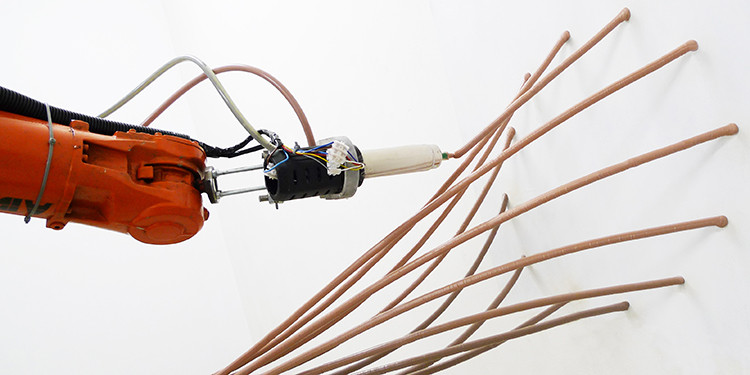
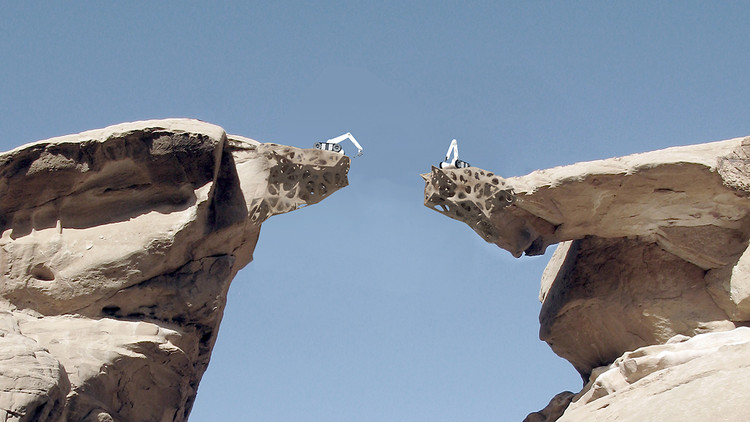
bridge_3One case in particular comes to us from Spain, where four students from the Institute for Advanced Architecture of Catalonia have created a revolutionary 3-D printing robot. It’s known as Stone Spray, a machine that can turn dirt and sand into finished objects such as chairs, walls, and even full-blown bridges.

The brainchild of Anna Kulik, Inder Prakash, Singh Shergill, and Petr Novikov, the robot takes sand or soil, adds a special binding agent, then spews out a fully formed architectural object of the designers’ choosing. As Novikov said in an interview with Co.Design:

The shape of the resulting object is created in 3-D CAD software and then transferred to the robot, defining its movements. So the designer has the full control of the shape.

robot-on-site_0So far, all the prototypes – which include miniature stools and sculptures – are just 20 inches long, about the size of a newborn. But the team is actively planning on increasing the sizes of the objects this robot can produce to architectural size. And they are currently working on their first full-scale engineering model: a bridge (pictured above).

If successful, the robot could represent a big leap forward in the field of sustainable design. Growing a structure from the earth at your feet circumvents one of the most resource-intensive aspects of architecture, which is the construction process.

And speaking of process, check out this video of the Stone Spray in action:


At the same time, however, there are plans to use biohacking to engineer tiny life forms and even bacteria that would be capable of assembling complex structures. In a field that closely resembles “swarm robotics” – where thousands of tiny drones are programmed to build thing – “swarm biologics” seeks to use thousands of little creatures for the same purpose.

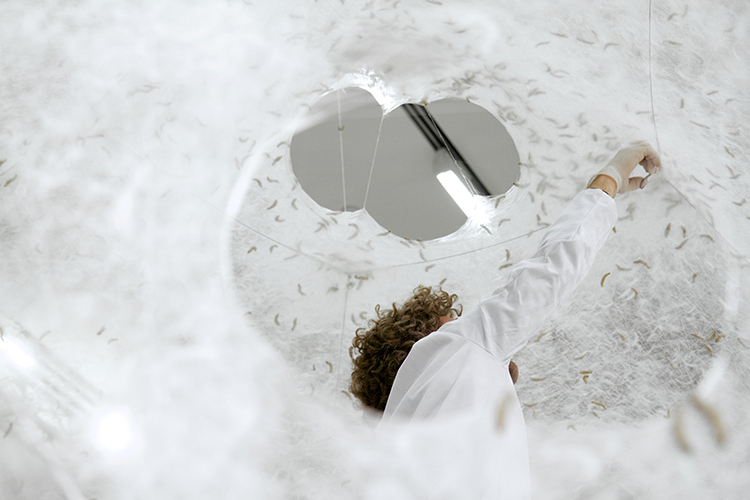
silkpavilionMIT has taken a bold step in this arena, thanks to their creation by the Mediated Matter Group that has rebooted the entire concept of “printed structures”. It’s called the Silk Pavilion, a beautiful structures whose hexagonal framework was laid by a robot, but whose walls were shell was created by a swarm of 6,500 live silkworms.

It’s what researchers call a “biological swarm approach to 3-D printing”, but could also be the most innovate example of biohacking to date. While silkworms have been used for millennia to give us silk, that process has always required a level of harvesting. MIT has discovered how to manipulate the worms to shape silk for us natively.

silkpavilion-2The most immediate implications may be in the potential for a “templated swarm” approach, which could involve a factory making clothes just by releasing silkworms across a series of worm-hacking mannequins. But the silkworms’ greater potential may be in sheer scale.

As Mediated Matter’s director Neri Oxman told Co.Design, the real bonus to their silkworm swarm its that it embodies everything an additive fabrication system currently lacks. 

It’s small in size and mobile in movement, it produces natural material of variable mechanical properties, and it spins a non-homogeneous, non-woven textile-like structure.

What’s more, the sheer scale is something that could come in very handy down the road. By bringing 3-D printing together with artificial intelligence to generate printing swarms operating in architectural scales, we could break beyond the bounds of any 3-D printing device or robot, and build structures in their actual environments.

silkpavilion-1In addition, consider the fact that the 6,500 silkworms were still viable after they built the pavilion. Eventually, the silkworms could all pupate into moths on the structure, and those moths can produce 1.5 million eggs. That’s enough to theoretically supply what the worms need to create another 250 pavilions.

So on top of everything else, this silkworm fabrication process is self-propagating, but unlike plans that would involve nanorobots, no new resources need to be consumed to make this happen. Once again, it seems that when it comes to the future of technology, the line between organic and synthetic is once more blurred!

And of course, MIT Media Lab was sure to produce a video of their silkworms creating the Silk Pavilion. Check it out:


Sources:
fastcodesign.com, (2)

Feeding the Future: 3D Printing to End World Hunger?

3DfoodThe Systems & Materials Research Corporation, a 3D printing development firm, received a lot of attention after it became revealed that NASA had hired him (to the tune of $125,000) to develop a printer that could create pizza. Looking ahead to the era of deep-space exploration, NASA wanted something that could provide its astronauts with food that was tasty, nutritious, and not subject to a shelf life.

But to Anjan Contractor, the head of SMRC, 3D printing also presents a solution to a much more terrestrial problem: world hunger. He sees a day when every kitchen has a 3D printer, and the earth’s 12 billion people feed themselves customized, nutritionally-appropriate meals synthesized one layer at a time, from cartridges of powder and oils they buy at the corner grocery store.

3dfood1Contractor’s vision would mean the end of food waste, because the powder his system will use is shelf-stable for up to 30 years. Each cartridge, whether it contains sugars, complex carbohydrates, protein or some other basic building block, would therefore be fully exhausted before ever needing to be returned to the store. So in addition to providing for our daily needs, this process would also eliminate a massive proportion of the waste we generate on a daily basis.

In addition, the proliferation of food synthesizers is also likely lead to new and diverse ways of producing the basic calories on which we rely. Since a powder is a powder, the inputs could be anything that contain the right organic molecules. And with open source software, where people can upload and download recipes all the time, people will have a chance to get creative and expand the repertoire.

OLYMPUS DIGITAL CAMERAAnd in addition to alleviating hunger, there is the added (and arguably bigger) bonus of relieving pressure on the natural environment. Already, environmentalists are gravelly concerned about the amount of land that is consumed every year by urban sprawl. But even more disconcerting is the amount of land, forests, wetlands, and natural habitats, that are consumed and destroyed by the need to farm food for these environments, and dispose of their waste.

And he is hardly alone when it comes to the concept of turning powdered ingredients and pastes into food. The Dutch holding company known as TNO Research, which owns several technology firms, has also been contemplating the possibilities of turning any food-like starting material into an edible meal. According to an outline provided by their researchers, 3D printed meals of the future could include any of the following “alternative ingredients”:

  • algae
  • duckweed
  • grass
  • lupine seeds
  • beet leafs
  • insects

As long as the biological properties of the base materials are appropriate – meaning they have the requisite carbohydrates, protein, fatty acids, etc – than it should be possible to synthesize just about anything.

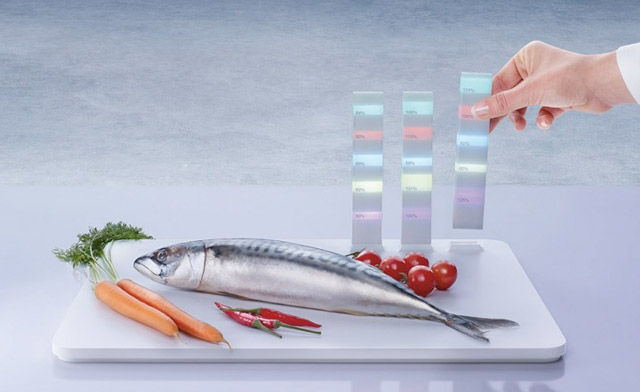
3dfood2In addition, companies like Philips and institutions like MIT have been working on the concept of food printers for many years. In Philip’s case, this research led to the creation of the Diagnostic Kitchen program. This led to ideas for a Food Printer, which was inspired by the concept of ‘molecular gastronomists’, chefs who deconstruct meals and then reassemble it in completely different ways.

In much the same way, a Food Printer would take various edible ingredients and then combine and ‘print’ them in the desired shape and consistency. The nutritional value and relevance of what was being ‘printed’ would also be adjusted based on input from the diagnostic kitchen’s nutrition monitor. If, for example, you were trying to carbo-load for an athletic event, wanted to build muscle, or lower your cholesterol, you could tweek the levels of carbs, protein, or fatty acids to suit your needs.

MIT_3DprinterAnd there’s the Cornucopia,  a 3D printer that was unveiled by MIT’s gastronomy geeks back in 2010. Here, a series of refrigerated food canisters provide the food ingredients, which are then deposited into a built-in mixer which delivers concoctions that can be either heated or cooled thanks to a temperature controlled print head. A touch screen allows users to dial in what they want, and adjust ingredients to get the desired end.

Granted, there are those who won’t likely see this as an appetizing prospect. But as Contractor notes, that’s probably because they haven’t tried the high-end stuff yet. As the technology improves, attitudes about printed food products are likely to change. What’s more, he also believes overpopulation might add a little incentive to the mix:

I think, and many economists think, that current food systems can’t supply 12 billion people sufficiently. So we eventually have to change our perception of what we see as food.

Quite right. When the world is bursting at the seems and so many people are forced to live together in close quarters, hardly anyone is likely to raise a fuss about assembled food. Not when the alternative is an empty belly or a planet that will collapse from the weight of so much farming and waste. So if you’re the kind of person who likes their meat, veggies and fruits to be farmed locally and organically, you may want to consider moving to the country!

And be sure to check out this concept video produced by NTO that showcases the future of 3D printing, which of course includes food production:


Source:
qz.com, popucity.net, geek.com

The Future of Cities and Urban Planning

future-city-1With the development of vertical farms, carbon capture technology, clean energy and arcologies, the future of city life and urban planning is likely to be much different than it does today. Using current trends, there are a number of people who are determined to gain some understanding of what that might look like. One such group is Arup, a design and engineering firm that produced a mockup that visualizes what urban environments will look like in 2050.

Based on the world as it is today, certain facts about the future seem relatively certain. For starters, three-quarters of the population will live in cities, or 6.75 billion of the projected 9 billion global total. In addition, everyone will have grown up with the Internet, and its successors, and city residents will have access to less natural resources than they do today, making regeneration and efficiency more of a priority.

Add to this several emerging technologies, and our urban environments are likely to look something like the building mockup below. As you can see, it has its own energy systems (“micro-wind,” “solar PV paint,” and “algae facade” for producing biofuels). There is an integrated layer for meat, poultry, fish, and vegetable farming, a “building membrane” that converts CO2 to oxygen, heat recovery surfaces, materials that phase change and repair themselves, integration with the rest of the city, and much more.

future_urban_planning

Most futuristic of all is the fact that the structure is completely modular and designed to be shifted about (by robots, of course). The building has three layer types, with different life-spans. At the bottom is a permanent layer – with a 10 to 20-year lifespan – which includes the “facade and primary fit-out walls, finishes, or on-floor mechanical plant” – and a third layer that can incorporate rapid changes, such as new IT equipment.

As Arup’s Josef Hargrave described the building when unveiling the design:

[A]ble to make informed and calculated decisions based on their surrounding environment… [a] living and breathing [structure] able to support the cities and people of tomorrow.

In short, the building is designed with personal needs in mind, based on information gleamed from a person’s behaviors, stated preferences, and even genetic information.

aircleaning_skyscraper3But what is even more interesting is how these buildings will be constructed. As countless developments are made in the field of robotics, biotechnology and nanotechnology, both the materials used and the processes involved are likely to be radically different. The rigid construction that we are used to is likely to give way to buildings which are far more flexible, adaptive, and – best of all – built by robots, drones, tiny machines and bacteria cultures.

Once again, this change is due mainly to the pressures that are being placed on urban environments, and not just technological advances. As our world becomes even more densely populated, greater proportions of people live in urban environments, and resources become more constrained, the way we build our cities must offer optimum efficiency with minimal impact.

nanomachineryTowards this end, innovations in additive manufacturing, synthetic biology, swarm robotics, and architecture suggest a future scenario when buildings may be designed using libraries of biological templates and constructed with biosynthetic materials able to sense and adapt to their conditions.

What this means is that cities could be grown, or assembled at the atomic level, forming buildings that are either living creatures themselves, or composed of self-replicated machines that can adapt and change as needed. Might sound like science fiction, but countless firms and labs are working towards this very thing every day.

It has already been demonstrated that single cells are capable of being programmed to carry out computational operations, and that DNA strains are capable of being arranged to carry out specialized functions. Given the rapid progress in the field of biotech and biomimetics (technology that imitates biology), a future where the built environment imitates organic life seems just around the corner.

biofabrication For example, at Harvard there is a biotech research outfit known as Robobees that is working on a concept known as “programming group dynamics”. Like corals, beehives, and termite colonies, there’s a scalar effect gained from coordinating large numbers of simple agents to perform complex goals. Towards this end, Robobees has been working towards the creation of robotic insects that exhibit the swarming behaviors of bees.

Mike Rubenstein leads another Harvard lab, known as Kilobot, which is dedicated to creating a “low cost scalable robot system for demonstrating collective behaviors.” His lab, along with the work of researcher’s like Nancy Lynch at MIT, are laying the frameworks for asynchronous distributed networks and multi-agent coordination, aka swarm robotics, that would also be capable of erecting large structures thanks to centralized, hive-mind programming.

nanorobot1

In addition to MIT, Caltech, and various academic research departments, there are also scores of private firms and DIY labs looking to make things happen. For example, the companies Autodesk Research and Organovo recently announced a partnership where they will be combining their resources – modelling the microscopic organic world and building bioprinters – to begin biofabricating everything from drugs to nanomachines.

And then there are outfits like the Columbia Living Architecture Lab, a group that explores ways to integrate biology into architecture. Their recent work investigates bacterial manufacturing, the genetic modification of bacteria to create durable materials. Envisioning a future where bacterial colonies are designed to print novel materials at scale, they see buildings wrapped in seamless, responsive, bio-electronic envelopes.

ESA_moonbaseAnd let’s not forget 3D printing, a possibility which is being explored by NASA and the European Space Agency as the means to create a settlement on the Moon. In the case of the ESA, they have partnered with roboticist Enrico Dini, who created a 3-D printer large enough to print houses from sand. Using his concept, the ESA hopes to do the same thing using regolith – aka. moon dust – to build structures on Earth’s only satellite.

All of these projects are brewing in university and corporate labs, but it’s likely that there are far more of them sprouting in DIY labs and skunkworks all across the globe. And in the end, each of them is dedicated to the efficiency of natural systems, and their realization through biomimetic technology. And given that the future is likely to be characterized by resources shortages, environmental degradation and the need for security, it is likely to assume that all of these areas of study are likely to produce some very interesting scenarios.

As I’ve said many times before, the future is likely to be a very interesting place, thanks to the convergence of both Climate Change and technological change. With so many advances promising a future of post-scarcity, post-mortality, a means of production and a level of control over our environment which is nothing short of mind-boggling – and a history of environmental degradation and resource depletion that promises shortages, scarcity, and some frightening prospects – our living spaces are likely to change drastically.

The 21st century is going to be a very interesting time, people. Let’s just hope we make it out alive!

Sources: fastcoexist.com, (2)

Hacker Wars: Westboro Baptists Church Gets Jestered!

jester_westboroBy now, I imagine everyone is familiar with the Westboro Baptist Church, the notorious ultra-militant Christian cult best known for its slogan “God Hates Fags”. Well, it seems that the group has expanded its message of hate, no longer content to celebrate the deaths of gays or of US servicemen and women –  with such slogans as “Thank God for dead soldiers” or “Thank God for IEDs”. Yes, it now seems they have widened their focus and chosen to embrace new tragedies in their quest to spread their message of hate.

These include such tragedies as the Newton, Connecticut shooting and the Oklahoma tornadoes. And while their efforts to protest the funeral of Principal Dawn Hochsprung – one of the many victims of the tragic school shooting – were thwarted by a group of good Samaritans, the group still managed to make some headlines for themselves with the creation of the website GodHatesOklahoma.com, claiming once again that the tragedy in Oklahoma was God’s judgement, and praising Him for taking the lives of the 24 people who were killed.

Hackers-With-An-AgendaLuckily, the hacker community stepped in to teach these hate-mongers a lesson. Shortly after the website went up, all the original content was deleted and replaced with a picture of Jesus giving the Westboro Church the middle finger. The words ” “Westboro Faptist Church — Even Jesus Hates You” were added to let them know exactly who the Savior was cursing and why. (FYI: Faptist is a reference to the word “fap,” Internet slang for “masturbate”).


Clearly, the Westboro techs took the website down, because none of the content is avaiable for veiwing anymore. But according to some additional rumors, the person responsible was Jester, a relatively well-known hacker. This was indicated by the added message: “On the 8th day, God created hackers, and he saw that it was good. From the Gospel according to @th3j35t3r Redirecting in 5 seconds…….” After waiting, visitors were taken to a Red Cross donation site for victims of the storm.hackers_security@th3j35t3r refers to Jester’s Twitter account, which contained the message: “Westboro Faptist ‘Church’ – My God loves everyone, especially you. You need it the most”, followed by a link to an article at The Daily Dot which acknowledged his efforts. It is unclear at this time if Westboro will attempt to put their site up again, but given their inferior programming skills, I would imagine they’d not want to tempt fate, or the hacking community, a second time.

And might I take this opportunity to commend Jester and those like him. This incident, much like Anonymous’ exposure of the internet predator who ruined Amanda Todd’s life, shows how hackers can be a truly positive influence on society. Much those people who originally came together at MIT to found the “Hacker Ethic”, these individuals are proof that some people are still capable using technology for good and not abusing their freedom.

Sources: mashable.com, huffingtonpost.com

The Future is Here: Cellular Computers!

dnacomputingComputing has come so far in such a relatively short space of time. Beginning with comparatively basic models, which relied on arrangements of analogue circuits (such as capacitors and resistors), scientists were able to perform complex calculations, crack impenetrable cyphers, and even know how and where to deploy counter-measures against incoming missiles. And as we all know, sometimes you have to look back to the fundamentals if you want to move any farther ahead.

And that’s precisely what researchers at MIT have done with their latest innovation: an analog computer that works inside a living cell! A massive step towards a future where machinery and biology are one and the same, these “cellular computers” were not only able to perform arithmetic, but also more complex functions like taking logarithms, square roots, and even do power law scaling.

biological-analog-computers-in-cells-640x353This news comes on the heels of researchers at Stanford who were able to create a biological transistor inside a cell. Relying on DNA and RNA to create a “transcriptors”, the Standford researchers were able to create a biological logic gate, and all on the microscopic scale. When combined the sorts of digital and analog circuits common to computing, this research could lead to powerful sensing and control platforms built on very small scales.

And like many recent innovations and developments made within the world of computing and biotechnology, the possibilities that this offers are startling and awesome. For one, all cells work with a certain biological clock, which regulates growth, circadian rhythms, aging, and numerous biological process. Thus far, the researchers in question have been hosting their biological computers in bacterial cells. But if they were to develop analogous circuits that operate in mammalian cells, these functions might be brought into better use.

DNA-molecule2What this means is that we could be very well seeing the beginning of biology that is enhanced and augmented by the addition of technology on the cellular level. And not in the sense of tiny machines or implants, things made of silicon and minerals that would regulate our blood flow, administer drugs or monitor or vitals. No, in this case, we would be talking about machines that are composed of self-regulating DNA and RNA and work in the same way our organic tissues do.

On top of that, we would be able to create things like flash drives and computation software from living tissue, cramming thousands of terabytes of into into a few cells worth of genetic material. Human beings would no longer need smartphones, PDAs or tablets, since they would be able to carry all the information they would ever need in their body. And the ability to do this could very well lead to the creation of AI’s that are not build, but grown, making them virtually indistinguishable from humans.

caprica_6And you know what that means, don’t you? The line between biological and artificial would truly begin to dissolve, Voight-Kampff and genetic tests might have to become mandatory, and we could all be looking at robots that look something like this…

Man the future is awesome and scary!

Sources: Extremetech.com, (2)