News From Space: “FedEx” to the Moon

fedex-to-moon-google-x-lunarThe Moon has been quite the source of news lately. From NASA’s and the ESA’s planned efforts to build a settlement, to NASA and Google planning to send vegetation there, and China’s recent deployment of the Jade Rabbit rover, it seems that all the major space agencies of the world are eying the lunar surface with plans for eventual colonization.

What’s more, numerous private interests are looking to get in on the action, plotting everything from space tourism to courier services. One such company is Moon Express, a space startup that is competing for the Google Lunar X prize to develop a spacecraft that would one day be able to land on the lunar surface, move 500 meters, and send back two messages.

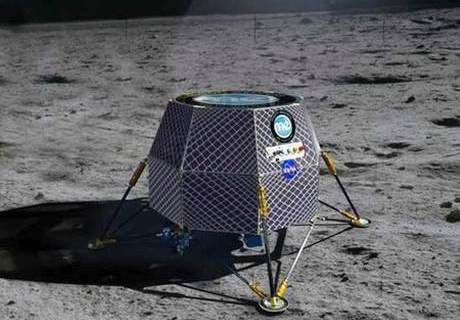
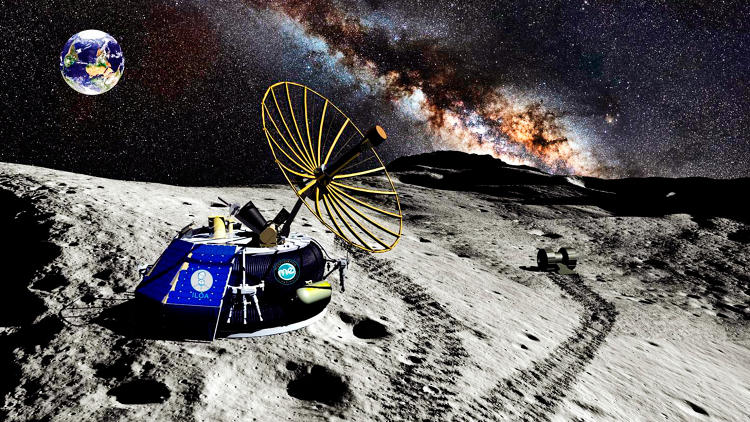
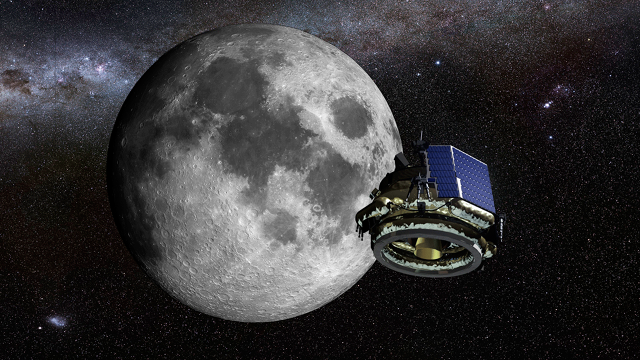
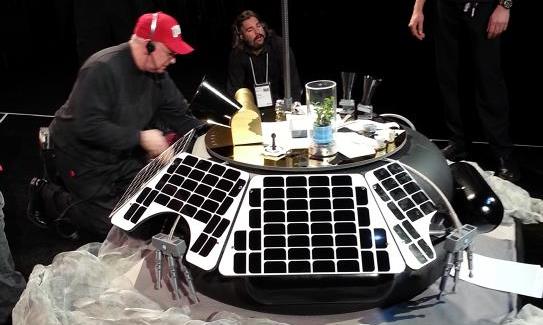
fedex-to-moon-spacecraftTheir craft is known as the MX-1, the company’s first robotic lander that was designed with the intent to deliver payloads to the lunar surface by 2015 and be able to transport precious minerals back. The privately held company, which is backed by billionaire Naveen Jain, unveiled the robot at the Autodesk’s University conference in Las Vegas.

According to Moon Express CEO Bob Richards, the MX-1 is very compact and could “fit basically inside of an SUV” trunk. The craft is unmanned, solar-powered, and uses hydrogen peroxide as rocket propellant. The fuel tanks are strapped to the vehicle’s underside, and serve two purposes. As Richards explains:

When the tanks are empty, they now act as a bumper. People are used to seeing landing gear on a spacecraft, but we didn’t need landing gear–the fuel tanks are the structure. It looks like something you’d land on a beach actually.
fedex-to-moon-spacecraft1To get to space, the craft is launched via rocket, and once deployed can navigate all by itself to the moon. And though small, the MX-1 is capable of carrying roughly 60 kilograms of payload. For its early missions, the startup plans to take part in NASA’s goal of delivering plants to the moon, including basil, turnips, and Arabidopsis (a sort of mustard-seed plant).

Additionally, the MX-1 will carry a small, black-and-gold telescope for a private company, which plans to set up the device as a moon cam on its surface, streaming live video back to Earth for all to watch. So in addition to China’s Jade Rabbit rover, which will be providing footage of the lunar surface, we can expect video to be provided by private interests as well.
fedex-to-moon-picBut in the long run, the aim of MoonEx is far more entrepreneurial: it plans to mine resources from the moon, seeing it as an untapped and very lucrative target. The trick will be developing the MX-1 into a craft that can deliver payloads to-and-from the moon, at larger scales. As Richards put it:

What’s there? Probably more platinum than there is in all the reserves on Earth. Pick your spice: silver, nickel, everything that we mine here on Earth is on the moon.

However, Moon Express doesn’t expect to return with any payloads until at least its third mission. It plans to launch its first mission to the moon in 2015. And if they win Google’s Lunar X Prize, they just might have all the investment capital they need to make it happen.

Source: fastcoexist.com, googlelunarxprize.org

News from Space: Chang’e-3’s Landing and 1st Panorama

Change-3-landing-site_1_ken-kremer-580x344China accomplished a rather major technological and scientific feat recently with the recent soft landing of its Chang’e-3 robotic spacecraft on Dec.14th. This was the nation’s first attempt at landing a spacecraft on an extra-terrestrial body, and firmly established them as a competitor in the ongoing space race. What’s more, the event has been followed by a slew of fascinating and intriguing pictures.

The first were taken by the descent imaging camera aboard the Chang’e-3 lander, which began furiously snapping photos during the last minutes of the computer guided landing. The Chinese space agency then combined the photos to create a lovely compilation video, with the point of view rotated 180 degrees, to recreate what the descent looked like.

Change-3_lunar_landing_site-580x470The dramatic soft landing took place at 8:11 am EST (9:11 p.m Beijing local time) with the lander arriving at Mare Imbrium (Latin for “Sea of Rains”) – one of the larger craters in the Solar System that is between 3 and 4.5 billion years old. The precise landing coordinates were 44.1260°N and 19.5014°W – located below the Montes Recti mountain ridge.

The video begins by showing the Chang’e-3 lander approaching the Montes Recti mountain ridge. At an altitude of 15 km (9 miles), the Chang’e-3 carried out the rocket powered descent to the Moon’s surface by firing the landing thrusters starting at the altitude of 15 km (9 mi) for a soft landing targeted to a preselected area in Mare Imbrium.

chang'e3_landingThe vehicles thrusters then fired to pivot the lander towards the surface at about the 2:40 minute mark when it was at an altitude of roughly 3 km (1.8 miles). The powered descent was autonomous, preprogrammed and controlled by the probe itself, not by mission controllers on Earth stationed at the Beijing. Altogether, it took about 12 minutes to bring the lander onto the surface.

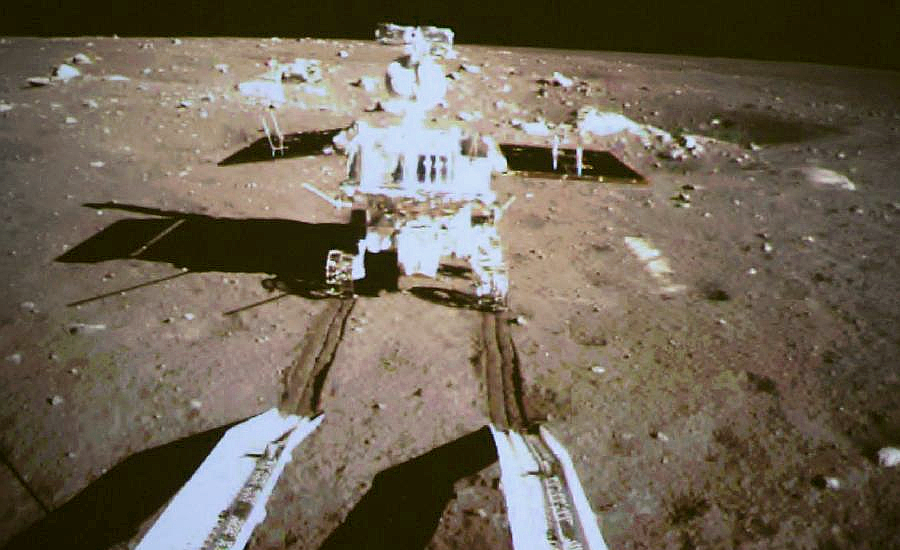
Roughly 7 hours later, on Sunday, Dec. 15 at 4:35 a.m. Beijing local time, China’s first ever lunar rover ‘Yutu’ (or Jade Rabbit) rolled down a pair of ramps and onto the Moon’s soil. The six wheeled ‘Yutu’ rover drove straight off the ramps and sped right into the history books as it left a noticeably deep pair of tire tracks behind in the loose lunar dirt. This too was captured by the lander’s camera and broadcast on China’s state run CCTV.

chang'e3_egressThe next bundle of footage came from the rover itself, as the Jade Rabbit took in its inaugural photographs of the landing site in Mare Imbrium. The photos were released by Chinese state TV on Dec. 15th, not long after the rover disembarked from the lander, and were then pieced together to form the lander’s first panoramic view of the lunar surface.

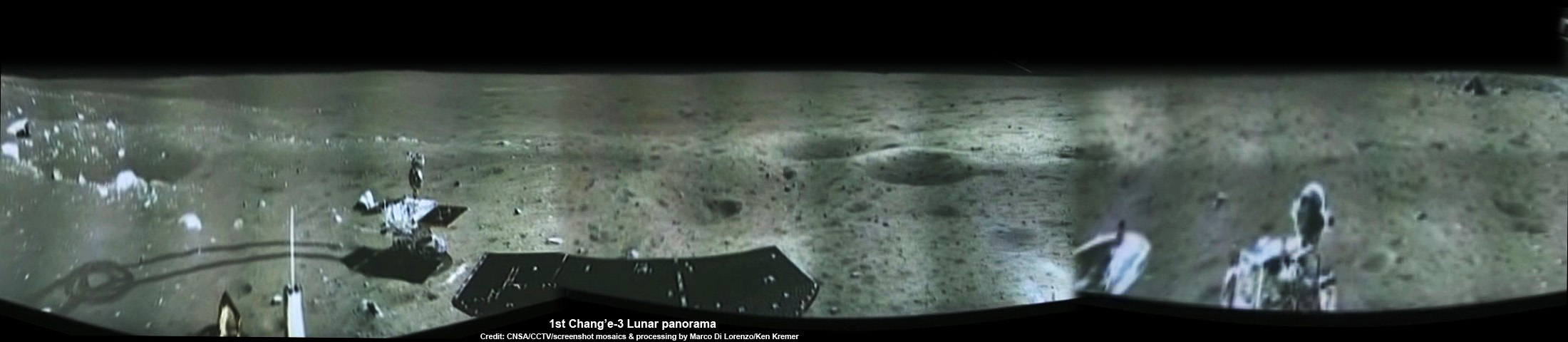
Marco Di Lorenzo and Ken Kremer – an amateur photo-astronomer and a science journalist who have composed panoramas from the Curiosity mission in the past – also composed the images together to create a series of mosaics. A sample of the 1st panorama is pictured below, with the Yutu rover in the center and tire tracks off to the left.. Click here to the see the full-size image.

Change-3-1st-Pano_1b_Ken-Kremer--580x203The individual images were taken by three cameras positioned around the robotic lander and captured the stark lunar terrain surrounding the spacecraft. The panoramic view shows ‘Yutu’ and its wheel tracks cutting a semi circular path at least several centimeters deep into the loose lunar regolith at the landing site at Mare Imbrium, located near the Bay of Rainbows.

Liu Enhai, Designer in Chief, Chang’E-3 Probe System, has this say about the images in a recent CCTV interview:

This picture is made of 60 pictures taken 3 times by the rover. The rover used three angles: vertical, 15 degrees tilted up, and 15 degrees down…so that we get an even farther view

chang'e3_portraitThe 140 kilogram Yutu rover then turned around so that the lander and rover could obtain their first portraits of one another. The first is visible above, showing the Jade Rabbit rover (in better resolution), with the image of the Chang’e 3 lander below. Liu Jianjun, Deputy Chief Designer of the Chang’E-3 Ground System, was also interviewed by CCTV, and had this to about that part of the mission:

The rover reached the point of X after it went down from the lander, then it established contact with the ground. Then it went to point A, where the rover and lander took pictures of each other. Then it reached point B, where it’s standing now.

These are just the first of what is expected to be a torrent of pictures produced by the rover, which according to Chinese officials, will spend the next year conducting in-situ exploration at the landing site. Beyond that, the rover will use its instruments to survey the moon’s geological structure and composition on a minimum three month mission to locate the moon’s natural resources for use by future missions.

chang'e3_lander_portIn addition to accomplishing a great scientific feat, China has now joined a very exclusive club, being only one of three nations that has successfully conducted a soft landing on the Moon. The United States was the first, reaching the Moon with its Apollo 11 mission on July 20th, 1969. The Soviet Union followed less than a decade later, having reached the Moon with its unmanned Lunik 24 spacecraft in 1976.

And now, almost forty years later, the space race is joined by one of the world’s emerging super powers. Soon, we can expect the European Space Agency, India, Pakistan, and possibly Iran to be reaching the Moon as well. And by that time, its likely the spaceships will be carrying colonists. Hopefully we’ll have some infrastructure set up to receive them!

In the meantime, be sure to check out the Chang’e 3 descent video, and stay tuned for more updates from the Jade Rabbit and it begins its exploration of the Lunar surface.


Source:
universetoday.com, (2)

News From Space: Birth of Black Hole Witnessed

big bang_blackholeWhen it comes to observational astronomy, scientists and cosmologists have been facing a sort of crisis of late. With so many instruments aimed at the heavens, recording what little information makes it all the way to Earth, simply observing distant stars has been providing diminishing returns. In order to keep moving forward, we must observe the most unusual and, in many cases, violent cosmic events so we can see some truly novel data.

This presents a bit of a challenge, since the the space industry can’t possibly set up enough telescopes to look at every part of the night sky all at once. With so much depth through which to zoom, it would seem a lost cause to try to capture unexpected, short-lived events. And yet, one such event, one that is truly cosmic in nature (no pun!), was captured just recently.

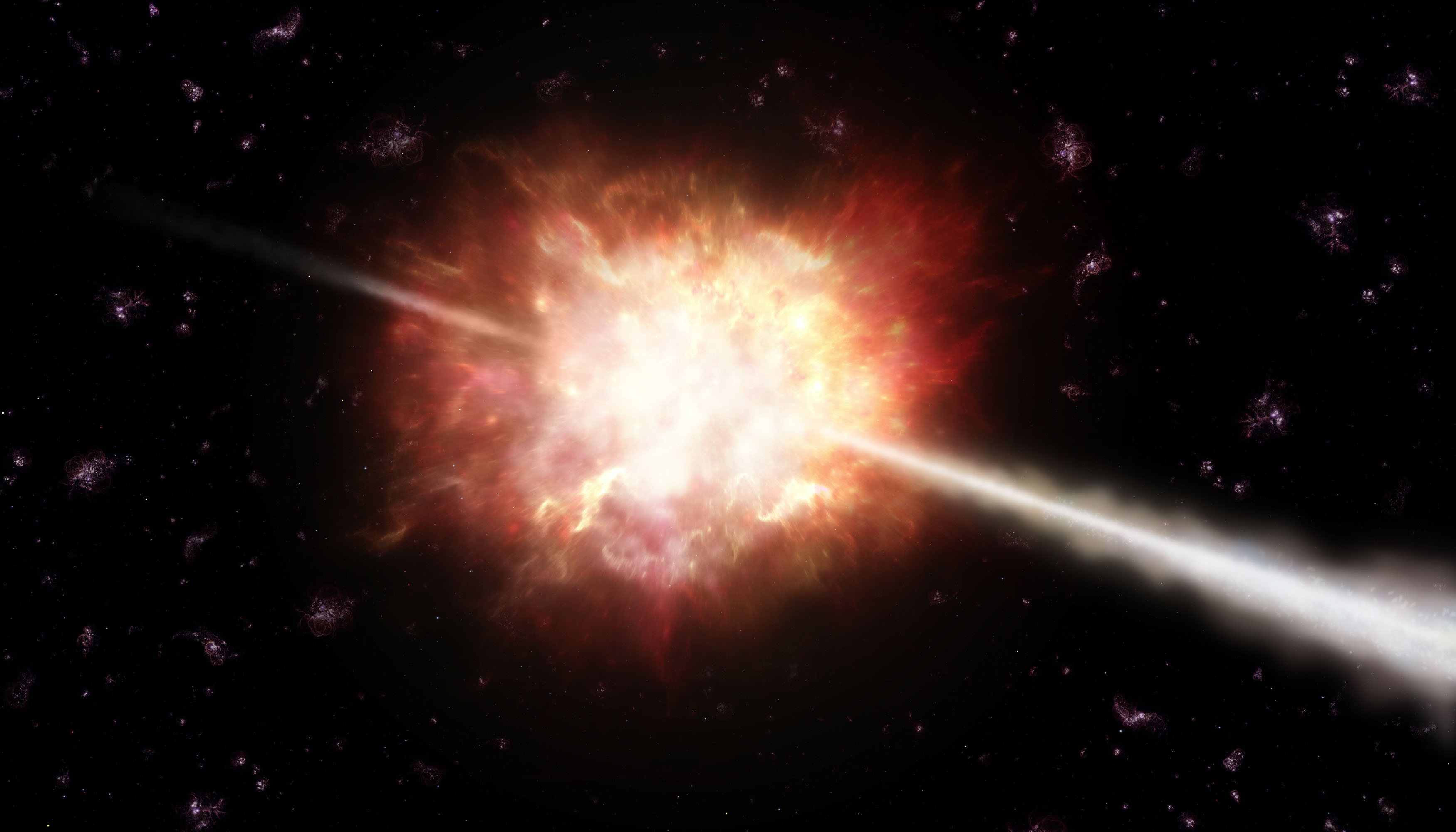
NASA's_Fermi,_Swift_See_'Shockingly_Bright'_Burst_(before_and_after_labels)It took place back in late November, when an “armada of instruments” from all over the world saw a massive gamma-ray burst originating from a point in space known as GRB 130427A. This burst was more powerful than what many researchers believed was theoretically possible, and is now thought to be the collapse of a giant star and the birth of a black hole.

The event has been described as a “Rosetta stone moment” by astronomers for a number of reasons. In addition to being a truly rare and awesome sight, this burst has also sent out information that astronomers will be studying for many years to come. And while it’s too soon to draw any real conclusions, there is already widespread excitement about the sheer newness of it.

blackhole_birthAnd yet, GRB 130427A only lasted about 80 seconds at observable intensities, so the fact that it was observed, letalone documented so thoroughly was truly surprising! This was all thanks to the Los Alamos National Laboratories in New Mexico, where six robotic cameras – collectively referred to as RAPTOR, or RAPid Telescopes for Optical Response – were able to respond in time to catch the event unfold.

The RAPTOR telescopes are networked together and all obey a central computer “brain”. Between their dedicated computing hardware and robotic swivel-mounts, they can turn to view any point in the sky in less than three seconds. As the world’s fastest “optical response” devices, RAPTOR’s telescopes are designed to make sure we don’t miss astronomical events when they happens, because in astronomy there are no second chances.

gamma-ray-burst The RAPTOR telescopes to ensure things aren’t missed by performing extremely diffuse, wide-angle sweeps of the sky to pick up hints at about where and when a major event is taking place. When one of the telescopes sees a hint of something good, it and the others quickly reorient and zoom to capture it in full detail. And with all six telescopes capturing the same event, the wealth of information gleamed is quite impressive.

The telescopes have different specializations as well. For example, the RAPTOR-T views all events through four aligned lenses with four different color filters. By looking at the differences in color distribution in the sample, RAPTOR-T can provide info about the distance to an event (by measuring Red Shift and Blue Shift) or about some elements of its environment.

grb130427aThis gamma ray burst is thought to be the brightest in decades, perhaps in a century. And if astronomers had missed it, it’s likely that nobody would have gotten the chance to capture one again. Luckily, the event was also seen by a number of other gamma ray detectors and x-ray telescopes. These included NASA’s Fermi, NuSTAR, and Swift satellites, all of which managed to see some portion of the event as it unfolded.

However, most telescopes joined in to view the event’s so-called afterglow, an incredibly violent occurrence where the newly-born black hole threw out debris and damage over a wide radius. For several hours, this radius glowed and astronomers watched as it faded. The intensity of high-energy gamma rays in that afterglow faded in tandem with its conventional light emissions.

This is one of the first useful bits of information provided by this event – the link between gamma rays and optical phenomena. But this is just one way that it could be astronomy’s latest Rosetta Stone observation. In the next few months, we can all look forward to a slew of exciting updates as astronomers sort through the implications of having witnessed the birth of an unprecedented singularity.

And in the meantime, check out this video of the gamma-ray burst, as observed by the RAPTOR All-Sky Monitor:


Source:
extremetech.com

News From Space: 200 km Water Jets on Europa

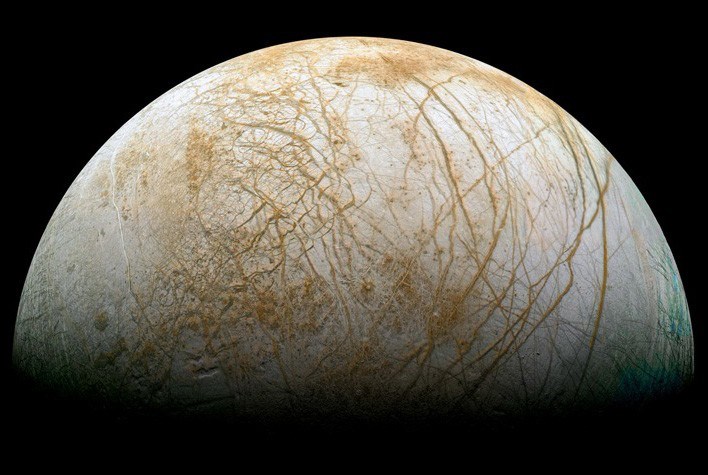
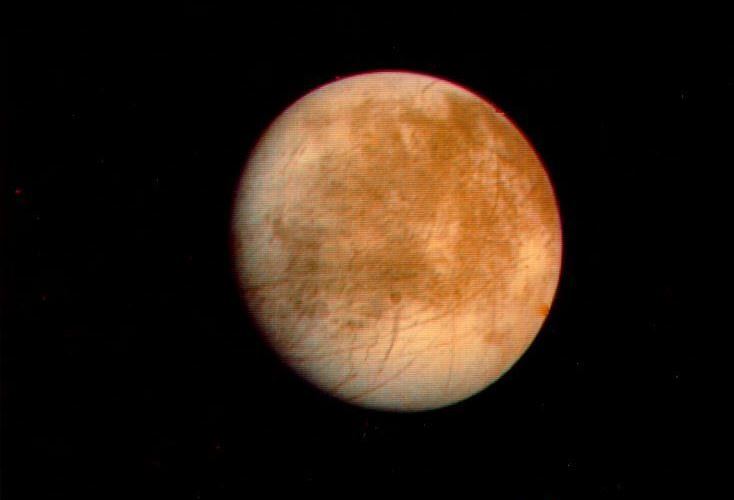
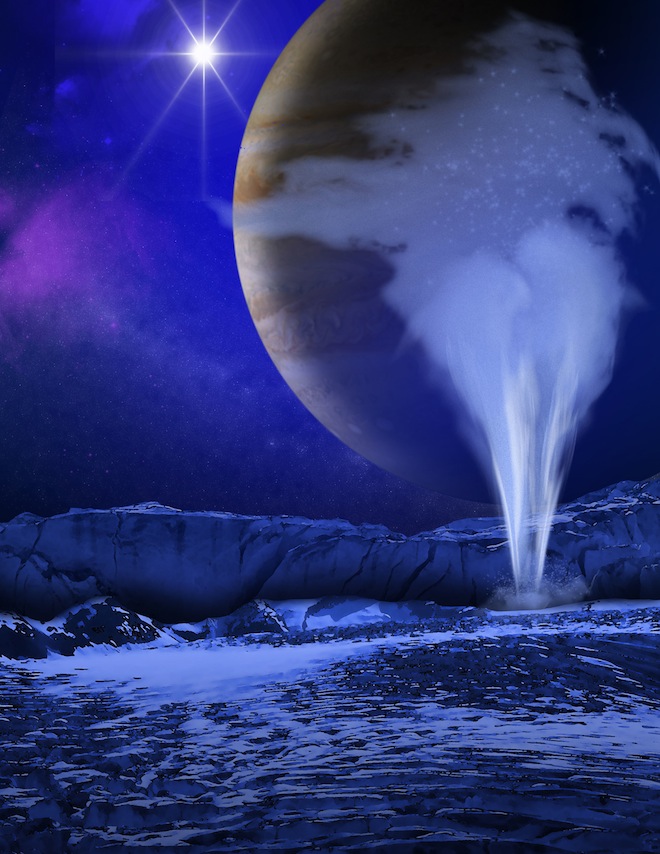
europa-landerAs the prime candidate for extra-terrestrial life, the Jovian moon of Europa has been the subject of much speculation and interest over years. And while our understanding of the surface has improved – thanks to observations made by several space probes and the Hubble space telescope – what lies beneath remains a mystery. Luckily, Europa may yet provide Earth scientists with a chance to look at its interior.

Earlier this month, data collected from the Hubble space telescope suggested that enormous jets of water more than 200 kilometers tall may be spurting intermittently from the moon’s surface. The findings, presented last week to the American Geophysical Union, await independent confirmation. But if the jets are real, the frozen world would join the tiny number of others known to have active jets, including Saturn’s moon Enceladus and Neptune’s moon Triton.

europa-lander-2What’s more, should these newly observed water plumes be tapping into some Europan sea, they could be bringing material to the surface that would otherwise stay hidden. Follow-up observations from Earth or with probes around Europa could sample the fountains, hunting for organic material and perhaps finding the evidence need to prove that living organisms exist beyond Earth.

Scientists spotted the plumes thanks to ultraviolet images taken by Hubble in December 2012. The research team, which hails from the Southwest Research Institute in Texas, then published their research in Science magazine. In the paper, astronomer and co-author Lorenz Roth explained their findings:

We found that there’s one blob of emission at Europa’s south pole. It was always there over the 7 hours we observed and always at the same location.

Previous observations from NASA’s Galileo mission, which visited the Jupiter system in the 1990s and early 2000s, suggest that Europa’s south pole is full of ridges and cracks quite similar to features called tiger stripes on Enceladus that spew water.

europa_chaosterrainLorenz and his team looked back through previous Hubble data to see if the plumes could have been spotted earlier but saw nothing, suggesting that they are likely transient. At the time, Europa was at its farthest from Jupiter, which could explain why the jets appeared only then. Researchers recently determined that Enceladus’ plumes are weakest when the moon is closest to Saturn, likely because the ringed planet’s gravity squeezes the tiger stripes shut.

Astronomer Kurt Retherford, also of SwRI and another co-author, claimed that the case of Enceladus helped them to make a connection with what they were observing:

We actually saw this press release on Enceladus. And we thought, ‘Oh my god! This is the explanation’” for why Europa’s plumes might only appear when it’s far from Jupiter.

In the past, scientists have looked for evidence of jets coming from Europa’s surface. When the Voyager probes flew by in the 70s, one image showed a fuzzy spot that some thought to be a plume, though most considered it an artifact of imaging. Galileo also saw a row of dark spots on a ridge of Europa which looked similar to spots seen on planet Earth before an eruption begins.

europaBecause of these previous false positives though, scientists are likely to be cautious when interpreting these newest results. But even with these reservations, Robert Pappalardo – who leads the planning team for the Europa Clipper Pre-Project (a proposed mission to Europa) – said that he’s already discussing with other scientists how these new results should affect their study priorities.

For instance, some future orbiter headed to Europa could carry detectors specifically designed to search for heavy organic molecules that could be indicative of life in the subsurface. When it passed over the geyser’s spray, it would be bathed in material from the moon’s interior, giving scientists a window into Europa’s ocean. Pappalardo also hopes that the finding will help push Europa to a place of high priority in NASA’s exploration agenda.

Due to budget constraints, a manned mission is not yet feasible, but NASA has indicated that it would be willing to send a robot lander there in the near future. In addition, recent computer models provided from the University of Texas showed that the ice is likely to be thinnest at the equator. Between the possibility that the oceans might be most accessible in this region, and the likelihood that some of that water escapes into space, unlocking the mysteries of the Jovian satellite might be easier than previously thought.

europa_gieserSources: wired.com, science.jpl.nasa.gov

News From Space: Plants on the Moon by 2015!

moon_plantsThe moon remains the focal point of much of our space-related goals for the near future. In addition to China recently landing its Jade Rabbit probe, the more ambitious plans of NASA and the ESA involve building a settlement there in the near future. But of course, these and other plans to turn the moon into a new frontier from humanity are marred by the fact the environment is not habitable.

Luckily, NASA plans to change that, starting with growing plants on the lunar surface. And while this might seem like a long way away from building sealed domes and mounting full-scale terraforming, it is a big step in that direction. Aside from the obvious life support that vegetation would provide – air, food, and water – it would also provide another integral aspect to a habitable lunar environment.

moonexpressPlants react to aspects of a harsh environment similarly to humans, as their genetic material can be damaged by radiation. A relatively safe way to test long-term lunar exposure is to send plants there and monitor their health. Rather than making the trip and dropping the plants off itself, NASA plans to use commercial spaceflight as the vehicle by which the plants will be sent up to the moon.

And that’s where Google comes in, NASA’s proposed partner for this venture. Using the Moon Express, a small, lightweight craft (about 1 kilogram or 2 pounds) that will act as a self-sustaining habitat for the vegetation, NASA will deliver these plants to the moon by 2015. This lunar lander is part of the Google Lunar X Prize, a competition to create a robotic spacecraft that can fly to and land on the moon.

ESA_moonbaseOnce the lander arrives on the moon, water will be added to the basil, turnip, and Arabidopsis (a small flowering plant) seeds kept in the habitat, then monitored for five to ten days and compared to control groups germinating back on Earth. NASA will also monitor the actual habitat itself, looking toward its scalability since the small habitat isn’t large enough to support human life.

Currently, the chamber can support 10 basil seeds, 10 turnip seeds, and around 100 Arabidopsis seeds. It also holds the bit of water that initiates the germination process, and uses the natural sunlight that reaches the moon to support the plant life. In order to study the quality of the plant growth and movement, the habitat will take images and beam them back home.

3dprinted_moon_base1If NASA doesn’t run into any unexpected bumps, its long-term plans include attempting to grow a more diverse array of plants, longer growth periods, and reproduction experiments. The longer the experiments, the more we’ll learn about the long-term effects of a lunar environment on Earth plants, which will tell us much of what we need to know if we ever plan on building true settlements there in the future.

Sources: extremetech.com, nasa.gov

The Future of Fusion: 1-MW Cold Fusion Plant Now Available!

fusion_energyIt’s actually here: the world’s first fusion power plant that is capable of generated a single megawatt of power and is available for pre-order. It’s known as the E-Cat 1MW Plant, which comes in a standard shipping container and uses low-energy nuclear reactions (LENR) – a process, often known as cold fusion, that fuses nickel and hydrogen into copper – to produce energy 100,000 times more efficiently than combustion.

E-Cat, or Energy Catalyzer, is a technology (and company of the same name) developed by Andrea Rossi – an Italian scientist who claims he’s finally harnessed cold fusion. For just $1.5 million, people can pre-order an E-Cat and expect delivery by early 2014. With this news, many are wondering if the age of cold fusion, where clean, abundant energy is readily available, is finally upon us.

E.Cat1Cold fusion, as the name implies, is like normal fusion, but instead of producing fast neutrons and ionizing radiation that decimates everything in its path, cold fusion’s Low-Energy Nuclear Reactions (LENR) produce very slow, safe neutrons. Where normal fusion requires massive, expensive containment systems, it sounds like E-Cat’s cold fusion can be safely contained inside a simple, pressurized vessel.

And while normal fusion power is generated by fusing hydrogen atoms, cold fusion fuses nickel and hydrogen into copper, by way of some kind of special catalyst. Despite the rudimentary setup, though, cold fusion still has the massive power and energy density intrinsic to atomic fusion. In short, it produces far more energy than conventional chemical reactions – such as burning fossil fuels. The only challenge is, the massive amounts of power that are usually required to initiate the reaction.

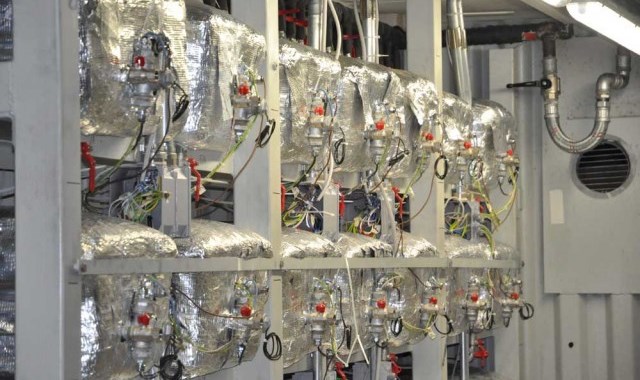
e.cat2According to E-Cat, each of its cold fusion reactors measures 20x20x1 centimeters (7.8×7.8×0.39 inches) and you stack these individual reactors together in parallel to create a thermal plant. The E-Cat 1MW Plant consists of 106 of these units rammed into a standard shipping container. Based on the specs provided by Rossi, the fuel costs works out to be $1 per megawatt-hour, which is utterly insane. Coal power is around $100 per megawatt-hour.

But before anyone gets too excited about the commercialization of cold fusion, it should be noted that Rossi is still being incredibly opaque about how his cold fusion tech actually works. The data sheet for the 1MW Plant shares one interesting tidbit: Despite producing 1MW of power, the plant requires a constant 200 kilowatts of input power — presumably to sustain the reaction.

E.Cat5_-1030x858The spec sheet also says that the fuel (specially treated nickel and hydrogen gas) needs to be recharged every two years. One of the science community’ biggest sticking points about Rossi’s cold fusion devices is that he hasn’t proven that his LENR is self-sustaining. Despite a huge amount of output energy, the device still needs to be connected to the mains.

What’s more, due to a lack of published papers, and thus peer review, and a dearth of protective patents, the scientific community in general remains very wary of Rossi’s claims. And of course, we should all remember that this is not the first time that researchers have proclaimed victory in the race to make cold fusion happen. Whenever the words “cold fusion” are raised in conjunction, the case of the Fleischmann–Pons experiment immediately springs to mind.

NASA_coldfusionFor those who remember, this case involved an experiment made in 1989 where two researchers claimed to have achieved cold fusion using palladium rods and heavy water. Initially, the scientific community treated the news with exciteent and interest, but after numerous labs were unable to reproduce their experiment, and a number of false positives were reported, their claims were officially debunked and they relocated their lab to avoid any further controversy.

At the same time, however, one must remember that some significant changes have happened in the past three decades. For one, NASA’s LENR facility has been working on producing cold fusion reactions for some time using an oscillating nickel lattice and hydrogen atoms. Then there was the recent milestone produced by the National Ignition Facility in California, which produced the first fusion reaction using lasers that produced more energy than it required.

Who’s to say if this is the real deal? All that is known is that between this most recent claim, and ongoing experiments conducted by NASA and other research organizations to make LENR cold fusion happen, a revolution in clean energy is set to happen, and will most likely happen within our lifetimes.

Addendum: Just been informed by WordPress that this is my 1400th post! Woot-woot!

Sources: extremetech.com, ecat.com

Cassini, MESSENGER, and MOM: A Space Probe Odyssey

Cassini_Saturn_Orbit_InsertionIt had has been a big month in the field of space probes and satellites. Whether they are in orbit around Mercury, on their way to Mars, or floating in the outer Solar System, there’s been no shortage of news and inspirational footage to be had. And it is a testament to the age we live in, where space news is accessible and can instantly be shared with millions of people around the world.

First up, there’s the recent release of Cassini’s magnificent image of Saturn’s rings shining in all their glory. Back in July, Cassini got a good look back at Earth from about 1.5 billion kilometers (932 million miles) away. Known as
“The Day The Earth Smiled”, NASA has spent the past few months cobbling together this picture from numerous shots taken during Cassini’s circuitous orbit around Saturn.

cassini-jupiter-annotatedCassini has always been able to take impressive pictures in Earth’s general direction, but this picture was special since it used the enormous bulk of Saturn to block the usually confounding brightness of the Sun. Cassini, which was launched to survey the outer planets in 1997, captured an absolutely incredible image of both the Earth as a pale blue dot, and of Saturn as a striking, luminous apparition.

As part of NASA’s latest awareness campaign, which tried to get everyday citizens to smile at the sky for the first posed interplanetary photo most of us have ever experienced, the photo captured the halo effect that makes our sixth planet look truly breathtaking. In the annotated version (pictured above), you can also see Venus, Mars, and some of Saturn’s moons.


Next up, there’s the MESSENGER probe, which managed to capture these impressive new videos of Mercury’s surface. As part of the NASA Advisory Council (NAC) ride-along imaging campaign, these videos were captured using the Mercury Dual Imaging System (MDIS). Even though the original high-res images were captured four seconds apart, these videos have been sped up to a rate of 15 images per second.


The views in each video are around 144-178 km (90-110 miles) across. The large crater visible in the beginning of the second video is the 191-km (118-mile) wide Schubert basin. In related news, there are new maps of Mercury available on the US Geological Survey website! Thanks to MESSENGER we now have the entirety of the first planet from the Sun imaged and mapped.

MESSENGER launched from Cape Canaveral Air Force Station back in August of 2004 and established orbit around Mercury on March 18th, 2011. It was the first man-made spacecraft ever to do so, and has provided the most comprehensive mapping of Mercury to date, not to mention evidence of ice, organic molecules, and detailed conditions on the surface.

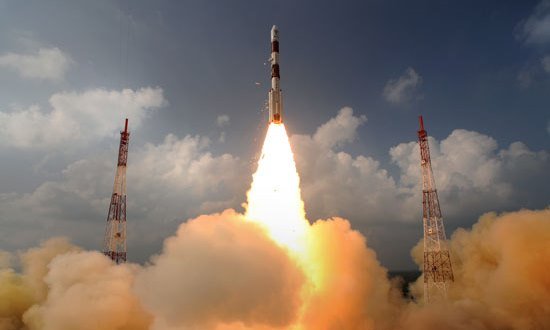
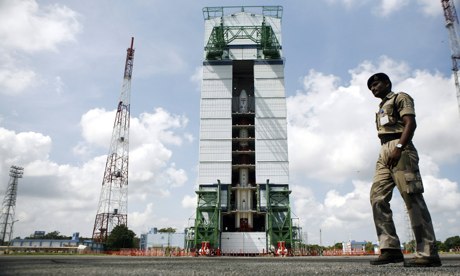
India_Mars_Orbiter1And last, but not least, there was the recent launch of the Indian Space Research Organization’s (ISRO) new Mars Orbiter Mission (aka. MOM). The launch took place on Tuesday, November 5th from the Indian space port located on a small island in the Bay of Bengal. As the nation’s first attempt to reach the Red Planet, the aim of the $70 million mission goes beyond mere research.

In addition to gathering information that might indicate if life has ever existed or could exist on Mars, the mission is also meant to showcase India’s growing prowess in the field of space and to jump ahead of its regional rival (China) in the big interplanetary march. As Pallava Bagla, one of India’s best known science commentators, put it:

In the last century the space race meant the US against the Soviets. In the 21st century it means India against China. There is a lot of national pride involved in this.

India Mars probeIn addition, there has been quite a bit of speculation that the missionw as designed to stimulate national pride in the midst of an ongoing economic crisis. In recent years, a plunging currency, ailing economy and the state’s seeming inability to deliver basic services have led many Indians to question whether their nation is quite as close to becoming a global superpower as it seemed in the last decade.

MOM is expected to arrive in the vicinity of Mars on September 24th, 2014 where it will assume an elliptical orbit around the planet and begin conducting atmospheric surveys. If all continues to goes well, India will the elite club of only four nations that have launched probes which successfully investigated the Red Planet from orbit or the surface – following the Soviet Union, the United States and the European Space Agency (ESA).

India_Mars_Orbiter2MOM was also the first of two new Mars orbiter science probes that left Earth and began heading for Mars this November. The second was NASA’s $671 million MAVEN orbiter, which launched on November 18th atop an Atlas V rocket from Cape Canaveral in Florida. MAVEN is slated to arrive just two days before MOM, and research efforts will be coordinated between the two agencies.

Much like MAVEN, MOM’s goal is to study the Martian atmosphere , unlock the mysteries of its current state and determine how, why and when the atmosphere and liquid water were lost – and how this transformed Mars climate into its cold, desiccated state it is in today. In addition to aiding our scientific understanding of the world, it may help us to transform the planet into a liveable environment once again.

For many people, these developments are an indication of things to come. If humanity ever intends to become an interplanetary species, an expanding knowledge of our Solar System is an absolute prerequisite. And in many respects, making other planets our home may be the only way we can survive as a species, given our current rate of population growth and consumption.

Sources: extremetech.com, nasa.gov, universetoday.com, planetarynames.wr.usgs.gov, theguardian.com, www.isro.org

3-D Printing Martian and Lunar Housing

3dprinted_moon_base1For enthusiasts of 3-D printing and its many possibilities, a man like Berokh Khoshnevis needs no introduction. As for the rest of us, he is the USC’s Director of Manufacturing Engineering, and has spent the last decade working on a new direction for this emerging technology. Back in 2012, he gave a lecture at TEDxTalks where he proposed that automated printing and custom software could revolutionize construction as we know it.

Intrinsic to this vision are a number of technologies that have emerged in recent years. These include Computer-Assisted Design/Computer-Assisted Manufacturing (CAD/CAM), robotics, and “contour crafting” (i.e. automated construction). By combining design software with a large, crane-sized 3-D printing machine, Khoshnevis proposes a process where homes can be built in just 20 hours.

contour-craftingKhoshnevis started working on the idea when he realized the gigantic opportunity in introducing more speed and affordability into construction. All of the technology was already in place, all that was required was to custom make the hardware and software to carry it all out. Since that time, he and his staff have worked tirelessly to perfect the process and vary up the materials used.

Working through USC’s Center for Rapid Automated Fabrication Technologies, Khoshnevis and his students have made major progress with their designs and prototypes. His robotic construction system has now printed entire six-foot tall sections of homes in his lab, using concrete, gypsum, wood chips, and epoxy, to create layered walls sections of floor.

3dprinted_moon_base3The system uses robotic arms and extrusion nozzles that are controlled by a computerized gantry system which moves a nozzle back and forth. Cement, or other desired materials, are placed down layer by layer to form different sections of the structure. Though the range of applications are currently limited to things like emergency and temporary shelters, Khoshnevis thinks it will someday be able to build a 2,500-square-foot home in 20 hours.

As he describes the process:

It’s the last frontier of automation. Everything else is made by machines except buildings. Your shoes, your car, your appliances. You don’t have to buy anything that is made by hand.

contour-crafting2As Khoshnevis explained during his 2012 lecture at TEDx, the greatest intended market for this technology is housing construction in the developing world. In such places of the world, this low-cost method of creating housing could lead to the elimination of slums as well as all the unhealthy conditions and socioeconomic baggage that comes with them.

But in the developed world, he also envisions how contour crafting machines could allow homes to be built more cheaply by reducing labor and material costs. As he pointed out in his lecture, construction is one of the most inefficient, dirty and dangerous industries there is, more so than even mining and oil drilling. Given a method that wastes far less material and uses less energy, this would reduce our impact on the natural environment.

3dprinted_moon_base2But of course, what would this all be without some serious, science fiction-like applications? For some time now, NASA and the ESA has been looking at additive manufacturing and robotics to create extra-terrestrial settlement. Looking farther afield, NASA has given Khoshnevis a grant to work on building lunar structures on the moon or other planets that humans could one day colonize.

According to NASA’s website, the construction project would involve:

Elements suggested to be built and tested include landing pads and aprons, roads, blast walls and shade walls, thermal and micrometeorite protection shields and dust-free platforms as well as other structures and objects utilizing the well known in-situ-resource utilization (ISRU) strategy.

3dprinted_moon_baseMany existing technologies would also be employed, such as the Lunar Electric Rover, the unpressurized Chariot rover, the versatile light-weight crane and Tri-Athlete cargo transporter as well some new concepts that are currently in testing. These include some habitat mockups and new generations of spacesuits that are currently undergoing tests at NASA’s Desert Research And Technological Studies (D-RATS).

Many of the details of this arrangement are shrouded in secrecy, but I think I can imagine what would be involved. Basically, the current research and development paradigm is focusing on combining additive manufacturing and sintering technology, using microwaves to turn powder into molten material, which then hardens as it is printed out.

sinterhab3To give you an idea of what they would look like, picture a crane-like robot taking in Moon regolith or Martian dust, bombarding it with microwaves to create a hot glue-like material, and then printing it out, layer by layer, to create contoured modules as hard as ceramic. These modules, once complete, would be pressurized and have multiple sections – for research, storage, recreation, and whatever else the colonists plan on getting up to.

Pretty cool huh? Extra-terrestrial colonies, and a cheaper, safer, and more environmentally friendly construction industry here on Earth. Not a bad way to step into the future! And in the meantime, be sure to enjoy this video of contour crafting at work, courtesy of USC’s Center for Rapid Automated Fabrication Technologies:


Sources:
fastcoexist.com, nasa.gov

News From Space: UrtheCast Cameras Blast Off!

space_cameraTwo High-Definition cameras designed to stream detailed views of Earth from the International Space Station blasted off into space yesterday. The cameras are the work of UrtheCast, a Vancouver-based company that distributes operational software for publicly accessibly HD cameras and broadcasts. Once installed, they will provide a view of Earth that is usually reserved for astronauts.

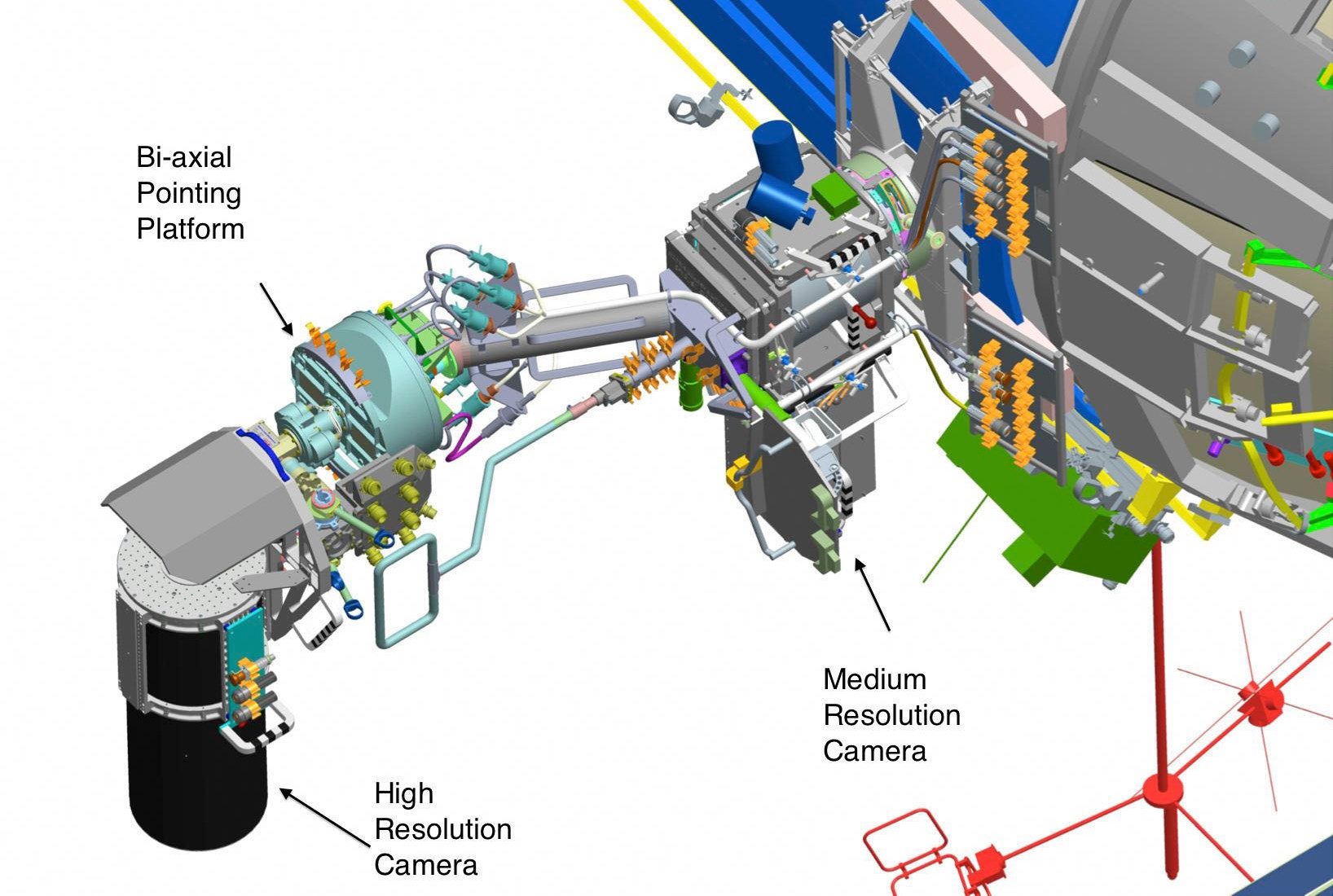
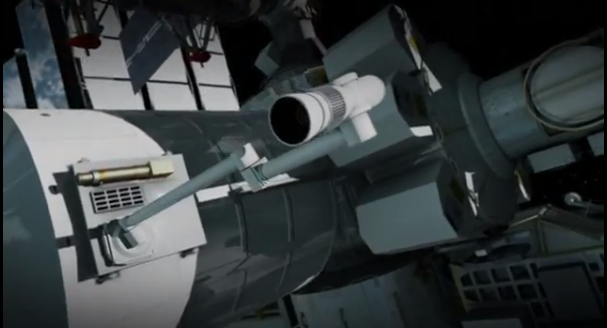
The cameras – one still and one video camera – launched at 3:52 p.m. ET from the Baikonur Cosmodrome in Kazahkstan on an unmanned Russian Progress spacecraft aboard a Soyuz rocket. The two cameras will be attached to a platform on the underside of the space station that was brought up by a previous Progress flight in July and installed by Russian cosmonauts during a spacewalk.

Urthecastcam_UCThe cameras will be able to view a large band of the Earth between the latitudes of 51 degrees north and 51 degrees south, covering everything from the Canadian Prairies and the southern tip of Chile and Argentina. What’s more, their resolution will be high enough that people will be able to see things as small as cars, boats, their own homes, and even small groups of people.

The company stressed though that individual people would not be discernible as the resolution is simply not high enough to make out facial features. The fixed, still camera will take a continuous video panorama of Earth 50 kilometres wide as the space station orbits Earth 16 times each day. Meanwhile, the other camera will be pointable and able to be directed at specific points on the globe.

????????????????????????????????????????????????????????????And while many of the images they take will be available free online just a few hours after they were captured, customers will also have access to specific footage captured by the second, pointed camera. So for a small fee, people will be able to take part in what the company likes to call the “world’s first near-live HD video feed of Earth.”

The company expects customers to include governments, non-governmental organizations and corporations that would like particular types of live and archival images for purposes such as monitoring the environment. As Chris Carter, director of wealth management for ScotiaMcLeod and CBC Radio’s Vancouver business columnist, claims that this expectation is valid since UrtheCast’s business model allows it avoid a major hurdle.

urthecaste.gifBasically, the greatest impediment to providing space-based footage of the Earth is the astronomical (no pun!) cost of getting cameras into space. UrtheCast has gotten around this hurdle by partnering with Roscosmos, the Russian Space Agency, who transported their cameras in exchange for free access to images that it might otherwise have to pay for.

According to a statement made by the company earlier this month, as of Sept. 30, the company – which trades on the Toronto Stock Exchange – had annual purchase commitments worth $21 million:

Although these purchase commitments cannot be considered binding prior to the cameras being installed on the ISS, UrtheCast has already begun the process of converting these purchase commitments into binding commercial agreements.

The democratic space age is looming, people. Between regular updates on social media and webcasts from NASA rovers and space satellites, to live feeds from publicly-accessible cameras, we are entering an age where exploration and research are accessible like never before. Add to this the dream of telexploration, and we could be looking at a future where astronauts do NOT get to have all the fun!

Sources: cbc.ca, urthecast.com

The Future of Space Travel: Stamp-Sized Thrusters

MIT_microthrustersReducing the cost of space missions is one of the greatest challenges facing engineers and technicians today. With a myriad of planned missions, ranging from everything to a settlement on the Moon, sending satellites to Near-Earth asteroids, and manned missions to Mars, the goal of making space travel more affordable is a persistent and important one.

As it stands, most efforts are directed towards created craft that are either reusable, repurposed, or simply don’t rely on big, expensive and disposable rockets to get them into orbit. But another angle at bringing the cost of missions down is focusing on the size of the space craft themselves. If they could be shrunk down to the point where they are no larger than a paperweight, sending them into space could be done on the cheap.

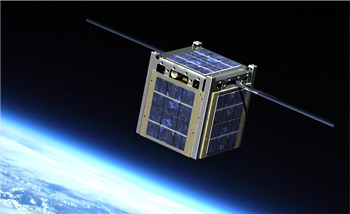
cubesatAlready we are seeing this idea at work with CubeSats, a new breed of satellites that are roughly the size of a Rubik’s cube. Over the past decade, dozens of these satellites have been sent into space, often as part of University projects. Since most sensor and survey equipment is now small enough that it can fit into a shoebox, the CubeSat design is ideal for departments that cannot afford to mount multimillion dollar space missions.

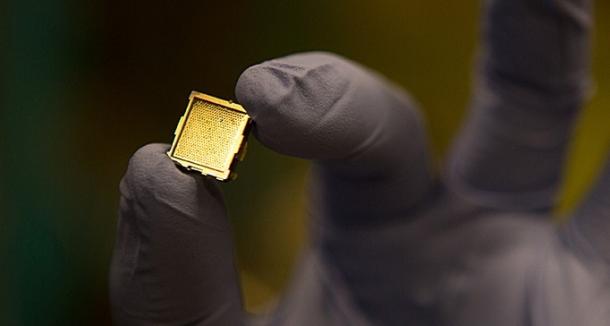
Expanding on this concept, MIT’s Poalo Lozano, a professor and the director of the Institute’s Space Propulsion Laboratory, has unveiled a new type of “microthruster” which, when added to the scaled-down satellites, could radically reduce the cost of space missions even further.  Roughly the size of a stamp, these tiny ion-engines would prolong the use of satellites by ensuring they could maneuver in space.

CubeSatsUp until now, CubeSat’s have had a limited life expectancy as their orbits inevitably decay and they burn up in the Earth’s atmosphere. But by equipping them with an Electrospray Propulsion System (iEPS), these pint-sized satellites would be able to conduct life-saving maneuvers that would extend their period of service and give them new functionality.

The thrusters are basically a liquid-fuel system that, when a voltage is applied, emit a stream of ions through tiny nozzles that propel the satellite forward. According to Lozano, four of these thrusters could provide attitude control and main propulsion for standard solar-powered “1U” CubeSat, which measures about 10 centimeters (4 inches) on a side and weighs 1 kilogram (2.2 pounds).

europa-lander-2But more exciting are the long-term prospects created by the addition of these tiny thrusters. For the price of sending a large spacecraft, a fleet of CubeSats could be dispatched to explore the moons of Jupiter. Other possible missions include clearing the massive pile of orbital debris floating around the Earth, de-orbiting satellites at the end of their service lives, and correcting atmospheric drag in low Earth orbit.

Part of what makes plans like these so feasible is the fuel-to-weight ratio it allows for spacecraft, something which astronauts and space agencies always have to take into account. As the Space Propulsion Laboratory claims on their website:

Less than 150 g of propellant would be required by a 1U CubeSat to reach Earth’s escape velocity from [low Earth orbit] and explore interplanetary space.

cubesats2Other possibilities arise from the fact that iEPS units require very little in the way of fuel, so even scaled-up versions can be fitted to small satellites to provide cost-effective and fuel-efficient thrust. Scientists in Switzerland, for instance, say they can send a shoebox-size satellite to the moon in six months with only a few drops of fuel.

As Professor Lozano said, in regards to the long term plans for the iEPS concept:

The goal is to make [CubeSats] do most of the things we already do with big satellites, except in a less expensive way. People have very big plans for these very small spacecraft.

cubesats1But in reality, even the outer Solar System is not limit when it comes to this scaled-down satellite technology. Looking even further abroad, tiny satellites could be sent into deep space to map out what lies between our Solar System and other stars, or investigate the mysteries of the Milky Way. Asteroid prospecting could also benefit from small, cost-effective probes that are capable of navigating between rocks.

And when the technology is scaled down even further, perhaps even to the nano level, millions of tiny probes could be sent out into space to study dark matter, high-energy particles, and seek out new life. Combined with new technologies like space penetrators, entire solar systems and even galaxies could be seeded with tiny space sats. Exciting possibilities indeed!

And in the meantime, be sure to check out this video on CubeSat’s, courtesy of Singularity HUB:


Sources:
news.cnet.com, web.mit.edu, singularityhub.com