Typhoon Haiyan From Space

typhoon_haiyanEarlier this month, the Super Typhoon Haiyan smashed into the island nation of the Philippines, leaving an enormous amount of death and destruction in its wake. According to NASA, the typhoon struck with winds that exceeded 379 kilometers per hour (235 mph), while the U.S. Navy Joint Typhoon Warning Center indicates that it has since sustained wind speeds of over 315 kilometers per hour (95 MPH).

Classified as a Category 5 monster storm on the U.S. Saffir-Simpson scale, Haiyan is reported to be the largest and most powerful storm ever to make landfall in recorded human history. The current estimates claim that some 5000 people have died so far, with the final toll expected to be far higher.

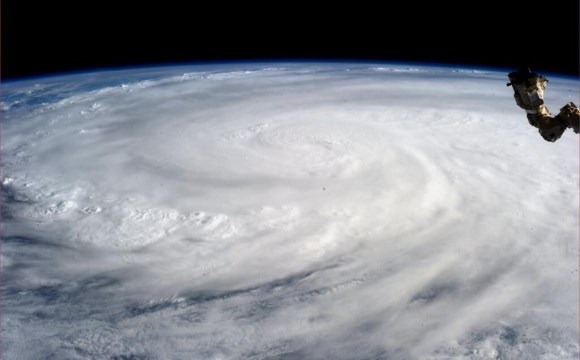
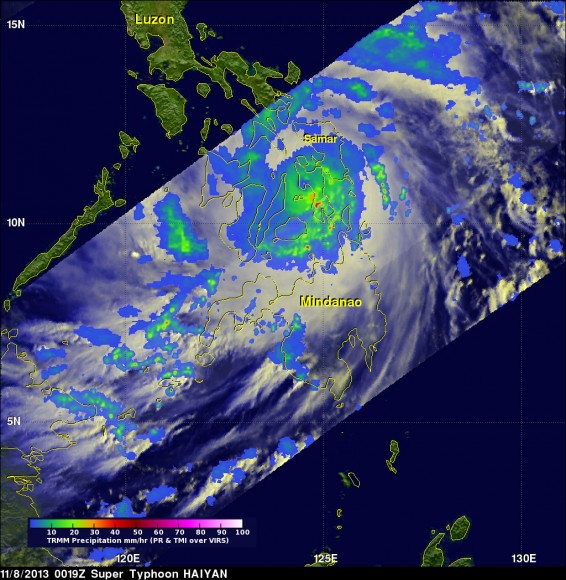
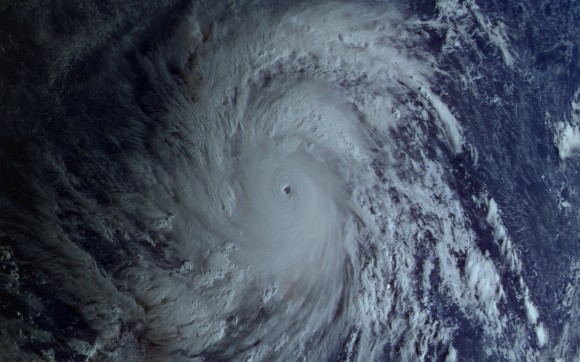
haiyan_8_november_2013_0019_utc_0-566x580Given the enormous scale of this typhoon, many of the clearest pictures of it have come from space. Since it first made landfall on Friday, November 8th, many detailed images have been captured by NASA, the Russian Space Agency, the India’s newly-launched Mars Orbiter Mission (MOM), and even from the ISS – courtesy of astronaut Karen Nyberg.

According to NASA, the most detailed data on the storm came from the Tropical Rainfall Measuring Mission (TRMM) satellite, which captured visible, microwave and infrared data on the storm just as it was crossing the island of Leyte in the central Philippines. In addition to gauging wind speed, the satellite was also able to measure precipitation rates and temperature fluctuations.

typhoon_haiyan1Far from simply documenting this tragedy, the high resolution imagery and precise measurements provided by these and other satellites have been absolutely essential to tracking this storm and providing advance warning. Whereas thousands have died in the effected areas, some 800,000 more have been evacuated from the central region of the country.

Coincidentally, NASA’s Goddard Flight Center has just finished assembling the next generation weather satellite known as the Global Precipitation Measurement (GPM), an observatory that is scheduled to replace the Tropical Rainfall Measuring Mission. GPM is equipped with advanced, higher resolution radar instruments and is vital to the continued effort of providing forecasts and advance warning of extreme super storms.

typhoon_haiyan2In the midst of tragedies like Hurricane Sandy and Haiyan, not to mention the escalating risk of super-storms associated with Climate Change, it is good to know that there are silver linings, such as advanced warning and sophisticated instruments that can keep us apprised of the threats we face. For more information on Super Typhoon Haiyan and how you can aid in the recovery, check out the Internationa Red Cross’ website.

And be sure to check out this video of Haiyan as it made landfall, as captured by the Russian weather satellite Electro-L:


Source: universetoday.com, bbc.co.uk , icrc.org

Alien Spotting by 2020?

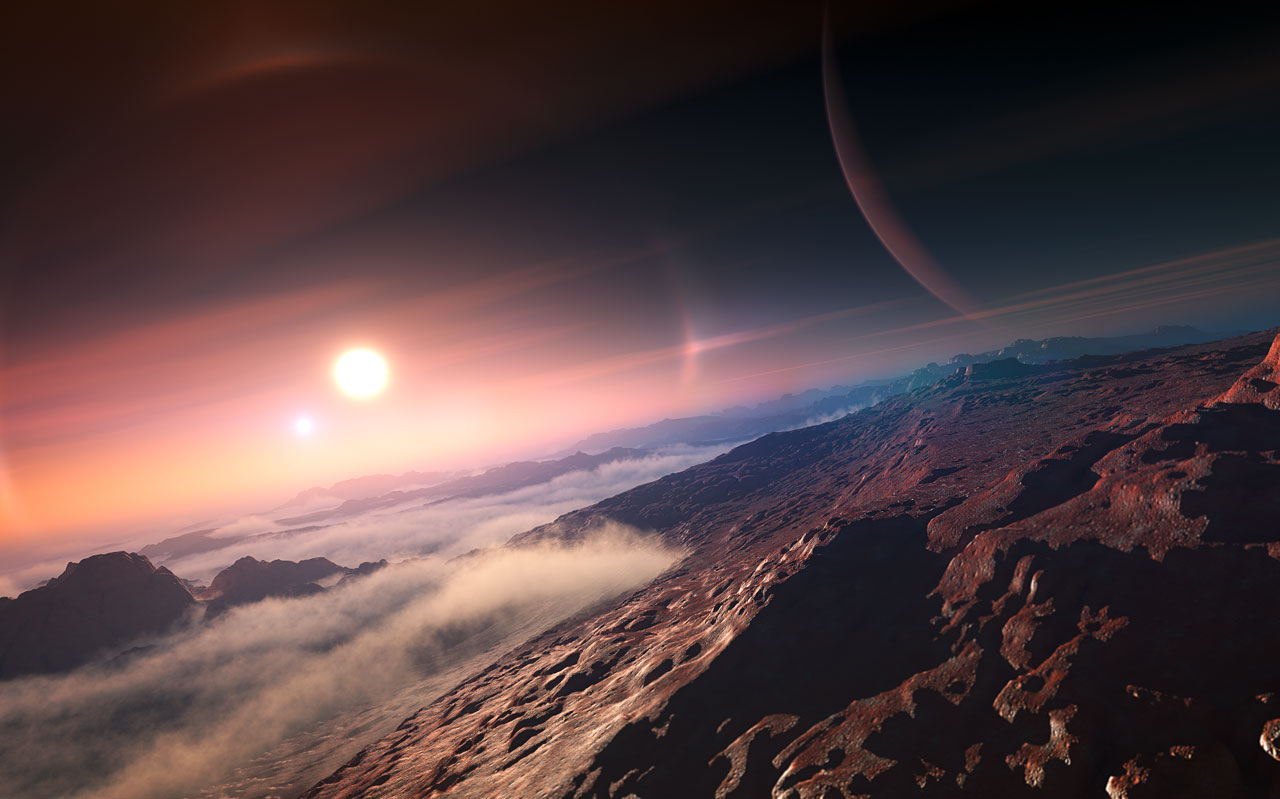
alien-worldWith recent observations made possible by the Kepler space telescope, numerous planets have been discovered orbiting distant stars. Whereas previous observations and techniques could detect exoplanets, scientists are now able to observe and classify them, with the ultimate aim of determining how Earth-like they are and whether or not they can support life.

Combined with advanced astronomical techniques, the latest estimates claim that there may be are up to 50 sextillion potentially habitable planets in the universe. With their eyes on the next step, the scientific community is now preparing to launch a bevy of new space telescopes that can peer across the universe and tell us how many of those planets actually harbor life.

TESSOne such telescope is NASA’s Transiting Exoplanet Survey Satellite (TESS), which will launch in 2017. While Kepler was focused on a single patch of sky with around 145,000 stars, TESS will be equipped with four telescopes that keep track of around 500,000 stars, including the 1,000 nearest red dwarfs. TESS is expected to find thousands of orbiting, Earth-sized-or-larger planets around these stars.

But to find out whether or not any of those planets actually house life, another sophisticated telescope needs to be employed – the James Webb Space Telescope.Whereas TESS is Kepler’s successor, the James Webb Space Telescope – a joint NASA/ESA/CSA venture – is the planned successor for the Hubble Telescope and is due to launch in 2018.

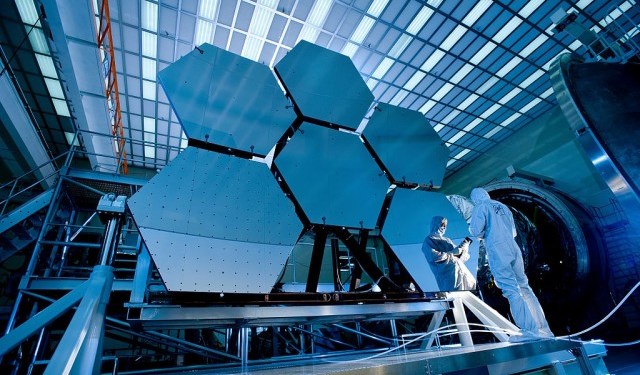
TESS_Space_Telescope_Mirror37-640x425The JWST has a primary mirror that’s about five times larger than Hubble’s (pictured above), which means it can resolve much fainter signals, locating stars and other objects that have never been seen before. Because it primarily operates in the infrared band (whereas Hubble was tuned towards visible light), the JWST will also be able to see through dust clouds into hidden areas of space.

The JWST’s scientific payload includes a spectrometer that’s sensitive enough to analyze the atmosphere of distant planets. By measuring light from the parent stars, and how its reflected in the planets atmospheres, it will be able to determine if there are life-supporting elements and evidence of biological life – such as oxygen and methane.

TESS_comparisonBecause these planets are light years away, and because the reflected light is incredibly dim, the James Webb Space Telescope will only be able to do this for large planets that orbit red and white dwarfs. Still, that leaves thousands or even millions of candidates that it will be able to observe, and determine whether or not they are already inhabited by extra-terrestrial life.

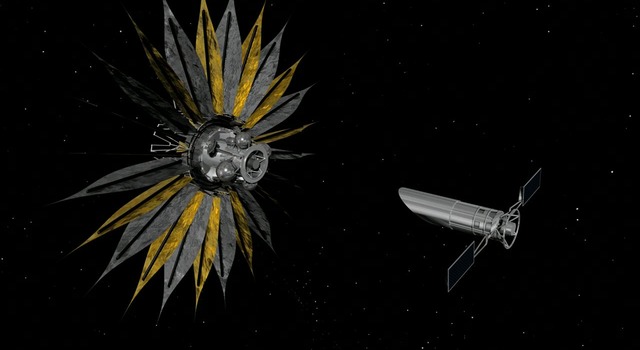
And last, but not least, there’s the New Worlds Mission, which aims to put a Starshade – which is essentially a big flying space umbrella – into space. This disc would then fly between the James Webb Space Telescope and the star its observing, blocking out large amounts of light and the result “noise pollution” from nearby bright stars that the JWST isn’t observing.

Starshade_1280x720_H264With the Starshade in place, the JWST would be able to probe thousands of nearby planets for signs of life and return data to Earth that is of far greater accuracy. The New Worlds Mission is currently in the prototyping stage, but NASA hopes to procure the necessary funding by 2015 and and launch it within the JWST’s own lifetime.

Because of all this, it is now believed that by 2020 (give or take a few years) we will have the ability to directly image a distant planet and analyze its atmosphere. And if we find methane or another biological marker on just one planet, it will completely redefine our understanding of the universe and the lifeforms that inhabit it.

The answer to the question – “are we alone in the universe?” – may finally be answered, and within our own lifetime. And in the meantime, be sure to enjoy this video of the Starshade space umbrella, courtesy of New Scientist.


Sources: extremetech.com, wired.co.uk, newscientist.com

News From Space: MAVEN Launched

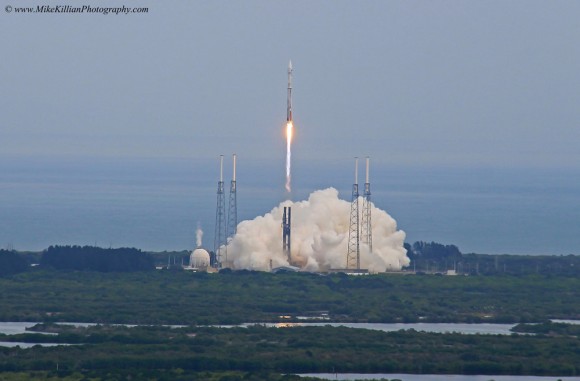
maven_launchYesterday, NASA’s Mars Atmosphere and Volatile Evolution (MAVEN) space probe was finally launched into space. The flawless launch took place from Cape Canaveral Air Force Station’s Space Launch Complex 41 at 1:28 p.m. EST atop a powerful Atlas V rocket. This historic event, which was the culmination of years worth of research, was made all the more significant due to the fact that it was nearly scrapped.

Back in late September, during the government shutdown, NASA saw its funding curtailed and put on hold. As a result, there were fears that MAVEN would miss its crucial launch window this November. Luckily, after two days of complete work stoppage, technicians working on the orbiter were granted an exemption and went back to prepping the probe for launch.

NASA_mavenThanks to their efforts, the launch went off without a hitch. 52 minutes later, the $671 Million MAVEN probe separated from the Atlas Centaur upper stage module, unfurled its wing-like solar panels, and began making its 10 month interplanetary voyage that will take it to Mars. Once it arrives, it will begin conducting atmospheric tests that will answer key questions about the evolution of Mars and its potential for supporting life.

Originally described as a “time-machine for Mars”, MAVEN was designed to orbit Mars and examine whether the atmosphere could also have provided life support, what the atmosphere was like, and what led to its destruction. This mission was largely inspired by recent discoveries made by the Opportunity and Curiosity rovers, whose surface studies revealed that Mars boasted an atmosphere some billions of years ago.

maven_atmo1During a post launch briefing for reporters, Bruce Jakosky – MAVEN’s Principal Investigator – described MAVEN’s mission as follows:

We want to determine what were the drivers of that change? What is the history of Martian habitability, climate change and the potential for life?

Once the probe arrives in orbit around Mars, scheduled for September 22nd, 2014, MAVEN will study Mars’ upper atmosphere to explore how the Red Planet may have lost its atmosphere over the course of billions of years. This will be done by measuring the current rates of atmospheric loss to determine how and when Mars lost its atmosphere and water.

maven_atmosphereFor the sake of this research, MAVEN was equipped with nine sensors the come in three instrument suites. The first is the Particles and Fields Package – which contains six instruments to characterize the solar wind and the ionosphere of Mars – that was provided by the University of California at Berkeley with support from CU/LASP and NASA’s Goddard Space Flight Center.

The second suite is the Remote Sensing Package, which ill determine global characteristics of the upper atmosphere and ionosphere and was built by CU/LASP. And last, but not least, is the Neutral Gas and Ion Mass Spectrometer, built by Goddard, which will measure the composition of Mars’ upper atmosphere.

As for the long term benefits of the mission and what it could mean for humanity, I’d say that Dr. Jim Green – NASA’s Director of Planetary Science at NASA HQ in Washington, DC – said it best:

We need to know everything we can before we can send people to Mars. MAVEN is a key step along the way. And the team did it under budget! It is so exciting!

Source: universetoday.com

News From Space: Olympic Torch gets a Spacewalk

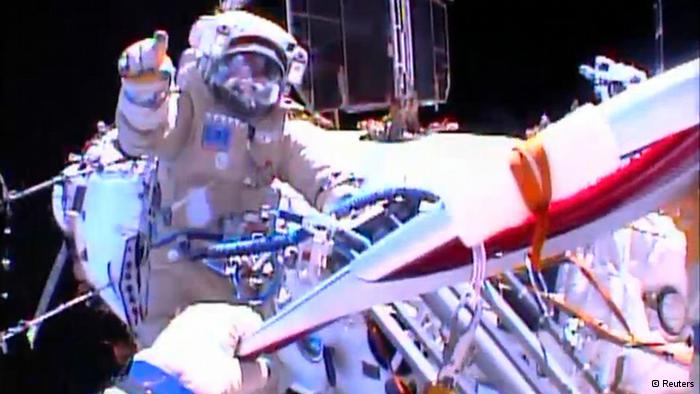
sochi_torch_ISS1Yesterday, for the first time ever, the Olympic torch was taken into space as two Russian cosmonauts took it on a spacewalk outside of  the International Space Station. NASA streamed video of the event as two cosmonauts, Oleg Kotov and Sergei Ryazanskiy, conducted their walk while the torch bobbed weightlessly from the end of a tether.

The two cosmonauts took several photos with the torch hovering with planet Earth in the background, the orb’s edge capturing the sunrise and emitting a bright glow. After two hours, they returned it to the space station and got to other tasks on their itinerary, which included attaching a footrest and a camera platform to the exterior of the orbiting laboratory.

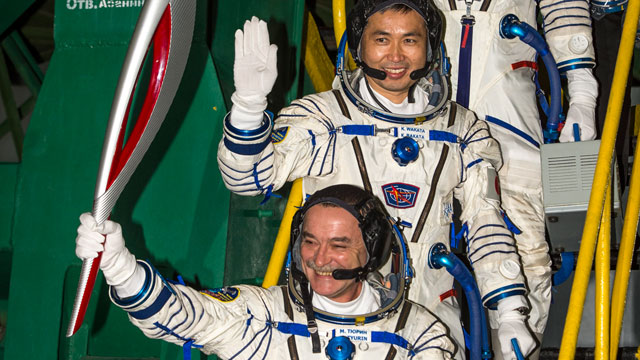
The Soyuz TMA-11M spacecraft rests on its launch pad at the Baikonur cosmodromeThe walk was just latest leg in the torch’s journey, which began on October 7th when the torch was delivered from Greece to Moscow. After touring the country, a journey which took it from Moscow, to St. Petersburg, and even to the North Pole (another first) aboard an atomic-powered icebreaker, the torch was launched last Thursday aboard a Soyuz rocket from the Baikonur Cosmodrome.

Inspired by the Firebird of Russian folklore, a magical glowing birdt hat can be both a blessing and a curse to its owner, the metre-long torch – which weighs roughly 2 kg (4.4 lbs) on Earth – accompanied a three-man crew into space. This consisted of a Russian cosmonaut and an American and Japanese astronaut, bringing the total number of crew aboard the station to nine.

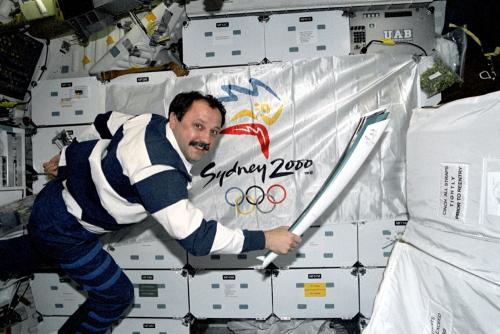
Space-Shuttle-Atlantis-STS-101-031.previewGranted, this is not the first time an Olympic torch has been taken into space. In 1996 and again in 2000, the Atlanta and Sydney Olympic torches were flown into space aboard the U.S. Space Shuttle Atlantis, in preparation for the Atlanta Summer Olympics. However, in that case, the torch was not taken outside of the spacecraft, which makes this a true first.

Much like on that occasion, the torch remained unlit while it was in space, as lighting it would have consumed precious oxygen. Still, the ISS crew managed to carry the unlit torch with them on a tour through several of the station’s modules and snapped pictures of it all. This took place over the course of several days before it stepped into space on Saturday.

sochi_torch_ISS4The torch is set to return to Earth tomorrow along with Russian cosmonaut Fyodor Yurchikhin, U.S. astronaut Karen Nyberg and Italian Luca Parmitano of the European Space Agency. Once home, it will be handed off to Sochi 2014 officials and continue on its 65,000 kilometer (44,000 mile) journey, which just happens to be the longest Olympic torch relay in history.

The torch is also planned to reach such destinations as Mount Elbrus (Europe’s highest peak) in the Caucasus mountain range before arriving in Sochi on February 7th, where it will kick of the 22nd Winter Games. In another interesting first, this will be the first time that an Olympic Games has been held by the Russian Federation, whereas the 1980 Summer Olympics that were held in Moscow took place during the era of the Soviet Union.

Olympic torch launched into spaceAccording to Deputy Prime Minister Dmitry Kozak, who has been in charge of planning the Olympics, transporting the Olympic torch to the ISS and bringing it into space is seen as “[A] way to show the world what Russia is made of.” He said it would display Russia’s “might” and its economic achievements, not unlike China did with the Tiangong space station.

Though the upcoming games are still a source of controversy to many – due to the recent passage of several laws that criminalize what officials call “gay propaganda” – this latest part of the Sochi Olympic torch relay showcases what is truly great about the Olympics. Not only was it an historic first, it also reminds us what the Olympics are all about.

sochi_torch_ISS5Originally conceived as a way of fostering goodwill between Greece’s city-states, and resurrected in 1894 to foster goodwill between nation-states, bringing the torch on board the ISS amidst a crew of international scientists helps to celebrate the spirit of diversity and tolerance which can and must define our modern world.

One can only hope that the symbolic value of this has not been lost on Russian lawmakers. Take it from us, Putin and the State Duma of Russia. It’s not too late to rethink your country’s political stances. If you really want to show how far your country has come, why not do some incredibly rational, like back away from an incredibly antiquated legal stance? I know for a fact it would make the Olympics go more smoothly this coming February…

And of course, be sure enjoy this video that NASA captured during the spacewalk:


Sources:
cbc.ca, (2), ctvnews.ca, abcnews.go.com, in.reuters.com

News From Space: More Happening on Mars!

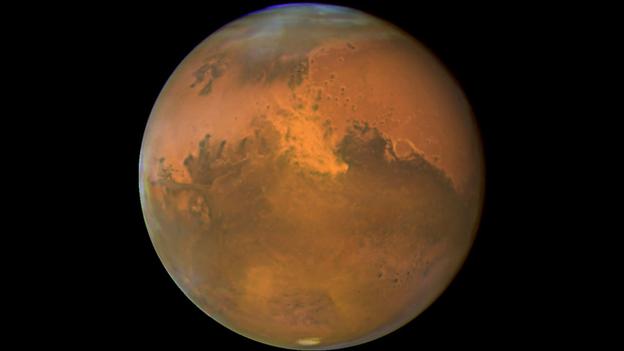
marsIt seems like weeks since the Red Planet has been featured in the news. But that’s to be expected when the two biggest news makers – the Opportunity and Curiosity rovers – are either performing a long drive or climbing a tall mountain. Not much in the way of updates are expected, unless something goes wrong. Luckily, these rovers always find ways to surprise us.

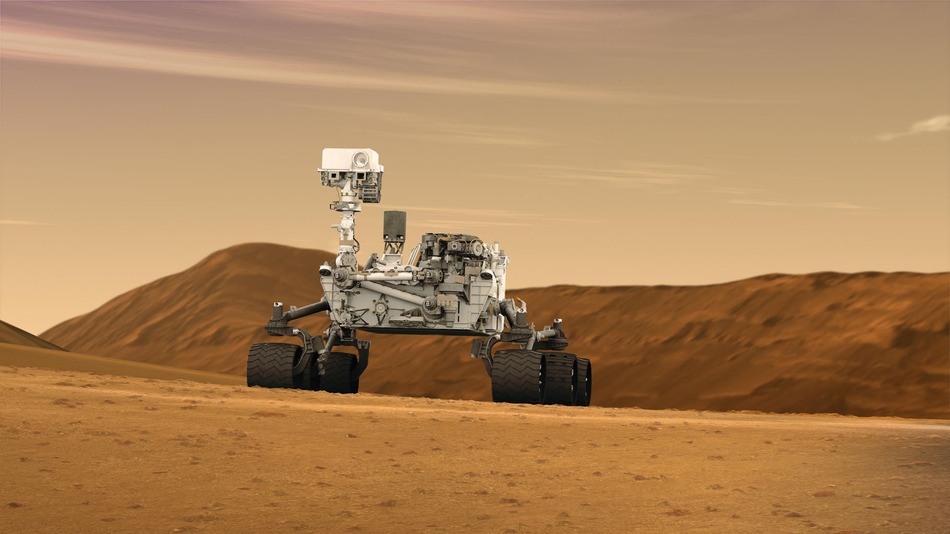
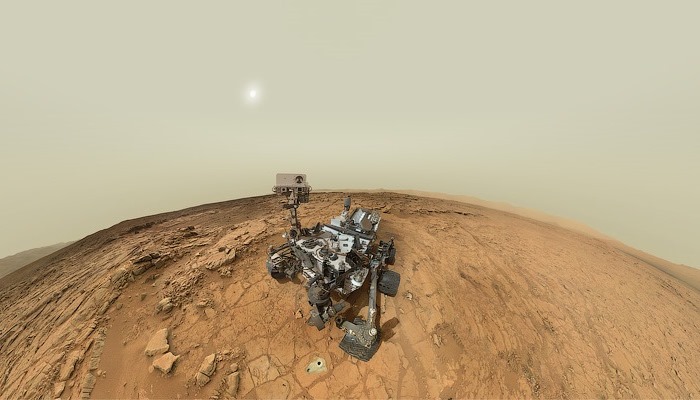
After over a year on Mars, Curiosity has accomplished a long list of firsts. This latest occurred last week, when NASA announced that Curiosity picked up the pace of its long trek to Mount Sharp by completing its first two-day autonomous drive, in which the rover did one leg of an autonomous drive on Sunday, then completed it on Monday.

mars_scapePreviously, Curiosity’s autonomous drives were only executed after finishing a drive planned by mission control on Earth using images supplied by Curiosity. These images would then be uploaded its on board computer, and the rover would compare them with images taken by its navigation camera to plot a safe path. The drive completed Monday is the first where the rover ended an autonomous drive on one day, then continued it the next day by itself.

This is all thanks to the incorporation of the new autonomous navigation (or autonav) software, which NASA finished incorporating and debuted at the end of August. According to NASA, this new system not only allows the rover to drive itself for longer stretches of time, it also allows mission control to plan activities for several days, which could be implemented on Fridays and before holidays so the rover can continue to work while the staff are away.

curiosity_hirise_tracksAccording to NASA, on Sunday, the new software allowed Curiosity to drive about 55 m (180 ft) along a path planned by mission control, then switched to autonomous mode and traveled another 38m (125 ft) with the rover selecting waypoints and the safest path. It then stored navigation variables in its non-volatile memory, then reloaded them on Monday to drive another 32 m (105 ft).

In all, Curiosity covered about 125 meters (410 ft) in total. This brought it within about 80 m (262 ft) from “Cooperstown,” a rocky outcrop where the rover will be conducting another series of scientific examinations. These will be the first time that Curiosity has had the opportunity to use its arm-mounted instruments since September 22.

mountsharp_galecraterAccording to Kevin Lewis of Princeton University, who spoke about the upcoming studies in “Cooperstown”:

What interests us about this site is an intriguing outcrop of layered material visible in the orbital images. We want to see how the local layered outcrop at Cooperstown may help us relate the geology of Yellowknife Bay [on Mars] to the geology of Mount Sharp.

This stop will be only brief, as the rover team are anxious to get Curiosity back on its way to Mount Sharp. Once there, it will begin digging, drilling and generally seeking out the vast caches of minerals that the mountain is expected to have, ones which could potentially support a habitable environment. Exciting times ahead!

Sources: gizmag.com, jpl.nasa.gov

News from Space: First Earth-Sized Exoplanet Found!

kepler78bFor the past three and a half years, the Kepler space telescope has been hurtling through space and searching the Milky Way for signs of of other planets orbiting distant stars. In that time, Kepler has identified many Earth-like exoplanets, many of which reside within our own stellar neighborhood. However, it has found only one planet in recent months that is Earth-sized.

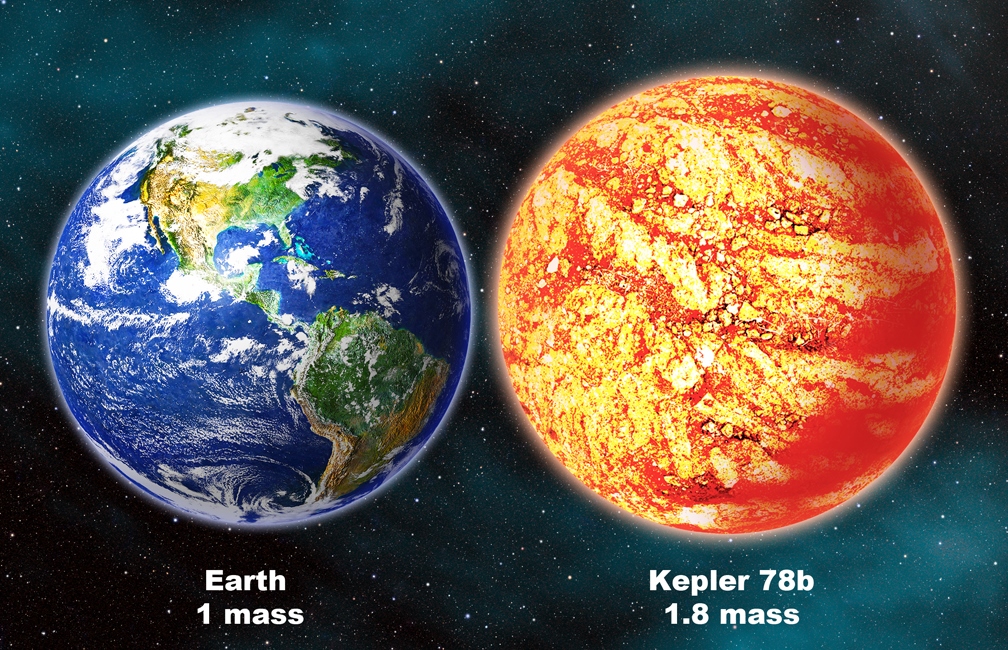
That planet is known as Kepler-78b, the existence of of which was recently verified by NASA scientists at Cape Canaveral. Of all the planets discovered beyond our Solar System, this one is both rocky in composition and weighs in at roughly 1.2 times Earth’s mass. Beyond that, however, the similarities between this planet and our own end.

kepler78b2In addition to having an orbital period of 8.5 hours, the planet also rotates around its parent star at a distance of about 1.5 million kilometers (approx. 93205 miles). Basically, this means that Kepler-78b is thirty to forty-five times closer to its Sun than Mercury is to ours, and experiences a full year in under nine days. This makes Kepler 78b an extremely hostile environment, unsuitable for life as we know it.

Andrew Howard, of the University of Hawaii at Manoa’s Institute for Astronomy and the lead author on one of two papers published in Nature magazine about the discovery of the new planet, said in recent webcast:

We’ve been hearing about the sungrazing Comet ISON that will go very close to the Sun next month. Comet ISON will approach the Sun about the same distance that Kepler-78b orbits its star, so this planet spends its entire life as a sungrazer.

Kepler78b1A handful of planets the size or mass of Earth have been discovered, but Kepler-78b is the first to have both a measured mass and size. At 1.2 times the size of Earth with a diameter of 14,800 km (9,200 miles), astronomers say it has a density similar to Earth’s, which suggests an Earth-like composition of iron and rock. Its star is slightly smaller and less massive than the sun and is located about 400 light-years from Earth in the constellation Cygnus.

Verification of the planet’s existence and characteristics was made by two independent research teams that used ground-based telescopes for follow-up observations. The team led by Howard used the W. M. Keck Observatory atop Mauna Kea in Hawaii. The other team led by Francesco Pepe from the University of Geneva, Switzerland, did their ground-based work at the Roque de los Muchachos Observatory on La Palma in the Canary Islands.

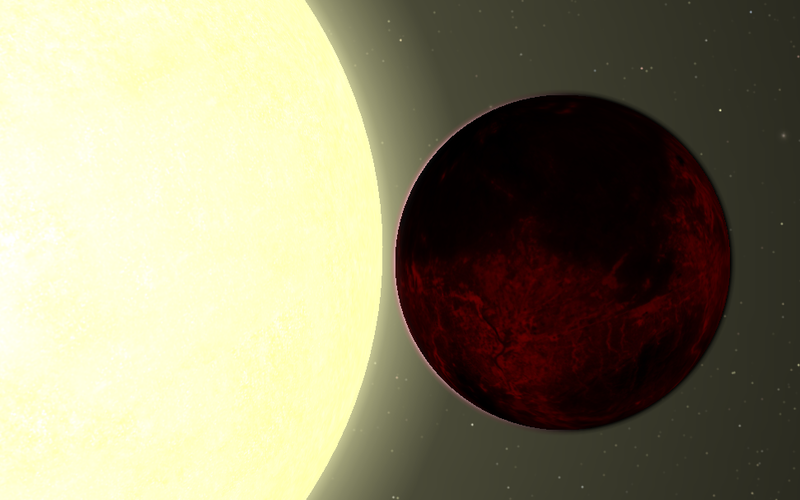
exoplanet_hotAnd while the discovery is exciting, the close proximity of Kepler-78b to its star poses a challenge to theorists. According to current theories of planet formation, it couldn’t have formed so close to its star, nor could it have moved there. Given that its star would have surely been larger when the system was in formation, Kepler-78b’s orbit would have put in inside the swollen star. Hence, the planet’s existence is an enigma.

To make matters worse, Kepler-78b is a doomed world. Gravitational tides will continue to pull Kepler-78b even closer to its star, and eventually it will move so close that the star’s gravity will rip the world apart. Theorists predict that the planet will vanish within three billion years. And while this may sounds like an eternity to us, in astronomical terms it represents a life cut short.

Source: universetoday.com, nature.com

The Future of Fusion: Milestone Hit Amidst Funding Fears

fusion_reactorThe National Ignition Facility (NIF) in Livermoore, California has made quite a bit of headlines lately. But when you’re goal is to harness fusion power – a clean, unlimited and cheap source of energy – that is abound to happen. For decades, the challenge of harnessing fusion has been to create a process that produces more energy than it consumes; a goal which has remained elusive.

However, a recent breakthrough at NIF has brought us all one step closer to viability. Apparently, the breakthrough happened in late September, where the amount of energy released through the latest controlled fusion reaction exceeded the amount of energy being absorbed by the fuel. This was the first time this had been achieved at any fusion facility anywhere in the world.

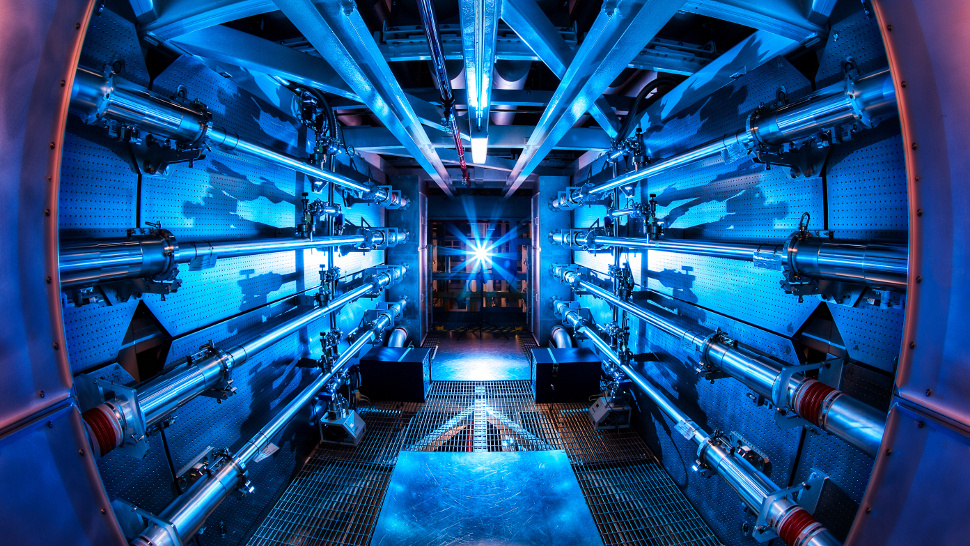
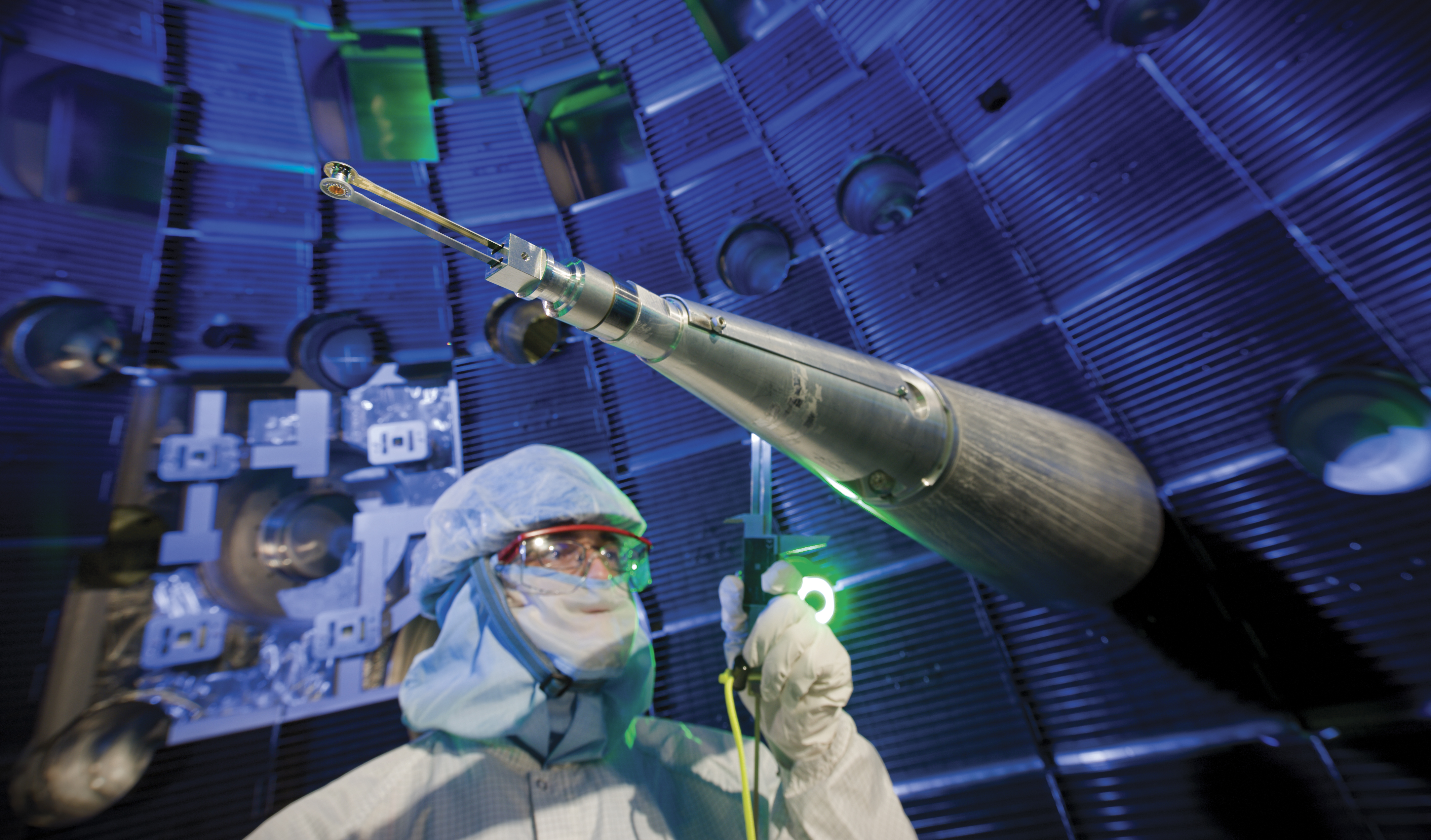
fusion_energyNIF, based at Livermore in California, uses 192 beams from the world’s most powerful laser to heat and compress a small pellet of hydrogen fuel to the point where nuclear fusion reactions take place. Viability, in this case, meant producing more energy from a fusion reaction than was consumed by the lasers themselves and any inefficiencies that cost power along the way.

As already noted, this breakthrough has been decades in the making. After nearly 50 years of experimentation and failure, the NIF announced in 2009 that its aim was to demonstrate nuclear fusion producing net energy by 30 September 2012. But unexpected technical problems ensured the deadline came and went; the fusion output was less than had originally been predicted by mathematical models.

NIF Livermore July 2008Soon after, the $3.5 billion facility shifted focus, cutting the amount of time spent on fusion versus nuclear weapons research – which was part of the lab’s original mission. However, the latest experiments showed that net energy  output is possible, which in turn will provide a welcome boost to ignition research at NIF as well as encouraging fusion research in general.

Despite this breakthrough, there are worries that the research will not be able to continue. Thanks to the government shutdown, federal funding for major research labs like the NIF is threatened. A suspension in funding can be just as harmful as it being cut off altogether, as delays at a crucial juncture can mean all progress will be lost.

NASA_coldfusionLuckily, the NIF is just one of several projects around the world aimed at harnessing fusion. They include the multi-billion-euro ITER facility, currently under construction in Cadarache, France. However, ITER will take a different approach to the laser-driven fusion, using magnetic fields to contain the hot fusion fuel – a concept known as magnetic confinement.

What’s more, NASA’s own research into cold fusion that relies on weak nuclear forces – as opposed to strong ones – is likely to continue, regardless of whether it meets the requirements for emergency exemption. And given that the prize of this research is a future where all our energy needs are provider for using a cheap, abundant, clean alternative, there is no way we’re stopping now!

Sources: bbc.co.uk, IO9.com

Dead in Space: Government Shutdown, NASA and Mars

marsAs the government shutdown goes into its second week, there is growing concern over how it is affecting crucial programs and services. And its certainly no secret that a number of federally-funded organizations are worried about how it will affect their long term goals. One such organization is NASA, who has seen much of its operations frozen while the US government attempts to work out its differences.

In addition to 97% of NASA’s 18,000 employees being off the job, its social media accounts and website going dark, and its television channel being shut down, activities ranging from commercial crew payouts, conferences, and awards and scholarship approvals are all being delayed as well. Luckily, certain exemptions are being made when it comes to crucial work on Mars.

NASA_mavenThese include the Mars Atmosphere and Volatile EvolutioN (MAVEN) orbiter. Following two days of complete work stoppage, technicians working on the orbiter were granted an exemption and permitted to continue prepping it for launch. And not a moment too soon, seeing as how a continued shutdown would have caused the orbiter to miss its crucial launch window.

Designed to survey the Martian atmosphere while orbiting the planet, NASA hopes that MAVEN will provide some clues as to what became of the planet’s onetime atmosphere. MAVEN was been scheduled to blast off for the Red Planet on Nov.18 atop an Atlas V rocket from the Florida Space Coast until those plans were derailed by the start of the government shutdown that began at midnight, Oct. 1.

But as Prof. Bruce Jakosky, MAVEN’s chief scientist, stated in an interview just two days later:

We have already restarted spacecraft processing at the Kennedy Space Center (KSC) today. [Today, we] determined that MAVEN meets the requirements allowing an emergency exception relative to the Anti-Deficiency Act.

Curiosity-roverAnother merciful exception to the shutdown has been the Curiosity Rover. Since contract workers at NASA’s Jet Propulsion Laboratory (JPL) oversee the rover’s mission, the Curiosity team is not subject to the same furloughs as other NASA employees. At JPL, the technicians and workers at the lab are employed by the California Institute of Technology, and are therefore able to keep the mission going.

However, the management at JPL and Cal Tech will continue to assess the situation on a weekly basis, and it’s possible the team may not remain completely intact in the event of a prolonged shutdown. This would be particularly detrimental for Curiosity since the Mars rover requires daily maintenance by scientists, engineers and programmers and cannot run on autopilot.

curiosity_sol-177-1As Veronica McGregor, a media relations manager at JPL, said in a recent interview:

Right now, things continue on as normal. Curiosity is one where they literally look at the data each day, sit down, create a plan, decide what science instrument is going to be used tomorrow, they write software for it and upload it. [It’s] is kind of a unique mission in that way.

Other programs running out JPL will also continue. These include the Opportunity and Odyssey rovers, the Mars Reconnaissance Orbiter, the HiRISE camera, Dawn, Juno, and Spitzer space probes, and the Voyager satellites, APL, MESSENGER, and New Horizons.  In addition, operations aboard the International Space Station will continue, but with the bare minimum of ground crew support.

cassini_spaceprobeRobotic missions that are already in operation – such as the Cassini spacecraft circling Saturn, or the Lunar Atmosphere and Dust Environment Explorer (LADEE) winging its way to the moon – will have small crews making sure that they are functioning properly. However, no scientific analysis will be conducted during the shutdown period.

As the shutdown continues, updates on which programs are still in operation, which ones will need to be discontinued, and how they will be affected will continue to be made available. One can only hope the politically-inspired deadlock will not become a prolonged affair. It’s not just current programs that are being affected after all.

Consider the proposed 2030 manned mission to Mars, or the plans to tow an asteroid closer to Earth. I can’t imagine how awful it would be if they were delayed or mothballed due to budget constraints. Politics… bah!

Sources: universetoday.com, (2), mashable.com

News From Space: XS-1 Reusable Spacecraft

sx-1_spaceplaneWhen it comes to the future of space exploration, the ongoing challenge has been to find a way to bring down the costs associated with getting things into orbit. In recent years, a number of solutions have been presented, many of which have been proposed by private companies like SpaceX and Reaction Engines. Not to be outdone, the US government has its own proposal, known as the XS-1.

Developed by DARPA, the XS-1 is the latest in a string of designs for a reusable spacecraft that would be capable of taking off and landing from an airfield. But unlike its predecessors, this craft would be a two-stage craft that has no pilot and is controlled much like a drone. By combining these two innovations, DARPA foresees an age where a “one day turnaround,” or daily launches into space, would be possible.

skylon-orbit-reaction-enginesBasically, the XS-1 will work as a two-stage flyer, beginning as a regular high-altitude drone meant to fly as high as possible and reach hypersonic speed. Once this has been achieved, the payload will separate along with an expendable launch system with a small tank of rocket fuel which will then be automatically delivered to its final destination. The plane, meanwhile, will automatically return to base and begin prep for the next day’s mission.

In addition to being cheaper than rockets and space shuttles, an XS-1 space plane would also be much faster than NASA’s now-retired STS shuttles. Much like Reaction Engines Skylon concept, the ship is designed for hypersonic speeds, in this case up to Mach 10. While this might sound incredibly ambitious, NASA has already managed to achieve a top speed of Mach 9.8 with their X-43A experimental craft back in 2004 (albeit only for ten seconds).

x-43a The XS-1′s payload capacity should be around 2300 kilograms (5000 pounds) per mission, and DARPA estimates that a single launch would cost under $5 million. Currently, it costs about $20,000 to place a single kilo (2.2lbs) into geostationary orbit (GSO), and about half that for low-Earth orbit (LEO). So while DARPA’s requirements are certainly stringent, they would cut costs by a factor of ten and is within the realm of possibility.

As it stands, all ideas being forth are centered around reinventing the rocket to make launches cheaper. When it comes to long-term solutions, grander concepts like the space elevator, the slingatron, or space penetrators may become the norm. Regardless, many of the world’s greatest intellectual collectives have set their sights on finding a more affordable path into space. These advanced launch jets are just the first step of many.

Sources: extremetech.com, news.cnet.com

News From Space: 3-D Printed Spacecraft

3D_spaceprinting13D-Printing has led to many breakthroughs in the manufacturing industry in recent years. From its humble beginnings assembling models out of ABS plastic, the technology has been growing by leaps and bounds, with everything from construction and food printing to bioprinting becoming available. And as it happens, another major application is being developed by a private company that wants to bring the technology into orbit.

It’s called SpiderFab, a system of technologies that incorporates 3-D printing and robotic assembly to create  “on-orbit” structures and spaceship components (such as apertures, solar arrays, and shrouds). Developed by tech firm Tethers Unlimited, Inc. (TUI), the project is now in its second phase and recently landed a $500,000 development contract from NASA.

spiderfabOne of the greatest challenges of space exploration is the fact that all the technology must first be manufactured on Earth and then shuttled into orbit aboard a rocket or a shroud. The heavier the cargo, the larger the rocket needs to be. Hence, any major undertaking is likely to have a massive price tag attached to it. But by relocating the manufacturing process to a place on-site, aka. in orbit, the entire process will be much cheaper.

Towards this end, the SpiderFab, incorporates two major innovations in terms of transportation and manufacture. The first makes it possible to pack and launch raw materials, like spools of printable polymer, in a cost-effective way using smaller rockets. The second uses patented robotic fabrication systems that will process that material and aggregate it into structural arrangements.

3D_spaceprintingDr. Rob Hoyt, CEO of TUI, had this to say of his company’s brainchild in a recent interview with Co.Design:

SpiderFab is certainly an unconventional approach to creating space systems, and it will enable significant improvements for a wide range of missions.

The unorthodox system is also a solution to the problem that Hoyt began working on two decades ago when he first began working with NASA. While there, he experimented with on-orbit fabrication as a concept, but was limited due to the fact that there were no means available to make it reality. However, once 3-D printing became mainstream, he seized the opportunity presented. As he explains:

I didn’t strike on anything dramatically better than [previous investigations] until about six years ago, when additive manufacturing was really starting to take off. I realized that those techniques could be evolved to enable some dramatic improvements in what we can build in space.

spiderfab3At present, TUI is working on several different models of what the SpiderFab will eventually look like. The first of these is known as the Trusselator, one of many building blocks that will form the factory responsible for producing spacecraft components. The Trusselator is designed to print high-performance truss elements, while another, the Spinneret, will use 3-D printing-like techniques to connect and fuse together clusters of trusses.

Hoyt says that the TUI team will be further testing these processes in the next couple of months, first in the lab and then in a thermal-vacuum chamber. He hopes, however, that they will be able to conduct an on-orbit demonstration of SpiderFab a few years down the line. And with any luck, and more funding, NASA and other agencies may just convert their production process over to orbital 3-D printing facilities.

Alongside concepts like the SpaceX Grasshopper reusable rocket and reusable space craft, 3-D space printing is yet another revolutionary idea that is likely to bring the astronomical (no pun!) costs of space exploration down considerably. With affordability will come growth; and with growth, greater exploration will follow…

Star-Trek-universe

Sources: fastcodesign.com, tethers.com