
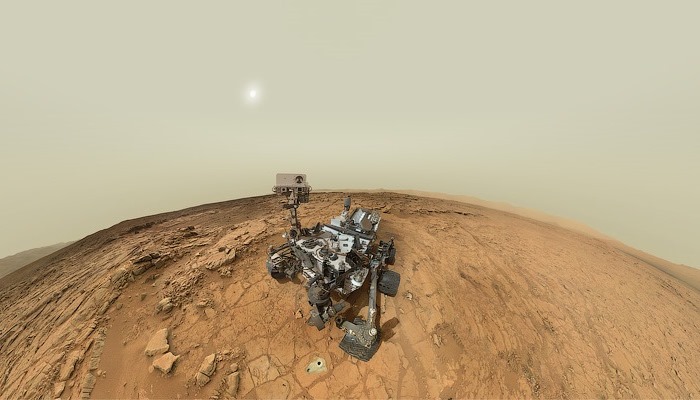
 April was a busy month for the very photo-talented (and photogenic) Curiosity Rover. In addition to another panoramic shot of the Martian landscape – which included Curiosity looking back at itself, making it a “selfie” – the rover also managed to capture a night-sky image that captured two minor planets and the Martian moon of Deimos in the same picture. At a time when Curiosity and Opportunity are both busy on long-haul missions to find evidence of life, these latest pictures remind us that day-to-day operations on Mars are still relevant.
The first shot took place on April 20th (Sol 606), when rover scientists used the Mast Camera to capture the minor planets of Ceres and Vesta, as well as the moon of Deimos, in the same frame. Ceres is a minor planet with a diameter of about 950 km, and is the largest object in the main asteroid belt. With a diameter of about 563 km, Vesta is the third-largest object in the asteroid belt. Deimos, meanwhile, is the smaller of Mars’ two moons, with a mean radius of 6 km.
 In the main portion of the new image (seen above), Vesta, Ceres and three stars appear as short streaks due to the duration of a 12-second exposure. In other camera pointings the same night, the Curiosity’s camera also imaged Phobos and the planets Jupiter and Saturn, which are shown as insets on the left. Dr Mark Lemmon from Texas A&M University, a Curiosity team member, explained:
this imaging was part of an experiment checking the opacity of the atmosphere at night in Curiosity’s location on Mars, where water-ice clouds and hazes develop during this season… The two Martian moons were the main targets that night, but we chose a time when one of the moons was near Ceres and Vesta in the sky.
Deimos was much brighter than the visible stars, Vesta and Ceres in the same part of the sky, in the main image. The circular inset covers a patch of sky the size that Earth’s full moon appears to observers on Earth. At the center of that circular inset, Deimos appears at its correct location in the sky, in a 0.25 second exposure.
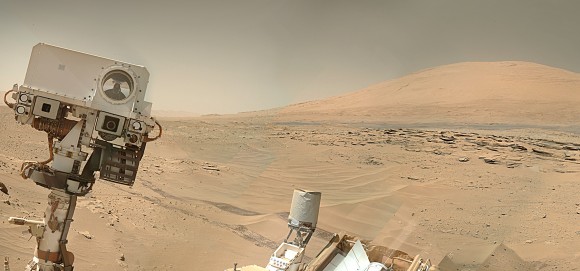 As for the latest in Curiosity’s long-line of panoramic self-portraits, this one comes to us courtesy of Jason Major. As a graphic designer and amateur space explorer, Major assembled the picture from about the dozen or so images acquired with the rover’s Mars Hand Lens Imager (MAHLI) instrument on April 27-28, 2014 (Sol 613). In the background, one can see the 5.5-km-high (3.4 miles) Mount Sharp (Aeolis Mons) that sits in the center of the Gale Crater.
One thing that Major noted about the picture he assembled is the way the cylindrical RUHF antenna and the bit of the RTG that is visible in the lower center seem to form a “toothy (if slightly dusty) grin”. But, as he stated:
…with almost 21 Earth-months on Mars and lots of discoveries already under her robot belt, Curiosity (and her team) certainly have plenty to smile about!
And the best is likely to still be coming. As we speak, Curiosity is making its way towards Mount Sharp and is expected to arrive there sometime in August. As the primary goal in its mission, Curiosity set off for this destination back in June after spending months studying Glenelg area. She is expected to arrive at the foot of the mountain in August, where she will begin drilling in an effort to study the mountain’s vast caches of minerals – which could potentially support a habitable environment.
 If Curiosity does find evidence of organic molecules in this cache, it will be one of the greatest scientific finds ever made, comparable only to the discovery of hominid remains in the Olduvai Gorge, or the first recorded discovery of dinosaur remains. For not only will we have definitive proof that life once existed on Mars, we will know with some certainly that it may again someday…
Stay tuned for more news from the Red Planet. And in the meantime, keep on trucking Curiosity!
Sources: sci-news.com, universetoday.com

 After initially joking that American astronauts would be left stranded on the ISS, he also recommended that NASA try using a trampoline to reach orbit. The joke was naturally irrelevant, since day-to-day operations involving the ISS are not going to be affected by these sanctions. Still, the inability to rely on Russian Soyuz’s in the near future will mean that US satellites – which are used for everything from GPS to spying – will be undeployable for the time being.


 And that’s not only discovery of cosmic significance that was made in recent months. In this case, the news comes from NASA’s Fermi Gamma-ray Space Telescope, which has been analyzing high-energy gamma rays emanating from the galaxy’s center since 2008. After pouring over the results, an independent group of scientists claimed that they had found an unexplained source of emissions that they say is “consistent with some forms of dark matter.”
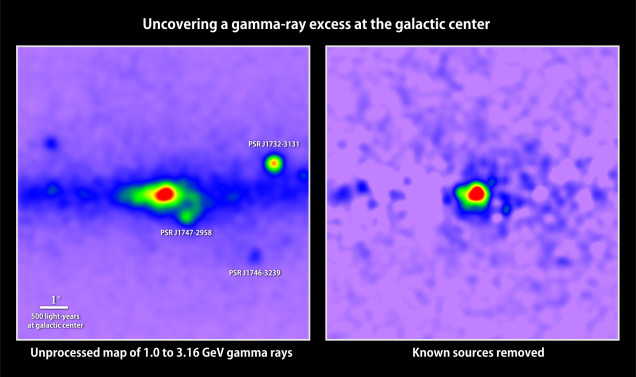 The galactic center teems with gamma-ray sources, from interacting binary systems and isolated pulsars to supernova remnants and particles colliding with interstellar gas. It’s also where astronomers expect to find the galaxy’s highest density of dark matter, which only affects normal matter and radiation through its gravity. Large amounts of dark matter attract normal matter, forming a foundation upon which visible structures, like galaxies, are built.


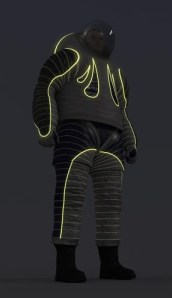 And unlike the current microgravity suits, the Z-series is designed for walking in extra-terrestrial environments where gravity is the norm (i.e. the Moon and Mars). Intrinsic to the new design is flexibility: it makes it much easier to walk, bend, and pick things up off the surface of a planet or moon. It also goes on quite differently. Whereas the old suit is pulled on like a pair of pants and a shirt, the new version has a handy door built into the back so someone can climb inside.
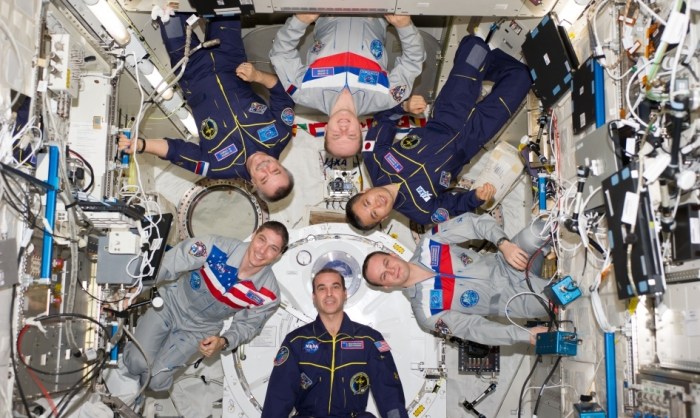 Yesterday, NASA officially announced that it intends to cease most work with the Russian Federal Space Agency amid growing tensions concerning the Ukrainian crisis. The statement came from Bob Jacobs, NASA’s deputy associate administrator of communications, who formalized the space agency’s position with a message sent to Universe Today, a copy of which was then posted on it’s Google+ message board on Wednesday, April 2nd.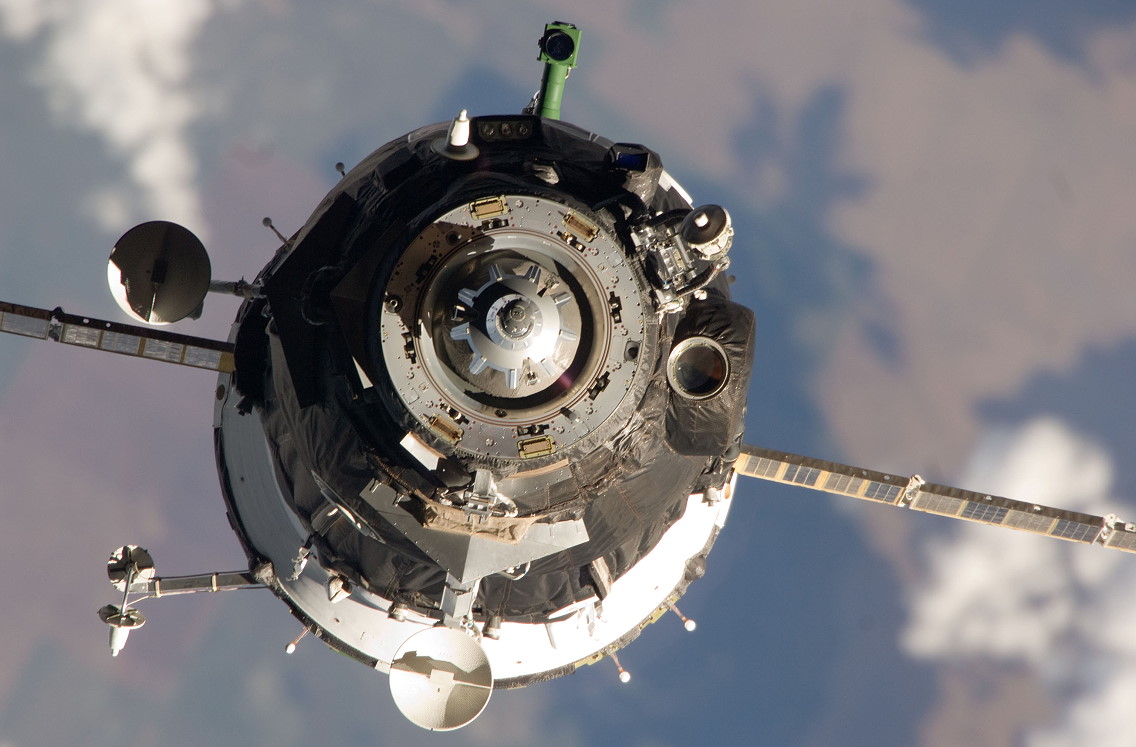
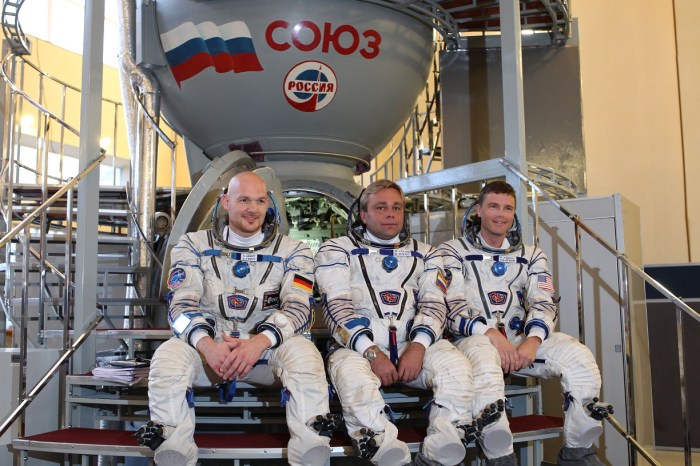 Since the Space Shuttle Program was retired in 2011, NASA and other space agencies such as the European Space Agency have relied on Russian Soyuz spacecraft to bring astronauts to the International Space Station. Crews are generally made up of large proportions of Russian cosmonauts and American astronauts, as well as a few astronauts from other agencies. The current Expedition 39 crew has has three Russians, two Americans and a Japanese commander, Koichi Wakata.
 NASA is working on a commercial crew program that right now is slated to bring U.S. astronauts back into space from American soil by 2017. There are several proposals being considered: a human-rated version of SpaceX’s Dragon, Blue Origin’s New Shepard, Sierra Nevada’s Dream Chaser and the Boeing CST-100. However, these depend upon continued funding and it is currently unclear how much money the CCP program will receive in the upcoming fiscal 2015 budget request before Congress.

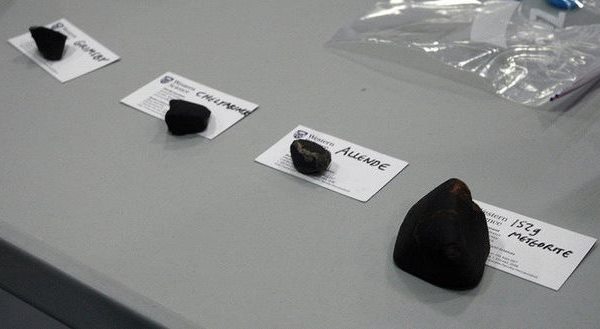 Hence why Brown is asking for the public to help look for the meteorite, which has been described as a rock that looks like it was painted black, and contact the researchers if they find it. The researchers are also interested in hearing accounts from anyone who may have heard a whistling sound “like artillery coming in” or a thud after witnessing the fireball, indicating that it may have landed within a few hundred metres. That may help narrow down the area for the search.






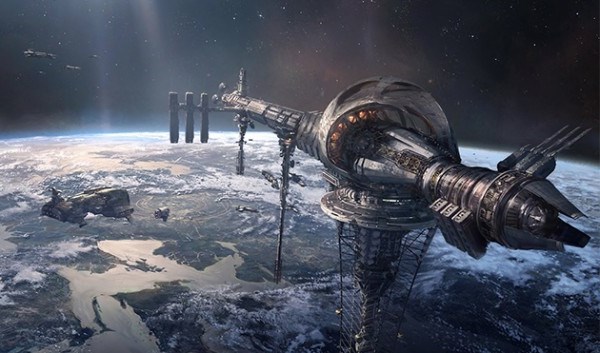
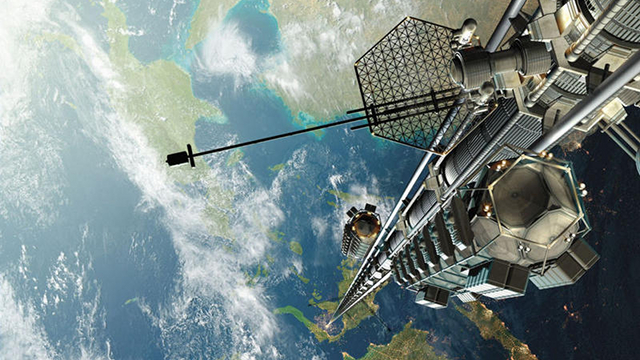
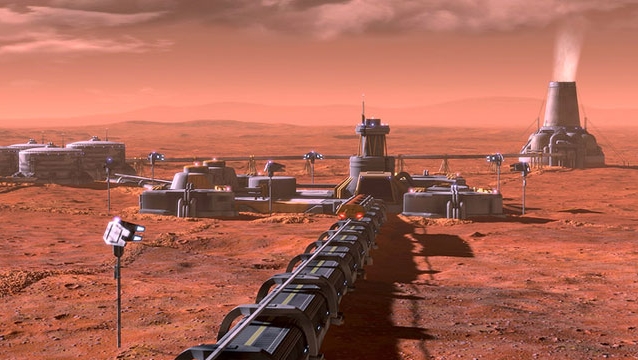


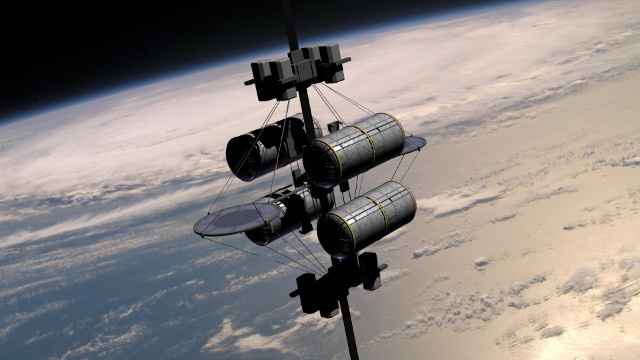 In 2003, Arthur C. Clarke famously said that we will build a space elevator 10 years after they stop laughing. Though his timeline may have been off, as if often the case – for example, we didn’t have deep space missions or AIs by 2001 – sentiments were bang on. The concept of a space elevator is taken seriously at NASA these days, as it eyes the concept as a potential solution for both shrinking budgets and growing public expectations.
 Stories by Williams