Elon Musk is at it again, this time with clean, renewable energy. Just yesterday, he announced that Solar City (the solar installation company that he chairs) plans to acquire a startup called Silevo. This producer of high-efficiency panels was acquired for $200 million (plus up to $150 million more if the company meets certain goals), and Musk now plans to build a huge factory to produce their panels as part of a strategy that will make solar power “way cheaper” than power from fossil fuels.
Solar City is one of the country’s largest and fastest-growing solar installers, largely as a result of its innovative business model. Conceived by Musk as another cost-reducing gesture, the company allows homeowners and businesses to avoid any up-front cost. If its plans pan out, it will also become a major manufacturer of solar panels, with by far the largest factory in the U.S.
The acquisition makes sense given that Silevo’s technology has the potential to reduce the cost of installing solar panels, Solar City’s main business. But the decision to build a huge factory in the U.S. seems daring – especially given the recent failures of other U.S.-based solar manufacturers in the face of competition from Asia. Ultimately, however, Solar City may have little choice, since it needs to find ways to reduce costs to keep growing.
Silevo produces solar panels that are roughly 15 to 20 percent more efficient than conventional ones thanks to the use of thin films of silicon – which increase efficiency by helping electrons flow more freely out of the material – and copper rather than silver electrodes to save costs. Higher efficiency can yield big savings on installation costs, which often exceed the cost of the panels themselves, because fewer panels are needed to generate a given amount of power.
Silevo isn’t the only company to produce high-efficiency solar cells. A version made by Panasonic is just as efficient, and SunPower makes ones that are significantly more so. But Silevo claims that its panels could be made as cheaply as conventional ones if they could scale their production capacity up from their current 32 megawatts to the factory Musk has planned, which is expected to produce 1,000 megawatts or more.
The factory plan mirrors an idea Musk introduced at one of his other companies, Tesla Motors, which is building a huge “gigafactory” that he says will reduce the cost of batteries for electric cars. The proposed plant would have more lithium-ion battery capacity than all current factories combined. And combined with Musk’s release of the patents, which he hopes will speed development, it is clear Musk has both eyes on making clean technology cheaper.
Not sure, but I think it’s fair to say Musk just became my hero! Not only is he all about the development of grand ideas, he is clearly willing to sacrifice profit and a monopolistic grasp on technologies in order to see them come to fruition.
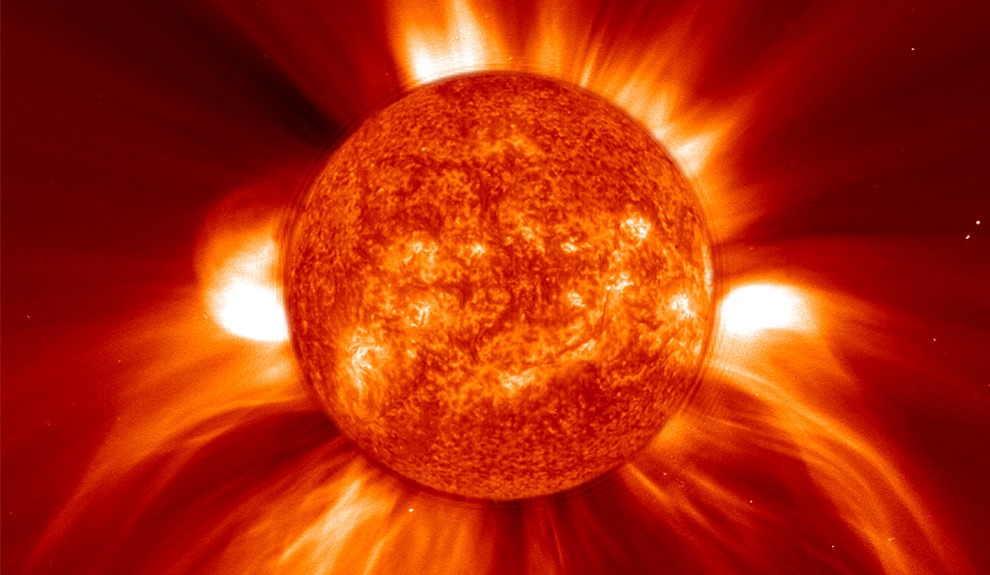
In our ongoing drive to find ways to meet energy demands in a clean and sustainable way, solar power is the clearly the top contender. While inroads have certainly been made in terms of fusion technology, the clean, abundant, and renewable power that can be derived from our sun seems to hold the most promise. In addition to the ever-decreasing costs associated with the manufacture and installation of solar cells, new applications that are appearing all the time that allow for greater usage and efficiency.
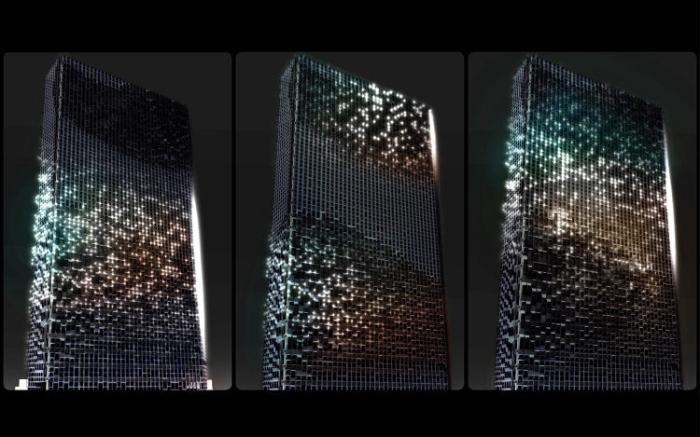
Consider the following example that comes from Seoul, Korea, where Hanwa – the largest solar company in the world – has chosen to retrofit its aging headquarters with a solar facade that will provide both for the buildings needs and cut down on energy costs. Having been built in the 1980’s, the Hanwa building is part of a global problem. High-rise buildings suck up around 16% of the world’s energy, and most were built to specifications that do not include sustainability or self-sufficiency.
Even though the most recently-built skyscrapers are helping change things by employing renewable energy and sustainable methods – like the Pertamina Energy Tower in Jakarta – that still leaves tens of thousands of inefficient giant buildings on the ground. And rather than tear them down and erect new buildings in their place, which would be very wasteful and inefficient, it is possible to convert these buildings into something cleaner and less reliant on other external sources of electricity.
Basically, the plan calls for plastering the 29-story building with three-hundred new solar panels. These will be placed on the sunniest spots to harvest energy, and other strategically placed panels will automatically adjust to help keep the interior cool but bright with natural light. New high-performance windows will save more energy. In total, though the final details are still in progress, the retrofit may save well over a million kilowatt-hours of electricity each year.
In theory, say designers from Amsterdam-based UNStudio, this type of facade could be added onto any skyscraper. As the researcher explains:
It would be the principles that could be applied of course and not the design, as every building has its own context, program, size, view corridors, orientation etc. which would affect the design parameters differently. Each building would be unique and would require a tailored approach.
Retrofitting old skyscrapers is an important way for cities to fight climate change, say engineers from ARUP, which worked with UNStudio on optimizing the design. And it’s usually a better solution than building something brand new. Accroding to Vincent Cheng, who led the project from ARUP’s Hong Kong studio, retrofitting is a better option for old skycrapers, both in “terms of reducing embodied carbon emission and waste elimination.”
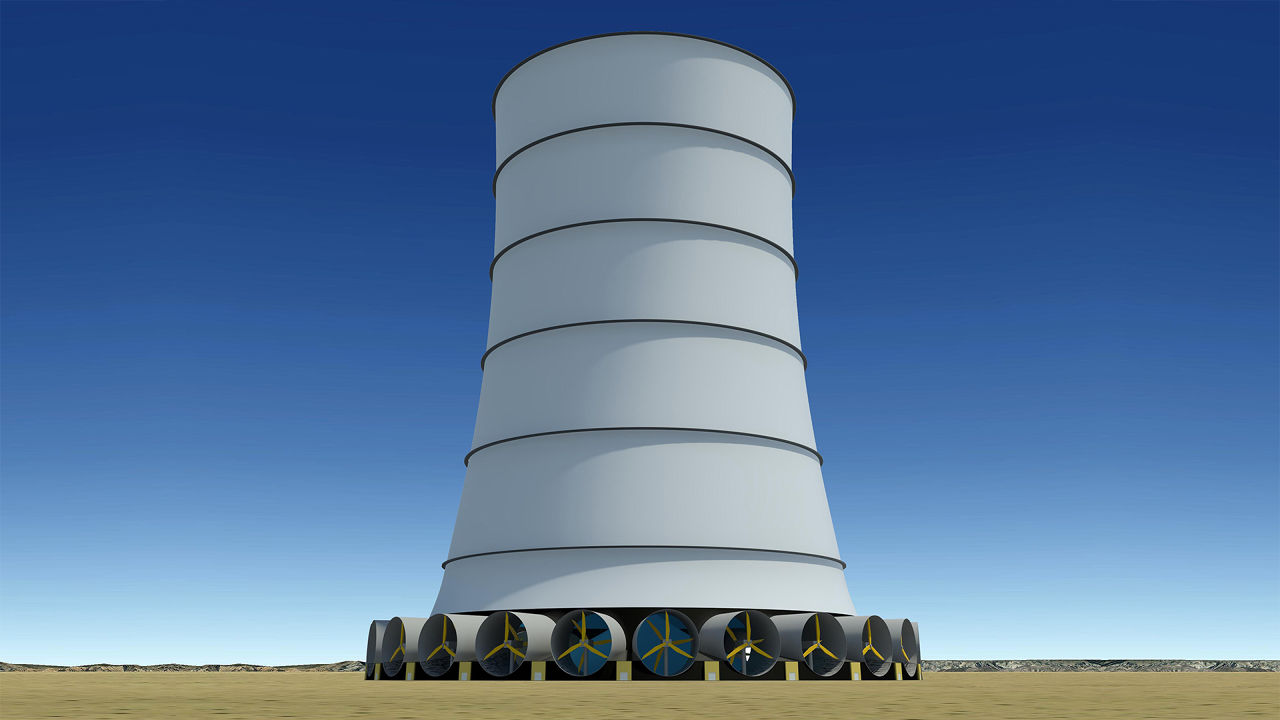
At the other end of things, there are the ongoing efforts to expand solar power production to the point that it will supersede coal, hydro, and nuclear in terms of electrical generation. And that’s the idea behind the Solar Downdraft Tower, a proposed installation some 686 meters (2,250 feet) in height with 120 huge turbines and enough pumping capacity to keep more than 2.5 billion gallons of water circulating. In terms of output, it would generate the equivalent of wind turbines spread over 100,000 acres, or as big as the Hoover Dam.
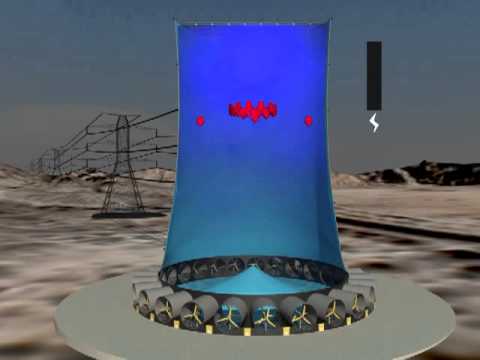
The process is quite simple: water is sprayed at the top, causing hot air to become heavy and fall through the tower. By the time it reaches the bottom, it’s reaching speeds of up to 80 km (50 miles) per hour, which is ideal for running the turbines. The immediate advantage over standard solar and wind energy is the plant runs continuously, day and night. This addresses the issue of intermittency, which remains a problem with solar and wind generation.
Basically, solar and wind farms cannot provide if the weather is not cooperating, or if the solar cells become covered in dust or sand. But as long as the local environment remains warm enough – a near certainty in the deserts of Arizona – the tower will continue to produce power. Best of all, the plant itself runs under its own generated energy – with approx. 11% of the output being used to power the pumps – and aboutt three-quarters of the water is collected at the bottom.
According to Ron Pickett, CEO of Solar Wind Energy Tower (the Maryland company behind the design):
This is totally clean energy that actually makes money. It makes energy at a cost comparable to if you were using natural gas to power a plant.
The simplicity of the technology is also a major selling point. For more than a century, people have been working on variants of solar wind towers. In the 1980s, engineers in Spain built a 195 meter (640-foot) test tower that pushed air upwards through turbines and generated power for seven years until it fell over in a storm. The tougher issue is the enormous expense, which is an inevitable result of building something so big. According to Picket, the Arizona project is likely to cost as much as $1.5 billion to build.
However, Solar Wind Energy recently jumped two hurdles to getting the tower realized. First, it won a development rights agreement from San Luis, a city on the Mexico border, that included a deal with the local utility to purchase power, and the rights to the 2.5 billion gallons of water necessary to the project. It also reached an agreeing with National Standard Finance, an infrastructure fund, for preliminary funding that will begin to pay for generating equipment and related costs.
Solar Wind Energy also has plans to see similar towers build in Chile, India, and the Middle East, places that are also well suited to turn warm air temperatures into electrical power. And they are hardly alone in looking for ways to turn solar power into abundant electricity in ways that are technically very simple. As the 2010s roll on, we can expect to see more and more examples of this as renewables make their way into the mainstream.
In the meantime, check out this video from Solar Wind Energy that details how their Tower concept works:
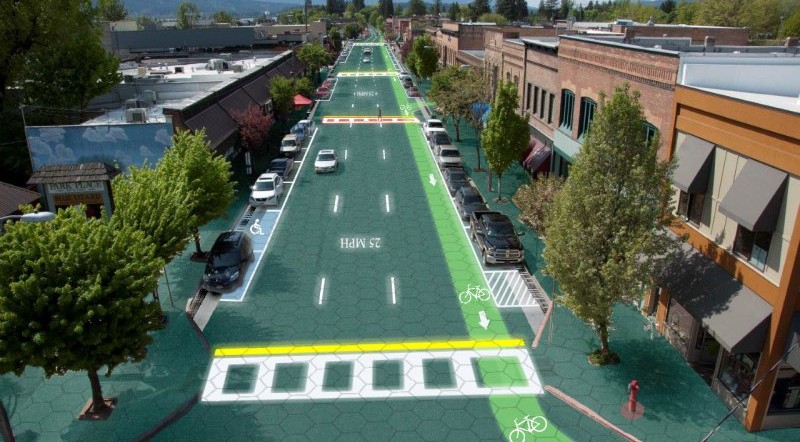
Currently, there are nearly 30,000 square kilometers (18,000 square miles) of roads in the United States. And by some estimates, there are also as many as 2 billion parking spaces. That works out to some 50,000 square kilometers (31,000 square miles) of usable surface that is just soaking up sun all day long. So why not put it to use generating solar power? That’s the question a entrepreneurial couple named Scott and Julie Brusaw asked themselves, and then proceeded to launch a solar startup named Solar Roadways to see it through.
Their concept for a solar road surface has the potential to produce more renewable energy than the entire country uses. In fact, they’ve actually already developed a working prototype that’s been installed in a parking lot, and they’re now crowdsourcing funds in order to tweak the design and move towards production. Once completed, they hope to re-pave the country with custom, glass-covered solar panels that are strong enough to drive on while generating enough power to perform a range of functions.
These include providing lighting through a series of LEDs that make road lines and signs that help reduce nighttime accidents. Embedded heating elements also melt ice and snow and are ideal for winter conditions. The surface could also be used to charge electric vehicles as oppose to fossil fuels, and future technology could even allow for charging whilst driving via mutual induction panels. Amazingly, the team also found that car headlights can produce energy in the panels, so cars driving around at night would be producing some electricity.
Since 2006, Solar Roadways has designed and developed hexagonal glass solar panels studded with LED lights that could be installed on a variety of surfaces such as roads, pavements and playgrounds. These panels would more than pay for themselves and would benefit both businesses and homeowners as the energy generated from driveways and parking lots could be used to power buildings, and any excess can be sold back to the grid.
A glass surface may sound fragile, but the prototypes have been extensively tested and were found to be able to easily withstand cars, fully loaded trucks, and even 250,000-pound oil drilling equipment. The textured surface means it isn’t slippery, and since it can self-power small heaters inside to melt ice in winter, it’s supposedly safer than an ordinary road. As Scott Brusaw put it:
You first mention glass, people think of your kitchen window. But think of bulletproof glass or bomb resistant glass. You can make it any way you want. Basically bulletproof glass is several sheets of tempered glass laminated together. That’s what we have, only our glass is a half inch thick, and tempered, and laminated.
Recycled materials can also be used to produce the panels; the prototypes were constructed using 10% recycled glass. All of the panels will be wired up, so faults can be easily detected and repaired. They team have also designed a place to stash power cables, called “Cable Corridors”, which would allow easy access by utility workers. Furthermore, they also believe that these corridors could be used to house fiber optic cables for high-speed internet.
Obviously, this project isn’t going to be cheap, but Solar Roadways has already surpassed their goal of raising $1 million on their indiegogo page (they have managed to raise a total of $1,265,994 as of this articles publication). With this money, they will now be able to hire engineers, make final modifications, and move from prototype to production. They hope to begin installing projects at the end of the year, but a significantly larger amount of money would be required if they were to try to cover all the roads in the US!
However, given the increasing demand for solar technology and the numerous ways it can help to reduce our impact on the environment, it would not be surprising to see companies similar to Solar Roadways emerge in the next few years. It would also not be surprising to see a great deal of towns, municipalities and entire countries to start investing in the technology in the near future to meet their existing and projected power needs. After all, what is better than cheap, abundant, and renewable energy that pretty much provides itself?
For more info, check out Solar Roadways website and their Indiegogo campaign page. Though they have already surpassed their goal of $1 startup dollars, there is still five days to donate, if you feel inclined. And be sure check out their promotional video below:
The nation of Japan has long been regarded as being at the forefront of emerging technology. And when it comes to solar energy, they are nothing if not far-sighted and innovative. Whereas most nations are looking at building ground-based solar farms in the next few years, the Japanese are looking at the construction of vast Lunar and space-based solar projects that would take place over the course of the next few decades.
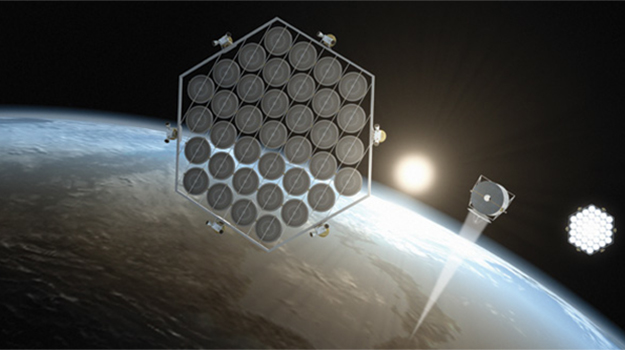
The latest proposal comes from the Japan Aerospace Exploration Agency (JAXA), which recently unveiled a series of pilot projects which, if successful, should culminate in a 1-gigawatt space-based solar power generator within just 25 years. Relying on two massive orbital mirrors that are articulated to dynamically bounce sunlight onto a solar panel-studded satellite, the energy harvested would then be beamed wirelessly to Earth using microwaves, collected Earth-side by rectifying antennas at sea, and then passed on to land.
JAXA has long been the world’s biggest booster of space-based solar power technology, making significant investments in research and rallying international support for early test projects. And in this respect, they are joined by private industries such as the Shimizu Corporation, a Japanese construction firm that recently proposed building a massive array of solar cells on the moon – aka. the “Lunar Ring” – that could beam up to 13,000 terawatts (roughly two-thirds of global power consumption) to Earth around the clock.
Considering that Japan has over 120 million residents packed onto an island that is roughly the size of Montana, this far-sighted tendency should not come as a surprise. And even before the Fukushima disaster took place, Japan knew it needed to look to alternative sources of electricity if it was going to meet future demands. And considering the possibilities offered by space-based solar power, it should also come as no surprise that Japan – which has very few natural resources – would look skyward for the answer.
Beyond Japan, solar power is considered the of front runner of alternative energy, at least until s fusion power comes of age. But Until such time as a fusion reaction can be triggered that produces substantially more energy than is required to initiate it, solar will remain the only green technology that could even theoretically provide for our global power demands. And in this respect, going into space is seen as the only way of circumventing the problems associated with it.
Despite solar power being in incredible abundance – the Earth’s deserts absorb more energy in a day than the human race uses in an entire year – the issue of harnessing that power and getting it to where it is needed remain as stumbling blocks. Setting up vast arrays in the Earth’s deserts would certainly deal with the former, but transmitting it to the urban centers of the world (which are far removed from it’s deserts) would be both expensive and impractical.
Luckily, putting arrays into orbit solves both of these issues. Above the Earth’s atmosphere, they would avoid most forms of wear, the ground-based day/night cycle, and all occluding weather formations. And assuming the mirrors themselves are able to reorient to be perpetually aimed at the sun (or have mirrors to reflect the light onto them), the more optimistic estimates say that a well-designed space array could bring in more than 40 times the energy of a conventional one.
The only remaining issue lies in beaming all that energy back to Earth. Though space-based arrays can easily collect more power above the atmosphere than below it, that fact becomes meaningless if the gain is immediately lost to inefficiency during transmission. For some time, lasers were assumed to be the best solution, but more recent studies point to microwaves as the most viable solution. While lasers can be effectively aimed, they quickly lose focus when traveling through atmosphere.
However, this and other plans involving space-based solar arrays (and a Space Elevator, for that matter) assume that certain advances over the next 20 years or so – ranging from light-weight materials to increased solar efficiency. By far the biggest challenge though, or the one that looks to be giving the least ground to researchers, is power transmission. With an estimated final mass of 10,000 tonnes, a gigawatt space solar array will require significant work from other scientists to improve things like the cost-per-kilogram of launch to orbit.
It currently costs around $20,000 to place a kilogram (2.2lbs) into geostationary orbit (GSO), and about half that for low-Earth orbit (LEO). Luckily, a number of recent developments have been encouraging, such as SpaceX’s most recent tests of their Falcon 9R reusable rocket system or NASA’s proposed Reusable Launch Vehicle (RLV). These and similar proposals are due to bring the costs of sending materials into orbit down significantly – Elon Musk hopes to bring it down to $1100 per kilogram.
So while much still needs to happen to make SBSP and other major undertakings a reality, the trends are encouraging, and few of their estimates for research timelines seem all that pie-eyed or optimistic anymore.
In the race to develop alternative energy sources, solar power is the undeniable top contender. In addition to being infinitely renewable So much sunlight hits the Earth each day that the world’s entire electricity needs could be met by harvesting only 2% of the solar energy in the Sahara Desert. Of course, this goal has remained elusive due to the problem of costs – both in the manufacture of solar panels and the installation therefor.
But researchers at IBM think they’re one step closer to making solar universally accessible with a low-cost system that can concentrate the sunlight by 2,000 times. The system uses a dish covered in mirrors to aim sunlight in a small area, and which follows the sun throughout the day to catch the most light. Other concentrated solar power systems do the same thing, but a typical system only converts around 20% of the incoming light to usable energy, while this one can convert 80%.
This not only ensures a much larger yield, but also makes the energy it harvests cheap. Bruno Michel, the manager for advanced thermal packaging at IBM Research, believes the design could be three-times cheaper than “comparable” systems. Officially, the estimate he provides claim that the cost per kilowatt hour will work out to less than 10 cents, which works out to 0.01 cents per watt (significantly cheaper than the $0.74 per watt of standard solar).
But as he explains, using simple materials also helps:
The reflective material we use for the mirror facets are similar to that of potato chip bags. The reinforced concrete is also similar to what is being used to build bridges around the world. So outside of the receiver, which contains the photovoltaic chips, we are using standard materials.
A few small high-tech parts will be built in Switzerland (where the prototype is currently being produced). but the main parts of the equipment could easily be built locally, wherever it’s being used. It’s especially well-suited for sunny areas that happen to be dry. As the system runs, it can use excess heat that would normally be wasted to desalinate water. Hence, a large installation could provide not only abundant electricity, but clean drinking water for an entire town.
A combined system of this kind could be an incredible boon to economies in parts of the world that are surrounded by deserts, such as North Africa or Mongolia. But given the increasing risk of worldwide droughts caused by Climate Change, it may also become a necessity in the developed world. Here, such dishes could not only provide clean energy that would reduce our carbon footprint, but also process water for agricultural use, thus combating the problem on two fronts.
IBM researchers are currently working with partners at Airlight Energy, ETH-Zurich, and Interstate University of Applied Sciences Buchs NTB to finish building a large prototype, which they anticipate will be ready by the end of this summer. After testing, they hope to start production at scale within 18 months. Combined with many, many other plans to make panels cheaper and more effective, we can expect to be seeing countless options for solar appearing in the near future.
And if recent years are any indication, we can expect solar usage to double before the year is out.
There have been many new developments in the field of solar technology lately, thanks to new waves of innovation and the ongoing drive to make the technology cheaper and more efficient. At the current rate of growth, solar power is predicted to become cheaper than natural gas by 2025. And with that, so many opportunities for clean energy and clean living will become available.
Though there are many contributing factors to this trend, much of the progress made of late is thanks to the discovery of graphene. This miracle material – which is ultra-thin, strong and light – has the ability to act as a super capacitor, battery, and an amazing superconductor. And its use in the manufacture of solar panels is leading to record breaking efficiency.
Back in 2012, researchers from the University of Florida reported a record efficiency of 8.6 percent for a prototype solar cell consisting of a wafer of silicon coated with a layer of graphene doped with trifluoromethanesulfonyl-amide (TFSA). And now, another team is claiming a new record efficiency of 15.6 percent for a graphene-based solar cell by ditching the silicon all together.
And while 15.6 efficiency might still lag behind certain designs of conventional solar cells (for instance, the Boeing Spectrolabs mass-production design of 2010 achieved upwards of 40 percent), this represents a exponential increase for graphene cells. The reason why it is favored in the production of cells is the fact that compared to silicon, it is far cheaper to produce.
Despite the improvements made in manufacturing and installation, silicon is still expensive to process into cells. This new prototype, created by researchers from the Group of Photovoltaic and Optoelectronic Devices (DFO) – located at Spain’s Universitat Jaume I Castelló and the University of Oxford – uses a combination of titanium oxide and graphene as a charge collector and perovskite to absorb sunlight.
As well as the impressive solar efficiency, the team says the device is manufactured at low temperatures, with the several layers that go into making it being processed at under 150° C (302° F) using a solution-based deposition technique. This not only means lower potential production costs, but also makes it possible for the technology to be used on flexible plastics.
What this means is a drop in costs all around, from production to installation, and the means to adapt the panel design to more surfaces. And considering the rate at which efficiency is being increased, it would not be rash to anticipate a range of graphene-based solar panels hitting the market in the near future – ones that can give conventional cells a run for their money!
However, another major stumbling block with solar power is weather, since it requires clear skies to be effective. For some time, the idea of getting the arrays into space has been proposed as a solution, which may finally be possible thanks to recent drops in the associated costs. In most cases, this consists or orbital arrays, but as noted late last year, there are more ambitious plans as well.
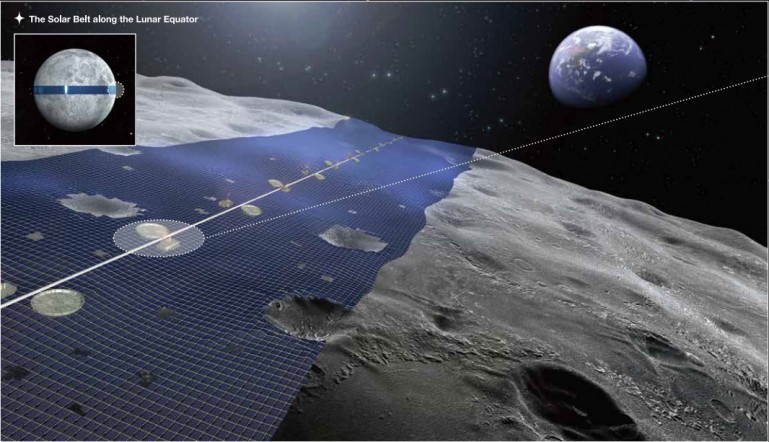
Take the Japanese company Shimizu and it’s proposed “Luna Ring” as an example. As noted earlier this month, Shimizu has proposed creating a solar array some 400 km (250 miles) wide and 11,000 km (6,800 miles) long that would beam solar energy directly to Earth. Being located on the Moon and wrapped around its entirety, this array would be able to take advantage of perennial exposure to sunlight.
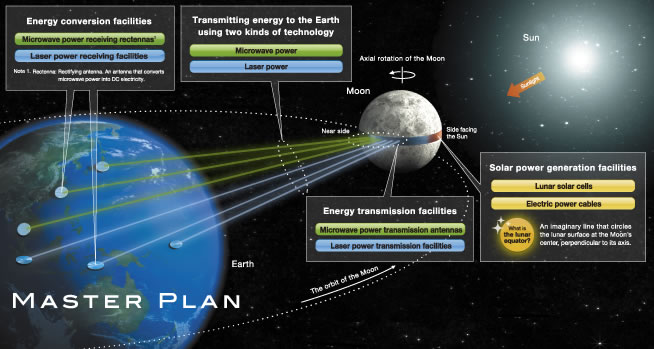
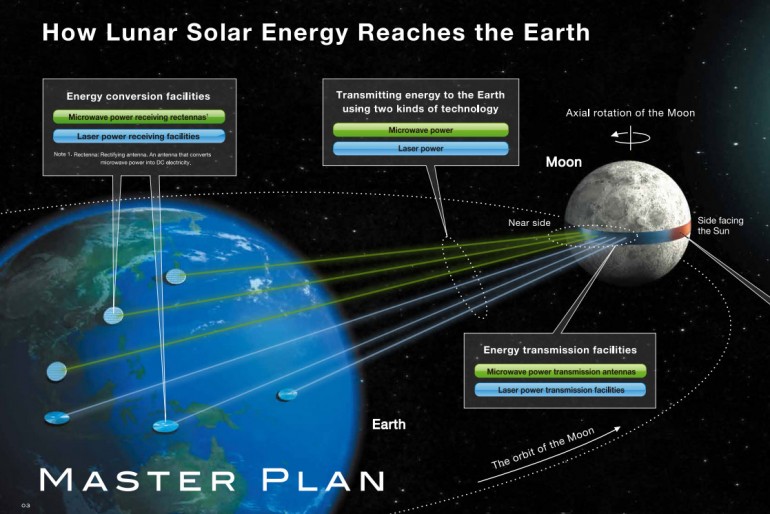
Cables underneath the ring would gather power and transfer it to stations that facing Earth, which would then beam the energy our way using microwaves and lasers. Shimizu believes the scheme, which it showed off at a recent exhibition in Japan, would virtually solve our energy crisis, so we never have to think about fossil fuels again.
They predict that the entire array could be built and operational by 2035. Is that too soon to hope for planetary energy independence? And given the progress being made by companies like SpaceX and NASA in bringing the costs of getting into space down, and the way the Moon is factoring into multiple space agencies plans for the coming decades, I would anticipate that such a project is truly feasible, if still speculative.
Combined with increases being made in the fields of wind turbines, tidal harnesses, and other renewable energy sources – i.e. geothermal and piezoelectric – the future of clean energy, clear skies and clean living can’t get here soon enough! And be sure to check out this video of the Luna Ring, courtesy of the Shimizu corporation:
Space is becoming a very interesting place, thanks to numerous innovations that are looking ahead to the next great leap in exploration. With the Moon and Mars firmly fixed as the intended targets for future manned missions, everything from proposed settlements and construction projects are being plotted, and the requisite tools are being fashioned.
For instance, the Shimizu Corporation (the designers of the Shimizu Mega-City Pyramid), a Japanese construction firm, has proposed a radical idea for bringing solar energy to the world. Taking the concept of space-based solar power a step further, Shimizu has proposed the creation of a “Luna Ring” – an array of solar cells around the Moon’s 11000 km (6800 mile) equator to harvest solar energy and beam it back to Earth.
The plan involves using materials derived from lunar soil itself, and then using them to build an array that will measure some 400 km (250 miles) thick. Since the Moon’s equator receives a steady amount of exposure to the Sun, the photovoltaic ring would be able to generate a continuous amount of electricity, which it would then beam down to Earth from the near side of the Moon.
It’s an ambitious idea that calls for assembling machinery transported from Earth and using tele-operated robots to do the actual construction on the Moon’s surface, once it all arrives. The project would involve multiple phases, to be spread out over a period of about thirty years, and which relies on multiple strategies to make it happen.
For example, the firm claims that water – a necessary prerequisite for construction – could be produced by reducing lunar soil with hydrogen imported from Earth. The company also proposes extracting local regolith to fashion “lunar concrete”, and utilizing solar-heat treatment processes to fashion it into bricks, ceramics, and glass fibers.
The remotely-controlled robots would also be responsible for other construction tasks, such as excavating the surrounding landscape, leveling the ground, laying out solar panel-studded concrete, and laying embedded cables that would run from the ring to a series of transmission stations located on the Earth-facing side of the Moon.
Power could be beamed to the Earth through microwave power transmission antennas, about 20 m (65 ft) in diameter, and a series of high density lasers, both of which would be guided by radio beacons. Microwave power receiving antennas on Earth, located offshore or in areas with little cloud cover, could convert the received microwave power into DC electricity and send it to where it was needed.
The company claims that it’s system could beam up to 13,000 terawatts of power around-the-clock, which is roughly two-thirds of what is used by the world on average per year. With such an array looming in space, and a few satellites circling the planet to pick up the slack, Earth’s energy needs could be met for the foreseable future, and all without a single drop of oil or brick of coal.
The proposed timeline has actual construction beginning as soon as 2035.
And naturally, when manned missions are again mounted into space, the crews will need the proper equipment to live, thrive and survive. And since much of the space suit technology is several decades old, space agencies and private companies are partnering to find new and innovative gear with which to equip the men and women who will brave the dangers of space and planetary exploration.
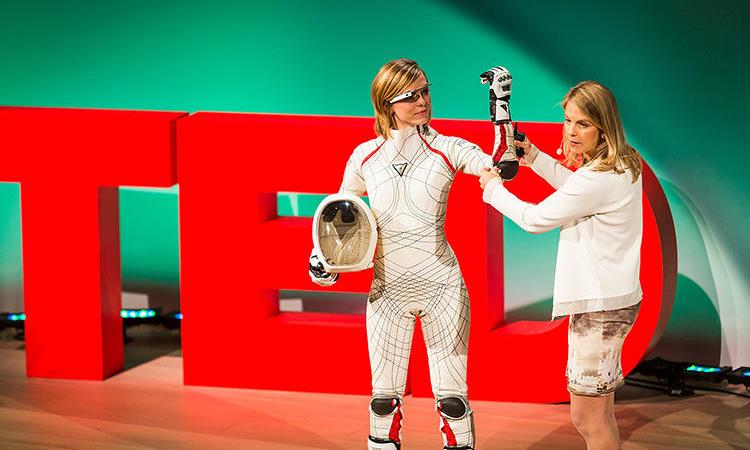
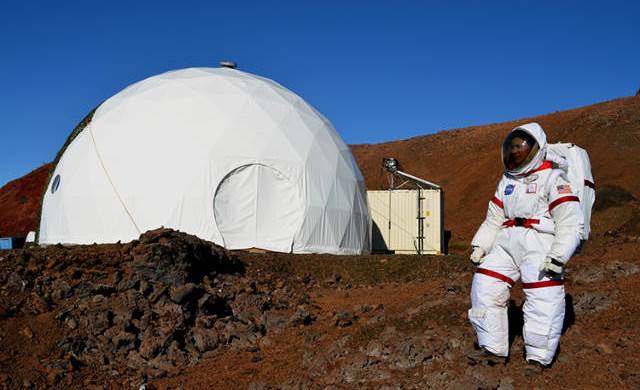
Consider the Biosuit, which is a prime example of a next-generation technology designed to tackle the challenges of manned missions to Mars. Created by Dava Newman, an MIT aerospace engineering professor, this Spiderman-like suit is a sleeker, lighter alternative to the standard EVA suits that weigh approximately 135 kilograms (300 pounds).
For over a decade now, Newman has been working on a suit that is specifically designed for Mars exploration. At this year’s TEDWomen event in San Francisco, she showcased her concept and demonstrated how its ergonomic design will allow astronauts to explore the difficult terrain of the Red Planet without tripping over the bulk they carry with the current EVA suits.
The reason the suit is sleek is because it’s pressurized close to the skin, which is possible thanks to tension lines in the suit. These are coincidentally what give it it’s Spiderman-like appearance, contributing to its aesthetic appeal as well. These lines are specifically designed to flex as the astronauts ends their arms or knees, thus replacing hard panels with soft, tensile fabric.
Active materials, such as nickel-titanium shape-memory alloys, allow the nylon and spandex suit to be shrink-wrapped around the skin even tighter. This is especially important, in that it gets closer Newman to her goal of designing a suit that can contain 30% of the atmosphere’s pressure – the level necessary to keep someone alive in space.
Another benefit of the BioSuit is its resiliency. If it gets punctured, an astronaut can fix it with a new type of space-grade Ace Bandage. And perhaps most importantly, traditional suits can only be fitted to people 5′ 5″ and taller, essentially eliminating short women and men from the astronaut program. The BioSuit, on the other hand, can be built for smaller people, making things more inclusive in the future.
Newman is designing the suit for space, but she also has some Earth-bound uses in mind . Thanks to evidence that showcases the benefits of compression to the muscles and cardiovascular system, the technology behind the Biosuit could be used to increase athletic performance or even help boost mobility for people with cerebral palsy. As Newman herself put it:
We’ll probably send a dozen or so people to Mars in my lifetime. I hope I see it. But imagine if we could help kids with CP just move around a little bit better.
With proper funding, Newman believes she could complete the suit design in two to three years. It would be a boon to NASA, as it appears to be significantly cheaper to make than traditional spacesuits. Funding isn’t in place yet, but Newman still hopeful that the BioSuit will be ready for the first human mission to Mars, which are slated for sometime in 2030.
In the meantime, enjoy this video of the TEDWomen talk featuring Newman and her Biosuit demonstration:
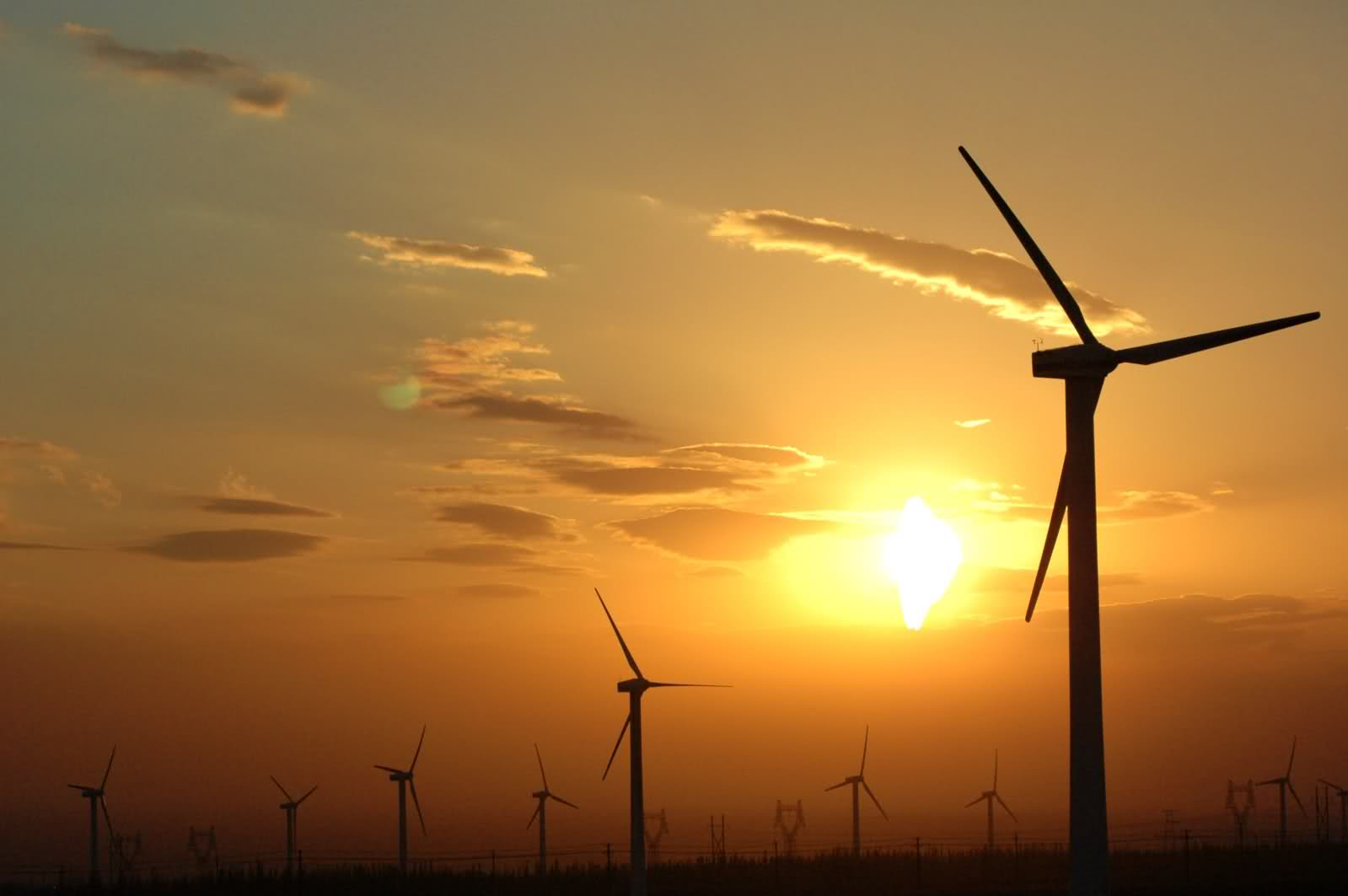
It’s no secret that wind power is one of main clean forms of energy that is being considered as a viable alternative to coal, oil and gas. But much like solar, tidal and geothermal, the method has some flaws that is preventing it from being adopted in a more widespread fashion. However, as an infinitely renewable source of energy, it likely just a matter of time before technical developments lead to its wholesale use.
The first challenge has to do with size. Currently, wind farms are massive operations, and many designers think they need to continue to get bigger in order to generate the kinds of electricity we currently need. However, a Netherlands-based startup named Ampyx Power is looking in another direction: an airborne wind turbine that they think could capture the same amount of energy as a large operation.
Basically, their design is a small glider plane attached by cable to a generator, which is then deployed into the air and flies in figure eights. As it moves, the glider pulls on the capable, and the generator converts the movement to electricity. Since it isn’t attached to a tower, it can soar nearly 2,000 feet in the air, catching stronger winds that produce about eight times more energy than the lower-altitude breezes that reach a normal wind turbine.
So in addition to being able to produce more power than a typical wind farm, it costs significantly less than its competitor. The average wind farm weighs about 120 metric tons, while the glider system weighs in at a mere 363 kilograms (800 pounds). And in addition to being cheaper than other renewables, the process may even be cheaper than coal.
As Wolbert Allaart, the startup’s managing director, put it:
We’re replacing tons of steel and concrete. It’s a huge materials reduction, and we can produce the same amount of power. That obviously has an effect on cost as well… The whole reason why we’re doing this is because we think we can get the cost of a kilowatt-hour well below the price of coal.
And Ampyx is hardly alone in developing the technology. In fact, their design is similar to California-based Makani Power’s glider. This company was acquired by Google earlier this year, while Ampyx raised the necessary capital via a crowdfunding campaign. And though there are some differences in the design and methods employed, both companies dream of a day when wind will replace coal and other dirty means.
Because the planes are so efficient, places that might not have worked for wind power in the past – like forests, where trees catch and redirect the wind – could be a fit for the system, so the market is wide open. And given his country’s growing interest in wind power, Allaart hopes to introduce it to the domestic market very soon:
In Holland, where we’re based, we now have a 4.3 billion Euro subsidy scheme for offshore wind. People are starting to wonder already, if we have a technology being developed in our own country that could provide offshore wind at more or less competitive price with coal, why on Earth are we still subsidizing this so heavily? How fast this grows will depend on political will.
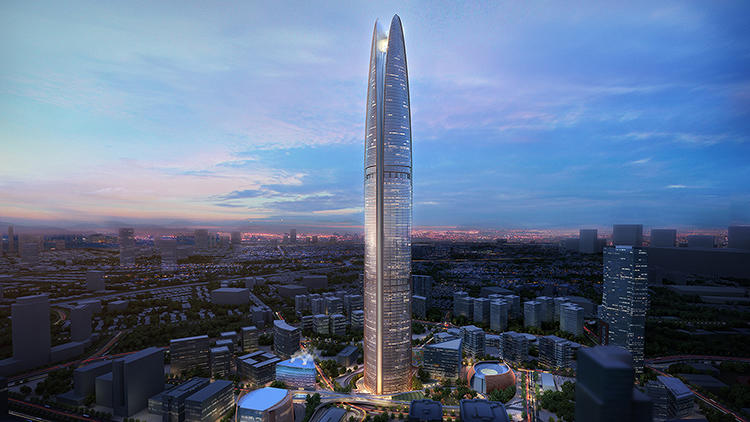
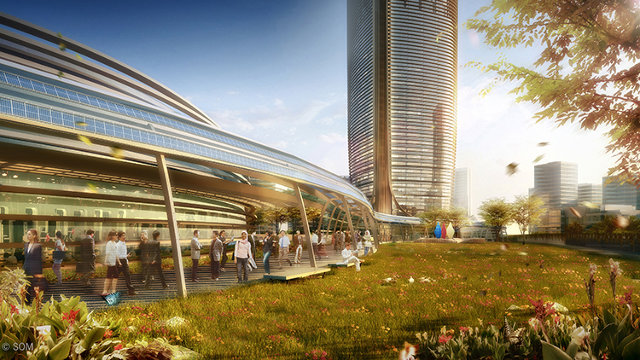
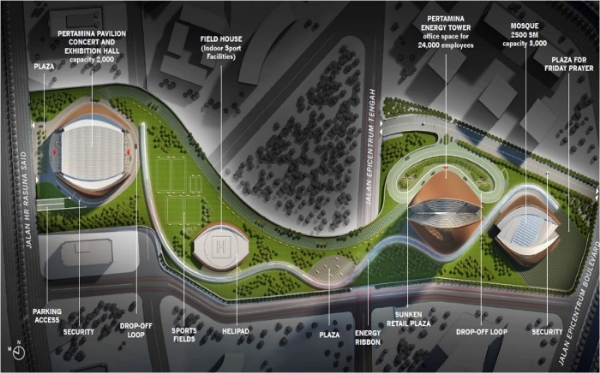
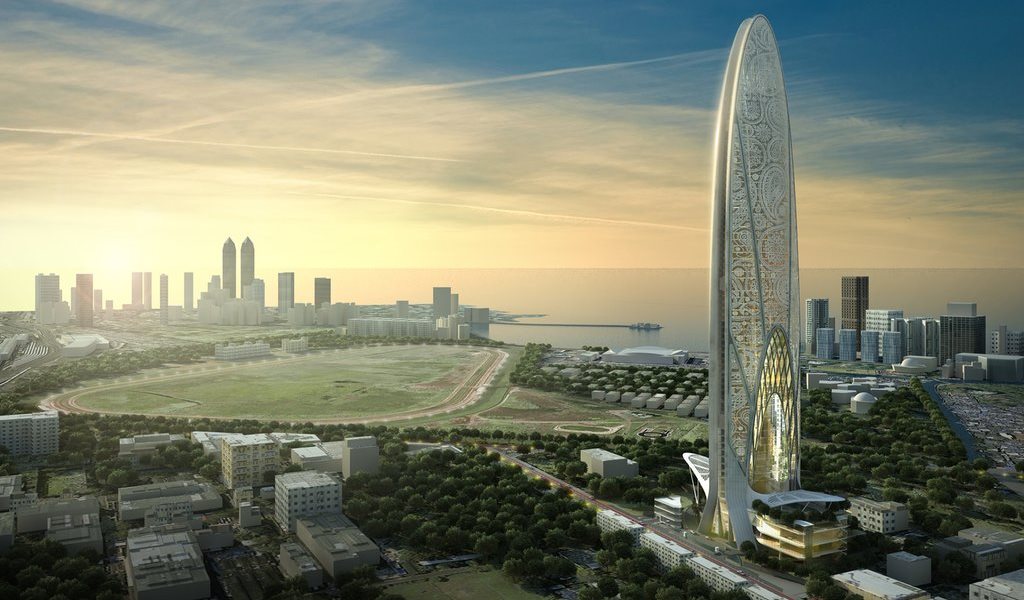
Another very cool wind-related story comes from Jakarta, where a massive tower is being planned that will be capable of generating all its own power. It’s known as the Pertamina Energy Tower, the proposed headquarters of the Pertamina power company. And while the proposed building will be 99 stories in height, it will also gather all its power from wind, solar, and geothermal energy.
When it comes to its wind operations, the building’s height plays to its advantage. At the top of the building, a funnel captures wind, sucks it inside, and speeds it up to run a series of vertical wind turbines. In this respect, the building operates like a giant, vertical wind tunnel. Solar energy will also be incorporated through panels that will cover the roofs of other buildings on the new campus.
But perhaps the most impressive feat comes in the form of geothermal, a type of energy that’s uniquely suited for Indonesia because it’s a volcanic island chain. Geothermal systems in Indonesia can tap directly into superheated sources of subterranean steam with a single pipe, unlike typical systems that are more complicated and expensive to engineer.
Scott Duncan, the director of Pertamina’s architecture firm – Skidmore, Owings & Merrill LLP (SOM) – who led the project, describes it this way:
It would essentially provide an unlimited energy source for the tower and campus and could make the tower the world’s first energy-positive supertall building.
In addition to meeting this clean-energy trifecta, the design of the tower is focused on saving energy as much generating it. Sun-shading “leaves” on two sides of the building cut glare and shade the brightest sunlight while still keeping the inside of the offices bright enough to avoid most artificial lighting. Instead of power-sucking air conditioners, the building uses water-based radiant cooling systems to keep the temperatures even.
Along with other strategies, the energy-saving design elements mean that the campus – which will include a mosque, a performing arts and exhibition center, and sports facilities along with the office space – can keep energy use low enough that renewable power may be able to cover its entire energy needs. In short, the building could prove to be a model of energy-independence.
However, the motivation for this project go beyond the altruistic, and involve a good many practical considerations. For starters, Jakarta still has an unreliable power grid, and if the campus generates its own power, work and play won’t get interrupted. The buildings also won’t have to rely on diesel fuel generators if the city’s power goes down.
The technology is expected to be adopted elsewhere, particularly China where wind power is expanding all the time. Indonesia, despite its easy access to geothermal energy, is not the windiest place in the world. Cities that are strategically located along coastlines or in elevated regions would find the wind tunnel feature that much more useful, reducing their dependence on the other two forms of energy.
What’s more, this building is in many respects what one would call an Arcology, and just happens to be the second one being planned for construction in the world today. The other, un-coincidentally enough, is China’s Shanghai Tower, a building that is one-third green space and a transparent second skin that surrounds the city in a protective air envelope that controls its internal temperature.
And with global energy prices increasing, the sources of easily-accessible oil disappearing, and atmospheric CO2 levels steadily rising, we can expect to see more buildings like these ones going up all around the world. We’re also likely to see more creative and innovative forms of power generation popping up in our backyards. Much like peak oil, centralized grids and dependence on unclean energy is disappearing…
And in the meantime, enjoy this video of the Ampyx Power glider in action:
With all of the world’s current problems, poverty, underdevelopment, terrorism, civil war, and environmental degradation, it’s easy to overlook how things are getting better around the world. Not only do we no longer live in a world where superpowers are no longer aiming nuclear missiles at each other and two-thirds of the human race live beneath totalitarian regimes; in terms of health, mortality, and income, life is getting better too.
So, in honor of the New Year and all our hopes for a better world, here’s a gander at how life is improving and is likely to continue…
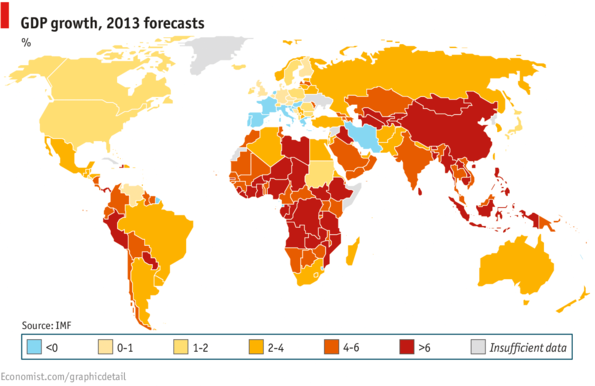
1. Poverty is decreasing: The population currently whose income or consumption is below the poverty line – subsisting on less than $1.25 a day – is steadily dropping. In fact, the overall economic growth of the past 50 years has been proportionately greater than that experienced in the previous 500. Much of this is due not only to the growth taking place in China and India, but also Brazil, Russia, and Sub-Saharan Africa. In fact, while developing nations complain about debt crises and ongoing recession, the world’s poorest areas continue to grow.
2. Health is improving:
The overall caloric consumption of people around the world is increasing, meaning that world hunger is on the wane. Infant mortality, a major issue arising from poverty, and underdevelopment, and closely related to overpopulation, is also dropping. And while rates of cancer continue to rise, the rate of cancer mortality continue to decrease. And perhaps biggest of all, the world will be entering into 2014 with several working vaccines and even cures for HIV (of which I’ve made many posts).
3. Education is on the rise:
More children worldwide (especially girls) have educational opportunities, with enrollment increasing in both primary and secondary schools. Literacy is also on the rise, with the global rate reaching as high as 84% by 2012. At its current rate of growth, global rates of literacy have more than doubled since 1970, and the connections between literacy, economic development, and life expectancy are all well established.
4. The Internet and computing are getting faster:
Ever since the internet revolution began, connection speeds and bandwidth have been increasing significantly year after year. In fact, the global average connection speed for the first quarter of 2012 hit 2.6 Mbps, which is a 25 percent year-over-year gain, and a 14 percent gain over the fourth quarter of 2011. And by the second quarter of 2013, the overall global average peak connection speed reached 18.9 Mbps, which represented a 17 percent gan over 2012.
And while computing appears to be reaching a bottleneck, the overall increase in speed has increased by a factor of 260,000 in the past forty years, and storage capacity by a factor of 10,000 in the last twenty. And in terms of breaking the current limitations imposed by chip size and materials, developments in graphene, carbon nanotubes, and biochips are promising solutions.
5. Unintended pregnancies are down:
While it still remains high in the developing regions of the world, the global rate of unintended pregnancies has fallen dramatically in recent years. In fact, between 1995 and 2008, of 208 billion pregnancies surveyed in a total of 80 nations, 41 percent of the pregnancies were unintended. However, this represents a drop of 29 percent in the developed regions surveyed and a 20 percent drop in developing regions.
The consequences of unintended pregnancies for women and their families is well established, and any drop presents opportunities for greater health, safety, and freedom for women. What’s more, a drop in the rate of unwanted pregnancies is surefire sign of socioeconomic development and increasing opportunities for women and girls worldwide.
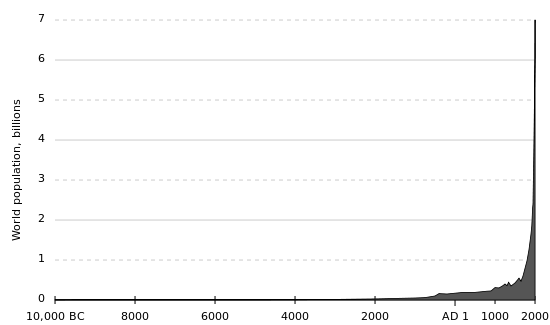
6. Population growth is slowing: On this blog of mine, I’m always ranting about how overpopulation is bad and going to get to get worse in the near future. But in truth, that is only part of the story. The upside is while the numbers keep going up, the rate of increase is going down. While global population is expected to rise to 9.3 billion by 2050 and 10.1 billion by 2100, this represents a serious slowing of growth.
If one were to compare these growth projections to what happened in the 20th century, where population rose from 1 billion to just over 6, they would see that the rate of growth has halved. What’s more, rates of population growth are expecting to begin falling in Asia by 2060 (one of the biggest contributors to world population in the 20th century), in Europe by 2055, and the Caribbean by 2065.
In fact, the only region where exponential population growth is expected to happen is Africa, where the population of over 1 billion is expected to reach 4 billion by the end of the 21st century. And given the current rate of economic growth, this could represent a positive development for the continent, which could see itself becoming the next powerhouse economy by the 2050s.
7. Clean energy is getting cheaper:
While the price of fossil fuels are going up around the world, forcing companies to turn to dirty means of oil and natural gas extraction, the price of solar energy has been dropping exponentially. In fact, the per capita cost of this renewable source of energy ($ per watt) has dropped from a high of $80 in 1977 to 0.74 this past year. This represents a 108 fold decrease in the space of 36 years.
And while solar currently comprises only a quarter of a percent of the planet’s electricity supply, its total share grew by 86% last year. In addition, wind farms already provide 2% of the world’s electricity, and their capacity is doubling every three years. At this rate of increase, solar, wind and other renewables are likely to completely offset coal, oil and gas in the near future.
Summary:
In short, things are looking up, even if they do have a long way to go. And a lot of what is expected to make the world a better place is likely to happen this year. Who knows which diseases we will find cures for? Who knows what inspirational leaders will come forward? And who knows what new and exciting inventions will be created, ones which offer creative and innovative solutions to our current problems?
Who knows? All I can say is that I am eager to find out!
With supplies of easily accessible fossil fuels diminishing, pushing us towards dirtier sources of oil and natural gas (such as tar sands and frakking), researchers are looking for ways to make renewable energy more efficient and accessible. Towards this end, they are pushing the boundaries of solar cells and wind turbines are capable of, but the constraints of land and weather limit where vast solar or wind farms can be set up.
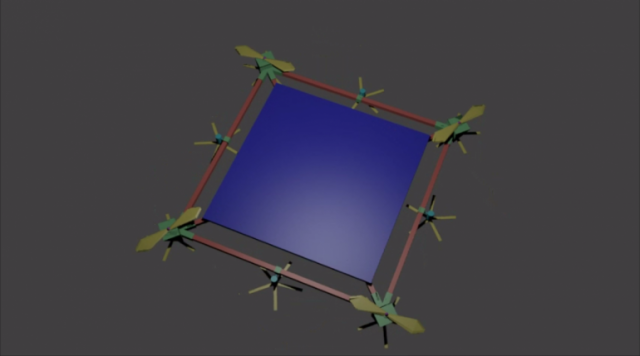
Luckily, a UK-based company known as New Wave Energy has spent the last few years developing the technology to produce an army of power-generating drone aircraft to overcome these very problems. Basically, each craft is a 20x20m (65ft) flat surface fitted with solar panels and turbines to generate power from the sun and wind, and four small propellers that keep it aloft.
The drones would be capable of flying at altitudes of up to 15,240 meters (50,000 feet), putting them far above the clouds that can obscure the sun. The propellers would allow the craft to track the course of the sun to remain in optimal position for as long as possible. At these altitudes, the wind is also more consistent and powerful, which means smaller turbines can be used in place of the giant towers necessary down near the ground.
In terms of transmitting that power, the key is in the use of microwaves. In essence, power from the drones would be beamed down as a low-energy microwave and collected by antenna arrays on the ground. These antennas can then be used to turn the electromagnetic radiation into usable DC power and then send it to where it is needed.
One of the benefits of this design is that the proposed drone power plants wouldn’t need to land to refuel themselves. Supposedly, they will be able to power themselves entirely with the energy generated on-board, and still produce 50kW of power. This that means several thousand drones would be needed to power a large city of 205,000 homes.
However, these swarms of robotic power plants aren’t just a way to replace the power infrastructure we already have. They could be used to augment our current power supplies as demand increases, removing the need to expand on large, expensive power plants. Also, they bring power to remote areas with poor service, or to restore power in regions affected by natural disasters.
Thus, the cost of building and deploying the drones will determine whether or not that’s feasible. At present, the company plans to raise about $500,000 on Kickstarter to fund the construction of a prototype for testing and marketing. If this campaign does turn out to be successful, the first flying power plant could be aloft within six months.
Combined with other improvements that are making wind and solar power more efficient and affordable, and future prospects for space-based solar power (SBSP) that are being made possible thanks to space startups like Google X, we could be looking at a near-future where solar and wind meet the lion’s share of our energy requirements.

 Elon Musk is at it again, this time with clean, renewable energy. Just yesterday, he announced that Solar City (the solar installation company that he chairs) plans to acquire a startup called Silevo. This producer of high-efficiency panels was acquired for $200 million (plus up to $150 million more if the company meets certain goals), and Musk now plans to build a huge factory to produce their panels as part of a strategy that will make solar power “way cheaper” than power from fossil fuels.
 The acquisition makes sense given that Silevo’s technology has the potential to reduce the cost of installing solar panels, Solar City’s main business. But the decision to build a huge factory in the U.S. seems daring – especially given the recent failures of other U.S.-based solar manufacturers in the face of competition from Asia. Ultimately, however, Solar City may have little choice, since it needs to find ways to reduce costs to keep growing.
 Silevo isn’t the only company to produce high-efficiency solar cells. A version made by Panasonic is just as efficient, and SunPower makes ones that are significantly more so. But Silevo claims that its panels could be made as cheaply as conventional ones if they could scale their production capacity up from their current 32 megawatts to the factory Musk has planned, which is expected to produce 1,000 megawatts or more.
 Even though the most recently-built skyscrapers are helping change things by employing renewable energy and sustainable methods – like the



 Beyond Japan, solar power is considered the of front runner of alternative energy, at least until s fusion power comes of age. But Until such time as a fusion reaction can be triggered that produces substantially more energy than is required to initiate it, solar will remain the only
  Luckily, putting arrays into orbit solves both of these issues. Above the
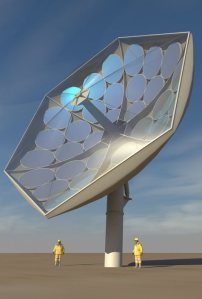 This not only ensures a much larger yield, but also makes the energy it harvests cheap. Bruno Michel, the manager for advanced thermal packaging at IBM Research, believes the design could be three-times cheaper than “comparable” systems. Officially, the estimate he provides claim that the cost per kilowatt hour will work out to less than 10 cents, which works out to 0.01 cents per watt (significantly cheaper than the $0.74 per watt of standard solar).
 A combined system of this kind could be an incredible boon to economies in parts of the world that are surrounded by deserts, such as North Africa or Mongolia. But given the increasing risk of worldwide droughts caused by Climate Change, it may also become a necessity in the developed world. Here, such dishes could not only provide clean energy that would reduce our carbon footprint, but also process water for agricultural use, thus combating the problem on two fronts.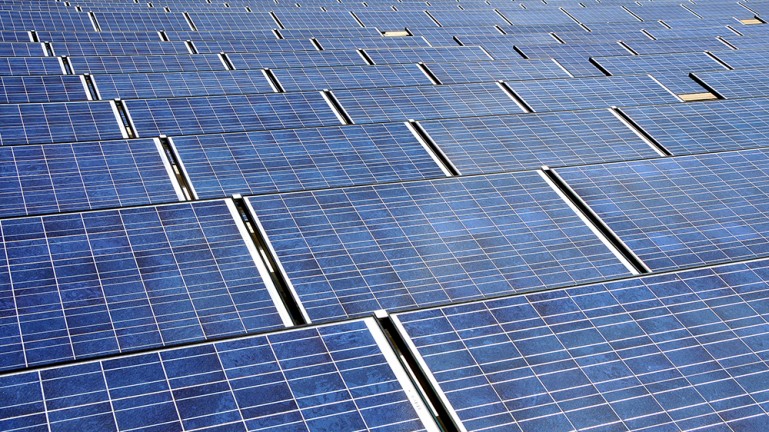


















 Stories by Williams