Climate Crisis: The Ongoing Case of Big Subsidies

Pollution over Mexico CityOne of the most recurring talking points in the Climate Change debate is the issue of renewable energy. Particularly, those who take issue with proposed changes for dealing with the problem continue to cite how solar, wind and tidal power are not viable replacements at this juncture. While this talking point is a convenient way of dismissing needing reforms, it neglects two self-evident realities.

For one, it ignores the immense amount of progress being made in the fields of renewable energy. Whereas inefficiency and high costs remained as stumbling blocks in previous decades, an exponential drop in costs and a rise in efficiency has made solar increasingly attractive for power companies in recent years. Wind and tidal are in similar situations, with countries like Scotland and the United Arab Emirates leading the way in making them profitable.

airpollutionSecond, it ignores the fact that developed nations continue to stymie growth in renewables by the continued way in which they commit billions to subsidizing oil and coal. According to a new report from the Overseas Development Institute, public subsidies for fossil fuels totaled $523 billion in 2011. That’s six times the level of support for the renewable energy industry, despite those technologies being less mature than oil and coal.

Among richer countries, the top 11 heaviest carbon emitters spent $74 billion in subsidies in 2011, with Russia, the United States, Australia, Germany, and the United Kingdom leading the way. In the U.S., these included a $1 billion fuel tax exemption for farmers, $1 billion for the Strategic Petroleum Reserve, and $500 million for fossil fuel R&D.

oil_slickIn so doing, these governments are:

…shooting themselves in both feet [by subsidizing] the very activities that are pushing the world towards dangerous climate change… [and] creating barriers to investment in low-carbon development.

According to the British think-tank, this works out a spending of $112 per adult in these nations. But of course, the richest nations are not the only offenders, which nations like Pakistan, Egypt, and Indonesia spending more than twice as much on fossil fuel subsidies as on health. The ODI says the poorest 20% of households typically receive just 7% of overall handouts.

pollution_powerplantBut the ODI may be underestimating the true size of the subsidies in the U.S., depending on how you look at it. Earlier this year, the International Monetary Fund calculated subsidies at $502 billion, a figure which includes the true cost of carbon emissions calculated at a price of $25 a ton. By that measure, global subsidies equal $1.9 trillion.

The report also advises that governments should cut handouts to oil and coal as soon as they can and begin looking after the genuinely poor:

Phasing out fossil fuel subsidies would create a win-win scenario. It would eliminate the perverse incentives that drive up carbon emissions, create price signals for investment in a low-carbon transition and reduce pressure on public finances.

solar_cell1A timely and sound recommendation, and one which cuts to the heart of the matter. In order to address the problem of Climate Change, we must not only adopt better methods for meeting our needs, we must acknowledge the truth of the issue. At the same time, we must acknowledge how ending these subsidies, or redistributing them, would alter the current balance of power on the whole issue of energy.

It’s one thing to claim that alternative methods are unviable when the playing field is level, but since it is not, the argument is essentially hypocrisy. By continuing to finance fossil fuels and coal, we are ensuring that clean energy will remain underdeveloped as an alternative, and hence undermining any chance it has at becoming a true alternative.

So the next time someone tells you that solar or other means of renewable energy are at least 50 years away, or that gas and coal are the only economical means of meeting our energy needs, be sure to ask them why we need to spend half a trillion dollars on them annually.

Sources: fastcoexist.com, odi.org.uk
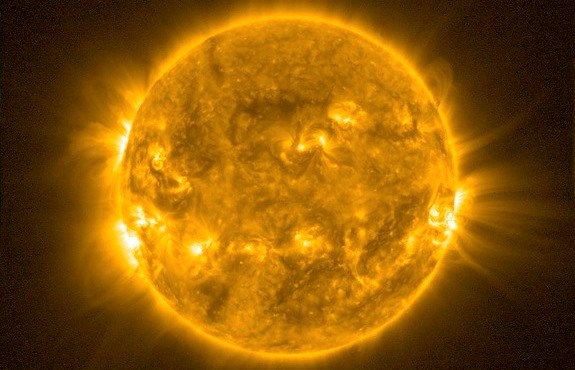
Powered by the Sun: New Film Increases Solar Efficiency

sun_magneticfieldWith every passing year, solar power is getting cheaper and more efficient. And with every development that brings costs down and increases electrical yields, the day that it comes to replace fossil fuels and coal as the primary means of meeting our power needs gets that much closer. And with this latest development, this changeover may be coming sooner than expected.

It comes from North Carolina State University where researchers have developed a new system for strengthening the connections between stacked solar cells which could allow cells to operate at concentrations of up to 70,000 suns while minimizing wasted energy. This is especially good news seeing as how stacked cells are already an improvement over conventional solar cells.solar_panelStacked solar cells are made up of several cells that are placed one on top of the other, an arrangement that allows up to 45 percent of the absorbed solar energy to be converted into electricity. This is a significant improvement over single-junction solar cells which have a theoretical maximum conversion rate of 33.7 percent, and is made possible by the fact a stack formation prevents heat from being lost between panels.

The team at NCSU discovered that by inserting a very thin film layer of gallium arsenide into the connecting junction of stacked cells, they can eliminate energy loss ever further. The idea was inspired by the fact that cells typically start to break down at the connection junctions once they reach concentrations of 700 suns. With the addition of gallium arsenide in these spots, the connections become stronger, and all without sacrificing absorption.

solar_cell1Dr. Salah Bedair, a professor of electrical engineering at NCSU and senior author of the paper on this research:

Now we have created a connecting junction that loses almost no voltage, even when the stacked solar cell is exposed to 70,000 suns of solar energy. And that is more than sufficient for practical purposes, since concentrating lenses are unlikely to create more than 4,000 or 5,000 suns worth of energy.

At the moment, this technology is geared towards large scale solar power operations. Stacked cells are usually used in conjunction with optical concentration devices, such as Fresnel lenses, and mounted on a dual-axis solar trackers that keep the cell facing the Sun’s rays during daylight. So basically, we’re not likely to be seeing this technology available for local use. But it would be surprising if domestic consumers weren’t likely to benefit from it all the same.

solar_cell_galliumAs Dr. Bedair explained, the adoption of the technology will mean lower costs for the energy industry, and smaller arrays which will mean less land that needs to be set aside for use:

This [system] should reduce overall costs for the energy industry because, rather than creating large, expensive solar cells, you can use much smaller cells that produce just as much electricity by absorbing intensified solar energy from concentrating lenses. And concentrating lenses are relatively inexpensive.

What’s more, gallium arsenide is not exactly cheap to produce at the time. However, with constant refinements being made in industrial production processes, we can expect the cost of these to come down as well. As with everything else with solar power and renewable energy, its only a matter of time…

Source: gizmag.com

Powered by the Sun: Bringing Solar to the Developing World

Magnificent CME Erupts on the Sun - August 31All over the world, the goal of bringing development to impoverished communities and nations – but in ways that won’t cause additional harm to the natural environment – remains problematic. As the cases of China and India demonstrate, the world’s fastest growing economies in the 21st century, rapid industrialization may bring economic development, but it comes with a slew of consequences.

These include urban sprawl, more emissions from cars and public transit, and the poisoning of waterways through toxic runoff, chemicals and fertilizers. With seven billion people living in the world today, the majority of which live in major cities and are dependent on fossil fuels, it is important to find ways to encourage growth that won’t make a bad situation worse.

solar_quetsolBut to paraphrase an old saying, crisis is the mother of creative solutions. And amongst forward-looking economist and developers, a possible solution is take the latest advancements in solar, wind, tidal power and biofuels, and tailor them to meet the needs of local communities. In so doing, it is hoped that the developing world could skip over the industrial phase, reaping the benefits of modernization without all the dirty, unhealthy consequences.

Two such men are Juan Rodriguez – a young man who was studying for his business administration at the Universidad Francisco Marroquin in and cut his teeth working for major multinationals like Pampers, Pepto Bismol and Pantene – and his childhood friend Manuel Aguilar, a Harvard graduate with a degree in astrophysics who had gone on to manage a global hedge fund.

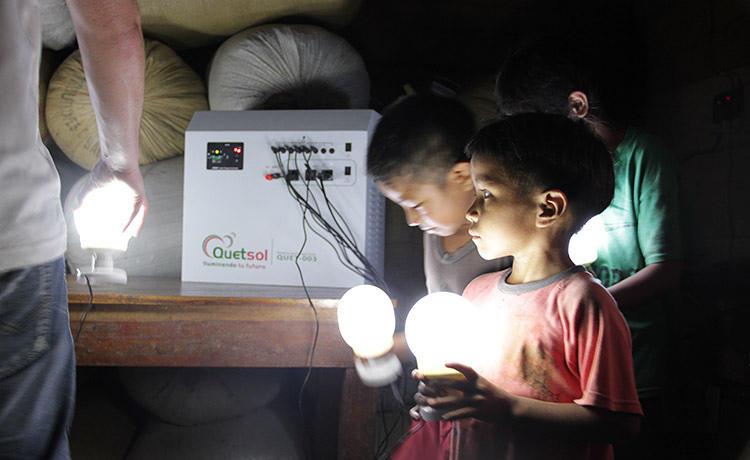
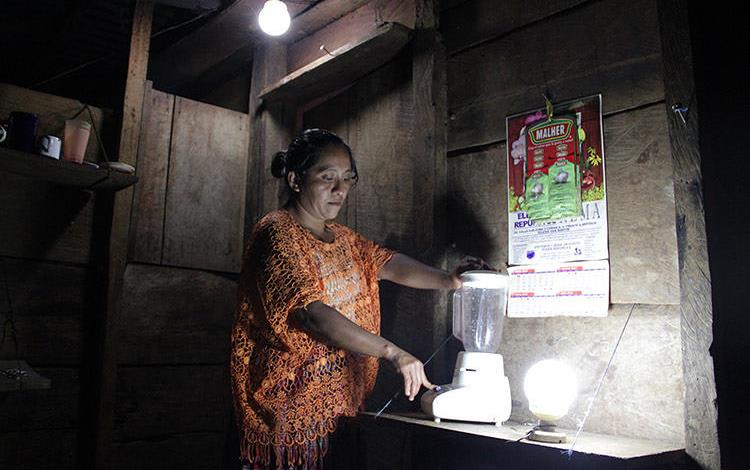
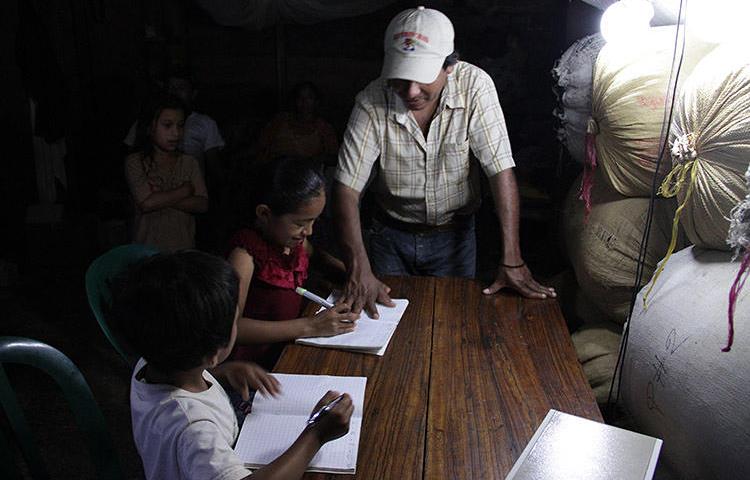
solar_quetsol1Three years ago, the two agreed that they were looking for something else and began investigating renewable energy. The result was Quetsol, a company that uses solar energy to improve the quality of life of poor communities living off the electrical grid. In Rodriguez’s and Aguilar’s native Guatemala, such poverty is widespread, with close to 20% of the population living without electricity and relying primarily on candles for light.

This picture of poverty is not exactly news. But after spending a year visiting close to 100 such communities, Rodriguez and Aguilar began to get a clear picture of why solar hadn’t yet succeeded. As Rodriguez put it:

Going to a community and talking about solar power isn’t like going into a community and talking about space travel. It is something that people have already seen, because NGOs have donated solar systems to these communities for decades. In many cases, the systems worked perfectly, but eventually the batteries died, and nobody was there to service them.

solar_quetsol2There solution was to start from the bottom up, using the free-market principle of adapting their approach to meet local needs. This would involve identifying communities before visiting them, taking into account how many people were living without electricity, and what the housing situation was like. When they then visited these communities, they sought out community leaders and held public meetings to learn about them and present their ideas.

Buildings relationships with local communities was a challenge, but so was creating a product for a market whose needs ranged from basic lighting and cell phone charging to powering a refrigerator all day. What they found was that unelectrified communities were relying on terribly inefficient means, ranging from diesel generators to walking to the nearest electrified community to plug in a phone.

solar_quetsol3What was resulted was a Solar Kit, consisting of a 10W Solar Panel, a control box with 7 Amp Battery, 2  LED Bulbs  (and a third optional bulb), and a universal cell phone charger. This kit has the ability to provide five hours of electricity to a house made up of two rooms that measure roughly 25 square meters (225 square feet) each. This is the typical design of homes in rural Guatemala, with one room serving as the bedroom and the other as the kitchen.

With that done, they began working on their sales strategy. Initially, this consisted of working with microfinance credit institutions to help families and communities purchase their solar kits. But after watching too many credit applications get rejected, they took a page from the telecom companies that have made cell phones ubiquitous in Guatemala, Basically, they switched to a pay-as-you-go plan.

solar_quetsol4Today, Quetsol employs a staff of 20 people and boasts board members like Google’s Tom Chi. There product line has also expanded, with the Q1 Solar Kit being supplemented by the Q3, a heavier model that boasts a 75W solar panel, an 85 Amp Battery, and five LED bulbs. The Q2 Kit – a middle of the road model with a 30W panel, 34 amp battery and 3 bulbs – is soon to be released.

But most importantly of all, they have electrified more than 3,500 homes in Guatemala thus far. But that is just a drop in the bucket compared to their long-term goal. Basically, the organization is viewing Guatemala as a stepping stone to all of Latin America as well as Africa by 2015. By 2016, they’d like to tackle the nearly 700 million off-the-grid homes in Asia.

Might sound ambitious, but Rodriguez and Marroquin feel they have the business acumen and social entrepreneurial savvy to pull it off. And given their background and business model, I’d say they are about right. Combined with other technologies that merge local needs with clean, efficient, and renewable means, development in the developing world might actually be an eco-friendly possibility.

Sources: fastcoexist.com, quetsol.com


Timeline of the Future…

hyperspace4I love to study this thing we call “the future”, and began to do so as a hobby the day I made the decision to become a sci-fi writer. And if there’s anything I’ve learned, its that the future is an intangible thing, a slippery beast we try to catch by the tail at any given moment that is constantly receding before us. And when predict it, we are saying more about the time in which we are living than anything that has yet to occur.

As William Gibson famously said: “…science fiction was always about the period in which it was written.” At every juncture in our history, what we perceive as being the future changes based on what’s going on at the time. And always, people love to bring up what has been predicted in the past and either fault or reward the authors for either “getting it right” or missing the mark.

BrightFutureThis would probably leave many people wondering what the point of it all is. Why not just wait and let the future tend to itself? Because it’s fun, that’s why! And as a science fiction writer, its an indispensable exercise. Hell, I’d argue its absolutely essential to society as a whole. As a friend of one once said, “science fiction is more of a vehicle than a genre.” The point is to make observations about society, life, history, and the rest.

And sometimes, just sometimes, predictive writers get it right. And lately, I’ve been inspired by sources like Future Timeline to take a look at the kinds of predictions I began making when I started writing and revising them. Not only have times changed and forced me to revise my own predictions, but my research into what makes humanity tick and what we’re up to has come a long way.

So here’s my own prediction tree, looking at the next few centuries and whats likely to happen…

21st Century:

2013-2050:

  • Ongoing recession in world economy, the United States ceases to be the greatest economic power
  • China, India, Russia and Brazil boast highest rates of growth despite continued rates of poverty
  • Oil prices spike due to disappearance of peak oil and costs of extracting tar sands
  • Solar power, wind, tidal power growing in use, slowly replacing fossil fuel and coal
  • First arcologies finished in China, Japan, Russia, India and the United States

arcology_lillypad

  • Humanity begins colonizing the Moon and mounts manned mission to Mars
  • Settlements constructed using native soil and 3D printing/sintering technology
  • NASA tows asteroid to near Earth and begins studies, leading to plans for asteroid mining
  • Population grows to 9 billion, with over 6 living in major cities across the all five continents
  • Climate Change leading to extensive drought and famine, as well as coastal storms, flooding and fires
  • Cybernetics, nanotech and biotech leading to the elimination of disabilities
  • 3D Construction and Computer-Assisted Design create inexpensive housing in developing world

europa_report

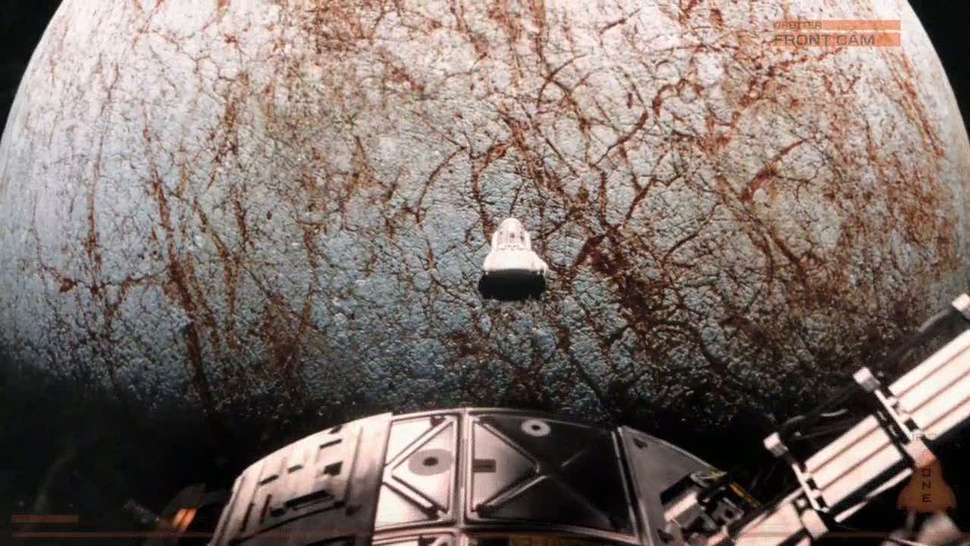
  • First exploratory mission to Europa mounted, discovers proof of basic life forms under the surface ice
  • Rome ordains first openly homosexual priests, an extremely controversial move that splits the church
  • First semi-sentient, Turing compatible AI’s are produced and put into service
  • Thin, transparent, flexible medical patches leading to age of “digital medicine”
  • Religious orders formed opposed to “augmentation”, “transhumanism” and androids
  • First true quantum computers roll off the assembly line

quantum-teleportation-star-trails-canary-islands-1-640x353

  • Creation of the worldwide quantum internet underway
  • Quantum cryptography leads to increased security, spamming and hacking begins to drop
  • Flexible, transparent smartphones, PDAs and tablets become the norm
  • Fully immersive VR environments now available for recreational, commercial and educational use
  • Carbon dioxide in the upper atmosphere passes 600 ppm, efforts to curb emissions are redoubled
  • ISS is retired, replaced by multiple space stations servicing space shuttles and commercial firms
  • World’s first orbital colony created with a population of 400 people

2050-2100:

  • Global economy enters “Second Renaissance” as AI, nanomachinery, quantum computing, and clean energy lead to explosion in construction and development
  • Commercial space travel become a major growth industry with regular trips to the Moon
  • Implant technology removes the need for digital devices, technology now embeddable
  • Medical implants leading to elimination of neurological disorders and injuries
  • Synthetic food becoming the rage, 3D printers offering balanced nutrition with sustainability

3dfood2

  • Canada, Russia, Argentina, and Brazil become leading exporters of foodstuffs, fresh water and natural gas
  • Colonies on the Moon and Mars expand, new settlement missions plotted to Ganymede, Europa, Oberon and Titan
  • Quantum internet expanding into space with quantum satellites, allowing off-world connectivity to worldwide web
  • Self-sufficient buildings with water recycling, carbon capture and clean energy becomes the norm in all major cities
  • Second and third generation “Martians” and “Loonies” are born, giving rise to colonial identity

asteroid_foundry

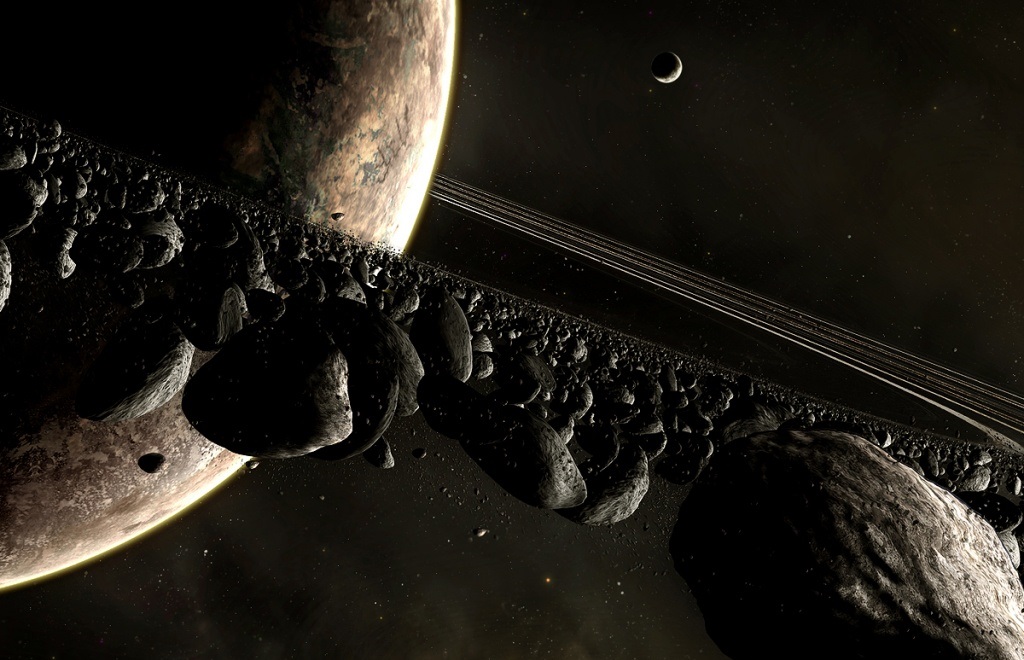
  • Asteroid Belt becomes greatest source of minerals, robotic foundries use sintering to create manufactured products
  • Europe experiences record number of cold winters due to disruption of the Gulf Stream
  • Missions mounted to extra-Solar systems using telexploration probes and space penetrators
  • Average life expectancy now exceeds 100, healthy children expected to live to 120 years of age
  • NASA, ESA, CNSA, RFSA, and ISRO begin mounting missions to exoplanets using robot ships and antimatter engines
  • Private missions to exoplanets with cryogenically frozen volunteers and crowdfunded spaceships

daedalus_starship_630px

  • Severe refugee crises take place in South America, Southern Europe and South-East Asia
  • Militarized borders and sea lanes trigger multiple humanitarian crises
  • India and Pakistan go to war over Indus River as food shortages mount
  • China clamps down on separatists in western provinces of Xinjian and Tibet to protect source of the Yangtze and Yellow River
  • Biotechnology begins to grow, firms using bacteria to assemble structural materials

geminoid

  • Fully sentient AIs created and integrated into all aspects of life
  • Traditionalist communities form, people seeking to disconnect from modern world and eschew enhancement
  • Digital constructs become available, making neurological downloads available
  • Nanotech research leading to machinery and materials assembled at the atomic level
  • Traditional classrooms giving way to “virtual classrooms”, on-demand education by AI instructors
  • Medical science, augmentation, pharmaceuticals and uploads lead to the first generation of human “Immortals”

space_debris

  • Orbital colonies gives way to Orbital Nexus, with hundreds of habitats being established
  • Global population surpasses 12 billion despite widespread famine and displacement
  • Solar, wind, tidal, and fusion power replace oil and coal as the dominant power source worldwide
  • Census data shows half of world residents now have implants or augmentation of some kind
  • Research into the Alcubierre Drive begins to bear experimental results

alcubierre-warp-drive-overview22nd Century:

2100-2150:

  • Climate Change and global population begin to level off
  • First “Neural Collective” created, volunteers upload their thought patterns into matrix with others
  • Transhumanism becomes established religion, espousing the concept of transcendence
  • Widespread use of implants and augmentation leads to creation of new underclass called “organics”
  • Solar power industry in the Middle East and North Africa leading to growth in local economies
  • Biotech leads to growth of “glucose economy”, South American and Sub-Saharan economies leading in manufacture of biomaterials
  • Population in Solar Colonies and Orbital Nexus reaches 100,000 and continues to grow

asteroid_belt1

  • Off-world industry continues to grow as Asteroid Belt and colonies provide the majority of Earth’s mineral needs
  • Famine now widespread on all five continents, internalized food production in urban spaces continues
  • UN gives way to UNE, United Nations of Earth, which has near-universal representation
  • First test of Alcubierre FTL Drive successful, missions to neighboring systems planned
  • Tensions begin to mount in Solar Colonies as pressure mounts to produce more agricultural goods
  • Extinction rate of wild animals begins to drop off, efforts at ecological restoration continue
  • First attempts to creating world religion are mounted, met with limited success

networked_minds

  • Governments in most developed countries transitioning to “democratic anarchy”
  • Political process and involvement becoming digitized as representation becomes obsolete
  • “Super-sentience” emerges as people merge their neural patterns with each other or AIs
  • Law reformed to recognize neural constructs and AIs as individuals, entitled to legal rights
  • Biotech research merges with AI and nanotech to create first organic buildings with integrated intelligence

2150-2200:

  • Majority of the world’s population live in arcologies and self-sufficient environments
  • Census reveals over three quarters of world lives with implants or augmentation of some kind
  • Population of Orbital Nexus, off-world settlements surpasses 1 million
  • First traditionalist mission goes into space, seeking world insulated from rapid change and development
  • Labor tensions and off-world riots lead to creation of Solar policing force with mandate to “keep the peace”

Vladivostok-class_Frigate

  • First mission to extra=Solar planets arrive, robots begin surveying surface of Gliese 581 g, Gliese 667C c, HD 85512 b, HD 40307 g, Gliese 163 c, Tau Ceti e, Tau Ceti f
  • Deep space missions planned and executed with Alcubierre Drive to distant worlds
  • 1st Wave using relativistic engines and 2nd Wave using Alcubierre Drives meet up and begin colonizing exoplanets
  • Neighboring star systems within 25 light years begin to be explored
  • Terraforming begins on Mars, Venus and Europa using programmed strains of bacteria, nanobots, robots and satellites
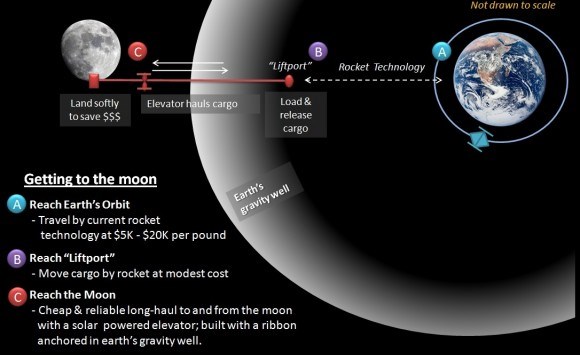
  • Space Elevator and Slingatron built on the Moon, used to transport people to space and send goods to the surface

space_elevator_lunar1

  • Earth’s ecology begins to recover
  • Natural species are reintroduced through cloning and habitat recovery
  • Last reported famine on record, food production begins to move beyond urban farms
  • Colonies within 50 light years are established on Gliese 163 c, Gliese 581 g, Gliese 667C c, HD 85512 b, HD 40307 g, Tau Ceti e, Tau Ceti f
  • Off-world population reaches 5 million and continues to grow
  • Tensions between Earth and Solar Colonies continue, lead to demands for interplanetary governing body
  • Living, breathing cities become the norm on all settled worlds, entire communities build of integrated organic materials run by AIs and maintained by programmed DNA and machinery

self-aware-colony

23rd Century and Beyond:

Who the hell knows?

*Note: Predictions and dates are subject to revision based on ongoing developments and the author’s imagination. Not to be taken literally, and definitely open to input and suggestions.

Powered by the Sun: Sun-Made Hydrogen Fuel

solar2It’s been known for some time that our future may hinge on the successful development of solar power. Despite it being a clean, renewable alternative to traditional, dirtier methods, the costs associated with it have remained prohibitive.  Which is why, in recent years, researchers and developers have been working to make it more efficient and bring down the costs of producing and installing panels.

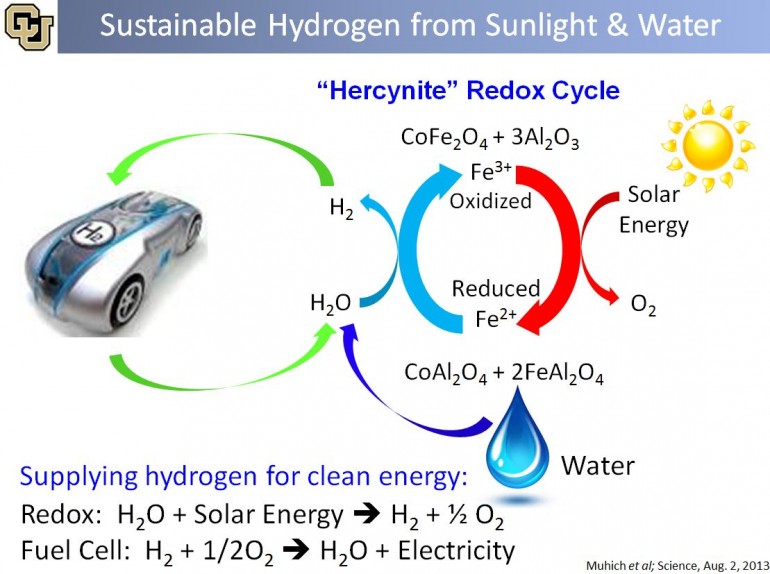
But a new technique developed by the University of Colorado Boulder may have just upped the ante on solar-powered clean energy. Using concentrated sunlight in a solar tower to achieve temperatures high enough to drive chemical reactions that split water into its constituent oxygen and hydrogen molecules, the team claims that solar energy may now be used to cheaply produce massive amounts of hydrogen fuel.

hydrogenfuelThe team’s solar thermal system concentrates sunlight off a vast array of mirrors into a single point at the top of a tall tower to produce very high temperatures. When this heat is delivered into a reactor full of metal oxides, the oxides heat up and release oxygen. This leaves the reduced metal oxides in a different state and ready to bind with new oxygen atoms.

Steam is then introduced into the reactor, which can also be produced by heating water with sunlight. This vaporized water then interacts with oxides, which draw oxygen atoms out of the water molecules leaving behind hydrogen molecules. These molecules can then be collected and harvested as hydrogen gas, and placed in storage containers for export.

solar_beadsGranted, the concept of using solar energy and heat to create hydrogen fuel is not new. Earlier this year, teams from the University of Delaware and Harvard already proposed using solar arrays and small panels (artificial leaves) to separate hydrogen from water. And solar thermal tower power plants have been in use in some parts of the world for years now.

But there are several key difference that set the University team’s concept apart. In a standard solar power tower, sunlight is concentrated about 500 to 800 times to reach temperatures around 500º C (932 º F) to produce steam that drives a turbine to generate electricity. However, splitting water requires temperatures of around 1,350º C (2,500º F), which is hot enough to melt steel.

hydrogenfuel-2To get those kinds of temperatures, the team added additional mirrors within the tower to further concentrate the sunlight onto the reactor and the active material. But the big breakthrough came about when the team discovered certain active materials that allowed both these chemical reactions (reducing the metal oxide and re-oxidizing it with steam) to occur at the same temperature.

As Charles Musgrave, Professor of Chemical and Biological engineering at CU-Boulder, explains it:

You need this high temperature both to give you the driving force to drive the chemical reactions and also the kinetics to make the reactions go fast enough to make the process practical. We determined that both reactions could be driven at the same temperature of about 2,500° F (1,371° C). Even though we run at a constant and lower temperature we still generate more hydrogen than competing processes.

Though they have yet to produce a working model, the concept has a big advantage over other methods. By eliminating the time and energy required for temperature swings, more hydrogen fuel can be created in any given amount of time. Another advantage it has over other renewable technologies, such as wind and photovoltaics, is that it uses sunlight directly to produce fuel rather first converting sunlight into electricity, which reduces overall efficiency.

solar_array1The team believes that a site with five 223 m (732 ft) tall towers and about two million sq m (21.5 million sq ft) of heliostats on 485 ha (1,200 acres) of land could generate 100,000 kg (222,460 lb) of hydrogen per day, which is enough to run over 5,000 hydrogen-fuel cell buses daily. Or as Alan Weimer, the research group leader, put it:

Our objective is to produce hydrogen (H2) at $2/kg H2. This is equivalent to about US$2/gallon (3.7 L) of gasoline based on mileage in a fuel cell car versus a combustion engine today.

Not a bad substitute for gasoline then, is it? And considering that the production process relies on only the sun – once the multi-million dollar infrastructure has been built of course – it will be much more cost effective for power companies than offshore drilling, frakking and pipelines currently are. Add to that the fact that its far more environmentally friendly, and you’ve an all around winning alternative to modern day fuels.

Source: gizmag.com

Climate Crisis: Population Growth in Coming Years

trafficWhen it comes to populations and environmental problems, cities are at the very heart of the issue. Not only are they where the majority of humanity lives, a reality which will only get worse as time goes on, they are also the source of most of our pollution, waste, and land use. People require space to live and work, as well as food, water and

Last year, the world’s population increased to 7 billion, which represents a seven-fold increase in the space of the last two centuries. What’s more, the proportion of people living in urban centers (as opposed to rural) shot up from 3% to almost half of the world’s people. This rate of population growth and redistribution is unprecedented, and is not likely to slow down anytime soon.

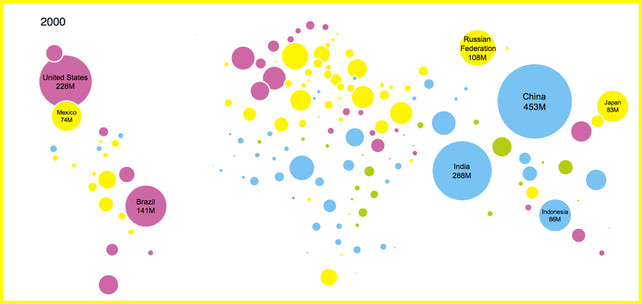
urbanworld_50Consider the following series of infographics which were released by Unicef with the help of the design studio Periscopic. Titled “An Urban World”, they illustrate the issues of population growth and distribution. This interactive, HTML5 visualization of the world covers the years of 1950-2050. But rather than showing our geographic boundaries, every country* is depicted only by their population living in urban environments.

As you can see, each country is represented by a circle that depicts the number of people living in urban environments. As these populations grow, the circles get bigger. And as urban populations get more dense, the circles shift from green to blue to yellow to fuchsia. Immediately, a glaring fact is made clear: the problem is getting worse and at an alarming rate.

urbanworld_2000In addition, there are several nuggets of info which are staggering and particularly worrisome. For example, by 2050, both China and India will have about a billion people living in cities alone. In addition, since the 1990s, more than 75% of the U.S. population has lived in cities. At one time, the US was an outlier in this regard, but found ourselves joined over the next two decades by France, Spain, the U.K., Mexico, Korea, Australia, and Brazil.

But of course, this growth need not be a bad thing. When all is said and done, humanity has a choice. One the one hand, these megacities can take the form of smartly scaled communities of loosely populated expanses and efficient agriculture. On the other, they could easily take the form of urban slums and underdeveloped countrysides that are stricken by poverty and filthy.

urbanworld_2050It’s a complex issue, no doubt about it, especially when you consider the flip side to the whole equation. As the saying goes, every new life means a new mouth to feed, but also a pair of working hands. What’s more, studies have shown that people living in cities tend to be far more energy efficient, and that energy surplus is usually directed toward more and more technological growth and innovation.

Seen in this light, the massive cities of the future could be hubs for the ongoing development of new energies and creative living solutions. And with more people living in large, connected, interdependent environments, the more business startups, ideas, and contributions were likely to get. Part of the reason we have seen so much progress in solar, piezoelectric motors, and bio-electricity is because of this trend. More growth will conversely mean more clean energy.

overpopulation Quite the paradox, really. Who knew people could be both the cause and solution to the world’s worst problem! In the meantime, feel free to head on over to the Unicef site and watch this interactive infographic. Just press play, and watch the cities of the world swell at the edges, competing for room on the page as they compete for room on this planet.

Also, be sure to take a gander at this infographic from BBC Future that demonstrates the current population of the world’s major cities per square meter, the projected population per square meter by 2050, and the livability rating of the city in question. They even provide some context at the bottom by showing the size of relative spaces – from prison cells to Olympic swimming pools, and comparing that to the average space an urban dweller enjoys.

city_spaces
Sources:
bbc.com, fastcodesign.com
, unicef.org

Powered By The Sun: Solar-Plane Heads to Washington

solar_power1It’s known as the Solar Impulse, a solar-powered airplane that for the past few weeks has been accomplishing an historic first. After touching down at Washington’s Dulles International Airport, the plane and its pilot – André Borschberg, co-founder and CEO of Solar Impulse – completed the fourth leg of their historic flight that has taken them across the US.

The plane took off from Lambert-St.Louis International Airport early Friday morning with Borschberg at the controls. But before heading all the way to Washington, the Solar Impulse made a quick pit stop at Cincinnati Municipal Lunken Airport to avoid “challenging weather.” Bertrand Piccard, pilot and Solar Impulse’s other co-founder, took over the aircraft in Cincinnati and completed the flight to Washington Dulles International Airport on the following day.

solar_impulse_washThe Solar Impulse HB-SIA plane started its journey across America at Moffett Field in Mountain View, California, on May 3. On a mission to promote the importance of clean technology, the solar-powered plane made stops in Phoenix, Dallas, and St. Louis. Having completed the leg to DC, the fifth and final leg of the flight will take place early next month and will end at JFK Airport in New York.

The aircraft is powered by 12,000 solar cells that are built into its wings. These in turn charge its lithium batteries, enabling the plane to fly both day and night for up to 26 hours at a stretch without any on-board fuel. With a wingspan of just over 63 meters (208 feet) and a weight of 1600 kilos (3,527 pounds), it is as wide as a large passenger jet and weighs about as much as a small car.

Andre Borschberg, Bertrand PiccardOnce completed, this flight will not only enter the history books as the longest continuous flight done using clean energy, it will also demonstrate the usages of solar power. And the applications which it will promote are extensive, ranging from solar-powered cars to houses, appliances, devices, and just about anything else… under the sun. I’m sorry, bad pun!

Source: news.cnet.com, (2)

Towards a Cleaner Future: Generating Electricity with Steps

pavegen1

This years Boston Marathon was the site of a terrible tragedy, as runners reaching the finish line were met with the worst terrorist attack on American soil since September 11th took place. Not only was this gruesome attack an injustice of immense proportions, it also overshadowed an important story that took place overseas, one which also involved a marathon and a potential breakthrough for renewable energy.

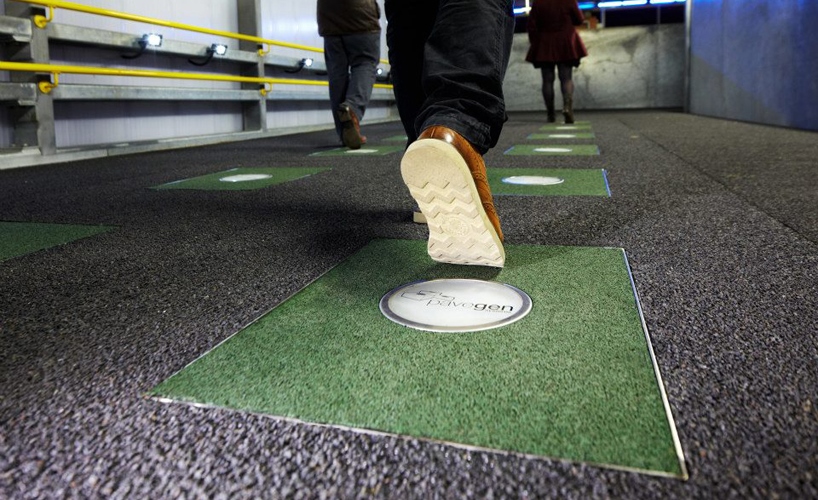
Here, the runners and spectators who waited at the finish line were also privy to something unexpected. But in this case, it involved a series of rubber panels which turned the runners steps into actual electricity. Known as Pavegen, a material invented by 27 year-old Laurence Kemball Cook and composed of recycled tires, this demonstration was the largest test to date of the experimental technology. And though the results were modest, they do present a frightening amount of potential for clean, renewable energy.

pavegen4

Essentially, a single step on a Pavegen pad is said to generate up to 8 watts of electricity per second. Based on that, and at a speed of one step a second, it would take a single pedestrian 40 minutes to charge a smartphone. However, a small army of pedestrians could generate considerably more – say for example, 50,000+ people taking part in a marathon.

Here too, the results fell short of their intended goal. Schneider Electric – who commissioned the project – held a contest on Facebook and said if they generated over 7 kilowatt-hours of energy, they would make a donation to Habitat for Humanity. As it turned out, all those runners generated more like two-thirds of that: 4.7 kilowatt-hours. Still, the potential is there.

pavegen5

Already the Simon Langton Grammar School for Boys in Kent, England, has contracted with Pavegen to become the site of the first permanent installation of the material. And as the video below demonstrates, it has the ability to at least generate enough power to keep the lights on in a building where hundreds of people take thousands of steps daily.

Given time and some improvement in the yield of the pads, this technology could very well take its place alongside solar, wind, and other renewable sources of power that will bring electricity to the cities of the future. Imagine it if you will, entire sidewalks composed of electricity-generating material, turning every step its pedestrians take into clean energy. I for one think that’s the stuff of bona fide science fiction story (it’s mine, you can’t have it!).

And be sure to check out this promotional video from Pavegen who filmed their floor at work in Simon Langton:


Source:
fastcoexist.com

Powered by the Sun: Solar Powered Aircraft!

Magnificent CME Erupts on the Sun - August 31The year of 2013 has proven to be an exciting time for solar power. Not only are developments being made to bring down the cost of solar cell production, as well as improve their yield and storage. A number of solar powered applications are also being produced which demonstrate just how versatile solar energy can be. And strangely enough, a good deal of them appear to have wings.

The first is the Solar Impulse, a solar powered plane that began conducting a cross-country promotional flight before taking off for a trip around the world. Officially launched back in 2003, this brainchild of Bertrand Piccard – grandson of the legendary balloon aviator Auguste Piccard – just a few years after he himself completing a round-the-world balloon flight. It was in the course of making this flight that Piccard realized just how dependent the world still is on fossil fuel, and sought to create a plane that needed no fuel whatsoever.

solar_impulse

Building on concepts like NASA’s Helios Prototype – another solar electric-powered flying wing designed to operate at high altitudes for long periods of time – Piccard and his colleague André Borschberg (a pilot and engineer) managed to create a prototype by 2009. They received financing and technology from a number of private companies, including Deutsche Bank, Omega SA, Solvay, Schindler, Bayer MaterialScience, and Toyota.

Naturally, the development of the prototype has been having an effect across a wide range of industries, and those who participated in making it a reality are reaping the benefits. Already the materials used in the creation in the airframe are being considered for use in refrigerators, and the lithium-ion batteries used in the second craft are expected to power everything from cell phones to cars in coming years.

solar_impulse_flightAlready, the plane has made numerous flights. The first flight took place on July 7th-8th, 2010 and lasted 26 hours, including nearly nine hours of night flying. In 2012, Piccard and Borschberg conducted successful solar flights from Switzerland to Spain and Morocco. The cross-country flight began on May 1st, with the first leg starting in San Fransisco and concluding in Pheonix to significant fanfare.

The flight is expected to last several more weeks and involve numerous stops before concluding in New York. The worldwide flight using the 2nd version of the craft, originally slated for 2014, is expected to take place in 2015. Those looking to keep track of the “Across America” mission can do so on their website. During the next legs of the flight, Piccard will be making landings in Dallas, St. Louis, Washington D.C., and New York.

solar_impulse_arrUltimately, flying the plane is still a very challenging feet. The airframe is extremely light, which means it is sensitive to turbulence and wind. That means it needs to take off and land in calm weather, and the plane can’t fly at all through big thunderstorms. And as Piccard himself notes:

If you fly it like a normal airplane you overcontrol, you cannot steer and land. You need to learn how to be extremely careful, make little moves with the control, and wait until a reaction comes. You have to anticipate enormously, and it’s not very stable, so you need to fly with the rudders.

But ultimately, the goal is not to create a fleet of solar-powered planes. As Piccard himself noted, the goal here is to stimulate “innovation for clean technology and energy”. Alas, there are some benefits to this plane that no other aviator can brag about. For one, the plane can theoretically fly forever since its fuel is provided by the sun and its batteries have demonstrated the ability to keep it going at night.

As Piccard described it: “It’s a feeling of freedom.” I can imagine!

Sources: fastcoexist.com, solarimpulse.com, nasa.gov

Powered by the Sun: The Artificial Leaf

solar_power1Despite progress made in recent decades, solar power still has some obstacles to overcome before it can be completely adopted. Thanks to several innovations, the price of manufacturing and installing solar panels has dropped substantially, intermittency remains a problem. So long as solar power remains limited by both geography and weather, we can expect to remain limited in terms of use.

And short of building Space-Based Solar Power (SBSP) arrays, or producing super-capacitor batteries with graphene – both of which are being explored – the only other option is to find ways to turn solar power into other forms of usable fuel. When the sun isn’t shining, people will need something else to power their homes, appliances, heating and AC. And given that the point is to reduce pollution, it will also have to be clean.

??????And that’s precisely what Daniel Nocera and his team are doing over at the University of Harvard. Their “artificial leaf” – a piece of silicon (solar cell) coated with two catalysts – is a means of turning sunshine into hydrogen fuel. Basically, when sunlight shines in, the leaf splits the water into bubbles of hydrogen and oxygen on each side, which can then be used in a fuel cell.

Efforts in the past to build similar solar cells have faltered, due largely to the costs involved. However, with the price of solar-related materials dropping in recent years, this latest device may prove commercially viable. And built to a larger scale, the device could provide a super-cheap and storable energy source from which could then be piped off and used in a fuel cell to make electricity. And combined with arrays of solar panels, we could have the energy crisis licked!

artificial-leafNocera and his team first announced the technology back in 2011, back when he was still a chemist at MIT. Since that time, they have published a follow-up paper showing how the team has improved the leaf’s efficiency, laying out future challenges, and how these might be overcome. Foremost amongst these are a field trial, with the eventual aim of building a commercial device for the developing world.

Beyond that, Nocera hopes to commercialize the technology through his company, the Massachusetts-based Sun Catalytix. Once realized, he plans to to put his dream of giving the poor “their first 100 watts of energy” into action. Here’s hoping he succeeds. The poor need power, and the environment needs a break from all our polluting!

Thank you all for reading the latest installment of PBTS! And be sure to check out this video of the artificial leaf in action: