The Future is Here: Hoverbike for Sale!

Boy, I’m behind the times here! But that’s what you get when you go away for two weeks and don’t keep up with the latest in trade and tech news. According to Next Big Future, a prototype hoverbike is now available for purchase. Apparently, inventor Chris Malloy, who built the prototype last June, is now offering to custom build one for anyone willing to cough up $84,500 US (or $80,000 Australian).

Powered by ducted fans, mounted at the front and rear, the bike is like something out of Star Wars, except that the science is perfectly sound ;). So far, Malloy has conducted tests with the bike tethered to the ground, which demonstrates that it is capable of hovering just fine. However, he is still working out the kinks when it comes to riding freely.

This is especially true when it comes to turning and rolling, which any biker will tell you is when stability counts for everything. Initially, Malloy was hoping to let the driver turn the vehicle simply by leaning this way and that. However, he soon abandoned that idea in favor of a computerized control system that would ensure stability. This, he has yet to finish, but he’s hopeful that with the right investment capital, he can make it work.

According to his own website, he is eliciting donations to fund the development of his project through to completion. His requested total is 1.1 million dollars to bring the project to fruition and begin commercial production. When he reaches that goal, he will be giving the prototype away for free. Pretty cool of him huh? I recommend people get their names in now and pledge a few dollars. That prototype is not going to be around for long!

In the meantime, check out this video posted by Malloy himself, where he tests the scale model of the bike to show how the fans work.

Seth Green’s New Star Wars Show!

George Lucas would surely fume over this, were it not for the fact that he’s probably getting massive royalties! And as they say, imitation is the sincerest form of flattery. So I suppose he is taking the news that Seth Green, creator of Robot Chicken and the voice of Chris in Family Guy, will soon be releasing another Star Wars parody.

That’s the premise behind Star Wars: Detours, a new animated show that takes the Star Wars universe and does pretty much what Robot Chicken did. Mock it, celebrate it, and just have a lot of fun playing with the characters and storyline. And much like its predecessor, anyone who grey up in the 80’s and loves having their retro/nostalgia sense played to will love it!

However, unlike its predecessor, this one isn’t likely to get all raunchy and gross. Whereas RC appeared on Adult Swim, this is one will be premiering on the Cartoon Network, meaning mainstream audiences will be watching it. Meh, I guess it pays to hedge your bets! No indication on when it will be premiering, but that news is sure to follow! In the meantime, check out the trailer for this new show.

Source: g4tv

“Our Favorite Cimenatic Robots”

Just came across this article in the Globe and Mail today and I have to say, I was pleasantly surprised. It’s funny when a respectable publication like this one chooses to release something that I myself would have done, or did do, in small increments. In fact, many of the contenders on this list call to mind my little listing on Robots, Cyborgs and AIs which I did awhile back.

But dammit, they left out HAL and Robocop. That’s just plain wrong! Sure, they were trying to keep it to top 10 and felt the need to exclude cyborgs and supercomputers, and did have the good nature to apologize in advance for this, but still…

Here is the list as it appears in the article:

  1. The Terminator
  2. Droids from Star Wars (R2D2 and C3P0)
  3. Wall-E
  4. Replicants from Blade Runner
  5. Maria (Metropolis)
  6. Ash (Alien)
  7. The Iron Giant
  8. Gigolo (AI)
  9. The Stepford Wives
  10. Robby the Robot

Check out the full article here, complete with a gallery and some explanations of why these constitute “our” favorites 😉


Shatner’s “Get A Life” Explores Star Trek Fandom

In 1986, William Shatner hosted Saturday Night Live and performed the sketch where he told a convention of Trekkers to “Get a life!” A hilarious moment in television history, or an instance of carefully scripted sincerity? Who knows? Either way, anyone who has not checked seen the sketch should do so immediately. I’ll wait, don’t worry…

Wasn’t that hilarious?

Anyway, it just so happens that Shatner is back at it, trying to find out what it is that defines Trekkies and contributes to the phenomena known as Star Trek fandom. Appropriately, he has named this movie “Get A Life” in honor of the satirical remarks he made on SNL. Again, this may or may not be sincere advice. The point is, even after decades of being the big name is Star Trek, he still wonders why the hell grown men and some grown women have spent their entire lives dedicated to this franchise.

Following in the same vein as Trekkies, this documentary goes beyond taking a look at Star Trek conventions and fandom over the years and  delves into the deeper questions of what makes Star Trek so enduringly popular. Much like Star Wars, it’s a science fiction franchise that has become inextricably embedded in our collective consciousness, to the point that even Captain Kirk himself is astounded and left wondering what the hell is going on…

Snippets from the documentary suggest that it was Roddenberry’s optimism that won fans over. His positive view of a future where all our current ills are solved and the worst didn’t happen is certainly one of the a selling points of the franchise. With so many dystopian and misanthropic visions permeating the pop culture sphere, people enjoy hearing a more positive appraisal of humanity and its prospects.

More echoes of Star Wars there, another franchise which captured fans imagination with its upbeat message and tempo. One has to wonder if the timing of these two franchises wasn’t just the slightest coincidental…

Anyhoo, here is the documentary’s official trailer. Enjoy!

More Things Geeks Never Say

Hey all, I told you I’d be back with more things you’ll never catch a geek saying. And I am! Yes, a list such as this is not something you can cover in a single post, even if you do permit yourself 15 examples instead of the usual ten. And so I return for another installment, and be warned, but this one is not likely to be the last. And in honor of this year’s Comic Con, I was sure to throw in some rather specific examples.

One thing though. From here on in I thought I’d stick to top 10 lists. They do seem to be the most effective, and the Nostalgia Critic already claimed the whole “Top 11” thing so I won’t be doing that either. And of course, suggestions are always welcome and are sure to make their way into the next list. Kudos to Jeff Whelan for recommending a Jar Jar comment. You read my mind, brotha!

Okay, here we go! Installment the second on things geeks never say:

10. No self-respecting man reads comic books!

9. NaNoWriMo-whatta? That some kind of Japanese anime?

8. No grown man ever wears a costume to a convention! There might be girls there!

7. Outside of Twilight, I really don’t watch anything involving vampires

6. Thank you, but one Robocop movie was enough for me

5. Of course the government isn’t out to get us. What are you, paranoid?

4. Aliens don’t exist. The Bible would say so if they did.

3. Levar Burton? Wasn’t he that guy who was in Roots, and nothing else? 

2. Cesar Romero was the only Joker in MY book!

1. Jar Jar Binks was the best Star Wars character ever!

Of Faster-Than-Light Travel

It’s a popular concept, the fictional technology that could help us break that tricky light barrier. And it’s not hard to see why. The universe is a really, really, REALLY big place! And if we ever want to begin exploring and colonizing our tiny corner of it – and not have to deal with all the relativistic effects of time dilation and long, long waits – we better find a way to move faster.

And this is where various franchises come up with their more creative take on physics and the natural universe. Others, they just present it as a given and avoid any difficult, farfetched, or clumsy explanations. And in the end, we the viewers go along because we know that without it, space travel is going to be one long, tedious, and mind-bendingly complex journey!

Alcubierre Drive:
Proposed by Miguel Alcubierre as a way of resolving Einstein’s field equations, the Alcubierre Drive is an untested by possible way to achieve FTL travel. As opposed to Warp, Foldspace, or most other proposed means of FTL that involve some kind of internal propulsion of jump drive, the Alcubierre Drive is based on the idea of generating a wave that a ship would then “surf” in order to travel.

The creation of this wave would cause the fabric of space ahead of the spacecraft to contract and the space behind it to expand. The ship would then ride this wave inside a region of flat space known as a warp bubble and be carried along as the region itself moves through space. As a result, conventional relativistic effects such as time dilation would not apply in the same way as if the ship itself were moving.

The Alcubierre drive is featured in a few different science fiction genres, mainly those of the “hard” variety. This includes Stephen Baxter’s Ark, M. John Harrison’s novel Light, Warren Ellis and Colleen Doran’s Orbiter, and Ian Douglas’s Star Carrier where it is the primary means of transport.

FTL Drive:
The primary means of interstellar travel in the Battlestar Galactica universe, where every ship larger than a in-system transport is equipped with an FTL drive. How it works is never really explained, but it is clear that the technology is complex and involves a great deal of calculation. This is not only to ensureolve n accurate relocation through space-time, but also to make sure they don’t up jumping too close to a planet, star, or worse, right in the middle of either.

Whereas Colonial ships use their own computers to calculate jumps, Cylon ships rely on the Hybrid. These “machines” are essentially semi-organic computers, and represent the first step in Cylon evolution from pure machines to organic beings. Apparently, the hybrids were more sophisticated than Colonial computers, especially the aging Galactica. Hence, they were able to calculate jumps more quickly and accurately.

Holtzman Drive:
This FTL drive system comes to us from the Dune universe, and is otherwise known as a “Foldspace Engine”. Relying on principles that are not entirely clear to those in the Dune universe, the system involves depositing a ship from one point in space-time to another instantaneously. Though the workings of the drive are never really explained, it is intimated in Chapterhouse: Dune that tachyons are involved.

Another key component in the system is a Guild Navigator, a mutant who has been given natural prescient abilities thanks to constant exposure to spice. Using this prescience, the Navigator “sees” a path through space-time in order to guide the ship safely through. But in time, the Ixians invented a machine that was capable of doing this job as well, thus making the entire process automated and breaking the Guild’s monopoly on spacing.

Hyperspace:
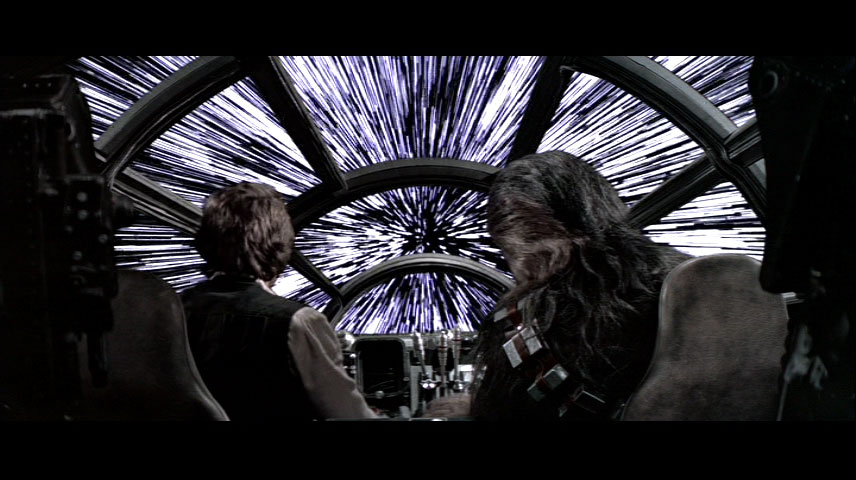
Like the Warp drive, the terms hyperspace and hyperdrive have become staples withing the science fiction community. It’s most popular usage comes from Star Wars where it is the principle means of interstellar travel. Though it is never explained how a hyperdrive works, it is made abundantly clear through a series of visuals in the first and subsequent movies that it involves speeds in excess of the speed of light.

In addition, Han Solo indicated in the original movie that the Falcon’s top speed was “point five past light-speed”, indicating that it can travel 1.5 c. All other references to hyperspace speed factors in the franchise are similar, with velocities given in terms of a decimal point value. As a fast ship, the Falcon can reach point five, whereas most of the larger Imperial and Rebel ships can make only point three or four at most.

Though Star Wars is the most popular example of hyperspace, it is by no means the earliest. The first recorded example was in John Campbell’s “Islands of Space,” which appeared in Amazing Stories in 1931. Arthur C. Clarke’s also mentioned hyperspace in his 1950 story Technical Error. However, the most enduring example comes from Asimov’s Foundation universe, where hyperspace is the principal means of travel in the Galactic Republic. In I, Robot, the invention of the “hyperspatial drive” is the basis of one of the short stories, and was meant to provide a sense of continuity with his earlier Foundation series.

Other franchises that feature the concept of hyperspace include Babylon 5, Homeworld, Macross/Robotech, and Stargate. Combined with Star Wars and the Foundation series, it is the most popular – albeit the most ill-defined -form of FTL in the realm of science fiction.

Infinite Probability Drive:
The perfect mixture of irreverence and science: the Infinite Probability Drive from The Hitchhikers Guide to the Galaxy. This FTL concept is based on a particular perception of quantum theory which states that a subatomic particle is most likely to be in a particular place, such as near the nucleus of an atom, but there is also a small probability of it being found very far from its point of origin.

Thus, a body could travel from place to place without passing through the intervening space if you had sufficient control of probability. According to the Guide, in this way the drive “passes through every conceivable point in every conceivable universe almost simultaneously,” meaning the traveller is “never sure where they’ll end up or even what species they’ll be when they get there” and therefore it’s important to dress accordingly!

Subspace Jump Drive:
Here we have an FTL concept which comes from one of my favorite games of all time, Descent Freespace. Subspace jumps, relying on the drive system of the same name, represent a very quick method of interstellar travel. By relying on subspace “corridors” that run from one point in space-time to another, a ship is able to move quickly from one star system to the next.

The only drawback to this concept is the fact that travel must occur along officially designated “nodes”. These nodes usually pass between large gravitational sources (i.e. between stars systems) but also can exist within a system itself. Virtually all nodes are unstable, existing for mere seconds or minutes at a time. However, nodes which will last for centuries or longer are designated as “stable” and used for transit.

Another favorite franchise which uses a similar concept is the Wing Commander universe. In all versions of the game, particularly Wing Commander: Privateer, interstellar travel comes down to plotting jumps from predesignated points in space. One cannot simply jump from one spot to another provided accurate calculations are made, they have to use the mapped out points or no jump is possible. This, as opposed to hyperspace travel, posits that subspace is a reality that exists only in certain areas of space-time and must be explored before it can be used.

TARDIS:
Officially, the Time and Relative Dimension in Space is a time machine and spacecraft that comes to us from British science fiction television program Doctor Who and its associated spin-offs. Produced by the advanced race known as the Time Lords, an extraterrestrial civilization to which the Doctor belongs, this device that makes his adventures possible.

Basically, a TARDIS gives its pilot the ability to travel to any point in time and any place in the universe. Based on a form of biotechnology which is grown, not assembled, they draw their power primarily from an artificial singularity (i.e. a black hole) known as the “Eye of Harmony”. Other sources of fuel include mercury, specialized crystals and a form of temporal energy.

Each TARDIS is primed with the biological imprint of a Time Lord so that only they can use it. Should anyone else try to commandeer one, it undergoes molecular disintegration and is lots. The interior of a TARDIS is much larger than its exterior, which can blend in with its surroundings using the ship’s “chameleon circuit”. Hence why it appears to outsiders as a phone booth in the series.

Warp Drive:
Possibly the best known form of FTL travel which comes to us from the original Star Trek and its many spinoffs. In addition to being a prime example of fictional FTL travel, it is also perhaps the best explained example.Though said explanation has evolved over time, with contributions being made in the original series, TNG, and the Star Trek technical manual, the basic concept remains the same.

By using a matter/antimatter reactor to create plasma, and by sending this plasma through warp coils, a ship is able to create a warp bubble that will move the craft into subspace and hence exceed the speed of light. Later explanations would go on to add that an anti-matter/matter reaction which powers the two separate nacelles of the ship are what create the displacement field (the aforementioned “bubble”) that allows for warp.

Apparently, Warp 10 is the threshold for warp speed, meaning that it is the point at which a ship reaches infinite speed. Though several mentions are made of ships exceeding this threshold, this was later explained as being the result of different scales. Officially, it is part of the Star Trek canon that no ship is capable of exceeding Warp 10 without outside help. When that occurs, extreme time dilation, such as anti-time, occurs, which can be disastrous for the crew!

In addition to Star Trek, several other franchises have made mention of the Warp Drive. This includes StarCraft, Mass Effect, Starship Troopers, and Doctor Who.

Final Thoughts:
Having looked through all these examples, several things become clear. In fact, it puts me in mind of a clip produced by the Space Network many years ago. Essentially, Space explored the differences between FTL in past and present franchises, connecting them to developments in real science. Whereas Warp and Hyperspace tended to be the earliest examples, based on the idea of simply exceeding the speed of light, thereby breaking the law of physics, later ideas focused on the idea of circumventing them. This required that writers come up with fictional ideas that either relied on astrophysics and quantum theory or exploited the holes within them.

One such way was to use the idea of “wormholes” in space-time, a hypothetical theory that suggests that space is permeated by topological holes that could act as “shortcuts” through space-time. A similar theory is that of subspace, a fictional universe where the normal rules of physics do not apply. Finally, and also in the same vein, is the concept of a controlled singularity, an artificial black hole that can open a rift through space-time and allow a ship to pass from one point in the universe to another.

Explanations as to how these systems would work remains entirely hypothetical and based on shaky science. As always, the purpose here is to allow for interstellar travel and communications that doesn’t take decades or even centuries. Whether or not the physics of it all works is besides the point. Which brings me to two tentative conclusions.

  1. Explanations Need Not Apply: Given the implausible (or at the very least, inexplicable) nature of most FTL concepts, the best sci-fi is likely to be the stuff that doesn’t seek to explain how its FTL system of choice works. I’st simply there and does the job. People hit a button, push a lever, do some calculations, or fly into a jump gate. Then boom! seconds later (or days and weeks) and they find themselves on the other side, light years away and ready to do their mission!
  2. That’s Hard: Given how any story that involves relativistic space travel, where both time dilation and confusing time jumps are necessarily incorporated into the story, only the hardest of hard sci-fi can ever expect to do without warp drives, hyperspace, jump or FTL drives. Any other kind of sci-fi that is looking to be accessible, and therefore commercially successful, will have to involve some kind of FTL or face extinction.

Well, that’s all I got for the time being. In the meantime, keep your eyes on the skies and don’t stop dreaming about how we’re one day going to get out there. For even if we start sending ships beyond our solar system in the near future, it’s going to be well into the distant future before they get anywhere and we start hearing back from them. At least until someone figures out how to get around Einstein’s Theory of Relativity, damn bloody genius! Until then, I’d like to sign off with a tagline:

This has been Matt Williams with another conceptual post. Good night, and happy spacing!

Top 15 Things You’ll Never Hear a Geek Say

white-and-nerdyThis really doesn’t happen, but it seems I gave myself an idea with that last post. And to think it all came of an inappropriate joke! Essentially, I began to joke about the kinds of things geeks never say and even listed a few. And it got me thinking, one thing this blog has been missing up until now is a top ten list of things you’ll never hear a geek say. Well, I tried to limit myself to ten, but it was impossible. And so I expanded it a little to incorporate just a few more. I know, top 15 lists aren’t as impressive, but what can you do? Sometimes, you just gotta be inclusive!

Oh, and word of warning, if you’re not a fan of inappropriate jokes, back yourselves up now because you don’t want to see some of the things I’ve written here. As a self-professed geek, I can say these things, but rest assured, my test audience (my wife) didn’t exactly react well 😉 You’ve been warned! Anyhoo, here they are, the top 15 things geeks never say, in ascending order:

15. “Jane Austin is a far superior writer to Ursula K. Le Guin”

14. “I would have liked to have seen less cleavage and more character development from 7 of 9” (substitute any female lead from Star Trek)

13. “The blue chick from Avatar was so not hot”

12. “George R.R. Martin didn’t hit his stride until the third book”

11. “There’s no way I’m paying 50 bucks for a video game!”

10. “I can see no difference between Captain Kirk and Picard”

9. “Blade Runner totally needs to be remade”

8. “I have no strong opinions either way on the remake”

7. “They made a show called The Big Bang Theory?”

6. “I didn’t see the new Star Trek movie, but I hear it’s good.”

5. “Frank Herbert would be so proud of what’s become of the Dune franchise”

4. “You’ll never catch me jerking off to anime!”

3. “The prequels are just as good as the original”

2. “The movie was just as good as the book”

1. “George Lucas didn’t rape my childhood!”

And I’m still thinking of some doozies! Oh well, maybe this can become a thing, but only top 10 lists from now on. 15 at a time is not a pace I foresee being able to keep up for long. Until next time, geek out, get your geek on, and keep on geeking in the free world! Have I found enough ways to work that into a cliched saying?

The Walking Dead Viewing Guide

Found this over at Cracked.com, where some smart-ass nerd who obviously knows the comic backwards and forwards thought he’d mock the show. Having never read the comic, I can’t comment on the rightness of this little guide, but let’s just say I intend to now. Being a fan of the show,  much like most people I’ve talked to here on the subject, saying that they are vastly inferior to the comics makes me think that I’m missing something.

But of course its called comedy for a reason. And as I’m sure we are all aware, every franchise geek since the beginning of time has had the same thing to say vis a vis adaptations. In fact, if you were to make a top 10 list of things franchise geeks never say, number one would be “The movie was just as good as the book”… right after, “the prequel was just as  good as the original” and “George Lucas didn’t rape my childhood” 😉

The Star Wars That I Used To Know

You know that song that’s been getting stuck in your head over and over for the last year or so, thanks to viral videos and constant radio exposure? Well, if you’re not thinking of “Somebody That I Used to Know” – the Gotye original that was recently covered and re-popularized by Walk of the Earth – then we are on two completely different wavelengths!

But I’m not here to talk about our psychic disparities. The point is that a group named Teddiefilms has breathed new life into this song and Lucas-bashing by producing a satire of this song. Entitled “The Star Wars That I Used To Know”, this song does an amazing job of capturing fan angst and the spirit of the song. Ably written, performed, and directed in a way that calls to the mind the original video, this parody has it all!

Check it out…

Utopia in Popular Culture

Aeon Flux:
Fans of this animated cult-classic are sure to understand why this show has made the list. In the futuristic setting of the show, events revolve around an ongoing conflict between two societies. On the one side, there is Brenga, a police state run by the autocrat Trevor Goodchild. On the other is the anarchist state of Monica, where the show’s main character – Aeon, a Monican agent and spy – comes from.

Much like the world of the Cold War, these two sides are locked in an ongoing state of detente, where espionage and skirmishes take place back on both sides. The border region between them resembles that of Cold War-era Berlin, where a massive wall separates the two and those trying to cross are either shot or cut down. In one particular episode, people who are missing limbs were a focal point, demonstrating just how many people have fallen victim to the border defenses.

This is a common feature in the story, as it seems that the people of Bregna (known as Breens) would like very much to live the lives of Monicans. Its for this reason that one of Aeon’s duties as an agent is to make regular runs into Bregna to get people out through a series of underground passages. It is also suggested that it is precisely because Monica has no official representatives that it is impossible for Trevor Goodchild to deal with them. He does not seem to understand how their society works, and therefore cannot bribe, threaten, or intimidate them into a peace settlement.

Avatar:
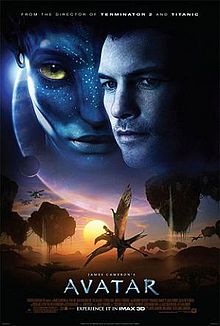
Here is a perfect example of the traditional Edenic civilization being threatened by the evil progress-driven bad guys. Though it was not my favorite movie by any means, it’s undeniable (aka. blatant) utopians themes are quite clear. In short, the Na’vi live a peaceful, contended existence with their environment, and are even telepathically linked to a planetary intelligence known as Eywa.

Borrowing elements from Native American lore, the Gaian hypothesis, and the concept of an ecological utopia, Cameron created a world where paradise was to be found by anyone with appreciative eyes. Whether it was their communion with animals, the trees, or Eywa, the Na’vi elevated the concept of living in harmony with their environment to literal levels.

Demolition Man:

Again, we have what is often classified as a dystopia, but which is made so because of its apparent utopian elements. Set in the not-too-distant future of San Angeles – the mega-city formed from the merger of LA and San Diego – the story revolves around the social experiments of one Dr. Raymond Cocteau.

In addition to being the man who invented the cryo-stasis prison system, which was central to the plot, he is also the man who pioneered the San Angelans “utopian” way of life. In essence, this way of life is bereft of violence, crime, and drug use. The people live what can only be described as a peaceful and contented existence, believing that everything that came before them was characterized by violence and brutality.

The price tag was high, to be sure. People are no longer allowed to swear, play contact sports, own guns, or eat anything remotely unhealthy. Violent and/or sexual entertainment has also been banned, as has real sex. However, the people of San Angeles seemed to accept all this based on the state of society prior to Cocteau’s “revolution”.

The proliferation of violence, chaos, drug use and venereal diseases pretty much left them thinking they had no choice.  Such is the nature of utopian engineering, in the end, where people willingly surrender certain aspects of their lives in order to achieve something better. Much like collectivization, the banning of money, or the elimination of monogamy.

Futurama:
This might seem like a bit of a stretch, but I’ve always felt that anyone who loves science fiction can’t help but notice the classic themes and elements in this show. Usually this takes the form of dystopian elements – suicide booths, career chips, the tax monster, etc. However, at other times, some decidedly cheery and optimistic tones make it in.

For example, in one particular episode (season 1, episode 8: “A Big Piece of Garbage”), Earth finds itself being threatened by a massive ball of garbage. They deduce that only a similar ball would be able to deflect it, but unfortunately, no garbage exists. Everything on Earth is now recycled, used cans are recycled to make robots, and used robots are used to make cans. Nothing goes to waste, which is why Fry must teach them how to litter!

And then again, in season 6, episode 2: “In-A-Gadda-Da-Leela”, Leela and Zapp Brannagan land on what appears to be a mysterious, Edenic planet. Here, Leela and Zapp begin living freely as if they were Adam and Eve, which includes shedding their clothes, talking to a serpent, and living off the land. Of course, it was all a ruse by Zapp who once again just looking to get Leela in the sack, but the illusion was complete!

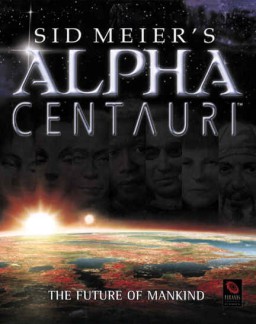
Sid Meier’s Alpha Centauri:

There’s a reason this game is one of my all-time favorites, and that is because it’s so inspired! One immediately gets the feeling upon playing this all the way through that a lot of classic sci-fi elements went into the making of it, as well as genuine cultural, sociological and scientific research.

For starters, there is the concept of colonizing a new world and the social experiments that it naturally will entail, which is in keeping with KSR Mars Trilogy. Each faction in the game represents a different take on engineering the perfect society. There are the humanitarians, the believers, the Gaians, the hive-mind people, the free-marketeers, the militarists, and the rational empiricists.

What’s more, the technology tree that is featured in the game contains many options for social engineering, the intended end result of which is a perfect society in one form or another. These include Thought Control, Cybernetic, and Eudaimonic, three basic visions of utopia which are dependent upon repression, post-humanism, and a utilitarian, social welfare approach meant to enrich the lives of as many people as possible.

There’s even the option of achieving transcendence, which is one of the victory condition’s of the game. This is achieved by merging with Alpha Centauri’s planet-wide organism, becoming part of its mass consciousness and ensuring a sort of quasi-immortality as it were. This is considered the biggest and best victory option since it ensures planetary peace, as opposed to conquering all the other factions, united them, or cornering the planet’s energy market (the three other victory conditions).

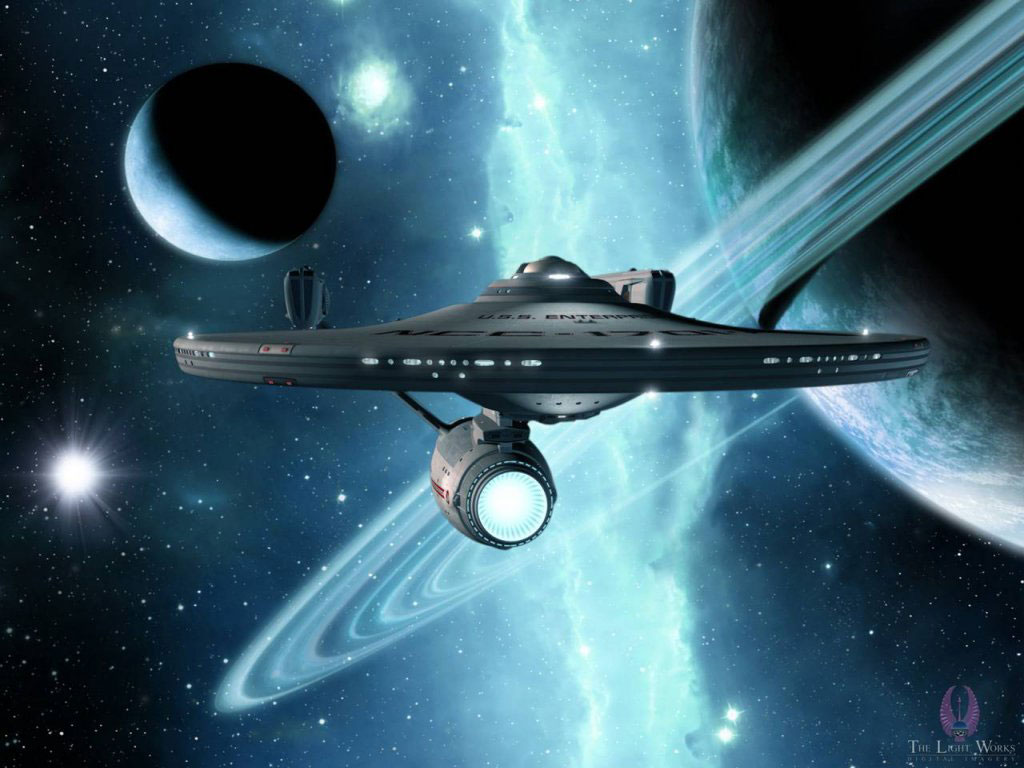
Star Trek:
When it comes to commercial sci-fi, Star Trek pretty much has the market cornered when it comes to utopian elements. Whether it was the original series, TNG, or its subsequent spinoffs, it was clear that humanity had reached a state of technical and social perfection thanks to advances made in science and technology, not to mention good old fashion optimism.

For starters, the United Federation of Planets was an egalitarian democracy where all member races were entitled to representation, a constitution guaranteed extensive rights and freedoms, and all wants and needs were addressed thanks to replicators, abundant energy, transporters and warp technology.

And of course, numerous references are made to the fact that Earth is crime free, all known diseases have been cured, and troublesome things like poverty, slavery, exploitation, inequality and human drudgery have all been eliminated. No real explanations are given as to how, but its clear it happened by the 22nd century.

Star Wars:
Though not a utopian series by any stretch of the definition, there are some tell-tale aspects of the franchise which warrant examination. For example, though the bulk of the story takes place during the “Dark Times”, when the evil Empire rules, numerous allusions are made to a time before the Empire where things are described in somewhat idealistic terms.

For example, here is how Obi-Wan describes the role of the Jedi in the good old days as follows: “For over a thousand generations, the Jedi were the guardians of peace and justice in the Old Republic.” In addition, it is also made clear that the Old Republic was governed by an interstellar democracy known as the Galactic Senate. Between the Jedi and the government, things like slavery, conquest, blatant racism, genocide, and all other forms of behavior common to the Empire were highly illegal.

In having this era of peace and relative prosperity to compare their current circumstances with, Lucas was able to drive home the point of how the Empire was illegitimate and had seized power by unjust means. It also made the heroes current predicament seem that much more emotionally involved.

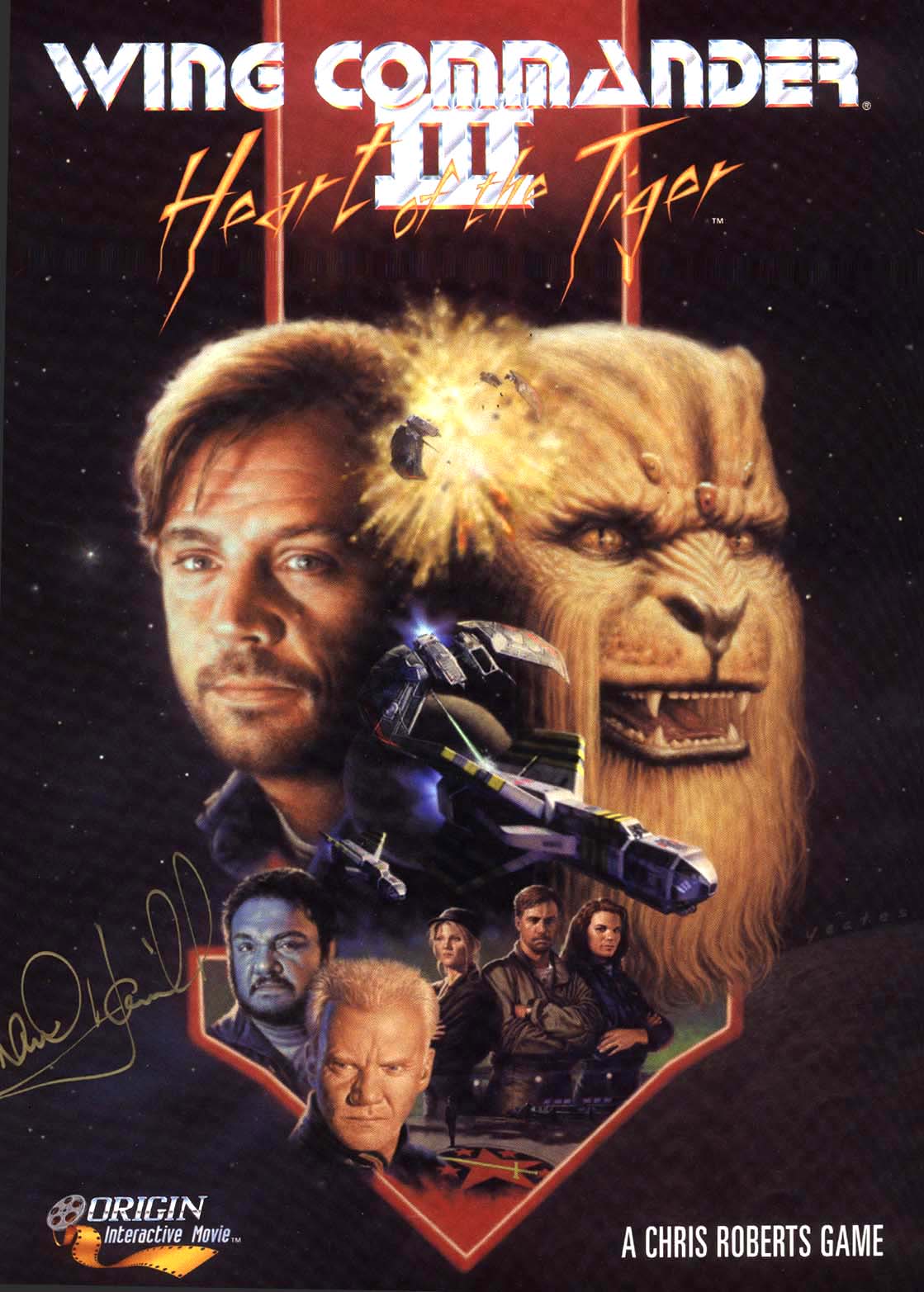
Wing Commander:
Calling to mind such franchises as Star Trek and Man-Kzin Wars, the Wing Commander series takes place in the distant future when a semi-utopian humanity is engaged in a war with a militaristic foe. As with the violent Kzin, the enemy in this series known as the Kilrathi, are a race of feline anthropoids.

Governed by a strict hierarchy and warrior code, the Kilrathi are driven to war and conquest and have been fighting humanity for generations. Though no formal description is ever made of the Earth government or human customs, many hints are given that suggest that the Terran Confederation is governed by the comparatively enlightened ideals of humanitarianism and democracy.

For instance, in the first Wing Commander it is said that Kilrathi do not place the same importance on alien life as the Confederation. Evidently not, since conquest, slavery and genocide seem to be par for the course for them! In addition, several alien species are allies with the Confederation, usually for the sake of mutual defense against the Kilrathi.

And as with Star Trek, the bad behavior of the enemy species is held in contrast to the comparatively peaceful and egalitarian behavior of humans. And as always, this is designed to illicit a point about history and human nature.

Conclusions:
When it comes to popular culture, there never seems to be a shortage of inspired science fiction elements. This is true of movies, television, and the gaming world. However, I can’t help but notice just how more common dystopian movies, shows and games are. For whatever reason, it just seems like tales of dark futures are much more popular. Is it because dark futures seem more realistic, or might it have to do with the proliferation of dystopian literature in the last century or so. Either way, believe me when I tell you that examples of modern utopian sci-fi franchises were much harder to find. No wonder Neal Stephenson challenged the sci-fi writers of the world to come up with something cheerier!