With all of the world’s current problems, poverty, underdevelopment, terrorism, civil war, and environmental degradation, it’s easy to overlook how things are getting better around the world. Not only do we no longer live in a world where superpowers are no longer aiming nuclear missiles at each other and two-thirds of the human race live beneath totalitarian regimes; in terms of health, mortality, and income, life is getting better too.
So, in honor of the New Year and all our hopes for a better world, here’s a gander at how life is improving and is likely to continue…
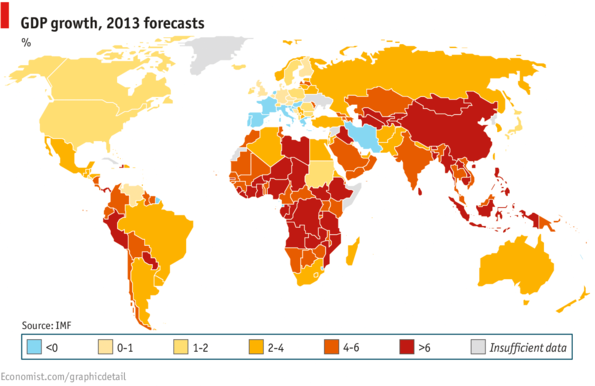
1. Poverty is decreasing: The population currently whose income or consumption is below the poverty line – subsisting on less than $1.25 a day – is steadily dropping. In fact, the overall economic growth of the past 50 years has been proportionately greater than that experienced in the previous 500. Much of this is due not only to the growth taking place in China and India, but also Brazil, Russia, and Sub-Saharan Africa. In fact, while developing nations complain about debt crises and ongoing recession, the world’s poorest areas continue to grow.
2. Health is improving:
The overall caloric consumption of people around the world is increasing, meaning that world hunger is on the wane. Infant mortality, a major issue arising from poverty, and underdevelopment, and closely related to overpopulation, is also dropping. And while rates of cancer continue to rise, the rate of cancer mortality continue to decrease. And perhaps biggest of all, the world will be entering into 2014 with several working vaccines and even cures for HIV (of which I’ve made many posts).
3. Education is on the rise:
More children worldwide (especially girls) have educational opportunities, with enrollment increasing in both primary and secondary schools. Literacy is also on the rise, with the global rate reaching as high as 84% by 2012. At its current rate of growth, global rates of literacy have more than doubled since 1970, and the connections between literacy, economic development, and life expectancy are all well established.
4. The Internet and computing are getting faster:
Ever since the internet revolution began, connection speeds and bandwidth have been increasing significantly year after year. In fact, the global average connection speed for the first quarter of 2012 hit 2.6 Mbps, which is a 25 percent year-over-year gain, and a 14 percent gain over the fourth quarter of 2011. And by the second quarter of 2013, the overall global average peak connection speed reached 18.9 Mbps, which represented a 17 percent gan over 2012.
And while computing appears to be reaching a bottleneck, the overall increase in speed has increased by a factor of 260,000 in the past forty years, and storage capacity by a factor of 10,000 in the last twenty. And in terms of breaking the current limitations imposed by chip size and materials, developments in graphene, carbon nanotubes, and biochips are promising solutions.
5. Unintended pregnancies are down:
While it still remains high in the developing regions of the world, the global rate of unintended pregnancies has fallen dramatically in recent years. In fact, between 1995 and 2008, of 208 billion pregnancies surveyed in a total of 80 nations, 41 percent of the pregnancies were unintended. However, this represents a drop of 29 percent in the developed regions surveyed and a 20 percent drop in developing regions.
The consequences of unintended pregnancies for women and their families is well established, and any drop presents opportunities for greater health, safety, and freedom for women. What’s more, a drop in the rate of unwanted pregnancies is surefire sign of socioeconomic development and increasing opportunities for women and girls worldwide.
6. Population growth is slowing: On this blog of mine, I’m always ranting about how overpopulation is bad and going to get to get worse in the near future. But in truth, that is only part of the story. The upside is while the numbers keep going up, the rate of increase is going down. While global population is expected to rise to 9.3 billion by 2050 and 10.1 billion by 2100, this represents a serious slowing of growth.
If one were to compare these growth projections to what happened in the 20th century, where population rose from 1 billion to just over 6, they would see that the rate of growth has halved. What’s more, rates of population growth are expecting to begin falling in Asia by 2060 (one of the biggest contributors to world population in the 20th century), in Europe by 2055, and the Caribbean by 2065.
In fact, the only region where exponential population growth is expected to happen is Africa, where the population of over 1 billion is expected to reach 4 billion by the end of the 21st century. And given the current rate of economic growth, this could represent a positive development for the continent, which could see itself becoming the next powerhouse economy by the 2050s.
7. Clean energy is getting cheaper:
While the price of fossil fuels are going up around the world, forcing companies to turn to dirty means of oil and natural gas extraction, the price of solar energy has been dropping exponentially. In fact, the per capita cost of this renewable source of energy ($ per watt) has dropped from a high of $80 in 1977 to 0.74 this past year. This represents a 108 fold decrease in the space of 36 years.
And while solar currently comprises only a quarter of a percent of the planet’s electricity supply, its total share grew by 86% last year. In addition, wind farms already provide 2% of the world’s electricity, and their capacity is doubling every three years. At this rate of increase, solar, wind and other renewables are likely to completely offset coal, oil and gas in the near future.
Summary:
In short, things are looking up, even if they do have a long way to go. And a lot of what is expected to make the world a better place is likely to happen this year. Who knows which diseases we will find cures for? Who knows what inspirational leaders will come forward? And who knows what new and exciting inventions will be created, ones which offer creative and innovative solutions to our current problems?
Who knows? All I can say is that I am eager to find out!
The new year is literally right around the corner, folks. And I thought what better way to celebrate 2013 than by acknowledging its many scientific breakthroughs. And there were so many to be had – ranging in fields from bioresearch and medicine, space and extra-terrestrial exploration, computing and robotics, and biology and anthropology – that I couldn’t possibly do them all justice.
Luckily, I have found a lovely, condensed list which managed to capture what are arguably the biggest hits of the year. Many of these were ones I managed to write about as they were happening, and many were not. But that’s what’s good about retrospectives, they make us take account of things we missed and what we might like to catch up on. And of course, I threw in a few stories that weren’t included, but which I felt belonged.
So without further ado, here are the top 12 biggest breakthroughs of 2013:
1. Voyager 1 Leaves the Solar System:
For 36 years, NASA’s Voyager 1 spacecraft has travelling father and farther away from Earth, often at speeds approaching 18 km (11 miles) per second. At a pace like that, scientists knew Voyager would sooner or later breach the fringe of the heliosphere that surrounds and defines our solar neighborhood and enter the bosom of our Milky Way Galaxy. But when it would finally break that threshold was a question no one could answer. And after months of uncertainty, NASA finally announced in September that the space probe had done it. As Don Gurnett, lead author of the paper announcing Voyager’s departure put it: “Voyager 1 is the first human-made object to make it into interstellar space… we’re actually out there.”
2. The Milky Way is Filled with Habitable Exoplanets:
After years of planet hunting, scientists were able to determine from all the data gathered by the Kepler space probe that there could be as many as 2 billion potentially habitable exoplanets in our galaxy. This is the equivalent of roughly 22% of the Milky Way Galaxy, with the nearest being just 12 light years away (Tau Ceti). The astronomers’ results, which were published in October of 2013, showed that roughly one in five sunlike stars harbor Earth-size planets orbiting in their habitable zones, much higher than previously thought.
3. First Brain to Brain Interface:
In February of 2013, scientists announced that they had successfully established an electronic link between the brains of two rats. Even when the animals were separated by thousands of kms distance, signals from the mind of one could help the second solve basic puzzles in real time. By July, a connection was made between the minds of a human and a rat. And by August, two researchers at the Washington University in St. Louis were able to demonstrate that signals could be transmitted between two human brains, effectively making brain-to-brain interfacing (BBI), and not just brain computer interfacing (BCI) truly possible.
4.Long-Lost Continent Discovered:
In February of this year, geologists from the University of Oslo reported that a small precambrian continent known as Mauritia had been found. At one time, this continent resided between Madagascar and India, but was then pushed beneath the ocean by a multi-million-year breakup spurred by tectonic rifts and a yawning sea-floor. But now, volcanic activity has driven the remnants of the long-lost continent right through to the Earth’s surface.
Not only is this an incredibly rare find, the arrival of this continent to the surface has given geologists a chance to study lava sands and minerals which are millions and even billions of years old. In addition to the volcanic lava sands, the majority of which are around 9 million years old, the Oslo team also found deposits of zircon xenocryst that were anywhere from 660 million to 1.97 billion years old. Studies of these and the land mass will help us learn more about Earth’s deep past.
5. Cure for HIV Found!:
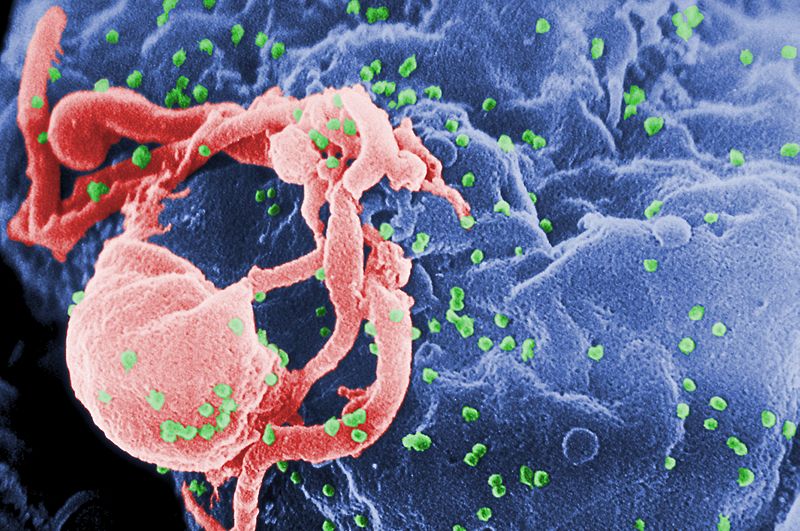
For decades, medical researchers and scientists have been looking to create a vaccine that could prevent one from being infected with HIV. But in 2013, they not developed several vaccines that demonstrated this ability, but went a step further and found several potential cures. The first bit of news came in March, when researchers at Caltech demonstrated using HIV antibodies and an approach known as Vectored ImmunoProphylaxis (VIP) that it was possible to block the virus.
Then came the SAV001 vaccine from the Schulich School of Medicine & Dentistry at Western University in London, Ontario, which aced clinical trials. This was punctuated by researchers at the University of Illinois’, who in May used the “Blue Waters” supercomputer to developed a new series of computer models to get at the heart of the virus.
But even more impressive was the range of potential cures that were developed. The first came in March, where researchers at the Washington University School of Medicine in St. Louis that a solution of bee venom and nanoparticles was capable of killing off the virus, but leaving surrounding tissue unharmed. The second came in the same month, when doctors from Johns Hopkins University Medical School were able to cure a child of HIV thanks to the very early use of antiretroviral therapy (ART).
And in September, two major developments occurred. The first came from Rutgers New Jersey Medical School, where researchers showed that an antiviral foot cream called Ciclopirox was capable of eradicating infectious HIV when applied to cell cultures of the virus. The second came from the Vaccine and Gene Therapy Institute at the Oregon Health and Science University (OHSU), where researchers developed a vaccine that was also able to cure HIV in about 50% of test subjects. Taken together, these developments may signal the beginning of the end of the HIV pandemic.
6. Newly Discovered Skulls Alter Thoughts on Human Evolution:
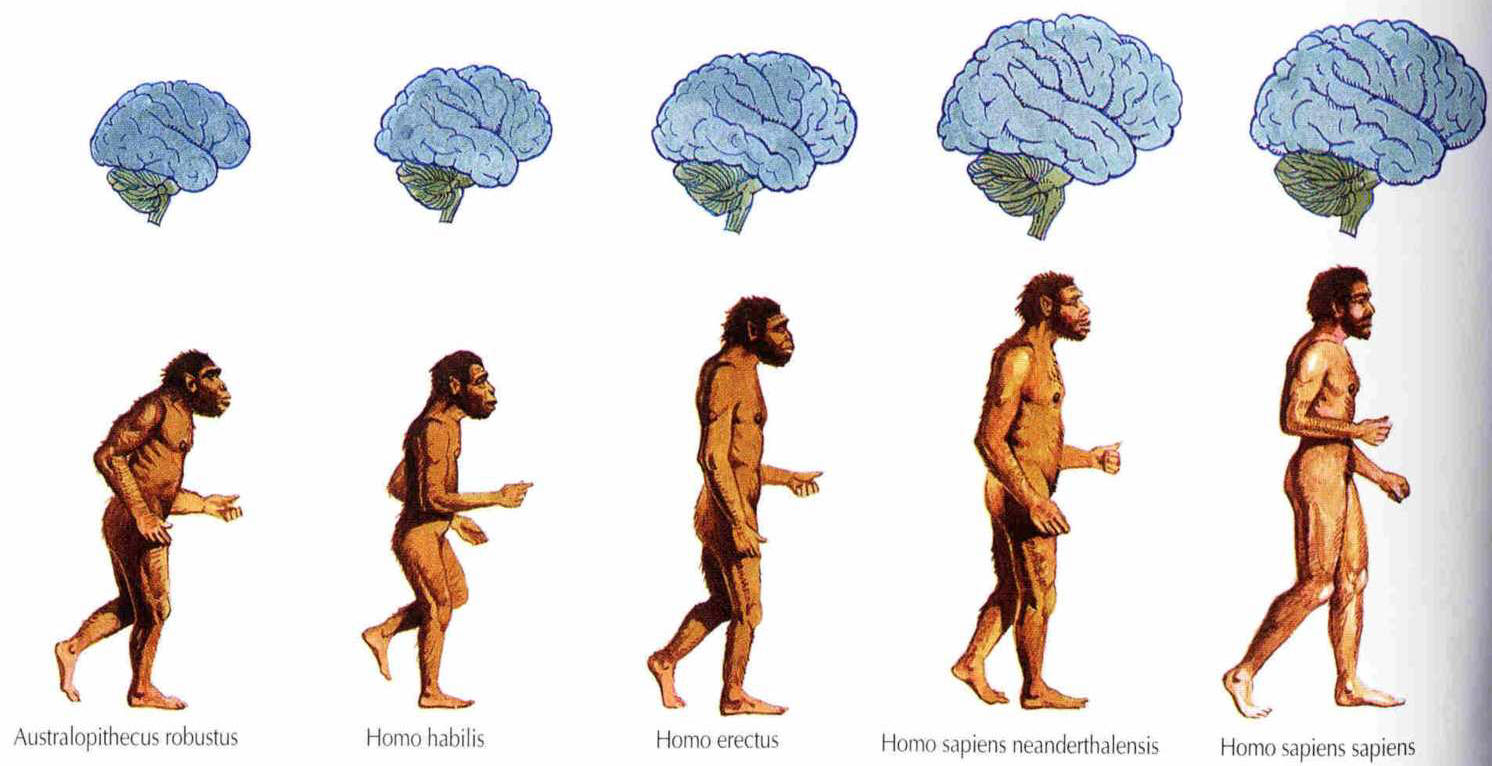
The discovery of an incredibly well-preserved skull from Dmanisi, Georgia has made anthropologists rethink human evolution. This 1.8 million-year old skull has basically suggested that our evolutionary tree may have fewer branches than previously thought. Compared with other skulls discovered nearby, it suggests that the earliest known members of the Homo genus (H. habilis, H.rudolfensis and H. erectus) may not have been distinct, coexisting species, but instead were part of a single, evolving lineage that eventually gave rise to modern humans.
7. Curiosity Confirms Signs of Life on Mars:
Over the past two years, the Curiosity and Opportunity rovers have provided a seemingly endless stream of scientific revelations. But in March of 2013, NASA scientists released perhaps the most compelling evidence to date that the Red Planet was once capable of harboring life. This consisted of drilling samples out of the sedimentary rock in a river bed in the area known as Yellowknife Bay.
Using its battery of onboard instruments, NASA scientists were able to detect some of the critical elements required for life – including sulfur, nitrogen, hydrogen, oxygen, phosphorus, and carbon. The rover is currently on a trek to its primary scientific target – a three-mile-high peak at the center of Gale Crater named Mount Sharp – where it will attempt to further reinforce its findings.
8. Scientists Turn Brain Matter Invisible:
Since its inception as a science, neuroanatomy – the study of the brain’s functions and makeup – has been hampered by the fact that the brain is composed of “grey matter”. For one, microscopes cannot look beyond a millimeter into biological matter before images in the viewfinder get blurry. And the common technique of “sectioning” – where a brain is frozen in liquid nitrogen and then sliced into thin sheets for analysis – results in tissue being deformed, connections being severed, and information being lost.
But a new technique, known as CLARITY, works by stripping away all of a tissue’s light-scattering lipids, while leaving all of its significant structures – i.e. neurons, synapses, proteins and DNA – intact and in place. Given that this solution will allow researchers to study samples of the brains without having to cut them up, it is already being hailed as one of the most important advances for neuroanatomy in decades.
9. Scientists Detect Neutrinos from Another Galaxy:
In April of this year, physicists working at the IceCube South Pole Observatory took part in an expedition which drilled a hole some 2.4 km (1.5 mile) hole deep into an Antarctic glacier. At the bottom of this hole, they managed to capture 28 neutrinos, a mysterious and extremely powerful subatomic particle that can pass straight through solid matter. But the real kicker was the fact that these particles likely originated from beyond our solar system – and possibly even our galaxy.
That was impressive in and off itself, but was made even more so when it was learned that these particular neutrinos are over a billion times more powerful than the ones originating from our sun. So whatever created them would have had to have been cataclysmicly powerful – such as a supernova explosion. This find, combined with the detection technique used to find them, has ushered in a new age of astronomy.
10. Human Cloning Becomes a Reality:
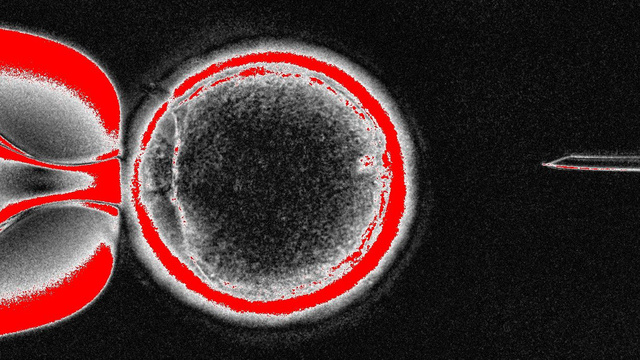
Ever since Dolly the sheep was cloned via somatic cell nuclear transfer, scientists have wondered if a similar technique could be used to produce human embryonic stem cells. And as of May, researchers at Oregon Health and Science University managed to do just that. This development is not only a step toward developing replacement tissue to treat diseases, but one that might also hasten the day when it will be possible to create cloned, human babies.
11. World’s First Lab Grown Meat:
In May of this year, after years of research and hundred of thousands of dollars invested, researchers at the University of Maastricht in the Netherlands created the world’s first in vitro burgers. The burgers were fashioned from stem cells taken from a cow’s neck which were placed in growth medium, grown into strips of muscle tissue, and then assembled into a burger. This development may prove to be a viable solution to world hunger, especially in the coming decades as the world’s population increases by several billion.
12. The Amplituhedron Discovered:
If 2012 will be remembered as the year that the Higgs Boson was finally discovered, 2013 will forever be remembered as the year of the Amplituhedron. After many decades of trying to reformulate quantum field theory to account for gravity, scientists at Harvard University discovered of a jewel-like geometric object that they believe will not only simplify quantum science, but forever alters our understanding of the universe.
This geometric shape, which is a representation of the coherent mathematical structure behind quantum field theory, has simplified scientists’ notions of the universe by postulating that space and time are not fundamental components of reality, but merely consequences of the”jewel’s” geometry. By removing locality and unitarity, this discovery may finally lead to an explanation as to how all the fundamental forces of the universe coexist.
These forces are weak nuclear forces, strong nuclear forces, electromagnetism and gravity. For decades, scientists have been forced to treat them according to separate principles – using Quantum Field Theory to explain the first three, and General Relativity to explain gravity. But now, a Grand Unifying Theory or Theory of Everything may actually be possible.
13. Bioprinting Explodes:
The year of 2013 was also a boon year for bioprinting – namely, using the technology of additive manufacturing to create samples of living tissue. This began in earnest in February, where a team of researchers at Heriot-Watt University in Scotland used a new printing technique to deposit live embryonic stem cells onto a surface in a specific pattern. Using this process, they were able to create entire cultures of tissue which could be morphed into specific types of tissue.
Later that month, researchers at Cornell University used a technique known as “high-fidelity tissue engineering” – which involved using artificial living cells deposited by a 3-D printer over shaped cow cartilage – to create a replacement human ear. This was followed some months later in April when a San Diego-based firm named Organova announced that they were able to create samples of liver cells using 3D printing technology.
And then in August, researchers at Huazhong University of Science and Technology were able to use the same technique create the world first, living kidneys. All of this is pointing the way towards a future where human body parts can be created simply by culturing cells from a donor’s DNA, and replacement organs can be synthetically created, revolutionizing medicine forever.
14. Bionic Machinery Expands:
If you’re a science buff, or someone who has had to go through life with a physical disability, 2013 was also a very big year for the field of bionic machinery. This consisted not only of machinery that could meld with the human body in order to perform fully-human tasks – thus restoring ambulatory ability to people dealing with disabling injuries or diseases – but also biomimetic machinery.
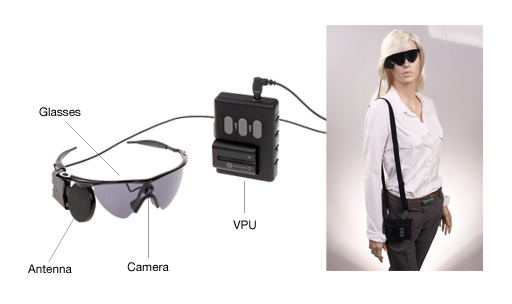
The first took place in February, where researchers from the University of of Tübingen unveiled the world’s first high-resolution, user-configurable bionic eye. Known officially as the “Alpha IMS retinal prosthesis”, the device helps to restore vision by converted light into electrical signals your retina and then transmitted to the brain via the optic nerve. This was followed in August by the Argus II “retinal prosthetic system” being approved by the FDA, after 20 years of research, for distribution in the US.
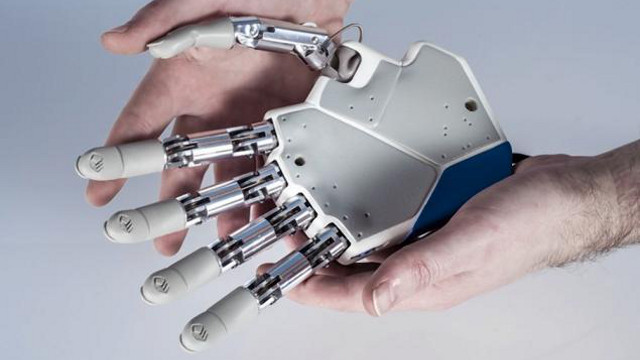
Later that same month, the Ecole Polytechnique Federale de Lausanne in Switzerland unveiled the world’s first sensory prosthetic hand. Whereas existing mind-controlled prosthetic devices used nerve signals from the user to control the movements of the limb, this new device sends electrostimulus to the user’s nerves to simulate the sensation of touch.
Then in April, the University of Georgia announced that it had created a brand of “smart skin” – a transparent, flexible film that uses 8000 touch-sensitive transistors – that is just as sensitive as the real thing. In July, researchers in Israel took this a step further, showing how a gold-polyester nanomaterial would be ideal as a material for artificial skin, since it experiences changes in conductivity as it is bent.
15. 400,000 Year-Old DNA Confuses Humanity’s Origin Story:
Another discovery made this year has forced anthropologist to rethink human evolution. This occurred in Spain early in December, where a team from the Max Planck Institute for Evolutionary Anthropology in Leipzig, Germany recovered a 400,000 year-old thigh bone. Initially thought to be a forerunner of the Neanderthal branch of hominids, it was later learned that it belonged to the little-understood branch of hominins known as Denisovans.
The discordant findings are leading anthropologists to reconsider the last several hundred thousand years of human evolution. In short, it indicates that there may yet be many extinct human populations that scientists have yet to discover. What’s more, there DNA may prove to be part of modern humans genetic makeup, as interbreeding is a possibility.
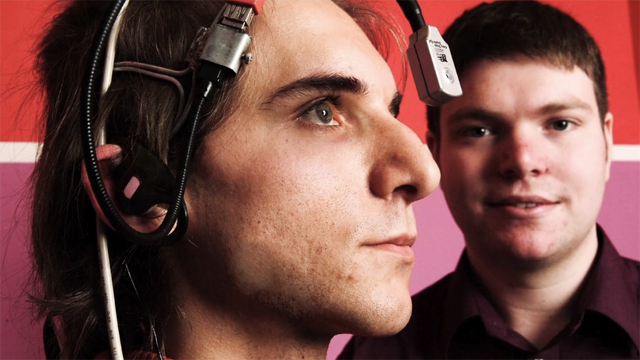
Those who follow tech news are probably familiar with the name Neil Harbisson. As a futurist, and someone who was born with a condition known as achromatopsia – which means he sees everything in shades in gray – he spent much of his life looking to augment himself so that he could see what other people see. And roughly ten years ago, he succeeded by creating a device known as the “eyeborg”.
Also known as a cybernetic “third eye”, this device – which is permanently integrated to his person – allows Harbisson to “hear” colors by translating the visual information into specific sounds. After years of use, he is able to discern different colors based on their sounds with ease. But what’s especially interesting about this device is that it makes Harbisson a bona fide cyborg.
What’s more, Neil Harbisson is now the first person on the planet to have a passport photo that shows his cyborg nature. After a long battle with UK authorities, his passport now features a photo of him, eyeborg and all. And now, he is looking to help other cyborgs like himself gain more rights, mainly because of the difficulties such people have been facing in recent years.
Consider the case of Steve Mann, the man recognized as the “father of wearable computers”. Since the 1970’s, he has been working towards the creation of fully-portable, ergonomic computers that people can carry with them wherever they go. The result of this was the EyeTap, a wearable computer he invented in 1998 and then had grafted to his head.
And then in July of 2012, he was ejected from a McDonald’s in Paris after several staff members tried to forcibly remove the wearable device. And then in April of 2013, a bar in Seattle banned patrons from using Google Glass, declaring that “ass-kickings will be encouraged for violators.” Other businesses across the world have followed, fearing that people wearing these devices may be taking photos or video and posting it to the internet.
Essentially, Harbisson believes that recent technological advances mean there will be a rapid growth in the number of people with cybernetic implants in the near future, implants that can will either assist them or give them enhanced abilities. As he put it in a recent interview:
Our instincts and our bodies will change. When you incorporate technology into the body, the body will need to change to accommodate; it modifies and adapts to new inputs. How we adapt to this change will be very interesting.
Other human cyborgs include Stelarc, a performance artist who has implanted a hearing ear on his forearm; Kevin Warwick, the “world’s first human cyborg” who has an RFID chip embedded beneath his skin, allowing him to control devices such as lights, doors and heaters; and “DIY cyborg” Tim Cannon, who has a self-administered body-monitoring device in his arm.
And though they are still in the minority, the number of people who live with integrated electronic or bionic devices is growing. In order to ensure that the transition Harbisson foresees is accomplished as painlessly as possible, he created the Cyborg Foundation in 2010. According to their website, the organization’s mission statement is to:
help humans become cyborgs, to promote the use of cybernetics as part of the human body and to defend cyborg rights [whilst] encouraging people to create their own sensory extensions.
And as mind-controlled prosthetics, implants, and other devices meant to augment a person’s senses, faculties, and ambulatory ability are introduced, we can expect people to begin to actively integrate them into their bodies. Beyond correcting for injuries or disabilities, the increasing availability of such technology is also likely to draw people looking to enhance their natural abilities.
In short, the future is likely to be a place in which cyborgs are a common features of our society. The size and shape of that society is difficult to predict, but given that its existence is all but certain, we as individuals need to be able to address it. Not only is it an issue of tolerance, there’s also the need for informed decision-making when it comes whether or not individuals need to make cybernetic enhancements a part of their lives.
Basically, there are some tough issues that need to be considered as we make our way into the future. And having a forum where they can be discussed in a civilized fashion may be the only recourse to a world permeated by prejudice and intolerance on the one hand, and runaway augmentation on the other.
In the meantime, it might not be too soon to look into introducing some regulations, just to make sure we don’t have any yahoos turning themselves into killer cyborgs in the near future! *PS: Bonus points for anyone who can identify which movie the photo above is taken from…
Earlier this month, mere days before the anniversary of the Sandy Hook Elementary School mass shooting, Congress began proposing to extend a ban placed plastic firearms capable of evading metal detectors and X-ray machines. Narrowly beating a midnight deadline on Monday, Dec. 9th, the ban was extended for a period of ten years, though efforts to strengthen the restrictions were narrowly blocked by Congressional Republicans.
This was a bittersweet moment for advocates of gun control, but the implications of this decision go beyond the desire to not see another school shooting take place. With the growth of 3-D printing technology and fears that guns could be created using open-source software and store bought printers, preemptive measures were seen as necessary. Simply shutting down Distributed Defense’s website seemed insufficient given the interest and ease of access.
Bans on plastic and undetectable firearms were first passed during the administration of Ronald Reagan, and have been renewed twice – first in 1998 and again in 2003. But such weapons have become a growing threat and due to 3-D printing, which are becoming better and more affordable. And though public access is still limited to weapons made from ABS plastic, it may be only a matter of time before something more sophisticated becomes available.
However, advocates of gun control emphasize that this extension contains two key defeats. For starters, Democratic Senator Chuck Schumer’s desire to strengthen the ban by requiring that such weapons contain undetachable metal parts was blocked. In addition, the fact that the ban was extended for a ten-year period as is means it cannot be revisited and strengthened again in the near future.
In this respect, the ban highlights a year of failure of the Obama administration and Congressional Democrats to toughen gun laws in the wake of the Sandy Hook shooting. Despite this tragedy and other mass shootings – such as the one that took place at the Washington Naval Yard – and the fact that some 90% support tougher gun laws, it seems that pro-gun lobbyists and the NRA are destined to have their way for the time being.
In the meantime, we can only hope that industrial 3-D printing, which allows for objects to be created out of metal parts, does not become readily available to average citizens. The one saving grace of the 3-D printed gun is the fact that it is entirely composed of plastic, making it an ineffective (if undetectable) weapon. And here’s hoping 2014 sees a lot less violence and a lot more humanity!
Just in time for the holidays, the ACLU have produced this lovely video entitled “The NSA is coming to town”. In it, Santa Claus is portrayed as a government snoop who spies on people as they text, email, and just generally do their electronic business. And it all happens to a lovely reworded version of “Santa Claus is coming to town”. Check it out, and try not to feel too paranoid this holiday season!
One of the most recurring talking points in the Climate Change debate is the issue of renewable energy. Particularly, those who take issue with proposed changes for dealing with the problem continue to cite how solar, wind and tidal power are not viable replacements at this juncture. While this talking point is a convenient way of dismissing needing reforms, it neglects two self-evident realities.
For one, it ignores the immense amount of progress being made in the fields of renewable energy. Whereas inefficiency and high costs remained as stumbling blocks in previous decades, an exponential drop in costs and a rise in efficiency has made solar increasingly attractive for power companies in recent years. Wind and tidal are in similar situations, with countries like Scotland and the United Arab Emirates leading the way in making them profitable.
Second, it ignores the fact that developed nations continue to stymie growth in renewables by the continued way in which they commit billions to subsidizing oil and coal. According to a new report from the Overseas Development Institute, public subsidies for fossil fuels totaled $523 billion in 2011. That’s six times the level of support for the renewable energy industry, despite those technologies being less mature than oil and coal.
Among richer countries, the top 11 heaviest carbon emitters spent $74 billion in subsidies in 2011, with Russia, the United States, Australia, Germany, and the United Kingdom leading the way. In the U.S., these included a $1 billion fuel tax exemption for farmers, $1 billion for the Strategic Petroleum Reserve, and $500 million for fossil fuel R&D.
In so doing, these governments are:
…shooting themselves in both feet [by subsidizing] the very activities that are pushing the world towards dangerous climate change… [and] creating barriers to investment in low-carbon development.
According to the British think-tank, this works out a spending of $112 per adult in these nations. But of course, the richest nations are not the only offenders, which nations like Pakistan, Egypt, and Indonesia spending more than twice as much on fossil fuel subsidies as on health. The ODI says the poorest 20% of households typically receive just 7% of overall handouts.
But the ODI may be underestimating the true size of the subsidies in the U.S., depending on how you look at it. Earlier this year, the International Monetary Fund calculated subsidies at $502 billion, a figure which includes the true cost of carbon emissions calculated at a price of $25 a ton. By that measure, global subsidies equal $1.9 trillion.
The report also advises that governments should cut handouts to oil and coal as soon as they can and begin looking after the genuinely poor:
Phasing out fossil fuel subsidies would create a win-win scenario. It would eliminate the perverse incentives that drive up carbon emissions, create price signals for investment in a low-carbon transition and reduce pressure on public finances.
A timely and sound recommendation, and one which cuts to the heart of the matter. In order to address the problem of Climate Change, we must not only adopt better methods for meeting our needs, we must acknowledge the truth of the issue. At the same time, we must acknowledge how ending these subsidies, or redistributing them, would alter the current balance of power on the whole issue of energy.
It’s one thing to claim that alternative methods are unviable when the playing field is level, but since it is not, the argument is essentially hypocrisy. By continuing to finance fossil fuels and coal, we are ensuring that clean energy will remain underdeveloped as an alternative, and hence undermining any chance it has at becoming a true alternative.
So the next time someone tells you that solar or other means of renewable energy are at least 50 years away, or that gas and coal are the only economical means of meeting our energy needs, be sure to ask them why we need to spend half a trillion dollars on them annually.
With the recent upsurge in school shootings – 43 in the last three years, resulting in 76 and 64 injuries – its little wonder why various school-based options at are being explored. These range from more guns (arming teachers and administrators) to incorporating special alarms that would allow for high-speed response. But perhaps the most creative (albeit odd) response comes in the form of a bulletproofing a classroom.
Specifically, armored whiteboards and bulletin boards (known as “Safeboards”) are being proposed as a last line of defense against gunmen. Developed by the International Armoring Corporation – a Utah-based company that manufactures lightweight armored passenger vehicles for heads of state, celebrities, and even the Pope – these boards are unobtrusive classroom objects that double as bulletproof barriers. In the event of a shooting, a teacher could manually slide and lock them in front of a door within a few seconds. Another version folds away from the wall to create a classroom safe haven that could fit up to 37 average-sized first graders. The Safeboards are capable of resisting the bullets of high-powered rifles, like those used in a number of school shootings in recent years.
The company began developing the product last year before the Sandy Hook shooting in Connecticut took place. After a few school officials near IAC’s headquarters heard about how the company manufacture lightweight armor for protective vehicles, they asked if there were any affordable products that could improve safety in the event of a school shooting.
Bulletproof doors already exist, but they expensive and are very heavy. This can be problematic since these doors still need to be used by children dozens of times a day. According to IAC’s CEO Mark Burton, the sliding Safeboard, made with the firm’s standard lightweight material, starts at $1,850 and is light enough that it can be open and closed even by children.
Though no purchases have been made yet, the risk management director of the David School District of Utah (home to some 70,000 students), a school architect and a police liaison witnessed a demonstration of the technology. The district has already upgraded its alarms and camera systems, but director Scott Zigich, indicated that additional measures are being weighed:
Just this week [the country] had a shooting at an airport, a shooting at a school, a shooting at a mall. We are very active in trying to increase the safety level of our students and employees due to the frequent nature of violent attacks.
The state of Utah and IAC are hardly alone on this issue. Earlier this year, another company in Maryland responded to the need for added security by developing small armored whiteboards that would act more like individual shields. Here, the company behind the design is Hardwire, whose product is already being featured at the Worcester Preparatory School in Berlin, Maryland.
Interestingly enough, these whiteboards use the same light material that is used by company to protect military vehicles from Improvised Explosive Devices (IEDs). In the wake of the Sandy Hook shooting, many schools have come to see the issue of gun violence in terms of guerrilla warfare, and are responding accordingly. According to Hardwire CEO George Tunis:
[The Whiteboards] basically take handguns out of the equation. We can certainly make them to stop any threat in the world, but what we wanted was something handheld for the teachers.
For some time, a debate has raged around the United States, especially in the wake of Sandy Hook shooting. At its core is the question of what constitutes appropriate defensive measures for schools in a society where guns are easy for almost anyone to obtain. And some schools have considered armed guards or even armed teachers.
However, people like Mark Burton believes guns as a defense weapon often do more harm than good in schools, and considers the Safeboard to be a less disruptive and cost-effective measure that could give a classroom under siege needed time until police arrive. For budget-strapped schools, the decision is a financial issue as well as a safety one.
Over the lifetime of the product, Burton claims a Safeboard would cost as little as $5 a student, and IAC will also offer a financing program. But ultimately, its about finding ways to deal with the issue that doesn’t involve escalation. As Burton explained:
This is whole new territory. It’s kind of a fine line to walk. It is a sensitive issue, but in some cases, I think it could save lives.
And in the end, one has to wonder, are armored classrooms the only recourse to arming teachers and administrators? Is the issue of gun control really so elusive and untouchable that Americans must choose between more armor or more weapons in schools? What does it take to protect our children without treating our classrooms like they are warzones?
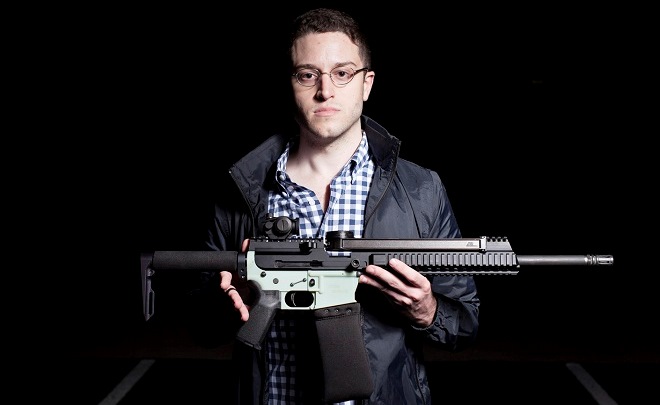
Earlier this year, Distributed Defense became the source of much controversy after they unveiled the world’s first 3-D printed gun. Known as the Liberator, this single-shot weapon was entirely composed of ABS plastic, and was the first weapon that could be created using open-source software and a 3-D printer, giving anyone with access the means to build their own firearms.
Predictably, the website was shut down and the design specs were removed, thanks to an injunction filed by the U.S. Department of Defense Trade Control just a few days after the unveiling. However, the issue was far from closed, as the case of Distributed Defense and the Liberator were clearly just a drop in the bucket of a much larger trend.And now, just six months later, the issue is once again rearing its head as the world’s first 3-D printed metal gun was unveiled. Created by the rapid prototyping and 3-D printing company known as Solid Concepts, this 1911 Colt .45 is a major step forward in the realm of weapons that can be built by just about anyone and counted on to remain functional after firing.
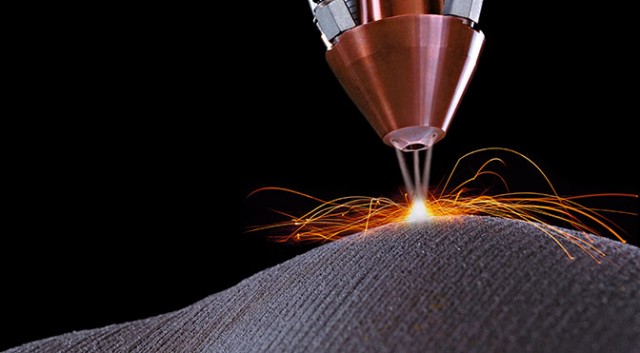
The gun was built using the relatively new process known as Selective Laser Sintering (SLS), a process that combines lasers and powdered metals to create finished products. Basically, a high-powered laser is used to fuse small particles of powder together, layer by layer, until the desired shape is created. In addition to being able to create highly intricate objects, sintering is far more efficient than the machining process.
This latest weapon was also an improvement over the Liberator in that it was able to fire over 50 rounds with considerable accuracy, whereas the Liberator broke down after just a few shots. Made of of over 30 separate 3D printed parts, the gun is composed of stainless steel and Inconel 625 (a nickel-chromium superalloy), consistent with the original Colt design.
But before people begin to worry that this is bad news, Solid Concepts was quick to point out that the gun was printed using an industrial printer, the price of which is out of range of your average citizen. In addition, the software is not open-source, meaning people can’t simply download it from any 3-D printing website and begin producing their own private arsenal.
Solid Concepts also claims that they produced this weapon to demonstrate how 3-D printing is not just for hobbyists anymore, and how sintering is a viable way to produce delicate, precise, specific consumer and professional grade products. The company said that it is currently the only 3D printing service provider with a federal firearms license, and will be looking to provide printed gun parts for legal gun owners.
Regardless, this story serves as an example of how far the technology of 3-D printing has come in just a short amount of time. From printing models with plastic, the technology is now pushing the boundaries of industrial manufacturing and bioprinting, using everything from steel and titanium to liver and kidney cells.
Give more time and refinement, we could be entering into an age where all consumer products and necessities are created from powder and individual cells, possibly even at the atomic level. For those wondering what the next industrial revolution will look like, I suggest you look no further!
And of course, Solid Concepts captured the test firing of their 1911 Colt on video. Check it out:
I just finished watching the Season 17 premiere of South Park, and came away both impressed and confused. Now is it just me, or this show really socially and politically relevant? Half the time I think its an example of how far we’ve declined as a culture. Other times I think it’s modern day satire at its best. Well, not exactly finest, but you get the idea…
Basically, in this episode Cartman joins the NSA hoping to blow the whistle on their government surveillance program from the inside. And despite exposing the truth – the weird, whacky truth which I shall I not mention for fear of spoilers – no one seems to care. Cartman goes home thinking he needs to move to Russia since he’s now a whistle blower and this is what they do.
Here are the highlights, as obtained from Youtube:
And interestingly enough, in a separate thread, the naive but loveable doormat Butters hears from Cartman that the government is watching them all the time and interprets it in rather… religious terms. That night, he chooses to pray to the government, thanking it for watching over him and letting it know what he wants for Christmas.
As if that wasn’t enough, when he sins, he goes to the DMV to confess and says the Pledge of Allegiance as if it is a Hail Mary. He also recruits a bunch of Jehova’s Witnesses come to his door and begins going door to door, telling others about how the Government wants to forgive them and be let into their hearts. Thanks to Butters and his followers, the DMV becomes a church in its own right, with prayer services and sing-alongs.
The DMV is then inspired by this and decides to become an actual church, and is then promtply shut down for having sex with little boys(!) Apparently, they seemed to think this “came with the territory”. Those looking to confess were told to go to the Post Office, which shortly thereafter was also closed down for having sex with little boys! Here’s the highlights from that thread:
Product marketing has always been a high stakes game, where companies rely on psychology, competitive strategies, and well-honed ad campaigns to appeal to consumer’s instincts. This has never been an exact science, but it may soon be possible for advertisers to simply read your brainwaves to determine what you’re thinking and how much you’re willing to pay.
This past October, the German news site Spiegel Online profiled the provocative work of a Swiss neuroscientist and former sales consultant who is working on a method of measuring brain waves to determine how much a person would be willing to pay for a good or service. Known as “feel-good pricing” to marketing critics, the idea is already inspiring horror and intrigue.
The neuroscientist in question is Kai-Markus Müller, the head of Neuromarketing Labs who has over 10 years of experience in neuroscience research. According to his test, Starbucks is not actually charging enough for its expensive coffee. In fact, it’s probably leaving profits on the table because people would probably still buy it if they charged more.
To conduct this test, Müller targeting an area in the brain that lights up when things don’t really make sense. When test subjects were presented with the idea of paying 10 cents for coffee, their brain reacted unconsciously because the price seemed too cheap. A coffee for $8, on other hand, produced a similar reaction since the price seemed too high.
One would think that this method would help to determine optimum pricing. However, Müller then set up a coffee vending machine where people were allowed to set their own price. The two methods then matched up and revealed that people were willing to pay a higher price than what Starbucks actually charges. Somehow, paying less made people think they were selecting an inferior grade of product.
Naturally, there are those who would be horrified by this idea, feeling that it represents the worst combination of Big Brother surveillance and invasive marketing. This is to be expecting when any talk of “reading brainwaves” is concerned, dredging up images of a rampant-consumer society where absolutely no privacy exists, even within the space of your own head.
On the other hand, Müller himself takes issue with the notion of the “transparent consumer”, claiming that “Everyone wins with this method”. As proof, he cited the numerous flops in the consumer economy in the Spiegel Online article. Apparently, roughly 80 percent of all new products disappear from shelves after a short time,mainly because the producers have misjudged the markets desire for them or what they are willing to pay.
It’s all part of a nascent concept known as Neuromarketing, and it is set to take to the market in the coming years. One can expect that consumers will have things to say about it, and no doubt those feelings will come through whenever and wherever producers try to sell you something. Personally, I am reminded of what Orwell wrote in 1984:
“Always the eyes watching you and the voice enveloping you. Asleep or awake, working or eating, indoors or out of doors, in the bath or in bed — no escape. Nothing was your own except the few cubic centimetres inside your skull.”
And perhaps more appropriately, I’m also reminded of what Fry said about advertising in the Season 1 episode of Futurama entitled “A Fistfull of Dollars”:
“Leela: Didn’t you have ads in the 21st century?
Fry: Well sure, but not in our dreams. Only on TV and radio, and in magazines, and movies, and at ball games… and on buses and milk cartons and t-shirts, and bananas and written on the sky. But not in dreams, no siree.”

 With all of the world’s current problems, poverty, underdevelopment, terrorism, civil war, and environmental degradation, it’s easy to overlook how things are getting better around the world. Not only do we no longer live in a world where superpowers are no longer aiming nuclear missiles at each other and two-thirds of the human race live beneath totalitarian regimes; in terms of health, mortality, and income, life is getting better too.
 2. Health is improving:
 4. The Internet and computing are getting faster:
 5. Unintended pregnancies are down:
 6. Population growth is slowing:
 In fact, the only region where exponential population growth is expected to happen is Africa, where the population of over 1 billion is expected to reach 4 billion by the end of the 21st century. And given the current rate of economic growth, this could represent a positive development for the continent, which could see itself becoming the next powerhouse economy by the 2050s.
 And while solar currently comprises only a quarter of a percent of the planet’s electricity supply, its total share grew by 86% last year. In addition, wind farms already provide 2% of the world’s electricity, and their capacity is doubling every three years. At this rate of increase, solar, wind and other renewables are likely to completely offset coal, oil and gas in the near future.






























 Stories by Williams