Plurality: A Concept Movie

Just found this on IO9, a new 14 minute concept movie about the future of New York City. According to the film, it’s 2023, and the introduction of a brand new technology – the Betham Grid – has made things like credit cards, ID cards, and keys obsolete. In essence, the Grid is a massive DNA scanner and social network, with readouts on every public surface in the city. Touch a door, a hand rail, or even a wall, and the Grid reads your DNA, identifies you and pinpoints your location.

Naturally, this has simplified life in many respects. In others, it turned NYC into something of a “Big Brother” state. Crime has dropped to previously unheard of levels, identity theft has become impossible, but the right to privacy remains in a state of limbo. And befitting all potentially dystopian scenarios, there’s a twist, which is alluded to in the name. Ultimately, the question remains, what is the ultimate cost of safety?

Take a look, and take note of all the attention to detail that runs throughout. Director Dennis Lui was sure to incorporate as many examples of futuristic technology as possible, from holographic display glass, to cars with Heads-Up Displays, to augmented reality glasses. The production values are also very impressive.

The Inspiring Blog Award!

My thanks to Renee, that lovely, sassy, irrepressible lady, for nominating me for another award. I thought I was done with these, but then the other day I began wanting to put them up on my page. I’ve already made room for the new one, and am already thinking of whom I’m going to nominate in turn. So many people to thank, so many new things to share about myself. Where to begin…

As stipulated by the rules of the IBA, I must now share seven interesting facts about me. Forgive me if I cover old ground, but that’s the way of these things. There’s only so much we can say before we either start sounding familiar or get venturing into TMI territory 😉 Okay, here we go!

  1. I prefer homemade food that’s bad for ya! My wife and I routinely set aside one day a week for pizza, perogies, or other such luxuries would put us in an early grave, assuming we ate them every night! One time, I even pounded some pork loins, breaded them, and made homemade schnitzel. We also make room for desserts, such as apple cake, apple crisp, or upside down cake.
  2. I’m bad with money. I always figured I would have to end up rich, since I could never stand living on a budget. As a young adult, I loved having steady employment and money, mainly so I could be generous with friends and ensure food, drink and good times were not in short supply. I called myself “Rich Uncle Matt” for fun. They always got a kick out of it!
  3. I like fighting! Not in the sense of brawling or fisticuffs, mind you. But I love the combative arts, love doing demos (board breaking, brick breaking and self defense skits) and would think it totally badass if I could do some fight choreography in front of a camera! I would also like to fight competitively at least once before I’m too old to do so anymore. I figure I got a good decade or so left in me. Let’s see what I can do!
  4. My sister in and wife both lost their doggies recently. It’s the saddest thing in the world when a beloved dog who’ve you;ve known for so many years reaches the end of their life span. I know exactly how they feel. They grew up on a farm and are more acquainted with the death of pets than I am, but I still know how much it sucks. What’s more, I see that a number of people I follow have experienced the same of late or are wrestling with their own personal tragedies, sickness and injury and the like. I wish you all the best in this time of sad convergence! I can only hope that things will get better from here.
  5. I wish I could write more sex and romance in my work. One of the things I like best in a book is realism, and part of that is conveying love, sex and tenderness in real terms. One of the things I like best about George RR Martin, Tom Robbins and Pat Barker as writers is their unabashed and unashamed depictions of sexuality. I wish I could write more into my own work, but what I write rarely calls for it.
  6. My dreams are almost always the same. I don’t know for what psychological reason, but my dreams usually involve me being back in school, often at my current age. In some respects, this mirrors real life since I did a year as a mature student and didn’t like it that much. Sure, its fun being in school when you actually want to be, but being around so many younger people kind of sucks! It’s humbling, really.
  7. My cat is nuts! I know I’m to blame for this, but I raised an animal that is a total… well, animal! When he was a kitten, we knew him to be the cutest damn animal in the world. So tiny, yet so brave and irrepressible. He climbed everything, the walls, the curtains, pant legs. Then, when he was old enough to go outside, he began to hunt. For months, we’d find dead birds by our doorstep.He also began to play with me, way too hard! He’d bite, kick, and just generally be a total monster! Then he began getting territorial. To this day, he won’t allow another cat to venture into our area without whooping his ass! All throughout this, I refused to repress him, mainly because I didn’t want to punish the boy for having spirit. I love his nutsy personality, but my accumulated scar tissue makes we wonder if it’s really worth it…

And now for MY nominees. For those who inspire me and encourage me to do better…

  1. Dangerously Daydreaming – Audrey’s journeys, recipes, photo journalism, and semi-daily elocutions are always a source of inspiration, be it culinary, personal, or creative! Being of the west coast, we have a lot in common when it comes to the kinds of travel and journeying we like to partake. However, she’s dangerously close to outpacing me in terms of world travels. What’s more, her constant encouragement keeps me writing!
  2. Ramiungarthewriter – Rami Ungar, a fellow writer who’s posts and plans inspire me, perhaps selfishly because he reminds me of myself. He’s also my most dedicated follower and keeps me on my toes with his observations and opinions, and is sure to be invaluable as I continue on my own writing career. I wish him the best as he embarks on the road to self-publishing! You’re on the right track, now get out there and shake your money-maker (aka. your manuscripts)!
  3. Sotetangyal – Home of the lady Nina D’Arcangela, writer, visionary and specialist in all things dark, Gothic, and pleasing to those of us who have sick senses of humor. I refer to myself of course. Somehow, her writing always brings a twisted smile to my face. So good at capturing the depths of darkness that live at the core of us all! Also, the way she retweets my stuff is always a source of encouragement. I’ve told her she can do better than my stuff, but does she listen? Nope! And I hope she never does 😉
  4. Urbannight – A fine lady who pretty much sees the world in the same light I do. Spends too much time on her computer, feels the need tog get out and see more of the world, and writes some pretty damn insightful things! Yeah, we get along fine. This, among her rather fun and quirky observations about life, inspire me because they teach me there are more people like me out there!
  5. Bucket List Publications – Here is another fellow-traveler on the world of life who’s got it figured out. As the name would suggest, it’s all about getting it all in before the clock runs out. Her travels, photo logs and accounts of the world are always inspiring and make me want to do more, see more, and experience more of this world before I am forced to leave it.
  6. bodhisattvasiddhartha – aka. Jay, former officer in the Indian Armed Forces, turned writer, muser, part-time poet, and world cyber traveller. There’s a little bit of everything here, and all of it is likely to inspire the fertile mind looking for new perspectives and friends in distant places who have something to say. I am honored that I find myself amongst the people he chooses to read and reblog from time to time and hope that whatever I’m doing to inspire him, I continue to do 😉
  7. Dr. Sci-Fi – And I thought I knew a thing or two about sci-fi, but it’s safe to say that the good doctor here puts me to shame! Not only is he a committed fanboy of numerous classic franchises, he knows the ins and outs of the sci-fi world intimately. I can always count on him to inform me on my subject matter, and offer insight into whatever world I am currently romping through.

Robonauts

A robot and an astronaut shake hands… That might sound like the set up for a really cheesy joke, but in fact, it was a moment in history. Back in February of this year, a first occurred when Daniel Burbank. the commander of the International Space Station, shook hands with the first ever Robonaut. Controlled by ground crews, and currently lacking in full-body motion – they aint got no legs! – this does represent a big step forward in robotics.

As things stand, it is not yet clear if this represents a plan to “unman” space, or just supplement astronauts with humanoid machines that are capable of performing rote tasks and the more labor intensive aspects of space travel. But given the fact that space travel still requires adaptation and flexibility as much as calculations and precision, and that no amount of remote control can equal the thrill of actually being there, I’m thinking human astronauts are going to be around for a long time.

Check out this video of the Robonaut and Burbank making their historic handshake!

Source: CNET.com

Aerospace Flight!

To say that Richard Branson is an eccentric billionaire or oddball visionary would be the understatement of the century. Though not formally educated in business or economics, he’s got a knack for investing in new and relevant things, and always seems to be able to turn a profit while doing it. So it’s little wonder then why he started Virgin Galactic, a private aerospace company that is offering patrons their first shot at sub-orbital flights.

The idea commercial space ships has been in development for some time, with Branson committing a great deal of his empire’s investment capital and research funds towards this end. In 2008, these efforts bore fruit with the first flight of the White Knight Two launcher craft, known officially as the VMS Eve. This plane, also known as a “mothership”, is a four-engine, twin-fuselage craft with an extended wing base and two air crews. As the name suggests, it acts as a launching platform for the aerospace vehicle itself, which deploys once the WK2 is fully airborne.

Then, in December of 2009, Virgin unveiled the suborbital space ship, known as SpaceShip Two. Ever since 2004, Branson’s company ran test flights using a smaller model, but decided to upgrade to a larger, twin-pilot model for long-term commercial use. By February 2012, SpaceShipTwo had completed 15 test flights and an additional 16 glide tests, the last of which took place in September 2011.

In the end, the process is pretty simple and borrows from NASA’s long-standing practice of launching their space shuttles by piggybacking them onto commercial craft. In this case, the process involves the WK2 flying the SS2 to deployment altitude where it will then be released and take over its own flight using its rocket engines. The SS2 will then fly to an altitude of 100 km (330,000 feet) above see level. After performing a circuit in near-zero gravity, it will deploy its wings and glide back to Earth.

No firm schedule has been given as to when commercial flights will commence, but given the pace at which things are moving, it would not be farfetched to think that they are likely to begin before the decade is out. In addition, no word has been given on when exactly it will affordable for the vast majority of people to use this service, or when aerospace terminals will be built into existing international airports.

As it stands, tickets for the maiden voyage go for a whopping $200,000 US or £121,000, and 400 seats have already been spoken for, largely by public figures and international tycoons. The flight will be two hours end-to-end, and will involve six minutes of weightlessness once its reaches maximum altitude. Seems like a lot of money for something that only lasts six minutes; but hey, people have spent way more on far less!

Also, check out the promotional video from Virgin Galactic’s own website. I think you’ll agree, though they may oversell the significance of this by just a bit, the production values are still pretty damn good!

Source, Now Available for Free until Nov.1st!

Good news everybody! At least, that’s how Professor Farnsworth would put it. My first novel, entitled Source, is now available for free through Smashwords until November 1st. As my first work of fictioni, it deals with a concept very near and dear to my heart: apocalyptic sci-fi!

In fact, the entire novel was inspired by a short story project I did with my old writer’s group – The Herscher Project – back in 2005. The theme was dark futures, and I used the opportunity to experiment with an idea that was kind of big news for the time.

If interested, go by Smashwords.com and download Source for your Kindle or ereader. Be sure to enter the coupon code: KY62K in the appropriate box, and get your copy for free! Note the old school cover, I’ve since updated that of course.

Arcology and Climate Change

arcology_hexahedronThe other day, I finally got around to dedicating a post to Paolo Soleri and the concept of Arcology, something which has fascinated me for some time. But of course, I couldn’t do justice to it all in just one post, so rather than mention every example for arcologies that I could find, I chose a select few and planned to talk about the others later. You wouldn’t believe the amount of information that I’ve found since!

Initially, I thought only a few architecture firms and city planners were considering 3-D cities; but as it turns out, there are a dozen plans under consideration and more coming every day! From New Orleans to Haiti, from Shanghai to Dubai, the world abounds with plans for possible future cities that will take advantage of 3-D planning, sustainable resource management and green technology. This last aspect is key, seeing as how the vast majority of these plans are all inspired by one thing: Climate Change!

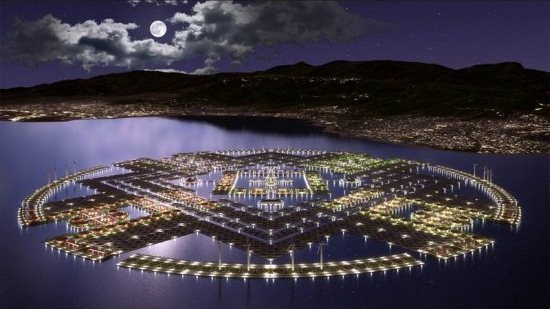
Take this concept for example: the Lillypad City. A revolutionary idea designed for dealing with the worst ravages of climate change in the coming decades, the LC is basically a floating city that is immune to things like coastal flooding and rising sea levels. According to many worst-case scenarios, these are expected to rise in excess of a meter by 2030. Coastal areas will be flooded and entire islands will disappear beneath the waves, leaving millions homeless and displaced. The Lillypad City is a possible solution: a self-contained environment built along coastal shelves and harbors, capable of supporting 50,000 people in an environment that’s ecologically friendly.

A similar concept is NOAH – or New Orleans Arcology Habitation, designed by Kevin Schopfer . An aptly named structure, NOAH is a proposed solution of what to do about coastal flooding and the ongoing problem of rebuilding New Orleans. At over 90oo square kilometers and designed to hold 40,000 residents, the pyramid shaped arcology will also boast shopping centers, 3 hotels, 1,500 timeshare units, parking for 8,000 cars, cultural spaces, public works, schools, an administrative office, and a health care facility.

All of this built upon a floating base with an open-wall structure, which will make it resistant to all forms of weather and immune to rising tides. In addition, the city will boast the latest in green technology, thus eliminate the carbon footprint of its residents. These will include internal electric transport links, secured wind turbines, solar panels and river based water turbines for electricity generation, fresh water reclamation and storage systems, grey water treatment, sky garden heating/cooling vents.

If NOAH catches on, there are even plans to build one on the banks of the Mississippi, where flooding is expected to occur, displacing people up and down the interior US.

And speaking of rebuilding, Haiti continues to suffer from the damage suffered from the 2010 Earthquake. Luckily, there are no shortages of creative ideas of what to deal with this and the likelihood of future earthquakes and flooding. Harvest City is one such idea, a city built on a series of islands capable of supporting 30,000 residents.

Based on the principles of arcology, this city is designed to be sustainable, ensuring adequate food production for all its residents while also providing employment and industry. If feasible, such a city could be indispensable to Haiti’s recovery and ensuring the survival of its people in the long run.

And then there’s the BoA, which is short for Boston Arcology. Much like many of it’s predecessors, the purpose here is to address the problem of urban sprawl in a way that does not impact the existing city, either by expanding into surrounding green space or renovating it’s aging, historic core. Built into Boston Harbor, this uniquely shaped structure will house 15,000 people and will also hold hotels, offices, retail spaces, museums, condominiums, and even a new city hall.

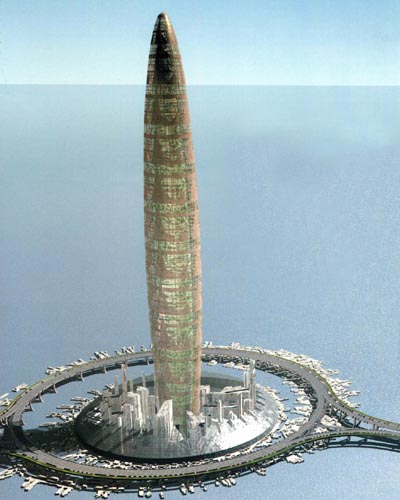
And speaking of 3-Dimensional, check out this baby: the proposed Bionic Tower! A vertical city measuring some 1,228 meters high and being able to house approximately 100,000 people, the Bionic Tower is yet another proposed solution of what to do about the twin problems of overpopulation and pollution.

And at the heart of it all lies the concept of merging bioscience with existing high-tech, meaning that the building will house extensive green-spaces, nature preserves, and its own water reclamation and bio-fuel systems.

Originally proposed at a lecture entitled “Conquest of Vertical Space in the 21st Century – International Conference on Multipurpose High-Rise Towers and Tall Buildings” in London, October, 1997, the project has since begun formal development, and garnered the interest of city planners and developers in both Shanghai and Hong Kong.

Japan is following suit. As already mentioned, the Shimizu Mega-City Pyramid is being slated for development in Tokyo Bay. However, within Tokyo’s urban center, there are also plans for the creation of a vertical city, known as Sky City 1000. Measuring 1000m high, hence the name, the supertall skyscraper would house 35,000 residents and 100,000 workers. The design consists of 14 concave dish-shaped “Space Plateaus” that are stacked one upon the other and held together by a series of vertical struts. Each plateau is designed to contain greenspaces, offices, commercial facilities, schools, theaters, residential spaces, and other modern amenities.

Back to Dubai, where arcology is just one of many inspirations for new construction projects, we have the “Dubai Ziggarut”. A proposed Carbon-Neutral habitat proposed by design firm Timelinks, this eco-pyramid is expected to house 1 million people once completed. Power is to be provided by steam, wind, solar panels and other natural resources, ensuring complete electronic self-sufficiency. The tightly knit city will also feature a super efficient public transportation system that runs both horizontally and vertically, and plans are being drawn up to utilize both public and private green spaces for agricultural opportunities.

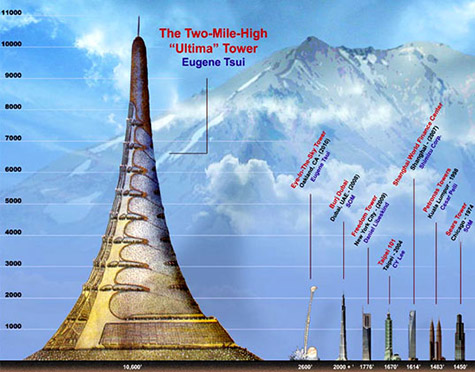
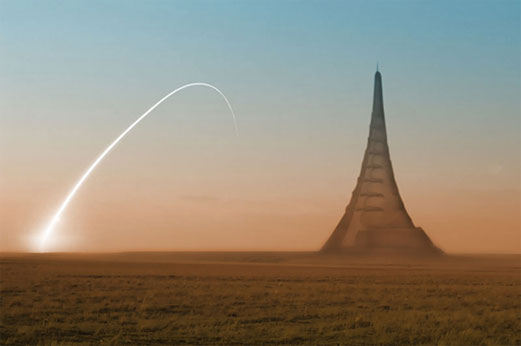
And last, but certainly not least, there is the proposed design for the “Ultima Tower”. A massive edifice, measuring some 3200 meters in height, this supertall skyscraper was first proposed in 1991 by Eugene Hui as a way of tackling the planet’s sustainability problems.  At this height, it would be the tallest building ever created by human beings, should it ever be built.

The interior of the structure would measure some 140,000,000 m2 and would be capable of supporting 1 million people. Relying on atmospheric pressure difference between the bottom and the top of the tower to create electricity and vast interior green space, the building would contain several “mini-ecosystems”.

Combined with water treatment and reclamation facilities, it would be capable of sustaining its inhabitants, perhaps without any outside help. Given the sheer cost of the structure (150 billion US dollars), it remains strictly theoretical. However, as time moves on and the problems of overpopulation and climate change continue, this tower may very well be making an appearance on the landscape!

That about does it for now. As I said before, its a rich and fertile concept! And given the pace of technological change and climate change, its becoming more likely with every passing day. Will it make a difference? Will it help us whether the storm, or help reverse the process? Hard to say. All we know is, living in sustainable communities that are self-sufficient and protected from external threats is far better than the alternative.

Real-life Robocop?

Imagine if you will, a machine that gives disabled police officers a chance to continue working with the force, but from the comfort and safety of an office. Rather than walking the beat and putting themselves in harm’s way, they could telepresence themselves to the streets through a robot body, one which does the job of getting around and locating offenders, while they issue the arrests and infractions. This is the concept that lies behind a new breed of patrol robot that is being developed by Lieutenant Commander Jeremy Robins and Florida International University’s Discovery Lab.

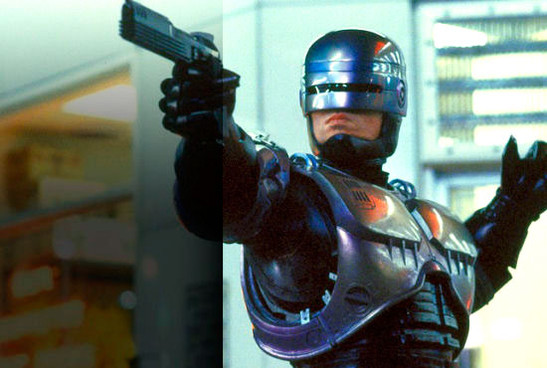
Initially, Robins began this program as a way of bringing some of the thousands of disabled police officers and soldiers in the U.S. back to the workforce. Ultimately, this would call for the creation of a “telebot” that is not only equipped with the latest in wireless technology, but also one that can get around and take some serious punishment. In many ways, this is an elaboration on the concept of Robocop, the hybrid man-machine that stole our hearts back in the 80’s with his signature lines: “You’re move creep!” and “Dead or alive, you are coming with me!” And let’s not forget that sweet gun trick!

But of course, these new robots would be asked to do less adventurous things than the gun-toting cyborg who saved Old Detroit. In addition to working as patrol officers, they would responsible for handling all the regular tasks of police officers. These would include responding to 911 calls, writing traffic tickets, patrolling specific routes, and staying vigilant for law breakers. In addition, they could also be charged with safe guarding government and high-value facilities from terrorists or other criminals, doing both surveillance and acting as an on-site security force.

Early sketches of the robot give some indication of what it would look like. Essentially, it would have to be mobile, which would call for a wheeled chassis. It would have to be ambulatory, which would require arms. And it ought to have some semblance of a person, since it would be expected to carry the officer’s voice and interact with people. In essence, even little children need to be able to approach this robot and ask it if it can help them find their mothers.

An early rendition, shown here, has been appropriately named “Tough Guy”. Like all other design ideas, the end result calls for a robot that has a two-wheeled chassis, a mobile upper body, and a head that carries a two-way audio and video device so that the officer commanding it can both view and interact with the robots and environment and other people.

Already, the Discovery Lab has announced that the end product will be military grade and usable by the army under the 2 million dollar initiative that DARPA’s (Defense Advanced Research Projects Agency) set up years ago. Robins is also trying to get NASA to sign on with its Robonaut tech – a program to develop a robotic astronaut. So while the end product will be used primarily by police, plans are already in place to expand it to other areas – such as military operations and unmanned space exploration – as well.

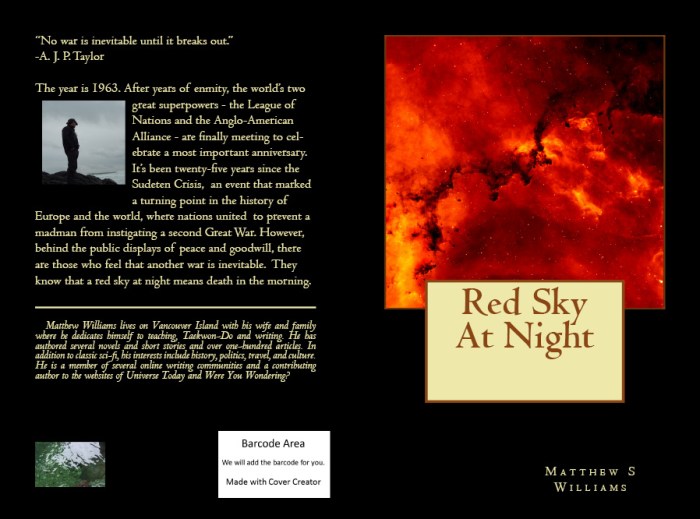
Relaunching an Idea: Red Sky At Night

Many months ago, I was struck by an idea. It is one which has been percolating in my mind for some time, but never really occurred to me as a reason to write. But then, I began to get into the whole “Alternate History” sub-genre of science fiction, examining such works as The Man In The High Castle, Fatherland, The Guns Of The South, and A Rebel In Time. It made me think that there was a good precedent for this kind of idea, and room for expansion.

But first, let me explain what I was thinking. Ever since University I’ve been fascinated by Russian history, particularly the interwar years. It was at this time that the most auspicious achievements and crimes took place in the former Soviet Union, after the death of Lenin and the ascent to power of Joseph Stalin, one of history’s greatest monsters.

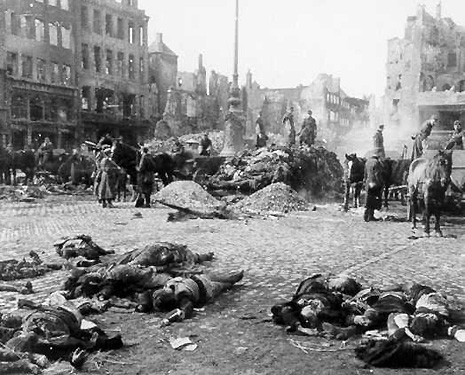
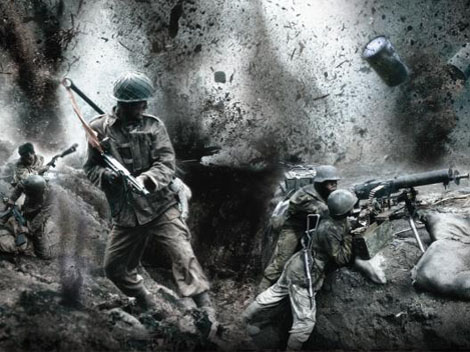
Shortly thereafter, Russia became involved in World War II, during which time another monster – Adolf Hitler – committed unspeakable crimes against the Russian people. Over twenty six million people died on the Eastern Front, most of them civilians who had already witnessed such terrible suffering at the hands of their own dictator. In addition, many were victims of Soviet wartime oppression, killed by Stalin for the crime of not fighting hard enough or attempting to find liberation from their Nazi invaders.

From the point of view of Soviet propaganda, the years between 41 and 45 were portrayed as a the “Great Patriotic War”, a heroic struggle for the defense of the Motherland. In some respects this was true, but mainly it was a war between two nations being led by very petty and cynical men, with countless good and innocent souls caught in between. Those Germans who died in the East did so because of a fool’s dream of Lebensraum and racial purity, whereas the Russians who died did so in the defense of their families from both the invaders and the reprisals of NKVD officers.

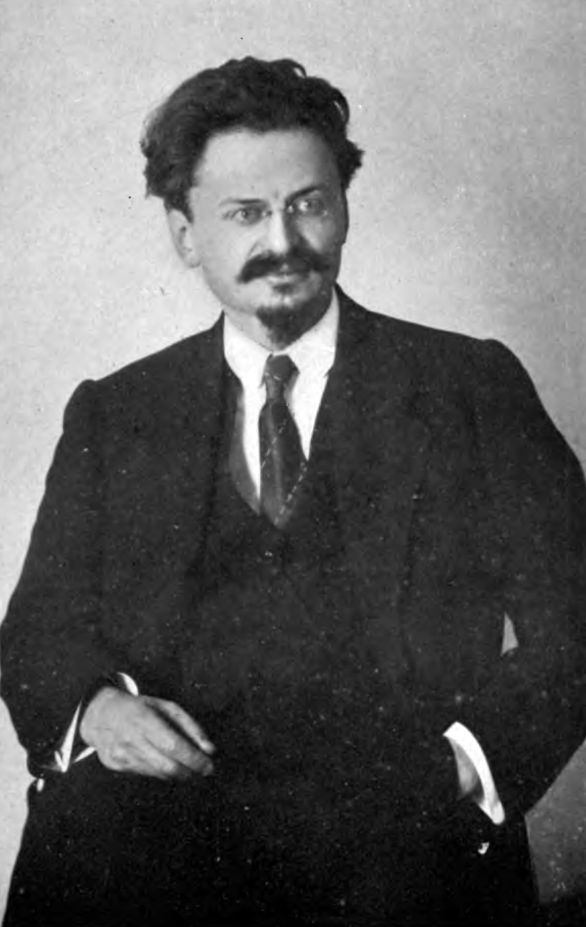
Reading of all this, I often wondered, what if Leon Trotsky, Lenin’s intended successor, had led Russia during the interwar years? What if he had won the leadership race, instead of the scheming Stalin, and became the man to lead Russia against the Nazi invaders? Would things have worked out differently? Would Russia have still stood and ground up the Nazis, but in a way that didn’t lead to the death of so many millions of innocent Russians. The question is not a new one. In fact, historians have been pondering it for some time, and the entire question hinges on a single event.

This is where the concept of my own alternate history came in. In my story, a single event happens differently, thus giving rise to an alternate history. At the 13th Party Congress in Russia 1924, Trotsky had an historic opportunity. Lenin, before his death, had published his “Last Will And Testament” where, amongst other things, he singled out Stalin as a rude and ruthless character who should never be allowed to come to power. During the years following Lenin’s death, Trotsky was seen as the natural successor, which made him the natural rival of Stalin and his followers.

During the 12th Party Congress, Stalin’s allies helped suppress news of the Testament, but by the 13th, Trotsky was in possession of it and could released it, causing irreparable harm to Stalin’s reputation. Why he did not, and instead chose to make a conciliatory speech calling for unity, is something which historians have debated ever since. In so doing, he essentially guaranteed Stalin’s rise to power and his own exile, which culminated in his murder in Mexico some years later.

Red Sky At Night:
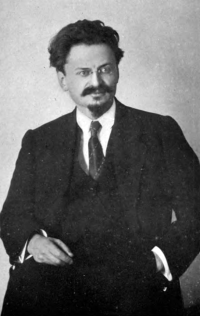
This is the basis of my idea. Instead of asking for reconciliation, Trotsky released Lenin’s Testament to the Party and asked for Stalin’s removal. He was successful, which guaranteed that it was he who would become the new leader of Soviet Russia and its chief planner during the interwar years. As a result, Stalin’s crash industrialization programs (aka. the Five Year Plans) were never launched.

Instead, he maintained Lenin’s New Economic Policy (NEP) and even appointed Bukharin (whom Stalin murdered) to oversee reform and expansion of state-owned industry. This led to a degree of slow recovery for the Soviet economy and improved the lot of its farmers and small private enterprises. And when the Great Depression hit in 1929, Russia would still spared the worst ravages of it while similarly showing signs of growth.

What’s more, Trotsky maintained close ties to foreign communist movements, rather than focusing so heavily on matters at home. As a result, in 1933 when the Nazis demanded a non-confidence vote against the Social Democratic Party, Trotsky ordered the KDP (Communist Party of Germany) to stand shoulder to shoulder with the Social Democrats, a move which did not alter the Nazi seizure of power, but which ensured that they were aligned with the anti-Nazi movement from early on.

In China, rather than advising Mao to go along with the Nationalist government (which turned on them) Trotsky advised that Mao and his cadres remain committed to resisting Japanese invasion and not trusting in Chiang Kai Shek. This prevented the massacre of Chinese Communists, which came in handy when the Sino-Japanese war began in 1937.
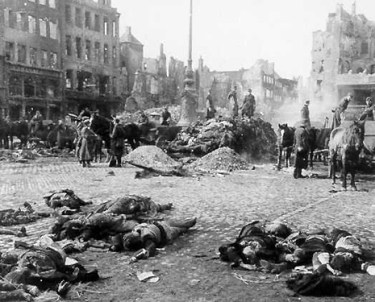
When the Spanish Civil War began, Trotsky and the Comintern became the most vocal and committed supporters of the Loyalists, sending them weapons, advisers, volunteers and funds. Much as in our own timeline, this had the effect of making the Soviets look like the chief supporters of anti-fascism, but since the effort didn’t suffer from Stalin’s paranoia and cynicism, the efforts were much more effective and popular. And thanks to Trotsky’s focus on foreign affairs, Commissar Maxim Litvinov, the champion of Collective Security, received the support he needed when he made his pitches to the League of Nations.

But most importantly of all, no purges or Great Terror took place during the late 30’s, which had the effect of undermining Russia’s efforts abroad, embarrassing Russia politically, decimating the Soviet officer corps, and devastating Russia’s agriculture. Russia therefore was in a much better position to coordinate alliances with the Czechs, the French, and rally public opinion towards ensuring that the Nazis were contained rather than appeased.

However, things really came down to the 1938 Sudetenland Crisis. For years, the Russians had been railing against coming to an accommodation with Hitler, largely for their own purposes. However, when Hitler demanded that Prime Minister Benes of Czechoslovakia cede the Sudetenland under threat of war, things finally came together for them. Facing harsh public opinion, Prime Minister Neville Chamberlain found that he had little support for his policy of appeasement. French, Czech and League opinion were similarly opposed to any deal with Hitler, having been empowered by Russia’s example. As a result, instead of demanding that Benes give Hitler what he wanted, England and France instead demanded that Poland and Romania agree to allow Russian troops to pass their territory to mobilize against Germany, should the need arise.

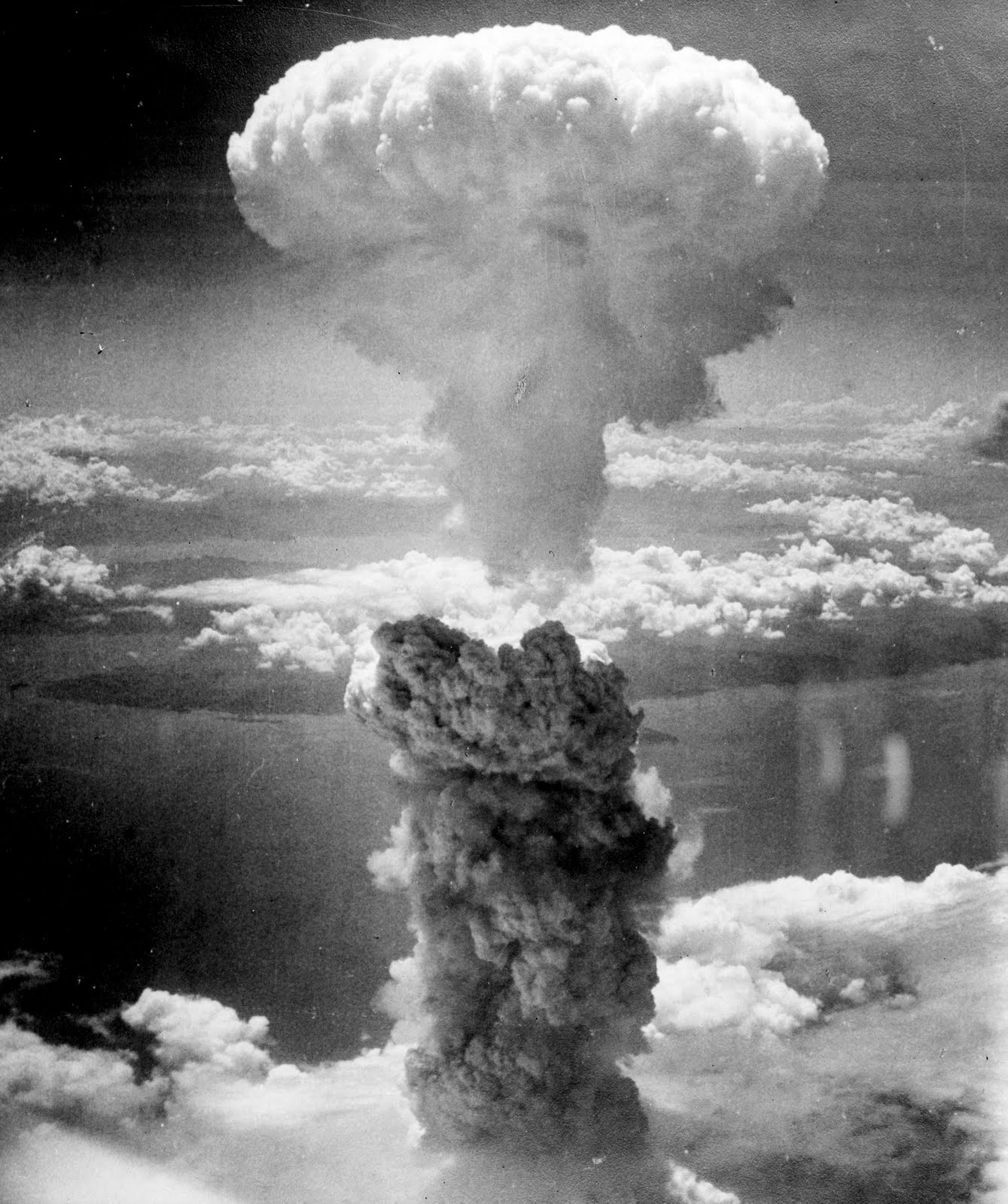
These efforts did not materialize, but the appearance of unity on behalf of the League gave Hitler pause. His Generals advised that he back down, facing the likely prospect of war on all fronts, and Hitler was forced to concede. Afterward, Germany suffered from renewed economic problems, and Hitler lost virtually all support. The Nazis fell from power, World War II did not happen, the Holocaust never occurred, and the post-war division of the world between two superpowers not happen.
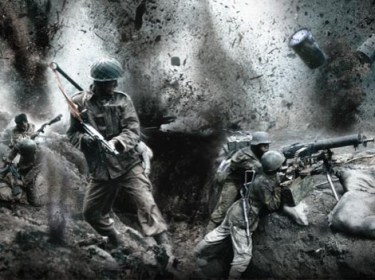
In the East, Japan found itself trapped as the League closed in to issue economic sanctions and demand that it withdraw from China. Soon, the Japanese Imperial government fell as well, and the threat of war was neutralized. In Italy and Spain, Mussolini and Franco remained in power, but were sure to behave themselves and even rejoined the League of Nations. And of course, Mao and his cadres did not seize power in the immediate post-war years, but instead came to an accommodation with the Nationalists, forming a powerful bloc within the government.

However, there was a downside to all of this as well. For starters, the economic boom caused by the war did not happen. Instead, the global economy recovered slowly throughout the 1940’s and 50’s. What’s more, the accommodation that took place between Russia and mainland Europe after the war, which saw the election of Social Democratic parties in every country and the de-radicalizing of Soviet power at home, caused a rift to form between the Anglo-American world and Eurasia. By 1950, fearing socialist revolution at home, England and America withdrew from the League and formed their own bloc, the Anglo-American Alliance.
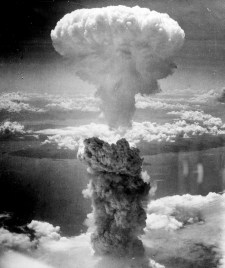
Towards the end of the 1950’s, relations began to worsen, as the Alliance condemned what they saw as attempts at subversion in their own sphere while the League condemned the persecution of dissidents and revolutionaries. Both sides became retrenched and a new arms race began, the League and the Alliance scrambling to recruit the best and brightest minds to help them create new and better weapons. By the end of the 1950’s, scientists on both sides of the Atlantic were close to creating the first atomic weapons.

This is where the story opens. It’s 1963, twenty-five years since the Sudetenland Crisis took place, and the world is putting aside its difference to mark the occasion. East and West are coming together in a series of festivals, diplomatic summits, and tourist expos. However, behind the happy veneer of entente, the usual preparations for war continue. And in time, a series of events will trigger a crisis that could very well lead to another war. Much like in 1914, the world is sitting on a powder keg, and all that’s needed for another Great War to take place is for someone to provide the spark.

This idea got back-benched with my coming to join Writer’s Worth and all our anthology work, but I want to pick it back up. Much like Fascio Ardens (that’s its new title), I’m in the mood to write some genuine alternate history. It requires some staggering research to make these kinds of speculative works seem authentic and plausible, but I want to make it work. Call me crazy, especially since I’ve got it in my head to tackle two separate ideas. But as my grandpa used to say, “Lord hates a coward!”

New Hobbit Trailer!

The latest full-length trailer for the upcoming Hobbit movie has just been released. And I think you’ll agree, it’s way more lavish and teaser-oriented than the last. Damn studios, always gotta dangle the carrot in front of our noses! This time around, they focus more on the action and sense of crisis, especially where Ogres are concerned. And from what I can tell, this first installment will climax during the battle in the Misty Mountains, where the company came upon a cave filled with Orcs.

This is also the first time since LOTR that Gollum is being shown, and the little game he and Bilbo played – which resulted in him taking the One Ring – is revealed. Also, be sure to let me know what you think about the apparent changes Jackson is making by including Galadriel and providing hints of what was to come in LOTR. These, for the most part and to the best of my knowledge, weren’t part of the original story. Is he just thickening the plot a little, or taking liberties he shouldn’t?

Poalo Solari and the Birth of Arcology

Arcology: noun (plural arcologies) an ideal integrated city contained within a massive vertical structure, allowing maximum conservation of the surrounding environment. Origin: 1969: blend of architecture and ecology.

The question of what to do about Earth’s growing population – 7 billion and counting – and the environmental impact it is having has been on the minds of city planners, environmentalists, and global leaders for qu9ite some time. Far from it being a simple matter of determining how we are going to feed new every mouth we create, there’s also the question of how to provide for their other basic needs.

In the 20th century alone, humanity grew by multiplication factor of six. Cities expanded, suburban developments went up, and inner cities were “rezoned” and redeveloped in order to make room for them. When horizontal space became an issue, vertical structure were adapted, incorporating sky scrapers and massive high-rises. In addition, cities, counties and entire nations needed to find more sources of fresh water to address their health and sanitation needs, more landfills to accommodate waste, and more green spaces to grow food. In time, it soon became clear that this increased output of human beings and their various wastes was causing irreparable harm to the planet.

By the turn of the century, the projections only became worse, thanks in large part to the ongoing industrialization of developing nations. In these parts of the world, where a full third of the human race resides, the impact of so many new power plants, urban developments, superhighways, and fossil-fuel burning cars could not be underestimated. The problem of providing space for our people and seeing to their needs in a way that is sustainable in the long term has only become more pressing as a result.

As it turns out, the answer may lie in a concept developed in the 1960’s by a man named Paolo Soleri. An architect of Italian descent who studied at the feet of architect Frank Lloyd Wright, he is credited with coining the term “arcology”, a new form of architecture that plotted the creation of three-dimensional hyperstructures that would be self-sufficient, and in some cases, self-contained. Primarily proposed as a means to combat two-dimensional urban sprawl, arcologies were also meant to economize on transportation, energy use, commerce and agriculture. All needs, which included the need to reduce waste and impact on the environment, were incorporated in his new designs. And on top of that, they would be beautiful as well as very, very big.

One of his first designs was for a city-structure named Babel (or IID as it’s officially designated). This design called for a flared cylinder of apartments sitting in a saucer-shaped base, complete with commercial, civil spaces, and public areas. The estimated population for this monster design was 550,000 people – the population of a major city – but placed in an edifice 1900 meters high and 3000 meters at its widest point.

Close-ups of the design show the immense attention to detail that Soleri’s featured in his drawings. From housing, to production centers to water treatment and waste disposal, nothing was overlooked. And just in case you’re having problems imagining the scale, he features a picture of the Empire State building for a size comparison.

And then there was Hexadredon, an incredible geometric mountain resting on three immense supports. Accommodating over 170,000 people, it measured a mere 800 meters by 800 meters (640 square km). On top of all that, it looks immensely artistic, incorporating such design features as massive pyramids, support columns, and rotundas. In reality, it looks more like an ancient temple than a three-dimensional city.

His many other concepts involved cities adrift on water, built into canyons, or on the side of cliffs. As far as Soleri was concerned, nothing was off limits. Any and all geographic features and landscapes, including the ocean itself, could be built into human habitats. Though it remained somewhat speculative for its time, Soleri’s ideas formed the basis for a great deal of speculative writing and urban planning.

For instance, in Japan, urban planners have proposed a future city development to deal with urban sprawl in Tokyo – known as the Shimizu Mega-City Pyramid. As it stands, much of Tokyo Harbor is artificial, composed of fill in order to accommodate Japan’s growing population and industrial centers. This further expansion calls for the creation of a massive pyramid measuring 730 meters high, 8 square kilometers at the base, and capable of housing 750,000 people. All told, it would be roughly 14 times the size of the pyramid of Giza.

In addition, there is the proposed building project in Moscow known as “Crystal Island”. Measuring in at a whopping 2500 square kilometers at its base and 450 meters high, it will be the single largest structure on Earth, if and when it is completed. Shaped like a massive tent, the superstructure of the proposed design acts as a sort of second skin to the main building, creating a thermal buffer and shielding the interior from Moscow’s harsh weather.

In addition, this second skin will adjust with the seasons and sealed in winter to minimise heat loss, while opened again in summer to naturally cool the interior. Power would also be provided by built-in wind turbines and solar panel, as well as a series of renewable energy solutions. On top of all that, the design incorporates an existing park, which provides a range of activities, including cross-country skiing and skating. Construction was officially postponed in 2009 due to the economic crisis, but is expected to resume in the coming years.

Last, but not least, there is the planned community of Masdar City, which I wrote about in a previous article. Though not technically an arcology in the sense of a three-dimensional colossal environment, the design nevertheless incorporates all other aspects of Soleri’s concept. These include renewable energy sources, sustainable resource management, mass-transit, recycled water, and a range of other green technologies.

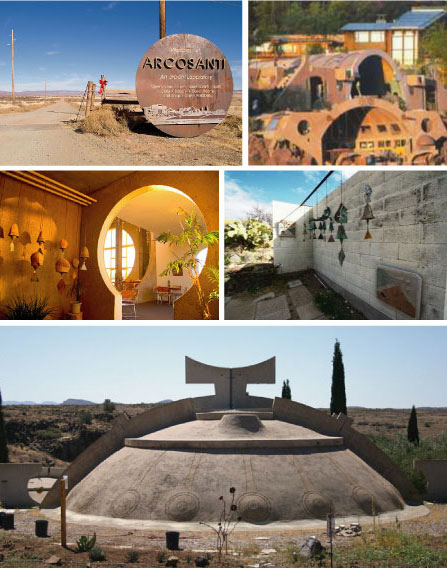
Today, the planned city of Arcosanti, which Soleri himself began construction on in 1970, remains an unfinished testament to his work and his genius. Located in central Arizona, just 110 km north of Phoenix, this work-in-progress incorporates Soleri’s unusual design features and, though uncompleted, remains a testament to his vision.

Check out this video from Arcosanti website, which featured Solari’s design for the mega-city Nudging Space: