The Future is Here: Deka Mind-Controlled Arm Gets FDA Approval!

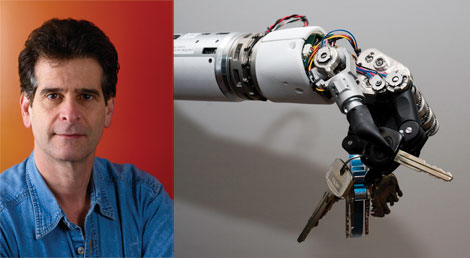
Deka_armFor years, biomedical researchers have been developing robotic prosthetics of greater and greater sophistication. From analog devices that can be quickly and cheaply manufactured by a 3-D printer, to mind-controlled prosthetics that move, to ones that both move and relay sensory information, the technology is growing by leaps and bounds. And just last week, the FDA officially announced it had approved the first prosthetic arm that’s capable of performing multiple simultaneous powered movements.

The new Deka arm – codenamed Luke, after Luke Skywalker’s artificial hand – was developed by Dean Kamen, inventor of the Segway. The project began in 2006 when DARPA funded multiple research initiatives in an attempt to create a better class of prosthetic device for veterans returning home from the Iraq War. Now, the FDA’s approval is a huge step for the Deka, as it means the devices are now clear for sale — provided the company can find a commercial partner willing to bring them to market.

Deka_arm1Compared to other prosthetics, the Deka Arm System is a battery-powered device that combines multiple approaches. Some of the Deka’s functions are controlled by myoelectricity, which means the device senses movement in various muscle groups via attached electrodes, then converts those muscle movements into motor control. This allows the user a more natural and intuitive method of controlling the arm rather than relying on a cross-body pulley system.

Deka_Arm2The more advanced myoelectric systems can even transmit sensation back to the user, using the same system of electrodes to simulate pressure sensation for the user. This type of control flexibility is essential to creating a device that can address the wide range of needs from various amputees, and the Deka’s degree of fine-grained control is remarkable. Not only are user’s able to perform a wide range of movements and articulations with the hand, they are able to sense what they are doing thanks to the small pads on the fingertips and palm.

Naturally, the issue of price remains, which is consequently the greatest challenge facing the wide-scale adoption of these types of devices. A simple prosthestic arm is likely to cost $3000, while a sophisticated prosthesis can run as much as $50,000. In many cases, limbs have a relatively short lifespan, with wear and tear requiring a replacement device 3 to 4 years. Hence why 3-D printed variations, which do not boast much sophistication, are considered a popular option.

bionic-handVisual presentation is also a major issue, as amputees often own multiple prostheses (including cosmetic ones) simply to avoid the embarrassment of wearing an obviously artificial limb. That’s one reason why the Deka Arm System’s design has evolved towards a much more normal-looking hand. Many amputees don’t want to wear a crude-looking mechanical device.

At present, the prosthetic market is still too broad, and the needs of amputees too specific to declare any single device as a one-size-fits-all success. But the Deka looks as though it could move the science of amputation forward and offer a significant number of veterans and amputees a device that more closely mimics natural human function than anything we’ve seen before. What’s more, combined with mind-controlled legs, bionic eyes and replacement organs, it is a major step forward in the ongoing goal of making disability a thing of the past.

And in the meantime, check out this DARPA video of the Deka Arm being tested:


Source: extremetech.com

News From Space: Ancient Meteorite Crater Found

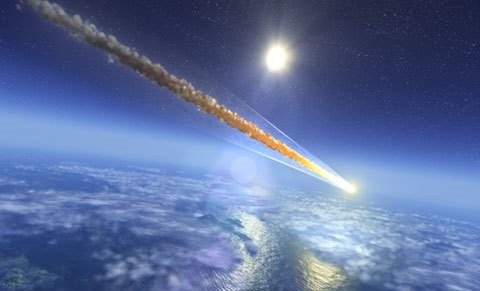
meteorIn southern Alberta, scientists have found a vast, ancient crater that they claim dates back some 50 to 70 million years. Discovered entirely by accident in near the hamlet of Bow City, some 20 km south-west of Brooks, and 100 km south-east of Calgary. According to assessments of the impact zone, researchers estimate that the space rock would have been the size of an apartment block, and would have left a crater 8 kilometers wide and roughly 2 and half km deep.

All told, this explosive force of this impact would have been 200 times stronger than the most powerful thermonuclear bomb ever built. That’s basically a force of 1000 megatons, a detonation so powerful that anything within 200 km of the impact would have received 1st-degree burns. To put that in perspective, this means that the city of Calgary would have been decimated by the blast, and in Edmonton, some 400 km away, every window would shattered.

alta-meteorite-crater-20140507But even more awe inspiring was the long-term effects of the damage, which would have thrown enough dust and debris into the atmosphere to mess with the Earth’s climate for the next few years. As Schmitt put it:

Something of that size, throwing that much debris in the air, potentially would have global consequences; there could have been ramifications for decades.

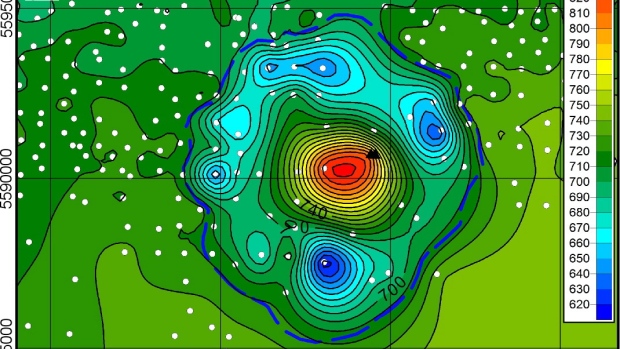
But after eons of erosion, very little of the crater is left. In fact, the discovery happened entirely by accident when a geologist – who was doing some routine mapping of the underground layers a few meters beneath the surface – apparently noticed a circular disturbance that was covered. Schmitt and his lab were called in to inspecting the feature and used seismic data to create a complete image of it. They quickly realized that it was most likely an impact crater, complete with a central peak where the meteorite would have struck.

Alberta_craterThe size of the object can only be estimated, but assuming the meteor was composed mostly of iron, it would have had to have been between 300 and 500 meters in diameter to create a crater of this size. If the meteorite was rock, it would have had to have been a kilometre across. Schmitt said the crater is a rare opportunity to study the floor of an impact crater. His team is now looking for certain types of minerals that form only under certain conditions so as to confirm the crater is from a meteor impact.

But he doesn’t have much doubt. As he put in a recent interview with CBC news:

We’re able to get at the lower parts of (a crater) and see how rocks have been moved around… We’re pretty confident it can only be a meteorite impact. It’s pretty clear.

Once they’ve had a chance to uncover and examine the area in greater detail, a clear picture of the meteorite’s size, composition, and what lasting marks its impact left beyond the crater. This information will only contribute to our understanding of our Solar System, but of the history of our planet as well.

Sources: cbc.ca, calgarysun.com

Game of Thrones – Season Four, Episode Six

GOT4_6_1To quote Tyrion Lannister: “I’ve decided I don’t like riddles.” Well, much the same applies to me and how this season is turning out. Between the way they have been choosing to skim things down, leave things out, and make serious changes from the original text, I’m beginning to find Season Four rather disappointing. And this week’s episode reinforced that in many ways. Basically, I’ve decided that I don’t like it, at least not nearly as much as the previous seasons.

To be fair, this week’s episode promised some serious elements – i.e. trial of Tyrion Lannister and the many machinations and intrigues it brings to the fore – which it did deliver on. Watching it was certainly enjoyable, I liked what they did with it, and it was largely true to the original material. However, highlights like this have been few and far between this season, which otherwise seems to be made up of filler and diversions that serve little purpose except to keep things going at this point.

Basically, I am waiting eagerly for this season to wrap up so we can finally see the cool stuff that the latter half of A Storm of Swords provided. And then, maybe they can get things back on track with Season Five, which will have two books as source material, and can be parceled out in a decent fashion, without the need for lots of filler and needless changes. Alas, here’s what happened this week…

The Laws of Gods and Men:
GOT4_6_2The episode opens in Bravoos, where Stannis and Lord Davos arrive to meet with representatives of the Iron Bank. After tallying Stannis’ own assets and his chances of taking the throne, they refuse to back his claim. However, Davos tells them that Stannis’ is the only one who is likely to settle the Throne’s debts since Tywin will die someday and no one trustworthy is fit to replace him. He then shows them how Stannis took each of the fingers on his right hand to the first knuckle, as payment for his years of smuggling.

Davos finds Sallador Saan, his old pirate friend, in a brothel and gives him his pay, letting him know that he is once again in Stannis’ employ. They set out to Dragonstone again to continue plotting the war. Meanwhile, Yara Greyjoy arrives at the Dreadfort to rescue Theon, who is being kept by Ramsay in the kennels with his dogs. In the course of trying to rescue him, Theon refuses to go, thinking its another one of Ramsay’s tricks, and Yara is chased off by Ramsay’s dogs.

got4_6_3In Mereen, Daenerys’ is settling into her role as queen and is busy taking requests from supplicants. She learns that her dragons are causing trouble in the countryside for herders, another indication that they are growing uncontrollable. She is then is met by Hizdarh zo Loraq, an old Ghiscari noble, who implores her to let him bury his father, one the master’s she had crucified. She obliges him, giving him permission to bring his father’s remains down and bury him in the Temple of the Graces.

At King’s Landing, the high council meets and discusses Daenerys’ ongoing campaign and the Hound’s appearance in the Riverlands. Shortly thereafter, Tyrion’s trial begins and he is brought before his judges – Lord Tywin, Lord Mace Tyrell, and Prince Oberyn. The witnesses speak against him, beginning with Ser Meryn Trant and Grand Maester Pycelle, the latter of whom accused Tyrion of stealing poison from his stores, and shows them the necklace used to administer it.

GOT4_6_5Cersei follows, and tells them of the threats Tyrion made to her and her son before the Battle of Blackwater Bay. Varys is next, who claims that Tyrion not only threatened Joffrey at a meeting of the Small Council, but that he openly expressed sympathy towards the northern cause and Robb Stark’s death due to his marriage to Sansa. Tyrion tries to sway him, reminding him of how Varys told him he saved the city, but to no avail.
During a break, Jaime pleads with his father for Tyrion’s life, and offers to leave the Kingsgaurd and become his father’s rightful heir. Tywin agrees, and claims that when the guilty verdict is rendered, he will give Tyrion the option of joining the Night’s Watch. When the trial resumes, Shae is brought forward and speaks against Tyrion, saying that he Sansa planned it together. Tyrion becomes enraged by this, and demands a trial by combat.

Summary:
I’ll start with the good points. Tyrion’s trial was well done, with Peter Dinklage once again capturing the pain and angst that Tyrion so often bears, but which was especially poignant at this part in the story. And they certainly covered the bases, showing how at this point, everyone was lining up to turn against Tyrion, either for their own personal reasons, or because they knew full well that Cersei would see him dead no matter what.

They changed a few things, like in how they gave Shae additional motivation for turning on him (how Tyrion spurned her). Also, Tyrion did not ask for a trial by combat out of anger. It was something that was prearranged at this point in the trial because he knew he was going to lose. And Jaime never tried to sway his father’s judgement by offering to leave the Kingsgaurd. But this really didn’t matter, as it didn’t affect the flow of things or reduce the impact of it.

GOT4_6_6But outside of that, there was little about this episode I liked. To start, Stannis never went to Bravoos to implore them for money. An arrangement was struck between them later, but that’s two whole books from now. The only reason to do it now was to keep Stannis and Davos in the story, since otherwise, they would have nothing to do. And once again, Daenerys’ part seems like mere window-dressing, with her doing day-to-day stuff and only hearing about major developments.

Basically, they’ve run out of material for her after all her major battles, so now they are just panning to her from time to time to show that she’s still relevant. But these were all minor issues compared to the confrontation between Yara Greyjoy and Ramsay Snow. While Asha (that’s her real name, once again changed to avoid confusion) did meet up later in the story, it was not at the Dreadfort and it wasn’t as a result of a rescue attempt.

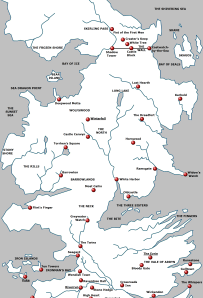
Westeros_Castles_NamedWhat they did in the show, by comparison, was completely superfluous and insipid. One, this never happened in the books. Like just about everything else they are doing this season with Stannis and Jon Snow, it’s just to keep the characters involved and off script. Two, the Dreadfort is an inland place on the other side of northern Westeros – which would make it unreachable to Yara (Asha) unless she had been at sea for months and sailed all the way around the south and back up (see the map at right).
In reality, Asha was at Moat Cailin at the time, which is reachable from the Iron Islands, and stayed there until much later. She had no reason to go forth to the Dreadfort because eveyone assumed Theon had died in the siege of it. Ramsay was keeping Theon as a prisoner and torturing him, but did not castrate him, nor send the remains of his “favorite toy” off to threaten the Iron Islanders. What began as an attempt to keep him in the story has become totally superfluous.

But above all was the ridiculous way the confrontation ended. After sailing halfway around Westeros, storming the Dreadfort and killing a dozen or so guards, Asha turned tail and ran because… Ramsay let loose a bunch of dogs? And then she just runs back to her boat and says her brother is dead (hurray for metaphors)? C’mon, really?! The Iron Islanders who put it all the line to rescue their prince and their honor ran away because said prince was freeaking out and because a pack of wild dogs?

And I thought the bit where Bran, Hodor and the Reeds showed up at Craster’s Keep at the same time as Jon and then avoided him completely was contrived. But this was way worse! It wasn’t just contrived, it was stupid, and about the weakest way to end this totally unnecessary thread. The only saving grace is that it seems like these threads – Stannis looking for money, Theon’s captivity, and Jon Snow looking for his siblings – are coming to an end. I hope so, at least!

Okay, just four more shows to go. And one can only hope they’ll stick to the script and keep to the stuff that’s actually interesting. Not only is this trial going to end on an exciting note (and result in some pretty serious shit going down) there’s still the Wildling’s coming assault on the Wall, which . Please tell me we’ve covered the filler from this season and are moving on now!

The Future of Medicine: Adult Stem Cells Cloned for First Time!

3dstemcellsBioprinting and the creation of artificial organs holds a great deal of promise for the field of medicine. By simply layering “bioinks” – which are are made up of stem cells – researchers have been able to form cell cultures and create artificial tissues, ranging from miniature kidneys and livers to cartilage and skin. The only drawback is that the base material in this operation – i.e. stem cells – has posed certain limitations, mainly in that scientists have been unable to clone them from specific patients.


However, thanks to a new research method, researchers have just succeeded in returning adult somatic (body) cells to a virgin stem cell state which can then be made into nearly any tissue. This breakthrough is likely reinvigorate efforts to use such cells to make patient-specific replacement tissues for degenerative diseases, for example to replace pancreatic cells in patients with type 1 diabetes. It’s a huge breakthrough in stem cell research in what has already been an exciting year. 

stem_cells2Last May, researchers from the Oregon Health & Science University in Beaverton perfected a process to therapeutically clone human embryos – thus producing cells that are genetically identical to a donor for the purpose of treating disease. In this case, the cells carried genomes taken from fetal cells and the cells of an eight-month-old baby. Then last month, two research groups announced that they had cloned stem cells from adult cells, independently and within a few days of each other.

The first announcement came on April 17th, when researchers at the CHA University in Seoul reported in Cell Stem Cell that they had cloned embryonic stem-cell (ES cell) lines made using nuclei from two healthy men, aged 35 and 75. On then on April 28th, researchers at the New York Stem Cell Foundation have taken body cells from a diabetic patient, transplanted the nucleus from those cells into a donor egg that has had its genetic material stripped, and allowed it to begin dividing.

stem_cells3In the latter case, the researchers reported that the new cells not only began dividing normally, but also began producing insulin naturally—a breakthrough that could eventually lead to a cure for the disease, in which patients are normally reliant on daily insulin injections. As Doctor Egli, leader of the New York Stem Cell Foundation team, said in a conference call with reporters:

We show for the first time that we are able to derive diploid, patient-specific stem cells and are able to induce these stem cells into becoming cells that produce and secrete insulin, showing that this technique should be useful for the development of cell-replacement therapies for diabetes.

The work was published in the journal Nature. Although not noted in the paper, Egli says that the cells work just as well as normally-functioning pancreas cells in non-diabetic humans.

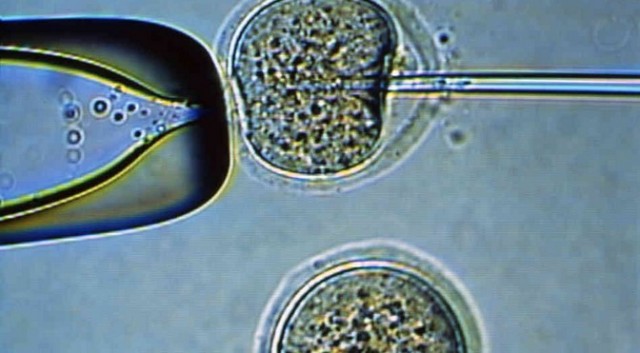
bioprinted heartThe process behind both breakthroughs is known as somatic-cell nuclear transfer, which involves transplanting the “cloned” nucleus of a cell into an existing one that has had its nucleus removed. This is important because it is generally adults who stand to benefit the most from a fresh supply of cells to revitalize their ailing organs. And in addition to age-related treatment, this process offers options for the treatment of diseases that can cause damage to organs with time – in this case, Type 1 diabetes.

However, this day is still many years away, owing to numerous challenges posed by the process. At present, the technique is expensive, technically difficult, and ethical considerations are still an issue since it involves creating an embryo for the purpose of harvesting its cells lone. Obtaining human eggs also requires regulatory clearance to perform an invasive procedure on healthy young women, who are paid for their time and discomfort.

As a result, it is likely to be many more years before this process will becomes medically and commercially viable. That is to say, we won’t be seeing hospitals with their own bioprinting clinics where patients can simply go in, donate their cells, and swap out a diseased liver or damaged pancreas anytime soon. And as long as donated embryos are still a bottleneck, we can expect ethical and legal hurdles to remain in place as well.

Sources: extremetech.com, nature.com, motherboard.vice.com, cell.com


News From Space: Robotnaut Gets a Pair of Legs!

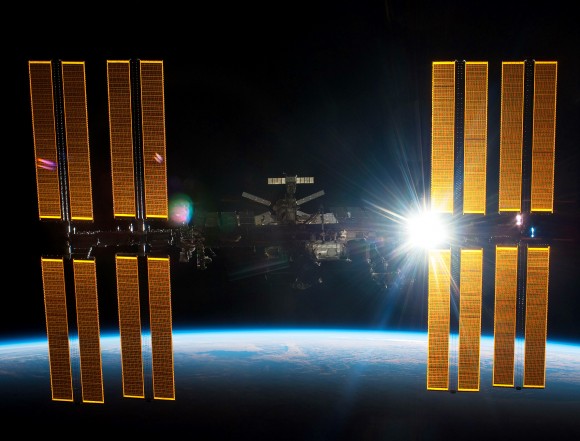
robotnaut_movementSpaceX’s latest delivery to the International Space Station – which was itself pretty newsworthy – contained some rather interesting cargo: the legs for NASA’s robot space station helper. Robotics enthusiasts know this being as Robonaut 2 (R2), a humanoid robot NASA placed on the space station to automate tasks such as cleaning and routine maintenance. Since its arrival at the station in February 2011, R2 has performed a series of tasks to demonstrate its functionality in microgravity.

Until now, Robonaut navigated around the ISS on wheels. But thanks to a brand-new pair of springy, bendy legs, the space station’s helper robot will now be able to walk, climb, and perform a variety of new chores. These new legs, funded by NASA’s Human Exploration and Operations and Space Technology mission directorates, will provide R2 the mobility it needs to help with regular and repetitive tasks inside and outside the space station. The goal is to free up the crew for more critical work, including scientific research.

robonaut1NASA says that the new seven-jointed legs are designed for climbing in zero gravity and offer a considerable nine-foot leg span. Michael Gazarik, NASA’s associate administrator for space technology in Washington, explained:

NASA has explored with robots for more than a decade, from the stalwart rovers on Mars to R2 on the station. Our investment in robotic technology development is helping us to bolster productivity by applying robotics technology and devices to fortify and enhance individual human capabilities, performance and safety in space.

Taking their design inspiration from the tethers astronauts use while spacewalking, the legs feature a series of “end effectors” – each f which has a built-in vision system designed to eventually automate each limb’s approaching and grasping – rather than feet. These allow the legs to grapple onto handrails and sockets located both inside the space station and, eventually, on the ISS’s exterior. Naturally, these legs don’t come cheap -costing $6 million to develop and an additional $8 million to construct and test for spaceflight.

robonaut_legsRobonaut was developed by NASA’s Johnson Space Center in collaboration with General Motors and off-shore oil field robotics firm Oceaneering. All that corporate involvement isn’t accidental; Robonaut isn’t designed to simply do chores around the space station. NASA is also using R2 to showcase a range of patented technologies that private companies can license from Johnson Space Center.

The humanoid, task-performing robot is also a NASA technology showcase. In a webcast, the space agency advertised its potential uses in logistics warehouses, medical and industrial robotics, and in toxic or hazardous environments. As NASA dryly puts it:

R2 shares senses similar to humans: the ability to touch and see. These senses allow it to perform in ways that are not typical for robots today.

robonaut_legs2In addition to these legs, this latest supply drop – performed by a SpaceX Dragon capsule – included a laser communication system for astronauts and an outer space farming system designed to grow lettuce and other salad crops in orbit. We can expect that the Robotnaut 2 will be assisting in their use and upkeep in the coming months and years. So expect to hear more about this automated astronaut in the near future!

And in the meantime, be sure to check out this cool video of the R2 robotic legs in action:


Sources:
fastcompany.com, nasa.gov

Mission to Europa: NASA now Taking Suggestions

europa_moon_IoJupiter’s moon of Europa has been the subject of much speculation and intrigue ever since it was first discovered by Galileo in 1610. In addition to having visible sources of (frozen) surface water and a tenuous oxygen atmosphere, it is also believed to boast interior oceans that could very well support life. As evidence for this mounts, plans to explore Europa using robot landers, miners, submersibles, or even manned missions have been floated by various sources.

However, it was this past December when astronomers announced that water plumes erupting 161 kilometers (100 miles) high from the moon’s icy south pole that things really took a turn. It was the best evidence to date that Europa, heated internally by the powerful tidal forces generated by Jupiter’s gravity, has a deep subsurface ocean. In part because of this, NASA recently issued a Request for Information (RFI) to science and engineering communities for ideas for a mission to the enigmatic moon. Any ideas need to address fundamental questions about the subsurface ocean and the search for life beyond Earth.

europa-lander-2This is not the first time that NASA has toyed with the idea of investigating the Jovian moon for signs of life. Last summer, an article by NASA scientists was published in the peer-reviewed journal Astrobiology, which was entitled “Science Potential from a Europa Lander“. This article set out their research goals in more detail, and speculated how they might be practically achieved. At the time, the article indicated NASA’s ongoing interest, but this latest call for public participation shows that the idea is being taken more seriously.

This is positive news considering that NASA’s planned JIMO mission – Jupiter Icy Moon Orbiter, which was cancelled in 2005 – would be taking place by this time next year. Originally slated for launch between May and January of 2015/16, the mission involved sending a probe to Jupiter by 2021, which would then deploy landers to Callisto, Ganymede, Io and Europa for a series of 30 day studies. At the end of the mission in 2025, the vehicle would be parked in a stable orbit around Europa.

JIMO_Europa_Lander_MissionJohn Grunsfeld, associate administrator for the NASA Science Mission Directorate, had the following to say in a recent press release:

This is an opportunity to hear from those creative teams that have ideas on how we can achieve the most science at minimum cost… Europa is one of the most interesting sites in our solar system in the search for life beyond Earth. The drive to explore Europa has stimulated not only scientific interest but also the ingenuity of engineers and scientists with innovative concepts.

By opening the mission up to public input, it also appears that NASA is acknowledging the nature of space travel in the modern age. As has demonstrated with Chris Hadfield’s mission aboard the ISS, the Curiosity rover, as well as private ventures such as Mars One, Inspiration Mars, and Objective Europa  – the future of space exploration and scientific study will involve a degree of social media and public participation never before seen.

europa_reportThe RFI’s focus is for concepts for a mission that costs less than $1 billion, but will cover five key scientific objectives that are necessary to improve our understanding of this potentially habitable moon. Primarily, the mission will need to:

  1. Characterize the extent of the ocean and its relation to the deeper interior
  2. Characterize the ice shell and any subsurface water, including their heterogeneity, and the nature of surface-ice-ocean exchange
  3. Determine global surface, compositions and chemistry, especially as related to habitability
  4. Understand the formation of surface features, including sites of recent or current activity, identify and characterize candidate sites for future detailed exploration
  5. Understand Europa’s space environment and interaction with the magnetosphere.

Although Europa has been visited by spacecraft and imaged distantly by Hubble, more detailed research is necessary to understand the complexities of this moon and its potential for life. NASA’s Galileo spacecraft, launched in 1989 was the only mission to visit Europa, passing close by the moon fewer than a dozen times. Ergo, if we’re ever to determine conclusively whether or not life exists there, we’re going to have to put boots (robotic or human) onto the surface and start digging!

To read the full Decadal Survey report on NASA’s website, click here.

Sources: universetoday.com, IO9.com, science.nasa.gov

The Future is Here: Google Robot Cars Hit Milestone

google_robotcaIt’s no secret that amongst its many cooky and futuristic projects, self-driving cars are something Google hopes to make real within the next few years. Late last month, Google’s fleet of autonomous automobiles reached an important milestone. After many years of testing out on the roads of California and Nevada, they logged well 0ver one-million kilometers (700,000 miles) of accident-free driving. To celebrate, Google has released a new video that demonstrates some impressive software improvements that have been made over the last two years.

Most notably, the video demonstrates how its self-driving cars can now track hundreds of objects simultaneously – including pedestrians, an indicating cyclist, a stop sign held by a crossing guard, or traffic cones. This is certainly exciting news for Google and enthusiasts of automated technology, as it demonstrates that the ability of the vehicles to obey the rules of the road and react to situations that are likely to emerge and require decisions to be made.

google_robotcar_mapIn the video, we see the Google’s car reacting to railroad crossings, large stationary objects, roadwork signs and cones, and cyclists. In the case of the cyclist — not only are the cars able to discern whether the cyclist wants to move left or right, it even watches out for cyclists coming from behind when making a right turn. And while the demo certainly makes the whole process seem easy and fluid, there is actually a considerable amount of work going on behind the scenes.

For starters, there are around $150,000 of equipment in each car performing real-time LIDAR and 360-degree computer vision – a complex and computing-intensive task. The software powering the whole process is also the result of years of development. Basically, every single driving situation that can possibly occur has to be anticipated and then painstakingly programmed into the software. This is an important qualifier when it comes to these “autonomous vehicles”. They are not capable of independent judgement, only following pre-programmed instructions.

BMW 7 Series F01 July 2009 Miramas FranceWhile a lot has been said about the expensive LIDAR hardware, the most impressive aspect of the innovations is the computer vision. While LIDAR provides a very good idea of the lay of the land and the position of large objects (like parked cars), it doesn’t help with spotting speed limits or “construction ahead” signs, and whether what’s ahead is a cyclist or a railroad crossing barrier. And Google has certainly demonstrated plenty of adeptness in the past, what with their latest versions of Street View and their Google Glass project.

Naturally, Google says that it has lots of issues to overcome before its cars are ready to move out from their home town of Mountain View, California and begin driving people around. For instance, the road maps needed to be finely tuned and expanded, and Google is likely to be selling map packages in the future in the same way that apps are sold for smartphones. In the mean time, the adoption of technologies like adaptive cruise control (ACC) and lane keep assist (LKA) will bring lots of almost-self-driving cars to the road over the next few years.

In the meantime, be sure to check out the video of the driverless car in action:


Source:
extremetech.com

News from Space: Universe’s Evolution Mapped in Detail

universe_expansionScientists have come up with the best computer model to date of the universe, one which maps the evolution of the cosmos in unprecedented detail. Known as Illustris, this virtual cosmos – which was created by U.S., English and German researchers using a network of supercomputers – includes details never before achieved in a simulation. All told, the numerical-based model covers the 13-billion-year evolution of the universe, beginning just 12 million years after the Big Bang took place.

While cosmologists have been developing and employing computer models of the universe for several decades, the outcome is usually a rough approximation of the universe that scientists observe in reality.  Illustris, however, has produced a universe that looks uncannily like the real on.  Among other things, it models how the universe expands, how galaxies are formed, their composition and distribution, and the mechanics of how stars and black holes are formed.

planck-attnotated-580x372Given all the recent breakthroughs in physics and cosmology, this ultra-detailed virtual model should come as no surprise. For example, this past April, scientists made not only made the first-ever observation of gravitational waves, they also processed data that is believed to be the first real indication of the existence of Dark Matter. In addition, the ESA’s Planck mission released the most detailed thermal imaging map of the universe last year that placed an accurate date on the universe’s age and confirmed the validity of the Big Bang Theory.

The Illustris creators say it represents “a significant step forward in modelling galaxy formation”, and provides a good visual representation of our ever-expanding (no pun!) understanding of the universe. A recent article that appeared last Wednesday in the journal Nature describes Illustris, and several videos (like those below) have been released that show the simulation in action. Check them out below:


Sources:
cbc.ca, IO9.com

The Future is Here: “Terminator-style” Liquid Metal Treatment

t1000_1For ideal physical rehab, it might be necessary to go a little “cyborg”. That’s the reasoning a Chinese biomedical firm used to develop a new method of repairing damaged nerve endings. Borrowing a page from Terminator 2, their new treatment calls for the use of liquid metal to transmit nerve signals across the gap created in severed nerves. The work, they say, raises the prospect of new treatment methods for nerve damage and injuries.

Granted, it’s not quite on par with the liquid-metal-skinned cyborgs from the future, but it is a futuristic way of improving on current methods of nerve rehab that could prevent long-term disabilities. When peripheral nerves are severed, the loss of function leads to atrophy of the effected muscles, a dramatic change in quality of life and, in many cases, a shorter life expectancy. Despite decades of research, nobody has come up with an effective way to reconnect them yet.

nerveVarious techniques exist to sew the ends back together or to graft nerves into the gap that is created between severed ends. And the success of these techniques depends on the ability of the nerve ends to grow back and knit together. But given that nerves grow at the rate of one mm per day, it can take a significant amount of time (sometimes years) to reconnect. And during this time, the muscles can degrade beyond repair and lead to long-term disability.

As a result, neurosurgeons have long hoped for a way to keep muscles active while the nerves regrow. One possibility is to electrically connect the severed ends so that the signals from the brain can still get through; but up until now, an effective means of making this happen has remained elusive. For some time, biomedical engineers have been eyeing the liquid metal alloy gallium-indium-selenium for some time as a possible solution – a material that is liquid at body temperature and thought to be entirely benign.

Liquid metal nervesBut now, a biomedical research team led by Jing Liu of Tsinghua University in Beijing claims they’ve reconnected severed nerves using liquid metal for the first time. They claim that the metal’s electrical properties could help preserve the function of nerves while they regenerate. Using sciatic nerves connected to a calf muscle, which were taken from bullfrogs, they’ve managed to carry out a series of experiments that prove that the technique is viable.

Using these bullfrog nerves, they applied a pulse to one end and measured the signal that reached the calf muscle, which contracted with each pulse. They then cut the sciatic nerve and placed each of the severed ends in a capillary filled either with liquid metal or with Ringer’s solution – a solution of several salts designed to mimic the properties of body fluids. They then re-applied the pulses and measured how they propagated across the gap.

liquid metal nerves_1The results are interesting, and Jing’s team claim that the pulses that passed through the Ringer’s solution tended to degrade severely. By contrast, the pulses passed easily through the liquid metal. As they put it in their research report:

The measured electroneurographic signal from the transected bullfrog’s sciatic nerve reconnected by the liquid metal after the electrical stimulation was close to that from the intact sciatic nerve.

What’s more, since liquid metal clearly shows up in x-rays, it can be easily removed from the body when it is no longer needed using a microsyringe. All of this has allowed Jing and colleagues to speculate about the possibility of future treatments. Their goal is to make special conduits for reconnecting severed nerves that contain liquid metal to preserve electrical conduction and therefore muscle function, but also containing growth factor to promote nerve regeneration.

future_medicineNaturally, there are still many challenges and unresolved questions which must be resolved before this can become a viable treatment option. For example, how much of the muscle function can be preserved? Can the liquid metal somehow interfere with or prevent regeneration? And how safe is liquid metal inside the body – especially if it leaks? These are questions that Jing and others will hope to answer in the near future, starting with animal models and possibly later with humans..

Sources: technologyreview.com, arxiv.org, cnet.com, spectrum.ieee.org