 Well, its been three weeks, and season four of one of TV’s top rated shows right now is back in full swing. And while I wanted to get on the episodes soon as they started coming out, circumstances kind of got in the way. First I was away for a week, then I took the time to write about other things, and then the episodes began piling up. That’s when the procrastination started settling in…
However, now that we are three full episodes into the season and I’ve finally managed to watch them, I feel I’ve gotten a pretty good take on what the story arc for season four is so far. And having recently read all issues to date of Robert Kirkman’s The Walking Dead, I was able to spot all the big differences, and you can bet I will be pointing them out! So without further delay or ado, I give you season four of AMC’s The Walking Dead!
 To recap a little first, I would reiterate that last season’s finale was a big letdown to me. Myself and many fans lamented the fact that after many episodes of building up to a climactic clash between Woodbury and the prison camp, the final battle was quite the fizzle. Not only were the Governor’s people routed rather easily from the prison, but the Governor himself then went batsh*t crazy, shot everybody, and then ran off into the wilderness.
This, plus the fact that Rick and his people then traveled to Woodbury and brought the remaining townspeople back to the prison to live with them represented a major departure from the original comics. As a result, I really wasn’t sure what to expect from the new season. On the one hand, it held the promise of the unexpected; but on the other, it would certainly be more of a departure from the original material.
30 Days Without An Accident:
 The season opens with a look at a seriously changed prison, which has been augmented with new buildings in the courtyard to accommodate the new people. The new arrivals appear to have been integrated, teams comb the fence to kill Walkers, and Daryl is getting ready to make another run to town for supplies. He is joined by Glenn, Tyreese, Sasha, a young man named Zack and a former army medic named Bob.
They set out for town to check a major department store called Big Spot, the parking of lot of which had been turned into an army checkpoint. The camp was since overrun by Walkers which they managed to lure away with loud music, and they go in to sweep the store. Unbeknownst to them, the roof is crawling with Walkers and was the site of a chopper crash.
 After Bob causes some shelves to fall over and pin him down, Walkers hear them inside and begin converging on a weak spot in the roof. They then begin to fall through, and Daryl in the others are forced to fight them off while trying to free Bob from where he was pinned. Zack (Beth’s boyfriend) is bitten, but the rest manage to escape before the wreckage of the chopper falls through the roof and causes the building to collapse.
Meanwhile, Rick heads out to the forest to check their snares for dead animals. He is convinced by Hershel and the Council to take his gun for his own safety, and find a woman on the other side who appears to be uninfected. She tells him she and her husband have been on their own, and asks permission to join Rick’s camp. He tentatively agrees, but only after he meets her husband.
 When they arrive at her camp, she tries to kill Rick but fails. He realizes her husband is now a Walker and she was simply luring him back so she could feed him something living. She then begs Rick not to kill once she’s turned, and stabs herself in the stomach. She dies saying that “you can’t come back from the things you’ve done”, and Rick leaves her and her Walker husband behind.
Back at camp, Carl is left with the other children, much to his chagrin. Car overhears Carol telling them a story before moving on to how to use a knife. When Carol sees Carl watching, she asks him not to tell Rick, and he leaves. The others return to camp, Glenn and Beth talk about having a baby, and Beth is told of Zack’s death. She goes to a chart she’s made that says “Days without an accident” and resets it to zero.
 Rick returns and talks to Hershel about the woman he encountered, and how she reminded him of how far he came to losing it as she did. Hershel assures him that “you do get to come back”, and reminds him of how and Carl have. In the prison showers, one of the new arrivals – a boy named Patrick – succumbs to an illness that’s been effecting the livestock and comes back as a Walker.
Infected:
 The episode opens with Karen (a new arrival) and Tyreese having a romantic evening, before she decides to head back to her room. Patrick, now a Walker, follows her from the shower room to D block. He hears a man coughing from another cell, enters his room and kills him in his sleep. The man then turns, and begins stalking the Block with Patrick and attacking others.
Rick and Carl are outside tending to the pigs and crops while Michonne is about to make another sweep for the Governor. Word then reaches them that Walkers are inside the perimeter and they run to D Block to kill those who are have turned while getting the others out. Maggie and Carl fight to get Michonne back inside after she hurts herself dealing with several Walkers.
 Afterward, they examine Patrick’s body with the help of Dr. Subramanian and notice that he died of an illness that causes bleeding from the eyes. Having seen this before, with Walkers along the fenceline as well as pigs and birds in and around the camp, they reason that it is a flu strain that it is transmitted from swine and birds, and that it’s loose in the prison.
As they bury the dead, the Council begins to discuss what to do since everyone in D Block has been exposed. Karen is one such person, and she and the others are quarantined in Death Row while Dr. Subramanian tends to them. One of the fathers who died left two daughters behind – LIzzy and Mika – who Carol has promised to look after, and worries that they have been exposed to.
 Meanwhile, the commotion caused by the outbreak draws more Walkers to the wall and a section begins to give. Sasha noticed that someone has been leaving bait in that section to lure the Walkers to it. The wall nearly collapses, and Rick and Daryl drive out and drop all the pigs in the field to lure the Walkers away. This gives them the time they need to reinforce the wall, and disposes of the pigs which may have brought the flu.
Afterward, Rick sets the pig pen on fire and Carl tells him that Carol has been teaching the kids to use weapons without their parents knowing. He also tells him that he agrees with it, and asks his father to let her continue, which he does. Rick gives Carl back his gun, which he had been keeping away from him since he shot the boy from Woodbury.
While clearing the fence, Inside, Tyreese goes to visit Karen and finds a blood trail that leads outside. He realizes that she already succumbed to the flu and was placed outside with one other person, where they were both doused in gasoline and burned.
Isolation:
 Rick, Daryl and Carol join Tyreese in the courtyard where he found the charred remains of Karen and David. He demands the Rick find out who did it and then let him deal with them personally, and he and Rick get into a terrible fight. Afterward, Rick is tended to by Hershel who tells him that they’ve lost 12 people from the flu, plus the two who were burned, and an outbreak may be likely.
Sasha and Dr. Subramanian have also become infected, and the Council begins turning into Cell Block A into an isolation area. The administrative area is set aside for the most vulnerable, which includes the children and the elderly. Hershel tells them they need to go to the local veterinary college for antibiotics, and Daryl agrees to take a search party out to check on it.
 Rick apologizes to Tyreese after the latter if finished burying Karen and David, and they agree to bury the hatchet. Tyreese once again reiterates that Rick needs to find the guilty party, and decides to look on his own since Rick appears to be dragging his heels on it. Carl joins the other kids in the sequestered area, and Glenn realizes he’s been infected too.
Carol helps the infected move to the quarantine zone and begins to crack after she is forced to admit Lizzy. Hershel goes out into the woods with Carl and collects elderberries to make medicinal tea. Rick and Maggie try to prevent him from going into the quarantine zone, but he insists that he would rather risk his life and help people rather than sit idly by.
 Rick begins investigating Karen and David’s deaths and determines they were still alive when they were burnt. Carol discovers that their water lines have become clogged and defies Rick to go out and clear them. In time, her activities draw the attention of Walkers and Rick runs out to help her. She narrowly makes it back and Rick asks her if she killed Karen and David, to which she says yes.
After visiting with Sasha, Tyreese decides to accompany Daryl, Michonne and Bob as they make their run. They take a car and drive to town, during which time they hear a voice broadcasting on the radio. Unfortunately, the distraction causes them to drive into a herd of Walkers and the car becomes surrounded. Tyreese is enveloped and fights it out with his hammer, giving the rest time to flee. They run into the forest, and are followed shortly behind by an exhausted Tyreese.
Summary:
Okay, so three episodes in, and I’m already beginning to notice a bit of a pattern. At the tail end of last season, the prison camp emerged victorious from the fight with the Governor and several dozen extras were added to the cast – which as I’ve said represented a major departure from the original comics. This season, the goal appears to be to find ways to kill the extras off and make the core cast leave the prison behind.
That much was already hinted at from the previews released over the summer. And it makes me wonder just why it was necessary to end season three the way the did. Why give the characters a big happy ending that’s way off script if at the beginning of next season, you’re just going to hit them with a thousand and one calamities and make their lives miserable again?
 What’s more, there’s the issue of who they’ve chosen to kill off versus keep alive. I can understand the decision to pad the cast with extras so they can be killed off and the core characters kept alive, but that’s not even what’s happening here. At this point in the comic’s story, Andrea and Dale were still alive, but in season two and three of the show, they were both killed off.
Tyreese, Hershel and Carol were dead at this point too, but the former had been around since very early in the story. Now, we are just getting to know the man, and he really doesn’t seem much like his comic book self. Sure, they decided to keep his dark side which comes through in occasional explosions of violence. But otherwise, he seems like a real soft touch, not wanting to kill Walkers and hoping to stay away from it.
 Some things they did manage to get right about Tyreese though. The way he fought off an entire herd of Walkers using only his hammer is reminiscent of the scene from Volume Four: The Heart’s Desire where he cleared the entire prison gymnasium by himself. And the way he and Rick fought in the same episode echoes what happened later in that same volume.
However, Carol’s character arc is going weird places. After being relatively marginalized last season, she has now taken on a weird dimension, becoming obsessed with protecting the others to the point that she is willing to immolate two living people. While she does possess some of aspects of the woman from the comic, I feel like they are just trying to pad her character now.
 But all in all, I think its pretty obvious where things are going this season. Soon enough, the entire Woodbury crew, minus a few people – like Bob, who they seem intent on developing – are going to die off, they will find a traitor in their midst (possibly the Governor himself sneaking in at night), the prison is going to start falling apart, and they are going to have to relocate.
And I think that’s kind of a waste. After saving the place and building it up, they are going to simply abandon it? After adding all those new people to their community, they’re going to just die off? Kind of seems contrived to me. But at the same time, its kind of necessary if they are going to bring the plot of the show and the comic into parity again.
They’re into Volume Nine: Here We Remain territory now, where the prison was no longer their home and they had to take their chances in the wild again. And with that, I remain interested to see what they’re going to do with the rest of this season…

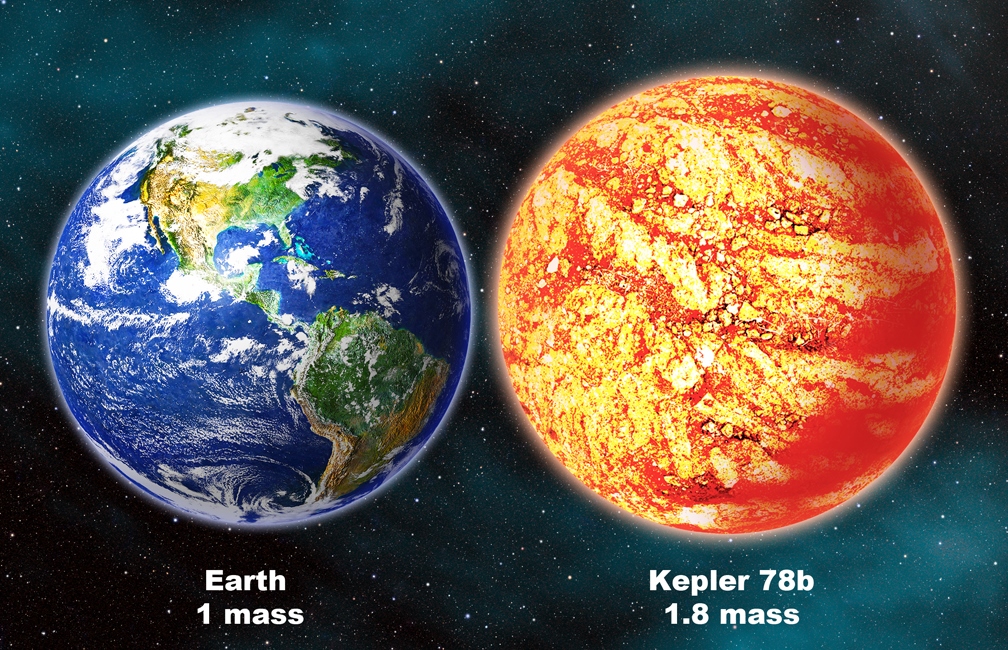 For the past three and a half years, the Kepler space telescope has been hurtling through space and searching the Milky Way for signs of of other planets orbiting distant stars. In that time, Kepler has identified many Earth-like exoplanets, many of which reside within our own stellar neighborhood. However, it has found only one planet in recent months that is Earth-sized.
 In addition to having an orbital period of 8.5 hours, the planet also rotates around its parent star at a distance of about 1.5 million kilometers (approx. 93205 miles). Basically, this means that Kepler-78b is thirty to forty-five times closer to its Sun than Mercury is to ours, and experiences a full year in under nine days. This makes Kepler 78b an extremely hostile environment, unsuitable for life as we know it.
 A handful of planets the size or mass of Earth have been discovered, but Kepler-78b is the first to have both a measured mass and size. At 1.2 times the size of Earth with a diameter of 14,800 km (9,200 miles), astronomers say it has a density similar to Earth’s, which suggests an Earth-like composition of iron and rock. Its star is slightly smaller and less massive than the sun and is located about 400 light-years from Earth in the constellation Cygnus.



 For several decades now, the widely accepted theory is
 To do this, DarkLight will use the particle accelerator at the Jefferson
 But if we can pinpoint the basis of dark matter, it would be a monumental finding that would greatly our enhance our understanding of the universe, and dwarf even the discovery of the Higgs Boson. After that, the only remaining challenge will be to find a way to observe and understand the other 68% of the universe!
 For some time now, classroom cameras have been used to see what teachers do in the course of their lessons, and evaluate their overall effectiveness as educators. But thanks to a recent advances in facial recognition software, a system has been devised that will assess teacher effectiveness by turning the cameras around and aiming at them at the class.
 After a lesson, a teacher could boot up EngageSense and see, with a glance at the dashboard, when students were paying rapt attention, and at what points they became confused or distracted. Beyond that, the concept is still being refined as SensorStar Labs looks both for funding and for schools to give EngageSense a real-world trial.
 At the present time, the biggest obstacle would definitely be privacy concerns. While the software is designed for engaging student interest right now, it would not be difficult at all to imagine the same technology applied to police interrogations, security footage, or public surveillance.
 Well, NaNoWriMo is once again upon us. And after two years of taking part, I am contemplating a third. The only problem is, I kind of got nothing to go with right now. Sure, I got some ideas, some possible suggestions. But I don’t feel I have the inspiration. So I thought maybe making a list might help shake the rust loose and provide me with a needed push. Maybe a few suggestions could help there too.

 The appearance of C/2012 X1 (LINEAR) was especially surprising given how sudden it was. In the past few days, the otherwise obscure comet has brightened by a factor of more than 200. Almost overnight, a comet found on precious few observing lists became bright enough to see in binoculars. Hence, comet trackers all over the world were sure to get up extra early to see it. But brightest of all was Comet Lovejoy, which reached magnitude 8.
 Comet C/2012 X1 is not usually visible in the night sky. But thanks to an eruption of fresh, dust-laden ices from its surface that blasted into space to form a gigantic glowing sphere that vaulted the comet’s magnitude 250 times to a voluminous 7.5, astronomers were expecting it to make an appearance alongside Encke this Autumn.
 And these connections are extensive, with more than 550,000 fiber optic cables running along the ocean floor that are responsible for transmitting trillions upon trillions of interactions per day. According to the Washington Post, these cables “wrap around the globe to deliver emails, web pages, other electronic communications and phone calls from one continent to another.”
 Given our immense and increasing reliance on the internet for business, personal communications, entertainment and shopping, one would that we as a people would possess at least a passing knowledge of how it works. But as Eric Schmidt, Google’s executive chair, claimed in his book The New Digital Age: “The internet is among the few things humans have built that they don’t truly understand.”
 And just in case this doesn’t provide a clear picture, there are numerous images that have been created by organizations like Telecom Maps and The Fiber Optic Association. These show just how immense, extensive, and crisscrossed the cables that bring us all our emails, videos, blog feeds, and ability to surf are.

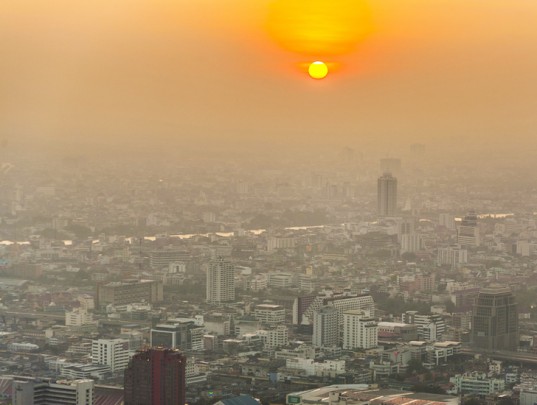 The resulting haze measured 1000 micrograms per cubic meter. That’s three times the concentration deemed hazardous by the World Health Organization, and many dozen times what is considered safe. To remedy the situation, city authorities are now coordinating with Dutch designer Daan Roosegaarde to launch what he calls an “electronic vacuum cleaner” to suck up 50 meter-high cylinders of polluted air.
 Roosegaarde has had experience working with electrostatic fields in the past. Last year, he proposed using electromagnetic charging strips to charge cars on “smart,” communication-enabled highways, which won the designer an INDEX award in 2013. He also claims the project is safe, “pacemaker proof”, and really no different than the waves of WiFi downtown areas are already inundated with.
 As for the resulting particles that are collected from the air, Roosegaarde believes they could be refashioned into useable products, such as jewelry. But as he himself put it, the concept is about dealing with a serious problem in a practical, new way:



 Stories by Williams