The Future is Here: Self-Healing Polymer

t1000I’ve heard of biomimetics – machinery and synthetics that can imitate organic materials – but this really takes the cake! In an effort to pioneer components and devices that would posses the regenerative powers of skin, a Spanish researcher Ibon Odriozola – who works for the CIDETEC Centre for Electrochemical Technologies in Spain – has created a polymer that could lead to a future where repairing machinery is as easy as suturing an open wound.

Comprised of a poly (urea-urethane) elastomeric matrix, the material is basically a network of complex molecular interactions that will spontaneously cross-link to “heal” most any break. In this context, the word “spontaneous” means that the material needs no outside intervention to begin its healing process, no catalyst or extra reactant.

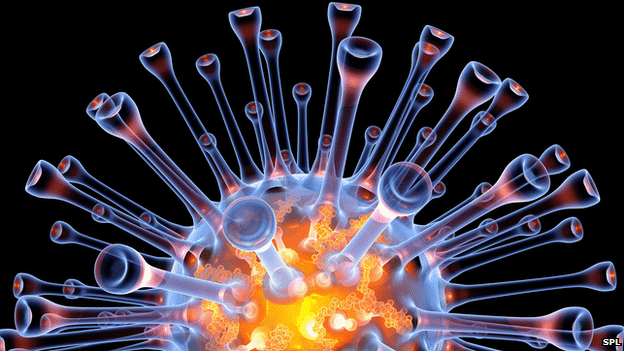
healing-polymer-headerTo experiment with the material, Odriozola cut a sample in half with a razor blade at room temperature. And in just two hours, the cut healed itself with 97% efficiency. The reaction, called a metathesis reaction, has led Odriozola to dub the material his “Terminator” polymer, in reference to you-know-who (pictured above). Though the transition process takes a little longer, and involves polymers instead of metal, the basic principle is the same.

Unlike other self-healing materials, this one requires no catalyst and no layering. In addition to being very impressive to behold, this technology can extend the life spans of plastics that are under regular stress.  The group’s main goal now is to make a harder version, perhaps one that could be formed into such parts itself. As it exists today, the polymer is squishy and somewhat soft.

???????????In addition, a good self-healing material like this is a boon for ongoing efforts to find a viable material for artificial skin. Self-healing technology could also open the door to growth materials, as new units of the matrix could be incorporated as the material stretches and tears on the microscopic level. This would be especially useful when it comes to artificial skin, since it could grow over time and remove the need for replacement.
And if the healing mechanism proves strong enough, it could even be used as an adhesive or a sealant in other materials and even electronics. Just think of it! Everything from windows, to personal devices, to joints that are in need of padding. A simple injection of this type of material, and the breaks and aches go away. And given the progress being made with androids and life-like robots, its use as a source for artificial skin could go a long way to making them anthropomorphic.

And as usual, there’s a cool demonstration video. Enjoy!


Source: extremetech.com

News From Space: The Weird Atmospheres of Titan and Io

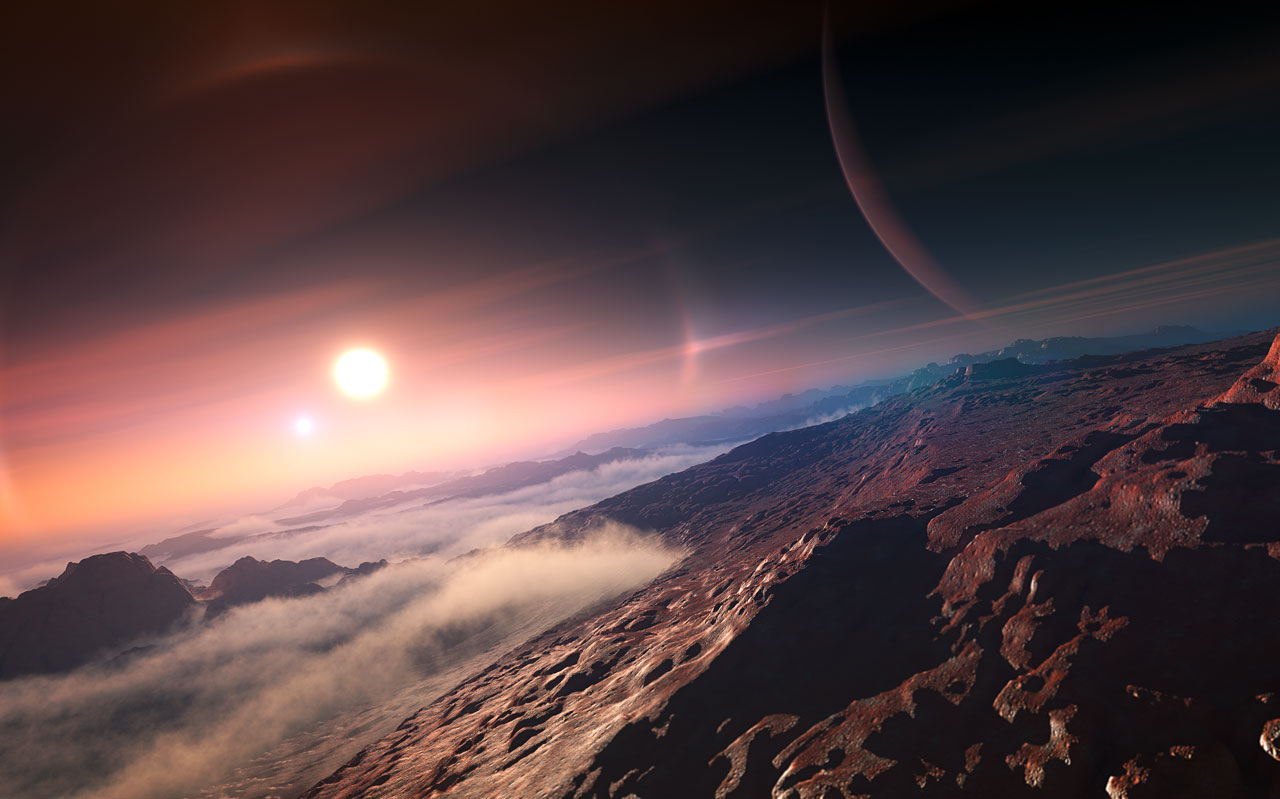
alien-worldStudying the known universe is always interesting, mainly because you never know what you’re going to find. And just when you think you’ve got something figured out – like a moon in orbit around one of the Solar Systems more distant planet’s – you learn that it can still find ways to surprise you. And interestingly enough, a few surprises have occurred back to back in recent weeks which are making scientists rethink their assumptions about these moons.

The first came from Io, Jupiter’s innermost moon and the most volcanically active body in the Solar System. All told, the surface has over 400 volcanic regions, roughly 100 mountains – some of which are taller than Mount Everest – and extensive lava flows and floodplains of liquid rock that pass between them. All of this has lead to the formation of Io’s atmosphere, which is basically a thin layer of toxic fumes.

Io_mapGiven its distance from Earth, it has been difficult to get a good reading on what the atmosphere is made up of. However, scientists believe that it is primarily composed of sulfur dioxide (SO2), with smaller concentrations of sulfur monoxide (SO), sodium chloride (NaCl), and atomic sulfur and oxygen. Various models predict other molecules as well, but which have not been observed yet.

However, recently a team of astronomers from institutions across the US, France, and Sweden, set out to better constrain Io’s atmosphere. Back in September they detected the second-most abundant isotope of sulfur (34-S) and tentatively detected potassium chloride (KCl). Expected, but undetected, were molecules like potassium chloride (KCl), silicone monoxide (SiO), disulfur monoxide (S2O), and other isotopes of sulfur.

Io_surfaceBut more impressive was the team’s tentative of potassium chloride (KCl), which is believed to be part of the plasma torus that Io projects around Jupiter. For some time now, astronomers and scientists have been postulating that Io’s volcanic eruptions produce this ring of plasma, which includes molecular potassium. By detecting this, the international team effectively found the “missing link” between Io and this feature of Saturn.

Another find was the team’s detection of the sulfur 34-S, an isotope which had previously never been observed.  Sulfur 32-S had been detected before, but the ratio between the 34-S and 32-S was twice that of what scientists believed was possible in the Solar System. A fraction this high has only been reported once before in a distant quasar – which was in fact an early galaxy consisting of an intensely luminous core powered by a huge black hole.

These observations were made using the Atacama Pathfinder Experiment (APEX) antenna – a radio telescope located in northern Chile. This dish is a prototype antenna for the Atacama Large Millimeter Array (ALMA). And while Io is certainly an extreme example, it will likely help terrestrial scientists characterize volcanism in general – providing a better understanding of it here on Earth as well as outside the Solar System.

TitanThe second big discovery was announced just yesterday, and comes from NASA’s Cassini space probe. In its latest find investigating Saturn’s largest moon, Cassini made the first off-world detection of the molecule known as propelyne. This simple organic compound is a byproduct of oil refining and fossil fuel extraction, and is one of the most important starting molecules in the production of plastics.

The molecules were detected while Cassini used its infrared spectrometer to stare into the hydrocarbon haze that is Titan’s atmosphere. The discovery wasn’t too surprising, as Titan is full of many different types of hydrocarbons including methane and propane. But spotting propylene has thus far eluded scientists. What’s more, this is the first time that the molecule has been spotted anywhere outside of Earth.

titan_cassiniThese finding highlight the alien chemistry of Saturn’s giant moon. Titan has moisture and an atmosphere, much like our own, except that its rains are made of hydrocarbons and its seas composed of ethane. Scientists have long wanted to explore this world with a boat-like rover, but given the current budget environment, that’s a distant prospect. Still, sales of propylene on Earth are estimated at $90 billion annually.

While no one is going to be mounting a collection mission to Titan anytime soon, it does offer some possibilities for future missions. These include colonization, where atmospheric propylene could be used to compose settlements made of plastic. And when it comes to terraforming, knowing the exact chemical makeup of the atmosphere will go a long way towards finding a way to make it breathable and warm.

And in the meantime, be sure to enjoy this video about Cassini’s latest discovery. With the government shutdown in effect, NASA’s resources remain offline. So we should consider ourselves lucky that the news broke before today and hope like hell they get things up and running again soon!


Sources: universetoday.com, wired.com

Coming Soon: A Universal Flu Vaccine?

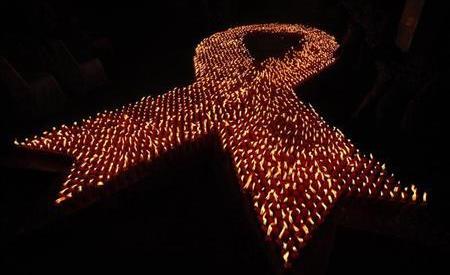
flu_vaccineScientists have been making great strides in coming up with treatments and cures for illnesses that were previously thought to be incurable. While some of these are aimed at eliminating pandemics that have taken millions of lives worldwide (such as HIV/AIDS) others are aimed at treating the more common – but no less infectious – viruses, like the common flu.

When it comes to the latter, the difficulty is not so much in creating a cure, as it is a cure all. The flu is a virus that is constantly evolving, changing with the seasons and with each host. This requires medical researchers to constantly develop new vaccines year after year to address the latest strain, as well as specialized vaccines to address different  types – i.e. H1N1, swine, avian bird.

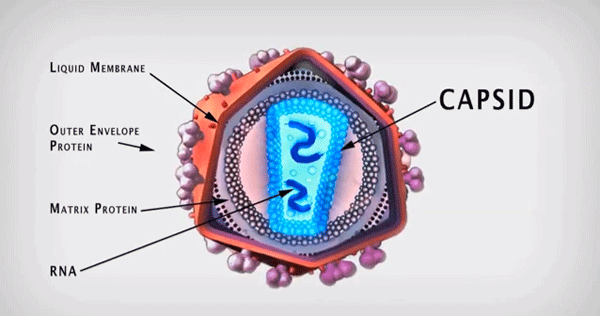
flu_vaccine1Luckily, a research team at Imperial College London say they have made a “blueprint” for a universal flu vaccine. Their report appeared in a recent issue of Nature Medicine. In their report, they specified that the key to creating a universal vaccine lies in targeting the core of the virus, rather than its ever-evolving DNA.

Just last year, researchers at the Friedrich-Loeffler Institute in Riems Island, Germany sought to create a similar vaccine that would target the virus’ RNA structure rather than the key proteins found in the DNA. By contrast, the Imperial researchers set about looking into T-cells, the crucial part of the immune system that is thought to be able to recognize proteins in the core.

2009_world_subdivisions_flu_pandemicTheir research began with a series of clinical examinations of the 2009 swine flu pandemic, which was produced by the combining of earlier strains of pig and bird flu. The team then compared levels of one kind of T-cells at the start of the pandemic with symptoms of flu in 342 staff and students at the university. They showed that the higher the levels of the T-cells a patient had, the milder their symptoms were.

Researchers then teased out the specific part of the immune system that offered some pandemic flu protection and which part of the virus it was attacking. from there, They began developing a vaccine that would trigger the production of these cells – known as CD8 T cells. These cells would attack the invading flu virus, ignoring the outer protein structure and focusing on the core which it had encountered before.

Influenza_virus_2008765Prof Ajit Lalvani, who led the study, told the BBC:

It’s a blueprint for a vaccine. We know the exact subgroup of the immune system and we’ve identified the key fragments in the internal core of the virus. These should be included in a vaccine. In truth, in this case it is about five years [away from a vaccine]. We have the know-how, we know what needs to be in the vaccine and we can just get on and do it.

The benefits of such a vaccine would be profound and obvious. While many of us consider the seasonal flu to be an inconvenience, it is important to note that it kills between 250,000 and 500,000 people worldwide each year. While this is a fraction of the total number of deaths attributed to AIDS (1.6 to 1.9 million in 2010, it is still a significant toll. What’s more, new pandemics have the potential to take doctors by surprise and kill large numbers of people.
t-cellHowever, the Imperial College researchers admit that it is generally harder to develop a T-cell vaccine than a traditional one designed to provoke an antibody response. The challenge will be to get a big enough of a T-cell response to offer protection and a response that will last. So while the blueprint is in place, medical researchers still have a long road ahead of them.

Prof John Oxford, of Queen Mary University of London, put it this way:

This sort of effect can’t be that powerful or we’d never have pandemics. It’s not going to solve all the problems of influenza, but could add to the range of vaccines. It’s going to be a long journey from this sort of paper to translating it into a vaccine that works.

AI-fightingfluWhat’s more, there are concerns that a T-cell vaccine would be limited when it comes to certain age groups. Jenner Institute at Oxford University, explains:

Live attenuated influenza vaccines which are given by nasal spray and will be used in children in the UK from this autumn are much better at increasing the number of influenza-specific T cells, but these vaccines only work in young children who haven’t yet had much exposure to influenza virus, so we need an alternative approach for adults.

Interestingly enough, this approach of stimulating the production of T-cells bears a striking resemblance to the work being done at the Vaccine and Gene Therapy Institute at OHSU, where researchers are working towards a vaccine that could also cure HIV. This research also appeared in Nature Medicine last month.

So not only could we be looking at a cure for both HIV and the flu in the near future, we could be looking at the containment of infectious viruses all over the world. As these two cases demonstrate, advances in medical science towards antivirals appear to be tied at the hip.

Sources: bbc.co.uk, gizmodo.com, nature.com

The Amplituhedron: Quantum Physics Decoded

amplutihedron_spanScientists recently made a major breakthrough that may completely alter our perceptions of quantum physics, and the nature of the universe itself. After many decades of trying to reformulate quantum field theory, scientists at Harvard University discovered of a jewel-like geometric object that they believe will not only simplify quantum science, but even challenge the notion that space and time are fundamental components of reality.

This jewel has been named the “amplituhedron”, and it is radically simplifying how physicists calculate particle interactions. Previously, these Interactions were calculated using quantum field theory – mathematical formulas that were thousands of terms long. Now, these interactions can be described by computing the volume of the corresponding amplituhedron, which yields an equivalent one-term expression.

theory_of_everythingJacob Bourjaily, a theoretical physicist at Harvard University and one of the researchers who developed the new idea, has this to say about the discovery:

The degree of efficiency is mind-boggling. You can easily do, on paper, computations that were infeasible even with a computer before.

This is exciting news, in part because it could help facilitate the search for a Grand Unifying Theory (aka. Theory of Everything) that manages to unify all the fundamental forces of the universe. These forces are electromagnetism, weak nuclear forces, strong nuclear forces, and gravity. Thus far, attempts at resolving these forces have run into infinities and deep paradoxes.

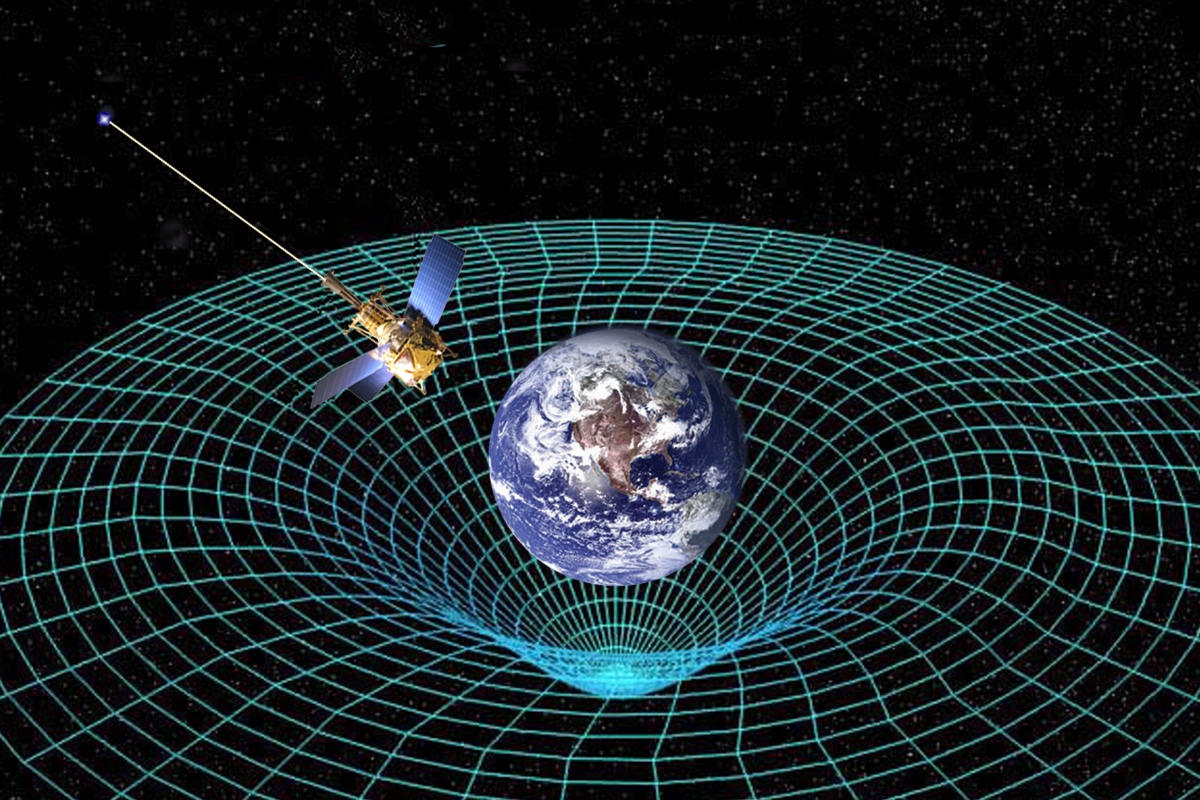
gravityWhereas the field of quantum physics has been able to account for the first three, gravity has remained explainable only in terms of General Relativity (Einstein’s baby). As a result, scientists have been unable to see how the basic forces of the universe interact on a grand scale, and all attempts have resulted in endless infinities and deep paradoxes.

The amplituhedron, or a similar geometric object, could help by removing two deeply rooted principles of physics: locality and unitarity. Locality is the notion that particles can interact only from adjoining positions in space and time, while unitarity holds that the probabilities of all possible outcomes of a quantum mechanical interaction must add up to one.

quantum_field_theoryThe concepts are the central pillars of quantum field theory in its original form, but in certain situations involving gravity, both break down, suggesting neither is a fundamental aspect of nature. As Nima Arkani-Hamed – a professor of physics at the Institute for Advanced Study in Princeton, N.J. and the lead author of the new work – put it: “Both are hard-wired in the usual way we think about things. Both are suspect.”

In keeping with this idea, the new geometric approach to particle interactions removes locality and unitarity from its starting assumptions. The amplituhedron is not built out of space-time and probabilities; these properties merely arise as consequences of the jewel’s geometry. The usual picture of space and time, and particles moving around in them, is a construct.

Photon_follow8And while the amplituhedron itself does not describe gravity, Arkani-Hamed and his collaborators think there might be a related geometric object that does. Its properties would make it clear why particles appear to exist, and why they appear to move in three dimensions of space and to change over time. This is because, as Bourjaily put it:

[W]e know that ultimately, we need to find a theory that doesn’t have [unitarity and locality]. It’s a starting point to ultimately describing a quantum theory of gravity.

Imagine that. After decades of mind-boggling research and attempts at resolving the theoretical issues, all existence comes down to a small jewel-shaped structure. I imagine the Intelligent Design people will have a field day with this, and I can foresee it making it into the new season of Big Bang Theory as well. Breakthroughs like this always do seem to have a ripple effect…

Source: simonsfoundation.org

Ending HIV: New Vaccine Holds Promise for a Cure

hiv-aids-vaccineScientists and researchers have been making great strides in the fight against HIV/AIDS in recent years. In addition to developing vaccines that have shown great promise, there have even been some treatments that have been shown to eliminate the virus altogether. And it seems that with this latest development, which was published in Nature earlier this month, there might be a treatment that can double as a cure.

Developed at the Vaccine and Gene Therapy Institute at the Oregon Health and Science University (OHSU), this new vaccine proved successful in about fifty percent of the clinical subjects that were tested, and may be able to cure patients who are currently on anti-retroviral drugs. If successful, this could mean that a preventative vaccine and cure could come in the same package, thus eliminating HIV altogether.

vaccineCurrently, anti-retroviral drugs and HIV vaccine typically aim at improving the immune response of the patient in the long term. However, they are limited in that they can never completely clear the virus from the body. In fact, aside from a very few exceptional cases, researchers have long believed that HIV/AIDS could only be contained, but not completely cured.

The OHSU team, led by Dr. Louis Picker, has been working on its own vaccine for the past 10 years. In that time, their research has shown that an immune response can in fact go beyond containment and systematically wipe the virus out of the body. As with most early vaccine candidates, the study revolves around SIV – a more aggressive virus than HIV that can replicate up to 100 times faster and, unchecked, can cause AIDS in only two years.

HIV_virusPicker and his research team created the vaccine by working with cytomegalovirus (CMV), another virus which is itself persistent, but doesn’t cause disease. In their initial tests, the vaccine was found to generate an immunoresponse very similar to that generated by CMV, where T-cells that can search and destroy target cells were created and remained in the system, consistently targeting SIV-infected cells until the virus was cleared from the body.

For the sake of their clinical trials, simian subjects were used that were infected by the HIV virus. When treated with the team’s vaccine, half of the subjects initially showed signs of infection, but those signs gradually receded before disappearing completely. This sets it apart from other vaccines which also generate an immunoresponse, but one which fades over time.

HIVAccording to Dr. Picker, it is the permanency of the T-cells that allows the immunoresponse to be consistent and slowly eradicate the virus, eventually eliminating it completely from the system. Says Dr. Picker of their trials and the possibilities for the vaccine:

The virus got in, it infected some cells, moved about in various parts of the body, but it was subsequently cleared, so that by two or three years later the monkeys looked like normal monkeys. There’s no evidence, even with the most sensitive tests, of the SIV virus still being there... We might be able to use this vaccine either to prevent infection or, potentially, even to apply it to individuals who are already infected and on anti-retroviral therapy. It may help to clear their infections so ultimately they can go off the drugs.

Currently, Picker and his the team are trying to understand why some of the vaccinated animals did not respond positively, in the hopes of further increasing the efficacy of the vaccine. Once these trials are complete, it could be just a hop, skip and a jump to getting FDA approval and making the vaccine/cure available to the open market.

Cure_for_HIVImagine, if you will, a world where HIV/AIDS is on the decline, and analysts begin predicting how long it will take before it is eradicated entirely. At this rate, such a world may be just a few years away. For those working in the field of medicine, and those of us who are around to witness it all, it’s an exciting time to be alive!

And be sure to enioy this video from OHSU where Dr. Picker speak about their vaccine and the efforts to end HIV:


Sources:
gizmag.com, nature.com

Climate Crisis: A Hurricane-Ready New York Waterfront

terreformONE_harborIn addition to causing extensive damage, Hurricane Sandy demonstrated just how woefully prepared people in New York for major storm surges. When the water began rising back in October, due to intense rainfall and wind, there was little in the way to stop it or break in the incoming flow. As such, plans are now being considered for creating a buffer zone to protect the city from future storms.

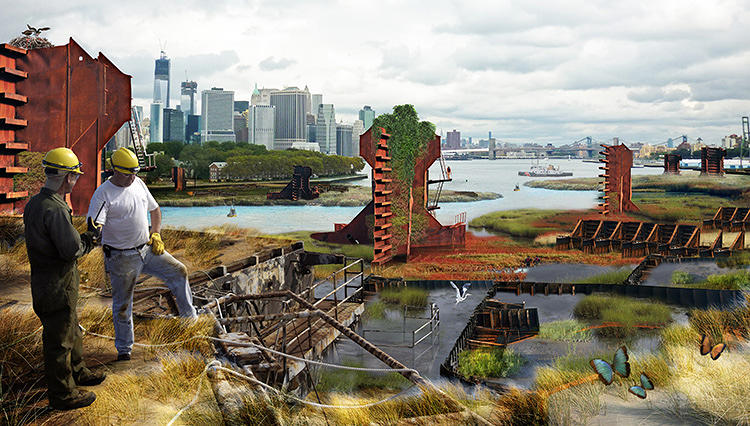
Mitch Joachim, the co-founder of Terreform ONE, has a rather novel suggestion for how this could be done. Basically, he wants to submerge old Navy ships in the New York Harbor, creating a “riparian buffer zone” that could better handle large volumes of water. This is just one of many projects his company is involved in, which include improving transportation links in Red Hook and Governor’s Island, and ecologically engineering Brooklyn’s Navy Yard.

terreformONE_harbor1According to Joachim, their firm hit on the idea of using ship hulls to create a walkway that rises up from the harbor floor. In addition to providing protection for New Yorkers, he claims it would be cosmetically pleasing as well:

We thought one way to make gabions really quick is to take hulls from ghost fleets, cut them into sections, and then puzzle-fit the geometry together. It allows over time the transformation of that landscape. Over years of sediment building up, you would have environments that privilege humans at certain points of the day. But then as tide changes occur, you would have aqueous environments that privilege other life besides humans. 

Basically, the walkway would help keep rising tides back in the near future, and would serve as a natural habitat once the tides rise and move in to claim them. By cutting the hulls into clam-like shapes, the organization says that New York could restore a diversified structure to its waterfront, slowing the water before it makes land.

terreformONE_harbor2Joachim points out that dumping junk into New York waterways has a long history, much of it constructive in nature. Parts of Manhattan, like Battery Park City, were built on land created artificially from construction waste. And sinking ships is already one means of disposal, for the sake of creating artificial reefs. The only other method is what is known as “ship breaking”, which is far worse.

This methods of retiring ships involves cutting ships up for scrap and then recycling the usable steel parts. This practice is both environmentally unsound and can lead to toxic chemicals leeching into the ocean, which is why the majority of ship breaking operations occur in developing countries, such as Bangladesh, India, China, Pakistan and Turkey.

terreformONE_harbor3So in addition to offering protection to coastal cities that are currently ill-prepared for the worst effects of Climate Change, reusing ships to augment the world’s harbor fronts could also help reduce the environmental stress we place on other coastlines. It’s like repurposing one problem to deal with two more. Quite clever, when you think about it!

Source: fastcoexist.com

Robot Snakes to Explore Mars?

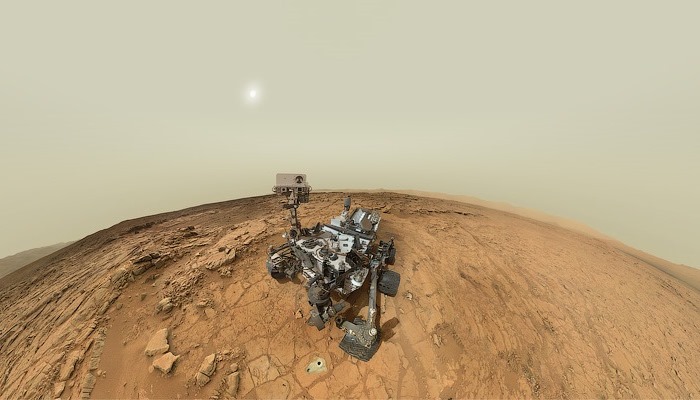
curiosity_sol-177-1The recent discoveries and accomplishments of the Curiosity and Opportunity rovers have been very impressive. But for some, these successes have overshadowed the limitations that are part of the rover designs. Yes, despite their complexity and longevity (as evidenced by Opportunity’s ten years of service) the robot rovers really aren’t that fast or agile, and are limited when it comes to what they can access.

Case in point, Curiosity is currently on a year-long trek that is taking it from the Glenelg rocky outcropping to Mount Sharp, which is just over 8 km (5 miles) away. And where crevices, holes and uneven terrain are involved, they’ve been known to have trouble. This was demonstrated with the Spirit Rover, which was lost on May 1st, 2009 after getting stuck in soft soil.

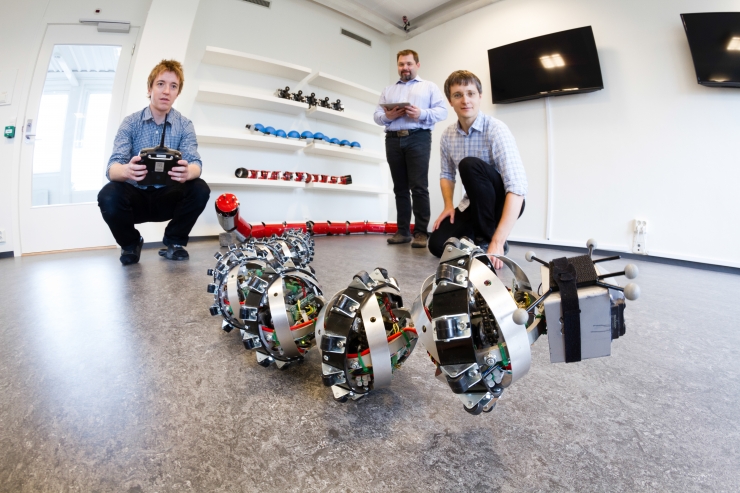
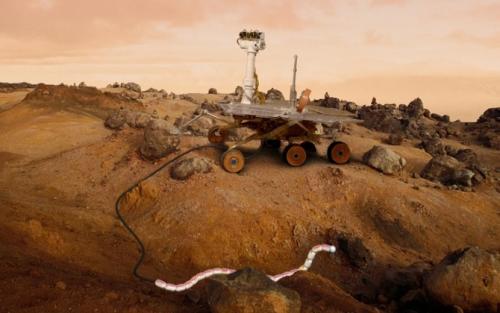
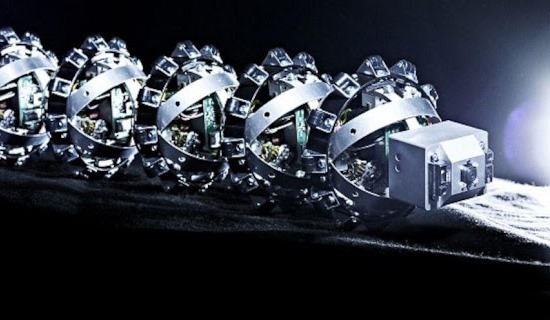
robotsnakesAs a result, the European Space Agency is planning on a sending a different type of rover to Mars in the future. Basically, their plan calls for the use of robot snakes. This plan is the result of collaborative study between the ESA and SINTEF – the largest independent research organization in Scandinavia – that sought to create a rover that would be able to navigate over long distances and get into places that were inaccessible to other rovers.

They concluded that a snake-like robot design would open up all kinds of possibilities, and be able to collect samples from areas that other rovers simply couldn’t get into. In addition to being able to move across challenging surfaces, these snake-bots would also be able to tunnel underground and get at soil and rock samples that are inaccessible to a land rover. Curiosity, which despite its advanced drill, is limited in what it can examine from Mars’ interior.

robotsnakes1The researchers envisage using the rover to navigate over large distances, after which the snake robot can detach itself and crawl into tight, inaccessible areas. A cable will connect the robot to the vehicle and will supply power and tractive power – i.e. it can be winched back to the rover. Communication between the pair will be also be facilitated via signals transmitted down the cable.

According to Pål Liljebäck, one of the researchers developing the snake robot at SINTEF, the challenge presents several opportunities for creative solutions:

We are looking at several alternatives to enable a rover and a robot to work together. Since the rover has a powerful energy source, it can provide the snake robot with power through a cable extending between the rover and the robot. If the robot had to use its own batteries, it would run out of power and we would lose it. One option is to make the robot into one of the vehicle’s arms, with the ability to disconnect and reconnect itself, so that it can be lowered to the ground, where it can crawl about independently.

An additional benefit of this rover-snake collaboration is that in the event that the rover gets stuck, the snake can be deployed to dig it out. Alternately, it could act as an anchor by coiling itself about a rock while the rover using the cable as a winch to pull itself free.

robotsnake2Liljebäck and his colleague, Aksel Transeth, indicate that SINTEF’s Department of Applied Cybernetics has been working closely with the Norwegian University of Science and Technology’s (NTNU) Department of Engineering Cybernetics for many years. However, it was only recently that these efforts have managed to bear fruit in the form or their robot snake-rover design, which they hope will trigger a long-term partnership with the ESA.

In addition to researching rover design, Transeth, Liljebäck and other researchers working with the ESA are looking for ways to bring samples from Mars back to Earth. At present, soil and other materials taken from Mars are analyzed on board the rover itself, and the results communicated back to Earth. If these samples could be physically transported home, they could be studied for years to come, and yield much more fascinating information.

And be sure to enjoy this video of the robot snake in action:


Sources: dvice.com, sintef.no, phys.org,

The researchers are busy working on a feasibility study assigned to them by the ESA. The ESA and the researchers believe that by combining a rover that can navigate over large distances with a snake robot that can crawl along the ground and can get into inaccessible places, so many more possibilities could be opened up.

Synchronized VR Triggers Out of Body Experiences

Louish.Pixel
“Spirit Levitation: Out of Body Experience” by Loutish.Pixel

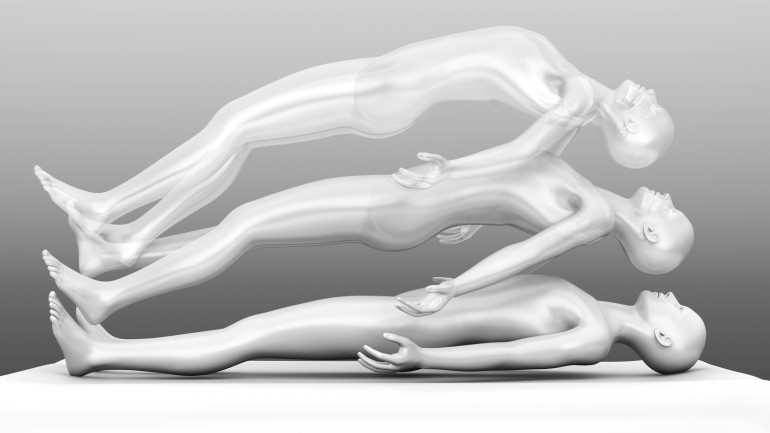
An out-of-body experience (OBE) is one of the most mysterious and inexplicable things a human being can endure. But thanks to new science, triggering one may be as easy as getting a person to watch a video of themselves with their heartbeat projected onto it. According to the study, it’s easy to trick the mind into thinking it belongs to an external body and manipulate a person’s self-consciousness by externalizing the body’s internal rhythms.

These findings were made by a team consisting of Dr Jane Aspell – Senior Lecturer in Psychology at Anglia Ruskin University in the UK – and Lukas Heydrich, a Phd Student at the Ecole Polytechnique Fédérale de Lausanne (EPFL) in Switzerland. Together, the two set out to see find how our internal organs contribute to bodily self-consciousness and whether they can be manipulated to induce an OBE.

electrocardiogramThe underlying goal, according to Ruskin, was finding out how our body merges information such as the visual, auditory, and olfactory with information coming from within. How this leads to the perception we call “reality”, and how it could be altered, is what is being studied here for the first time;

If you think about your body, you have several sources of information about it: you can see your hands and legs, you can feel the seat you’re sitting on via vision, you know you are standing upright thanks to your sense of balance etc. There is also a vast number of signals being sent to your brain from inside of your body every second that you are alive: about your heartbeat, your blood pressure, how full your stomach is, what electrolytes are in your blood, how fast you are breathing.

For their experiment, they attached 17 participants to electrocardiogram sensors and had them view videos of their own bodies through virtual reality goggles so that their body appeared to be two meters (6.5 ft) in front of them. Participants were then shown their own heartbeats in the form of a flashing outline around their “body doubles” that pulsed in sync with their own.

outofbody-1After a few minutes, many of the participants reported sensations of being in an entirely different part of the room rather than their physical body and feeling that their “selves” were closer to their virtual doubles. According to the team, this is the first study that clearly shows how visual signals containing information about the body’s internal organs (i.e. heartbeat) can change their perception of themselves. As Aspell put it:

It confirms that the brain is able to integrate visual information with cardiac information. It seems that the brain is very sensitive to patterns in the world which may relate to self – when the flashing was synchronous with the heartbeat this caused changes to subjects’ self-perception.

While it may sound like technologically-inspired mysticism, the research has several medical applications. One option is to help people with distorted views of themselves – i.e. anorexia, bulimia or other perceptual disorders – to connect with their actual physical appearance. Aspell is currently studying “yo-yo” dieters and says she plans to continue investigating how the internal body shapes who we are.

The Swiss National Science Foundation and the Fondation Bertarelli supported the study which is slated for publication in the APS journal Psychological Science.

Source: gizmag.com

The Rescue: A Revenger Mission Update

top_secretAtrum opened the laptop and spun it around in one fluid motion. The screen was now aimed at everyone standing in the small room, a map with a large, square configuration of buildings sitting in a large, green field in the middle of it. The overhead view provided few details, but the setting looked very similar to the one they had just left – a string of warehouses or an industrial park of some kind. Despite how confined they already felt, most felt the need to lean forward to get a better look.

“Thanks to the device the Captain handed off to us, I’ve been able to isolate the frequency of the tracker he had implanted on his person. Once I tuned my instruments to it, I was able to locate him.” He hit a button on the console, and a small, red blinking light appeared in the middle of the largest box-like structure. “This is the last reported location of the Captain. An abandoned truck park outside of Clarksville. This has to be a holding facility of some kind, or a transfer point for prisoners taken by the Intelligence services.”

“It looks weak,” said Pax, noting the frequency and intensity of the signal. “Which means he’s either barely in range or they’ve got him in some kind of hardened bunker.”

“Good eye,” replied Atrum. “I wish I knew more about the tracker he’s got, but the Captain never was one to share.”

“It’s not that far from here. If we move now, we could hit the place before they’re ready.” said Tsunami, drawing herself back up to her full height. Even with her shades on, the look on her face was plain for all to see. As was the fatigue, the poor woman had not slept since they had returned from their last outing. And she seemed destined not to until they made their next move.

“You got my vote,” said Judgement, his skin bristling with several new veins of gold.
Atrum raised his hand. “Now hold on, people. Like I said, this is a transfer point. And as Pax pointed out, its probably a hardened facility of some kind. We all remember what happened the last time we hit one of those. They were ready and waiting.”

“No shit, they were ready. They set us up!” Judgement growled.

From her spot at the outer edge of the circle, Erotica nodded. “And I seem to recall, we still managed to take out the better part of their defenders.”

“Yes, and what are the odds they’ll have so many surprises prepared for us this time around?”

It was Freedom saying this, and Atrum looked to her now. A current was flowing through the group and growing in intensity. He feared as much. After what had happened at the facility, everyone was in a hurry to rectify what they perceived as their own failure. But running headlong into a fight was likely to result in another. Conveying that though, that required some tact. There was a lot of anger in the room right now, and a lot of special powers…

“Look team… chances are, he’s going to be moved from that facility very soon. Our best bet is to try and get him while he’s in transit. The people holding him will be more vulnerable to an attack.”

“And how long will that be?” asked Panacea, her voice mild, but containing an unmistakably steely tone within.

“Before they try to move him? Shouldn’t be long. With prisoners like the Captain, they want to move them to a secure location as quickly as possible. Minimizes the chances that they might escape, or get rescued.”

Bonfire raised his voice next. “So they are anticipating that we might try to rescue him?”

Atrum shrugged. “Standard procedure really. Everything they’ve done thus far makes it look they are treating him like a high-valued enemy asset, lIke a terrorists mastermind. Always assume their followers will try to spring them.”

Judgment growled again. Everyone looked towards him just in time to see his fangs bared. “I don’t like where this conversation is going. And I don’t much like being compared to a terrorist.”

Pax raised his hands and intervened on Atrum’s behalf. “That’s not what he meant, people. Its just a question of procedures, not methods or motives. Right now, they are dealing with us as if we’re a domestic terrorist cell. But that doesn’t mean we are.”

“You’re damn right,” said Tsunami. “They started this fight. And if they want to see terror, they will shortly.”

“Terrorists,” said Panacea with a scoff. “Their methods are based in fear. They hope to paralyze us with terror and intimidate us into submission. They are cowards.”

The group began to raise their voices as one. The thought of striking fear in their enemy’s hearts, of paying back their terror with some terror of their own; it was a like lightning rod that was catching all their rage. Atrum looked to Panacea, and felt a sudden surge of trepidation himself. If even she was speaking of vengeance, then their situation was truly dire.

He raised his hands one more time and asked for calm. “Hold on, people! We need to be careful about going off half-cocked. If we try to rescue the Captain now, from this holding facility, we’re likely to hit them when they’re most prepared.”

“He’s right,” said Pax. “There’s no guarantee this isn’t an ambush too. For all we know, they’re waiting for us to make a move, to commit ourselves prematurely and run into another carefully laid trap.”

“Yeah, and while we’re waiting, what happens to the Captain?” asked Styka. She was joined by Freedom and Tsunami, both of whom began to voice their concern for his well being in Pax’s direction.

“For all we know, they’re torturing to death. He doesn’t have the ability to heal like you do.”

“And he can’t exactly just will himself out of that place. He’s stuck there until we free him. Helpless and alone.”

“No way!” said Judgement. “He’s not alone! He’s always been there for us, and we’re going to be there for him, dammit. Come hell or high water.”

Many began to voice their assent. Others began to avert their eyes, no doubt because they were having a hard time keeping their emotions in check. Anger wasn’t the only thing running the group like a current. One didn’t have to be a telepath to sense that their was a terrible amount of guilt and grief in the room as well.

“Okay,” said Atrum finally. “We’re going to be there for the Captain. But we need to do it in such a way that won’t put his life in danger. And won’t run the risk of failure. That’s not what the Captain would want. He’d be the first to tell us to play this smart.”

A short, tense silence followed. When someone did speak again, it was Angel, and Atrum could sense what she was going to say before he said it.

“I can’t help but notice that since the Captain’s departure, you’ve been stepping in to fill his shoes.” She looked to Pax next. “The two of you in fact have been acting like you’re giving the orders now. Am I the only one who notices this?”

Several more people exhibited the same combination of sudden anger, anger which they were directing at him and Pax now. It was predictable, so much emotion looking for an outlet. And since he was telling them to sit on it and wait, it was inevitable it would be directed at him. Out of desperation, he reached out to Styka and Tsunami ,using their shared telepathic link.

[I’m losing them here. I could use some help.]

Tsunami didn’t even respond. Her thoughts had become a wall, her emotions as cold and impenetrable as the look on her face. Styka answered him, but was not much more receptive.

[Don’t try to avoid them. It’s disrespectful.]

[Please. They’re not listening to reason.]

[Who’s reason? I don’t agree with your plan as it is. Don’t ask me to speak for it.]

[Fine. We can certainly disagree as to how to proceed. But the last thing we need is people turning on each other.]

Styka emitted an audible sigh. In real-time, people were beginning to shout at each other, most in Atrum’s or Pax’s direction. Few seemed to be coming to their defense, but it didn’t really matter. Even those who were in agreement seemed to be attacking each other with their words now.

Atrum reached out to Tsunami again. [Please, you can see they are on the verge of cracking. Help me restore some calm so we can sort this out.]

To his surprise, Tsunami did answer, though not quite as expected. At the far end of the room, the door blew open and a cold gust of wind thundered through. Not a soul was undisturbed by it and everyone was fast looking in Tsunami’s direction. Of all the people present, only she maintained her steady, forward-looking glare until the wind died down and the door slammed shut again.

Waiting for total quiet to return, she finally spoke. “The last thing the Captain said to me was ‘they’ll be another time’. He also told me that Atrum here would know what to do. If he has a plan… then let’s hear him out.”

Atrum was a little surprised.She said the words, but he could feel something menacing not far behind them. Though he could tell she was sincere, he wasn’t sure if what she’d said had been a vote of confidence, or a warning not to screw things up. Either way, he took his cue and continued.

“Like I said, our best bet is to hit these feds when they try to transfer the Captain. They’ll try to do it either by convoy, or by air. Either way, they will be most vulernable at this time. An convoy, even if its stacked with armored vehicles, won’t be unstoppable.”

“Yeah, we proved that much to them last time,” said Angel, looking to those who had been intrinsic in that regard. Standing not far away, Bonfire smiled while Judgment bristled happily.

“And an air lift would be useless. We’ve got several people who could take out escort choppers, and then land on board the one carrying the Captain and whisk him away before anyone could stop them. Either way, we’d have them.”

“What about aerial drones?” asked Freedom, remembering the last one and how it had ruined their day.

On that, Atrum smiled. Reaching to his laptop, he punched a few keys and brought up a new display. In the center, a large green reticule sat, with what looked like a picture of a radio wave bouncing around inside it. “Don’t worry. They caught us with our pants down last time. This time around, we’ll be ready…”

“What is that?” Erotica asked at last.

“That…” Pax interjected, “is the frequency that last drone was using. Next one we see one, we’ll be able to hack it.”

Atrum’s smile broadened, to the point where he was beaming at everyone in the room. “We all saw what just one of those things could do with its big old arsenal of missiles and bombs. Just imagine what kind of hell we could raise with that kind of firepower.”

Again, one did not need telepathy to know that the mood had suddenly changed in the room. What had been anger and grief was slowly morphing into anger and elation. Everyone was beginning to see just how good a plan they had before them, and how much it would hurt the bastards who had put them here…

Panacea was the one to say it, putting all that raw emotion into words.

“When we came together, we took the name of revenge for ourselves,” she said. “Let’s show these men what revenge looks like.”