Repitching an Old Idea: The Council of Muraqaba

world_religionsHey folks! A lot of things have got me thinking about another old idea that I think needs to be updated and brought forward. This one comes from many years back, roughly 2007, when I was working on the series of short stories that make up my Legacies series. As one of several ideas I was working with back then, it kind of fell by the wayside as I busied myself with writing the others – Flight of the Icarus, Eyes in the Dark, Turncoats, Vega Rising.

Eventually, as with many ideas us indie writers come up with, it lost my interest after lingering so long in my Inbox. But after a few conversations with respected colleagues, I found myself thinking about it again and looking to update it, add a new spin, and just generally give it another try. The story, in its updated version, is called The Council of Muraqaba, and it concerns humanity’s efforts to create a universal religion in the future.

world_religions_distWhen I first came up with the idea for a universal faith as part of my Legacies universe, I was still in my Frank Herbert phase and borrowed many crumbs off his table. His own notes in Dune about the Orange Catholic Bible and the Commission of Ecumenical Translators that created it really inspired me, and it put me in mind of the World Religions class I took in high school, which just happened to be one of my favorite subjects.

In 2007, the short story that was to feature the attempts to create this religion was more of an original idea, at to me. I envisioned a world where the council behind the religion’s creation established a permanent seat where matters of interfaith exchanges could take place, and where research into what made them all tick could be done and universal principles uncovered.

world_religions_popThis seemed like a timely idea to me given just how controversial, central, and daunting the issue of faith continues to be in our world today. Between people who demand that others conform to their religion to those who condemn religion of any kind, and from those who use it justify violence and persecution to those who blame it for the problems of entire regions of the world (i.e. Africa, the Middle East and Islamophobia), it’s almost inescapable.

Because of this, and because of the way humanity has a hard time outgrowing old habits, I figured a story that dealt with humanity’s continued difficulties with religion and sectarian differences should be included in my Legacies bundle. But as I said, I’ve been updating the idea a bit thanks to some conversations with friends which raised some poignant issues about the future, and thanks to some research about what the future is likely to hold…

gliese-581.jpgWhat I am envisioning now is a world where a group of mystic settlers originally established a colony on Gliese 581 d – aka. Muraqaba – in the hopes of creating a community where traditional faiths could still be practiced, free from the fear of ongoing progress and how it was leading many to conclude that religion was obsolete. Named after the Sufi practice of meditation, they sought to live in peace and practice freely, and were on guard against what they saw as “needless augmentation”.

In time, this community expanded and became dedicated to finding a way to bring all faiths together and finding common ground not just between religions but between faith and science itself, something which still eluded people in this age. Eventually, this led to the creation of the Council of Muraqaba, a permanent institution where scholars and religious authorities could meet, discuss, and network with people in the universe at large to iron out matters of spirituality.

matrix_cyberspaceIronically, the Council became a hub for some of the most advanced interstellar learning and education since people who were light years away from each other could communicate using a quantum array that allowed FTL communications to take place. The experience of this is central to the story, as it provides a sort of mystic mental sharing that is akin to a spiritual connection, emotions and thoughts shared instantaneously between people.

And of course, there will be a twist as a regular day at the Council turns into something sinister. Just because the local inhabitants have succeeded in creating a dialogue with the universe at large doesn’t mean that everyone is interesting in what they have to say. And some people are concerned that all this “common ground” stuff is eroding the things that make their faith special and want it to end.

And some… some are interested in what the Council has to say for reasons that go far beyond matters of faith! Be sure to check it out, as I think this story just might be one of my more inspired pieces of writing. And my thanks once again for Khaalidah for turning on the light in my head. There’s a reason I call you “Lady Inspiration” you know 😉

Judgement Day Update: Artificial Muscles for Robots

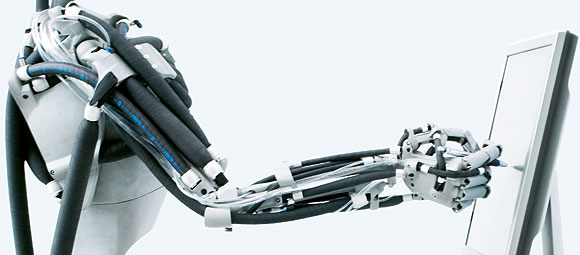
artificial-muscle-1It’s a science fiction staple, the android or humanoid robot opens up its insides to reveal a network of gears or brightly-lit cables running underneath. However, as the science behind making androids improves, we are moving farther and farther away from this sci-fi cliche. In fact, thanks to recent advancements, robots in the future may look a lot like us when you strip away their outer layers.

It’s what is known as biomimetics, the science of creating technology that mimics biology. And the latest breakthrough in this field comes from National University of Singapore’s Faculty of Engineering where researchers have developed the world’s first “robotic” muscle. Much like the real thing, this artificial tissue extends to five times its original length, has the potential to lift 80 times its own weight.

???????????????????????In addition to being a first in robotics, this new development is exciting because it resolves a central problem that has plagued robots since their inception. In the 1960s, John W. Campbell Jr, editor of Analog Science Fiction magazine, pointed out this problem when he outlined a scenario where a man is chased across rough country by a mad scientist’s horde of killer robots.

In this scenario, the various models that were chasing the man were stymied by obstacles that the he could easily overcome, such as sinking in mud, jumping over logs, getting around rocks, or tangled up in bushes. In the end, the only robots that were capable of keeping up with him were so light and underpowered that he was able to tear them apart with his bare hands.

robot_muscleThis is a far cry from another science fiction staple, the one which presents robots as powerful automatons that can bend steel girders and carry out immense feats of strength. While some robots certainly can do this, they are extremely heavy and use hydraulics for the heavy lifting. Pound for pound, they’re actually very weak compared to a human, being capable of lifting only half their weight.

Another problem is the fact that robots using gears and motors, pneumatics, or hydraulics lack fine control. They tend to move in jerky motions and have to pause between each move, giving rise to a form of motion that we like to call “the robot”. Basically, it is very difficult to make a robot that is capable of delicate, smooth movements, the kind humans and animals take for granted.

kenshiroFor some time now, scientists and researchers have been looking to biomimetics to achieve the long sought-after dream of smaller, stronger robots that are capable of more refined movements. And taken in tandem with other development – such as the Kenshiro robot developed by roboticists at the University of Tokyo – that time might finally be here.

Developed by a four-person team led by Dr. Adrian Koh – from the NUS Engineering Science Program and Department of Civil and Environmental Engineering – the new artificial muscle is an example of an electroactive polymer. Basically, this is a combination dielectric elastomer and rubber that changes shape when stimulated by an electric field. In this respect, the artificial muscle is much like an organic one, using electrical stimulus to trigger movement.


robot-arm-wrestling-03-20-09Robots using artificial muscles would be a far cry from clanking mechanical men. They would be much more lifelike, capable of facial expression and precise, graceful movements. They would also have superhuman strength, yet weigh the same as a person. In addition, the polymer used to fabricate the muscles may have more general applications in machines, such as cranes.

An added bonus of the polymer is that is can convert and store energy, which means it’s possible to design robots that power themselves after charging for only minutes. In a statement released by his department, Dr. Koh highlighted the benefits of the design and what it is capable of doing:

Our novel muscles are not just strong and responsive. Their movements produce a by-product – energy. As the muscles contract and expand, they are capable of converting mechanical energy into electrical energy. Due to the nature of this material, it is capable of packing a large amount of energy in a small package. We calculated that if one were to build an electrical generator from these soft materials, a 10 kg (22 lb) system is capable of producing the same amount of energy of a one-ton electrical turbine.

AI_robotDr. Koh also indicated that robots equipped with these types of muscles “will be able to function in a more human-like manner – and outperform humans in strength.” Theoretically, such polymer-based tissues could extend to ten times their original length and lift up to 500 times its own weight, though the current version isn’t anywhere near that limit just yet.

In the meantime, Dr Koh and his team have applied for a patent for the artificial muscle and are continuing work on it. They predict that within five years they could have a robot arm that is half the size and weight of a human arm, yet could win an arm wrestling match. And the applications are limitless, ranging from robotic servants to search and rescue bots and heavy robot laborers. And let’s not forget that cybernetic arms that boast that kind of increased strength are also likely to become a popular prosthetic and enhancement item.

And for those who are naturally afraid of a future where super-human robots that have the strength to tear us limb from limb are walking among us, let me remind you that we still have Asimov’s “Three Laws of Robotics” to fall back on. Never mind what happened in the terrible movie adaptation, those laws are incontrovertible and will work… I hope!

Sources: gizmag.com, engadget.com, 33rdsqaure.com

BIG News From Space: Alien Matter Found?

Alien OrganismsIts been an exciting 48 hours for the scientific community. It began when a team of British scientists floated a balloon up into the stratosphere, more than 25 km (16 miles) up, and when it came down they found it was carrying tiny organisms. The scientists claimed that there is no way that such organisms could have come from Earth and found their way into the stratosphere, so they must have come from space.

Specifically, they must have come from a comet, given their particular characteristics, and they could even be evidence that all life on Earth really did originate in the stars. This theory is known as Exogenesis (or Panspermia), and contends that this is how organisms are spread throughout the universe – spawning in certain environments, but flourishing on worlds where they are deposited and conditions are just right.

Alien Organisms1According to Professor Milton Wainwright of the Department of Molecular Biology and Biotechnology at the University of Sheffield, they are “about 95 percent convinced” of that fact, though he admits that it’s hard to be absolutely certainty. But apart from the height of the organisms, which would make it hard to imagine them being from Earth, Wainwright and his team also noted that they bear no physical signs of ever being earthbound.

As Wainwright said in the course of announcing the team’s findings:

There is no known mechanism by which these life forms can achieve that height. As far as we can tell from known physics, they must be incoming. The particles are very clean. They don’t have any dust attached to them, which again suggests they’re not coming to earth. Similarly, cosmic dust isn’t stuck to them, so we think they came from an aquatic environment, and the most obvious aquatic environment in space is a comet.

In addition, the science team ruled out the possibility that the particles were originally from Earth and were blasted into the stratosphere by a volcano, noting that it’s been too long since the last volcanic eruption on Earth for the particles to have maintained such a height. So the tentative conclusion remains, that the organisms were placed in orbit by a passing comet.

DNA-1What’s even more exciting is the prospect that the organisms, though they are all likely dead at this point, are likely to contain alien DNA. If this proves to be true, it could further the idea that life on Earth may have had its beginnings in cosmos. Next month, the team plans to try the balloon test again to see if they can both confirm their results and find new organisms in upcoming meteor shower tied to Halley’s Comet.

Exciting prospects indeed. But almost immediately after the announcement been made, dissenting voices began to come forward to poke holes in the team’s theory. One such person is Phil Plait, an astronomer who upon reading the findings in the Journal of Cosmology, raised a number of concerns and criticisms about the team’s research.

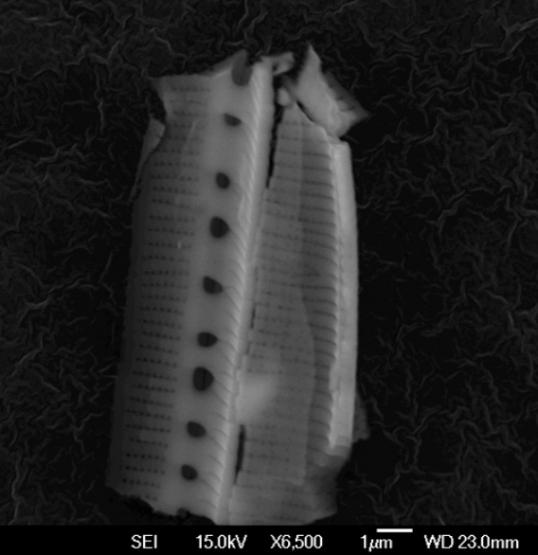
First, Plait notes, one member of the research team, Chandra Wickramasinghe, has claimed numerous times that he’s discovered diatoms – a type of phytoplankton found in meteorites – and this particular paper also includes similar diatom findings. Wickramsinghe also, according to Plait, has a long history of making dubious claims about extraterrestrial life, using less-than-thorough research.

PanspermiaPlait also noted that the Journal of Cosmology, where the paper was published, has a less-than-spotless reputation. In the past, the quality of peer review at the journal has been questioned, and they have also been accused of promoting fringe and speculative viewpoints on astrobiology, astrophysics, and quantum physics. Of particular concern is the journal’s apparent bias that the theory of Panspermia is established fact, which remains a theory.

But as to the scientific findings themselves, there’s the question of whether the diatom really came from space or became attached to the balloon as it transited from the surface into orbit. While the team claims that precautions were taken and the sample was too clean, extended testing may prove this conclusion to be wrong, and possibly premature.

Second, Plait disputes the conclusion that the diatom could not have been put up in the atmosphere by a volcanic eruption. Specifically, he noted that the researchers didn’t seem to take into account things like turbulence in the stratosphere that could have kept objects previously hurled up there by volcanoes floating around for quite some time.

panspermia1Then there’s the claim that evidence points that the organisms came from a comet. The fact that it was “remarkably clean and free of soil or other solid material,” works against this conclusion, according to Plait. If indeed it came embedded in rock, there would surely be samples of soil, dust, ice or minerals attached to it, as these are things commonly found in a comet.

And finally, there’s the theory the researchers developed that these organisms are evidence that life actually began somewhere in space, then came to Earth. While Panspermia is a good theory, Plait claims that the scientists are going about arguing it in a way that is not strictly scientific:

Panspermia is worth investigating, but it’s worth investigating correctly. Outrageous claims on thin evidence with huge conclusion-jumping don’t comprise the best way to do it. Stories like this one are sexy and sure bait for an unskeptical media, of course. But at the very least they don’t help the public understand science and the scientific process, and I know some scientists take an even dimmer view of it.

But of course, the announcement was just made and there’s still plenty of checking to do. In the meantime, we can all certainly speculate, and I would like to hear from the people out there. What do you think? Does this discovery constitute a scientific breakthrough, or is it an elaborate hoax or a case of eager scientists jumping to conclusions?

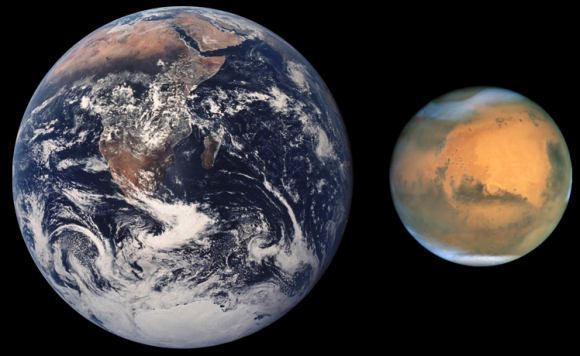
Mars_Earth_Comparison-580x356And let’s not forget, this announcement comes not long after Professor Steven Benner’s similar announcement that new evidence connects the origin of life on Earth to life on Mars. No reason why Exogenesis and the Martian hypothesis can’t coexist now is there?

Sources: blastr.com, (2)

Digital Eyewear Through the Ages

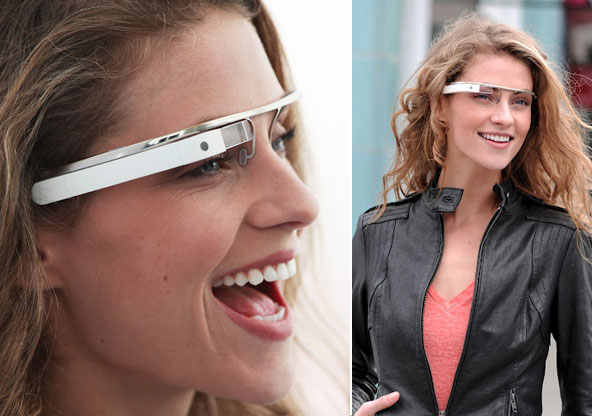
google_glassesGiven the sensation created by the recent release of Google Glass – a timely invention that calls to mind everything from 80’s cyberpunk to speculations about our cybernetic, transhuman future – a lot of attention has been focused lately on personalities like Steve Mann, Mark Spritzer, and the history of wearable computers.

For decades now, visionaries and futurists have been working towards a day when all personal computers are portable and blend seamlessly into our daily lives. And with countless imitators coming forward to develop their own variants and hate crimes being committed against users, it seems like portable/integrated machinery is destined to become an issue no one will be able to ignore.

And so I thought it was high time for a little retrospective, a look back at the history of eyewear computers and digital devices and see how far it has come. From its humble beginnings with bulky backpacks and large, head-mounted displays, to the current age of small fixtures that can be worn as easily as glasses, things certainly have changed. And the future is likely to get even more fascinating, weird, and a little bit scary!

Sword of Damocles (1968):
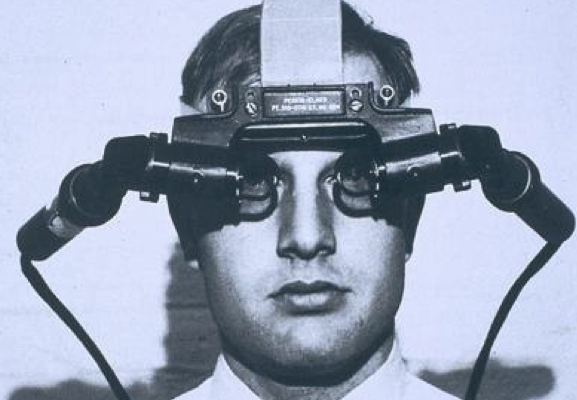
swordofdamoclesDeveloped by Ivan Sutherland and his student Bob Sprouli at the University of Utah in 1968, the Sword of Damocles was the world’s first heads-up mounted display. It consisted of a headband with a pair of small cathode-ray tubes attached to the end of a large instrumented mechanical arm through which head position and orientation were determined.

Hand positions were sensed via a hand-held grip suspended at the end of three fishing lines whose lengths were determined by the number of rotations sensed on each of the reels. Though crude by modern standards, this breakthrough technology would become the basis for all future innovation in the field of mobile computing, virtual reality, and digital eyewear applications.

WearComp Models (1980-84):
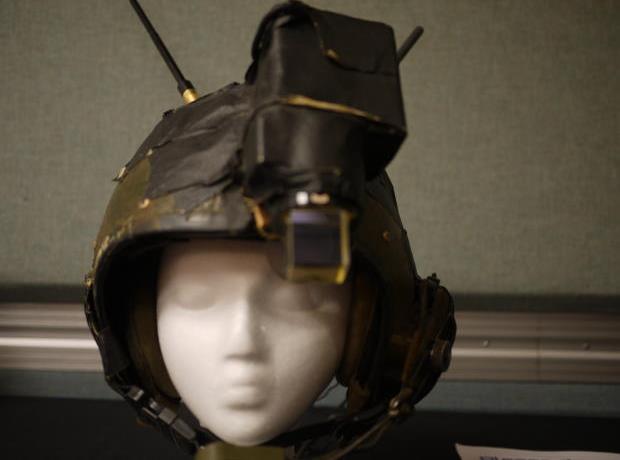
WearComp_1_620x465Built by Steve Mann (inventor of the EyeTap and considered to be the father of wearable computers) in 1980, the WearComp1 cobbled together many devices to create visual experiences. It included an antenna to communicate wirelessly and share video. In 1981, he designed and built a backpack-mounted wearable multimedia computer with text, graphics, and multimedia capability, as well as video capability.

Wearcomp_4By 1984, the same year that Apple’s Macintosh was first shipped and the publication of William Gibson’s science fiction novel, “Neuromancer”, he released the WearComp4 model. This latest version employed clothing-based signal processing, a personal imaging system with left eye display, and separate antennas for simultaneous voice, video, and data communication.

Private Eye (1989):
Private_eye_HUDIn 1989 Reflection Technology marketed the Private Eye head-mounted display, which scanned a vertical array of LEDs across the visual field using a vibrating mirror. The monochrome screen was 1.25-inches on the diagonal, but images appear to be a 15-inch display at 18-inches distance.

EyeTap Digital Eye (1998):
EyeTap1
Steve Mann is considered the father of digital eyewear and what he calls “mediated” reality. He is a professor in the department of electrical and computer engineering at the University of Toronto and an IEEE senior member, and also serves as chief scientist for the augmented reality startup, Meta. The first version of the EyeTap was produced in the 1970’s and was incredibly bulky by modern standards.

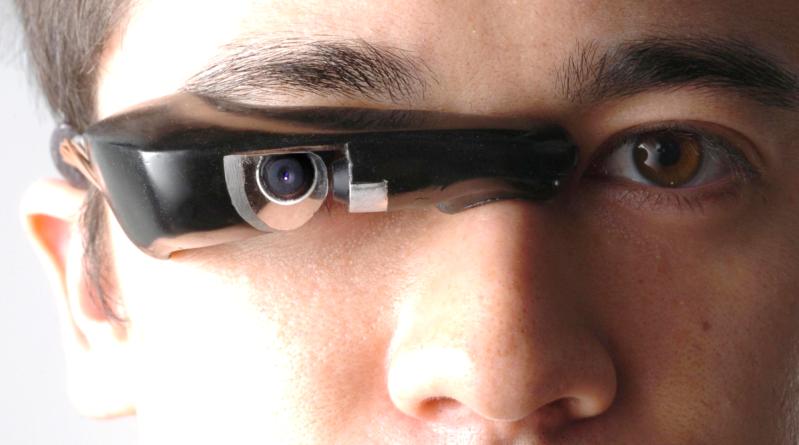
By 1998, he developed the one that is commonly seen today, mounted over one ear and in front of one side of the face. This version is worn in front of the eye, recording what is immediately in front of the viewer and superimposing the view as digital imagery. It uses a beam splitter to send the same scene to both the eye and a camera, and is tethered to a computer worn to his body in a small pack.

MicroOptical TASK-9 (2000):
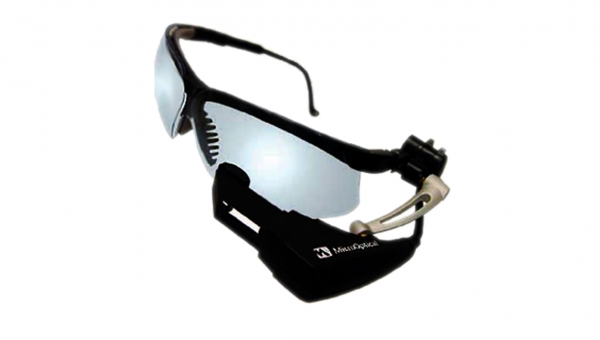
MicroOptical TASK-9Founded in 1995 by Mark Spitzer, who is now a director at the Google X lab. the company produced several patented designs which were bought up by Google after the company closed in 2010. One such design was the TASK-9, a wearable computer that is attachable to a set of glasses. Years later, MicroOptical’s line of viewers remain the lightest head-up displays available on the market.

Vuzix (1997-2013):
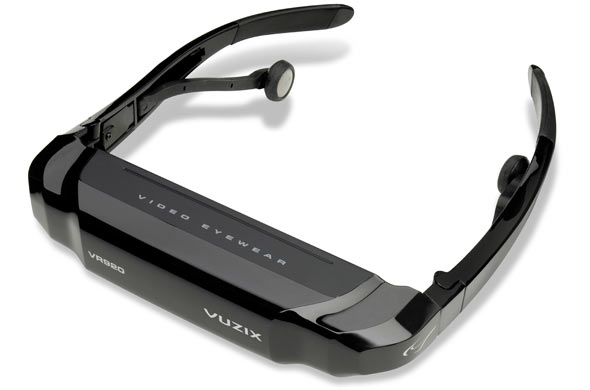
Vuzix_m100Founded in 1997, Vuzix created the first video eyewear to support stereoscopic 3D for the PlayStation 3 and Xbox 360. Since then, Vuzix went on to create the first commercially produced pass-through augmented reality headset, the Wrap 920AR (seen at bottom). The Wrap 920AR has two VGA video displays and two cameras that work together to provide the user a view of the world which blends real world inputs and computer generated data.

vuzix-wrapOther products of note include the Wrap 1200VR, a virtual reality headset that has numerous applications – everything from gaming and recreation to medical research – and the Smart Glasses M100, a hands free display for smartphones. And since the Consumer Electronics Show of 2011, they have announced and released several heads-up AR displays that are attachable to glasses.

vuzix_VR920

MyVu (2008-2012):
Founded in 1995, also by Mark Spitzer, MyVu developed several different types of wearable video display glasses before closing in 2012. The most famous was their Myvu Personal Media Viewer (pictured below), a set of display glasses that was released in 2008. These became instantly popular with the wearable computer community because they provided a cost effective and relatively easy path to a DIY, small, single eye, head-mounted display.myvu_leadIn 2010, the company followed up with the release of the Viscom digital eyewear (seen below), a device that was developed in collaboration with Spitzer’s other company, MicroOptical. This smaller, head mounted display device comes with earphones and is worn over one eye like a pair of glasses, similar to the EyeTap.

myvu_viscom
Meta Prototype (2013):
Developed by Meta, a Silicon Valley startup that is being funded with the help of a Kickstarter campaign and supported by Steve Mann, this wearable computing eyewear ultizes the latest in VR and projection technology. Unlike other display glasses, Meta’s eyewear enters 3D space and uses your hands to interact with the virtual world, combining the benefits of the Oculus Rift and those being offered by “Sixth Sense” technology.

meta_headset_front_on_610x404The Meta system includes stereoscopic 3D glasses and a 3D camera to track hand movements, similar to the portrayals of gestural control in movies like “Iron Man” and “Avatar.” In addition to display modules embedded in the lenses, the glasses include a portable projector mounted on top. This way, the user is able to both project and interact with computer simulations.
Google Glass (2013):
Google Glass_Cala
Developed by Google X as part of their Project Glass, the Google Glass device is a wearable computer with an optical head-mounted display (OHMD) that incorporates all the major advances made in the field of wearable computing for the past forty years. These include a smartphone-like hands-free format, wireless internet connection, voice commands and a full-color augmented-reality display.

Development began in 2011 and the first prototypes were previewed to the public at the Google I/O annual conference in San Francisco in June of 2012. Though they currently do not come with fixed lenses, Google has announced its intention to partner with sunglass retailers to equip them with regular and prescription lenses. There is also talk of developing contact lenses that come with embedded display devices.

Summary:
Well, that’s the history of digital eyewear in a nutshell. And as you can see, since the late 60’s, the field has progressed by leaps and bounds. What was once a speculative and visionary pursuit has now blossomed to become a fully-fledged commercial field, with many different devices being produced for public consumption.

At this rate, who knows what the future holds? In all likelihood, the quest to make computers more portable and ergonomic will keep pace with the development of more sophisticated electronics and computer chips, miniaturization, biotechnology, nanofabrication and brain-computer interfacing.

The result will no doubt be tiny CPUs that can be implanted in the human body and integrated into our brains via neural chips and tiny electrodes. In all likelihood, we won’t even need voice commands at that point, because neuroscience will have developed a means to communicate directly to our devices via brainwaves. The age of cybernetics will have officially dawned!

Like I said… fascinating, weird, and a little bit scary!

‘High Dynamic Range’

News From Space: The Antares Rocket Launch!

antares_launch1Commercial space flight got a shot in the arm just two days ago thanks to the flawless launch of the privately developed Antares rocket from the NASA Wallops Flight Facility in Virginia. On board was the first of many Cygnus craft, a commercial unmanned cargo resupply vehicle that is now making its way to the ISS in orbit. It was a day of firsts, and signaled the beginning of a new space race.

For starters, it was the first time the launchpad in Virginia was used, not to mention the maiden flight of a Cygnus craft. But perhaps most importantly, it was the first time in a long time that supplies and equipment were bound for the International Space Station from American soil. Since its cancellation in 2011, NASA’s space program has been forced to rely on the Russians and an aging fleet of Soyuz rockets to send astronauts and supplies into orbit.

spaceX_elonmuskAnd, as already noted, it was a big day for commercial space flight, since both the Antares and the Cygnus were produced by the Orbital Sciences Corporation. For some time now, SpaceX has been leading the charge to develop rockets and spacecraft for private commercial use. Now, with NASA awarding OSC contracts to restore America’s ability to mount resupply missions, it seems they might have some competition.

The “picture perfect” blastoff took place at 10:58 a.m. EDT on the morning  of Sept. 18 from Virginia and was witnessed by a large crowd of spectators. The launch was reported as being incredibly beautiful as the rockets two stage engines spewed intensely bright flames and send out reverberations that wowed the people watching and woke people who were still asleep in the nearby community of Chincoteague.

antares_deploymentAnother historic first that bears mentioning is the fact that this latest mission happens to be the heaviest cargo load ever delivered to the ISS by a commercial vehicle. And by awarding contracts for such missions to private companies, NASA hopes to be able to free more of its budget up for long-term missions. These include exploration beyond low earth orbit, getting people back to the Moon and beyond to deep space destinations including Asteroids and Mars.

NASA Administrator Charles Bolden spoke glowingly of the launch in a statement and praised OSC for their role in making it happen:

Today marks a milestone in our new era of exploration as we expand the capability for making cargo launches to the International Space Station from American shores.  Orbital’s extraordinary efforts are helping us fulfill the promise of American innovation to maintain our nation’s leadership in space.

According to ongoing mission updates, the Cygnus spacecraft successfully unfurled its solar panels starting 1.5 minutes after separation from the second stage, which took place about 10 minutes after launch. Currently, Cygnus is traveling at 28,000 km/h (17,500 mph) and will rendezvous with the space station on Sunday, Sept. 22.

antares_launch2Once there, the cargo vessel will deliver about 590 kilograms (1,300 pounds) of cargo, including food, clothing, water, science experiments, spare parts and gear to the Expedition 37 crew. The flight, known as Orb-D1 is a demonstration mission to prove that Cygnus can conduct a complex series of maneuvers in space safely bringing it to the vicinity of the ISS.

And once the mission is complete and the supplies delivered, we can expect to be hearing about more missions like this one! Between SpaceX’s Dragon module, the Cygnus, and both companies ongoing rocket tests, space will is likely to become the new frontier where private enterprises carry out their endless dance of competition.

And of course, there are some cool videos of the launch to behold. So behold!

Time-lapse video of Antares deployment:


Antares launch:


Sources:
universetoday.com, (2)

The Future is Here: The Insight Neuroheadset

Emotiv_insightPortable EEG devices have come a long way in recent years. From their humble beginnings as large, wire-studded contraptions that cost upwards of $10,000, they have now reached the point where they are small, portable, and affordable. What’s more, they are capable of not only reading brainwaves and interpreting brain activity, but turning that activity into real-time commands and controls.

Once such device is the Emotiv Insight, a neuroheadset that is being created with the help of a Kickstarter campaign and is now available for preorder. Designed by the same company that produced the EPOC, an earlier brain-computer interface (BCI) that was released in 2010, the Insight offers many improvements. Unlike its bulky predecessor, the new model is sleeker, lighter, uses five sensors instead of the EPOC’s fourteen and can be linked to your smartphone.

Emotiv_insight_EPOCIn addition, the Insight uses a new type of hydrophilic polymer sensor that absorbs moisture from the environment. Whereas the EPOC’s sensors required that the user first apply saline solution to their scalp, no extra applied moisture is necessary with this latest model. This is a boon for people who plan on using it repeatedly and don’t want to moisten their head with goo every time to do it.

The purpose behind the Insight and EPOC headsets is quite simple. According to Tan Le, the founder of Emotiv, the company’s long term aim is to take a clinical system (the EEG) from the lab into the real world and to democratize brain research. As already noted, older EEG machines were prohibitively expensive for smaller labs and amateur scientists and made it difficult to conduct brain research. Le and his colleagues hope to change that.

emotiv_insight1And it seems that they are destined to get their way. Coupled with similar devices from companies like Neurosky, the stage seems set for an age when brain monitoring and brain-computer interface research is something that is truly affordable – costing just a few hundred dollars instead of $10,000 – and allowing independent labs and skunkworks to contribute their own ideas and research to the fore.

As of September 16th, when the Kickstarter campaign officially closed, Emotiv surpassed its $1 million goal and raised a total of $1,643,117 for their device. Because of this, the company plans to upgrade the headset with a six-axis intertial sensor – to keep track of the user’s head movements, gait, tremor, gestures, etc. – a microSD card reader for added security, and a 3-axis magnetometer (i.e. a compass).

woman-robotic-arm_650x366In some cases, these new brain-to computer interfaces are making it possible for people with disabilities or debilitating illnesses to control robots and prosthetics that assist them with their activities, rehab therapy, or restore mobility. On a larger front, they are also being adapted for commercial use – gaming and interfacing with personal computers and devices – as well as potential medical science applications such as neurotherapy, neuromonitoring, and neurofeedback.

Much like a fitness tracker, these devices could let us know how we are sleeping, monitor our emotional state over time, and make recommendations based on comparative analyses. So in addition to their being a viable growth market in aiding people with disabilities, there is also the very real possibility that neuroheadsets will give people a new and exciting way to interface with their machinery and keep “mental records”.

Passwords are likely to replace passthoughts, people will be able to identify themselves with brain-activity records, and remote control will take on a whole new meaning! In addition, mental records could become part of our regular medical records and could even be called upon to be used as evidence when trying to demonstrate mental fitness or insanity at trials. Dick Wolf, call me already! I’m practically giving these ideas away!

And be sure to enjoy this video from Emotiv’s Kickstarter site:


Sources: fastcoexist.com, kickstarter.com

IFA 2013!

IFA2013There are certainly no shortages of electronic shows happening this year! It seems that I just finished getting through all the highlights from Touch Taiwan which happened back in August. And then September comes around and I start hearing all about IFA 2013. For those unfamiliar with this consumer electronics exhibition, IFA stands for Internationale Funkausstellung Berlin, which loosely translated means the Berlin Radio Show.

As you can tell from the name, this annual exhibit has some deep roots. Beginning in 1924, the show was intended to gives electronics producers the chance to present their latest products and developments to the general public, as well as showcasing the latest in technology. From radios and cathode-ray display boxes (i.e. television) to personal computers and PDAs, the show has come a long way, and this year’s show promised to be a doozy as well.

IFA-2013Of all those who presented this year, Sony seems to have made the biggest impact. In fact, they very nearly stole the show with their presentation of their new smartphones, cameras and tablets. But it was their new Xperia Z1 smartphone that really garnered attention, given all the fanfare that preceded it. Check out the video by TechRadar:


However, their new Vaio Tap 11 tablet also got quite a bit of fanfare. In addition to a Haswell chip (Core i3, i5 or i7), a six-hour battery, full Windows connectivity, a camera, a stand, 128GB to 512GB of solid-state storage, and a wireless keyboard, the tablet has what is known as Near Field Communications (NFC) which comes standard on smartphones these days.

This technology allows the tablet to communicate with other devices and enable data transfer simply by touching them together or bringing them into close proximity. The wireless keyboard is also attachable to the device via a battery port which allows for constant charging, and the entire thin comes in a very thin package. Check out the video by Engadget:


Then there was the Samsung Galaxy Gear smartwatch, an exhibit which was equally anticipated and proved to be quite entertaining. Initially, the company had announced that their new smartwatch would incorporate flexible technology, which proved to not be the case. Instead, they chose to release a watch that was comparable to Apple’s own smartwatch design.

But as you can see, the end result is still pretty impressive. In addition to telling time, it also has many smartphone-like options, like being able to take pictures, record and play videos, and link to your other devices via Bluetooth. And of course, you can also phone, text, instant message and download all kinds of apps. Check out the hands-on video below:


Toshiba also made a big splash with their exhibit featuring an expanded line of tablets, notebooks and hybrids, as well as Ultra High-Definition TVs. Of note was their M9 design, a next-generation concept that merges the latest in display and networking technology – i.e. the ability to connect to the internet or your laptop, allowing you to stream video, display pictures, and play games on a big ass display!

Check out the video, and my apologies for the fact that this and the next one are in German. There were no English translations:


And then there was their Cloud TV presentation, a form of “smart tv” that merges the best of a laptop to that of a television. Basically, this means that a person can watch video-on-demand, use social utilities, network, and save their files via cloud memory storage, all from their couch using a handheld remote. Its like watching TV, but with all the perks of a laptop computer – one that also has a very big screen!


And then there was the HP Envy Recline, an all-in-one PC that has a hinge that allows the massive touchscreen to pivot over the edge of a desk and into the user’s lap. Clearly, ergonomics and adaptability were what inspired this idea, and many could not tell if it was a brilliant idea or the most enabling invention since the LA-Z-BOY recliner. Still, you have to admit, it looks pretty cool:


Lenovo and Acer also attracted show goers with their new lineup of smartphones, tablets, and notebooks. And countless more came to show off the latest in their wares and pimp out their own versions of the latest and greatest developments. The show ran from September 6th to 11th and there are countless videos, articles and testimonials to still making it to the fore.

For many of the products, release dates are still pending. But all those who attended managed to come away with the understanding that when it comes to computing, networking, gaming, mobile communications, and just plain lazing, the technology is moving by leaps and bounds. Soon enough, we are likely to have flexible technology available in all smart devices, and not just in the displays.

nokia_morphNanofabricated materials are also likely to create cases that are capable of morphing and changing shape and going from a smartwatch, to a smartphone, to a smart tablet. For more on that, check out this video from Epic Technology, which showcases the most anticipated gadgets for 2014. These include transparent devices, robots, OLED curved TVs, next generation smartphones, the PS4, the Oculus Rift, and of course, Google Glass.

I think you’ll agree, next year’s gadgets are even more impressive than this year’s gadgets. Man, the future is moving fast!


Sources:
b2b.ifa-berlin.com, technologyguide.com, telegraph.co.uk, techradar.com

Leibster! Leibster! Rah-rah-rah!

liebster-award-e1355858473421It seems award season is upon us again, and I’ve received a nod from a respected colleague who decided to send a nomination my way! So thanks to Rami Ungar the writer, and best wishes on the Quiet Game as it goes into its third month since publication. And now, getting to the rules of this award, I must share the following 11 details about myself, make my nominations, and answer 11 questions. Here goes…

  1. I am an Aquarius
  2. I was born in Ottawa Ontario on a Saturday during the depths of winter
  3. I have a natural resistance to cold, being burly and furry, but have trouble with heat
  4. For the first twenty-five years of my life, people though I was older than I actually was. Now it’s the reverse! For some people, this may sound like a good thing. But for me, its just plain weird!
  5. I never really fit in with crowds. I always tried to, but found that I was destined to either stand on my own or make up my own social circles
  6. I have a natural thing for animals. Doesn’t really matter if they are cats, dogs, or a wild creature. We just seem to get each other
  7. I don’t get out to the theater much at all anymore, which seems nuts since I’m more invested in new movies than I ever was before
  8. In the space of a year (Dec 2006 – Aug 07), I traveled to southern Mexico, Europe, across Canada and visited New York City. It was a crazy and awesome year!
  9. Unlike a lot of indies, my desire to write and share goes beyond the desire to express myself creatively. Much depends on it for me, and the prospect of not succeeding is frightening to me
  10. I am very susceptible to germs, seeing as how I get sick with the seasons like clock work. You’d think a teacher would have better immunities. Sadly, no
  11. I love kids, but am not sure if I would ever want to have some of my own. But as I have been told many times, no one is ever really ready, so I don’t worry about it too much

Alright, that was deep. Now here are the 11 questions Rami came up with for myself and his other nominees to answer. A word of warning, I was not brief!

1. Do you consider yourself a spiritual person?

Yes I do. While I so often find myself railing against organized religion for its excesses and abuses, I have never been an atheist, nor do I consider it a likely possibility that we live in a universe devoid of any higher order. I guess I’ve always been a monist/deist, a person who believes that the universe is guided by a conscious force that underlies and connects all things, was responsible for its creation and the laws that guide it, but does not intervene or exercise direct control over things.

2. If you could meet any historical personage, who would you meet and what would you say to them?

Tough call. But if I had to choose, I’d say Montezuma II, the last emperor of the Aztec civilization and people. And once the troublesome problem of translating from English to Nahuatl was worked out, I’d give him one very simple bit of advice. “Kill the Conquistadors on sight!”

3. What scares you the most in the world?

The idea of something bad happening to someone I love, and that I couldn’t be there to stop it. Either that or that I could, through negligence or inaction. be responsible for something terrible happening to someone else. Don’t think I could live with myself either way.

4. Morning, afternoon, or evening person?

Definitely evening. Not an early riser by nature, and my most creative and active time is always late at night. Were it not for this incessant need to get a good forty winks a night, I’d work til the wee hours of the morning all the time!

5. What was the worst job you ever had the displeasure of holding?

Again, tough call. There was the two summers during school that I worked for the city doing maintenance on public parks and parking garages. For those unfamiliar with job-speak, that means you clean up garbage. During the months I worked there both years, I cleaned up a ton of puke, feces, urine, and disposed of I don’t know how many used needles, half-smoked joints and even a bottle of heroine. I also got solicited by a few prostitutes, and was accosted by several homeless people.

But then there was the few months I taught in a remote community on the west side of Vancouver Island. Out there, joblessness, idleness, isolation and the problems of drug abuse, suicide, broken homes and behavioral problems create a very tough challenge for teachers. I was there for three months, replacing a teacher who went nuts and ended up suing the school board over a nothing issue. That kind of hostile work environment and the politics of the dude’s lawsuit and how it effected work for the rest of us led to many people quitting and the school almost imploding. I slept very little for those 11 weeks, got sworn and freaked out at almost every day by the kids, and was happy as hell to get out when I did!

I’d say it was the teaching gig. No job was ever that bad before or since.

6. If you could dress up as anything for Halloween this year, regardless of price, what would you dress up as?

If price weren’t an option, I’d go as Iron Man. And the exoskeleton would be real!

7. What’s your dream job?

High-paid author, article writer and traveling guest-lecturer. Basically what I’m doing everything I can to become right now!

8. If you could be somebody else for a day, who would you be? (This could be anything from an actual person–President Barack Obama or Vera Farmiga, for example–or it can be anything as simple as “a dancer” or “a music producer”)

I would love to be Chris Hadfield and go around talking about science, technology, and what its like to go into space. And then I’d unleash a guitar riff on my classic guitar!

9. What is your favorite color?

Rainforest Green. That’s the kind of deep, dark green that puts me in mind of driving across this here island, breathing clean air, and then staring out at the ocean as the high waves pound against the cliffs and the sandy shore.

10. What do you think you’ll be doing in 10 years?

With any luck, living in a nice home in Victoria, writing novels and articles for an obscene (okay, decent) amount of money, and living with my wife and our cat and a dog. She will be working in government with a senior position, the animals will be happy and rambunctious, and we will be busy contemplating what’s next for our family 🙂

11. If you had to brave some sort of apocalypse or natural disaster in your city/town/village, who would want to brave it with?

Tossup. There’s my wife, the natural choice, but if we’re venturing into the realm of the fictional, I would say Daryl Dixon. He’s a good man to have around in a fight, and underneath his tough, redneck exterior beats a good heart.

Alright, that’s me done! And now we move on to my nominations and the questions I would like to see them answer. First, here are the people I would like to nominate for this award:

Nina D’Arcengela

Khaalidah

Professor VJ

Likeitiz

MythRider

Writerlious

Casey Sheridan

Raven Lunatick

Mona (Ramblings)

Eddie Two Hawks

Dangerously Daydreaming

The Wandering Gourmand

And here’s the questions I’d like all of them to answer:

  1. If you could travel anywhere in the world, where would go and what would you do there?
  2. If you had a million dollars, what would you do?
  3. If civilization were to end tomorrow, what would be your first priority? Securing a source of food, water and energy? Procreating to ensure the continuation of the species? Or preserving the knowledge of mankind?
  4. Would you rather have:
    A. A puppy
    B. A kiss from your sweetie, or
    C. A well formatted hard drive?
  5. Describe your perfect relationship partner
  6. Who’s your favorite superhero and why?
  7. What was the best science fiction, horror, fantasy movie or television series you ever saw?
  8. If you had a chance to go to another planet, what would you take with you?
  9. Favorite pet (cat, dog, bird, etc.) and why?
  10. What stands out as the single greatest experience of your life?
  11. If you could do just one thing before you died, what would it be?

Thank you again, Rami, congrats to all the other nominees, and hope everybody is having a good week and looking forward to the weekend. Hope to hear from y’all again soon, and stay tuned for more on my end!

News From Space: IAU Revises Stance on Naming Planets

alien-worldGood news everyone! According to the International Astronomic Union, the public can now participate in the naming of new exoplanets. What’s more, they can be popular names like kinds found in science fiction, assuming they are appropriate and the public is behind it. This represents a big change in terms of IAU policy, which previously reserved the right to give names to newly discovered bodies outside of our Solar System.

As recently as late March, 2013, the IAU’s official word on naming exoplanets was, “the IAU sees no need and has no plan to assign names to these objects at the present stage of our knowledge.” Their rationale was since there is seemingly going to be so many exoplanets, it will be difficult to name them all.

IAU_exosBut then, on March 24th, the IAU added on their website:

…the IAU greatly appreciates and wishes to acknowledge the increasing interest from the general public in being more closely involved in the discovery and understanding of our Universe. As a result in 2013 the IAU Commission 53 Extrasolar Planets and other IAU members will be consulted on the topic of having popular names for exoplanets, and the results will be made public on the IAU website.

This new decision follows from an event earlier this year where the SETI Institute and the space company Uwingu organized their own campaigns for creating popular names of objects in space. Both events were wildly popular with the general public, but generated some controversy. For one, the IAU issued a statement regarding the contests saying that while they welcomed the public’s interest, the IAU has the last word.

Pluto-System_720-580x344For example, the SETI institute’s contest, “Space Rocks”, was intended to name two newly discovered moons around Pluto. Though the name “Vulcan” was the top contender for one of them, and even got a nod from William Shatner, the IAU overruled their decision and went with the name “Styx” instead. Additionally, the IAU took issue with the “selling” of names, referring to the fact that Uwingu charged a fee to take part in their contest.

However, given public interest in the process and the fact that other bodies might begin privatizing the process, the IAU has altered its position on these matters and opened up the naming process to the public. The new rules, which were passed this summer, now allow individuals to suggest names of exoplanets and planetary satellites (moons) via email to the IAU.

gliese-581.jpgThose looking to make a contribution to naming newly discovered planets and moons are asked to abide by the following criteria:

  1. Prior to any public naming initiative the IAU should be contacted from the start by Letter of Intent sent to the IAU General Secretary
  2. The process should be submitted in the form of a proposal to the IAU by an organization
  3. The organization should list its legal or official representatives and its goals, and explain the reasons for initiating the process for naming a particular object or set of objects
  4. The process cannot request nor make reference to any revenues, for whatever purpose
  5. The process must guarantee a wide international participation
  6. The public names proposed (whether by individuals or in a naming campaign) should follow the naming rules and restrictions adopted for Minor Bodies of the Solar System, by the IAU and by the Minor Planet Center.

Among other rules cited in their new policy are that proposed names should be 16 characters or less in length, pronounceable in as many languages as possible, non-offensive in any language or culture, and that names of individuals, places or events principally known for political or military activities are unsuitable. Also, the names must have the formal agreement of the discoverers.

KeplerThis about face has its share of supporters and critics alike. Whereas people who support it generally see it as a sign that we are entering into an era of open and democratic space exploration. the critics tend to stress the contradictions and ambiguities in the new policy. Whereas the IAU previously claimed it had the final word on the naming process, their new stance appears to indicate that this is no longer the case.

In addition, companies like Uwingu are now free to participate in the naming of planetary bodies, which means that their contest to name Pluto’s moon “Vulcan” would now be legitimate under the new framework. Many people, such as astronomer and Uwingu CEO Alan Stern, are wondering if the new rules will apply retroactively since they were previously forbidden from having any input.

kepler22b.jpgAs for me, this puts me in mind of my own attempts to name real or fictitious exoplanets. Sadly, since it this was done for the sake of writing fiction, they would have no legal standing, but the process was still fun and got me thinking… If we are to begin exploring and colonizing planets outside of our Solar System, how will we go about naming them?

Now it seems there is a process in place for just such a thing, one which will assign actual names instead of bland designations. And it appears that this process will be a trade off between scientific organizations and public input, either through campaigns or contests. And I imagine once we start breaking ground on new worlds, settlers and shareholders will have a thing or two to say as well!

Planet Microsoft… Planet Starbucks… Planet Walmart… I shudder to think!

Sources: universetoday.com, uwingu.com. phl.upr.edu

The Future is Here: Radiowave-Powered Devices

radio-waves-airwaves-spectrumIt sounds like something out of science fiction, using existing existing internet electromagnetic signals to power our devices. But given the concerns surrounding ewaste and toxic materials, anything that could make an impact by eliminating batteries is a welcome idea. And if you live in an urban environment, chances are you’re already cloaked in TV and radio waves invisible that are invisible to the naked eye.

And that’s precisely what researchers at the University of Washington have managed to do. Nine months ago,  Joshua Smith (an associate professor of electrical engineer) and Shyam Gollakota (an assistant professor of computer science and engineering) started investigating how one might harvest energy from TV signals to communicate, and eventually designed two card-like devices that can swap data without using batteries.

wireless-device1Running on what the researchers coined “ambient backscatter,” the device works by capturing existing energy and reflecting it, like a transistor. Currently, our communications and computing devices require a lot of power, even by battery, in order to function. But as Gollakota explains, all of these objects are already creating energy that could be harnessed:

Every object around you is reflecting signals. Imagine you have a desk that is wooden, and it’s reflecting signals, but if you actually make [the desk] iron, it’s going to reflect a much larger amount of energy. We’re trying to replicate that on an analog device.

The new technique is still in its infancy, but shows great promise. Their device transfers data at a rate of one kilobit per second and can only transmit at distances under 2.5 feet. Still, it has exciting implications, they say, for the “Internet of things.” The immediate use for this technology, everything from smart phones to tablets and MP3 players, is certainly impressive.

wireless-deviceBut on their website, the team provides some added examples of applications that they can foresee taking advantage of this technology. Basically, they foresee an age when backscatter devices can be implanted in just about anything ranging from car keys and appliances to structural materials and buildings, allowing people to find them if they get lost, or to be alerting people that there’s some kind of irregularity.

As Smith claimed on the team’s website:

I think the Internet of things looks like many objects that kind of have an identity and state–they can talk to each other. Ultimately, I think people want to view this information… That’s part of the vision. There will be information about objects in the physical world that we can access.

The energy harvester they used for the paper, which they presented at the Association for Computing Machinery’s Special Interest Group on Data Communication in Hong Kong, requires 100 microwatts to turn on, but the team says it has a design that can run on as low as 15 microwatts. Meanwhile, the technique is already capable of communicating location, identity, and sensor data, and is sure to increase in range as efficiency improves.

vortex-radio-waves-348x196The University of Washington presentation took home “best paper” in Hong Kong, and researchers say they’re excited to start exploring commercial applications. “We’ve had emails from different places–sewer systems, people who have been constrained by the fact that you need to recharge things,” Gollakota says. “Our goal for next six months is to increase the data rate it can achieve.”

Combined with Apple’s development of wireless recharging, this latest piece of technology could be ushering in an age of  wireless and remotely powered devices. Everything from smartphones, tablets, implants, and even household appliances could all be running on the radio waves that are already permeating our world. All that ambient radiation we secretly worry is increasing our risks of cancer would finally be put to good use!

And in the meantime, enjoy this video of the UofW’s backscatter device in action: