The Future is Here: Radiowave-Powered Devices

radio-waves-airwaves-spectrumIt sounds like something out of science fiction, using existing existing internet electromagnetic signals to power our devices. But given the concerns surrounding ewaste and toxic materials, anything that could make an impact by eliminating batteries is a welcome idea. And if you live in an urban environment, chances are you’re already cloaked in TV and radio waves invisible that are invisible to the naked eye.

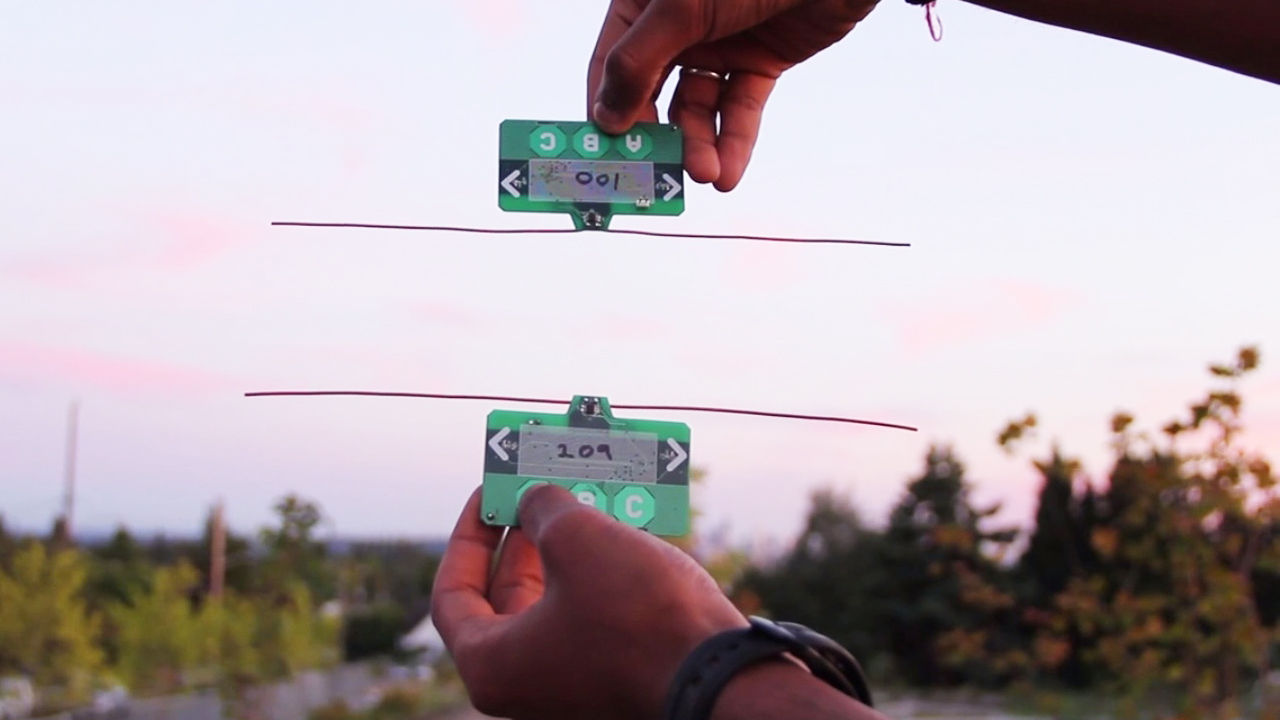
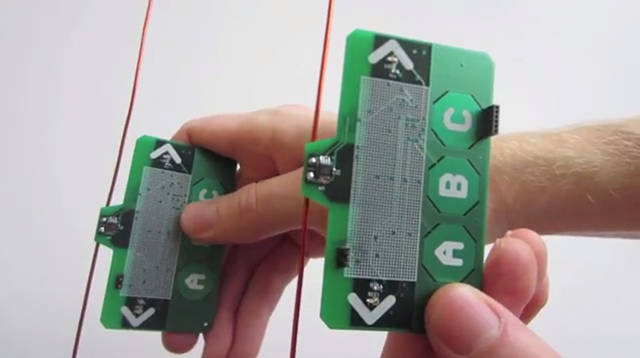
And that’s precisely what researchers at the University of Washington have managed to do. Nine months ago,  Joshua Smith (an associate professor of electrical engineer) and Shyam Gollakota (an assistant professor of computer science and engineering) started investigating how one might harvest energy from TV signals to communicate, and eventually designed two card-like devices that can swap data without using batteries.

wireless-device1Running on what the researchers coined “ambient backscatter,” the device works by capturing existing energy and reflecting it, like a transistor. Currently, our communications and computing devices require a lot of power, even by battery, in order to function. But as Gollakota explains, all of these objects are already creating energy that could be harnessed:

Every object around you is reflecting signals. Imagine you have a desk that is wooden, and it’s reflecting signals, but if you actually make [the desk] iron, it’s going to reflect a much larger amount of energy. We’re trying to replicate that on an analog device.

The new technique is still in its infancy, but shows great promise. Their device transfers data at a rate of one kilobit per second and can only transmit at distances under 2.5 feet. Still, it has exciting implications, they say, for the “Internet of things.” The immediate use for this technology, everything from smart phones to tablets and MP3 players, is certainly impressive.

wireless-deviceBut on their website, the team provides some added examples of applications that they can foresee taking advantage of this technology. Basically, they foresee an age when backscatter devices can be implanted in just about anything ranging from car keys and appliances to structural materials and buildings, allowing people to find them if they get lost, or to be alerting people that there’s some kind of irregularity.

As Smith claimed on the team’s website:

I think the Internet of things looks like many objects that kind of have an identity and state–they can talk to each other. Ultimately, I think people want to view this information… That’s part of the vision. There will be information about objects in the physical world that we can access.

The energy harvester they used for the paper, which they presented at the Association for Computing Machinery’s Special Interest Group on Data Communication in Hong Kong, requires 100 microwatts to turn on, but the team says it has a design that can run on as low as 15 microwatts. Meanwhile, the technique is already capable of communicating location, identity, and sensor data, and is sure to increase in range as efficiency improves.

vortex-radio-waves-348x196The University of Washington presentation took home “best paper” in Hong Kong, and researchers say they’re excited to start exploring commercial applications. “We’ve had emails from different places–sewer systems, people who have been constrained by the fact that you need to recharge things,” Gollakota says. “Our goal for next six months is to increase the data rate it can achieve.”

Combined with Apple’s development of wireless recharging, this latest piece of technology could be ushering in an age of  wireless and remotely powered devices. Everything from smartphones, tablets, implants, and even household appliances could all be running on the radio waves that are already permeating our world. All that ambient radiation we secretly worry is increasing our risks of cancer would finally be put to good use!

And in the meantime, enjoy this video of the UofW’s backscatter device in action:

The Future of Medicine: Microneedle Patch

TB-resTubercle bacillus, aka. Tuberculosis or TB, is a very common, very infectious, and if untreated, very lethal disease. A well dated illness, its origins can be traced back to early Neolithic Revolution, and is often attributed to animal husbandry (specifically, the domestication of bovines). And in terms of the number of people carrying it, and the number of deaths associated with it, it is second only to HIV.

Because of this and the fact that the disease remains incurable – the only way to combat it is with early detection or experimental vaccines – it is obvious why medical researchers are looking for better ways to detect it. Currently, the standard test for tuberculosis involves inserting a hypodermic needle into a person’s arm at a very precise angle and depth, using a small trace of genetically modified TB to elicit an immuno-reaction.

TB_microneedlesAs anyone who has undergone this test knows (as a teacher, I have had to endure it twice!), it is not a very efficient or cost effective way of detecting the deadly virus. In addition to being uncomfortable, the telltale symptoms can days to manifest themselves. Hence why Researchers at the University of Washington hope to replace this test with a painless, near-automated alternative – a microneedle patch that they say is more precise and even biodegradable.

For their study, which was recently presented in the journal Advanced Healthcare Materials, the scientists used microneedles made from chitin – the material that makes up the shells sea creatures and insects and is biodegradable. Each needle is 750 micrometers long (1/40th of an inch) and is coated with the purified protein derivative used to test for tuberculosis.

TB_virusIn terms of its application, all people need do is put it on like a bandage, which ought to make testing on children much easier. For the sake of testing it, the team tested its microneedle patch on guinea pigs and found that the reaction that occurs via the hypodermic needle test also appeared using the patch. But the best aspect of it is the fact that the patch does not require any invasive or difficult procedures.

In a school news release, Marco Rolandi – assistant professor of materials science and engineering at the University of Washington and lead author of the study – had the following to say:

With a microneedle test there’s little room for user error, because the depth of delivery is determined by the microneedle length rather than the needle-insertion angle. This test is painless and easier to administer than the traditional skin test with a hypodermic needle.

medical technologyThe researchers report that they now plan to test the needle patch on humans and hope to make the patch available in the near future. However, the long-term benefits may go beyond stopping TB, as Rolandi and his team hope that similar patches will be developed for other diagnostic tests, such as those used to detect allergies. As anyone who has undergone an allergen test will tell you (again, twice!), its no picnic being pricked and scraped by needles!

As always, the future of medicine appears to be characterized by early detection, lower costs, and less invasive measures.

Sources: news.cnet.com, washington,edu, who.nt

The Future is Here: World’s First “Invisible” Building

tower-infinity-seoul-south-koreaAll over the globe, governments and design firms are looking to create living examples of arcologies. Merging next-generation architectural with ecological sustainability, this futuristic concept is now becoming a reality, with projects ranging from Masdar Eco City in Dubai, to Crystal Island in Moscow, and China’s Shanghai Tower.

Not to be outdone, South Korea has proposed an equally audacious building plan that calls for the construction of a 450 meters tower that uses the latest in optical technology to render itself virtually invisible. Known as Tower Infinity, or City Tower, the building will be located in Cheongna (near the Incheon Airport just outside of Seoul) and will use the same technology that military contractors do to create “adaptive camouflage”.

F:tower infinityemailout120612 to gdskti-INVISIBIL-RESOLUTIThis involves fitting the building with a high-tech LED facade that integrates projectors and 18 strategically placed optical cameras. These cams will snap real-time pictures of the area directly behind the building, digitally stitch them into a panorama, and project them back onto the building’s reflective surface. This will create the illusion that viewers are looking straight through the building, making it appear to blend into the skyline at certain times of day.

According to GDS – the design firm behind Tower Infinity’s creation – the purpose of the building is largely symbolic. According to their website:

The tower subtly demonstrates Korea’s rising position in the world by establishing its powerful presence through diminishing its presence. Korea will have the unique position of having the ‘best’ tower by having an ‘anti-tower.

tower_infinityAnd while no word has been given yet on the relationship between the structure’s invisibility and planes from the nearby airport, it seems logical to stress that the building’s “invisibility cloak” is not perfect, nor is it meant to be. While it is able to generate an image that allows it to blend into the natural environment more readily, the building still leaves a translucent outline when at full power.

GDS also indicated that the purposes of the building go beyond the symbolic. In addition to showcases Korea’s presence in the global economy, the technology can be used for advertising and entertainment. As the company said in a statement:

This same technology also allows the tower to become a 450-meter-tall billboard screen and urban focal point for all arriving at Incheon,

The tower will house a 4D theater, a water park, landscaped gardens, and the third-highest observation deck in the world. Basically, it is intended as a tourist mecha in addition to everything else, which makes sense given its strategic location close to a major airport.

Source: cnet.news.com, gdsarchitects.com

The Walking Dead Issue 114!

Walking-Dead-114-CoverAll I can say is… finally! After another month and a half of waiting, and feeling pretty let down by the last issue, the final issue of Volume 19 is out! And it’s a good thing too. It’s pretty rare when the source material begins to seem like the show it was made into, but the last few issues/volumes of The Walking Dead have been dragging out in such a way that I was seriously beginning to think I was watching the show instead.

(**Spoilers ahead!**)

walking-dead-volume-19But that’s to be expected, given that the name of Volume 19 is March to War. Including issues 109 to 114, it covers  – at length – all the preparations Rick and his people are making, alongside the other communities, to prepare for war with their nemesis Negan. And in issue 112, foreseeing an opportunity, Rick jumped the gun and accidentally triggered things a bit prematurely.

Luckily, things worked out and his bacon was saved. This occurred in issue 113 and 114, where Andrea managed to avoid getting herself killed and “Jesus” and his pals showed up in time to scare Negan’s thugs off. However, Negan and what was left of his crew made it away and got back to his own headquarters, announcing to his many thugs that they were going to war.

walking-dead-volume-20Volume 20, titled All Out War (and which will include issues 115-126), will begin on October 9th (great, another month of waiting!). And after all the buildup, and the big ol’ inciting event that took place in the last two issues, we’re finally gonna get to see some war and hopefully watch Negan get his ass kicked! Or maybe he’ll win and all the characters we’ve come to know and love – those that remain – will die horribly!

But if I were a betting man, I would say that a combination of both is likely to occur. After all, it’s The Walking Dead, people! Things never end happily. They just go on and on…

World’s Thinnest Wireless Touch Surface

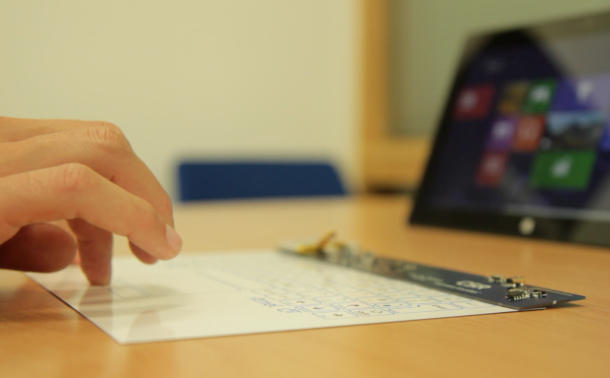
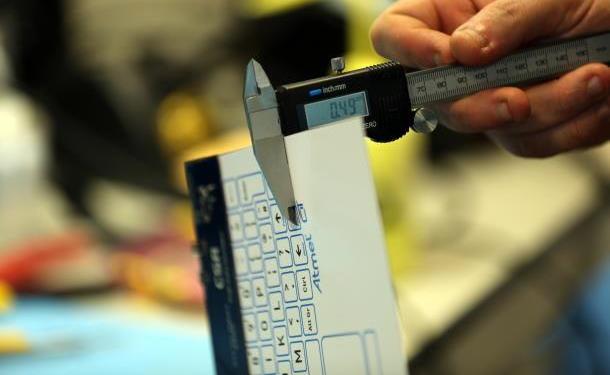
csr_ultra_thin_keyboard.png_610x378It was inevitable really, what with the ongoing trend of making electronics smaller, thinner, and more ergonomic. Yes, it seems that this latest prototype keyboard/touch surface is not only incredibly thin but virtually weightless and very energy efficient. Built by CSR using Bluetooth Smart technology, this wireless keyboard does not rely on batteries and is less than 0.5 mm thick.

This makes the prototype the thinnest touch surface and computer interface in the world to date. Relying on a combination of microcircuits, it was also produced using an additive printing technique from Conductive Inkjet Technology and Atmel touch sensors. By relying on 3D printing technique, the technology can be scaled for different sizes and purposes.

csr_ultra_thin_keyboard_thickness_610x407The obvious use for the technology development is as an extremely thin and lightweight keyboard, but it could also be designed as an extended touch surface that can respond to swipes, pinches, or stylus input. With additional micro-circuitry, it could even be adapted to respond to bending and flexing, like many prototype surfaces that are currently in development for smartphones and tablets.

CSR is promoting the prototype as “the world’s thinnest wireless touch interface.” Though it’s not quite paper-thin, it’s getting awfully close. The keyboard was unveiled at this year’s International Fiscal Association, a consumer electronics show that was held in Berlin from the 6th to the 11th, alongside many new and exciting technologies and devices (more on that later).

Naturally, CSR intends to work with developers to bring the technology to market in the near future.

Source: news.cnet.com

The Future of Electronics: Touch Taiwan 2013!

touch-taiwan_amoledEvery year, companies from all over the world that are dedicated to creating touch surfaces, displays, and personal digital devices convene on Taipei Taiwan for the International Touch Panel and Optical Film Exhibition – otherwise known as Touch Taiwan. Running from August 28th to 30th, visitors were treated to over 1000 exhibition booths that showcased the latest from developers in touch panels, OLED, flexible displays and optical films.

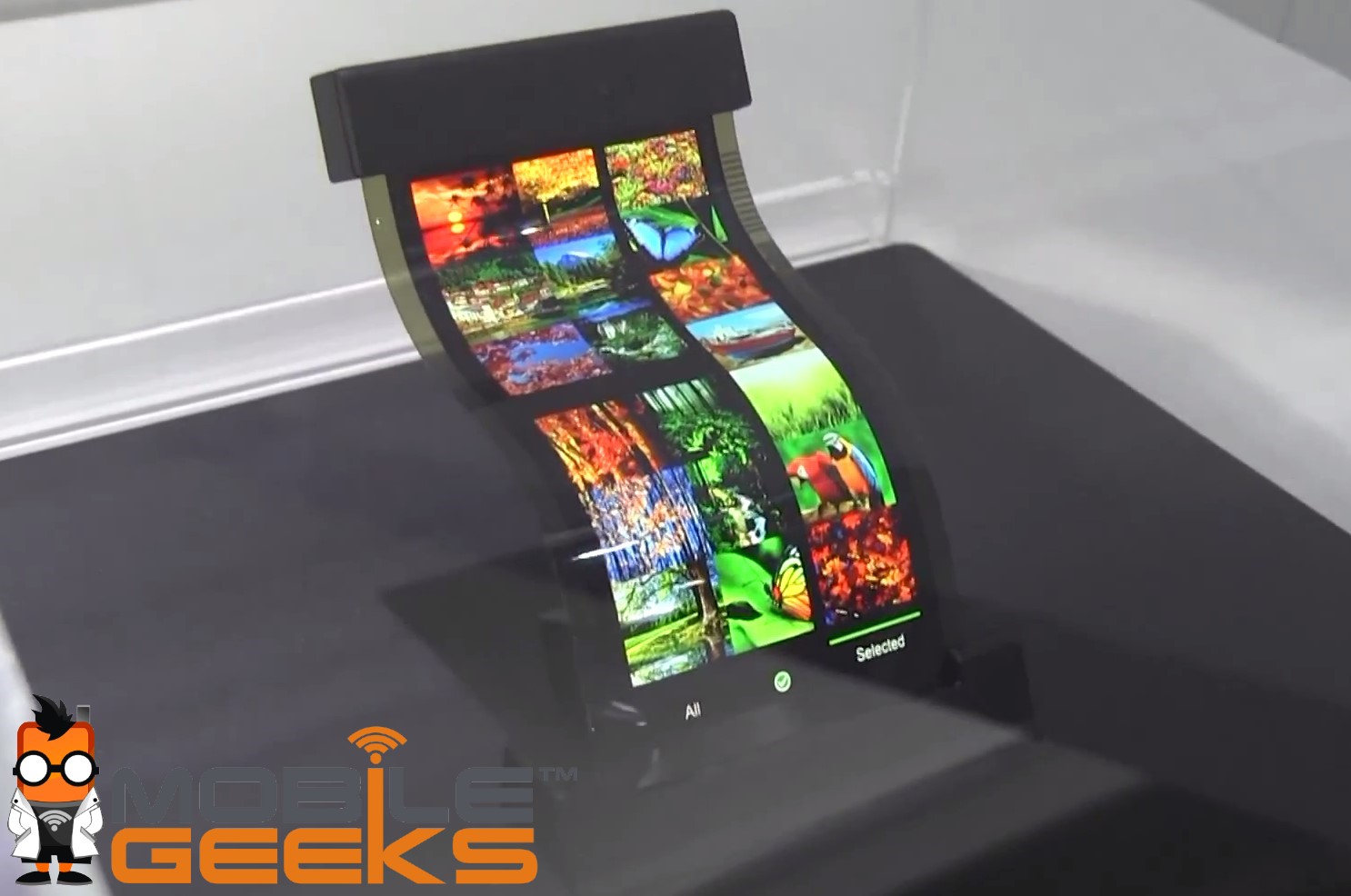
One such company is AUO, a display company based in Taiwan, which is working on flexible, ultra-thin technology. Much like the AMOLED (Active-Matrix Organic Light Emitting Diode) display Nokia showcased at CES in Las Vegas last year, the AUO exhibit showed a series of screens that could be bent, but would still broadcast a crystal clear imagine with 512 pixels per inch.

This is in keeping with the apparent “pixel race” that is on, where developers are trying to outdo each other in sheer pixel density. 512 seems to be the current high, though that can be expecting to change soon! And though the AUO displays seen here are not yet been available on a specific device, it is clear that future devices will look something like this:

AUO Ultra-Thin Display Tech:


Another big hit at the show were display glasses. Clearly, the consumer electronics industry is now in a race to create the next generation of Google Glass, looking for ways to improve on the existing technology by making it smaller, cheaper, and the images sharper. That was the rationale behind CPT’s display booth, where a series of display glasses were shown that relied on a “smartbox” displays rather than display lenses.

As you can see, the smartbox resides in the upper right corner of the glasses, which a person can consult whenever they are out and about. Simply look to your upper right to get a desktop image or browse, and look away to see the rest of the world. The goal here is clearly utilitarian, with CPT hoping to create something that could beam images into your eye without fear of distraction.

What’s impressive about this is the fact that CPT was able to use AMOLED technology to create detailed, multi-colored images with 200 ppi in a smartbox display that was only half an inch big. The technology is ready to ship, so expect to see a wider range of display glasses at your electronics store soon!

CPT AMOLED Smart Glass:


Aside from AMOLED technology are the equally important developments being made in Micro-Light Emitting Diode (or MLED) technology, which offers the same benefits as LEDs but in a much smaller package which relies on significantly less power. The company leading the charge here is ITRI, a research division of the Taiwanese government that also creates consumer electronics.

So far, the display is monochromatic, as you can see from the video below. However, ITRI expects to have a full-color version ready towards the end of 2013. Have a gander:

ITRI MicroLED Display:


And then there was Corning Glass, which once again made big waves with the display of their “Gorilla Glass”, a next-generation type of display glass developed with Microsoft. As their promotional video from last year demonstrated (“A Day with Glass”), the company hopes that this new type of display surface will one day be integrated into all walks of life because of its sheer versatility.

And aside from the usual benefit being offered – a thin surface that is sensitive to touch commanders and offers high-definition imagery – Gorilla Glass (as its name suggests) is also highly resistant to damage. Whereas other makers are focusing on small devices that can withstand damage by being flexible, Corning and Microsoft are thinking big and resilient. Check out the video:

Gorilla Glass Demo:


If it were not already clear from all the new devices making it to the street in recent years, these exhibitions certainly confirm that the future is getting increasingly digitized, personalized, ergonomic, and invasive! And the devices powering this future, allowing us to network and access untold amounts of information at any moment in our day, are looking more and more like something out of a William Gibson or Charles Stross novel!

If I weren’t such a sci-fi geek, I might be worried!

Sources: mobilegeeks.com, displaytawain.com, chaochao.com.tw

Judgement Day Update: Using AI to Predict Flu Outbreaks

hal9000It’s a rare angle for those who’ve been raised on a heady diet of movies where the robot goes mad and tries to kill all humans: an artificial intelligence using its abilities to help humankind! But that’s the idea being explored by researchers like Raul Rabadan, a theoretical physicist working in biology at Columbia University. Using a new form of machine learning, they are seeking to unlock the mysteries of flu strains.

Basically, they are hoping to find out why flu strains like the H1N1, which ordinarily infect pigs and cows, are managing to make the jump to human hosts. Key to understanding this is finding the specific mutations that transform it into a human pathogen. Traditionally, answering this question would require painstaking comparisons of the DNA and protein sequences of different viruses.

AI-fightingfluBut thanks to rapidly growing databases of virus sequences and advances made in computing, scientists are now using sophisticated machine learning techniquesa branch of artificial intelligence in which computers develop algorithms based on the data they have been given to identify key properties in viruses like bird flu and swine flu and seeing how they go about transmitting from animals to humans.

This is especially important since every few decades, a pandemic flu virus emerges that not only infects humans but also passes rapidly from person to person. The H7N9 avian flu that infected more than 130 people in China is just the latest example. While it has not been as infectious as others, the fact that humans lack the antibodies to combat it led to a high lethality rate, with 44 of the infected dying. Whats more, it is expected to emerge again this fall or winter.

Influenza_virus_2008765Knowing the key properties to this and other viruses will help researchers identify the most dangerous new flu strains and could lead to more effective vaccines. Most importantly, scientists can now look at hundreds or thousands of flu strains simultaneously, which could reveal common mechanisms across different viruses or a broad diversity of transformations that enable human transmission.

Researchers are also using these approaches to investigate other viral mysteries, including what makes some viruses more harmful than others and factors influencing a virus’s ability to trigger an immune response. The latter could ultimately aid the development of flu vaccines. Machine learning techniques might even accelerate future efforts to identify the animal source of mystery viruses.

2009_world_subdivisions_flu_pandemicThis technique was first employed in 2011 by Nir Ben-Tal – a computational biologist at Tel Aviv University in Israel – and Richard Webby – a virologist at St. Jude Children’s Research Hospital in Memphis, Tennessee. Together, Ben-Tal and Webby used machine learning to compare protein sequences of the 2009 H1N1 pandemic swine flu with hundreds of other swine viruses.

Machine learning algorithms have been used to study DNA and protein sequences for more than 20 years, but only in the past few years have scientists applied them to viruses. Inspired by the growing amount of viral sequence data available for analysis, the machine learning approach is likely to expand as even more genomic information becomes available.

Map_H1N1_2009As Webby has said, “Databases will get much richer, and computational approaches will get much more powerful.” That in turn will help scientists better monitor emerging flu strains and predict their impact, ideally forecasting when a virus is likely to jump to people and how dangerous it is likely to become.

Perhaps Asimov had the right of it. Perhaps humanity will actually derive many benefits from turning our world increasingly over to machines. Either that, or Cameron will be right, and we’ll invent a supercomputer that’ll kill us all!

Source: wired.com

Goodbye Futurama… Again!

futuramaI’m sure many of us recall what it was like saying goodbye to Futurama for the first time back in 2003. The final episode opened with its usual title shot and upbeat music, and the caption down at the bottom read “See you on some other channel”. And after six years of reruns on Adult Swim and four direct-to-video movies, that prediction came true.

In 2009, Comedy Central picked up the show and began running new episodes, and all the fans started thumbing their noses at Fox. Once again, the big bad network lost as a show it had canned for unclear reasons (some believed it had to do with Groening being “too liberal” for Fox’s taste) was brought back from exile. And for the next four years, we the fans got treated to new episodes of a favorite series.

Futurama_BillionBacksAnd now, for the second time, we say goodbye to Futurama, which aired its last episode less than a week ago on Tuesday, Sept 4th, 2013. Naturally, I’ve been wanting to say something about it, but thought I would hold off until I finished watching the last episode. And now that that’s done, and my feelings are raw, I am free to spit some hot fire!

According to the industry buzz, the decision to discontinue the show was made exclusively by Comedy Central, which announced that it was finished with the series and would not be renewing for an eight season. Meanwhile, Matt Groening has said that he intends to continue with the series and get it picked up by another network, so fans can rest easy in the knowledge that the talent isn’t quitting, it’s was just some dumbass execs that decided to pull the plug!

bender_killallhumansAnd I for one have to wonder what the hell they are thinking. Who do they think they are, the Fox Network? Do they not recall the lashing those guys got from Groening after they axed his show? In any case, the cast and crew once again chose to go out with a cheeky bang. This time around, the caption words “Avenge Us” appeared at the bottom of the screen as the opening scene began to roll!

Oh, we will, Mr. Groening! We will! In addition, this final episode chose to once again focus on the love story between Fry and Leila. You might recall how last time, the show ended with “The Devils Hands are Idle Playthings”, where Fry composes for Leila a holophoner song and the episode ends with an image of them kissing, holding hands and walking into the distance. Well to up the ante, this episode ended with Fry and Leila spending a lifetime together, and then going around for another pass! (sniff, sniff)

Futurama_FryandLeela'sweddingAnd in the meantime, I want to do a tribute piece for this awesome series and I’d like people’s help to make it happen. Since we collectively make up the fan community , I’d like to know from all of you what you thought was great about this show. What were the best episodes? What were the funniest moments? What were the saddest moments? Who were the greatest characters? And who do you think will pick it up for its third run?

Drop me a line and let me know what you think. And I think I speak for us all when I “say goodbye for now” to Futurama for the second time! Perhaps it’s denial, or just confidence in the show itself, but I got a feeling we’ll be seeing it again soon! 🙂

futurama_finale

Stopping Fukushima Leaks with a Giant Ice Wall

fukushima_icewallFor years, scientists and environmentalists have worried about the long-term fallout of the Fukushima Dai-Ichi nuclear accident. And after a month of radioactive water leaking from the plant, the Japanese government has announced the construction of a giant, $470 million ice wall to stop it from filtering into the surrounding environment and the sea. This announcement was made shortly after another leak was discovered over the August long weekend.

This came only two weeks after Tokyo Electric Power Co. (TEPCO) revealed that some 300 tons of radioactive water had disappeared from a steel tank at the site. Shunichi Tanaka, chairman of the Japanese Nuclear Regulation Authority then announced at a press conference the following Monday that a small leak had sprung from a connecting pipe between some of the emergency storage tanks constructed in the wake of the tsunami.

fukushima_leakTEPCO added that more radiation had been discovered near other storage tanks, pointing to the possibility of further leaks. Hence the decision to create a freeze wall, which would attempt to keep the leaks from getting into the groundwater and wreaking havoc all across the Pacific Ocean. According to the Associate Press:

The ice wall would freeze the ground to a depth of up to 30 meters (100 feet) through a system of pipes carrying a coolant as cold as minus 40 degrees Celsius (minus 40 Fahrenheit). That would block contaminated water from escaping from the facility’s immediate surroundings, as well as keep underground water from entering the reactor and turbine buildings, where much of the radioactive water has collected.

The project, which TEPCO and the government proposed in May, is being tested for feasibility by Japanese construction giant Kajima Corp. and is set for completion by March 2015.

Might sound a bit hokey, but this isn’t the first time that officials have tried using a giant frozen wall as a stopgap measure, or even the first time one was used to contain nuclear contaminants. In 1996, Tennessee’s Oak Ridge National Laboratory used an ice wall to keep radioactive waste from leaking into a creek.

fukushima_reactorIn England and Wales, freeze walls have been used in mining operations for almost half century, and are being used to isolate arsenic trioxide leftover from an abandoned gold-mining operation in Canada’s Northwest Territories. And Moretrench, a company that worked on Oak Ridge, is creating a freeze wall pilot for containing contamination from the Albertan tar sands.

This latter project has served as a model for the current Fukushima freeze wall project. Earlier this year, TEPCO engineers also visited Hanford, Washington, to learn about nuclear containment techniques. There, engineers are still at work decommissioning the original nuclear reactors used to create plutonium for the atom bomb dropped on Nagasaki in 1945, and the government has spent $16 billion to clean up the leaks that have since resulted.

fukushima_accidentHowever, according to the Associated Press, the decision to put a freeze wall in place also appears to be motivated by the imminent deadline for the Olympic Committee to choose a city for the 2020 games. Since Japan is looking to host, any ongoing environmental issues could sully their chances. However, as far as long term containment goes, this option may prove effective at averting a long-term ecological disaster.

What’s more, if the cooling system to keep the barrier of insulated ice intact fails, any leaks or cracks will freeze to the wall, stopping the possibility of the further contamination. In addition, as demonstrated by the Oak Ridge Wall, an ice wall has incredible longevity. Years after it was decommissioned and remediated, the government was still hauling solid ice out of the ground.

So it would not be unreasonable to expect that it will hold long after the reactor leak is contained and worries about contamination are no longer an issue.

Source: fastcoexist.com

News From Space… ShipTwo!

spaceshiptwo-2nd-flightVirgin Galactic’s founder Sir Richard Branson has been working tirelessly for over a decade now in the hopes of realizing the dream of privatized space travel. And earlier this month, his company once again made history with the second rocket-powered supersonic test flight of its SpaceShipTwo craft. And in the process, it broke its previous records for speed and altitude, bringing it that much closer to its first commercial flight.

The flight test took place last Thursday at 8:00 am PDT, when the SS2 took off slung beneath the WhiteKnightTwo (WK2) carrier aircraft from Virgin Galactic’s Mojave Air and Space Port in California. The SS2 was then released from the carrier at 14,000 meters (46,000 ft) and the rocket motor burned for 20 seconds, pushing the spacecraft to an altitude of 21,000 meters (69,000 ft) and a maximum speed of Mach 1.43 (1,752 km/h, 1,088 mph).

spaceshiptwo-2nd-flight-6According to the company, the tourism spacecraft went through its full technical mission profile in a single flight for the first time, including the deployment of its “feathering” re-entry mechanism at high altitude. This took place after engine shutdown and involved rotating the tail section to vertical, which slows the ship down and allows the shuttle to glide back home. The craft then landed in a controlled, unpowered glide at Mojave at 9:25 AM.

This flight builds on the success of the first rocket-powered supersonic flight that took place on April 29. Designed out of carbon composite, the space craft is powered by a hybrid rocket motor that uses solid rocket fuel and nitrous oxide as an oxidizer. Once test flights are complete, it will begin carrying six passengers on suborbital flights and will also have the option of deploying research equipment such as micro-satellites into Low-Earth Orbit (LEO).

spaceshiptwo-2nd-flight-1Naturally, the CEO and founder, Sir Richard Branson, chose to mark the occasion with some choice words:

We couldn’t be more delighted to have another major supersonic milestone under our belts as we move toward a 2014 start of commercial service. It was particularly thrilling to see for the first time today the whole elegant system in action during a single flight, including the remarkable feathering re-entry system. It was this safety feature more than anything else that originally persuaded us that the overall design of the system was uniquely fit for purpose. Everything we have seen today just confirms that view.

Next year, if all goes well, Virgin Galactic will be conducting its first commercial flights, ferrying passengers into low orbit where they will experience several minutes of weightlessness before gliding back to Earth. In this, they are joined by such groups as KLM, Golden Spike and SpaceX in attempting to create the first set of commercial space flights which will one day bring people to and from orbit, and possible even the Moon.

spaceshiptwo-2nd-flight-2And of course, Virgin Galactic was sure to capture the test flight on tape using a tail camera. It captures the engine burn, and then the near-vertical acceleration, as the craft puts planet Earth in its rear view and heads for atmo! Quite cool! Check it out:


Source: gizmag.com