Relaunching an Idea: Apocrypha!

future-city-1Recently, I began to seriously contemplate revisiting an old idea. Not just any old idea, mind you. This was an idea that went back to 2008, to the point where I first decided I wanted to move away from far-reaching, distant future speculative writing. It was also my first real stab at social commentary, predating Data Miners by several months, and which called for a lot of research.

The name I had in mind for it was Apocrypha. Basically, the two threads that came together to form this idea for me were the ideas of Demarchy and Apocalypticism. At the time, the idea that digital technology and wireless communication might one day lead to direct democracy, while religious fervor might actually spike within the current century due to climate change and the social impacts thereof.

singularity.specrepHowever, after a lot of tinkering and writing the story halfway, I found I couldn’t really make the idea work. It was my first attempt to write something contemporary and it really didn’t go so well. I’ve since tried to reboot it at least once and found I could only get a few chapters out of myself. But I couldn’t dispose of it entirely, not after all the work I put into it and all the bits of wheat I felt were buried in the chaff. And so, its lingered in my files for years.

And now, years later and after all the tech research I’ve done, I find myself coming back to the idea. This is due in part to to trends which I’ve been researching in the last few months. The way I see it, by the middle of this century, two trends will be coming together, and its anybody’s guess which will come to determine our future. The one is technological growth and change – culminating in a future of post-scarcity – and the other is Climate Change, which will lead to a future of nothing but!

Megalopolis'And that’s where this story opens up. The year is 2030, and the world is a fast-changing place. On the one hand, mega-cities have taken root in several places, such as the Nanjing Peninsula, the Gangetic Plain, Cascadia, the Northeast Megalopolis, the “Blue Banana”, and the west coast of Japan. Life in these megalopolis’ is increasingly characterized by violence, poverty, unemployment, bigotry, and an ever increasing fast-pace of life due to increasingly advanced technologies trickling down to the street.

Meanwhile, the wealthy and privileged continue to buy up property and move to higher altitudes and latitudes in order to avoid the coming difficulties. It is widely accepted that within the next few decades, waves of immigration and refugees will pour into the coastal and border regions of the developed parts of the world (those that exist outside the equatorial regions that is) and life is likely to get more difficult.

In the midst of all this, a new group is taking to the streets, a group of quasi-apocalyptics who claim that the End of Days is coming. Their message is code-named Apocrypha, since it is really a cover for their more deeply laid plans to usher about something far more sinister. As they say, some spend their lives waiting for the apocalypse, while others are determined to make it happen in their lifetime.

Crashland.ebookThis story was actually the basis for my short Hunluan, which is part of the proposed Grim5Next anthology known as World’s Undone. It’s also the basis for the serial novel Crashland that I began posting over Story Time.me back when 2012 first started. Funny thing, the year 0f 2012 was marked by a lot of dystopian and apocalyptic lit. Maybe that’s why I want to revisit it now, seeing as how we’re in the clear for the time being!

In any case, as soon as Yuva is complete, Pappa Zulu is all wrapped up, and I’m done editing and releasing Data Miners (one of these days I’ll get that damn book finished!), I plan to return to this concept and give it my full attention. There’s plenty of potential to make some predictions about the future and that’s something I can’t pass up! In addition, it was my first attempt at something truly speculative and relevant and I definitely want to pursue that again.

It is my dream, after all, to produce something that capture the spirit of this age, and since Climate Change, break-neck progress, and fears for the future seem to be the dominant trends as I see them, this might just be the book to do it with! Look for it soon, I hope it will please the discerning reader!

climatewars

New Anthology Sample!

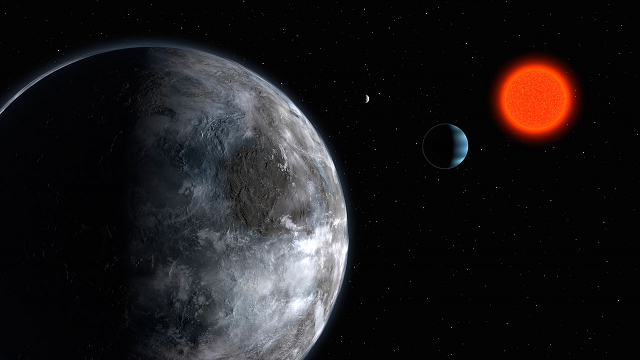
gliese 581Boy, its been awhile since I posted anything from my group’s anthology. But, since it is something I am committed to do doing on my site, I always feel the need to post sample updates whenever they become available. And here is the latest from one of my own contributions to the anthology (titled “Yuva”), the fourth installment to be exact. I imagine there will be two more like it before the story has reached fruition and “The Torch”, as it is called, will be complete.

Hope you all enjoy it, and I really hope people will come on out to support Yuva once it too is completed and available for purchase/download. I’m hoping to make it available in both paperbacks and ebook format, and of course, there will be promotional discounts. But that’s another day and we still need more contributors before it can happen. If you’re an indie, there are still a few spots open…

*               *               *

The door slid open, admitting the faint light of the room’s nighttime bioluminescent units. Muktari stumbled in, his eyes set on the desk at the far side of the room, where his satchel and compad rested It was a bit of an effort to make it there without knocking anything over, and yet he found his way to his chair within a few minutes.

Muktari had been drunk exactly three times in his life. The first two occurred in university while studying abroad. Being in the company of some many young men who were either not members of the faith, or who had turned their backs on its more rigorous elements long ago, had sufficed to get him to indulge then. But after discovering there was little in inebriation, he had quickly put a stop to that.

The third time was tonight. After the first drink with Mazzini, he had quickly found his way back to the front where the company shuttle was awaiting him. After hopping in the back and ordering the automated driver to take him home, he had indulged heavily in the private stock that was kept in the back. There was no trace of the whiskey Mazzini had coaxed him into drinking, but he found plenty of another generic variety to sip on. No soda water was needed, as he wanted the full, punishing effect of it.

It was somewhere between the old opera house and his hotel he realized the true purpose of such poison. The use was to be found in its abuse. The infliction of pain and torture upon oneself, not to alleviate pain or worry, but to punctuate and drive it home. He had to admit, it was genius, in a bleak and sardonic sort of way.

But were human beings if not lovers of irony and masochism?

Setting his eyes on his satchel, he pulled out his compad and flexed it a few times to activate its bio cell. The light came on and the image of its welcome screen was projected into his visual field.

Meşale, he typed on the virtual keyboard, and was rewarded with a desktop. He called up all his files on his presentation and eyed them despondently. The images of the five planets arrayed from left to right suddenly seemed like a terribly lost cause, a fool’s hope that he made the unfortunate mistake of sharing with others. Running his hand over the screen, he took the entire file in hand and began drifting it towards the icon of the trash in the lower right corner. It hovered directly above the icon, darkening it… and there it waited.

He wanted so badly to destroy it all, to remove all traces of the proposal and all the difficulty such ideas was bringing him. He wanted to forget about everything that had happened in the last week, to start fresh and stop feeling like a fool who was shouting at the rain. He was so tired of staking everything – his life, his job, his reputation, his future – on gambits that got him nowhere.

Really, what made him think that Zimmerman, or anyone for that matter, would have taken it seriously? Could it have been the fact that after years of doing the same thing, over and over, that he was beginning to suspect there was no future to be had here at home? Was it that deep down inside, all empirical evidence pointed towards the same outcome and all attempts to defer or delay it seemed futile? Was it really so absurd, with all he saw happening around him on daily basis, to plan for the worst? And who could fault him for looking further, given the audacious but still limited plans for Solar Colonies?

In business school, they still taught young academics that ambition and initiative were the keys to the success. Was it so wrong to think that that still applied? Would he be calling them tomorrow and demanding that they revise the curriculum to teach conformity and affability instead?

His nerve faltered and he pulled the file away from the trash. Taking a deep breath, he did his best to get his head together and proceeded to the lavatory. Some cold water on his face, and some mineral water in his belly, and he was sure to feel better. He also needed to get out his night clothes, as they were ruffled and beginning to stink of self-pity.

The door chimed. His head snapped around in a hurry and he felt his heart leap. Between the fatigue and alcohol, he was in no shape to be startled. Sighing, he proceeded to the room’s common area and approached the front door. It chimed again…

“Who’s there?” he asked irately.

“An interested party,” came a female voice through the comm. Muktari frowned. What could possibly the meaning of this, he wondered.

When he reached the door, several possible answers came to mind. It slid open to reveal the woman from earlier, the one he had left Mazzini with at the afterparty. At the time, he had suspected her of being an industrial spy, or possibly a professional. He now suspected the former, as there was little chance she had passed on Mazzini in order to seek him out. Mazzini was not known to turn his nose up at a fine lady who would deign to ask for money before performing an act he held so dear.

“Magid Muktari?” she said.

“Yes,” he replied, putting his arm to door frame, blocking her entry. “How may I help you?”

“Actually, I was thinking it was I who could help you.”

“I’m not sure what you’re selling, but I can tell you I’m not interested.”

She smiled at that, exposing to perfectly ordered rows of white teeth. Another very impressive and pretty feature she boasted. It was little wonder she was sent out to deliver messages.

“I can assure you, I’m not here to solicit anything. I’m just here to relay a proposal.” She looked past him into the common area. “May I come in?”

Muktari looked behind him to the couch and considered his options. He could slide the door shut, leaving the lovely lady out in the corridor. Or he could invite her in, hear her out. Aside from being rude, the former option seemed downright needless seeing as how he had nothing else planned. And an offer might be just what he needed, given his prospects.

Stepping out of her way, he ushered her in and made his way over to the dispenser in the far corner of the room. “Can I offer you something? Coffee? Tea? Mineral Water? Perhaps some poison?”

“You look like you’ve had your fair share yourself,” she said, sitting on the couch and getting comfortable. Muktari shook his head, began filling two glasses with mineral water and some ice cubes.

“So… what’s so important that you chose to bother me at this late hour? Was my friend not entertaining enough for you?”

That made her smile again. He had to admit, she had a very pretty smile, and the way she was seated right now showed just enough leg to intrigue him. Perhaps it was the alcohol thinking for him. He offered her a glass and sipped from his own.

“Oh, Mazzini is quite charming. But I didn’t come to this city to enlist him. It was your presentation that I wanted to hear.”

“You mean the lecture on Oceanic Enhancement?” he said, shrugging and taking a sip from his glass. “Not my work, specifically. I merely presented the relevant findings, based on the company’s ongoing efforts.”

“Not that one,” she said. “I was referring to the one you presented to your boss, Mr. Zimmerman, less than a week ago.”

Muktari stopped in the midst of sip. He was worried he might choke. He stared over the edge of his glass for a few seconds and carefully lowered it. The lady smiled again and placed her glass down on the table in front of her.

“Ah, I see you I have your attention now. I can imagine you’re also wondering how I knew about it?”

 Muktari cleared his throat. “The thought crossed my mind.”

“Our sources are very good. And company gossip has always been a prime source of intel. One scarcely needs sources at all when people speak so freely.”

Muktari wasn’t sure how to respond. He shuffled awkwardly and cleared his throat.

“What was not being spoken of so freely was the fact that you are also scheduled to be transferred to Oslo. That information came at a price, but it was a good investment, in my employer’s opinion.”

Muktari saw where this was going now and saw an opportunity to respond.

“And who is this employer, pray tell?”

She reached into a small fold in her dress, invisible to the naked eye, and pulled out a card. She laid it down on the table carefully and slid it in his direction. Muktari snatched it up in his left hand and held it up, depressing one corner to activate the display chip within.

A small presentation video began, colorful graphics dancing around and showing a name.

Harding International, it said. Muktari’s eyes widened and his mouth fell open a few centimeters. When he looked back at the lady before him, he glared intently at her, a frown forming on his face.

“Who are you?”

Again, that smile. “Seriously, you don’t recognize me? Don’t you read the trade pages?”

He frowned harder. It was a rhetorical question largely, just about everyone was familiar with the Harding family and their holdings. And aside from the slight tan she had picked up, it was not hard to see the resemblance to her father.

“Not that ones that deal exclusively in global capital and investment,” he said firmly. “Why would your father be interested in exoplanet colonization?”

She spread her hands before her. “He likes to think he sees things in people, in ideas. It’s what built our family empire after all. And he also liked to enlist people who can do the same, who see potential in things down the road.”

She let that linger in the air for a moment, during which time, Muktari could think of nothing to say. He was hit by a wave of self-satisfaction and found he couldn’t speak. Naturally, he did his best not to show it, but knowing that a corporate headhunter was interested in his work could not help but inspire a certain sense of self-satisfaction. He had to wonder if Zimmerman had sources of his own implanted in Harding, whether or not they would get wind of this and wonder if it was an indication to start taking his proposals more seriously…

But alas, such feelings were tempered by the fact that he knew nothing about what Harding or his people had in mind here. What’s more, he knew enough not to trust any offer at face value. Regardless of how bleak his future looked with Zimmer and Associates, he still needed to proceed as if he were in a position of strength, unwilling to settle too quickly or easily.

“So what does your… father want of me?” he asked firmly. “Is this to be a matter of intellectual property, buying up and patenting an idea so it can be turned into cash once it becomes profitable?”

She didn’t smile this time. Instead, she rose to her feet and extended her hand to him.

“Nothing so crass. But if you’re interested in making your proposal again, to someone who is genuinely interested and willing to listen, then I’ll arrange a meeting?” She looked to her hand, back at Muktari. “Sound fair?”

Muktari looked at her hand as well, cautiously, and then took it in his. “Alright. I will meet with him. But no guarantees. I hear Oslo is very nice this time of year.”

“It is,” she said, smiling very broadly. He was almost dazzled by her two rows of impeccable teeth.

Top Stories of 2012

biotech_alienAs Dec. 31st fast approaches, I find myself thinking about New Years resolutions. And part of that is taking stock on what’s been accomplished in the past year. For me, one of those resolutions was to stay current and share all the new and exciting news from the field of science and tech all my followers people; to the best of my abilities, that is.

In keeping with this, I wanted to create a list of the most important developments of the last year. Many sites have produced a top 10, top 12, even a top 7, list of what they thought the most significant accomplishments were. Well, I wanted to do one of my own! Opinion varies as to what the biggest leaps and bounds were over the course of the last year, and I’ll be damned if I don’t get my say in. Lord knows I’ve spent enough time reading about them, so here’s my comprehensive list of the greatest inventions, developments and advances made during 2012.

I think you’ll all agree, the list packed with stories that are intriguing, awe-inspiring, and even a little scary! Here are the top 12, as selected by me, in alphabetical order:

3D Printing:
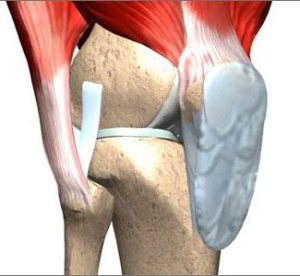
cartilage1As far as tech trends go, this one has been in the works for some time. However, 2012 will be remembered as the year that 3D printing truly became a reality. From tree-dimensional models to consumer products to even guns, 3D printers have been featured in the news many times over for their potential and frightening abilities.

However, one of the greatest potential uses will be in the field of artificial cartilage, organs, and even food. As the technology is refined and expands to the field of organic molecules, just about anything can and will be synthesized, leading to an era where scarcity is… well, scarce!

Bionic Implants:
mindcontrolledprostheticPerhaps the years biggest achievement came in the form of bionic prosthetics, artificial limbs which are calibrated to respond to the nerve impulses of the user. As a result, amputees, veterans and accident victims are able to receive artificial limbs that act like the real thing.

The most notable case was Zak Vawter who scaled the 103 flights of Chicago’s Willis Tower using an artificial leg. In addition, two men in Britain had their sight restored after undergoing the first ever case of retinal surgery where bionic implants were placed in their eyes.

Brain Implants:
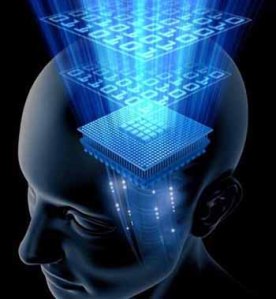
digital-mind1In September of 2012, scientists grafted an implant onto the brain of Chimpanzee, enhancing its brain power by ten percent. This consisted of an electrode array that was attached to the cerebral cortex of several monkey subjects, researchers were able to restore and even improve their decision-making abilities.

The implications for possible therapies is far-reaching, such as with brain injuries and cognitive disorders. But additionally, it also heralds the beginning of an era where human beings will be able to enhance their intelligence, recall, and memory retention.

Commercial Space Flight:
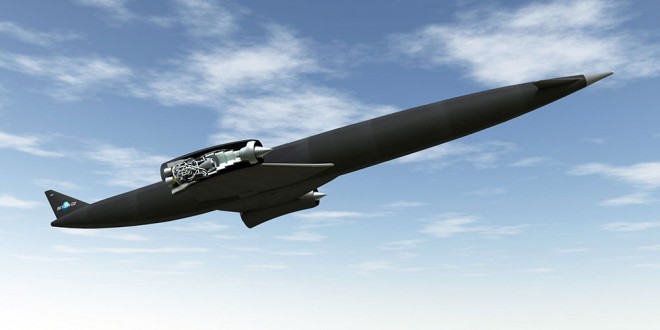
skylonThough not yet fully realized, 2012 was a big year in terms of commercial space flight. For example, Richard Branson and Virgin Galactic announced the first successful fully-loaded “glide test” of SpaceShipTwo, the rocket craft that will be taking passengers into low orbit as soon as all the kinks are worked out of the design.

In addition, Reaction Engines announced a breakthrough with the design of their hypersonic engine, which they claim will be fitted to their proposed spaceship – the Skylon. Capable of achieving speeds of up to Mach 5, this new craft is expected to be able to take off from conventional airfields, propel itself into low orbit, and deliver supplies to the ISS and make commercial trips around the world. No telling when either company will be conducting its first real suborbital flights, but the clock is ticking down!

Curiosity Rover:
Curiosity_selfportrait
One of the years biggest announcement was the deployment of the Curiosity Rover on the Martian surface. Since it landed, the rover has provided a constant stream of scientific updates and news on the Red Planet. Though the Mars Science Team did not find the “earthshaking” proof organic molecules, it did make a number of important discoveries.

Amongst them was solid evidence that Mars was once home to large rivers and bodies of water. Furthermore, the x-ray lab on board the rover conducted studies on several rock and soil samples, determining what the chemical and mineral composition of Mars surface is.

Faster-Than-Light Travel:
alcubierre-warp-drive-overviewIn the course of speaking at the 100 Year Starship, scientists at NASA began working on the first FTL travel system ever. Long considered to be the stuff of science fiction, physicist Harold White announced that not only is the math sound, but that his team at NASA had actually started working on it.

Relying on the concept of the Alcubierre Drive, the system involves expanding and contracting space time around the ship, allowing it to move faster than the speed of light without violating the Law of Relativity.

Geo-engineering:
converted PNM file
In October, the world’s first – and illegal – act of geo-engineering took place off Canada’s West Coast. The product of a “rogue geohacker” named Russ George, who was backed by a private company, the project involved the dumping of around 100 tonnes of oron sulphate into the Pacific Ocean. This technique, known as ocean fertilization, was meant to stimulate the growth of algae which metabolize carbon and produce oxygen.

The experiment, which is in violation of two United Nations moratoria, outraged many environmental, legal, and civic groups, many of whom hail from Haida Gwaii, the traditional territory of the Haida nation, who had enlisted by George as part of a proposed “salmon enhancement project”. Though illegal and abortive, the act was the first in what may very well become a series of geoengineering efforts which will be performed the world over in order to stay the progress of Climate Change.

Google’s Project Glass:
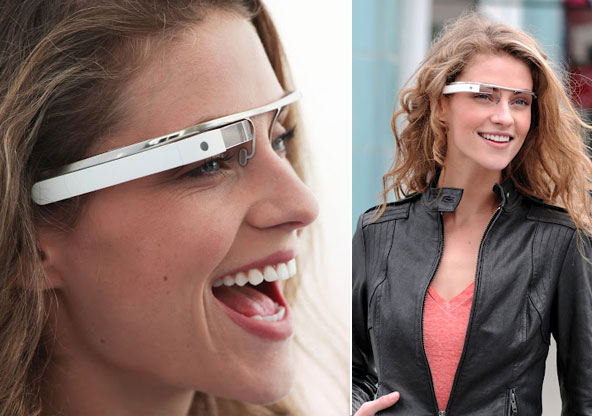
google_glasses2012 was also the year that augmented reality became… well, a reality (oh dear, another bad pun). Back in April, Google unveiled its latest concept device for wireless and portable computing, known as Project Glass. Combining an active display matrix, a wireless internet connection and a pair of shades, Google managed to create a device that looks like something straight out of cyberpunk novel.

HIV and Flu Vaccines:
HIV-budding-ColorWhen it comes to diseases, HIV and the Flu have two things in common. Until 2012, both were considered incurable, but sometime in the near future, both could be entirely preventable. In what could be the greatest medical breakthroughs in history, 2012 saw scientists and researchers experiment with antibodies that have been known to fight off HIV and the flu, and to good effect.

In the former case, this involved using a new process known as Vectored ImmunoProphylaxis (VIP), an inversion of the traditional vaccination method, where antibodies were introduced to mice. After allowing the antibodies to reproduce, researchers at Caltec found that the mice were able to fight off large quantities of the virus. In the latter, researchers at the Friedrich-Loeffler Institute in Riems Island, Germany used a new RNA-based vaccine that appeared to be able to fight off multiple strains of flu, not just the latest mutation.

Taken together, these vaccines could bring an end to a common, but potentially deadly ailment, and signal the end of the plague of the 20th century. In addition, this could be the first in a long series of developments which effectively brings all known diseases under our control.

Medical Implants:
enhancement2012 also saw the culmination of several breakthroughs in terms of biomedical research. In addition to the world’s first medimachine, there were also breakthroughs in terms of dissolving electronics, subdermal implants that dispense drugs, and health monitoring patches.

Little wonder then that Cambridge University announced the creation of the Center for the Study of Existential Risk to evaluate future technologies, or that Human Rights Watch and Harvard University teamed up to release a report calling for the ban of “killer robots”. With all the potential for enhancement, it could be just a matter of time before non-medical enhancements are a reality.

Mind-controlled prostheses:
woman-robotic-arm_650x366Researchers at BrainGate created a brain-machine interface that allows users to control an external device with their minds. The first person to use this revolutionary new system was Cathy Hutchinson, a stroke victim who has been paralyzed from the neck down for 15 years, who used the robotic arm to drink a cup of coffee.

This news, combined with other advances in terms of bionic prostheses, could signal the end of disability as we know it. Henceforth, people with severe injuries, amputations and strokes could find themselves able to make full recoveries, albeit through the use of robotic limbs.

Self-driving cars:
googlecar2012 marked an important year as three states (California, Nevada, and Florida) made autonomous vehicles legal. Self-driving cars, once perfected and produced en masse, will help with traffic congestion and significantly reduce the chance of auto accidents through the use of GPS, radar, and other technologies.

*               *               *

All in all, it’s been an exciting year. And with all that’s been accomplished, the future is certainly looking a lot more interesting and even frightening. What is clear is that predictions made for some time now are becoming realizable, including replication, a cure for all known diseases, advanced robotics, implants, cybernetics, and even post-humanism. Regardless of where one sits on these developments, be you pro, con, or neutral, I think we can all agree that it is an exciting time to be alive!

Happy New Year to all, and here’s hoping 2013 proves just as interesting, and hopefully a lot more peaceful and sound. And may we ALL find ourselves able to keep our New Years resolutions and build upon all we’ve accomplished so far. And of course, with all the potential for medical and technological enhancements that are coming, I sincerely hope we can find ways to improve ourselves on a personal level too!

Anthology Sample: The Torch, Part III

Hello again, fellow readers and writers! It’s been a long time since I produced any samples of writing from my group’s anthology, but rest assured we’ve all been busy creating, editing, and illuminating. I myself have been rather derelict in this pursuit recently, having left my prologe story (The Torch) to sit idle for some time. However, I’m back on it now that I’m back in town and have finished work on the latest segment.

I plan to fashion just a few more to finish the piece, which will introduce the larger story, and then get back to recruiting and editing. As it stands, more than two-thirds of the stories have been claimed, one third have been completed, and the rest are still up for grabs. If you’ve been proffered an invitation, consider this your reminder notice. We still need you! I urge you, be the ones to help this vision of the future reach completion before it is too late…

Anyhoo, here is the third segment of Torch, fresh off the press and straight to your laptops, tablets, ereaders or PDAs. Enjoy!

*                    *                    *

The aged mirror’s appraisal of him was less than flattering. It’s ornate brass frame was a thing of beauty, but the tainted glass looked very much as he felt. He finished with his tie, turned to face the room, and moved back in to face the music. Hours of speeches, public addresses, and his own presentation; and yet, he felt that this portion of the evening was the true test of mettle. Walking through the crowd of entrepreneurs, states people and representatives felt like walking a particularly malicious gauntlet. At least when he was on stage he could pretend to be addressing an empty room. The bright lighting made it almost seem as such.

All part of the job description, he told himself. His first stop was to the couple immediately to his left. The Russian Minister of the Environment, Kirill Minksi. Muktari didn’t recognize the woman on his arm; presumably she was someone he was sleeping with, if not his wife.

“Doctor Muktari, quite the lovely lecture,” he said, taking his hand and shaking it firmly. “It was like being in school all over again.”

“Really?” Muktari said. “Do you mean enlightening or stifling and subject to the idiosyncrasies of a single man?”

Both Minski and the woman on his arm laughed. He quickly turned to her and made the introduction. “Where are my manners? Doctor Magid Muktari, this is Klavdiya Chauchat.”

 “Ah yes, the ballerina?” he said, looking at her with a forced smile. Chauchat made a demure little gesture, something akin to a curtsey. “A pleasure, I assure you.”

“Enchanté,” she replied. She placed her fingers in his hand. Muktari chuckled and planted a gentle kiss on them. How little things had changed. Leading ladies still being escorted by men of power and influence, though now it was to summits rather than balls. At least the décor was still just as elegant, and the refreshments just as expensive.

“I was hoping we’d get a chance to talk, Doctor,” Minsky said next. “You’re reputation in government circles precedes you.”

“Is that so?”

“Why yes,” Minsky said with a look of surprise. “I attended the symposium in Luxembourg back in thirty-eight. You lectured there alongside Pracha and Suzuki. You were very good.”

“I remember,” he said. That was in the days of the Luxemburg Agreement, where he had been arguing for governments to include water usage and forestation as basic protocols. He had been but a mere player in those days, taking his cue from more senior experts. He supposed that Minsky saw it as a compliment to be mentioning him in conjunction with the others.

“I was discouraged that it did not have the desired effect.”

Minski chuckled sheepishly. He knew exactly what Muktari meant by that. As soon as the talks in Luxemburg ended, Minsky and his fellow Senators went home to vote the Agreement down in the Federation Council. Many of Muktari’s own colleagues spent years in the East trying to clean things up as a result.

 “Well,” Minski said, raising his glass. “Here’s hoping you and your colleagues have greater success this time around.”

Muktari stifled the urge to say something even more impertinent. He had learned some time ago that certain minds could not be swayed, and reminding of them of that fact was an even less worthy enterprise. He issued a courteous farewell to Muktari and even more cordiale one to Chauchat.

One down, he thought. So, so many to go.

That prospect immediately became cheerier when he spotted a familiar figure standing at the bar. A glass of single malt with ice in his hand and a Tamaki in his mouth. And of course, he looked about as uncomfortable as Muktari felt.

Grigore Mazzini, a fellow company man he had seen since their work in Tunisia. He remembered those days fondly, or more importantly, the nights when he and Mazzini would steal away from the array they had been working on to sample the night life in the capitol. Naturally, Zimmerman had decided to send people from other sectors in to represent their company. He was hoping he might find it at some point during the evening, as he was about the only face he both knew and could expect genuine kindness from.

“Dining on ashes, old friend?” he said as he approached. Mazzini looked at him curiously and then laughed when he saw who it was.

“Magid, you old provocateur, you!”

They embraced in front of the bar and gave each other a hearty kiss on the cheek, as was Muktari’s native custom. When they pulled apart, they were sure to complement each other on their choice of wear.

“I see you’ve updated your old vice?” he asked, nodding to the companion in his hand. Mazzini looked at it as well and scoffed.

“Only way I could smoke in here was to ensure the gentlemen at the door that they were vaporizers.” He took a long haul and let out a tiny vapor trail, watched as it disappeared a short distance from his lips. “Ah! And it’s just not the same.”

Muktari laughed and leaned against the bar with him. “I don’t suppose I could trouble you for one?”

Mazzini reached into his jacket and produced a case. He raised his glass just as soon as Muktari took one and activated it between his lips.

“Shall I tempt you with a spot of devil’s nectar as well?”

Muktari shook his head. “You know me, one vice at a time. Besides, I need some clarity if I want to make it through the night.”

“Trust me, friend. The only way either of us is making it through the night is with a proper numbing.”

“Hmm, I’d prefer a little morphine, in that case.”

Mazzini let out a great big belly laugh. A few heads turned, but otherwise the festivities were undisturbed. And more importantly, Muktari felt like he was actually beginning to enjoy himself a little. Alas, they both knew they couldn’t hide at the bar forever. As company men, they were here at the behest of someone else, and that required them to network and dialogue as much as possible between presentations. The after-parties were as important as the proceedings themselves when it came to fostering goodwill and securing the cooperation of vested interests. Hell, some would say they were even more important.

After a few minutes of idle conversation, Mazzini changed the course of their conversation. The way he introduced it let Magid know it was a matter of some delicacy.

“I, uh, heard an office rumor shortly before I left,” he said, taking a bit of a pause. “It seems they are looking for someone new to head up reclamation in the Arctic Circle. Out of our offices in Oslo.”

“Really?” Magid said. Not exactly a choice position, as it involved a considerable time on board ice trawlers and visiting monitoring stations in the high Arctic, such as Iceland and Baffin Island. Magid’s heart sank when he realized why the topic would be considered delicate…

“Oh no, you don’t mean –”

“I’m afraid so,” Mazzini said. “Word around the offices was that you were considered the top contender, given your background and rumors that you were kicking up some dirt.”

Magid buried his hands in his face. “Oh dear God, no.”

He felt Mazzini’s hand on his shoulder, heard on the onset of comforting words.

“I’m sorry, friend. I tried to warn you that your predilection for taking the long view and saying what you really thought might get you into trouble someday. Though this is considered a promotion, of sorts, everyone felt that you would surely not fail to get the message.”

“They can’t just fire me,” he said decisively. “They’re hoping I quit.”

Mazzini cleared his throat. “Seeing as how I’m letting you in on things, I should also point out that your last assignment was intended to have the same effect. Who knew you would actually find working in the Maghreb to be fulfilling. After you came back with that your presentation in your docket, I’m guessing they figured a transfer to the opposite extreme might… dampen you’re enthusiasm.”

“You mean chill it,” Magid corrected. “Well… message received.”

Mazzini patted him on the shoulder again. “As I said, my friend. I am truly sorry. If there was anything I could do…”

“I know,” Magid replied with a nod. Alas, they were just a bunch of company men, doing as they were told and going where they had to. Little more could be expected of them. “I think I’ll take that drink now.”

Mazzini looked genuinely surprised. “Are you sure?”

“Why not? Seems piety is a little wasted on me right now. Besides, I hear the whiskey is quite good.”

Mazzini laughed, though it sounded tempered. Though he was happy his friend would be joining him in a round, he was a bit hesitant to be involved in his corruption as well. Mazzini needed few excuses to tilt a glass, but anger and depression were good reasons not to in his mind. Still, he called the barman over and ordered two more glasses of what he was drinking.

“Two more Bruichladdich’s please, with ice.”

The barman nodded and went off to fetch their drinks. Many long seconds passed before any words passed between them again. When they did, they sounded about as delicate as before, though arguably more conspiratorial.

“Magid, please don’t look in her direction, but I must inform you that a pretty young thing is looking at you from the far corner.”

Magid sipped from his glass and nodded casually. Adjusting his head ever so slightly to employ his peripherals, be caught little more than blobs of color. For this, he would need more accurate coordinates.

“Which corner would that be?”

“Uh, north-east by my reckoning. Please don’t look at her, she’s still watching.”

“Well…” Magid said, confounded. “Could you describe her to me?”

“Long dark hair, lovely tan complexion, dark dress with a string of precious stones and just enough leg showing to give this old man an injection of frisk.” He swirled the ice cubes in his glass fervently. “I do so hope she’s looking at myself, though I imagine she’s more of what you could use right now.”

Magid chuckled, but shook his head. “Using ladies is not my speed, friend. Besides, I think I’m a little too depressed to be good company to anyone right now.”

“You sure? You’ll change your mind when you see her…”

Finally, and as casually as possible, she looked back in her direction and did a quick spot check. Mazzini was right, in all respects. He caught barely a wisp of her, but she was every bit as beautiful as his friend had let on. Far too comely to be gazing at the likes of them with anything approaching visceral interest.

“I don’t think so. Probably an industrial spy, or our competition, looking to eek some information out of us.”

“At the moment, I don’t care,” Mazzini said, quickly downing his second glass. “And if you’re sure you’re not up to the task, I’m definitely going to approach her. Let us just pray she’s not a professional, working the room.”

Magid frowned and chuckled, more deeply and sinisterly this time. Leave it to good ol’ Grigore to out a dirty spin on things. Leave it to him to leave him high and dry with his depression and the breaking of moral strictures as well. He eyed the glass in front of him and considered sending it back, but at the moment, he needed something to drown his feelings. Taking the glass in hand, he made a quick go of it, and quickly regretted the transaction.

“Whoa…” the barman said, a thick Russian accent discernible. “Another for you, sir?”

“No thank you,” he said, casting a look in Mazzini’s direction. His large frame now completely blocked the image of the stunning young woman. He cast a look around the room, and saw nothing but a night of pointless interaction as well.

Producing a fifty Euro note, he paid for his and Mazzini’s drinks and headed for the coat room. It was going to be a long night, and with nothing more to gained from doing his job, he would spend it doing something arguably less… productive.

*                    *                    *

And that’s section III down, and just three or so more to go! Hoping to avoid stretching those out, as I’m already 6,544 words in and only half-way done, by my reckoning. As you can imagine, I’d like to avoid what I did with Winston Agonistes, which was to break the word count limit by a factor of 2 to 3, depending on which limit I choose to go by. Originally, my group and I had agreed on a 5000 word limit, but we were willing to up it to 8000 in case of necessity. At 15,961 words, you might say I abused that limit just a little. Man, I must like to write ;)!

Future Timeline

This has been sitting in my box of ideas for quite some time, a website that produces videos dedicated to predicting future trends. Awhile back, I came across it while searching on the subject of the Technological Singularity, and was pretty intrigued by what I saw. Not only was this website dedicated to predicting major technological developments in the near future, the ones that would culminate in the Singularity, but was even considering humanity’s prospects as a species in the far, far future. After taking a look around I thought to myself: “truly, this is the stuff of speculative science-fiction.”

To get a breakdown of what the makers of this site predict, check out the videos posted below, as compiled by HayenMill at Youtube. A self-professed amateur historian and futurist, HayenMill took the liberty of combining the Future Timeline predictions, year by year, covering the three decades that will take us from the beginning of 2010 to 2040, by which time all the current trends of the world will reach a full, fevered pitch. These include the problems of overpopulation, climate change, the shift of economic power from the US to Asia, and the growth of information, medical, and bio technology, as well as the development of AI and commercial spaceflight.

Check them out, and for a more detailed breakdown of future events, go to futuretimeline.net. Trust me when I say that the group’s predictions range far and wide, but which are also highly detailed, at least when pertaining to this century! You can take me at my word when I say that I will be doing my best to incorporate as many of these ideas as possible into my own writing!


Mercury Robot Survives Hurricane Sandy

Amidst the news of Hurricane Sandy, of the devastation and ongoing efforts at rescuing those in harm’s way, there was a story that might have been overlooked. It seems that a small robot named Mercury, one of Liquid Robotics wave gliders, survived the storm and managed to keep transmitting information the whole time.

When the storm hit, Mercury was located just 161 km east of Toms River, New Jersey, where winds got up to about 115 km/hour. Nevertheless, the robot continued to function though the worst of it, transmitting real-time weather data and helping scientists to get a better understanding of what made the storm tick.

Naturally, everyone at the parent company was quite pleased with their little automaton, even though it was only doing its job. Technically speaking, Wave Gliders are autonomous monitoring devices that use the ocean’s waves for propulsion. They are composed of two sections; a float for the surface and a submarine compartment that resides under the water. The lower section also comes equipped with moving wings that ensure that the Glider can convert wave energy into forward momentum.

Each Glider comes with a GPS, a series of internal pocessors, navigation software, and an assortment of environmental sensors. Designed for oceanic data-gathering missions, their primary purpose is to help scientists and meteorologists understand and come up with solutions for climate change, resource management, and weather alerts. Given this mission profile, Mercury’s ability to keep on working through a Class One hurricane was quite encouraging. According to Joanne Masters of Liquid Robotics’: “Being able to provide real-time weather data from the surface and the first layer of the water column of the ocean will help scientists better measure and predict hurricane intensity. This can help save lives and prevent property devastation.”

Source: news.cnet.com

Obama Wins!

Yeah, I know I promised not to get into politics much on this site, but that’s a promise I’ve broken enough times now that I feel no one will be particularly surprised or disappointed. And as we all know, there are certain occasions which require us to break our usual set of rules and offer comment. And this is one occassion that I’m happy to talk about, even though it really didn’t come as that much of a surprise.

OBAMA HAS BEEN REELECTED!

That news is so positive that it deserves its own line and in all caps! And yes, all indications seemed to point to him winning a second term, but like many supporters, I was kind of holding my breath last night as the initial returns came in. It was a lucky thing that I had TKD class night, and that it was a sparring class. It was just the positive distraction I needed! And by the time I came home, I had heard that enough returns were in and that enough states were called that Obama could be declared the winner! It still took some time before all the votes were tabulated and it was also revealed that he carried the popular vote, but by then, the good news was complete!

And, as behooves me on this site, I can’t help but wonder (and speculate) how this will impact on our future. Needless to say, I am a lot more encouraged than I was a year ago, back when Obama was struggling to try and get a budget approved by a Congress that refused to even consider one unless be included steep austerity measures and made tax cuts permanent. It seemed that the GOP, which was fast becoming dominated by the Tea Party, had effectively been cornered by the same forces they helped create. It seemed entirely likely at this point that the government might actually fall, or at least it’s economy would collapse. Of course, disaster was averted, but not without consequences in the short term (the downgrading of America’s investment rating).

I seriously began to wonder at this point if a hard swing to the right was in our collective future. With Europe beginning to slip to the right thanks to their economy, immigration issues and the ongoing problems of climate change, all this news from south of the border began to trouble me. If both the EU and the US were to fall under the grips or right-wing parties, we would be seeing a political climate not unlike that of the 1930’s. Back then economic collapse had led to the rise of Fascism all over Europe, not just in Germany and Italy as is often maintained. And in this day and age, we could expect that to be followed by serious humanitarian crisis as the various states of the EU began deploying gunships to the Mediterranean to sink boats filled with refugees and began clamping down on ethnic minorities at home.

Unlike in the 1930’s, where the targets of discrimination and even wholesale murder were people of Jewish descent, followed by Roma, gays and lesbians and Slavs, this time around,t he likely targets were likely to be people from North Africa, the Middle East, and West Asia. Meanwhile, we could expect similar sentiments to take root in the US against people of Latino descent. We had already seen much of this take place during the Bush administration with the building of the border along the US-Mexico border and attempts to pass anti-illegal immigrant legislation. And in more recent years, it achieved a sort of breakout with the passage of SB 107 in Arizona – which made it perfectly legal for police to arrest any Latino resident who could not produce documentation of residence.

Initially, I was angry and nervous. It seemed to me that the GOP was intent on bringing the house down, that their commitment to make Obama fail that they did not care what happened to their country in the process. As long as it happened on his watch, they figured he would get the blame. But at the same time, I kind of pitied them as well. It was clear that they had unleashed a tidal wave that they couldn’t control, and were trapped in it as much as they were riding it. After the 2008 election, they had become the party of “libertarianism”, condemning big government, spending, taxes, and any and all legislation on the economy. Unfortunately, this put them at odds with just about everything they needed to support to help the economy recover.

Needless to say, things got better, and the election seemed to be cinched in advance by a number of factors. First, there was the fact that during the primaries, all the GOP candidates seemed hamstrung by all the extreme right-wing sentiments they were expected to endorse. one of these were likely to play well with all the moderates and undecideds. Second, there was Romney’s embarrassing gaffs as he traveled abroad and alienated everyone on his tour. He attempted to prove that he was a man who could handle foreign relations, but proved the exact opposite. Then there was Paul Ryan, a right-winger who proved to be at once too popular with his base and too extreme with the voters who sought the approval of. And finally, there was Hurricane Sandy, which made him look like a flip-flopper when it came the importance of such federal agencies as FEMA.

All the while, Obama was looking sturdy, even though he was being hampered by the terrorist attack in Benghazi, his initial performance in the debates, and the ongoing question of the economy. However, when the chips were down, he showed himself to be a man who could be counted on, and even won over such die-hards as New Jersey Governor Chris Christie. Between that and the fact that economy was beginning to recover on his watch, the election seemed in the bag.

And to quote Obama’s victory speech, “The best is yet to come.” I certainly hope so. It’s not just a question of recovery int he short run. There are a lot of things at stake here, not the least of which is the future of America and indeed the world. For the last thirty years now, there has been a struggle for the heart and soul of America, at the core of which seems to be the issue of decline. America, like it or not, is no longer in ascendance, and is faced with the myriad problem of global climate change which may exacerbate that problem very soon. If the nation and the world is to survive and come through as winners, then enlightened reform and stable leadership are what’s needed. The last thing that can be allowed to happen is a hard swing to the right, more austerity measures, and more of the same.

It has always been the reaction of empires and civilizations that have found themselves in decline to react with stringent conservative measures – more war, more sacrifice, more repression, more religious zeal – and that has only ever hastened the problem. That might sound a bit dramatic, but I’m a historian, so trust me when I say that I know what I’m talking about. And as Ronald Wright says, “Every time history repeats itself, the price goes up.” Despite the persistence of old boundaries, our world has become a global state, interconnected like never before in our history. We stand or fall together, and cannot afford to act selfish, regressionist, or that our needs super cede those of others.

So I say congratulations America on making the right choice. Enlightened reform won out against old world thinking and denial. Now let’s all get to work on making things happen and check the ideological obstructions at the door!

Artificial Trees to Fight Climate Change?

The indices of Climate Change have been growing in the past few decades, culminating in some serious trends that have left the scientific community worried and the general public far from calm. In addition to Arctic sea ice levels reaching a record low and record high temperatures being set during the summer, North Americans also experienced the worst wildfire season in recorded history. Over a million acres of forest burned up in the US alone, but the extended range of the fires reached from as far south as Texas to as far north as Nunavut.

For many years now, those on the forefront of climate science have been arguing that things will get a lot worse before they get better, and argue that some drastic geoengineering projects might be the only way to avert disaster. Many of these involve advanced climate science, such as evaporating more water around the mid-latitudes or “capturing” carbon in the upper atmosphere and converting it to harmless compounds. But as Gaia Vince, a science writer from BBC’s Future pointed out, the solution may be as a simple as improving upon an existing “carbon capture” technology, otherwise known as the Tree.

For some time now, climatologists and naturalists have understood the role that trees, plants, algae and plankton play in the carbon cycle. Unfortunately, the long life-cycle of trees, and the various ecological issues surrounding the artificial stimulation of algae and plants, make this aspect of ecoengineering somewhat impractical. What’s more, the growing demand for agricultural space is also putting pressure on existing green spaces. As our population continues to grow and more farmland is needed to provided for them, simply planting plants and trees more may not even be an option.

Luckily, there is an invention that takes all this into account and provides a possible solution: the artificial trees. Designed by Klaus Lackner, director of the Lenfest Center for Sustainable Energy at Columbia University, this “tree” is capable of absorbing CO2 from the air using “leaves” that are 1,000 times more efficient than the real thing, but at the same time does not require exposure to sunlight in order to carry out the process.

As Vince himself describes them: “The leaves look like sheets of papery plastic and are coated in a resin that contains sodium carbonate, which pulls carbon dioxide out of the air and stores it as a bicarbonate (baking soda) on the leaf. To remove the carbon dioxide, the leaves are rinsed in water vapour and can dry naturally in the wind, soaking up more carbon dioxide.”

Based on Lackner calculations, a single tree would be capable of removing one tonne of carbon dioxide from our atmosphere in a single day. By that reckoning, a forest of ten million would be able to remove 3.6 billion tonnes of carbon dioxide in a single year, the equivalent of about 10% of our global annual carbon dioxide emissions. One hundred million would solve our emission crisis altogether!

As for the resulting mass that the process creates, Lackner claims that could be turned into liquid fuels to power vehicles. In fact, when CO2 and water are combined, the end result is what is known as syngas, a fuel that is easily converted into methanol and diesel. So basically, while the artificial trees are scrubbing the air of fossil fuel emissions, they are also actively creating the means to generate more fossil fuel. Might seem ironic, but this in turn will allow humanity to keep using their carbon engines, all the while knowing that they are producing less than the trees are extracting. This will give the scientists of the world more time to invent a clean alternative to the fossil fuel engine, and that by the time they do it won’t already be too late.

Although some question the viability of this entire process, mainly where the issue of total cost is concerned, Lackney stresses that as global fuel supplies dwindle, fuel companies will see the wisdom in buying into this process, mainly because it offers them the possibility of fuel retention. Yes, by investing in artificial trees, oil and gas companies will be able to turn their own carbon emissions back into hydrocarbon fuel. Which will come in handy if the oil runs out as quickly as some analysts say it will. In addition, us consumers can expect a break the pump if it all goes well!

Does this strike you as ironic, or just a weird and interesting take on recycling? Who knows? All that is certain is that the technology is making some pretty bold forecasts, and if it should prove successful, we are likely to see a great deal of investment towards this new method. I can see it now, countless roofs and skyscrapers with fields of artificial trees lining their roofs. Water circulation systems that capture the CO2 once its sucked off the leaves and then channeled down to the fuel cells in the basement. And the rest trucked off by trucks that bear the logo of Haliburton, Shell, and Petro Canada. And for once, the drivers won’t feel a lick of shame!

The Case for Terraforming Venus

This weekend appears to be shaping up with a theme: news from space that isn’t about Mars. I swear that it’s entirely accidental. First there was the discovery of the diamond planet, 55 Cancri e, and now a story about the merits of terraforming another planetary neighbor. And wouldn’t you know it, it’s not Mars for a change.

Yes, it seems that there is a strong case for terraforming Venus instead of the Red Planet, and it comes from numerous scientists who claim that altering the climate on that planet could help us save our own. The reason being – and stop me if this sounds frightening – is because our planet could one day look just like our lifeless, acid ridden, cloud covered neighbor.

In short, Venus underwent a carbon-dioxide fueled cataclysm a long time ago, when it was still young and was believed to have oceans. In those early days, and as the sun got brighter, Venus’s oceans began to boil and evaporate into the atmosphere. As a result, carbon dioxide accumulated in the atmosphere, due in part to the lack of carbon recycling which depends on the presence of oceans and seaborne algae. This is essentially a magnified version of the Greenhouse Effect, which scientists identify as the reason for rising temperatures and melting polar ice caps here at home.

Because of this, Venus became the hot, deadly planet that we are familiar with today, with surface temperatures that average 467°C (872°F), hot enough to melt lead. What’s more, its atmosphere consists of 96% carbon dioxide, which appear as thick layers of clouds that float 50-70 km above the surface. Above that, clouds and mist of concentrated sulfuric acid and gaseous sulfur dioxide lead to acid rains that could literally melt the flesh off your bones and the metal off a landing craft. Combined with the amount of sunlight it gets (twice that of Earth) and the lack of a magnetosphere, Venus is a pretty damn awful place to visit!

Of course, some would say that this makes terraforming the planet a pretty dangerous and poor prospect, at least compared to Mars. However, the benefits of terraforming Venus are far greater, certainly when we consider that the lessons gleamed from it could help us reverse the Greenhouse Effect here on Earth. In addition, it’s closer than Mars, making it easier and quicker to travel back and forth. And like the Earth, it resides within the solar system’s habitable zone and has its own atmosphere, not to mention it is nearly the same mass and size as Earth.

All of this, when taken together, would make Venus a far more suitable place to live once the terraforming process was complete. In short, its easier to convert an existing atmosphere than to create one from scratch. And, as noted, the process of converting the CO2 and sulfur-rich atmosphere into one that a breathable one that is rich with water and precipitation would go a long way to helping us device solutions to cleaning up our own atmosphere here at home.

This may sound like pure speculation, but in truth, many solutions have already been proposed. In fact, Carl Sagan began proposing that we introduce genetically-modified airborne algae into Venus atmosphere 50 years ago. Thought not 100 percent practical, it was a stepping stone to some more recent ideas which may prove doable. In 1981, NASA engineer James Oberg proposed that all the CO2 could be blown out into space. Again, not the most practical idea, but they were thinking and that’s what matters!

More recently, Paul Birch, a writer for the British Interplanetary Society, proposed flooding Venus with hydrogen. Once it interacting with the high concentrations of CO2 in the atmosphere, the end products would be graphite and plenty of water. Other plans involve carbon capture, nanotechnology, and other advanced forms of ecological engineering. These, alone or in combination, could prove to be the difference between thick glass clouds and sulfuric oceans and a lush green planet covered with water and vegetation.

A pretty interesting prospect; and if it all works out, humanity could end up with three habitable planets within the Solar System alone. Combined with pressure domes and sealed arcologies on the system’s various moons and larger asteroids, planet Earth could one day retire as the sole host of humanity and this thing we call “civilization”. In fact, I could foresee a time when our world goes on to become hallowed ground, hosting only a few hundred million people and free of heavy industry or urban sprawl. Hello idea for a story!

And, to mix up what I usually say at the end of every one of these posts, stay tuned for more news from Mars and other planets within our Solar System. There’s a lot of them out there, and someday, they might all places that our species calls “home”.

Source: IO9

The Future…

A recent article from The Futurist concerning trends in the coming decade got me thinking… If we can expect major shifts in the technological and economic landscape, but at the same time be experiencing worries about climate change and resource shortages, what will the future look like? Two competing forces are warring for possession of our future; which one will win?

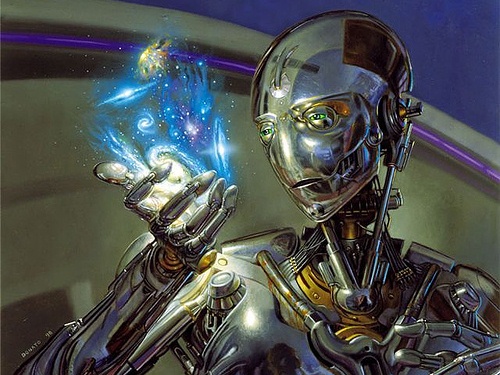
To hear Singularitarians and Futurists tell it, in the not-too-distant future we will be capable of downloading our consciousness and merging our brains with machine technology. At about the same time, we’re likely to perfect nanobots that will be capable of altering matter at the atomic level. We will be living in a post-mortal, post-scarcity future where just about anything is possible and we will be able to colonize the Solar System and beyond.

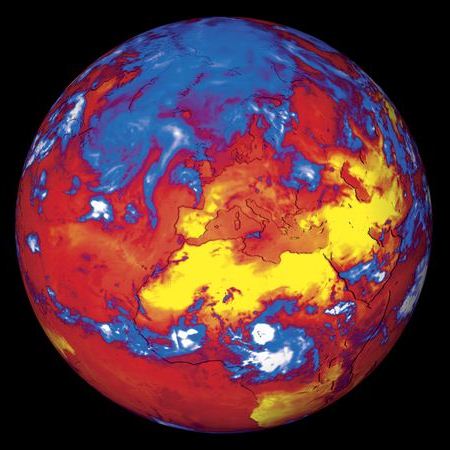
But to hear environmentalists and crisis planners tell it, we will be looking at a worldwide shortage of basic commodities and food due to climate change. The world’s breadbaskets, like the American Midwest, Canada’s Prairiers, and the Russian Steppe, will suffer from repeated droughts, putting a strain on food production and food prices. Places that are already hard pressed to feed their growing populations, like China and India, will be even harder pressed. Many countries in the mid-latitudes that are already suffering from instability due to lack of irrigation and hunger – Pakistan, North Africa, the Middle East, Saharan Africa – will become even more unstable.

Polar ice regions will continue to melt, wreaking havoc with the Gulf Stream and forcing Europe to experience freezing winters and their own crop failures. And to top if off, tropical regions will suffer from increased tropical storm activity and flooding. This will be create a massive refugee crisis, where up to 25% of the world’s population will try to shift north and south to occupy the cooler climes and more developed parts of the world. And this, of course, will lead to all kinds of political upheaval and incidents as armed forces are called out to keep them away.

Makes you wonder…

To hear the future characterized in such dystopian and utopian terms is nothing new. But at this juncture, it now seems like both of these visions are closer to coming true than ever before. With the unprecedented growth in computing, information technology, and biology, we could very well be making DNA based computers and AI’s in a few decades. But the climate crisis is already happening, with record heat, terrible wildfires, tropical storms and food shortages already gripping the world. Two tidal waves are rising and heading on a collision course, both threatening to sweep humanity up in their wake. Which will prove successful, or will one come first, rendering the other completely ineffective?

Hard to say, in the meantime, check out the article. It proves to be an interesting read!

The Futurist – Seven Themes For the Coming Decade