News From Space: Luna Rings and Spidersuits!

space_cameraSpace is becoming a very interesting place, thanks to numerous innovations that are looking ahead to the next great leap in exploration. With the Moon and Mars firmly fixed as the intended targets for future manned missions, everything from proposed settlements and construction projects are being plotted, and the requisite tools are being fashioned.

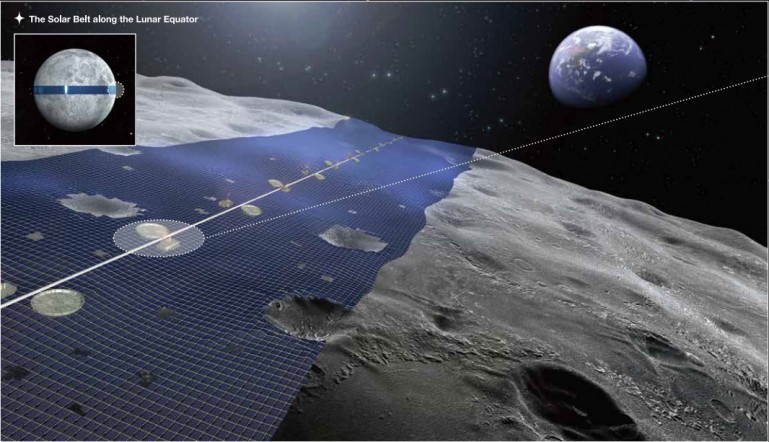
For instance, the Shimizu Corporation (the designers of the Shimizu Mega-City Pyramid), a Japanese construction firm, has proposed a radical idea for bringing solar energy to the world. Taking the concept of space-based solar power a step further, Shimizu has proposed the creation of a “Luna Ring” – an array of solar cells around the Moon’s 11000 km (6800 mile) equator to harvest solar energy and beam it back to Earth.

lunaringThe plan involves using materials derived from lunar soil itself, and then using them to build an array that will measure some 400 km (250 miles) thick. Since the Moon’s equator receives a steady amount of exposure to the Sun, the photovoltaic ring would be able to generate a continuous amount of electricity, which it would then beam down to Earth from the near side of the Moon.

It’s an ambitious idea that calls for assembling machinery transported from Earth and using tele-operated robots to do the actual construction on the Moon’s surface, once it all arrives. The project would involve multiple phases, to be spread out over a period of about thirty years, and which relies on multiple strategies to make it happen.

lunaring-1For example, the firm claims that water – a necessary prerequisite for construction – could be produced by reducing lunar soil with hydrogen imported from Earth. The company also proposes extracting local regolith to fashion “lunar concrete”, and utilizing solar-heat treatment processes to fashion it into bricks, ceramics, and glass fibers.

The remotely-controlled robots would also be responsible for other construction tasks, such as excavating the surrounding landscape, leveling the ground, laying out solar panel-studded concrete, and laying embedded cables that would run from the ring to a series of transmission stations located on the Earth-facing side of the Moon.

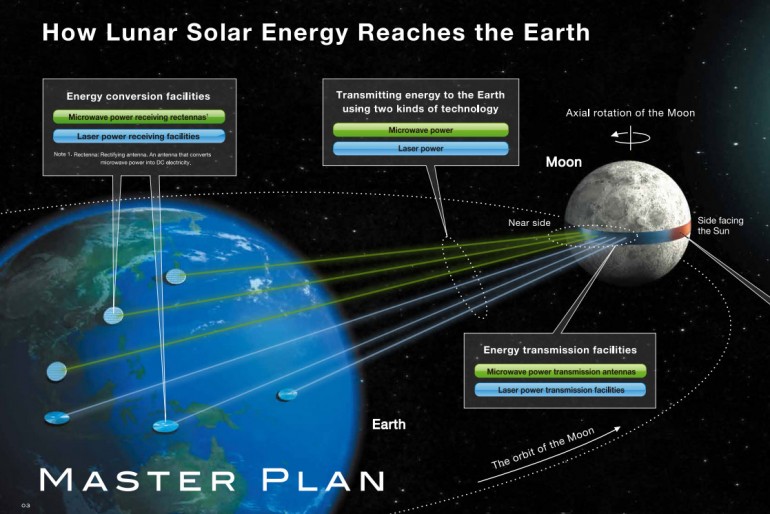
space-based-solarpowerPower could be beamed to the Earth through microwave power transmission antennas, about 20 m (65 ft) in diameter, and a series of high density lasers, both of which would be guided by radio beacons. Microwave power receiving antennas on Earth, located offshore or in areas with little cloud cover, could convert the received microwave power into DC electricity and send it to where it was needed.

The company claims that it’s system could beam up to 13,000 terawatts of power around-the-clock, which is roughly two-thirds of what is used by the world on average per year. With such an array looming in space, and a few satellites circling the planet to pick up the slack, Earth’s energy needs could be met for the foreseable future, and all without a single drop of oil or brick of coal.

The proposed timeline has actual construction beginning as soon as 2035.

biosuitAnd naturally, when manned missions are again mounted into space, the crews will need the proper equipment to live, thrive and survive. And since much of the space suit technology is several decades old, space agencies and private companies are partnering to find new and innovative gear with which to equip the men and women who will brave the dangers of space and planetary exploration.

Consider the Biosuit, which is a prime example of a next-generation technology designed to tackle the challenges of manned missions to Mars. Created by Dava Newman, an MIT aerospace engineering professor, this Spiderman-like suit is a sleeker, lighter alternative to the standard EVA suits that weigh approximately 135 kilograms (300 pounds).

biosuit_dava_newmanFor over a decade now, Newman has been working on a suit that is specifically designed for Mars exploration. At this year’s TEDWomen event in San Francisco, she showcased her concept and demonstrated how its ergonomic design will allow astronauts to explore the difficult terrain of the Red Planet without tripping over the bulk they carry with the current EVA suits.

The reason the suit is sleek is because it’s pressurized close to the skin, which is possible thanks to tension lines in the suit. These are coincidentally what give it it’s Spiderman-like appearance, contributing to its aesthetic appeal as well. These lines are specifically designed to flex as the astronauts ends their arms or knees, thus replacing hard panels with soft, tensile fabric.

biosuit1Active materials, such as nickel-titanium shape-memory alloys, allow the nylon and spandex suit to be shrink-wrapped around the skin even tighter. This is especially important, in that it gets closer Newman to her goal of designing a suit that can contain 30% of the atmosphere’s pressure – the level necessary to keep someone alive in space.

Another benefit of the BioSuit is its resiliency. If it gets punctured, an astronaut can fix it with a new type of space-grade Ace Bandage. And perhaps most importantly, traditional suits can only be fitted to people 5′ 5″ and taller, essentially eliminating short women and men from the astronaut program. The BioSuit, on the other hand, can be built for smaller people, making things more inclusive in the future.

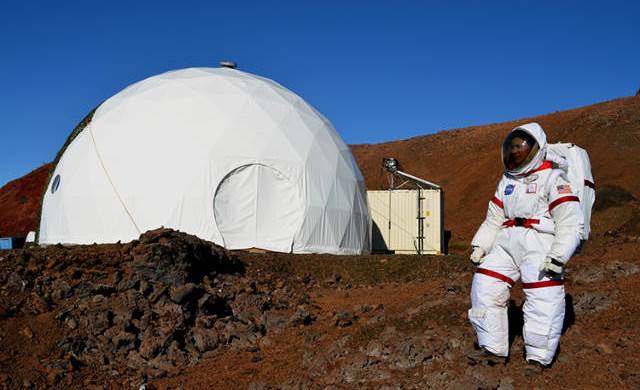
Mars_simulationNewman is designing the suit for space, but she also has some Earth-bound uses in mind . Thanks to evidence that showcases the benefits of compression to the muscles and cardiovascular system, the technology behind the Biosuit could be used to increase athletic performance or even help boost mobility for people with cerebral palsy. As Newman herself put it:

We’ll probably send a dozen or so people to Mars in my lifetime. I hope I see it. But imagine if we could help kids with CP just move around a little bit better.

With proper funding, Newman believes she could complete the suit design in two to three years. It would be a boon to NASA, as it appears to be significantly cheaper to make than traditional spacesuits. Funding isn’t in place yet, but Newman still hopeful that the BioSuit will be ready for the first human mission to Mars, which are slated for sometime in 2030.

In the meantime, enjoy this video of the TEDWomen talk featuring Newman and her Biosuit demonstration:

Sources: gizmag, fastcoexist, blog.ted

Looking Forward: Science Stories to Watch for in 2014

BrightFutureThe year of 2013 was a rather big one in terms of technological developments, be they in the field of biomedicine, space exploration, computing, particle physics, or robotics technology. Now that the New Year is in full swing, there are plenty of predictions as to what the next twelve months will bring. As they say, nothing ever occurs in a vacuum, and each new step in the long chain known as “progress” is built upon those that came before.

And with so many innovations and breakthroughs behind us, it will be exciting to see what lies ahead of us for the year of 2014. The following is a list containing many such predictions, listed in alphabetical order:

Beginning of Human Trials for Cancer Drug:
A big story that went largely unreported in 2013 came out of the Stanford School of Medicine, where researchers announced a promising strategy in developing a vaccine to combat cancer. Such a goal has been dreamed about for years, using the immune system’s killer T-cells to attack cancerous cells. The only roadblock to this strategy has been that cancer cells use a molecule known as CD47 to send a signal that fools T-cells, making them think that the cancer cells are benign.

pink-ribbonHowever, researchers at Stanford have demonstrated that the introduction of an “Anti-CD47 antibody” can intercept this signal, allowing T-cells and macrophages to identify and kill cancer cells. Stanford researchers plan to start human trials of this potential new cancer therapy in 2014, with the hope that it would be commercially available in a few years time. A great hope with this new macrophage therapy is that it will, in a sense, create a personalized vaccination against a patient’s particular form of cancer.

Combined with HIV vaccinations that have been shown not only to block the acquisition of the virus, but even kill it, 2014 may prove to be the year that the ongoing war against two of the deadliest diseases in the world finally began to be won.

Close Call for Mars:
A comet discovery back in 2013 created a brief stir when researchers noted that the comet in question – C/2013 A1 Siding Springs – would make a very close passage of the planet Mars on October 19th, 2014. Some even suspected it might impact the surface, creating all kinds of havoc for the world’s small fleet or orbiting satellites and ground-based rovers.

Mars_A1_Latest_2014Though refinements from subsequent observations have effectively ruled that out, the comet will still pass by Mars at a close 41,300 kilometers, just outside the orbit of its outer moon of Deimos. Ground-based observers will get to watch the magnitude comet close in on Mars through October, as will the orbiters and rovers on and above the Martian surface.

Deployment of the First Solid-State Laser:
The US Navy has been working diligently to create the next-generation of weapons and deploy them to the front lines. In addition to sub-hunting robots and autonomous aerial drones, they have also been working towards the creation of some serious ship-based firepower. This has included electrically-powered artillery guns (aka. rail guns); and just as impressively, laser guns!

Navy_LAWS_laser_demonstrator_610x406Sometime in 2014, the US Navy expects to see the USS Ponce, with its single solid-state laser weapon, to be deployed to the Persian Gulf as part of an “at-sea demonstration”. Although they have been tight-lipped on the capabilities of this particular directed-energy weapon,they have indicated that its intended purpose is as a countermeasure against threats – including aerial drones and fast-moving small boats.

Discovery of Dark Matter:
For years, scientists have suspected that they are closing in on the discovery of Dark Matter. Since it was proposed in the 1930s, finding this strange mass – that makes up the bulk of the universe alongside “Dark Energy” – has been a top priority for astrophysicists. And 2014 may just be the year that the Large Underground Xenon experiment (LUX), located near the town of Lead in South Dakota, finally detects it.

LUXLocated deep underground to prevent interference from cosmic rays, the LUX experiment monitors Weakly Interacting Massive Particles (WIMPs) as they interact with 370 kilograms of super-cooled liquid Xenon. LUX is due to start another 300 day test run in 2014, and the experiment will add another piece to the puzzle posed by dark matter to modern cosmology. If all goes well, conclusive proof as to the existence of this invisible, mysterious mass may finally be found!

ESA’s Rosetta Makes First Comet Landing:
This year, after over a decade of planning, the European Space Agency’s Rosetta robotic spacecraft will rendezvous with Comet 67P/Churyumov-Gerasimenko. This will begin on January 20th, when the ESA will hail the R0setta and “awaken” its systems from their slumber. By August, the two will meet, in what promises to be the cosmic encounter of the year. After examining the comet in detail, Rosetta will then dispatch its Philae lander, equipped complete with harpoons and ice screws to make the first ever landing on a comet.

Rosetta_and_Philae_at_comet_node_full_imageFirst Flight of Falcon Heavy:
2014 will be a busy year for SpaceX, and is expected to be conducting more satellite deployments for customers and resupply missions to the International Space Station in the coming year. They’ll also be moving ahead with tests of their crew-rated version of the Dragon capsule in 2014. But one of the most interesting missions to watch for is the demo flight of the Falcon 9 Heavy, which is slated to launch out of Vandenberg Air Force Base by the end of 2014.

This historic flight will mark the beginning in a new era of commercial space exploration and private space travel. It will also see Elon Musk’s (founder and CEO of Space X, Tesla Motors and PayPal) dream of affordable space missions coming one step closer to fruition. As for what this will make possible, well… the list is endless.

spaceX-falcon9Everything from Space Elevators and O’Neil space habitats to asteroid mining, missions to the Moon, Mars and beyond. And 2014 may prove to be the year that it all begins in earnest!

First Flight of the Orion:
In September of this coming year, NASA is planning on making the first launch of its new Orion Multi-Purpose Crew Vehicle. This will be a momentous event since it constitutes the first step in replacing NASA’s capability to launch crews into space. Ever since the cancellation of their Space Shuttle Program in 2011, NASA has been dependent on other space agencies (most notably the Russian Federal Space Agency) to launch its personnel, satellites and supplies into space.

orion_arrays1The test flight, which will be known as Exploration Flight Test 1 (EFT-1), will be a  short uncrewed flight that tests the capsule during reentry after two orbits. In the long run, this test will determine if the first lunar orbital mission using an Orion MPCV can occur by the end of the decade. For as we all know, NASA has some BIG PLANS for the Moon, most of which revolve around creating a settlement there.

Gaia Begins Mapping the Milky Way:
Launched on from the Kourou Space Center in French Guiana on December 19thof last year, the European Space Agency’s Gaia space observatory will begin its historic astrometry mission this year. Relying on an advanced array of instruments to conduct spectrophotometric measurements, Gaia will provide detailed physical properties of each star observed, characterising their luminosity, effective temperature, gravity and elemental composition.

Gaia_galaxyThis will effectively create the most accurate map yet constructed of our Milky Way Galaxy, but it is also anticipated that many exciting new discoveries will occur due to spin-offs from this mission. This will include the discovery of new exoplanets, asteroids, comets and much more. Soon, the mysteries of deep space won’t seem so mysterious any more. But don’t expect it to get any less tantalizing!

International Climate Summit in New York:
While it still remains a hotly contested partisan issue, the scientific consensus is clear: Climate Change is real and is getting worse. In addition to environmental organizations and agencies, non-partisan entities, from insurance companies to the U.S. Navy, are busy preparing for rising sea levels and other changes. In September 2014, the United Nations will hold another a Climate Summit to discuss what can be one.

United-Nations_HQThis time around, the delegates from hundreds of nations will converge on the UN Headquarters in New York City. This comes one year before the UN is looking to conclude its Framework Convention on Climate Change, and the New York summit will likely herald more calls to action. Though it’ll be worth watching and generate plenty of news stories, expect many of the biggest climate offenders worldwide to ignore calls for action.

MAVEN and MOM reach Mars:
2014 will be a red-letter year for those studying the Red Planet, mainly because it will be during this year that two operations are slated to begin. These included the Indian Space Agency’s Mars Orbiter Mission (MOM, aka. Mangalyaan-1) and NASA’ Mars Atmosphere and Volatile EvolutioN (MAVEN) mission, which are due to arrive just two days apart – on September 24th and 22nd respectively.

mars_lifeBoth orbiters will be tasked with studying Mars’ atmosphere and determining what atmospheric conditions looked like billions of years ago, and what happened to turn the atmosphere into the thin, depleted layer it is today. Combined with the Curiosity and Opportunity rovers, ESA’s Mars Express,  NASA’s Odyssey spacecraft and the Mars Reconnaissance Orbiter, they will help to unlock the secrets of the Red Planet.

Unmanned Aircraft Testing:
A lot of the action for the year ahead is in the area of unmanned aircraft, building on the accomplishments in recent years on the drone front. For instance, the US Navy is expected to continue running trials with the X-47B, the unmanned technology demonstrator aircraft that is expected to become the template for autonomous aerial vehicles down the road.

X-47BThroughout 2013, the Navy conducted several tests with the X-47B, as part of its ongoing UCLASS (Unmanned Carrier Launched Airborne Surveillance and Strike) aircraft program. Specifically, they demonstrated that the X-47B was capable of making carrier-based take offs and landings. By mid 2014, it is expected that they will have made more key advances, even though the program is likely to take another decade before it is fully realizable.

Virgin Galactic Takes Off:
And last, but not least, 2014 is the year that space tourism is expected to take off (no pun intended!). After many years of research, development and testing, Virgin Galactic’s SpaceShipTwo may finally make its inaugural flights, flying out of the Mohave Spaceport and bringing tourists on an exciting (and expensive) ride into the upper atmosphere.

spaceshiptwo-2nd-flight-2In late 2013, SpaceShipTwo and passed a key milestone test flight when its powered rocket engine was test fired for an extended period of time and it achieved speeds and altitudes in excess of anything it had achieved before. Having conducted several successful glide and feathered-wing test flights already, Virgin Galactic is confident that the craft has what it takes to ferry passengers into low-orbit and bring them home safely.

On its inaugural flights, SpaceShipTwo will carry two pilots and six passengers, with seats going for $250,000 a pop. If all goes well, 2014 will be remembered as the year that low-orbit space tourism officially began!

Yes, 2014 promises to be an exciting year. And I look forward to chronicling and documenting it as much as possible from this humble little blog. I hope you will all join me on the journey!

Sources: Universetoday, (2), med.standford.edu, news.cnet, listosaur, sci.esa.int

News From Space: Space Planes and Space Colonies

skylon-orbit-reaction-enginesThe year of 2013 closed with many interesting stories about the coming age of space exploration. And they came from many fronts, including the frontiers of exploration (Mars and the outer Solar System) as well as right here at home, on the conceptual front. In the case of the latter, it seems that strides made in the field are leading to big plans for sending humans into orbit, and into deep space.

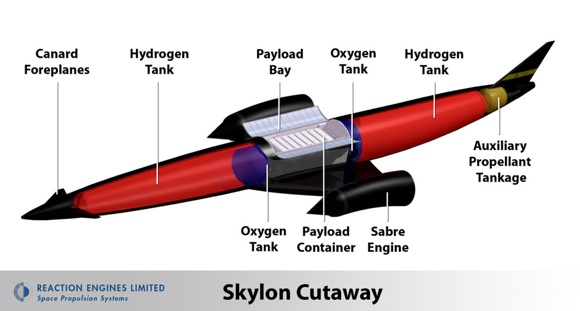
The first bit of news comes from Reaction Engines Limited, where it seems that the Skylon space plane is beginning to move from the conceptual stage to a reality. For some time now, the British company has been talked about, thanks to their plans to create a reusable aerospace jet that would be powered by a series of hypersonic engines.

Skylon_diagramAnd after years of research and development, the hypersonic Sabre Engine passed a critical heat tolerance and cooling test. Because of this, Reaction Engines Limited won an important endorsement from the European Space Agency. Far from being a simple milestone, this test may prove to be historic. Or as Skymania‘s Paul Sutherland noted, it’s “the biggest breakthrough in flight technology since the invention of the jet engine.”

Now that Reaction Engines has proven that they can do this, the company will be looking for £250 million (approx $410 million) of investment for the next step in development. This will include the development of the LapCat, a hypersonic jet that will carry 300 passengers around the world in less than four hours; and the Skylon, which will carry astronauts, tourists, satellites and space station components into orbit.

sabre-engine-17Speaking at the press conference after the test in late November, ESA’s Mark Ford had this to say:

ESA are satisfied that the tests demonstrate the technology required for the Sabre engine development. One of the major obstacles to a reusable vehicle has been removed. The gateway is now open to move beyond the jet age.

The Sabre engine is the crucial piece in the reusable space plane puzzle, hence why this test was so crucial. Once built and operational, Skylon will take off and land like a conventional plane, but still achieve orbit by mixing air-breathing jets for takeoff, and landing with rockets fueled by onboard oxygen once it gets past a certain speed.

Skylon-space-plane-obtains-breakthrough-new-engines-2The recent breakthrough had to do to the development of a heat exchanger that’s able to cool air sucked into the engine at high speed from 1,000 degrees Celsius to minus 150 degrees in one hundredth of a second. It’s this critical technology that will allow the Sabre engine to surpass the bounds of a traditional jet engine, by as much as twofold.

Alan Bond, the engineering genius behind the invention, had this to say about his brainchild:

These successful tests represent a fundamental breakthrough in propulsion technology. The Sabre engine has the potential to revolutionise our lives in the 21st century in the way the jet engine did in the 20th Century. This is the proudest moment of my life.

And of course, there’s a video of the engine in action. Check it out:


Second, and perhaps in response to these and other developments, the British Interplanetary Society is resurrecting a forty year old idea. This society, which came up with the idea to send a multi-stage rocket and a manned lander to the moon in the 1930’s (eerily reminiscent of the Apollo 11 mission some 30 years later) is now reconsidering plans for giant habitats in space.

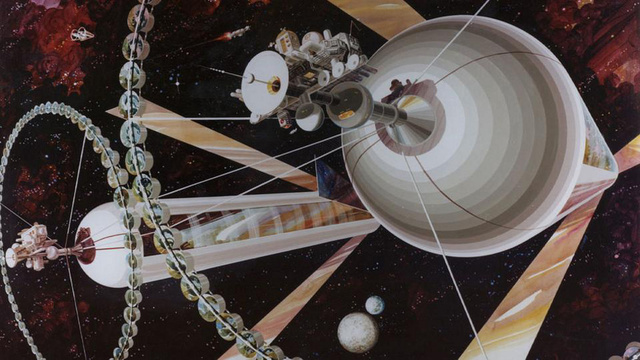
o'neil_cylinderTo make the plan affordable and feasible, they are turning to a plan devised by Gerard O’Neill back in the 1970s. Commonly known as the O’Neill Cylinder, the plan calls for space-based human habitats consisting of giant rotating spaceships containing landscaped biospheres that can house up to 10 million people. The cylinder would rotate to provide gravity and – combined with the interior ecology – would simulate a real-world environment.

Jerry Stone of BIS’s SPACE (Study Project Advancing Colony Engineering) is trying to show that building a very large space colony is technically feasible. Part of what makes the plan work is the fact that O’Neill deliberately designed the structure using existing 1970s technology, materials and construction techniques, rather than adopting futuristic inventions.

Rama16wikiStone is bringing these plans up to date using today’s technologies. Rather than building the shell from aluminium, for example, Stone argues tougher and lighter carbon composites could be used instead. Advances in solar cell and climate control technologies could also be used to make life easier and more comfortable in human space colonies.

One of the biggest theoretical challenges O’Neill faced in his own time was the effort and cost of construction. That, says Stone, will be solved when a new generation of much cheaper rocket launchers and spaceplanes has been developed (such as the UK-built Skylon). Using robot builders could also help, and other futuristic construction techniques like 3-D printing robots and even nanomachines and bacteria could be used.

RAMAAnd as Stone said, much of the materials could be outsourced, taking advantage of the fact that this would be a truly space-aged construction project:

Ninety per cent of the material to build the colonies would come from the Moon. We know from Apollo there’s silicon for the windows, and aluminium, iron and magnesium for the main structure. There’s even oxygen in the lunar soil.

Fans of Arthur C. Clarke’s Rendezvous with Rama, the series Babylon 5 or the movie Elysium out to instantly recognize this concept. In addition to being a very real scientific concept, it has also informed a great deal of science fiction and speculation. For some time, writers and futurists have been dreaming of a day when humanity might live in space habitats that can simulate terrestrial life.

Elysium_conceptWell, that day might be coming sooner than expected. And, as O’Neill and his contemporaries theorized at the time, it may be a viable solution to the possibility of humanity’s extinction. Granted, we aren’t exactly living in fear of nuclear holocaust anymore, but ecological collapse is still a threat! And with the Earth’s population set to reach 12 billion by the 22nd century, it might be an elegant solution to getting some of those people offworld.

It’s always an exciting thing when hopes and aspirations begin to become feasible. And though aerospace transit is likely to be coming a lot sooner than O’Neill habitats in orbit, the two are likely to compliment each other. After all, jet planes that can reach orbit, affordably and efficiently, is the first step in making offworld living a reality!

Until next time, keep your eyes to the skies. Chances are, people will be looking back someday soon…

Sources: IO9, skymania, (2)bbc.com

News From Space: “FedEx” to the Moon

fedex-to-moon-google-x-lunarThe Moon has been quite the source of news lately. From NASA’s and the ESA’s planned efforts to build a settlement, to NASA and Google planning to send vegetation there, and China’s recent deployment of the Jade Rabbit rover, it seems that all the major space agencies of the world are eying the lunar surface with plans for eventual colonization.

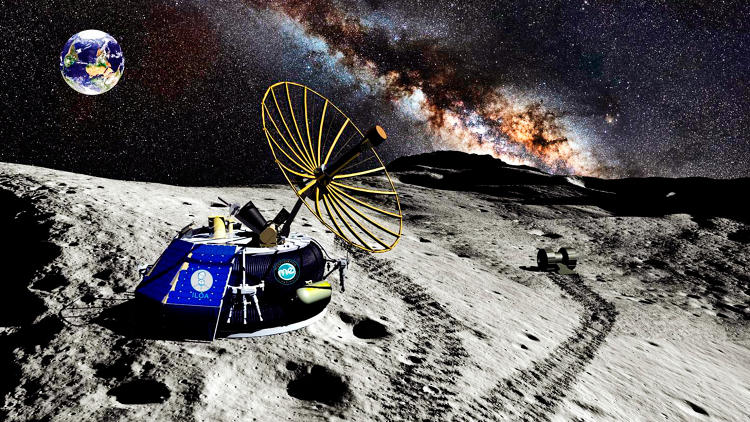
What’s more, numerous private interests are looking to get in on the action, plotting everything from space tourism to courier services. One such company is Moon Express, a space startup that is competing for the Google Lunar X prize to develop a spacecraft that would one day be able to land on the lunar surface, move 500 meters, and send back two messages.

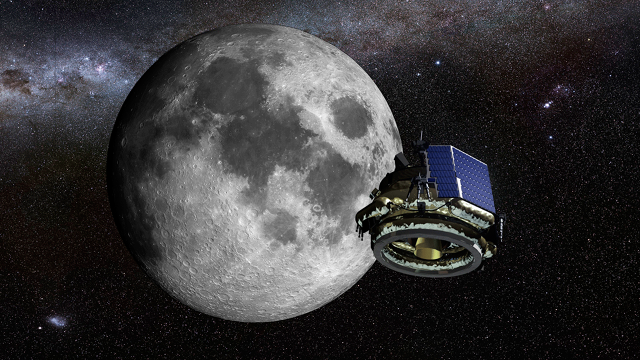
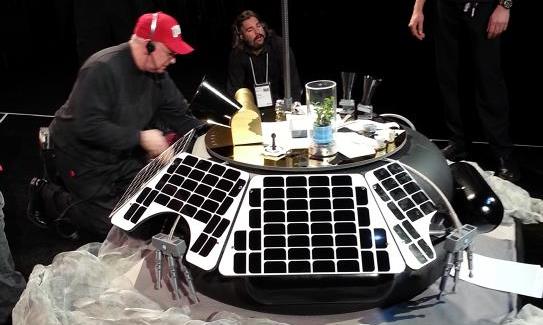
fedex-to-moon-spacecraftTheir craft is known as the MX-1, the company’s first robotic lander that was designed with the intent to deliver payloads to the lunar surface by 2015 and be able to transport precious minerals back. The privately held company, which is backed by billionaire Naveen Jain, unveiled the robot at the Autodesk’s University conference in Las Vegas.

According to Moon Express CEO Bob Richards, the MX-1 is very compact and could “fit basically inside of an SUV” trunk. The craft is unmanned, solar-powered, and uses hydrogen peroxide as rocket propellant. The fuel tanks are strapped to the vehicle’s underside, and serve two purposes. As Richards explains:

When the tanks are empty, they now act as a bumper. People are used to seeing landing gear on a spacecraft, but we didn’t need landing gear–the fuel tanks are the structure. It looks like something you’d land on a beach actually.

fedex-to-moon-spacecraft1To get to space, the craft is launched via rocket, and once deployed can navigate all by itself to the moon. And though small, the MX-1 is capable of carrying roughly 60 kilograms of payload. For its early missions, the startup plans to take part in NASA’s goal of delivering plants to the moon, including basil, turnips, and Arabidopsis (a sort of mustard-seed plant).

Additionally, the MX-1 will carry a small, black-and-gold telescope for a private company, which plans to set up the device as a moon cam on its surface, streaming live video back to Earth for all to watch. So in addition to China’s Jade Rabbit rover, which will be providing footage of the lunar surface, we can expect video to be provided by private interests as well.

fedex-to-moon-picBut in the long run, the aim of MoonEx is far more entrepreneurial: it plans to mine resources from the moon, seeing it as an untapped and very lucrative target. The trick will be developing the MX-1 into a craft that can deliver payloads to-and-from the moon, at larger scales. As Richards put it:

What’s there? Probably more platinum than there is in all the reserves on Earth. Pick your spice: silver, nickel, everything that we mine here on Earth is on the moon.

However, Moon Express doesn’t expect to return with any payloads until at least its third mission. It plans to launch its first mission to the moon in 2015. And if they win Google’s Lunar X Prize, they just might have all the investment capital they need to make it happen.

Source: fastcoexist.com, googlelunarxprize.org

News from Space: Chang’e-3’s Landing and 1st Panorama

Change-3-landing-site_1_ken-kremer-580x344China accomplished a rather major technological and scientific feat recently with the recent soft landing of its Chang’e-3 robotic spacecraft on Dec.14th. This was the nation’s first attempt at landing a spacecraft on an extra-terrestrial body, and firmly established them as a competitor in the ongoing space race. What’s more, the event has been followed by a slew of fascinating and intriguing pictures.

The first were taken by the descent imaging camera aboard the Chang’e-3 lander, which began furiously snapping photos during the last minutes of the computer guided landing. The Chinese space agency then combined the photos to create a lovely compilation video, with the point of view rotated 180 degrees, to recreate what the descent looked like.

Change-3_lunar_landing_site-580x470The dramatic soft landing took place at 8:11 am EST (9:11 p.m Beijing local time) with the lander arriving at Mare Imbrium (Latin for “Sea of Rains”) – one of the larger craters in the Solar System that is between 3 and 4.5 billion years old. The precise landing coordinates were 44.1260°N and 19.5014°W – located below the Montes Recti mountain ridge.

The video begins by showing the Chang’e-3 lander approaching the Montes Recti mountain ridge. At an altitude of 15 km (9 miles), the Chang’e-3 carried out the rocket powered descent to the Moon’s surface by firing the landing thrusters starting at the altitude of 15 km (9 mi) for a soft landing targeted to a preselected area in Mare Imbrium.

chang'e3_landingThe vehicles thrusters then fired to pivot the lander towards the surface at about the 2:40 minute mark when it was at an altitude of roughly 3 km (1.8 miles). The powered descent was autonomous, preprogrammed and controlled by the probe itself, not by mission controllers on Earth stationed at the Beijing. Altogether, it took about 12 minutes to bring the lander onto the surface.

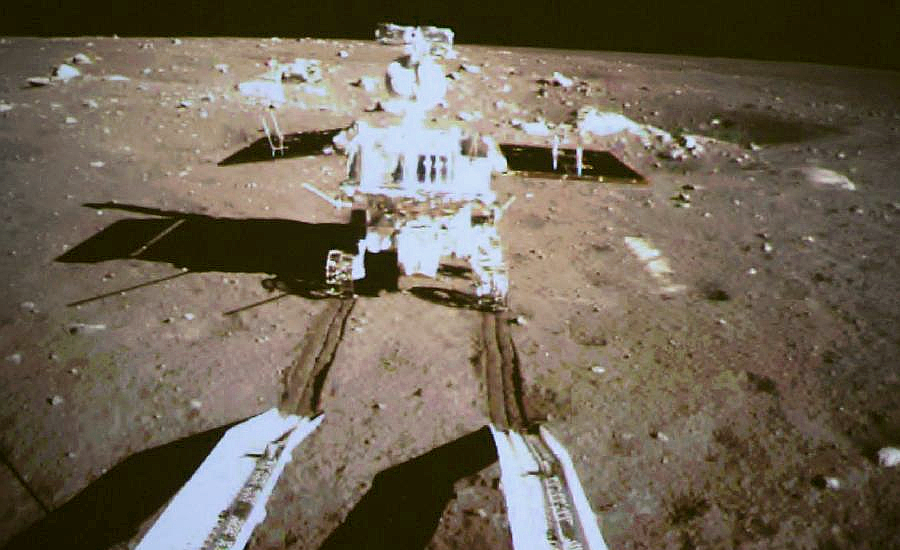
Roughly 7 hours later, on Sunday, Dec. 15 at 4:35 a.m. Beijing local time, China’s first ever lunar rover ‘Yutu’ (or Jade Rabbit) rolled down a pair of ramps and onto the Moon’s soil. The six wheeled ‘Yutu’ rover drove straight off the ramps and sped right into the history books as it left a noticeably deep pair of tire tracks behind in the loose lunar dirt. This too was captured by the lander’s camera and broadcast on China’s state run CCTV.

chang'e3_egressThe next bundle of footage came from the rover itself, as the Jade Rabbit took in its inaugural photographs of the landing site in Mare Imbrium. The photos were released by Chinese state TV on Dec. 15th, not long after the rover disembarked from the lander, and were then pieced together to form the lander’s first panoramic view of the lunar surface.

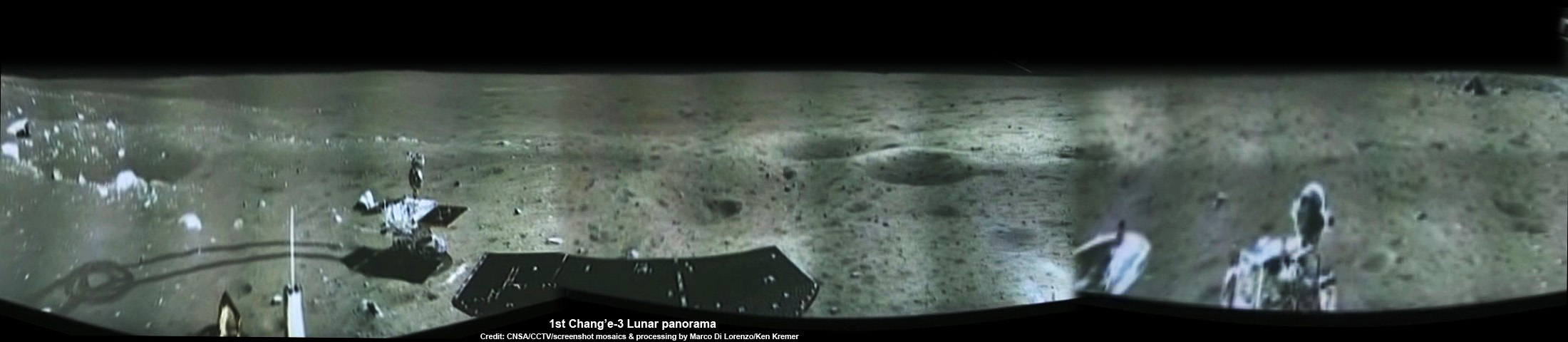
Marco Di Lorenzo and Ken Kremer – an amateur photo-astronomer and a science journalist who have composed panoramas from the Curiosity mission in the past – also composed the images together to create a series of mosaics. A sample of the 1st panorama is pictured below, with the Yutu rover in the center and tire tracks off to the left.. Click here to the see the full-size image.

Change-3-1st-Pano_1b_Ken-Kremer--580x203The individual images were taken by three cameras positioned around the robotic lander and captured the stark lunar terrain surrounding the spacecraft. The panoramic view shows ‘Yutu’ and its wheel tracks cutting a semi circular path at least several centimeters deep into the loose lunar regolith at the landing site at Mare Imbrium, located near the Bay of Rainbows.

Liu Enhai, Designer in Chief, Chang’E-3 Probe System, has this say about the images in a recent CCTV interview:

This picture is made of 60 pictures taken 3 times by the rover. The rover used three angles: vertical, 15 degrees tilted up, and 15 degrees down…so that we get an even farther view

chang'e3_portraitThe 140 kilogram Yutu rover then turned around so that the lander and rover could obtain their first portraits of one another. The first is visible above, showing the Jade Rabbit rover (in better resolution), with the image of the Chang’e 3 lander below. Liu Jianjun, Deputy Chief Designer of the Chang’E-3 Ground System, was also interviewed by CCTV, and had this to about that part of the mission:

The rover reached the point of X after it went down from the lander, then it established contact with the ground. Then it went to point A, where the rover and lander took pictures of each other. Then it reached point B, where it’s standing now.

These are just the first of what is expected to be a torrent of pictures produced by the rover, which according to Chinese officials, will spend the next year conducting in-situ exploration at the landing site. Beyond that, the rover will use its instruments to survey the moon’s geological structure and composition on a minimum three month mission to locate the moon’s natural resources for use by future missions.

chang'e3_lander_portIn addition to accomplishing a great scientific feat, China has now joined a very exclusive club, being only one of three nations that has successfully conducted a soft landing on the Moon. The United States was the first, reaching the Moon with its Apollo 11 mission on July 20th, 1969. The Soviet Union followed less than a decade later, having reached the Moon with its unmanned Lunik 24 spacecraft in 1976.

And now, almost forty years later, the space race is joined by one of the world’s emerging super powers. Soon, we can expect the European Space Agency, India, Pakistan, and possibly Iran to be reaching the Moon as well. And by that time, its likely the spaceships will be carrying colonists. Hopefully we’ll have some infrastructure set up to receive them!

In the meantime, be sure to check out the Chang’e 3 descent video, and stay tuned for more updates from the Jade Rabbit and it begins its exploration of the Lunar surface.


Source:
universetoday.com, (2)

News From Space: China’s Jade Rabbit Moon Rover

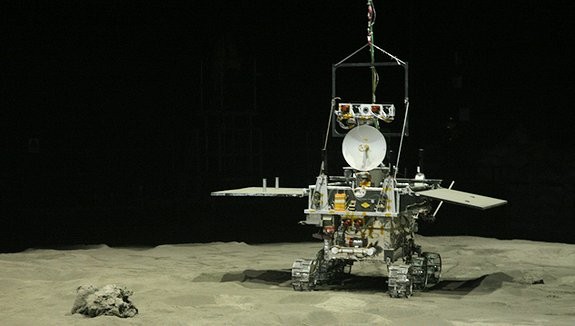
change'e3Earlier this week, China took another step towards becoming a major power in space with the launch of the Chang’e-3 lunar probe. On board this vehicle is the Yu Tu (Jade Rabbit) lunar rover, a vehicle that is designed to deploy from the vehicle once it reaches lunar orbit and explore the surface independently. If all continues to go to plan, the Chang’e-3 will reach the Moon by December 14th, and its arrival will certainly be historic.

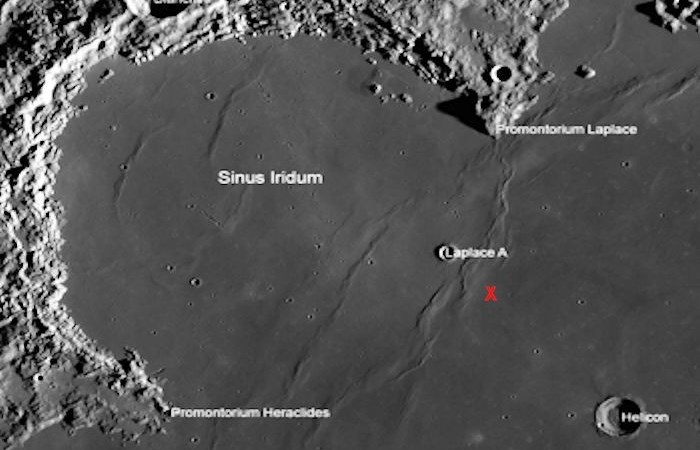
For starters, the probe’s landing in Sinus Iridum, a basaltic lava plane in the Moon’s northern hemisphere, will be the first spacecraft to make a soft landing on the Moon in 37 years. In addition, it will the be the first time China has landed a spacecraft and a rover on the Moon. This is the latest in the Chang’e program, a series of robotic and human missions that ultimately seeks to put Chinese cosmonauts on the Moon.

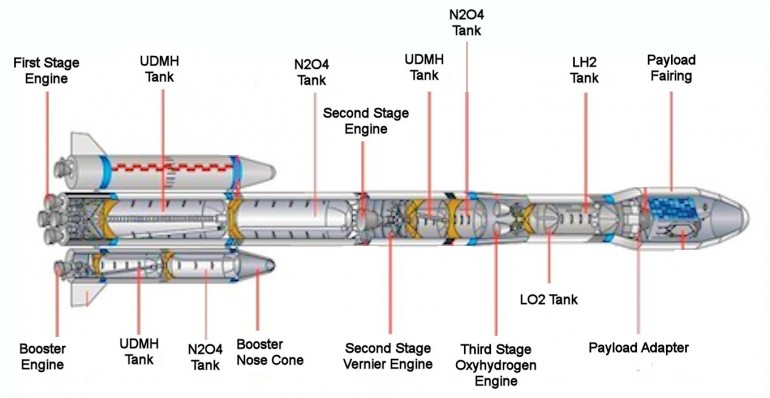
change'e3_2The Chang’e-3 mission incorporates two major components – the Lander and the Jade Rabbit rover, which is named after the companion of the Moon goddess Chang’e in Chinese mythology. The three-stage Chang Zheng 3B (Long March 3B) launch vehicle that is being used to send the Chang’e-3 probe to the Moon is roughly a functional equivalent of SpaceX’s Falcon 9 rocket, the heaviest rocket in their fleet.

After launching on Monday from the Xichang Satellite Launch Centre, the rocket was placed into an Earth-Moon transfer orbit and conducted its first separation. Shortly thereafter, its second stage engines were engaged to effect course corrections and bring the lander and rover into lunar orbit. Then came two crucial burns from the third stage engines, which put the Chang’e-3 probe into a parking and then highly elliptical translunar orbit.

change'e3_3Throughout all this, the probe slept, and will continue to do so until it burns its own engines to enter lunar orbit tomorrow.Then will come the tricky bit, landing safely without any input from controllers on Earth. This requires a combination of inertial guidance, extremely precise range and velocity measurements, image recognition, and a pretty fast computer – not to mention a certain amount of luck.

Once landed, the six-wheeled rover will begin exploring the surface and collecting soil samples for analysis. As with other rovers, energy will be provided by a series of solar panels and information obtained during its mission will be sent back to Earth for further analysis. In addition, real-time video and pictures will be captured by the rover’s arsenal of cameras, all of which will be sent back to Earth and shared via Chinese media outlets.

change'e3_1In addition to being a first for China’s space program, the Jade Rabbit also has the added distinction of being outfitted with what is arguably the most sophisticated scientific equipment of any previous rover. Most notable is a powerful ground-penetrating radar capable of penetrating up to 30 meters (100 ft) of lunar soil or about 100 m (330 ft) of lunar crustal material, and analyzing the underlying structure.

The rover is also equipped with an Alpha Particle X-ray Spectrometer (APXS) that uses particle-induced X-ray emission and X-ray fluorescence to determine the abundance of elements within rock and soil samples. The instrument can also find hidden materials, such as water of crystallization, which is otherwise difficult to detect remotely. Finding water on the Moon is an ongoing objective for space agencies, and crucial to plans for future settlement.

change'e3_4Then there is the Lunar Ultraviolet Telescope (LUT), which is designed to act as the first long-term astronomical observatory to ever be placed on the Moon’s surface. The vacuum environment and slow rotation of the lunar environment make an ideal location for near-UV observations that cannot be carried out from beneath the Earth’s obscuring atmosphere.

Another optical instrument is the Extreme Ultraviolet Camera intended to monitor the Earth’s plasmasphere, which is a magnetically active region within the magnetosphere but above the ionosphere. It works by viewing light with a wavelength of 30.5 nm which is scattered from helium ions in the plasmasphere. The lander is also hosting several other cameras and a lunar soil probe.

china-lunar-lander-rover-launch-jade-rabbit-13As already stated, the landing site for Chang’e-3 is in the general area of Sinus Iridum, a northwestern extension to the Mare Imbrium basaltic plane which is surrounded from the northeast to the southwest by the Montes Jura mountain range. A precise location has not yet been announced by Chinese authorities, but it has been widely speculated that it will take place within the vicinity of crater Laplace A – a crater that is about 9 km in diameter.

This is certainly an exciting time, as we are likely to learn plenty of new things about the Moon in the next few weeks! And in the meantime, be sure to check out this animation of the Change’e-3 entire mission- from launch to touchdown and deployment on the Moon, courtesy of RyukyuSARs:


Sources: gizmag.com, nasaspaceflight.com

News From Space: The Antares Rocket Launch!

antares_launch1Commercial space flight got a shot in the arm just two days ago thanks to the flawless launch of the privately developed Antares rocket from the NASA Wallops Flight Facility in Virginia. On board was the first of many Cygnus craft, a commercial unmanned cargo resupply vehicle that is now making its way to the ISS in orbit. It was a day of firsts, and signaled the beginning of a new space race.

For starters, it was the first time the launchpad in Virginia was used, not to mention the maiden flight of a Cygnus craft. But perhaps most importantly, it was the first time in a long time that supplies and equipment were bound for the International Space Station from American soil. Since its cancellation in 2011, NASA’s space program has been forced to rely on the Russians and an aging fleet of Soyuz rockets to send astronauts and supplies into orbit.

spaceX_elonmuskAnd, as already noted, it was a big day for commercial space flight, since both the Antares and the Cygnus were produced by the Orbital Sciences Corporation. For some time now, SpaceX has been leading the charge to develop rockets and spacecraft for private commercial use. Now, with NASA awarding OSC contracts to restore America’s ability to mount resupply missions, it seems they might have some competition.

The “picture perfect” blastoff took place at 10:58 a.m. EDT on the morning  of Sept. 18 from Virginia and was witnessed by a large crowd of spectators. The launch was reported as being incredibly beautiful as the rockets two stage engines spewed intensely bright flames and send out reverberations that wowed the people watching and woke people who were still asleep in the nearby community of Chincoteague.

antares_deploymentAnother historic first that bears mentioning is the fact that this latest mission happens to be the heaviest cargo load ever delivered to the ISS by a commercial vehicle. And by awarding contracts for such missions to private companies, NASA hopes to be able to free more of its budget up for long-term missions. These include exploration beyond low earth orbit, getting people back to the Moon and beyond to deep space destinations including Asteroids and Mars.

NASA Administrator Charles Bolden spoke glowingly of the launch in a statement and praised OSC for their role in making it happen:

Today marks a milestone in our new era of exploration as we expand the capability for making cargo launches to the International Space Station from American shores.  Orbital’s extraordinary efforts are helping us fulfill the promise of American innovation to maintain our nation’s leadership in space.

According to ongoing mission updates, the Cygnus spacecraft successfully unfurled its solar panels starting 1.5 minutes after separation from the second stage, which took place about 10 minutes after launch. Currently, Cygnus is traveling at 28,000 km/h (17,500 mph) and will rendezvous with the space station on Sunday, Sept. 22.

antares_launch2Once there, the cargo vessel will deliver about 590 kilograms (1,300 pounds) of cargo, including food, clothing, water, science experiments, spare parts and gear to the Expedition 37 crew. The flight, known as Orb-D1 is a demonstration mission to prove that Cygnus can conduct a complex series of maneuvers in space safely bringing it to the vicinity of the ISS.

And once the mission is complete and the supplies delivered, we can expect to be hearing about more missions like this one! Between SpaceX’s Dragon module, the Cygnus, and both companies ongoing rocket tests, space will is likely to become the new frontier where private enterprises carry out their endless dance of competition.

And of course, there are some cool videos of the launch to behold. So behold!

Time-lapse video of Antares deployment:


Antares launch:


Sources:
universetoday.com, (2)

News From Space: 12 Asteroids to Mine

asteroidsLast year, the private space exploration company Planetary Resources announced that they intended to being prospecting and mining asteroids in the near future. And while they are certainly not alone in their intention to make this happen (Deep Space Industries has the same intention), many have asked if humanity is ready to begin extracting resources from the Asteroid Belt, at least as far as our level of technology is concerned.

In response, a group of astronomers at the University of Strathclyde in the UK did their own study and concluded that it is indeed possible with current rocket technology. What’s more, they conducted a survey of the Asteroid Belt and identified 12 near-Earth asteroids that could be easily retrieved and mined, and which are believed to contain high concentrations of precious and industrial metals.

asteroid_mining_robotAlready, it has been estimated that an asteroid as small as one-kilometer in diameter could contain upwards of two billion tons of iron-nickel ore, which is three times the global yield on Earth. Then there is the likely presence of gold, platinum, and other rare substances. Planetary Resources claims a 30-meter object of the right composition could contain $25 to $50 billion in platinum.

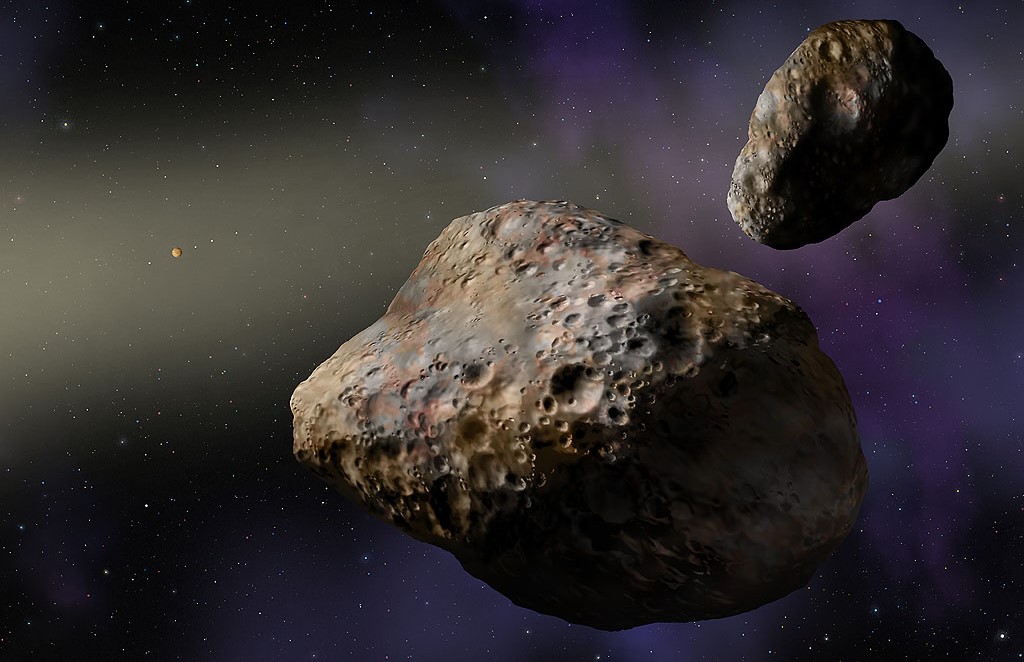
These numbers spurred the University of Strathclyde team, led by Garcia Yarnoz, to pour over the astronomical data on near-Earth objects to see if any of them could actually be snared. To their surprise, they found 12 small asteroids that pass close enough to Earth that they could be corralled into the L1 or L2 Lagrangian points for mining operations. The researchers dubbed these asteroids Easily Retrievable Objects (EROs).

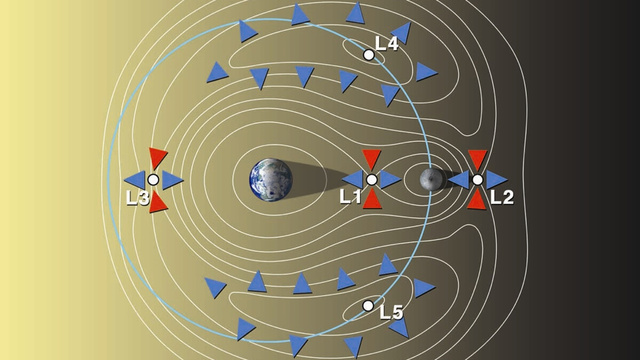
NASA_moonLagrange points refer to points where the gravity of Earth an another celestial object balance out. If anything enters one of these areas, it stays put, which is precisely what you want to do if you are looking to study it, mine it, or just keep it where its accessible. The L1 and L2 Lagrangian points are where the gravity of Earth and the sun are at a draw, roughly 1.6 million km (1 million miles) from Earth and about four times the distance to the moon.

The 12 candidate asteroids all have orbits that take them near the L1 or L2 Lagrangian points, so they would need only a small push to get them to the right spot. Yarnoz and his team estimate that changing the velocity of these objects by less than 500 meters per second would be sufficient, and this could be completed as early as 2026.

asteroid_DA14One of the important criteria in selected 12 mineable asteroids from the database of 9,000 near-Earth objects was size. Nudging a larger asteroid safely to a Lagrange point is simply not feasible with the current state of technology. In fact, most of the EROs that were identified in the study range between two to 20 meters, but that’s still large enough to contain substantial resources.

These 12 objects are probably a small fraction of EROs floating around near Earth. We know where many more of the big space rocks are because they’re much easier to see, but there might be a wealth of resource-rich small asteroids near the Lagrangian points ripe for the picking. And with time, and more orbital telescopes to spot them with, we can expect the list of mineable asteroids to grow.

Source: extremetech.com

Space Elevators!

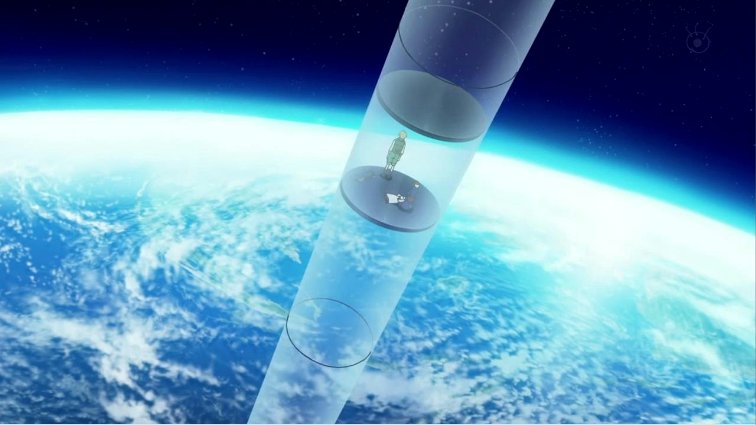
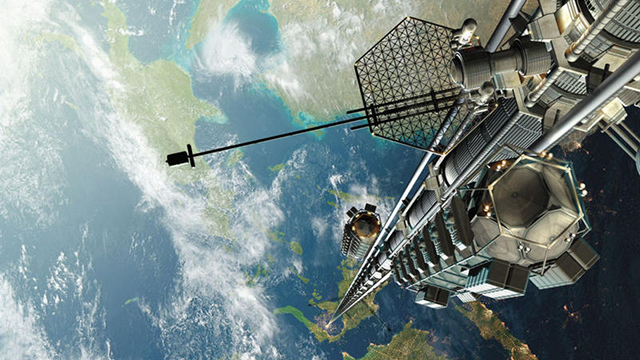
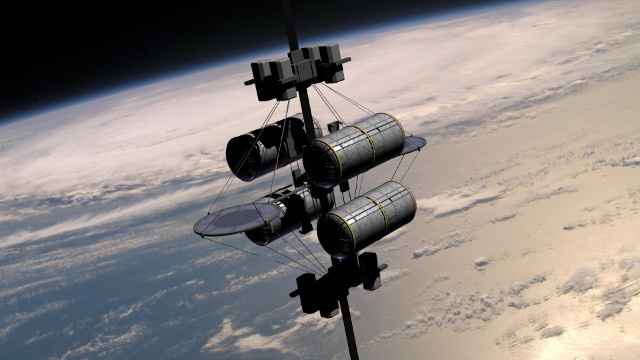
space_elevatorWhen it comes to classic and hard science fiction, there are few concepts more inspired, more audacious, and more cool than the Space Elevator. Consisting of a cable (or tether) attached the Earth near the equator and a station in geosynchronous orbit, a structure of this kind would allow us to put objects, supplies and even people into orbit without the need for rockets and space ships.

And perhaps I am a bit biased, seeing as how one of the writer’s featured in the Yuva anthology happens to have written a story that features one – Goran Zidar, whose story “Terraformers” includes an orbital colony that is tethered to the planet by a “Needle”. But I’ve found the concept fascinating for as long as I have known about it, and feel like its time for a conceptual post that deals with this most awesome of concepts!

Here goes…

History:
The first recorded example of the space elevator concept appeared in 1895 when Russian scientist Konstantin Tsiolkovsky was inspired by the Eiffel Tower in Paris. He considered a similar tower that extended from the ground into geostationary orbit (GSO) in space. Objects traveling into orbit would attain orbital velocity as they rode up the tower, and an object released at the tower’s top would also have the velocity necessary to remain in orbit.
space_elevator1However, his concept called for a compression structure, which was unfeasible given that no material existed that had enough compressive strength to support its own weight under such conditions. In 1959, another Russian scientist named Yuri N. Artsutanov suggested a more feasible proposal, a tensile structure which used a geostationary satellite as the base from which to deploy the structure downward.

By using a counterweight, a cable would be lowered from geostationary orbit to the surface of Earth, while the counterweight was extended from the satellite away from Earth, keeping the cable constantly over the same spot on the surface of the Earth. He also proposed tapering the cable thickness so that the stress in the cable was constant. This gives a thinner cable at ground level that becomes thicker up towards the GSO.

space_elevator_liftIn 1966, Isaacs, Vine, Bradner and Bachus, four American engineers, reinvented the concept under the name “Sky-Hook”. In 1975, the concept was reinvented again by Jerome Pearson, whose model extended the distance of the counterweight to 144,000 km (90,000 miles) out, roughly half the distance to the Moon. However, these studies were also marred by the fact that no known material possessed the tensile strength required.

By the turn of the century, however, the concept was revitalized thanks to the development of carbon nanotubes. Believing that the high strength of these materials might make an orbital skyhook feasible, engineer David Smitherman of NASA put together a workshop at the Marshall Space Flight Center and invited many scientists and engineers to participate. Their findings were published in an article titled “Space Elevators: An Advanced Earth-Space Infrastructure for the New Millennium”.

carbon-nanotubeAnother American scientist, Bradley C. Edwards, also suggested using nanotubes to create a 100,000 km (62,000 mile) paper-thin cable that would be shaped like a ribbon instead of circular. This, he claimed, would make the tether more resistant to impacts from meteoroids.  The NASA Institute for Advanced Concepts began supporting Edwards’ work, allowing him to expand on it and plan how it would work in detail.

In Fiction:
arthurcclarke_fountains-of-paradiseIn 1979, the concept of the Space Elevator was introduced to the reading public thanks to the simultaneous publications of Arthur C. Clarke’s The Fountains of Paradise (1979) and Charles Sheffield’s The Web Between the Worlds. In the former, engineers construct a space elevator on top of a mountain peak in the fictional island country of Taprobane, which was loosely based on Clarke’s new home in Sri Lanka, albeit moved south to the Equator.

In an interesting and fact-based twist, the purpose for building the elevator on Earth is to demonstrate that it can be done on Mars. Ultimately, the protagonist of the story (Dr Vannevar Morgan) is motivated by his desire to help a Mars-based consortium to develop the elevator on Mars as part of a massive terraforming project, something which has been proposed in real life.

Sheffield- The Web Between the WorldsSimiliarly, in Sheffield’s Web, which was his first novel, we see a world famous engineer who has created extensive bridge networks all over the world using graphite cable. In hoping to achieve the unachievable dream, he begins work on a space elevator code named the “Beanstalk”. This brings him into an alliance with a corrupt tycoon who wants to make rockets obsolete, and intrigue ensues…

Three years later, Robert A. Heinlein’s novel Friday features a space elevator known as the “Nairobi Beanstalk”. In Heinlein’s vision, the world of the future is heavily Balkanized, and people exist in thousands of tiny nation states and orbital colonies which are connected to Earth via the Beanstalk, which as the name suggests, is located in equatorial Africa.

ksr_redmarsIn 1993, Kim Stanley Robinson released Red Mars, a sci-fi classic that remains a quintessential novel on the subject of Mars colonization. In the novel, the Martian colonists build a space elevator that allows them to bring additional colonists to the surface, as well as transport natural resources that were mined planetside into orbit where they can be ferried back to Earth.

In 1999, Sid Meier’s, creator of the famed Civilization gaming series, released the sci-fi based Sid Meier’s Alpha Centauri that deals with the colonization of the planet “Chiron” in the Alpha Centauri system. In the course of the turn-based strategy game, players are encouraged to construct special projects as a way of gaining bonuses and building up their faction’s power.

One such project is the Space Elevator, which requires that the faction building first research the technology “super tensile solids” so they have the means of building a super-tensile tether. Once built, it confers bonuses for space-based unit production, allows orbital drop units to be deployed over the entire planet, increases production rates for satellites, and removes the need for aerospace facilities. spaceelevator_alpha_centauriIn David Gerrold’s 2000 novel, Jumping Off The Planet, we are again confronted with an equatorial space elevator, this time in Ecuador where the device is once again known as the “beanstalk”. The story focuses on a family excursion which is eventually revealed to be a child-custody kidnapping. In addition to this futuristic take on domestic issues, Gerrold also examined some of the industrial applications of a mature elevator technology.


Chasm_City_coverIn 2001, Alastair Reynolds, a hard sci-fi author and creator of the Revelation Space series, released Chasm City, which acted as a sort of interquel between the first and second books in the main trilogy. At the opening of the novel, the story takes place on Sky’s Edge, a distant world where settlers travel to and from ships in orbit using a space elevator that connects to the planetary capitol on the surface.

And in 2011, author Joan Slonczewski presented a biological twist on the concept with her novel The Highest Frontier. Here, she depicts a college student who ascends a space elevator that uses a tether constructed from self-healing cables of anthrax bacilli. The engineered bacteria can regrow the cables when severed by space debris, thus turning the whole concept of tensile solids on its head.

Attempts to Build a Space Elevator:
Since the onset of the 21st century, several attempts have been made to design, fund, and create a space elevator before the end of this century. To speed the development process, proponents of the concept have created several competitions to develop the relevant technologies. These include the Elevator: 2010 and Robogames Space Elevator Ribbon Climbing, annual competitions seeking to design climbers, tethers and power-beaming systems.

space_elevator_nasaIn March of 2005, NASA announced its own incentive program, known as the Centennial Challenges program, which has since merged the Spaceward Foundation and upped the total value of their cash prizes to US$400,000. In that same year, the LiftPort Group began producing carbon nanotubes for industrial use, with the goal of using their profits as capital for the construction of a 100,000 km (62,000 mi) space elevator.

In 2008, the Japanese firm known as the Space Elevator Association, chaired by Shuichi Ono, announced plans to build a Space Elevator for the projected price tag of a trillion yen ($8 billion). Though the cost is substantially low, Ono and his peers claimed that Japan’s role as a leader in the field engineering could resolve the technical issues at the price they quoted.
obayashi-2In 2011, Google was reported to be working on plans for a space elevator at its secretive Google X Lab location. Since then, Google has stated that it is not working on a space elevator. But in that same year, the first European Space Elevator Challenge (EuSEC) to establish a climber structure took place in August.

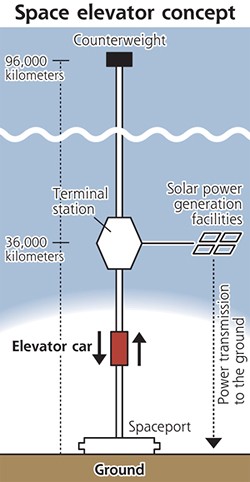
And in 2012, the Obayashi Corporation of Japan announced that in 38 years it could build a space elevator using carbon nanotube technology. Their detailed plan called for a 96,000 long tether, supported by a counterweight, that could hold a 30-passenger climber that would travel 200 km/h, reaching the GSO after a 7.5 day trip. However, no cost estimates, finance plans, or other specifics were made at this point.

space-elevator-schematics-largeDespite these efforts, the problems of building are still marred by several technical issues that have yet to be resolved. These include the problems of tensile strength, dangerous vibrations along the tether line, climbers creating wobble, dangers posed by satellites and meteoroids, and the fact that such a structure would be vulnerable to a terrorist or military attack.

Other Possibilities:
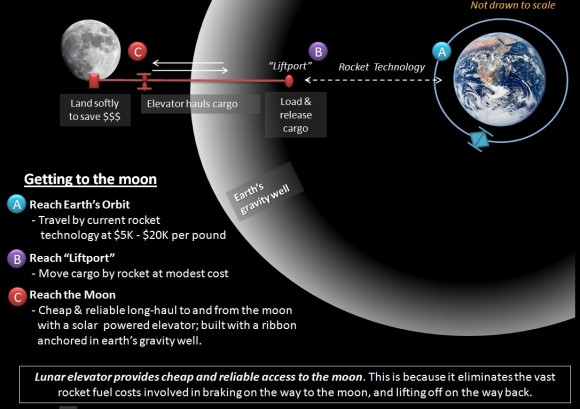
Though we may never be able to resolve the problems of building a space elevator on Earth, scientists are agreed that one could be made on other planets, particularly the Moon. This idea was first devised by Jerome Pearson, one of the concepts many original proponents, who proposed a smaller elevator that would be anchored by Earth’s gravity field.
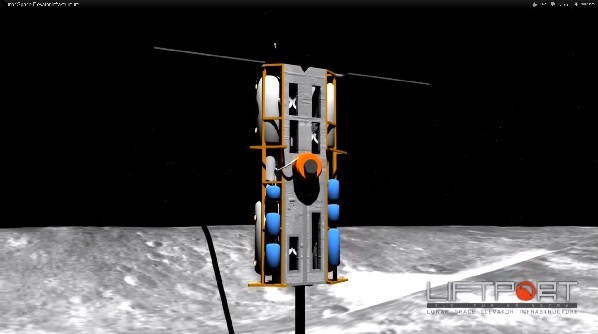
LiftPort1This is a necessity since the Moon does not rotate and could therefore not maintain tension along a tether. But in this scenario, the cable would be run from the moon and out through the L1 Lagrangian point. Once there, it would be dangled down into Earth’s gravity field where it would be held taught by Earth gravity and a large counterweight attached to its end.

Since the Moon is a far different environment than planet Earth, it presents numerous advantages when building a space elevator. For starters, there’s the strength of the materials needed, which would be significantly less, thus resolving a major technical issue. In addition, the Moon’s lower gravity would mean a diminished weight of the materials being shipped and of the structure itself.
space_elevator_lunarAs Pearson explained:

[T]o lift a thousand tons per day off the lunar surface, it would take less than 100,000 tons of elevator to do it — which means it pays back its own mass in just 100 days, or somewhere between three and four times its own mass per year — which is not a bad rate of return… You don’t need nanotubes and very, very high strength materials. But the higher the strength, the more of the ratio you can get for hauling stuff on the moon.

In fact, LiftPort is already deep into developing a “Lunar Elevator”. Plans to build one by 2020 were announced back in 2010, and since that time, the company launched a Kickstarter campaign to get the funding necessary to conduct tests that will get them closer to this goal. These consisting of sending a tethered robot 2km from the surface to conduct stress and telemetry tests.

Ultimately, the company estimates that a Lunar Elevator could be made at the cost of $800 million, which is substantially less than a “Terran Elevator” would cost. Similarly, it is likely that any manned missions to Mars, which will include eventual settlement and plans to terraform, will involve a Martian elevator, possibly named the “Ares Elevator”.

Much like SpaceX’s attempts to resolve the costs of sending rockets into space, the concept of a space elevator is another means of reducing the cost of sending things into orbit. As time goes on and technology improves, and humanity finds itself in other terrestrial environments where resources need to be exported into space, we can expect that elevators that pierce the sky will become possible.

In the meantime, we can always dream…

space_elevator_conceptSources: en.wikepedia.org, gizmag.com, io9.com, forbes.com, universetoday.com, futuretimeline.com

News From Space: Eyes on Europa

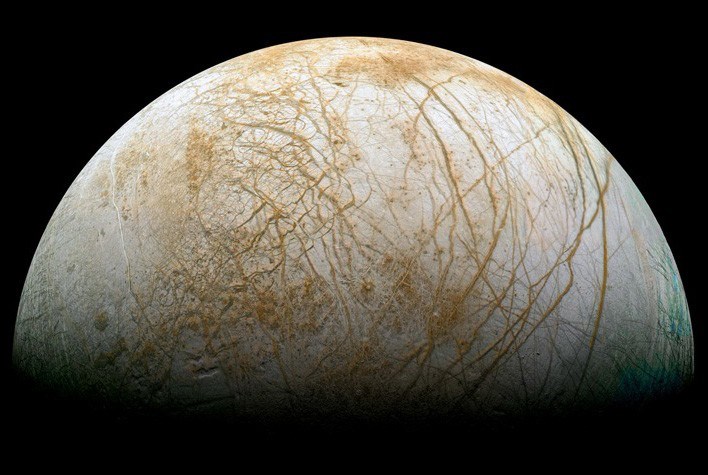
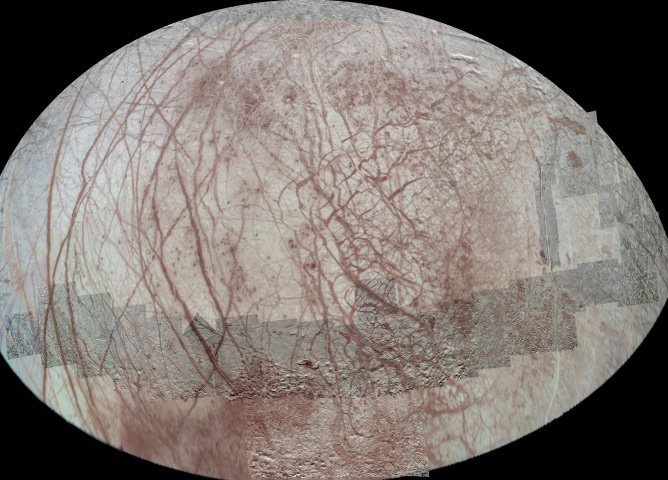
europa-landerIt’s one of Jupiter’s four largest moons, named the Jovians by the famed astronomer – Galileo Galilee – who first discovered them. And from all outward appearances, the moon is an icy, inhospitable place, with surface temperatures never reaching above -160º C (-256º F). Yet, beneath that frozen outer shell is believed to be a liquid, saltwater ocean, one that draws warmth from its orbit around Jupiter.

If this should indeed be the case, then Europa would be about the best candidate for extraterrestrial life in the Solar System, albeit in microbial form. For decades now, NASA has been working under that assumption and preparing for the day that it might be able to send an expedition or probe to confirm it. And it now seems that that day may be on the horizon.

europa-lander-2According to NASA, this would likely take the form of a robot lander. Much like Curiosity, Opportunity, and other robotic research vehicles, it would packed with a variety of sensors and analytical equipment. But of course, the nature of that equipment would be specifically tailored to answer a series of unknowns pertaining to Europa itself.

Overall, the lander would have three priorities: discover the makeup of minerals and organic matter present on the moon; examine the geophysics of the ice and the ocean underneath; and determine how the geology looks (and therefore how it might have evolved) at a human scale on the surface. Basically, it would all boil down to looking at chemistry, water and energy – in other words, the conditions necessary for life.

And though NASA has not announced any official dates, it has begun to speak of the idea an indication of intent. A new article by NASA scientists published in the peer-reviewed journal Astrobiology entitled Science Potential from a Europa Lander set out their research goals in more detail, and speculated how they might be practically achieved.

europa-lander-4One area of focus would be Europa’s distinctive linear surface cracks which are believed to be the result of tidal forces. Europa’s eccentric orbit about Jupiter causes very high tides when the moon passes closest to the gas giant, so it is thought that this process would generate the heat necessary for simple life to survive. NASA thinks the cracks could contain biological makers, molecules indicating the presence of organic life, which have come from the ocean.

But of course, plotting a mission is not as simple as simply launching a robot into space. To ensure that such a mission would maximize returns requires that a “scientifically optimized” landing site be identified, and to do that, Europa’s surface must be thoroughly surveilled. Thus far, the little we know and think about Europa is based on a handful of flybys by Voyager 2 in the 70s and the Galileo probe in the 90s.

europa-lander-3Lead author Robert Pappalardo of NASA’s Jet Propulsion Laboratory summed up the situation as follows:

There is still a lot of preparation that is needed before we could land on Europa, but studies like these will help us focus on the technologies required to get us there, and on the data needed to help us scout out possible landing locations. Europa is the most likely place in our solar system beyond Earth to have life today, and a landed mission would be the best way to search for signs of life.

At the present time, NASA’s exploratory itinerary is quite packed. In addition to wanting to tow an asteroid closer to Earth to study it, launching two more rovers to Mars, constructing a settlement on the far side of the Moon, and conducting a manned mission to Mars, it’s safe to say that a robot lander on Europa won’t be happening for some time.

converted PNM fileBut of course, the plans are in place and moving forward with every passing year. NASA is certainly not going to pass up a chance to examine one of the Solar Systems best candidates for extra-terrestrial life, and we can certainly expect more deep-space probes to be launched once Cassini is finished shooting pictures of Saturn.

I am willing to bet good money that any future probe sent into the outer reaches of the Solar System will be tasked with taking high-resolution photos of Europa as part of its mission. And from that, we can certainly expect NASA, the ESA, and even the Chinese, Russians and Indians to start talking turkey within our lifetimes.

What do you think? 2035 seem like a safe bet for a Europa lander mission?

Source: gizmag.com