The nation of Japan has long been regarded as being at the forefront of emerging technology. And when it comes to solar energy, they are nothing if not far-sighted and innovative. Whereas most nations are looking at building ground-based solar farms in the next few years, the Japanese are looking at the construction of vast Lunar and space-based solar projects that would take place over the course of the next few decades.
The latest proposal comes from the Japan Aerospace Exploration Agency (JAXA), which recently unveiled a series of pilot projects which, if successful, should culminate in a 1-gigawatt space-based solar power generator within just 25 years. Relying on two massive orbital mirrors that are articulated to dynamically bounce sunlight onto a solar panel-studded satellite, the energy harvested would then be beamed wirelessly to Earth using microwaves, collected Earth-side by rectifying antennas at sea, and then passed on to land.
JAXA has long been the world’s biggest booster of space-based solar power technology, making significant investments in research and rallying international support for early test projects. And in this respect, they are joined by private industries such as the Shimizu Corporation, a Japanese construction firm that recently proposed building a massive array of solar cells on the moon – aka. the “Lunar Ring” – that could beam up to 13,000 terawatts (roughly two-thirds of global power consumption) to Earth around the clock.
Considering that Japan has over 120 million residents packed onto an island that is roughly the size of Montana, this far-sighted tendency should not come as a surprise. And even before the Fukushima disaster took place, Japan knew it needed to look to alternative sources of electricity if it was going to meet future demands. And considering the possibilities offered by space-based solar power, it should also come as no surprise that Japan – which has very few natural resources – would look skyward for the answer.
Beyond Japan, solar power is considered the of front runner of alternative energy, at least until s fusion power comes of age. But Until such time as a fusion reaction can be triggered that produces substantially more energy than is required to initiate it, solar will remain the only green technology that could even theoretically provide for our global power demands. And in this respect, going into space is seen as the only way of circumventing the problems associated with it.
Despite solar power being in incredible abundance – the Earth’s deserts absorb more energy in a day than the human race uses in an entire year – the issue of harnessing that power and getting it to where it is needed remain as stumbling blocks. Setting up vast arrays in the Earth’s deserts would certainly deal with the former, but transmitting it to the urban centers of the world (which are far removed from it’s deserts) would be both expensive and impractical.
Luckily, putting arrays into orbit solves both of these issues. Above the Earth’s atmosphere, they would avoid most forms of wear, the ground-based day/night cycle, and all occluding weather formations. And assuming the mirrors themselves are able to reorient to be perpetually aimed at the sun (or have mirrors to reflect the light onto them), the more optimistic estimates say that a well-designed space array could bring in more than 40 times the energy of a conventional one.
The only remaining issue lies in beaming all that energy back to Earth. Though space-based arrays can easily collect more power above the atmosphere than below it, that fact becomes meaningless if the gain is immediately lost to inefficiency during transmission. For some time, lasers were assumed to be the best solution, but more recent studies point to microwaves as the most viable solution. While lasers can be effectively aimed, they quickly lose focus when traveling through atmosphere.
However, this and other plans involving space-based solar arrays (and a Space Elevator, for that matter) assume that certain advances over the next 20 years or so – ranging from light-weight materials to increased solar efficiency. By far the biggest challenge though, or the one that looks to be giving the least ground to researchers, is power transmission. With an estimated final mass of 10,000 tonnes, a gigawatt space solar array will require significant work from other scientists to improve things like the cost-per-kilogram of launch to orbit.
It currently costs around $20,000 to place a kilogram (2.2lbs) into geostationary orbit (GSO), and about half that for low-Earth orbit (LEO). Luckily, a number of recent developments have been encouraging, such as SpaceX’s most recent tests of their Falcon 9R reusable rocket system or NASA’s proposed Reusable Launch Vehicle (RLV). These and similar proposals are due to bring the costs of sending materials into orbit down significantly – Elon Musk hopes to bring it down to $1100 per kilogram.
So while much still needs to happen to make SBSP and other major undertakings a reality, the trends are encouraging, and few of their estimates for research timelines seem all that pie-eyed or optimistic anymore.
The skyline of the future… Chances are, it’s something we’ve all wondered about at one time or another. Given the current rate of urban expansion, combined with population growth and environmental concerns, it’s essentially a given that cities of the future will look quite different from cities today. And when it comes time to break new ground and convert old centers, contracts will be given to those designs that can meet all of these challenges.
That’s the idea behind eVolo Magazine’s Skyscraper Competition, an annual event that for the past nine years has awarded architects and planners who create the problem-solving skyscrapers of the future. This year, over 600 entries were submitted from around the world, and top marks were given for those that addressed the problems or urban sprawl, pollution, sustainable living, and incorporated the latest in design technology.
These included the latest in renewable energy, carbon-capture technology, additive manufacturing (aka. 3D printing), and of course, the time honored concept of Paolo Soleri’s Arcology – a school of thought that merges architecture with ecology for smarter and more sustainable living. Here are just a few of the entries that received top marks in this year’s competition, which include the top three and numerous honorable mentions:
Winners:
Vernacular Versatility: The winner of this year’s Skyscraper Competition, this entry was created of Korean-American designer Yong Ju Lee. who used the concepts of the “Hanok” and “Gagu” as his inspiration. In traditional Korean architecture, the Hanok refers to a type of house with an exposed wooden structure and tiled roof. Gagu refers to a special wooden structural element that is located directly beneath the main roof where the column meets the beam and girder and fastens them without the need for nails or additional parts.
Traditionally, this structural system has only ever been employed in the creation of single-story residences. However, modern modeling software allowed Lee to adapt this traditional system to complex high-rise structural planning to meet contemporary purposes and programs. Vernacular Versatility can open a new chapter of possibilities to bring this old construction and design tradition to the present day with efficiency and beauty.
Designed to be located within one of Korea’s busiest districts, Vernacular Versatility seeks to use a traditional design concept to combat the growing problem of urban sprawl, as well as associated health risks such as atopy and asthma, as well as addressing the destructive impacts urbanization has been having on traditional Korean culture and the environment.
Car and Shell Skyscraper:Also known as “Marinetti’s Monster” and created by Mark Talbot, Daniel Markiewicz, this concept for a “city in the sky” took home 2nd place at this year’s competition. As a solution for what to do about Detroit’s aging infrastructure, the project proposes a vertical suburban neighborhood equipped with recreational and commercial areas where three main grids (streets, pedestrian pathways, and structure) are intertwined to create a box-shaped wireframe.
Inspired by all the attempts to “save Detroit”, which is focused largely on preserving its dwindling suburban areas, Talbot and Markiewicz instead thought of building a new neighborhood within a single enormous skyscraper located in the core. Here, dozens of single-family homes are stacked into a vertical grid, new roads cross through the building, and traditional and contemporary living all plug into a framework to create a rich urban environment.
Propagate Skyscraper: This year’s third place went to Canadian designers YuHao Liu and Rui Wu for their concept of a building that would turn air pollution into construction materials and use it to gradually create the building. Relying on an alternative carbon-capture technique that employs philic resins and material processes to transform carbon dioxide into solid construction material, their building employs additional material that uses carbon dioxide as a means to self-propagate.
The building uses a simple vertical grid scaffold as a framework and takes all the ingredients it needs for material propagation from the surrounding environment. Individual living spaces are built within this gridwork, which creates open square spaces between lattices that can then be filled by tenements. Its pattern of growth is defined by environmental factors such as wind, weather, and the saturation of carbon dioxide within the immediate atmosphere.
Thus each building is a direct reflection of its environment, growing and adapting according to local conditions and cleaning as the air as it does so. Unlike conventional skyscrapers, which rely on steel frame and concrete casting, the proposed skyscraper suggests a more environmental conscious construction method, an alternative mode of occupation and ownership, and possibly a distinct organization of social relationships.
Honorable Mentions:
Climatology Tower: Designed by Yuan-Sung Hsiao, Yuko Ochiai, Jia-Wei Liu, Hung-Lin Hsieh and Japan and Taiwan, the Climatology Tower is a proposed skyscraper designed as a research center that evaluates urban meteorology and corrects the environment through mechanical engineering. This involves analyzing microclimates within cities as a result of the use of industrial materials, the accumulation of buildings, and the scarceness of open spaces. In order to maintain a healthy environment for the city, two main strategies are employed.
The first is Environmental Control Engineering, which consists of a system of evaluation and operational programs. Evaluation programs inspect city climates through a variety of factors such as insolation, radiation, and thermal coverage. Collected data is compared with humidity levels and then mechanical systems respond to reduce or increase the levels to optimal environmental conditions. The second is Information Expression, a system that is becoming increasingly common in East Asia.
Basically, in addition to automatically adjusting to optimal environmental conditions, data is transferred from a control center to different departments in this city. This can alert entire communities of present and upcoming environmental hazards and conditions, much as residents in major cities are currently given “smog alerts”. Climatic information is also displayed publicly, though digital networks, notifying the public on maintaining certain conditions, to preserve both energy and health.
Here-After:Designed by Tsang Aron Wai Chun of Hong Kong, the Here-After project is a proposal to reuse the Ruashi copper mine located in Lubumbashi, Congo. The mine is predicted to stop production in 2020, at which time it would be abandoned, leaving as an enormous urban void surrounded by a rapidly expanding city. The Here-After projects seeks to make use of the left over space, waste soil, and sulfuric acid from the mine drainage and former copper production.
A machine will reuse the waste soil to neutralize the sulfuric acid, which in turn will be used to erode the land to be used as raw buildings blocks for the project. As the machine operates, starting from the South end, the remaining structures from the neutralization process would be reconfigured as a university campus. Throughout the building process the contour, the campus, and the public spaces would continuously change their relationships and form.
Hyper Filter Skyscraper: Designed by Umarov Alexey of Russia, the Hyper Filter Skyscraper recognizes the threat of environmental pollution and seeks to merge carbon capture technology with the building’s design. Under today’s levels of pollution, harmful substances spread over hundreds of kilometers and a whole region and even a country could represent a single pollution source. Hence the plan to place a air-scrubbing building at the heart of the problem – an urban core.
Consistent with CC technology and the principle of photosynthesis, the Hyper Filter Skyscraper is designed to inhale carbon dioxide and other harmful gases and exhale concentrated oxygen. The skin of the project is made out of long pipe filters that ensure the cleaning process. While clean air is released to the atmosphere, all the harmful substances are stored for use in the chemical industry for later use. These can include chemicals products, biofuels, and even manufactured goods.
Hyper-speed Vertical Train Hub: All around the world, nations from the USA, UK, Japan and China are again consolidating futuristic proposals for an advanced public transport network, to maximize the economic growth of their cities. The Hyper Speed Vertical Train Hub is an extension of this, aiming to resolve the inevitable challenges that cities will face by 2075, and offering a deliverable and sustainable solution for the future of the transport generation.
As the world’s population dramatically increases, the demand for goods, natural resources, foods, fuel and land would have increased significantly by 2075. By then, the world’s population will reach an estimated 10 or 11 million, and the majority of them (6 or 7 billion) will gravitate towards living in mega-cities. This will increase pressure and competition for adjacent suburban land, therefore forcing cities to explore more innovative forms of public transport.
Consistent with a key principle of arcology, this proposal seeks to take advantage of vertical space in order to use available land more efficiently. By flipping the traditional form and function of the current train design into a vertical, cylindrical mass, the Vertical Train Hub seeks to eliminate the current impact that traditional stations have on land use, therefore returning the remaining site mass back to the densely packed urban Mega City.
This remaining land will surround the base of the tower forming a large urban park, leading towards to the base of the Hyper-Speed Vertical Hub. The trains will create a dynamic and kinetic facade, one that will be continuously evolving and responsive to the workings of the vertical hub. Passengers will travel into the main lobby, allowing travelers to ascend through the atrium and through the platforms and onto the carriages. The high-speed trains will maximize time efficiency, able to traverse 482 km (300 miles) in just thirty minutes.
As the train travels and transitions from its horizontal formation, and ascends up the facade vertically, the carriages will pivot similar to that on a ‘Ferris wheel’, allowing the passengers within the carriage to remain in an upright position and facing towards the cityscape. The carriages will be supported by a magnetic structure located at either side, eliminating the need for rails beneath, and allowing the carriages and its passengers to connect to the tower.
Launchspire: Designed by Henry Smith, Adam Woodward, Paul Attkins of theUnited Kingdom, the Launchspire is an arcological design that also seeks to eliminate much of the CO2 emissions associated with air travel. This year, commercial air travel is celebrating its centenary; and looking ahead to 2050, aviation is predicted to fly 16 billion passengers and 400 million tones of cargo. This radical re-interpretation of the skyscraper would eliminate the hydrocarbon dependency of aircraft during takeoff through the use of an electromagnetic vertical accelerator.
On short flights, as much as 25% of the total fuel consumed is used during takeoff. The most fuel-efficient route length for airlines is 4,300 kilometers, but roughly half the flights taking place in the developed world cover less than 500 kilometers. An electromagnetic vertical accelerator, utilizing the technological principles developed at CERN’s LHC and maglev train propulsion, would provide a method for commercial aircraft to be accelerated to cruising speed using renewable electrical energy sources from ground-based infrastructure.
This new design methodology envisions a ‘spiral tube’ structure that would reinvigorate the ‘core and floor plate’ model of high-rise buildings. Schools, hospitals, commercial, and residential properties would be interspersed throughout the tower with approximately one third of all Plots to be public green spaces, nature reserves and farm land. Due to the scale of the building, different climates would be experienced, with various wildlife and crop species, whilst also being natural devices for internal climate control.
The concept is essentially a helical version of the classic urban grid environment. This has the benefits of extreme high density, elevated living, mass transportation to different levels, pedestrian and cycle travel locally to enable healthy living. Community interaction and a unique and varied sense of place is achieved to each area of the tower. As the building ages specific areas develop to support an organic and culturally rich network of settlements within the matrix of the structure.
The towers can be built close to renewable energy infrastructures; hydropower in the mountains, tidal and offshore wind nearer the coast. The city is the building, the surrounding environment will remain natural thus the urban realm becomes a vertical entity within the wilderness. The building is effectively a confluence of road, rail, air and space transportation, and takes advantage of vertical spacing to reduce the impact on the local environment.
New Tower of Babel: Designed by Petko Stoevski of Germany, this perhaps unfortunately-named building seeks to invert the relationship between structures and their surrounding environment. Essentially, it is a steel construction built over a desert surface with multiple levels planned depending on the landscape’s topology. The top two panels are made of glass, and the air contained in between is warmed up by the sunlight. The structure is slightly tilted upwards, which leads the air to the middle of the tower into an inner cylindrical.
The updraft power channels the warm air into the chimney tower, propelling the wind turbines located in the base and converting the kinetic energy into electrical power. Under the glass panels, photovoltaic panels are placed to generate electricity while reflecting the sunrays, thereby offering more warming. Moreover, the photovoltaic panels cast a shadow, cooling down the land’s surface and creating a microclimate that allows the creation of residential and recreational areas as well as the development of agriculture.
The Tower of Babel establishes a new landscape, which makes use of the natural forces of an upwind power plant and therefore stretches from the horizontal to the vertical. The building is characterized by many different spaces and leaves their use open to improvisation. Therefore, life develops in different places with different intensity. The project reinforces the principles of sustainability, which allow long term economic, social, and ecological development.
PleXus Tower: Designed by Chris Thackrey, Steven Ma, Bao An Nguyen Phuoc, Christos Koukis, Matus Nedecky, Stefan Turcovsky of the United States, the PleXus Tower is proposed development for the West Hong Kong Harbor. It was conceived as a segmented, but highly connected network of major transportation functions, as well as housing conventional program, that would merge the concepts of interconnectedness, renewable energy, and ecology into the same fabric.
The design starts out as a series of distributed pods reaching out to connect with the city’s transportation, accepting traffic in the form of boats, ferries, and other water vehicles. Bridged together by connected pipelines over the water, these pods work in harmony with the existing Macau Ferry Terminal. As people move inward from these pods, they travel through a series of different structures, beginning with a horizontal parking structure that also connects to the highway network to efficiently receive car traffic.
Farther up, business and shopping space is available, all accessible by car to the highest level of the tower. The upper reaches of the towers are set aside for residential space, providing a living area that incorporates spectacular views of the dynamic city skyline. A heliport on top that can receive air traffic from above, and power is supplied by the south-facing side of the building that comes equipped with numerous solar panels.
The skin is also breathable, with numerous openings designed to overlap each other, undulating throughout, allowing carbon dioxide to easily filter out from the designated parking areas on the lower levels. Each parking level will also utilize foliage to further filter carbon dioxide from the air helping to reduce pollution in Hong Kong. At night, lights will glow from the panels, reminding people of the connections these segments share as well as blending in with Hong Kong’s unique night skyline.
Project Blue: Designed by Yang Siqi, Zhan Beidi, Zhao Renbo, Zhang Tianshuo of China, Project Blue is designed with China’s explosive growth in mind. On the one hand, the country’s “economic miracle” has left the world in awe. But on the other, the country is paying a big price for being the “factory of the world”, in the form of getting polluted at an alarming speed. Chinese cities are now characterized by an unhealthy hazy weather as the result of large amounts of suspended particles in the air.
The purpose of Project Blue is to transform suspended particles into green energy by creating an enormous upside down cooling tower with a multi-tubular cyclic desulfurization system that produces nitrogen and sulfur. When both elements are combined with the atmospheres surplus of carbon monoxide, the result is “water coal” that would later be transformed into methane through a low-pressure reaction called low pressure efficient mathanation.
This methane could then be converted into biofuel that would then be shipped to the surface, providing a clean alternative for China’s fast-growing supply of gasoline cars. Consistent with many modern designs that utilize carbon capture technology, Project Blue would therefore be combating the problem of emissions and air pollution at both ends.
Rainforest Guardian: While most of the concepts were designed for cities, a few were made for more remote locations. The Rainforest Guardian, from Chinese architects Jie Huang, Jin Wei, Qiaowan Tang, Yiwei Yu, and Zhe Hao, was one such example. Designed to sit on the edge of the Amazon, capturing and storing rainwater in the rainy season to help fight fires in the dry season, the building also has labs located at the top for scientists studying and monitoring the local environment.
The lotus-shaped water tower is captures rainwater directly and then filters and stores it in its spare reservoirs. Using capillarity combined with active energy, the aerial roots with a distinct sponge-structure can absorb and store the excess water without disturbing the Amazon’s ecosystem. In the case of fire, firefighters fly to the scene and extinguish the fire with the collected water. In addition, the laboratories can act as exhibition spaces for tourists to create environmental awareness.
Sand Babel: Produced by designers Qiu Song, Kang Pengfei, Bai Ying, Ren Nuoya, and Guo Shen of China, the Sand Babel uses an idea similar to that being proposed by NASA and the ESA to build settlements on the Moon. Basically, their plan is to use sintering and additive manufacturing to turn desert sand into a series of ecological skyscrapers.These structures would serve as scientific research and testing facilities, tourist attractions for the desert, and would be divided into two parts.
The first part, located above ground, consists of several independent structures for a desert community while the second part, located partially underground, would connect several different buildings together and create a multi-functional tube network system. The main portion of each building is constructed with sand, sintered through a solar-powered 3D printer to create walls of solid ceramic.
The top structures utilizes a spiral skeleton shape, inspired by desert phenomena like Tornadoes and mushroom rocks. These are tall, straight and have high tensile strength, and are thus able to withstand high winds. The net structure of the lower sections are similar to tree roots, effectively anchoring each building into the ground. The dual funnel model provides cooling through cross-ventilation, as well as ensuring that water can be collected through condensation.
Seawer: Designed by Sung Jin Cho of South Korea, the Seawer was inspired by another major environmental issue – the problem of waste. Every year, millions of tons of trash enter the ocean, and between 60 and 80 percent of it is from land-based sources. Due to ocean currents, this waste collects in particular areas of the world, such as the one currently located in the North Pacific Subtropical Gyre. Consisting of tiny particles of plastics, this area is commonly referred as the Great Pacific Garbage Patch (GPGP), or just “Garbage Island”.
The GPGP is twice the size of Texas and contains six times more plastic than plankton biomass. And since plastic is not biodegrade, it poses a threat to thousands of marine animals. Seawer proposes to install a huge drainage hole 550 meters in diameter and 300 meters in depth in the middle of the GPGP that would engulf all kinds of floating trash filled with seawater. Seawer consists of five layers of baleen filters, which separate particles and fluids and collected the particles together.
These collected plastics are then taken to a recycling plant atop of the structure while seawater is filtered and stored in a large sedimentation tank at the bottom to be further cleaned and released into the ocean. Much like skyscrapers that are energy-independent and turn air pollution into useable fuels, the Seawer concept is all about making a future city that can offer solutions, and placing it at the heart of the problem.
Skyvillage: Designed by Ziwei Song of the United States, the Skyvillage concept was inspired by Los Angeles’s freeway system, which he claims segregates the city’s fabric and restricts urban activities to single locations. As a result, Song envisioned a vertical city that would encourage urban integration by providing a bridge over freeway interruptions and connect the four quadrants around the 101 and 110 freeways. This single architectural organism would also boost cultural exchanges, urban activities, and social interaction.
The interchange 101 and 110 breaks Los Angeles east urban fabric into four disconnected quadrants: Downtown, Chinatown, Echo Park, and Temple Beaudry. The four quadrants have distinct cultural and social differences, lacking a coherent urban tissue. Moreover, the leftover space around the freeways reaches over 27 acres. Skyvillage aims to reclaim this vague terrain and provide green filtering towers to clean the freeways and also articulate various programs to revitalize the disconnected urban fabric.
Urban Alloy Structure: Last, but certainly not least, there is the design concept that was put forth this year by Matt Bowles and Chad Kellogg of the United States. Known as Urban Alloy, the concept was inspired by cities like New York and other dynamic cities of the 21st century – which they refer to as “anthropomorphic alloys”. In short, these cities act as engines for innovation and social cohesion which, combined with their continually evolving demographics, will forge the dynamic societies of the future.
Once again, the concept calls for smart growth – developments that promote innovation and renewal without disrupting current land use. Hence their proposal for a residential typology that surrounds the intersection of transportation hubs – such as elevated train lines and freeway interchanges – with a set of highly linked living environments that capture the air rights above these systems. The design and skin of the structure also reflects a blend of space types and a desire to optimized shading and day lighting.
Composed of a series of different alloys and composites, the system is deployed on a grid that follows the geometric pattern of the surface. This grid is designed for integration with adjoining pieces of the structure, and to optimize shading and lighting so the building doesn’t cast a huge shadow over adjacent areas (which is a common problem for skyscrapers). The resulting architecture is a steel diagrid system that can efficiently be constructed with each unique member cut by an automated system (i.e. 3D metal printing)
The relatively light weight of each structural unit also means that it can be constructed with greater ease, cutting down on construction costs and the carbon foot involved. The wall systems are also built with a high content of recycled materials, making it a comparatively eco-friendly structure compared to most modern skyscrapers.
Summary:
An impressive collection, isn’t it? And this is not even the complete list of winners and runner-ups, just those that I felt I could squeeze in to this here humble post. Alas, it gives a pretty good idea what the great minds of the world are coming up with when they consider the needs of urban residents and cityscapes in the coming years and decades. In addition to providing housing, energy, transportation and basic services in ways that are sustainable, top marks go to those who can turn problems into solutions.
When Paolo Soleri first conceived of his Arcology concept, he was looking for a way to provide room for more people with less space, and in a way that did not further tax the environment. However, since the 1970’s, this challenge has been updated thanks to the advance of Climate Change. At this juncture, simply not adding to the problem is no longer sufficient. Future living solutions must also find ways to reduce and roll back the damage.
Hence concepts that now call for carbon capture, garbage processing, and pollution control in addition to the smart use of space, urban agriculture, and renewable energy. It is one of the paradoxes of the modern age that cities are both the cause, and solution to, the problems of modern living. While they may bring millions of people together in one place, producing tons of waste and pollution, they also bring together ideas for change and innovation that lead to better living.
In the end, ideas that expand upon this paradox – turning cities into pollution and garbage-eating factories – will not only determine the size and shape of future cities, they may very well ensure the survival of the natural environment and the human race itself. Much like all life on this planet, we remain permanently connected to space and place and are dependent on it for our livelihood and our very lives. The only way to keep living in to learn to live with it.
For more info on eVolo’s 2014 Skyscraper Competition, or to just check out some interesting design and architecture news, click on this link to go to their homepage.
When it comes to the future of medicine, its becoming increasingly clear that biomimetics and 3D printing will play an important role. Basically, this amounts to machines that are designed to mimic biology for the sake of making our bodies run better. In addition, it means that both medical machines and organic parts could be created on site, allowing for speedier, accessible and more cost-effective interventions and augmentations.
For example, research being conducted at Harvard’s Wyss Institute for Biologically Inspired Engineering and the Harvard School of Engineering and Applied Sciences has led to the creation of artificial muscle that can imitate the beating motion of the heart – also known as the “Left Ventricle Twist”. This development, which is a big break in the field of biomimetics, could also be a game-changer when it comes to producing artificial hearts.
Their research started with what is known as a pneumatic artificial muscle (PAM), one which was modeled after the striated muscle fibers found in the heart. Made from silicone elastomer and embedded with braided mesh, this artificial heart was then hooked up to an air tube to see how it would handle being inflated. When air was pumped into the PAM, it responded by twisting and thus becoming shorter. This is similar to what the natural fibers of the heart do, which contract by twisting and shortening.
Several of the PAMs were then embedded within a matrix of the same elastomer from which they were made. Through a process of manipulating their orientation to one another, along with selectively applying different amounts of pressure, the researchers were able to get some of the PAMs twisting in one direction, at the same time that others twisted in the opposite direction. As a result, the silicone matrix exhibited the same three-dimensional twisting motion as the heart.
The immediate applications for this are obvious; in short, creating a range of artificial hearts for patients who suffer from severe disorders or heart damage. Unlike conventional artificial hearts, these ones would be able to provide pumping action similar to the real thing. In addition, the PAMs were able to mimic the change in motion that is caused by various heart disorders, and these could be used to help in the research of such conditions, not to mention the development of treatments for them.
Equally exciting are the possibilities being offered by 3D printing which now offers a range of artificial replacements. The latest example comes from the Netherlands, where a 22-year old woman has had the top of her skull replaced with a 3D printed implant. Due to a severe condition that causes a thickening of the skull, the patient was suffering from severe and worsening symptoms. And in a first of its kind procedure, she was given a tailor-made synthetic replacement.
As Dr. Bon Verwei of the University Medical Center (UMC) Utrecht explained, the surgery was not only a first, it was absolutely essential:
The thickening of the skull puts the brain under increasing pressure. Ultimately, she slowly lost her vision and started to suffer from motor coordination impairment. It was only a matter of time before other essential brain functions would have been impaired and she would have died. So intensive surgery was inevitable, but until now there was no effective treatment for such patients.
So far, 3D printing has been used to produce lower jaw implants, prosthetic arms, legs, and cells (kidney, liver, and skin cells). In this instance, the skull was 3D-modeled and then printed as a single full piece that was able to be slotted and secured into place. Prior to the procedure, Verwej and his team had to familiarize themselves with reconstructions and 3D printing, in particular that which pertained to partial skull implants.
Implants have often been used when part of a skull has been removed to reduce pressure on an patient’s brain. However, Verweij claimed that cement implants are not always a good fit, and that 3D printing allows for exact specifications. As he explained it:
This has major advantages, not only cosmetically but also because patients often have better brain function compared with the old method.
Verweij worked with an Australian company called Anatomics – which uses 3D printing to produce custom-made implants and surgical models for medical practitioners – to produce the replacement skull. The surgery, only just announced, was carried out three months ago and was a success. According to Verweij, the patient has fully regained her vision and has returned to her normal life. The work undertaken on the procedure means that UMC Utrecht is now is a position to carry out other similar work.
The ability to tailor-make synthetic bones, which are exact duplicates to the original, offers exciting possibilities for reconstructive and replacement surgery. It also does away with some rather invasive and unsatisfactory procedures that involve putting shattered bones back together and joining them with pins, bars and screws. And considering that such procedures often require multiple operations, the combination of 3D scanning and 3D printed replacements is also far more cost effective.
And be sure to check out the video below that shows the Utrecht procedure. Be warned, the video contains actual footage of the surgery, and is therefore not recommended for the squeamish! English subtitles are also available via the video controls.
“We are going to find life in space in this century.” This was the bold prediction made by Dr. Seth Shostak, Senior Astronomer at the Search for Extra-Terrestrial Intelligence Institute (SETI) at this year’s European Commission Innovation Convention. As part of the European Union’s strategy to create an innovation-friendly environment, the ECIC brings together the best scientific minds from around the world to discuss what the future holds and how we can make it happen.
And this year, Dr. Shostak and other representatives from SETI were quite emphatic about what they saw as humanity’s greatest discovery, and when it would be taking place. Sometime this century, they claim, the people of Earth will finally find the answer to the question “Are we alone in the universe?” Like many eminent scientists from around the world, Dr. Shostak believes its not a question of if, but when.
As he went on to explain, given the sheer size of the universe and the statistical probabilities, the odds that humanity is far more unlikely than the reverse:
There are 150 billion galaxies other than our own, each with a few tens of billions of earth-like planets. If this is the only place in the universe where anything interesting happening then this is a miracle. And 500 years of astronomy has taught us that whenever you believe in a miracle, you’re probably wrong.
As for how we’ll find that life, Dr Shostak sees it as a ‘three-horse race’ which will probably be won over the next 25 years. Either we will find it nearby, in microbial form, on Mars or one of the moons of Jupiter; or we’ll find evidence for gases produced by living processes (for example photosynthesis) in the atmospheres of planets around other stars; or Dr Shostak and his team at SETI will pick up signals from intelligent life via huge antennas.
Dr. Suzanne Aigrain – a lecturer in Astrophysics at Oxford University and who studies exoplanets – represents horse number two in the race. Dr. Aigrain and her research group have been using electromagnetic radiation (i.e. light) as their primary tool to look for planets around other stars. The life ‘biomarkers’ that she and her colleagues look for are trace gases in the atmospheres of the exoplanets that they think can only be there if they are being produced by a biological source like photosynthesis.
Speaking at the Convention, Dr Aigrain noted that, based on her studies, she would also bet that we are not alone:
We are very close to being able to say with a good degree of certainty that planets like the Earth, what we call habitable planets, are quite common [in the universe] … That’s why when asked if I believe there’s life on other planets, I raise my hand and I do so as a scientist because the balance of probability is overwhelmingly high.
Dr. Shostak and SETI, meanwhile, seek evidence of life in the universe by looking for some signature of its technology. If his team does discover radio transmissions from space, Dr. Shostak is quite certain that they will be coming from a civilization more advanced than our own. This is part and parcel of searching for life that is capable of sending out transmissions, and assures that they will have a level of technology that is at least comparable to our own.
At the same time, it is entirely possible that an advanced species will have existed longer than our own. As the Kardashev Scale shows, the level of a race’s technical development can be measured in terms of the energy they utilize. Beginning with Type 0’s, which draw their energy, information, raw-materials from crude organic-based sources, the scale goes on to include levels of development that draw energy of fusion and anti-matter to our host star, or even stellar clusters and even galaxies.
Considering that size of the universe, the realm of possibility – and the fact humanity itself is still making the transitions from Type 0 to Type I – the odds of us meeting an extra-terrestrial that is more advanced than us are quite good. As Shostak put it:
Why do I insist that if we find ET, he/she/it will be more advanced than we are? The answer is that you’re not going to hear the Neanderthals. The Neanderthal Klingons are not building radio transmitters that will allow you to get in touch.
“Neanderthal Klingons”… now that’s something I’d like to see! Of course, scientists have there reasons for making such bold predictions, namely that they have a vested interest in seeing their theories proven correct. But not surprisingly, they are hardly alone in holding up the numbers and insisting that its a numbers game, and that the numbers are stacked. Another such person is William Shatner, who in a recent interview with the Daily Mail offered his thoughts on the possibility of alien life.
As he explained it, it all comes down to numbers, and the sheer amount of discoveries made in such a short space of time:
I don’t think there is any doubt there is life in the universe, yes. I don’t think there is any question. The mathematics involved — what have they just discovered, 730,000 new planets the other day? — mathematically it has to be.
He was a bit off on the number of planets, but he does have a point. Earlier this month, NASA announced the discovery of 715 new exoplanets thanks to a new statistical technique known as “verification by multiplicity”. By observing hundreds of stars and applying this basic technique, the Kepler space probe was able to discover more planets so far this year than in the past few combined. In fact, this one batch of discovered increased the total number of exoplanet candidates from 1000 to over 1700.
And while the discovery of only four potentially habitable planets amongst those 715 (a mere 0.0056% of the total) may seem discouraging, each new discovery potentially represents hundreds more. And given how little of our galaxy we have mapped so far, and the fact that we’ve really only begun to explore deep space, we can expect that list to grow by leaps and bounds in the coming years and decades.
Naturally, there are some fundamental questions that arise out of these predictions. For example, if we do find life on other planets or intercept a radio signal, what are the consequences? Finding a microbe that isn’t an earthly microbe will tell us a lot about biology, but there will also be huge philosophical consequences. Even more so if we are to meet a species that has developed advanced technology, space flight, and the means to come find us, rather than us finding them.
In Dr Shostak’s words, ‘It literally changes everything’. But that is the nature of
It’s known as “Light Fidelity”, a new form of wireless data transmission that does away with radio signals in favor of optics. And much like the concept of an optic computer – which uses photons to transfer and store information rather than electrons – it’s long been considered as the next possible leap in internet technology. Hence why it was being demonstrated at this year’s Mobile World Congress – the world’s largest exhibition for members of the mobile phone, internet and IT industry.
Despite its monumental growth in the last decade, Wi-Fi remains somewhat hindered by the fact that it relies on microwaves in the 2.4 GHz and 5 GHz bands, a radio spectrum which is limited. LiFi, however, relies on the transmission of light and could be deployed in everyday LED bulbs, covering the entire interior of a home or office. These LED bulbs would send information out in what appears to be a constant stream of light, but which is actually made up of millions of micropulses a second.
A system based on this would be capable of transferring far larger bundles of data than one based on microwaves. The system that was on display at MWC this year ran at 150 Mbps. But with a more powerful LED light, it could conceivably reach a rate of transfer equal to 3.5 gigabytes per second. That’s 210 gigabytes a minute, and 12.6 terabytes (that 12 and a half trillion bytes, people!) every hour, far in advance of what current WiFi offers (which maxes out at 450 mbps).
To put that in perspective, as of March 2014, the US Library of Congress estimated that their web had cataloged 525 terabytes of web archive data, with an addition 5 terabytes added every month. This means that a LiFi connection running at full capacity transfers in one hour what the Library of Congress processes in over two months! In short, the widespread use of LiFi would mean an explosion in information the likes of which has not been seen since the internet first went online.
Granted, there are still some limitations, like how any computer running off of LiFi needs a special adapted, and interrupting the light source will cause information transfers to cease. And I can’t help but wonder what micropulsing lights will do for people with epilepsy, not to mention the rest of us. However, such concerns are likely to be addressed long before LiFi sees any adoption on a grand scale, which is likely still a decade away at this point.
This year, the MWC conference took place in Barcelona, a place committed to the concept of the Internet of Everything (IoE) and the building of the world’s first truly “smart city”. In the coming months and years, I anticipate that this Spanish haven for technological innovation and integration will feature plenty of LiFi. So if you’re traveling there, you might want to look into getting an adapter for your laptop.
And in the meantime, enjoy this video – courtest of CNET First Look – that takes a look at this year’s LiFi demonstration at MWC 2014:
As Napoleon Bonaparte once said, “An army marches on its belly”. And like most tidbits of military wisdom, this is one that has not changed with the ages. Whether it’s leading an army of war elephants and hoplites through the Alps, a Grande Armee across the Steppes, or a mechanized division through Central Asia, the problem of logistics is always there. For an army to remain effective and alive, it needs to be supplied; and those supply trains has to be kept moving and safe.
In the modern world, this consists of ensuring that troop and supply trucks are protected from the hazards of enemy snipers, rockets, and the all-too-prevalent menace of improvised explosive devices (IEDs). Until now, this consisted of having armed convoys escort armored trucks through hostile terrain and contested areas. But in an age of unmanned aerial vehicles and robotic exoskeletons, it seems only natural that driverless trucks would be the next big thing.
That’s the thinking behind the Autonomous Mobility Appliqué System (AMAS), a program being developed by the U.S. Army Tank-Automotive Research, Development and Engineering Center (TARDEC) in collaboration with major defense contractor Lockheed Martin. This program, which was demonstrated earlier this month at Fort Hood, Texas, gives full autonomy to convoys to operate in urban environments.
In tests, driverless tactical vehicles were able to navigate hazards and obstacles including pedestrians, oncoming traffic, road intersections, traffic circles and stalled and passing vehicles. Similar to the systems used by the first generation of robotized cars, the AMAS program for the Pentagon’s ground troops uses standard-issue vehicles outfitted with a high-performance LIDAR sensor and a second GPS receiver, locked and loaded with a range of algorithms.
That gear, Lockheed said, could be used on virtually any military vehicle, but in these tests was affixed to the Army’s M915 tractor-trailer trucks and to Palletized Loading System vehicles. According to Lockheed, AMAS also gives drivers an automated option to alert, stop and adjust, or take full control under user supervision. David Simon, AMAS program manager for Lockheed Martin Missiles and Fire Control, described the program in a statement:
The AMAS CAD hardware and software performed exactly as designed, and dealt successfully with all of the real-world obstacles that a real-world convoy would encounter.
Under an initial $11 million contract in 2012, Lockheed Martin developed the multiplatform kit which integrates low-cost sensors and control systems with Army and Marine tactical vehicles to enable autonomous operation in convoys. But not only do driverless convoys add a degree of safety under dangerous conditions, they also move the military closer its apparent goal of nearly total autonomous warfare.
AMAS algorithms also are used to control the company’s Squad Mission Support System (SMSS), a more distinctive and less conventional six-wheeled unmanned ground vehicle that has been used by soldiers in Afghanistan. Combined with robots, like the Legged Squad Support System (LS3) by Boston Dynamics, the development of driverless trucks is not only a good counter to suicide bombers and IEDs, but part of a larger trend of integrated robotics.
In an age where more and more hardware can be controlled by a remote operator, and grunts are able to rely on robotic equipment to assist them whenever and wherever the 3D’s of hostile territory arise (i.e. dirty, difficult, or dangerous), trucks and armored vehicles that can guide themselves is just the latest in a long line of developments aimed at “unmanning the front lines”.
And of course, there’s a video of the concept in action, courtesy of the U.S. Army and TARDEC:
One of the most interesting and speculative things to come out of the William Gibson’s cyberpunk series The Sprawl Trilogy was the concept of Simstim. A term which referred to “simulated stimulation”, this technology involved stimulating the nervous system of one person so that they could experience another’s consciousness. As is so often the case, science fiction proves to be the basis for science fact.
This latest case of science imitating sci-fi comes from Barcelona, where a group of interdisciplinary students have created a revolutionary VR technology that uses virtual reality and neuroscience to let people see, hear, and even feel what it’s like in another person’s body. The focus, though, is on letting men and women undergo a sort of high-tech “gender swapping”, letting people experience what it’s like to be in the others’ shoes.
Be Another Lab is made up of Philippe Bertrand, Daniel Gonzalez Franco, Christian Cherene, and Arthur Pointea, a collection of interdisciplinary artists whose fields range from programming and electronic engineering to interactive system design and neuro-rehabilitation. Together, the goal of Be Another Lab is to explore the concepts of empathy through technology, science, and art.
In most neuroscience experiments that examine issues of empathy and bias, participants “trade places” with others using digital avatars. If a study wants to explore empathy for the handicapped, for example, scientists might sit subjects down in front of a computer and make them play a video game in which they are confined to a wheelchair, then ask them a series of questions about how the experience made them feel.
However, Be Another Lab takes a different, more visceral approach to exploring empathy. Instead of using digital avatars, the group uses performers to copy the movements of a subject. For example, racial bias is studied by having a subject’s actions mirrored by a performer of color. And for something like gender bias, men and women would take a run at living inside the body of one another.
Bertrand and company have taken this approach to the next level by leveraging the tech of a paid Oculus Rift virtual reality headset, renaming it the Machine To Be Another. In the project, two participants stand in front of one another, put on their headsets, and effectively see out of one anothers’ eyes. When they look at each other, they see themselves. When they speak, they hear the other person’s voice in their ears.
But things don’t end there! Working together, the two participants are encouraged to sync their movements, touching objects in the room, looking at things, and exploring their ‘own’ bodies simultaneously. Bertrand explains the experience as follows:
The brain integrates different senses to create your experience of the world. In turn, the information from each of these senses influences how the other senses are processed. We use these techniques from neuroscience to actually affect the psychophysical sensation of being in your body.
In other words, in combination with being fed video and sound from their partner’s headset, by moving and touching things at the same time, the Machine To Be Another can actually convince people that they are in someone else’s body as long as the two partners remain in sync.
It’s a radical idea that Be Another Lab is only beginning to explore. Right now, their experiments have mostly focused on gender swapping, but the team hopes to expand on this and tackle issues such as transgender and homosexuality. The group is currently looking to partner with various organizations, experts and activists to help them further perfect their techniques.
It’s a unique idea, giving people the ability to not only walk a mile in another’s shoes, but to know what that actually feels like physically. I can foresee this sort of technology becoming a part of sensitivity training in the future, and even as education for sex offenders and hate criminals. Currently, such training focuses on getting offenders to empathize with their victims.
What better way to do that than making them see exactly what it’s like to be them? And in the meantime, enjoy this video of the Machine To Be Another in action:
Gauging what life will be like down the road based on the emerging trends of today is something that scientists and speculative minds have been doing since the beginning of time. But given the rapid pace of change in the last century – and the way that it continues to accelerate – predicting future trends has become something of a virtual necessity today.
And the possibilities that are expected for the next generation are both awe-inspiring and cause for concern. On the one hand, several keen innovations are expected to become the norm in terms of transportation, education, health care and consumer trends. On the other, the growing problems of overpopulation, urbanization and Climate Change are likely to force some serious changes.
Having read through quite a bit of material lately that comes from design firms, laboratories, and grant funds that seek to award innovation, I decided to do a post that would take a look at how life is expected to change in the coming decades, based on what we are seeing at work today. So here we go, enjoy the ride, and remember to tip the driver!
Housing: When it comes to designing the cities of the future – where roughly 5 of the worlds 8.25 billion people are going to live – meeting the basic needs of all these folks is complicated by the need to meet them in a sustainable way. Luckily, people all across the world are coming together to propose solutions to this problem, ranging from the small and crafty to the big and audacious.
Consider that buildings of the future could be coated with Smart Paint, a form of pigment that allows people to change the color of their domicile simply by pushing a button. Utilizing nano-particles that rearrange themselves to absorb a different part of the spectrum, the paint is able to reflect whatever wavelength of visible light the user desires, becoming that color and removing the need for new coats of paint.
And consider that apartments and houses in this day could be lighted by units that convert waste light energy from their light bulbs back into functional ambient light. This is the idea behind the Trap Light, a lamp that comes equipped with photoluminescent pigments embedded directly into the glass body. Through this process, 30 minutes of light from an incandescent or LED light bulb provides a few hours of ambient lighting.
And in this kind of city, the use of space and resources has come to be very efficient, mainly because it has had to. In terms of low-rent housing, designs like the Warsaw-inspired Keret House are very popular, a narrow, 14-sqaure meter home that still manages to fit a bathroom, kitchen and bedroom. Being so narrow, city planners are able to squeeze these into the gaps between older buildings, its walls and floors snapping together like Lego.
When it comes to other, larger domiciles (like houses and apartment blocks), construction is likely to become a much more speedy and efficient process – relying on the tools of Computer-Assisted Design (CAD) and digital fabrication (aka. the D-process). Basically, the entire fabrication process is plotted in advance on computer, and then the pieces are tailor made in the factory and snapped together on site.
And lets not forget anti-gravity 3-D printing as a means of urban assembly, as proposed by architecture students from the Joris Laarman Lab in Amsterdam. Using quick-hardening materials and dispensed by robot-driven printers, entire apartment blocks – from electronic components to entire sections of wall – within a few days time. Speedier, safer and more efficient than traditional construction.
Within these buildings, water is recycled and treated, with grey water used to fertilize crops that are grown in house. Using all available spaces – dedicated green spaces, vertical agriculture, and “victory gardens” on balconies – residents are able to grow their own fruits and vegetables. And household 3-D food printers will dispense tailor-made treats, from protein-rich snacks and carb crackers to chocolate and cakes.
And of course, with advances in smart home technology, you can expect that your appliances, thermostat, and display devices will all be predictive and able to anticipate your needs for the day. What’s more, they will all be networked and connected to you via a smartphone or some other such device, which by 2030, is likely to take the form of a smartwatch, smartring or smartbracelet.
Speaking of which…
Smart Devices and Appliances:
When it comes to living in the coming decades, the devices we use to manage our everyday lives and needs will have evolved somewhat. 3-D printing is likely to be an intrinsic part of this, manufacturing everything from food to consumer products. And when it comes to scanning things for the sake of printing them, generating goods on demand, handheld scanners are likely to become all the rage.
That’s where devices like the Mo.Mo. (pictured above) will come into play. According to Futurist Forum, this molecular scanning device scans objects around your house, tells you what materials they’re made from, and whether they can be re-created with a 3-D printer. Personal, household printers are also likely to be the norm, with subscriptions to open-source software sites leading to on-demand household manufacturing.
And, as already mentioned, everything in the home and workplace is likely to be connected to your person through a smart device or embedded chips. Consistent with the concept of the “Internet of Things”, all devices are likely to be able to communicate with you and let you know where they are in real time. To put that in perspective, imagine SIRI speaking to you in the form of your car keys, telling you they are under the couch.
Telepresence, teleconferencing and touchscreens made out of every surface are also likely to have a profound effect. When a person wakes in the morning, the mirror on the wall will have displays telling them the date, time, temperature, and any messages and emails they received during the night. When they are in the shower, the wall could comforting images while music plays. This video from Corning Glass illustrates quite well:
And the current range of tablets, phablets and smartphones are likely to be giving way to flexible, transparent, and ultralight/ultrathin handhelds and wearables that use projection and holographic technology. These will allow a person to type, watch video, or just interface with cyberspace using augmented reality instead of physical objects (like a mouse or keyboard).
And devices which can convert, changing from a smartphone to a tablet to a smartwatch (and maybe even glasses) are another predicted convenience. Relying on nanofabrication technology, Active-Matrix Organic Light-Emitting Diode (AMOLED) technology, and touch-sensitive surfaces, these devices are sure to corner the market of electronics. A good example is Nokia’s Morph concept, shown here:
Energy Needs: In the cities of the near-future, how we generate electricity for all our household appliances, devices and possibly robots will be a going concern. And in keeping with the goal of sustainability, those needs are likely to be met by solar, wind, piezoelectric, geothermal and tidal power wherever possible. By 2030, buildings are even expected to have arrays built in to them to ensure that they can meet their own energy needs independently.
This could look a lot like the Strawscraper (picture above), where thousands of fronds utilize wind currents to generate electricity all day long; or fields filled with Windstalks – where standing carbon-fiber reinforced poles generate electricity by simply swaying with the wind. Wind farms, or wind tunnels and turbines (as envisioned with the Pertamina Energy Tower in Jakarta) could also be used by buildings to do the same job.
In addition, solar panels mounted on the exterior would convert daylight into energy. Assuming these buildings are situated in low-lying areas, superheated subterranean steam could easily be turned into sources of power through underground pipes connected to turbines. And for buildings located near the sea, turbines placed in the harbor could do the same job by capturing the energy of the tides.
Furthermore, piezoelectric devices could be used to turn everyday activity into electricity. Take the Pavegen as an example, a material composed of recycled tires and piezoelectric motors that turns steps into energy. Equipping every hallway, stairwell and touch surface with tensile material and motors, just about everything residents do in a building could become a source of added power.
On top of that, piezoelectric systems could be embedded in roads and on and off ramps, turning automobile traffic into electrical power. In developed countries, this is likely to take the form of advanced materials that create electrical charges when compressed. But for developing nations, a simple system of air cushions and motors could also be effective, as demonstrated by Macías Hernández’ proposed system for Mexico City.
And this would seem like a good segue into the issue of…
Mass Transit: According to UN surveys, roughly 60% of the world’s population will live in cities by the year 2030. Hopefully, the 5.1 billion of us negotiating tight urban spaces by then will have figured out a better way to get around. With so many people packed into dense urban environments, it is simply not practical for all these individuals to rely on smog-emitting automobiles.
For the most part, this can be tackled by the use of mass transit that is particularly fast and efficient, which are the very hallmarks of maglev trains. And while most current designs are already speedy and produce a smaller carbon footprint than armies of cars, next-generation designs like the Hyperloop, The Northeast Maglev (TNEM), and the Nagoya-Tokyo connector are even more impressive.
Dubbed by Elon Musk as the “fifth form” of transportation, these systems would rely on linear electric motors, solar panels, and air cushions to achieve speeds of up to 1290 kilometers per hour (800 mph). In short, they would be able to transport people from Los Angeles and San Francisco in 30 minutes, from New York to Washington D.C. in 60 minutes, and from Nagoya to Tokyo in just 41.
When it comes to highways, future designs are likely to take into account keeping electric cars charged over long distances. Consider the example that comes to us from Sweden, where Volvo is also working to create an electric highway that has embedded electrical lines that keep cars charged over long distances. And on top of that, highways in the future are likely to be “smart”.
For example, the Netherlands-based Studio Roosegaarde has created a concept which relies on motion sensors to detect oncoming vehicles and light the way for them, then shuts down to reduce energy consumption. Lane markings will use glow-in-the-dark paint to minimize the need for lighting, and another temperature-sensitive paint will be used to show ice warnings when the surface is unusually cold.
In addition, the road markings are expected to have longer-term applications, such as being integrated into a robot vehicle’s intelligent monitoring systems. As automated systems and internal computers become more common, smart highways and smart cars are likely to become integrated through their shared systems, taking people from A to B with only minimal assistance from the driver.
And then there’s the concept being used for the future of the Pearl River Delta. This 39,380 square-km (15,200 square-mile) area in southeastern China encompasses a network of rapidly booming cities like Shenzhen, which is one of the most densely populated areas in the world. It’s also one of the most polluted, thanks to the urban growth bringing with it tons of commuters, cars, and vehicle exhaust.
That’s why NODE Architecture & Urbanism – a Chinese design firm – has come up with a city plan for 2030 that plans put transportation below ground, freeing up a whole city above for more housing and public space. Yes, in addition to mass transit – like subways – even major highways will be relegated to the earth, with noxious fumes piped and tunneled elsewhere, leaving the cityscape far less polluted and safer to breathe.
Personal cars will not be gone, however. Which brings us to…
Personal Transit: In the future, the majority of transport is likely to still consist of automobiles, albeit ones that overwhelmingly rely on electric, hydrogen, biofuel or hybrid engines to get around. And keeping these vehicles fueled is going to be one of the more interesting aspects of future cities. For instance, electric cars will need to stay charged when in use in the city, and charge stations are not always available.
That’s where companies like HEVO Power come into play, with its concept of parking chargers that can offer top-ups for electric cars. Having teamed up with NYU Polytechnic Institute to study the possibility of charging parked vehicles on the street, they have devised a manhole c0ver-like device that can be installed in a parking space, hooked up to the city grid, and recharge batteries while commuters do their shopping.
And when looking at individual vehicles, one cannot underestimate the role by played by robot cars. Already, many proposals are being made by companies like Google and Chevrolet for autonomous vehicles that people will be able to summon using their smartphone. In addition, the vehicles will use GPS navigation to automatically make their way to a destination and store locations in its memory for future use.
And then there’s the role that will be played by robotaxis and podcars, a concept which is already being put to work in Masdar Eco City in the United Arab Emirates, San Diego and (coming soon) the UK town of Milton Keynes. In the case of Masdar, the 2GetThere company has built a series of rails that can accommodate 25,000 people a month and are consistent with the city’s plans to create clean, self-sustaining options for transit.
In the case of San Diego, this consists of a network known as the Personal Rapid Transit System – a series of on-call, point to point transit cars which move about on main lines and intermediate stations to find the quickest route to a destination. In Britian, similar plans are being considered for the town of Milton Keynes – a system of 21 on-call podcars similar to what is currently being employed by Heathrow Airport.
But of course, not all future transportation needs will be solved by MagLev trains or armies of podcars. Some existing technologies – such as the bicycle – work pretty well, and just need to be augmented. Lightlane is a perfect example of this, a set of lasers and LED lights that bikers use to project their own personal bike lane from under the seat as they ride.
And let’s not forget the Copenhagen Wheel, a device invented by MIT SENSEable City Lab back in 2009 to electrify the bicycle. Much like other powered-bicycle devices being unveiled today, this electric wheel has a power assist feature to aid the rider, a regenerative braking system that stores energy, and is controlled by sensors in the peddles and comes with smart features can be controlled via a smartphone app.
On top of all that, some research actually suggests that separating modes of transportation – bike lanes, car lanes, bus lanes, etc. – actually does more harm than good to the people using them. In Europe, the traffic concept known as “shared spaces” actually strips paths of traffic markings and lights, and allow walkers and drivers to negotiate their routes on their own.
Shared spaces create more consideration and consciousness for other people using them, which is why the Boston architecture firm Höweler + Yoon designed the “Tripanel” as part of their larger vision for the Boston-Washington corridor (aka. “Boswash”). The Tripanel features a surface that switches among grass, asphalt, and photovoltaic cells, offering a route for pedestrians, bikers, and electric cars.
Education:
When it comes to schooling ourselves and our children, the near future is likely to see some serious changes, leading to a virtual reinventing of educational models. For some time now, educators have been predicting how the plurality of perspectives and the rise of a globalized mentality would cause the traditional mode of learning (i.e. centralized schools, transmission learning) to break down.
And according to other speculative thinkers, such as Salim Ismail – the director of Singularity University – education will cease being centralized at all and become an “on-demand service”. In this model, people will simply “pull down a module of learning”, and schooldays and classrooms will be replaced by self-directed lessons and “microlearning moments”.
In this new learning environment, teleconferencing, telepresence, and internet resources are likely to be the main driving force. And while the size and shape of future classrooms is difficult to predict, it is likely that classroom sizes will be smaller by 2030, with just a handful of students using portable devices and display glasses to access information while under the guidance of a teacher.
At the same time, classrooms are likely to be springing up everywhere, in the forms of learning annexes in apartment buildings, or home-school environments. Already, this is an option for distance education, where students and teachers are connected through the internet. With the addition of more sophisticated technology, and VR environments, students will be able to enter “virtual classrooms” and connect across vast distances.
According to Eze Vidra, the head of Google Entrepreneurs Europe: “School kids will learn from short bite-sized modules, and gamification practices will be incorporated in schools to incentivize children to progress on their own.” In short, education will become a self-directed, or (in the case of virtual environments) disembodied experienced that are less standardized, more fun, and more suited to individual needs.
Health: Many experts believe that medicine in the future is likely to shift away from addressing illness to prevention. Using thin, flexible, skin-mounted, embedded, and handheld sensors, people will be able to monitor their health on a daily basis, receiving up-to-date information on their blood pressure, cholesterol, kidney and liver values, and the likelihood that they might contract diseases in their lifetime.
All of these devices are likely to be bundled in one way or another, connected via smartphone or other such device to a person’s home computer or account. Or, as Ariel Schwatz of CoExist anticipates, they could come in the form of a “Bathroom GP”, where a series of devices like a Dr.Loo and Dr. Sink measure everything from kidney function to glucose levels during a routine trip.
Basically, these smart toilets and sinks screen for illnesses by examining your spittle, feces, urine and other bodily fluids, and then send that data to a microchip embedded inside you or on a wristband. This info is analyzed and compared to your DNA patterns and medical records to make sure everything is within the normal range. The chip also measures vital signs, and Dr Mirror displays all the results.
However, hospitals will still exist to deal with serious cases, such as injuries or the sudden onset of illnesses. But we can also expect them to be augmented thanks to the incorporation of new biotech, nanotech and bionic advances. With the development of bionic replacement limbs and mind-controlled prosthetics proceeding apace, every hospital in the future is likely to have a cybernetics or bioenhancement ward.
What’s more, the invention of bioprinting, where 3-D printers are able to turn out replacement organic parts on demand, is also likely to seriously alter the field of medical science. If people are suffering from a failing heart, liver, kidney, or have ruined their knees or other joints, they can simply put in at the bioprinting lab and get some printed replacement parts prepared.
And as a final, encouraging point, diseases like cancer and HIV are likely to be entirely curable. With many vaccines that show the ability to not only block, but even kill, the HIV virus in production, this one-time epidemic is likely to be a thing of the past by 2030. And with a cure for cancer expected in coming years, people in 2030 are likely to view it the same way people view polio or tetanus today. In short, dangerous, but curable!
Buying/Selling: When it comes to living in 2030, several trends are expected to contribute to people’s economic behavior. These include slow economic growth, collaborative consumption, 3-D printing, rising costs, resource scarcity, an aging population, and powerful emerging economies. Some of these trends are specific, but all of them will effect the behavior of future generations, mainly because the world of the future will be even more integrated.
As already noted, 3-D printers and scanners in the home are likely to have a profound effect on the consumer economy, mainly by giving rise to an on-demand manufacturing ethos. This, combined with online shopping, is likely to spell doom for the department store, a process that is already well underway in most developed nations (thanks to one-stop shopping).
However, the emergence of the digital economy is also creating far more in the way of opportunities for micro-entrepreneurship and what is often referred to as the “sharing economy”. This represents a convergence between online reviews, online advertising of goods and services, and direct peer-to-peer buying and selling that circumvents major distributors.
This trend, which is not only reaching back in time to reestablish a bartering economy, but is also creating a “trust metric”, whereby companies, brand names, and even individuals are being measured by to their reputation, which in turn is based on their digital presence and what it says about them. Between a “sharing economy” and a “trust economy”, the economy of the future appears highly decentralized.
Further to this is the development of cryptocurrencies, a digital medium of exchange that relies solely on consumer demand to establish its value – not gold standards, speculators or centralized banks. The first such currency was Bitcoin, which emerged in 2009, but which has since been joined by numerous others like Litecoin, Namecoin, Peercoin, Ripple, Worldcoin, Dogecoin, and Primecoin.
In this especially, the world of 2030 is appearing to be a very fluid place, where wealth depends on spending habits and user faith alone, rather than the power of governments, financial organizations, or centralized bureaucracies. And with this movement into “democratic anarchy” underway, one can expect the social dynamics of nations and the world to change dramatically.
Space Travel!: This last section is of such significance that it simply must end with an exclamation mark. And this is simply because by 2030, many missions and projects that will pave the way towards a renewed space age will be happening… or not. It all comes down to whether or not the funding is made available, public interest remains high, and the design and engineering concepts involved hold true.
However, other things are likely to become the norm, such as space tourism. Thanks to visionaries like World View and Richard Branson (the pioneer of space tourism with Virgin Galactic), trips to the lower atmosphere are likely to become a semi-regular occurrence, paving the way not only for off-world space tourism, but aerospace transit across the globe as well.
Private space exploration will also be in full-swing, thanks to companies like Google’s Space X and people like Elon Musk. This year, Space X is preparing for the first launch of it’s Falcon Heavy rocket, a move which will bring affordable space flight that much closer. And by 2030, affordability will be the hallmarks of private ventures into space, which will likely include asteroid mining and maybe the construction of space habitats.
2030 is also the year that NASA plans to send people to Mars, using the Orion Multi-Purpose Crew Vehicle and a redesigned Saturn V rocket. Once there, the crew will conduct surface studies and build upon the vast legacy of the Spirit, Opportunity and Curiosity Rovers to determine what Mars once looked like. This will surely be a media event, the likes of which has not been seen since the Moon Landing.
Speaking of media events, by 2030, NASA may not even be the first space agency or organization to set foot on Mars. Not if Mars One, a nonprofit organization based in the Netherlands, get’s its way and manages to land a group of colonists there by 2023. And they are hardly alone, as Elon Musk has already expressed an interest in establishing a colony of 80,000 people on the Red Planet sometime in the future.
And Inspiration Mars, another non-profit organization hosted by space adventurist Dennis Tito, will have already sent an astronaut couple on a round-trip to Mars and back (again, if all goes as planned). The mission, which is currently slated for 2018 when the planets are in alignment, will therefore be a distant memory, but will serve as an example to all the private space ventures that will have followed.
In addition to Mars, one-way trips are likely to be taking place to other celestial bodies as well. For instance, Objective Europa – a non-profit made up of scientists, conceptual artists, and social-media experts – plans to send a group of volunteers to the Jovian moon of Europa as well. And while 2030 seems a bit soon for a mission, it is likely that (if it hasn’t been scrapped) the program will be in the advanced stages by then.
NASA and other space agencies are also likely to be eying Europa at this time and perhaps even sending ships there to investigate the possibility of life beneath it’s icy surface. Relying on recent revelations about the planet’s ice sheet being thinnest at the equator, a lander or space penetrator is sure to find its way through the ice and determine once and for all if the warm waters below are home to native life forms.
By 2030, NASA’s MAVEN and India’s MOM satellites will also have studied the Martian atmosphere, no doubt providing a much fuller picture of its disappearance. At the same time, NASA will have already towed an asteroid to within the Moon’s orbit to study it, and begun constructing an outpost at the L2 Lagrange Point on the far side of the Moon, should all go as planned.
And last, but certainly not least, by 2030, astronauts from NASA, the ESA, and possibly China are likely to be well on their way towards the creation of a permanent outpost on the Moon. Using a combination of 3-D printing, robots, and sintering technology, future waves of astronauts and settlers will have permanent domes made directly out of regolith with which to conduct research on the Lunar surface.
All of these adventures will help pave the way to a future where space tourism to other planets, habitation on the Moon and Mars, and ventures to the asteroid belt (which will solve humanity’s resource problem indefinitely), will all be the order of the day.
Summary: To break it all down succinctly, the world of 2030 is likely to be rather different than the one we are living in right now. At the same time though, virtually all the developments that characterize it – growing populations, bigger cities, Climate Change, alternative fuels and energy, 3-D printing, cryptocurrencies, and digital devices and communications – are already apparent now.
Still, as these trends and technologies continue to expand and are distributed to more areas of the world – not to mention more people, as they come down in price – humanity is likely to start taking them for granted. The opportunities they open, and the dependency they create, will have a very deterministic effect on how people live and how the next generation will be shaped.
All in all, 2030 will be a very interesting time because it will be here that so many developments – the greatest of which will be Climate Change and the accelerating pace of technological change – will be on the verge of reaching the tipping point. By 2050, both of these factors are likely to come to a head, taking humanity in entirely different directions and vying for control of our future.
Basically, as the natural environment reels from the effects of rising temperatures and an estimated CO2 concentration of 600 ppm in the upper atmosphere, the world will come to be characterized by famine, scarcity, shortages, and high mortality. At the same time, the accelerating pace of technology promises to lead to a new age where abundance, post-scarcity and post-mortality are the norm.
So in the end, 2030 will be a sort of curtain raiser for the halfway point of the 21st century, during which time, humanity’s fate will have become largely evident. I’m sure I’m not alone in hoping things turn out okay, because our children are surely expecting to have children of their own, and I know they would like to leave behind a world the latter could also live in!
In certain developing nations, landmines are a terrible scourge that cause countless deaths and injuries. In most cases, the landmines are forgotten relics, the leftover remnants of civil wars, terrorist campaigns and national liberation efforts. Have been buried in unmarked areas and forgotten, many of the victims that come across these little packages of death do so entirely by accident.
Over the past century, the situation has become such that a ban was placed on their sale and in 1997 – officially known as the Anti-Personnel Mine Ban Convention or Ottawa Treaty (my old hometown, where the treaty was signed). However, banning the manufacture and sale of the devices addresses the problem at only one end, and does not address the many thousands of mines that have to be found and disposed of.
In Colombia, for instance, some 10,000 have been maimed by anti-personnel devices since 1990, putting the country second only to Afghanistan in the total number of deaths and injuries associated with landmines. This is due to Colombia’s long guerrilla war, where groups like the Revolutionary Armed Forces of Colombia (FARC) have used mines to protect their bases and drug plantations.
The only real solution, of course, is to clear the mines and destroy them – a process that is now under way. In the meantime, however, people are still exposed to danger, and there’s a need for technology that helps people walk through rural areas without constant fear. Enter the SaveOneLife, a wearable landmine detector you slip into your shoe that may save your life.
Designed by Lemur Studio, a design firm in Bogotá, the detector alerts the wearer if an explosive device is within a few feet of their path. It’s aimed at troops, people eradicating illicit crops (i.e. coca leaves and poppies), and farmers, all people who have to deal with landmines on a regular basis. Currently in the conceptual phase, the studio is looking for funding and support to get it built.
The detector consists of a coil printed on a thin conductive material that produces an electromagnetic field. This field in turn detects other electromagnetic fields that are emitted by large pieces metal nearby. If it finds a mine within the wearer’s proximity, the device sends a signal to a wristband, telling the wearer to watch out or change direction.
Iván Pérez, Lemur’s creative director, is currently presenting the idea to Colombia’s military, who he hopes will fund development. But of course, the device is intended for use far beyond the armed forces, ensuring that there are no more accidental victims. As Pérez himself explained:
The device was created with the goal of saving a life, hence the name, first by the families of the victims and second for the cost effects of military forces by the loss of his men in combat. We would like many people to benefit from it, not just people in the armed forces but also peasants and workers. We hope that some company or government wants to give us the support we need to complete the project and bring it to reality.
The idea has been nominated for several design prizes. And if funded, is likely to be adopted for use by NGOs, medics, engineers, civilians and military forces worldwide. But even if Pérez and his studio are not endorsed by the Colombian government (which is unlikely given the problem of landmines), an international crowdfunding campaign is likely to succeed.
After all, the problem of landmines is one that cuts across nations, organizations, and people of all walks of life, and a device that helps deal with this problem is likely to draw a lot of attention and interest. Being able to tackle the problem of forgotten ordinance and hidden dangers at the other end of the things will be a big step in helping to eliminating this dangerous legacy.
Since it’s inception, bioprinting has offered medical science and astounding range of applications, with new being added every day. In just the past few years, researchers have found ways to create 3-D printed cartilage, replacement skin, and even miniature kidneys and livers using stem cells. And now, with this latest development, doctor’s may be able to “draw” replacement tissue as easily as they scrawl their signatures on a prescription pad.
It’s known as the BioPen, a handheld surgical device that works a little like a mini-3-D printer may soon be used to help repair damaged bones. Developed by Austrian researchers, the pen allows a surgeon to draw layers of stem cells directly at the site of an injury. Much like a a 3-D printer deposits plastic one layer at a time, the BioPen deposits gel in layers to create a 3-D structure.
After filling the damaged bone with the cells – mixed with a biodegradable seaweed extract to hold everything together- an ultraviolet light on the pen sets the gel in place. After the cells are in place, they multiply and eventually form functioning tissue. The device can also be used to apply growth factors to stimulate cell growth and other drugs (like cortisone) directly to where they are needed.
University of Wollongong professor Gordon Wallace, one of the researchers who is working on the project along with a team from the University of Melbourne, expressed the benefits of the device this way:
Biology works in 3-D. The ability to provide an appropriate structural environment for the stem cells enables more effective development into the appropriate tissue.
In the past, surgeons might have just injected stem cells to the desired area. But now, using the pen to build a small scaffold out of the gel, the cells can be better protected and more likely to survive. The researchers say it’s also easier to be precise with the pen in hand, and the whole process takes less time than surgeries would have in the past.
To further illustrate the uses and applications of additive manufacturing, the prototype itself was built in the researchers’ lab using a 3-D printer. According to Wallace, next-generation fabrication techniques not only made it possible to easily build the pen, but they also make it possible to quickly iterate new versions of the hardware.
And while their partners at St. Vincent’s Hospital in Melbourne are working on optimizing the cell material, Wallace and his team of researchers will begin conducting animal trials with the BioPen, beginning later this year. If all goes well, the device could be undergoing human trials sometime in 2015, and available in hospitals in just a few years time.
And combined with other procedures that can generate replacement tissue (eyes, organs, skin), we will be looking at the age of biomedicine in full bloom!

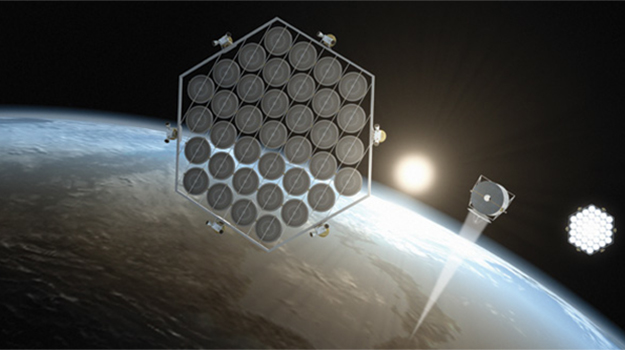 The nation of Japan has long been regarded as being at the forefront of emerging technology. And when it comes to solar energy, they are nothing if not far-sighted and innovative. Whereas most nations are looking at building ground-based solar farms in the next few years, the Japanese are looking at the construction of vast Lunar and space-based solar projects that would take place over the course of the next few decades.
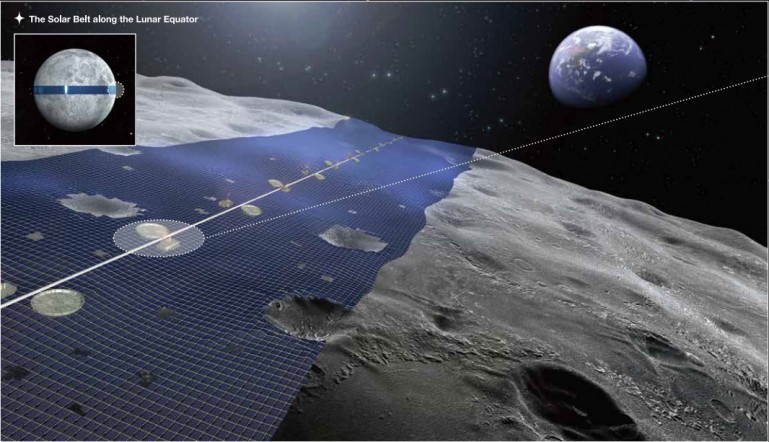 JAXA has long been the world’s biggest booster of space-based solar power technology, making significant investments in research and rallying international support for early test projects. And in this respect, they are joined by private industries such as the Shimizu Corporation, a Japanese construction firm that recently proposed building a massive array of solar cells on the moon – aka. the “Lunar Ring” – that could beam up to 13,000 terawatts (roughly two-thirds of global power consumption) to Earth around the clock.
 Beyond Japan, solar power is considered the of front runner of alternative energy, at least until s fusion power comes of age. But Until such time as a fusion reaction can be triggered that produces substantially more energy than is required to initiate it, solar will remain the only green technology that could even theoretically provide for our global power demands. And in this respect, going into space is seen as the only way of circumventing the problems associated with it.
 Luckily, putting arrays into orbit solves both of these issues. Above the Earth’s atmosphere, they would avoid most forms of wear, the ground-based day/night cycle, and all occluding weather formations. And assuming the mirrors themselves are able to reorient to be perpetually aimed at the sun (or have mirrors to reflect the light onto them), the more optimistic estimates say that a well-designed space array could bring in more than 40 times the energy of a conventional one.
  However, this and other plans involving space-based solar arrays (and a Space Elevator, for that matter) assume that certain advances over the next 20 years or so – ranging from light-weight materials to increased solar efficiency. By far the biggest challenge though, or the one that looks to be giving the least ground to researchers, is power transmission. With an estimated final mass of 10,000 tonnes, a gigawatt space solar array will require significant work from other scientists to improve things like the cost-per-kilogram of launch to orbit.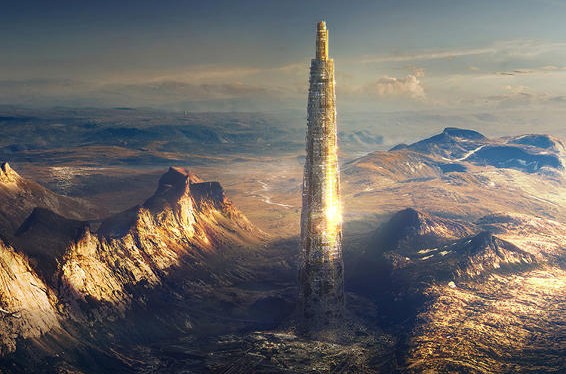

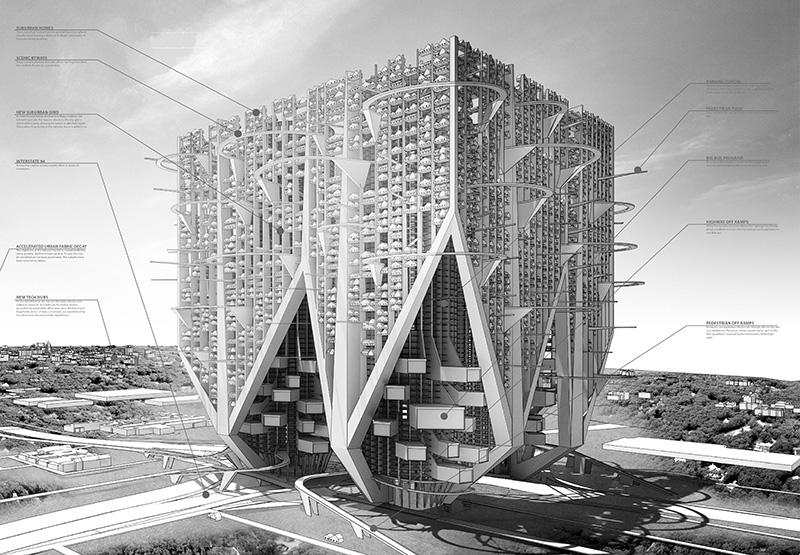
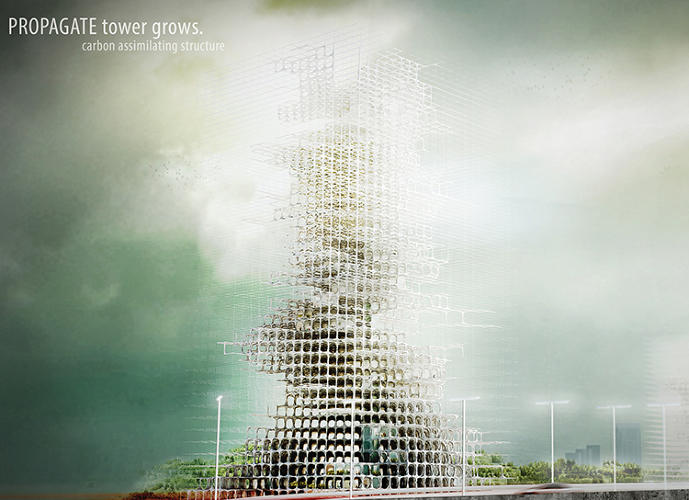

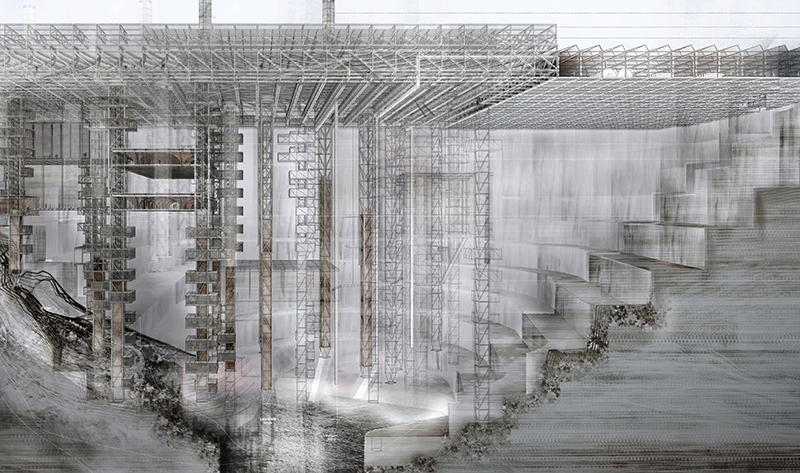


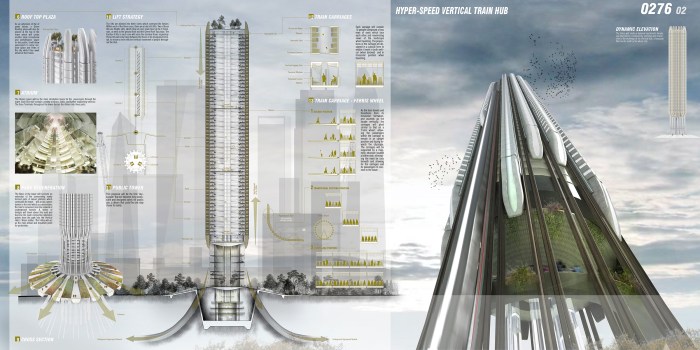 Consistent with a key principle of arcology, this proposal seeks to take advantage of vertical space in order to use available land more efficiently. By flipping the traditional form and function of the current train design into a vertical, cylindrical mass, the Vertical Train Hub seeks to eliminate the current impact that traditional stations have on land use, therefore returning the remaining site mass back to the densely packed urban Mega City.

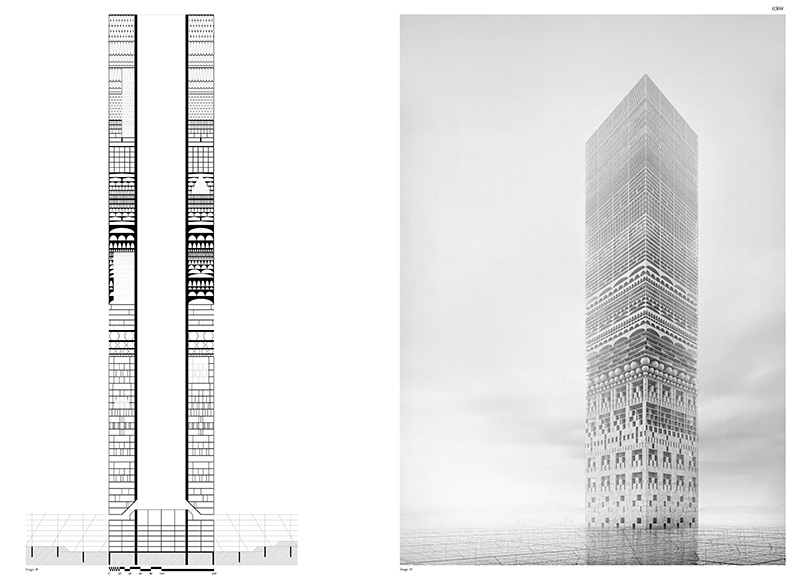
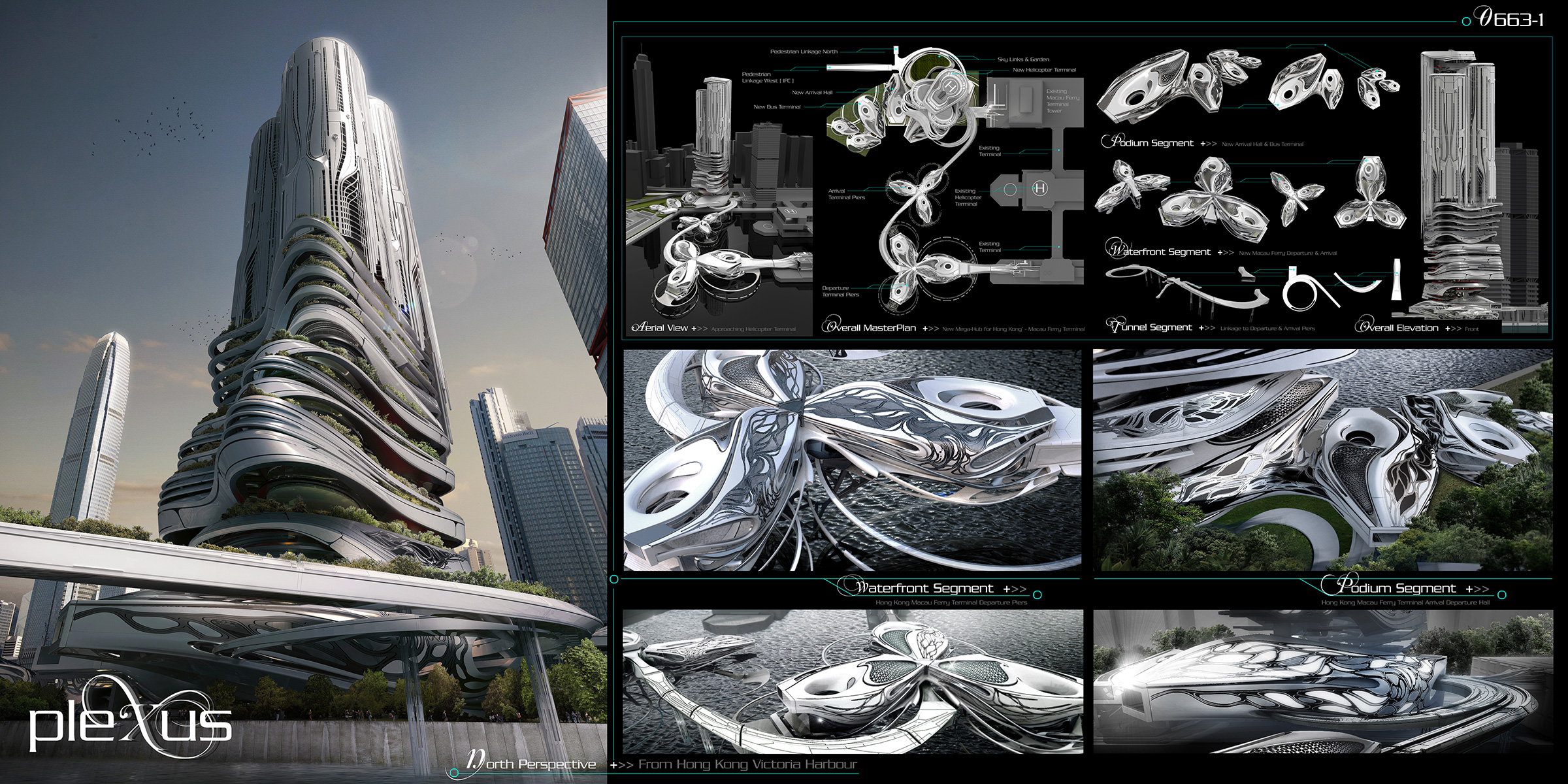

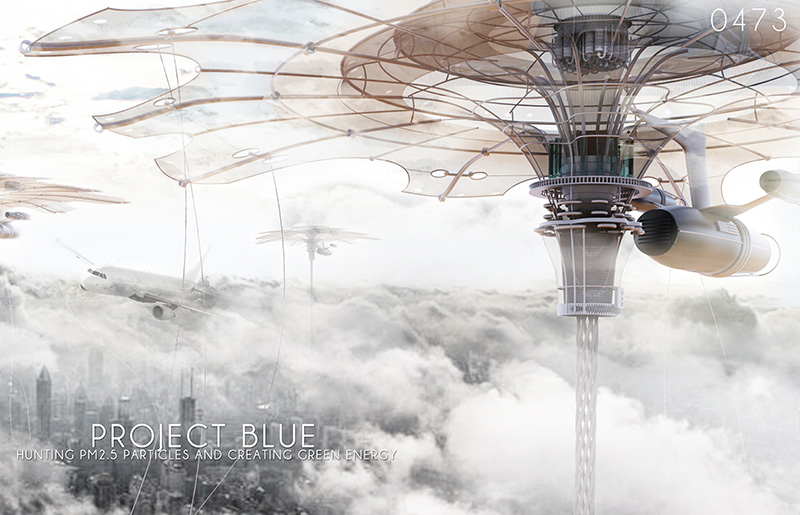
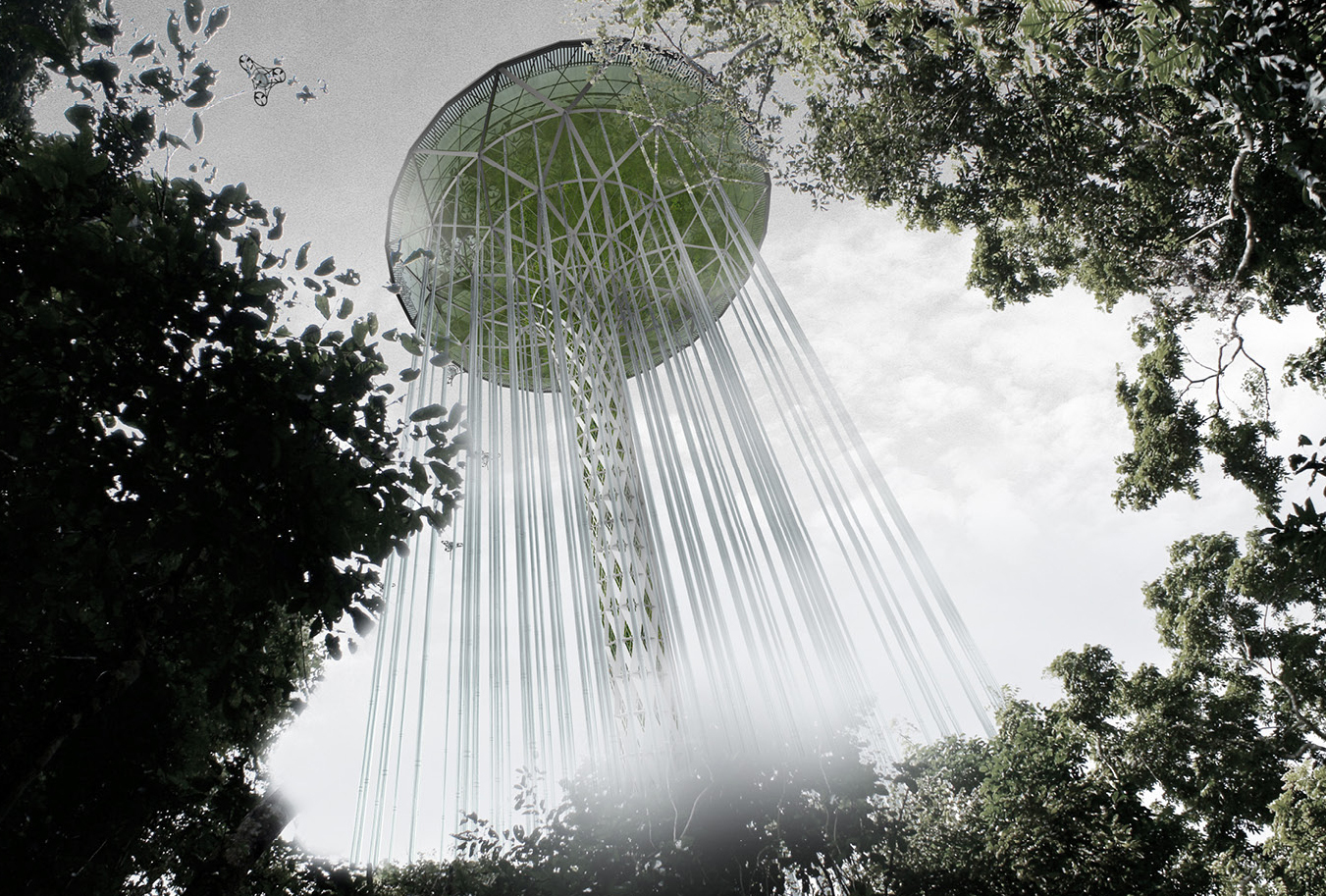
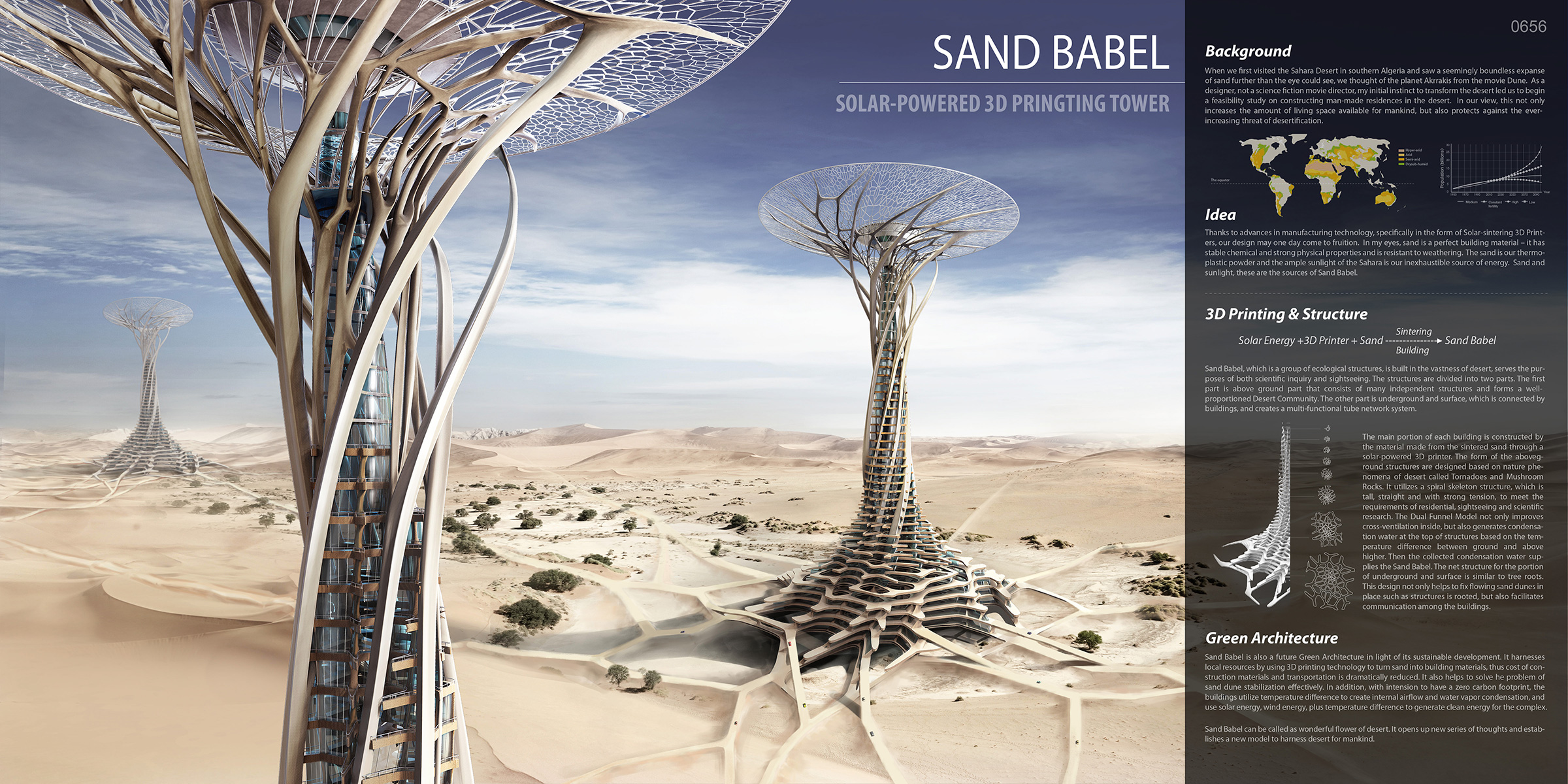

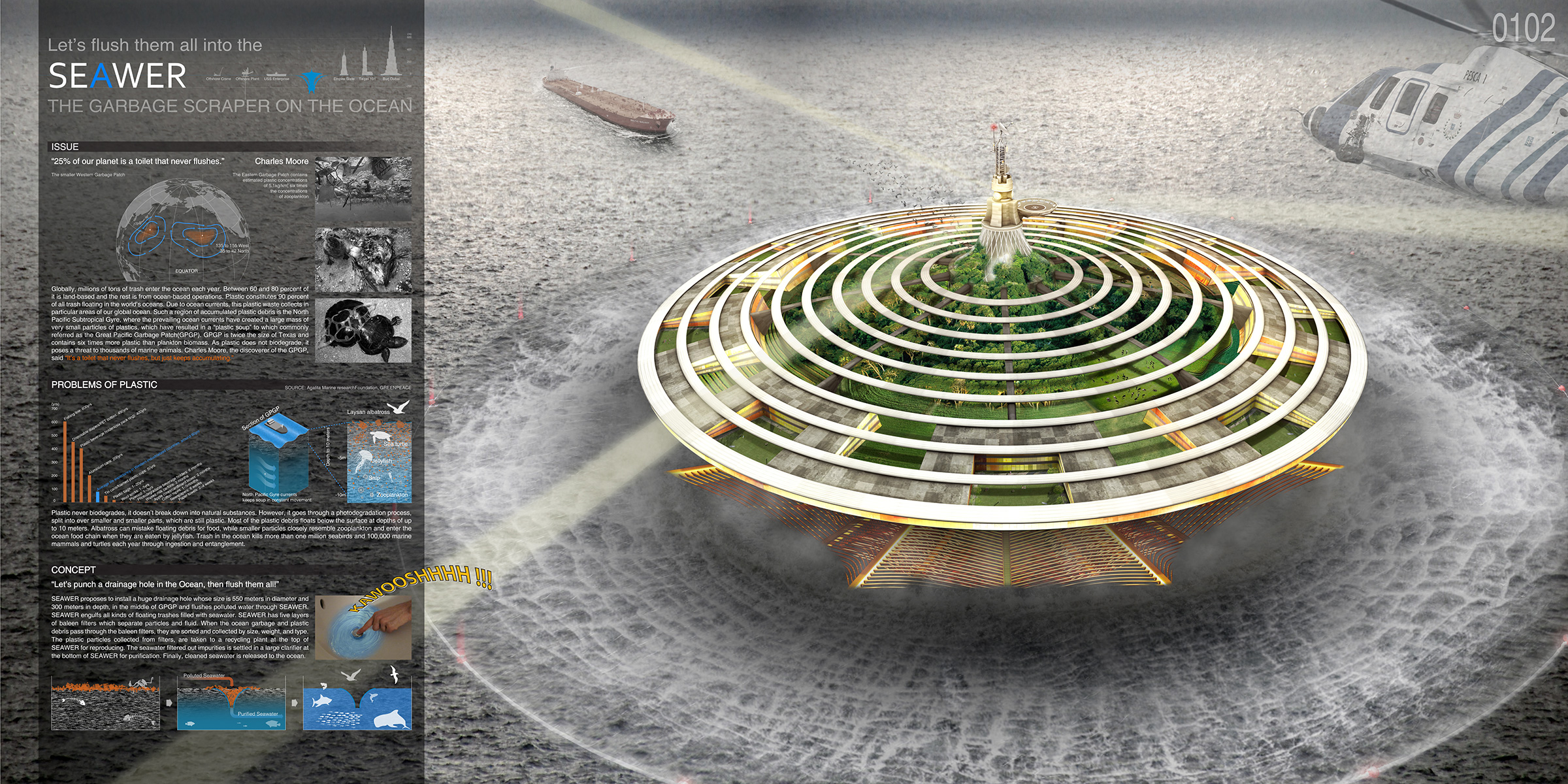


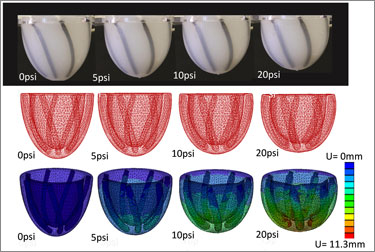
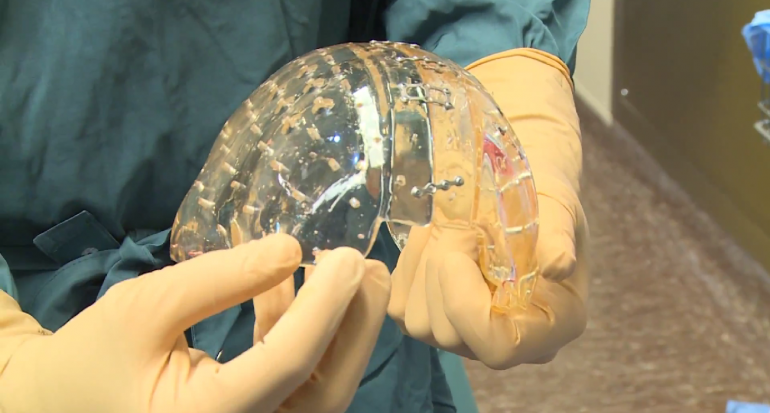
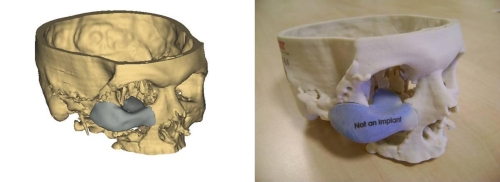
 The ability to tailor-make synthetic bones, which are exact duplicates to the original, offers exciting possibilities for reconstructive and replacement surgery. It also does away with some rather invasive and unsatisfactory procedures that involve putting shattered bones back together and joining them with pins, bars and screws. And considering that such procedures often require multiple operations, the combination of 3D scanning and 3D printed replacements is also far more cost effective.










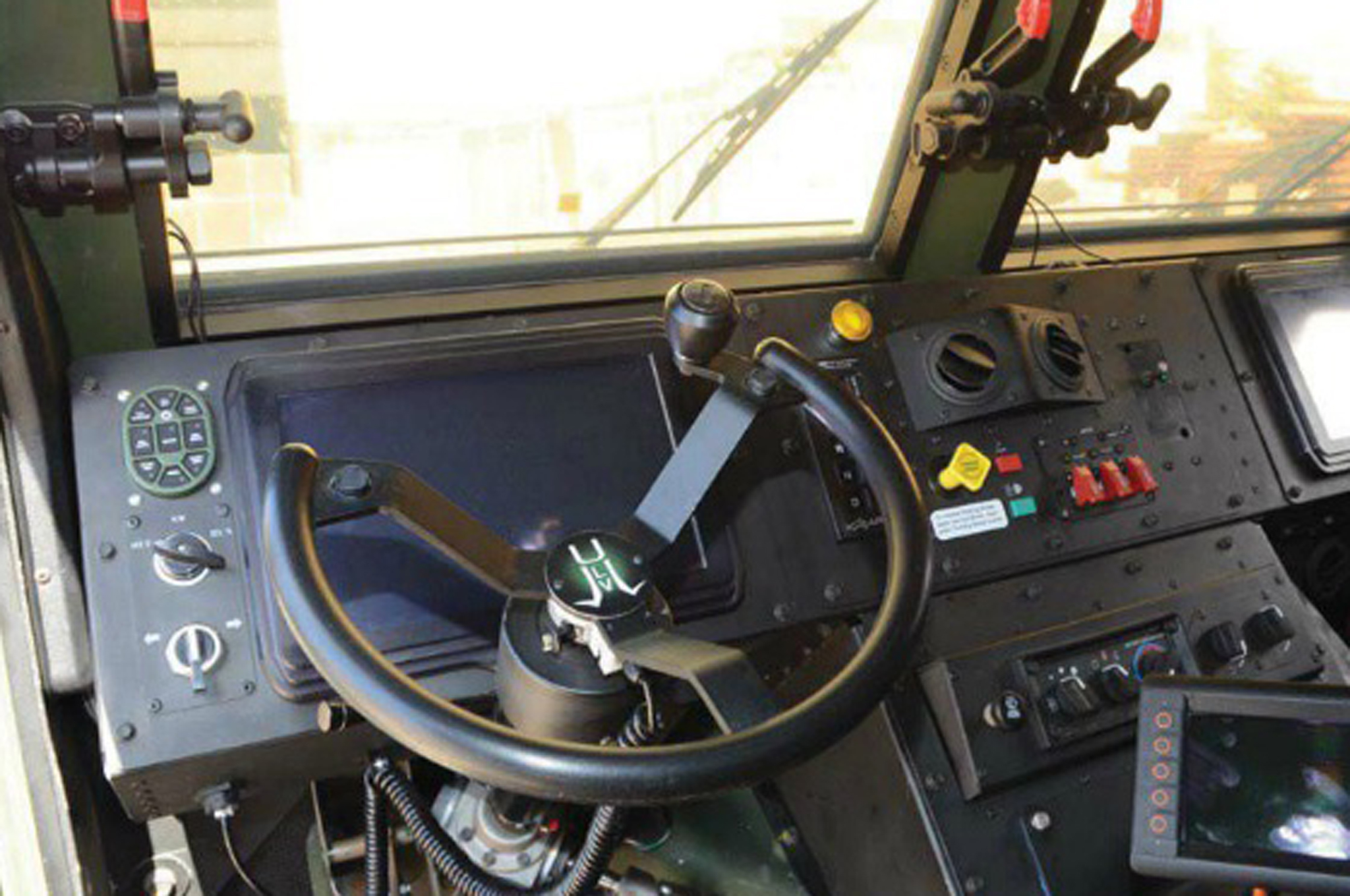


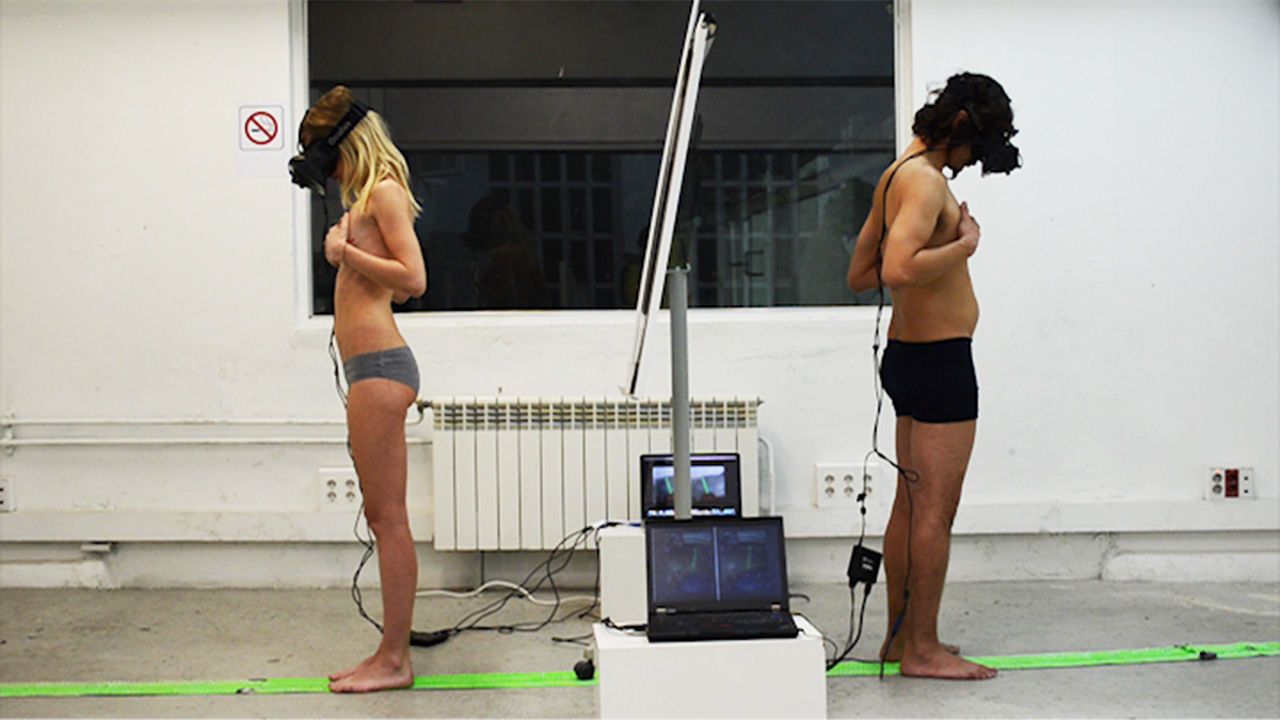

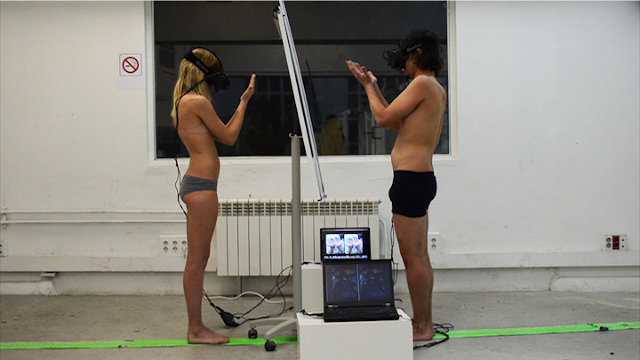





 Stories by Williams