Drone Wars: Protecting Endangered Animals

WWF_droneDespite anxieties associated with drone use – most of which have to do with domestic surveillance and warfare – there are numerous positive uses for the technology. Whether it is keeping an eye on oil rigs, monitoring underground cables, spying on drug or human traffickers, or ecological surveillance, there are plenty of uses for unmanned aerial vehicles beyond warfare and invading privacy.

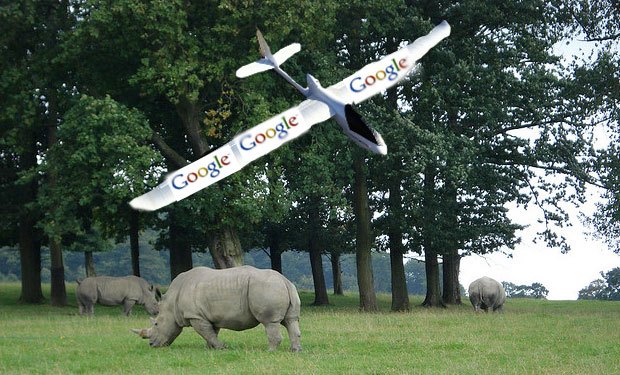
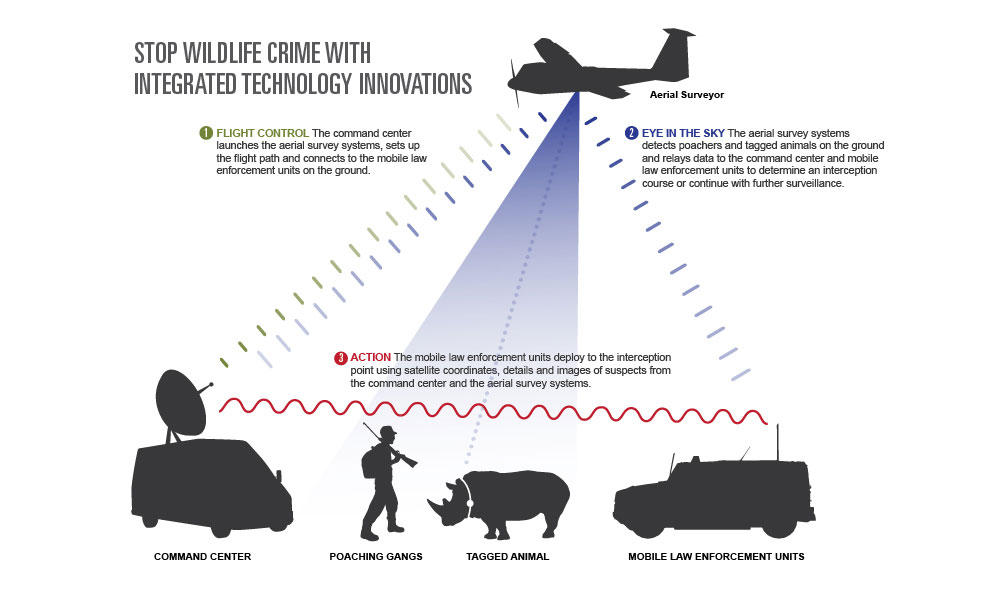
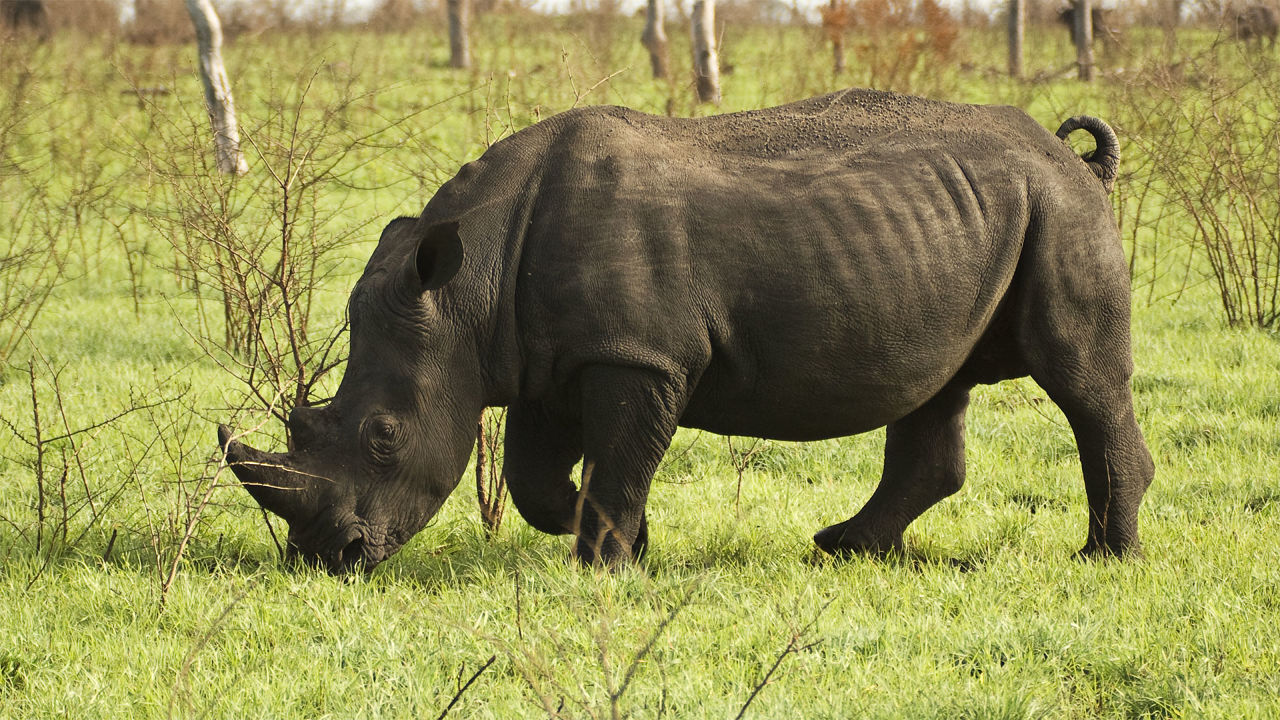
In Namibia, for example, where poaching remains a problem, drones may be the key to protecting the endangered rhino and elephants. Namibia’s Ministry of Environment and Tourism, along with the World Wildlife Fund and funding from Google, have partnered to invest in drones that can track rhino and elephant herds. Through the use of these drones, the researchers were able to follow herds and alert law enforcement in the event the animals were being targeted by poachers.

WWF_drone_graphicIn field tests conducted in two national parks in November 2013, drones with 2-metre wingspans flew day and night missions to video black rhino herds and send live footage to poacher-tracking rangers on the ground. Smart radio tags attached to rhinos allowed the drones to home in on each herd’s current location. Crawford Allan, leader of the Wildlife Crime Technology Project at WWF, put it as follows:

We broke new ground using technologies that have never been integrated before to provide powerful wildlife protection.

The MET says it will now press ahead and deploy drones in areas of Namibia where rhinos and elephants roam. WWF estimates that illegal poaching in Africa nets criminals $10 billion each year – with some 22,000 elephants killed annually and 1000 rhinos killed last year in South Africa alone. Their efforts are also thinning out elephant and rhino populations and putting the entire ecosystem at risk.

conservation_rhinoAlthough the drone program should help prevent poaching in Namibia, the issue is widespread across Africa. It’s not clear whether a similar program will be rolled out elsewhere, but any success incurred in Namibia to stop poaching will set a precedent others are sure to follow. And, it should be noted, this country and the WWF are hardly alone in wanting to adapt UAV technology to the goal or ecological or species conservation.

In many ways, MET’s use of high-tech to protect wildlife echoes that of Technology For Nature (TfN), a joint venture of Microsoft Research in Cambridge, UK, University College London and the Zoological Society of London. Led by Lucas Joppa and Siamak Tavakoli at Microsoft, TfN is getting similar drone and animal-tagging projects off the ground in the Republic of the Congo, the Seychelles and Zambia.

conservation_drones_inlineAnd then there’s Conservation Drones, a non-profit organization co-founded by Serge Wich – a professor in primate biology at John Moores University. Made up of researchers and technologists, the group’s mandate is to spread drone use around the world for the sake of conservation. So far, they have worked with conservation groups and governments in Nepal, Indonesia, Gabon, and Greenland, and Wich hopes to visit more countries later this year.

According to Wich, the challenges to conservation go beyond simply monitoring endangered animals, which may be in too few number to accurately keep track of. There’s also the matter of the rough and vast terrain, which can be very difficult to physically cover. Drones are a big game changer in this game. By covering large areas in surveys, doing it repeatedly, and automating some of the analysis, aerial vehicles can track wildlife in a more comprehensive and efficient way.

conservation_dronesThanks to the growth of commercial aerial drones in recent years and the significant reduction in price, the technology is becoming much more affordable and user-friendly. The kits Conservation Drones uses cost no more than about $3,000, and the latest version has an open-source autopilot platform from California, along with a GPS tracker and altimeter. It’s then fitted with still cameras or video. As Wich himself put it:

The potential is huge to allow people to do very efficient data collection on a variety of issues that are important for conservation. We often struggle determining how many animals there are, where human encroachment is occurring. There are an enormous amount of ecological questions we can address with these systems.

To set a flight path, Wich simply plugs in a few points on a Google Map, then launches the drone by hand. The battery-powered module can fly for up to an hour, and cover a maximum distance of about 40 km (25 miles). The drones offer an aerial view, allowing Wich and his colleagues to get a close-up view unobscured by clouds. The next step is to improve the analysis of the images that come back.

conservation_drone_mosaicConservation Drones is now working to automate the counting process, and build up picture-maps by stitching hundreds of images together (like the one above). It also wants to create 3-D model environments, providing a sort of living inventory of what’s been destroyed and what remains. Long-term, it is hoped that governments all over the world with conservation problems will used the detailed software and aerial drones to keep tabs on their endangered animals and habitats to ensure their protection.

Several other groups are also pioneering drones-for-conservation, notably the World Wildlife Fund working with Google, the International Anti-Poaching Foundation, led by Iraq War veteran Damien Mander, and ShadowView, a group out of the Netherlands. Poachers beware. In addition, the Zambian Carnivore Program will be testing a pair of VHF-radio-equipped quadcopter drones in the US soon and he hopes to begin testing the miniature aircraft in Kafue National Park in Zambia in May.

In the meantime, check out this video of the MET/WWF drone survey:


And learn more about Conservation Drones from this TED talk by Wich’s partner Lian Pin Koh:


Sources:
news.cnet.com, fastcoexist.com, newscientist.com

The Walking Dead – Season Four, Episode 14

The-Walking-Dead-season-4-wallpapers-7This week’s episode, as advertised, focused on the story of Tyreese, Carol, and the girls – Lizzy, Mika and Julia – on their way through the wilderness. But once again, I feel they got the name wrong. While “The Grove” did describe the setting pretty well, what it should have been called was “Lizzy is the dumbest/sickest kid EVER!” But what can you do? At the very least, it was entertaining and engaging, even if it did break new records for brutality!

The Grove:
WD4_14_1
The episode opens with Tyreese, Carol and the girls carrying on in their journey to Terminus. Along the way, Carol gets to talking about Lizzy about things – how she shot a woman, how Carol’s daughter died, and how they need to be hard in order to survive. They also come across a Walker laying on the tracks that is hobbled, and Lizzy convinces Tyreese not to kill it since it won’t be able to follow them.

After awhile, they come upon an abandoned farm and settle in for the night, noticing a forest fire in the distance. After finding water, food, and getting comfortable, Mika suggests they give up on Terminus and live there, an idea Tyreese approves of. Carol tries to teach Mika to hunt, but finds she’s unwilling since she doesn’t want to kill. At the same time, Lizzy continues to put her life in danger by insisting the Walkers are still alive.

Walker_mashupThis she does by “playing” with one in the yard, and then freaking out when Carol arrives and kills it, and feeding the one they found on the tracks. Lizzy almost lets the latter one bite her, but she and Mika run when other Walkers – still smoulder because of the forest fire – pour out of the woods. They run back to the farm and are joined by Tyreese and Carol, and togther they manage to stop the horde with some well placed shots.

The next day, Tyreese and Carol go out to hunt and gather and he talks about Karen. Carol almost confesses to him of how she killed her and David, but narrowly avoids it. When they return to the farm, they find a bloody Lizzy standing over Mika’s dead body. She tells them, “Don’t worry. She’ll come back.” When Carol goes to take out Mika’s brain, Lizzy points her gun and tells her to wait because she wants to show them the Walkers are still human.

wd4_14_3Carol manages to convince Lizzy to go inside with Tyreese and Judith and finishes Lizzy off. She and Tyreese talk the next day and he tells her that Lizzy was the one feeding the Walkers at the prison. Tyreese wonders if she also killed Karen and David, but Carol tells him it wasn’t, and they discuss what to do with her. Carol takes her out into the woods to talk, and tells her to “look at the flowers” and shoots her. She and Tyreese bury both girls in the yard.

Later that night, Carol finally tells Tyreese how she killed Karen and David, and why. She hands him the gun and tells him to do what he has to do. Instead, Tyreese tell her he forgives her since this is a part of them now; but also that he won’t forget. They agree they can’t stay at the farm, and push on towards Terminus the next day. The episode ends with Carol’s words to Mika replaying, of how they are forced to kill, and how it will change them.

Summary:
Well… this weeks episode certainly set a precedent for ugliness and brutality. In addition to the burning Walkers, who’s heads spontaneously combusted when they were shot, there was also the infanticide angle to contend with. Quite shocking, all of it. But it was in keeping with some of the material from the comics, specifically Volume 11: Fear the Hunters, which is the source material for the show at this point.

Though this episode did change some things around, it did address the issue of whether or not Lizzy and Mika were going to remain as part of the cast, which is something I was wondering about. It also answered the little riddle of who was leaving rats for the walkers and mutilated the rabbit at the prison, a mystery which I thought was dead and buried at this point. Glad they wrapped that bit up too.

wd4_14_4

But, I have to say, the whole “Lizzy is a sociopath” angle felt kind of unnatural and just a little shoehorned. In Volume 11 of the comics, it was two boys, Ben and Billy who were the subject of this story. After losing their parents (Allen and Donna, who were never in the show) early on, Dale and Andrea began looking after them as their surrogate parents. After fleeing the prison and knocking around in the woods for some time, they found Ben standing over Billy’s corpse.

His words were identical to Lizzy’s, saying that they shouldn’t worry because he didn’t kill the brain, which meant Ben would come back. In time, Carl decided to do what had to be done and kills Billy, thus ending the thread. In this case, Lizzy seems to have deep-seated denial about the walkers and cannot bring herself to kill one because she thinks they are still alive. At the same time, she flays animals for fun and murders her sister. Kind of seems at odds, you know?

Still, the way they dealt with this rather brutal and shocking material was quite gutsy. After they spared Judith in the show, I had the feeling that they would be watered down about some of the more brutal aspects of the story. Suddenly, that doesn’t seem to be the case! And as always, this filler episode puts the characters on the road to Terminus, where they are all headed now. And with only two episodes to go, we’re finally going to see what awaits them…

News from Space…X: Reusable Launch Vehicle Good to Go!

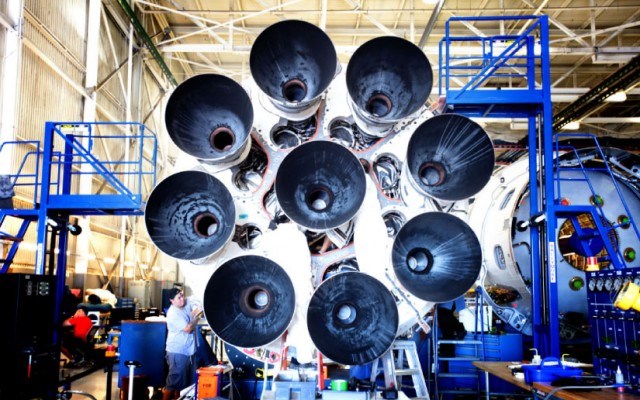
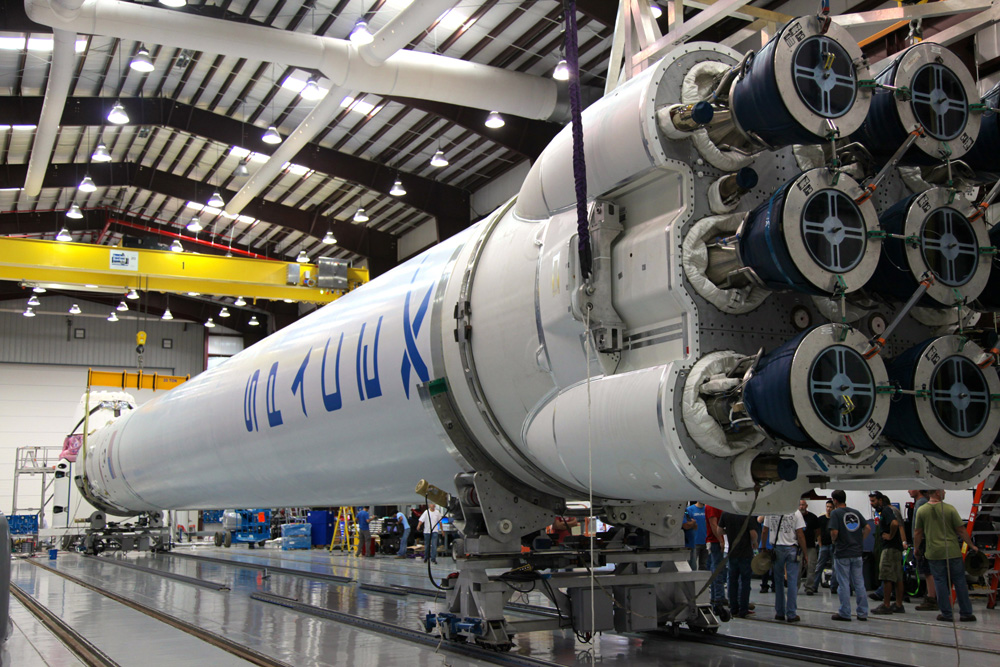
spacex-falcon-9-octaweb-640x427After years of research, development and testing, SpaceX (Elon Musk’s poster child of the commercial space travel revolution) is about to attempt something truly revolutionary. In a bid to significantly reduce the costs of sending rockets into space, they will attempt the first ever soft landing of a heavy space launch vehicle. Initially planned for March 16th, the company has since updated the launch date to March 30th in order to give its techs more time to prepare.

On this day, if all goes according to plan, SpaceX mission CRS-3 will lift off from Cape Canaveral on a resupply mission to the International Space Station. In the past, rockets blasting off from Earth would normally ditch the massive primary stage of their assembly into the ocean after launch. But this one it will sprout some metal legs and use what’s left of its rocket fuel to slowly return to Earth.

spacex-falcon-9-rocket-largeThis is perhaps the single most important step in SpaceX’s stated goal of reducing the cost of space travel by a factor of ten or more, which will ensure the acceleration of space travel for the indefinite future. One of the primary reasons that the human exploration of space is moving so slowly is the cost factor. For heavy lift vehicles, which are required to lift large satellites, equipment, and supplies into space, it costs roughly $22,000 to lift a single kilogram ($10,000 per pound) into orbit.

It costs even more to send a rocket beyond Earth’s gravity well and out into space, which is why reducing costs is seen as intrinsic to sending manned missions to Mars. Currently, NASA pays around $70 million per seat aboard the Soyuz space capsule, thanks to the cancellation of the Space Shuttle Program in 2011. But a crewed version of SpaceX’s Dragon capsule, DragonRider, is also in development, which will reduce the cost per seat to $20 million.

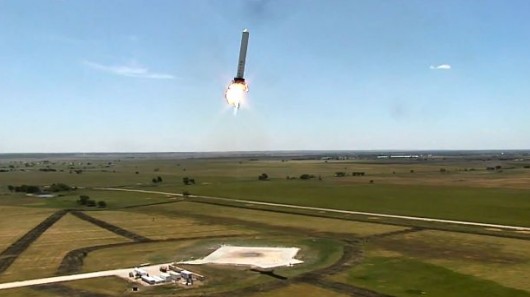
spacex-dragon-capsule-grabbed-by-iss-canadarm-640x424SpaceX debuted its Reusable Launch Vehicle (RLV) tech on the suborbital Grasshopper rocket in October of 2013. This came after multiple launches were conducted that saw the rocket reach greater and greater altitudes and which tested its ability to maneuver horizontally. Once this was complete, they began the task of fitting a Falcon 9 with the Merlin rocket engines, which would bring the vehicle back to Earth after the first stage rocket detached.

For this flight, the first stage will still land in the water to minimize the chance of damage if something goes wrong. But once SpaceX is confident that it can do a soft landing with its RLV safely, future launches will see the first stage fly all the way back to to the launchpad. After that, SpaceX will start bringing the second stage back to the launchpad, too. The eventual goal, according to SpaceX, is to create a launch system that is reusable within “single-digit hours.”

grasshopper_lateraldivertBasically, SpaceX would give these rockets a quick once-over, fill them back up with fuel, and send them back to work. If everything goes to plan, the total cost per pound to launch into Earth orbit could drop to $500 or less — one twentieth of what unreusable rockets cost. Suffice it to say, if SpaceX manages to undercut every other space launch company in the world — including the Russian and Chinese governments — it could suddenly find itself in a very powerful and lucrative position.

Not only would it replace Russia and the Ukraine as NASA’s primary contractor, it would also see to the restoration of America’s ability to send people, equipment, satellites and supplies into space from its own soil. Given the current state of tensions in the Crimea, this is sure to put a smile on a lot of people’s faces in DC. The launch is currently scheduled to take place at the end of March and there will be a live NASA feed to cover the rocket’s descent.

And while we’re waiting, here’s a clip of SpaceX first testing out the Grasshopper rocket to take us back:


Sources:
technologyreview.com, extremetech.com

New Video: Happy (We Are From Tatooine)

Star-Wars-Luke-Skywalker-TatooineBehold, the latest bit of Star Wars-related spoofery! Inspired by the Pharrell Williams song “Happy”, this little mash up was produced by the STAR WARS TUNISIA fan club. The aim of this group is to gather and inform Tunisian Star Wars fans, and communicate with others all over the world. And in this case, that involved getting into Star Wars costume and doing a scene for scene reenactment of the original music video.

And they did it all in the actual location used to simulate the Tatooine moisture farm where Luke grew up. Enjoy!

The Future is Here: Driverless Army Trucks

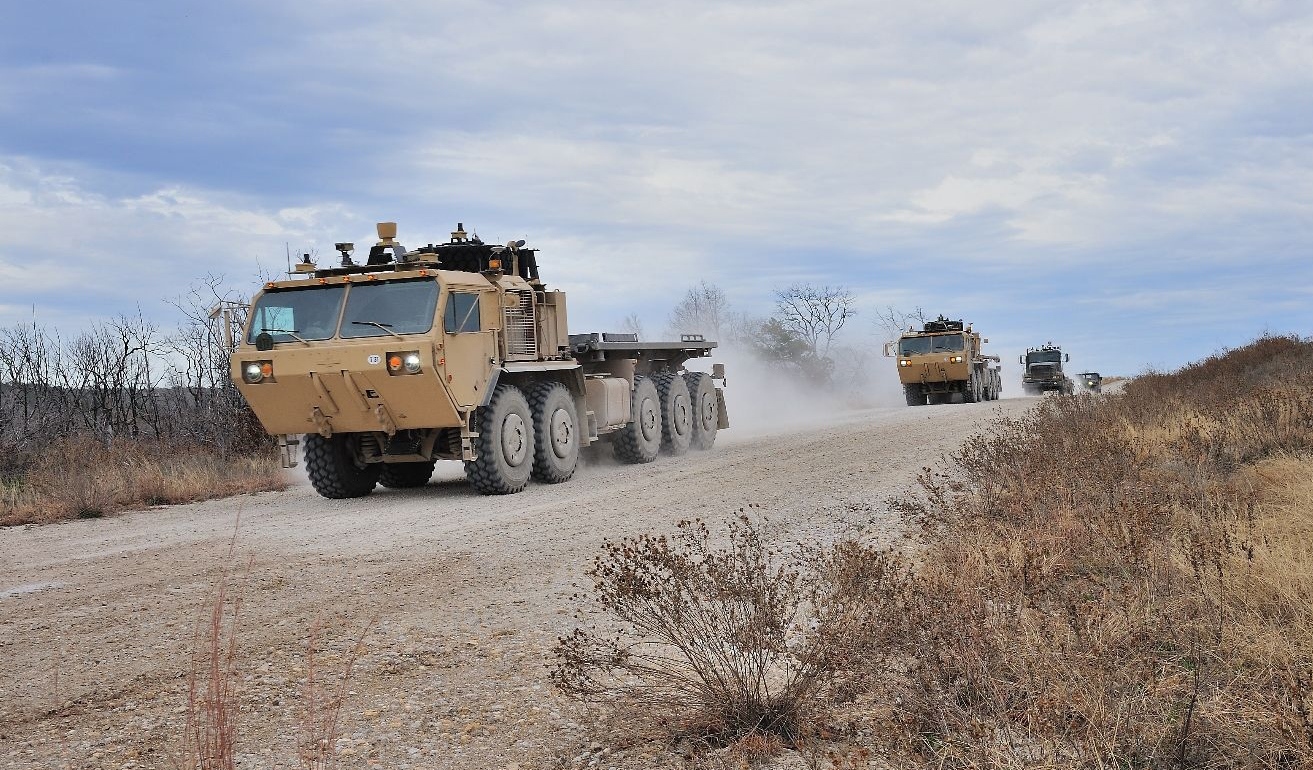
TARDECAs Napoleon Bonaparte once said, “An army marches on its belly”. And like most tidbits of military wisdom, this is one that has not changed with the ages. Whether it’s leading an army of war elephants and hoplites through the Alps, a Grande Armee across the Steppes, or a mechanized division through Central Asia, the problem of logistics is always there. For an army to remain effective and alive, it needs to be supplied; and those supply trains has to be kept moving and safe.

In the modern world, this consists of ensuring that troop and supply trucks are protected from the hazards of enemy snipers, rockets, and the all-too-prevalent menace of improvised explosive devices (IEDs). Until now, this consisted of having armed convoys escort armored trucks through hostile terrain and contested areas. But in an age of unmanned aerial vehicles and robotic exoskeletons, it seems only natural that driverless trucks would be the next big thing.

TARDEC1That’s the thinking behind the Autonomous Mobility Appliqué System (AMAS), a program being developed by the U.S. Army Tank-Automotive Research, Development and Engineering Center (TARDEC) in collaboration with major defense contractor Lockheed Martin. This program, which was demonstrated earlier this month at Fort Hood, Texas, gives full autonomy to convoys to operate in urban environments.

In tests, driverless tactical vehicles were able to navigate hazards and obstacles including pedestrians, oncoming traffic, road intersections, traffic circles and stalled and passing vehicles. Similar to the systems used by the first generation of robotized cars, the AMAS program for the Pentagon’s ground troops uses standard-issue vehicles outfitted with a high-performance LIDAR sensor and a second GPS receiver, locked and loaded with a range of algorithms.

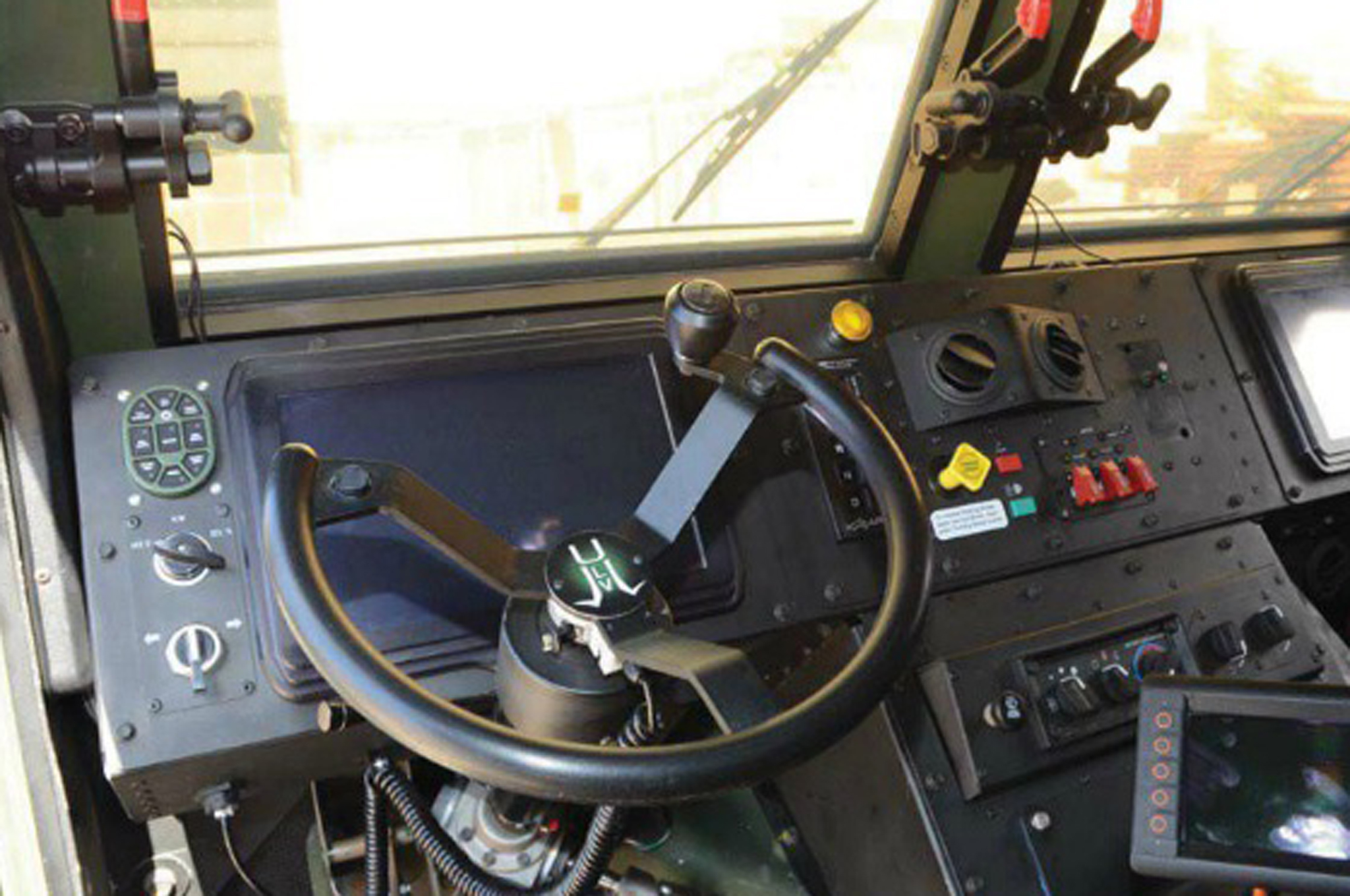
TARDEC-ULV-instrument-panelThat gear, Lockheed said, could be used on virtually any military vehicle, but in these tests was affixed to the Army’s M915 tractor-trailer trucks and to Palletized Loading System vehicles. According to Lockheed, AMAS also gives drivers an automated option to alert, stop and adjust, or take full control under user supervision. David Simon, AMAS program manager for Lockheed Martin Missiles and Fire Control, described the program in a statement:

The AMAS CAD hardware and software performed exactly as designed, and dealt successfully with all of the real-world obstacles that a real-world convoy would encounter.

Under an initial $11 million contract in 2012, Lockheed Martin developed the multiplatform kit which integrates low-cost sensors and control systems with Army and Marine tactical vehicles to enable autonomous operation in convoys. But not only do driverless convoys add a degree of safety under dangerous conditions, they also move the military closer its apparent goal of nearly total autonomous warfare.

squadmissionsupportsystemAMAS algorithms also are used to control the company’s Squad Mission Support System (SMSS), a more distinctive and less conventional six-wheeled unmanned ground vehicle that has been used by soldiers in Afghanistan. Combined with robots, like the Legged Squad Support System (LS3) by Boston Dynamics, the development of driverless trucks is not only a good counter to suicide bombers and IEDs, but part of a larger trend of integrated robotics.

In an age where more and more hardware can be controlled by a remote operator, and grunts are able to rely on robotic equipment to assist them whenever and wherever the 3D’s of hostile territory arise (i.e. dirty, difficult, or dangerous), trucks and armored vehicles that can guide themselves is just the latest in a long line of developments aimed at “unmanning the front lines”.

And of course, there’s a video of the concept in action, courtesy of the U.S. Army and TARDEC:


Sources: wired.com, news.cnet.com, lockheedmartin.com

The Future of Medicine: AR Treats Phantom Limb Pain

AR_plpStudies have shown that a good deal of amputees feel pain in their lost limbs, a condition known as Phantom Limb Pain (PLP). The condition is caused when the part of brain responsible for a limb’s movement becomes idle, and thus far has very difficult to treat. But a new study suggests therapy involving augmented reality and gaming could stimulate these unused areas of the brain, resulting in a significant reduction in discomfort.

Previous attempts to ease PLP by replicating sensory feedback from an artificial hand have included prosthetics and a treatment known as mirror therapy, where a reflection of the patient’s remaining limb is used to replace the phantom limb. Virtual reality systems have resulted in more sophisticated mirror therapy, but the approach is only useful for the treatment of one-sided amputees.

Mirror TherapyA research team from Sweden’s Chalmers University of Technology sought to overcome this and achieve greater levels of relief by testing a treatment where the virtual limb would be controlled through myoelectric activity. This is a process where the muscle signals which would control the phantom limb at the stump are detected and then used to create a pattern that will predict the limb’s movements and provide the requisite stimulation.

To test the treatment, the researchers connected amputee Ture Johanson – a man who have lived with PLP for 48 years – to a computer. Electrodes running from his stump to the machine provided the input signals, and on the computer screen, he was able to see and move a superimposed virtual arm. The electronic signals from his arm communicated to the computer and his movements were simulated before his very eyes, and then used to control a car in a racing game.

plp-augmented-realityWithin weeks of starting this augmented reality treatment in Max Ortiz Catalan’s clinic at Chalmers, his found his pain easing and even disappearing entirely. Mr Johanson says he has noticed other benefits, like how perceives his phantom hand to be in a resting, relaxed position rather than constantly a clenched fist:

The pain is much less now. I still have it often but it is shorter, for only a few seconds where before it was for minutes. And I now feel it only in my little finger and the top of my ring finger. Before it was from my wrist to my little finger… Can you imagine? For 48 years my hand was in a fist but after some weeks with this training I found that it was different. It was relaxed. It had opened.

Mr Johanson has also learned to control the movements of his phantom hand even when he is not wired up to the computer or watching the virtual limb.

AR_plp1Max Ortiz Catalan, the brains behind the new treatment, says giving the muscles a work-out while being able to watch the actions carried out may be key to the therapy. Catalan says it could also be used as a rehabilitation aid for people who have had a stroke or those with spinal cord injuries. As he put it:

The motor areas in the brain needed for movement of the amputated arm are reactivated, and the patient obtains visual feedback that tricks the brain into believing there is an arm executing such motor commands. He experiences himself as a whole, with the amputated arm back in place.

While he and his team points out that its research is based on the study of only one patient, the success in achieving pain relief following a series of unsuccessful treatments is a clear sign of efficacy and should lead to equally successful results in other test cases. Their research appeared in a recent issue of Frontiers in Neuroscience titled “Treatment of phantom limb pain (PLP) based on augmented reality and gaming controlled by myoelectric pattern recognition: a case study of a chronic PLP patient”.

Treatment of phantom limb pain (PLP) based on augmented reality and gaming controlled by myoelectric pattern recognition: a case study of a chronic PLP patient – See more at: http://journal.frontiersin.org/Journal/10.3389/fnins.2014.00024/full#sthash.BRadRPRS.dpuf

And in the meantime, be sure to check out this video of the therapy being demonstrated:


Source: gizmag.com, bbc.com, journal.frontiersin.org

Space Organizations Join the Hunt for Malaysian Jet

malaysia_missingplaneThe disappearance of Malaysian flight MH370, now into its eighth day, remains a mystery to investigators and the families of those who traveling aboard her. Since March 7th when it was first declared missing, the search for wreckage or any trace of what might have happened has produced little in the way of results or explanations, prompting numerous governments and private organizations to commit more in the way of technology and resources.

According to a report from the BBC, these have included the use of 42 sophisticated ships and 39 high-tech aircraft combing the waters according to the BBC. For example, listening devices are being lowered into the water to pick up the “ping” of the black box, and sophisticated MH60 Seahawk helicopters from the United States are employing Forward Looking Infra-red (FLIR) cameras that arm the searchers with night vision.

malaysia_plane_searchThis past Monday,  a crowdsourcing platform called Tomnod, along with parent company DigitalGlobe, launched a campaign to enlist the help of citizens to scour satellite images to search for the plane. On the following day, China followed that up by activating the International Charter on Space and Major Disasters. The goal of this charter is to enlist space data from 15 member organizations to provide assistance in the case of a “natural or technological disaster.”

The charter describes such a disaster as:

a situation of great distress involving loss of human life or large-scale damage to property, caused by a natural phenomenon, such as a cyclone, tornado, earthquake, volcanic eruption, flood or forest fire, or by a technological accident, such as pollution by hydrocarbons, toxic or radioactive substances.

malaysia_satimageNow that the charter has been activated, space scientists around the planet will enlist all available satellites to gather images from the suspected area in which flight MH370 disappeared. Upon activation, data normally starts coming in within 24 hours. The hope is that one of those images will pick up something that can direct search and recovery efforts, either by showing a crash sight or showing some trace of wreckage.

The charter has been activated 400 times in its history, but Tuesday represents the first time it was called into service to look for a missing aircraft. The only other transportation-related event for which it’s been used was to assist in gathering data after a train full of dynamite exploded in North Korea on April 23, 2004. It was most recently activated on February 13 to help with monitoring the Mount Kelud volcano explosion on the Indonesian island of Java.

malaysia_plane_seaPrior to all that, the International Charter on Space and Major Disasters was used exclusively to monitor flooding, forest fires, snowfalls, cyclones, oil spills and other damaging events around the world. It was also used to assist in recovery efforts from earthquakes, including the one that rocked Japan in March 2011 and caused a devastating tsunami and the meltdown of the Fukushima Daiichi Nuclear plant.

The charter, which began after Vienna’s Unispace III conference in 1999 with three agencies, has grown to its current membership of 15 organizations, with the Russian Federal Space Agency being the most recent to join in 2013. Other member organizations include the European Space Agency, the Korea Aerospace Research Institute and China’s National Space Administration. The US member organizations include the United States Geological Survey and the National Oceanic and Atmospheric Administration.

With this latest commitment of resources, technology and personnel, perhaps the world may finally know what took place aboard Malaysian flight MH370, and the families of those aboard her can finally get some peace of mind.

Sources: news.cnet.com, bbc.com, theguardian.com


The 3D Printing Revolution: The KamerMaker House

3dprint_canalhouseMany thanks to Rami for putting me onto this story in the first place. Thanks Rami! For years now, proponents of additive manufacturing (aka. 3D printing) have been looking for ways to expand the technology’s already impressive catalog to include the fabrication of buildings. Whether it is office buildings, apartment blocks, or individual houses, the next great leap for 3D printing is arguably the construction of entire domiciles – or at least the building blocks that go into making them.

Such is the goal of Dus, a Dutch architect bureau that announced last year that it was seeking to create the world’s first 3-D printed home along one of Amsterdam’s many iconic canals. Known as the “3D Print Canal House” project, the plan was to break ground within sixth months, before two other firms got there first with their own new-age designs. Now, almost a year to the day later, they have launched their demonstration project.

landscape_houseIn the long run, it still remains to be seen who will be the first company to create an actual 3D printed home, and Dus’ is up against some stiff competition from companies like fellow Dutchman Janjaap Ruijssenaars with his Möbius-strip shaped Landscape House, and the London-based Softkill Design’s fibrous, naturalistic ProtoHouse. Both design concepts seek to utilize 3-D printing in order to save time, energy, and eliminate the waste that is associated with traditional construction.

The Landscape House design calls for the economizing of space by turning the floor into the ceiling and the ceiling into the floor in an endless loop, providing all the living space a family needs while staying very compact. The latter concept looks like something out of the pages of a sci-fi novel – an organic, mollusk-like construction made out of fibrous threads of plastic that economize on weight and material usage.

protohouse But unlike these other projects, which rely in part on traditional construction methods (such as poured concrete), the Dus concept is built by printing all of the home components onsite. This is done using a massive printer called the KamerMaker, a 6-meter (20-foot) tall “room-builder” that rests inside a shipping container. This ensures that the manufacturing center is portable and can fabricate all the necessary components on-site, removing a significant amount of transport.

Basically, the KamerMaker is a scaled-up version of the open-source home 3D printer made by Ultimaker, a popular tool with hobbyists, and is currently one of the largest printers on the planet. Since it’s creation, the company has held public demonstrations to showcase the printer at work and fabricate furniture and other household objects. On the company website, they describe the machine as:

…a real architectural pavilion [that could play host to events]. In other words: The KamerMaker itself is a pavilion, that can reproduce small pavilions!

kamermaker-652322But ultimately, the goal of Dus’ demonstration project, which officially launched this month, is not so much to print a functioning house. Rather, as Hedwig Heinsman – a Dus architect and co-founder of the company- explains it, the aim is to discover and share the potential uses of 3D printing in construction by creating new materials, trying out designs and testing building techniques to see what works.

Heinsman also points out that parts of the house will likely be built and re-built several times over the next three years as 3-D printing technology develops. In the meantime, Dus has opened up an expo center at the site of the 3D Print Canal House so the public can witness the creation process and learn more about the technology involved. For those who may be in the of Amsterdam, tickets to the expo are € 2.50 (roughly $3.50 US/ $3.86 CA), and the hours of operation are available at their website.

And be sure to enjoy this video that talks the launch of the 3D Print Canal House, the KamerMaker, and the drive to create the world’s first 3D printed house – courtesy of 3DPI.TV:


Sources:
fastcoexist.com, (2), (3), aol.com, 3dprintcanalhouse.com

The Future of Medicine: Injectable Sponges and Foam

xstat-combat-injury-treatment-injectable-spongesMedicine may be advancing by leaps and bounds in certain fields – mind-controlled prosthetics and bioprinting come to mind. But in some respects, we are still very much in the dark ages. Considering gunshot wounds, for example. When it comes to modern warfare, uncontrolled hemorrhaging caused by a bullet is the biggest cause of death. In fact, “bleeding out” is responsible for 80% of deaths caused in battle, more than headshots, chest wounds, or IEDs combined.

This startling statistic doesn’t just apply to soldiers who are wounded in the field, as about the same proportion of those who sustain bullet wounds die after being evacuated to a medical treatment facility as a result of hemorrhaging. In the ongoing conflicts in Iraq and Afghanistan, about 5,000 US troops have been killed, and some 50,000 injured, while combined military and civilian losses are estimated to have been some 500,000 people killed.

xstat-combat-injury-treatment-injectable-sponges-5The immediate cause of death in most of these cases was bleeding out, which is usually associated with deep arterial wounds that simply cannot be treated using tourniquets. As a result, combat medics pack these wound with a special gauze coated with a material that stimulates the clotting process, then applies strong direct pressure over the wound in the hopes that a clot will seal off the artery. If the bleeding is not controlled, the medic has to remove the gauze and try again.

This process is so painful that, according to John Steinbaugh, a former Special Ops medic, the patient’s gun is first taken away so that he will not try to kill the medic or himself to stop the agony. And in the end, people still die, and all because medical science has yet to find an effective way to plug a hole. Luckily, RevMedX, a small Oregon startup, has developed an alternative approach to treat such potentially survivable injuries.

xstat-combat-injury-treatment-injectable-sponges-4That’s Revmedx and its new invention, the XStat, comes into play. Contained within this simple plastic syringe are hundreds of small sponges (1 cm, or 0.4 inches, in diameter) made from wood pulp and coated with chitosan, a derivative of crustacean shells that triggers clot formation and has antimicrobial properties. When they are injected into a deep wound, the sponges expand to fill the cavity, and apply enough pressure to stop arterial bleeding.

And since they adhere to wet surfaces, the sponges counter any tendency for the pressure to push them out of the wound. After conducting tests of early prototypes, the final development was carried under a US$5 million U.S. Army contract. In most cases, an arterial wound treated using XStat stops bleeding within about 15 seconds. The sponges are also marked with an x-ray absorbing material so they can be located and removed from the wound once surgical treatment is available.

????????????XStat is currently awaiting FDA approval, bolstered by a request from the US Army for expedited consideration. Combined with a new Wound Stasis Technology (aka. a medical foam) that earned its inventors a $15.5 million from the Defense Advanced Research Projects Agency (DARPA) back in Dec of 2012, army medics will likely be able to save a good many lives which in the past would have been written off as “casualties of war” or the all-too-common “collateral damage”.

Similar to the XStat, the idea for this injectable foam – which consists of two liquids that, when combined, form a solid barrier to stop bleeding – the inspiration for this idea comes from direct experience. As a military doctor in Iraq and Afghanistan, David King – a co-investigator of the foam project and a trauma surgeon at Massachusetts General Hospital – saw a great many deaths that were caused by uncontrolled internal bleeding.

DARPA-FoamLocated in Watertown, Massachusetts, Arsenal Medical designed this substance that consists of two liquids to fill the abdominal cavity and form a solid foam that does not interact with blood. This is key, since the hardened foam needs to remain separate and stop the blood from flowing. Comprised of polyurethane molecules, this foam belongs to a family of materials that is already used in bone cement, vascular grafts, and other medical applications.

The team began by testing the foam in pigs that were subjected to an internal injury that cut the liver and a large vein. With the treatment, nearly three-quarters of the pigs were still alive three hours later. Afterward, the team began monitoring how the pigs fared once the foam was removed. In 2013, the company began working with the U.S. Food and Drug Administration to determine how to test the technology on the battlefield (though no dates as to when that might have been available yet).

gun_violenceAs always, developments in the armed forces have a way of trickling down to the civilian world. And given the nature and prevalence of gun violence in the US and other parts of the world, a device that allows EMTs the ability to seal wounds quickly and effectively would be seen as nothing short of a godsend. Between saving young people for gang violence and innocent victims from mass shootings, NGOs and medical organizations could also save countless lives in war-torn regions of the world.

Source: gizmag.com, technologyreview.com, medcrunch.net

World Cup 2014 to Open with Exoskeleton Kick

WorldCup_610x343This summer, the World Cup 2014 will be taking place in Sao Paulo, Brazil; an event that is sure to be a media circus. And to kick off this circus (no pun!), FIFA has decided to do something rather special. This will consist of a paralyzed teenager making the ceremonial first kick, courtesy of an exoskeleton provided by The Walk Again Project. In addition to opening the games, this even will be the first time that a mind-controlled prosthetic will ever be used in a sporting event.

Though the teenager in question remains to be chosen, the event is scheduled and the exoskeleton tested and ready. Using metal braces that were tested on monkeys, the exoskeleton relies on a series of wireless electrodes attached to the head that collect brainwaves, which then signal the suit to move. The braces are also stabilized by gyroscopes and powered by a battery carried by the kicker in a backpack.

ReWalk1The Walk Again Project, a nonprofit collaboration dedicated to producing full-body mind-controlled prosthetics, represents a collaboration between such academic institutions as Duke University, the Technical University of Munich, the Swiss Federal Institute of Technology in Lausanne, the Edmond and Lily Safra International Institute of Neuroscience of Natal in Brazil, the University of California at Davis, the University of Kentucky, the Duke Immersive Virtual Environment facility.

Miguel Nicolelis, the Brazilian neuroscientist at Duke University who is leading the Walk Again Project’s efforts to create the robotic suit, had this to say about the planned event:

We want to galvanize people’s imaginations. With enough political will and investment, we could make wheelchairs obsolete.

miguelnicolelis_secom508x339Nicolelis is a pioneer in the field of mind-controlled prosthetics. In the 1990s, he helped build the first mind-controlled arm, which rats learned to manipulate so they could get a drink of water, simply by thinking about doing so. In that project, an electronic chip was embedded in the part of each rodent’s brain that controls voluntary muscle movements. Rows of wires that stuck out from the chip picked up electrical impulses generated by brain cells and relayed those signals to a computer.

Researchers studied the signals as the rats pushed a lever to guide the arm that gave them water, and they saw groups of neurons firing at different rates as the rats moved the lever in different directions. An algorithm was developed to decipher the patterns, discern the animal’s intention at any given moment and send commands from the brain directly to the arm instead of to the lever. Eventually, the rats could move the arm without pushing the lever at all.

neuronsUsing similar brain-machine interfaces, Nicolelis and his colleagues learned to translate the neural signals in primate brains. In 2000, they reported that an owl monkey connected to the Internet had controlled an arm located 600 miles away. Eight years later, the team described a rhesus monkey that was able to dictate the pace of a robot jogging on a treadmill half a world away in Japan.

Small groups of neurons, it seems, are surprisingly capable of communicating with digital devices. Individual cells learn to communicate with computer algorithms more effectively over time by changing their firing patterns, as revealed in a study of a mouse’s brain published last year in Nature. This capacity for extensive plasticity and the ability to learn comes in quite handy when designing a prosthetic.

exoskeleton_FIFA2014German-made sensors will relay a feeling of pressure when each foot touches the ground. And months of training on a virtual-reality simulator will have prepared the teenager — selected from a pool of 10 candidates — to do all this using a device that translates thoughts into actions. In an interview with New Scientist, the lead robotic engineer Gordon Cheng of the Technical University of Munich gave some indication of how the suit works

The vibrations can replicate the sensation of touching the ground, rolling off the toe and kicking off again. There’s so much detail in this, it’s phenomenal.

Capitalizing on that adaptability, several human quadriplegics have received implanted brain chips in FDA-approved clinical trials. One of the first was Matt Nagle, who lost the use of his extremities after being stabbed in the spine. With the aid of electrodes placed in his brain at Brown University in 2004, he learned to raise, lower and drop a piece of hard candy using a primitive jointed arm not connected to his body.

woman-robotic-arm_650x366In a widely publicized demonstration of that system, now owned by a company called BrainGate, a 58-year-old woman paralyzed by a stroke sipped a cup of coffee last year using a five-fingered robotic arm not attached to her body. Despite the slickness of the presentation, however, the woman actually had little control over the arm. Despite it being aesthetically pleasing, the design was a little rudimentary.

However, things have come a long way since then thanks to ongoing research, development and testing. In Nicolelis’s lab, monkeys showed the ability to feel virtual objects displayed on a computer screen when areas of the brain associated with the sense of touch were stimulated. The blueprints for next summer’s soccer exoskeleton include similar sensors that will provide an artificial skin for its human wearer, thus ensuring that they can both move the device and receive sensory feedback.

Walk-Again-Project-Kick-Ball-537x358With the world watching, Nicolelis hopes not only that his “bionic teenager” will be able to feel the ball but also that disabled people everywhere will feel a sense of hope. And why wouldn’t they? In this single, incredibly high-profile event, millions of people around the world who struggle with disabilities will witness something truly inspirational. A paralyzed teenager will rise from a wheelchair, kicks the World Cup ball, and bring countless millions to their feet.

And you’re waiting until June of 2014 to see this momentous event for yourselves, be sure to check out this promotional video from The Walk Again Project, featuring interviews with the people who made it happen and showcasing the exoskeleton itself:


Sources: news.cnet.com, washingtonpost.com, virtualreality.duke.edu