
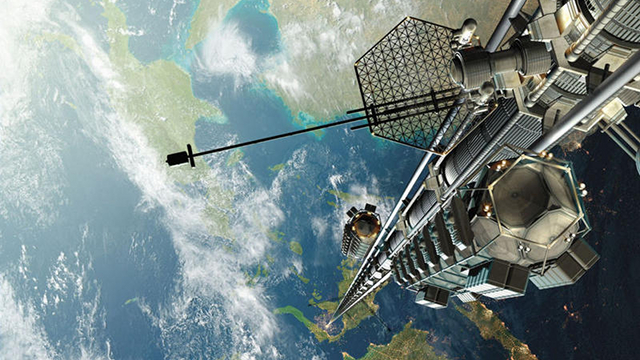
 In the ongoing effort to ensure humanity has a future offworld, it seems that another major company has thrown its hat into the ring. This time, its the Japanese construction giant Obayashi that’s declared its interest in building a Space Elevator, a feat which it plans to have it up and running by the year 2050. If successful, it would make space travel easier and more accessible, and revolutionize the world economy.
This is just the latest proposal to build an elevator in the coming decades, using both existing and emerging technology. Obayashi’s plan calls for a tether that will reach 96,000 kilometers into space, with robotic cars powered by magnetic linear motors that will carry people and cargo to a newly-built space station. The estimated travel time will take 7 days, and will cost a fraction of what it currently takes to bring people to the ISS using rockets.
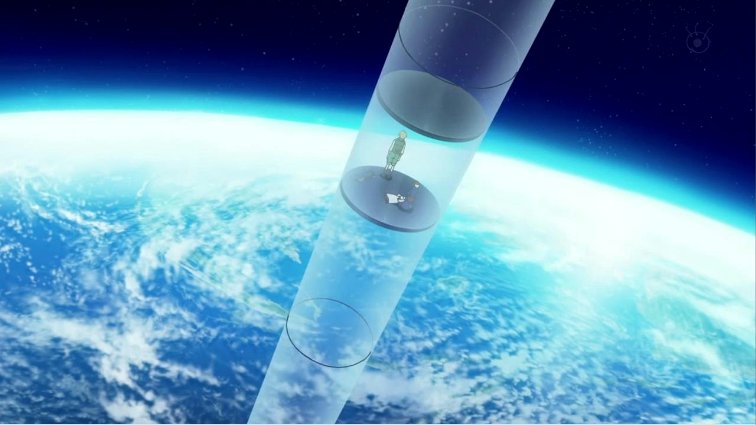 The company said the fantasy can now become a reality because of the development of carbon nanotechnology. As Yoji Ishikawa, a research and development manager at Obayashi, explained:
The tensile strength is almost a hundred times stronger than steel cable so it’s possible. Right now we can’t make the cable long enough. We can only make 3-centimetre-long nanotubes but we need much more… we think by 2030 we’ll be able to do it.
Once considered the realm of science fiction, the concept is fast becoming a possibility. A major international study in 2012 concluded the space elevator was feasible, but best achieved with international co-operation. Since that time, Universities all over Japan have been working on the engineering problems, and every year they hold competitions to share their suggestions and learn from each other.
 Experts have claimed the space elevator could signal the end of Earth-based rockets which are hugely expensive and dangerous. Compared to space shuttles, which cost about $22,000 per kilogram to take cargo into space, the Space Elevator can do it for around $200. It’s also believed that having one operational could help solve the world’s power problems by delivering huge amounts of solar power. It would also be a boon for space tourism.
Constructing the Space Elevator would allow small rockets to be housed and launched from stations in space without the need for massive amounts of fuel required to break the Earth’s gravitational pull. Obayashi is working on cars that will carry 30 people up the elevator, so it may not be too long before the Moon is the next must-see tourist destination. They are joined by a team at Kanagawa University that have been working on robotic cars or climbers.
 And one of the greatest issues – the development of a tether that can withstand the weight and tension of stresses of reaching into orbit – may be closer to being solved than previously thought. While the development of carbon nanotubes has certainly been a shot in the arm for those contemplating the space elevator’s tether, this material is not quite strong enough to do the job itself.
Luckily, a team working out of Penn State University have created something that just might. Led by chemistry professor John Badding, the team has created a “diamond nanothread” – a thread composed of carbon atoms that measures one-twenty-thousands the diameter of a single strand of human hair, and which may prove to be the strongest man-made material in the universe.
 At the heart of the thread is a never-before-seen structure resembling the hexagonal rings of bonded carbon atoms that make up diamonds, the hardest known mineral in existence. That makes these nanothreads potentially stronger and more resilient than the most advanced carbon nanotubes, which are similar super-durable and super-light structures composed of rolled up, one atom-thick sheets of carbon called graphene.
Graphene and carbon nanotubes are already ushering in stunning advancements in the fields of electronics, energy storage and even medicine. This new discovery of diamond nanothreads, if they prove to be stronger than existing materials, could accelerate this process even further and revolutionize the development of electronics vehicles, batteries, touchscreens, solar cells, and nanocomposities.
 But by far the most ambitious possibility offered is that of a durable cable that could send humans to space without the need of rockets. As John Badding said in a statement:
One of our wildest dreams for the nanomaterials we are developing is that they could be used to make the super-strong, lightweight cables that would make possible the construction of a ‘space elevator’ which so far has existed only as a science-fiction idea,
At this juncture, and given the immense cost and international commitment required to built it, 2050 seems like a reasonable estimate for creating a Space Elevator. However, other groups hope to see this goal become a reality sooner. The International Academy of Astronautics (IAA) for example, thinks one could be built by 2035 using existing technology. And several assessments indicate that a Lunar Elevator would be far more feasible in the meantime.
Come what may, it is clear that the future of space exploration will require us to think bigger and bolder if we’re going to secure our future as a “space-faring” race. And be sure to check out these videos from Penn State and the Obayashi Corp:
John Badding and the Nanodiamond Thread:
Obayashi and the 2050 Space Elevator:
Sources: cnet.com, abc.net.au, science.psu.edu





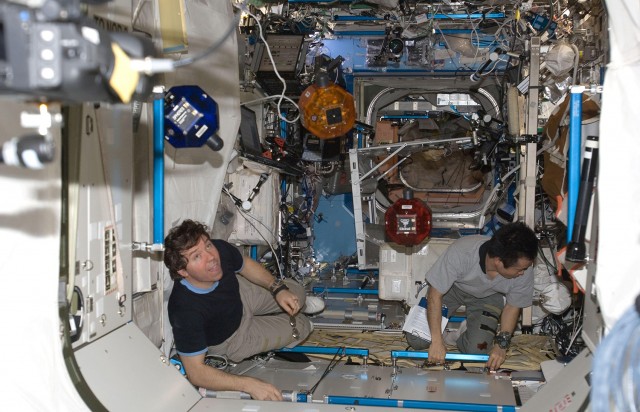

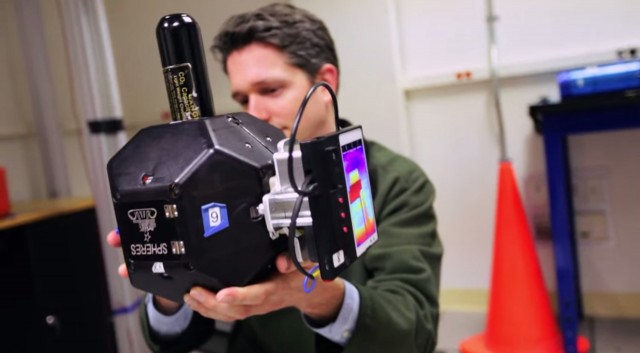 In true science fiction fashion, the SPHERES project began in 2000 after MIT professor David W. Miller was inspired by the “Star Wars” scene where Luke Skywalker is being trained in handling a lightsaber by a small flying robot. Miller asked his students to create a similar robot for the aerospace Industry. Their creations were then sent to the ISS in 2006, where they have been ever since.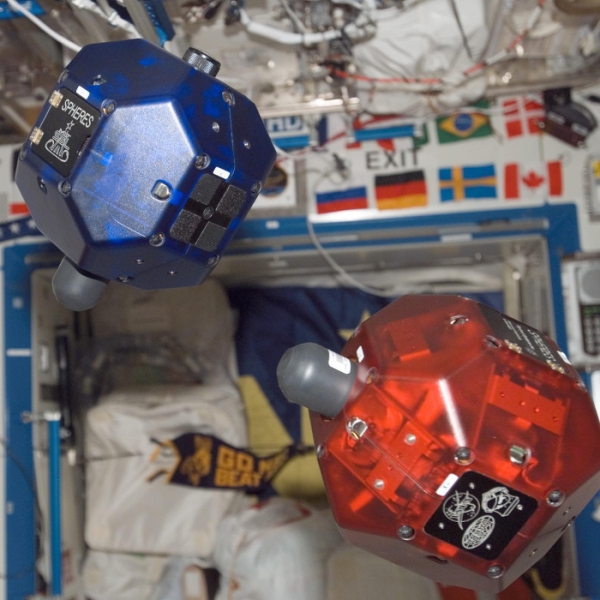


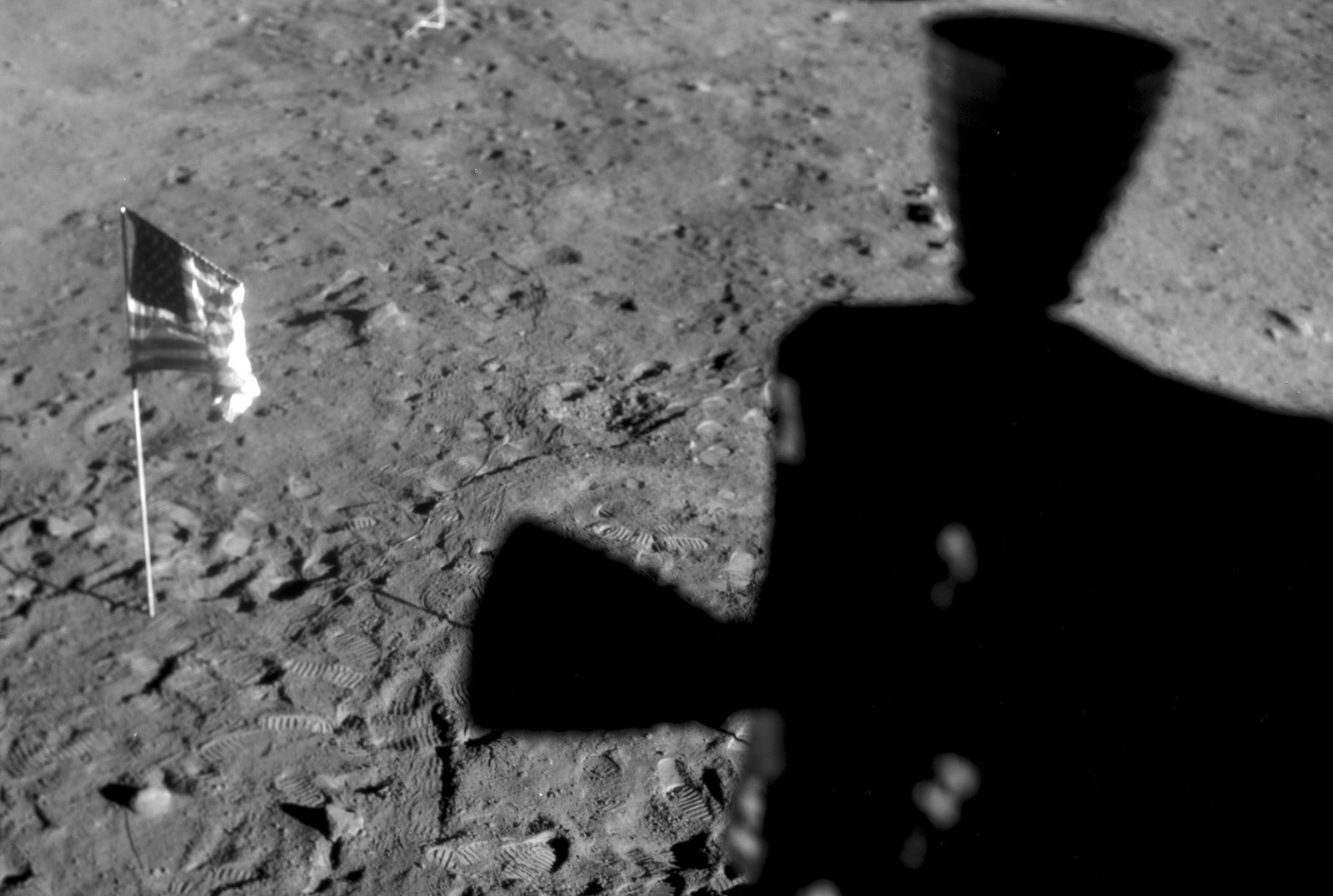

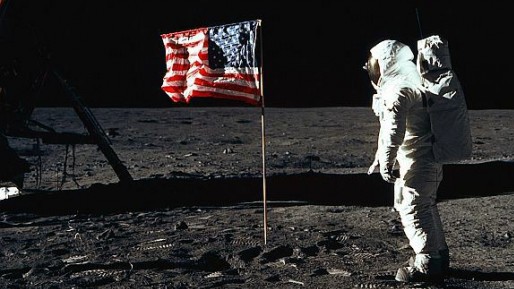 The NASA.gov website will host features, videos, and historic images and audio clips that highlight the Apollo 11 anniversary, as well as the future of human spaceflight. You can find it all by clicking
  This past Thursday, the 2014 FIFA World Cup got underway. And all over the world, fans were glued to their television sets to watch the opening kickoff and the opening match between Croatia and Brazil. Unfortunately, astronauts Reid Wiseman, Steve Swanson, and Alexander Gerst – all of whom are serious “futbol” fans – were all stuck on board the ISS several hundred kilometers away.
 And of course, Wiseman, Swanson and Gerst were sure to wish the teams and fans well in the competition before getting on with their own match. Not only is the resulting video fun thing to watch, it is also a fine representation of the age we live in, where social media and high-speed communications allow everyone – even astronauts – the ability to instantly communicate with the world.

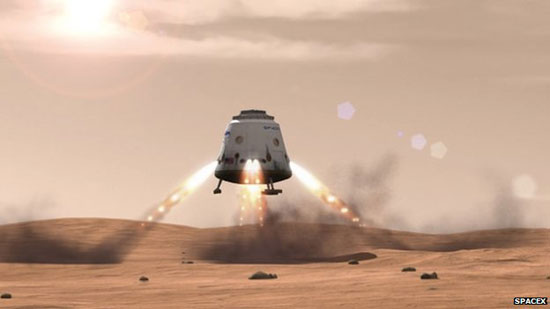 Other notable features include the propellent, which is a pair of non-cryogenic liquids – monomethyl hydrazine for the fuel and nitrogen tetroxide for the oxidizer. These are hypergolic, meaning that they ignite on contact with one another, which helps the SuperDraco to restart multiple times. It’s also built to be deep throttled, and can go from ignition to full throttle in 100 ms. But what really sets the SuperDraco apart is that is has 200 times the power of the Draco engine, which works out to 7,440 kg (16,400 lbs) of thrust.
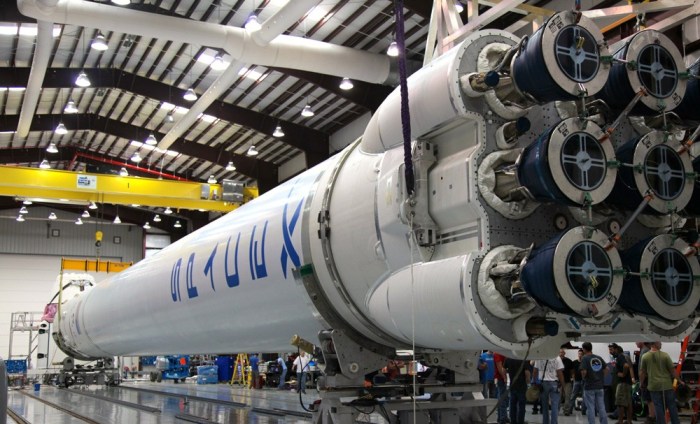 Eight engines firing for five seconds are enough to carry the capsule safely away from the booster with 120,000 lb of axial thrust. In addition, the eight engines also provide a high degree of redundancy should one or more engines fail. But what’s really ambitious about the SuperDraco is that, like the Falcon 9 booster, the Dragon is designed to ultimately return to its spaceport under its own power and land with the precision of a helicopter, and it’s the power and control of the SuperDraco that makes this possible.
 But equally impressive was the unveiling of the Dragon V2 manned space capsule, which took place at a brief media event at SpaceX’s Hawthorne, California headquarters at the end of May. This larger, more powerful version of the reusable Dragon capsule will one day carry astronauts to the International Space Station (ISS) and return to Earth to land under its own power. This latest development brings the company one step closer towards its ultimate goal of a fully reusable manned capsule capable of making a powered landing.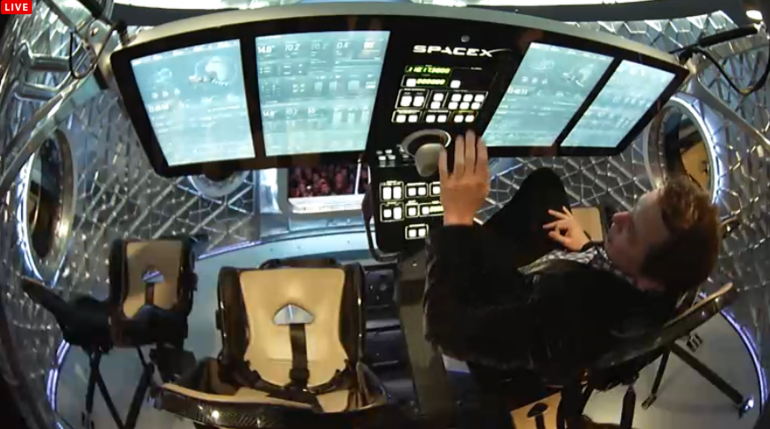
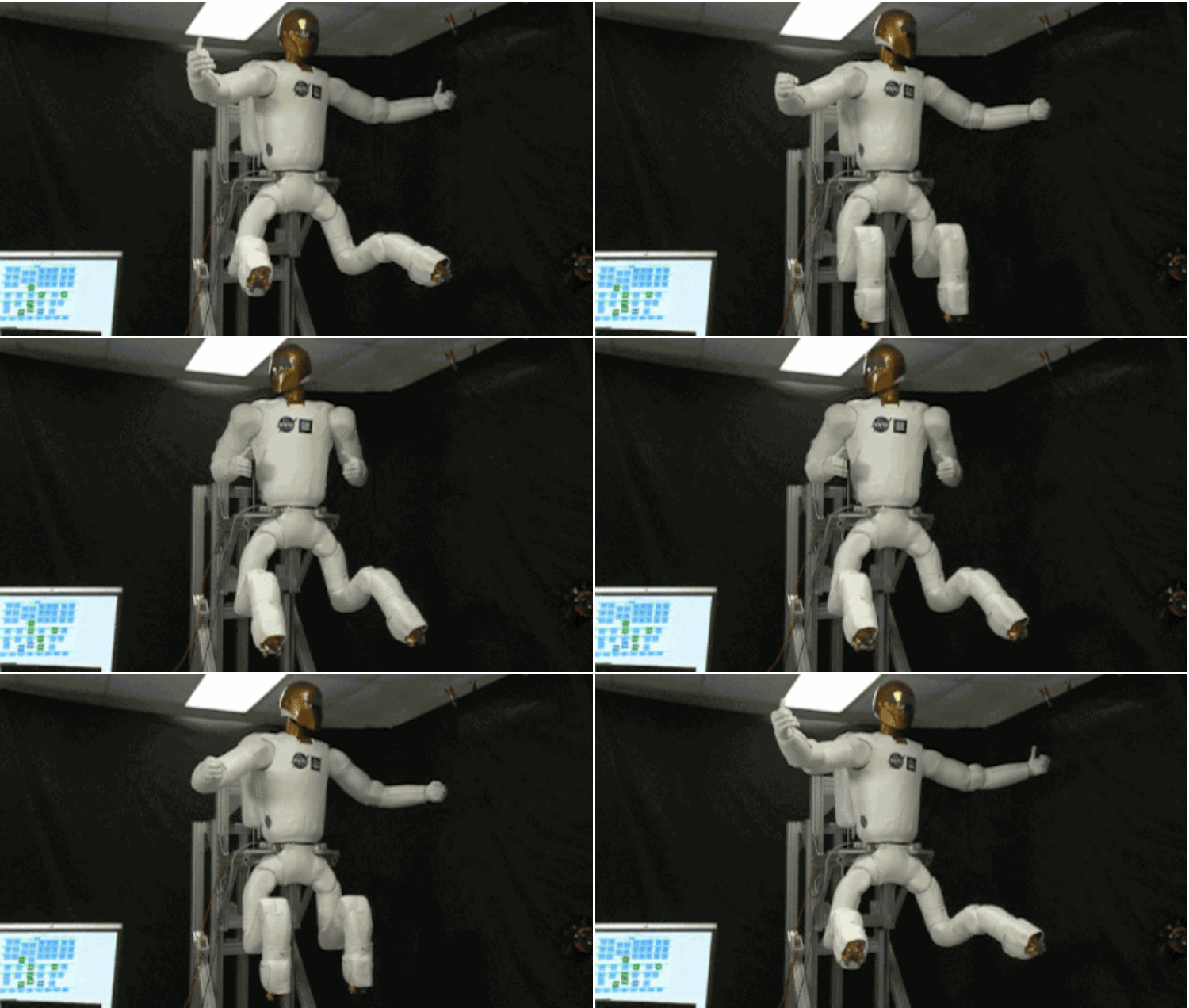
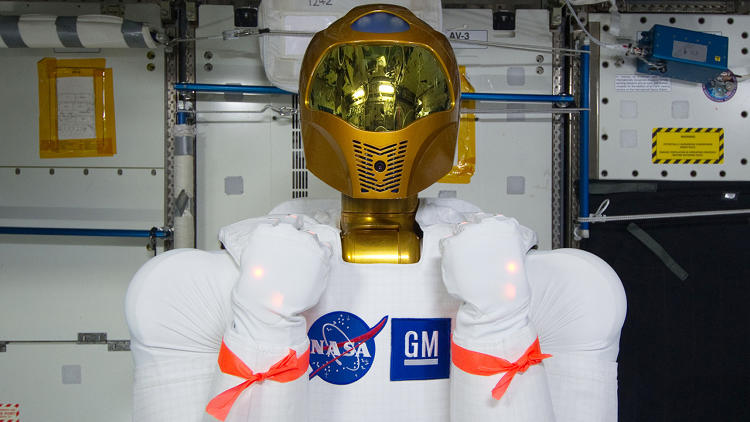
 Robonaut was developed by NASA’s Johnson Space Center in collaboration with General Motors and off-shore oil field robotics firm Oceaneering. All that corporate involvement isn’t accidental; Robonaut isn’t designed to simply do chores around the space station. NASA is also using R2 to showcase a range of patented technologies that private companies can license from Johnson Space Center.
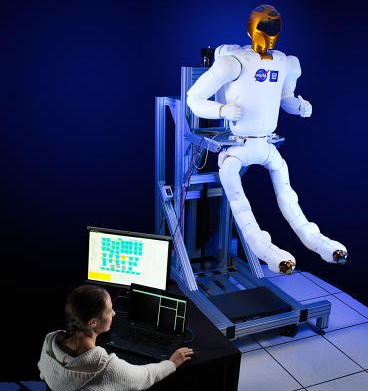 In addition to these legs, this latest supply drop – performed by a SpaceX Dragon capsule – included a laser communication system for astronauts and an outer space farming system designed to grow lettuce and other salad crops in orbit. We can expect that the Robotnaut 2 will be assisting in their use and upkeep in the coming months and years. So expect to hear more about this automated astronaut in the near future!
 Stories by Williams