The Future is Here: Overcoming Paralysis

neurobridge_ianIan Burkhart, a 23-year-old quadriplegic from Dublin, Ohio, was injured in 2010 in a diving accident, breaking his neck on a sandbar and paralyzing his body from the neck down. He was left with some use of his arms, but lost the use of his legs, hands, and fingers. Thanks to a new device known as the Neurobridge though – a device that allows the brains signals to bypass the severed spinal cord – Burkhart has now moved his right hand and fingers for the first time since the accident.

This device, which was developed in concert by the Ohio State University Wexner Medical Center and the non-profit company Battelle, consists of a pea-sized chip that contains an an array of 96 electrodes, allows researchers to look at detailed signals and neural activity emanating from the patient’s brain. This chip was implanted in Ian’s brain two months ago, when neurosurgeon Dr Ali Rezai of Ohio State University performed the surgery that would implant the sensor chip into the motor cortex of his brain.

neuromorphic_revolutionBattelle has been working on neurosensing technology for almost a decade. As Chad Bouton, the leader of the Neurobridge project at Battelle, explains:

We were having such success in decoding brain activity, we thought, ‘Let’s see if we could remap the signals, go around something like a spinal cord injury and then translate the signals into something that the muscles could understand and help someone paralyzed regain control of their limb’.

During the test, which occurred in June, the implanted chip read and interpreted the electrical activity in Burkhart’s brain and sent it to a computer. The computer then recoded the signal, and sent it to a high-definition electrode stimulation sleeve Burkhart wore on his right arm, a process that took less than a tenth of a second and allowed Burkhart to move his paralysed fingers. Basically, Burkhart is able to move his hand by simply thinking about moving his hand, and the machine does the rest.

neurobridge1A team led by Chad Bouton at Battelle spent nearly a decade developing the algorithms, software and sleeve. Then, just two years ago, Dr Ali Rezai and Dr Jerry Mysiw were brought on board to design the clinical trials. Burkhart became involved with the study after his doctor mentioned it to him and he learned he was an ideal candidate. He had the exact level of injury the researchers were looking for, is young and otherwise healthy, and lives close to the Ohio State University Wexner Medical Center, where the research is being conducted.

Even so, Burkhart had to think hard before agreeing to the surgery. He also knew that the surgery wouldn’t magically give him movement again. He would have to undergo rigorous training to regain even basic hand function. Mainly, his experience would help move along future technological advances. However, he was excited to be taking part in cutting-edge research which would ultimately help people like him who have suffered from spinal injuries and paralysis.

enhancementPost-surgery, Burkhart still had a lot of thinking to do, this time, in order to move his hand. As he explained:

It’s definitely great for me to be as young as I am when I was injured because the advancements in science and technology are growing rapidly and they’re only going to continue to increase… Mainly, it was just the fact that I would have to have brain surgery for something that wasn’t needed… Anyone able bodied doesn’t think about moving their hand, it just happens. I had to do lots of training and coaching.

The hand can make innumerable complex movements with the wrist, the fingers, and the fist. In order for Battelle’s software to read Ian’s mind, it has to look for subtle changes in the signals coming from Ian’s brain. As Bouton explains it, the process is like walking into a crowded room with hundreds of people trying to talk to each other, and you’re trying to isolate one particular conversation in a language that you don’t understand.

neurobridgeAt this point, Burkhart can perform a handful of movement patterns, including moving his hand up and down, opening and closing it, rotating it, and drumming on a table with his fingers. All of this can only be done while he’s in the hospital, hooked up to the researchers’ equipment. But the ultimate goal is to create a device and a software package that he can take with him, giving him the ability to bypass his injury and have full ambulatory ability during everyday activities.

This isn’t the only research looking into bringing movement back to the paralyzed. In the past, paralyzed patients have been given brain-computer interfaces, but they have only been able to control artificial limbs – i.e. Zak Water’s mind-controlled leg or the BrainGate’s device that allow stroke victims to eat and drink using a mind-controlled robotic arm. Participants in an epidural stimulator implant study have also been able to regain some movement in their limbs, but this technology works best on patients with incomplete spinal cord injuries.

braingate_drinkassistBurkhart is confident that he can regain even more movement back from his hand, and the researchers are approved to try the technology out on four more patients. Ultimately, the system will only be workable commercially with a wireless neural implant, or an EEG headset – like the Emotiv, Insight or Neurosky headsets. The technology is also being considered for stroke rehabilitation as well, another area where EEG and mind-control technology are being considered as a mean to recovery.

From restoring ambulatory ability through mind-controlled limbs and neurosensing devices to rehabilitating stroke victims with mind-reading software, the future is fast shaping up to be a place where no injuries are permanent and physical disabilities and neurological impairments are a thing of the past. I think I can safely speak for everyone when I say that watching these technologies emerge makes it an exciting time to be alive!

And be sure to check out this video from the OSUW Medical Center that shows Ian Burkhart and the Batelle team testing the Neurobridge:


Sources: cnet.com, fastcoexist.com

Akira Concept Art

https://static.squarespace.com/static/524c2e14e4b05018590a21e1/5386efbce4b0bd6d1373003c/5387038ce4b0792be624b4a5/1401357197387/image002.jpg?format=1500wA few years ago, it was reported that director Ruairi Robinson was going to create a live-action American adaptation of the classic anime, Akira! The project has getting a lot of hype, despite what many hardcore fans have to say about an American version of the anime cult classic. And while the attempts to get the ball rolling have continually stalled, with actors and directors constantly dropping and out of the project, it does seem like this is one project that just wont’ die.

For instance, Ruairi Robinson ceased being attached to the project in 2010, but some interesting concept art from his slated involvement survives. Below, you can see pictures and mock-ups for what the live action of Akira, in his hands, would have looked like. For instance, in the first photo, the casting choices of Chris Evans as Shotaro Kaneda and Jason Gordon Levitt as Tetsuo Shima. In addition, countless pictures depicting Neo-Tokyo.

(left) Kaneda, (middle) Travis, (right) CyrusIn many of these, you can see Kaneda’s iconic red bike running through the streets. But the larger focus is on the colorful skylines, complete with skyscrapers, neon signs, multiple languages scripts, and a general gritty, cyberpunk feel. And at the bottom, there is a comparison shot showing a shooting location in New York City above a picture of what the proposed Neo-New York City would look like. That name sound at all believable to you?


Several scenes from the movie are also depicted, which include the battle with the Clowns biker gang, and the sudden appearance of one of Colonel Shikishima “patients”.

https://static.squarespace.com/static/524c2e14e4b05018590a21e1/5386efbce4b0bd6d1373003c/538a94cbe4b0adbbbb8d53ec/1401590989937/002A_streetconcept_1cFlatGH.jpg?format=500w

https://static.squarespace.com/static/524c2e14e4b05018590a21e1/5386efbce4b0bd6d1373003c/5387038be4b058afe7f7548e/1401357200902/001A_streetconcept_1bFlatGH.jpg?format=500w

It looks like a Neo-New York City

https://static.squarespace.com/static/524c2e14e4b05018590a21e1/5386efbce4b0bd6d1373003c/5387038ce4b058afe7f75490/1401357198930/freeway_before&after%20copy.jpg?format=500w

https://static.squarespace.com/static/524c2e14e4b05018590a21e1/5386efbce4b0bd6d1373003c/538a927ee4b0ad09b9d992fd/1401590403029/image001.jpg?format=500w

https://static.squarespace.com/static/524c2e14e4b05018590a21e1/5386efbce4b0bd6d1373003c/5387038de4b058afe7f75492/1401357199565/streetconcept.jpg?format=500w

https://static.squarespace.com/static/524c2e14e4b05018590a21e1/5386efbce4b0bd6d1373003c/538a927ee4b0e9ab9157cd27/1401590403111/image003.jpg?format=500wBut what montage of Akira-related images would be complete without scenes depicting the unleashed psychic Tetsuo, demonstrated his newfound powers? Below are a couple that demonstrate the anime’s antagonist in action, in the first, deflecting a missile attack from an attack chopper, and in the second breaking into the Akira vault and discovering the namesake’s remains.

  Travis Clyne aka "Tetsuo" unleashing his power!

https://static.squarespace.com/static/524c2e14e4b05018590a21e1/5386efbce4b0bd6d1373003c/538773c1e4b0e13cfb6da384/1401385923649/crater_akira01_CC2.jpg?format=500wNot too bad to look at. But with the supposed director, producers, and actors changing every few years, many are wondering if this live-action remake will ever happen. And many fans can see nothing wrong with the idea, provided it is true to the source material. And dropping the whole Americanized angle and setting it back in Neo-Tokyo where it belongs wouldn’t hurt much either! But in the end, it really comes down to being true to the spirit of the Manga, if not the precise format.

Luckily, there is still the crowdfunded live-action Akira Project. This fan-based effort to make an adaptation that is both true to the spirit and setting of the original manga produced a full-length teaser trailer not that long ago that impressed fans quite a bit! So who knows? If Hollywood can’t get its act together and make a decent remake, there’s always the direction and the funding of dedicated fans to pick up the slack! Time will tell which of them will bear fruit…

In the meantime, here’s another look at the Akira Project trailer:


Sources:
moviepilot.com, ruairi-robinson.squarespace.com

Revolution in Virtual Reality: Google’s Cardboard Headset

cardboardgifWith the acquisition of the Oculus Rift headset, Facebook appeared ready to corner the market of the new virtual reality market. But at its annual I/O conference, Google declared that it was staking its own claim. At the end of the search giant’s keynote address, Sundar Pichai announced that everyone in attendance would get a nondescript cardboard package, but was coy about its contents. Turns out, it’s the firm’s attempt at a do-it-yourself VR headset.

Known as Cardboard, copies of the headset were handed out as part of a goodie bag, alongside the choice between a brand new LG G Watch or Samsung Gear Live smartwatch. Intended to be a do-it-yourself starter kit, Google Cardboard is a head-mounted housing unit for your smartphone that lets you blend everyday items into a VR headset. With a $10 lens kit, $7 worth of magnets, two Velcro straps, a rubber band, and an optional near-field communication sticker tag, you can have your very own VR headset for the fraction of the price.

box-of-cardboard-google-io-2014You can use household materials to build one, and a rubber band to hold your smartphone in place on the front of the device. Assembly instructions, plans and links for where to source the needed parts (like lenses) — as well as an SDK — are available on the project’s website. Google hopes that by making the tech inexpensive (unlike offerings from, say, Oculus), developers will be able to make VR apps that hit a wider audience.

According to some early reviews, the entire virtual reality experience is surprisingly intuitive, and is as impressive considering how simple it is. And while the quality doesn’t quite match the Oculus Rift’s dual OLED Full HD screens, and it is lacking in that it doesn’t have positional tracking (meaning you can’t lean into something the way you would in real life), the Cardboard is able to create the 3D effect using just a single phone screen and some specialized lenses.

google_cardboardMeanwhile, Google has created some great demos within the Cardboard app, showcasing the kind of experiences people can expect moving forward. Right now, the Cardboard app features simple demonstrations: Google Earth, Street View, Windy Day, and more. But it’s just a small taste of what’s possible. And anyone willing to put some time into putting together their own cardboard headset can get involved. Never before has virtual reality been so accessible, or cheap.

And that was precisely the purpose behind the development of this device. Originally concocted by David Coz and Damien Henry at the Google Cultural Institute in Paris as part of the company’s “20 percent time” initiative, the program was started with the aim of inspiring a more low-cost model for VR development. After an early prototype wowed Googlers, a larger group was tasked with building out the idea, and the current Cardboard headset was born.

google_cardboard1As it reads on Google’s new page for the device’s development:

Virtual reality has made exciting progress over the past several years. However, developing for VR still requires expensive, specialized hardware. Thinking about how to make VR accessible to more people, a group of VR enthusiasts at Google experimented with using a smartphone to drive VR experiences.

Beyond hardware, on June 25th, the company also released a self-described experimental software development kit for Cardboard experiences. Cardboard also has an Android companion app that’s required to utilize Google’s own VR-specific applications, called Chrome Experiments. Some use cases Google cites now are flyover tours in Google Earth, full-screen YouTube video viewing, and first-person art exhibit tours.

google_cardboard2As Google said a related press release:

By making it easy and inexpensive to experiment with VR, we hope to encourage developers to build the next generation of immersive digital experiences and make them available to everyone.

Oculus Rift is still the most promising version of virtual reality right now, and with Facebook at the helm, there are some tremendous resources behind the project. But with Cardboard, Google is opening up VR to every single Android developer, which we hope will lead to some really awesome stuff down the road. Even if you can’t lean in to inspect dials in front of you, or look behind corners, the potential of Cardboard is tremendous. Imagine the kind of not only experiences we’ll see, but augmented reality using your phone’s camera.

But Cardboard is still very early in development. Its only been a few weeks since it was debuted at Google I/O, and the device is still only works with Android. But with availability on such a wide scale, it could very quickly become the go-to VR platform out there. All you need are some magnets, velcro, rubber band, lenses and a pizza box. And be sure to check out this demo of the device, courtesy of “Hands-On” by TechnoBuffalo:


Sources:
cnet.com, technobuffalo.com, engadget.com

The Future of Devices: The Wearable Tech Boom

Wearable-Computing-RevolutionThe wearable computing revolution that has been taking place in recent years has drawn in developers and tech giants from all over the world. Though its roots are deep, dating back to the late 60’s and early 80’s with the Sword of Damocles concept and the work of Steve Mann. But in recent years, thanks to the development of Google Glass, the case for wearable tech has moved beyond hobbyists and enthusiasts and into the mainstream.

And with display glasses now accounted for, the latest boom in development appears to be centered on smart watches and similar devices. These range from fitness trackers with just a few features to wrist-mounted version of smart phones that boast the same constellations of functions and apps (email, phone, text, skyping, etc.) And as always, the big-name industries are coming forward with their own concepts and designs.

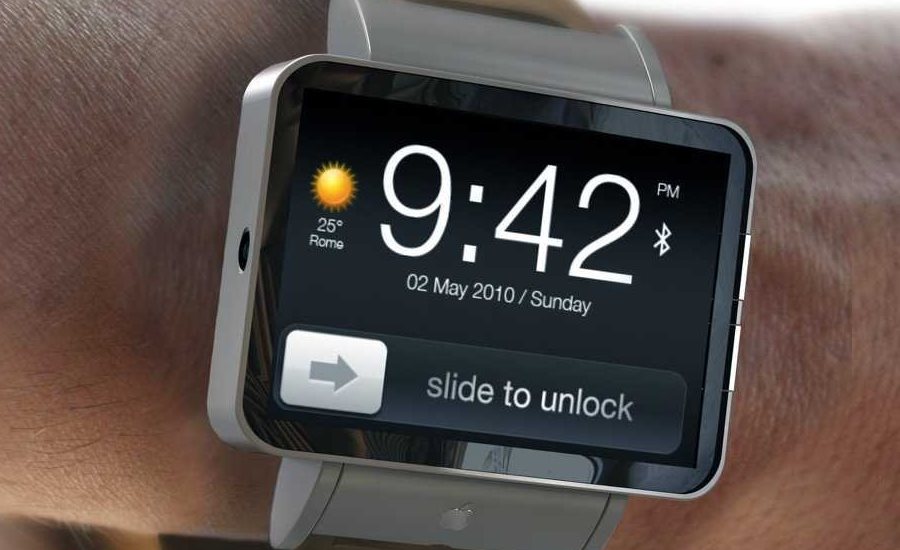
apple_iwatch1First, there’s the much-anticipated Apple iWatch, which is still in the rumor stage. The company has been working on this project since late 2012, but has begun accelerating the process as it tries to expand its family of mobile devices to the wrist. Apple has already started work on trademarking the name in a number of countries in preparation for a late 2014 launch perhaps in October, with the device entering mass production in July.

And though it’s not yet clear what the device will look like, several mockups and proposals have been leaked. And recent reports from sources like Reuters and The Wall Street Journal have pointed towards multiple screen sizes and price points, suggesting an array of different band and face options in various materials to position it as a fashion accessory. It is also expected to include a durable sapphire crystal display, produced in collaboration with Apple partner GT Advanced.

iWatchWhile the iWatch will perform some tasks independently using the new iOS 8 platform, it will be dependent on a compatible iOS device for functions like receiving messages, voice calls, and notifications. It is also expected to feature wireless charging capabilities, advanced mapping abilities, and possibly near-field communication (NFC) integration. But an added bonus, as indicated by Apple’s recent filing for patents associated with their “Health” app, is the inclusion of biometric and health sensors.

Along with serving as a companion device to the iPhone and iPad, the iWatch will be able to measure multiple different health-related metrics. Consistent with the features of a fitness band, these will things like a pedometer, calories burned, sleep quality, heart rate, and more. The iWatch is said to include 10 different sensors to track health and fitness, providing an overall picture of health and making the health-tracking experience more accessible to the general public.

iOS8Apple has reportedly designed iOS 8 with the iWatch in mind, and the two are said to be heavily reliant on one another. The iWatch will likely take advantage of the “Health” app introduced with iOS 8, which may display all of the health-related information gathered by the watch. Currently, Apple is gearing up to begin mass production on the iWatch, and has been testing the device’s fitness capabilities with professional athletes such as Kobe Bryant, who will likely go on to promote the iWatch following its release.

Not to be outdone, Google launched its own brand of smartwatch – known as Android Wear – at this year’s I/O conference. Android Wear is the company’s software platform for linking smartwatches from companies including LG, Samsung and Motorola to Android phones and tablets. A preview of Wear was introduced this spring, the I/O conference provided more details on how it will work and made it clear that the company is investing heavily in the notion that wearables are the future.

android-wear-showdownAndroid Wear takes much of the functionality of Google Now – an intelligent personal assistant – and uses the smartwatch as a home for receiving notifications and context-based information. For the sake of travel, Android Wear will push relevant flight, weather and other information directly to the watch, where the user can tap and swipe their way through it and use embedded prompts and voice control to take further actions, like dictating a note with reminders to pack rain gear.

For the most part, Google had already revealed most of what Wear will be able to do in its preview, but its big on-stage debut at I/O was largely about getting app developers to buy into the platform and keep designing for a peripheral wearable interface in mind. Apps can be designed to harness different Android Wear “intents.” For example, the Lyft app takes advantage of the “call me a car” intent and can be set to be the default means of hailing a ride when you tell your smartwatch to find you a car.

androidwear-3Google officials also claimed at I/O that the same interface being Android Wear will be behind their new Android Auto and TV, two other integrated services that allow users to interface with their car and television via a mobile device. So don’t be surprised if you see someone unlocking or starting their car by talking into their watch in the near future. The first Android Wear watches – the Samsung Gear Live and the LG G Watch – are available to pre-order and the round-face Motorola Moto 360 is expected to come out later this summer.

All of these steps in integration and wearable technology are signs of an emergent trend, one where just about everything from personal devices to automobiles and even homes are smart and networked together – thus giving rise to a world where everything is remotely accessible. This concept, otherwise known as the “Internet of Things”, is expected to become the norm in the next 20 years, and will include other technologies like display contacts and mediated (aka. augmented) reality.

And be sure to check out this concept video of the Apple iWatch:


Sources:
cnet.com, (2), macrumors.com, engadget.com, gizmag.com

Climate Crisis: China’s Pollution-Eating Skyscrapers

phoenix-towers-worlds-tallest-wuhan-china-designboom-01 Though it is already home to the world’s largest building – in the form of the New Century Global Center in Chendu – China is seeking to create the world’s tallest structure as well. Designed by UK-based Chetwoods Architects and known as the Phoenix Towers, this tower concept is slated to be built in Wuhan, Central China. But equally impressive is the fact that this building will be suck pollution out of the air and water and will host more than the usual building features.

The larger of the two towers reaches a total of 1000 meters (3,280 ft) in height – beating the Burj Khalifa by 170 meters (558 ft) – and sports an ambitious list of sustainable technology. The towers cover 7 hectares (17 acres) of ground on a 47-hectare (116-acre) plot that sits upon an island in a lake. In an attempt to make the design of the towers more relevant to Chinese culture, Chetwoods drew upon the Fenghuang (or Chinese Phoenix) mythological bird and designated the larger tower Feng (male), and the smaller tower Huang (female).

phoenix_towers_chetwoods-2The designers hope the building will serve as a catalyst for more sustainable design in the industrial city. Laurie Chetwood, chairman of U.K.-based Chetwoods, the architects on the project explained how the building’s water-cleaning features work:

The water goes up through a series of filters. We don’t use power to pull the water up, we’re using passive energy. As it goes through the filters and back, we’re also putting air back into the lake to make it healthier… Wuhan is an unusual city, dotted with huge lakes. Protecting the lakes could lead to other projects that protect them even more.

The towers also have pollution-absorbing coatings to help clean the air, vertical gardens that filter more pollution, and a chimney in the middle of the larger tower naturally pulls air across the lake for better ventilation. For the sake of generating energy, the building relies on a combination of wind turbines, lightweight solar cladding, and hydrogen fuel cells running on the buildings’ waste, giving it energy independence and even having enough left over for the local community.

phoenix_towers_chetwoods-4Inspired by the Chinese symbols of the phoenix, and the concept of yin and yang, one tower feeds the other with renewable power in a symbiotic relationship. Spheres hanging between the two towers will also hold restaurants with views of the lake. Pending approval by the city’s mayor, construction may begin by the end of the year and could be completed by 2017 or 2018, a pace that the architects say would be unlikely in other countries.

According to Chetwood, construction in China obeys a different set of rules and parameters than his native Britain:

The most amazing thing for me is that in the U.K. we strive as designers to get things built, and there’s a lot of red tape, but the Chinese seem to have a different view of things. I think they’re incredibly optimistic. If you have an idea and you think, ‘Oh, is this going to be too exciting’, they’ll actually want it more exciting. It’s more ambitious. They’re quite keen to push the boundaries. For a designer, that’s fantastic. It’s a thrill.

Whereas the sheer size of the buildings is reflective of China’s aim to assert its national authority on the world stage, it’s focus on pollution-eating and green energy is reflective of the desire to create living spaces in a sustainable way. And it is one of many building concepts being considered by Chinese authorities that seeks to address pollution by achieve energy independence, while at the same time being part of the solution by incorporating pollution-eating features.

shanghai_towerFor instance, there’s China’s Shanghai Tower, which finished construction in August of last year. This building is currently the tallest tower in China, is one-third green space and a transparent second skin that surrounds the city in a protective air envelope that controls its internal temperature. In addition, vertical-axis wind turbines located near the top of the tower and geothermal vents located at the bottom will generate 350,000 kWh of supplementary electricity per year.

And then there’s Sky City, a building under construction (though currently on hold) in Changsha, Hunan province. Designed by Broad Sustainable Building, this 666m meter (2,185 ft) skyscraper incorporates numerous sustainable building features. These include modular design, recycled building materials, non-toxic building materials, insulated walls and quadruple glazing. Beyond China, there is also the Pertamina Energy Tower in Jakarta, which relies on geothermal, solar, and wind turbines to act as the very picture of energy independence.

Together, these concepts (and many others currently under consideration) represent the future of urban planning and architecture. In addition to being assembled with recycled material, fabricated using less wasteful methods (like 3-D printing), and seeing to their own energy needs in a clean and sustainable way, they will also incorporate carbon capture, air and water cleaning technology that will make urban environments healthier places to live.

Sources: fastcoexist.com, designboom.com, gizmag.com

Immortality Inc: Google’s Kurzweil Talks Life Extension

calico-header-640x353Human life expectancy has been gradually getting longer and longer over the past century, keeping pace with advances made in health and medical technologies. And in the next 20 years, as the pace of technological change accelerates significantly, we can expect life-expectancy to undergo a similarly accelerated increase. So its only natural that one of the worlds biggest tech giants (Google) would decide to becoming invested in the business of post-mortality.

As part of this initiative, Google has been seeking to build a computer that can think like a human brain. They even hired renowed futurist and AI expert Ray Kurzweil last year to act as the director of engineering on this project. Speaking at Google’s I/O conference late last month, he detailed his prediction that our ability to improve human health is beginning to move up an “exponential” growth curve, similar to the law of accelerating returns that governs the information technology and communications sectors today.

raykurzweilThe capacity to sequence DNA, which is dropping rapidly in cost and ease, is the most obvious example. At one time, it took about seven years to sequence 1% of the first human genome. But now, it can be done in a matter of hours. And thanks to initiatives like the Human Genome Project and ENCODE, we have not only successfully mapped every inch of the human genome, we’ve also identified the function of every gene within.

But as Kurzweil said in the course of his presentation – entitled “Biologically Inspired Models of Intelligence” – simply reading DNA is only the beginning:

Our ability to reprogram this outdated software is growing exponentially. Somewhere between that 10- and 20-year mark, we’ll see see significant differences in life expectancy–not just infant life expectancy, but your remaining life expectancy. The models that are used by life insurance companies sort of continue the linear progress we’ve made before health and medicine was an information technology… This is going to go into high gear.

immortality_dnaKurzweil cited several examples of our increasing ability to “reprogram this outdated data” – technologies like RNA interference that can turn genes on and off, or doctors’ ability to now add a missing gene to patients with a terminal disease called pulmonary hypertension. He cited the case of a girl whose life was threatened by a damaged wind pipe, who had a new pipe designed and 3-D printed for her using her own stem cells.

In other countries, he notes, heart attack survivors who have lasting heart damage can now get a rejuvenated heart from reprogrammed stem cells. And while this procedure awaits approval from the FDA in the US, it has already been demonstrated to be both safe and effective. Beyond tweaking human biology through DNA/RNA reprogramming, there are also countless initiatives aimed at creating biomonitoring patches that will improve the functionality and longevity of human organs.

avatar_imageAnd in addition to building computer brains, Google itself is also in the business of extending human life. This project, called Calico, hopes to slow the process of natural aging, a related though different goal than extending life expectancy with treatment for disease. Though of course, the term “immortality” is perhaps a bit of misnomer, hence why it is amended with the word “clinical”. While the natural effects of aging are something that can be addressed, there will still be countless ways to die.

As Kurzweil himself put it:

Life expectancy is a statistical phenomenon. You could still be hit by the proverbial bus tomorrow. Of course, we’re working on that here at Google also, with self-driving cars.

Good one, Kurzweil! Of course, there are plenty of skeptics who question the validity of these assertions, and challenge the notion of clinical immortality on ethical grounds. After all, our planet currently plays host to some 7 billion people, and another 2 to 3 billion are expected to be added before we reach the halfway mark of this century. And with cures for diseases like HIV and cancer already showing promise, we may already be looking at a severe drop in mortality in the coming decades.

calico1Combined with an extension in life-expectancy, who knows how this will effect life and society as we know it? But one thing is for certain: the study of life has become tantamount to a study of information. And much like computational technology, this information can be manipulated, resulting in greater performance and returns. So at this point, regardless of whether or not it should be done, it’s an almost foregone conclusion that it will be done.

After all? While very few people would dare to live forever, there is virtually no one who wouldn’t want to live a little longer. And in the meantime, if you’ve got the time and feel like some “light veiwing”, be sure to check out Kurzweil’s full Google I/O 2014 speech in which he addresses the topics of computing, artificial intelligence, biology and clinical immortality:


Sources: fastcoexist.com, kurzweilai.net

Cyberwars: Watching the US and China in Real-Time

norse-hacking-map-640x353Since the dawn of the internet age, there has been no shortage of stories about hackers, malware-peddling malcontents, online scams and identity theft. Add to that the growing consensus that wars in the future will be fought online through “cyberwarfare divisions”, and you can understand why such positive statements once made about the internet – like how it would bring the world together and create “a global village” – would seem incredibly naive now.

However, despite the prevalence of hacking and cyberwarfare-related fear, very few people have actually experienced what it is like. After all, the effects of hacking are mostly invisible to the untrained eye, with the exception of very-high-profile database breaches. Now, though, a security company has produced a fascinating geographic map that shows global hacking attempts in real-time. And of course, the ongoing battle between US and Chinese forces accounts for much of it.

norse-china-usa-hacking-smallerThe real-time map, maintained by the Norse security company, shows who’s hacking who and what attack vectors are being used. The data is sourced from a network of “honeypot” servers – essentially a juicy-looking target that turns out to be a trap -maintained by Norse, rather than real-world data from the Pentagon, Google, or other high-profile hacking targets. The Norse website has some info about its “honeynet,” but it’s understandably quite sparse on actual technical details.

If you watch the map for a little while, it’s clear that most attacks originate in either China or the US, and that the US is by far the largest target for hack attacks. You can also see that the type of hack used, indicated by the target port, is rather varied. Microsoft-DS (the port used for Windows file sharing) is still one of the top targets , but DNS, SSH, and HTTP are all very popular too. CrazzyNet and Black Ice – two common Windows backdoor programs often used by script kiddies and criminals – is also sure to pop up.

Unit-61398-Chinese-Army-Hacking-Jobs-With-Great-BenefitsOn occasion, the map is likely to show a big burst of coordinated attacks coming from China and directed towards the US. And while it is difficult to blame these attacks directly on the Chinese government (as they are adept at routing their attacks through other servers) government and independent researchers are confident the majority of these attacks are being directed by the People’s Liberation Army’s Unit 61398 – aka. the PLA’s cyberwarfare division.

A lot of hacks originate in the US, too, but their targets are much more varied. And in cases where Chinese facilities (or other nations that are nominally identified as hostile to the US) you can bet that the US Cyber Command at Fort Meade is behind the lot of them. But the map is still limited in that it uses Norse’s own honeypot operations to identify these attacks, and it therefore cannot be said with absolute certainty that real attacks happen in the same fashion.

nsa_aerialBut a general picture of the size and shape of global hacking and cyberwarfare can be divined by looking at the stats. Back in 2012, the US DOD reported that it was the target of 10 million cyber attacks per day. Likewise, the National Nuclear Security Administration says it saw 10 million attacks per day in 2012. In 2013, BP’s CEO said it sees 50,000 cyber attacks per day, and the UK reported around 120,000 attacks per day back in 2011.

While the extent and purpose of these attacks certainly varies, it is pretty clear that hacking and cyberwarfare is a global problem and something that governments, corporations, and institutions need to pay attention to. Last year, the Obama administration’s announced that it would not sit idly by in the face of stepped up attacks from China. However, the subsequent testimony and document leaks by Snowden showed that the US has been conducting its own attacks the entire time (and even beforehand).

And such is the nature of war, regardless of the context or the weapons used. States rattle their swords claiming they will not tolerate aggression, but there is always a fine line between maintaining one’s defenses and escalating a situation to the point that mutual destruction becomes inevitable. Perhaps the people who are currently fighting this alleged cyberwar should look to the past – specifically to the First World War and the Cold War – to see just how effective “arms races” are!

Source: extremetech.com, map.ipviking.com

The Internet Revealed: Invisible Wi-Fi with Light Graffiti

digital_etherealThe world today is permeated by invisible waves that confer the ability to communicate, share, download, upload, invade, spy and monitor. In other words, so much depends upon it and so much happens within it. As a result, it would be nice if people could see it for once. That’s the idea behind “Digital Ethereal”, a project being led by artist and researcher Luis Hernan of the University of Newcastle in the UK, that seeks to give visual representation to this invisible world.

By using different colors of light – red, yellow, green and blue – he was able to reveal the different strength of Wi-Fi signals in the world around us, showing the “ghost in the machine” as it were. He has called his device the Kirlian Device – named for Russian inventor Semyon Davidovich Kirlian, who discovered Kirlian photography, a technique for photographing electrical discharges, usually invisible to the naked eye.

digital_ethereal1As Hernan explained on his website:

This project came about as a design discourse on digital technologies, and the invisible infrastructure underpinning it. I believe our interaction with this landscape of electromagnetic signals, described by Antony Dunne as Hertzian Space, can be characterized in the same terms as that with ghosts and spectra. They both are paradoxical entities, whose untypical substance allows them to be an invisible presence…

Quite simply, the Kirlian Device measures the properties of Wi-Fi signals in its immediate vicinity, and shows a corresponding color. Much like the color spectrum, red is at one end, indicating a strong signal, while blue is at the opposite end indicating a weak one. As Hernan moves around, he uses long exposure photography to reveal Wi-Fi “ghosts” – what he dubs “wireless spectres”. In this way, his project has a certain spiritual quality.

In the same way, they undergo a process of gradual substantiation to become temporarily available to perception. Finally, they both haunt us. Ghosts, as Derrida would have it, with the secrets of past generations. Hertzian space, with the frustration of interference and slowness.

digital_ethereal2As he explained during an interview with Discovery:

The device is moved through the space, which is then registered in a long-exposure photograph. This process lasts for several minutes, and due to the brightness of the device, my figure is ghosted away in the process. In some pictures you can see my feet or even my blurred head underneath the light strikes… 

For the purpose of his project, Hernan built his Kirlian Device out of an Arduino UNO board and Wi-Fi Shield which were connected to a strip of LED lights. But he’s also released a free Android app so that users can try it for themselves, and invited potential collaborators to drop him a line via his website. In the meantime, Hernan is currently pursuing his PhD with the Architecture and Interaction Design group at Newcastle University in the U.K.

And be sure to check out the video of the recent exhibition of Digital Ethereal:


Source:
cnet.com
, news.discovery.com

The Future is Here… and Badass: The Electric Harley

harley_livewireThe Harley Davidson enjoys a rather unique place in American culture, one that is characterized by images of the open road, a sense of freedom, and the sound of a deep, earthy growl. Which is why, when the company released a teaser video earlier this month showcasing Project Livewire, many people were understandably nervous. After all, electronic vehicles seem just fine when it comes to the Toyota Prius, the Nissan Leaf, or anything in the Tesla catalog. But this is Harley Davidson, right?

In this case, the challenge arises from the fact that electric engines are usually silent. In the case of a Harley Hog or a Chopper – or any other classic brand names that scream Hell’s Angels, leather jackets and anarchy – the engine is an iconic part of the brand. They also didn’t want to fake the roar of the engine. Instead, the engineers carefully tweaked the arrangement of the motor and the gear box until it created a sound that’s a little like a jet flying by.

harley_livewire1Jeff Richlen, the chief engineer for the new prototype bike, explained:

When we went into this, we had to consider all of our products are grounded in three things–look, sound, and feel. The sound is the most important, and we didn’t want to lose that. We didn’t want a silent product… The first time we spun up the gears and ran the motorcycle we knew we had something special. It really was defining another sound of Harley Davidson. We’re certainly not forgetting our past and what is our product legacy, it’s just something brand new. And it kind of sounds like the future.

When addressing the reason for the project, Richlen admitted that the company’s main motivation wasn’t trying to improve the sustainability of their bikes, even though motorcycles produce more tailpipe emissions than cars. In the end, he claims that the company is looking to the possibilities of the future, and electronic engines are at the forefront of that. And while cars are well represented, the potential for motorbikes remains largely unexplored. Going green was merely a biproduct of that.

harleyIn the teaser video, things open up on historic route 66. A Harley drives by, only it doesn’t sound like a Harley. It’s quieter, more like the jet engine of a very small plane. Over the summer, Harley-Davidson will take the new LiveWire bike on a 30-city tour of the U.S. to get customer feedback. Richlen has extended an invite to anyone who doubts the power of the bike to come on out try the bike for themselves. The real test, he says, is in the twist of the throttle:

There are some limitations of the EV space right now, and we understand that, and that’s why we’re looking for feedback–what do customers expect out of the product, what would their tradeoff points be? There may be people who get on this thinking ‘golf cart’ and get off it thinking rocket ship.

So if you happen to live in a city where the Harley tour is stopping, and have a love of bikes that borders on the erotic, go check it out. And be sure to check out the teaser video below:


Source:
fastcoexist.com, cnet.com

News From Space: Rosetta Starts, Orion in the Wings

 Quick Note: This is my 1700th post!
Yaaaaaay, happy dance!

Rosetta_Artist_Impression_Far_625x469Space exploration is a booming industry these days. Between NASA, the ESA, Roscosmos, the CSA, and the federal space agencies of India and China, there’s just no shortage of exciting missions aimed at improving our understanding of our Solar System or the universe at large. In recent months, two such missions have been making the news; one of which (led by the ESA) is now underway, while the other (belonging to NASA) is fast-approaching.

In the first instance, we have the ESA’s Rosetta spacecraft, which is currently on its way to rendezvous with the comet 67P/Churyumov-Gerasimenko at the edge of our Solar System. After awaking from a 957 day hibernation back in January, it has just conducted its first instruments observations. Included in these instruments are three NASA science packages, all of which have started sending science data back to Earth.

Rosetta_and_Philae_at_cometSince leaving Earth in March 2004, the Rosetta spacecraft has traveled more than 6 billion km (3.7 billion miles) in an attempt to be the first spacecraft to successfully rendezvous with a comet. It is presently nearing the main asteroid belt between Jupiter and Mars – some 500,000 km (300,000 miles) from its destination. And until August, it will executing a series of 10 orbit correction maneuvers to line it self up to meet with 67P, which will take place on August 6th.

Rosetta will then continue to follow the comet around the Sun as it moves back out toward the orbit of Jupiter. By November of 2014, Rosetta’s mission will then to launch its Philae space probe to the comet, which will provide the first analysis of a comet’s composition by drilling directly into the surface. This will provide scientists with the first-ever interior view of a comet, and provide them with a window in what the early Solar System looked like.

rosetta-1The three NASA instruments include the MIRO, Alice, and IES. The MIRO (or Microwave Instrument for Rosetta Orbiter) comes in two parts – the microwave section and the spectrometer. The first is designed to measure the comet’s surface temperatures to provide information on the mechanisms that cause gas and dust to pull away from it and form the coma and tail. The other part, a spectrometer, will measure the gaseous coma for water, carbon monoxide, ammonia, and methanol.

Alice (not an acronym, just a nickname) is a UV spectrometer designed to determine the gases present in the comet and gauge its history. It will also be used to measure the rate at which the comet releases water, CO and CO2, which will provide details of the composition of the comet’s nucleus. IES (or Ion and Electron Sensor) is one of five plasma analyzing instruments that make up the Rosetta Plasma Consortium (RPC) suite. This instrument will measure the charged particles as the comet draws nearer to the sun and the solar wind increases.

oriontestflightNamed in honor of the Rosetta Stone – the a basalt slab that helped linguists crack ancient Egyptian – Rosetta is expected to provide the most detailed information about what comets look like up close (as well as inside and out). Similarly, the lander, Philae, is named after the island in the Nile where the stone was discovered. Together, they will help scientists shed light on the early history of our Solar System by examining one of its oldest inhabitants.

Next up, there’s the next-generation Orion spacecraft, which NASA plans to use to send astronauts to Mars (and beyond) in the not too distant future. And with its launch date (Dec. 4th, 2014) approaching fast, NASA scientists have set out what they hope to learn from its maiden launch. The test flight, dubbed EFT-1 is the first of three proving missions set to trial many of the in-flight systems essential to the success of any manned mission to Mars, or the outer Solar System.

orionheatshield-1EFT-1 will take the form of an unmanned test flight, with the Orion spacecraft being controlled entirely by a flight control team from NASA’s Kennedy Space Center located in Florida. One vital component to be tested is the Launch Abort System (LAS), which in essence is a fail-safe required to protect astronauts should anything go wrong during the initial launch phase. Designed to encapsulate the crew module in the event of a failure on the launch pad, the LAS thrusters will fire and carry the Orion away from danger.

Orion’s computer systems – which are 400 times faster than those used aboard the space shuttle and have the ability to process 480 million instructions per second- will also be tested throughout the test flight. However, they must also demonstrate the ability to survive the radiation and extreme cold of deep space followed by the fiery conditions of re-entry, specifically in the context of prolonged human exposure to this dangerous form of energy.

oriontestflight-1Whilst all systems aboard Orion will be put through extreme conditions during EFT-1, none are tested as stringently as those required for re-entry. The entire proving mission is designed around duplicating the kind of pressures that a potential manned mission to Mars will have to endure on its return to Earth, and so naturally the results of the performance of these systems will be the most eagerly anticipated by NASA scientists waiting impatiently in the Kennedy Space Center.

Hence the Orion’s heat shield, a new design comprised of a 41mm (1.6-inch) thick slab of Avcoat ablator, the same material that protected the crew of Apollo-era missions. As re-entry is expected to exceed speeds of 32,187 km/h (20,000 mph), this shield must protect the crew from temperatures of around 2,204 ºC (4,000 ºF). Upon contact with the atmosphere, the heat shield is designed to slowly degrade, drawing the intense heat of re-entry away from the crew module in the process.

orionheatshield-2The final aspect of EFT-1 will be the observation of the parachute deployment system. Assuming the LAS has successfully jettisoned from the crew module following launch, the majority of Orion’s stopping power will be provided by the deploying of two drogue parachutes, followed shortly thereafter by three enormous primary parachutes, with the combined effect of slowing the spacecraft to 1/1000th of its initial re-entry speed.

Previous testing of the parachute deployment system has proven that the Orion spacecraft could safely land under only one parachute. However, these tests could not simulate the extremes that the system will have to endure during EFT-1 prior to deployment. The Orion spacecraft, once recovered from the Pacific Ocean, is set to be used for further testing of the ascent abort system in 2018. Data collected from EFT-1 will be invaluable in informing future testing, moving towards a crewed Orion mission some time in 2021.

oriontestflight-2NASA staff on the ground will be nervously monitoring several key aspects of the proving mission, with the help of 1,200 additional sensors geared towards detecting vibration and temperature stress, while taking detailed measurements of event timing. Furthermore, cameras are set to be mounted aboard Orion to capture the action at key separation points, as well as views out of the windows of the capsule, and a live shot of the parachutes as they deploy (hopefully).

The launch promises to be a historic occasion, representing a significant milestone on mankind’s journey to Mars. Orion, the product of more than 50 years of experience, will be the first human-rated spacecraft to be constructed in over 30 years. The Orion will be launch is expected to last four hours and 25 minute, during which time a Delta-2 Heavy rocket will bring it to an altitude of 5,794 km (3,600 miles) with the objective of creating intense re-entry pressures caused by a return from a deep space mission.

And be sure to check out this animation of the Orion Exploration Flight Test-1:

Sources: gizmag.com, (2)