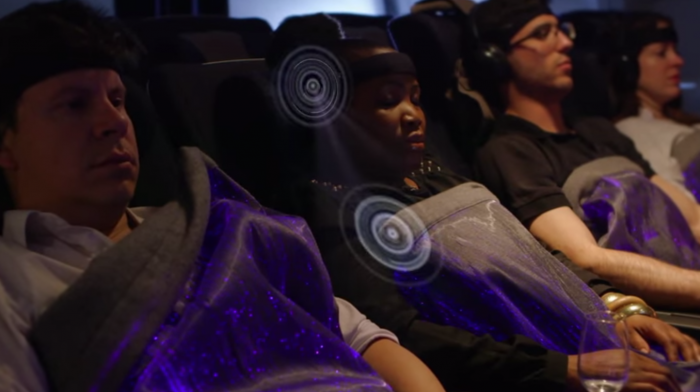
The Future is Here: The Happiness Blanket

happiness-blanketIt’s like something out of Huxley’s Brave New World: a blanket that monitors your brain activity, and takes on a corresponding color to show just how relaxed you are. Yes, it might sound like a bizarre social experiment, but in fact, it is part of a British Airways study to measure the effects of night-time travel between Heathrow and New York, a trip that takes flyers across multiple time zones.

Anyone who has ever done this knows that the jet lag can be a real pain in the ass. And for frequent flyers, jet lag has a surprisingly powerful impact on their internal clocks and circadian rhythms. Part of the problem arises from the fact that travelers are inside a metal and plastic cylinder that’s about as far from natural as possible, which poses difficulties for psychologists and others tasked with improving passenger conditions.
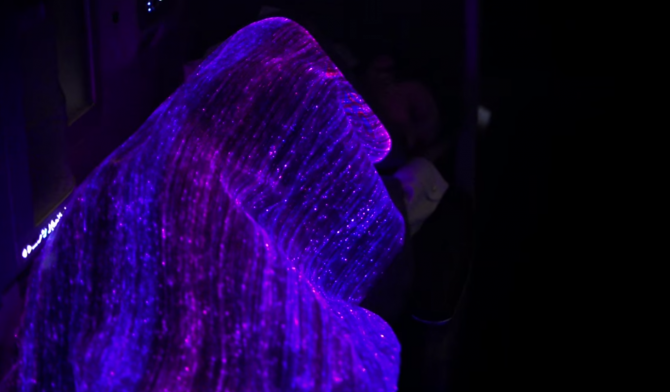
happiness-blanket-4Using the happiness blanket, British Airways is trying to tweak those conditions to make air travel more relaxing and better suited to adjusting to a new time zone. The blanket works by using a neurosensor studded headband to measure brain waves and determine the user’s level of relaxation, while fiber optics woven into the material display this through color patterns. Red means the minimum of relaxation, and blue indicates the maximum relaxation.

Naturally, there’s also the marketing angle that’s at work here. In truth, there’s no need for the blankets to have a readout mechanism, but it is a nice way of illustrating to the public what’s going on. Using data gleaned from volunteer fliers, British Airways hopes to learn how to adjust the various factors in the cabin options and routines – including lighting, mealtimes, menus, seating positions, types of films shown, and general cabin routine.
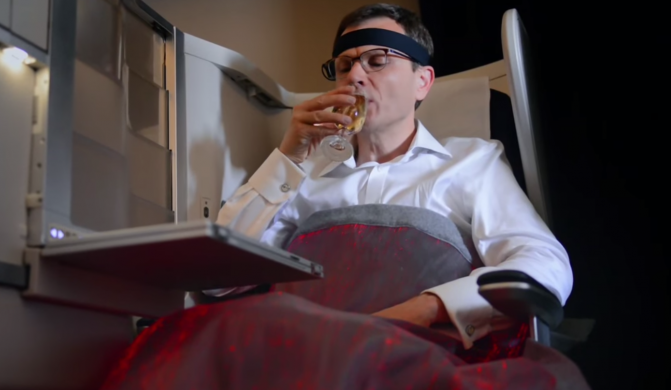
happiness-blanket-1According to British Airways, the key to these adjustments is to provide passengers with the best sleep possible on long flights, which is one reason why the airline has introduced lie-flat seating for business class and above. Better relaxation provides the brain with as few distractions as possible while traveling to different time zones, so it has a chance to adjust.

As Frank van der Post, British Airways’ managing director, brands and customer experience, said about the experiment:

Using technology like the British Airways ‘happiness blanket’ is another way for us to investigate how our customers’ relaxation and sleep is affected by everything on board, from the amount of light in the cabin, when they eat, to what in-flight entertainment they watch and their position in the seat.

I can smell an industry emerging. High-tech happiness monitoring. And with the growth in neurosensors and EEG headsets, its was really just a matter of time before someone got pro-active and decided to mass produce them. I imagine other companies will begin following suit, perhaps to monitor their employees happiness, or to gauge customer response to commercials. It all sounds so deliciously quasi-fascist!

And be sure to check out the video of the company’s promotional video:


Source:
gizmag.com
, britishairways.com

News From Space: ESA Sets Sights on Space Debris

space_debrisIt’s no secret that the orbital space lanes are clogged with debris. In fact, our upper atmosphere is so clogged with the remains of dead satellites, old rockets, and assorted space garbage, that initiatives are being planned to remedy the situation. The ESA, for example, has the Clean Space Initiative; and the e.DeOrbit mission that aims to send debris-hunting satellites into orbit to clean up the mess.

The aim of this mission is to clean up the important polar orbits between altitudes of 800 to 1,000 km (500 to 625 mil) that face the prospect of becoming unusable due to the increasing buildup of space debris. As part of the plan, the ESA is also investigating the possibility of using space harpoons to capture large items, such as derelict satellites and the upper stages of rockets.

https://i0.wp.com/images.gizmag.com/gallery_lrg/space-harpoon.jpgThis is just the latest in a series of possible plans to capture debris. In the past, the ESA has revealed that it was looking at capturing space debris in a net, securing it with clamping mechanisms, or grabbing hold of it using robotic arms. However, the latest possibility calls for using capturing debris with a tethered harpoon, which would pierce the debris with a high-energy impact before reeling it in.

Such an approach would not be practical for smaller debris, but is aimed at reeling in uncontrolled multitonne objects that threaten to fragment when colliding with other objects. These sorts of collisions result in debris clouds that would steadily increase in density due to the Kessler syndrome – a scenario in which the density of orbital debris is high enough that collisions generates more debris, increasing the likelihood of further collisions.

Airbus Defence and Space's preliminary design for a space harpoon system (Image: Airbus De...The ESA says the space harpoon concept has already undergone initial investigations by Airbus Defense and Space in Stevenage – two aerospace developers based in the UK. The preliminary design incorporates a penetrating tip, a crushable cartridge to help embed it in the target satellite structure, and barbs to keep it sticking in so the satellite can then be reeled in.

The initial tests involved shooting a prototype harpoon into a satellite-like material to assess its penetration, the strength of the harpoon and tether as the target is reeled in, and the potential for the target to fragment, which would result in more debris that could threaten the e.DeOrbit satellite. The ESA now plans to follow up these initial tests by building and testing a prototype version of the harpoon and its ejection system.

space_laserThe project will examine the harpoon impact, target piercing and the reeling in of objects using computer models and experiments, ultimately leading up to a full hardware demonstration. The space agency has put out the call for bidders to compete for the project contract, and hopes to be sending a working model into orbit by 2021 to conduct some much-needed housecleaning.

Naturally, there are other proposals being considered for debris-hunting. Between the ESA and NASA, there’s also the EPFL’s CleanSpace One debris hunter, and the Universities Space Research Association anti-collision laser concept. And while these remains still very much in the RandD phase, clearing the space lanes is likely to become a central issue once regular missions are mounted to Mars and the outer Solar System.

Sources: gizmag.com, esa.int

The Future of Urban Planning: The Urban Skyfarm

urban-skyfarm-9The world’s population is projected to grow to between 9 and 10 billion people by the middle of the century. What’s more, roughly two-thirds of those people are expected to live in major cities. Coupled with the expected changes caused by Climate Change (i.e. increased drought and less in the way of arable land), and its understandable why urban farms are seen as a means of picking up the slack.

That’s the concept behind the Urban Skyfarm, a concept for a skyscraper that is shaped like a tree and comes with leaf-like decks to provide space for real trees to grow. Currently, most vertical farming operations – like warehouses in Chicago, Kyoto, Singapore and a recent skyscraper built in Sweden by Plantagon – grow plants with ultra-high-efficiency systems under artificial light.

urban-skyfarm-2However, this new design concept from Aprilli Design Studio takes a different approach, using lightweight decks to provide growing space outdoors on the sides of a giant skyscraper. The architects aren’t the first to embrace the trend of sticking greenery on towers, but they may be one of the first to look at how to use the technique to maximize food production. As architects Steve Lee and See Yoon Park explained:

Our version of the vertical farm was intended to become an independent, open-to-air structure which would be purely focusing on farming activities and sustainable functions such as generating renewable energy and performing air, and water filtration.

Designed to mimic the shape of an enormous tree, the Urban Skyfarm uses leaf-like decks to provide 24 acres of space for growing fruit trees and plants. The “trunk” houses an indoor hydroponic farm for greens, and solar panels and wind turbines at the top of the tower provide enough energy to power the whole operation. The design would also capture rainwater and filter it through a constructed wetland before returning it to a nearby stream.

urban-skyfarm-5So in addition to growing food and using rainwater to provide irrigation, the building also was also designed with an eye towards energy independence. The architects envision the project in the middle of downtown Seoul, South Korea:

It seemed to be an ideal place to test out our prototype since the specific area is very dense and highly active and has been suffering for a long time by all sorts of environmental problems resulting from rapid urbanization…With the support of hydroponic farming technology, the space could efficiently host more than 5,000 fruit trees. Vertical farming is more than an issue of economical feasibility, since it can provide more trees than average urban parks, helping resolve urban environmental issues such as air pollution, water run-off and heat island effects, and bringing back balance to the urban ecology.

The design would also provide community gardens, park space, and a farmers market to cater to a demand for fresh, local food in a city where apples can cost more than $20 at local markets.

urban-skyfarm-7Vertical farming has already started in South Korea. Another project, based in Suwon, is growing food in a three-story building and may eventually expand into a skyscraper. But the outdoor vertical farm is just a concept for now. Lee and Park are confident this is the way of the future, and that demand for clean, sustainable buildings that grow fresh food is only going to increase:

We believe there will be more attention and discussions of vertical farms as the 2015 Milan Expo approaches, and we hope the Urban Skyfarm can become part of the discussion as a prototype proposal. Vertical farming really is not only a great solution to future food shortage problems but a great strategy to address many environmental problems resulting from urbanization.

And with the problems of urban growth and diminished farmland occurring all over the developed world – but especially in nations like China, Indonesia, the Philippines, and India (which are likely to be the hardest hit by Climate Change) – innovative designs that combine sustainability and urban farming are likely to become all the rage all over the world.

Source: fastcoexist.com

New Movie Trailer: Fury

furyThis coming fall, Brad Pitt will be starring in another World War II movie, though one that is somewhat different from Inglorious Basterds. Set in April of 1945, Fury takes place in Germany during the final month of the war as the crew of a single Sherman attempt a final mission behind enemy lines. And as you can see from the stark and gritty trailer, the film features a real-live Sherman and Tiger tank, the latter of which was borrowed from a museum.

The movie also stars Shia LaBoeuf, Logan Lerman, and The Walking Dead‘s Jon Bernthal (aka. Shane) and is slated for release in November 2014.

Judgement Day Update: Terminators at I/O 2014

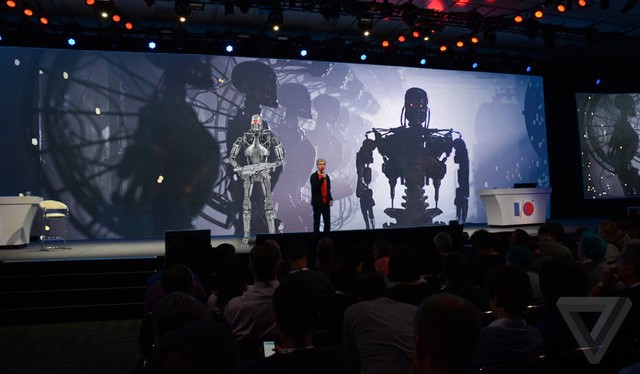
google_terminatorsWe’ve all thought about it… the day when super-intelligent computer becomes self-aware and unleashes a nuclear holocaust, followed shortly thereafter by the rise of the machines (cue theme from Terminator). But as it turns out, when the robot army does come to exterminate humanity, at two humans might be safe – Google co-founders Larry Page and Sergey Brin to be precise.

Basically, they’ve uploaded a killer-robots.txt file to their servers that instructs T-800 and T-1000 Terminators to spare the company’s co-founders (or “disallow” their deaths). Such was the subject of a totally tongue-in-cheek presentation at this year’s Google I/O at the Moscone Center in San Fransisco, which coincided with the 20th anniversary of the Robots.txt file.

https://i0.wp.com/www.product-reviews.net/wp-content/uploads/Google-IO-2014-keynote-dated-live-stream-as-normal1.jpgThis tool, which was created in 1994, instructs search engines and other automated bots to avoid crawling certain pages or directories of a website. The industry has done a remarkable job staying true to the simple text file in the two decades since; Google, Bing, and Yahoo still obey its directives. The changes they uploaded read like this, just in case you’re planning on adding your name to the “disallow” list:

Screen_shot_2014-07-03_at_7.15.23_pm

While that tool didn’t exactly take the rise of the machines into account, it’s appearance on the Google’s website as an Easter egg did add some levity to a company that is already being accused of facilitating in the creation of killer robots. Calling Google’s proposed line or robots “killer” does seem both premature and extreme, that did not stop a protester from interrupting the I/O 2014 keynote address.

Google_Terminators_WideBasically, as Google’s senior VP of technical infrastructure Urs Hölze spoke about their cloud platform, the unidentified man stood up and began screaming “You all work for a totalitarian company that builds machines that kill people!” As you can see from the video below, Hölze did his best to take the interruptions in stride and continued with the presentation. The protestor was later escorted out by security.

This wasn’t the first time that Google has been the source of controversy over the prospect of building “killer robots”. Ever since Google acquired Boston Dynamics and seven other robots companies in the space of six months (between and June and Dec of 2013), there has been some fear that the company has a killer machine in the works that it will attempt to sell to the armed forces.

campaign_killerrobotsNaturally, this is all part of a general sense of anxiety that surrounds developments being made across multiple fields. Whereas some concerns have crystallized into dedicated and intelligent calls for banning autonomous killer machines in advance – aka. the Campaign To Stop Killer Robots – others have resulted in the kinds of irrational outbreaks observed at this year’s I/O.

Needless to say, if Google does begin developing killer robots, or just starts militarizing its line of Boston Dynamics acquisitions, we can expect that just about everyone who can access (or hack their way into) the Robots.txt file to be adding their names. And it might not be too soon to update the list to include the T-X, Replicants, and any other killer robots we can think of!

And be sure to check out the video of the “killer robot” protester speaking out at 2014 I/O:


Sources: 
theverge.com, (2)

Space Tourism: World View Balloon Aces First Test

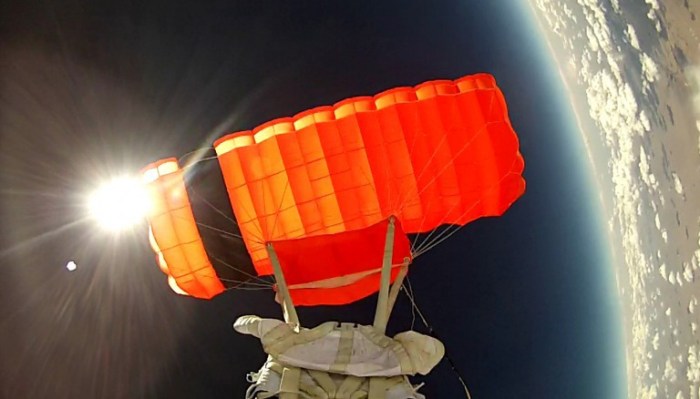
space-tourism-balloon-23Late last year, a new space tourism company emerged that proposed using a high-tech balloon ride to take passengers higher than they’ve ever been. The company quickly earned FAA approval for its audacious plan to take tourists on five hour near-space rides. And late last month, the company successfully completed its first round of tests, and in the process broke the record for the highest parafoil flight.

The company launched the test flight some three weeks ago from Roswell, New Mexico using a balloon which was roughly one third the size of that planned for passengers flight. It carried a payload of about 204 kg (450 lb), which is one-tenth the weight of what the company expects will be a full passenger load. The flight was the first time all the components were tested together, reaching a record-breaking altitude of 36,500 m (120,000 ft).

space-tourism-balloon-10Though components of the experience have been tested in the past, this marks the first time all elements of the spaceflight system were tested together. It was a huge success and a major milestone for the company. The company hopes to be able to commence passenger rides by 2016, once they’ve completed all testing to make sure their equipment and methods are safe.

Based on their FAA filings, the company has said that it will launch its rides from Spaceport American in the New Mexican desert. However, CEO Jane Poynter has recently said that no final decision has actually been made in this regard. Although the balloon does not technically lift its passengers into outer space – which is defined as a distance of 100 km (62 miles) from the Earth’s surface – it will certainly make for an unforgettable experience.

space-tourism-balloon-20For the cost of $75,000, customers will be taken to an altitude of 32 km (20 miles). From there, they will be able to see the curvature of the Earth, and at a fraction of the price for Virgin Galactic’s $200,000 rocket-propelled trip. The ride will consist of a capsule large enough for passengers to walk around in will being lifted well above the troposphere, thanks to a giant balloon containing 400,000 cubic meters of helium.

Their space balloon is not at all dissimilar to the one used by daredevil Felix Baumgartner when he broke the record for high-altitude skydiving roughly two years ago. In order to return back to Earth, the balloon will cut away from the capsule, and then a parafoil will allow it to land safely as a paraglider, deploying skids on which to land. Alongside other space-tourism ventures, the latter half of this decade is likely to be an exciting time to be alive!

Be sure to check out the company’s website by clicking here. And in the meantime, enjoy this company video showing the test flight:


Source: gizmag.com, worldviewexperience.com

The Future is Here: Overcoming Paralysis

neurobridge_ianIan Burkhart, a 23-year-old quadriplegic from Dublin, Ohio, was injured in 2010 in a diving accident, breaking his neck on a sandbar and paralyzing his body from the neck down. He was left with some use of his arms, but lost the use of his legs, hands, and fingers. Thanks to a new device known as the Neurobridge though – a device that allows the brains signals to bypass the severed spinal cord – Burkhart has now moved his right hand and fingers for the first time since the accident.

This device, which was developed in concert by the Ohio State University Wexner Medical Center and the non-profit company Battelle, consists of a pea-sized chip that contains an an array of 96 electrodes, allows researchers to look at detailed signals and neural activity emanating from the patient’s brain. This chip was implanted in Ian’s brain two months ago, when neurosurgeon Dr Ali Rezai of Ohio State University performed the surgery that would implant the sensor chip into the motor cortex of his brain.

neuromorphic_revolutionBattelle has been working on neurosensing technology for almost a decade. As Chad Bouton, the leader of the Neurobridge project at Battelle, explains:

We were having such success in decoding brain activity, we thought, ‘Let’s see if we could remap the signals, go around something like a spinal cord injury and then translate the signals into something that the muscles could understand and help someone paralyzed regain control of their limb’.

During the test, which occurred in June, the implanted chip read and interpreted the electrical activity in Burkhart’s brain and sent it to a computer. The computer then recoded the signal, and sent it to a high-definition electrode stimulation sleeve Burkhart wore on his right arm, a process that took less than a tenth of a second and allowed Burkhart to move his paralysed fingers. Basically, Burkhart is able to move his hand by simply thinking about moving his hand, and the machine does the rest.

neurobridge1A team led by Chad Bouton at Battelle spent nearly a decade developing the algorithms, software and sleeve. Then, just two years ago, Dr Ali Rezai and Dr Jerry Mysiw were brought on board to design the clinical trials. Burkhart became involved with the study after his doctor mentioned it to him and he learned he was an ideal candidate. He had the exact level of injury the researchers were looking for, is young and otherwise healthy, and lives close to the Ohio State University Wexner Medical Center, where the research is being conducted.

Even so, Burkhart had to think hard before agreeing to the surgery. He also knew that the surgery wouldn’t magically give him movement again. He would have to undergo rigorous training to regain even basic hand function. Mainly, his experience would help move along future technological advances. However, he was excited to be taking part in cutting-edge research which would ultimately help people like him who have suffered from spinal injuries and paralysis.

enhancementPost-surgery, Burkhart still had a lot of thinking to do, this time, in order to move his hand. As he explained:

It’s definitely great for me to be as young as I am when I was injured because the advancements in science and technology are growing rapidly and they’re only going to continue to increase… Mainly, it was just the fact that I would have to have brain surgery for something that wasn’t needed… Anyone able bodied doesn’t think about moving their hand, it just happens. I had to do lots of training and coaching.

The hand can make innumerable complex movements with the wrist, the fingers, and the fist. In order for Battelle’s software to read Ian’s mind, it has to look for subtle changes in the signals coming from Ian’s brain. As Bouton explains it, the process is like walking into a crowded room with hundreds of people trying to talk to each other, and you’re trying to isolate one particular conversation in a language that you don’t understand.

neurobridgeAt this point, Burkhart can perform a handful of movement patterns, including moving his hand up and down, opening and closing it, rotating it, and drumming on a table with his fingers. All of this can only be done while he’s in the hospital, hooked up to the researchers’ equipment. But the ultimate goal is to create a device and a software package that he can take with him, giving him the ability to bypass his injury and have full ambulatory ability during everyday activities.

This isn’t the only research looking into bringing movement back to the paralyzed. In the past, paralyzed patients have been given brain-computer interfaces, but they have only been able to control artificial limbs – i.e. Zak Water’s mind-controlled leg or the BrainGate’s device that allow stroke victims to eat and drink using a mind-controlled robotic arm. Participants in an epidural stimulator implant study have also been able to regain some movement in their limbs, but this technology works best on patients with incomplete spinal cord injuries.

braingate_drinkassistBurkhart is confident that he can regain even more movement back from his hand, and the researchers are approved to try the technology out on four more patients. Ultimately, the system will only be workable commercially with a wireless neural implant, or an EEG headset – like the Emotiv, Insight or Neurosky headsets. The technology is also being considered for stroke rehabilitation as well, another area where EEG and mind-control technology are being considered as a mean to recovery.

From restoring ambulatory ability through mind-controlled limbs and neurosensing devices to rehabilitating stroke victims with mind-reading software, the future is fast shaping up to be a place where no injuries are permanent and physical disabilities and neurological impairments are a thing of the past. I think I can safely speak for everyone when I say that watching these technologies emerge makes it an exciting time to be alive!

And be sure to check out this video from the OSUW Medical Center that shows Ian Burkhart and the Batelle team testing the Neurobridge:


Sources: cnet.com, fastcoexist.com

Akira Concept Art

https://static.squarespace.com/static/524c2e14e4b05018590a21e1/5386efbce4b0bd6d1373003c/5387038ce4b0792be624b4a5/1401357197387/image002.jpg?format=1500wA few years ago, it was reported that director Ruairi Robinson was going to create a live-action American adaptation of the classic anime, Akira! The project has getting a lot of hype, despite what many hardcore fans have to say about an American version of the anime cult classic. And while the attempts to get the ball rolling have continually stalled, with actors and directors constantly dropping and out of the project, it does seem like this is one project that just wont’ die.

For instance, Ruairi Robinson ceased being attached to the project in 2010, but some interesting concept art from his slated involvement survives. Below, you can see pictures and mock-ups for what the live action of Akira, in his hands, would have looked like. For instance, in the first photo, the casting choices of Chris Evans as Shotaro Kaneda and Jason Gordon Levitt as Tetsuo Shima. In addition, countless pictures depicting Neo-Tokyo.

(left) Kaneda, (middle) Travis, (right) CyrusIn many of these, you can see Kaneda’s iconic red bike running through the streets. But the larger focus is on the colorful skylines, complete with skyscrapers, neon signs, multiple languages scripts, and a general gritty, cyberpunk feel. And at the bottom, there is a comparison shot showing a shooting location in New York City above a picture of what the proposed Neo-New York City would look like. That name sound at all believable to you?


Several scenes from the movie are also depicted, which include the battle with the Clowns biker gang, and the sudden appearance of one of Colonel Shikishima “patients”.

https://static.squarespace.com/static/524c2e14e4b05018590a21e1/5386efbce4b0bd6d1373003c/538a94cbe4b0adbbbb8d53ec/1401590989937/002A_streetconcept_1cFlatGH.jpg?format=500w

https://static.squarespace.com/static/524c2e14e4b05018590a21e1/5386efbce4b0bd6d1373003c/5387038be4b058afe7f7548e/1401357200902/001A_streetconcept_1bFlatGH.jpg?format=500w

It looks like a Neo-New York City

https://static.squarespace.com/static/524c2e14e4b05018590a21e1/5386efbce4b0bd6d1373003c/5387038ce4b058afe7f75490/1401357198930/freeway_before&after%20copy.jpg?format=500w

https://static.squarespace.com/static/524c2e14e4b05018590a21e1/5386efbce4b0bd6d1373003c/538a927ee4b0ad09b9d992fd/1401590403029/image001.jpg?format=500w

https://static.squarespace.com/static/524c2e14e4b05018590a21e1/5386efbce4b0bd6d1373003c/5387038de4b058afe7f75492/1401357199565/streetconcept.jpg?format=500w

https://static.squarespace.com/static/524c2e14e4b05018590a21e1/5386efbce4b0bd6d1373003c/538a927ee4b0e9ab9157cd27/1401590403111/image003.jpg?format=500wBut what montage of Akira-related images would be complete without scenes depicting the unleashed psychic Tetsuo, demonstrated his newfound powers? Below are a couple that demonstrate the anime’s antagonist in action, in the first, deflecting a missile attack from an attack chopper, and in the second breaking into the Akira vault and discovering the namesake’s remains.

  Travis Clyne aka "Tetsuo" unleashing his power!

https://static.squarespace.com/static/524c2e14e4b05018590a21e1/5386efbce4b0bd6d1373003c/538773c1e4b0e13cfb6da384/1401385923649/crater_akira01_CC2.jpg?format=500wNot too bad to look at. But with the supposed director, producers, and actors changing every few years, many are wondering if this live-action remake will ever happen. And many fans can see nothing wrong with the idea, provided it is true to the source material. And dropping the whole Americanized angle and setting it back in Neo-Tokyo where it belongs wouldn’t hurt much either! But in the end, it really comes down to being true to the spirit of the Manga, if not the precise format.
Luckily, there is still the crowdfunded live-action Akira Project. This fan-based effort to make an adaptation that is both true to the spirit and setting of the original manga produced a full-length teaser trailer not that long ago that impressed fans quite a bit! So who knows? If Hollywood can’t get its act together and make a decent remake, there’s always the direction and the funding of dedicated fans to pick up the slack! Time will tell which of them will bear fruit…

In the meantime, here’s another look at the Akira Project trailer:


Sources:
moviepilot.com, ruairi-robinson.squarespace.com

Revolution in Virtual Reality: Google’s Cardboard Headset

cardboardgifWith the acquisition of the Oculus Rift headset, Facebook appeared ready to corner the market of the new virtual reality market. But at its annual I/O conference, Google declared that it was staking its own claim. At the end of the search giant’s keynote address, Sundar Pichai announced that everyone in attendance would get a nondescript cardboard package, but was coy about its contents. Turns out, it’s the firm’s attempt at a do-it-yourself VR headset.

Known as Cardboard, copies of the headset were handed out as part of a goodie bag, alongside the choice between a brand new LG G Watch or Samsung Gear Live smartwatch. Intended to be a do-it-yourself starter kit, Google Cardboard is a head-mounted housing unit for your smartphone that lets you blend everyday items into a VR headset. With a $10 lens kit, $7 worth of magnets, two Velcro straps, a rubber band, and an optional near-field communication sticker tag, you can have your very own VR headset for the fraction of the price.

box-of-cardboard-google-io-2014You can use household materials to build one, and a rubber band to hold your smartphone in place on the front of the device. Assembly instructions, plans and links for where to source the needed parts (like lenses) — as well as an SDK — are available on the project’s website. Google hopes that by making the tech inexpensive (unlike offerings from, say, Oculus), developers will be able to make VR apps that hit a wider audience.

According to some early reviews, the entire virtual reality experience is surprisingly intuitive, and is as impressive considering how simple it is. And while the quality doesn’t quite match the Oculus Rift’s dual OLED Full HD screens, and it is lacking in that it doesn’t have positional tracking (meaning you can’t lean into something the way you would in real life), the Cardboard is able to create the 3D effect using just a single phone screen and some specialized lenses.

google_cardboardMeanwhile, Google has created some great demos within the Cardboard app, showcasing the kind of experiences people can expect moving forward. Right now, the Cardboard app features simple demonstrations: Google Earth, Street View, Windy Day, and more. But it’s just a small taste of what’s possible. And anyone willing to put some time into putting together their own cardboard headset can get involved. Never before has virtual reality been so accessible, or cheap.

And that was precisely the purpose behind the development of this device. Originally concocted by David Coz and Damien Henry at the Google Cultural Institute in Paris as part of the company’s “20 percent time” initiative, the program was started with the aim of inspiring a more low-cost model for VR development. After an early prototype wowed Googlers, a larger group was tasked with building out the idea, and the current Cardboard headset was born.

google_cardboard1As it reads on Google’s new page for the device’s development:

Virtual reality has made exciting progress over the past several years. However, developing for VR still requires expensive, specialized hardware. Thinking about how to make VR accessible to more people, a group of VR enthusiasts at Google experimented with using a smartphone to drive VR experiences.

Beyond hardware, on June 25th, the company also released a self-described experimental software development kit for Cardboard experiences. Cardboard also has an Android companion app that’s required to utilize Google’s own VR-specific applications, called Chrome Experiments. Some use cases Google cites now are flyover tours in Google Earth, full-screen YouTube video viewing, and first-person art exhibit tours.

google_cardboard2As Google said a related press release:

By making it easy and inexpensive to experiment with VR, we hope to encourage developers to build the next generation of immersive digital experiences and make them available to everyone.

Oculus Rift is still the most promising version of virtual reality right now, and with Facebook at the helm, there are some tremendous resources behind the project. But with Cardboard, Google is opening up VR to every single Android developer, which we hope will lead to some really awesome stuff down the road. Even if you can’t lean in to inspect dials in front of you, or look behind corners, the potential of Cardboard is tremendous. Imagine the kind of not only experiences we’ll see, but augmented reality using your phone’s camera.

But Cardboard is still very early in development. Its only been a few weeks since it was debuted at Google I/O, and the device is still only works with Android. But with availability on such a wide scale, it could very quickly become the go-to VR platform out there. All you need are some magnets, velcro, rubber band, lenses and a pizza box. And be sure to check out this demo of the device, courtesy of “Hands-On” by TechnoBuffalo:


Sources:
cnet.com, technobuffalo.com, engadget.com

The Future of Devices: The Wearable Tech Boom

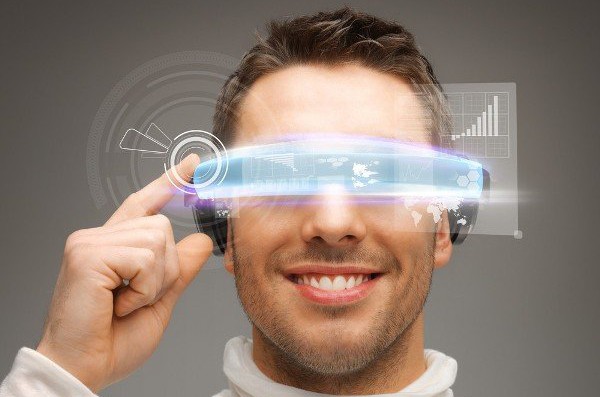
Wearable-Computing-RevolutionThe wearable computing revolution that has been taking place in recent years has drawn in developers and tech giants from all over the world. Though its roots are deep, dating back to the late 60’s and early 80’s with the Sword of Damocles concept and the work of Steve Mann. But in recent years, thanks to the development of Google Glass, the case for wearable tech has moved beyond hobbyists and enthusiasts and into the mainstream.

And with display glasses now accounted for, the latest boom in development appears to be centered on smart watches and similar devices. These range from fitness trackers with just a few features to wrist-mounted version of smart phones that boast the same constellations of functions and apps (email, phone, text, skyping, etc.) And as always, the big-name industries are coming forward with their own concepts and designs.

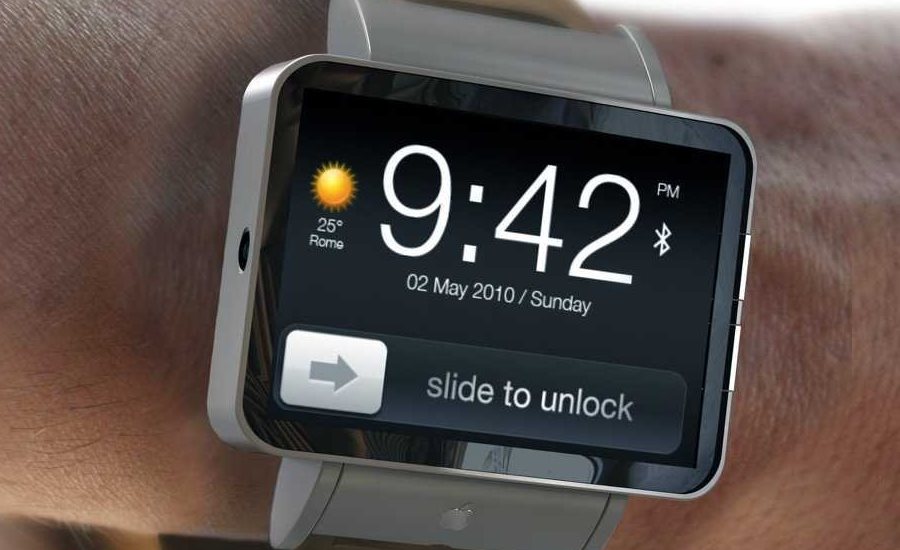
apple_iwatch1First, there’s the much-anticipated Apple iWatch, which is still in the rumor stage. The company has been working on this project since late 2012, but has begun accelerating the process as it tries to expand its family of mobile devices to the wrist. Apple has already started work on trademarking the name in a number of countries in preparation for a late 2014 launch perhaps in October, with the device entering mass production in July.

And though it’s not yet clear what the device will look like, several mockups and proposals have been leaked. And recent reports from sources like Reuters and The Wall Street Journal have pointed towards multiple screen sizes and price points, suggesting an array of different band and face options in various materials to position it as a fashion accessory. It is also expected to include a durable sapphire crystal display, produced in collaboration with Apple partner GT Advanced.

iWatchWhile the iWatch will perform some tasks independently using the new iOS 8 platform, it will be dependent on a compatible iOS device for functions like receiving messages, voice calls, and notifications. It is also expected to feature wireless charging capabilities, advanced mapping abilities, and possibly near-field communication (NFC) integration. But an added bonus, as indicated by Apple’s recent filing for patents associated with their “Health” app, is the inclusion of biometric and health sensors.

Along with serving as a companion device to the iPhone and iPad, the iWatch will be able to measure multiple different health-related metrics. Consistent with the features of a fitness band, these will things like a pedometer, calories burned, sleep quality, heart rate, and more. The iWatch is said to include 10 different sensors to track health and fitness, providing an overall picture of health and making the health-tracking experience more accessible to the general public.

iOS8Apple has reportedly designed iOS 8 with the iWatch in mind, and the two are said to be heavily reliant on one another. The iWatch will likely take advantage of the “Health” app introduced with iOS 8, which may display all of the health-related information gathered by the watch. Currently, Apple is gearing up to begin mass production on the iWatch, and has been testing the device’s fitness capabilities with professional athletes such as Kobe Bryant, who will likely go on to promote the iWatch following its release.

Not to be outdone, Google launched its own brand of smartwatch – known as Android Wear – at this year’s I/O conference. Android Wear is the company’s software platform for linking smartwatches from companies including LG, Samsung and Motorola to Android phones and tablets. A preview of Wear was introduced this spring, the I/O conference provided more details on how it will work and made it clear that the company is investing heavily in the notion that wearables are the future.

android-wear-showdownAndroid Wear takes much of the functionality of Google Now – an intelligent personal assistant – and uses the smartwatch as a home for receiving notifications and context-based information. For the sake of travel, Android Wear will push relevant flight, weather and other information directly to the watch, where the user can tap and swipe their way through it and use embedded prompts and voice control to take further actions, like dictating a note with reminders to pack rain gear.

For the most part, Google had already revealed most of what Wear will be able to do in its preview, but its big on-stage debut at I/O was largely about getting app developers to buy into the platform and keep designing for a peripheral wearable interface in mind. Apps can be designed to harness different Android Wear “intents.” For example, the Lyft app takes advantage of the “call me a car” intent and can be set to be the default means of hailing a ride when you tell your smartwatch to find you a car.

androidwear-3Google officials also claimed at I/O that the same interface being Android Wear will be behind their new Android Auto and TV, two other integrated services that allow users to interface with their car and television via a mobile device. So don’t be surprised if you see someone unlocking or starting their car by talking into their watch in the near future. The first Android Wear watches – the Samsung Gear Live and the LG G Watch – are available to pre-order and the round-face Motorola Moto 360 is expected to come out later this summer.

All of these steps in integration and wearable technology are signs of an emergent trend, one where just about everything from personal devices to automobiles and even homes are smart and networked together – thus giving rise to a world where everything is remotely accessible. This concept, otherwise known as the “Internet of Things”, is expected to become the norm in the next 20 years, and will include other technologies like display contacts and mediated (aka. augmented) reality.

And be sure to check out this concept video of the Apple iWatch:


Sources:
cnet.com, (2), macrumors.com, engadget.com, gizmag.com